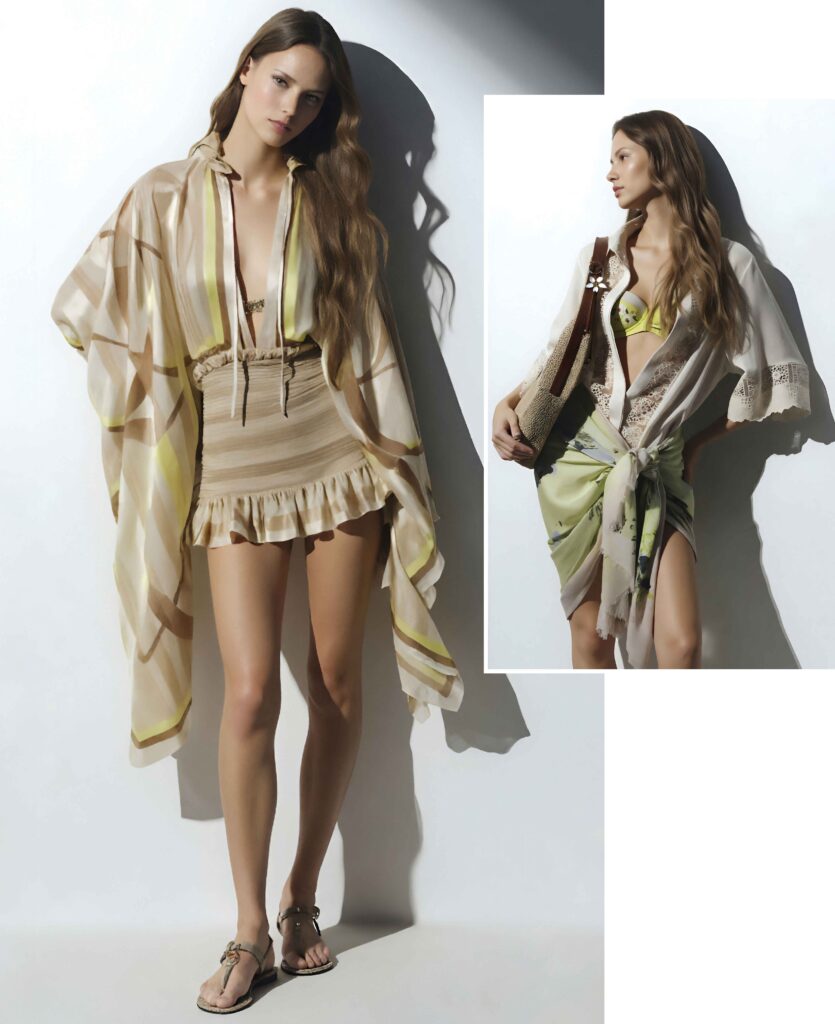
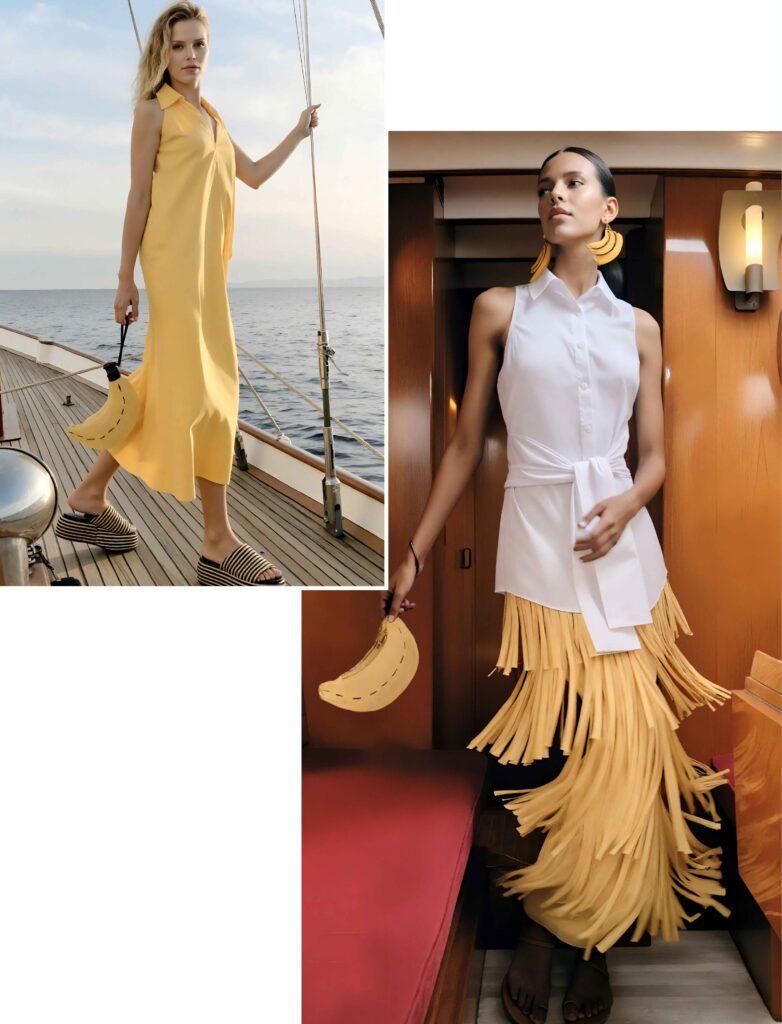
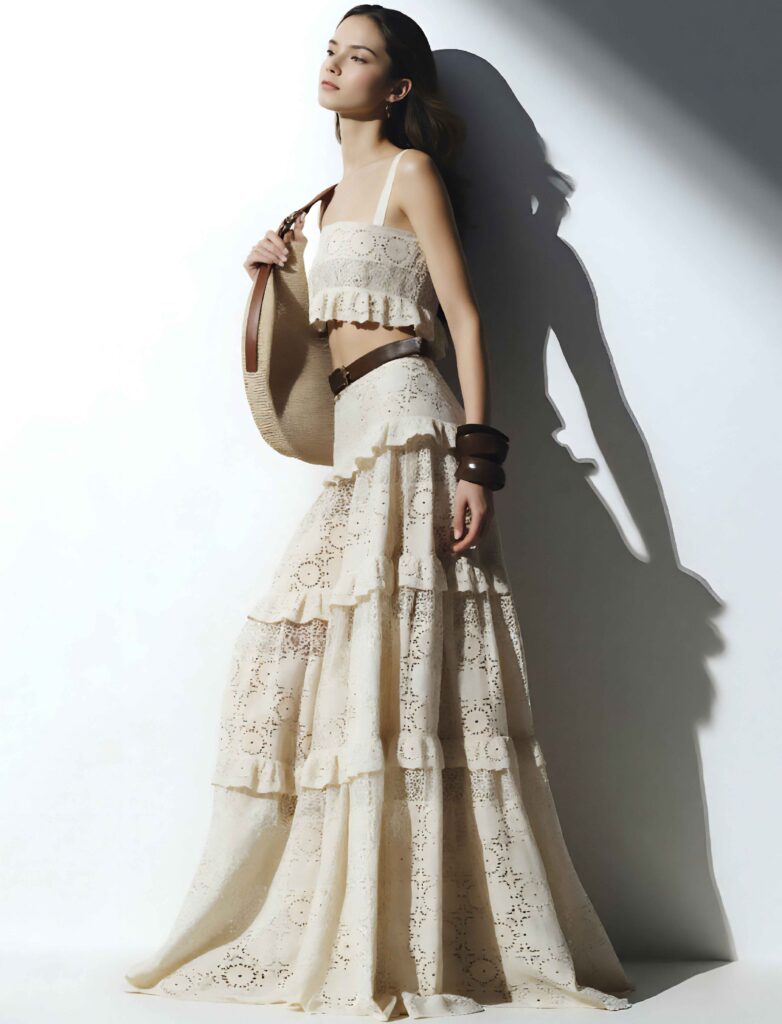
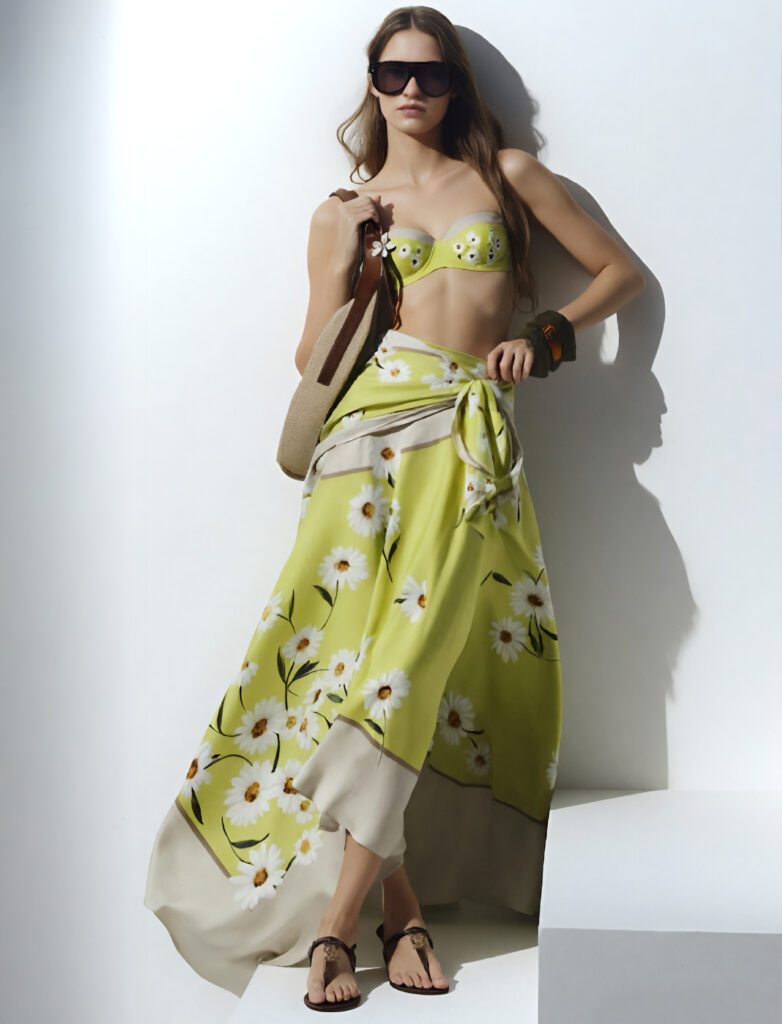
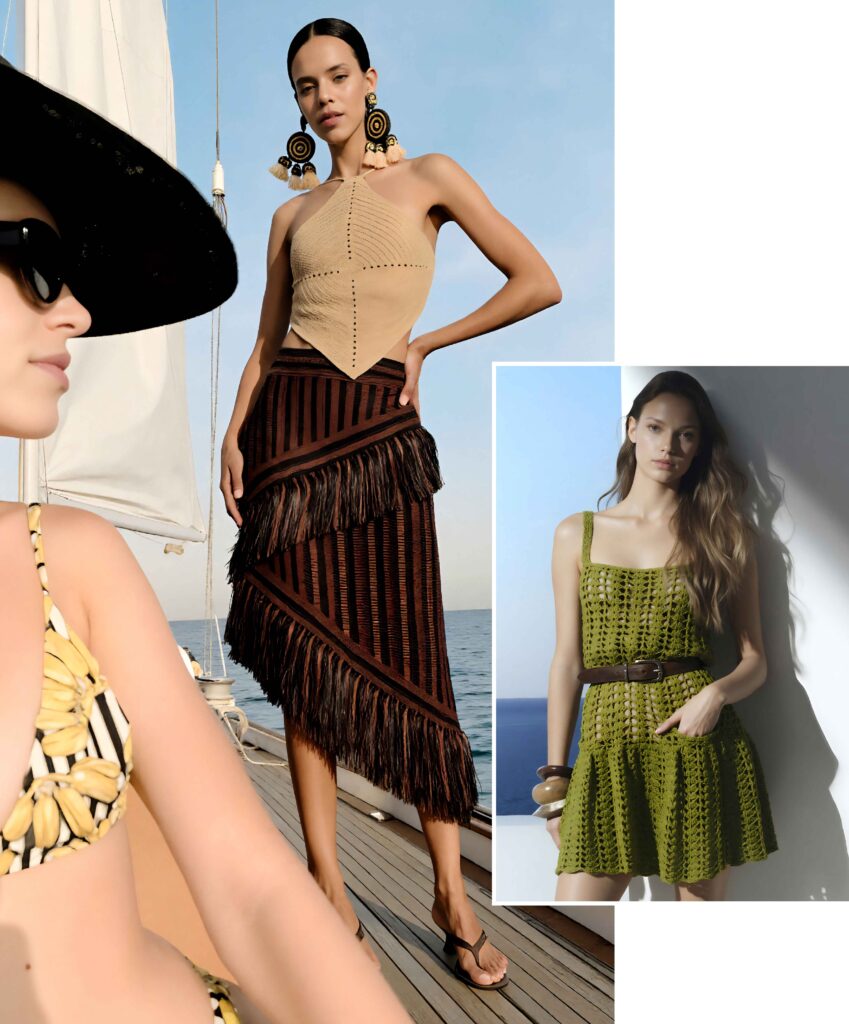
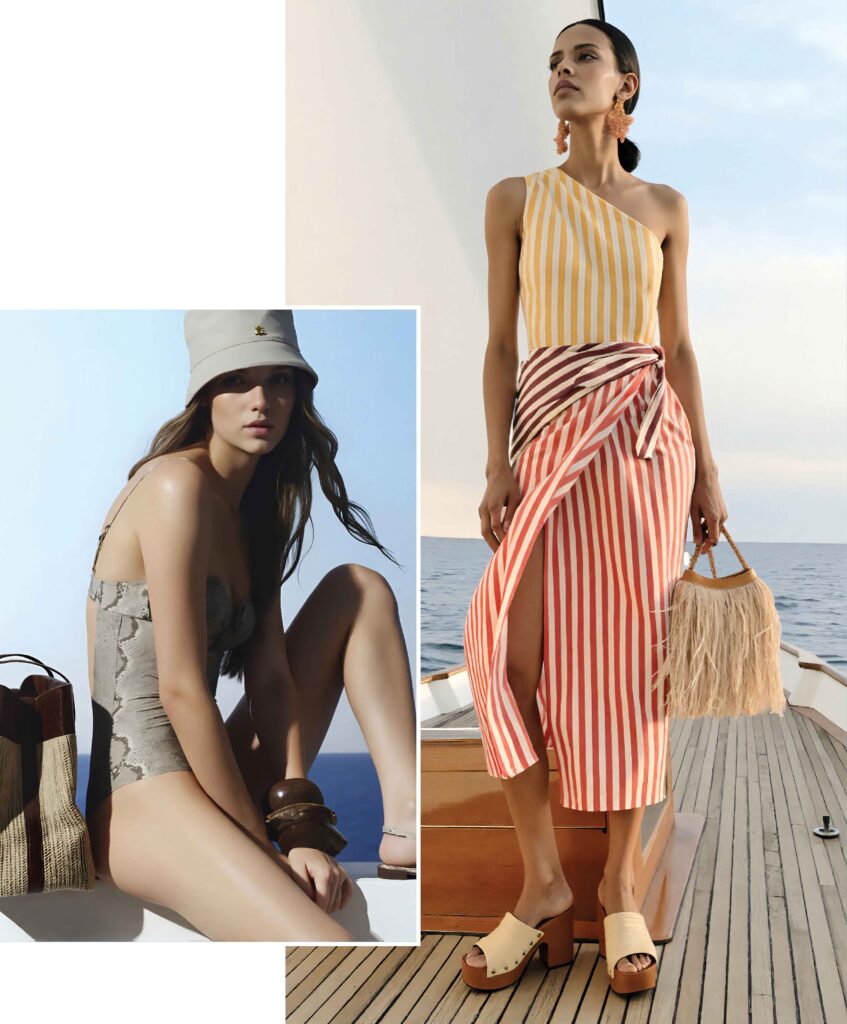
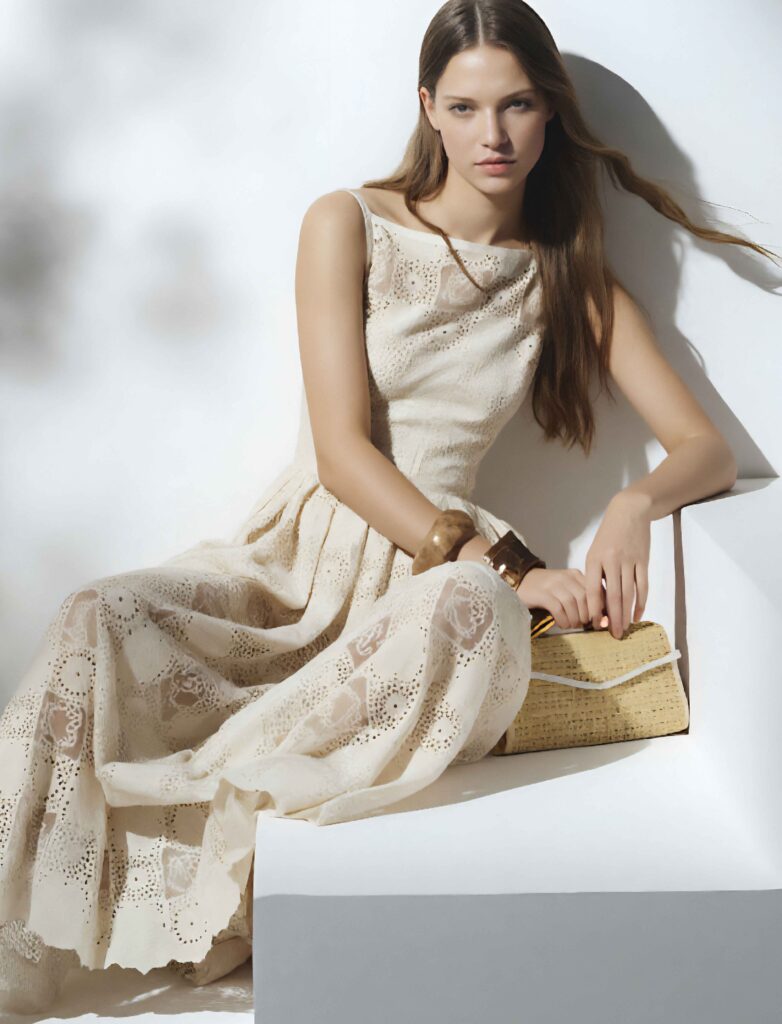
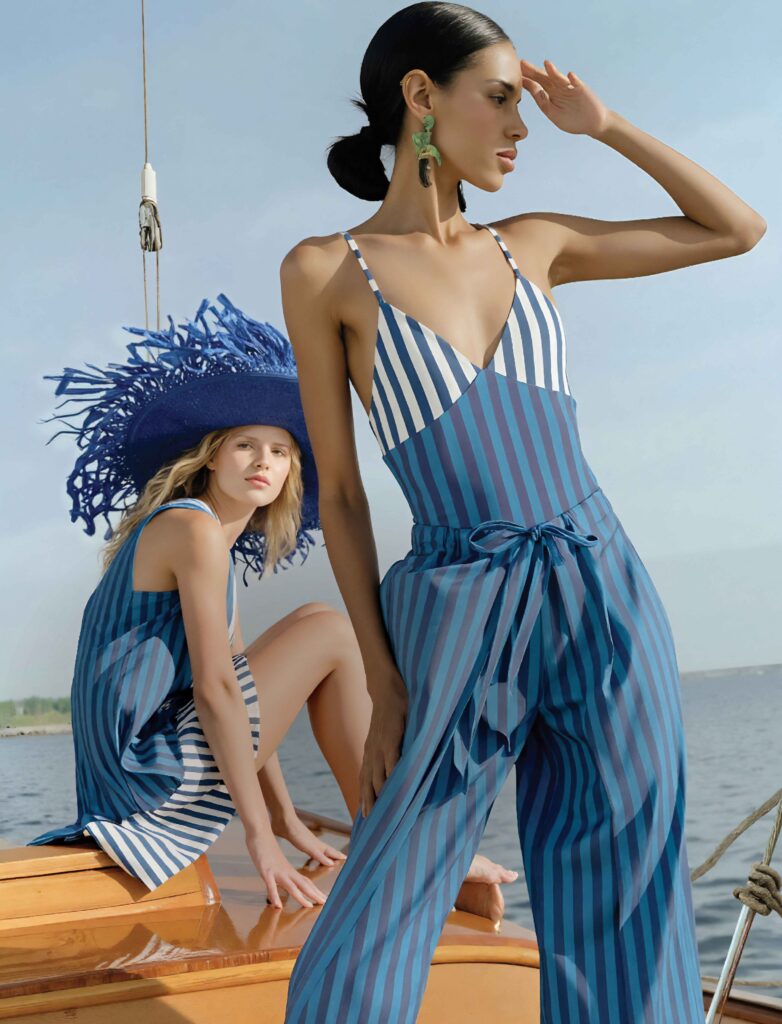
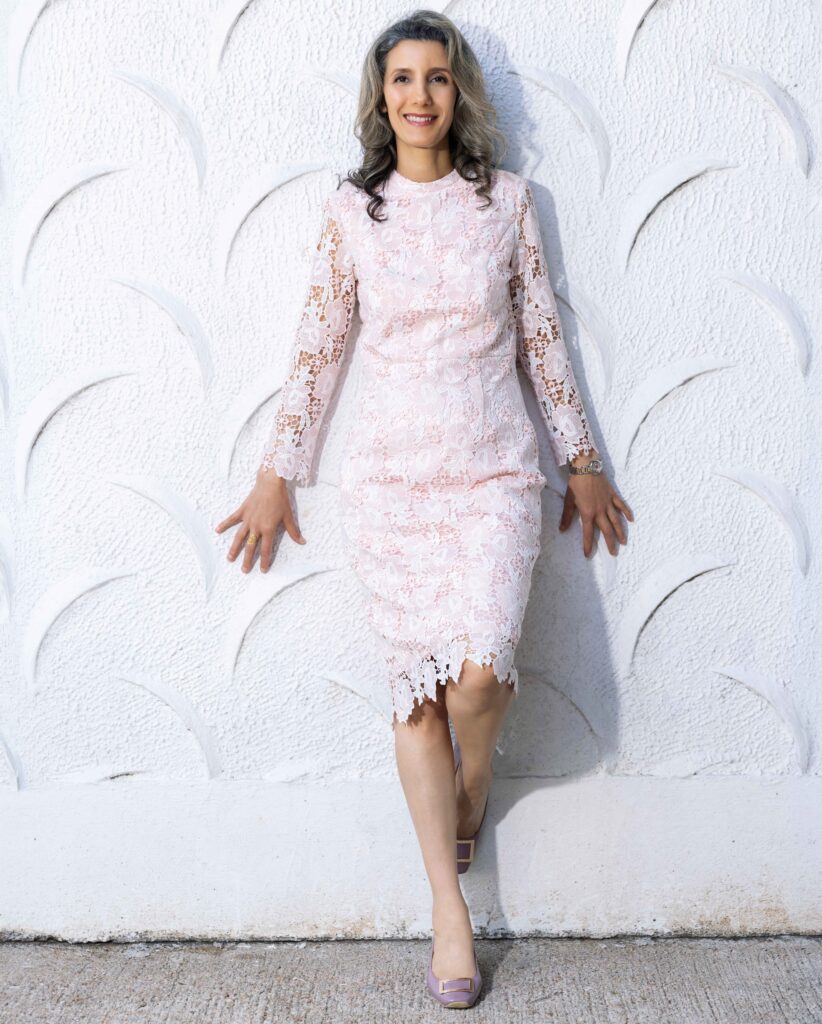
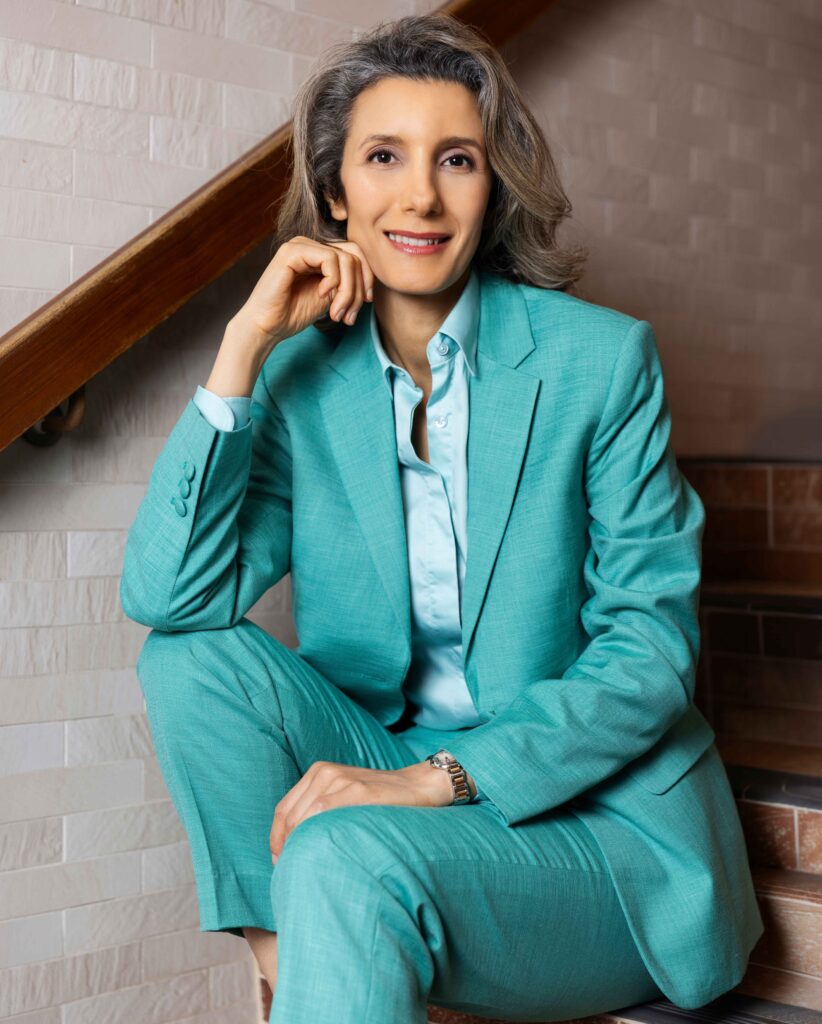
Swim & Swirl: Breezy cover-ups and statement swim silhouettes for saltwater days and golden-hour nights
Look 1
(left)
Striped top and pants by Simon Miller
(right)
Striped top and pants by Simon Miller
Look 2
(left)
Flowy geometric print top and ruffled mini skirt by Elie Saab
(right)
Button down dress and printed cover up by Elie Saab
Look 3
(left)
Yellow midi dress by Simon Miller
(right)
White top and yellow fringe skirt by Simon Miller
Look 4
Crop top and maxi skirt by Elie Saab
Look 5
Swimsuit and flowy maxi skirt by Elie Saab
Look 6
(left)
Woven top and skirt by Simon Miller
(right)
Green mini dress by Elie Saab
Look 7
(left)
Animal print bathing suit by Elie Saab
(right)
Striped midi dress by Simon Miller
Look 8
Maxi dress by Elie Saab
Look 9
(left)
Blue striped mini dress by Simon Miller
(right)
Blue striped jumpsuit by Simon Miller
Look 10
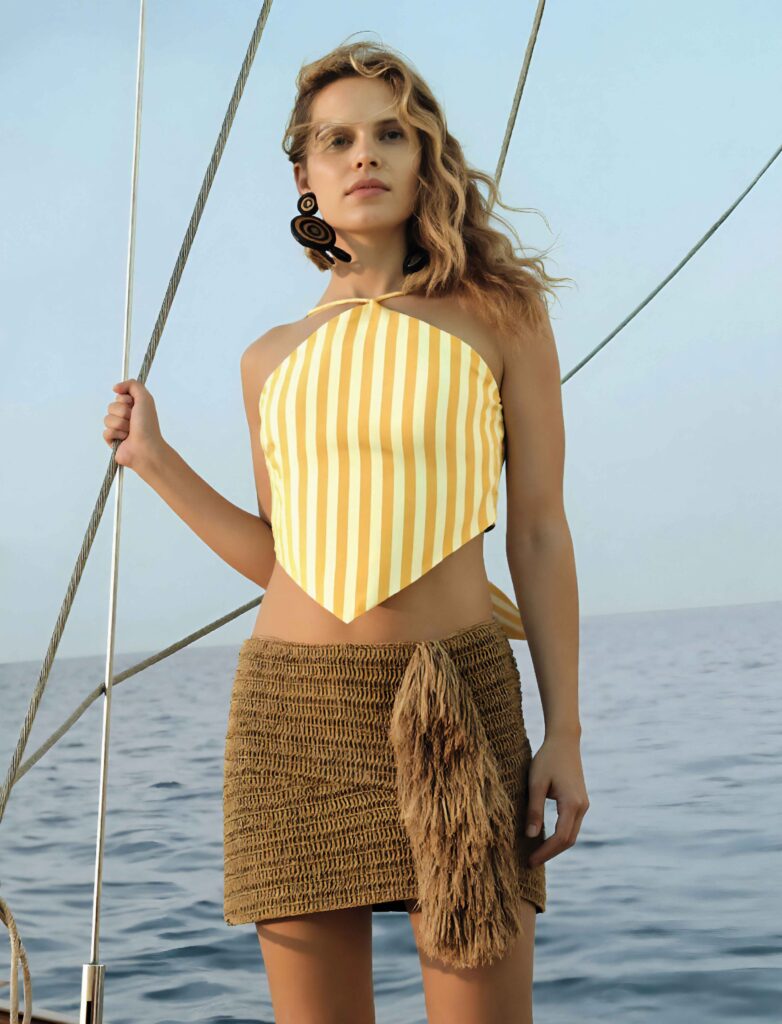
Yellow striped top and woven skirt by Simon Miller
Soaring Star: Cast to the head of a century-old jewellery legacy, Camille Sze seizes the moment to shine
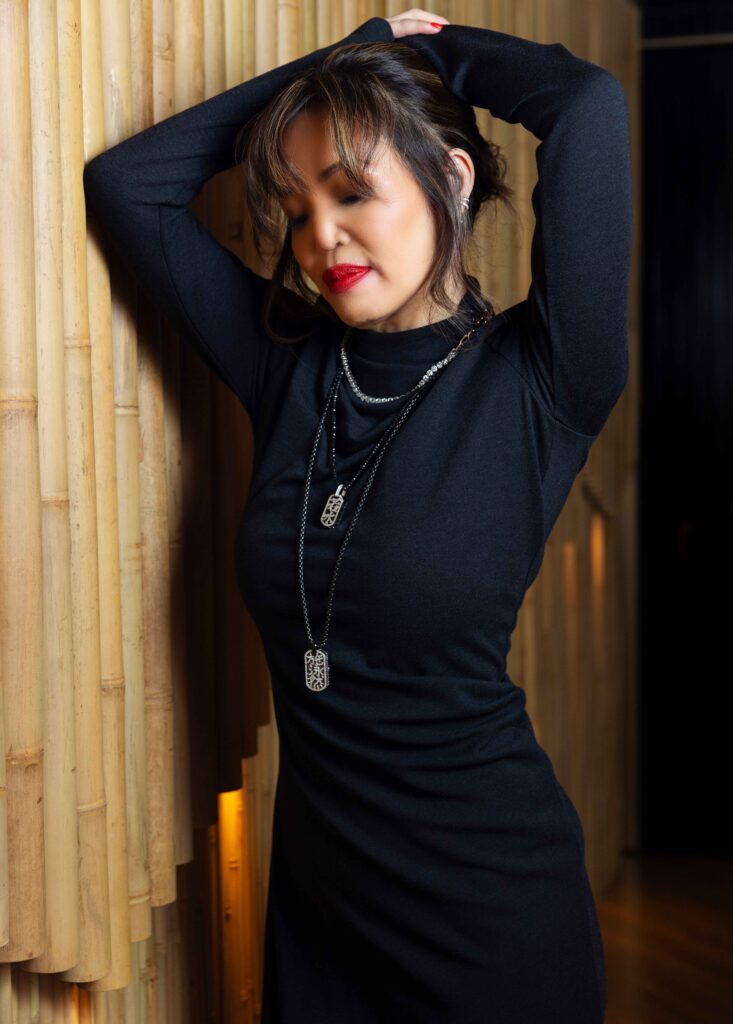
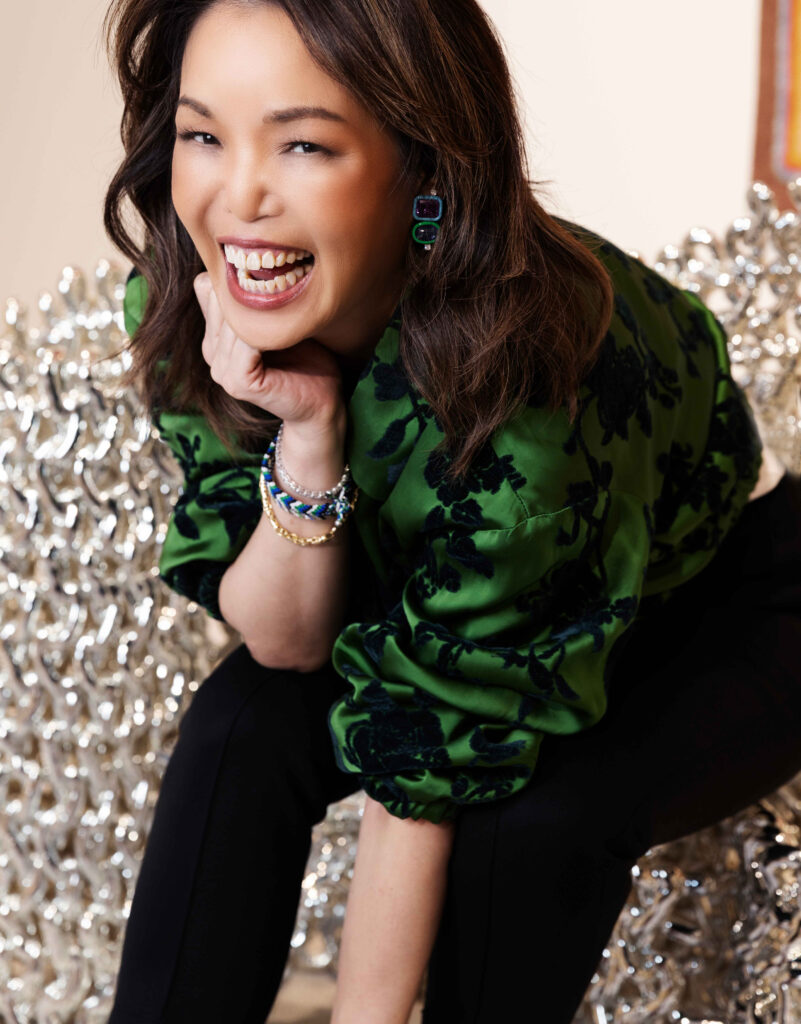
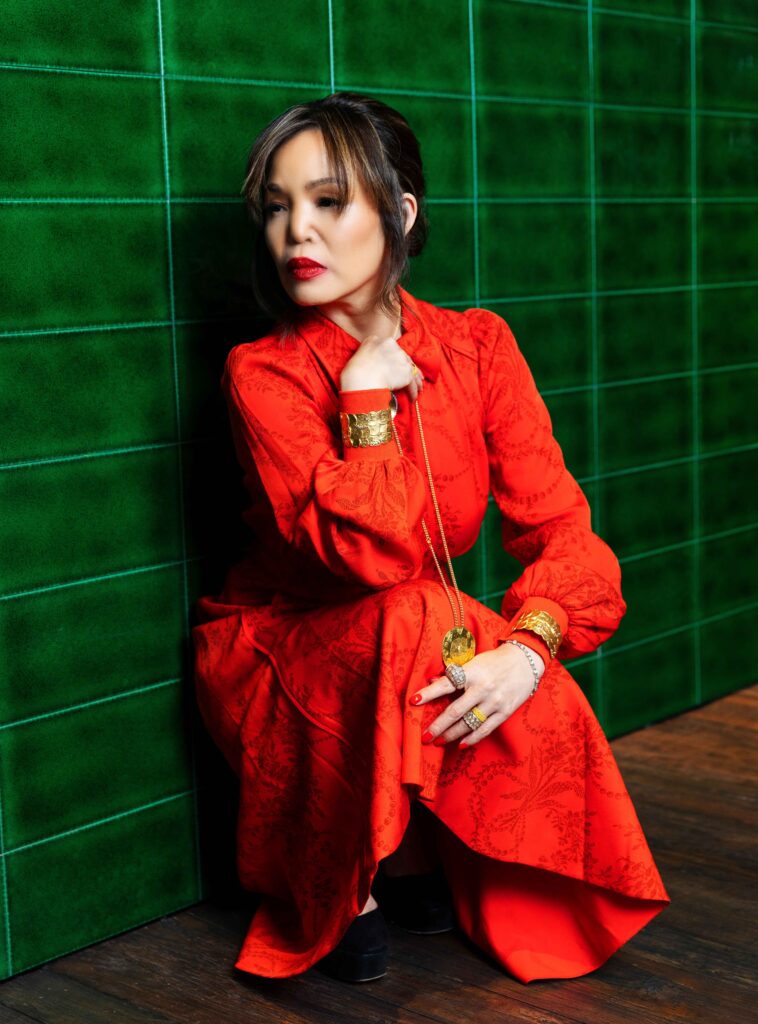
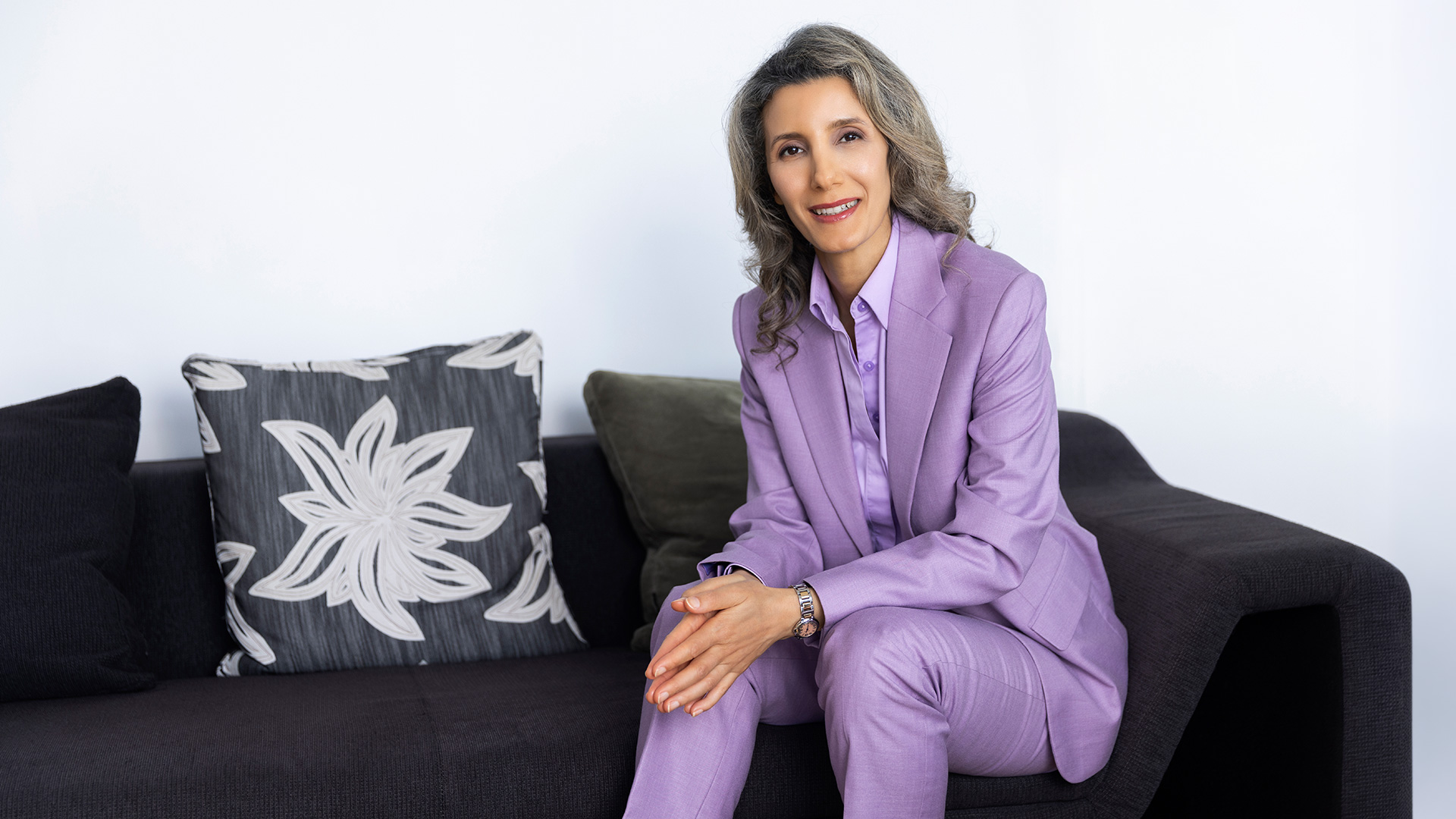
Camille Sze arrives for our cover shoot like the universe is already in on the joke. She makes a face, half comedian, half reluctant model, and gestures toward the camera crew with the energy of someone who definitely wasn’t born for posing. “I know I can’t master this part,” she says, trying a confident stance. Pausing as if expecting her body to correct itself, she manages something between a runway strut and a confused Roomba. The crew laughs; Sze laughs louder.
She doesn’t give up on the pose, though. She grins, adjusts her hands, and leans into her own “quirky” personality with a defiant intensity. Suddenly, the shots snap into place, each one a little better than the last. The President of K.S. Sze & Sons models the way she treats jewellery: not as a performance, but as an interactive craft.
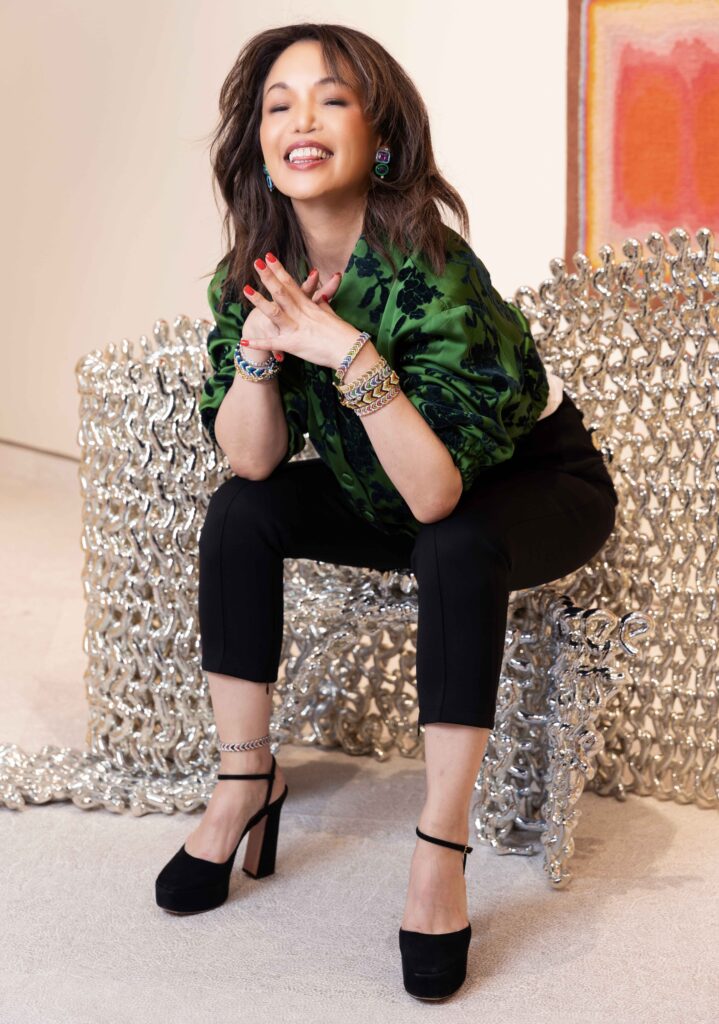
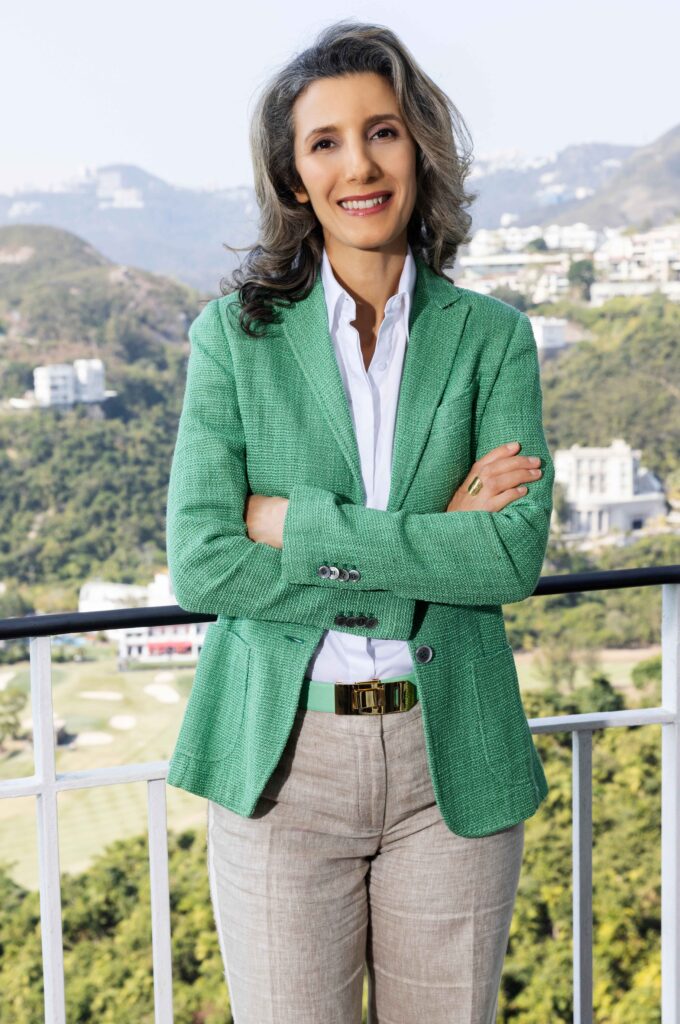
Unusually, Sze has selected two locations for our cover shoot, because if you’re going to tell the story of a woman who returned to her Hong Kong roots to lead a ‘star’ legacy jeweller, you can’t do it with one address. She demands city-wide, connection-forward bling in more than one language. So after wrapping up at Nuovo furniture showroom, she breezes into private members’ club HKGTA Town Club with her entourage of makeup artists, stylists, assistants and K. S. Sze & Sons staff – an entire moving constellation of people who know her rhythms and standards.
Switching a standard photo into a signature statement, she strikes a pose with a bracelet worn on her leg. “It’s my way of stepping into my parents’ and family’s decades-long legacy,” she explains. “It’s challenging, but it’s every moment worth it.” With this gesture, she demonstrates how her sense of humour becomes sincerity and her sincerity strategy. Sze has not only inherited the heritage, but she’s learning to wear it with comfort, impact and a future built into every jewel.
Family First
Before the 2023 passing of her father, Dr. Nien Dak Sze, Sze’s life carried the familiar rhythms of the US, where she was born and educated, and where her family name – though registered in New York as a limited liability company – is a less familiar brand. K.S. Sze & Sons, known as ‘Gold Star Jewellery’ in Chinese, was founded in Shanghai in 1923 by her grandfather, landed in Hong Kong in 1949, and has enjoyed pride of place as a prestige jeweller in the Mandarin Oriental since 1963, before moving to Ice House Street just recently.
Despite being armed with over a decade of award-winning creative and strategic work for Fortune 500 brands, the Harvard University alumnus’s self-doubt shows as she relates her rise to head of the family business, presenting it not as destiny, but as uncertainty, then commitment. “I never asked [the family] if I was capable of taking on the role; it seemed like a rabbit hole of negativity none of us had time to consider,” she notes.
“What I did openly acknowledge was an urgent goal of appreciating and understanding the culture of Hong Kong.” She pauses, as the pivot in the narrative turns from pressure to purpose. “Not only does this matter as a business practice, but it matters to my personal growth, above all. Am I a tourist here in Hong Kong? Or, is it more accurate to say, I am finally home?”
It’s a question that threads through everything Sze does, especially the way she handles the jewels themselves – treating her heritage not like a museum artefact but as something alive and will evolve if you let it.
Second Century
“It’s 2026, and it’s still here,” she says of the now fourth-generation jeweller. “Mission accomplished. But there are a lot of challenges ahead.” The ‘mission accomplished’ tone is not complacency; it’s earned endurance. But now the work changes; her aim is to transform the brand as it journeys to a second successful century.
She’s deeply grateful to her mother, Cecilia Wong Sze, for “putting up with a lot of mistake-making”, a phrase so human it almost feels like a rare gemstone: polished honesty. “I see myself as a genuine work-in-progress,” she states, adding that beginners are bestowed a gift seasoned professionals sometimes lose: the willingness to ask, test and revise.
The mother’s experience has shaped the daughter’s confidence, not by silencing mistakes but by creating an environment where mistakes can become learning. “We are a team,” she says. “But let me be perfectly honest about a clear line of distinction: she is my mother, a trusted guide to listen and learn from. I am more than lucky… I am truly, truly blessed.” Cecilia provides the strategic elegance, while Camille is the relentless driver behind the transformation.
While recognising that working closely with family comes with “pitfalls”, she also names the antidote: trust. She credits her staff as “the walls holding up the company’s earned trust. With that trust comes something indispensable: we create room for each other as a team to grow.”
Priceless Luxury
Sze offers a sharp, practical definition of luxury – one that isn’t designed for social media: “The apex of luxury is not the sheen of marketing.” For her, luxury is comfort, atmosphere, and the feeling that jewellery lovers will be treated with dignity and patience. “Ownership standing guard on the premises is rare in the jewellery business,” she says.
Then she reframes the company’s business philosophy: clients are not trend-chasing consumers; they are collectors, appreciators, people who have risen with Hong Kong’s own jewellery evolution. They don’t want gimmicks; they want fit, adjustment, convenience and aftercare. “We don’t Google their status,” she says. “We don’t play games with their right to be served.” She calls her clients brilliant and their creativity priceless. Jewellery isn’t viewed as a product line, but a shared narrative.
Sentimental Sustainability
She describes stepping into her father’s shoes after his passing as a challenge, then a bond “post mortem”. She unpacked boxes, thousands of gems, read his handwritten notes and treasured his keepsakes. From that exploration came the Leftovers project, a personal search for ways to keep her father closer through the objects he helped shape. It has become popular with a wave of clientele who want to renew their own jewellery and remembrances.
“For every missing earring, there is an opportunity to create a charm or pendant,” she says. “For every heirloom buried at the bottom of a jewellery box, there is an opportunity for deeply meaningful transformation.”
Under her leadership, the company has created custom pieces that transform these ‘leftovers’, including a diamond-encased David Yurman dog tag. Shattered jade doesn’t get thrown away; it gets treasured, reinterpreted and reimagined for clients. They even accept customer requests to repair beloved jewels from other brands, from Cartier to Mikimoto. To Sze and family, it’s an honour and a privilege to help savour love for jewellery.
Camille Cameo
Today, she wears her father’s vintage Burberry necktie close to her heart, adorned with some of her latest creations. She stops for a moment during the interview, eyes focused somewhere between concentration and courage. Then barely audible, like a private thought meant for the universe alone, she whispers to herself: “Let’s do this, Dad. We got this.”
Camille Sze doesn’t just represent K.S. Sze & Sons, she inhabits it – humorously, bravely, and with the kind of conviction that only comes from learning to be at home in your own story. And when a century-old business becomes yours to transform, you don’t pose perfectly for the camera. You revise and adjust constantly, and while you keep the gems close, you step forward.
Interview, Text & Art Direction: Joseff Musa Photographer: Jack Law Videographer: Iris Ventura Hair styling: Annakay Simpson-Upadek Makeup: Jaime Smith Venues: Nuovo Collection Showroom & HKGTA Town Club Jewelleries: K.S. Sze & SONS Jewels, Friendship bracelets, earrings and anklet Wardrobe: Katerin Theys
What’s on? Things to do this May in Hong Kong
Tai Chi 40th Anniversary Concert
One of Hong Kong’s most iconic musical buddies, Tai Chi is rocking the city to mark its joyful 40th anniversary in the music industry. After four decades of big beats and even bigger smiles, Patrick Lui, Joey Tang, Ernest Lau, Eddy Sing and Ricky Chu are ready to celebrate in style in their hometown with a spectacular concert – Tai Chi 40th Anniversary World Tour Live at Kai Tak. This is not just a show; it’s a happy reunion of memories, melodies and harmonies made for fans who’ve been there from day one in 1985 (and for newcomers ready to join).
When: 2 May
Where: Kai Tak Arena
How much: From HK$480
For more information: hkt.hkticketing.com
25+ EEG Family Concert
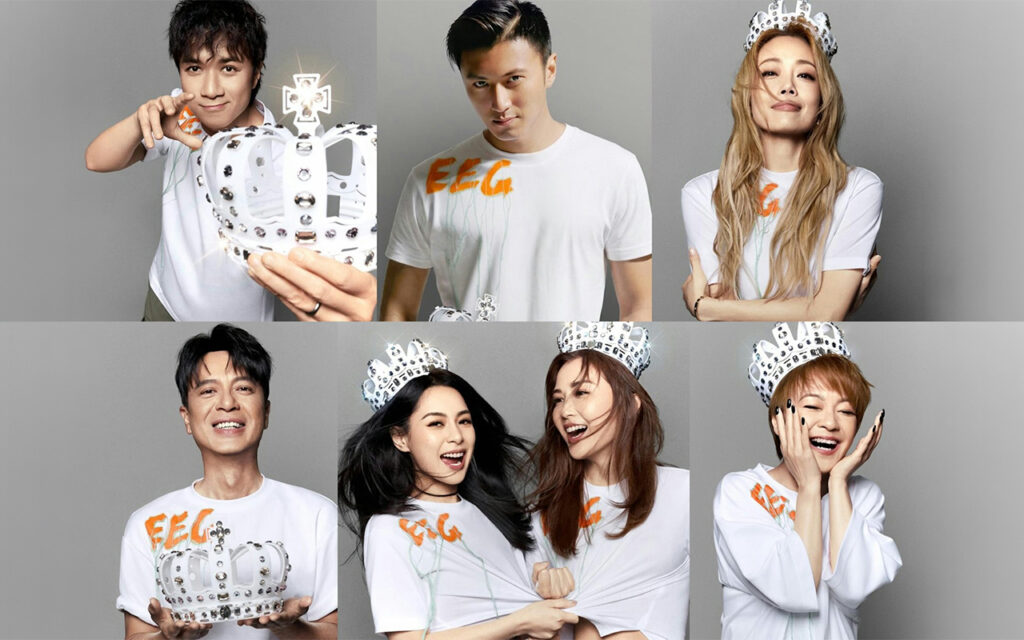
Emperor Entertainment Group casts the city’s music talents over the past quarter of a century for a one-in-a-life-time concert that will blow audiences’ minds. Backed by an epic HK$100 million-plus production budget, a powerhouse creative team of Andrew Lau, William Chang and Carl Wong, and a stage built for wonder, Kai Tak turns into a world-class amusement park of memories. Expect legendary voices, stunning new stars and cross-generational surprises that sing the past into the future.
When: 3 & 4 May
Where: Kai Tak Stadium
How much: From HK$680
For more information: kaitaksportspark.com.hk
Bizet’s Carmen
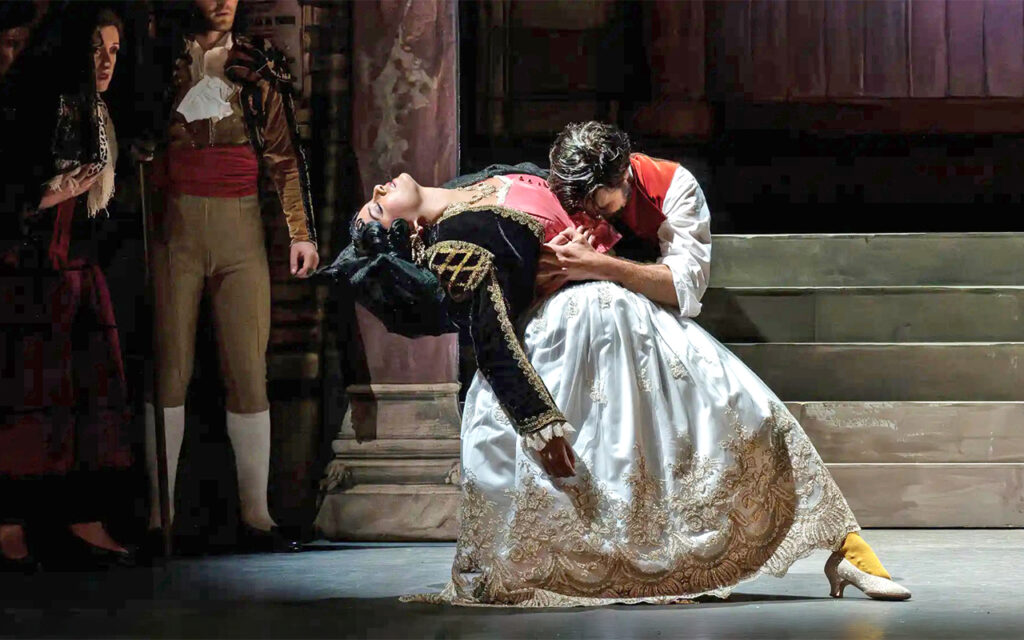
Get ready to meet Carmen, but in 1970s Hong Kong, where the streets sizzle, new dreams pop up everywhere, and every corner feels like a turning point. Presented by Opera Hong Kong in collaboration with the French May Arts Festival, this fresh production directed by Jia Ding places Georges Bizet’s masterpiece against an electrifying era of rapid growth, cultural exchange and pure, unstoppable momentum. The story flutters through iconic locations, with the classic opera’s themes of passion, hope and destiny colliding with the city’s vibe of transformation. Curtain up – history sings its heart out!
When: 7-10 May
Where: Cultural Centre Grand Theatre
How much: From HK$280
For more information: operahongkong.org
DJ Snake Live
The Victoria Harbour shore is about to become a giant dance floor, as DJ Snake headlines a massive outdoor night at Central Harbourfront Event Space. Get your groove on with DJ Fabsabs and DJ Steffunn’s Canto disco. Then sway to the sounds of three-time DMC China Champion DJ Wordy from Beijing and the Chengdu-bred support act, Higher Brothers, climaxed by DJ Snake’s French electronic flair.
When: 8 May
Where: Central Harbourfront Event Space
How much: From HK$680
For more information: frenchmay.com
Laufey in Concert
The Icelandic icon’s A Matter of Time Tour is landing in Hong Kong to deliver her unique brand of cosy energy: silky vocals, piano shimmer and songs that make even your heart check the calendar. Imagine a night where every note feels like a memory you didn’t know you missed – gentle, dreamy, and just a little bit unstoppable. this concert is your ticket to slow-dancing with destiny and crooning along like you own the moment.
When: 12 May
Where: AsiaWorld-Arena, Chek Lap Kok
How much: From HK$699
For more information: livenation.hk
Affordable Art Fair
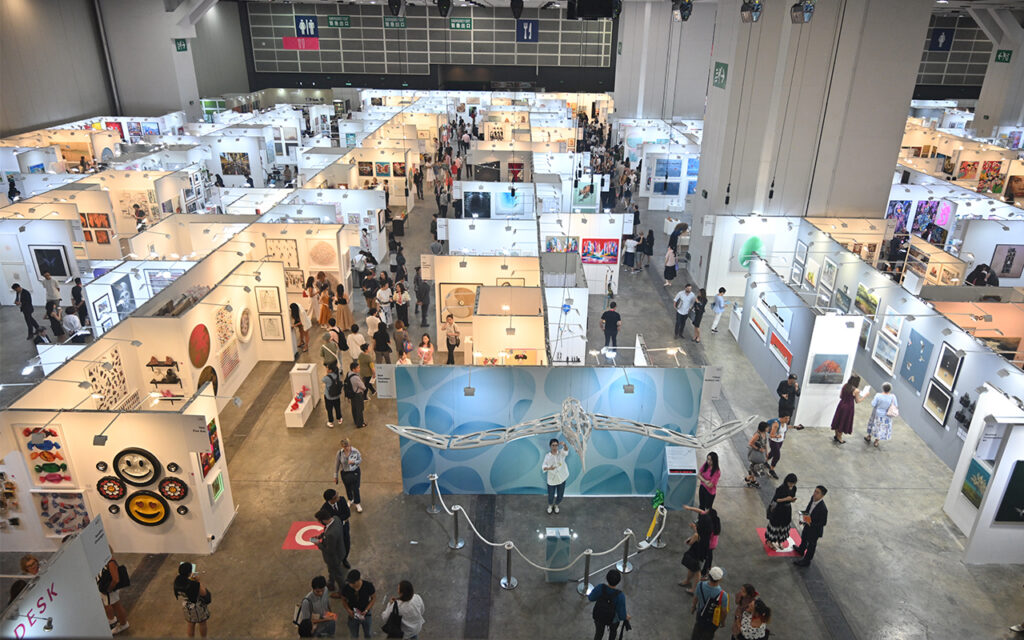
Expect a colourful treasure hunt featuring works by local and international artists, brought here by more than 100 leading galleries to be offered at accessible prices, ranging from HK$1,000 up to a maximum of $100,000. Galleries from across the Asia-Pacific and beyond join the fun – many are regulars at the fair that has grown to encompass some 15 cities worldwide since the 1999 inaugural event in London.
When: 14-17 May
Where: Convention and Exhibition Centre, Wanchai
How much: From HK$175
For more information: affordableartfare.com
Whisky Festival
This annual celebration of whisky pours out the excitement over a wonderful wet weekend through a line-up of global brands, rare editions and seriously fun tastings that will have your palate doing happy backflips. The Hong Kong Whisky Festival is your passport to the fascinating world of whisky. You can toast to great discoveries and savour limited-edition bottles that feel like little liquid legends.
When: 16 & 17 May
Where: InterContinental Grand Stanford Hong Kong, Tsim Sha Tsui East.
How much: From HK$188
For more information: hongkong.intercontinental.com
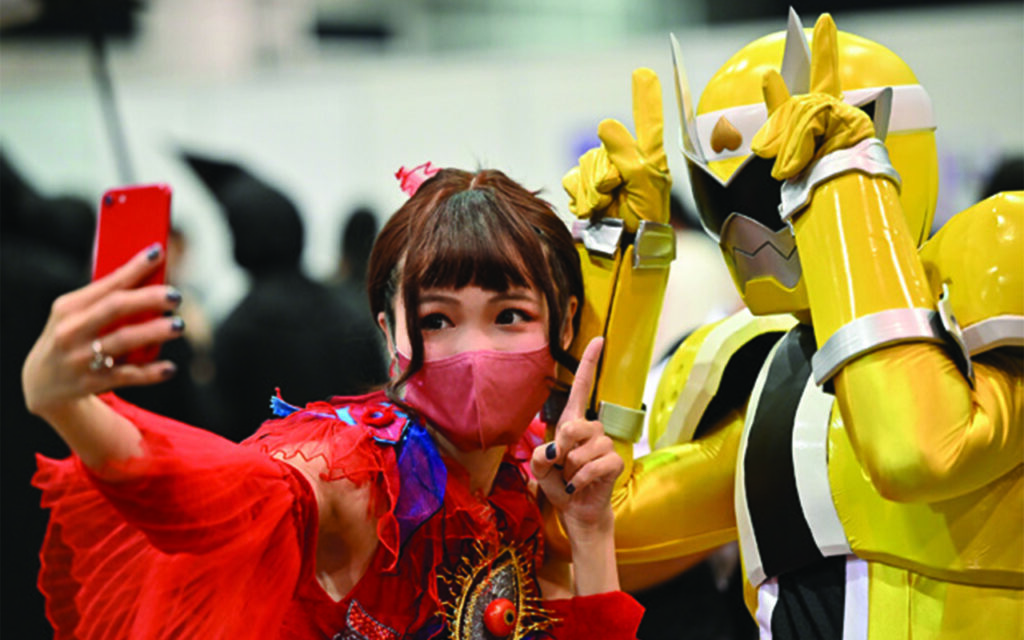
Comic Con
Gear up to cosy up with blockbuster studios, major entertainment IPs, and global celebrity sparkle. Hollywood and Western cinema, Asian cinema, gaming, collectibles and star-studded moments that will make your camera icon sweaty. Expect packed press conferences, epic one-on-ones with Mads Mikkelsen, Jamie Campbell Bower, Giancarlo Esposito, Katie Leung and more, and fans in full cosplay power.
When: 29-31 May
Where: Convention and Exhibition Centre, Wanchai
How much: From HK$150
For more information: hkcomiccon.com
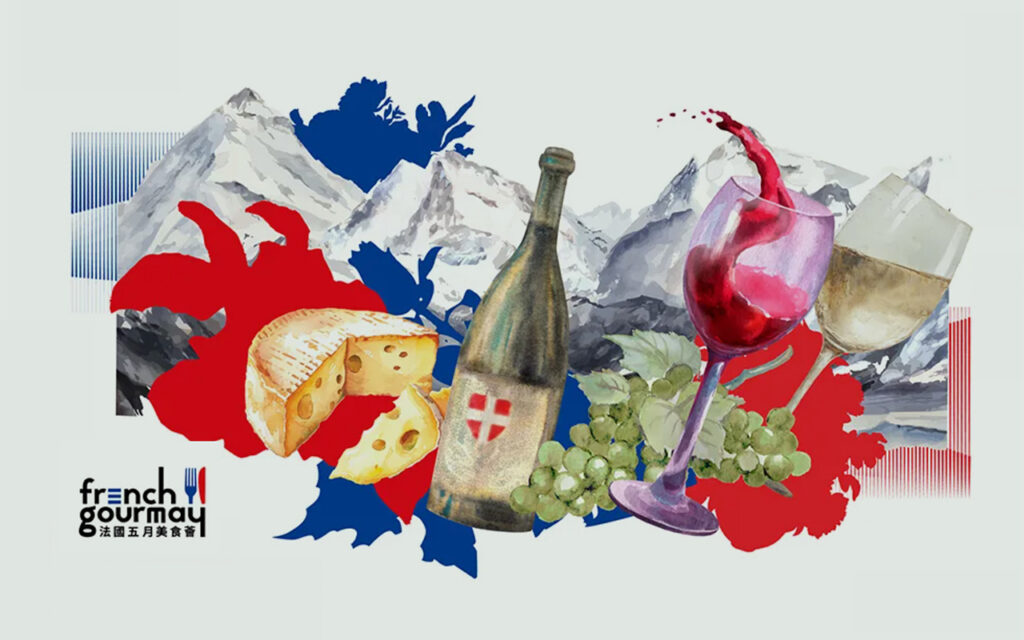
French GourMay
This major Food & Wine Festival is proudly organised annually under the French May Arts Festival umbrella. Now in its 17th edition, French GourMay is zooming its spotlight on the French Alps, unveiling Savoie – a region small in size, big on personality, and bursting with charm.
When: Until 31 May
Where: More than 150 partner restaurants, retailers and learning centres roll out special offers for the city’s foodies.
How much: Various prices and venues
For more information: frenchgourmay.com
The cocktail Hour: Small, elegant watches return to grace wrists, telling of a timely preference for restraint
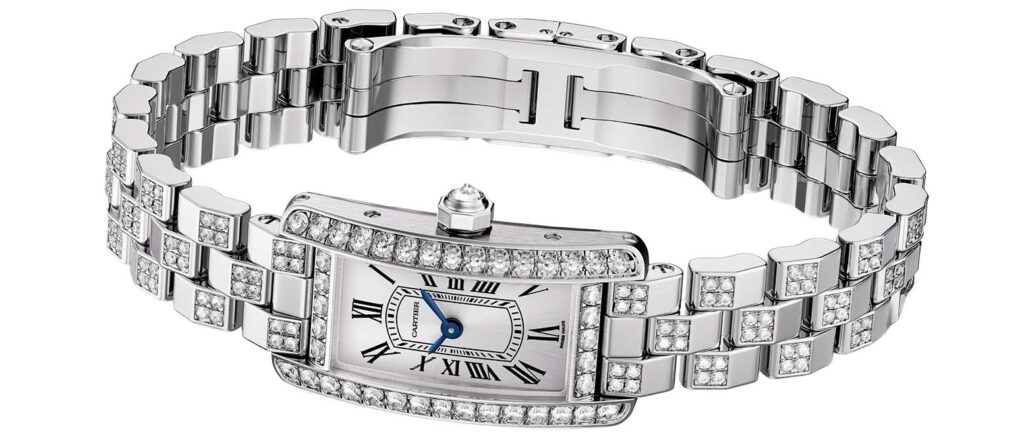
The cocktail watch is back, not as a relic, but as a rebuttal. In a culture long dominated by oversized sports watches and hyper-technical narratives, the revival of small, elegant timepieces signals a renewed appetite for restraint, intimacy and style. Closely aligned with the neo-vintage movement, cocktail watches today occupy a space where nostalgia meets modern confidence.
Historically, cocktail watches were never about performance. Rising to prominence from the 1930s through the 1960s, they were designed for evenings, interiors and proximity. Slim cases, precious metals, expressive dials and subtle movements defined the category. These watches were meant to be seen in low light, across a table or bar, not across a room. They were accessories first, instruments second.
Their fall from favour was almost inevitable. The late 20th century redefined what a serious watch looked like. Bigger cases, visible complications and rugged identities reshaped collecting priorities. Elegance was sidelined in favour of utility. Considered too small, too decorative and too quiet, cocktail watches were pushed into the trays of vintage dealers and forgotten archives.
Small Change
The neo-vintage revival has reversed that trajectory. As collectors reassess the excesses of modern watch design, attention has shifted back to proportion, wearability and emotion. Neo-vintage does not demand strict historical fidelity; instead, it values continuity. Watches from the late 1980s to early 2000s, along with contemporary designs inspired by earlier eras, offer modern reliability with lost sensibilities intact.
Cocktail watches thrive in this environment. Case sizes of 32 to 36mm that were once dismissed as obsolete now feel deliberate and sophisticated. On the wrist, these proportions read as elegant rather than timid, especially as fashion embraces tailoring, fluid silhouettes and gender-neutral styling.
Design language sits at the centre of the revival. Neo-vintage cocktail watches retain classic elements, including sunburst or lacquered dials, applied indices and leaf or dauphine hands, yet refine them through restraint. Branding is quieter, and typography feels considered. Colour palettes lean toward champagne, graphite, oxblood, petrol blue and muted gold, referencing the past without drifting into costume.
Quiet Power
Modern movements anchor the category firmly in the present. Improved calibres, extended power reserves and dependable accuracy remove much of the fragility once associated with vintage elegance. As a result, cocktail watches no longer exist solely for special occasions. They have become daily companions for wearers who value comfort, intimacy and discretion.
Culturally, the cocktail watch mirrors shifting ideas of luxury. In a marketplace saturated with logos, scale and algorithmic hype, understatement has gained currency. A cocktail watch communicates taste through proportion, finish and context, not volume. Often, it passes unnoticed by most, and that quiet invisibility becomes its greatest strength.
For collectors, this discretion encourages narrative collecting. Cocktail watches rarely dominate auction headlines or social-media cycles. Their appeal unfolds slowly, shaped by wear rather than hype. Many collectors describe how these watches change posture, mood and presence.
Champions of Elegance
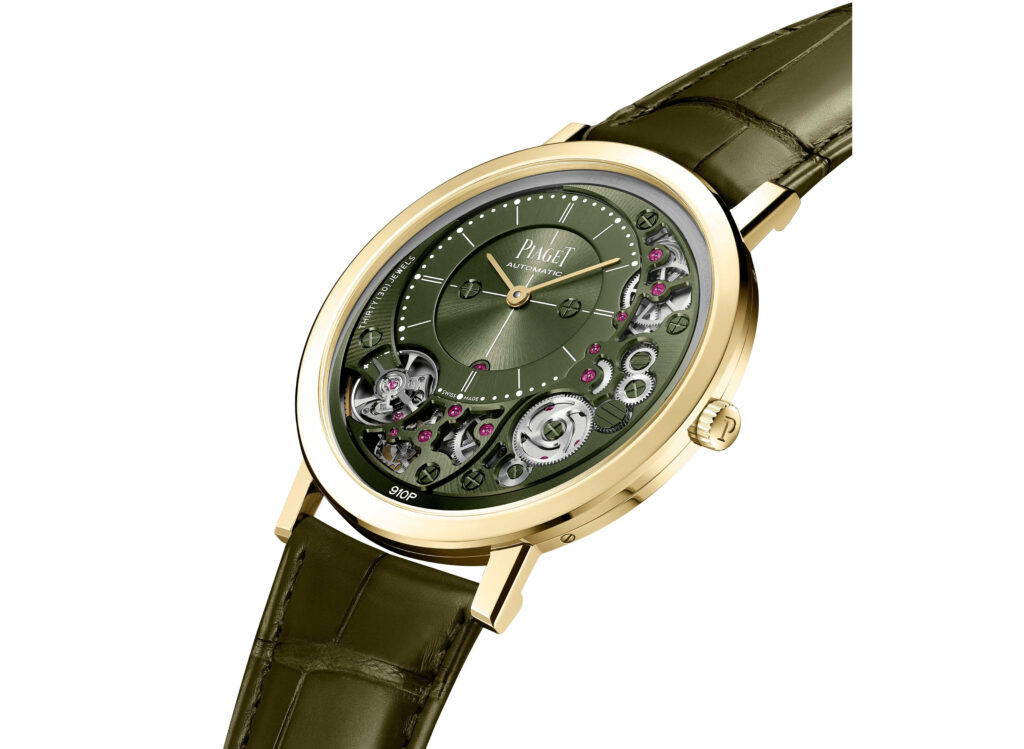
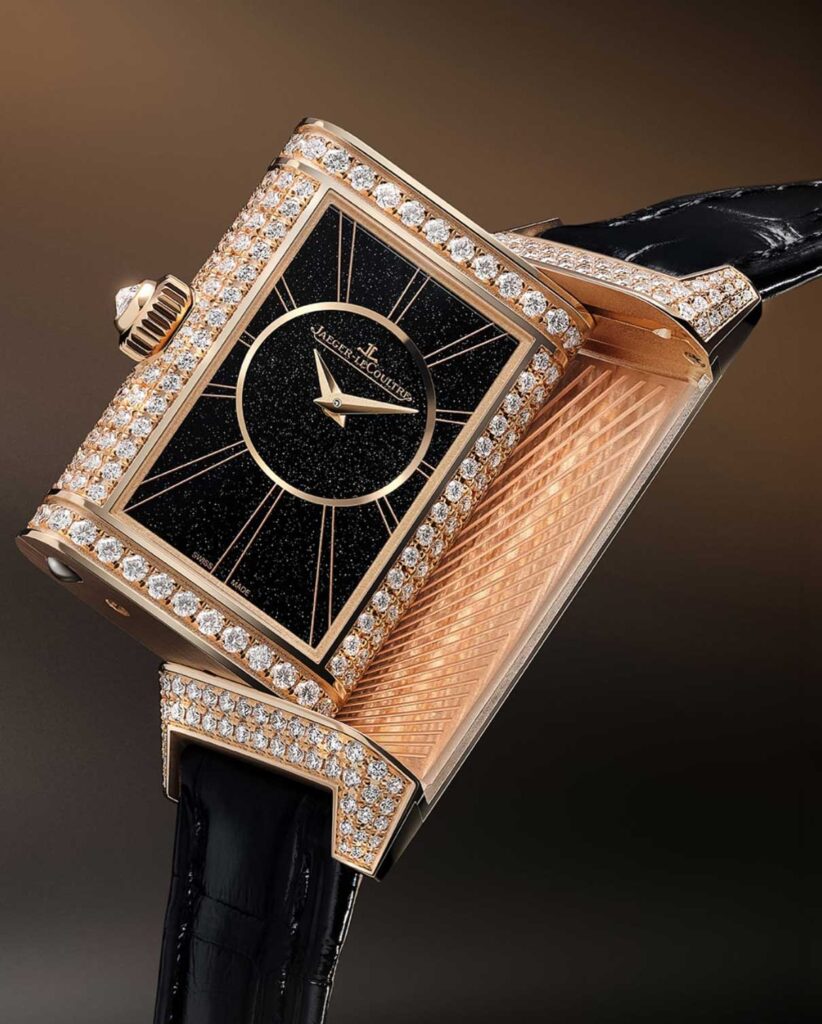
Several brands have emerged as neo-vintage reference points for collectors and fashion enthusiasts alike. Cartier remains foundational, with the Tank, Santos-Dumont and Baignoire defining timeless elegance. Piaget champions ultra-thin refinement through the Altiplano and archival dress models. Jaeger-LeCoultre balances heritage and modernity with the Reverso and Master collections.
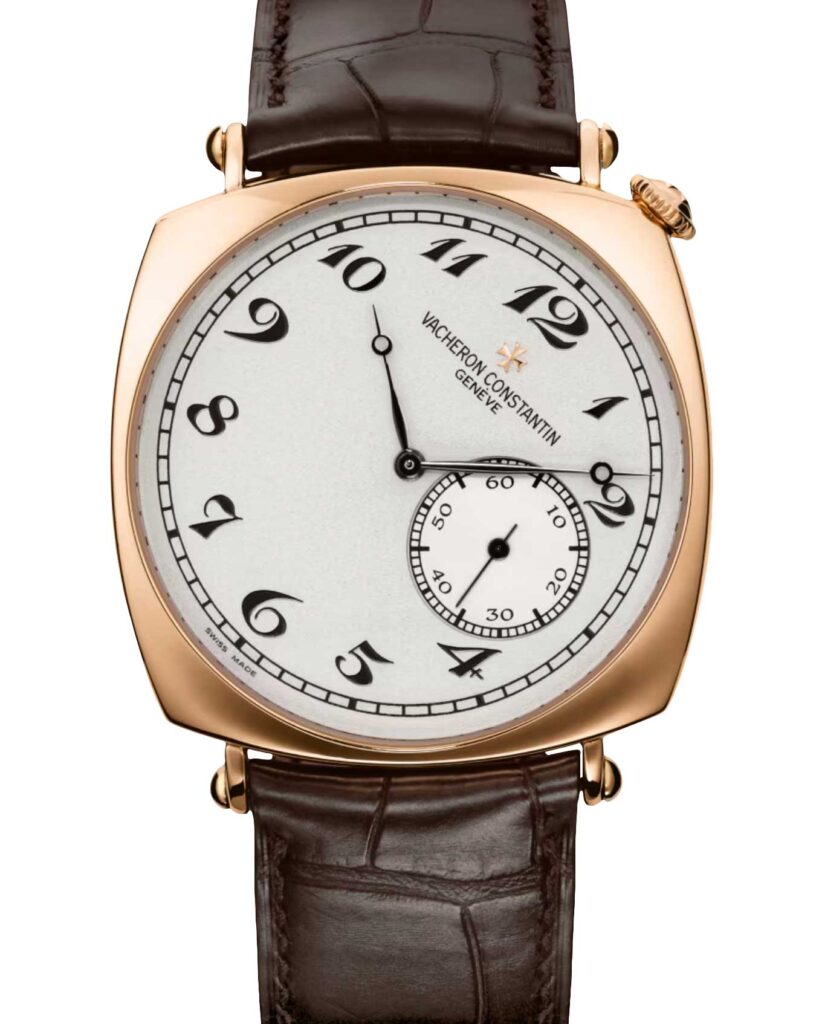
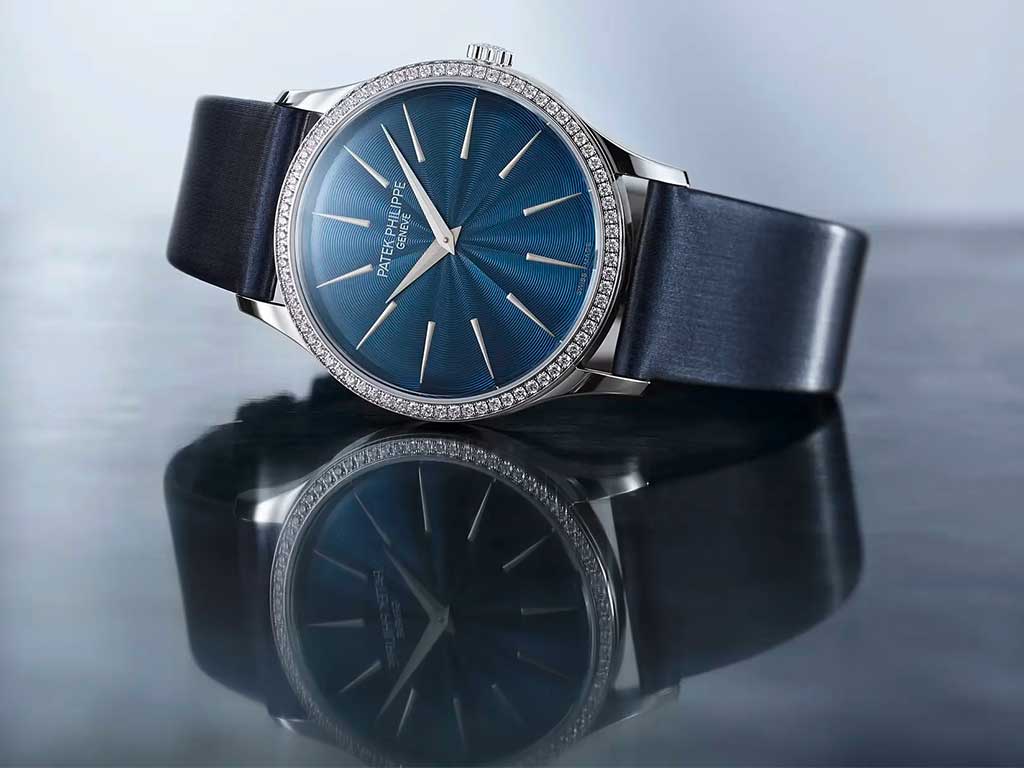
Vacheron Constantin offers classical restraint through the Patrimony and Historiques lines. Patek Philippe showcases understatement with the enduring Calatrava. Breguet brings guilloche, elegant numerals and old-world gravitas into contemporary relevance. The De Ville, in particular, represents the quieter, more refined side of Omega.
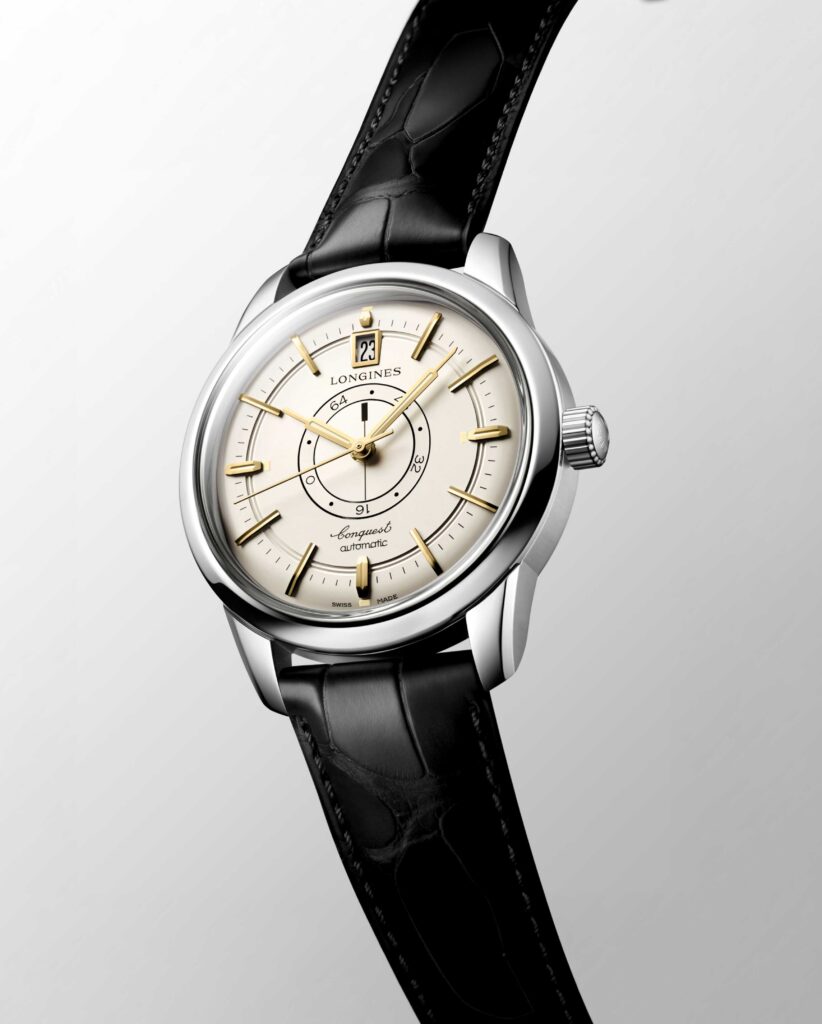
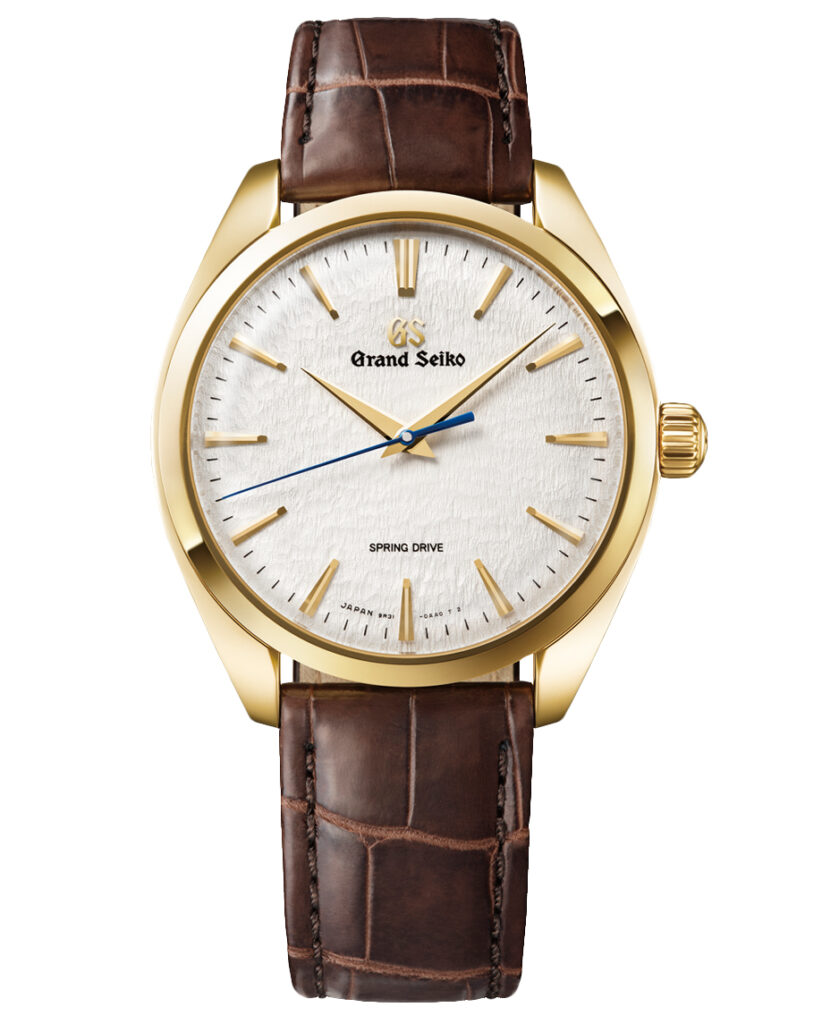
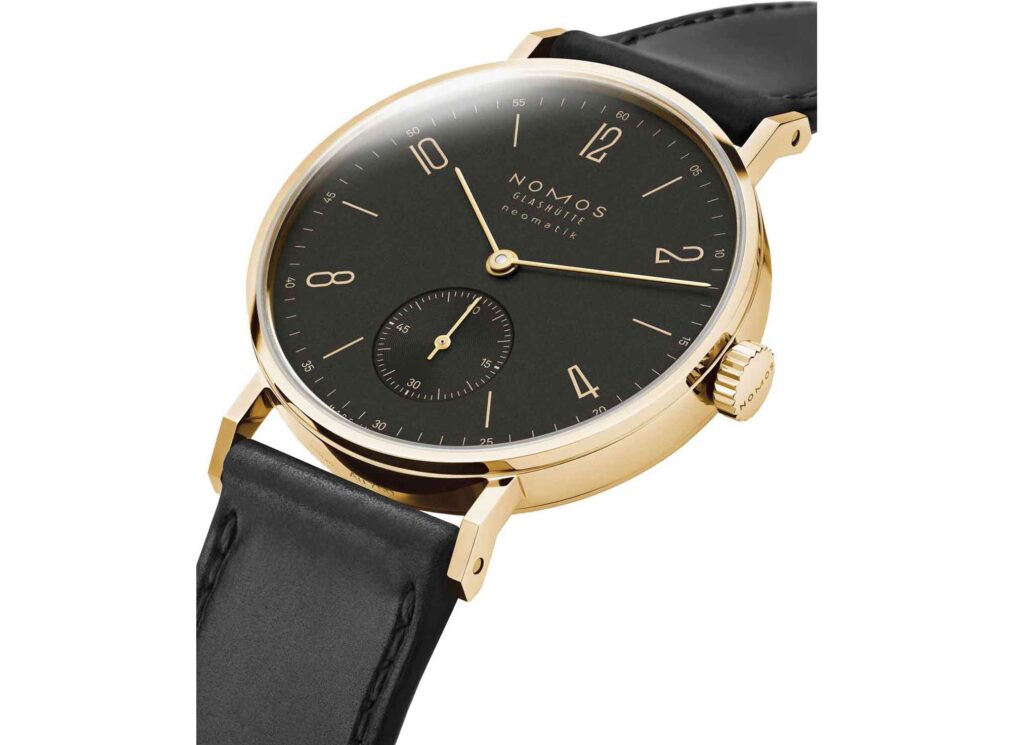
Longines translates mid-century proportions into accessible neo-vintage design through its Heritage line. Grand Seiko, within the Elegance collection, pairs disciplined sizing with exceptional dial craft. Nomos Glashütte completes the landscape with modernist clarity and fashion credibility.
For fashion-oriented wearers, the appeal is potent. Cocktail watches operate as jewellery, finishing an outfit instead of overpowering it. They pair easily with tailoring and eveningwear as well as denim, reflecting a broader shift toward personal styling over prescriptive dress codes. A slim watch worn with a knit polo, silk blouse or relaxed suit feels current precisely because it resists spectacle.
Proportional Appreciation
Ultimately, the neo-vintage cocktail watch reflects a maturing watch culture. After decades of escalation, the pendulum swings back toward proportion, elegance and presence. In choosing a cocktail watch, the wearer opts out of noise – a decision that feels increasingly deliberate in a culture driven by scale and speed. Quiet confidence becomes the statement. Time remains, but urgency dissolves.
This renewed appreciation signals a broader recalibration within horology itself. Mechanical watches are no longer judged solely by specifications, depth ratings or complication counts. Instead, value emerges through wear, proportion and emotional durability. Cocktail watches remind the industry that intimacy matters as much as innovation.
Neo-vintage sensibilities have also softened long-standing divisions within watchmaking. Cocktail watches were once marketed rigidly as men’s dress pieces or women’s jewellery. Today, proportions, straps and materials allow wearers to define the watch themselves. Gender becomes secondary to fit, feeling and expression.
Case for Humanity
As brands and collectors look ahead, the neo-vintage revival offers a roadmap forward. In smaller cases and quieter dials, watchmaking rediscovers its human scale. The cocktail watch, once overlooked, now feels essential. It asks not how much a watch can do, but how well it fits a life thoughtfully lived, deliberately paced, and attentively worn.
In that sense, the revival is less a trend than a correction, restoring balance between expression and excess. For those who understand it, the cocktail watch becomes a subtle yet unmistakable signature, marking time with grace, intention and restraint.
Under the hammer: Fab Four auction sales (April 2026)
Ruby February
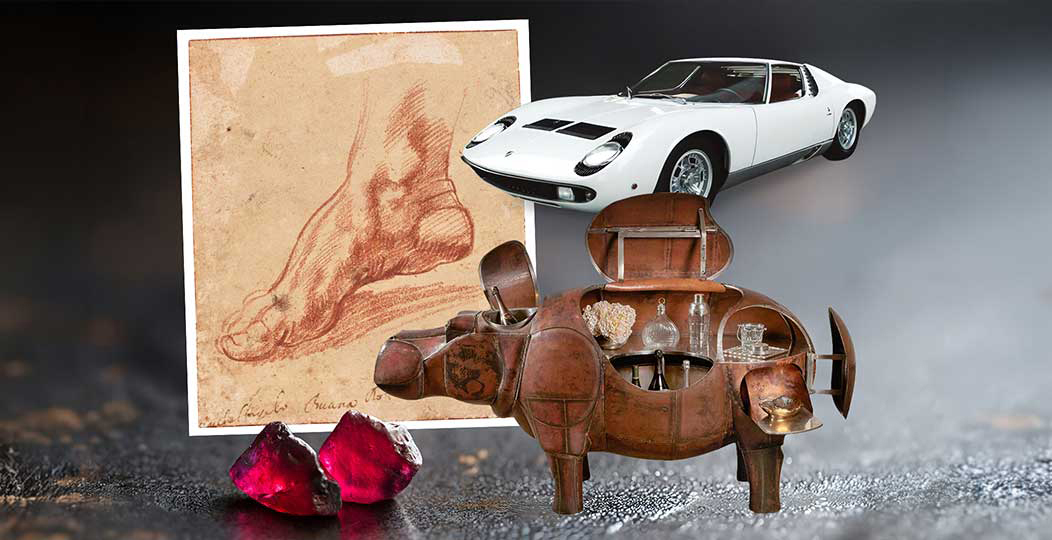
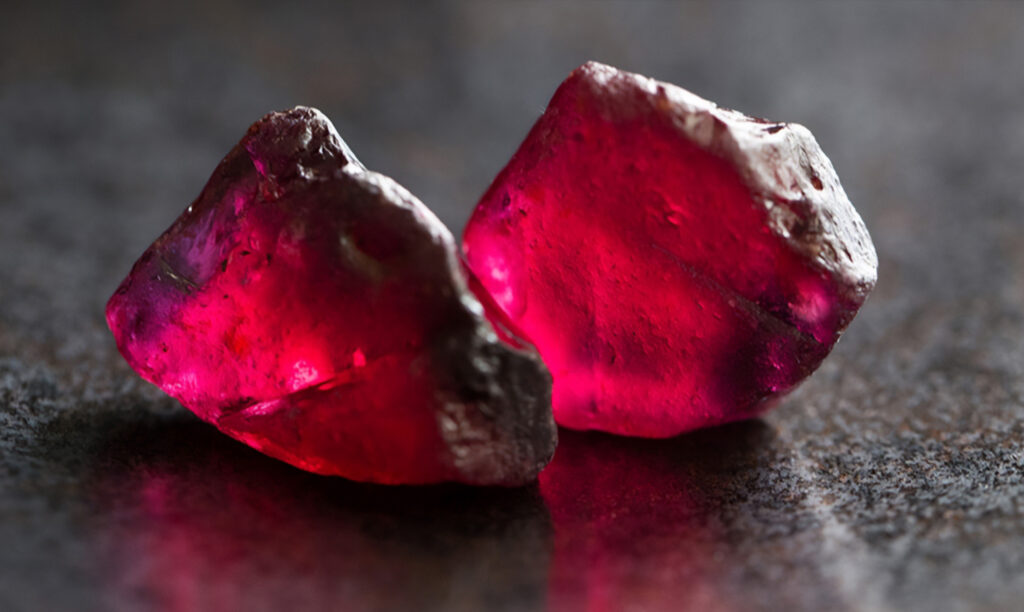
Gemfields mining group generated a substantial HK$415 million from its recent mixed quality ruby auction held in Bangkok, underscoring continued international demand for responsibly sourced gemstones. Some 189,620 carats of rough rubies changed hands at the February sale, primarily from the Montepuez Ruby Mine in the northeast, which is recognised as one of the world’s most significant ruby deposits.
Mozambican rubies have gained prominence alongside traditional Burmese stones over the past decade. The structured auction platform provided by UK-headquartered Gemfields emphasises transparency, traceability and ethical-sourcing standards, reinforcing buyer confidence.
Offering a broad spectrum of sizes, saturations and clarity grades, the auction attracted high-jewellery house suppliers as well as manufacturers. Attendees could admire the splendid stones at private viewings before the online bidding. The strong results, with most lots successfully placed, marked a reaffirmation of growing investor and industry appetite for rubies and other coloured gemstones.
Prince of a Ride
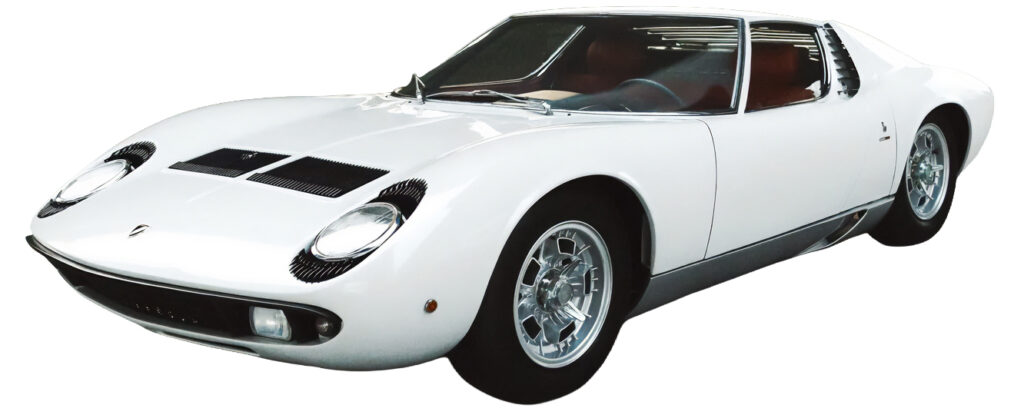
A sleek white 1968 Lamborghini Miura P400 originally owned by a Saudi prince was steered to a handsome price of HK$16.8 million by Broad Arrow Auctions, reaffirming the model’s status as one of the most important early supercars. Introduced in 1966, the Miura transformed automotive design with its revolutionary mid-engine layout, placing a transverse 3.9 litre V12 behind the cabin and producing about 350 horsepower. This engineering breakthrough established the template for generations of high-performance sports cars that followed.
Signature details such as the delicate ‘eyelash” headlamp surrounds and sensuous low profile contribute to its enduring visual drama. With fewer than 280 early Miura variants produced, surviving examples remain highly sought after by collectors worldwide.
The model’s consistently lofty auction results reflect sustained global demand for blue-chip Italian classics, particularly landmark cars that reshaped performance and styling standards. Sixty years after its debut, the Miura remains both a sculptural icon and a defining milestone in Lamborghini’s history.
Foot of Note
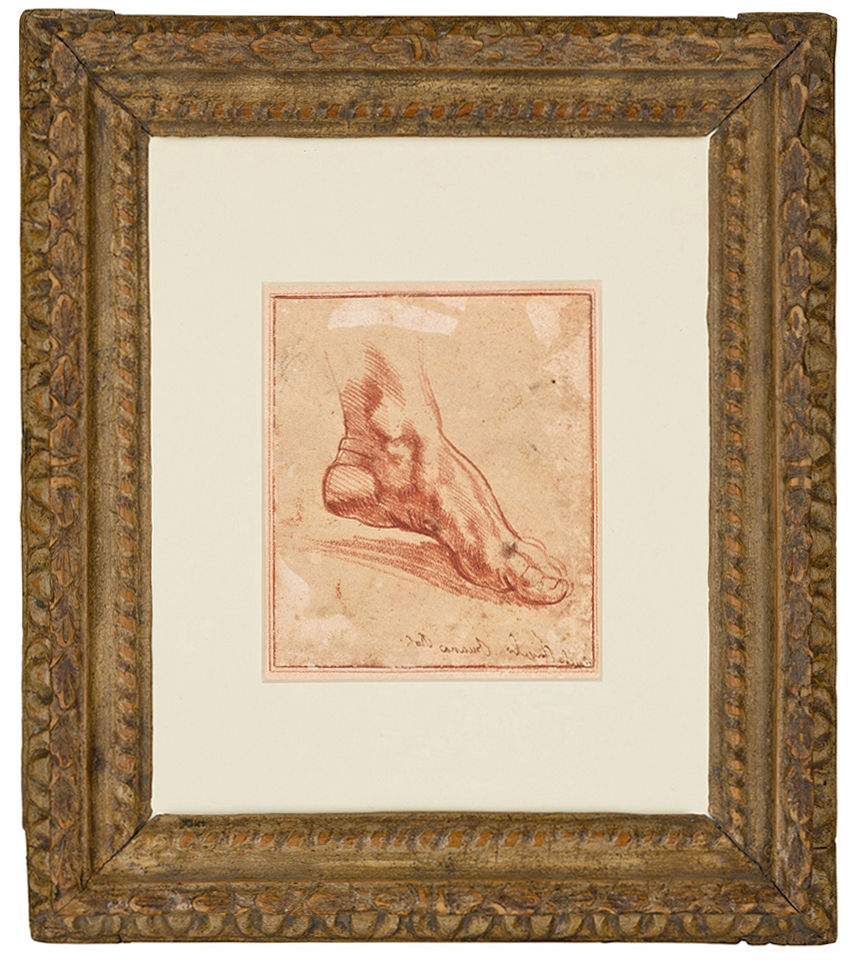
A rare, recently rediscovered Michelangelo drawing realised a staggering HK$212.8 million at Christie’s in New York, more than 10 times its high estimate in a new auction record for the Renaissance master. This diminutive sketch of a foot offers intimate insight into the artist’s creative process, revealing how he refined complex compositions through dynamic anatomical exploration and compositional experimentation.
Thought to date to 1511-12 and executed in red chalk on paper, it is one of countless studies made for Michelangelo’s monumental task of painting the Sistine Chapel ceiling. Most of those that survived are held in major museum collections, making any newly available example a landmark event.
The drawing in question, which had been sent to the auction house on spec by an owner unaware of its illustrious provenance, relates to a fresco of the Libyan Sybil stepping down from her throne. More than five centuries after its creation, it stands as a powerful testament to Michelangelo’s enduring influence and the continued global demand for Old Masters of the highest tier.
Hippo
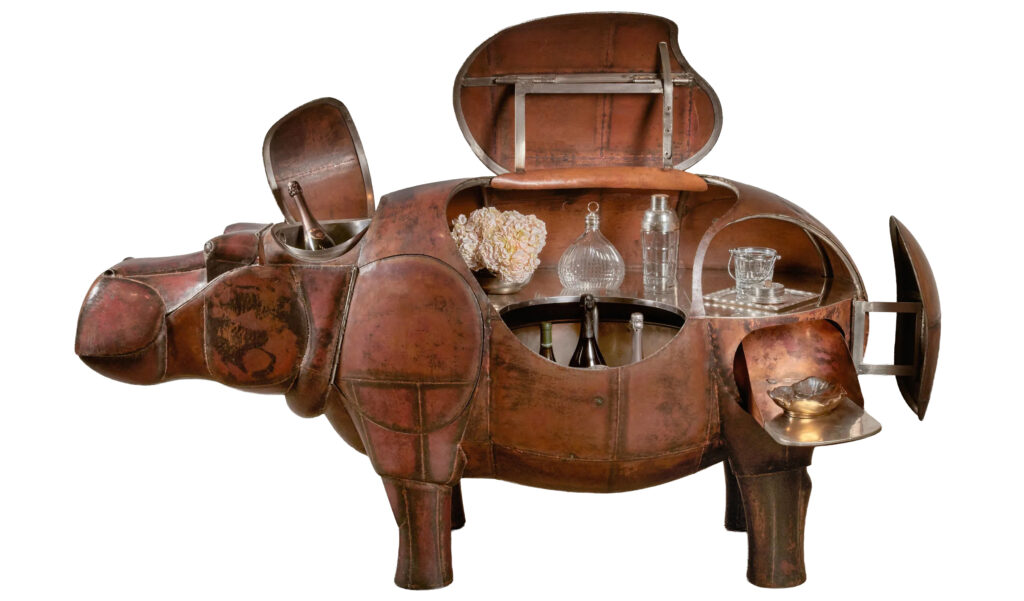
François Xavier Lalanne’s celebrated Hippopotame Bar achieved an extraordinary HK$245.9 million at auction in New York, underscoring the continued global appetite for museum-quality design with sculptural presence. Created in 1976 as part of the famed French sculptor’s iconic animal-furniture series, the baby-size hippo is cast in hand-wrought copper and opens to reveal a fully-fitted bar. Lalanne’s appeal among collectors has long been defined by the duality between monumental solidity and playful utility.
Subsequently produced in a limited edition in bronze, the unique piece stands as one of the most coveted examples of 20th-century French design. The exterior captures the muscular form and textured hide of a resting hippopotamus, while the interior surprises with polished compartments designed to hold bottles and glassware. At once functional object and fantastical sculpture, it epitomises Lalanne’s ability to merge fine art, design and wit.
The Sotheby’s result positions this 50-year-old bar as the most valuable design object ever sold at auction. While reflecting sustained demand for rare, statement-making works, it reaffirms Lalanne’s enduring influence in the collectible design market.
Waves of Elegance at Ferretti’s Previlege Day: Riding the crest of culture and luxury at Hainan Clearwater Bay
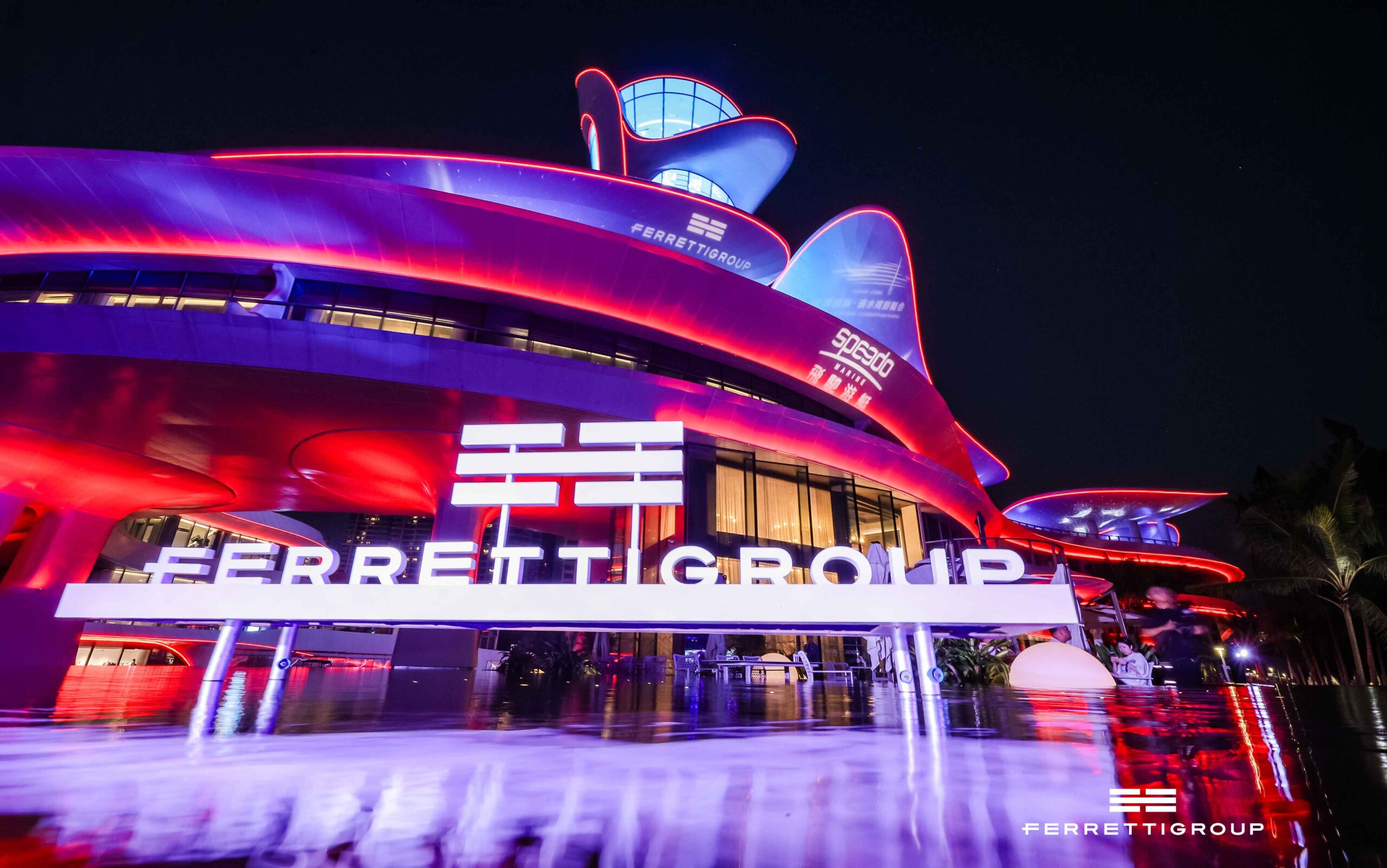
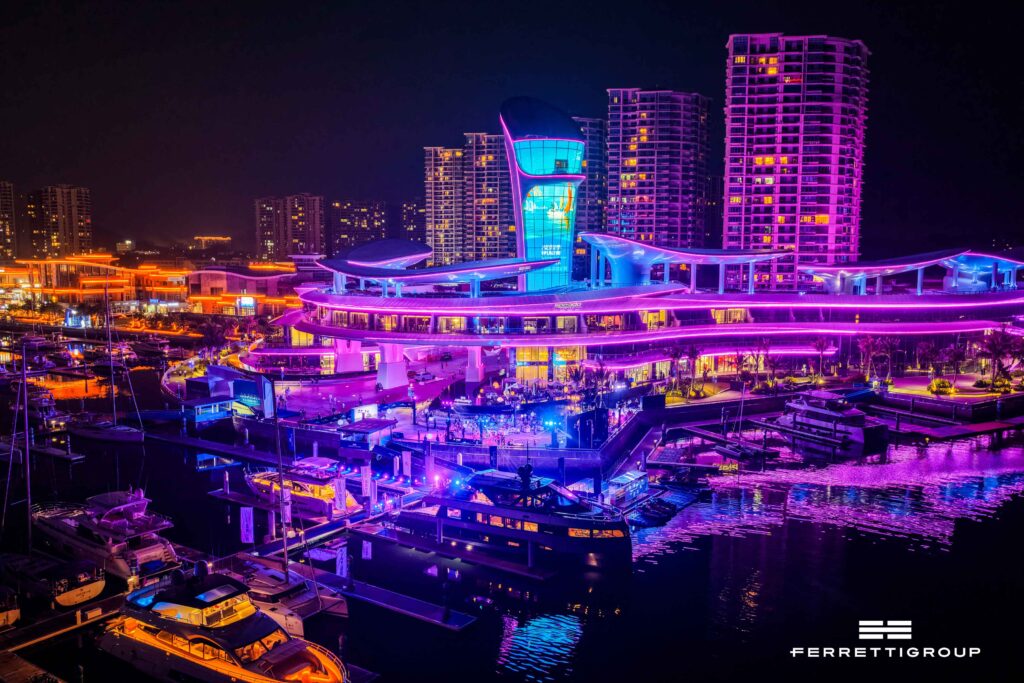
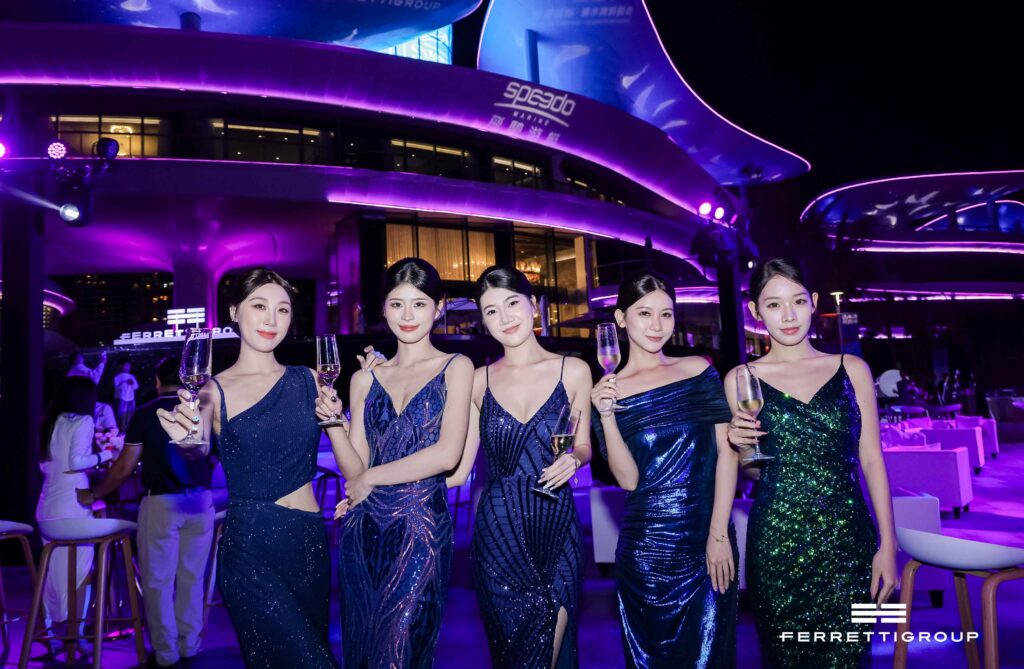
When it comes to making waves in the world of luxury yachting, Ferretti Group has truly set the tide rolling at the stunning Hainan Clearwater Bay. Last February 2 to 8, 2026, this elite Italian marque made an unforgettable splash at the Clearwater Bay International Yacht Show, partnering with its exclusive mainland China dealer, Speedo Marine, to showcase a fleet that’s as breathtaking as the bay itself. Against the backdrop of the new marina development, Ferretti’s sleek vessels gleamed like diamonds on the water, turning heads and raising eyebrows among luxury connoisseurs and maritime aficionados alike.
But the real wave of excitement hit on February 23, when guests, owners, and VIPs gathered at the waterfront for a double celebration that was nothing short of extraordinary, with anticipation as the world premiere of the stunning Ferretti Yachts 580 and the Wallywhy200 in its exclusive Loro Piana limited edition took centre stage.
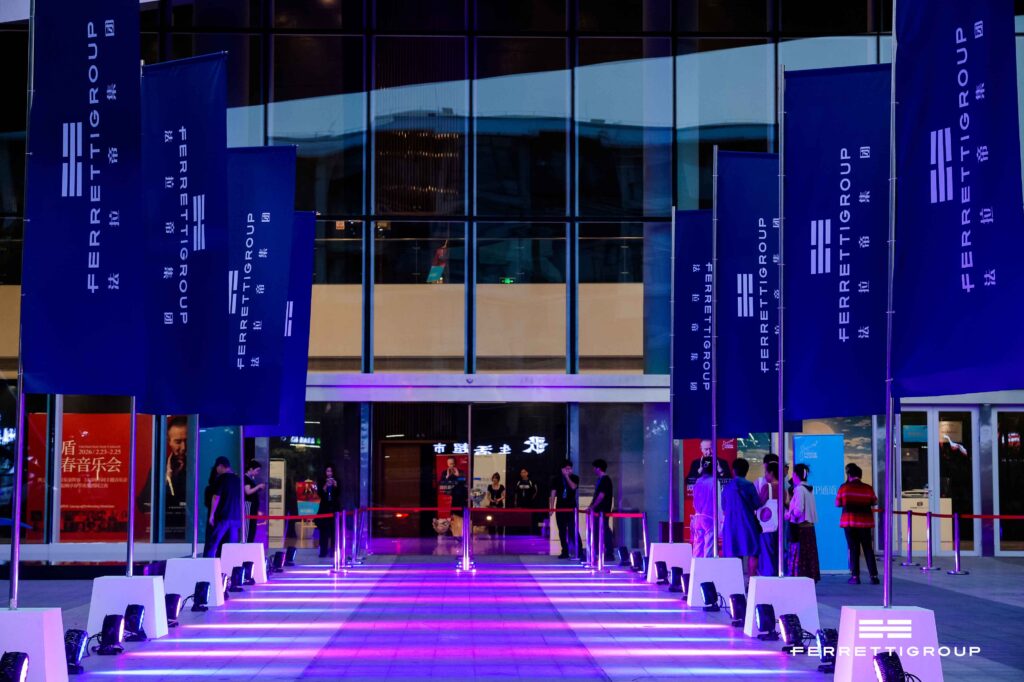
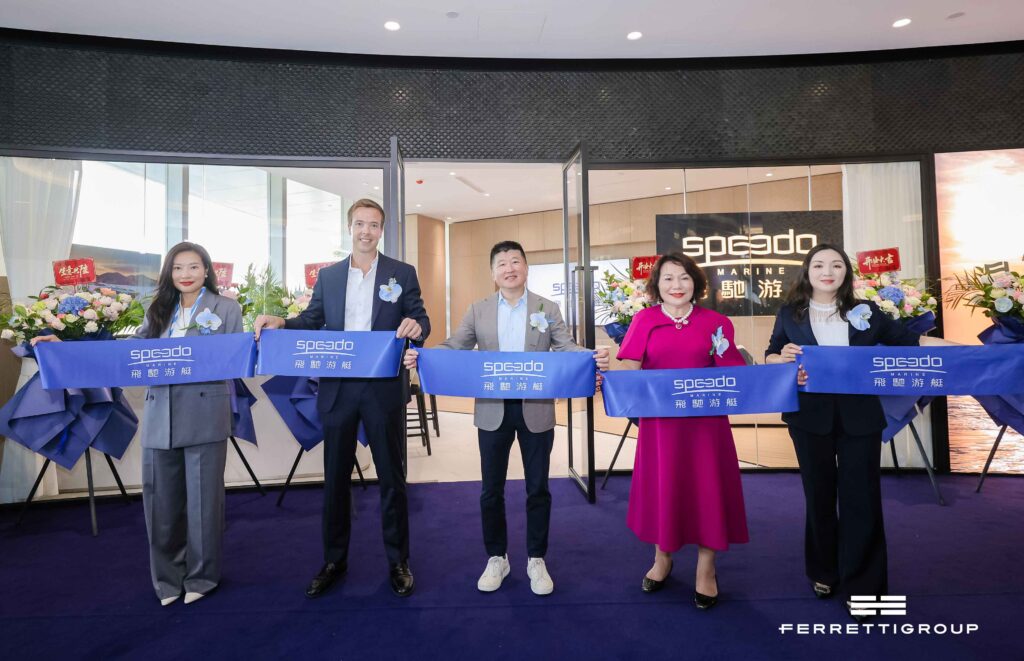
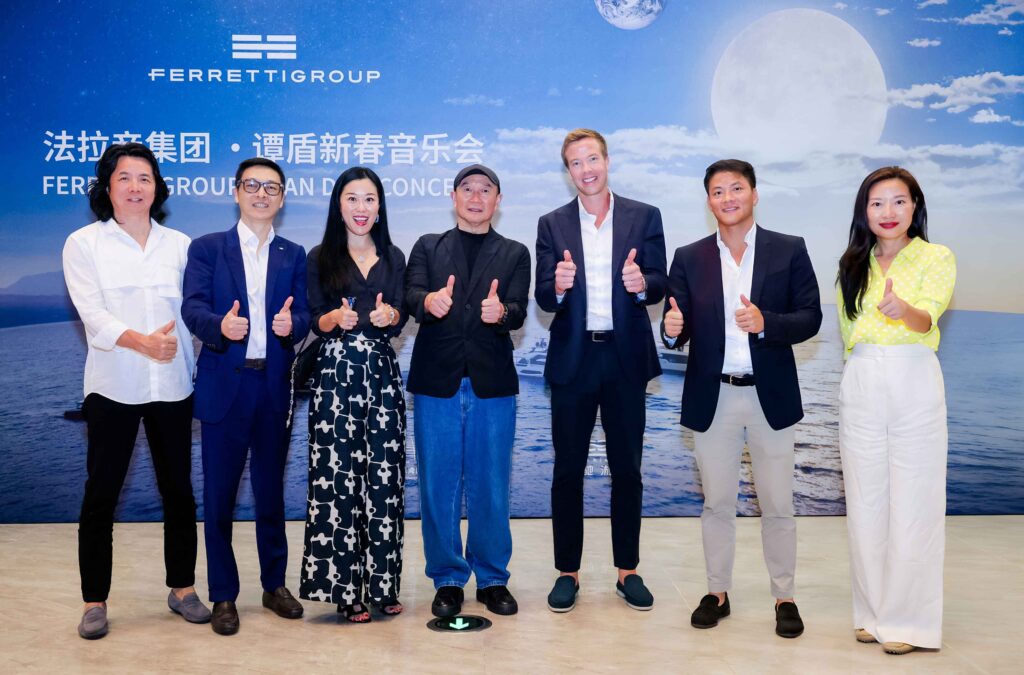
Adding to the thrill, Speedo Marine unveiled its brand-new showroom, an elegant space that promises to be the epicentre of luxury yachting in the region. But Ferretti’s wave of cultural engagement didn’t stop there. From February 23 to 25, the company’s commitment to artistry and tradition was on full display at the Tan Dun New Year Concert held at the Clearwater Bay Maritime Art Center. Imagine a night where music and maritime elegance melded seamlessly, Tan Dun’s compositions flowing like the gentle undulations of the sea, each note illuminating the night like the shimmering wake behind a yacht gliding through crystal-clear waters.
Meanwhile, the Riva Brand Exhibition took visitors on a voyage through 184 years of Italian nautical excellence. From historic shipyards that crafted legendary vessels to silver-screen icons that immortalized the Riva name, the exhibit was a treasure trove of stories, craftsmanship, and timeless design. Visitors embarked on an immersive journey, discovering the evolution of a brand that has defined the essence of elegance on water for nearly two centuries.
For yacht owners and connoisseurs alike, it was a wave of memories and moments that will ripple through the years to come. With its blend of cutting-edge design, rich heritage, and cultural finesse, Ferretti’s 2026 event season proved that when it comes to making a splash, they’re always riding the crest of the wave.
Ready to set sail on your next adventure? Dive into the world of Ferretti and experience the ultimate in luxury and elegance, where every wave whispers a story.
Metal Mythology: Bronze and brass jewellery crafted by indigenous artisans are bold statements of timeless tradition
Pearls have long been associated with tradition, timeless elegance and inherited refinement, yet in recent years they have quietly reinvented themselves. No longer reserved for formal occasions or perfectly matched strands, the natural or cultured bounty of the oyster has stepped into a more expressive, contemporary role.
The design process begins with an intimate understanding of brass and bronze as materials. Indigenous artisans learn through generations how these metals bend, harden, soften and respond to heat – a knowledge that directly influences design choices. Necklaces are often conceived with broad curves, layered segments, or articulated links to balance weight and comfort. Bracelets, particularly cuffs and bangles, are designed with structural strength while allowing flexibility for movement.
Artisanal Artistry
Unlike industrial jewellery, artisanal ethnic brass and bronze designs celebrate the human hand. Surfaces are rarely uniform. Hammered textures, subtle irregularities and organic contours give each piece visual depth and tactile richness. These design elements create a rhythm of light and shadow that changes as the piece moves on the body. Each bracelet or necklace becomes a sculptural expression shaped by hands, heritage and intimate material knowledge. This quality elevates indigenous jewellery beyond ornamentation, positioning it as wearable art.
Intricacy is also expressed through layered techniques. Casting, engraving, repoussé, twisting and coiling are often combined within a single piece. Necklaces may feature central focal elements surrounded by repeating patterns, while bracelets often use continuous motifs that wrap around the wrist. Every line, curve and indentation serves a purpose, contributing to the overall harmony of the piece.
Another defining design element is the use of negative space. Artisans often allow openings, gaps and hollow forms to become part of the composition. In necklaces, this creates visual breathing room that enhances the impact of central elements. In bracelets, negative space reduces weight while adding architectural interest. This thoughtful use of space reinforces the sophistication of the design approach.
Meaning in the Metalwork
Symbolism plays a central role in the design language. Patterns are not decorative afterthoughts but visual narratives encoded in metal. Spirals often represent cycles of life and continuity, while geometric forms suggest balance, order and cosmic structure. Animal and plant motifs are frequently stylised rather than literal, allowing them to convey strength, protection, fertility or guidance. The placement of these symbols is deliberate, reinforcing meaning while maintaining visual coherence.
The uniqueness of indigenous necklaces and bracelets is also shaped by regional identity. Designs vary widely depending on geography, belief systems and available resources. Communities influenced by rivers, forests or mountains developed distinct visual vocabularies reflected in their jewellery. Even when similar techniques are used, differences in scale, proportion and motif arrangement create unmistakable regional signatures. These distinctions make each tradition immediately recognisable and deeply rooted in place.
Bronze Ageing
Time itself becomes a collaborator in the crafting of brass and bronze jewellery. Raised motifs and recessed lines are intentionally arranged so that ageing enhances contrast. Patina transforms brass and bronze surfaces over time, allowing jewellery to evolve uniquely with every wearer. As the metal darkens and softens in tone, patterns become more pronounced, adding depth and character that cannot be artificially replicated.
This evolving surface quality ensures that no two pieces remain identical, even if they begin with similar designs. Wear, climate and skin contact all contribute to a personalised finish. The jewellery becomes a living object, shaped not only by its maker but also by its wearer. This relationship between design and time reinforces the idea that indigenous jewelry is meant to be lived in.
Bold and Beautiful
Despite their ancient origins, indigenous brass and bronze necklaces and bracelets remain profoundly relevant today. Contemporary designers draw inspiration from their bold forms, tactile surfaces and symbolic depth. Modern fashion’s growing appreciation for authenticity, sustainability and meaningful design aligns naturally with indigenous metal traditions. These pieces transcend trends because their design philosophy prioritises intention over novelty.
Each necklace and bracelet carries within it a dialogue between past and present, structure and fluidity, strength and beauty. In their enduring designs, indigenous artisans remind us that true sophistication is timeless, deeply human, and profoundly connected to meaning.
Still Supreme: Strictly crafted by houses suffused with history, Cognac is the legacy spirit par excellence
Perhaps more than any other spirit, Cognac embodies true luxury and the old-money perception of value that extends beyond trend or display. It is not chosen for spectacle or consumed speedily, but selected deliberately, poured sparingly, and understood as an inheritance rather than an indulgence.
To know this superior brandy properly begins with its origin. Unlike many prestige spirits whose identity is shaped by marketing, Cognac is defined first by geography. It is produced in a tightly regulated region of southwestern France under strict rules governing grape varieties, distillation and ageing. Only white varietals – primarily Ugni Blanc – grown in the Cognac appellation can be used to make wine that has to be double-distilled in a traditional copper pot still before 31 March in the year following the harvest. The resulting eaux-de-vie must age for a minimum of two years in French oak barrels.
Within this framework, Grande Champagne and Petite Champagne – the most revered of the six Cognac crus – stand apart for their chalky soils and exceptional capacity for long maturation.
Serious expressions begin where most spirits conclude, often incorporating eaux de vie aged for several decades before blending. Some reserves were laid down by cellar masters long deceased, intended not for immediate consumption but for future generations. This long view resonates deeply with old money values, where patience, stewardship and continuity outweigh immediacy. Cognac does not reward haste; it reveals itself slowly, layer by layer.
Class in a Glass
The great Cognac houses function less as brands than as institutions. Hennessy, Rémy Martin, Mar tell and Courvoisier each carry centuries of accumulated cultural capital and maintain distinct philosophies shaped by history and blending style. Rémy Martin’s commitment to Fine Champagne Cognac (dual cru blends of at least 50 per cent Grande Champagne plus Petite Champagne); Martell’s emphasis on precision and elegance through its distillation of clear wine (without lees); and Hennessy’s unparalleled reserves and global influence are not interchangeable qualities. Understanding these distinctions signals lineage and literacy, not spending power.
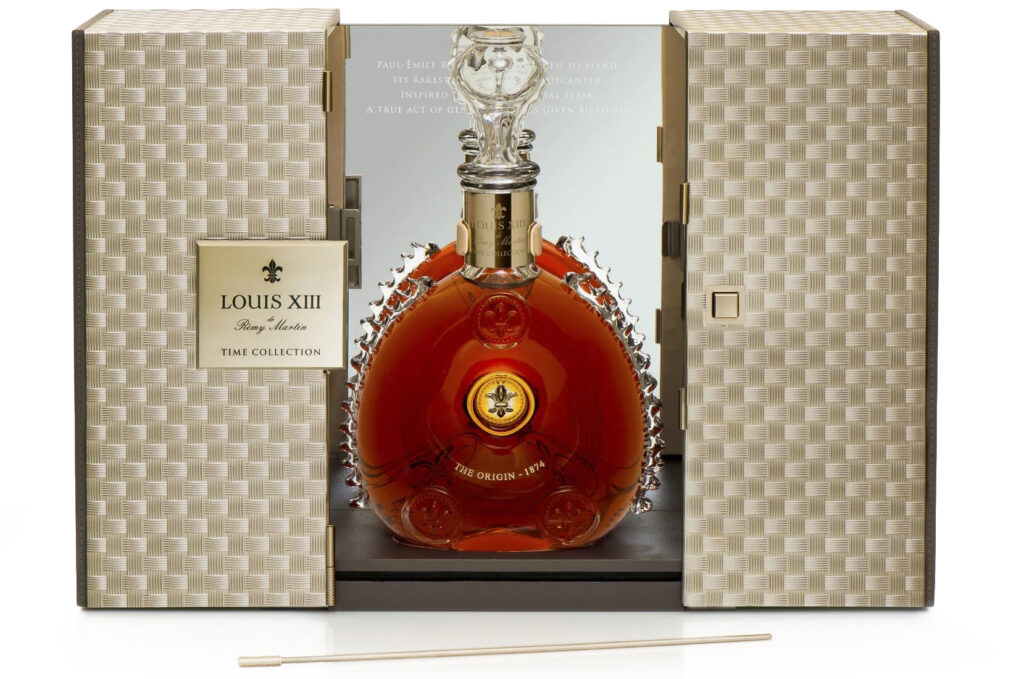
Rarity in Cognac is rooted in irreversibility and permanence. When ancient eaux de vie are blended into a final expression, they cease to exist as individual components. This gives Cognac a gravity that appeals to collectors who value scarcity grounded in reality rather than marketing. Bottles such as Rémy Martin Louis XIII or Hennessy Richard Hennessy command reverence not for their visibility, but because they contain time that cannot be replaced.
Substance Imbued
Packaging, while undeniably refined, is understood as secondary. Hand-blown crystal decanters and bespoke presentation cases serve as custodians rather than distractions. In old-money circles, excessive ornamentation without substance is quietly dismissed. What matters is the liquid’s depth, balance and provenance. A Cognac’s true prestige is revealed not at first glance, but over the course of an evening.
It further secures a place within the portfolios of the ultra-wealthy because of its collectability. Rare, discontinued expressions and historic releases often appreciate steadily, their worth anchored in age, scarcity and documentation. Unlike trend-driven luxury assets, Cognac is immune to rapid obsolescence. Once a reserve is depleted, it cannot be replenished. This finality aligns Cognac naturally with fine art, rare books and important watches – objects valued not only for beauty, but for irreplaceability.
Discretion and Value
Modern luxury’s quest for personalisation has also reshaped Cognac. Today’s elite increasingly seek experiences that reflect individual identity rather than public recognition. Private cask selections, bespoke blends and confidential collaborations with major houses allow families and collectors to create something singular. These expressions are rarely publicised. Their worth lies in discretion, known only to those at the table.
Above all, Cognac represents quiet power. It is the tipple of those who no longer equate visibility with success. A glass poured in a library, aboard a yacht at anchor, or after a concluded negotiation suggests mastery over time. For legacy families and the ultra wealthy who value continuity over display, Cognac endures as more than a drink. It is a philosophy in liquid form that is measured, enduring and profoundly self-assured.
Lights. Camera. Perpetual Excellence!
Rolex and the Asian Film Awards Academy bring you the Jia Zhangke Masterclass, where everyday life becomes blockbuster cinema.
Some collaborations are built to last, like a well-wound film reel bound for greatness. The Asian Film Awards Academy (AFAA) is proud to announce its partnership with Rolex as the Exclusive Timepiece of the 19th Asian Film Awards, uniting two powerhouses to celebrate the rich heritage and bold evolution of Asian cinema.
Last 15th March, the spotlight stage was focused on the Asian Film Awards – Jia Zhangke Masterclass, presented in partnership with Rolex through the Rolex Perpetual Arts Initiative. Think of it as a cinematic “director’s cut” of philosophy, craft, and the kind of storytelling that lingers long after the credits roll.
When Ordinary Becomes Iconic
Jia Zhangke doesn’t just make films; he makes meaning. Growing up in a small town, he developed an instinct for the way society shifts around real people, in real time. His stories are subtle, quietly emphatic, and devastatingly human.
In this masterclass, Jia shared the guiding principles behind his distinctive approach to filmmaking, exploring how cinema can:
mirror reality with precision,
and accumulate deeper meaning over time,
turning local experiences into global resonance.
This is for aspiring filmmakers, cinema lovers, and anyone who’s ever wondered how an ordinary moment becomes a scene you can’t forget.
The Art of Passing the Torch
For more than half a century, Rolex has supported creative visionaries and partnered with cultural institutions to help artistic heritage travel from past to present to future. That commitment lives at the heart of the Perpetual Arts Initiative, a global framework celebrating arts across fields like architecture, cinema, dance, literature, music, theatre, and visual arts.
Similarly, AFAA is dedicated to nurturing rising talent, encouraging growth through patience, experience, and exchange. Together, Rolex and AFAA aren’t just celebrating filmmakers. They’re ensuring the craft keeps moving forward.
Built on Legacy and a Little Bit of Magic
Jia Zhangke’s career began in the 1990s, earning international recognition for his independent, realistic storytelling, offering audiences a window into the lives of ordinary citizens navigating a changing nation. He believes cinema is both art and technology, and that it must be passed on from generation to generation.
To that end, Jia has actively nurtured emerging filmmakers, including a two-year Rolex mentoring collaboration (2023–2024) with emerging Filipino filmmaker Rafael Manuel, and he officially became a Rolex Testimonee in 2024.
And if you’re thinking, “why does this matter?”—it’s because the future of Asian cinema doesn’t arrive by accident. It arrives through mentorship, dialogue, and a commitment to craft.
Rolex’s Director’s Notes Style
Rolex Greater China CEO Maxim Lamarre shared that Rolex is proud to partner with AFAA to present this significant Masterclass, highlighting Rolex’s dedication to excellence, the transmission of artistic heritage, and the future development of filmmaking in Asia.
AFAA Chairman Dr. Wilfred Wong added that the Asian Film Awards has become a key international platform connecting filmmakers and audiences across Asia, and that this collaboration marks the start of something meaningful.
And AFAA Executive Director Josie Lin said Jia represents the spirit of excellence and integrity that Rolex recognizes, with the Academy sharing the same commitment to discovering outstanding talent across Asia and expanding platforms for exchange.
Quick Facts You’ll Want to Keep Paused on Screen
Rolex is the Exclusive Timepiece of the 19th Asian Film Awards.
Rolex and AFAA present the Asian Film Awards – Jia Zhangke Masterclass on 15 March (in partnership through the Rolex Perpetual Arts Initiative)
Rolex Perpetual Arts Initiative supports and celebrates artists and institutions that uphold cultural legacy and cultivate rising talent.
Because Cinema isn’t just watched, it’s passed on. So grab your metaphorical popcorn, cue the opening scene, and get ready for a masterclass that doesn’t merely teach filmmaking, it celebrates the heartbeat behind it.
Mind Master: From rockets to relaxation, Renewed Edge Hypnotherapy Centre’s Christine Deschemin charts a new path in wellbeing
Christine Deschemin’s calm, sun-lit abode in Repulse Bay is the ideal environment to discuss stressors and sleeping patterns. As we admire her lush-green mountain and sea views, the CEO of Renewed Edge Hypnotherapy Centre suddenly digresses with a laugh: “And right over there lives one of the richest tycoons in Hong Kong. And over there is a celebrity.” It’s actually an apt introduction: her approach to mental health, the panorama is both grounding and expansive – rooted in science, open to possibility.
Deschemin’s CV reads like a page-turning novel that begins with aeronautical blueprints and ends with guided breathing tracks. Earning a Master of Science degree from École Polytechnique and an MBA from Harvard Business School gave her razor-sharp analytical tools and business savvy. But early on, she discovered that systems thinking could be applied to a system far more intricate than a rocket: the human mind. Childhood inquisitiveness, questions about flight mechanics and an interest in human behaviour grew into a career that blends engineering precision with clinical compassion.
“I grew up in an environment that celebrated curiosity and problem-solving,” shares the French national, who came to Hong Kong in 2012 as a wealth manager. After years of optimising aeronautics and making decisions in high-pressure banking environments, she realised that the most consequential system to improve was human wellbeing. The pivot felt less like an escape and more like an upgrade: same rigour, but new, and profoundly human, payoff.
Fencer, Financier, Founder
The certified hypnotherapist is no stranger to pressure. As a former competitive fencer, she learned to size up the opposition, react in milliseconds, and keep composure under duress. “In épée, you’re constantly reading your opponent and adjusting tactics,” she says. Those instincts proved invaluable when launching her hypnotherapy centre a decade ago, and the digital suite that followed. Entrepreneurship, she argues, is a tactical sport: preparation, repetition, discipline and the willingness to learn from every touché.
In 2020, Deschemin released the UpNow app to bring self-hypnosis to anyone with a smartphone. The app’s self-hypnosis downloads were developed to make mental health affordable and portable, an idea that felt urgent as the Covid pandemic frayed sleep and increased anxiety worldwide.
An early testimonial still moves her: a woman in her 60s, living far away, who reported sleeping again after using the app. “What struck me most was her gratitude for having access to efficacious interventions at an affordable cost,” she recalls. The story is evidence of what she terms her core mission: democratising access to quality care so suffering no longer depends on postcodes or bank accounts.
Where Science Meets Soul
Precision empathy is the secret sauce. Her work is deliberately multidisciplinary; hypnotherapy, psychology and digital therapeutics are strands woven into a single rope. “École Polytechnique taught me to think in systems and demand mathematical precision,” she explains. While at Harvard, she learnt how to scale solutions. The result: evidence-based programs that feel humane, not mechanical.
Her hypnotherapy downloads were created and voiced by clinicians and crafted using techniques with strong clinical roots (including elements of neuro-linguistic programming and mindfulness). Rejecting the binary that pits scientific rigour against compassion, she champions “precision empathy”, using data to determine what works, then delivering it in ways that respect people’s lives, cultures and constraints.
Asia presents unique challenges to the hypnotherapist: stigma, a performance-driven culture, and uneven access to care. She addresses stigma by reframing mental health as performance optimisation rather than weakness. Digital delivery lowers cost barriers and preserves privacy, which is critical in communities where face-saving matters.
She’s optimistic about culturally adapted models. “Digital therapeutics allow us to reach populations who would never walk into a therapist’s office but will engage with an app,” she says. Her strategic aim is to create programs that feel both culturally relevant and clinically reliable. Small downloads can realise big life changes.
Stories That Count
Beyond metrics, Deschemin is motivated by stories: the executive who reclaimed sleep, the athlete who regained focus, the midlife woman who found relief during menopause. These aren’t anecdotes to her; they’re a north star. The note from the woman who hadn’t slept in weeks during the Covid crisis demonstrated that accessible interventions can restore everyday life in ways often dismissed by conventional healthcare.
Running a company is like managing a team bout in fencing. She brings a governance-minded clarity to growth, and board roles taught her the balance between risk and innovation. She empowers colleagues with autonomy and clear resources, fostering a culture of competence and trust. “I give people challenging goals and the tools to achieve them, then get out of their way,” she says. The result is a virtuous cycle where empowered teams iterate quickly and responsibly.
Practical Zen
Deschemin is candid about the personal cost of her healthcare entrepreneurship: it’s easy to neglect one’s own well-being. So, she has daily non-negotiables, including sufficient sleep and long walks in Hong Kong’s hills. Nature is her reset button: a place to process, plan and replenish. These rituals keep her grounded so she can keep giving, because she notes, “you cannot pour from an empty cup”.
Looking ahead, she wants to offer a suite of evidence-based digital therapeutics for menopause, anxiety, sleep, gastrointestinal conditions and stress-related disorders. Her five-to-10-year goal is to integrate these programs into healthcare systems and insurers’ coverage, so evidence-based digital therapies are standard care rather than fringe options. “Success is impact at scale, and for me that means millions finding relief where none existed before,” she says.
Clear View, Clearer Mind
As our visit ends, Deschemin gestures toward the bay and the mountain. The view is more than scenic, it’s metaphorical. “When your vantage point is clear, you make better decisions,” she says. The same goes for mental health: a clearer inner view, less cluttered by stress and distorted thinking, allows people to act with agency and grace. The vista from her house is a daily reminder that perspective matters. Whether you’re facing a tycoon’s mansion or the turbulence of burnout, a clean line of sight makes the way forward easier to see.
The compassionate hypnotherapist would likely appreciate the subtlety of the pun that she’s built a career helping people get their minds ‘up now’. From rocket science to guided relaxation, she’s proving that a clear view – of the horizon and the mind – makes all the difference.
Interview, Text & Art Direction: Joseff Musa Photographer: Jack Law Videographer: Iris Ventura