
Japanese restaurant Mokutan combines maximum flavours with minimum wastage

As you walk through the narrow Kimberley Street in TST, you may just blink and miss Mokutan, a new Japanese restaurant that opened doors earlier this month. But if you do keep your eyes peeled for this hole-in-the-wall cuisinary, you’ll find yourself well rewarded with an authentic Izakaya experience – the Japanese equivalent of American taverns or Irish pubs.

Mokutan

Done up with a deliberate dose of minimalism, the interiors are at once stark and sleek. In contrast, however, the menu is expansive, boasting, apart from the a la carte options, three set Omakase menus.

Mokutan

These include a nine-course option featuring the chef’s choice of appetiser, meat and vegetable skewers, simmered dish and soup; or a 13-course menu showcasing more lavish dishes. However, for a complete Izakaya experience, we’d recommend the sumptuous 18-course menu, with an appetiser, six meat skewers, six vegetable skewers, a simmered dish, a soup, a grilled dish, seasonal seafood and rice.

Mokutan

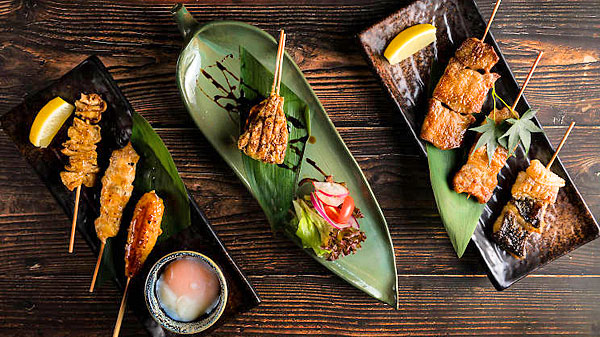
What stands out at Mokutan, however, is the efficient way in which almost all parts of the animal are used in the cooking process, ensuring minimum wastage. Take chicken, for example – using the bird’s tail, heart, kidney, neck and skin, the chef extracts the maximum flavours from each part of the bird, presenting guests with a range of unique, juicy skewers that are completely different from each other.

Mokutan

Meat lovers can enjoy classic skewers like minced chicken, Angus beef short ribs and a selection of seafood highlighting Mokutan threadfin, water eel and yellowtail, while vegetarians have a vast menu of seasonal vegetable skewers to choose from such as onigiri, ochazuke, onsen tamago with black truffles and cheese mochi.

Mokutan

Of course, no traditional Izakaya experience is complete without sake, and Mokutan’s bar seems particularly well stocked in that department – with premium sakes such as Daina, Born and Dassai on offer. Those looking for an aperitif can also choose some luscious plum wine from Dewatsuru Kimoto Junmai. However, in our experience, not much aperitif will be needed to stimulate one’s appetite at Mokutan – the delicious aromas wafting through the air as the first skewer hoves into view should be enough to have you salivating!

Mokutan
Shop 2, G/F Empire Prestige,
8 Kimberley Street, TST, Hong Kong
(852) 2708-2009

Text: Suchetana Mukhopadhyay
Explore the unique pairing of Japanese and Italian cuisine with Chef Tabuchi

We check out the unique culinary craft of Chef Tabuchi of S’accapau, who brings together the best of Japanese and Italian ingredients in a beautiful blend!

Chef Tabuchi taps into his Japanese heritage and Italian experience in his culinary creations

While quite a few Hong Kong restaurants have been offering a fusion of Japanese and French cuisine – some of them even making it to Asia’s 50 Best Restaurants 2018 list – fusing Japanese and Italian cuisine has been something of a novelty so far. And that is exactly what Chef Taku Tabuchi has been attempting to do in his Tokyo-based modernist restaurant S’accapau.

Hong Kongers were in luck last weekend with Chef Tabuchi cooking up a cultural storm of sorts at The Mira, Hong Kong, over 8 and 9 June, using his signature techniques that blend the best of his Japanese heritage and his Italian culinary experience.

Chef Tabuchi’s creations are easy on the eye and on the palate

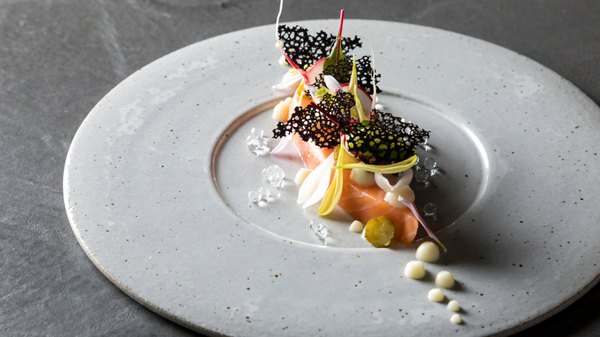
For two nights only, Chef Tabuchi prepared a special six-course menu featuring elements from both Japanese and Italian cuisine, such as yellowtail with fennel and flowers, a trio of sliders, summer flounder with classic Italian sausage, and fregola with flying squid, sea urchin, white shrimp and Asari clams and mussels.

To accompany the delectable dishes was a handpicked selection of wines specially curated by sommelier Seju Yang. The boutique picks included a flinty and refreshing Schloss Johannisberg, Gelblack Feinherb Riesling from Rheingau and a modern Senkin Yamadanishiki hand-made sake. The wine and food pairings were however elevated to the next level by the perfect palate cleansers – the Acqua Panna and S.Pellegrino waters.

Sommelier Seju Yang’s drinks pairing menu has its share of uniqueness

The entire menu will be available for tasting WHISK, The Mira till 23 June from Monday to Saturday at dinner. The menu is priced at HK$890 for six courses, and HK$480 more for six glasses of wine pairings.

Booking enquiries: 2315 5999 or dining@themirahotel.com

Text: Suchetana Mukhopadhyay

Matsunichi review: Going green with Japanese gourmet cuisine

It’s not often that we hear about vegetarian options in Japanese cuisine. It is on this rather unchartered territory that we ventured as we started our gastronomic journey within the elegant dining space of Matsunichi, a contemporary Japanese restaurant somewhat hidden within the rather intimidating-looking Goldin Financial Global Centre in Kowloon Bay. 

Go meatless with Matsunichi’s vegetarian platter

Authenticity and an artisanal dining experience can be said to be the twin pillars of Matsunichi. Riding on the tide of authenticity, the restaurant welcomes spring with a new eight-course ‘Vegetarian Vibes’ menu (HK$600), sourced only from the freshest produce from Japan.

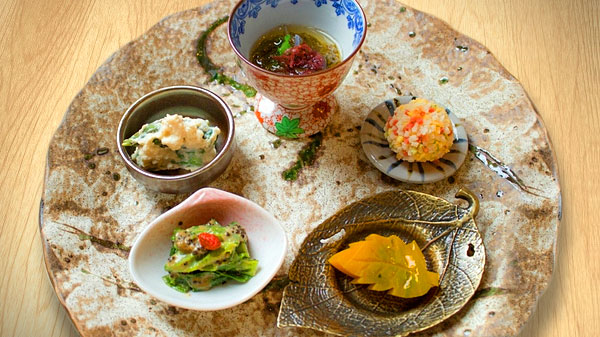
Our affair with ‘haute vegetarianism’ started with the Tomato Tofu, which is painstakingly crafted from three kinds of tomatoes, and is perfectly paired with a home-made vinegar jelly that was refreshingly tangy and set the right note of anticipation for the next course – the colourful Vegetarian Nigiri Sushi platter. As easy on the eye as on the palate, the sushi platter was quite an interesting change from the heavier non-vegetarian sushi that we’re more accustomed to.

Matsunichi
Assistant Executive Chef Miyasako Yukihiro cooking up a green revolution

However, the dish that won us over was the Tempura course, which only used vegetables known for their medicinal values. So there were the high-in-protein Maitake mushrooms, Butterbur buds – known for soothing migraines – and the vitamin-rich sweet potato, all coated with a crispy light batter. We particularly hearted the butterbur tempura for its soft-yet-crunchy texture.

The white peach sorbet with yellow pitahaya is perfect for warmer weather

The next course – Japanese rice with Edamame, peas, corn and Hokkaido kombu – was more tummy-filling than soul-satisfying to be honest, but best was indeed reserved for the last. The Peach Sorbet with Yellow Pitahaya (dragon fruit), with all its sweetness perfectly balanced with citrusy tanginess was a fitting finale to a meal that was as hearty as it was healthy.

Here’s to more plant power, we say!

Matsunichi, Level 2, Goldin Financial Global Centre, 17 Kai Cheung Road, Kowloon Bay, 3188 2760, www.matsunichi.com.hk

Text: Suchetana Mukhopadhyay
Haku and Amelia join hands for special Japanese-Spanish pop-up menu

Situated in the burgeoning lifestyle hub of Harbour City, modern Japanese restaurant Haku opened earlier this year under the auspices of three Michelin star Chef Hideaki Matsuo. Under the watchful eye of his Argentina-born Executive Chef Agustin Balbi, Haku has become one of the hottest eateries in town, featuring innovative ingredients prepared through traditional Japanese techniques.

In a move guaranteed to delight Hong Kong’s epicureans, Haku has announced a special collaboration with one Michelin star Chef Paulo Airaudo. For those unfamiliar with the name, Airaudo has worked stints in legendary culinary institutions across the world including Heston Blumenthal’s The Fat Duck. Earlier this year, the Argentinean native opened his first personal venture, Amelia, in the sleepy Spanish seaside town of San Sebastián and nabbed his first Michelin star soon after.

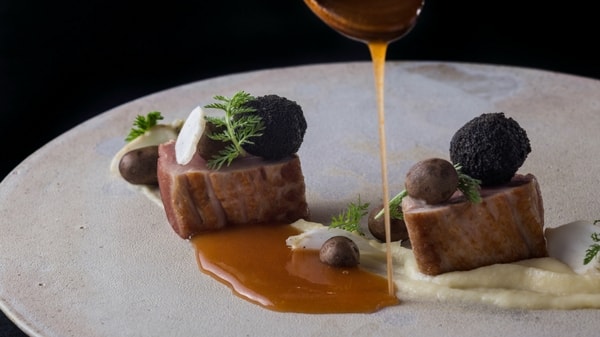
For just two nights (20-21 January), chefs Balbi and Airaudo will prepare a unique eight-course menu that features signature dishes such as Haku’s Hon Maguro / Kristal Caviar / Polmard Beef and Amelia’s Duck, Humita and Pine. Two seatings are available, one from 6pm to 8pm and another from 8pm to 10pm. Priced at HK$1,980 + 10 percent service charge per head, reservations can be made through the website here or by calling 2115 9965.

Haku. Shop OT G04B, Ground Floor, Ocean Terminal, Harbour City, Tsim Sha Tsui.

From Ginza to HK: Chef Aoki Toshikatsu brings his signature style to Fumi

The recently rebranded Fumi Restaurant played host to Chef Aoki Toshikatsu from Tokyo’s famous Ginza Sushi Aoki recently, and we were lucky enough to catch up with the sushi master in person.

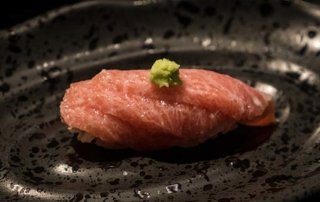
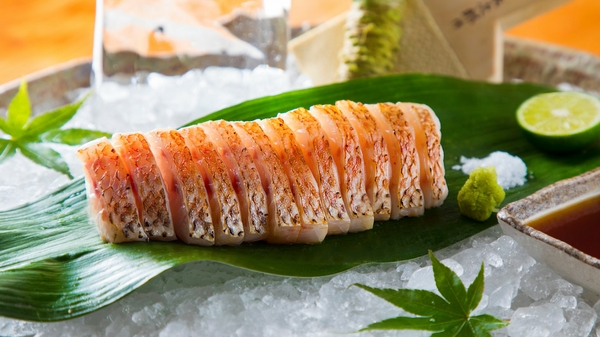
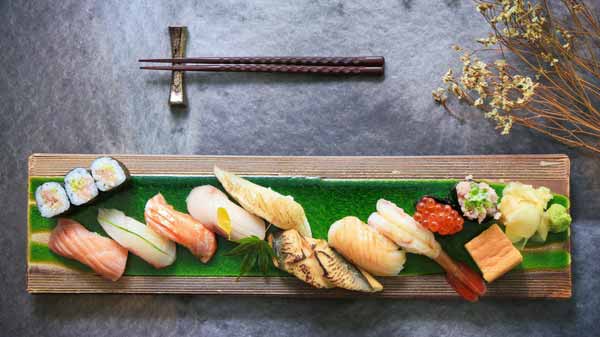
Chef Aoki’s signature Edomae style and East-meets-West flair was evident in the delicious dishes we sampled. From a deconstructed Marinated Salmon Roe Sushi with salted kombu and wasabi and a refreshingly crisp Grouper (salted and aged for 20 days on ice) with Muscat Grape with Ponzu Sauce to a mouth-watering Toro Mille Feuille, each plate perfectly showcased the chef’s unique ability to transform traditional sushi into a true epicurean experience.

Afterwards, we sat with the second-generation sushi master to find out more about his family legacy (his father, Aoki Yoshi, founded Sushi Aoki), international influences and the impression he hopes to give Fumi diners.

Did you always have a passion for sushi?

It’s definitely a passion for me, but I always knew I would go into the sushi business. In Japan, if the father runs a business, it’s a common practice for one of his sons to continue that legacy. Since my father opened Sushi Aoki, I always knew on some level that I would follow in his footsteps, too.

You travel around the world constantly. How do international flavours influence your personal style?

As a sushi chef, wherever I travel, my first thought when trying any new ingredient is whether it complements with rice. Tangy Italian balsamic vinegar is one of my favourite western ingredients. I also incorporate a wide variety of rock salts like Himalayan pink salt into my sushi sauces.

What is the biggest impression you want to give Fumi diners?

Sushi cuisine is constantly evolving. I want to educate diners on what traditional sushi is, and then take them on a journey and allow them to taste innovative sushi as well. For Fumi diners, I particularly want to present sushi crafted from local ingredients.

Thank you.

Keep your eye out for Chef Aoki Toshikatsu’s pop-up menu at Fumi early next year.  

Text: Tenzing Thondup
Images: Gigi Ip

Japanese with a view: ANA TEN opens at Harbour City’s New Waterfront Extension

Last September, contemporary Japanese culinary innovator ANA TEN opened its doors in Harbour City’s New Waterfront Extension. You may have to walk a bit from the Star Ferry to get to the commercial centre’s new wing, but the oceanfront setting is worth it. If you’re doing your early holiday shopping around the terminal, it’s a great spot for winding down with a drink in the spacious terrace.

LUBUDS F&B Group is behind this avant-garde fusion concept, energized by the success of their flagship ANA SUSHI in Causeway Bay and fun Vietnamese eatery What the PHO. Japanese chef Ryogo Ozawa (former poissonnier of France’s 3-Michelin-starred L’Assiette Champenois) crafted the exquisite menu here along with executive chef Kam Wah Au-Yeung.

It doesn’t look like much from the outside, but stepping in you’ll be impressed by the panoramic vistas of Victoria Harbour revealed by floor-to-ceiling windows. The 2,000-plus-square-foot area is divided into four sections: omakase, tempura, skewer and cocktails. Let your mood guide the way.

We began with the Japanese folklore themed cocktails: The delicate Madama Butterfly (HK$128) of Japanese Plum Wine and rose water, a Pina-co-Matcha (HK$108) – pineapple plus green tea – and the elegant Crane Lady (HK$118) with gin and lemon-lime. It’s usually so difficult to get cocktails that aren’t over-flavoured, but ANA TEN’s mixologist Dorothy Lam nails her concoctions with expert touches of cherry blossom tea and Chrysanthemum sake here and there.

Begin your meal with fusion sashimi like the rich Sea Urchin wrapped in Saga Beef (HK$198). The Thin Sliced Yellow Tail (HK$228) borrows from French tradition with its foie gras cube on nanko plum vinegar sauce. But the most dramatically presented Smoked Fatty Tuna (HK$328) with egg yolk sauce was the show-stopper. The latter was prepared by smoking toro loin over walnut wood, unveiled by lifting a glass lid and releasing the aromatic plumes to whet the diner’s appetite. 

If you’re sharing, order instead the whole caboodle: Premium Sashimi Platter (HK$498) compiling the freshest and finest catch from the sea: salmon loin, Spot prawn, scallops, Japanese Yellow Tail, Sea bream, Greater Amberjack… the list goes on. If you’re not too peckish, you can settle for the Homemade Sushi egg (HK$49), a baked pre-blended mixture of fish, shrimp and egg.

From the tempura zone, the highlights were the Baby Kini Tempura (HK$88) – a prized deep sea fish from Hokkaido. They also have the flavourful Japanese Mantis Shrimp Tempura (HK$88) served with crab paste.

Finally, among the meat dishes, we would recommend the Classic Grilled Wagyu (HK$598) with Japanese side vegetables. The beef is specially sourced from the highlands of Takayama in Gifu prefecture. We’d skip the skewers unless you have a special fondness for chicken kidney and neck.

If you love your sushi and sashimi but want to change things up a bit, this is definitely a place to try. We would go back if just for a cool drink with that fantastic view.

Visit ANA TEN at Harbour City, Shop OTE 304, Level 3, Ocean Terminal, Hong Kong. (852) 2701 9881. Open Monday to Sunday 12nn to 11pm

Text: Julienne C. Raboca

Zuma’s Sake Pairing Autumn Menu is the Asian answer to vine and dine

Our Features Editor was invited to an intimate dinner at yuppie favourite izakaya Zuma in the Landmark. Little did she know she was about to dine in the presence of sake royalty: Mr Hideki Sakai of Gokyo Junmai. The Sakai family is famous for brewing the “Five Bridges” sake for centuries.

After a lot of bowing and formal card exchanging, the dinner proceeded more casually than anticipated. Zuma’s downstairs dining ambience helps: high-ceilings, a buzzing after-work crowd, chefs doing their magic in an open kitchen, and floor-to-ceiling windows revealing the energetic street scene of Central by night.

“We stumbled upon the secret to our distinct flavour by mistake,” says Sakai. “Instead of brewing the rice wine in mineral water, which is better for the fermentation process, we accidentally used soft water.” The error resulted in a well-bodied product: equal parts smooth, fruity and crisp.

Sake sommelier Hiroaki Matsuno was also present that evening. He elaborated on the sake pairings alongside the restaurant’s contemporary Nikkei-esque cuisine. According to Matsuno, hiya-oroshi sake is specifically for the autumn season – stored throughout summer and released once the temperature in and out of the brewery matches.

Although winter’s warm sakes and summer’s chilled ginjos are fondly considered, the country’s best brews are said to be those of red-leaf season. Hiya-oroshi is characterised for its mellow and round disposition, the lightest and cleanest of which we tried with the appetisers: Oysters with Ponzu and Chili Daikon and Shima Aji Sashimi Salad with Green Apple Granita.

Little dots at the bottom of the short clear glasses marked the different brews we were trying. At 15% average alcohol content, sake is a match for wine’s 9-16% range, well over beer’s 3-9% ABV, and less than half of vodka’s 40%.

With the chef’s Premium Sushi and Sashimi Selection (course #3 – both a visual and gastronomic work of art), we had the Kyoto-sourced Tsukinokatsura. The smooth-cloudy rice brew also accompanied course #4: Akamutsu, a torched rosy sea bass) with sudachi (citrus) and fresh wasabi.

The fusion seafood pairings of courses #5 and #6 were the best applauded: Chilean Seabass with Green Chili Ginger Dressing and Hokkaido Scallops with umeboshi butter and mentaiko (Alaskan Pollock roe). The distinct and powerful flavours were well matched with Gookyo Junmai’s aromatic and fragrant tones.

The last mains were paired with Gozenshu 9 “Black” Bodaimoto Junmai, which came in a dark bottle more akin to those of cherry dessert wines. This brew (from a famous female wine master) was specifically chosen to go with the meat: a Niigata Snow-Aged Wagyu Sirloin (f1 grade). Surprisingly, the accompanying Maitake Mushrooms (course #8) proved a vegetarian alternative well on par with the meat.

Soup was the last savoury dish: Spicy crab with fresh yuzu and mushrooms. Fantastic and well-balanced, like everything in this dinner. The only over-indulgence came in the form of the Deluxe Dessert Platter, in which Zuma outdid itself with all its best-selling sweets. Do not hold back on this one, it’s worth every single calorie.

Zuma’s Sake Pairing Dinner will be available until the 9th of December. Landmark Level 5 & 6, 15 Queen’s Road Central. (852) 3657 6388. www.zumarestaurant.com


Text: Julienne C. Raboca