
What’s on? Things to do this May in Hong Kong

Tai Chi 40th Anniversary Concert

One of Hong Kong’s most iconic musical buddies, Tai Chi is rocking the city to mark its joyful 40th anniversary in the music industry. After four decades of big beats and even bigger smiles, Patrick Lui, Joey Tang, Ernest Lau, Eddy Sing and Ricky Chu are ready to celebrate in style in their hometown with a spectacular concert – Tai Chi 40th Anniversary World Tour Live at Kai Tak. This is not just a show; it’s a happy reunion of memories, melodies and harmonies made for fans who’ve been there from day one in 1985 (and for newcomers ready to join).

When:  2 May

Where: Kai Tak Arena

How much: From HK$480

For more information: hkt.hkticketing.com

25+ EEG Family Concert
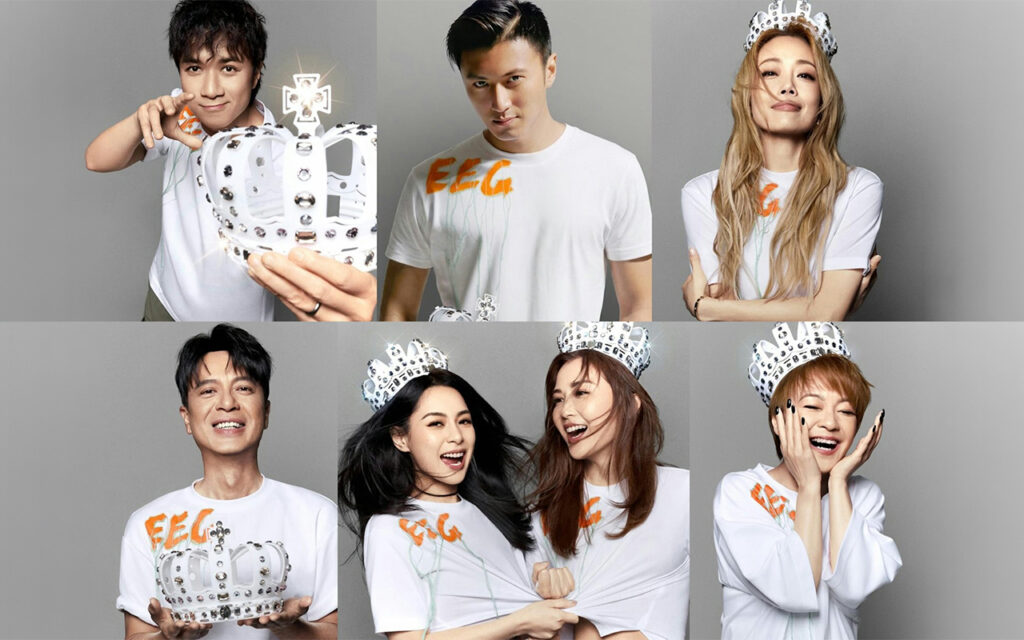
Emperor Entertainment Group casts the city’s music talents over the past quarter of a century for a one-in-a-life-time concert that will blow audiences’ minds. Backed by an epic HK$100 million-plus production budget, a powerhouse creative team of Andrew Lau, William Chang and Carl Wong, and a stage built for wonder, Kai Tak turns into a world-class amusement park of memories. Expect legendary voices, stunning new stars and cross-generational surprises that sing the past into the future.

When: 3 & 4 May

Where: Kai Tak Stadium

How much: From HK$680

For more information: kaitaksportspark.com.hk

Bizet’s Carmen
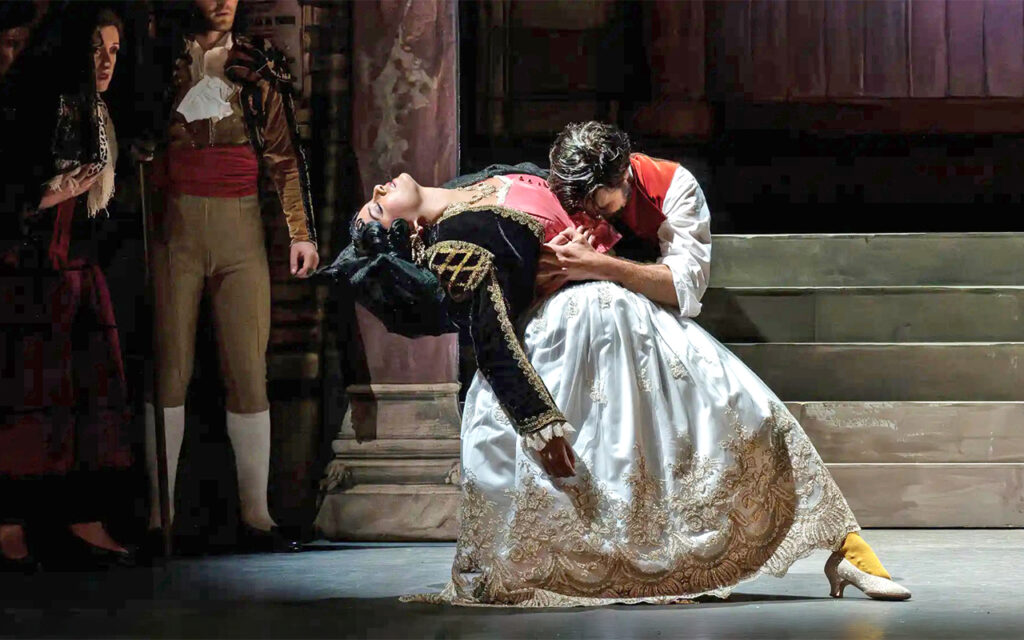
Get ready to meet Carmen, but in 1970s Hong Kong, where the streets sizzle, new dreams pop up everywhere, and every corner feels like a turning point. Presented by Opera Hong Kong in collaboration with the French May Arts Festival, this fresh production directed by Jia Ding places Georges Bizet’s masterpiece against an electrifying era of rapid growth, cultural exchange and pure, unstoppable momentum. The story flutters through iconic locations, with the classic opera’s themes of passion, hope and destiny colliding with the city’s vibe of transformation. Curtain up – history sings its heart out!

When: 7-10 May

Where: Cultural Centre Grand Theatre

How much: From HK$280

For more information: operahongkong.org

DJ Snake Live

The Victoria Harbour shore is about to become a giant dance floor, as DJ Snake headlines a massive outdoor night at Central Harbourfront Event Space. Get your groove on with DJ Fabsabs and DJ Steffunn’s Canto disco. Then sway to the sounds of three-time DMC China Champion DJ Wordy from Beijing and the Chengdu-bred support act, Higher Brothers, climaxed by DJ Snake’s French electronic flair.

When: 8 May

Where: Central Harbourfront Event Space

How much: From HK$680

For more information: frenchmay.com

Laufey in Concert

The Icelandic icon’s A Matter of Time Tour is landing in Hong Kong to deliver her unique brand of cosy energy: silky vocals, piano shimmer and songs that make even your heart check the calendar. Imagine a night where every note feels like a memory you didn’t know you missed – gentle, dreamy, and just a little bit unstoppable. this concert is your ticket to slow-dancing with destiny and crooning along like you own the moment.

When: 12 May

Where: AsiaWorld-Arena, Chek Lap Kok

How much: From HK$699

For more information: livenation.hk

Affordable Art Fair
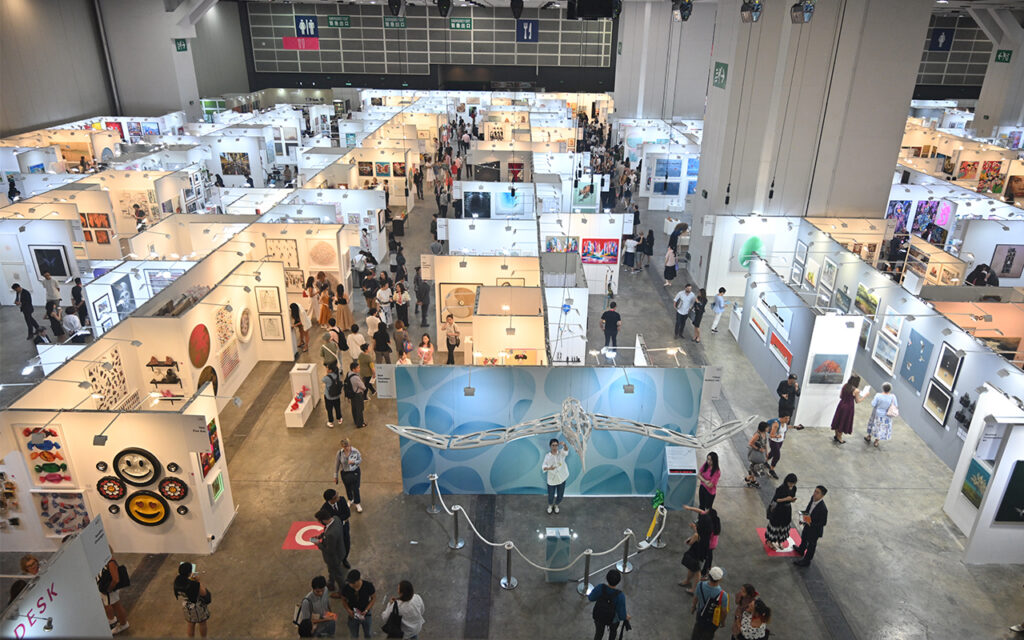
Expect a colourful treasure hunt featuring works by local and international artists, brought here by more than 100 leading galleries to be offered at accessible prices, ranging from HK$1,000 up to a maximum of $100,000. Galleries from across the Asia-Pacific and beyond join the fun – many are regulars at the fair that has grown to encompass some 15 cities worldwide since the 1999 inaugural event in London.

When: 14-17 May

Where: Convention and Exhibition Centre, Wanchai

How much: From HK$175

For more information: affordableartfare.com

Whisky Festival

This annual celebration of whisky pours out the excitement over a wonderful wet weekend through a line-up of global brands, rare editions and seriously fun tastings that will have your palate doing happy backflips. The Hong Kong Whisky Festival is your passport to the fascinating world of whisky. You can toast to great discoveries and savour limited-edition bottles that feel like little liquid legends.

When: 16 & 17 May

Where: InterContinental Grand Stanford Hong Kong, Tsim Sha Tsui East.

How much: From HK$188

For more information: hongkong.intercontinental.com

Comic Con
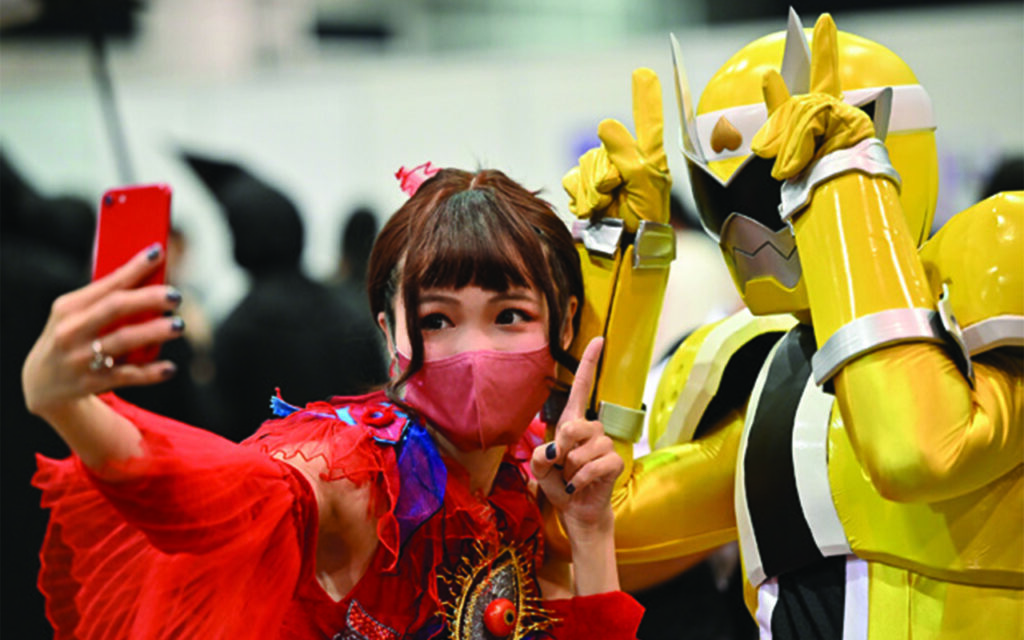
Gear up to cosy up with blockbuster studios, major entertainment IPs, and global celebrity sparkle. Hollywood and Western cinema, Asian cinema, gaming, collectibles and star-studded moments that will make your camera icon sweaty. Expect packed press conferences, epic one-on-ones with Mads Mikkelsen, Jamie Campbell Bower, Giancarlo Esposito, Katie Leung and more, and fans in full cosplay power.

When: 29-31 May

Where: Convention and Exhibition Centre, Wanchai

How much: From HK$150

For more information: hkcomiccon.com

French GourMay
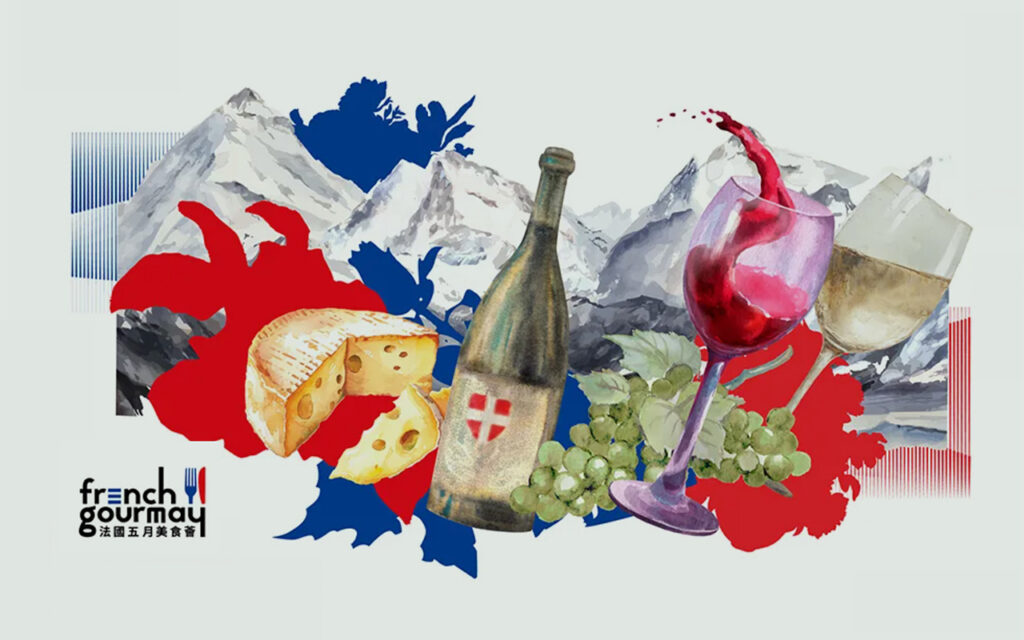
This major Food & Wine Festival is proudly organised annually under the French May Arts Festival umbrella. Now in its 17th edition, French GourMay is zooming its spotlight on the French Alps, unveiling Savoie – a region small in size, big on personality, and bursting with charm.

When: Until 31 May

Where: More than 150 partner restaurants, retailers and learning centres roll out special offers for the city’s foodies.

How much: Various prices and venues

For more information: frenchgourmay.com
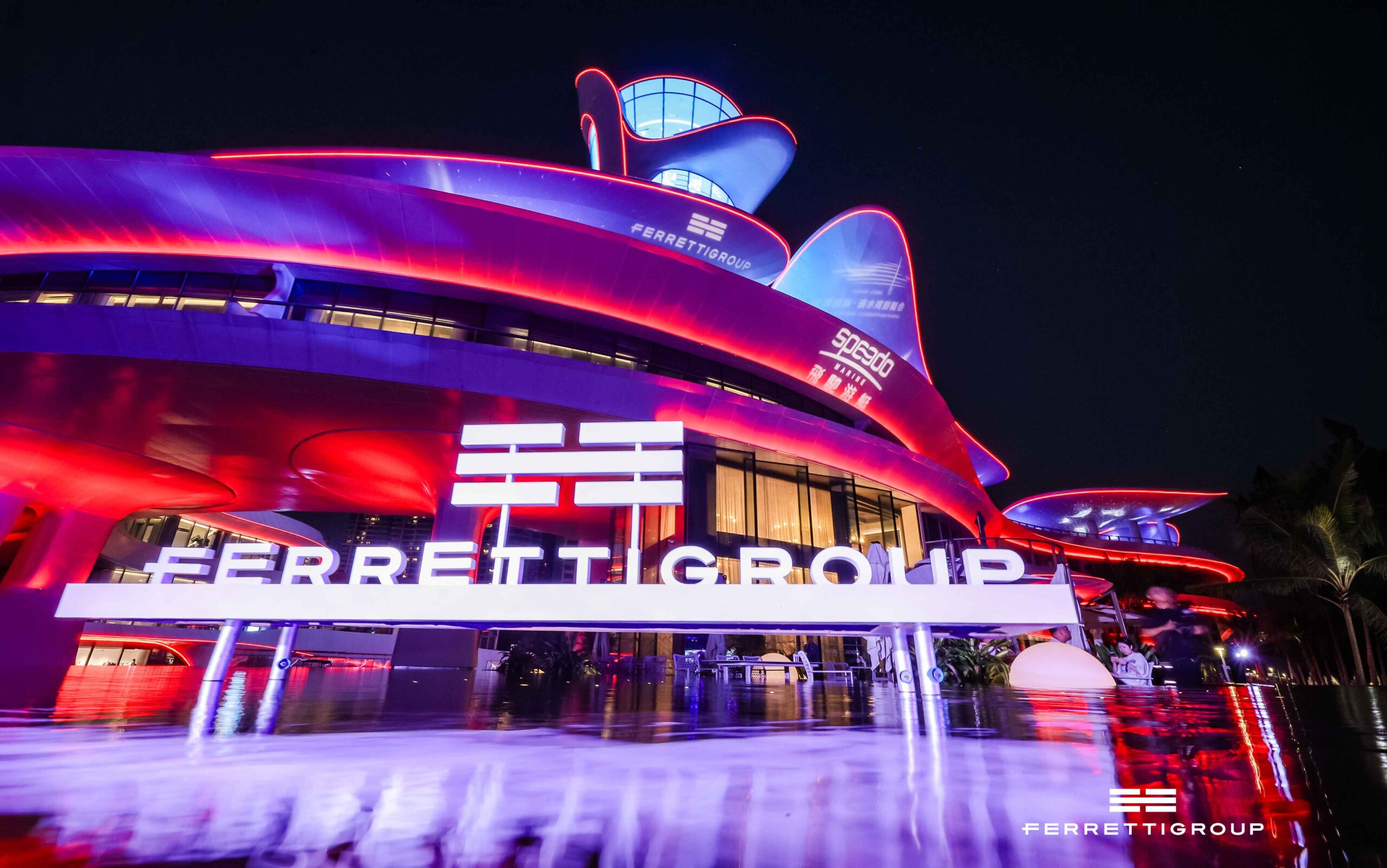
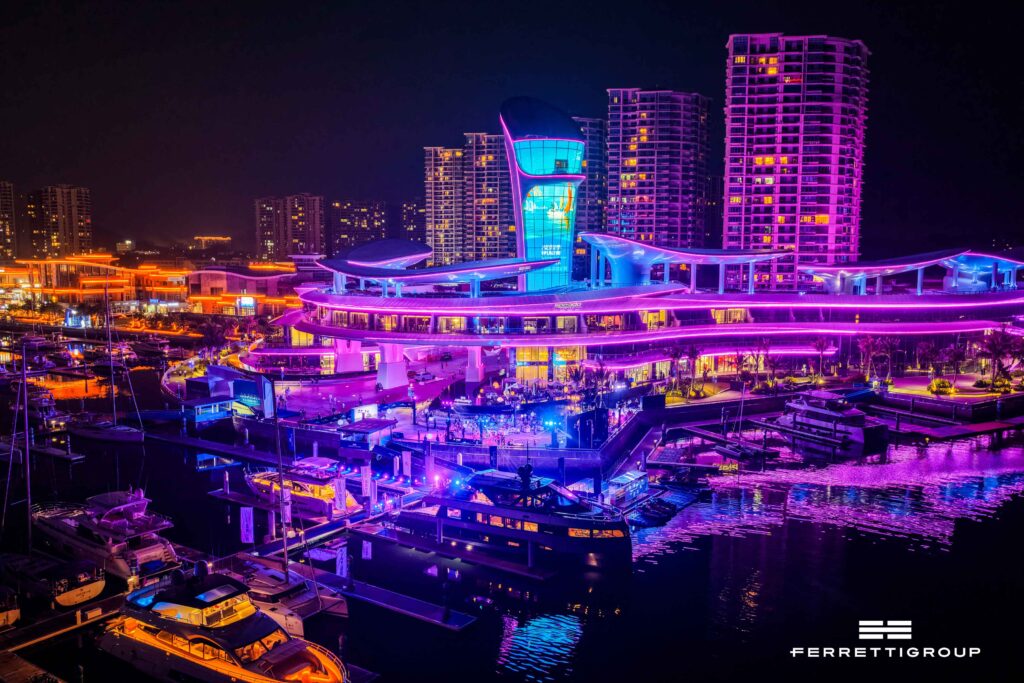
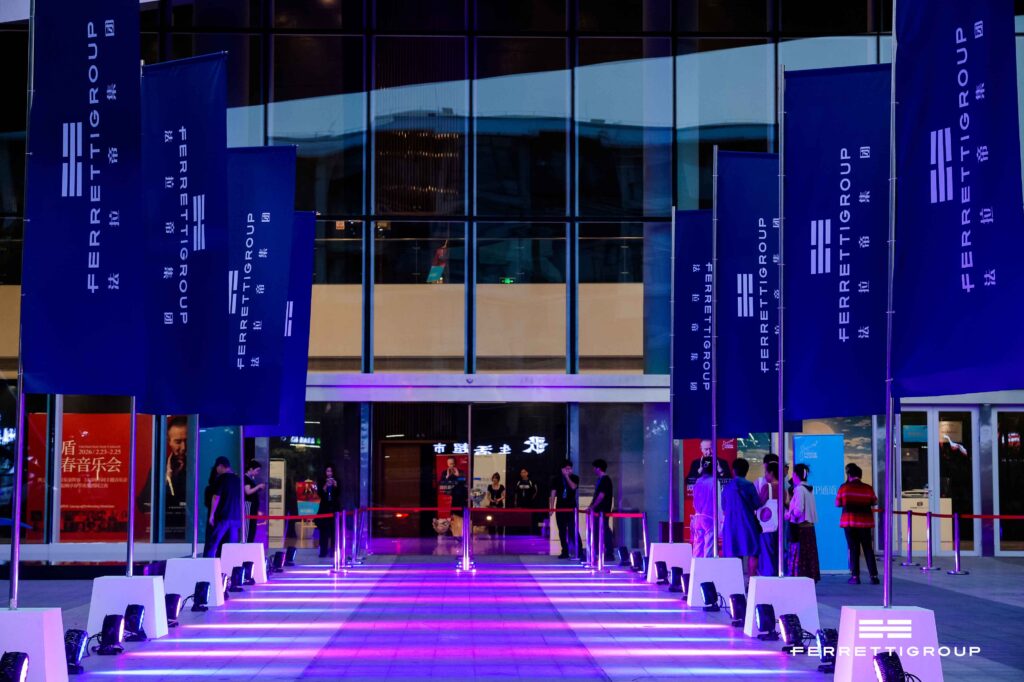
Waves of Elegance at Ferretti’s Previlege Day: Riding the crest of culture and luxury at Hainan Clearwater Bay

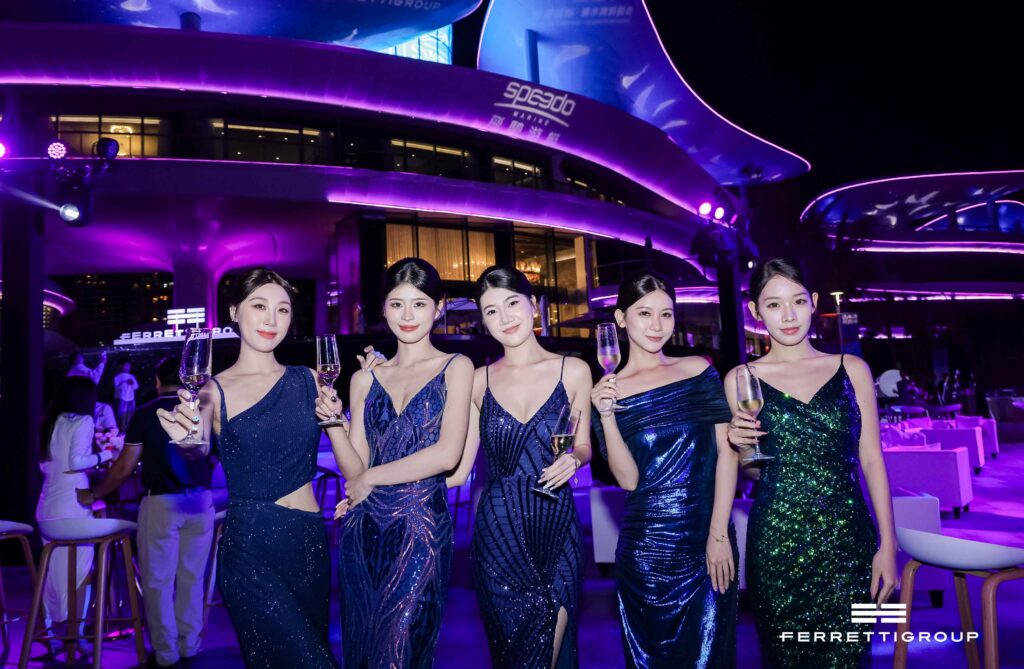
When it comes to making waves in the world of luxury yachting, Ferretti Group has truly set the tide rolling at the stunning Hainan Clearwater Bay. Last February 2 to 8, 2026, this elite Italian marque made an unforgettable splash at the Clearwater Bay International Yacht Show, partnering with its exclusive mainland China dealer, Speedo Marine, to showcase a fleet that’s as breathtaking as the bay itself. Against the backdrop of the new marina development, Ferretti’s sleek vessels gleamed like diamonds on the water, turning heads and raising eyebrows among luxury connoisseurs and maritime aficionados alike. 

But the real wave of excitement hit on February 23, when guests, owners, and VIPs gathered at the waterfront for a double celebration that was nothing short of extraordinary, with anticipation as the world premiere of the stunning Ferretti Yachts 580 and the Wallywhy200 in its exclusive Loro Piana limited edition took centre stage.

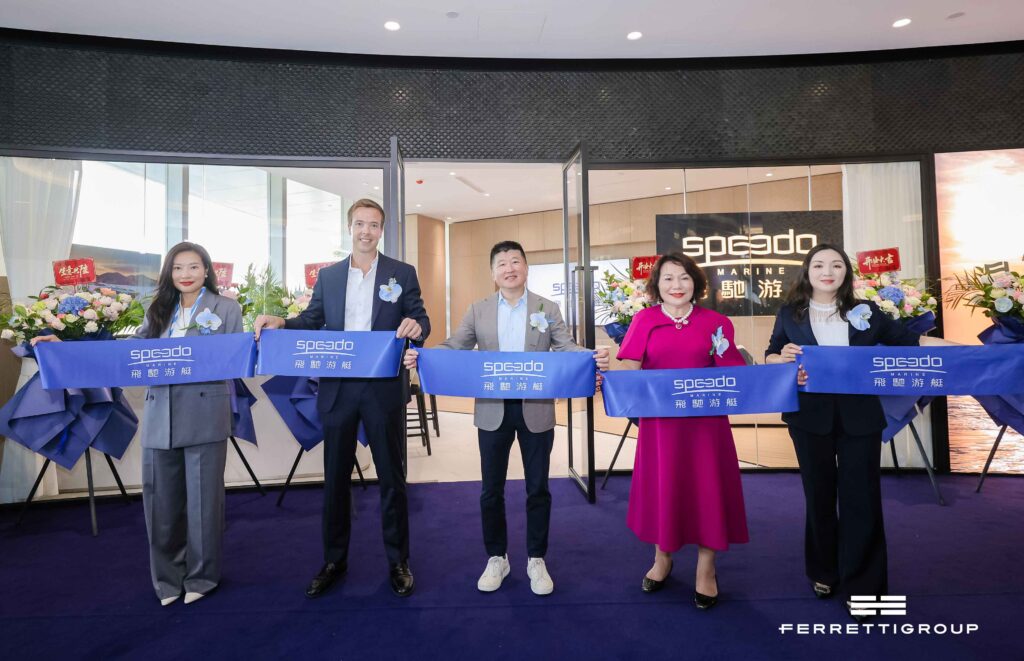
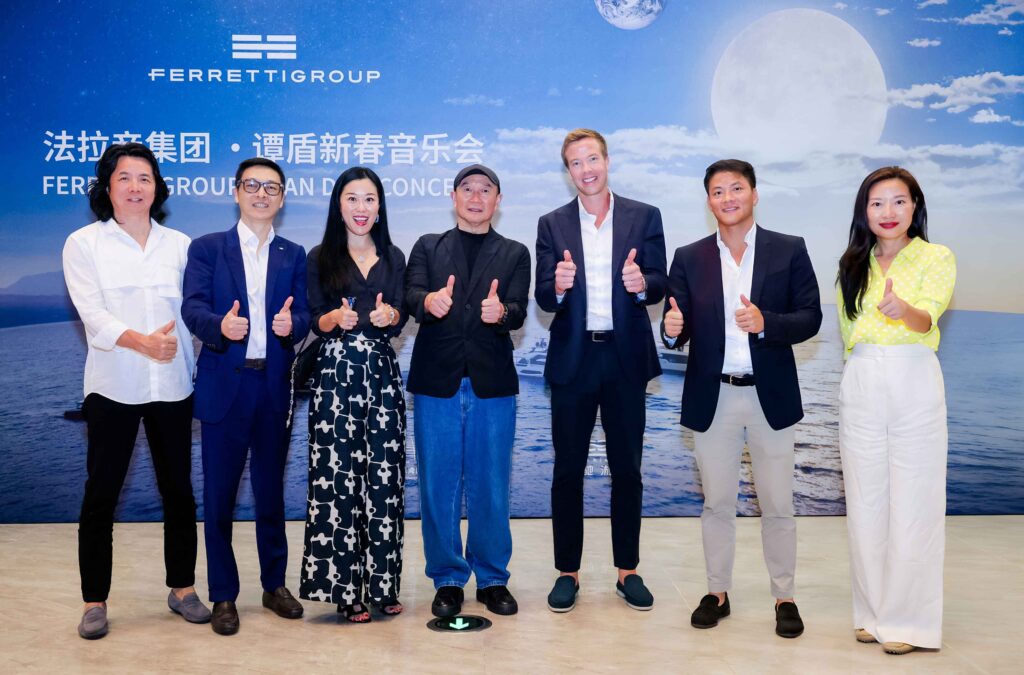
Adding to the thrill, Speedo Marine unveiled its brand-new showroom, an elegant space that promises to be the epicentre of luxury yachting in the region. But Ferretti’s wave of cultural engagement didn’t stop there. From February 23 to 25, the company’s commitment to artistry and tradition was on full display at the Tan Dun New Year Concert held at the Clearwater Bay Maritime Art Center. Imagine a night where music and maritime elegance melded seamlessly, Tan Dun’s compositions flowing like the gentle undulations of the sea, each note illuminating the night like the shimmering wake behind a yacht gliding through crystal-clear waters. 

Meanwhile, the Riva Brand Exhibition took visitors on a voyage through 184 years of Italian nautical excellence. From historic shipyards that crafted legendary vessels to silver-screen icons that immortalized the Riva name, the exhibit was a treasure trove of stories, craftsmanship, and timeless design. Visitors embarked on an immersive journey, discovering the evolution of a brand that has defined the essence of elegance on water for nearly two centuries. 

For yacht owners and connoisseurs alike, it was a wave of memories and moments that will ripple through the years to come. With its blend of cutting-edge design, rich heritage, and cultural finesse, Ferretti’s 2026 event season proved that when it comes to making a splash, they’re always riding the crest of the wave. 

Ready to set sail on your next adventure? Dive into the world of Ferretti and experience the ultimate in luxury and elegance, where every wave whispers a story.

Lights. Camera. Perpetual Excellence!

Rolex and the Asian Film Awards Academy bring you the Jia Zhangke Masterclass, where everyday life becomes blockbuster cinema.

Some collaborations are built to last, like a well-wound film reel bound for greatness. The Asian Film Awards Academy (AFAA) is proud to announce its partnership with Rolex as the Exclusive Timepiece of the 19th Asian Film Awards, uniting two powerhouses to celebrate the rich heritage and bold evolution of Asian cinema.

Last 15th March, the spotlight stage was focused on the Asian Film Awards – Jia Zhangke Masterclass, presented in partnership with Rolex through the Rolex Perpetual Arts Initiative. Think of it as a cinematic “director’s cut” of philosophy, craft, and the kind of storytelling that lingers long after the credits roll.

When Ordinary Becomes Iconic

Jia Zhangke doesn’t just make films; he makes meaning. Growing up in a small town, he developed an instinct for the way society shifts around real people, in real time. His stories are subtle, quietly emphatic, and devastatingly human.

In this masterclass, Jia shared the guiding principles behind his distinctive approach to filmmaking, exploring how cinema can:

  • mirror reality with precision,
  • and accumulate deeper meaning over time,
  • turning local experiences into global resonance.

This is for aspiring filmmakers, cinema lovers, and anyone who’s ever wondered how an ordinary moment becomes a scene you can’t forget.

The Art of Passing the Torch

For more than half a century, Rolex has supported creative visionaries and partnered with cultural institutions to help artistic heritage travel from past to present to future. That commitment lives at the heart of the Perpetual Arts Initiative, a global framework celebrating arts across fields like architecture, cinema, dance, literature, music, theatre, and visual arts.

Similarly, AFAA is dedicated to nurturing rising talent, encouraging growth through patience, experience, and exchange. Together, Rolex and AFAA aren’t just celebrating filmmakers. They’re ensuring the craft keeps moving forward.

Built on Legacy and a Little Bit of Magic

Jia Zhangke’s career began in the 1990s, earning international recognition for his independent, realistic storytelling, offering audiences a window into the lives of ordinary citizens navigating a changing nation. He believes cinema is both art and technology, and that it must be passed on from generation to generation.

To that end, Jia has actively nurtured emerging filmmakers, including a two-year Rolex mentoring collaboration (2023–2024) with emerging Filipino filmmaker Rafael Manuel, and he officially became a Rolex Testimonee in 2024.

And if you’re thinking, “why does this matter?”—it’s because the future of Asian cinema doesn’t arrive by accident. It arrives through mentorship, dialogue, and a commitment to craft.

Rolex’s Director’s Notes Style

Rolex Greater China CEO Maxim Lamarre shared that Rolex is proud to partner with AFAA to present this significant Masterclass, highlighting Rolex’s dedication to excellence, the transmission of artistic heritage, and the future development of filmmaking in Asia.

AFAA Chairman Dr. Wilfred Wong added that the Asian Film Awards has become a key international platform connecting filmmakers and audiences across Asia, and that this collaboration marks the start of something meaningful.

And AFAA Executive Director Josie Lin said Jia represents the spirit of excellence and integrity that Rolex recognizes, with the Academy sharing the same commitment to discovering outstanding talent across Asia and expanding platforms for exchange.

Quick Facts You’ll Want to Keep Paused on Screen

  • Rolex is the Exclusive Timepiece of the 19th Asian Film Awards.
  • Rolex and AFAA present the Asian Film Awards – Jia Zhangke Masterclass on 15 March (in partnership through the Rolex Perpetual Arts Initiative)
  • Rolex Perpetual Arts Initiative supports and celebrates artists and institutions that uphold cultural legacy and cultivate rising talent.

Because Cinema isn’t just watched, it’s passed on. So grab your metaphorical popcorn, cue the opening scene, and get ready for a masterclass that doesn’t merely teach filmmaking, it celebrates the heartbeat behind it.

Mind Master: From rockets to relaxation, Renewed Edge Hypnotherapy Centre’s Christine Deschemin charts a new path in wellbeing

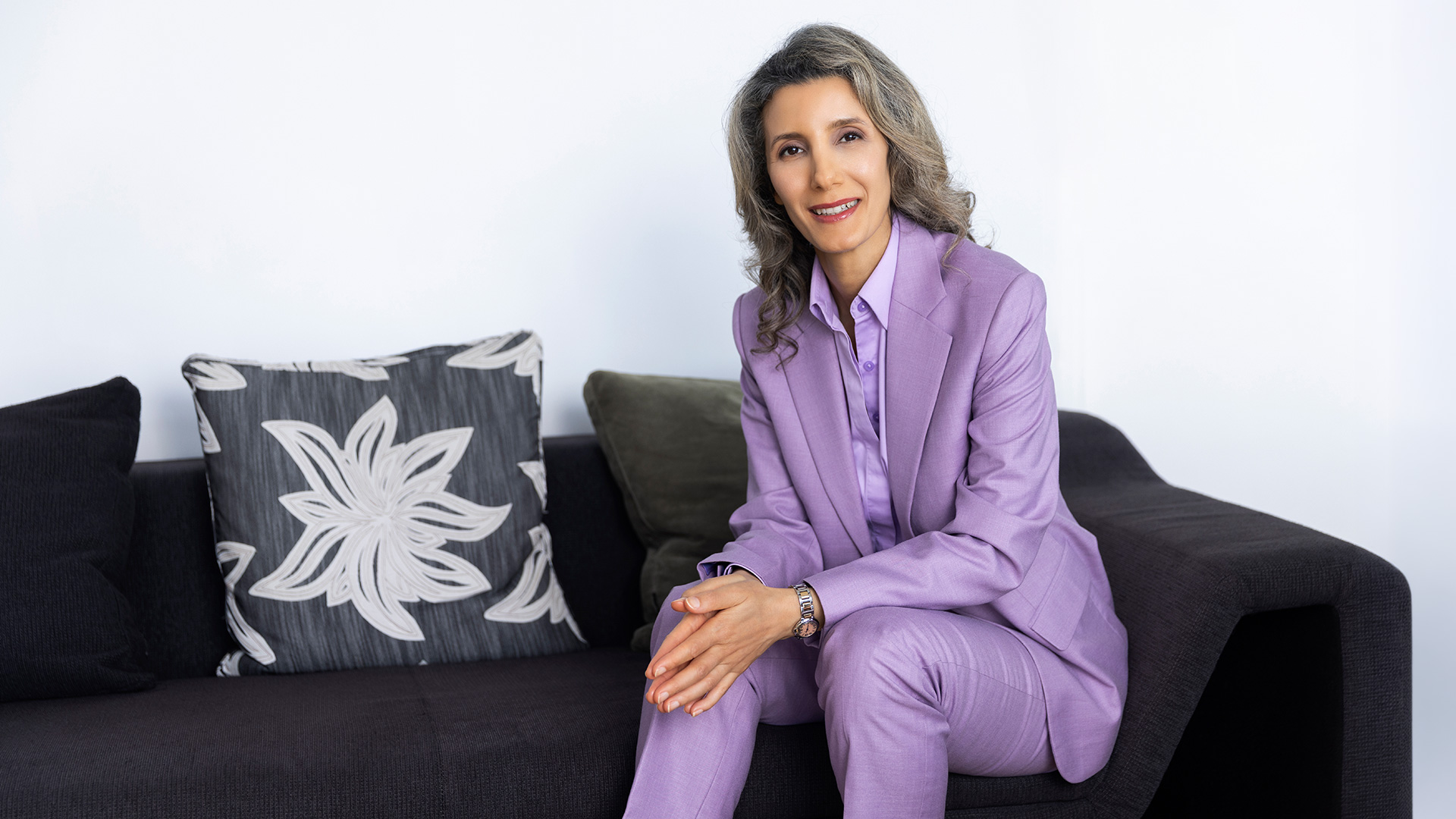
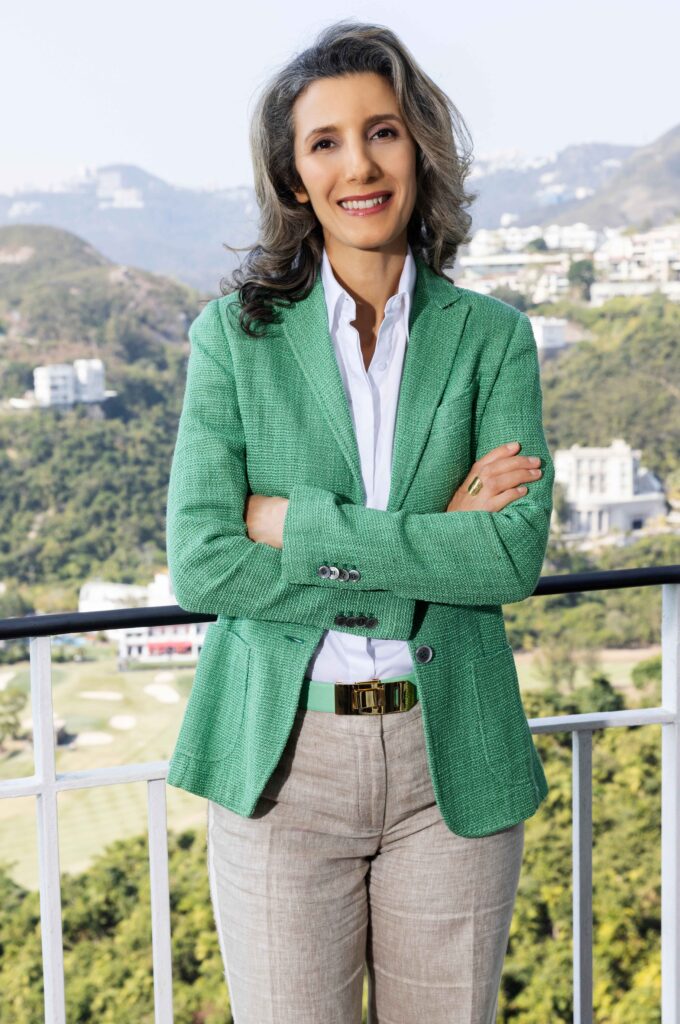
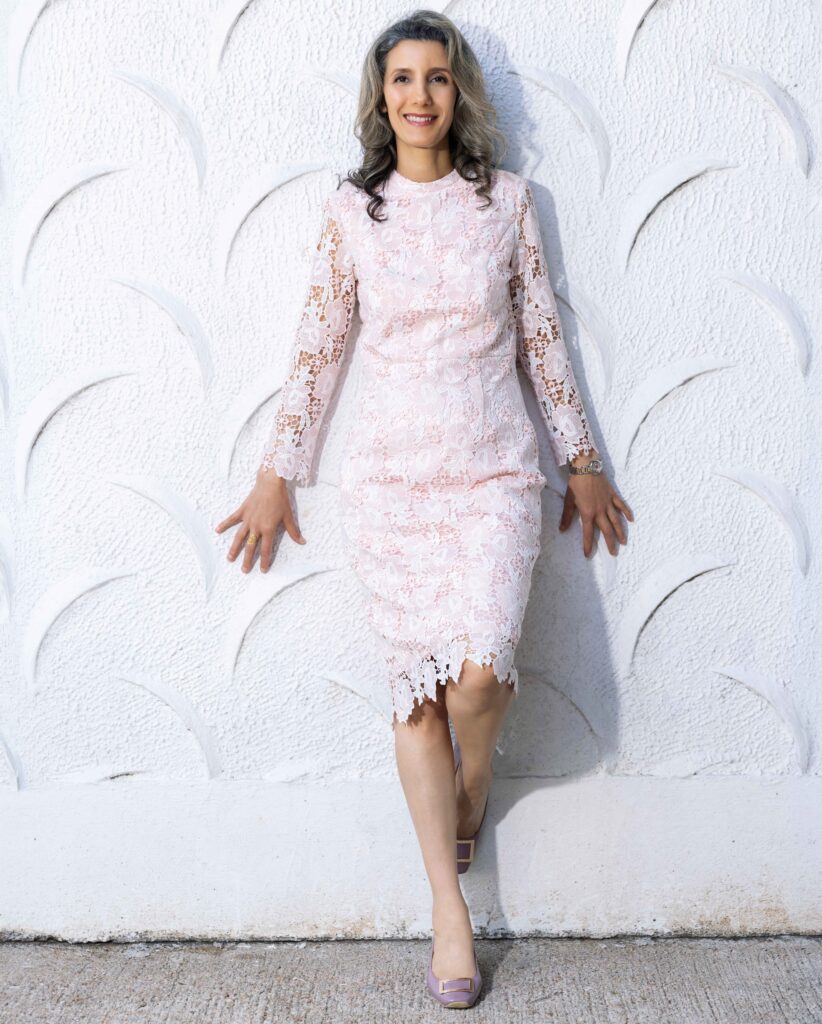
Christine Deschemin’s calm, sun-lit abode in Repulse Bay is the ideal environment to discuss stressors and sleeping patterns. As we admire her lush-green mountain and sea views, the CEO of Renewed Edge Hypnotherapy Centre suddenly digresses with a laugh: “And right over there lives one of the richest tycoons in Hong Kong. And over there is a celebrity.” It’s actually an apt introduction: her approach to mental health, the panorama is both grounding and expansive – rooted in science, open to possibility.

Deschemin’s CV reads like a page-turning novel that begins with aeronautical blueprints and ends with guided breathing tracks. Earning a Master of Science degree from École Polytechnique and an MBA from Harvard Business School gave her razor-sharp analytical tools and business savvy. But early on, she discovered that systems thinking could be applied to a system far more intricate than a rocket: the human mind. Childhood inquisitiveness, questions about flight mechanics and an interest in human behaviour grew into a career that blends engineering precision with clinical compassion.

“I grew up in an environment that celebrated curiosity and problem-solving,” shares the French national, who came to Hong Kong in 2012 as a wealth manager. After years of optimising aeronautics and making decisions in high-pressure banking environments, she realised that the most consequential system to improve was human wellbeing. The pivot felt less like an escape and more like an upgrade: same rigour, but new, and profoundly human, payoff.

Fencer, Financier, Founder

The certified hypnotherapist is no stranger to pressure. As a former competitive fencer, she learned to size up the opposition, react in milliseconds, and keep composure under duress. “In épée, you’re constantly reading your opponent and adjusting tactics,” she says. Those instincts proved invaluable when launching her hypnotherapy centre a decade ago, and the digital suite that followed. Entrepreneurship, she argues, is a tactical sport: preparation, repetition, discipline and the willingness to learn from every touché.

In 2020, Deschemin released the UpNow app to bring self-hypnosis to anyone with a smartphone. The app’s self-hypnosis downloads were developed to make mental health affordable and portable, an idea that felt urgent as the Covid pandemic frayed sleep and increased anxiety worldwide.

An early testimonial still moves her: a woman in her 60s, living far away, who reported sleeping again after using the app. “What struck me most was her gratitude for having access to efficacious interventions at an affordable cost,” she recalls. The story is evidence of what she terms her core mission: democratising access to quality care so suffering no longer depends on postcodes or bank accounts.

Where Science Meets Soul

Precision empathy is the secret sauce. Her work is deliberately multidisciplinary; hypnotherapy, psychology and digital therapeutics are strands woven into a single rope. “École Polytechnique taught me to think in systems and demand mathematical precision,” she explains. While at Harvard, she learnt how to scale solutions. The result: evidence-based programs that feel humane, not mechanical.

Her hypnotherapy downloads were created and voiced by clinicians and crafted using techniques with strong clinical roots (including elements of neuro-linguistic programming and mindfulness). Rejecting the binary that pits scientific rigour against compassion, she champions “precision empathy”, using data to determine what works, then delivering it in ways that respect people’s lives, cultures and constraints.

Asia presents unique challenges to the hypnotherapist: stigma, a performance-driven culture, and uneven access to care. She addresses stigma by reframing mental health as performance optimisation rather than weakness. Digital delivery lowers cost barriers and preserves privacy, which is critical in communities where face-saving matters.

She’s optimistic about culturally adapted models. “Digital therapeutics allow us to reach populations who would never walk into a therapist’s office but will engage with an app,” she says. Her strategic aim is to create programs that feel both culturally relevant and clinically reliable. Small downloads can realise big life changes.

Stories That Count

Beyond metrics, Deschemin is motivated by stories: the executive who reclaimed sleep, the athlete who regained focus, the midlife woman who found relief during menopause. These aren’t anecdotes to her; they’re a north star. The note from the woman who hadn’t slept in weeks during the Covid crisis demonstrated that accessible interventions can restore everyday life in ways often dismissed by conventional healthcare.

Running a company is like managing a team bout in fencing. She brings a governance-minded clarity to growth, and board roles taught her the balance between risk and innovation. She empowers colleagues with autonomy and clear resources, fostering a culture of competence and trust. “I give people challenging goals and the tools to achieve them, then get out of their way,” she says. The result is a virtuous cycle where empowered teams iterate quickly and responsibly.

Practical Zen

Deschemin is candid about the personal cost of her healthcare entrepreneurship: it’s easy to neglect one’s own well-being. So, she has daily non-negotiables, including sufficient sleep and long walks in Hong Kong’s hills. Nature is her reset button: a place to process, plan and replenish. These rituals keep her grounded so she can keep giving, because she notes, “you cannot pour from an empty cup”.

Looking ahead, she wants to offer a suite of evidence-based digital therapeutics for menopause, anxiety, sleep, gastrointestinal conditions and stress-related disorders. Her five-to-10-year goal is to integrate these programs into healthcare systems and insurers’ coverage, so evidence-based digital therapies are standard care rather than fringe options. “Success is impact at scale, and for me that means millions finding relief where none existed before,” she says.

Clear View, Clearer Mind

As our visit ends, Deschemin gestures toward the bay and the mountain. The view is more than scenic, it’s metaphorical. “When your vantage point is clear, you make better decisions,” she says. The same goes for mental health: a clearer inner view, less cluttered by stress and distorted thinking, allows people to act with agency and grace. The vista from her house is a daily reminder that perspective matters. Whether you’re facing a tycoon’s mansion or the turbulence of burnout, a clean line of sight makes the way forward easier to see.

The compassionate hypnotherapist would likely appreciate the subtlety of the pun that she’s built a career helping people get their minds ‘up now’. From rocket science to guided relaxation, she’s proving that a clear view – of the horizon and the mind – makes all the difference.

Interview, Text & Art Direction: Joseff Musa     Photographer: Jack Law     Videographer: Iris Ventura 

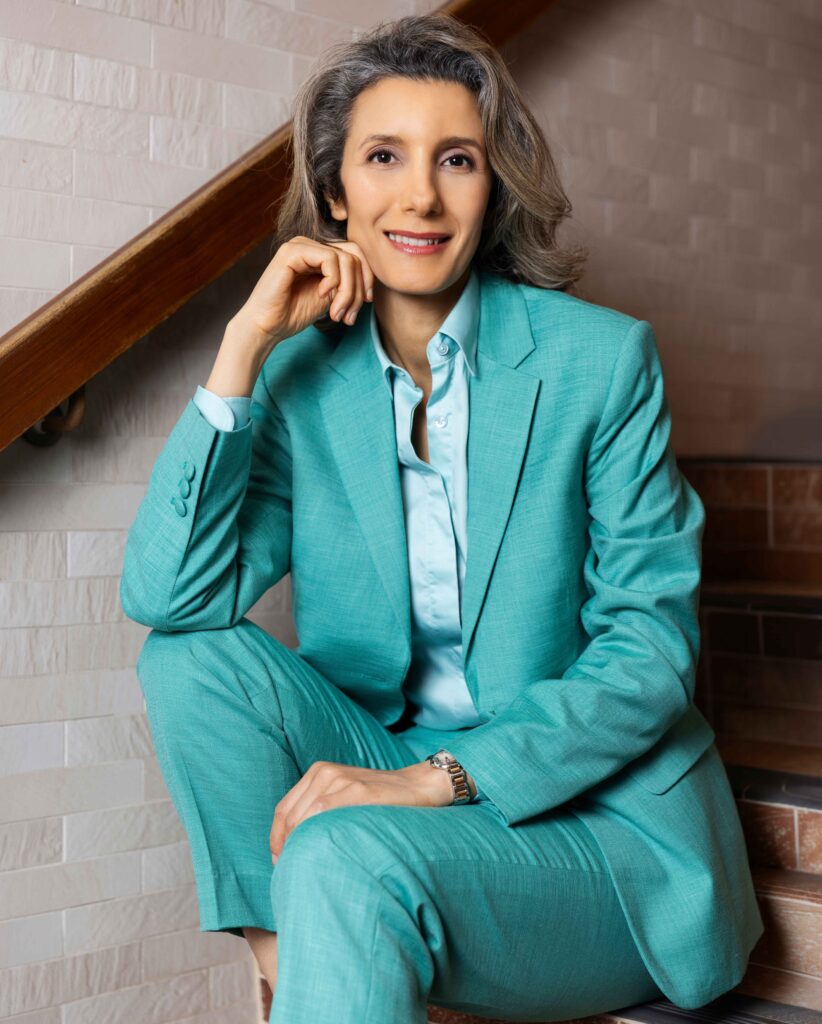
A Scent-sational Celebration: Parfums MDCI’s 20 Years of fragrant art; crafting memories, one bottle at a time

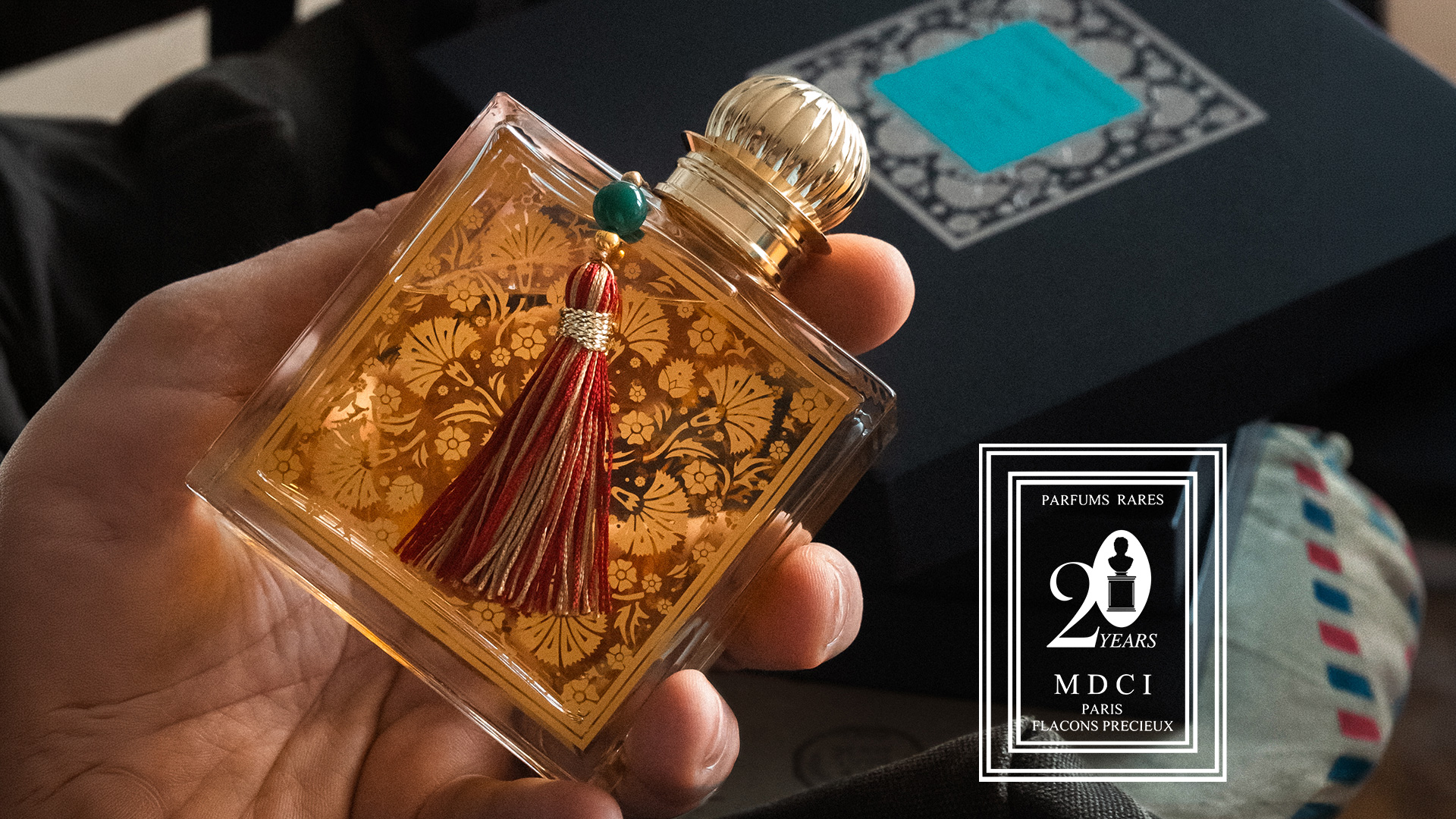
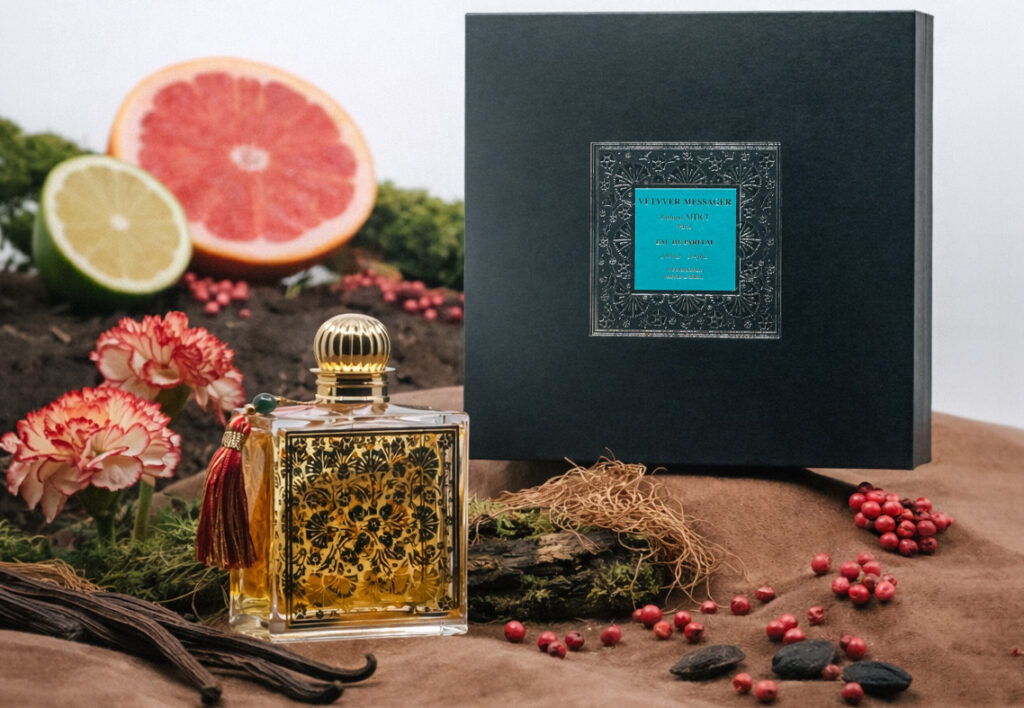
This year, Parfums MDCI, the independent perfumery house renowned for its dedication to craftsmanship, turns a glorious 20 with the unveiling of Vétyver Messager, a new woody aromatic masterpiece that encapsulates vitality and springtime joy. For two decades, MDCI has been forging a path of originality, collaborating with world-class perfumers and creating limited-edition jewels of scent, each bottle a tiny work of art.

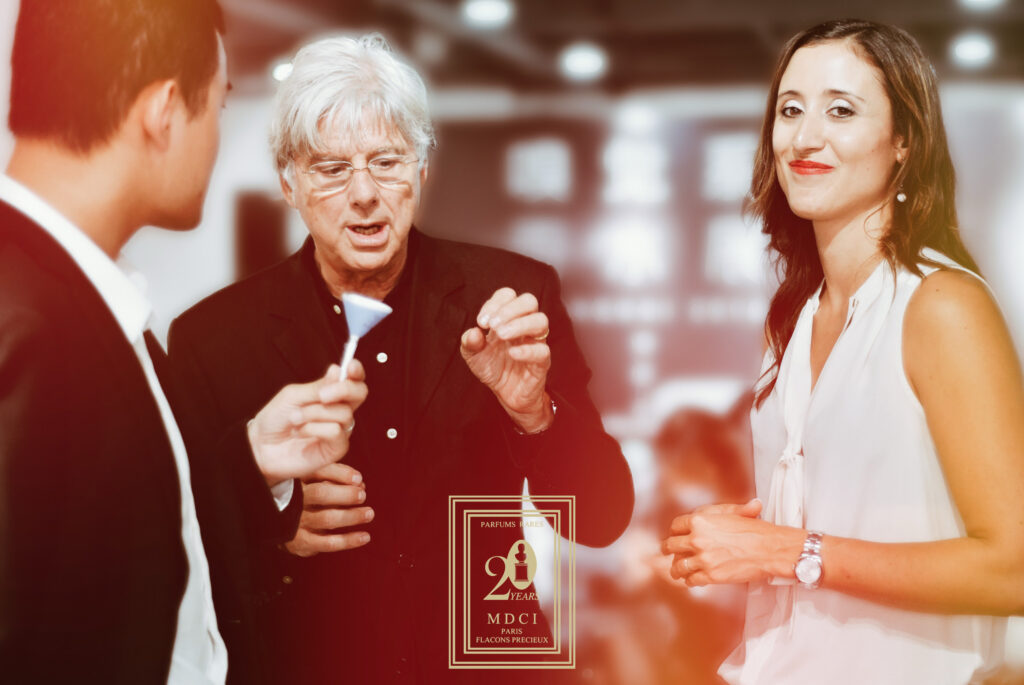
Founded by Claude Marchal, MDCI’s journey is rooted in a passion for quality over quantity. “When I started, the term ‘niche’ didn’t even exist,” Claude reflects. “We focused on slow, artisanal French craftsmanship, sourcing rare materials, and creating fragrances with true personality. Our goal has always been to craft beautiful bottles and perfumes that are wearable, timeless, and emotionally resonant.” Over the years, the house has released 24 distinctive fragrances, each meticulously handcrafted and refined, embodying the French tradition of perfumery as a luxurious art form.

“It’s a return to the essentials with a modern twist,” Claude explains. “Vetiver is a versatile note, capable of many interpretations, and in this fragrance, it’s infused with aromatic clarity that evokes vitali ty and optimism. It fills the gap in our vetiver line and captures the spirit of spring.” The fragrance’s green jade-like beads on its bottle symbolize freshness and renewal, echoing the lush vitality of nature.

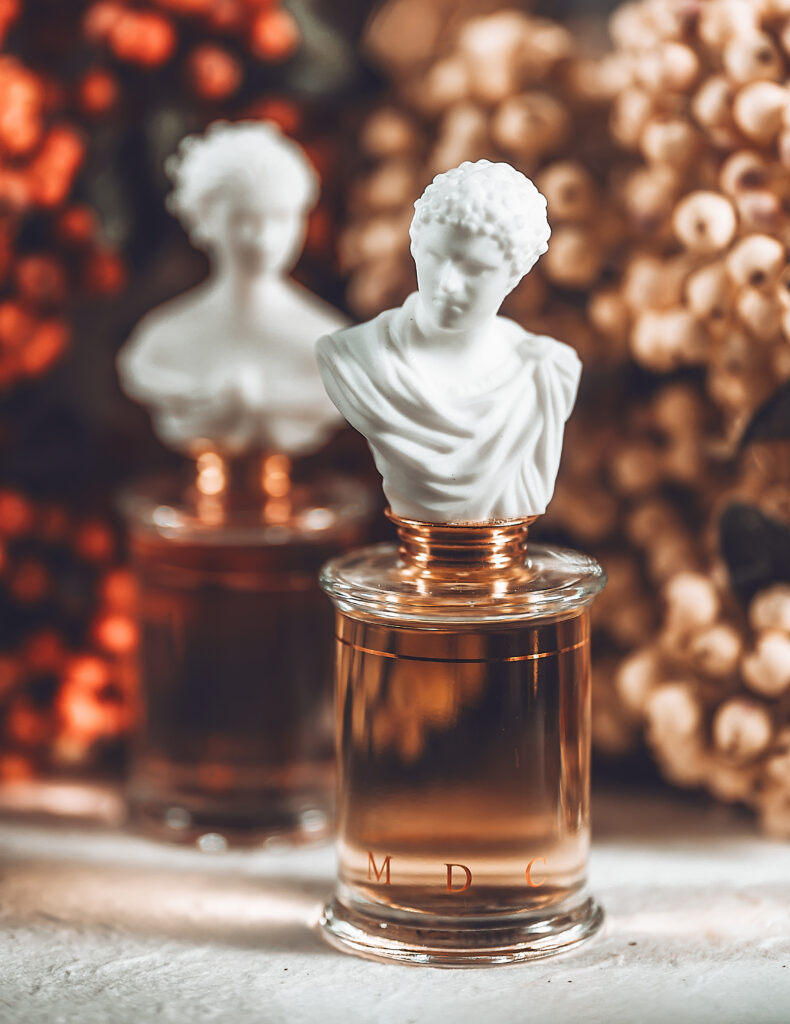
In the world of MDCI, fragrances are divided into the Classic and the Painter and Perfumer collections. The Classic line features elegant tassels—red with blue beads for men, white with pearl beads for women—each detail imbued with significance. Vétyver Messager’s green beads pay homage to the brand’s dedication to meaningful artistry, a testament to its heritage.

The house’s dedication to beauty rituals extends to MDCI Beauté, launched in collaboration with Limoges’ renowned porcelain artisans. These limited-edition porcelain coffrets, inspired by the French Grand Siècle and painted with motifs reminiscent of François Boucher and Honoré Fragonard, elevate the act of self-care into an art form. Decorated with gold accents and delicate floral motifs, each piece is a collectible treasure—an exquisite vessel for your skincare routine.

Claude Marchal emphasizes, “Beauty is a ritual. It’s about slowing down and appreciating the exquisite details—touching a porcelain box, feeling its weight, and savoring the moment.” The luxurious boxes, crafted in limited, numbered editions, turn everyday self-care into a cherished ceremony, blending timeless art with modern elegance.

When asked about success, Claude responds, “It’s about legacy and staying true to our values. When a fragrance helps someone through a pivotal moment, that’s success. Happiness, for me, is found in simple joys—nature, quiet moments, and sharing love.”

Perfume, Claude believes, is a powerful vessel of memory. “A scent can transport you through time,” he says. “It’s a dialogue with the soul.” Whether it’s the nostalgic sweetness of Vêpres Siciliennes or the evocative familiarity of Le Barbier de Tanger, MDCI’s fragrances are designed to leave indelible impressions.

Shop Location

CAUSEWAY BAY

Shop 28, G/F, 11-19 Great George Street, Fashion Walk

info@scentedniche.com Tel: 2608 2206
TSIM SHA TSUI

Shop 210A, Level 2, 18 Salisbury Road, K11 Musea

info_k11musea@scentedniche.com. Tel: 2608 2205

Sevens Heaven: Five decades after Hong Kong’s first tournament, tries still excite and unite the community 

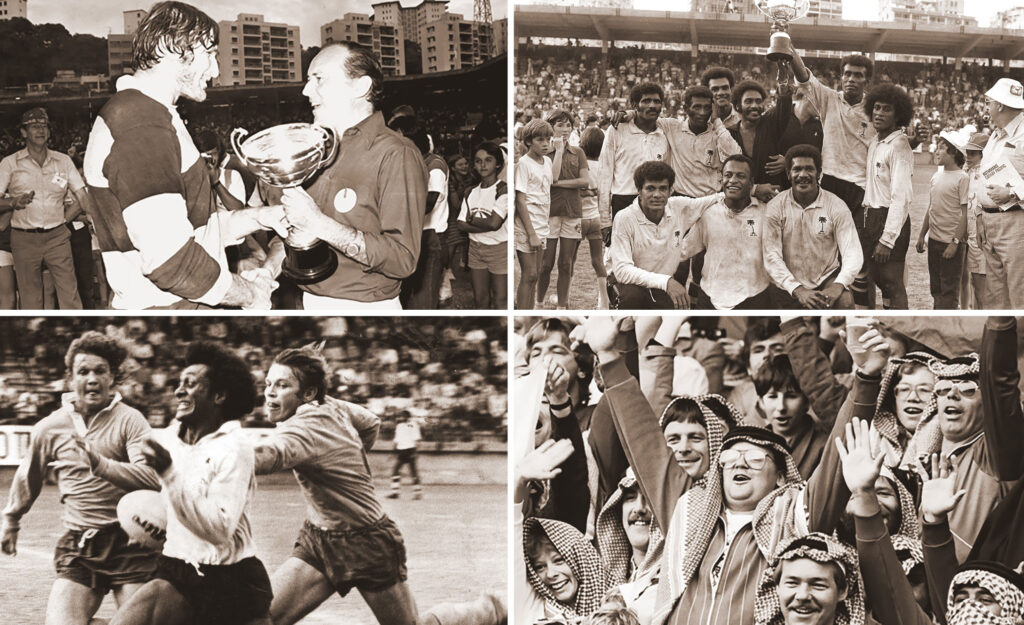
The Hong Kong Rugby Sevens did not start as a spectacle at kick-off in Happy Valley half a century ago. It began, as many enduring cultural institutions do, almost accidentally. Back then, the sport existed on the margins. Rugby was played largely within the expatriate community, sustained by club culture and social networks that operated somewhat apart from the city’s mainstream consciousness. In this context, the tournament’s role in bringing the city and people from around the world together over an oval ball for an exhilarating long weekend is a remarkable feat.

Hong Kong was a very different city in the mid-1970s; smaller, rougher at the edges, and still negotiating its identity as an international hub, it was defined more by transit and trade than by lifestyle. Skyscrapers had not yet fully asserted the skyline’s authority, and while finance was growing, it had not yet become the city’s dominant narrative. The prevailing mood was industrious rather than expressive.

When the idea of hosting a Rugby Sevens tournament was first proposed during discussions between the Hong Kong Rugby Football Union and then sponsors Rothmans and Cathay Pacific, it carried none of the ambition or theatrical scale that would later define it. There was no sweeping cultural blueprint, no strategic ambition to manufacture a global brand.

The shortened format of Sevens – seven players per side for rapid matches – appealed for practical reasons. It allowed multiple games to be staged across a single weekend, making travel worthwhile for visiting teams. It was efficient, compact and manageable. In a city that valued efficiency above excess, that practicality was sufficient justification.

Rugby Roar

Yet that modest premise proved quietly transformative. When the first Hong Kong Sevens took place in 1976, featuring teams from across Asia and the Pacific, it did more than fill a sporting gap. It positioned the city as a regional meeting point at a time when global connectivity had not yet entered everyday vocabulary. Hong Kong’s economic role as an intermediary between continents found a cultural parallel inside the stadium. Teams arrived from different countries; supporters followed; flags appeared in the stands. For a few days, the city’s outward-facing identity condensed into a shared physical space.

What distinguished the tournament in its early years was not only the quality of play but the atmosphere that began to form around it. The shortened format generated momentum. Matches were brief, intense and closely scheduled, leaving little room for inertia. The pace encouraged constant engagement, with spectators becoming animated participants. The crowd responded collectively to sudden tries and dramatic turnovers. Laughter, chanting and applause moved in waves.

Since the Sevens grew organically, it feels fundamentally different from other large-scale gatherings. Its character formed through repetition – staged on the same weekend, year after year – and through the steady layering of memory. Attendees learned the rhythm of the event almost instinctively. They knew when anticipation would peak and when energy would dip, and this shared familiarity reduced the distance between strangers.

Success and Fancy Dress

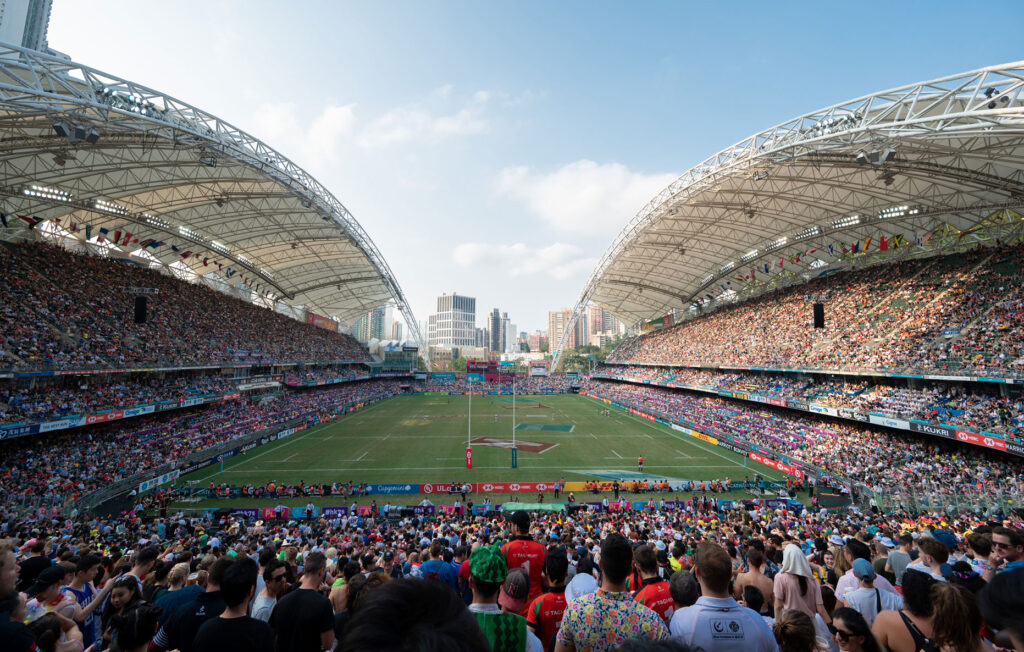
As Hong Kong established itself as a financial powerhouse and global crossroads in the 1980s and 1990s, the Sevens evolved alongside it. The tournament broadened its international reach and migrated venues – from the Football Club, where 3,000 spectators watched the debut one-day event, to the 28,000-capacity Government Stadium in 1982, which was modernised in the 1990s and renamed the Hong Kong Stadium, to the spanking new 50,000-seat Kai Tak Stadium last year. The Sevens embedded itself into the city’s annual calendar, becoming a fixed point in an environment otherwise defined by constant acceleration.

The tournament culture was shaped more by the people who attended than by official programming. Traditions accumulated gradually. Attending in fancy dress emerged not as orchestrated fashion statements but as spontaneous gestures among groups of friends. One year’s joke became the next year’s expectation. The humour was playful, and the visual chaos in the stands signalled collective belonging rather than curated identity.

This ethos was already cemented by 1997 when the tournament achieved global recognition – this was the year Hong Kong hosted the Rugby World Cup Sevens, and its success was instrumental in the launch of the World Sevens Series in 1999. Loud, irreverent and communal, the emphasis rested on a raucous collective mood – epitomised by the alcohol-fuelled party atmosphere of Hong Kong Stadium’s South Stand – rather than individual performance.

People were absorbed into a larger current of energy. Expertise in rugby was welcome but unnecessary. Enthusiasm was the only requirement, and the crowd functioned as a temporary community, unified by rhythm rather than background.

Communal Party

Until this day, exuberance coexists with inclusivity during the Sevens weekend. Families share sections with longtime supporters and first-time visitors. Colleagues temporarily suspend workplace hierarchies. Conversations unfold without formal introduction. Groups select shared costume themes that transform them into collective characters. The result is an egalitarian spectacle in which participation matters more than polish. The stands resemble a living collage, constantly shifting yet unified.

Beyond the stadium, the city subtly reconfigures itself. Bars and restaurants function as informal meeting points, encounters between strangers occur with unusual ease, and the streets feel even more vibrant. The tempo of daily life adjusts, if only briefly. The Sevens reframes Hong Kong’s intensity, and energy becomes celebratory rather than transactional.

While the tournament does not promise reinvention or transformation, it permits suspension of boundaries between economic status and cultural divide, between locals and expatriates, between residents and visitors. In a city known for discipline and efficiency, collective exuberance carries symbolic weight. The permission to relax, to cheer loudly and dress absurdly feels restorative – and because that permission is shared, it rarely tips into bad behaviour or mayhem.

Although social media captures fragments of the weekend, the memory of the Sevens resides in sensation: tired legs from standing, hoarse voices from chanting, sun-warmed skin or soaked to the skin – monsoon-like downpours are not uncommon on the tournament weekend – and the faint disorientation of Monday morning. These embodied traces anchor recollection more powerfully than photographs.

Inclusive Scores

As the Hong Kong Sevens has matured over 50 years, it has absorbed social change without abandoning its foundations. Women’s rugby has gained deserved prominence, and youth engagement has expanded. Local representation has deepened, reflecting Hong Kong’s evolving demographics. These developments extend the tournament’s inclusive spirit.

By Sunday evening, as final matches conclude and the crowd thins, the release subsides gently. Costumes are folded away until next year. Bars quieten, and the city resumes its habitual tempo. Yet a subtle recalibration lingers. The Sevens endures because it offers continuity within change. It is not spectacle engineered for consumption, but ritual sustained by return.

From 17-19 April this year, Hong Kong will gather once again over multiple rugby matches, heralding recognition of shared history, shared space and shared release. The Sevens is not about the self; it champions collective presence and community – and that enduring simplicity remains its quiet distinction and lasting relevance.

For many residents, particularly those who have witnessed Hong Kong’s rapid economic and political transformations, the Sevens acts as a temporal anchor. The city has weathered cycles of prosperity and uncertainty, demographic change and shifting global relationships. Neighbourhoods have been reshaped; industries have risen and receded. Through these fluctuations, the Sevens has remained. Its recurrence provides continuity in a landscape often defined by impermanence.

Building Futures: The key to unlocking prime property opportunities with Henry Wong

Ever wondered what makes a top-tier international property developer tick? Henry Wong, a visionary leader whose expertise, passion, and innovative approach are reshaping the Hong Kong and global real estate landscape. Whether you’re an investor or a homebuyer, his projects offer a golden opportunity to stake your claim in Hong Kong’s vibrant skyline!

How is your professional background suited to a career with an international property developer?

With years as an executive director at Top Spring Group, I bring extensive experience in boutique real estate investment, backed by a strong academic foundation in law, business, and arts. I understand legal transactions, navigate industry challenges, and lead multicultural teams to create high-quality, market-driven properties.

What attracted you to join The Top Spring Group in 2015?

Joining my family’s business, I was inspired by the company’s regional footprint and commitment to growing with Hong Kong’s community. Top Spring’s diverse projects and supportive culture fuelled my passion for innovative real estate development.

What are the main areas of commercial activity and expertise of the Group?

We develop luxury residential, retail, and property management projects across Hong Kong, China, and Australia. Notably, our 128 WATERLOO penthouse sold for over HK$241 million, cementing our reputation for excellence.

How does Top Spring navigate the recent upheavals in China’s property market?

We stay ahead by monitoring regulations, diversifying our portfolio, conducting rigorous market analysis, and implementing robust risk management plans to weather downturns effectively.

How do you foresee Hong Kong’s property market evolving?

We anticipate a gradual recovery driven by government policies, improved investor sentiment, and global economic stabilization—especially with dropped interest rates. Our developments, like 128 WATERLOO, are already performing well amidst these trends.

What makes your HK projects, such as 128 WATERLOO, stand out from other premium developments?

Our projects boast a sublime modern classic design inspired by British architecture, cutting-edge smart home features, and meticulous quality control. They are not just homes—they’re landmarks blending luxury, innovation, and sustainability.

Why are these projects such attractive investment opportunities?

They combine proven high sales with impressive rental yields—reaching HK$70 per square foot—and feature innovative designs and amenities. Our strong reputation and strategic partnerships ensure quality and investor confidence.

Why should investors consider putting their money into your Hong Kong residential projects?

Our track record speaks volumes—delivering record-breaking sales and high customer satisfaction. Coupled with attractive rental income, innovative features, and a robust network, our developments promise promising returns and long-term growth.

Comfort & Joy: Hillside meanders through Vietnam and Thailand to peak in a soulful cuddle of global flavours

If comfort food had a passport, Hillside at Kimpton Tsim Sha Tsui would be its international visa, stamped, approved and ready to take diners on a flavourful journey. Imagine fun and wit meeting the warm embrace of your favourite childhood meal, but with a sophisticated, global twist. That’s Hillside in a nutshell, an all-day dining spot where every bite feels like a hug from an old friend, but one who’s travelled the world and brought back souvenirs… of flavour, of course.

Perched on the 12th floor (because why not dine with a view?), Hillside kicks off each morning with a multicultural breakfast spread. Think crispy crêpes, spicy sambal and fresh tropical fruits. Kimpton Executive Chef Logan Hester, the maestro behind Hillside’s global comfort canvas, shares: “I like to bring in elements from different cultures to create a breakfast that’s both familiar and exciting.” Come lunchtime, there’s the playful Crab Cake Poppers, little bites that are basically seafood fireworks, and Honey Mustard Burnt Ends that are so tender, they practically melt in your mouth. For those craving a spicy kick, ‘Tom Yum’ Prawn Wontons are a spicy, herbaceous squeeze from Thailand, while Grilled Cabbage Caesar redefines the classic salad with smoky, charred and crunchy napa.

As the day progresses, Hillside transforms into a culinary playground for sharing. Pho Spiced Wagyu Beef Rib is a slow-cooked, spice-laden masterpiece. Seafood lovers will swoon over Khao Soi Lobster, where a Boston lobster gets cosy in a Thai red curry, and Pork Pad Kra Pao turns street food into a sit-down affair without losing its cred. For vegetarians seeking a little love, Mushroom Ragu pasta offers a plant-based punch of umami. Hester emphasises: “Creating dishes that evoke emotion involves understanding ingredients and respecting their natural flavours. That’s the core of my philosophy.”

Let’s not forget the grill section, because what’s a comfort-food experience without a little fire? Both the Wagyu Striploin Bavette and BBQ Lamb Ribs are glazed with a sticky, sweet-spicy char siu-like marinade. “Grilling adds a smoky depth that elevates comfort foods into something special,” notes the chef. “It’s about balancing heat and flavour to bring out the best in each ingredient.”

And just when you think Hillside can’t get any more charming, the desserts swoop in. Matcha Crème Brûlée balances bitterness and sweetness with a satisfying crack revealing velvety custard. Chocolate Basque Cheesecake is a fiery, fudgy love letter topped with jasmine Chantilly, a modern classic with a poetic twist.

American Hester, who spent five years working in Vietnam and previously helmed Chôm Chôm, focuses on fundamentals. “Vietnam taught me that flavour is layered with intention, letting ingredients speak for themselves rather than over-designing the plate,” he remarks. “Skill comes with time, but attitude defines your trajectory.”

Offering sound advice to aspiring chefs, he continues: “Take pride in your craft, invest in knowledge, and don’t confuse burnout with ambition. I have found my path by chasing challenge and investing in adventure and that’s not without a lot of risk.” He adds, with a wink: “When I’m on my deathbed, I would hate to look back and think ‘well, that was boring’.”

Hester’s approach to leading the team highlights clarity, respect and a dash of empathy, because, let’s face it, even chefs need a little TLC, especially when dealing with a soufflé that just refuses to rise. “Leadership is about understanding people as well as food,” he says. “Empathy, decisiveness and integrity are what make a chef a true leader. The best cooks don’t always make the best leaders, but the best leaders understand their team and connect with guests on a human level.”

His five-year goal? “Developing Hillside into a hallmark Hong Kong operation, one chapter at a time. From heritage-driven suppliers to sustainable fermentation programmes, we’re dreaming big and taking steady steps toward those dreams.”

Hillside is a gastronomic summit where flavours from Vietnam, Thailand, the US and beyond come together. As the chef concludes, “This is the hill I’d die on – because it’s delicious.” And it might be everyone’s new favourite spot for a global comfort cuddle; no passport required.

Hillside 12/F, Kimpton Tsim Sha Tsui, 11 Middle Road, Tsim Sha Tsui. Tel: 3919 6828. kimptonhongkong.com
Text: Joseff Musa    Photos: Kimpton Tsim Sha Tsui

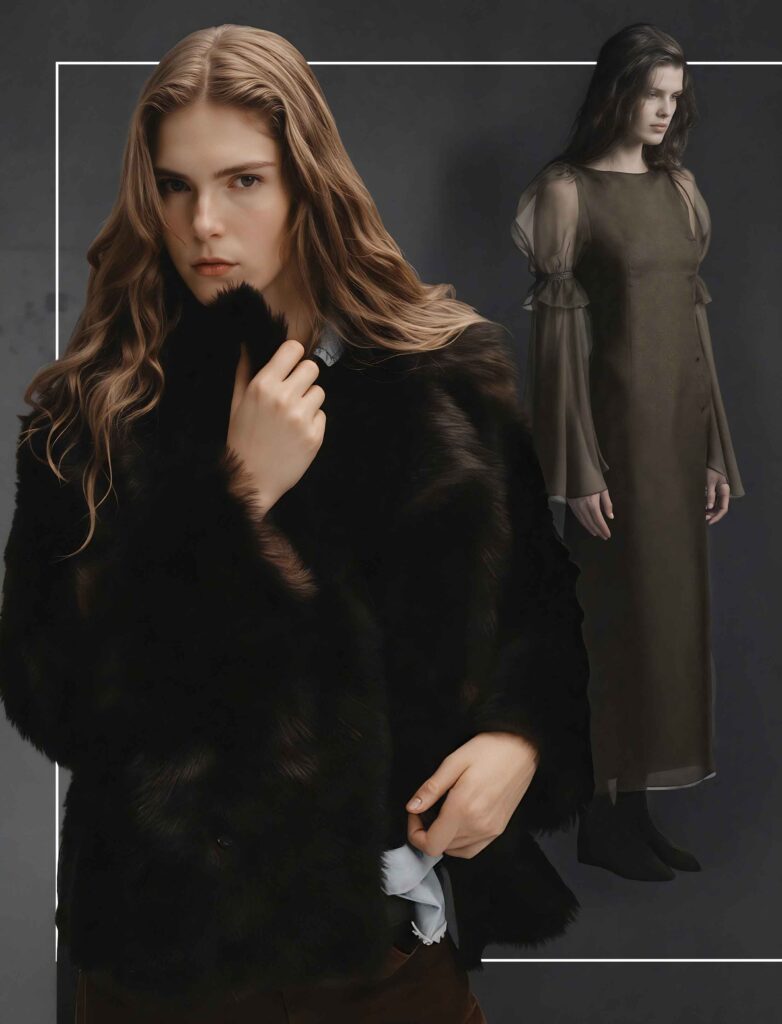
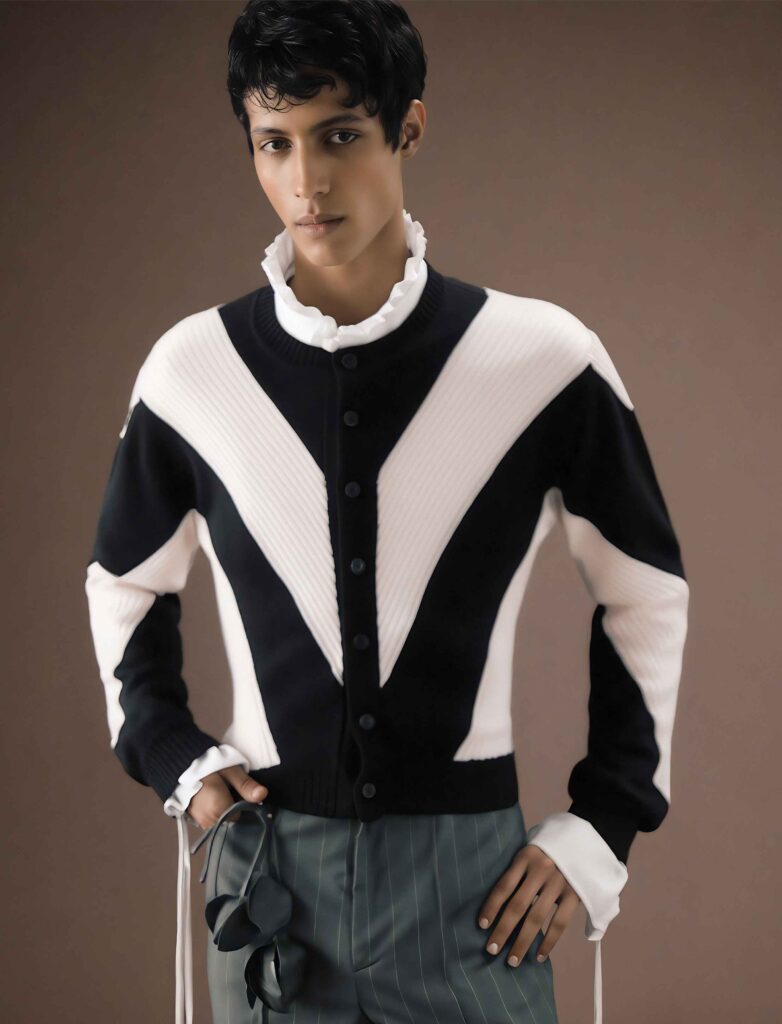
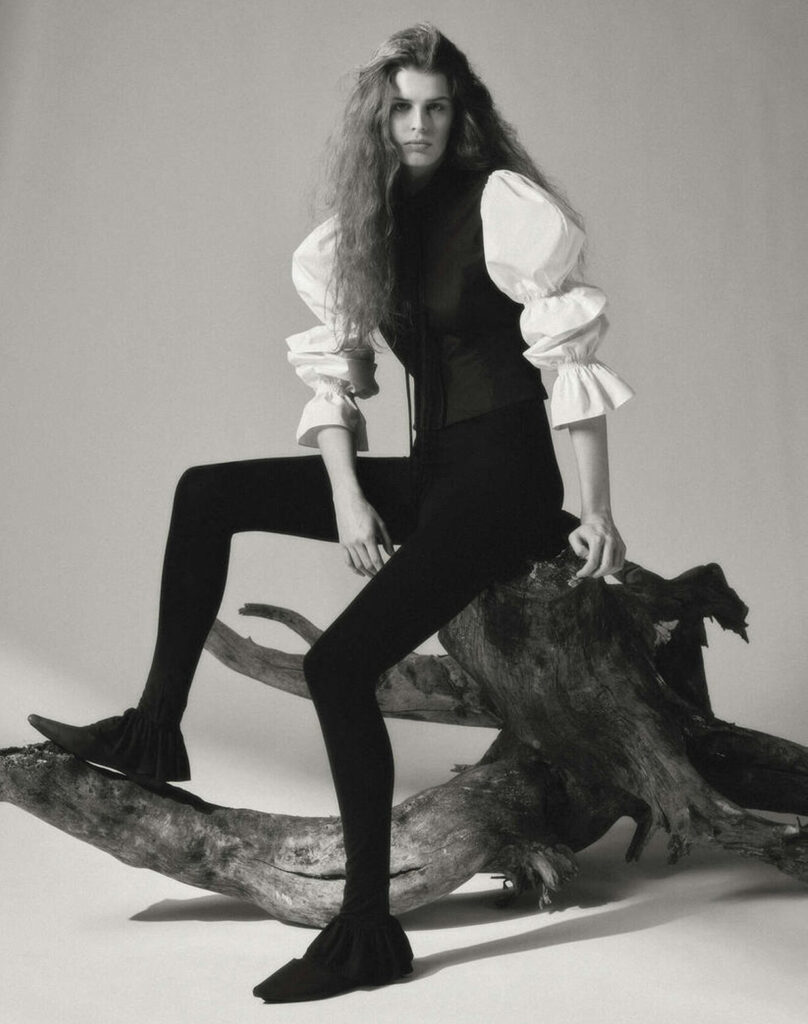
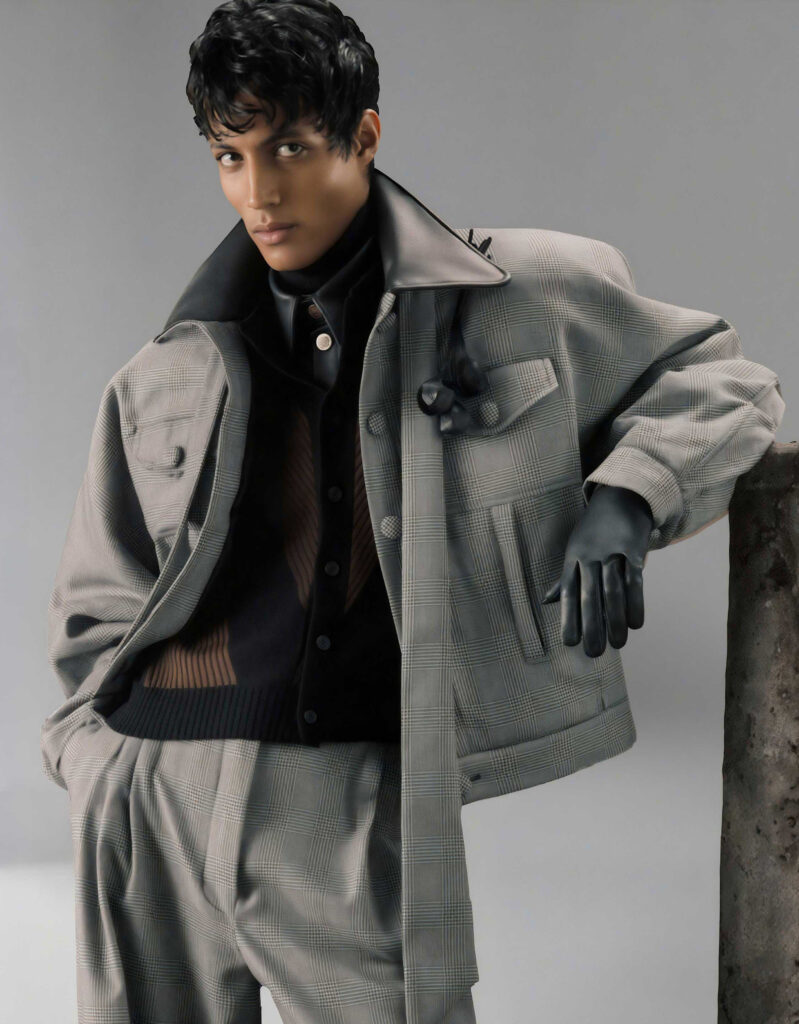
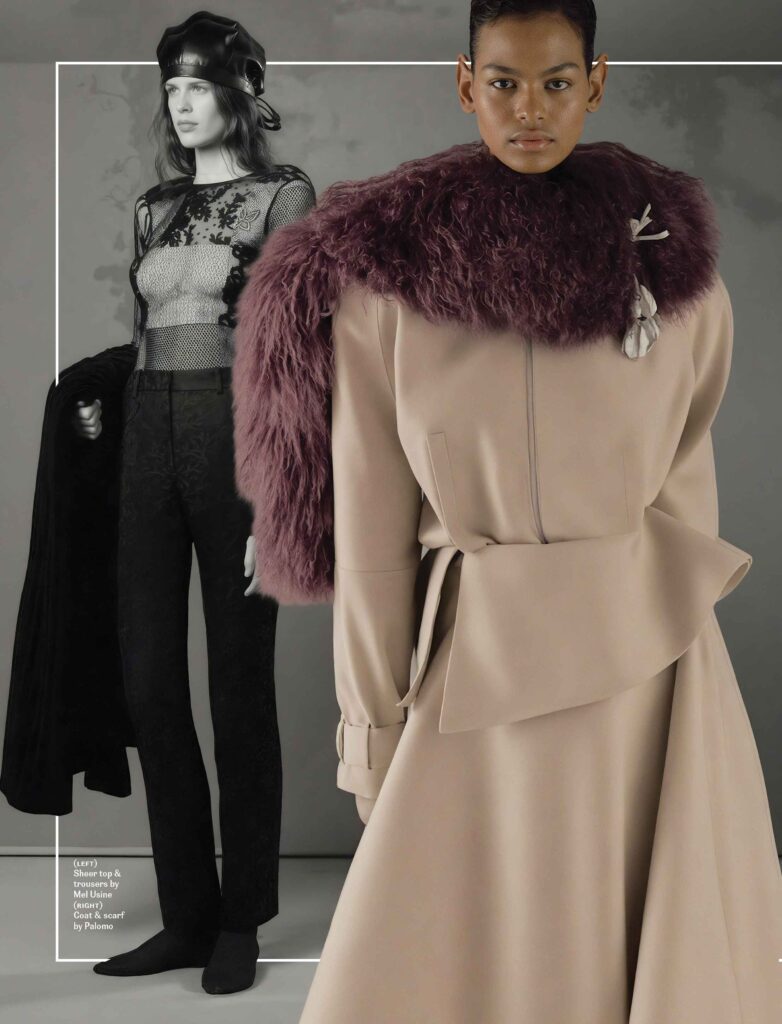
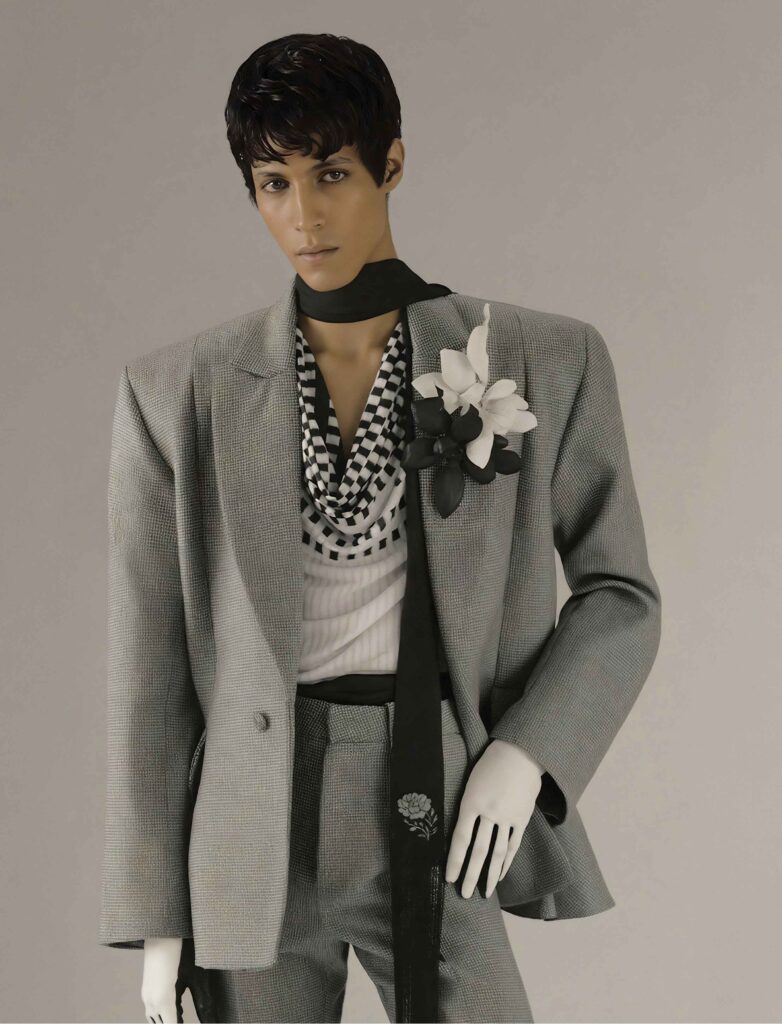
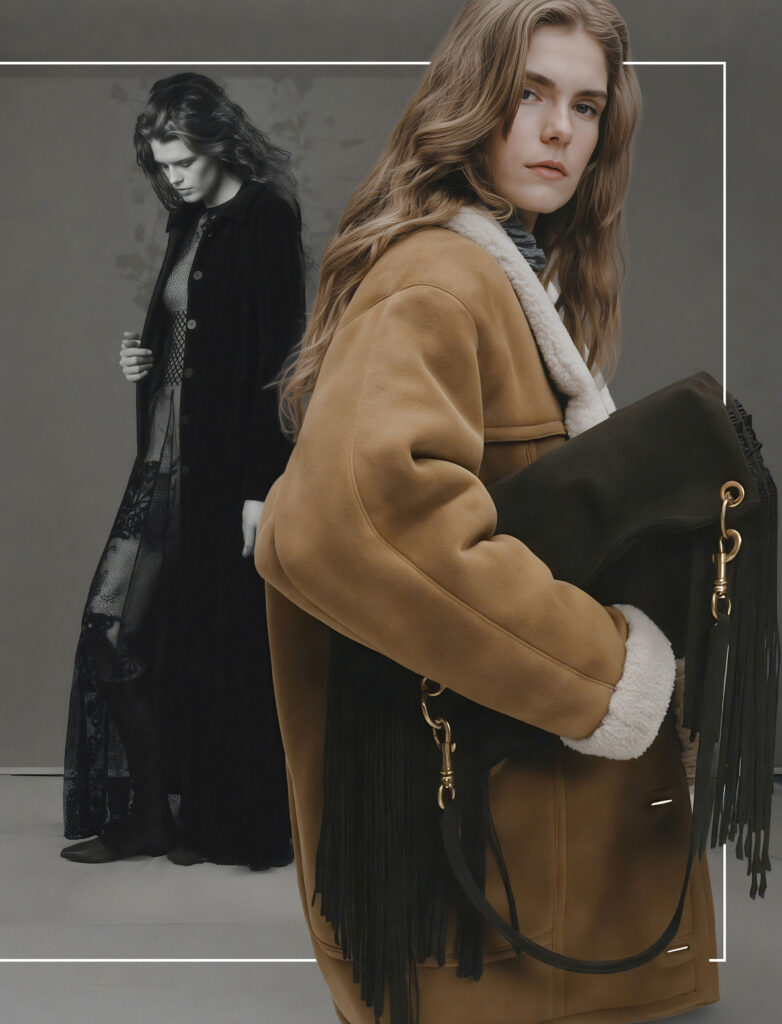
Shine On: Tailored trends turn heads from sunrise to sunset
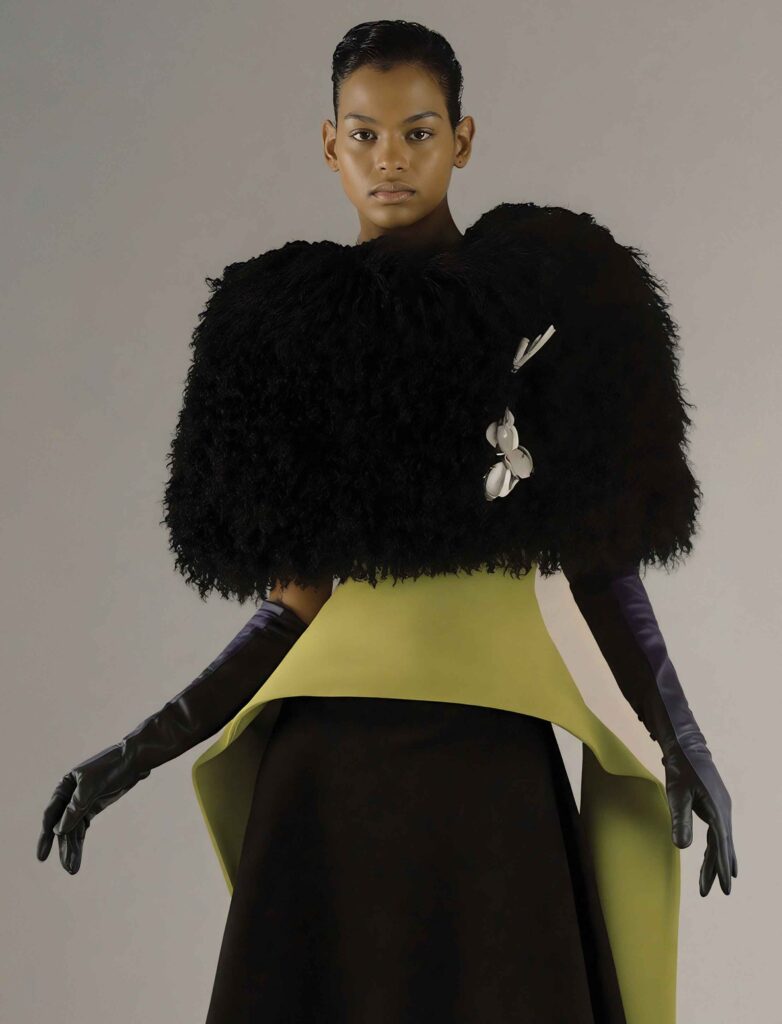
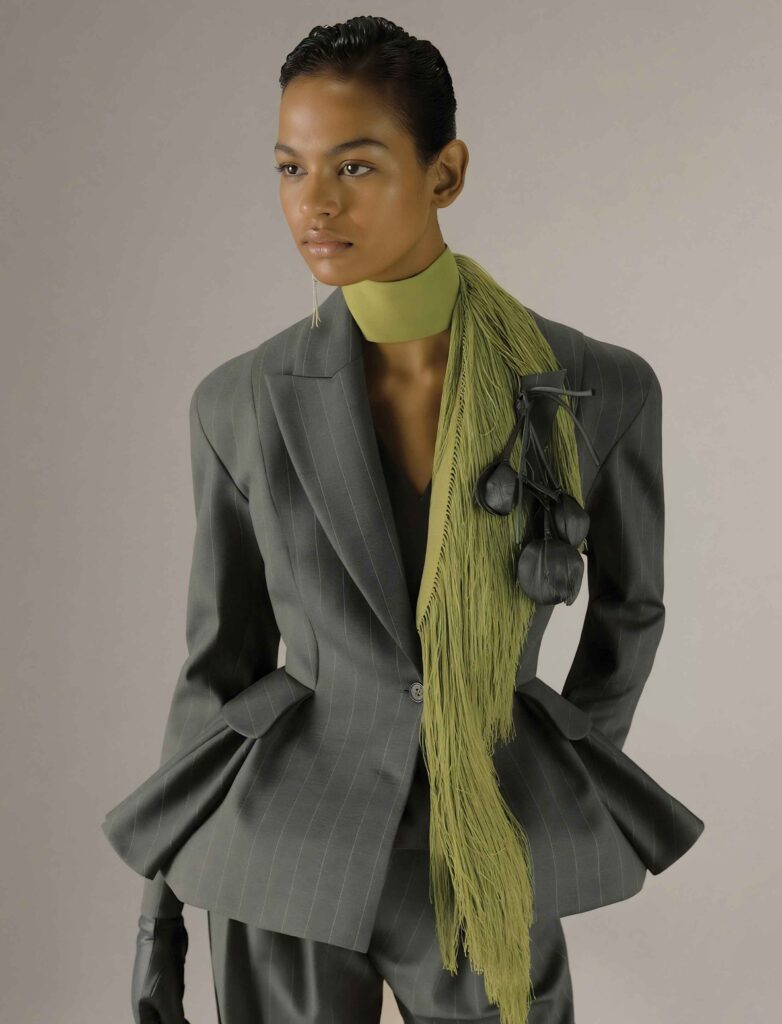
Look 1

Pinstripe suit and fringe scarf by Palomo

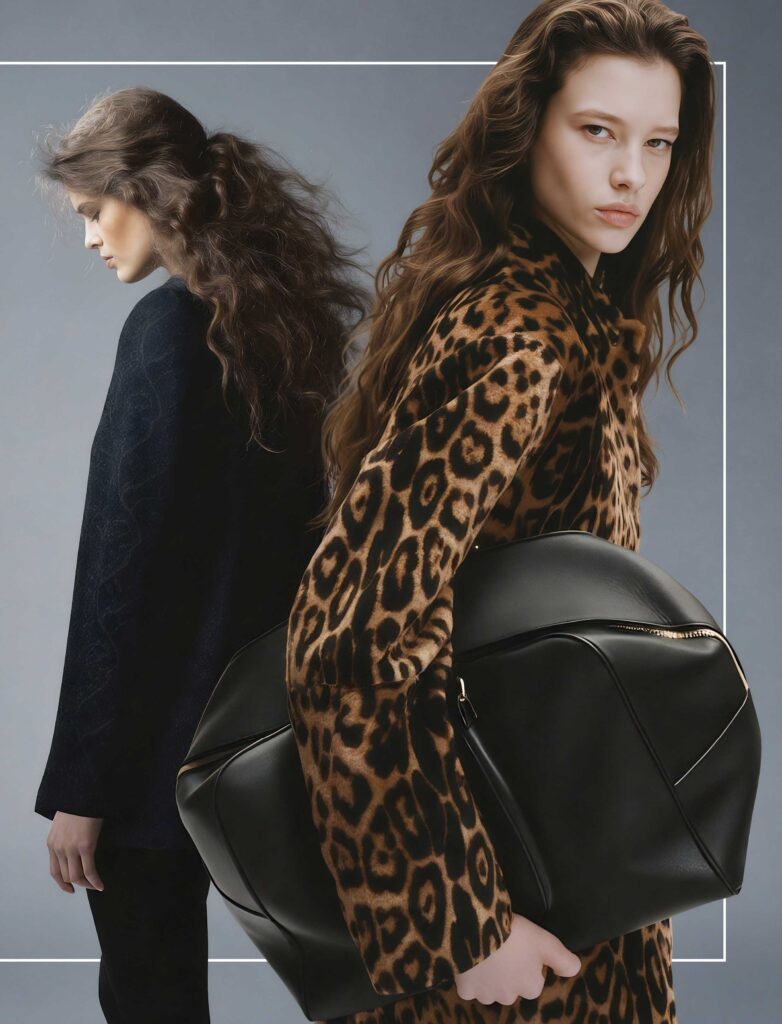
Look 2

(left)

Black jacket by Mel Usine

(right)

Animal print coat by Nili Lotan

Look 3

(left)

Sheer top & trousers by Mel Usine

(right)

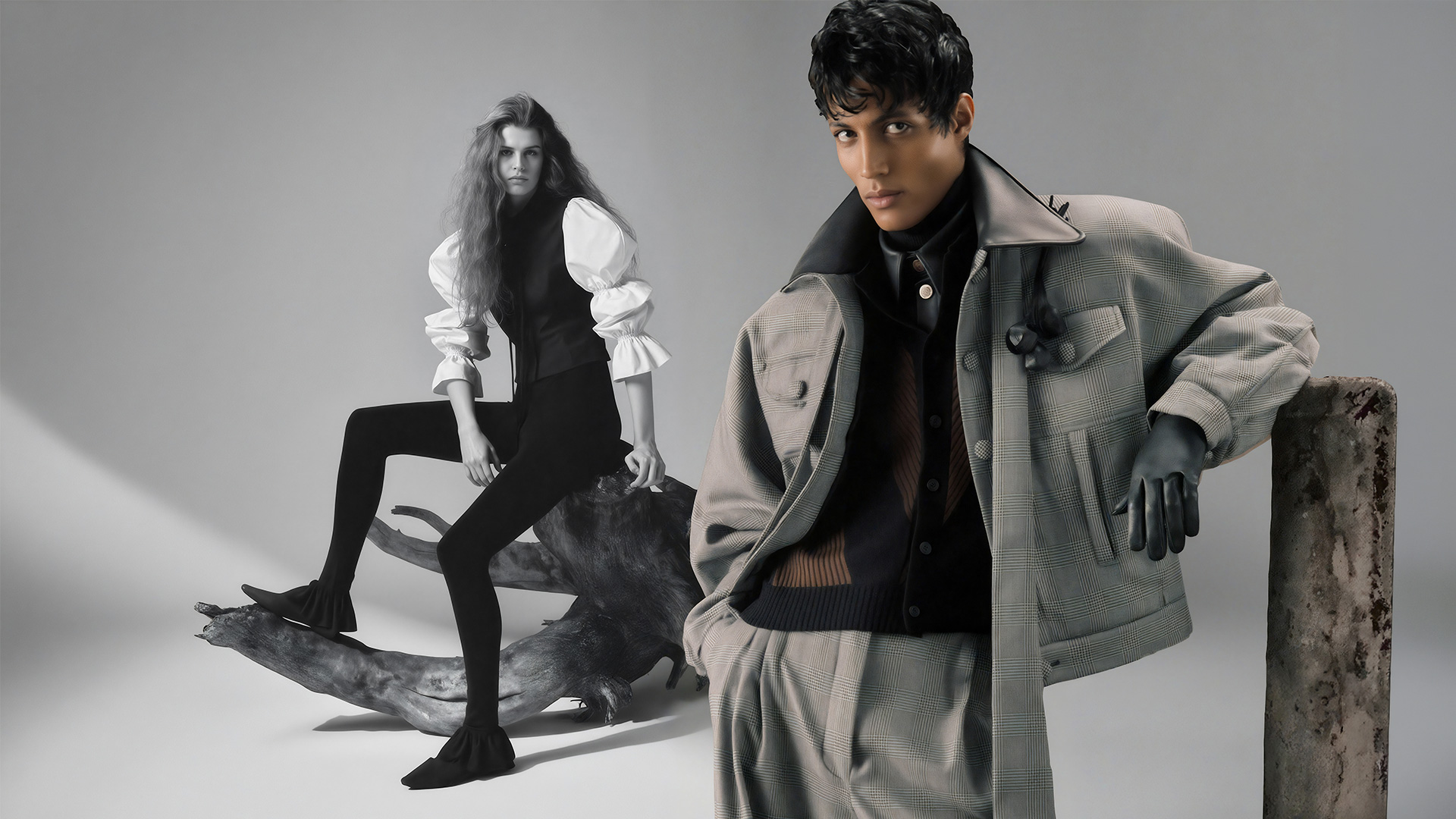
Coat & scarf by Palomo

Look 4

Suit by Palomo

Look 5

Structured top by Palomo

Look 6

(left)

Sheer maxi dress by Mel Usine

(right)

Padded jacket by Nili Lotan

Look 7

(left)

Fur jacket by Nili Lotan

(right)

Maxi dress by Mel Usine

Look 8

Cardigan by Palomo

Look 9

Blouse and flared trousers by Mel Usine

Look 10

Check jacket, cardigan and check trousers by Palomo

Theatres of Dreams: WestK performing tsar Paul Tam keeps the stage arts alive and inspiring for all
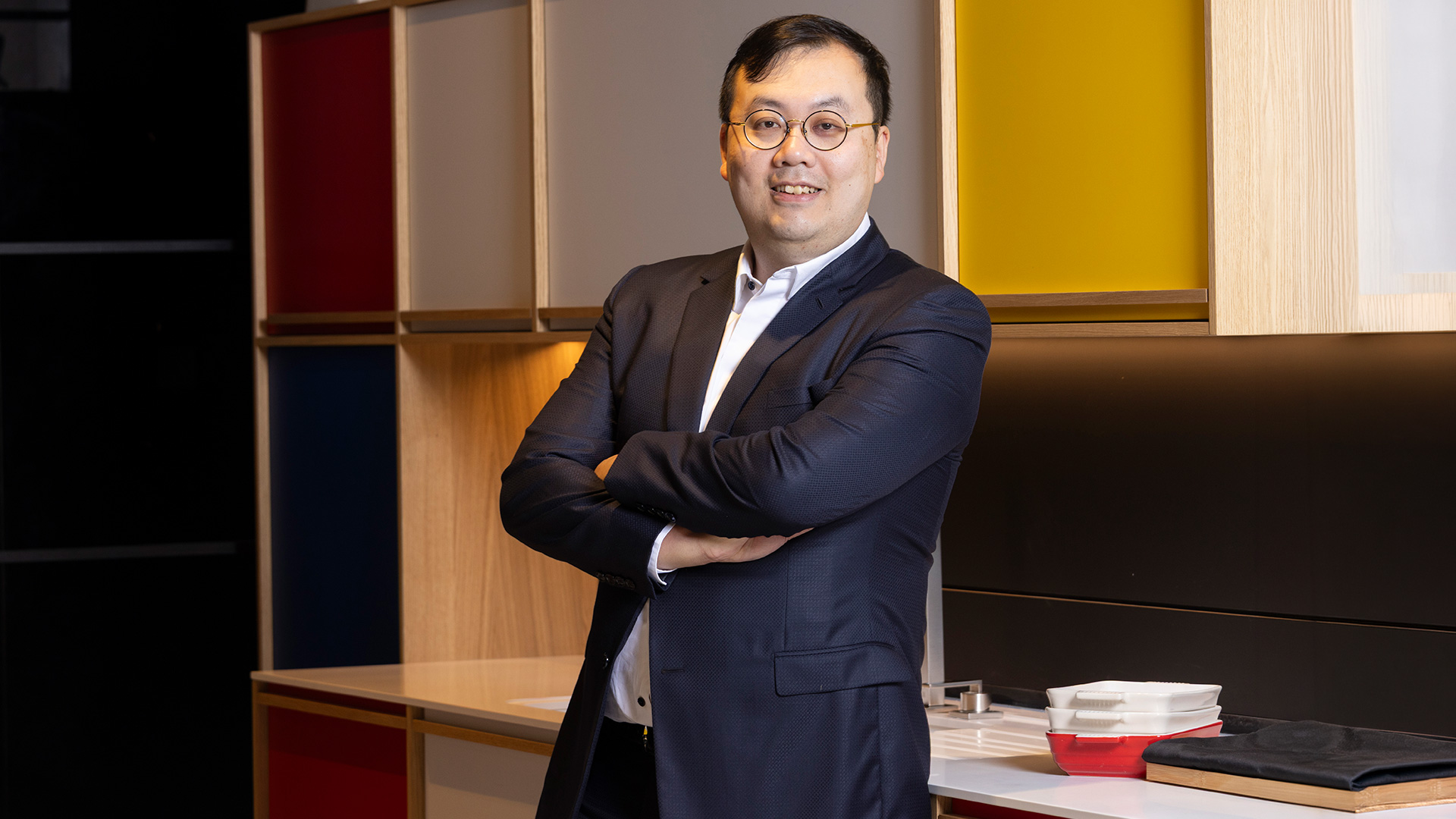
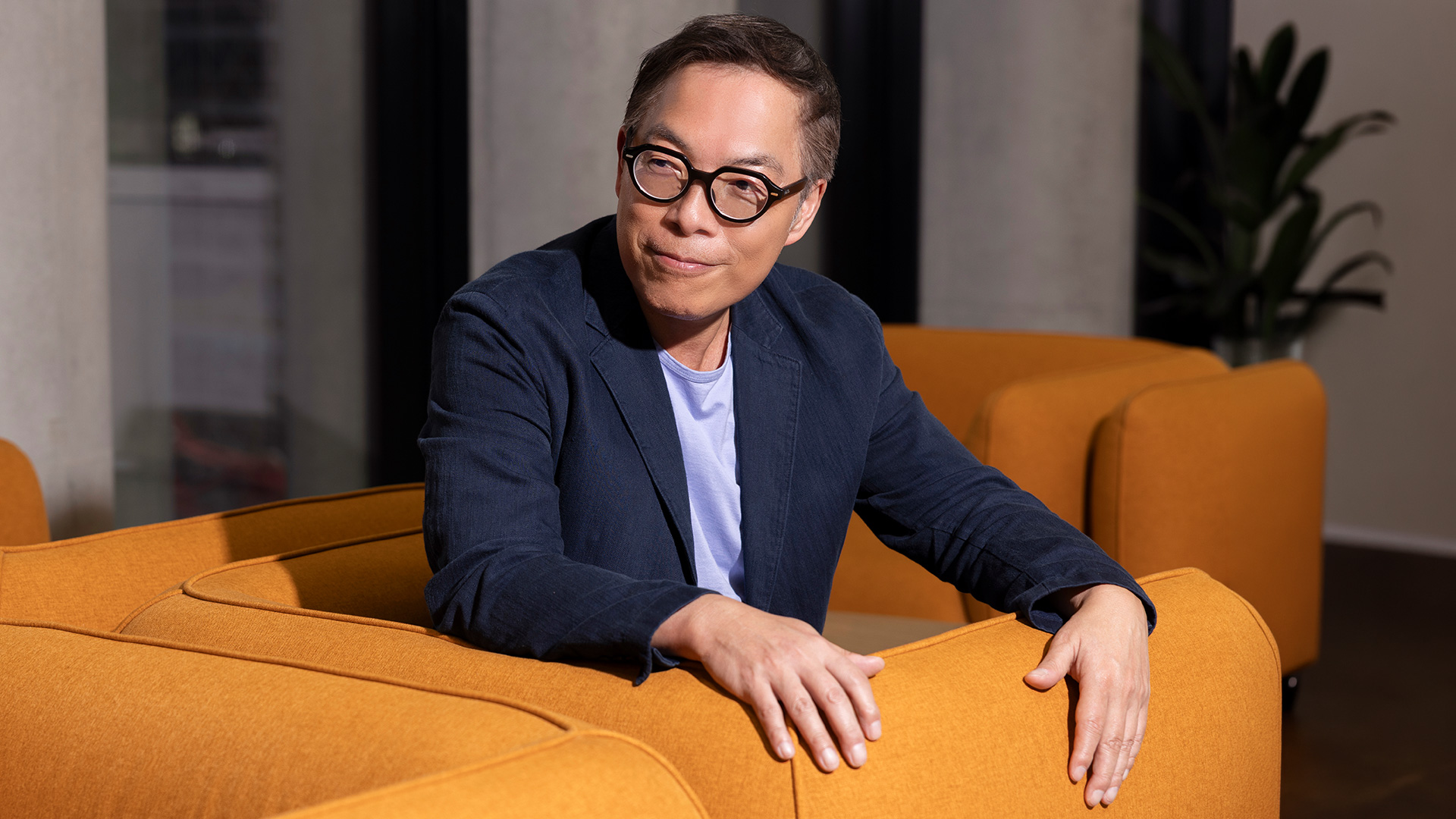
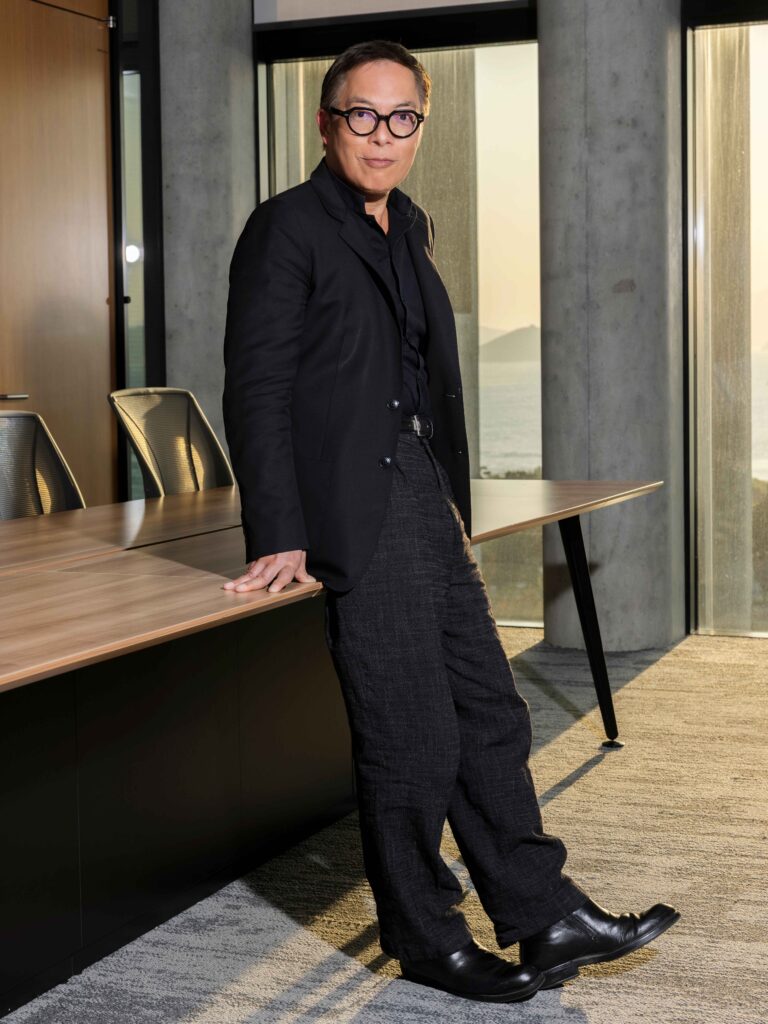
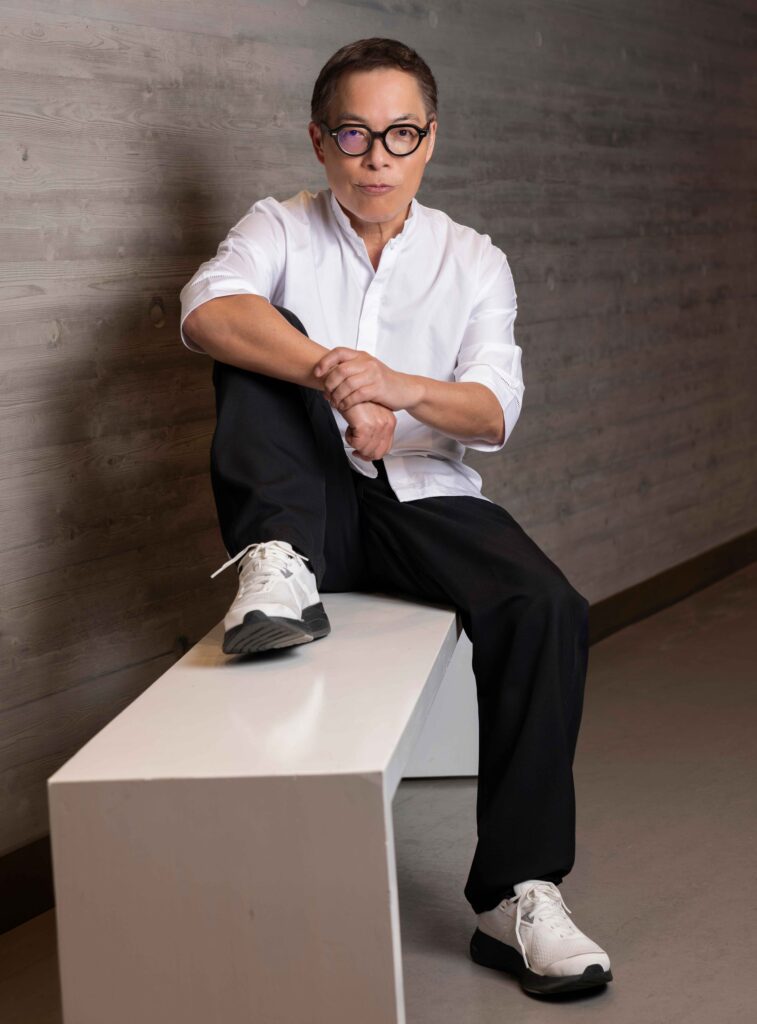
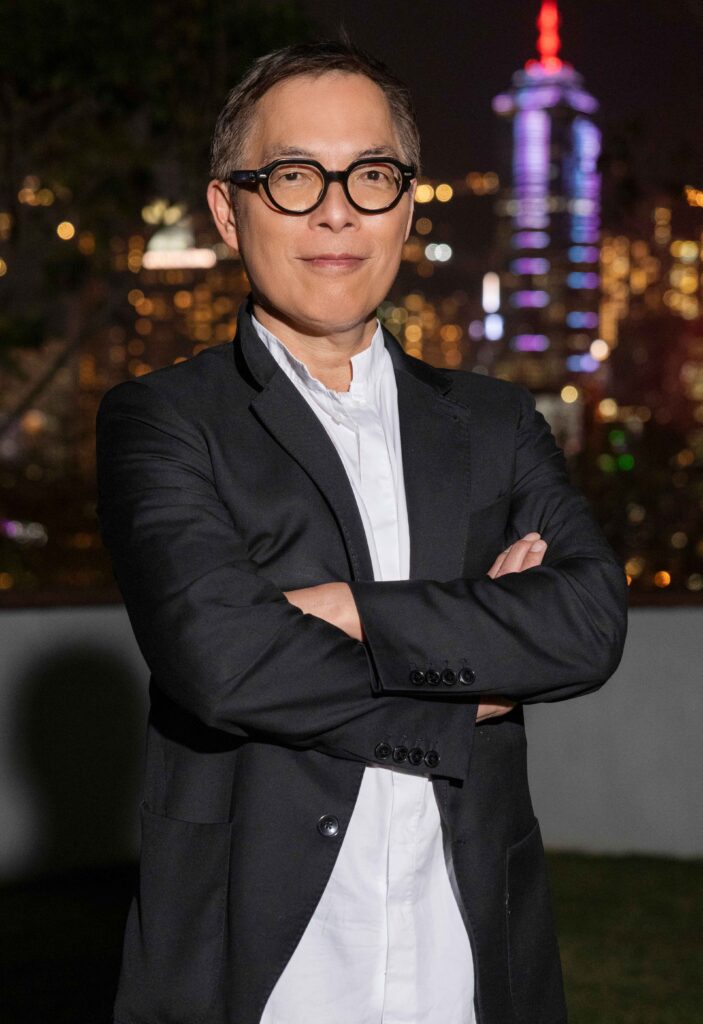
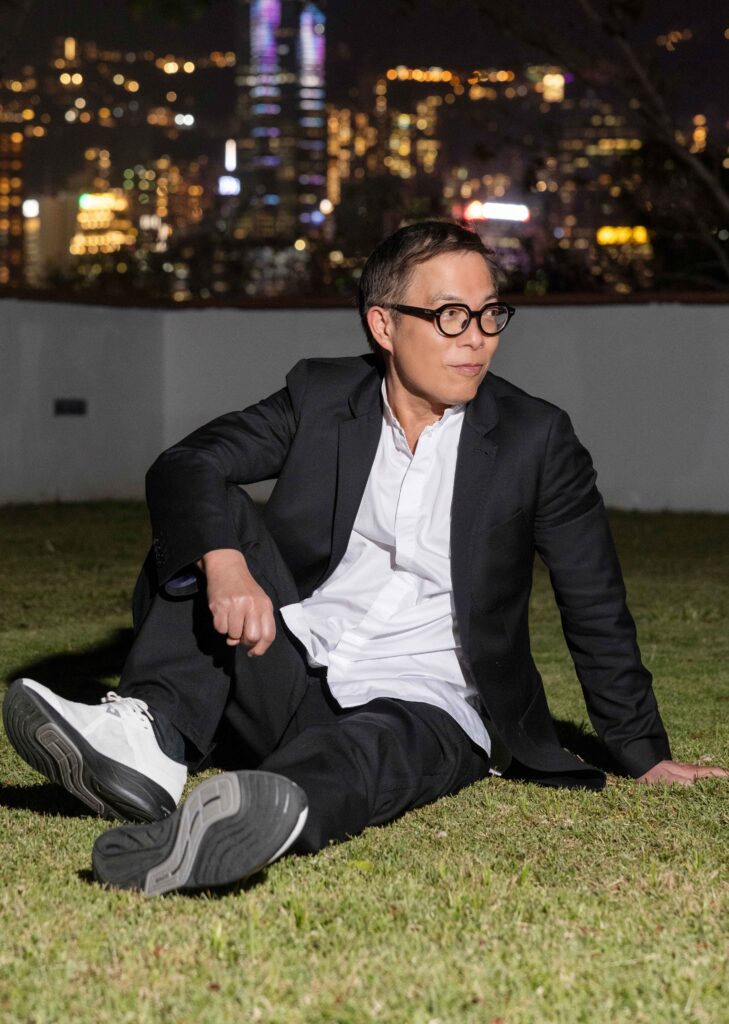
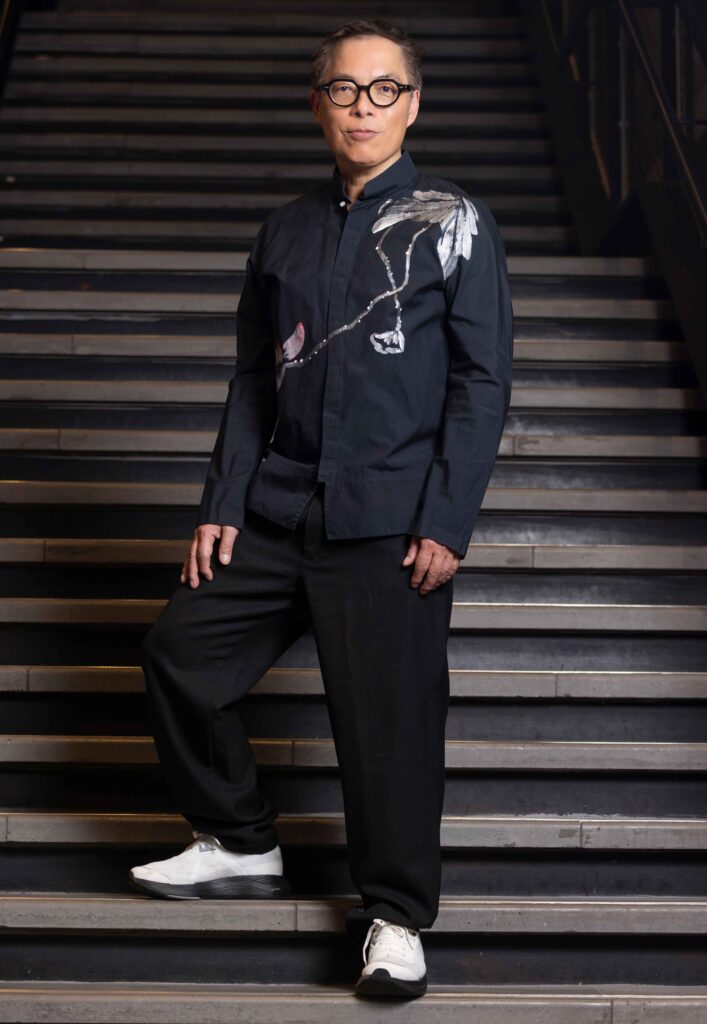
Our audience with Paul Tam, Executive Director of Performing Arts at the West Kowloon Cultural District Authority (WKCDA), takes place a day after this year’s Oscars ceremony. Outside, the breezy, insistently alive March weather makes you believe culture isn’t merely something you attend, but something you inhabit.

We begin with the controversial, viral hot take of that week: best-actor nominee Timothée Chalamet’s implication that “no one cares anymore” about performing arts like ballet and opera. This criticism of efforts “to keep [them] alive” offended many in the industry. We are expecting Tam to hit back, or perhaps diplomatically sit on the fence, but he does neither.

“I mean, did Chalamet lie though?” he asks. “Let’s be real – performing arts, ballet and opera have been here for ages and ages, and yes, it has been challenging for these industries. That’s why people like me have this responsibility of bringing fresh takes and ideas to make it still relevant up to this day and the years to come.”

After a beat, he continues, friendly, precise and almost coach-like: “I take his comment as a challenge more than offensive. It reminds us that when we discuss the future of these art forms, it’s important to frame our ideas thoughtfully and constructively, in a classy and decent way. ”

Classy and decent. It feels like a stage direction, and from there, the interview unfolds like a performance – part Q&A, part manifesto, part invitation to rethink what art institutions owe the future.

Curtain Up

When you meet arts leaders, you often meet the origin story of their taste. For Tam, it began long before he played a concert-hall piano. “I grew up in a traditional Chinese family,” he shares. “My father was a successful restaurateur, often out and about entertaining with my mother. He bought a piano for my sister, and out of a mix of sibling rivalry and natural curiosity, I started tinkering with it at 14. Within just a few years, I had completed all my grades.”

He majored in piano performance with a minor in composition at Canada’s York University and dreamt of becoming a “jet-setting concert pianist”. “I thought I was pretty good, until my final year, when my piano professor told me, ‘Paul, you’re good as a chamber musician, but you’ll never be good enough to be a concert pianist.’ Those words crushed me, but they also gave me clarity.”

Redirection was required. “I decided to pursue an MBA in Arts Administration. If I couldn’t be on centre stage, I thought at least I could help others get there – one of the best decisions I have ever made.” The phrase ‘help others get there’ echoes like a motif throughout our conversation. More than a career choice for Tam, it became a belief system.

Management Spotlight

Before joining WestK (West Kowloon Cultural District) in 2020, his many arts-management credits included a total of 10 years at the Hong Kong Philharmonic Orchestra, and six years as Executive Director of Hong Kong Ballet. “[In 2014] the company was emerging from a challenging period,” he explains of the latter. “My task was to reimagine this venerable institution with a renewed vision and a refreshed identity.”

From that effort came the slogan ‘Never Standing Still’, a mantra that embraces an intriguing rhythm, like choreography you still remember after leaving the theatre. An artistic inflection point followed: “Then came Septime Webre, the Artistic Director of Hong Kong Ballet, whose arrival in 2017 marked a bright, new chapter. With his bold vision of global expansion and a distinctive balletic style, both approachable and deeply expressive, the company took off quickly, growing from strength to strength ever since.”

By becoming approachable and deeply expressive, the venerable art form breaks free of its museum-ballet constraints, gaining relevance in the modern age.

Home and Art

Tam’s philosophy as an arts leader is expressed in warmer tones than the usual institutional vocabulary. Speaking of WestK Performing Arts Centre (WestK PAC), which is slated to open next year, he expounds, “I hope it becomes a true home for the arts; a place where artists can test ideas, refine their craft, create new works, and grow alongside our creative producers, while everyone – patrons or casual visitors, locals or tourists – feels a genuine sense of belonging.”

And then, the practical definition of a ‘true home for the arts’: “From our two museums to the WestK Performing Arts Centre, [these] are not just centres of entertainment, but hubs of inspiration and civic connection, [where] we create and present some of the finest artistic experiences from Hong Kong, the Chinese mainland and beyond.”

He describes the intended outcome in a near cinematic metaphor: “The vision is for a vibrant, year-round programme that attracts local audiences as well as visitors.”

Centre Stage

As WestK expands, Tam’s job becomes less poetic and more technical: as well as year-round programming, there are scales of theatre, transportation adjacency and audience-building pipelines to consider. “We’ll soon have three major venues, and within them, over 10 theatres of varying scales, all forming the backbone of our growing WestK theatre hub,” he says.

“With major transportation networks such as the High-Speed Rail terminal right at the doorstep, you could think of the hub as Hong Kong’s own mini-Broadway, or West End, stretching two kilometres from Xiqu Centre to Freespace, surrounded by restaurants, shops and a lively cultural buzz.” It’s urban design as programming strategy, and culture as a street-level experience, not a distant destination.

Audience for All

Some critics argue that the arts remain elitist, something for those who already have the cultural capital to feel comfortable in expensive seats. “There is some truth to that,” allows Tam. “Arts can feel exclusive and elitist: a top-tier Met Opera ticket can easily sit beyond a typical salaryman’s budget, and a highly abstract contemporary dance work can intimidate many first-time audiences who worry they ‘won’t get it’.”

His focus is on what institutions can do in response, through programming and accessibility design. “I believe in curating a programme that resonates with all the voices of our community. From The Impossible Trial [a Cantonese musical commissioned by WestK] and Freespace Jazz Fest to Hedwig and the Angry Inch [a Cantonese version of a very famous rock musical by John Cameron Mitchell] and cabaret, we embrace both mainstream and alternative voices.”

He also stresses inclusivity as infrastructure, not PR: “Inclusivity is everything we do, too. We’ve built accessibility into our programmes; for example, our WestK FunFest, the largest performing arts festival targeting family audiences, provides special access tours for visually impaired visitors led by sighted and visually impaired guides, and Hong Kong Sign Language tours conducted by deaf guides and interpreters.” So the question shifts: not ‘Who belongs?’ but ‘How can we design belonging?’

House of Applause

While Tam didn’t realise his concert-pianist dream, he still lives for the applause. “Every applause still touches me deeply and is the main source of my professional happiness,” he says. “I’ll never forget working off-stage at a concert at the Hong Kong Coliseum with Hacken Lee and the Hong Kong Philharmonic years ago. Almost 10,000 people were cheering for a truly memorable performance. I was in tears, tears of joy. That’s the magic that keeps me going every day.”

This is the emotional engine behind his optimism. It’s also a reminder that arts leadership isn’t only planning calendars; it’s planning moments when people feel something together. Asked if this will be his legacy, his answer is both modest and pointed. “Legacy is a big word. But if, in some small way, I’ve helped make Hong Kong’s arts ecology just a little richer, more connected and more alive, then that’s enough.”

It’s clear that Tam moves through his work with class, integrity and passion. He circles back to his earlier caution about the Chalamet controversy: ideas must be presented with dignity, like art staged to respect the audience.

Interview, Text & Art Direction: Joseff Musa   Photographer: Jack Law   Videographer: Iris Ventura