Six unusual and delicious shaved ice desserts to try around Hong Kong

Craving for a refreshing dessert to quench your thirst and satisfy your sweet tooth? Perhaps these uniquely decorated and delicious shaved ice garnished with a varietal of colourful toppings and syrups will be just ticket for you…

1. Japnese Kakigori
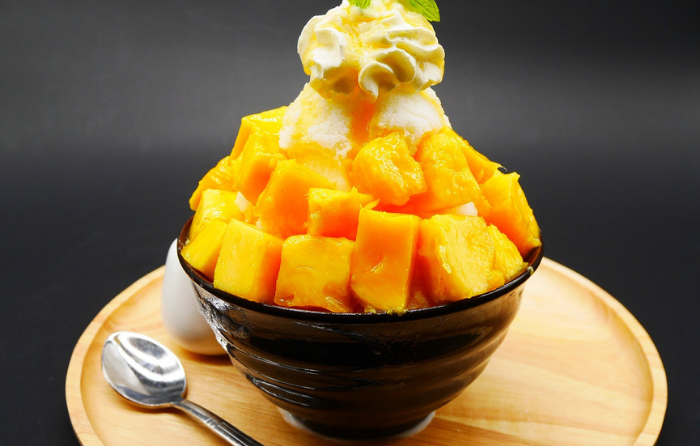
Kakigori is a Japanese shaved ice dessert flavored with syrup and a sweetener. Its texture is famously light and fluffy despite the heavy toppings, usually condensed milk and fruits, that decorate this ball-shaped dessert.
Where to go: Shari Shari Kakigori House, Causeway Bay

2. Korean Bingsu
A growing popularity in the city is the Korean style shaved ice bingsu. Like Kakigori, they are usually topped with condensed milk and fruit syrup and red beans or fresh fruit. A popular addition is also to have cacao, green tea or bean powder dusted on top of the ice for an added texture to contrast the lightness of the ice and sticky toppings.
Where to go: Baekmidang, Tsim Sha Tsui

3. Hong Kong Bing Sha
If you take a trip to one of the few remaining ‘bing sutt’ (ice room) shops across Hong Kong to refresh yourself with a cold drink or dessert, you will find many of the city’s unique flavours. Hong Kong-style shaved ice, for example, unlike the rest on this list features the addition of the round and chewy taro balls on top of red beans, fruits, syrups and condensed milk.
Where to go: Cheung Chau Bing Sutt, Cheung Chau

4. Malaysian /Indonesian Cendol
Cendol is an iced sweet dessert commonly found in Malaysia and Indonesia. For those who enjoy a combination of textures, this dessert, which also comes in a beverage form, features a mixture of shaved ice, palm sugar syrup, palm seed, green rice four jelly and coconut milk.
Where to go: Bibi & Baba, Wan Chai

5. Thai Namkhaeng sai
Unique to the list is this Thai-style shaved ice dessert Namkhaeng Sai. Its toppings, which consists of a variety of Thai staples such as young coconut, black sticky rice, chestnuts, sweetened taro, red beans, cheng-sim-ee (and more) are all mixed at the bottom before being topped with ice and coconut milk. A refreshing and tropical dessert to satisfy any sweet tooth.
Where to go: ChaTraMue, Causeway Bay

6. Filipino Halo-halo
If you’re looking for the ultimate summer dessert, this popular Filipino dessert will go above and beyond to fix your sweet cravings. Although more crushed ice than shaved ice, this dessert-platter-in-a-cup overloads with a combination of toppings from ube, sweetened beans, coconut strips, sago, gulaman (agar), boiled taro and flan, to name just a few. Easy to miss, this tropical dessert is not so commonly found around Hong Kong, except in a few hidden away Filipino stores and restaurants
Where to go: Little Wanchai Filipino Store, Pui O, Lantau Island


Read similar articles by clicking the titles below:

Five guilt-free desserts to add to your diet

Foodie Finds: Six secreted-away culinary gems in Hong Kong

May Events: Highlights for Hong Kong’s upcoming month

Having made it through the first quarter of 2021, the year continues as it approaches a new season and with that, it’s time to mark your social calendar with the slew of exciting arts and cultural events to see this month of May…

gafencu May Events Highlights for Hong Kong’s upcoming month balenchine's jewels hong kong ballet van cleef arpel

Balanchine’s Jewels
Until 23 May
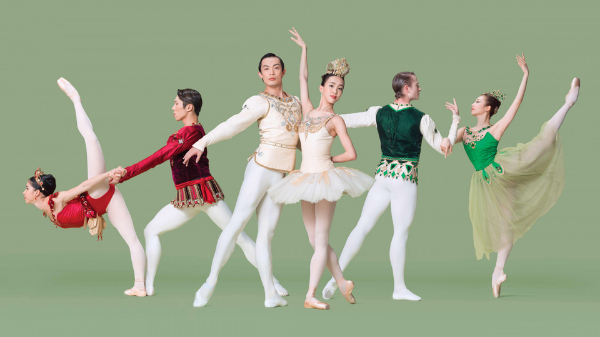
Arguably one of the most influential ballet choreographers of the 20th century, George Balanchine first made his mark in 1967 in the debut of his gemstone-inspired Jewels. Renowned for its style and glamour, the three-act ballet was initially inspired by Balanchine’s chance visit to the iconic jewellery house of Van Cleef & Arpels on New York’s Fifth Avenue. Now, it returns in a modern revival courtesy of the Hong Kong Ballet.

How Much: From HK$140
Where: The Hong Kong Academy for Performing Arts, Wanchai
Website: hkballet.com

Misplaced 
Until 7 July
The much anticipated Affordable Art Fair has returned to the city, albeit in a digital format yet again, for the second edition of the Affordable Online Art Fair. Partnering with some 50 galleries on a worldwide basis, audiences can browse through thousands of paintings, prints, photographs and sculptures by local and international talents, while also participating in virtual talks, tours and art advisory sessions, with the latter designed to ensure you make better informed purchases from the expansive selection on offer.

How Much: Free entry
Where: Online
Website: affordableartfair.com

gafencu May Events Highlights for Hong Kong’s upcoming month balenchine's jewels hong kong ballet james chung photography exhibition

Waiting For The Moment
Until 20 Jul
Following the earlier success of its showcase of the works of eminent locally-based photographer James Chung, Tsim Sha Tsui-set photo art gallery F22 is following this up with a new collection of more than 30 of the renowned lensman’s most iconic images of old Hong Kong. Featuring a variety of his finest work from the ’50s and ’60s, the exhibition – Waiting for the Moment – is too good a visual odyssey to miss out on.

How Much: Free
Where: The Peninsula Arcade, Salisbury Rd, Tsim Sha Tsui.
Website: f22.com

gafencu May Events Highlights for Hong Kong’s upcoming month 3000 years of gold craftsmanship

The Art of Gold: 3000 Years of Chinese treasures
Until 29 Aug
Shining a light on 3,000 years of Chinese treasure and craftsmanship, the French school of jewellery arts, L’Ecole, is presenting its third exhibition at the K11 MUSEA. This time around, it is highlighting a selection of masterpieces from the Mengdiexuan collection, as well as classic examples of the ancient art of Chinese gold-smithing. From now until the end of August, jewellery enthusiasts can enjoy a truly epic hour-long guided tour through centuries of the master craftsmanship once practiced in ancient China.

How Much: Free 
Where: K11 MUSEA Victoria Dockside, Tsim Sha Tsui.
Website: lecolevancleefarpels.com/hk/en

gafencu May Events Highlights for Hong Kong’s upcoming month extended figure lalan

Extended Figure: The Art and Inspiration of Lalan
Until 19 Sep
In honour of the iconic abstract painter Xie Jing-lan, the Asia Society Hong Kong Center is exhibiting the artist’s best loved masterworks as part of the venue’s 30th anniversary celebrations. This classic Chinese painter – affectionately known as Lalan – was a pioneering figure in the integrated art world, an achievement that saw her incorporating choreographed brushstrokes alongside the mediums of music and dance. Running until mid-September, this is a unique opportunity to relive the legacy of a truly inspired artist.

How Much: Free
Where: Chantal Miller Gallery, Asia Society Hong Kong
Website: asiasociety.org

Le French May 
1-31 May
Le French May, the annual France-themed arts and culture festival, returns with a slew of visual and performance exhibits, as well as a series of gourmet offerings that celebrate many of the country’s most sophisticated delicacies. Organised, as ever, by the Consulate General of France in Hong Kong & Macau, it’s the perfect opportunity to celebrate French art and culture as part of a month-long cavalcade of gastronomic greatness, the fine arts, opera, music, theatre and cinematic offerings.

How Much: Various prices
Where:
Various locations
Website: frenchmay.com

M+ Cinema, Disrupted
6-16 May
Despite the ongoing renovations to M+, West Kowloon’s visual culture museum, it is opening its doors – virtually at least – to film enthusiasts with an online screening of local and foreign films and a programme that sets out to examine the many different aspects of cinematography and the transformative power of global filmmaking. Comprising a two-part programme, it is said to promote the concept of film as an ever-evolving format and an essential part of modern visual culture.

How much: Free
Where: Online
Website: westkowloon.hk

gafencu May Events Highlights for Hong Kong’s upcoming month cheung chau bun festival

Cheung Chau Bun Festival
19 May
With many of the current pandemic-related restriction in place across Hong Kong set to ease, the ever-popular Cheung Chau Bun Festival, a long standing annual celebration of the Taoist pantheon, is expected to go ahead as planned. By far the city’s most popular Da Jiu celebration, the event always sees thousands heading to Cheung Chau, one of Hong Kong’s outlying islands. This year, any visitors able make the trip on 19 May will get to experience its unique vertical bun-snatching race, as well as a variety of elaborate floating parades and traditional performances.

How Much: Free 
Where: Cheung Chau Island
Website: cheung-chau.com

Shun Tak Holdings unveils its first ultra-luxury residence in Singapore, Park Nova

A leading Hong Kong amalgam of luxury property, transportation and hospitality, Shun Tak Holdings Limited boasts over 60 years in the real estate industry.

gafencu Shun Tak Holdings unveils its first ultra-luxury residence in Singapore, Park Nova

Revealing the conglomerate’s first ultra-luxury residence in Singapore, Park Nova is the epitome of opulence and green living. Standing at 21-stories high in Singapore’s prestigious neighbourhood on 18 Tomlinson Road, the exclusive residential tower comprises of 51 luxurious units and three penthouses measuring between 133-548 m² in size. The complex, an inspiration drawn from its neighbouring Orchard Boulevard in District 10, embodies a ‘Garden City’ lifestyle that would bring its residence closer to nature. An inspiring concept made possible thanks to the talented architects at the award-winning London-based PLP Architecture.

Unique at first glance and sumptuous in every detail, the beautiful biophilic design of the building integrates a lush green vertical garden that encircles the tower’s unique curvature structure. With verdant communal planters on every level and an abundance of natural light, not to mention 270-degree views of Singapore’s expansive cityscape, residents can immerse themselves in the comfort of a home that redefines modern luxury living with a sustainable lifestyle. 

gafencu Shun Tak Holdings unveils its first ultra-luxury residence in Singapore, Park Nova vertical garden

Stepping beyond the home, the complex offers boundless outdoor space and a premier clubhouse with unparalleled facilities that make healthy living easily accessible to its residence.

Its location also places the area’s various modes of transportation, the region’s most prestigious educational institutions and private medical establishments and the city’s world-famous entertainment, dining, and shopping district, Orchard Boulevard in a convenient distance. It is also home to the UNESCO-listed Singapore Botanic Gardens.

For more details, please visit www.parknova.com.

The many tales of Keith Griffiths, founder of Aedas architecture and design firm

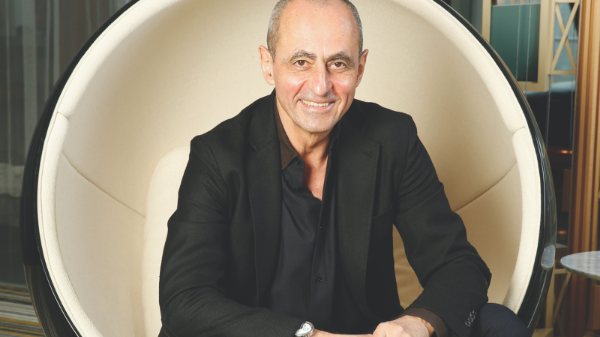
World-famous architect and educator Keith Griffiths, founder of the Aedas architecture firm, on his small-town Welsh roots, design journey, opinions on Hong Kong’s infrastructure and more…

gafencu people interview keith griffiths aedas architecture and design company hong kong (7)

You were born a world away from Hong Kong in Wales…
Yes. I’m completely a country mouse. I grew up in a tiny village called Merthyr Tydfil on the west coast of Wales. Home to just 1,400 people, it’s as far west as you can go before you drop into the Atlantic Ocean. It was very barren but also very beautiful. Set on a peninsula measuring six miles by one mile, that was my whole life while growing up. Although the education I received and the atmosphere were great, frankly it was an extremely boring place to be young. In the end, I couldn’t wait to get away.
It was a seminal experience, though, and it taught me how to communicate. Given its tiny size – our school had just 300 children – I had to learn how to deal with any situation, how to problem-solve and how to see the best in people. After all, you need to deal with them in any case. Leaving there, when I was 17, was a relief, though.

gafencu people interview keith griffiths aedas architecture and design company hong kong

And where did you leave for?
I ran east, initially to Cambridge University, where I spent six years. It was a great introduction to wider society and I really enjoyed the experience. I then moved to London – finally a big city with a rich culture, architectural traditions and international influences. I was there for five years until famed British architect Norman Foster sent me to Hong Kong in 1983 to look after the HSBC project. I’ve been here ever since.

What made you decide to settle here?
It was down to two factors really. First of all, in 1985, when the HSBC Building project was completed, Hong Kong was just recovering from the 1982 economic collapse. There was a lot of optimism in the air and a surplus of work opportunities. It was very different to the UK, where the economy had all but stagnated. At the same time, the Falkland War was going on and I had a real issue with what I saw as a political conflict and a gambit for Margaret Thatcher to hold onto power. Removed from the situation, I could see things dispassionately and perceive it as the humanitarian crisis it truly was. Ultimately, then I decided Hong Kong was my best option when it came to creating a life for myself.

gafencu people interview keith griffiths aedas architecture and design company hong kong (2)

This all led, eventually, to you founding Aedas, your own architectural firm…
I founded Aedas about 30 years ago and we’ve since spread out across the world. When we first started we were very small, but we grew quickly. This was partly because we took on a lot of infrastructure projects such as railway and airport work, which, in the ’80s, saw us move into South East Asia, then the Middle East and finally China. We now work across the board in every area of design, including mixed-use infrastructure, museums, hotels – you name it, we do it as we’re now a big group. Overall, we have about 1,200 staff, most of whom work either in China or Hong Kong.

What do you see as your USP?
One of the factors in our success is that we like our architecture to be relevant to the city we’re designing for. In order to accomplish this, we really need to understand the culture, the people and the climate. So, every time we pick up a major project we set up a local office, which is why we are now active in 12 locations around the world. It’s this desire to really understand the place we’re designing for – rather than just importing a generic international style of building – that makes us different.

gafencu people interview keith griffiths aedas architecture and design company hong kong (6)

What are the challenges that come with running such a multinational business?
Actually, running Aedas is surprisingly easy. We’re designers and designers communicate through design. If you try to run designers through management tools, you’ll fail – it would be like herding cats. So, instead, we use design tools. We don’t have any professional managers as everyone at Aedas is either an architect, an interior designer or an urban planner. Our directors are also similarly qualified, so everyone speaks the same language, regardless of their background. This really enhances our communication capabilities, which in turn yields big rewards in terms of our completed projects.

gafencu people interview keith griffiths aedas architecture and design company hong kong (5)

Over the years, have there been some project that were particularly close to your heart?
In our three decades of operation, we’ve designed many, many buildings. It is, however, true to say that you always believe the building you’re currently working on is going to be the best. If it’s not, then you’ve done something wrong as you should be looking to improve all the time. So in terms of the buildings I’m particularly proud of, it’s always going to be the most recent ones – most notably, the West Kowloon Train Terminus, a world-class building and the gateway between Hong Kong and the mainland.

How do you decide which projects are right for you and Aedas?
Architects tend to be very humble, so we rarely turn a project down. Generally, though, we have a business development team whose job is to source our projects. Sometimes they bring direct commissions – which account for about 40 percent of our overall business – other times they propose we participate in design pitches, which make up another 40 percent of our work, with the balance coming from work for previous clients.

gafencu people interview keith griffiths aedas architecture and design company hong kong (3)

Focusing more locally, what do you see as Hong Kong’s unique architectural challenges?
The thing to remember about Hong Kong is that it was the world’s first extreme high-density, high-rise city, making it all but inevitable that a number of issues are going to arise. Among these, the biggest problem is land use. In total, just 25 percent of its land has been developed, with only seven percent allocated to residential buildings. By comparison, Singapore has used 30 percent of its available space for or residential properties, a move that is reflected in its bigger apartment sizes and wider availability of property.

Moving to architecture, we’ve had some significantly good developments over recent years, including such world-leading designs like the new M+ project and the revamped Tai Kwun compound. Hong Kong was also the first to introduce live-work hubs as the norm, as embodied by such neighbourhoods as Central, Soho and Shatin, while also being in the podium-and-tower style of design. We are, however, still stuck in an infrastructural mindset that was first introduced in the ’80s, and I think we need to evolve and produce new types of buildings, which can better meet the needs of this high-density, high-rise city.

Looking to the future, what projects are you particularly anticipating?
We actually have a number of exciting projects in the pipeline. We’ve been very successful recently in securing several government projects in Shenzhen. We’re also working on a number of headquarter buildings in its business district, which are truly world-class creations. The regulations in Shenzhen are rather different from those elsewhere in China, so we’ve been able to do some really interesting architectural designs. We’ve also been working on a new border-crossing facility at Huanggang – between Hong Kong and the mainland – which is a very large building and something I’m definitely proud of. In all, we have about 100 live projects in China, though, so it’s hard to single out just a few.

Thank you.


Interview by: Tenzing Thondup
Art Direction & Styling: Jhoshwa Ledesma
Photos: Jack Law
Videographer: Andy Wan

Springtime Bloomers: Where to find Hong Kong’s most beautiful flowers

March marks the onset of Springtime, a revitalising and blissful season that welcomes in things anew and the blooming of beautiful flowers across Hong Kong. Notoriously known as an urban jungle, perhaps what is most needed for a refreshing change of scenery is to reconnect with the city’s many forested hillsides, country parks and gardens to admire the sights of natures’ flowers in bloom.

gafencu Springtime Bloomers Where find Hong Kong’s most beautiful flowers sakura

Sakura Flowers
Though the city’s urban dwellers often flock to Japan to witness blossoming Sakura flowers, otherwise known as cherry blossoms, not many know that the city’s country parks across New Territories are also home to these beautifully pale-pink flowers that give Springtime its charm.
Where to find them: Velodrome Park in Tsueng Kwan O, Kwan Kung Pavilion in Cheung Chau and Tai Po Waterfront Park

gafencu Springtime Bloomers Where find Hong Kong’s most beautiful flowers red silk cotton tree

Cotton Tree Flowers
Cotton Tree flowers grow out of the Red Silk Cotton Tree, nicknamed “hero tree” in Cantonese, because of its tall, straight and fast-growing trunk flowers scarlet-hued flowers. 
Where to find them: Lai Chi Kok Park and Hong Kong Park

gafencu Springtime Bloomers Where find Hong Kong’s most beautiful flowers orhid bauhinia

Bauhinia Blakeana
Hong Kong’s national flower, the orchid more commonly known as Bauhinia is a fragrant emblem of the HKSAR. This beautiful hybrid flower is a vibrant pink-pale purple colour that has a stretch of a flowering period between the months of September and June.
Where to find them: Tai Po Waterfront Park, Kowloon Tsai Park and Quarry Bay Park

gafencu Springtime Bloomers Where find Hong Kong’s most beautiful flowers rhodoleia

Rhodoleia
First sighted in 1849 in Aberdeen, this red bell-shaped flowers bloom during late winter and early spring atop evergreen trees, dangling overhead as if it were a chiming bell. 
Where to find it: Aberdeen, Shing Mun Arboretum and various country parks

gafencu Springtime Bloomers Where find Hong Kong’s most beautiful flowers iris

Hong Kong Iris 
These light-blue and white patterned flowers were originally found on the hillsides of Victoria Peak and Mount Davis in 1874. They blossom in shades of blue and purple between the months of April and May.
Where to find them: Mount Davis, Victoria Peak, Wilson Trail on Dragon’s Back, Cape D’Aguilar and Po Toi island

gafencu Springtime Bloomers Where find Hong Kong’s most beautiful flowers azalea

Azalea
Listed as a vulnerable flora species by the local government, these pinkish flowers grow out of an evergreen shrub blossoms during the month of April. 
Where to find them: Mount Nicholson in Ma On Shan

gafencu Springtime Bloomers Where find Hong Kong’s most beautiful flowers hydrangea

Hydrangea
Among a large green field, a Victorian gazebo and colonial-fashioned huts, these large-headed, blue-purple hued flower begins its flowering period between the months of April and June.
Where to find them: Victoria Peak Garden


gafencu Springtime Bloomers Where find Hong Kong’s most beautiful flowers pavetta

Pavetta
First discovered between 1847 and 1850 in Happy Valley, these paper-thin flowers come in a cluster of four white petals that bloom between the months of March and October.
Where to find them: Deep Water Bay and near the Lion’s Nature Education Centre in Sai Kung

A day-by-day guide to celebrating Lunar New Year

Chinese New Year is an important occasion that strictly follows customs, rules and superstitions that reflect on the values and tradition of Chinese culture. Below, we track the highlights of the 15-day festivities.

A day-by-day guide to celebrating Lunar New Year lion dance

According to the Chinese calendar, the Chinese New Year begins with the first full moon on the first day of the first lunar month (February for 2021). Also known as Lunar New Year or Spring Festival, it is the longest holiday in Hong Kong and its festivities stretch for 15 days, ending with the Lantern Festival. During these 15 days, celebratory feasts, family reunions, honouring ancestors and praying to the gods are all part of celebrating this auspicious time of the year to welcome in happiness and good fortune.

A day-by-day guide to celebrating Lunar New Year tray of togetherness candy box

First day (初一)

The first day of the new lunar year is an important day that symbolises a fresh start. Families pay a visit to their elders, particularly the most senior of the household, to pay bài nián (New Year’s wishes). Guests traditionally arrive bearing lucky fruits such as tangerines, oranges and pomelos and are welcomed with tea, fruits and a variety of candied treats, typically served in a round tray with eight compartments called a ‘Tray of Togetherness’,  meant to sweeten one’s year and to symbolize the unity of a family. 

A day-by-day guide to celebrating Lunar New Year firecrackers

Second day (開年)

The second lunar day is dedicated to visit the in-laws. Married women will  visit their side of the family, often bearing red pockets to give to the young. Sweet fried dumplings called Yau Gok (油角) in the shape of ingots are prepared to bring a luckier and more prosperous year. Lion dances and Chinese operas are usual forms of neighbourhood entertainment, and firecrackers are also lit to ward off evil spirits.

A day-by-day guide to celebrating Lunar New Year bai nian

Third day (初郝)

The third day of the New Year is one that carries with it many taboos. Although it is a day dedicated to visiting the grave of ancestors, staying out for too long and house visiting is considered bad luck as it is believed that evil spirits roam the earth on this day. Arguments and making fire are also best avoided to ward off bad spirits and poor emotions for the year ahead.

A day-by-day guide to celebrating Lunar New Year clean

Fourth day (初四)
On the fourth lunar day, all businesses closed during the prior festivities will reopen and everyday activities begin to return to normal, including cleaning and sweeping. According to legends, this day is dedicated to the God of Wealth. People tend to stay at home to welcome in wealth, prosperity and abundance as it is believed that the deity will pay visits to homes on this day.

Fifth day (初)
This day marks a day to drive away the Ghost of Poverty by getting rid of old clothes, broken items and throwing out garbage. As it is believed that keeping rugged and broken objects will attract poverty.

A day-by-day guide to celebrating Lunar New Year lai see red pocket

Seventh day, (人日)

The seventh lunar day is known as Day of Men, also known as renrì (people day). It is  mankind’s birthday, a day on which every person grows a year older. The occasion is celebrated with yet another feast comprising of ingredients that have symbolic meanings related to improved health, such as fish- a symbol of abundance, vegetables and a dish called Seven Gem Porridge consisting of kale, leek, mustard leaves, celery, garlic, spring vegetable and thick leaf vegetable for prosperity and vigour.

A day-by-day guide to celebrating Lunar New Year burning incense and candles

Eight to Fourteenth day 

The following days after renrì are dedicated to specific deities such as the the God of Millet and the God of Stone. Incense and candles are burnt in honour of these deities, and the days leading up to the 15th lunar day are spent preparing for the closing of the new year festivities also known as Lantern Festival.

Fifteenth day (元宵節)
The 15th day marks the first full moon after the Spring Festival and of the New Year festivities. Known as Lantern Festival, vibrant displays of lanterns decorate the streets and homes to guide lost spirits home. Another reunion dinner is prepared to celebrate the bonds of friends, family, nature and the deities that bless the year with prosperity and good fortune. Mandarin oranges and sweet glutinous rice balls called ‘tong yuen’, are significant parts of the feast, symbolizing good fortune, reunion and togetherness.


Ship Shaper: Angad Banga, Chief Operating Officer of The Caravel Group

After years in the finance field, Angad Banga joined the family fold at The Caravel Group. Today, as COO, he oversees an expansive portfolio that includes maritime shipping services, commodity trading and investment management, all with the hopes of preserving the company’s legacy for generations to come…

gafencu magazine gmhk february people interview feature Angad Banga, Chief Operating Officer of The Caravel Group

What was it like to grow up within the Banga family?

Well, my family moved from the UK to Hong Kong in 1985 when I was just 15-months-old so, for all intents and purposes, Hong Kong is very much my home. While there was an emphasis on education, my parents were always very supportive and allowed me to just be a kid and pursue my own interests. As most of our family were still in India, my fondest memories are of holidaying in my paternal grandparents’ home in Chandigarh and playing cricket on their front lawn with my cousins. 

gafencu magazine gmhk february people interview feature Angad Banga, Chief Operating Officer of The Caravel Group (7)

Were you always destined to join The Caravel Group, the family business?

Actually, there was never any real pressure to join as there was not really a family business per se. Although my dad, Harry Banga, was vice-chairman and the second-largest shareholder of the Noble Group, it was more an institutional organisation rather than a family-run enterprise.

In 2010, he stepped down from his own role with the Noble Group. Over the next few years, he took on some of the businesses he had started there, eventually bringing it all under The Caravel Group, which formally launched in 2013 / 2014. This has now become, as you have suggested, our family business.

And, today, what is the core offer of the company?

The Caravel Group has three primary areas of activity. The first is Caravel Maritime, which includes Fleet Management, our flagship operating business. This business was founded by my father under the Noble Group umbrella in 1994. We acquired Fleet Management from Noble in 2011 and brought it under The Caravel Group upon the establishment of the business. Today, we’re the second-largest ship management company in the world, operating more than 600 vessels across the world’s oceans. Caravel Maritime also includes Caravel Shipping, which provides in-house and third-party dry bulk commercial and chartering services, as well as maritime asset ownership. 

Our second arm is Caravel Asset Management, with a primary focus on direct investments in global liquid markets including public equity and credit, across all industries. We also invest in alternative investments – mainly private equity and hedge funds – to diversify risks and sustain long-term return. We also run a direct private equity business, with a portfolio that includes India’s largest beauty omni-channel retailer, Nykaa, and Hong Kong’s largest craft brewery, Young Master Ales. 

Finally, there is Caravel Resources, which trades industrial dry bulk commodities, with a focus on raw materials for steel making and power generation. As an industrial dry bulk supply chain manager we’re involved with moving and trading commodities from producers to consumers, including iron ore, thermal coal and metallurgical coke. Today, collectively, these businesses operate across 15 plus countries.

In addition, while we’re first and foremost a business, we’re also committed to giving back to society. Thus, we’ve established the Caravel Foundation, a Hong Kong-based charity with a focus on children’s education and healthcare. 

gafencu magazine gmhk february people interview feature Angad Banga, Chief Operating Officer of The Caravel Group (2)

As the Group’s Chief Operating Officer, what are some of your particular areas of responsibility? 

In short, I see my role as being a strong steward for this organisation: to help Caravel maintain its strengths, to enhance our capabilities, and to grow. I feel like it’s my responsibility to grow and develop our leadership team with a clear vision, to drive The Caravel Group forward into the next generation.

That said, my day-to-day responsibilities are about ensuring the smooth running of the wider organisation. As the various arms of the Group are managed independently, part of my job is to liaise with the Chief Executives of those divisions from a corporate perspective. Part of my remit is also to focus on the future and to drive our strategic initiatives, whether that’s mergers and acquisitions, human resources or the exploration of new verticals. 

gafencu magazine gmhk february people interview feature Angad Banga, Chief Operating Officer of The Caravel Group (3)

What criteria do you look at when investing in third-party businesses?

I think one of the most important things to look at is “who”. While you’re backing a business, more critically you’re backing a person. Ultimately, believing in the CEO, the founder, and the leadership team, as well as having faith in what they can deliver, is paramount. We won’t invest if we don’t trust the founding team. At the same time, gauging the value proposition of the business and the problem they’re trying to solve is also important. In the case of Nykaa, for instance, we studied the demographics in India and the e-commerce and beauty trends across the world before agreeing to invest.

How has the group coped over the past 12 months, one of the most challenging times to ever be in business?

While 2020 will go down as an unprecedented year, a time organisations and individuals suffered a great deal, our business – thankfully – came through incredibly well. For our part, we provide employment to 1,000 people across the world, with a further 20,000 working on the ships we manage. That means that, roughly, 100,000 people are economically dependent on us, so it was very fortunate that we recorded 10-percent year-on-year growth in business volumes, with a net income growth of about 50 percent over that same period. Ultimately, it’s testament to the strength and resilience of our people that we expanded despite all the turbulence and uncertainty. 

gafencu magazine gmhk february people interview feature Angad Banga, Chief Operating Officer of The Caravel Group (4)

What are some of the unique aspects of running a family business?

From a personal point of view, I never thought I would be working with my dad. Having experienced it, though, I really treasure working with him and learning from him, particularly as there wasn’t really a family firm looming on the horizon while I was growing up, so all of this is something of a bonus. 

From a professional perspective, one of the biggest strengths of a private family-run organisation is that because we don’t report to any shareholders, we can afford to take a more long-term approach and focus on the strategic direction of the company. This, in turn, affords greater overall stability. 

The culture of a business like ours is also rather different as there’s an inherent level of trust and ownership at every tier. When you trust those around you, it breaks down the traditional barriers to building and running teams, allowing you to focus on generating ideas and executing solutions. Building lasting family organisations means you are more likely to put in the extra hours and effort needed to make it a success, which drives a different level of commitment altogether.

gafencu magazine gmhk february people interview feature Angad Banga, Chief Operating Officer of The Caravel Group (6)

Looking back on your career, what do you see as the biggest hurdle you ever faced?

After I graduated from Dartmouth University with a degree in Economics, with honours, I spent two years working as investment banker for JP Morgan. Most of my career was spent with KKR prior to joining Caravel. In between, though, I was hired by Blackstone for a relatively short period. That was just before the global financial crisis and I’d been hired as part of a team briefed to grow Blackstone’s credit investing footprint in Asia. Unfortunately, once the crisis hit and the economy tanked, I found myself without a job. It was a terrible time. I was just 24, scared witless and had no real idea as to what to do next. 

That difficult period taught me the importance of a number of things – empathy, resilience and the importance of hard work – that I still prioritise today, and which, I believe, have enhanced my leadership style. I also learnt the importance of focusing on those things that you can control, while not worrying too much about those beyond your remit. Finally, it taught me the merits of taking a chance on people. Soon after that, I was fortunate enough to be hired by KKR and it was one of the best things to happen to me. They took a chance on me. And that really changed my life.

Thank you. 


Interview by: Tenzing Thondup
Art Direction & Styling: Jhoshwa Ledesma
Photos: Jack Law

Eight myths and taboos behind common Lunar New Year traditions

Chinese New Year, otherwise known as the Spring Festival, marks the first moon of the lunisolar calendar year traditionally used in East Asian countries including China. It is an exuberant celebration, with festivities stretches over two weeks, including traditional rituals that follow traditions rooted in centuries-old folklores. From fire crackers and red packets to an array of strict practices, below we track some of the interesting origins of the myths and taboos behind Lunar New Year customs.

Eight myths and taboos behind Lunar New Year traditions gafencu magazine fireworks firecrackers

  1. Lucky colour red and firecrackers
    Legend has it that the ferocious monster Nián (年) – a word that also means ‘year’ – would emerge from the sea at the end of each year to feast on humans and livestock. An old man sought refuge in a villager’s home, and in exchange, he promised to defeat the monster. He decorated the house with the colour red, lit candles and jumped at the monster dressed in red while firecrackers burst in the background, eventually succeeding in scaring it away. The tale explains the belief behind the auspicious colour red that lavishly decorates, seemingly every acreage of the city. Firecrackers, too, are annual features believed to scare away evil. Another tradition beloved by locals young and old are the acrobatic Lion Dance performances that parade the streets, entertaining bystanders with the tale of Nian’s defeat.

Eight myths and taboos behind Lunar New Year traditions gafencu magazine rhyming couplets poem good luck

  1. Rhyming couplets on doors
    It is almost impossible to find a front door without Chinese calligraphy painted (or printed) on red paper affixed onto them. Although alluring, these signs are more than just decorative. In fact, it is believed that they can usher in good fortune, protect against evil spirits and safe guard homes. These diamond-shaped signs – featuring the words ‘prosperity’, ‘health’ or ‘happiness’ – are commonly pasted in an upturned fashion as the Chinese word ‘upside down’ sound similar to the word ‘come’. Rhyming couplets hung on each side of the door are also traditional features that invite in good luck.

Eight myths and taboos behind Lunar New Year traditions gafencu magazine lai see red pocket money

  1. Red Money Pockets
    It was said that an evil spirit named Sui would appear on New Year’s Eve and pat the heads of sleeping children. These unfortunate youngsters would consequently wake up in a fever. Traditionally, money in red envelopes (Lai See) would be given to the young by elders to protect them from evil and bless them with good luck and happiness. This is perhaps the most enjoyable part of the festivities, unless the person is a senior or is married.Eight myths and taboos behind Lunar New Year traditions gafencu magazine sweeping cleaning bad luck
  2. No sweeping the floor
    Sweeping and throwing out garbage is said to be bad luck between the first and fourth lunar day. Apparently, doing so would sweep away any gathered good luck that has been invited into the home. Washing dishes and bathing are also a no-go during those three days, which explains why one of the major preparations for the lunar celebrations is to clean, bathe, and buy new furniture and new clothes prior to the first day of Chinese New Year.
  3. Closed for business
    In Hong Kong it isn’t unlikely to see shops and businesses closed for several days during Chinese New Year. This period is traditionally used solely to focus on family reunions. However, On the fifth day of New Year’s, it is believed that the gods of prosperity come down from the heavens. Businesses will often participate in setting off firecrackers as they believe it will bring them the gods’ attention, with prosperity and good fortune following in their wake. Keep in mind that borrowing money or knocking on someone’s door to ask for repayment of a debt will incur bad luck to both parties for the entire year. However, it becomes fair game after the 5th lunar day.Eight myths and taboos behind Lunar New Year traditions gafencu magazine dont use sharp objects
  4. Don’t use knives, forks or scissors
    One of the biggest taboos to avoid during Lunar New Year is the use of knives and scissors – or indeed any sharp objects for that matter. According to popular belief, using sharp objects will cut your wealth and success short, which might explain why hair saloons are always closed during the festivities. It is also advised to avoid breaking things for this same reason. If you have the misfortune of doing so, an old wives’ tale claims that immediately wrapping the pieces in red paper while chanting auspicious phrases such as “suì suì píng ān” (岁岁平安) will ask the gods to ward off bad luck and bless them with good luck.Eight myths and taboos behind Lunar New Year traditions gafencu magazine taboo gifts
  5. Bad luck gifts
    Other symbolisms of misfortune play a huge role in determining what presents to give – or rather, which items to avoid giving. In addition to sharp objects, it is widely believed that offering shoes and mirrors are associated with evil, while umbrellas would mean an inevitable break-up. Clocks and pears are also regarded as bad luck, with the former serving as a homophone for the words meaning ‘attending a funeral’, and the latter similarly pronounced to the Chinese word for ‘parting’. Objects that sound like the words ‘death’ or ‘sickness’ should also be avoided at all cost as they curse the recipient with an untimely passing and poor health. The number four, for instance, sounds like ‘death’ and is a major taboo in Chinese culture.
  6. Don’t wake people up
    Although New Year blessings are a joyful gesture of sharing happiness and well-wishes, it is said that blessing people who are still in bed will cause them to be bed-ridden for the entire year. A less scary superstition believed in times old is that husbands shouldn’t be woken up on New Year’s Day, lest he become a push-over and rushed around by his boss and peers in the 12 months to follow. This makes for the perfect time to sleep in, though with all the joyous festivities happening, it’s doubtful anyone would want to!


Stretch Master: PURE Group’s Almen Wong on yoga’s myriad benefits

Once a stalwart of Hong Kong’s film and fashion scenes, Almen Wong, co-founder of PURE Group, found a new calling as a yoga instructor and ambassador…

Stretch Master PURE Group's Almen Wong on yoga's myriad benefits Gafencu Magazine People Interview Feature Image (3)

You’re a veteran of Hong Kong’s fashion and movie scene. How did that happen and was that always what you aspired to do?
Actually, I never had any plans to join either industry. I was already working in the garment industry and merchandising business when it all happened by chance. Growing up, I was an absolute tomboy, so I enrolled into a modelling course to learn to be more feminine. Once I finished that, I placed my CV with a few agencies, and I ended up being called for a casting with Elle Magazine. I landed the job, and after that very first fashion shoot, the fashion editor took a shine to me and I wound up signing several jobs with them.  
I never thought I could make it a full career, but I continued for about seven or eight years. I also landed my first movie role then, and I went on to work with other amazing actors and directors after that.

Stretch Master PURE Group's Almen Wong on yoga's myriad benefits Gafencu Magazine People Interview

Is there any shoot that remains close to your heart?
Honestly there are so many, but the one that made the biggest impression on me was that first shoot for ELLE Magazine. I didn’t know what was expected for me, it started at 6am in the middle of summer and we were shooting heavy fall and winter apparel for the upcoming season. It was such an effortless process, though, and an entirely new experience for me.

Stretch Master PURE Group's Almen Wong on yoga's myriad benefits Gafencu Magazine People Interview Feature Image (2)

What drew you to yoga then?
I’ve always been a very active person. I love exercising and exploring new sports to spice up my fitness routine. Yoga was one of those things that I tried out for fun, and I just fell in love with it. The interesting thing is that although I was pretty proficient with other sports, I really struggled with this. I could only do about 60 percent of the poses, and it was quite a shock to me. I kept going back and trying it repeatedly because the challenge of mastering the stretches was very enticing.

“Yoga was one of those things that I tried out for fun, and I just fell in love with it”

What then led you to co-found PURE Group?
It was always in the back of my mind that after my modelling and movie career, I wanted to have my own gym or fitness centre. So, it was quite a coincidence when Colin, who is now the CEO of PURE Group, approached me to start a fitness and yoga studio in Hong Kong. This was actually what led me to start yoga teacher training, firstly because we struggled to find properly qualified teachers locally, and also because I wanted to better understand what was to become a core aspect of our business. 

Stretch Master PURE Group's Almen Wong on yoga's myriad benefits Gafencu Magazine People Interview Feature Image (7)

Can you share three ways that yoga can help a person’s wellbeing?
Yoga helps to improve our flexibility, strength and balance. Through the asana practice, which is the yoga posture practice, you stretch your bones and ligaments, while also stretching your internal organs. All this helps to keep the body healthy and generate blood flow to place where you normally wouldn’t reach. It’s really good for overall wellbeing.
Hong Kong is a particularly fast-paced, stressful city to live in, and it’s important to keep exercising to boost your immune system and mental wellness. Yoga is a great way to achieve all this.

Stretch Master PURE Group's Almen Wong on yoga's myriad benefits Gafencu Magazine People Interview Feature Image (4)

How has Hong Kong’s perception of yoga evolved over time?
In the past, not that many people knew about yoga. But ever since PURE Group introduced it to Asian countries – and Hong Kong in particular – they have started coming to practice and experience the benefits of yoga through their own bodies. They’ve realised it’s not just a bunch of stretching exercises, but also a means of boosting muscle strength and mental health as well.
When we started our first yoga studio about 18 years ago, we probably had classes of just 20 people. That grew to 50 students, and then we branched out into different locations… Now, we’ve expanded to 40 branches across Asia, which is fantastic. We still want to continue to foster a better and broader awareness of yoga, though, and help people understand it’s a great fitness tool for everyone, no matter their background.

Stretch Master PURE Group's Almen Wong on yoga's myriad benefits Gafencu Magazine People Interview Feature Image (5)

How does Hong Kong’s yoga scene compare to its international counterparts?
Hong Kong is such an international city. We actually react to many new trends extremely quickly, be it fashion, make-up or fitness. We were one of the first cities to accept yoga and locals here actually incorporated this practice into their daily lives quite early on, so we’re very similar to the developed markets in Western countries.

 “Online yoga classes at PURE have surged in popularity with the onset of Covid-19”

What does an average day for you look like now versus pre-Covid times?
Before the coronavirus pandemic, I was pretty much wholly involved with studio classes, interspersed with occasional video shoots as online tutorials for our students. Covid-19’s arrival, though, heralded lockdowns and closures, but there’s a saying that when a door closes, a window opens, and that really applies to PURE and my work.
Nowadays, my daily routine is equally split between studio and online classes. We had already started setting up a digital platform to provide an additional means for our students to practice yoga, but now we’ve really ramped that up with multiple digital lessons each day. It really is the best way to reach students who prefer to practice at home, or cannot attend session in person due to various reasons. These online classes have become super popular, and we’re looking to expand our programmes in the near future!

Stretch Master PURE Group's Almen Wong on yoga's myriad benefits Gafencu Magazine People Interview Feature Image (6)

Other than yoga, what other hobbies do you like to indulge in?
I love doing outdoor activities with my husband and kids, particularly hiking and water sports. I actually just did some stand-up paddle boarding yesterday with my husband. Mountain biking is also another hobby, though I tend to do that abroad as Hong Kong’s trails are slightly more advanced than my current capabilities…

Finally, if you could meet one person, past or present, who would it be and why?
I’ve been spending more time with my mum recently since her house is currently being renovated, and where I live in the Mid-Levels is actually where my mother had her first job. She was born during the ’30s when Hong Kong was really experiencing difficult times, and at the tender age of 12, she was already working as a nanny. I want to travel back to meet her at that point, and to tell my mum to hang in there, and that she will eventually have a great life with four daughters who will spoil her rotten.

Thank you.


Interview by: Tenzing Thondup
Photos: Jack Law
Fashion Styling & Art Direction: Jhoshwa Ledesma
Venue: Marvellous Suite, W Hong Kong
Wardrobe: Versace, Giuseppe Zanotti, Dolce & Gabbana


Digital Maven: Mastermind behind Save HK, Adrian Ho has found a new calling

Adrian Ho, Executive Director of China Water & Energy Limited, on investing in clean energy in Xinjiang, and building a 185,000-strong following for his Facebook group, Save HK…

Digital Maven Mastermind behind Save HK, Adrian Ho has found a new calling Gafencu Magazine Interview Bertie's Cigar (2)

What was your childhood and upbringing like?
I grew up in the ’80s in Hong Kong, and my childhood, to this day, is one of the best periods of my life. I grew up in a very traditional family with strong family values. I have two siblings that I’m still close with to this day, and our parents were wonderful providers who ensured we never needed to worry about anything except school, which was truly a blessing.

Tell us about your parents and the impact they had on you.
My father is a businessman and my mother was a full-time homemaker, so she stayed home to take care of three kids. Everything they did was in the best interest of the family, and it still is to this day. I was raised in a very strict, traditional Chinese family and my parents had very high expectations for my siblings and myself, and that in turn made us expect more of ourselves as well. I am so grateful and I feel so lucky for their support.

Digital Maven Mastermind behind Save HK, Adrian Ho has found a new calling Gafencu Magazine Interview Bertie's Cigar (3)

What path did your education take?
Growing up, I was enrolled in a local school in Hong Kong. During that time, there was an immigration wave of people migrating to Canada, including many of my relatives, but my parents chose to stay and put us through the education system here. I went to La Salle Primary School, then to La Salle College.
At 13, I moved to become a boarding student at the Repton School in Darbyshire, UK for five years. After graduating, I wanted to see something new and make a change after five years in the UK, so I enrolled in a university in the US. I was admitted to the Wharton School of Business at University of Pennsylvania, and I got my bachelor’s degree in finance there in 2000. Back then, I didn’t want to pursue a career in finance, but it was one of the most popular majors,  and one that my parents encouraged.

How did you start your professional career?
After graduating, I returned to Hong Kong. I had been away from home for nine years, and despite the outbreak of the Asian Financial Crisis, I wanted to return to the city and my family. I started working for a local investment bank for three years, before moving onto a Taiwanese boutique investment firm with a much more Western work culture. In all, I was a banker for seven years.

Digital Maven Mastermind behind Save HK, Adrian Ho has found a new calling Gafencu Magazine Interview Bertie's Cigar

Why did you give up banking?

It actually came about because my friend and I were having a conversation about a hot topic at the time, and because it was not related to finance, I had absolutely no idea. I realised that my world was completely immersed in the finance and banking sphere, and anything beyond that was foreign to me. I wanted to expand my horizons from that, so I quit banking and started my own business.

“I wanted to expand my horizons, so I quit banking and started my own business”

Tell us about your company, China Water & Energy Limited, and your wind energy projects in Xinjiang.
We started off importing high-quality foreign disinfectant products into Hong Kong. After two years, though, we were overrun by bigger businesses with better funding, so we knew we had to evolve into something else. Coincidentally, we were introduced into the energy sector. I’ve always been interested in the environmental business, conservation and protection, and I wanted to get into that. We were introduced to wind energy when we consulted on a wind energy project for some folks who had worked for GE Energy Finance, and we realised we should pursue this in China in an investor capacity. At the time, wind energy was already a mature industry there, so we wanted to find a less developed location with untapped potential. That’s why we chose Xinjiang and today we invest in wind farms there.

Digital Maven Mastermind behind Save HK, Adrian Ho has found a new calling Gafencu Magazine Interview Bertie's Cigar (4)

How has Covid-19 impacted your daily routine?
To be honest, even before the pandemic, the bulk of my work was done remotely over the phone or through emails, so the only real difference is the lack of travel. My schedule used to vary from flying weekly to once a month into China, and that has definitely been put on pause now. 

What led you to start Save HK? When did you found it?
Our Facebook group Save HK actually just celebrated its first-year anniversary. It actually came about as a beautiful coincidence. My friend and I were talking about the situation in Hong Kong, how troublesome and chaotic it had become. He was the one who suggested opening a social media group to let close friends and family talk about the current situation and Hong Kong’s future safely without being judged or attacked, particularly because at that time, it wasn’t popular to voice certain opinion.
That very night, we started the group with five or six close friends. To tell you the truth, we never envisioned it would grow to become what it is today, it was just supposed to be for us. Then word started to get out that there is a closed Facebook group for people to voice their opinions and suddenly, it became very popular amongst rational Hong Kong people. The rest is history, and today we have 185,000 members.

Digital Maven Mastermind behind Save HK, Adrian Ho has found a new calling Gafencu Magazine Interview Bertie's Cigar (7)

Can you tell us what Save HK’s philosophy is all about?
Basically we are a closed Facebook group that encourages our members to voice their opinions and share their vision for Hong Kong’s future. In particular we want to maintain a safe space for people to be able to talk about the recent troubles without judgment and how we can help Hong Kong become better. We also want to leverage our presence into offline activities that can help Hongkongers, such as charity work to help people in need. In terms of future plans, we hope to expand our charitable activities to help even more people in Hong Kong, while also trying to unite more rational people to help each other during these hard times.

Digital Maven Mastermind behind Save HK, Adrian Ho has found a new calling Gafencu Magazine Interview Bertie's Cigar (8)

What is the secret to Save HK’s success?
I think it’s because we are able to accommodate a wider spectrum of opinions, even among the rational set. I think this is how we differentiate ourselves from similar groups, because they only allow a much narrower spectrum of opinions.
Also, when we started Save HK, there was a huge reliance on the founders to maintain the group with different posts and opinions and comments. So I believe one of the biggest reasons for our success is that the group’s founders all come from a very similar background with a similar point of view. From the beginning, I think people realised that we were rational,  educated and civilised people, and I think other like-minded people were very drawn to finding this safe space.
As I mentioned, the original idea was never to have 185,000 members. Our growth was 100 percent driven by word of mouth, and today you see members from different parts of the world, different careers and education and an even broader purview than our original niche positioning.

Digital Maven Mastermind behind Save HK, Adrian Ho has found a new calling Gafencu Magazine Interview Bertie's Cigar (5)

What are Save HK’s biggest successes?
With the ongoing coronavirus epidemic, we at Save HK wanted to help the community so we started to brainstorm on some ideas. One of those was to distribute masks and disinfectant products to those in need. We’ve done a few trips around town to low-income areas to ensure they have enough supplies during this difficult time. We also recently held an online fundraising concert in June and we were able to raise over HK$500,000 for two local charities that primarily help single-parent families as well as children from a low-income background, so I’m very proud of that as well.

“Save HK’s growth was 100 percent driven by word of mouth… we now have 185,000 members”

Any upcoming projects or collaborations?
Actually, we just finished an exciting project. A new song was written and composed by a Save HK member, and I arranged it to be performed by several KOLs. It was just released this morning, and it pays tribute to front-line medical workers, especially the ones who came from China. It’s very meaningful and I’m very proud of it.

Digital Maven Mastermind behind Save HK, Adrian Ho has found a new calling Gafencu Magazine Interview Bertie's Cigar (6)

What’s the best advice you’ve been given?
A family elder once told me that success can only be determined in a 20-year timeframe. What you do now, be it failure or achievement, can only be deemed as such in hindsight. If you’ve stumbled, don’t give up, the race isn’t finished.

What’s a secret people don’t know about you.
I’ve never watched Titanic, nor do I want to.

RAPID-FIRE ROUND
Favourite movie: Die Hard
Favourite movie quote: “Sometimes you just got to say what the F, make your move” – Risky Business
Biggest item on your bucket list: To write a song
Favourite sport: Wrestling
The Rock or Stone Cold: Stone Cold by a hair. When I saw my first Wrestlemania in Boston, that’s when he won his first championship.

Thank you.


Interview by: Tenzing Thondup
Photos: Jack Law
Styling: Jhoshwa Ledesma
Venue: Bertie’s Cigars