
Jason Cohen discusses the hospitality industry, forging success in Hong Kong

Opening

Jason Cohen is a founding shareholder and executive director of the Cé La Vi Group, an owner’s representative for The Fleming hotel and CEO of Representasia.

How did you get into hotel and restaurant marketing?
I grew up in Hong Kong and my family travelled a lot when I was a kid. My parents had a lot of friends in the hospitality business – GMs of hotels or in the restaurant business. From a very young age I grew up with a deep interest in the hospitality business and it was all basically through travel.

Click here to watch the video

When I moved back to Hong Kong from Australia – where I went to boarding school for two years and then university in Melbourne – I was trying to decide what to do. I was a little bit lost and unsure. My uncle worked for the Grand Hyatt hotels and I’d done an internship at the Hyatt before. He asked me if I wanted to work there. I worked at the Hyatt for a few years and then I went on to manage a small boutique hotel, which was the first hotel in Asia by (renowned architect and designer) Philippe Starck. I found that moving from hotels to food and beverage and then on to nightclubs was a natural sort of gravitation, which is how I ended up where I am today.

How has the market changed in Hong Kong since you’ve been here?
I moved back to Hong Kong in 2000 so the handover had already happened. I don’t think we saw a quick change in anything at that time. But now, 20 years on there has been a massive change. At the moment, Hong Kong is going through a little depression so it’s been tough for hospitality. Hotels are down. Restaurants and nightclubs are down. The market has changed in the sense that in the last few years we have significantly fewer Chinese mainland tourists, who I think have been good for Hong Kong. However, Hong Kong is still a great place to have a business and a great place to live, which is why I had no problem moving back here from Australia. Melbourne was like a backwater compared to Hong Kong and I couldn’t wait to move back here. I was always going to move back once I’d finished what I was doing in Australia.

A-3865


You work with The Fleming hotel. What’s your role there?
The Fleming hotel is owned by the Hui family. My childhood friend John Hui and I basically started it 10 years ago. We took this rundown property in Wan Chai and converted it into a boutique hotel. Because of my experience in the hotel industry the family asked me to help with the project.

It’s a very exciting time because we closed it last summer to carry out renovations and we are reopening it in August/September this year as a brand-new property. Everything is different, from branding and the interiors to the food and beverage offering. It’s a small boutique hotel with 66 rooms and it has a chance to stand on its own in the market. We are not competing at a star rating because we are a boutique hotel. The Fleming can also offer connections to the local market and curate an experience to each traveller, which I think big hotels struggle with.

What’s your role with Cé La Vi?
My partners and I started Cé La Vi in 2010. The first one opened in Singapore on the roof of the Marina Bay Sands. Since then we’ve opened branches in Bangkok, Hong Kong and we have a beach club in St Tropez. We are opening a Cé La Vi in Kuala Lumpur in October/November this year. We have plans to open one in Taipei and Dubai. We always try to choose iconic locations for whatever city we plan to open a Cé La Vi in.
In 2014, we sold a stake to a private equity fund run by LVMH called L Capital. Now I’m responsible for the Hong Kong business with the general manager and I’m focused on expanding the business into Asia and greater China.

 “My working life has been success mixed with failures along with investing in some things that have worked and some things that haven’t worked.”

You travel a lot with work. What are your favourite countries?
I travel a lot to Singapore because the head office is in Singapore. Recently I’ve been travelling a lot for work into China. I was in Taipei recently. From a personal perspective, though, I love Japan. From Tokyo to the mountains of Niseko. I started snowboarding a few years ago and I’m completely obsessed by that.

What’s a typical day for you?
At the moment The Fleming is under renovation, so I’m working more out of the Cé La Vi office. I start and spend my day there. Four days out of five I’ll have lunch at the venue and hold meetings in and around Cé La Vi.
I always try to find an hour to go to the gym in the afternoon and head home to have dinner with my daughter around 5:30pm. I then shower and change and head back to Cé La Vi – depending on the event it could be an early or late night.

A-4213_path

How do you unwind after work?
I try to go to the gym for an hour every day and that really helps. On the nights I am home I try to eat a healthy meal. And we are obsessed with watching TV shows. I also enjoy a good cigar every now and then.

What other restaurants in Hong Kong do you like?
I’m a huge fan of all the Black Sheep restaurants. Recently the restaurant I thought had some of the best western food in Hong Kong was Belon on Elgin street. I’m a huge fan of Ho Lee Fook and Mott 32. We also eat a lot of traditional sushi.

A-3934

How important is family to you?
Family is pretty much everything. I’m very lucky because my wife grew up in Hong Kong. My daughter is now here too. Both of our mothers are in Hong Kong and we see them regularly. We have a tight family unit and a good network of friends due to me growing up here.

What’s your proudest moment?
It would be the day my daughter was born from a personal perspective. From a work perspective, it was the day we inked the deal with L Capital.
I don’t come from a financial background or legal background so being involved in a big private equity deal was a huge learning experience. It took two years to get to that point and once we signed the deal it was a huge sense of accomplishment.
My working life has been a gradual process: Success mixed with failures along with investing in some things that have worked and some things that haven’t worked, but you have to keep moving forward. That’s how I look at life.

Thank you.

Text: Andrew Scott

Claudia Shaw reveals how she juggles family, spirituality, writing and a successful career

A-8204_eff

Claudia Shaw is a buyer and head of style advisory for Chanel and has also co-authored two cookbooks.

As someone who was raised in Hong Kong, do you feel like it’s a good environment to grow up in?
Yes, I did and I do. I think a lot of people think of Hong Kong as a very dense city with not a lot of open spaces – but we have so many amazing and beautiful parks, mountain trails and beaches. I think that is a side of Hong Kong not many people realise we have. Growing up, I spent a lot of time outdoors. My mother is Austrian and we did a lot of hiking and swimming and that was all very much a part of my childhood. I always feel I was very fortunate to have grown up in a bustling metropolis that also has a great deal of nature and outdoor activities. So it was a great mixture of the two.

Click here to watch the video

We have so many country parks that are protected so you can actually walk and not see any high-rise buildings and find yourself out in nature where there are snakes and wild boar. Just the other day I was out walking and I came across a little python strewn across the path. And quite recently near my home I came across a wild boar rummaging right next to me and I just thought how incredible that is for such a busy city.

You are renowned for your style and your fashion sense. Is that something you have to work at?
I would say it comes quite naturally and it is not something I find incredibly difficult. I think that is because I am quite relaxed about it and I never try too hard to be something. I don’t follow fashion religiously or believe something is the style for the season so you must have it. When you are relaxed about things they come easier. It’s also about knowing your own style. I know what is comfortable and what works for me. I was also fortunate enough to grow up with a mother who had a great sense of style so I guess that was instilled in me.

A-8497_eff

How would you describe your sense of style?
I think there is a sense of timelessness to it and I feel like that is why my relationship with Chanel has been so long and solid, because it is very much my sort of style. I wouldn’t say it is simple but it is timeless. There is no wildness about it. It is not overtly anything but it has a very classic sophistication without being outdated.

You mentioned your relationship with Chanel, can you tell us what that entails and what it has meant to you?
It affords me a lot of interaction with people and that is what I have very much enjoyed over the years – not just with Chanel but also developing relationships with clients, giving them confidence and advising them to try different things to expand their horizons and step out of their comfort zones a little bit.

The other side of the industry is being involved in the buying. For example, going to Paris several times a year and really tapping into your creative side – not that I am creating, but you still feel the buzz and you feel the creativity, and that gives you a sense of excitement.

You also enjoy cooking and have written two cookbooks. What motivated you to do that?
It was quite simple actually. A friend and I were both sitting at lunch and discussing how we both love cooking, we both cook a lot for our families and we come from families where food is such an important part of daily life.

So we were talking about how much we enjoyed eating at each other’s houses and I think I mentioned that I would love to write a cookbook one day. Then we just said ‘let’s do it’ without thinking about whether it would be complicated or how we would go about it. It was just one of those things where nothing is impossible if you set your mind to it.


You have used the proceeds of your books altruistically. Can you elaborate on that?
The first book benefitted a group of local charities and proceeds from the second book went to Room to Read (an organisation to improve literacy in the developing world). It’s about giving back. I feel that we are so fortunate and life should not always be about oneself. It should not just be about me. You need to ask, ‘What can I do to give back?’ I feel that is one of the great purposes of life.

Are charities something you feel strongly about?
I’m not sure I would say charities in particular but rather service, the act of giving back. How can I be – without sounding too lofty – of service to humanity? It’s this whole idea of giving and the idea that as you give, so shall you receive.

I understand spirituality is something that you are quite involved with?
For quite a few years I have been studying with a teacher who founded a meditation centre called the Samadi Training Centre for the Soul. It’s a place where you can go to connect and meditate, and for me that has been very grounding. It’s as if I have a world on the outside connected to people and society and beautiful clothes and glamour. And then I have a side that is very much focused on being centred and grounded in a much more spiritual way.

A-8377_effAre you religious?
I find religion quite man-made. There are a lot of rules and they can be quite exclusive whereas when I say ‘spirituality,’ it is inclusive of all religions.
I was brought up Catholic so I am very comfortable in a Catholic church. But I find religion and spirituality can be two different things.
I find organised religion too dogmatic. I am not sure God, being all benevolent, meant for us to live by all those rules.

What is a typical day for you?
Usually I am up quite early and I start with a morning meditation session for an hour. It is the perfect way to start the day. In the beginning, it was a little difficult with the early morning practice but even the Dalai Lama is up at 3:30 in the morning. When you talk to Buddhists they always say meditation should be done early in the morning because that is when your mind is the calmest and the energies in the world are the calmest.

You have a successful career and a public persona as well as a close family and your private persona. How do you manage to juggle all that?
Sometimes I feel a little frazzled and feel like I’m being pulled in different directions. But my spiritual practice has involved not letting the mind control feelings. If your energy is a certain way, that is the way you will think, so it is really about pacing yourself and prioritising. Sometimes family takes priority and other times work does, but the main thing is to avoid cutting corners.
Whatever you are doing, do it all the way and don’t move on to something else until you are done. Give 100 percent and stay in the present.

So you are not one of those people that wish there were more hours in the day?
Well yes there are times! Sometimes the outward persona is not what is happening on the inside! But you know what they also say: ‘Fake it ‘til you make it.’ There are those times when you have to pull yourself together and put the theory into practice.

A-8818_eff 

What is your advice for women looking to enjoy a successful career and a family?
I think you have to do it because you love it. If you are doing it for any other reason and you are not happy doing it, you won’t be successful. I have to say in the beginning it was difficult juggling motherhood and work but I was really fortunate with Chanel in that they allowed me the time to be with my children so I feel I am successful at work but I wasn’t an all-out career woman. I had the ability to be with my children when I needed to be, thanks to the company. If I hadn’t had that freedom and if I had been made to choose one or the other, my kids would certainly have come first.

Has motherhood had a dramatic impact on you?
I think I became less self-centred. Before you have children life revolves around you, because you have no one else to be responsible for. When you have children life is about them and you come out of yourself and you have to think about someone else for a change. In the same vein at work, if you are not listening to your boss or your colleagues you are not a good employee.
I can’t imagine life without my kids. They drive you crazy sometimes but they are an absolute joy as well.

What was your dream profession as a child?
I wanted to be a ballerina as a kid, I really loved ballet. I also love the art world but when I first came back to Hong Kong (the art scene) was quite small. I kind of fell into fashion but I believe that the universe is precise so I must be where I am meant to be.

What does the future hold for you?
I would like to see how I can give back and be of service. Learn more in order to give more. If anything, that is what I hope my future holds. Maybe using my experiences – whether they be good or bad – and helping someone else who finds themselves in a similar situation.

Thank you.

Text: Hans Schlaikier

Norwegian Cruise Line executive discusses the company’s 3 luxurious options

The Regent Seven Seas Cruise is considered by many to be the world’s most luxurious all-inclusive cruise line. With an onboard spa and a balcony attached to each suite, the US$450 million (HK$3.4 billion) Regent Seven Seas Explorer ship is without doubt the most opulent option from Norwegian Cruise Line Holdings Ltd. However, it’s not the only way to sail the seven seas.

In addition to Regent, Norwegian Cruise Line Holdings Ltd. operates two other lines – the eponymous Norwegian Cruise Line (NCL) and Oceania Cruises.

Steve Odell, senior vice president and managing director of Norwegian Cruise Line’s Asia Pacific operations, recently stopped over in Hong Kong. Based in Sydney, Odell has more than 30 years of experience working in the luxury cruise industry, including 17 years at Silversea Cruises.

Gafencu met with Odell at the Langham Hotel to discuss what Norwegian Cruise Line can offer to different types of customers.

What’s the difference between the three brands?

NCL has the big ships. They can carry 2,000 to 4,500 passengers, and there are 14 ships now. The Regent brand is the top of the pyramid, so there are four ships, which carry around 700 passengers per ship. It’s all suites and balconies – very high-end. And then in between you have Oceania, which has six ships, and they’re slightly larger at 700 to 1,200 passengers. So you’re catering to different markets.

I always try to make the comparison with hotels. If you’re coming to Hong Kong, Regent might be the Upper House, Oceania might be the Langham and then the NCL product is probably more of a Marriott or something in that 4-star range.

What type of cruise appeals most to Hong Kongers and mainland Chinese?

The story differs by brand, but we sell all three brands very well. But most Hong Kong people who take our cruises go further afield. They go to the US, to Alaska and to Europe. They tend not to cruise in their backyard here in the Asia Pacific region.

The China business is almost entirely backyard business. The mainland Chinese cruise market is very focused on cruises out of Shanghai and Tianjin, and the cruises are mostly three to five days. I think the more sophisticated travel markets in Asia, particularly Hong Kong, Japan and Singapore, are going further afield. It’s a different market.

What’s the selling point of Regent Seven Seas Cruises?

It’s about giving people the ultimate experience at sea. It’s about making people feel very special, and it’s about attention to detail. One of my old bosses used to call it ‘anticipatory service’thinking about what the customer wants before they’ve thought about it themselves. I think that sums up luxury because our customers come from beautiful homes, they travel business class around the world and they have high expectations. If you can deliver something that is polished and memorable, and something where they feel really special and recognised, that’s what that brand is about.

We just finished building a ship last year called the Seven Seas Explorer and it’s the most luxurious cruise ship ever built. This ship has the widest choice of restaurants we’ve ever had. It’s got six restaurants – all of a very high standard – plus 2,000 pieces of artwork that were personally chosen for the ship. There’s a spa, and even a culinary kitchen where people can learn to cook. The delivery of service and making a guest feel like they’re the most important person there is key.

What sets Regent Seven Seas Cruises apart from competitors?

With Regent we are the most inclusive, and that’s the thing that sets us apart. We include excursions and we don’t charge for speciality restaurants. We include fine wines, champagnes, drinks and gratuities. So once you’ve paid, you really don’t need to spend anymore. We also have the widest dining choices on our Regent ships. And these are really spacious vessels. We carry 700 people, but that kind of ship in other brands would carry about 1,200 passengers, so our big point of difference is the amount of space we give the passenger. It’s the ultimate luxury hotel on water.

What are some of the details that go into the creation of a cruise line that customers may not realise?

We tend to work on a 36-month window for planning itineraries, and one of the challenges today is people are booking earlier and earlier, so we have to commit to itineraries earlier and earlier. Our planning department needs to be talking to ports around the world three years in advance to block availability because, as more and more cruise ships are arriving, it’s becoming more difficult to gain access to ports.

The other thing is giving people new experiences. You can churn out itineraries that repeat, but that’s not good enough because luxury travellers are looking for the next big thing. The best recent example is Cuba. I can remember 25 years ago when I was starting out in the business, Cuba was always a discussion point, and then finally it happened. We had our first cruise into Cuba on 10 March with Oceania, and all three brands, including Regent, now have permits to go to Cuba. That’s the kind of thing that most consumers don’t realise – the amount of work and lobbying, and the political hurdles that we have to get past in order to be able to do something like that.

Text: Emily Petsko

Meet Andre Morkel, the gemmologist who doesn’t mince his words

_MG_0152R

Andre Morkel is chairman and CEO of Morkel & Sons Fine Jewellery and Consultants. He is also a founding partner and chairman of ADAMAS Fine Jewellers’ Joint Chiefs of Staff.

Did you grow up in Hong Kong?

Yes, I’m a fourth-generation Hong Konger. So that makes my kids the fifth generation. I have an elder son who is 15 and a younger son who is turning five. From the get-go, my great-grandfather was involved in stockbroking in Hong Kong. He was chairman of the stock exchange, and the majority of my family worked in broking. A lot of them were lawyers in the finance industry and worked in hedge funds. I wanted to do something different and branch out, which I guess makes me the black sheep.

Click here to watch the video

How did you break into the jewellery industry?

I went to a luncheon about 10 years ago with a very good friend, and it was there that I met the owner and chairman of Ryder Diamonds, Sally Ryder. The minute I met her we just clicked and she said, ‘Why don’t you come in?’ and I thought, ‘Why not? It looks interesting,’ so I dropped everything to take up gemstone training. From my first day, she threw me into the deep end. I had knowledge of gems and diamonds but not like this. She gave me all these stones and said, ‘Sort them.’ I said, ‘Sort what? There are hundreds of stones here. What do you want me to do?’ I eventually caught on, and the training was phenomenal. I began to understand how the guys in the workshop twisted the gold, how they did the moulding and how long it took. I used to – and still do – come back with cuts and bruises and burns.

Ever since we started ADAMAS, my partner and I have received a lot of enquiries for jobs because people think it’s a luxurious industry. But it’s also hugely hard work. Now, it’s getting harder and harder to convince clients to buy because the market is so saturated, and the majority of our clients are uber high-end and high net-worth, so they already have so much stock and don’t need anymore. We hit a roadblock with that last year, but we took a different marketing approach and the interest started sparking again. 

_MG_0296R“This ring was designed for our younger son – it’s dubbed the Avrae Dragon Ring, which means eternal fire”

Have you been hit by the recent downturn in the jewellery market?

It has been difficult at times. Last year, people were calling it the ‘death market.’ I don’t agree with that, but it was tough, absolutely. Every industry took a hit, not just the jewellery industry. In my mind, though, we just had to find a loophole. There’s always a way to manoeuver back into a market that’s in a slump to recapture some of your clients. There’s always cash somewhere.

I listen to (life success coach) Tony Robbins a lot – he’s one of my biggest mentors – and one thing he says is, ‘If you want to take the island, then burn the boat.’ And that’s what we did. We don’t compete against the ‘big guys’ – the large jewellery brands – but we find ways of supplying clients with products that are more attainable to their budget. A lot of people want that 5-carat gemstone and they’re adamant it must be Cartier branded, but we can supply something of equal calibre at a fraction of the cost. We started small but gradually grew over time to what we are now, and we’re doing considerably well given the current market. We have a small following of private clients, which is growing nicely.

What sets ADAMAS apart from other jewellers?

My passion is the stones themselves, the designs. A lot of retailers have nice stones, but the salesmen don’t understand what they’re selling half the time. I have suppliers globally, and I have a very good supplier based in Hamburg who flies to South Africa and sources stones from mines around the country. He sends me the most unique paraibas and the rarest tanzanites. That’s one of our selling points because I can send those rare stones to high net-worth clients – and not just the ladies, but also the guys. A lot of the guys want ruby and sapphire rings. They want Sri Lankan blues, Burmese blues and Muzo emeralds. The Muzo mines (in Colombia) are drying up now, so people are after Muzo emeralds.

 “For my morning meditation, I have what I call my Bruce Willis Die Hard breakfast of cigarettes and two coffees”

The design is also key. I recently designed a piece for a high net-worth client using a rare paraibas that you will never find again. I designed it and we crafted it, which takes up to two months. It’s a one-off ring that’s never going to clash. That is crucial in Hong Kong, where ‘tai tai syndrome’ is a real concern. If you’re sitting at a big banquet and, God forbid, three tai tais are wearing the same ring, there’s going to be a big fight. So we ensure that we never make more than one. Everything is bespoke and customised to the client.

The problem with a lot of clients is they can’t visualise what a loose stone would look like as a piece of jewellery. If I give a client a loose ruby, she cannot visualise how it would look, and I can immediately see in my head what the jewellery should look like by the way she’s dressed, the way she looks, her smile or non-smile, whatever it may be. They say you can judge someone within 10 seconds of meeting them – I can look at a stone and straight away say that it needs to be set in rose gold, for example.

You’ve said that you don’t want a customer, you want a client. Can you elaborate on that?

A customer is someone who comes once. Whether they spend $2,000 or $5 million, I don’t care. I want them to be happy, and I want that phone call from them later on. A lot of businesses will ask, “How are the kids?” and they’ll call to wish you a happy birthday, and then – bam! – they suddenly ask if you want another ring. It’s typical, and you know it’s phony. With a client, there has to be sincerity and honesty, and that’s what we do. A lot of our clients know that my family has been through hell, so there are no false happy birthdays because they know I don’t have time for that. If I say it, I mean it.

What’s one of your favourite pieces of jewellery that you’ve designed?

This ring was designed for our younger son – It’s dubbed the Avrae Dragon Ring, which means eternal fire. It’s a tribute to his battle with cancer because he was born in the year of the dragon. I own lots of dragon-related items – my shoes, my belt, my keyring, my watch. The stone featured is a rubellite, which is said to bring good health and prosperity.

_MG_0257R

You’ve recently gotten more involved in raising awareness about cancer. How has your son’s diagnosis changed your life?

He’s doing chemotherapy, which certainly takes a toll. He started on 4 November last year, and his treatment was extended until November 2018. It’s pretty draining, especially because he is so energetic. He doesn’t take many breaks, which means no one in our house gets a break. We also have to be extra cautious when we go out because his immune system is shot, and he can easily pick up a virus.

At one point, I shaved my head to support him. We want to create more awareness about cancer because that conversation is lacking in Hong Kong. My wife joined a support network, but it’s based in the US. Why don’t we have one here? It’s a tough and stressful experience, and that’s why we want to set up a support network to help parents who are going through this so that they have something to fall back on.

When you have free time, what do you do to unwind?

I like to build RC (remote control) racing cars, which have now overloaded my son’s room. Fish are another fascination of mine. I have a big carp collection, and I find them very relaxing to watch. I have 12 now, so I’ll have to build a proper pond to accommodate them in the summer. We also have piranhas, which is a little bit crazy.

Music is another big release for me. For my morning meditation, I go upstairs and have what I call my Bruce Willis Die Hard breakfast of cigarettes and two coffees, and I listen to music and try to relax for 10 minutes before I start the day.

I also collect a lot of memorabilia, which drives my wife insane. I have a samurai sword, a sabre tooth skull and Sylvester Stallone’s boxing boot from Rocky, which faces my desk. I look at that, and it’s a constant reminder to never give up.

So when I buy these things, they’re not just random pieces – they’re reminders not to drop the ball. I try not to absorb negative energy. Most people nowadays are on so many drugs and antidepressants because they’re listening to everyone else, but if you listen to people like Tony Robbins you’re already on a high. I listen to him every morning, just a snippet of whatever he’s got. It doesn’t matter if you don’t make a sale for the day – don’t worry about it. Don’t think about it. Just live for today.

Thank you.

Text: Emily Petsko

Gourmands’ delight: Taste satisfies needs of hungry Hong Kongers

Following its successful inaugural event last year, Taste of Hong Kong returned to Central Harbourfront recently.

Visitors were not put off by the gloomy weather as they sampled dishes from some of Hong Kong’s best restaurants — Amber, Zuma and Mercato to name a few — over the event’s four days.

To make sure no one left hungry, bored or sober, Taste also featured a number of events to keep foodies entertained.

Taste Theatre held 24 sessions showcasing secret cooking techniques and tips from chefs and tastemakers. Lashings of champagne were served at The Laurent Perrier Champagne Bar and gourmands created their dream menu from more than 50 signature tasting plates and one-off festival creations.

We met with Simon Wilson, head of IMG Culinary, Asia, to discuss this year’s event, what he thinks of Hong Kong’s food scene and the future of Taste. We also managed to grab a quick word with chef Paul Eschbach from Mercato and chefs Ryusuke Higuchi and Eddy Lee from Zuma.

Text: Andrew Scott

VIDEO: Third edition of Art Central launches in Hong Kong

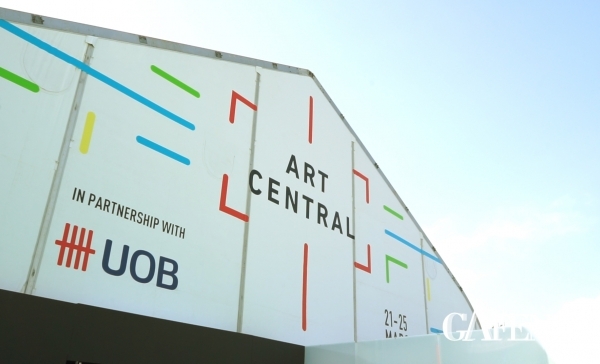
The third edition of Art Central is under way at Central Harbourfront and art fans are in for a treat with over 100 international galleries showcasing contemporary art.

This year’s Art Central features performance art pieces, site-specific installations, moving images, talks and more.

“As we return for the third edition of Art Central, we are proud to present our strongest programme to date,” said Charles Ross, the managing director at Art Central.

“As a content-driven fair that pushes boundaries in experimentation, we are dedicated to fostering new practices and discovering new talents in contemporary art.”

Gafencu spoke to Japanese sound artist Yuri Suzuki about his interactive sound installation, Sharevari, which was unveiled by Swarovski.

Art Central is on until 25 March at Central Harbourfront.

Check out our video of this year’s event and interview with Suzuki.

For more information click here.

Noah’s Ark and Jewellery: Gafencu speaks to Van Cleef & Arpels President Nicolas Bos

Fans of Van Cleef & Arpels now have the opportunity to get an up-close look at one of the jeweller’s most fantastical collections yet. Inspired by the Biblical story of Noah’s Ark, the collection – now on display in Admiralty – features more than 40 pairs of animals in brooch form, including monkeys, swans, butterflies, kangaroos and exotic birds. There’s even a unicorn and a phoenix, bringing a touch of the whimsical to such a timeless tale.

As visitors enter the darkened room, they are met with a fully immersive experience. Claps of thunder and the sound of rain fill the room, and the occasional flash of lightning adds an exciting touch. The exhibit was designed by Robert Wilson, an American theatre and visual artist who is renowned for his creative use of light. The installation was first presented in Paris last September.

Gafencu spoke to Van Cleef & Arpels CEO and President Nicolas Bos, who was in Hong Kong for the exhibit.   

You started out as a marketing director for Van Cleef & Arpels in 2000. How did you get to that position?

It was a bit by accident to be honest. I started working for the Richemont Group at the Cartier Foundation for Contemporary Art right after school.

I always had a passion for art and creativity so I was happy to work in an environment that combined art with commercial and business aspects. When Richemont acquired Van Cleef & Arpels, the president, my former boss Isabelle Guichot, was appointed and she asked me to join.

Interestingly, I wasn’t asked to join because of my knowledge of jewellery, but because I’d always been in an environment with creative people trying to organise projects and make things possible. That was pretty much my role at the Cartier foundation.

My role as marketing director was more of a title than anything because there was no marketing department before I joined. We don’t do things according to market research or trends. It is primarily what we want to do in house. The purpose of the department, and the role I filled at that time, was to make sure Van Cleef & Arpels’ creations were turned into projects and collections for the stores. My role was more to organise the whole creative process and move it forward.

In 2009 you were promoted to vice president, while keeping your position as creative director. How did you balance two very different roles?

It was quite organic. The company is quite small so I was just working with a different process.  I moved to New York to take care of the American subsidiary while keeping my creative role. I moved back four years ago to take over as president.

Now you are president and CEO. What’s changed at Van Cleef & Arpels under your leadership?

I don’t think much has changed. It is about continuity. I’m not the type of manager who starts a revolution and makes big changes.

I’ve been at the company a long time and continuity is important to brands like ours. Van Cleef & Arpels has been building an identity, signature style and level of expertise for many years. I’m not the sort of guy to change the strategy and retail policy. Creation and creativity are still at the centre of everything.

The only change is I don’t have anyone to blame now. The comfort of blaming another person if something isn’t working has gone, which is actually quite nice.

How would you describe your management style?

It’s very collaborative. I rely a lot on my teams. I try to strengthen the culture among the teams at all levels. I’m not the sort of person who asks designers or collaborators every week what they’re doing or how they’re doing.

There are some projects I run with them directly and then I expect them to understand and replicate it by themselves.

I don’t like when people say, ‘It is going to be like this because this is what I like or don’t like.’ I always try to explain why I’ve made a decision and it isn’t always a matter of personal taste. It is sometimes to do with tradition or a commercial aspect. The process is a learning curve for everyone.

How does Van Cleef & Arpels remain true to its heritage while at the same time keeping up with ever-changing demands?

The evolution of the market, the economy and clientele don’t influence the identity, design or craftsmanship of Van Cleef & Arpels. To make specific collections for a market or react to a downturn or an upturn in the market is very dangerous for brand identity.

Speed of change today is so fast that there is no way you can follow what’s happening.

The whole process in making a collection takes about three years and opening a store also takes years so it’s impossible to react to trends that happen over a couple of months. It’s better to stay who you are and then explain and express your identity by using the evolution of the market.  For example, there are new ways to tell stories and bring information to clients now that didn’t exist 10 years ago. So we stay true to today’s world but the information we pass through these new mediums hasn’t changed.

Is the market in Hong Kong different to the West? If so, how?

Originally, the market wasn’t that different. We are a brand that appeals to a type of customer who knows what jewellery they like, which means we have a consistent type of clientele. Hong Kong is very similar to markets in New York and London with the types of jewellery people like.

However, the level of tourism to Hong Kong over the last 10 years has changed the retail landscape.

A few years ago in Hong Kong was the first and only time we had to organise a line outside one of our stores.  For a few years it was an unusual situation when tourists came to Hong Kong with such an appetite for luxury goods. This was something we had never seen anywhere before.

It is quieter now here which is closer to our identity.

The exhibit, called L’Arche de Noé racontée par Van Cleef & Arpels (Noah’s Ark told by Van Cleef & Arpels), will be on display from now until 26 March at Asia Society Hong Kong Center, 9 Justice Drive, Admiralty. It is free and open to the public.

For more information or to book a visit between the hours of 12pm and 8pm, visit www.vcaarchedenoe.hk.

Text: Andrew Scott

Additional information: Emily Petsko

Actress Clara Lee talks about her childhood, acting and fashion

A-2421

Clara Lee has landed roles in a number of films including the recently released Qing Sheng.

Click here to watch the photo shoot

Am I correct in saying that you spent a good deal of your youth travelling?
Yes, my father was working a lot in Europe, so I was born in Switzerland. My mother studied in London so that is how I received my UK citizenship. I, however, ended up studying in California and now I work in Korea.

Having seen quite a lot of the world from a young age there must be a few cities that left an impression on you. Do you have any favourites?
I love travelling because I get to meet different people, feel the different vibes in each city and immerse myself in the culture. I feel like I learn a lot by travelling so I really enjoy it. Recently when I spent time in Verona, Milan and Rome, it was very different. I had been to Milan before to shop but I didn’t really get to see much of the city, but this time around I found it very romantic. Ideally I would love to spend more time in Europe as it has now become one of my favourite places to visit.

Being so well travelled, in terms of nationality would you call yourself Korean, British or a ‘citizen of the world’?
That is difficult to say. People know me generally as Korean, so if I were asked I would say Korean. When people ask about where I grew up or want to know more about my background then I explain to them about my UK citizenship and how I spent my youth travelling a good deal.

Your father is a famous musician and your mother a talented ballet dancer. Have you inherited any of these artistic genes from your parents?
I don’t really think about it in terms of inherited talent but I do really enjoy dancing, listening to music and singing, so perhaps I did inherit some aptitude genetically. If that is the case, I certainly appreciate it! I am actually doing some work on the musical side and some ballet dancing. Hopefully I will be releasing an album in 2017.

C-0395

Another one of your talents is fashion design, which you studied at university in California. Is that something you are still involved with now?
Yes that is why I recently started collaborating with the lingerie brand Charmante; it’s allowed me to get involved with fashion again. I have always been interested in fashion design so anytime I am presented with the opportunity to get involved I absolutely jump at the chance. I feel like my recent collaboration with Charmante is a great start.

You began your career as a model before making the transition onto the silver screen. Was there a particular moment you remember wanting to be an actress?
I think I always aspired to be an actress. I remember the first day I was on set working on a Korean drama, I was very nervous but as soon as the director started shooting my nerves turned to excitement. Whenever I am in front of the camera I feel very passionate and excited. Acting is something I really love to do.

What is it that you love so much about acting?
Everything! I feel like acting allows me to get in touch with myself. I feel like I didn’t know very much about myself before I started acting. Being in front of the camera makes me much more aware of how I talk, where I look and how I use my hands. I am starting to learn more about myself and learning to love myself, which is a very exciting journey.
I am generally a quiet person, not that outgoing and I only have a few friends. But when I have to play a ‘bad girl’ I am forced to be boisterous and act out by screaming or throwing tantrums, so it was interesting to see that part of myself come out, a dark side I didn’t realise I had. Other times when I play a doctor, for example, I feel happy that I can get in touch with my more intellectual self. Acting, for me, is about studying life and looking at different careers and people with very different personalities. I enjoy playing different characters and finding different sides to my own personality.

B-0085_eff2

 “I feel like acting allows me to get in touch with myself. I feel like I didn’t know very much about myself before I started acting…”

It sounds like you get quite wrapped up in the characters you play?
Yes, most recently I shot a movie in China where I played a swordsman and kung fu master so I learned to fence and fight. It involved a lot of scenes with wires and although naturally I am quite an athletic person, I do have a fear of heights. I didn’t know I could jump out of high buildings and all that so it has really been a learning process where I discovered quite a lot about myself. It allowed me to gain more confidence and made me even more passionate about my work. I have really enjoyed doing more action recently.

Do you find the stunt and action scenes difficult?
It can be tough but I really have found myself enjoying the more physical side of acting as well. I have learnt many different fighting techniques and I really like challenging myself. I don’t like to waste time and I love working hard.

How do you emotionally prepare for more dramatic roles?
I spend time studying the character by watching films about that specific topic. Most recently, with the action film in China, there was a lot of emphasis on the poses and the looks so I did a lot of research into different action actresses and how they portray different styles on film.

Do you dream in English or Korean?
I love this question! Actually I dream in both although sometimes I surprise myself when I start speaking English or Korean in my dreams and even I get confused sometimes!

So you are just as comfortable expressing yourself in English as Korean?
Yes I would say so, depending where I am. If I am in Korea I tend to express myself in Korean whereas when I am travelling I am just as comfortable expressing myself in English.

What is it like being a sex symbol?
It motivates me to keep fit and stay active in a healthy way. I like to think that I can be a positive role model and help motivate my fans to lead a healthy lifestyle. I enjoy sharing my diet and fitness regime with my fans. I am a very positive person so I think that also helps. It is not all about being sexy on the outside. It is just as important to feel sexy on the inside and exude a bright and positive vibe.

What would you say is the secret to success in life?
I think it is still a secret to me. I just try to work as hard as I can. I believe that whatever effort I put into my work and life it will come back to me in the form of success. I feel that if I work hard enough my dreams can come true.

In the movie Line Walker you played an assassin. Being such a naturally positive person did you find it difficult playing such a dark role?
Yes it was certainly challenging. I had to scream a lot and I didn’t really have many spoken lines so all of the emotion had to be expressed through screams or facial gestures. At the time I found it challenging but once the camera started rolling I had invested so much time in my character I almost felt like a real assassin! While I was training I found it difficult and I was often too shy to scream but once we started shooting I was fine. That is why it is so important for me to have time to train and prepare for my roles.

If you hadn’t become an actress what could you see yourself doing instead?
I think I would have liked to have been a fashion designer. I am always reading about and staying up-to-date with fashion. I find fashion changes so quickly nowadays but I have my own look. I like to wear high-waisted clothing to make my legs look longer or tighter-waisted clothes to accentuate my curves. I have the kind of fashion sense that I feel looks good on me. I like to wear fitted clothing. If I wear baggy clothing I tend to eat more so I try to wear tight clothing to help motivate myself to keep fit.

You have also appeared in a few music videos. Is there a certain musical genre you are more partial to?
I like ballads and sad songs. I am typically quite a cheerful person and I used to listen to a lot of EDM and fast songs, so I would like to branch out a bit and work on ballads to challenge myself musically.

Do you have any favourite musicians?
I love Beyoncé but I can’t imagine her wanting to work with me! I love her, she is my musical motivation.

What do you do in your time off and what is an ideal day for you?
When I am in Hong Kong I like to take in the views, so I like to go to bars and restaurants on the top of high-rise buildings. The weather is perfect right now because it is not too hot and it is pleasant, so I like to stay outdoors, walk around the city and do a bit of shopping. I love places like Isola which has a great view and good food.

Thank you.

Text: Hans Schlaikier