Uncorking history with Armand de Brignac champagne


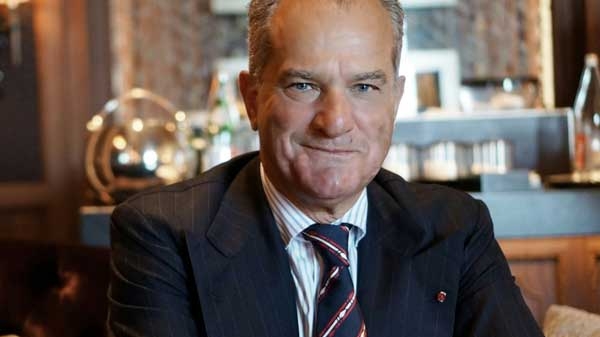
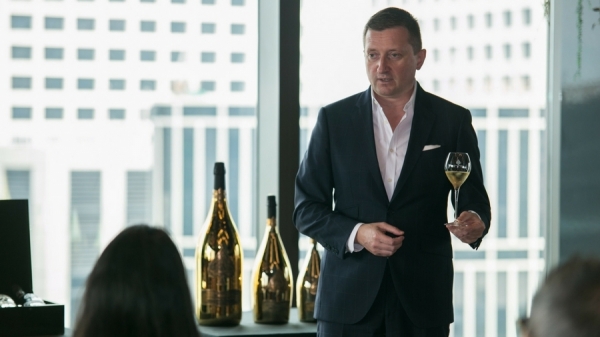
Sebastien Besson, the CEO of French champagne brand, Armand de Brignac, was recently in Hong Kong for an intimate luncheon with a select few guests. We took this opportunity to have a tête-à-tête with him and get a deeper insight into the brand’s 250 years of history.

You have showcased six different varieties of Armand de Brignac champagne. What is the speciality of each?

We are very well known for the Gold Brut, our flagship champagne, which assembles three distinct grape varieties, Pinot Noir, Pinot Meunier and Chardonnay. Our next most famous offering is the Rosé, which is lighter on the palate and quite a favourite with the ladies. The Demi Sec is a sweeter champagne and can be paired quite well with desserts or can act as a complete contrast to spicy dishes. The Blanc de Blancs, a very limited collection, is a 100% Chardonnay and achieves the finest balance in terms of grapes used. A lot of people can make Chardonnay champagne but only a few know how to make the very best. The Blanc de Noirs is the rarest cuvée in the Armand de Brignac range and a highly coveted champagne among connoisseurs.

As a family-run business, how does Armand de Brignac ensure top-quality craftsmanship over generations?

As a family-run business, we like to time to nurture our champagne. We do not have to respond to market pressure, we have a long-term generational objective in everything we do. We want to innovate, we want to bring new things to the market, but at the same time, we won’t compromise our ‘classic’ style and quality. You can say, we take the time to do things right, always.

How do you ensure sustainability while harvesting?

Sustainability is a core principle of our vineyard management and all our owned lands are certified HVE level 3 – the highest grading from the French government – acknowledging the level of care we give to the environment, to protect it for future generations. We’re very preoccupied with our vines as well as with the ground they grow on. With that objective in mind, we have minimised the use of pesticides and have maximised the use of all things natural. It is okay to let weed grow, because it helps renewal of the ground.

What is the significance of the Ace of Spades logo?

The Ace of Spades logo was adopted by the brand centuries back. It fitted the modernism narrative of those times. Over the decades, the Ace of Spades has become synonymous with the Armand de Brignac champagne. The ‘A’ in the logo is a very intricate design and matches our French aesthetics.

Thank you.

Text: Suchetana Mukhopadhyay

Real Deal: PR guru Real Ting on life, philosophy and fitness regime

Real Ting is the co-founder and director of Collaboration Group, a public relations and marketing firm.

How did you go from boy band singer to PR professional?

I moved to Shanghai when I was 16 because my dad runs a garment manufacturing business there. I studied at an international school for a year and then moved to Auckland, New Zealand, where I spent the next five years. I won a singing contest in Auckland and went on to participate in a regional singing competition in Asia. That’s how I met my agent, who helped me land a three-year contract with Warner Music Hong Kong. I ended up joining a boy band called VRF with three other guys. It was a good experience, but the reality didn’t live up to my expectations.

In the entertainment industry, you’re always waiting for your agent to give you opportunities. I hate when things are out of my control – I’m a typical Leo in that sense – so I quit the band and moved back to Shanghai to work for my dad’s business. That lasted a year because it wasn’t the right fit for me. I set out to find a job in Hong Kong, and I sent my CV to about 40 companies in entertainment, advertising and public relations. Finally, a company called IPS offered me a position, and I spent seven years there.


What sparked your interest in singing?

I started singing when I was six years old. My dad, mom, aunt and uncle – pretty much my whole family – would sing and dance every time we got together. I competed in many singing contests in Hong Kong and in New Zealand while studying at the University of Auckland. I spent a lot of time trying to improve myself, because when you’re an artist or singer you always have to be prepared. I built relationships with many people in the entertainment industry, which has been an advantage in the PR world.


How did you end up co-founding Collaboration Group?

In 2010, new opportunities arose. At the time, my now-business partner Conrad Ng was working at an advertising firm called DDB. The company wanted to build a PR and marketing department, so he invited me to join the team. The contract ended after two years, and Conrad and I formed our own company called Collaboration Group. We provide a one-stop service for PR, event management, advertising, branding and digital marketing. Our core clients include Maxim’s Group, Watsons China, Melco Crown, Givenchy Beauty, Kiehl’s and some other luxury brands.

Your wife, Miriam Yeung, is quite an accomplished singer and actress. How did you meet?

I met my wife in 2007. I owned a karaoke bar at the time, and a movie star decided to host his birthday party there. It was 2am when Miriam walked in with her agent. The agent approached me and said, ‘I can only stay for 15 minutes. Can you look after her?’ I agreed, and I’ve been taking care of her ever since. Every time I see that guy, I say, ‘Look, I kept my promise!’


You got married in Las Vegas in 2009, to the surprise of many. What prompted such a spontaneous decision?

I’m always arranging surprises for my close friends and for Miriam. In February 2009, I organised a surprise birthday party for her in Seoul. I invited our friends and families to a restaurant, and after dinner I brought out a birthday cake and proposed to her in front of everyone. When I knelt down, I realised that I was the one crying – not her.

That same year we took a trip to Los Angeles and spent a day at Universal Studios riding roller-coasters. I ended up taking care of her after she hurt her neck.

When we got back to the car, I asked her, ‘Should I take care of you for the rest of your life?’ Then I said, ‘Let’s go to Vegas.’ She agreed, and we drove straight there. We went to the famous Little White Wedding Chapel and said our vows. For her, it was an impulsive decision. But for me, it was actually a plan I had in mind. I even brought my suit along with me, but Miriam had to buy a dress in Vegas.

Did you do anything special to celebrate your wedding anniversary this year?

Our anniversary was last month, but because we’re constantly surprising each other, we wanted to simply enjoy each other’s company this year. Her birthday is 3 February, and at the end of January we went to Phuket. We stayed at a villa with 20 friends, and I surprised her by turning out the lights and bringing out a birthday cake. I arranged for fireworks to go off the second she started blowing out the candles. That’s why I thought we needed a quiet celebration for our anniversary this year.


How does it feel being in the public eye all the time?

Being in the public eye is part of my job, and I respect that the paparazzi have a job to do as well. Of course it’s human nature to want privacy, so at times it’s frustrating to be photographed while I’m trying to eat dinner with my family. Aside from paparazzi, regular people will take out their phones and start taking pictures of us in secret. When that happens, I go up to their table and ask, ‘Do you want to take a picture with us?’ and invite them to take a selfie. Sometimes they’re just too shy to ask.

What are you most proud of?

While I’m very excited about what we’ve built at Collaboration Group, my family is by far my proudest accomplishment. My wife is amazing, and to see her become a mother to our son is unbelievable. I couldn’t be more proud of my family.

What are your favourite things to do with your son, Torres?

I like to get him outdoors as much as possible. He’s a Hong Kong kid so he’s always indoors playing on his iPad with the air conditioner running, and that’s not me. Recently I started bringing him hiking. We live in Parkview near The Twins trail, so we brought him there. It’s quite hard for a 5-year-old kid, but we did half and turned back. I want him to grow up strong.


When you’re not working, what do you do to unwind?

I like to spend time with my close friends, but sometimes I want to be alone. I like jogging because it’s a kind of meditation for me. It allows me to empty my mind. I jog 10km each time, which adds up to about 150km a month.

I also have a personal trainer and we do circuit training twice a week. I’m quite busy with work, family, friends and exercise. That’s my life.

You’re a bit of a philosopher on social media. What inspires you?

I’m not a big follower of Buddhism but I love the philosophy of it. In 2007 I joined a beginner class on Buddhism and learned how to achieve balance in my life. I meditate and read a lot, and on social media I always try to share some positive words. The first book on Buddhism I read was The Art of Happiness by the Dalai Lama, which really changed my life. I’m always giving thanks for everything, whether I’m jogging, talking to my best friend, having dinner with my family or doing business. I give thanks because I’m very lucky. I have everything I want in life.

Thank you.


Text: Emily Petsko
Photos: Neville Lee
Art Direction: San Wong


Interior design duo takes concept of ‘inner beauty’ to new heights

In an era with legions of interior designers making their mark on the world, it is no easy feat to stand out from the crowd. That’s where staying true to yourself comes in – understanding and utilising your strengths to help you rise above the rest. AB Concept, a renowned interior design firm based in Hong Kong, is an excellent example of just that.

The creative brainchild of Ed Ng and Terence Ngan, AB Concept was founded in 1999 in Hong Kong, and has since expanded to include local and international big names in its very impressive portfolio, which include the Four Seasons Hotels and Resorts and the Rosewood Hotels.

“We are currently working on one of the most expensive residential developments right in front of Central Park in New York City,” says Ng, who describes himself as the more outspoken one of the introverted design duo. “We’re also working on the renovation process of the Beijing Hotel, as well as another project in Portugal.”

With so many projects to work on, there’s no doubt the pair has an incredible design team working for and with them. “I think one of the reasons our work stands out is because within our team, we try to think of ideas that are different from each others’. We are constantly trying to improve and evolve our projects,” says Ng.

Work ethic and dedication aside, AB Concept is distinctive thanks to its founders’ backgrounds. “Some people believe our work is an interesting mixture of the east and west,” says Ng. Although the twosome was born in Hong Kong, Ngan, who is chiefly the lead architect of AB Concept, went to college in Toronto while Ng studied design in Hong Kong when the Special Administrative Region was still a British colony.

“I think the mixture of eastern and western elements in our designs is the natural result of our background,” says Ng.

Given its frequent association with luxury brands, the sought-after design firm can easily be seen as targeting the luxury market. However, Ngan believes that it wasn’t AB Concept who set out to target the luxury market, but the other way round. “We didn’t target the luxury market; it just turned out that all our clients were from there,” he says.

Moving forward, the duo is excited to take on more exciting projects from ultra-wealthy clients “who don’t want to be named”. Yes, there is a lot of supply of good interior designers and the market is more competitive than ever, but it’s not likely to come out as a surprise to anyone if AB Concept eventually goes on to dominate the creative world interior designers.


Text: Sadia Lima


Clement Cheung: Ultimate challenge of juggling three companies

Clement Cheung co-founded travel agency Matata Limited, luggage brand Ventris and, most recently, Absolute Fitness gym in Central.

When did you move to Toronto?

I moved to Canada when I was nine years old. At that age, we didn’t really think about what to expect, so everything was new and fresh. I studied in Toronto, from primary school through university, and then I moved back to Hong Kong.

Why did you return to Hong Kong?

I had just graduated from university, so I was 22 years old. The main drive was my parents’ business. Back then it was more of a curiosity. I wanted to know what they were doing and understand what they did to raise me up, so that’s why I came back.

What was it like growing up in such a business- oriented family?
My first taste of business was when I was about seven years old. My sister and I made some fake money to buy each others’ toys and stationery. Later, we used our actual pocket money. My first real business, though, was when I opened a bubble tea house while studying at university.

Growing up in a business family can be difficult. There were times when business would come up at the dinner table, or we would bring up a family issue at the office. It can be quite confusing, and sometimes it all mixes together. I got used to that, though.

Why did you study architectural design, and do you still incorporate what you’ve learnt into your businesses?
I’ve always enjoyed arts as well as design. Design, to me,is creating things and going from nothing to something. Even though my companies are not related to the design or architecture industries, design has trained my creative mind, and I apply that to my different businesses.

My first real venture, Chillichilly, was a homeware brand. I designed household items that you use every day, but the difference was that they told a story. Aside from the aesthetic appearance of the product, most of the products created a conversation.

You also co-founded Matata Limited, a travel consultancy. What inspired you to enter the travel sector?
My friends and I love travelling, and every time we took a racing trip or ice drifting trip, or went to the Maldives, people would comment on our pictures on social media and say, ‘Your trip looks so fun. Can we join?’ That’s what inspired us to create our own tour company and arrange our own trips. Our idea was to make travelling more fun and cater it to groups of close friends.

Later, we changed course and started offering educational tours. I’m very fortunate because I was born in Hong Kong, I studied in North America and now I’m working in China. I think you have a more well-rounded view if you can see the best of different worlds.

I have two children, and I would love to give them the opportunity to go abroad. That’s why we designed a tour that gives children the opportunity to have fun while also learning lessons that they can take home from their trip.

Design, to me, is creating things and going from nothing to something”

You went on to head up Ventris Limited, a luggage brand. Why suitcases?
This is a little more in line with my design background. We offer high-end, full carbon luggage. I’m a co-founder, and my business partners do a lot of carbon work in factories. We love travelling and we love to have high- quality luggage to bring with us.

What role does travel play in your life?
I’m adventurous so I like to explore different places and different cultures. Africa, for instance, was quite different for me. We went to a game reserve that’s essentially a 35km by 45km piece of desert where thousands of wild animals live. We drove around searching for different animals, and that was very special because it’s not a zoo – we were visiting their home.

What are your hobbies?
I like racing. I used to race often with my friends, and we would go to Mongolia for snow drifting with a team. I used to draw for leisure. Singing is also a hobby, and I enjoy all kinds of sports.

What sets your gym, Absolute Fitness, apart from others in Hong Kong?
The fitness industry is well-established nowadays. A lot of people, including myself, are quite health- conscious. There are people who like yoga, people who like spinning classes and people who like HIIT or weightlifting. We don’t want to design a gym that accommodates everyone, though, because it would lose its focus.

Absolute Fitness is designed for people who enjoy circuit training and more functional training – not necessarily for those who want muscles like Superman or Captain America. It’s focused on getting your heart rate up, so we have a lot of cardio training, but we also have the traditional equipment you’d need to build up muscle mass.

It’s different from other gyms because we don’t encourage membership. We do mainly one-on-one training with a coach or training in small groups of two or three people. It’s quite a private gym. Some people like to go to a big gym to mingle and chat, but Absolute Fitness is more about improving yourself from the inside to the outside.

“I want to do something that creates wealth for society. That’s my real paycheck”

You’ve founded a lot of companies. How do you balance your time?
It’s always difficult in the beginning to set up a business, but luckily I have a good team and good partners who support me with their resources and time. For me, it’s a matter of balance and time management, which is something I’m still working to improve. It’s difficult, but so far it’s working out fine.

Do you plan to start another business any time soon?
I think I have enough on my plate. I’m not a greedy person, but I don’t see Absolute Fitness being my last business, either. Maybe it’s my habit of liking to create things. My entrepreneurial mind is always nagging me and saying, ‘What’s next?’ I just started Absolute Fitness, though, and I want to get it up and running before I do something else.

I would be regretful if I started a business and it failed because I didn’t spend enough time looking after it. A lot of businesspeople are big investors, but for me, aside from investing capital in a company, I also participate in them. People say to me, ‘That’s very tiring. Can’t you just put money into it and let it grow?’ But I enjoy every part and every moment of building a business. If it ends up being successful, it will be much more satisfying.

Do you have any advice for young entrepreneurs who are just starting out?
There’s a saying that it’s more difficult to sustain a business than it is to start one, and I believe that’s true. First I would ask why they want to start a business. There can be plenty of reasons. Of course, we have to make a profit – that’s the number one rule of business – but when I start a company, that’s not my first and only question.

After Chillichilly was put on hold, I waited five years before I started another venture. I don’t want to start a business just for the sake of starting it. I want to do something that I have a passion for, that I enjoy doing and, most of all, that creates more than just money. I want to do something that creates wealth for society, whether it’s educating the next generation or giving people a place where they can enjoy working out. That’s my real paycheck.

Text: Emily Petsko

Aim for the Skye: Genting president discusses new luxury private jet tour

Crystal Skye is the world’s largest private jet and its first chartered journey will whisk 86 guests away on an eight-night journey to Nairobi in Kenya and Tahiti in French Polynesia.   

Gafencu spoke to Kent Zhu, president of Genting Cruise Lines, about Crystal Skye’s inaugural flight, Genting’s future in air travel and what’s in store for Crystal and Genting.   

Who’s your target market for Crystal Skye?

Crystal Skye has been created to provide global luxury, which means we are targeting a niche market — people who can afford their own private jets, yet they would prefer to have someone look after them. Our potential clients will be people who believe Crystal can design a travel programme and handle everything, from land to air and food to entertainment.  

How do you attract potential customers?

This is a very different product in comparison to an ocean cruise or a hotel, or commercial airlines. Our customers may not necessarily be very high-profile, but they are very successful in their own right. Our way of approaching them is by a one-on-one basis, to discuss their needs and wants so we can tailor-make their itinerary for them.

Where will Crystal Skye fly to?

The inaugural trip will be from Hong Kong to Nairobi, Kenya and then on to Tahiti. The journey will be for eight nights and nine days.

Why did you pick to do the inaugural journey during “Golden Week”?

In China, we call it the ‘Golden Week’. But in Hong Kong, Japan and Taiwan, it is the weekend. We thought these particular dates would serve both markets.

What does Crystal Skye offer that’s different to other private jets?

A lot of differences. The plane itself is brand new and it is obviously the largest and most spacious private jet that’s ever been built. It has its own special lounge and stand-up bar. The seats are all first-class seats. We’ll have the highest staff-to-guest ratio with sixteen crew members. Ten of whom will be Crystal team members, and our Crystal team is experienced in catering to clients who choose to fly with us.

Why did you choose a Boeing 777 aircraft?

Our Boeing 777 is the largest private jet built so far, and obviously, we want to move into a different market segment. The largest of the other private jets has 45 seats. We want to stand out, which is why we chose a Boeing 777.

What’s the plan for Crystal Skye after its inaugural flight?

After the inaugural flight, we plan to operate on two business models. The first one is to build our own itineraries and create our own unique programmes. One example for a possible programme would be an around the world tour for a month.

Our second business model is based on private charters. If anyone in the world is interested in chartering the plane, they can. And we would be able to create itineraries based on their needs.

Why did you scrap the scheduled Crystal AirCruises journeys for 2017 and 2018?

After we announced the first itinerary, we saw a very different response from different markets. The strongest response came from the Asia Pacific region.

In terms of planning, we felt that in the near future, Asia is probably the target market we should do business with. Therefore, we moved the aircraft from North America to start our programme in the Asia-Pacific region.

What’s Genting’s role with Crystal AirCruises?

Crystal Air is actually part of the Crystal Cruises. It’s owned by Crystal Cruises but Genting Hong Kong purchased the cruise brand in 2015. Genting is the mother company, the owner of Crystal Cruises.

Why is Genting positioning itself with air travel?

Air travel is part of Genting’s business scope under the Crystal brand. I wouldn’t say that Genting is positioning itself with air travel because Air Cruise is part of the Crystal Cruises business model. Genting is chartering the plane in Asia to make sure the Crystal Air brand is well-positioned in the region.

What are the future plans for Crystal and Genting?

After Genting purchased Crystal, it grew significantly. It was probably Crystal’s fastest growth in two years. Not only did we upgrade the Crystal AirCruises, but last year, we also introduced the first-ever Crystal River Cruise. There will be two River Cruises delivered this year, and another two next year.

For Genting, we will expand our Dream and Star cruises. Dream Cruises was launched last November and we’ll launch another vessel, World Dream, this year. By 2021, there will be a ‘Global Class’ Crystal Cruise vessel delivered to Asia, and that’s going to be a 2000 ton megaship.


Text: Sadia Lima

Queen B: Bonnae Gokson has a taste for the sweeter things in life

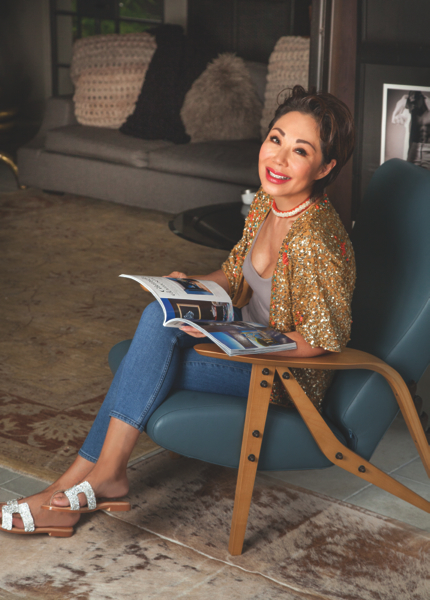
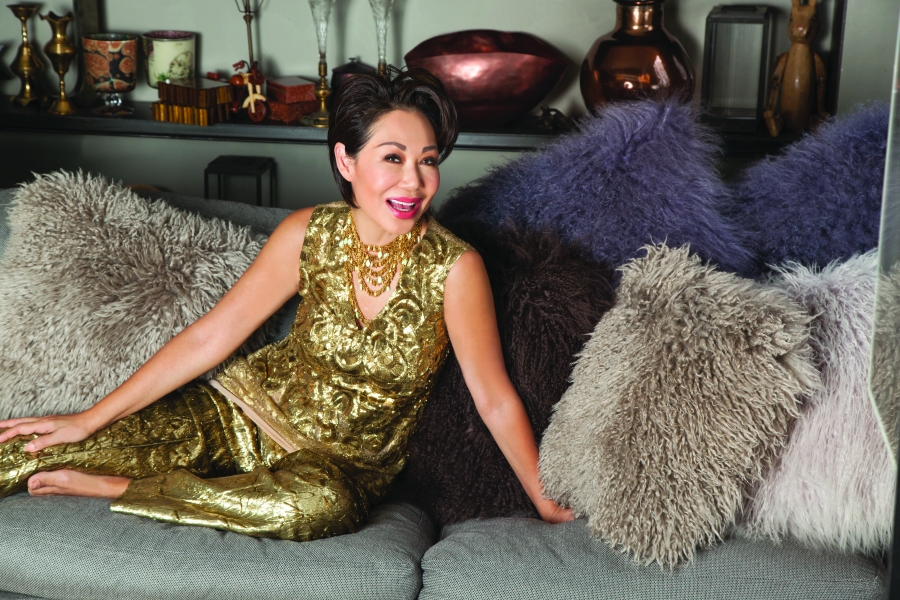
Bonnae Gokson is the owner and founder of Sevva, Ms B’s Cakery and C’est La B. She has received three awards for her book, Butterflies and All Things Sweet.

Why do you think your businesses are so successful?

I’m so grateful that all the brands I’ve created on my own are a success. I’m fortunate to have lived a very privileged life ever since childhood, and I believe this has put me in good stead in the business world.

I believe my success comes from my exposure to the very best things the world has to offer, coupled with the knowledge I’ve gleaned from my family, my work experience and my frequent travels abroad.

For me, running a business requires a hands-on approach in its day-to-day management, and this is why I have put a lot of effort into Sevva, from changing its aesthetic to deciding what food the guests will enjoy. I have always had the foresight, imagination and passion to create.

Sevva is a one-of-a-kind venue in Hong Kong because of the care and attention to detail I have put into it. It’s more than just a restaurant. It is a unique experience where guests can get pampered and enjoy a sensory overload of sorts. Of course, the amazing terrace atop one of Hong Kong’s most iconic buildings helps.

My cakery and C’est La B are separate businesses from Sevva. The store for Ms B’s Cakery in Prince’s Building is more of a gift, confectionery and cake shop, whereas C’est La B at Pacific Place is more of a casual cafe with lots of savoury snacks and sweets.

The one thing that is similar about all of my businesses, though, is that they are located in very unique venues that people enjoy, and this makes them come back for more.

To run a successful business, a person needs to know how to manage and they must have a vision, passion and drive to maintain quality and standards, all while injecting fresh ideas every so often.
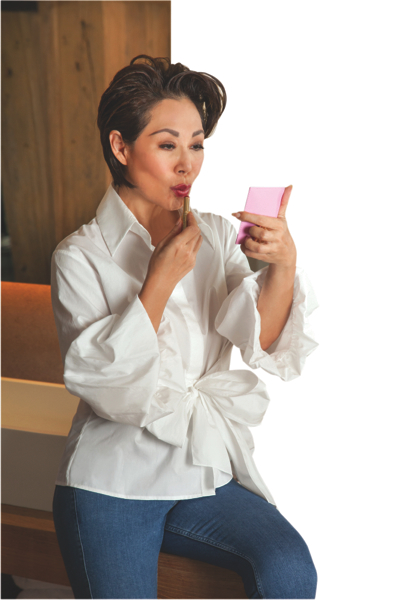
_MG_2274B_path2

What role does social media play in the promotion of your products and businesses? 

I started using Instagram a few years back and I really enjoy it. There are lots of ways I use Instagram to help my businesses grow. In this day and age, social media is so important. We regularly release new products, and social media is a great way to build brand awareness.

I have separate pages on Facebook and Instagram for Sevva, Ms B’s Cakery, Ms B’s Weddings and C’est La B. And I also have my personal accounts.

You used to be Regional Chief of Image and Communications for Chanel Asia Pacific and you’re also lauded as a style icon. How important is fashion to you?

Let me put it this way: I believe that my sense of style comes from spending many years working alongside my mentor and sister, Joyce Ma. I would also credit it to being born into a family where my grandfather founded the most important department store back in the old days in Shanghai. I certainly have a strong retail and fashion heritage.

I also love the art, excitement and creativity of the fashion world as I, myself, am a very creative person.

 “I’m at a wonderful time in my life. I have a lot of freedom and I still love what I do”

Who are your favourite designers? What are your go-to fashion items?

I have a number of favourite fashion pieces from couture, ready-to-wear and casual sportswear collections. Most designers have something I like in their collections. I like Zuhair Murad, Ralph Russo, Dries Van Noten, Balmain, Victoria Beckham, Norma Kamali, Rosie Assouline and more. I am also a fan of some younger emerging designers.

You’ve been dubbed the ‘Queen of Confectionary’ and were named one of the top 30 pastry chefs in the world in a book published by Thames + Hudson. How did it feel to be featured?

It was certainly a great honour to be recognised by such a wonderful publication. Around the same time that I was featured in the book, The New Pâtissiers, my coffee table book, Butterflies and All Things Sweet, won three top awards at the Paris Book Awards, the Benjamin Franklin Book Awards and the Sydney Design Awards in 2014. I was overjoyed when we won those awards because we’d worked so hard on the book.

What inspired you to write Butterflies and All Things Sweet?

The idea for Butterflies and All Things Sweet came about when I worked on Sundays creating our adverts, e-letters and photo shoots. Every time our images were sent out to the public, people would call us up to say how much they loved them.

Over time we built up a large collection of images and I thought it would be a good idea to compile them and put them into a book.

I am fortunate to have a few extremely talented friends who were editors-in-chief at top magazines in Australia. I worked with them to produce Butterflies and All Things Sweet.
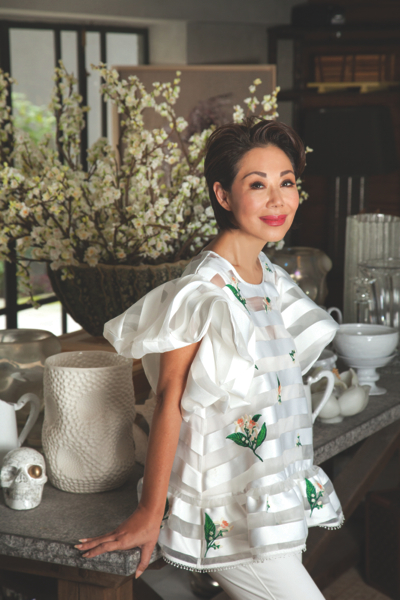
_MG_2443B

Do you think a lot of pressure is put on female entrepreneurs in the business world?

Women entrepreneurs are now becoming stronger and more powerful in the business world. Women will always face challenges, but I think if you look around and see the changes happening in the world you will see things are moving forward.
As for myself, I am the decision maker for most aspects of my businesses. I have to be stern and focused in order to make the best decisions. Yet, I believe in maintaining my femininity, poise and intelligence, so you tell me if you think there’s any pressure!

What’s an average week for you? 

My weeks vary quite a bit. I work out at home twice a week in the morning with a fitness trainer. I attend meetings throughout the week with various teams to plan upcoming events. I meet with chefs to go over new menus and meet with my cakery team to discuss bespoke cake orders.

I sometimes have meetings with the media and I’m occasionally asked to give interviews on TV or radio programmes.

Sometimes on Sundays I work with a photographer to snap new shots of my work, and sometimes I go to the graphic studio to design new packaging or adverts.

During the past few months a number of people have asked to collaborate with me and I am sometimes contacted by luxury brands to create something for them, which means I have to attend meetings for these projects.

Your cake names at Ms B’s Cakery are quite unique. Do you come up with the names yourself?

Yes, I come up with all the names of our cakes and I choose the flavours and ingredients. Choosing names for the cakes is fun. Sometimes I’ll brainstorm ideas with a good friend who’s humourous and we will have a laugh thinking of names. And sometimes I name them after famous operas like Madama Butterfly or come up with something daring like ‘Better Than Sex’.

We have just finished a week of new developments and we mistakenly made a cake with the wrong ingredients, but it ended up tasting delicious so we called it ‘Ooops!’
_MG_2305B_eff

  “Women entrepreneurs are now becoming stronger and more powerful in the business world”

Are you ever concerned people in Hong Kong will copy your cake ideas?

Copycats are everywhere in Hong Kong. I wonder why so many people choose to copy my ideas instead of coming up with their own designs. It is obvious people steal my ideas – our distinctive striped cake cards, our cake designs, the names of cakes, sugar art and more – from the internet, which is a joke and shows that some people have no shame. But what can I say except ‘thank you.’ I guess people who understand quality will know the difference.

What are your favourite restaurants in the city?

I have quite a few favourite restaurants that I keep going back to, such as Gou Fu Lou for dim sum, Arcane on On Lan Street, Pang’s in Happy Valley, Liu Yuan Pavilion in Wan Chai, Mak’s Noodles on Wing Kut Street, Ho Lee Fook on Elgin Street and, of course, Sevva!

To me, going to a place that serves good food is more important than going to a place because it is seen as trendy or hip. I also love taking friends who are visiting the city to new restaurants.

You’re also known for your healthy lifestyle. How do you stay fit?

I believe that ‘health is wealth.’ I like to take care of myself, which is important because I have such a hectic lifestyle.
I enjoy nothing better than a good hike followed by a session with exercise training bands. I love working up a good sweat with my trainer in the country parks near my home.

I have also been an advocate of holistic naturopathy and anthroposophical medicine for years and I have a wonderful doctor in Australia who helps to keep me fit and healthy.

How do you relax and unwind?

I travel on short trips around Asia to visit friends. When I’m not travelling, I love to explore the streets of Sham Shui Po and the flower markets in Kowloon. There’s always something new there to awaken my senses.

I’m a big fan of the cinema and I also like to go yachting with friends or go on a good hike.

What advice would you give any budding tastemakers or entrepreneurs?

Embrace what makes you different. Success is tied to passion; it is not materialistic. Passion is your greatest ally, and don’t be afraid to challenge social conventions.

What project are you planning to take on next? 

I’m at a wonderful time in my life. I have a lot of freedom and I still love what I do. Some people have suggested that I open my own signature chain of boutique hotels, and actually this is being discussed at present.

I am open to getting involved with exciting new projects and ideas. I have said ‘no’ to many offers in the past, but who knows what might happen in the future. I don’t focus too much on the future as I like to live in the moment. As they say, que sera sera.
_MG_2376C

Text: Andrew Scott

Singer Charlene Chou Xuan on spreading traditional Chinese music to new audiences

_MG_4385

Singer Charlene Chou Xuan, dubbed the “new golden voice” of China, is known for her unique style of music, which blends Western and Eastern elements. Originally from Hangzhou, she now lives in Hong Kong and runs the Zhou Xuan Arts Centre, which she founded.

Click here to watch the video

Were you named after the iconic Chinese singer and actress with whom you share a name?

My name was given to me by my mother. Zhou Xuan was a famous singer in the ‘30s, and she is my mum’s idol. My mum loves all of her songs, and so that’s the story of how I got my name.

I was born into an artistic family. My mum was a music teacher, and my dad was an art instructor. They are ordinary people who love music and dance. I was fortunate to grow up in such a warm and happy environment.

When did you first know that you wanted to be a singer?

My first stage performance was when I was three years old during a Children’s Day event at school. Even as a child, I never felt stage fright. I remember singing one song after another that day. It was then that my parents discovered my talent.

When did I decide to become a professional singer? It was probably when I enrolled at the Zhejiang Vocational Academy of Art. I was about 12 at the time. Now, here I am. I often have the chance to perform on TV and at a number of concert halls around the world. Various media have named me one of the top 10 female sopranos in China. They call me the ‘new golden voice,’ which I am very proud of. I will always try my best to live up to that title.

What has been your most memorable performance?

My first concert ever was held at the Hong Kong Cultural Center on 16 November 2005. There I was, just a girl from Hangzhou performing in the big city. I never would have imagined back then that I’d move to Hong Kong one day. It must have been fate that brought me here.

During my first concert, I was very nervous because I was under a lot of pressure. It was my first time performing professionally on-stage, let alone an international stage. Fortunately, the show was perfect. After the concert, people came up to ask me for photos and autographs. My first concert was a success and an unforgettable experience.

Who are your musical idols and inspirations?

My mum was my first music tutor. I listened to her songs throughout my childhood. I had many other instructors during my formative years, including Professor Jin Tian Lin, who also mentors China’s First Lady, Peng Liyuan, who happens to be a contemporary folk singer.

I have also had the opportunity to meet and collaborate with some exceptional artists, including Lü Jihong, Zhang Ye, Liao Changyong and Dai Yuqiang. We have become very good friends. I also look up to Li Guyi, a well-known singer in China.

What kind of music do you listen to?

I love all kinds of music. I studied Chinese national music at college, but I also listen to Italian music across the genres of bel canto, opera and pop. I have made an effort to learn diverse styles of music. I hope that my songs appeal not only to Chinese, but also to international audiences. I believe that music has no borders.

How do you manage to blend such diverse elements from Chinese and European music?

I take some artistic liberties in my music. For instance, in one song I combined the Italian aria Nessun Dorma with the Chinese folk song Mo Li Hua (Jasmine Flower). I sing in two languages in that song, and foreign audiences love it. Now, I am trying to combine songs from Madama Butterfly with Taiwanese pop singer Teresa Teng’s songs. Teng was known for her folk songs and romantic ballads.

You travel a lot for shows. How is Chinese music received in other countries?

When performing abroad, I sing both Chinese and foreign songs. As long as the songs are good, music is an international language. Many foreigners have been moved by my music. They loved my songs, even though they didn’t understand the lyrics. That is what I mean when I say music has no borders.

Do you enjoy working abroad?

I do. It gives me the chance to visit new places, and it’s just like a vacation. Italy in particular is one of my favourite places to perform. I often travel to Italy with my family on holiday. There are so many delicious types of food, beautiful landscapes, classic architecture and shopping malls.

As for my family, they have been very supportive of my career, and they love music as well. I have an adorable son, and a daughter who is almost one-year-old.

_MG_4725

What’s life in Hong Kong like compared with your hometown?

My hometown is Xi Hu (West Lake) in Hangzhou. Xi Hu is considered a paradise in China. The landscape is beautiful, and it’s a UNESCO World Heritage Site. I was chosen to sing a song dedicated to Xi Hu. If you have a chance to visit the city, you will hear my song as soon as you get off the plane. They play it all day long in the airport and on buses in the city.

Life is very relaxed in Hangzhou because it’s important to the locals to enjoy life. They walk around Xi Hu and have tea time with friends. It’s a slow-paced way of living. Hong Kong, on the other hand, is a very busy city. Everything is fast. After a long week spent in Hong Kong, I like to fly to Hangzhou for the weekend, just to slow down a bit – to rest and enjoy life.

You have opened your own music centre in Hong Kong. What inspired you to enter the field of education?

I opened my art centre last November. It’s something I have always wanted to do. My ambition is to promote Chinese art education in an effort to encourage children who have a passion for music. We offer lessons in dance, piano and violin, as well as vocal training in traditional Chinese music. The centre is for both children and adults. My youngest student is three years old, and the oldest is 70. I also set up a Hong Kong-China musical exchange association. It’s responsible for art education and cultural exchanges between Hong Kong and mainland China. We are going to host an event this August.

What has been the biggest challenge you’ve faced?

The biggest challenge has definitely been opening the music centre. Education is a long-term cause. The behind-the-scenes work that no one sees is what is most difficult. My school is like my third baby. It takes great effort and patience to nurture it so that it grows up big and strong.

What’s next for you?

I’ll perform in Eastern Europe with a Chinese delegation in July, on invitation from the Lincoln Center for the Performing Arts in New York City. For 20 days, we will travel around the region on tour. I’m currently preparing to launch a worldwide tour, and right now we’re just waiting on confirmation from the venues. The worldwide tour could last up to one month. We won’t return home until we finish the tour, and we will visit one country after another.

Text: Emily Petsko

Rex Tso talks about how he got started, memorable fights and his new-found fame

Opening_Man

Boxing champion Rex Tso is considered to be one of the sport’s brightest stars. Last March, on home turf in Hong Kong, he successfully defended his WBO International and WBO Asia titles against Japanese boxer Hirofumi Mukai.

Click here to watch the video

How did you get into boxing?

My dad taught me how to box when I was five years old, and when I was 16 I joined the DEF boxing gym to train and help out as an assistant coach. Back then I viewed boxing as nothing more than a sport, and this made me lazy.

It wasn’t until Jay Lau Chi Yuen, who is now my manager and the person who brought professional boxing to Hong Kong in 2011, asked me to participate in some amateur fights that I saw it as something I could do as a career. I fought in a few fights when I was 22 and 23 years old.

When did you decide to go pro?

I competed in my first professional boxing fight when I was 24 years old. As an amateur I was a lazy boxer, and I still had that attitude when I turned professional.

 “I try not to let the other boxer rest because I want to fight from the moment the bell rings”

At the beginning, I didn’t care if I won or lost. Boxing was something I did out of personal interest. When Jay asked me to turn professional, I kept on thinking to myself, ‘What is a professional? And how can I be called a professional?’

Then I started to worry because my fitness was in poor shape and I hadn’t been taking it seriously. When I was an amateur I’d won fights simply because I’m a smart boxer, and so I felt I didn’t need to train properly. But when I turned professional I realised I needed to train harder.

My first professional fight was four rounds and I wasn’t thinking about winning the fight. I was thinking about trying not to get knocked down in the first round.

But when I won the fight and the crowd stood up to clap and cheer my name, that was when I knew I had to train harder, improve my body and learn new boxing skills from my coach. It was then that I knew I wanted to take boxing seriously.

How would you describe your boxing style?

I would say I have an aggressive boxing style. I try not to let the other boxer rest because I want to fight from the moment the bell rings. Fights are scored every round so I try to win every round.

Where did your nickname “The Wonder Kid” come from?

Quite a lot of people think my coaching team gave me this nickname, but actually it was given to me by a Filipino referee. I had my second, third and fourth professional fights in the Philippines and all of my opponents were Filipinos. At the start of one of the fights, the crowd cheered the Filipino boxer as he made his way to the ring, and they booed and jeered at me. They even shouted that I should go home, which I only understood later when someone translated it for me.

The fight was four rounds, and I felt I was losing in the third round because my opponent’s boxing style was different to what I was used to. I had practiced with a right-handed, short boxer, but my opponent was left-handed and much taller. My coach told me that if I didn’t knock him out in this round, I would lose the fight. Once the bell rang for the third round, I punched him as much as I could until he could no longer defend himself, forcing the referee to stop the fight.

When I was announced as the winner, the crowd stood up and cheered me. The referee was surprised I was still smiling even though the crowd had hurled insults at me and it seemed like I would lose the fight after three rounds, so he gave me the nickname ‘The Wonder Kid.’

How do you prepare for a fight?

I start preparing three months in advance. In the morning I do physical training, like fitness, running and weightlifting. I also focus on boxing techniques to build up muscle. The afternoon is reserved for boxing training.

I follow a balanced diet for the first two months. I eat a fistful of rice and meat, and I usually start to lose weight 10 days before a fight. Normally my weight is 130 lb, but in the build-up to a fight it drops to between 125 and 128 lb. Ten days before a fight it drops to 115 lb, and during this time I only eat vegetables. And 30 hours before a fight I don’t drink or eat anything to make sure I make the weight class. I also run in a sweat suit to help me lose weight.

3rd Spread Man

What’s been your toughest fight?

During my last fight against Hirofumi Mukai I faced a lot of situations that were new to me. In the second or third round, I was hit by a punch that made me lose hearing in my right ear for more than 10 seconds.

I broke my nose one month before that fight, during a training session with a Filipino world champion. I was so worried that I wouldn’t be able to fight and it was so painful that I cried. Mukai punched me in the nose during our fight, but thankfully the bone had healed.

How did it feel to successfully defend your WBO International title and WBC Asia title and win the WBO Asia-Pacific belt in front of your home crowd when you beat Hirofumi Mukai?

It was great that I didn’t disappoint everyone, and I was lucky to fight and win even though I was hurt. I was worried that I hadn’t trained enough because I had to take it easier after my injury.

The atmosphere at the stadium was so exciting. Even when I was in the dressing room I could hear the crowd cheering on the other boxers. And when it was my turn to fight, I felt energised when I heard the crowd cheer my name.

You’ve fought twice on the undercard for Manny Pacquiao. How were those experiences?

Manny Pacquiao’s fights are always huge events. The fights were valuable experiences for me as they helped me get used to the pressure of fighting in front of a huge crowd. I was also grateful to watch Pacquiao and learn from him. He can fight under pressure and he shows that you have to enjoy the crowd, not be afraid of it.

He is very nice and willing to help other boxers. We have met before but my English is not that great so I just said ‘hello.’

What do you hope to achieve as a boxer?

I want to challenge the world champion one day. Before that I want to fight the best boxers so I can learn from them.

_MG_5710

 “I used to be lazy, but now I can be someone who encourages others. Words can’t express how much this change means to me”

How do you think boxing is viewed in Hong Kong culture?

In the past, people had a negative view of boxing. When people thought of boxing, they would imagine gangsters, violence and fighting. They didn’t recognise it as a sport. Nowadays, people have taken the time to understand boxing and they realise it’s a sport because it requires skill. It isn’t just lawless fighting.

I think the change has come about due to more media exposure. I have spent the past two years competing in Macau, and the media exposure from my fights there has opened up boxing to a wider audience. So when we organise boxing competitions in Hong Kong, locals are now aware of the sport and the reaction and attention it receives is stronger. Once someone watches a boxing contest in person, they will have a better understanding of the techniques and skill involved.

Would you say you’re a role model to young boxers?

When I win a fight, people cheer for me and the focus is all on me. Some young boxers might crave the attention instead of taking up boxing for the sake of the sport. When it comes to boxing, you don’t get into it because of the result. You have to first experience the process – go through training and fight in competitions – and then you can start thinking about winning and the pride that comes with that.

I think I am influencing people in a positive way. In the past, I was a very lazy person, but now I can be someone who encourages others. Words can’t express how much this change means to me.

How are you handling your new-found fame?

I still feel embarrassed. I’m still not used to the attention I get when I walk down the street, but every coin has two sides. When people on the street know who you are and ask for photographs, and suddenly a five-minute walk becomes much longer, you might think you’ve lost some of your freedom. But this is a negative way of thinking. I prefer to view it more positively. When more people recognise me it means that more people know about boxing, and that’s the kind of recognition that matters to me. Also, when people ask me for photographs, it means they don’t hate me, I think!

What do you do in your free time to relax?

Eat! I am happiest when I am eating because I have to lose so much weight to prepare for a fight. I don’t have a favourite food, but eating any type of food is a way to pamper myself.

Which sporting figures do you look up to?

I admire Manny Pacquiao. He is a legend in the boxing world. Every boxer knows about him because he is so successful.

What will you do once you retire from boxing?

I haven’t thought about retirement. When I started out as a professional boxer, I never thought about doing it long-term. Even after my first few fights, I didn’t know how long I would last as a boxer. But now, as long as I stay in good health, I plan to continue as long as I can. There is an age restriction for amateur boxers but not for professionals. I am checked before each fight to make sure I am in good health. When my body can no longer handle it, that will be when I call it quits. I know that plans change and something I want to do next year could change tomorrow, so I enjoy the moment while it lasts.

Thank you.

Text: Andrew Scott, Alice Chang

Dress to impress: Non-profit bids to keep cheongsam relevant

Group Photo (1)

Cheongsam, for many, is the embodiment of a bygone era where older women would attend a formal event and spend the entire evening sitting or standing uncomfortably in the figure-hugging one-piece dress.

However, one non-profit organisation is trying to change this perception by reviving and fostering appreciation of cheongsam.

Cheongsam Connect, founded in 2015, recently held an event at the FCC to promote the traditional dress. The event was attended by seven designers who showcased the unique cheongsams they’d designed for the wives of consular generals from Finland, Hungary, Indonesia, Ireland, Korea, Malaysia and Turkey.

The seven designers created unique designs of the traditional dress for each lady. One dress specially designed for the wife of the Irish consulate general, featured a shamrock pattern on lace and the green, white and orange colours of the Irish flag.

We spoke to one of the designers, Grace Choi, and co-founder of Cheongsam Connect Donna Cheung about how they promote cheongsam and how it’s marketed to younger women.

Designer Grace Choi

( ) Designer Grace Choi and spouse of consular corp of Malaysia

What’s your involvement with this event?

I designed a cheongsam for the Malaysian consulate general’s wife. I actually designed it for her to wear to a gala dinner event to show off cheongsam culture and my brand.

What made you quit a successful career as a model to start your company, Yi-Ming?

My life has been surrounded by fashion so I have learnt a lot about fashion, design, marketing and sales. A lot of my friends kept on asking me where to buy cheongsam. It was then that I realised it was a good market to get into because there is no real choice, especially in modern styles.

How is cheongsam received by younger women in Hong Kong?

It isn’t that popular to be honest. If you look at Japan where girls wear a kimono on the street, you don’t really see younger women wearing cheongsam here. They will only wear it for special occasions.

It is only really middle-aged women who wear cheongsam, but what about the younger generation? If the younger generation fails to embrace this culture then it will disappear. That’s why my designs are aimed at younger people.

How do you try to attract younger women?

This is where the design is really important and what sort of material I use. Traditionally with cheongsam, women will use a traditional tailor. But in the modern day, women don’t have the time to choose the fabric, go for a fitting and wait three months for the dress.

Now they can walk into a shop and get the size and walk out. It makes their life easy. If you don’t do it this way, then less and less women will choose to wear cheongsam. It needs to be suitable for this day and age.

How has western style influenced your cheongsam designs?

You can see a lot of western colour patterns and fabrics and materials. Usually the traditional cheongsam uses silk and patterns with a dragon, phoenix or flowers. I still use a lot of floral patterns but the design is slightly different. I will use my own photos of flowers and then put the digital print on the dress.

Also, stretchy fabric is really important. In the past a woman would have to wear the same bra when she goes for the fitting and when she wears the cheongsam. Nowadays we make cheongsam from flexible and stretchy fabric. It is also important that the cut isn’t too tight so a woman can sit down comfortably.

Cheongsam Connect co-founder Donna Cheung

What’s your role with Cheongsam Connect?

I co-founded Cheongsam Connect with Anita Tsang over two years ago. It happened by accident actually.

I attended a social dinner and we all decided to wear cheongsam, which was the first time I’d worn the dress in 40 years. During the dinner, I was taken in by the elegance of the women wearing their cheongsam and this opened my mind to this beautiful dress. Since then Anita and I have organised more social events to promote cheongsam.

How do you promote cheongsam?

We wear cheongsam for all occasions. Traditionally it is associated with formal wear: wedding banquets or galas. We try to advocate wearing it to work in a simple plain colour or a modest colour. To wear with jackets or on business trips and even luncheons and teas.

We also have young women who wear cheongsam for sport. A lady actually ran the Boston Marathon in one. I play ping pong in my stretchy, casual one.

Text: Andrew Scott

Lasting Legacy: Ex-director of The Macallan on the world’s most valuable whisky

Image 3

Sotheby’s recently held an auction in Hong Kong where the Macallan in Lalique Legacy Collection – a set of six crystal decanters containing the rarest of The Macallan’s single malts aged from 50 to 65 years old – sold for US$993,000 (HK$7.7 million).

David Cox, who recently retired as director of fine and rare whiskies for The Macallan, flew into Hong Kong for the ‘Finest & Rarest Wines and The Macallan’ auction.

David, who worked in the scotch whisky industry for 35 years, played a lead role in the development of The Macallan in Lalique Six Pillars series.

We spoke to David after the auction about the Six Pillars, brand identity and how The Macallan is received in Hong Kong and China.

How did The Macallan establish such a strong brand identity?

Before The Macallan was marketed as a brand in the 1980s, the product had long been admired and sought after by blenders as a ‘top dressing’ single malt. It was also popular among a small number of consumers who enjoyed its distinctive rich, full-flavoured character, much of which owed to The Macallan’s use of sherry casks from Spain for maturation.

Since that time, what was something of a cult-like following by a few has turned into an ever-growing loyalty by many around the globe. This is down to the merits of The Macallan’s product reaching a wider audience through active engagement with trades and consumers. This engagement is grounded in some product truths –  the Six Pillars –  which have been consistently talked about and understood by trades and consumers. Consistency has therefore been critically important, which is based on a great appreciation of outstanding and distinctive product quality.

Have you tweaked the brand at all for the China and Hong Kong markets?

We maintain the prestige and luxury positioning for all markets across the world. It is arguably the most precious whisky in the world, substantiated by the multiple world records of ‘The Most Expensive Whisky Ever Sold In Auction’ by The Macallan 64 Years in Lalique Cire Perdue Decanter and The Macallan Imperiale 6L M-Decanter Constantine.

How’s The Macallan received in China and Hong Kong?

The Macallan is received exceptionally well across Hong Kong, Taiwan and China. The consumers are basically professional, upper income and high net-worth individuals. The brand also has a good following among younger consumer groups, which is a visible trend in Asia among single malts.

The younger consumers are more open in terms of trying new categories of drinks, single malts among the many they are experimenting with. They collect, collate, categorise, compare and conclude which ones they prefer and for what occasions.

What’s the biggest challenge for The Macallan in this region?

Supply has always been an issue.The challenge is to always stay vigilant, always aim to be better and to always put consumers at heart. We always remind ourselves to stay close to our customers, be relevant to consumers and be aware of any changes in the market.

What is The Macallan in Lalique Six Pillars collection?

It is a celebration in crystal decanters filled with some of The Macallan’s oldest and rarest whiskies – the oldest was filled to cask in April 1945.

The Macallan’s Six Pillars are six facets of The Macallan which, when taken together, help explain the distinctive, rich character of the whisky.

Capture16066a_b

What exactly did you do in your lead role in the development of The Macallan in Lalique Six Pillars series?

I was introduced to Lalique back in 2004, and at the time my plan was to develop a series of decanters in crystal to celebrate the six pillars, releasing one every other year, making this a 12-year project.

I was immediately struck by the extraordinary artistic legacy of Lalique and felt they would not only deliver an outstanding series of unique crystal decanters, but that we also shared many values which would ensure a partnership of understanding and longevity. I am delighted to say this proved to be the case.

You were in Hong Kong for the auction at Sotheby’s. How did it go?

The result exceeded our expectations. The combination of The Macallan’s unrivalled reputation in single malt whisky, allied to Lalique’s artistic inspiration, helped to ensure that the Legacy Collection, the only complete collection of Six Pillars decanters ever released by The Macallan, achieved a world record hammer price for a single lot at auction. Most satisfying of all, though, is the proceeds will be divided equally among five charities.

The Hong Kong charities are:

Society for the Community Organization, which supports disadvantaged people in Hong Kong.
Food Link Foundation, which specialises in coordinating food needs for disadvantaged families in Hong Kong.
Crossroads Foundation, which supports disadvantaged people in Hong Kong, specifically helping unemployed people who lack the required skill sets between jobs.

The regional charities are:

Watsi, which provides support to those in need of medical and surgical support and works globally and regionally.
One Sky Foundation, which supports orphans in Asia-Pacific.

Each of the five charities will receive a 20 percent donation of the net proceeds. The first three charities are based in Hong Kong and the last two work in Asia-Pacific, so Hong Kong charities will share 60 percent and Asia-Pacific charities will share 40 percent of the net proceeds.

In 2015, The Macallan was the most valuable whisky brand at auction, why do you think that was?

The Macallan has been the most valuable whisky brand at auction ever since the first whisky auctions were held in Scotland in the late 1980s. I think it derives from a combination of our great reputation, a track record of high prices and ever increasing value and, in the case of some Macallan products at auction, of scarcity.

Text: Andrew Scott