
Unreal Real-estate: Hong Kong’s Lantau Tomorrow Vision

There’s no denying that land reclamation has played a pivotal role in the development plans of contemporary Hong Kong. Exhibits A and B in support of this policy’s success are, of course, West Kowloon’s International Commerce Centre and Central’s International Finance Centre Two, both of which are perched on promontories that, not so long ago, were somewhat on the submerged side. Despite such clear successes, though, many are now wondering if such prime examples of forced fish eviction really represent the best way forward for the Fragrant Harbour.

Back in 2014, for instance, when CY Leung, the city’s former Chief Executive, announced the 1,000-hectare East Lantau Metropolis land reclamation initiative, the public clearly had mixed feelings. Although its goal of creating a new ‘core business district’, while delivering new jobs and extended residential opportunities, was genuinely seen as worthwhile, there remained a number of unanswered questions as to the project’s ultimate economic viability.

Lantau Tomorrow Vision

Four years later, when Carrie Lam, the current Chief Executive, announced the project was being upgraded, extended and renamed – stretching across 1,700 hectares and several artificial islands as part of the Lantau Tomorrow Vision initiative – the level of cynicism also went up several notches. Indeed, the calls for greater transparency were far louder than they had been back in 2014. That, however, did not result in the project being put on hold. Far from it.

In February this year, Michael Wong Wai-lun, the Secretary for Development, announced that the first phase of the Lantau reclamation project – the construction of a 1,000-hectare artificial island off the coast of Kau Yi Chau – would break ground in 2025. In terms of cost, it is estimated to hover at around HK$130-150 per sq.ft – roughly equating to HK$130- 150 billion for the construction of the entire island.
Bearing in mind that the cost of building any of the subsequently required infrastructure would be in addition to this already huge sum, this did little to stem the dissenting voices. Indeed, many were strident in their concern that the massive bill for the entire project – conservatively estimated at around HK$500 billion – was something the city could ill afford.

Lantau Tomorrow Vision

Others were more concerned that the primary justification for the project – creating new real estate to help ease the city’s critical housing shortage – did not seem a priority under the terms of the proposed timeline, with the first completed units not due to open to occupancy until 2032. Capturing the sentiments of many, one local lawmaker said: “Hong Kong’s housing problem needs an urgent solution – such as immediate provisional accommodation – rather than being left to one megaproject that could take more than 20 years to complete.”

Even more critical were a number of local environmentalists, with their concerns focussing on the impact of a nearby “dead zone” – a stretch of ocean where the seabed is already starved of oxygen, devastating the local marine life and compromising the overall water quality. David Baker, a professor at HKU’s Swire Institute of Marine Science, says the construction could exacerbate the existing problem and result in “noxious conditions, a higher proportion of red tides and a surfeit of dead fish.”

There is also the controversy and uncertainty that still surround the Hongkong-Macau- Zhuhai Bridge (HMZB). While much has been made of the pivotal role the completed HMZB is expected to play as an integral part of the Greater Bay Area (GBA) initiative, what has received rather less attention was the costly – and obligatory – creation of a 150-hectare artificial island solely to house a border checkpoint facility.

Lantau Tomorrow Vision

So grossly excessive was that particular item of unwarranted expenditure that even Lam was obliged to concede that it was virtually impossible to justify. Speaking with undue candour for a Hong Kong politician, she said: “We put so much effort into reclaiming that piece of land and now there is only one thing on the whole island – the public facility. It does not, indeed, fit with my idea of using the land to the fullest extent.”

Now, in order to avoid any repetition of this particular fiscal folly, it is seen as incumbent on the SAR government to address a number of pressing concerns. Most importantly, with regard to the Lantau Tomorrow Vision project, it has to ensure it is being wholly realistic in terms of what it can ultimately deliver.

At present, the government claims it will improve the overall quality of life in the city by housing up to 1.1 million residents over its 1,700-hectare expanse. Unfortunately, this translates to 64,000 residents per sq.km, making it even more population-dense than Kwun Tong, the city’s most congested neighbourhood (57,000 people per sq.km). Significant adjustments, then, clearly need to be made.

Lantau Tomorrow Vision

In line with this, an exacting financial cost benefit analysis needs to be conducted to ensure the project is truly viable. More specifically, the likely profit from the sales of any retail, office or residential real estate needs to be weighed up against the overall construction costs.

Finally, there needs to an almost unprecedented degree of transparency with regard to the construction timeline, the benefits of any new business district, the upside of enhanced integration with the GBA and, above all, the actual benefits that will accrue to everyday Hongkongers. Without such assurances, many believe it may be best to leave the local breams, snappers and croakers largely undisturbed.

Text: Tenzing Thondup

For the full article, please find the latest issue of Gafencu’s print magazine or the PDF version on the Gafencu app. Download the app from the Google Play Store or Apple App Store.

High Jinx: Are drones a soaring scourge or a helpful hoverer?

Three months ago, right in the middle of the peak Christmas travel period, London’s Gatwick Airport underwent a forced three-day shutdown when an unidentified drone continuously encroached on its airspace. Almost a thousand flights were diverted or cancelled and over 120,000 understandably irate passengers were affected as a result of what the airport’s chief operating officer dubbed a ‘highly targeted’ attack aimed at causing ‘maximum disruption’.

Are drones really a soaring scourge

While certainly the most high-profile instance of drone-related mayhem, it’s hardly the only time these Unmanned Aerial Vehicles (UAVs) have interfered with flight operations. Thankfully, to date, Hong Kong’s Chek Lap Kok Airport has largely been spared such miscreant behaviour.

However, there are laws in place aimed at curbing any future transgressions. The Airport Authority Bylaw states that should any UAV activity affect the airport’s operations, the Civil Aviation Department (CAD) – the government body under whose jurisdiction UAV activities fall – will immediately be alerted, with the responsible party then likely to face ‘suitable arrangements’ (there is, however, no indication as to just how egregious the said arrangements may prove to be).

Drones could help society if given a chance

Far less vague, however, are the CAD’s guidelines as to exactly how Hongkongers should be using their unmanned flying devices. A long, long list issued by the department includes such strictures as no flight over an altitude of 300m, no usage after dark and maintaining a distance of at least 50m from members of the public. There’s also a series of specified no-fly zones within the city which, including the airport.

Despite such clear instructions, though, local drone flyers have caused problems by flouting these restrictions. In fact, many unsuspecting members of the public have ended up having unwelcome encounters with these hovering botherers. According to the CAD, the number of complaints lodged against drones has surged in recent years, more than doubling over 2015-2017. Overall, two-thirds of the cases involved flights in restricted areas, while many of the remainder related to privacy issues.

The jury is still out on the much-debated drones

To be fair to drones, their poor PR of late has actively obscured many of their good deeds. Indeed, in some aspects of Hong Kong life, UAVs are actually making a  very creditable contribution. In the case of CLP, for instance, the electricity company is now using a fleet of drones to help maintain its Castle Peak Power Station in Tuen Mun. This has seen it commission several US$10,000-a-piece flying operatives to help inspect otherwise inaccessible parts of the facility. This has both slashed costs and taken a potentially perilous task out of human hands.

In an even more dramatic vote of confidence, the Hong Kong government has been looking at using drones as part of its ongoing bid to counter the pollution caused by container ships. Cited as the single-largest source of pollution in and around the city, the Environmental Protection Department (EPD)’s 2016 study showed that shipping pumped more than 1,480 tonnes of PM2.5 particles into the local environment, as well as high levels of sulphur dioxide and nitrogen dioxide.

The HKSAR government hopes to use drones to monitor pollution emissions from ships

As part of moves to tackle this, in January this year, HKSAR authorities enacted a new regulation limiting all vessels in Hong Kong waters to using only fuels that contain a sulphur level of 0.5 percent or below. Taking a page out of CLP’s playbook, they now hope to use drones to help monitor compliance with this new ruling.

In order to make this a technical reality, the EPD commissioned the University of Science and Technology’s Division of Environment and Sustainability to undertake a HK$1.1 million research initiative aimed at developing new-gen UAV sensors capable of detecting air pollution and emissions remotely. Fresh off the bench, Ning’s prototypes are now being trialled over local waters, with their full deployment expected later this year.

Hong Kong's airport has yet to face problems from drones

So, hounders of holidaymakers, a rampant runaway scourge on runways or the saviours of hard-pressed maintenance men and potential environmental guardians with an ever-watchful eye on mid-Pacific polluters? As ever, technology is a double-edged sword, which is probably what social commentators have been saying pretty much ever since double-edged swords were created (around 2,700 years ago).

There is nothing that man can create that someone somewhere won’t seek to subvert for darker purposes – from atomic energy to webcams. And the humble drone is no exception. Hopefully, when such things are ultimately tallied, the doings of the good drones will far outweigh those of their rogue counterparts.

Text: Tenzing Thondup

Honkers or Singers? Which Asian megacity is more appealing to foreign businesses?

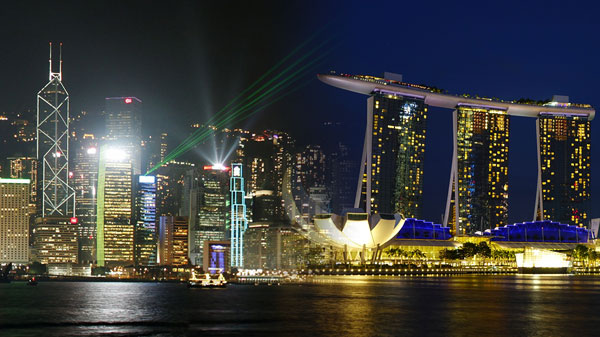
AI company ImageDeep was the latest to open its Asia-Pacific office in Hong Kong, citing the city’s strategic global position and involvement in the Greater Bay initiative as its reasons for expanding into the 852. The decision came as a surprise to some, as while there is a long history of financial firms expanding into Hong Kong, tech companies have increasingly been reaching for Singapore instead. ImageDeep’s move has thrown up the age old debate: Hong Kong vs Singapore, which of these two Asian mega-cities has the edge for modern businesses?

Hong Kong vs Singapore

Fairs fair, both are extremely attractive to western businesses and remain the two most popular options for Western businesses wanting to get a piece of the ever-growing Asian market. Both being port towns Hong Kong and Singapore already have a great geographical advantage and their international airports, tap into a vast yet quickly navigated network of nearby countries and educated multilingual workforce mean businesses are spoilt for choice when it comes to hiring time. The government allows foreigners to own all of their shares, there is no mandate to have a native director on the company’s board and taxes are low with multiple exemptions available.

Hong Kong vs Singapore

Hong Kong’s well-founded history of financial success, far reaching travel links and low low tax rates have been attractive to overseas entrepreneurs for decades. Singapore has easier access to the growing Indian and Sri Lankan markets and boast their super clean streets, mega high living standards and highly engineered public transport system as an absolute win over Hong Kong, where pollution has long been a problem. But what Singapore sees as its greatest strength might just be its downfall when it comes to incoming Westerners. Many expats living in Hong Kong revel in the varied landscape and diversity in people and they think Singapore a little bit too homogenised. While the two can boast strong legal systems which protect the business interests of foreign business owners a few think the Singaporean system might be a little too eager. Hong Kong’s procedures might take a little longer but it’s generally agreed that this is in the interest of making sure everything is done in the most just manner possible.

Hong Kong vs Singapore

For the sake of diplomacy we’ll continue to call it a toss-up. For some Singapore’s spotless streets are utter paradise and for others the rolling mountains and gleaming spires of Hong Kong spell an irresistible adventure.

Text: Alice Duncan

Not so Poultry: The Best Takeaway Turkey Dinners for a Fuss-free Thanksgiving

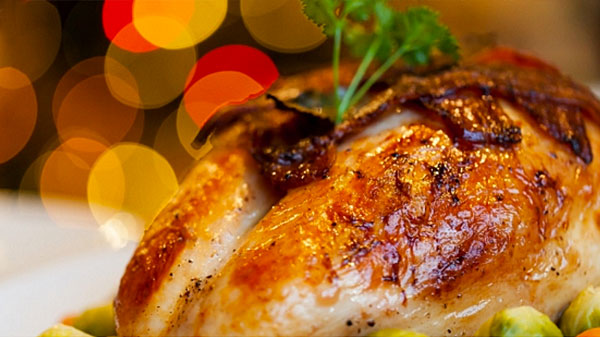
You might be an American expat or you might be a born and bred Hongkonger looking for an excuse to party. Either way Thanksgiving is right around the corner and nothing shows gratitude to friends and family than hosting them for a proper turkey dinner. But cooking is a hassle and it can end up taking you away from the very people you’re trying to spend more time with. Gafencu has compiled a list of the best take-home Thanksgiving turkey dinners so that you can sit back and relax with your loved ones… and a glass of wine, of course!

Thanksgiving turkey

Big Sur
“The noblest ranch in Utah” has been busy at their smoker and is ready to bring you an applewood smoked turkey, parmesan and butter mashed potatoes, sourdough and apple stuffing casserole, roast carrot and kale salad, sour cream and a signature three-herb gravy. If you’ve still got room, then dig in to a slice of their family style pecan pie for afters. Big Sur is only serving up 30 of these so best hurry!
Serves 6 – 8
Available for pick up at: Staunton St, Kowloon and Lantau locations
Order by: 19 November
Price: HK$1600
Dine in option also available at Staunton St location from November 21 – 23
Order from events@woollypigconcepts.com.hk.

Thanksgiving turkey

JOIA
For an elegant and yet truly traditional thanksgiving feast, JOIA bar and lounge can supply turkey, mac & cheese, baked cauliflower, stuffed peppers and two kinds of mashed potatoes. If you’re still hankering for a taste of the USA, there’s even pumpkin pie for dessert. Even the fussiest of feasters will find something to please their palette. 
Serves 5 – 6
Available for pick up at JOIA bar and lounge, Roof Level Elements, Kowloon
7 days advance booking required
Price: HK$1680
Order at contactus@joia.co.hk

Thanksgiving turkey

Porterhouse
Famed for their steak and seafood Porterhouse are branching out to birds. Their comprehensive dinner includes a roast pumpkin starter followed by lemony turkey, bacon-fried brussels sprouts, green beans and spinach with shallot gravy, followed by a sumptuous pecan and pumpkin pie served with mascarpone and cointreau foam. You really couldn’t ask for more.
Serves 8 – 9
Available for pick up at Porterhouse, California tower, Central
Order by: 25 November
Price: HK$2328
Dine in option from 19 – 25 November
Order at porterhousehk.com

Thanksgiving turkey

city’super
Trust the favourite of Hong Kong denizens hunting for western cuisine to bring us the broadest possible range of Thanksgiving dinners – from traditional turkey and super traditional lobster to rule book-burning sushi platters. We love their “Best of city’super” package which features an organic UK sourced turkey, caviar, foie gras, a cooked seafood platter, a luxury selection of vegetables, a lobster bisque, cheese platter, a lemon peel cake and vintage Phillipe Gonet champagne. We might have a little trouble squeezing into our festive frocks but we think it’s worth it!
Serves 6 – 8
Available for pick up at: Harbour City Tsim Sha Tsui, ifc Mall Central, Times Square Causeway Bay and New Town Plaza Sha Tin
Order by: 19 December
Price: HK$7988
Order at online.citysuper.com.hk/

Text: Alice Duncan

Dear Lilly opens on IFC mall rooftop after success of Ophelia, Iron Fairies

Ashley Sutton is on a roll. After making his Hong Kong debut nearly two years ago with Ophelia, he has since opened successful establishments J.Boroski, Iron Fairies and Yojimbo in partnership with Dining Concepts. It looks like the man has got a winning formula to answer the often-fickle tastes of 852 denizens. Let’s take a look at his latest venture Dear Lilly, which Gafencu visited last week on its soft opening.

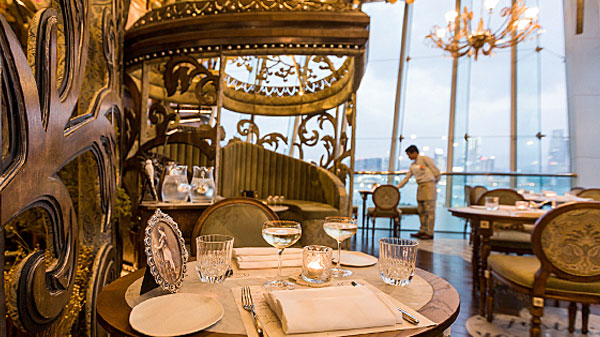
Dear Lilly features Sutton’s characteristic intricate designs, this time a floral wonderland of old photographs, vintage perfume bottles and antique typewriters

The Setting

Dear Lilly’s glass-walled saloon replaces the former Zentro Loft on ifc mall’s rooftop. We were first impressed by the stunning view as we approached the spot, and then inside, by the the elaborate interiors. It was a bit difficult to reconcile the two at the beginning, as both compete for your attention with equally-matched charm.

Sutton obviously tapped his romantic side when coming up with the theme here: prints of love letters from times gone by serve as placemats to your meal (ahem, Dear Lilly). Countless bouquets of dried flowers take up the whole ceiling space. You can even make like Alice in Wonderland climbing into a super-sized jewellery box: that’s the effect you get when getting into the intimate booths housed inside the heart-shaped steel structures. (Fun fact: It apparently took Sutton over two years to recreate his cousins’ old metal jewel boxes large enough to fit people into).

Trinkets hang from the kinetic ceiling at the bar

Eat and drink

We began with cocktails: all pretty as a picture, but some teetering dangerously on the sweet side. 1920s French tipples are the stars of the show here, featuring spirits and liqueurs the likes of lillet blanc and swizzled calvados. 

Food – contemporary European cuisine – was surprisingly well executed compared to the fare at Sutton’s other bars. The Tuna Poke (HK$138) won our palates with its laudable mix of sweet onion vinaigrette, avocado and scallions. The 12-hour Slow Cooked Octopus (HK$128) and honey-glazed Prime Beef Short Ribs (HK$138) are also excellent starter choices.

Vegetarians won’t feel left out with Dear Lilly’s textured Curly Kale Salad (HK$128) and wholesome Mezze Platter (HK$178). The former comes in a rainbow of guilt-free ingredients: quinoa, dry seeds and red radish with orange vinaigrette. The latter features delicious Middle Eastern staples: hummus, baba ganoush, tzatziki, falafel, marinated olives, and grilled halloumi with pita bread.

Dear Lilly offers both a set lunch and an a la carte menu; the set lunch is available as either a two or three-course meal. 

Of the mains, the unanimous favourite was the Wild Mushroom Risotto (HK$178) of black truffle and parmesan. Personally, however, I loved the Puttanesca Pappardelle (HK$188) as I have a weakness for anchovies. If you’re really hungry, don’t hesitate to get the hefty Grill Cornfed Chicken (HK$168) at seriously good value. 

The verdict

Sutton and Dining Concepts decided to make a gamble when they prioritised aesthetic over potential profitability in this ambitious project – a rare and brave decision in Hong Kong’s cutthroat F&B scene. Rather than packing the space with as much dining area as possible, they decided to go with outrageous design elements that aligned with the artist’s vision. Bravo, we say to that.

Dear Lilly definitely got the right mix in for the food menu, but we’re afraid so much going on might detract from the nuances that would otherwise be highlighted. The drinks, meanwhile, need a bit more refining; cocktails look beautiful, but taste-wise, the team could use a hand from the folks at J.Boroski. Other than that, we can’t complain; rather, we’ve made a note to come back and check it out in daylight. We certainly want to see the place again in all its light-washed glory. 

Dear Lilly, Shop 4010, Podium Level 4, IFC Mall, 8 Finance Street, Central, Hong Kong. 


Words: Julienne C. Raboca

This villa on Mount Davis is an inspirational take on green architecture

The dawn of the Digital Age saw humankind embrace all things electronic. Engineers have developed smart phones, smart cars, smart watches and wearable tech. But far more elusive and ambitious is the greater project of the smart house.

We first encountered “Mount Davis Villa” when visiting the International Design Furniture Fair that ran last August at the Hong Kong Convention and Exhibition Centre. It was part of a touring exposition entitled Reading Single Family House, a showcase of inventive homes in Greater China curated by Index Architecture founder Anderson Lee.

The project caught our attention as a rare subject belonging to a dying breed of single-family homes in Hong Kong. Upon closer inspection, the mystery project on Pok Fu Lam’s mountainside revealed more and more ingenious features that would delight the cultivated mind: from solar design principles and wind generators to hydro-seed technology for wall landscaping.

A round ‘Heaven’s Gate’ opening allows views into the house, and beyond, over a Jacuzzi and lap pool that protrudes toward infinity

Clearly no funds were spared in the fulfilment of the home-owner’s vision. The man is described as a “naturalist and avid bird watcher involved with the World Wildlife Fund.” Further digging led us to Markus Jebsen, executive chairman of MF Jebsen Group and a direct descendant of Jacob Jebsen – founder of its colonial-era parent company.  The Danish businessman belongs to a 120-year-old trading family whose assets include one of the world’s largest Porsche dealerships and Blue Girl, the city’s best-selling brew.

“The owner insisted on environmental friendliness and as much self-sufficiency as possible,” said architect and interior designer Santa Raymond, who reviewed the project. “Materials and construction methods aimed to be [as] sustainable as possible, with – for instance – rubble from demolition being used to level the site. Wind turbines were considered but, apart from planning issues, the lack of access to a local grid into which to feed excess power removed this as a practical option.”

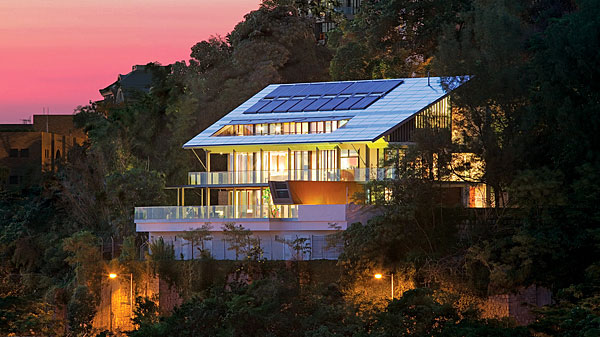
The three-storey house sits on the southern slope of Mount Davis with broad views over the Lamma Channel. Formerly occupying this 600-square-metre site was a one-storey European house with a swimming pool belonging to a relative. It was demolished to make way for the current building, which is sandwiched between Mount Davis Road from the top and Victoria Road below.

Tree planting was encouraged to create shade, reduce temperatures, and attract birdlife.

Award-winning architecture and urban design firm Farrells was chosen to turn this vision of an eco-friendly family home into reality. Designers were initially set back by the long and narrow site; regulations limited interior space to just 420-square-metres across three floors. In response to the rectangular constraints, Farrells designed a long building – a concept partially inspired by the Malaysian longhouse. The form ultimately allowed wide sea views from most rooms, promoted cross ventilation and provided an acoustic shield.

To the north, a large vertical stone façade anchors the house to the ground and shelters the dwelling from the road. Clad in split face stone, the wall is reminiscent of Mount Davis itself. The stainless steel roof, inclined at 30 degrees, also echoes the slope of the hill. 

On the ground floor, inhabitants congregate in the double-height family room, which has direct access to the external garden terrace and children’s swimming pool. Guest bedrooms are located here as well, while the family’s bedrooms are on the second floor.

The first level is comprised of the kitchen, main living room and dining space. A large opening in the stone feature wall makes up the main entrance, accessed from the outside by a cantilevered staircase. A spiritual rejuvenation area – designed to ‘let the dragon through’ – includes both a gymnasium and a projecting infinity lap-pool.

The 2m x 12.5m infinity lap pool overlooking Lamma Channel

For all its aesthetic appeal, the villa was fundamentally designed to utilise the latest environmentally friendly technologies. Double glazed windows, large mass walls, and an insulated roof reduce the house’s cooling load. North-facing operable skylights also facilitate a stack effect for natural cooling in summer months.

The roof’s aforementioned solar collectors provide hot water that powers the water-fired absorption chiller, which provides air-conditioning. In addition, a gray water system was incorporated to collect rainwater from the large roof and garden where it is stored in a tank and used for bathroom flushing and garden irrigation.

“Young architects can’t work on anything but boxes nowadays,” says Lee, who featured the 2005 villa in his exhibition. He chose the Jebsen home as one of the few Hong Kong residences that can be proudly presented as a triumph in holistic, ‘life-cycle approach’ design.

Raymond concurs: “The house is impressive at every level. It is a highly sophisticated solution on a demanding site that works as a family house, as a part of its location and as an example of innovative thinking. Its aesthetic defies categorisation, but communicates that it is an imaginative solution to a specific location and situation.”

American naturalist Edward Osborne Wilson once said, “Nature holds the key to our aesthetic, intellectual, cognitive and even spiritual satisfaction.” For all of mankind’s advances in building and composition, it looks as if we remain destined to return to the work of the greatest designer and architect of our smart planet: Mother Earth.


This article originally appears as “The Smart House” by Julienne C. Raboca on Gafencu Magazine’s March 2018 print edition. Photos are courtesy of Farrells and Carsten Schael.

8 Films to see in Hong Kong cinemas this March

What’s on the table for a March full of movies in the 852? Childhood favourites meet sci-fi, kickass female figures, video game worlds and… The Bible?!

A Wrinkle in Time vs. Goodbye Christopher Robin

Bring your: Kids / nephews / nieces!

It only took half a century for Disney to finally bring this childhood favourite to life. The science fantasy adventure follows the journey of Meg Murry and her brother who travel across the universe to save their astrophysicist father, Alex. 

Fun fact: Mrs. Which is played by none other than Oprah Winfrey, our featured celebrity on the March 2018 print issue!

Release date: 8 March 2018

If you prefer period dramas to other planets, however, get tickets to Goodbye Christopher Robin instead. The biographical drama takes us back to WWII in 1940s England where Winnie-the-Pooh creator A. A. Milne wrote his first comics in a country house with wooded acreage. 

Fun Fact: Australian actress and film producer Margot Robbie (The Wolf of Wall Street, Suicide Squad) stars as Milne’s wife Daphne. The blonde was named in Time magazine’s 100 most influential people in the world last year and part of Forbes’ 30 Under 30 list.

Release date: 15 March 2018

Red Sparrow vs. Tomb Raider

Bring your: Girlfriend(s)!

After a dearth of seriously awesome kickass female leads following the retirement of Angeline Jolie as Lara Croft in 2001, it looks like Gal Gadot (aka Wonderwoman) has propelled Hollywood into a revival of female powerhouses. And this month, we’re getting not one but TWO alpha-female showcases: Red Sparrow starring Jennifer Lawrence and a new Tomb Raider starring Alicia Vikander (Tulip Fever, The Man from U.N.C.L.E.).  

Release date: 1 March 2018 

In Red Sparrow, Lawrence plays a Russian ballerina-turned-spy who targets the CIA but obviously cannot help but fall in love with someone from Team America. Meanwhile, the latest installment of Tomb Raider takes us to Cape Town where Lara Croft (not unlike Meg Murry) tries to solve the mystery of her father’s disappearance.

Release date: 15 March 2018 

Ready Player One

Bring your: Fellow dorks!


If Tomb Raider is based on a 2013 video game but happens in real life, Ready Player One is based on a 2011 novel but happens in a video game. Specifically, in an interconnected virtual space called the OASIS. Warner Bros. and Steven Spielberg partner up once again to bring viewers into a fantastical world: a near-future dystopian Earth in which people interact via virtual reality. A teenager battles an evil cyber corporation and, well, you know how the story goes…

Release date: 29 March 2018

Game Night

Bring your: Date!

Yep, more players and more games in yet another Warner Bros. production. This one stars Rachel McAdams whose friends’ interactive role-playing mystery game suddenly becomes too real to handle. 

Release date: 15 March 2018

Den of Thieves

Bring your: Lads!

It looks like the gents won’t quite let the ladies do all the ass-kicking on the big screen this month. Gerard Butler carries the torch for man-kind in this heist film set in Los Angeles. L.A.P.D. blah blah team of robbers blah blah Federal Reserve blah blah shootout, strippers blah blah… but this time, Butler is American Irish (O’Brien), not just Irish (P.S. I Love You)…

Fun Fact: Curtis Jackson (as in, “In da Club” 50 Cent) plays robber Levi Enson Levoux

Release date: 22 March 2018

Mary Magdalene

Bring your: Church friends!

For those in the fold – the Church fold, that is – the end of March signifies the end of Lent for Catholics, and Easter for Christians in general. That means, time for a biblical drama film starring Joaquin Phoenix (Her, Reservation Road) as Jesus Christ. Reviews were quite unforgiving but hey, it might serve as a worthy substitute for Sunday School that week…

Release date: 29 March 2018


Words: Julienne C. Raboca

Hong Kong’s First Zero-Waste Grocery Opens in Sai Ying Pun

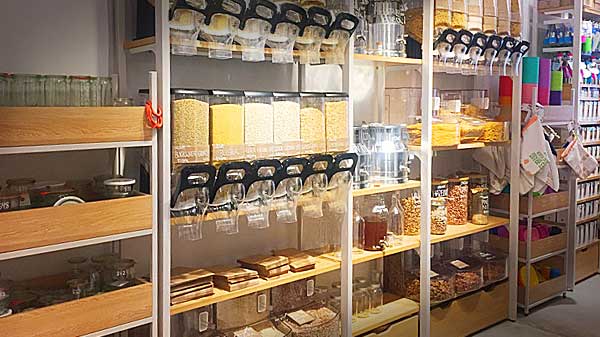
Live Zero in Sai Ying Pun is the city’s first packaging-free, zero-waste store

On the 1st of February 2018, a bright little shop on the quieter side of High Street opened its doors to the public. Little did passers-by know that it was a brave pioneer in the 852 scene, as the territory’s first, zero-waste, bulk-buy shop.

The goal? To begin a movement that changes the way people purchase their necessities, returning us to how we humans were prior to plastic. 

ReadSustainable Living: Five easy ways to live sustainably in Hong Kong

It’s not easy to go plastic-free in Hong Kong. Scant legislation on product packaging and waste management has prevented the development of a ‘mature waste market’ like that of nearby Japan. However, what with the emergence of Edgar in Tsim Sha Tsui, and now Live Zero in Sai Ying Pun, things are looking up. Maybe Hong Kong’s landfills won’t explode in 2020 after all, as experts have predicted. Or it can even be as simple as having clean waters to swim in and trash-free beaches to enjoy.

Millennial 25-year-old interior designer Tamsin Thornburrow is behind the small business, which stocks a range of products from foodstuffs to personal care items. The entrepreneur has spent the last year researching brands and suppliers to feature on Live Zero’s shelves. Customers can come in with their own empty containers and fill them up with what they need, purchase pretty recyclable ones, or use whatever others have donated and left free-for-the-taking on the table by the door. 

Read: 8 Hong Kong farms to check out for all your green needs

Thornburrow studied landscape architecture and previously worked for a furniture company and a homeware retailer. At 22, she launched Thorn and Burrow, a home decor shop specialising in textiles. It was there she noticed a significant appetite for reusable packaging, when sales for her stocked S’well stainless steel water bottles picked up. 

The young activist-entrepreneur then opened the first iteration of Live Zero in PMQ, Central. Then, after gleaning advice from similar setup Unpackaged in London, she decided to dive headfirst and lease the space on High Street for a full-on eco-friendly venture.

ReadSustainable Fashion Quiz: How eco-friendly is your wardrobe?

“[Zero waste] is about limiting yourself to what you need,” says Thornburrow, whose latest project has gotten a lot of attention and support from the community and media alike. “We’re made to feel we need [so much] stuff,” she says. But do we, really?

Live Zero Bulk Foods, 24 High Street Sai Ying Pun. hello@livezero.hk www.livezero.hk


Written by: Julienne C. Raboca

Le Pan: A review of Kowloon Bay’s ritziest restaurant

Taste-testing Le Pan’s seven-course ‘Hedonist’s Lunch’ 

Kowloon Bay has been undergoing a major revitalisation in the last couple of decades since the old airport relocated to Lantau in 1998, exactly 20 years ago. Nowadays, however, when one thinks Kowloon Bay, the following might come to mind: the Kai Tak Cruise Terminal, concerts at KITEC, the red monstrosity that is MegaBox (Hong Kong’s biggest ice skating rink!) and maybe the cinema at Telford Gardens. 

How about the most opulent brunch you could possibly find this side of the harbour? 

Kowloon East has finally gotten its own swanky Saturday bubbles ritual by way of Le Pan’s elaborate Hedonist’s Lunch featuring seven courses of contemporary French cuisine in a positively palatial property effused with natural sunlight. 

Admittedly, we were not prepared for the grandeur that greeted us upon arriving at Le Pan, in the middle of a heretofore unexplored industrial-looking area of Kowloon Bay. Located on the ground floor of a brand spanking new skyscraper, this expansive restaurant extends over 10,000 square feet – a far cry from the tight spaces of Hong Kong Island and Kowloon. 

One might feel a twinge of embarrassment, as we did, about not dressing up for such an impressive setting. But our nerves were quickly calmed upon meeting Herman Pang, Le Pan’s sincere and easygoing Assistant Manager. He even seemed genuinely curious about the hike we were planning to do after the lunch: the nearby “Suicide Cliff” on Kowloon Peak. 

After Pang introduced the menu to us, we were then familiarised with the drinks as presented by Lauri Vainio, Le Pan’s Finnish Wine Director and award-winning sommelier. That was the beginning of the day’s free-flow champagne: Jacques Picard “Le Chapitre” Brut NV. If you’re celebrating something as we were, there couldn’t be a more opportune moment for this indulgent menu. 

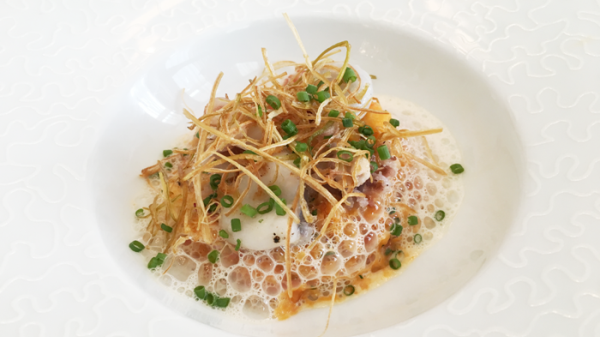
The meal started with a stomach-soothing chicken consommé followed by Royal Oscietra caviar in an oh-so-authentic tin; dig in and you’ll be rewarded with a satisfyingly salty Petuna ocean trout tartare. Crustacean lovers would love the fresh Fine de Claire oyster flown in from France, flavoured with the most subtle ginger vinaigrette. We got a taste of the sea, but it wasn’t overwhelming; texture was impeccable. 

The seafood continues with the Blue lobster ‘piperade’, a concoction of arroz bomba grains and calamari: equal parts crispy, foamy and chewy. For the main course, you can choose between a lightly spiced Hapuka fish and jumbo prawnsPicalou French yellow chicken and Hokkaido scallop; or USDA Prime onglet ‘Bordelaise’. We went with the first and last dishes.

The ocean grouper didn’t quite melt in the mouth, but the prawn made up for where the white Hapuka was lacking. We had no complaints about the steak, which came in rich and filling cuts of tender beef with duxelles pureé (mushrooms) and grelot (pearl) onions.

And last but not least, dessert: the Tropical ‘rum baba’. If you’re a chocolate person, this might not be your cup of tea, but after such a heavy meal you might appreciate the fruity zing and spongey cake. There’s also a weighty cheese selection for those who prefer savoury to sweet.

If one day you find yourself in the vicinity of Kowloon Bay and feel like treating yourself to a stately experience, there is only one place to go. Complimentary valet parking beckons to those with wheels coming from the New Territories and don’t want to get stuck in downtown traffic. For the more centrally located, however, you would have to exhaust the champagne brunches closer to home before heading further afield to this rare gem in Kowloon East. 

Le Pan’s Hedonist Lunch is available every Saturday, from noon until 3:30 p.m at HK$980 per head. Ground Floor, Goldin Financial Global Centre, 17 Kai Cheung Road, Kowloon Bay, Hong Kong. (852) 3188 2355. www.lepan.com.hk


Written by: Julienne C. Raboca

8 Hong Kong farms to check out for all your green needs

Are lunar new year resolutions even a thing? If so, and yours include “going green” this Year of the Dog, we’ve put together a few grassroots movements in Hong Kong that you can check out for a more wholesome 2018. From glamping to organic shopping, these farms will get you on the right track the fun, interactive (and delicious!) way.

GrowingSmart.HK – Permaculture-based programs, workshops and volunteer activities www.growingsmart.hk

Evergreens Republic – Order locally grown organic produce (harvested and delivered within 24 hours) from the largest and only USDA certified organic commercial Aquaponics farm to operate in Southeast Asia www.evergreensrepublic.com

Nature’s Harvest

Nature’s Harvest – a natural environment connecting visitors with their local and natural food system whilst escaping to a rural retreat in Clearwater Bay www.naturesharvest.com.hk www.veggies.hk

HK Farm – An organisation of Hong Kong farmers, artists and designers who grow local food, curate exhibitions and design products / services relating to urban agriculture www.hkfarm.org

Eat Fresh – An organic e-Greengrocery delivery where you can get packaged organic products like gluten-free brownies, baby & toddler fresh seasonal produce subscriptions or coconut body milk www.eatfresh.com.hk

Homegrown Foods – an e-grocery delivering premium, sustainable clean food to most anywhere in Hong Kong, 7 days a week www.homegrownfoods.com.hk

Go Green – An organic pineapple park and BBQ / camping / events venue in Yuen Long www.gogreenlife.com.hk

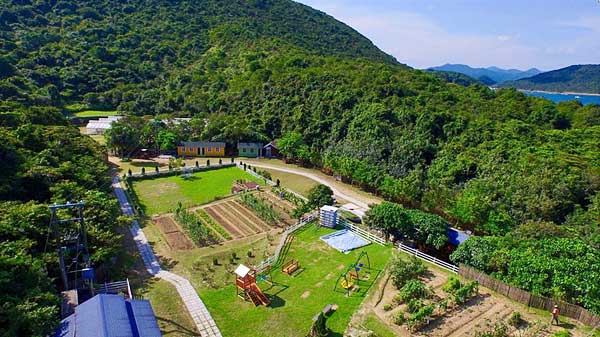
Sai Yuen Farm – One of several farm staycations have also sprung up. This one in Cheung Chau features glamping; you can check into Stargazing Geodesic domes, Transparent igloos set on a higher elevation offering breathtaking views of sea and sky. At night, the see-through ceilings yield unobstructed visions of twinkling stars from the comfort of your bed. At HK$3,300 a pop on weekends, prices are comparable to hotels in the city. www.saiyuenfarm.com


Words: Julienne C. Raboca