
Clarence: Reviewing the new modern French fine dining, because dinner is back on!

Chef Olivier Elzer has already made waves with L’Envol, his two-Michelin-starred establishment at The St Regis Hong Kong. Now, he embarks on a new culinary journey with Clarence, a more casual French-dining concept located on the 25th floor of Central’s H Code. While the former embraces the strictest tenets of fine dining, his latest outing – which is helmed by his protégé, Chef Simon So – offers innovative takes on French classics tempered by Asian techniques and traditions.

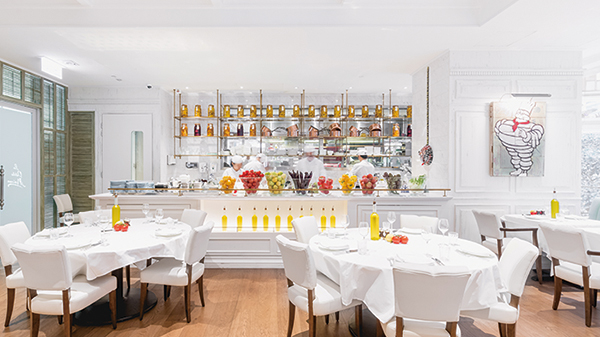
gafencu taste french fine dining Clerance interior


Also Read: Japanese-Italian on your mind? Read our review of Pazzi Isshokenmai

This amalgamation is no accident. “With Envol, I know my guests come to sample true French fine dining, so the scope I have to experiment is rather limited. So, with Clarence, I wanted to really explore and create my own culinary concept – one that’s been informed by my own experiences across the world, and particularly in Asia,” explains Elzer.

The award-winning chef, whose impressive 27-year CV includes tenuring with famed chef Joël Robuchon and a collection of 23 Michelin stars, has lived in the Far East for the past 13 years.

gafencu taste french fine dining Clerance chef olivier elzer

Hence, the Clarence menu is punctuated with a sashimi-inspired raw bar, as well as such techniques as teppan (iron plate) grilling, steaming and charcoal smoking. Perhaps the most inventive of the listings are ‘Yakifrenchy’ dishes that utilise the Japanese robata grill to cook and flavour traditional French fare like frog legs and escargot. Chef Elzer’s diverse vision also encompasses the layout of the restaurant, which comprises three disparate areas – the wine cellar, the casual dining room and the bar.


Also Read: Caviar etiquette done right

gafencu taste french fine dining Clerance 4

Eager to begin our own tasting, we start with a cold appetiser of Black Prawns / Tonka Bean / Lemon Peel. Beautifully plated on a bed of ice, the crustaceans are accentuated by tart sprinkles of lemon zest, while hints of vanilla emerge through the legume shavings. Creamy and crunchy in equal measure, this delicate portion serves as the perfect opening act.

gafencu taste french fine dining Clerance 3

Next, we sample an array of skewers from the Yakifrenchy section of the menu. Ratatouille / Pesto sees such vegetables as courgettes and bell peppers grilled then basted in a rich pesto cream. A second vegetable skewer of Eggplant / Escabeche has generous slices of aubergine marinated in assorted spices then topped with beautifully caramelised onions. Juicy and sweet, this is one dish whose diminutive proportions belie its filling nature. The next two en brochettes are reinterpretations of French standards and perhaps our favourites of the selection on hand – the umami-laden Burgundy Snails / Garlic Parsley and the super succulent Frog Legs / Pastis / Tomato.

gafencu taste french fine dining Clerance 2

Then, twin portions of Cooked Octopus / Uni Foam / Fresh Tomato / Lime hove into view. Constructed much like a savoury trifle, each layer of this dish reveals new ingredients and flavours. A sliver of tender cooked octopus rests atop a rich sea-urchin foam that heightens the dish’s oceanic accents. Underneath it all lies a bed of cubed tomatoes tossed in lime and more mollusc slices. The result is an ever-evolving creation where each mouthful yields different dynamics and nuances.

gafencu taste french fine dining Clerance 1

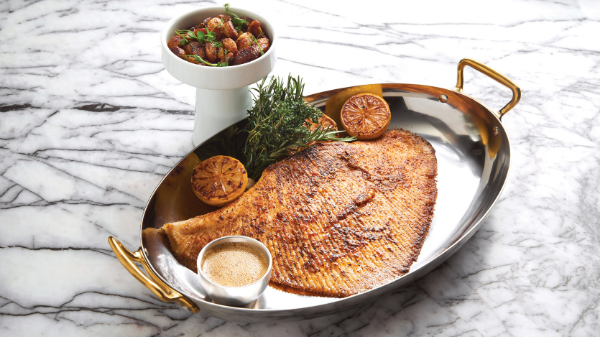
Rounding out our visit to Clarence is a main course of Skate Wing / Teppan / Brown Butter / Spices. “This was inspired by an old French classic where the fish is paired with a burnt butter sauce, but it often overwhelmed the palate, so it’s dwindled in popularity,” says Elzer. “My vision with this dish is to use the oft-overlooked French skate wing and then to soften the effect of the butter, while infusing it with an array of spices to temper and complement the inherent tastiness of the fish.”

Grilled over a teppan and coated with spices, the delicate flesh of the skate wing can be paired, in turn, with roasted lemon or the decadent brown-butter sauce. Displaying the creative chef’s East-meets-West inspirations to their most satisfying effect, it’s a fantastic course for sharing with loved ones and a great example of sea-to-table dining.

Clarence. 25/F, H Code, 45 Pottinger Street, Central. (852) 3568 1397. clerancehk.com

(Text: Tenzing Thoundup)

Also Read: Support your neighbourhood restaurants – popular takeaway menus right now
Home Couture: Upscale living in the heart of Hong Kong

Designing a home imbued with the spirit of originality takes not only passion for design and eye for detail, but also the confidence to imagine beyond the ordinary. Creativity melds and decodes different ideas in a way that inspires without the need for words. It can be discerned, for example, when the worlds of haute couture and interior architecture marry to give birth to a dream home in which with the details of every room reflect your thoughts, emotions and identity. A home that speaks your mind, whether in the subtle tones of a lampshade or the loud accents of the wall trim.

Tailored fittings meet designer furnishings in Hong Kong's most prestigious high rise 39 conduit road mid levels danny chiu
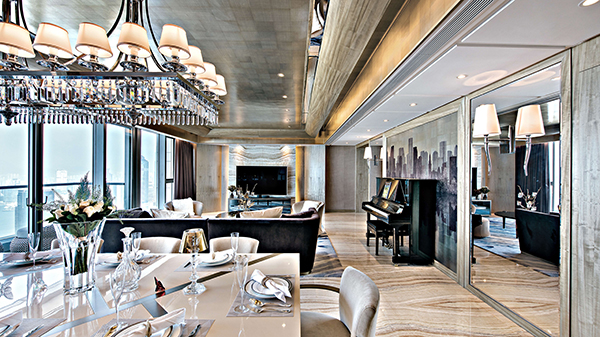
A splendid 2,476sq.ft apartment on the higher floors of 39 Conduit Road

If one might dare to dream, what would that dream home look like? Perhaps a visit to 39 Conduit Road in Mid-Levels West – conveniently located within minutes of Central – might provide the answer. The building itself fleetingly held the record for the most expensive apartment in the world, in which a flat could set you back anywhere upwards of HK$188 million. Here, nestled on the higher floors of one of the city’s most prestigious residential high rises is a residence that literally glows with sophistication as it encapsulates the stylish taste and lavish lifestyle of its owner.   

Tailored fittings meet designer furnishings in Hong Kong's most prestigious high rise 39 conduit road mid levels danny chiu (4)
Floor-to-ceiling windows for cityscape as far as the eye can see…

Filling 2,476sq.ft of space with ease and comfort, the recently renovated three-bedroom home embraces contemporary Italian furniture, crystal decoration and high-end smart technology – a winning combination made possible by the talents of Danny Chiu. Going above and beyond the usual, the award-winning interior designer approached this assignment from a singular perspective, imagining himself as a tailor crafting a one-of-a-kind evening gown.

Tailored fittings meet designer furnishings in Hong Kong's most prestigious high rise 39 conduit road mid levels danny chiu (2)
Luxurious granite floors for an enviable modern touch

But a home as beautiful as this does not come without its challenges. The project took Chiu almost two years to complete, from drawing inspiration from fashion magazines as he researched to designing the floor plan and creating mock ups, and from sourcing some of the rarest materials he has ever used to painstaking construction.

From the first step inside, the design flows seamlessly. Grey maple wood defines the walls and ceiling of the open layout in an ample living area. Cool beige tones impart a clean-lined, earthy feel of modern luxury enhanced by charming oriental touches and colour accents. Strokes of blue enliven the designer rug; Baccarat crystal flashes from multiple surfaces as it catches the light; and delicate champagned-hued gold leaf highlights the curvature of the ceiling and feature wall.

Tailored fittings meet designer furnishings in Hong Kong's most prestigious high rise 39 conduit road mid levels danny chiu (5)
Fine Italian furnishings to glam your meal time…

In this space of undoubted refinement, the granite floor takes precedence. The unique veins traversing the stone evoke a calming sense of movement, from foyer to sitting room to dining area, then leading the line of sight to the idyllic harbour view. This feat of inventive grounding saw Chiu travel to several places and collect countless samples in order to achieve the perfect fit and design for the home.

Dressed in Fendi and Vissionaire, the lush furnishings were also arranged with care and consideration. From the television and bar cabinets to the dining table and upholstery, all the fittings were handmade in Italy and customised in the correct colours and exacting designs to match the interior theme.

Tailored fittings meet designer furnishings in Hong Kong's most prestigious high rise 39 conduit road mid levels danny chiu (9)
Uninterrupted city views…

Behind a pair of sliding doors in the wall of windows on one side of the room is a quiet garden-themed oasis. The balcony provides an intimate, relaxing space in which to unwind with a glass of wine while surveying stunning vistas of Victoria Harbour and the city skyline.

Tailored fittings meet designer furnishings in Hong Kong's most prestigious high rise 39 conduit road mid levels danny chiu (7)
Re-imagined bedroom space was paramount to the airy layout

Moving from the elegance of the living area to the more private quarters, the main bedroom called for comprehensive restructuring and expansion. “In order to make best use of the space and balance the proportions of the room to serve the needs of the owner, the en-suite bathroom was enlarged, and the walls between the original master bedroom and cloakroom were torn down,” reveals Chiu.

Tailored fittings meet designer furnishings in Hong Kong's most prestigious high rise 39 conduit road mid levels danny chiu (10)
To start your morning routine in this sophistication!

The floors, walls and counters of the bathroom were completely redesigned with granite and Dornbracht fittings, while the bedroom was furbished to echo the opulent aesthetics of the living room. Aureate and metallic trims add a layer of depth here and provide contrast to the cool, airy tones that emanate from the abundant maple wood cladding and natural light spilling through dual-aspect windows. Breathtaking sea views stretch from the side of the bed to the back of the suite where the dressing room lies, shelved with a collection of Hermès accessories.

Tailored fittings meet designer furnishings in Hong Kong's most prestigious high rise 39 conduit road mid levels danny chiu (6)
Sunny mornings, guaranteed! 

But beyond the timeless beauty, resplendent décor and custom-made Italian furnishings, the apartment’s most impressive feature is surely the cutting-edge technology that elevates the day-to-day experience at home. Installing a smart living system has allowed the owner to possess full control of everyday electronics with ease and convenience. For example, switchable glass in the en-suite bathroom variously permits privacy when it is occupied, and affords more breathing room in the master chamber.

The consistent details that flow harmoniously from entryway to bedroom and everywhere else in between are somehow reminiscent of how one might trace the smooth ripples of satin on a glamorous gown: sumptuous to the touch and everlasting in impression – a true dream.

(Text: Roberliza Eugenio; Photos: Danny Chiu Interior Designs Ltd.)

Made for a Woman: Trusted tailors for a custom suit

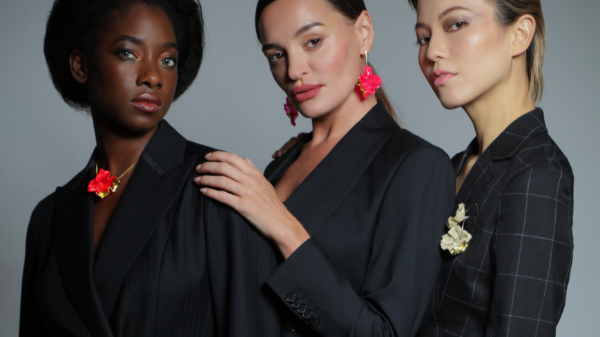
Women’s suits have made a comeback on the high-fashion catwalks for Spring-Summer 2022, which is good news for the corporate crowd and local tailors. Borrowing from men’s bespoke but swapping rigid masculinity for feminine versatility and flair, women’s made-to-measure clothing merges comfort and sophistication, and instills a sense of confidence that only a perfect fit can.

A Look Back

Hong Kong tailors are cutting through the seams of women in suits chanel ss22
(Photo courtesy of Chanel, SS22 runway)

The power suit rose to fashion prominence in the ’60s and ’70s as a symbol of women’s liberation, blurring outdated gender-appropriate dressing perceptions. Earlier breakthroughs included Chanel’s ’20s suit collection, Yves Saint Laurent’s 1966 Le Smoking tuxedo, and the attire choices of iconic figures such as Sarah Bernhardt and Katharine Hepburn.

Hong Kong tailors are cutting through the seams of women in suits (10)
Photo courtesy of Frey, designs by Frederieke van Doorn

Androgynous styling continued in recent decades, ushering an empowering reflection and sartorial expression of the self. Enter the modern-day women’s power suit, a no-holds-barred creation marked by the likes of tailored wrap-over jackets, padded shoulders, shawl lapels and decorative buttons; trouser suits in bright colours and form-fitting cuts; and edgier offerings like oversized blazers worn over miniskirts and evening tuxedos.

It’s time to put that unflattering ready-made suit back on the rack and step out in style in a custom-made ensemble from one of the city’s new generation of formidable tailors.

The Perfect Fit

Hong Kong tailors are cutting through the seams of women in suits
Sketches from Frey, designs by Frederieke van Doorn

Hong Kong has a long history in tailoring, although the trade has mostly been dedicated to men, with the exception of qipao and wedding gowns. The growing number of female executives and CEOs, though, has sprouted a surge in demand for women’s tailoring.

Hong Kong tailors are cutting through the seams of women in suits (5)
Photo courtesy of JSMP, design by Jasmin Pang

“There are so many women in Hong Kong who are expected to dress formally for work but have very limited choices available,” explains Frederieke van Doorn, founder of Frey. “After being in the industry of men’s tailoring, the differences in offerings between the two markets became clear, and it was time to create a brand that offered women the same level of luxury tailoring that men have.” Having tailored for the city’s influential women such as Veronica Lam, Esther Sham and former Miss Hong Kong’s Grace Chan, Frey has become well known for its exquisite craftsmanship, luxurious fabrics and a wide variety of designs, colours, patterns and styles that appeal to the dynamic lifestyle of the modern woman.

Hong Konag tailors are cutting through the seams of women in suits (3)
Photo courtesy of JSMP

Having had a similar realisation, Jasmin Pang started her own women’s tailoring business, JSMP, after working in the corporate world for more than a decade. She expresses her frustration in finding quality women’s formal wear that would fit different body shapes, sizes and styles. “Most [men’s tailors] are not familiar with the different cuts and styles that women prefer,” she says, “Some clients look for statement pieces that let them stand out from the crowd while others prefer a chic, timeless design that they can wear every day.” It was her sympathetic realisation for the needs of women in Hong Kong that led to her success in the business, crafting bespoke suits some of the city’s feminine elites likes Vanessa Cheung, Gigi Chao, and Veronica Li.

Tailored to Please

Hong Kong tailors are cutting through the seams of women in suits (9)
Photo courtesy of Hayman Chan, design by Hayman Chan

A bespoke piece goes beyond just style, however. It must fit a woman’s precise measurements and complement her unique silhouette while allowing her to be comfortable and confident in what she wears. This is where a skilled tailor steps in, tape measure and chalk in hand.

Third-generation scion of a veteran Hong Kong tailor, Hayman Chan brings more than half a century of experience to the founding of his eponymous brand, also bringing with him a loyal clientele of CEOs like Patrick Kwok, other prominent horse trainers like former champion jockey Tony Cruz. Boasting a large selection of the most sought-after fabrics for each season, and having complete control of the process from measurement to delivery, his atelier’s work is top-notch.
“The basics come through paper patterns and using tape measure and chalk, the traditional tools of the trade,” explains Chan. “At the end of the day, tailoring is all about being yourself and having the freedom to express that without being limited by gender.”

Assembled Ensemble

Hong Kong tailors are cutting through the seams of women in suits (6)
Photo courtesy of Hayman Chan, 2022 Women’s Collection

Let’s be frank. Women’s silhouettes can be tricky to work with, and it’s important for a female client to be seen, heard and understood when it comes to catering to their body shape, lifestyle needs and emotional relationship with clothing. It becomes the true test of a tailor’s skill.

Men tend to have a more uniform approach to suit tailoring, and their style preferences are typically consistent, while women are more nuanced as they lean towards artistic sartorial looks. And these may be limited by materials available in a trade that has traditionally catered to men.

Hong Kong tailors are cutting through the seams of women in suits (11)
Photo courtesy of Hayman Chan, 2022 Women’s Collection

Fortunately, the range of women’s fabrics, colours and construction of canvases has grown in response to the upsurge in female clientele. From sumptuous cotton sourced from Italian mills to fine silk from China and luxuriously soft cashmere and wool from Piacenza, women can now select from the world’s best natural materials as if they were queens – yet the price for such lavishness is affordable to non-royals. For instance, a made-to-measure jacket and trousers set by Frey starts from HK$5,460, while a statement wool jacket at JSMP will cost upwards of HK$6,000. Bespoke wear from Hayman Chan can total at HK$30,000 and above.

Yes, top-notch tailoring will have more digits on its price tag than buttons on a suit, but it is not outlandish. A custom-made wardrobe reflects the tailor’s knowledge, experience, expertise and quality of craftsmanship. They can deftly steer you in the right direction when your judgment is faulty and provide you peace of mind at each step. And the result is often an empowering one – something that you can take out of the wardrobe and wear with confidence for years to come.


Pulse of the Peak: Chronicling the ascent of Asia’s oldest furnicular

After almost a year of waiting, the sixth generation Peak Tram is set to launch by summer 2022 — trundling up and down the heavily forested slopes of Victoria Peak for 133 years, we look back at colourful history and the old world charm of this meticulously designed modern classic…gafencu the peak tram reopening

Trundling up and down the densely forested slopes of Victoria Peak for 133 years, the tramcar has long been the best way to see the sights from atop, to soak up the panoramic vistas and to absorb the boundless energy of a sleepless city that rises from sea level to Mid-Levels. For generations of families and millions of visitors, doing a weather check and then hopping on Asia’s oldest funicular railway to creak up to the Peak has been a holiday ritual.

the history of the peak tram hong kong gafencu

Humble Beginnings
Altitude is affluence in Hong Kong. By default, the higher you live, the wealthier you are. Mansions on the elite Victoria Peak make for some of the costliest real estate in the world. In the early years before the Peak Tram was constructed, just 30 or 40 well-heeled British families were in residence. From 1904 for nearly half a century, under a racially discriminatory ordinance passed by the colonial government, Chinese nationals were banned from living there unless they were domestic workers. Once that abhorrent European privilege changed in 1947, navigating the heavily forested slopes of the Peak was unequivocally possible because of the Peak Tram.

Pause for a moment and wonder how the people of the Peak functioned before the tram. With no speeding cars, mass transit system or fossil-fuelled vehicles, hauling up and down that staggering height for an arduous hour or more in sedan chairs, on horses, mules or on foot would undoubtedly have required beastly strength and, in the summer, buckets of sweat.

hong kong history of the peak tram victoria peak gafencu

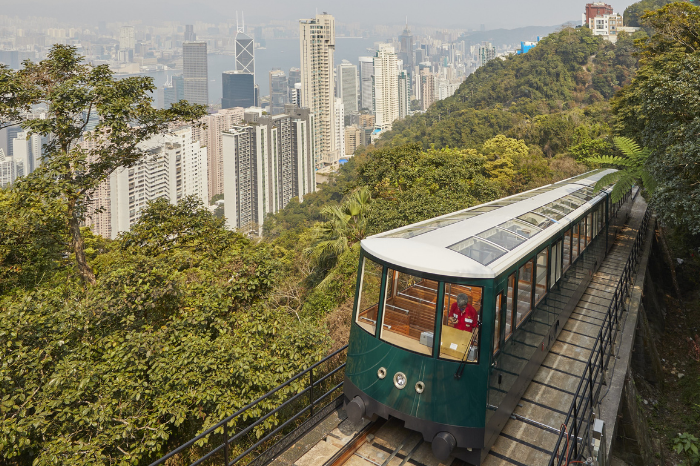
More of a tourist attraction than a commuter train in today’s world, the Peak Tram climbs the 1.4km from Central in eight to 10 minutes, ascending a dizzying height of almost 400m, and navigating a 27-degree gradient on the most thrilling stretch of its single-track route. It is not only the most efficient route to the top but also the most picturesque. The journey in a boxy, burgundy carriage to the city’s best vantage points is a visual and visceral feast, revealing spellbinding views.

hong kong the peak tram history reopening sixth generation hong kong

Most of the credit for the gravity-defying funicular goes to an enterprising Scot, Alexander Findlay Smith. A young entrepreneur with a background in railways, Smith arrived in Hong Kong in the 1860s and built the prestigious Peak Hotel atop the Victoria Peak in 1873. Fascinated by the potential of combining rails and wheels, he suggested the ambitious plan for a tramcar to increase trade for his hotel.
Approval for the construction of tracks across the mountainous terrain was granted in 1882, allowing the colossal work of laying track to begin. Machine parts often weighing up to 136kg each were carried uphill by brute manpower. Six years of blood, sweat and tears later, the first generation of the Peak Tram was ready for its inaugural ascent.

the peak tram gafencu

Crafted from varnished timber, the car had a seating capacity of 30 passengers; for many years the first two seats were reserved for the Governor of Hong Kong, whose summer house, Mountain Lodge, was then on the Peak. Some 800 passengers rode the tram on the first day, and 150,000 in the first year – to put this number into perspective, in 1888 that was the entire population of Hong Kong.

hong kong the peak tram gafencu

A Slice of History
A revolutionary feat of engineering for a genius mode of transport, the first Peak tramcars were powered by coal-fired steam. The original price for a first-class ride was 30 cents, with 20 cents for second-class seats and 10 cents for third class, and tickets for the return journey slashed by half. At the last count this year, a single ticket was HK$37, thousands of times higher than the early fare, but only the cost of a Starbucks latte for a vintage Hong Kong experience.

The nostalgic, colonial vibe of the tramway, with its characteristic wooden benches, hasn’t really changed in 133 years, nor indeed the necessity of queuing for hours at peak times to board a crammed carriage. But in tandem with the extraordinary vertical growth of the majestic city skyline, the technology and structure of the funicular itself has undergone a series of makeovers since it first set wheels on the hilly terrain. The power system switched to electric in 1926; the tramcars began their shift from wood to metal in 1948; and the colour of the carriages went from deep red to green and then back to burgundy. Since the fifth-generation Peak Tram (car capacity: 120) was rolled out in 1989, it has carried some 140 million people up and down for day trips, evening dinners and scenic strolls around the summit.

the peak tram debut hong kong gafencu

A Tramcar Called Nostalgia
A further, highly anticipated modernisation has been underway. The massive HK$700 million facelift during the last eight months will reveal a passenger-capacity uptick to 210 and a weekend waiting-time cut from 90 minutes to a mere 17 minutes. The upper and lower terminuses will be extensively renovated to accommodate the bigger cars, and the control and signalling systems completely overhauled.

hong kong the peak tram 6th generation 2022

An emblem of Hong Kong, the Peak Tram has withstood the ruins of the Second World War, survived epic hillside floods and braved the current pandemic. Before 2019, it recorded an annual ridership of six million – roughly 17,000 passengers a day – and even during the peak of Covid-19, patronage stood steady at one million. It’s one of the oldest forms of public transport and a slice of local history.
Owned by the Hong Kong and Shanghai Hotels since 1971, the tramway is a landmark in the same ilk as the group’s grand-dame property, The Peninsula Hong Kong. It takes a place of pride in Hongkongers’ hearts. Hundreds of people queued for hours to ride in those iconic burgundy carriages one last time before the service closed at the end of June.

In a futuristic megapolis, the humble carriages of the Peak Tram are a reminder of the contrasts that define Hong Kong – of old and new, gritty and glossy – and they serve as a social bridge between the rich and the poor. Yes, you can whoosh to the top of the Peak in your Ferrari, but is it as enriching as chugging up in an ancient time capsule, wind caressing the hair as you reminiscence about the first tram journey you took as a child? The 10-minute ride to the top brings awe and perspective, changing more than just how you travel.

(Text: Nikita Mishra)

LPM Restaurant & Bar: Fine, flavoursome, fuss-free French dining

Exquisite service, incredible food, attention to detail – a beautiful restaurant in the heart of Central whisked us off to the French Riviera without having to catch a plane. Located in the art-themed complex of H Queen’s on Stanley Street, LPM Restaurant and Bar is a modern brasserie awash in elegant whites, and one of the go-to places in the city for fine French-Mediterranean food minus the fuss or undue flourishes.

Casting off the gloom of a fifth Covid wave in Hong Kong, on a bright winter’s day, we arrive at the stylish, handsomely white-tableclothed restaurant for a lunchtime tasting. Entering through an open patio that seats 14, we are immediately struck by the expansive dining space (LPM accommodates 104 in total), modern architecture and relaxed, welcoming vibe. The interiors are a sunny delight, dotted with carefully curated contemporary artwork from the South of France and its environs.

Language of Love No longer a petite maison, LPM Restaurant and Bar shows its maturity in fine, flavoursome, fuss-free French dining

Modern French gastronomy may not be hot at the moment, but that doesn’t bother head chef Maurizio Pace. “Our food is timeless,” he says, “You really can’t eat a bad French meal, and we’ve designed a classic menu with a contemporary twist. It is labour-intensive, detail-oriented and the execution is flawless.” Armed with more than two decades of culinary experience across Italy, the United Kingdom and Hong Kong, Pace steers clear of trends to create new, bold flavours amidst an informality unfamiliar in most traditional French restaurants. Each mouthful here, is an unapologetic food adventure, one that is not easily forgotten or recreated elsewhere.
From a menu exhibiting a wide confluence of classics, the chef prepares four courses of earthy fare for this vegetarian. Once seated, the server comes forth with a plate of Italian tomatoes, lemon and olive oil to “make your own salad”. Ripe and bursting with flavour, it’s an entertaining start to escape the wait for entrées which are prepared in the open kitchen.

Also Read: The best restaurant takeaway options in Hong Kong

Language of Love No longer a petite maison, LPM Restaurant and Bar shows its maturity in fine, flavoursome, fuss-free French dining Endive Salad with Gorgonzola and Caramelised Walnuts
Endive Salad with Gorgonzola and Caramelised Walnuts


We begin with Endive Salad with Gorgonzola and Caramelised Walnuts. Bitter and twisted, endives are an acquired taste, but once you’re accustomed, there’s no looking back. Sliced and bathed in a tangy dressing of mustard, mayonnaise and olive oil, the chicory is topped with apple slices, a mound of cheese and crispy caramelised nuts.

Our taste buds thus shocked out of hibernation, we’re ready to dig deep into Black Truffle with Burrata. Fresh, milky burrata cheese flown straight from Italy is served with a drizzle of olive oil and a generous shaving of European black truffle. This delicious marriage of earthy, aromatic ingredients can be savoured all winter long.

Language of Love No longer a petite maison, LPM Restaurant and Bar shows its maturity in fine, flavoursome, fuss-free French diningHomemade Gnocchi with Cherry Tomatoes
Homemade Gnocchi with Cherry Tomatoes

Homemade Gnocchi with Cherry Tomatoes is a humble, comforting dish – flavourfully packed with herbs but not piled with cream, and most importantly not leaving a sinking feeling in the mouth like some pasta creations. It’s served with the right amount of piquancy, warmth and salt, and I can imagine children getting wild for it.

LPM offers an exhaustive wine list, as well as cocktails that are beyond impressive. Bar Manager Benjamin Boyce, stirs a complex, magical potion for Beauty and the Beast, a mildly sweet and invigorating mix of Ketel One vodka, St-Germain elderflower liqueur, strawberry, fennel cordial and yellow Chartreuse.

The heady cocktails are outdone by the calorie-dense dessert of Vanilla Cheesecake with Berry Compote. A faultlessly smooth, unassuming wedge comes with the promise of airy lightness, the thin crunchy base and the tartness of mixed berries prove to be exactly the sort of old-school sweetness I’d wage a fork-war over.
The undisputed simplicity and freshness of ingredients here, prepared with love and respect, make you crave for a leisurely Saint-Tropez holiday, and it’s this ability to captivate and transport diners that has built LPM such a solid local clientele.

Also Read: The best restaurant takeaway options in Hong Kong

LPM Restaurant and Bar. H Queen’s, 23-29 Stanley Street, Central. (852) 2887 1113. lpmrestaurants.com/hongkong

(Text: Nikita Mishra Pictures: LPM Restaurant and Bar)

Reclaiming Hong Kong: A history of the changing coastline

“Reclamation is unavoidable”, Hong Kong Chief Executive Carrie Lam told journalists on a land supply discussion in 2019. “In the long term, many developing cities have to adopt this choice.”

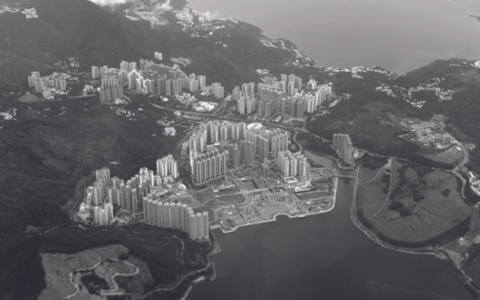
Like many places in Asia, Hong Kong has been defined by reclamation – edging further into the sea has turned 733km of jagged shoreline into a global metropolis housing 7.4 million people. About 6% of the city is built on reclaimed land, and while that sounds modest, it translates to 7,000 hectares of land, or half the size of Lantau island. Today, one in every three Hong Kong citizen lives on reclaimed land.

In land reclamation, everybody wins – the space-starved locals, the housing crunch – well, except the environment, marine life and the fishermen who depend on it. Land reclamation has completely transformed Hong Kong’s iconic coastline, with changes so drastic the older generation can now barely recognise the city from their youth. If that has piqued your interest, let’s time-travel back to the sleepy fishing village Hong Kong once was, but carry a life jacket – chances are that the land you’re standing on now didn’t exist back then…

Built to the Hilt

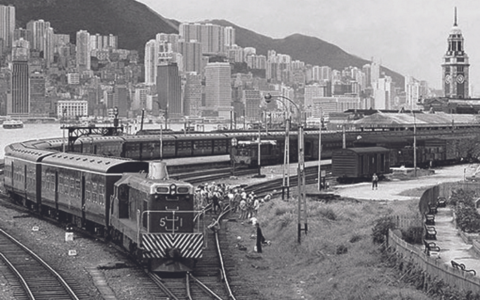
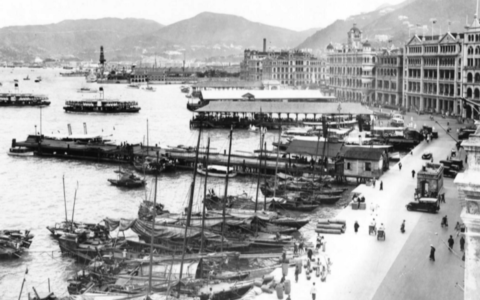
Almost as soon as the British arrived in 1841, they began to push the shoreline further into the sea until it reached current-day Des Voeux Road. Queen’s Road was the coastal edge leading towards Wan Chai, then known as Praya East. Hennessey Road was the land’s periphery. Gazing across the Victoria Harbour was a completely different experience – the chunk of sea was twice its size.

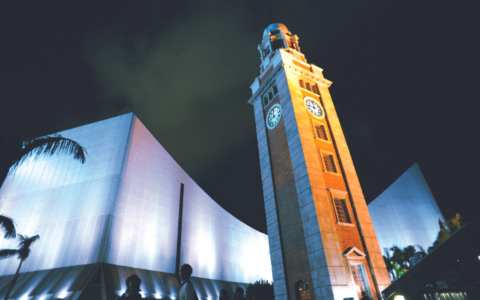
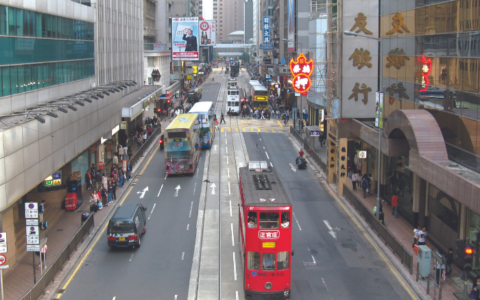
When the iconic ‘ding ding’ was built 118 years ago, it marked the coast of Hong Kong Island. Up until the 70s, the now bustling towns of Shatin, Tuen Mun, Ma On Shan and Tung Chung were peaceful, quiet hills. Tai Po and Tseung Kwan O were also yet to be carved from sea and swamp.

Also Read: Hong Kong iconic buildings designed by international designers

Made from Scratch

The first real attempt of land reclamation occurred in December 1851 after a massive fire wiped out the Sheung Wan district. Clearing the rubble would’ve costed the British government an enormous budget, instead they shifted debris into the sea, extending the shoreline by 50 feet. An ambitious project for the era, it finished in 1859 and resulted in Queen’s Road Central and Bonham Strand we know today.

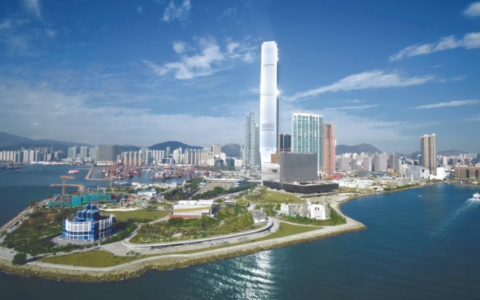
Over the next century, a series of rigorous reclamation projects made way for two airports, first at Kai Tak and then the 1998 world-class upgrade at Chek Lap Kok. Nearly 250 million cubic metres of raw materials were rummaged to fill up 1,248 hectares of land in less than three years. During the late ’90s, legislators also signed off on creating 340 hectares of reclaimed land to redesign the Kowloon waterfront, carving out space for big-ticket projects like the West Kowloon Cultural District and the Express Rail Link. Just as this was taking shape, there were proposals to fill in the whole of Kowloon Bay.

Money into the Sea

City of the Sea Hong Kong's Changing Coastline gafencu_central before and after
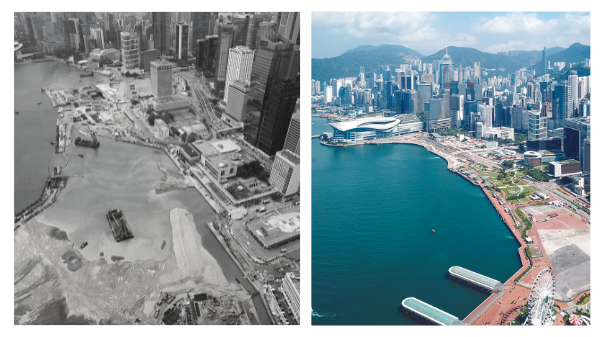
Victoria Harbour before and after

In Hong Kong, the ground under your feet is never quite as firm as it seems and with so much concrete being poured into the sea, a looming threat was that one day the entire Victoria Harbour might completely disappear. With the gap between Central and Tsim Sha Tsui less than a kilometre wide, and already resembling a river rather than a sea channel, activist Winston Chu and legislator Christine Loh teamed up to push through the Protection of the Harbour Ordinance in 1997. Upheld in the Court of Final Appeal in 2003, the legislation prohibited any further reclamation of Victoria Harbour “unless there is an overriding public need”.

Also Read: Vibrant City: Hong Kong’s growing art scene

“In Hong Kong, the ground under your feet is never quite as firm as it seems… a looming threat was that one day the entire Victoria Harbour might disappear”

City of the Sea Hong Kong's Changing Coastline gafencu_check lap kok zhunghai bridge china
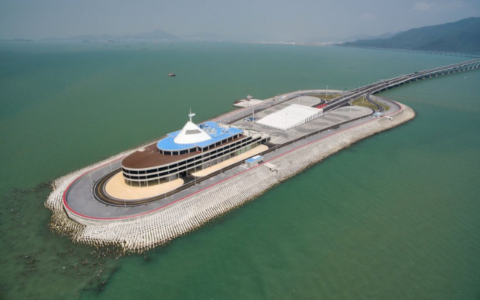
Hong Kong-Zhuhai-Macau bridge construction

In one of the most remarkable feats of modern engineering, the world’s longest sea crossing, the 55km Hong Kong-Zhuhai-Macau Bridge, was constructed to provide a critical link between the three key Chinese cities. Built with 400,000 tonnes of steel, it is the biggest international landmark of reclamation – spanning 22.9km over the sea and 6.7km underwater.

Opened to public in 2018, the bridge came at a cost, and not just its price tag of US$26 billion. No less than a million tonnes of concrete were dumped into the sea, which shook the habitat of the endangered pink dolphin. Disturbing images of dolphins washed up on shore emerged as their population fell by 60-percent.

Turning sea into viable land is a high-risk operation. Reports are widely circulating about Dubai’s manmade archipelago, Palm Jumeirah, sinking into the sea. Reclaimed land becomes a huge risk during an earthquake. Persistent shaking can initiate a process called soil liquefaction, where waterlogged sediment that was once solid begins to liquefy. The 1906 San Francisco earthquake is an alarming case in point.

Yet, the need for humans to encroach beyond their natural shores remains. The housing crisis in Hong Kong has deepened; it is estimated that over the next 30 years the city will need an additional 9,000 hectares of land to support its growing population. It’s a precarious balancing act, and no-one knows when and how this land grab will end. A few decades from now, will we be able to recognise the Hong Kong of our youth?

Also Read: Hong Kong’s star architect Betty Ng on shaking up the design world…

(Text: Nikita Mishra)


Gafencu wishes you a Happy Chinese New Year!

Gafencu chinese new year tiger 2022


Roar into the Year of the Tiger with health, wealth and prosperity. Gong Xi Fa Cai from the Gafencu family to yours… ?

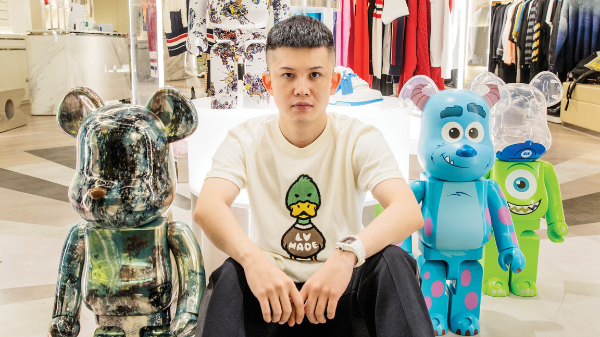
Selling the High Fashion Dream: Mike Ruan of S.T Boutique

Fashion entrepreneur Mike Ruan brings coveted brand names to a young, clued-in clientele at S.T Boutique. He chats with Gafencu about his upcoming China expansion, fast cars, cool watches and investing in karaoke…

Mike Ruan of S.T Boutique channels his passion for high fashion into a thriving resale business gafencu inteview (3)

What does fashion mean to you?
Honestly, if you ask any other person in the industry, they’d probably need a thousand, or even ten thousand words to describe this. For me, though, it’s simple – the process of an artist starting from scratch with just a piece of paper, and then, by sketching and creating fashion designs, capturing the public’s imagination and earning money. I know that’s quite a mercenary way of looking at it, but that’s my personal point of view. Of course, fashion is also about talent and understanding people’s needs, because without this you can’t be successful.

Did you always know you wanted to work in fashion or did you have other aspirations?
Actually, when I was a child in Wenzhou [in Zhejiang Province], I saw so many movies with cool cops that I really wanted to become a police officer. I remember every weekend I’d be begging my parents to take me to the toy shop so I could buy police badges, guns and the like to play at being a cop at home.

Of course, my dreams changed as I grew older. In 2008, I decided to enrol in high school in the UK, not just because of the high calibre of the education there, but also because I wanted to see and learn more about the world than my home town. I made the move to London all by myself, and my boarding school – DLD College London – was just a stone’s throw from Selfridges department store, so I quickly became introduced to the Western fashion. The first major brand that I fell in love with was Dior Homme. I was particularly enamoured with the personal style and vision of then-creative director Hedi Slimane – someone I still massively respect and believe stands at the pinnacle of the fashion business.

Keen to expand my horizons, I’d visit department stores every week to learn more about different styles and also to add to my personal wardrobe collection. Over time, I got to know other big brands like Gucci, Prada and Louis Vuitton, and I ended up falling in love with them too, which is what clued me in on my long-term passion for fashion.

Mike Ruan of S.T Boutique channels his passion for high fashion into a thriving resale business gafencu inteview (2)

Tell us about the path to starting your own business, S.T Boutique.
Since I’d realised exactly how much fashion meant to me, after six years of studying in London, I chose to continue my education in the beautiful Italian city of Florence. I did a Business of Fashion degree there, and to cut a long story short, once I graduated I decided to move to Hong Kong, where in 2017 I fulfilled my dream of starting my own fashion business – S.T Boutique. It’s a trendy, high-end fashion resale enterprise, and I have two stores in Hong Kong and another huge flagship store in my hometown Wenzhou.

What sets S.T Boutique apart from the rest of your competitors?
I think the major difference between our retail operation and others is that we are extremely sensitive and attentive to market shifts. We often buy clothes that attract a much younger crowd, and this, in turn, allows us to generate sales and turnover extremely quickly.

In the old days, the majority of haute couture and high-fashion purchasers were in their 40s. Today, that’s shifted down to people in their 20s, and being flexible and adaptive to the needs of this new segment is a major focus for S.T Boutique. This means that my team and I spend hours doing research on the latest collections, viewing catwalks from various brands on YouTube, looking for reactions on other digital platforms… Basically we do everything we can to make sure we have our finger on the pulse of the latest trends, so we not only stock the most coveted items for this season, but will also have the same sought-after cache for the following seasons.

Mike Ruan of S.T Boutique channels his passion for high fashion into a thriving resale business gafencu inteview (5)

Also Read: Timothy Yu’s Snapask reaches eight markets in Asia, aiding 4.5m students!

How has Covid-19 affected your business?
Honestly, like everyone else in the world, the pandemic has clearly had a negative impact on S.T Boutique. Our business relied on wealthy tourists, particularly from the mainland, and the global shutdown of travel has meant that we’re down 60-percent from where we were pre-Covid. Having said that, I always remind my team that it is during the times of greatest challenge that we need to put in that extra level of effort and enthusiasm. We need to believe that the blood, sweat and tears we invest now will yield big rewards once the pandemic passes.
Do you have plans to expand S.T Boutique this year?
We’re excited to launch two more locations in mainland China in the near future. The first store will be in Beijing – as the capital city that’s a no-brainer for our next outpost. The other will open in Chengdu, since I’ve always felt it’s such a vibrant place; in fact it’s one of my favourite cities in the world. The people there are so trendy and you can see the pleasure youngsters take in their trendy apparel on every street corner. It really is the fashion capital of western China, so S.T Boutique will fit right in.

Aside from S.T Boutique, do you have any other projects in the works?
Yes! A friend and I have just invested in a karaoke spot called Qian Gui along London’s Wardour Street [famous for its music scene], pretty much opposite the W Hotel. During my time as a student in the city, I loved to go to KTV with my pals, and I enjoy singing, so it felt like a natural investment for me.

Mike Ruan of S.T Boutique channels his passion for high fashion into a thriving resale business gafencu inteview (6)

How do you like to relax? Any hobbies?
I love playing ping pong or going for a round of golf to relax after work, and I’m always up for an occasional karaoke session as well. Since I love music, I also aim to hit the Lan Kwai Fong hotspots with my friends twice a month.

I’m an avid watch collector, too. I’m a major fan of Richard Mille since being introduced to the brand in 2017, and my favourite model is the all-white RM 055, because I love the colour white. I also love fast cars, and having lived in Italy for three years, I have a particular fondness for Lamborghinis. I own two, and my most treasured motor is the Lamborghini Urus, which I know is an unusual choice, but I much prefer SUVs to sports cars.
Which fashion brand has really kept up with the times over the last 10 years?
I would say Louis Vuitton. For many years, it was seen as being a super classic, formal brand. Yet, over the past decade, it has completely transformed into a maison with a much more global appeal. Part of the reason, I think, is that it made the brave decision to completely overhaul its business model to appeal to a much younger crowd, and that strategy yielded great rewards.

Mike Ruan of S.T Boutique channels his passion for high fashion into a thriving resale business gafencu inteview (4)

And what’s your favourite fashion trend of the past decade?
That would 100-percent be the pivot to less formal attire and streetwear. I absolutely loathe wearing suits and such, so this new embracing of streetwear as an expression of high fashion is, for me, the best trend to emerge in recent years.

Finally, tell us a secret about yourself.
Hmm… if it’s called a secret, I don’t think I should reveal it!

Thank you.

Also Read: Power Player: Stephan Pudwill on taking over the reigns of his family business

Interview by: Tenzing Thondup; Photographer: Jack Law; Art Direction & Styling: Jhoshwa Ledesma; Videographer: Andy Wan; Venue: S.T Boutique

Hong Kong’s star architect Betty Ng on shaking up the design world…

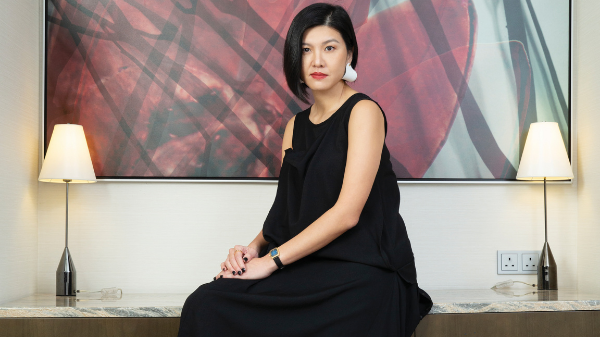
Founding her own design firm, COLLECTIVE, was a steep learning curve for youthful top architect Betty Ng. Now she aims even higher by teaching tomorrow’s talent…
You are one of Hong Kong’s leading architects, yet you’re only in your late 30s. How did your relationship with design begin?
Like many Asian kids, I was a strong science student and was studying to become a doctor, particularly a surgeon, but life had other plans. A schoolmate went to university to study architecture and that got me fascinated. I was hooked and thought it was a really interesting field and decided to switch my career choice.

You founded your own architecture studio, COLLECTIVE, with former colleagues from OMA and Herzog & de Meuron. Tell us about the work you’ve done in Hong Kong.
COLLECTIVE is headquartered in Hong Kong, but in the past six years we have done a diverse amount of work internationally – Honolulu, Helsinki, New York – and we are currently finishing assignments in Vancouver and Pasadena. In Hong Kong, our credits include designing the exhibition “Things, Spaces, Interactions” at M+ and all four Kapok lifestyle stores, among other projects. On a bigger scale, we are thrilled to be working with New World Development on their twin tower and commercial podium project in Cheung Sha Wan. As a young firm, these are phenomenal opportunities. COLLECTIVE was born only six years ago and we already have a MIPIM Asia ‘Best Futura Project’ Award [in 2021, for the King Lam Street commercial development] – that’s incredibly special!

How has your education shaped your career?
I was born and raised in Hong Kong, went to Diocesan Girls’ School, then to Cornell for my Bachelor’s in architecture, and later to Harvard for my Master’s. Furthering my education in the West was a completely eye-opening, explosive exposure. It instilled a lot of confidence and taught me about handling failure.

My work has taken me around the world – Rome, Madrid, Los Angeles, New York, Rotterdam, Hong Kong, Beijing – and that opened new avenues of self-exploration, courage and self-reliance. I want the same for our firm – take root in Hong Kong, then grow all over. COLLECTIVE has a presence in San Francisco and Madrid, and I want it to keep evolving, adapting and expanding.

Also Read: January Cover Star – Helena Pong on creating a wholesome learning environment for children

Challenging conventional structures of design, architect Betty Ng are shaking things up interview gafencu (3)

You’ve worked at cutting-edge global design firms and established your own company, which is already breaking the mould. Which accomplishment are you most proud of?
As a Design Director at OMA, I worked closely with the legendary architect Rem Koolhaas on various high-profile projects like the Axel Springer Campus in Berlin. Working on the concept masterplan for the West Kowloon Cultural District was also a big opportunity, but I don’t think I have reached the stage where I can say I have accomplished this or that. The word ‘accomplishment’ has a certain finality to it; it signifies the end, in my opinion. I don’t think I have accomplished much yet and I still have a very long way to go, but I do think our firm is on the right trajectory – our vision and mission plans will guide us to do a lot of good work, not just in Hong Kong but hopefully, all over the world.

What is it like being a woman on the top in a very male-dominated industry?
There is no denying that architecture is a male-dominated industry, but things are changing. In addition to leading my firm, I also teach at the Chinese University of Hong Kong and over half of my students are female. The lack of women in the industry is not indicative of their interest in the sector, but more on the limited female representation in top positions. I hope to change that narrative.

Personally, I don’t think too much about whether I am female or male – I am an architect. I focus on the designs I create. In return, fortunately, I am surrounded by people who see me for what I bring to the table rather than my gender. I hope to inspire the younger generation and remind them that in 2022, disrupting the state of play is certainly possible.

Tell us about the challenges you encountered while setting up COLLECTIVE.
There were a lot of hurdles, but grasping the business spectrum of running a firm was the biggest lesson. At one point, I even considered doing an MBA to understand organisational structure and skills, but a lot of my mentors suggested running a practice in the real world – managing exposure, making mistakes and learning from them is the best MBA you can do. In the last six years, I’ve failed several times, picked up and started again, learnt immensely and I’m very happy with the progress now; I’ve acquired a skill, not only in design but also in running a successful company.

Challenging conventional structures of design, architect Betty Ng are shaking things up interview gafencu (5)

What are your resolutions for 2022?
One thing which is dear to me is nurturing young talent. As well as teaching at the Chinese University of Hong Kong, I’m on the jury of the DFA Hong Kong Young Talent Design Awards, and it’s been a very rewarding experience.
Secondly, I want our company to have a more solid, robust foundation. Not to be arrogant, but in terms of design capability, my three business partners – Chi-Yan Chan, Juan Minguez and Katja Lam – have ensured we are right there, but in the coming year we want to develop our business efficiency.

What is the secret to a timeless design?
Every time I start creating something it’s always tabula rasa, starting from zero. There is no cookie-cutter approach; both as a firm and as individuals, we believe in balancing the clarity, function and aesthetic of a space. Every opportunity is a chance to do ground-breaking work, be experimental and move away from default. That is real timelessness – to keep changing, moving and inventing with time.

Challenging conventional structures of design, architect Betty Ng are shaking things up interview gafencu (4)

How important is sustainability to you personally in the design process?
This is a very tricky question because the most sustainable thing would be to not build anything. To me, sustainability is more than greenwashing – we’ve designed Penicillin, the world’s first completely sustainable bar, and we believe in cultural and heritage sustainability. We worked with a local neon sign maker to create new neon lights – the continuation of culture is sustainability as well. Reuse and recycle are important concepts. We’ve developed a special line of tables from fallen trees in typhoons, and it was redesigned to becomes a long-lasting product. The idea is to maintain your spaces – if your design is long lasting, then you are not going to be wasteful in reinventing and refurbishing.

Who inspires you?
Rem Koolhaas is perhaps one of the most important architects of the century, and it was incredibly enriching to be his Design Director. His buildings can be found all over the world, yet there is no easy way to define Koolhaas or his style. That unique ability to deal with hope and contradictions in an ever more complex world is what shaped me as an architect.

In the current day, it’s my partners at COLLECTIVE. We all have individual strengths and weaknesses, but together we are a force to be reckoned with. Never believe anyone when they say you can run your own firm! Architecture is not a one-man job – there’s never really just one person, one brain behind a knock-out design, it’s at least a hundred! I’m grateful to have stellar partners and a brilliant team.

Also Read: Hong Kong socialite Helen Ma talks about beauty, life and her latest venture

Interview By: Nikita Mishra; Photographer: Jack Law; Art Direction & Styling: Jhoshwa Ledesma; Hair and Make Up: Owen Ko

Timothy Yu’s Snapask reaches eight markets in Asia, aiding 4.5m students!

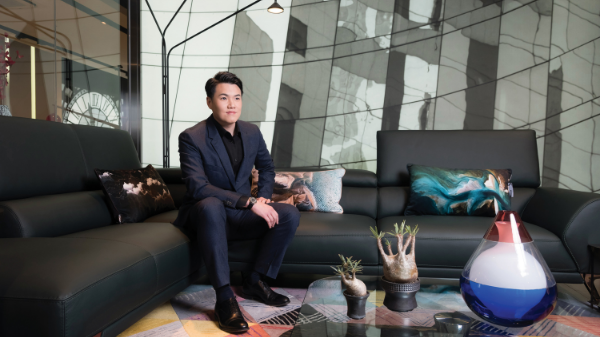
Tech trailblazer Timothy Yu matches students with questions to professionals who can answer them, without ever needing to meet face-to-face.

Did personal experience factor into the birth of your start-up, Snapask?
Yes, definitely. When I was in college, I used to spend a lot of my time tutoring students, so it was part of daily life to travel door-to-door between home tutoring sessions. Around the same time, I also began creating teaching videos and posting them on Facebook. I initially thought to ask people to pay to get this content, but quickly realised that there was no demand for such things. Then, in the comments section, I would often be asked specific questions, so I began charging to answer them instead. That’s pretty much what sparked the idea for Snapask. Funnily enough, it was my first company as well as my first job, and I started it when I was just a second-year student [at the University of Hong Kong].

timothy-yu-snapask-reaches-8-markets-asia-gafencu-hongkong-1

What exactly is Snapask?
The initial idea of Snapask was to connect students who need help with someone who is qualified, vetted and capable of answering questions that pop up during their day-to-day studies. It’s almost like Uber for tutoring. Students take a photo of their problem, and we automatically connect them digitally with a qualified tutor within 30 seconds, and they can then have a one-on-one discussion about it. It’s an app that supports students whenever they need an answer.

We started in Hong Kong in 2015, and we’ve accumulated about 4.5 million students on the platform. Today, we’re in nine different markets, including Japan, South Korea, Taiwan and other Southeast Asian countries. We didn’t want to give our clients the additional stress of trying to figure out if they can afford to ask that next question, so they pay a monthly fee, and it’s pretty much like a buffet where they can reach out to any number of tutors and have unlimited access to our educational video library.

The idea is to make our platform attractive not only to the students, but also to the parents who are footing the bill. It’s kind of like online shopping in a way, because once you experience the convenience and efficiency of this kind of home learning, especially when compared to travelling to a tutorial centre or calling a teacher to your home once or twice a week, then you realise it’s a better way to get what you need.

“It’s pretty much like a buffet where [students] can reach out to any number of tutors and have unlimited access to our educational video library”

How does Snapask supplement the traditional education system?
In fact, there are a lot of inefficiencies in the education system today, since even after students have spent an entire day at school, they need to follow it up with evenings at tutorial centres and such for additional exam preparation. Most of them may not have access to a private tutor, and they can’t wait around for a day to go back and ask the teacher. So, Snapask steps into that gap by always connecting them to someone who can help.

At the same time, we are also creating a lot of high-quality supplemental content on a wide range of topics. It’s similar to MasterClass [the US-based online education subscription platform]. We build bite-sized topic-specific videos. For example, if a student is struggling with trigonometry, they can take a look at that to gain a better grasp of the subject matter. We don’t just post videos of teachers with a whiteboard; we try to approach it in a more effective way.

Also Read: Stitching Sustainability with Innovation: Will Lam, MD, High Fashion International Group

timothy-yu-snapask-reaches-8-markets-asia-gafencu-hongkong-2

How do you vet your tutors?
Our teachers are all graduates from top universities – that’s a must. They first have to submit their university qualifications and transcripts, and we verify that their identities are authentic. At the end of the day, we are working with a lot of underage students, so their safety and security is the number one concern for us.

In addition, our tutors not only have a very high achievement profile, but backed by artificial intelligence machine learning they also understand how well they are serving our students via user ratings, platform ratings, as well as tutor-to-tutor ratings. This ensures only the good ones remain.

timothy-yu-snapask-reaches-8-markets-asia-gafencu-hongkong-3

What projects do you have lined up this year?
As we have a lot of virtual learning on our platform, our first priority is to enable personalisation in learning. Right now, we’re collecting a lot of data on how students are learning, and we are trying to apply AI technology to suggest personalised recommendations to ensure each individual learn in the most efficient fashion.

Then, we’re strongly pushing our development of proprietary teaching videos. In fact, I am personally creating some of the content as the teacher – specifically in mathematics – so I’ll be making roughly 180 online videos this year. There’s also a new partnership coming up with a local TV channel, and we’ll be launching our programmes on air through that platform as well.

timothy-yu-snapask-reaches-8-markets-asia-gafencu-hongkong-4

How has the pandemic affected your business?
When Covid hit Hong Kong in February 2020, we were about to close a round of fundraising, so many investors were calling in to see how we would deal with it. At the same time, it was announced that schools would be closed indefinitely, so we were in a major state of flux. Thankfully, we managed to handle the situation by being as transparent as possible, and reassuring investors that with the shutdown, home learning would become the only educational option, rather than an alternative as it had been in the past.

In the first couple of months, we did experience a dip as students went on ‘holiday’, but by summertime, some schools had reopened in Hong Kong and we saw traffic pick back up. Of course, in some of our markets Covid hadn’t yet had a major impact, so things pretty much were running as usual.

timothy-yu-snapask-reaches-8-markets-asia-gafencu-hongkong-5

What do you like to do during your downtime?
To be honest, between running Snapask and creating teaching videos, I don’t have much time left over. That said, right behind my desk in my office, there’s a small room which is almost like a greenhouse because I like to do gardening. In particular, I plant Pachypodium gracilius, which is a super exotic-looking root-like plant native to Madagascar. I personally find a lot of parallels between gardening and education, because some plants can take 10 years to mature, and likewise, learning can be a decades-long process.

“I find parallels between gardening and education, because some plants can take 10 years to mature, and likewise, learning can be a decades-long process”

If you were stuck on a desert island, what is the one thing you’d need to bring with you?
I’d definitely need to bring some paper or a notebook to jot down my thoughts. I believe ideas can spark at any moment, so it’s important to be able to write them down when it happens.

Finally, tell us something most people don’t know about you.
There was a time in college when I seriously considered becoming a chef. In my mind, I was torn between pursuing a culinary or majoring in mathematics. Ultimately, as an Asian child, there are always some expectations and I felt like mathematics was the more responsible option.

Thank you.


Also Read: Power Player: Stephan Pudwill on taking over the reigns of his family business

Interview: Tenzing Thondup Photos: Jack Law Art Direction: Jhoshwa Ledesma Videographer: Kes Lei Venue: Roche Bobois Showroom, Horizon Plaza