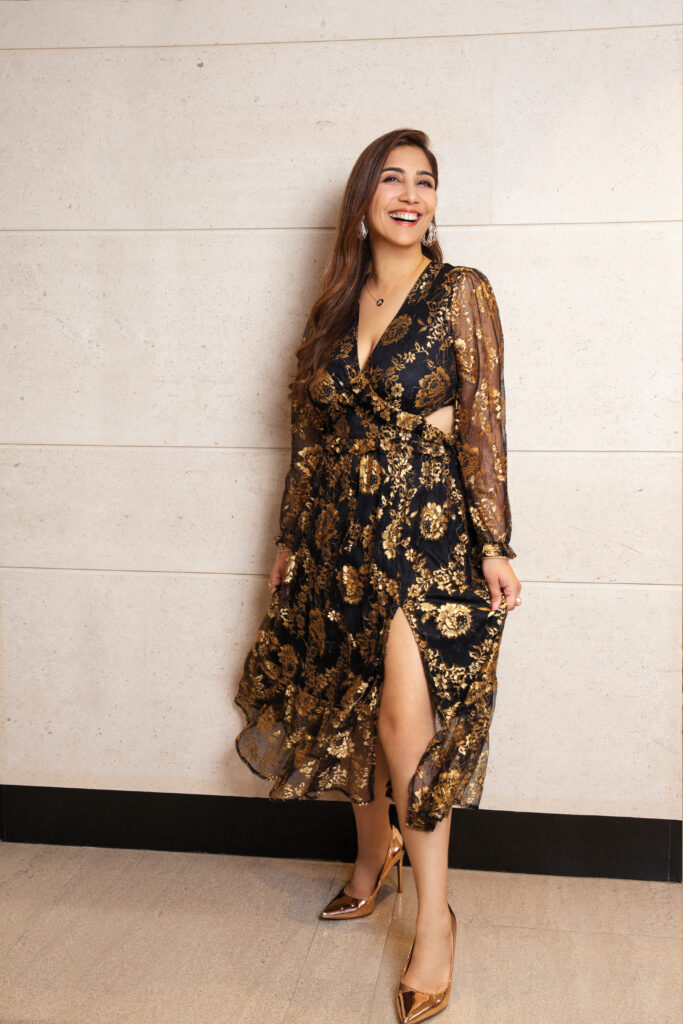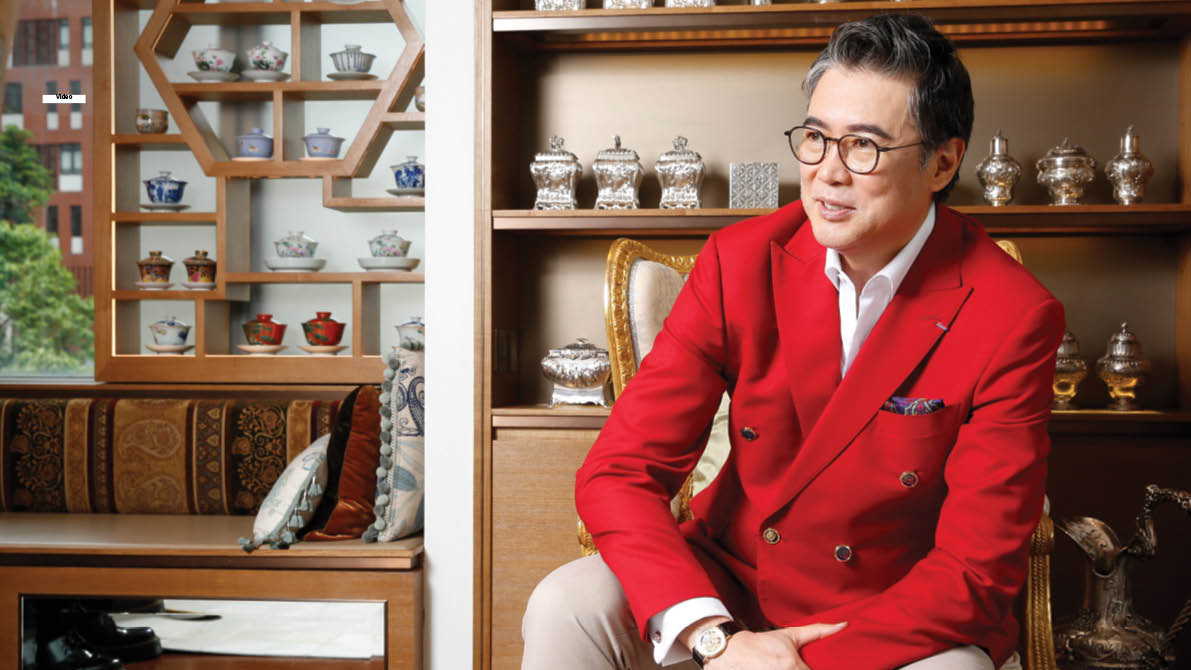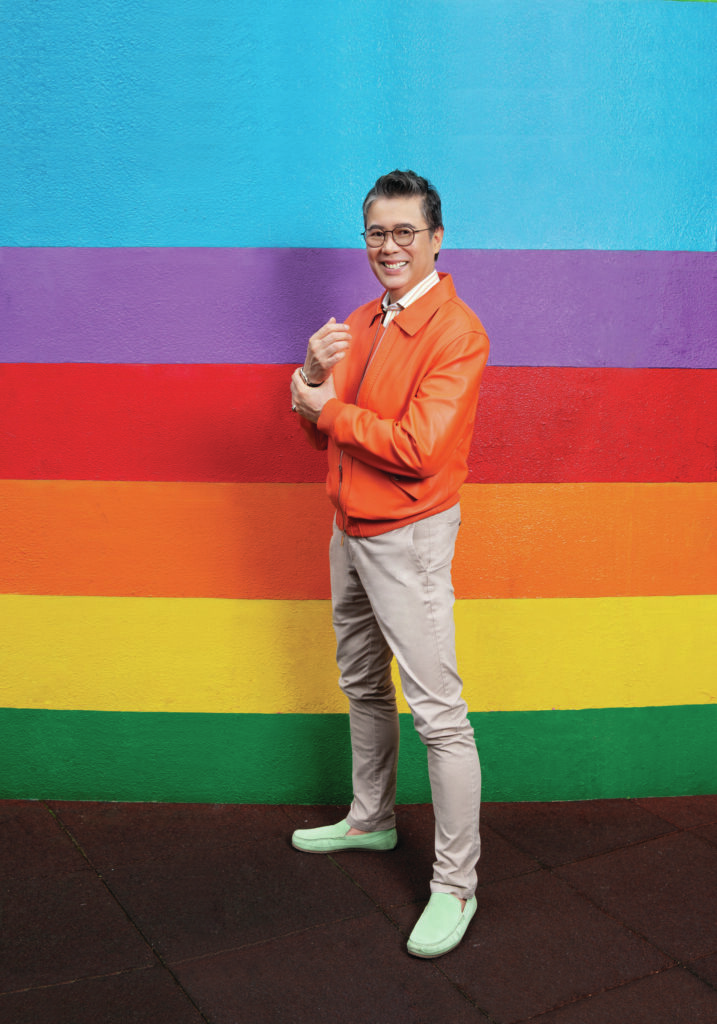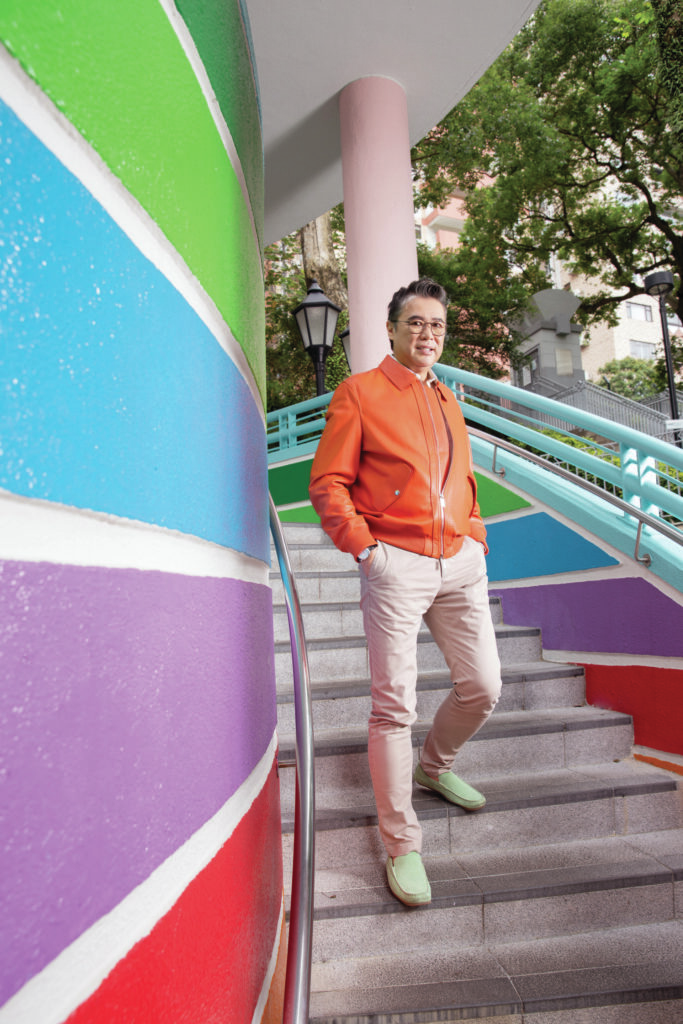

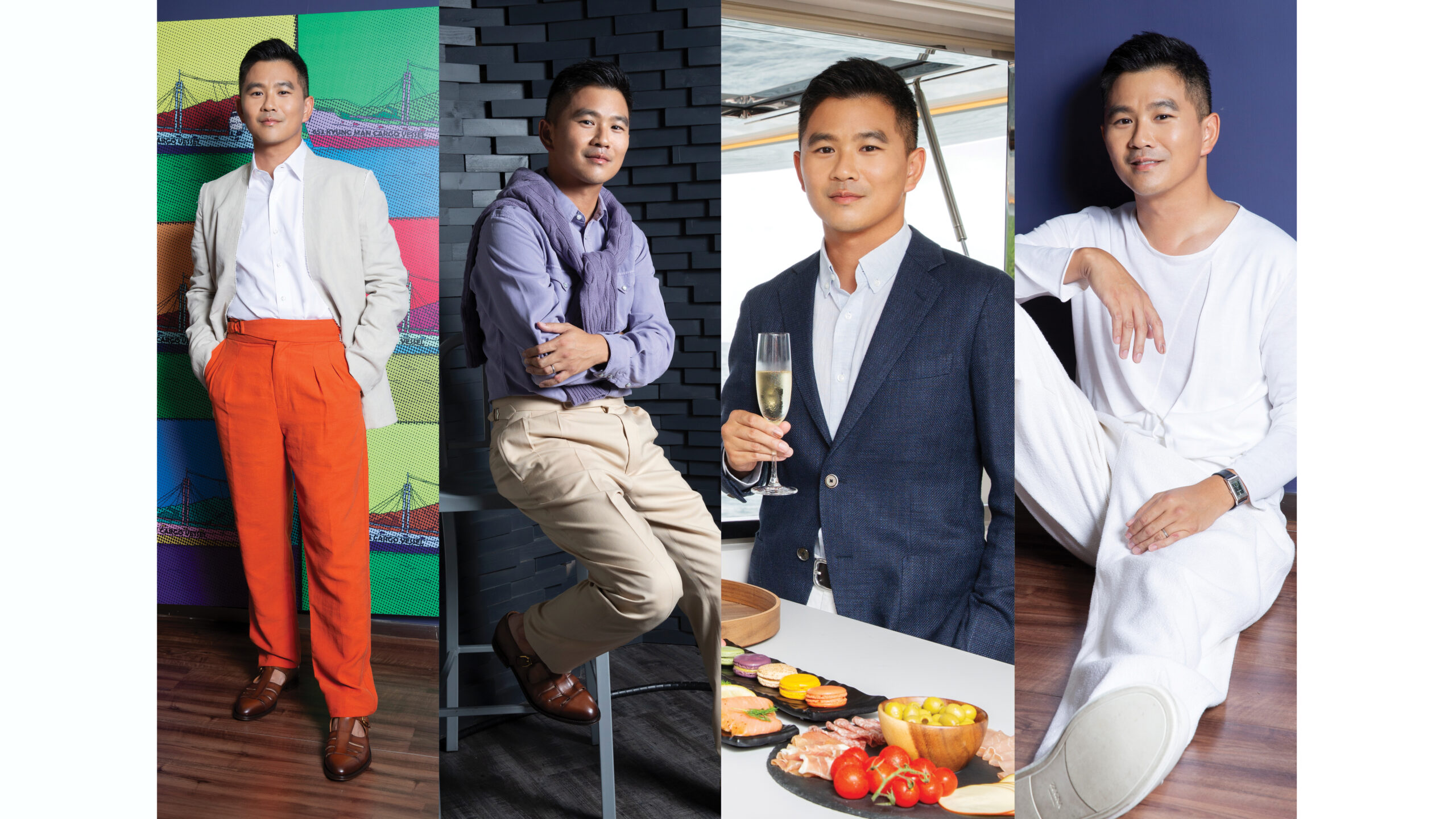
For Hans Lo, CL Yachts’ Deputy Director, innovation makes sailing through life worthwhile

The Lai Chi Kok docks in West Kowloon, sheltered by the protrusion of land that is Stonecutters Island, is not a popular destination for most locals. At the very end of a three-minute walk through a labyrinth of rebars, tower cranes, a manually built wooden bridge and all things industrial, sits a luxury yacht, visible enough through the help of orange and white flags. This is where Hans Lo has chosen to meet.

“Yachting is a luxury business, but behind its glamour lies a lot of hard and physical work. Come right in,” says the yacht builder as he welcomes our team aboard.

As a fifth-generation member of the Lo family, who began their craft in Shanghai in the late 19th century, then moved Cheoy Lee Shipyards to Hong Kong in 1936, Hans shares in the legacy of helming the oldest shipbuilders in Hong Kong. The Los were also among the forerunners of fibreglass yacht construction, collaborating with Lloyd’s Register to create regulations for GRP (glass-reinforced plastic) boat construction back in the 1960s, and building the then-largest fibreglass yacht, the 130-foot Shango II, in 1975.

Cheoy Lee relocated its shipbuilding facility from Penny’s Bay to Zhuhai, China in 1996, and today is one of the producers of commercial vessels, considered the best in the world.
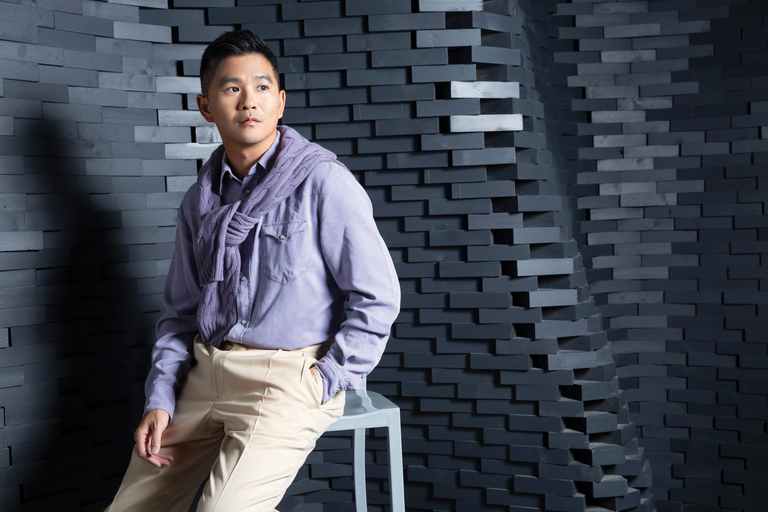
Sweater, shirt, trousers and shoes by Ralph Lauren

A Queen’s University Civil Engineering alumnus, Hong Kong-born, Canadian-educated Lo confesses to starting at the bottom in the family shipyard – laying up fibreglass and helping with vacuum infusion on a few projects before moving on to other aspects of yacht building. He quickly grasped the process of a build, and over time took on a broader role; he became Deputy Director of CL Yachts – the pleasure-craft arm of the parent company – in 2019.

Lo spent a large portion of his youth at the Cheoy Lee facility, returning during summer vacations after his family settled in Vancouver when he was seven years old. “Growing up, my family and I would go to bai san by boat, and as a kid, I thought that was just normal for everybody,” he says. “It was only later on that I realised the reason we were doing this is because our family builds ships. It’s very much a part of our life.”

True to his great-great-grandfather’s visionary roots, Lo is not standing still; he is thinking grand-scale for CL Yachts. “In 10 years, I hope we’ve established ourselves in Hong Kong and Australia – our biggest targets right now in terms of yacht sales,” he says.

His 10-year plan has already commenced. At their production facility, they are currently developing an innovative commercial project involving carbon fibre and hybrid technology for a more sustainable approach to the yacht industry – a move towards a greener carbon footprint.

Stance and Ballast

Now 40, the millennial engineer has grey hairs perfectly sprinkled through both sides of his crew cut; and he embraces them, saying: “Age is just a number and we should be proud of it. As we age, we collect learnings and these make us a better version of ourselves. I’d like to believe that I am in my prime working potential.”

As we head out to sea for the photo shoot, he proudly shows us around their flagship yacht CLB65, hailing its development as CL Yachts’ most significant career accomplishment to date. A striking departure from traditional motor yachts, the 19.7-metre craft has received prizes internationally for its creativity, adaptability and versatility. “What makes this project more special is that the interior design was conceptualised by my wife,” he notes.
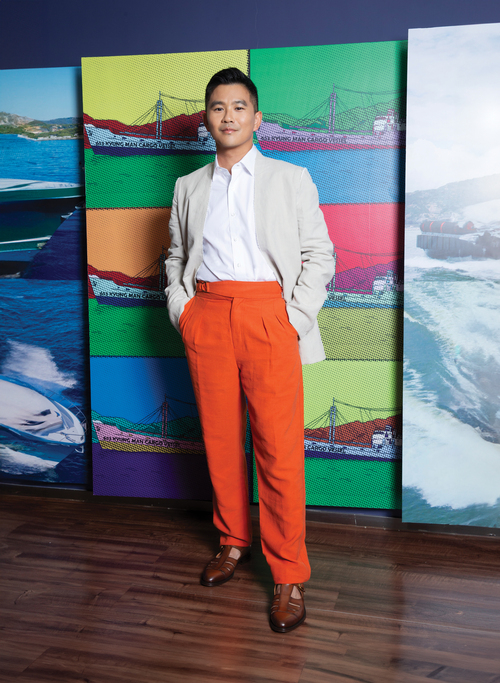
Jakcet by Zegna Trousers by Nanushka, courtesy of The Outnet Shoes by Ralph Lauren

The balancing of work and family time has always been smooth sailing for Lo, who uses the fact that he is part of a family business to his advantage. For him, family and work can be the same thing. However, he is changing things up a little to be a better dad and husband than the generation before him. Showing us a recent photo of himself, his wife and their two-year-old, he shares that his father was like an astronaut during his formative years.

“Being a father was tough in my dad’s generation. He needed to travel back and forth to Canada, and it made seeing us difficult. I want to be around for my son as much as I can. Being present is important in a young’s child life,” he reiterates.

Wave Encounters

Just as we are talking about alternative plans in life, Lo interrupts himself mid-sentence to rush to his yacht engineer, who has accidentally slipped down the stairs. As we make haste back to land, he says that every member of his team plays a crucial role in making the yacht-building business work. And so, to plan B we go – a two-hour photoshoot at the headquarters of CL Yachts where he discusses the nature of pleasure-boating in between outfit changes; with a laugh, he describes one ensemble as a boyband look.

Luxury yachting is, by definition, extreme and extravagant; some would say over the top. However, as he points out, there is a whole industry that supports the yachting sector and employs hundreds of thousands of hardworking people worldwide. “For us, there’s luxury in practicality. When you’re aboard our boats, you’ll find easy access to everything you want to do. Our boats are true sea-going vessels,” he explains.
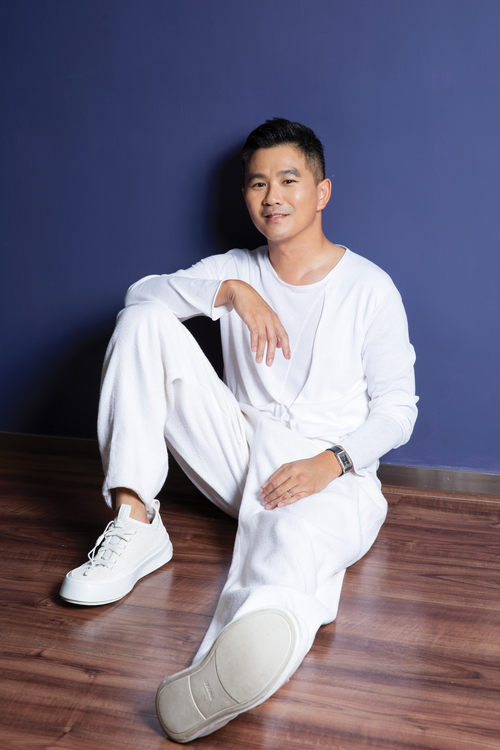
Knitwear, trousers and shoes by Zegna

Surprisingly perhaps, and ironically, the peak of Covid brought a surge in sales. With people unable to travel and go places, many chose to invest in a yacht instead and discovered the joys of boating.

“[The pandemic] was a huge obstacle that we all had to overcome. But that’s just life. There are always going to be hurdles in our way, and we are always going have to pick ourselves up, go with the flow and with the waves,” he says, with a gleeful wink as he utters the last word.

After the indoor shoot, Lo and the entire crew jump back onto the yacht to continue with the original plan. After a few shots on deck, he entertains a phone call – a glance at what his everyday life looks like, call after call, meeting after meeting. But he emphasises the importance of taking a break, once in a while.
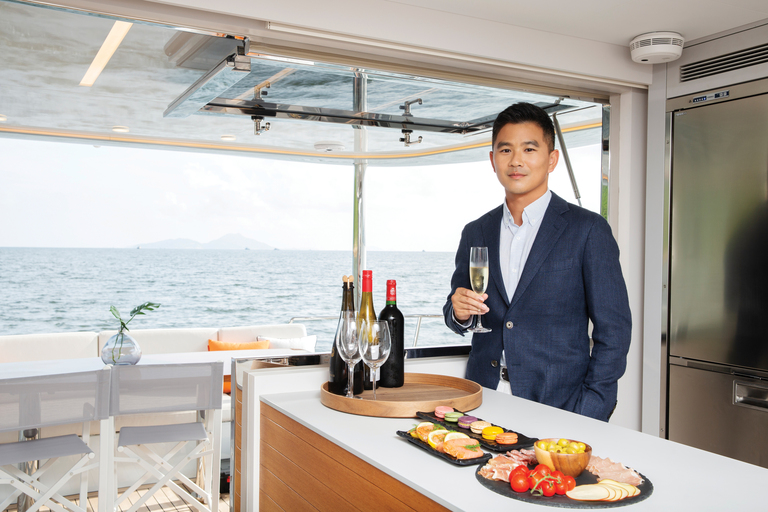
“We picked a good day to do the shoot and interview, didn’t we?” he proclaims, as the light of the 5 pm sun glints off his sunglasses. “We’re always due to pause and take a step back so that we can gain a new perspective on things going on in our lives. Working hard, earning money and investing in your future – these are for survival. Enjoying the finer things in life is for living.”

While Lo has work-family balance down pat, he is still juggling the pleasure of living in the moment and the necessity of planning for the future. Yet, deep in his soul, he believes life should be enjoyed as much as humanly possible. Armed with the knowledge that comes with experience, a strong family support group and another magazine cover for his beloved flagship, he is content to ride the tide to see which way the waves take him.

Interview & Art Direction: Joseff Musa Photographer: Jack Law Fashion Stylist: Jhoshwa Ledesma Videographer: Jack Fontanilla Hair & Makeup: Cyrus Tang Venue: Cheoy Lee Shipyards Boat: CLB65 Cover: Jacket and Pasnts by IRO, courtesy of The Outnet and shoes by Zegna Brands: Ralph Lauren, IRO, courtesy of The Outnet and Nanushka, courtesy of The Outnet

Prime Numbers: In Hong Kong, a personalised car registration puts you on the fast track to prestige

Acquiring the greatest of the best is a matter of sheer luxury for some collectors. So, to take it to the next level, why not go for a noteworthy number plate if you already have a fantastic collection of vintage cars or stable of elite speed machines? To most of us, a vehicle licence plate is a simple stamped piece of metal with an identification number. But to the connoisseur, it is a gateway to prestige and swagger.

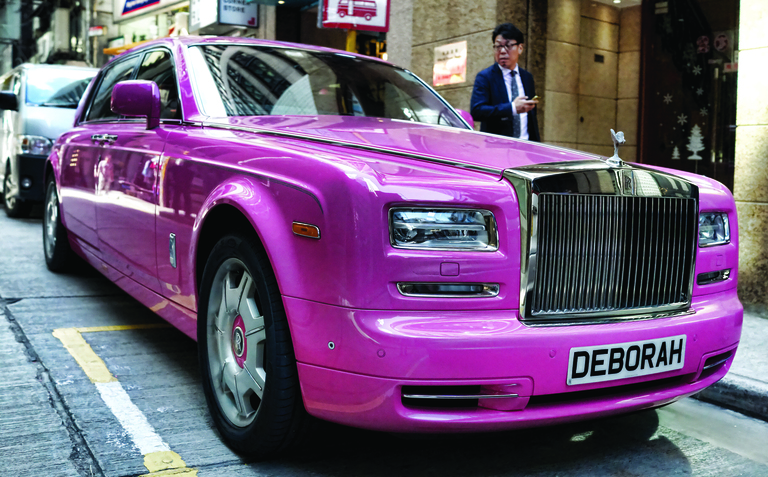
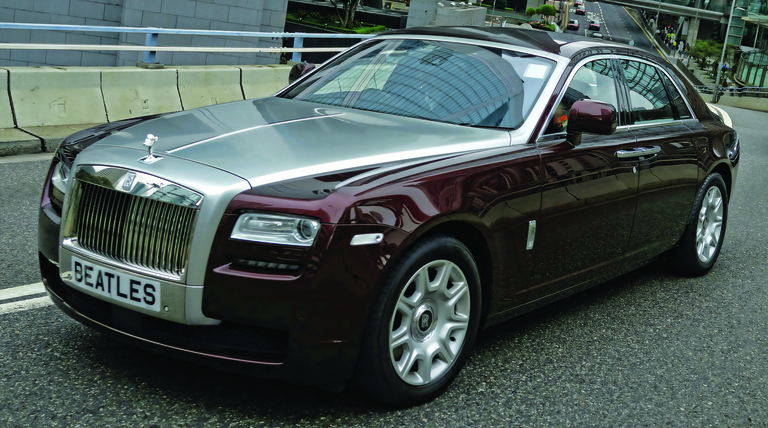
In Hong Kong, you don’t have to be a big spender to score a PVRM (personalised vehicle registration mark). At a government auction held at the beginning of the year, HK$11,000 (US$1,400) was paid for the EL0NMUSK plate. Other attention-grabbing car licence plates included BAD G1RL, LATTE and SHADYB1Z. The registration mark 1 HH scored the highest bid, earning HK$115,000 (US$14,700) for the Transport Department.

It is at the next gear of the game when prices start to accelerate and it is a hot market. Millions of dollars have been paid by Hong Kong residents for a single desired plate. The number 18 sold for HK$16.5 million (US$ 2.1 million) in 2008, and 28 fetched $18.1 million (US$ 2.3 million) in 2016.

That sounds like a wildly exorbitant amount of money (and it is) for a small metal plate, but there’s no mystery why those big bucks changed hands. In Cantonese, ‘28’ sounds similar to the words for ‘easy’ and ‘to prosper’, so the number is thought to bring good fortune to its owner.

A plate with just the letter R – considered to have positive connotations in Chinese fortunetelling – was sold this year for HK$25.5 million (US$3.2 million). This is just shy of the record price for a PVRM, which was achieved in 2021 when a bidder paid HK$26 million (US$3.3 million) for a plate with the sole letter W.

Top Down’s Top-Up

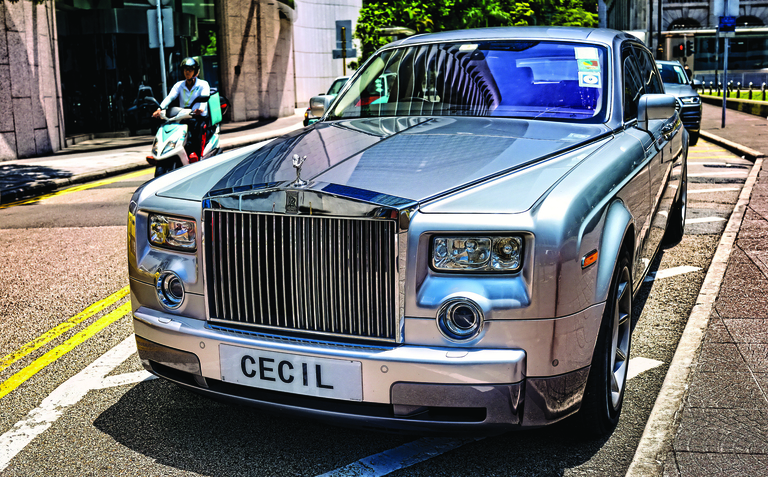
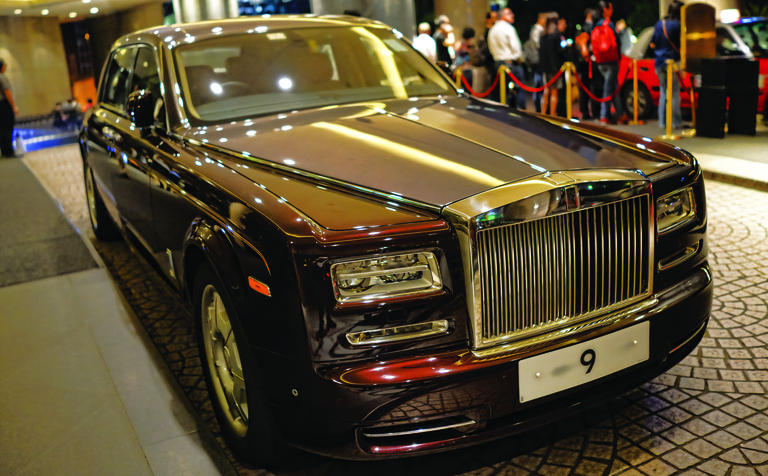
For some, a rare licence plate is a declaration of stature. A single-digit plate can say more about social standing than a garage full of expensive cars. Vanity licence plates also have sentimental value for owners. Property tycoon Cecil Chao bought his CEC1L plate for a comparatively low price of about HK$20,000 (US$2,550) in 2007. It currently adorns his burgundy and silver Rolls-Royce.

Additionally, Chao owns a Bentley with the letters CHAO inscribed front and back and a convertible Rolls-Royce bearing the number 4. Four is an unfortunate number in Cantonese and Mandarin because it sounds like the word for ‘death’, but not for the Shanghai-born magnate. He notes: “In Shanghainese, number four (sounds like) ‘happiness’ ¬– this is my philosophy of life.”

Registration Rush

The Hong Kong Transport Department has auctioned off more than 40,000 PVRMs since 2006, with starting bids of HK$5,000 (US$640). Interested parties must first find out if the department’s which can have a maximum of eight characters (including spaces). After the registration mark is approved, it is put up for auction.

Every January, May and September since the PVRM scheme was introduced in 2006, auctions have been held for personalised marks and more conventional licence-plate numbers to be sold to the highest bidders. From there, it became a phenomenon of its own. Are we a trailblazer in this aspect? Definitely. Is the rest of the world laughing at us? Maybe.

Need for Deed

Local celebrities and businesspeople want to add a PVRM to their vehicles to make them more unique. Since the scheme’s inception more than 15 years ago, a large number of licence-plate combinations have been sold at auction for prices that are nothing short of astounding. Whether or not the superstitious owners of lucky registration marks requirements are met by their proposed plate. The letters I, O and Q are prohibited from being included in licence plates, will actually experience good fortune is unknown, but the Hong Kong charities that benefit from these sales are undoubtedly better off. Funds raised through the auction of vehicle registration marks after the deduction of operation expenses go to the Lotteries Fund, a government body that finances social welfare projects and services through grants, loans and advances.
So why is this an instant phenomenon? It’s quite likely to be a guilt thing. As one of the billionaire cities of the world, Hong Kong has no shortage of ultra-rich individuals. According to a marketing study titled ‘Licensing Effect in Consumer Choice’, people who behave or feel altruistically are more likely to go on to purchase luxury products because of subconscious moral self-licensing ¬– giving to others makes people feel less guilty about getting something for themselves. It becomes easier to justify the purchase of a luxury item after a charitable act.

Feeling Lucky

But there’s also cultural reasoning behind the acquisition of personalised plates. Though Hong Kong is considered to be one of the first pioneering modern cities, it has long clung to many of the traditions and superstitions of its cultural heritage. Performing ‘lucky’ actions gives people a sense of control. Religion, science and superstition can help us feel less anxious and more comfortable in a world that seems increasing out of control. Hong Kong is not a particularly religious place, so to feel better, there’s a need to rely on either science or superstition.

The city’s superstitious beliefs are unlikely to disappear anytime soon. Superstitions may be updated over time when people know better how certain things work, but there is no anticipation that these beliefs will go away completely. Since people can never have full control over their life, swearing by the use of lucky numbers, phrases and customs is here to stay. Hence, if and when desirable licence plates like multiple 8s come up for auction, records will be smashed.

And of course, there’s always the cool factor as a motivation for splashing out – where you get to flaunt your unique number plate around the city. Given the slow pace of progress through heavy traffic, especially during rush hour, plenty of people will have time to admire it.

Global Britain: In this coronation year, Britain still retains an overseas realm that spans the globe

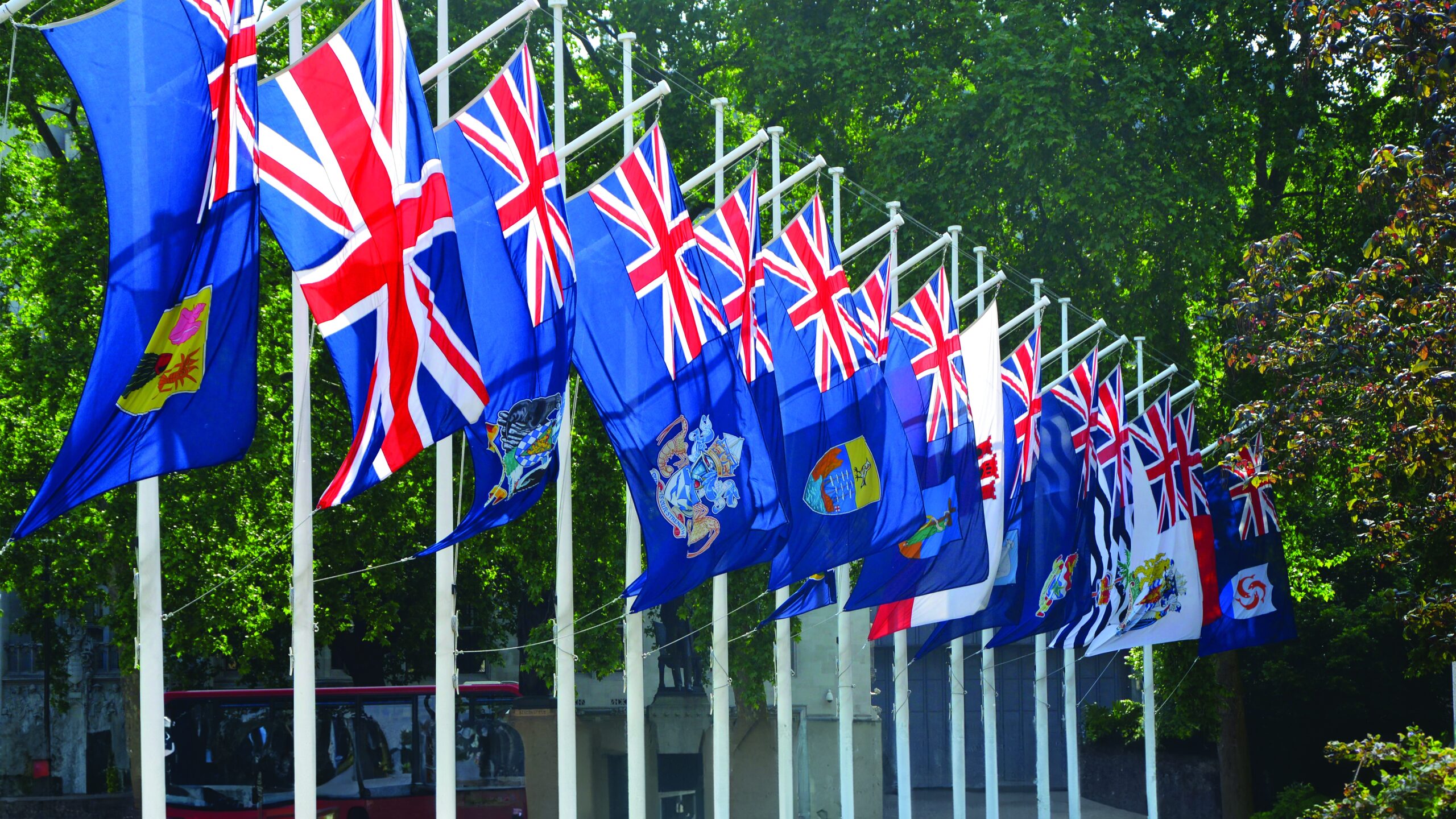
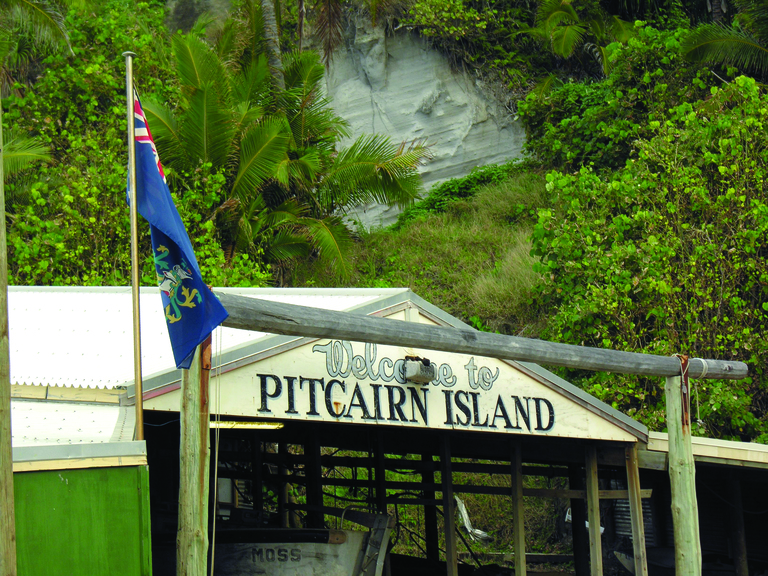
For many, the passing of Hong Kong to Chinese rule in 1997 marked the definitive end of the British Empire upon which the sun never set. However, in this Coronation Year, there remain 14 remnants of an empire which at its height a century ago was the foremost global power. These small islands and areas have been known since 2002 as the British Overseas Territories (BOTs), and while they are not part of the United Kingdom, they have constitutional and historical links with Britain and form one realm under King Charles III, along with the UK and its Crown Dependencies (Jersey, Guernsey, and the Isle of Man). 

The tiny territories are spread around the globe with a total population of about 260,000. Though small in both size and population, some play a huge role in the global economy or have geopolitical or military significance far beyond their geographic area. The 14 comprise Anguilla; Bermuda; British Antarctic Territory; British Indian Ocean Territory; British Virgin Islands; Cayman Islands; Falkland Islands; Gibraltar; Montserrat; Pitcairn, Henderson, Ducie and Oeno Islands; Saint Helena, Ascension and Tristan da Cunha; South Georgia and the South Sandwich Islands; Turks and Caicos Islands; and UK Sovereign Base Areas. 

Sovereignty Secured 

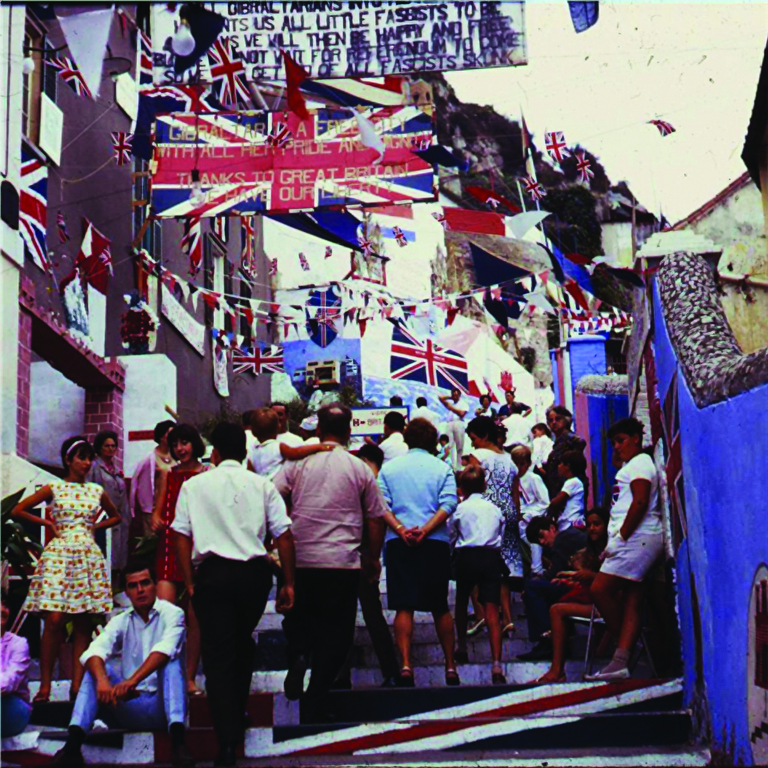
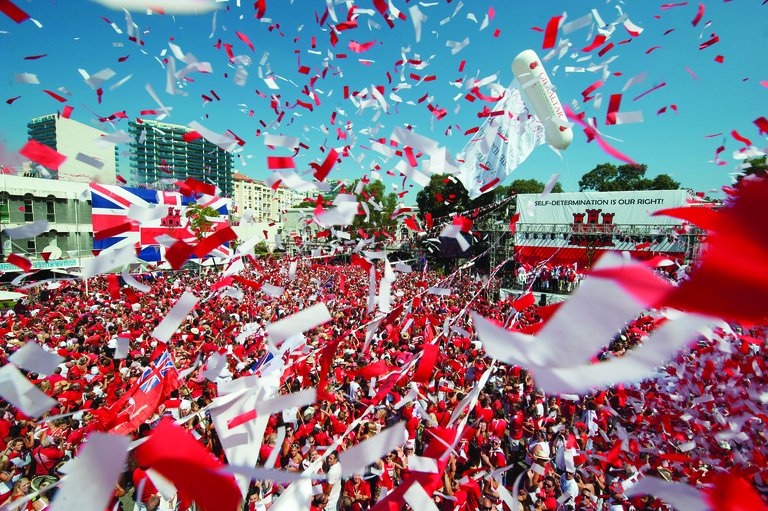
Since giving Brunei independence in 1984 and signing the agreement to hand over Hong Kong in the same year, Britain has not conceded any further territory overseas. Nevertheless, the sovereignty of some BOTs is disputed by neighbouring countries. Most notably, the UK has agreed to enter negotiations with Mauritius over the future of the Chagos Archipelago that comprises the British Indian Ocean Territory, home to the strategically vital island of Diego Garcia. Two other territories reaffirmed their British status by overwhelming margins in local referendums – Gibraltar in 1967 and 2002, and the Falklands in 2013. 

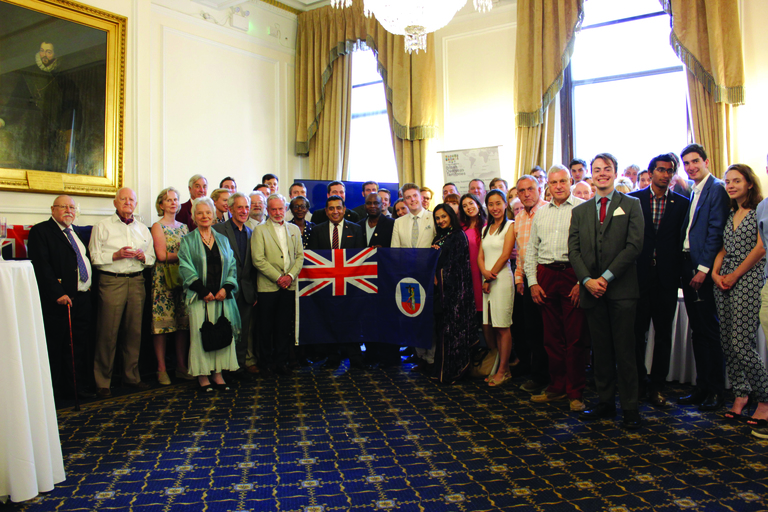
There is no one reason why territories choose to retain UK sovereignty. “St Helena and Montserrat don’t have viable economies and could not survive without the large amounts of UK aid they receive,” says Craig Brewin, an inclusive development consultant and former director of the Montserrat Red Cross. Brewin serves as Head of Research for Friends of the British Overseas Territories, an organisation that raises awareness within the UK of the BOTs. 

One great advantage of the BOTs is their natural beauty. “They are all beautiful, with incredible biodiversity, unique cultures and their own histories,” notes Brewin. “The weather is predictably warm in most cases. Some are easier to get to than others, some are very expensive to visit, but there is something for everyone. Anguilla is known for its high-end facilities, and Montserrat for its villas.” 

A recent communique by the Red Ensign Group, the shipping registry for the UK, BOTs and Crown Dependencies, affirms that each member takes its responsibilities to protect its land and beautiful coastlines very seriously. 

Bullish Bermuda 

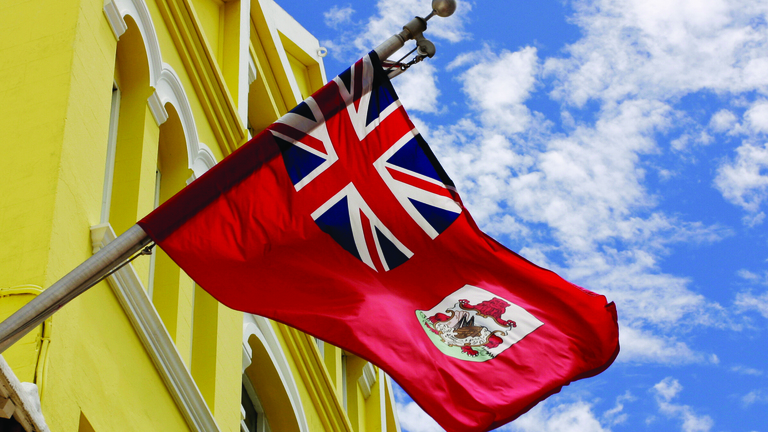
In the wealthy territory of Bermuda, murmurings about becoming an independent nation began in the 1960s. However, the notion was rejected by a 1995 referendum, in a nod to the perceived benefits of continued UK association, particularly the protection and stability that this offers. “Despite their wealth, they are still small in population and there is a commercial risk associated with becoming completely independent,” says Brewin.

Boasting the third-highest GDP per capita in the world, Bermuda has carved a niche for itself as a reinsurance hub. S&P Global Ratings noted recently that Bermuda had become the domicile of choice for global reinsurance startups, offering advantages such as adaptable legislation and regulation, tax efficiency, established infrastructure and proximity to the US, the largest reinsurance market in the world. Institutional stability and its track record of implementing reforms to ensure sustainable finances and economic growth were also cited. 

Cayman Cachet 

The Cayman Islands is another wealthy BOT with a well-developed financial sector. Long-time resident Daniel Altneu, Managing Associate of law firm Bedell Cristin Cayman Partnership, highlights the benefits of British sovereignty. “Along with a host of historical, cultural and social ties, and an ability for residents to obtain full British citizenship, retaining that link affords each BOT with a significant degree of protection, security, support and resources whilst enabling them to be largely self-governed,” he says. 

Altneu believes the UK link is vital to the success of the Caymans. “The additional stability that UK oversight provides is integral to Cayman’s reputation as one of the world’s leading offshore financial centres,” he says. “As a result, a growing number of wealthy individuals are relocating themselves and their families, businesses, assets and structures to Cayman, which in turn has farreaching economic benefits for the country and its people. 

“Cayman boasts one of the highest GDP’s and standards of living in the world generally. Due to our traditional values of community and privacy, it is a safe and secure place to live. Residents are further attracted by its tax neutrality, natural beauty, well-developed infrastructure, stable government, strong rule of law, elite health services and education and cosmopolitan outlook.” 

Offshore Might 

The growth and financial influence of Britain’s network of offshore financial centres such as the Cayman Islands, the British Virgin Islands and Bermuda has come under review in recent years. Interestingly, the BBC suggested the rise of this offshore network was by accident, not design. In a bid to stem the outflow of sterling following the 1956 Suez Crisis, a curb on foreign capital investments was issued by the UK Treasury. However, the Bank of England later agreed to allow commercial banks to continue to lend and borrow to foreign clients as long as the currency was not in sterling and both sides of the transaction resided outside the UK. This was seen as an accounting device, but it had huge ramifications and spawned the growth of the socalled ‘Eurodollar’ – offshore financial markets where unlimited sums could be borrowed and lent, seemingly under the control of no state. 

The UK Government has been concerned about the lack of financial transparency and problems in identifying beneficial ownership of companies incorporated in offshore territories. According to Brewin, steps are being taken by the Caribbean Financial Action Task Force to prevent money laundering and the financing of terrorist activities. The European Union closely monitors these capital markets as well, and among the BOTs it has designated Anguilla, British Virgin Islands and Turks and Caicos Islands as non-cooperative tax jurisdictions. 

“The Cayman Island is occasionally misrepresented as a tax haven when it is actually a tax-neutral jurisdiction that operates at a fiscal surplus,” Altneu says, noting that Cayman ended 2022 with a US$60 million operating surplus as a result of revenues reaching US$1.25 billion. 

Altneu remains confident of the future, saying: “Our residency and relocation practice is growing year on year as more wealthy clients develop a strong desire to take advantage of Cayman’s unique position of being able to offer tax neutrality and world-class professional services in one of the world’s leading offshore financial centres.” 

He notes that more than half of all Hong Kong listed companies are registered in Cayman and the territory remains at the forefront of offshore transactions in eastern Asia. The Financial Times recently reported that the Cayman Islands plans to open its first Asian office to counter emerging competition from Hong Kong and Singapore as offshore finance centres. 

Future Impetus 

As the administrating power for its Overseas Territories, the UK Government supports their political, economic and social development and self government, and has vowed not to stand in the way of any BOT becoming independent if that is the clear wish of the local people. Though no territory is currently looking to leave the UK family, Brewin does suggest challenges lie ahead. There are internal tensions in some territories about the division of powers between the UK and the local government. Brexit has complicated matters, too, especially for places like Gibraltar where there is a huge daily cross-border movement of people. But financial safeguards remain in place since the British Overseas Territories that rely on banking, as Brewin notes, still have to comply with EU transparency rules.

(Photos: Friends of the BOTs)

Tapas Territory: The Spanish mains shine at Bayfare Social, where dining is a lively moving feast

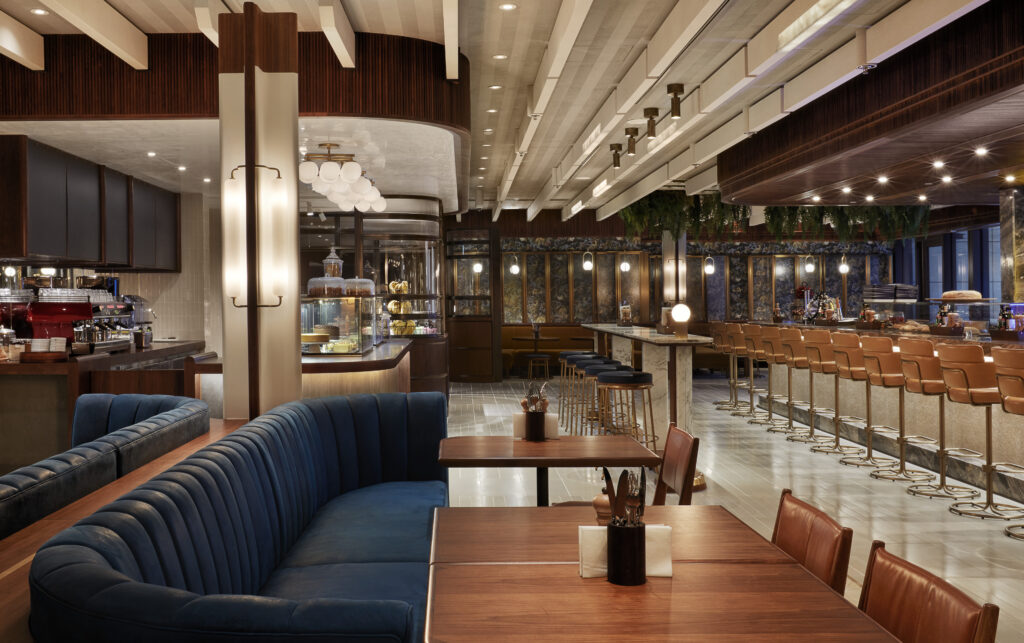
Spanish food is a vibrant testament to the country’s diverse heritage. Hong Kongers just can’t seem to get enough of this spirited cuisine, as countless new concepts have come to join the fray, injecting the landscape with a fresh, youthful spirit. At Bayfare Social, the tapas-inspired neighbourhood bar-cum gastro market that is a part of Rosewood’s throng of restaurants, it is easy to overeat. Trays of flavourful and colourful dishes are continually carried about by servers. It has the same impact and effect as sushi served on a conveyor belt, mobile churrasco and dim-sum carts. Ensconced in tall chairs at the gleaming marble dining counters, you will continue to gather morsels and much more to munch on.

As far as culinary traditions go, Spain has plenty to offer. Known for being outgoing and sociable by nature, Spaniards have a deep affinity for centring joyous occasions around a table full of food. Many would agree that a celebratory feast is an integral part of Mediterranean culture. Safe to say, there are no restrictions here, besides perhaps your budget.

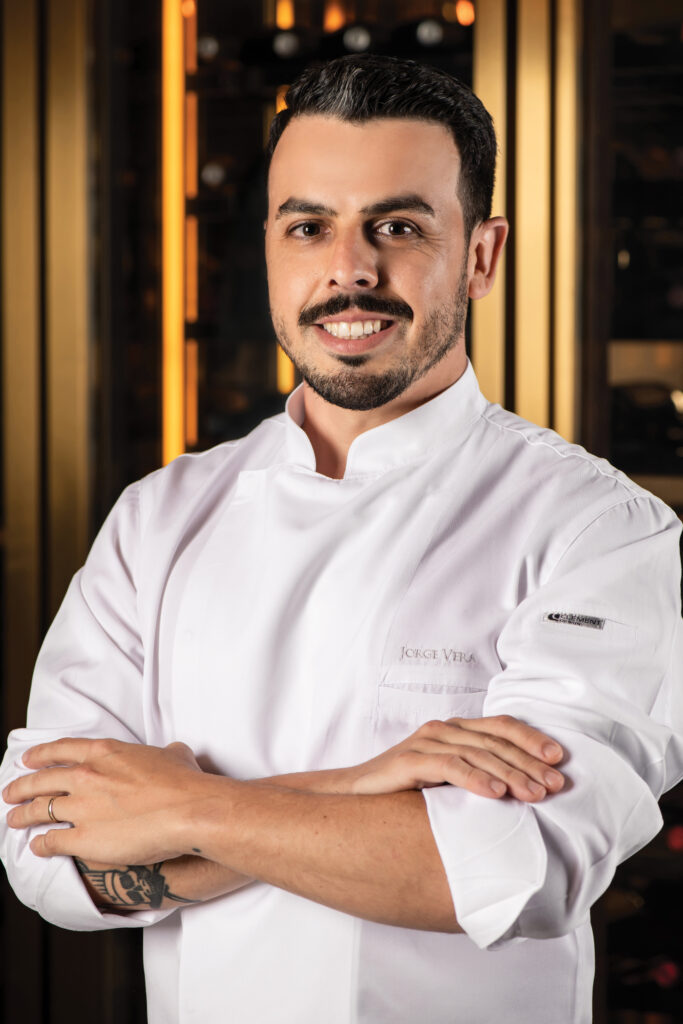
Yet, even with that particular concern, Head Chef Jor ge Ver a Gutiérrez’s offerings are as authentic as they can get without spending above one’s allotted budget. He says: “We assure our customers that the high quality of Spanish food we serve is value for money. People can really take a breather here, relax and enjoy the Spanish vibe.”

Gutiérrez has developed a dining experience unlike any other in his lively restaurant – as much about the food as it is an immersion into the simple, thoughtful, self-effacing temperament of his homeland. In their efforts to build a food commune in a bustling city location, let alone in a hotel adjacent to a shopping mall, Gutierrez and his team just happened to have also created the finest place to eat Spanish food.

This vibrant enclave is emphasised by the use of dangling ferns and wild leaves on the ceiling and the strategic placement of separate open preparation counters dedicated to wines, mains and other gastronomic offerings. It also plays with balance, from the traditional brown clay pot displays and the Machuca tiles to the edgy geometric accents and the quirky yet nostalgic menu.

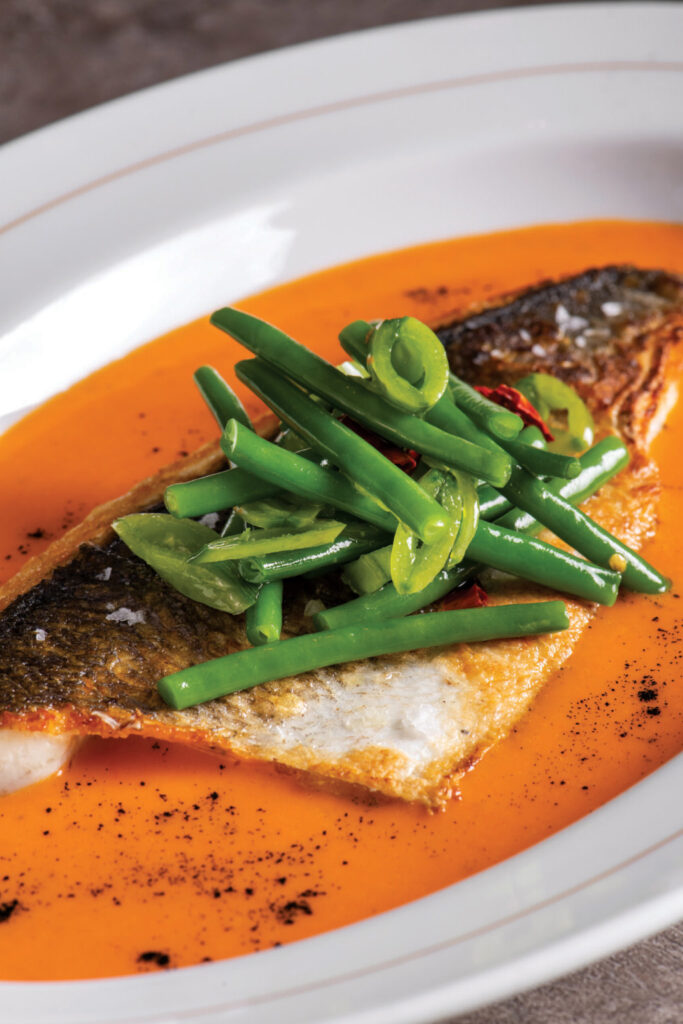
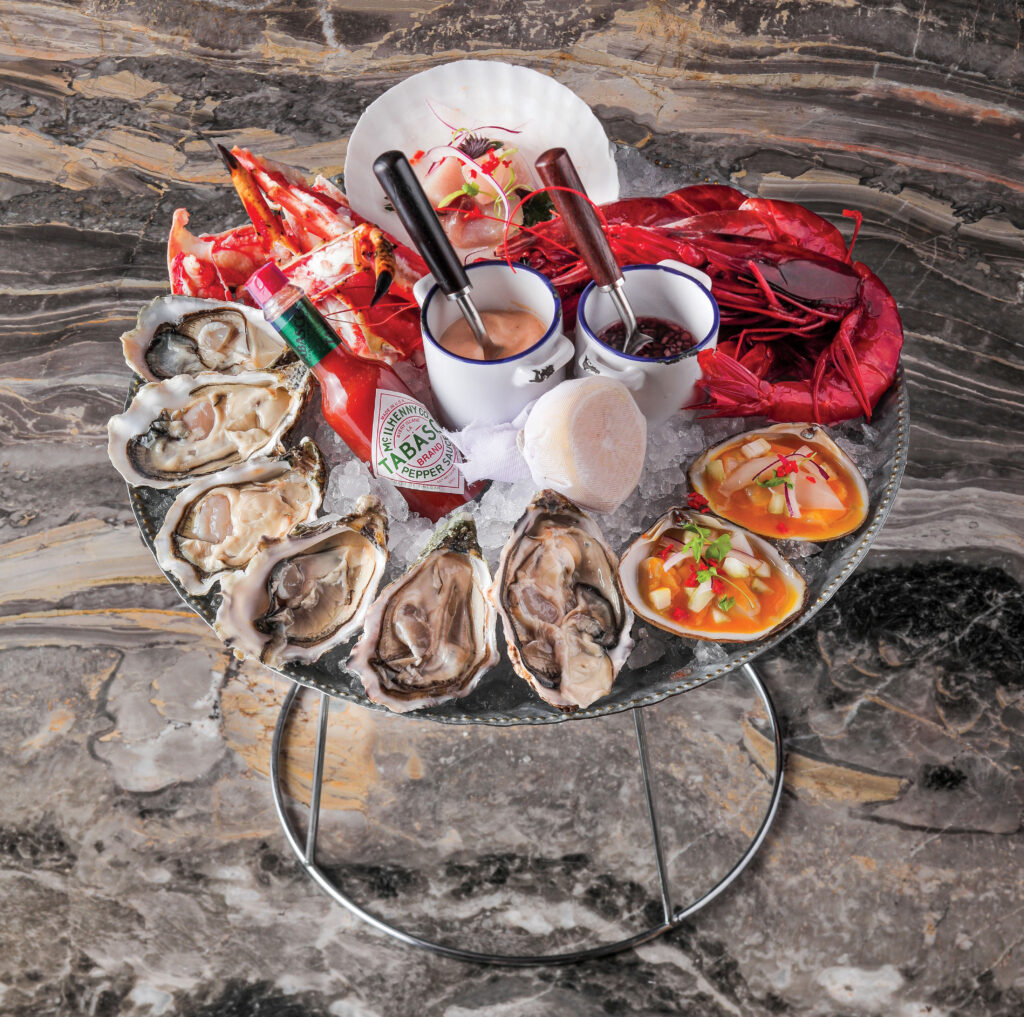
In true Spanish dining style, the elaborate spread is sure to enliven every celebration. There is charcuterie, tapas and a variety of paella. Everything is as splashy as the restaurant itself and hits a level 10 on the flavour scale. The new brunch menu, for example, begins with a refreshing and decadent seafood platter with jet-fresh Boston lobster, oysters and tiger prawns. The juicy Hokkaido shellfish in Scallop Tiradito – a Peruvian-inspired preparation – are enhanced by Spanish-style escabeche dressing and avocado.

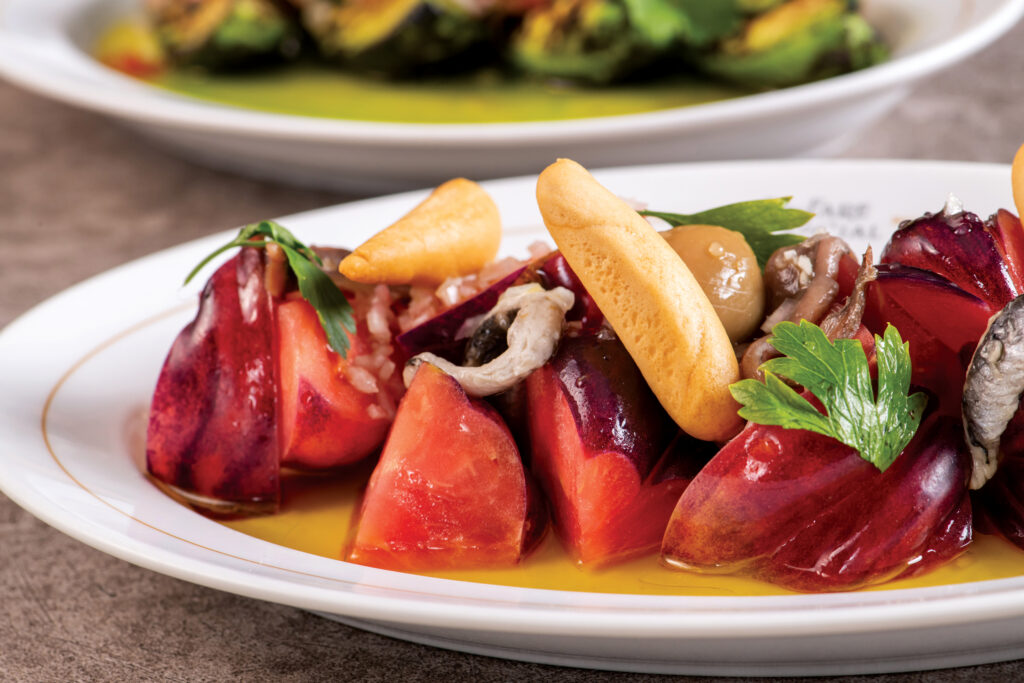
Even the lighter options make a bold impact. Starters are followed by traditional tapas of Ibérico Ham Croquetas with aioli, Padrón Peppers sprinkled with sea salt, and Chorizo a la Sidra, a classic appetiser of chorizo braised in cider.

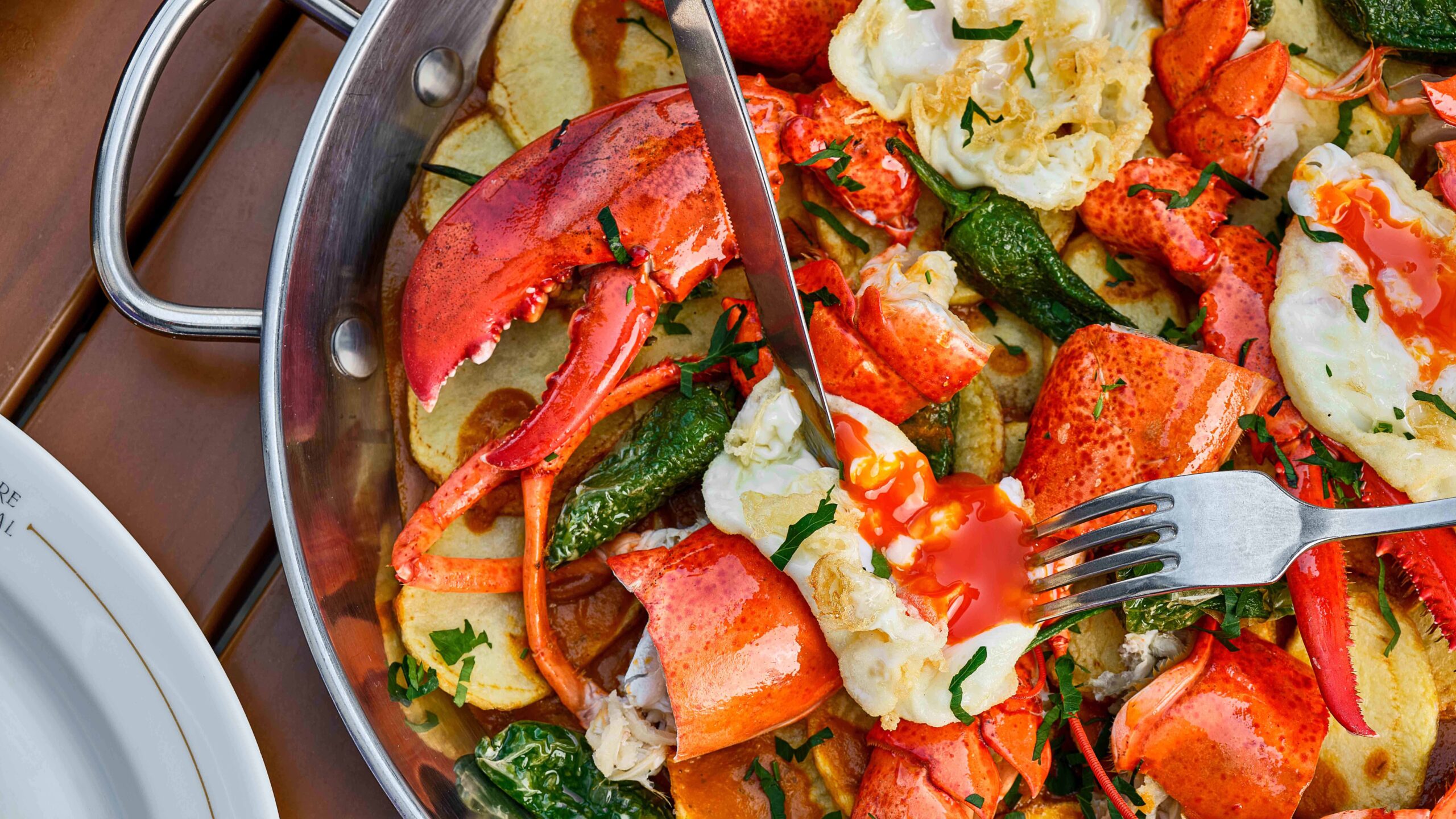
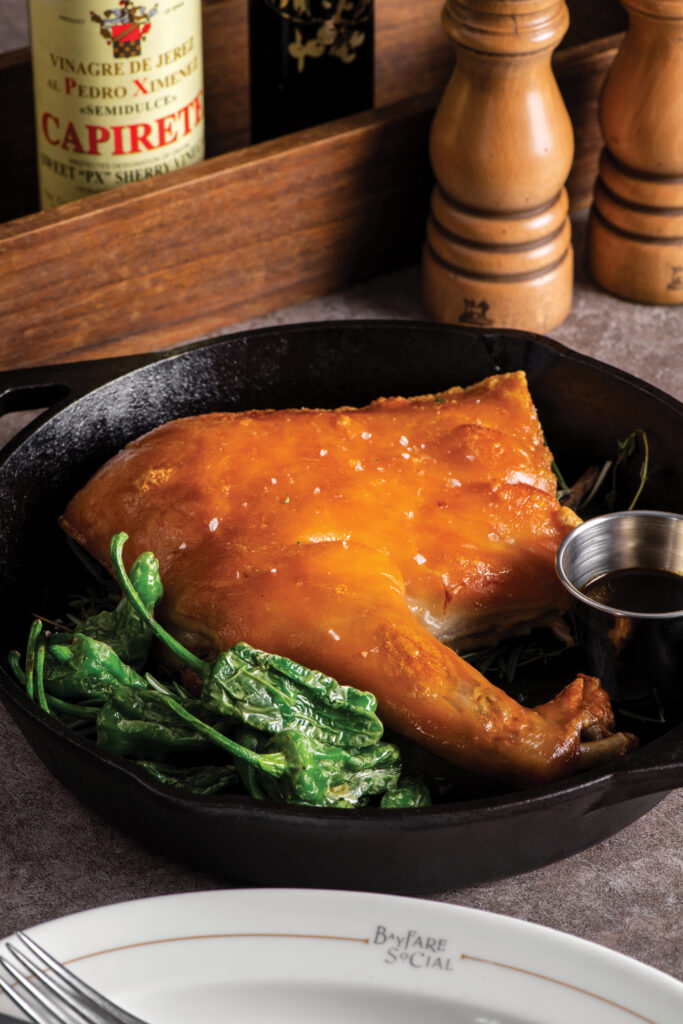
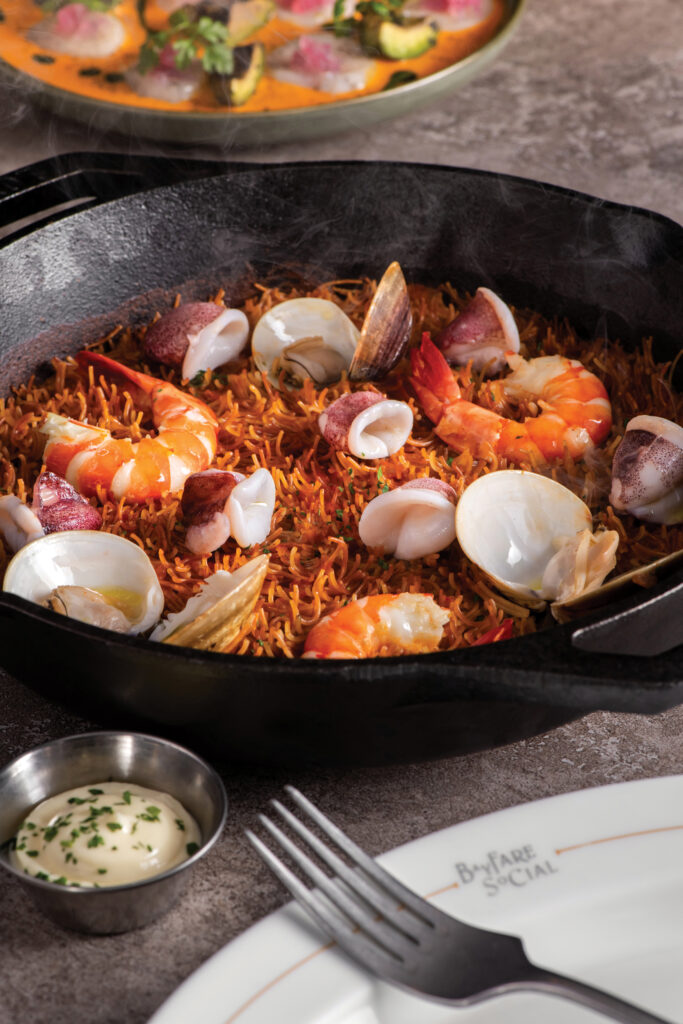
Following this eminently intriguing preamble are the hearty mains. Cochinillo Asado, the chef’s famous crispy-skinned roasted Spanish suckling pig with fried potatoes and homemade pork sauce, is smartly paired with a pan of Seafood Paella laden with clams, prawns, squid and aioli.

The best finale to this exceptional weekend spread is an indulgent dessert, courtesy of the traditional Spanish treat of Churros dipped in chocolate or tart of the day.

In Spain, gathering with friends and family to share food is a way of life that keeps people connected and is regarded as beneficial to mental health. Without fail, at the core of each gathering is a delicious spread, a tradition that Bayfare Social is committed to upholding. It not only delivers an authentic Spanish dining experience to Hong Kong but also surprises and delights with innovative twists and a huge helping of national pride.

BAYFARE SOCIAL 5/F, Victoria Dockside, 18 Salisbury Road, Rosewood – Hong Kong, +852 3981 8732

Photos: Bayfare Social

Video: Jack Fontanilla

Off the Book: Passion for books shelved teaching aspirations of Bookazine owner Arti Mirchandani

John Lennon famously said, “Life is what happens to you while you’re busy making other plans.” This piece of wisdom from a former member of the Fab Four could be a perfect summation of how Arti Mirchandani’s life and career in books have unfolded. Coming from the entrepreneurial family behind Hong Kong retailer Bookazine, her youthful passion was art, not books, and this love of visual creativity drove her to study art at the Royal Melbourne Institute of Technology (RMIT University).

Her parents, Mohan and Nisha Mirchandani started the family business in 1985 with a bookstore in the Hopewell Centre at a time when there were no “big” English-language bookshops in Hong Kong. Mohan had previously moved to Hong Kong from Nepal to work with his uncle and they started off as distributors of books and magazines, initially selling to street hawkers and chain stores.

Young Arti was never much of a reader even though her father would come home with boxes full of books. “He would sigh and say, ‘I am the king of books, and my daughter doesn’t read!’” she relates with a laugh.

The art of teaching

Before heading to Melbourne to study, she worked as an assistant teacher at the Peak School. She mainly tutored a boy who had meningitis as a newborn leaving him about two academic years behind his peers. “While it was a very challenging role, it was also incredibly rewarding when we had little breakthroughs and I felt really good leaving work every day like I had achieved something,” she recalls.

This sense of fulfilment was a light-bulb moment for her first choice of career. “That is when I decided that combining my two passions – art and kids – would be the ideal job for me. I wanted to become an art teacher.”

Early ambition shelved

With nine months to kill before starting a teaching certificate in the UK, she joined the family business “with no real role”. Her father made her start at the bottom, unpacking boxes of books, shelving them and even dusting the shelves. “He told me in order to be successful, you have to learn the A-Z of your business – so as to not be afraid to get my hands dirty. What he meant by that was, ‘Don’t think just because you are the boss’s daughter, you don’t need to do all aspects of the job!’”

Checking invoices, arranging books in beautiful displays, interacting with customers, taking orders, working behind the till, and tallying up the cash at the end of the day were all part and parcel of her learning process.

“It was hard work, but it was the experience I needed in order to gain the respect of my staff today. When I ask them to do something, they can’t say to me, ‘Oh, she doesn’t know what she’s talking about’!” After three months, she started to enjoy working in the bookstore and dropped any idea of teaching.

Also Read: Indra Banga on being one of Hong Kong’s foremost philanthropists

Storybook magic

It was only upon joining the family business that Mirchandani truly discovered the magic of stories and books. She has a special affinity for children’s books, saying: “I think this comes from my love of kids and my teaching experience. I have always loved the illustrations and fun rhyming text. I used to love watching children’s faces light up or hearing them giggle when we read books to them at school. How can you not love something that brings that much joy?”

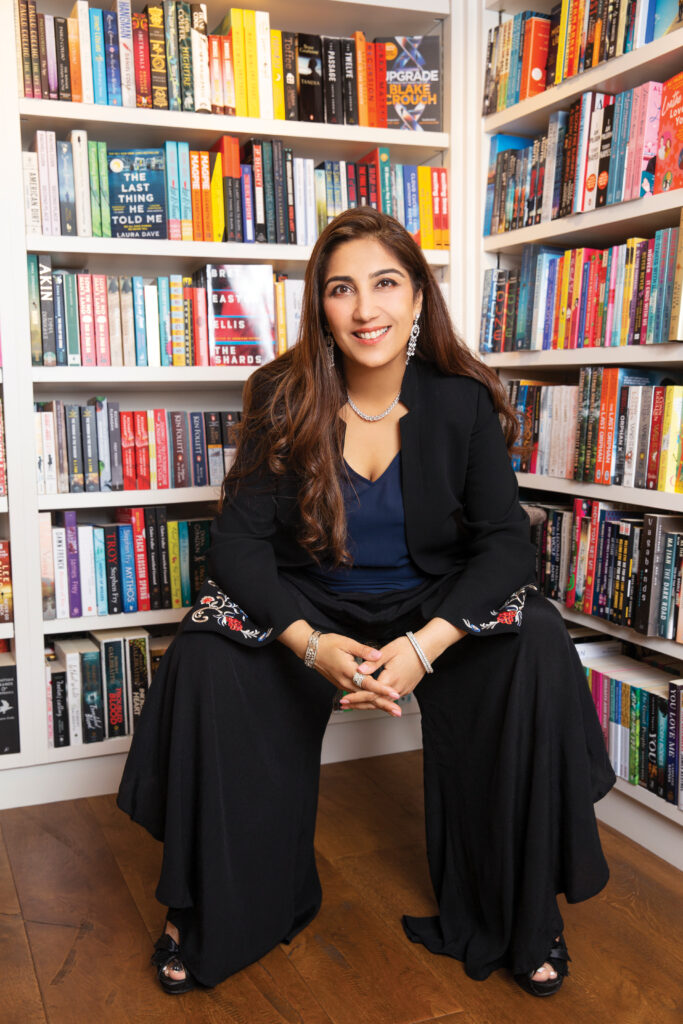
As she sits in front of crammed shelves in a corner of Bookazine’s flagship store in Landmark Prince’s, she speaks enthusiastically about her role as a buyer of books, toys and gifts. “It’s like going shopping everyday….with a corporate card. I do really enjoy seeing all the new products before they hit the market; I get very excited like a kid in a toy store. I also love watching my customers’ reactions when the products hit our stores.”

Bookazine has seven shops in Hong Kong and has been in Prince’s Building for more than 30 years. The company hosts most of its book launches there and the space is also used to showcase local authors and designers.

She particularly enjoys receiving proof copies of new books ahead of their release – that feeling of having access to privileged information. “It’s like we belong to a very exclusive club; it’s also just really nice to be able to read a book right away after the publisher has just told you a story. You do not have to wait a couple of months to find out how it ends.”

Also Read: Seven must-read books about Hong Kong

Sharing the passion

Mohan Mirchandani established Bookazine to share his love of reading with a vision to become a family-friendly community bookstore. “My father wanted it to be a place where families came and everyone left feeling happy or inspired. I think we have achieved this, or so I have been told,” says the daughter fondly.

His death aged just 58 taught her that life is very fragile and to be grateful for every day, to live for the moment and never plan too far ahead.

Customers (and daughter) know best

Mirchandani is at ease throughout the interview, articulate and well-spoken. It is no surprise that she loves interacting with customers in the store, citing it as one of her favourite aspects of the job.

Many customers have been loyal for 38 years and she feels immense gratitude for their support and invaluable feedback. Her daughter has also been a useful barometer of the latest toy trends, helping her increase the toy offering at Bookazine. “Even though she is aged 14 now, I still ask her opinion on some new trending toys and plush. She has got a real knack for knowing what will do well – except now she asks me if I will pay her!”

Family matters

Like with most family businesses, relationships can become strained. Her mother, Nisha, is the company chair, while her sister, Shonee, is also part of the management team. “Sometimes it’s really hard, and definitely in the early days we used to clash a lot,” she says candidly. A copy of Spare by Prince Harry is prominently displayed on a nearby shelf.

However, business matters now run smoothly within the family, possibly due to maturity or finding the right rhythm to make it work. “I am very close to my family; they are my pillars of support and I feel very lucky to be able to work with them.”

Reading the future

Mirchandani remains confident in the future of their business. She no longer feels that e-books pose the existential threat to traditional bookstores that appeared to be the case when they entered the market. Fortunately for them at Bookazine, the initial drop in book sales did not last long as people returned to reading in the traditional print.

“There is something quite special about flipping the page or the smell of books,” she says. “And then with some bigger online bookstores, the threat is that they can be quite competitive on pricing and things like that. But, you know, at the end of the day, I think everyone needs a good bookstore. I can’t imagine a world without bookstores.”

Photographer: Jack Law Art Director: Joseff Musa Fashion Stylist: Jhoshwa Ledesma Videographer: Jack Fontanilla Hair & Make Up: Owen Ko Venue: Bookazine, Landmark Prince’s

Colour Harmony: Andrew Yuen’s Evolution From Boyhood Treasure Hunter To Guardian Of Culture

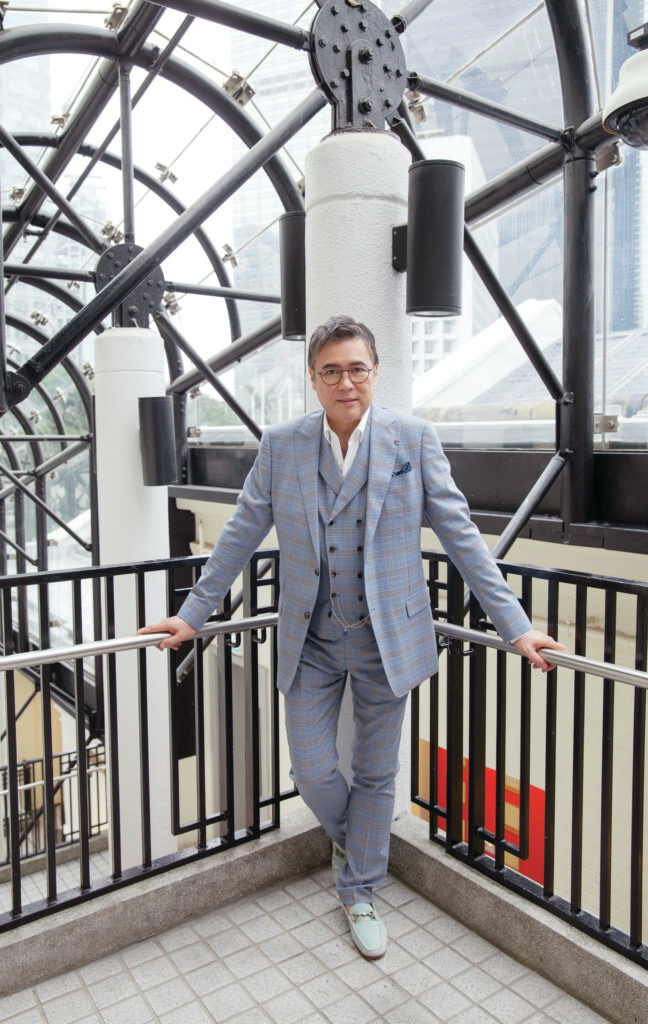
It is a typical rainy, grey May day in Hong Kong, but inside Andrew Yuen’s luxurious Central apartment, clashes of gold, silver and everything in between envelop the cosy space. Silverware and sculptures from his many travels around the globe are gracefully displayed with personal touches like portraits of his parents and son, Anthony.

Among the many roles he has inhabited over a long and fulfilling career – Deputy Managing Director of Dayton Group, CoChairman of the Hong Kong Cancer Fund, Vice-President of the Society of the Academy for Performing Arts and Chairman of Le French May, which led to the title of Chevalier (Knight) of the National Order of the Legion of Honour, awarded by the French government – is a new commitment as Director of the Board of the Hong Kong Palace Museum.

“The thing about this new role is that I didn’t apply for it. I was appointed,” he says humbly, shrugging his shoulders as if it is some small matter. “Why me? Well, maybe because of my art collection?”

andrew yuen

Indeed, Yuen is a long-time supporter and champion of the arts, all types of it, from visual to performing. His fascination with all things artistic was ignited at a very young age when he and his father would go “treasure hunting” – as young Andrew would call it – in antique shops along Hollywood Road and at auction houses as one of their weekend activities. Despite having pioneered the electronics industry in the city, his parents raised him and his four siblings to be self-effacing. A sensibility that he applies when bringing up a teenager of his own.

“I am always proud to say that I have the best parents. They just let us do what we want to do in life and explore whatever we like. But I think they also have this magic to bring us all back together. All five of us are now living here in Hong Kong,” he says, laughing.

Kendy Enterprise, the empire which Jack and Daisy Yuen built, was founded in 1958 as one of the early makers of transistor radios. Dayton Industrial was born in 1972 and nurtured into one of the world’s leading manufacturers of micro-electronic products such as heart-rate monitors, altimeter watches, e-bike HMI, sensors and parts for smartphones.

andrew yuen

Shades of Success

“I feel very much at home when I am at the [Hong Kong Palace] museum. I could just talk about art all day,” says Yuen, grinning as he sips water from one of his collectable china cups. Later, on our way to the photo shoot location, he divulges that he and now Academy Award-winner Michelle Yeoh are good friends, and he was close to Princess Diana.

“These people are my contemporaries, not just in terms of age, but also as fans of the arts. However, my parents advised me that in order to look young and feel young, I must expose myself to younger connections. This way, I can keep up with change and not be stuck in my comfort zone.” he says.

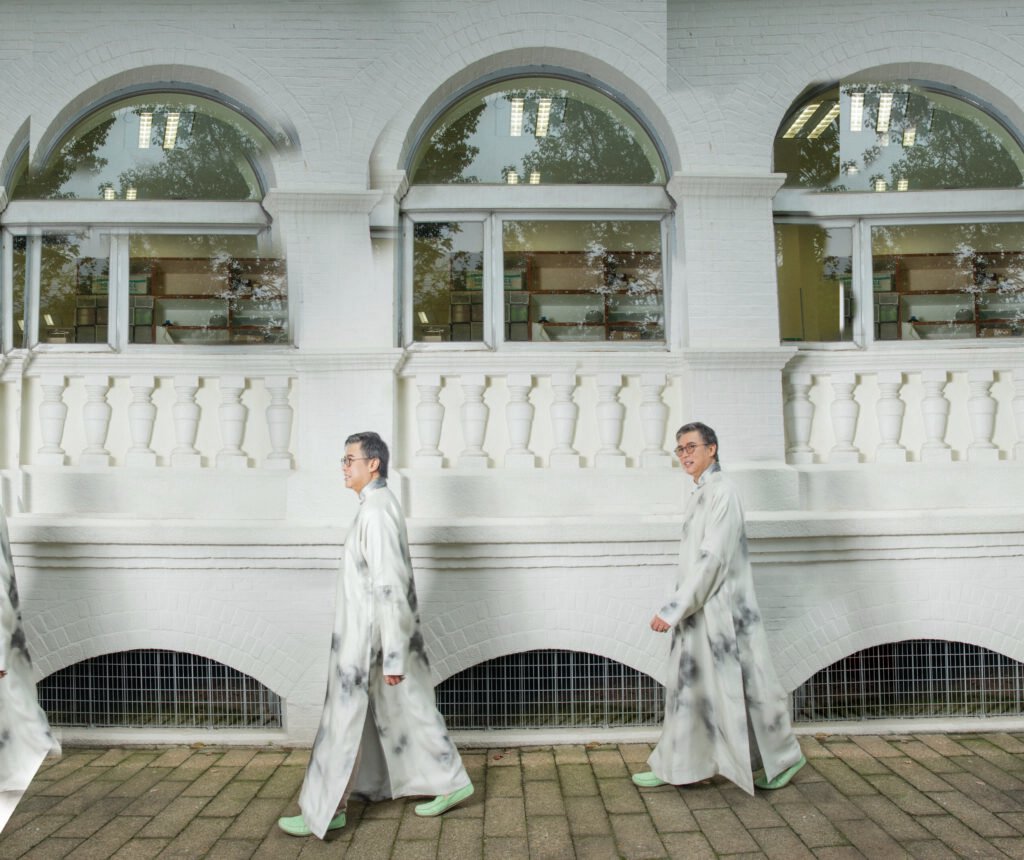
He wears a traditional changsan, noting that he needs a birdcage and a fan to fully embrace the look. It is evident that while he is open to the current landscape, he still pays homage to his roots and appreciates his own culture. As a newly minted museum director, Yuen reflects on the evolution of the arts scene, particularly in Hong Kong.

“The hit musical Hamilton is a perfect example that art is inclusive and ever-evolving. Musicals now explore pop and rap styles of music. We really have to make art accessible everywhere, that’s the most important part. Hopefully, I can play a role in that. That’s why we are more ambitious than ever with the line-up for the French May Arts Festival.” he says.

He also shares that beneath the foundations of the Hong Kong Arts Centre in Wan Chai is a time capsule put there by six people – one of whom just happens to be him.

andrew yuen

Hues of Happiness

Yuen’s vision for the Hong Kong Palace Museum vibrates with colour, movement and textures – just like a work of art. He says: “There are only three Palace museums in the world – in Beijing, Taipei and now in Hong Kong. So I hope that the one in Hong Kong will be the bridge between the other two “Palace-tinians” – between China and Taiwan.”

As a seasoned art collector, he reiterates that it is important to do your own research before purchasing. When you don’t know the market, it’s easy to fall for things just because they are buzzed about, especially on social media. “I recommend learning about art and artists online so the choices become your own,” he explains.

The adage that new collectors should spend a year looking and not buying rings truer than ever. While that may seem extreme, taking time to develop your eye is essential. Like many other things in life, it should be quality over quantity, too. He encourages art lovers to invest in fewer pieces that are of higher quality. Art is, after all, a purchase for life, so it is better to collect slowly with focus rather than to rush and take a more decorative approach. “Art should be something that talks to you,” he adds.

Also Read: Your Guide to Purchasing an Art Piece That You Won’t Regret

He is clearly very proud of the Hong Kong Palace Museum, and on a smaller, though still substantial level, the art in his home. His collection delves deep into a style and an artist through gorgeous masterpieces. Works of art, more generally speaking, impact society, fostering economic, racial and social justice and educational advancement.

andrew yuen

His own Covid chronicle was both impactful and life-changing. Yuen caught the initial strain of the virus during the frightening pre-vaccine era. As many others who pull through serious illness would attest, it made him appreciate life even more than ever.

“Other than material things, I think what matters most is that we collect memories – memories that are precious yet priceless,” he says. “I am thankful that I always have the chance to be surrounded by family and friends. Above all the things here that glimmer and shimmer, the memories that I have, and am still collecting, will always be my number-one prized possessions.”

And so, like a rainbow in the sky, Andrew Yuen continues to colour his life with pure bliss and happiness.

Interview & Art Direction: Joseff Musa Photographer: Jack Law Fashion Stylist: Jhoshwa Ledesma Videographer: Jack Fontanilla Hair & Makeup: Heti Tsang

Time and Tile: Mass manufacturing has not quite yet entirely replaced hand-made mah-jong sets

Ubiquitous throughout mainland China and Hong Kong, mahjong is a much-loved pastime for the young and the old. While walking through the streets of any Chinese city, town or village, the distinct rattling of mah-jong tiles will almost certainly be the unceasing soundtrack. Commonly requiring four players, mah-jong, as any true enthusiast will tell you, is a game of skill, strategy and luck.

The game typically played at such high-profile celebrations as Lunar New Year, has long been associated with the close ties between families and friends. Indeed, it is not unusual for those hosting weddings or birthday banquets to be presented with mahjong tables and sets by the management of their chosen venues.

Also Read: Mahjong Mania: How Mahjong Conquered Hong Kong and Then the World

handmade mahjong

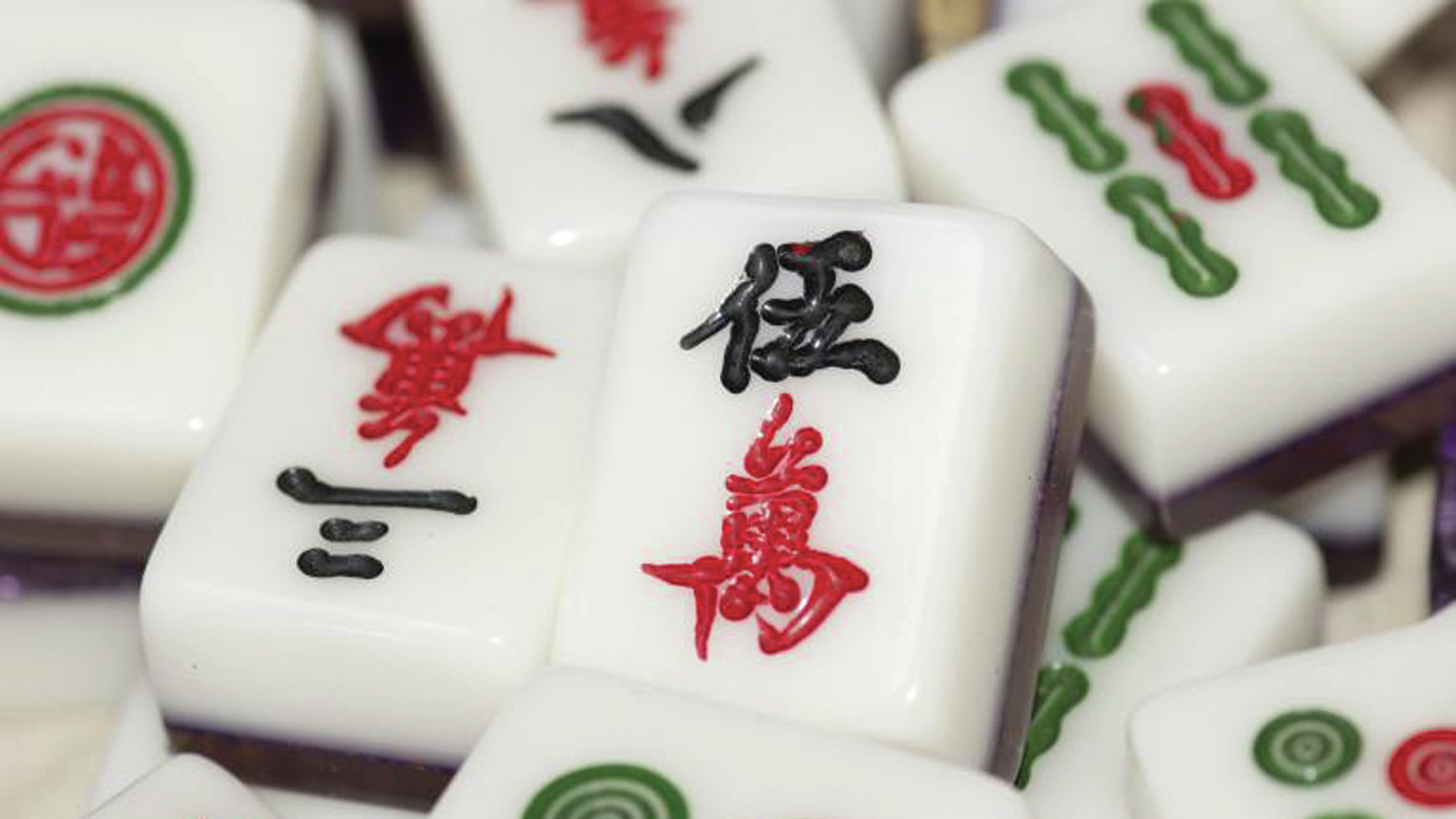
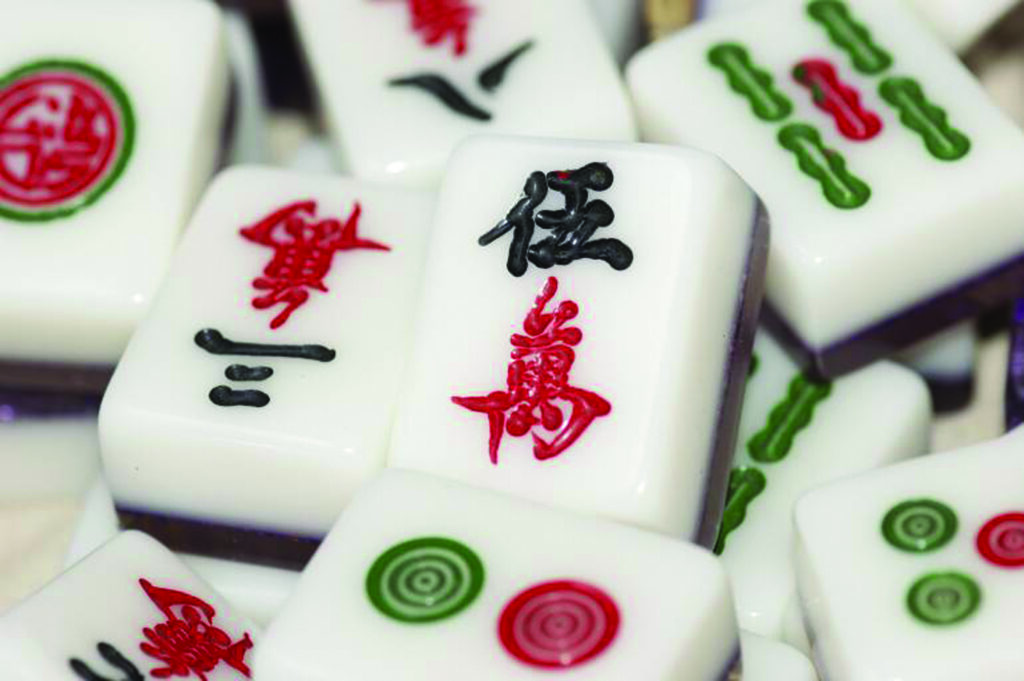
Looking specifically at the game itself, there are 144 tiles in each mah-jong set, typically adorned with Chinese characters, dots, flowers or bamboo sticks. Before starting, players shuffle the tiles face down while seated around a square table. Each player then sets up a set of tiles, much like a hand of cards and, after that, until one forms a winning combination, players alternate between drawing and discarding tiles.

While, traditionally, mah-jong tiles were handmade, inferior, relatively inexpensive, machine-made versions are gradually becoming the norm. For those who had once painstakingly handcrafted the titles, their livelihoods are now being whittled away. Indeed, the art of hand-carving mah-jong tiles is now reserved for a small – and continually dwindling – number of ardent traditionalists.

handmade mahjong

Biu Kee Mah-Jong
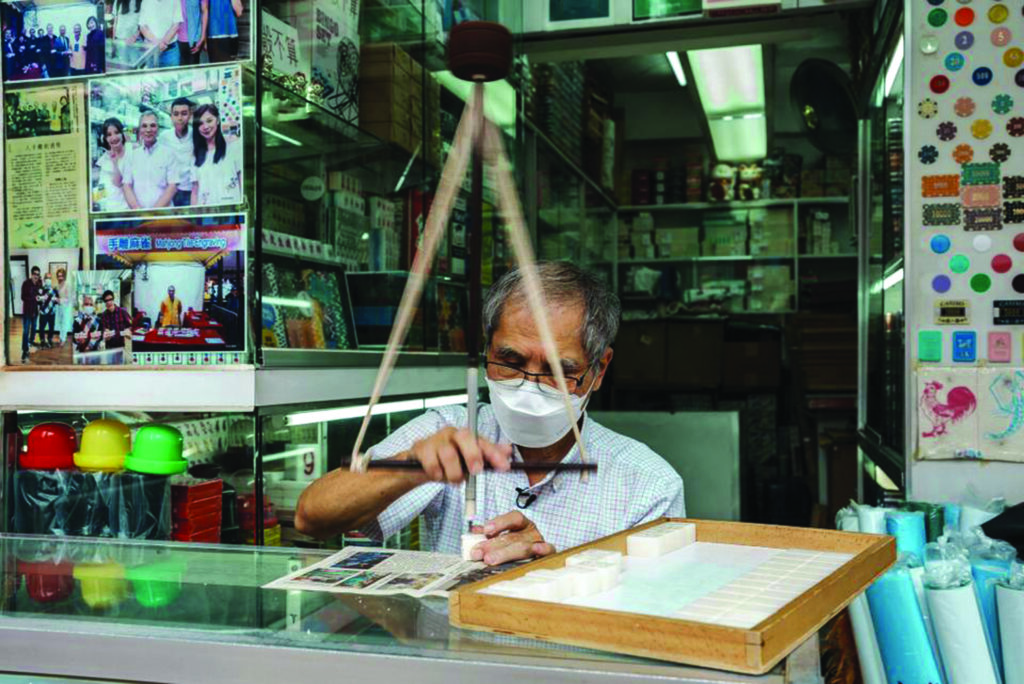
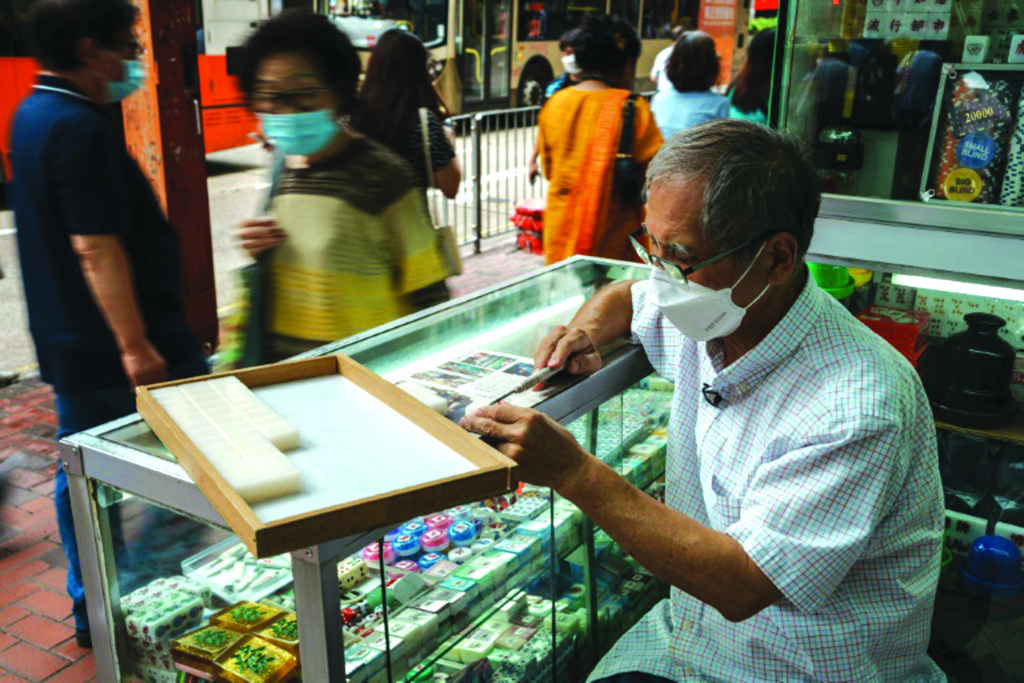
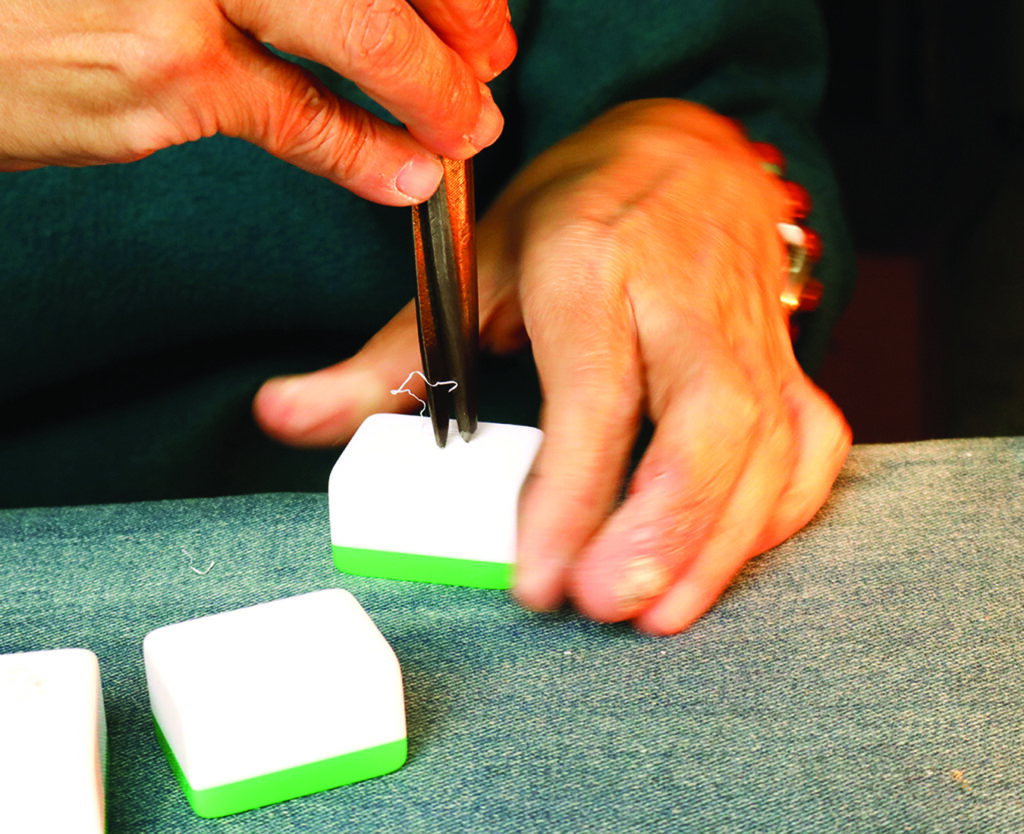
One of Hong Kong’s few remaining mah-jong tile carvers and engravers operates from a stall by the neon-lit night markets situated between Jordan and Yau Ma Tei. Here, this venerable craftsman, Cheung Shun-king, etches Chinese characters onto a piece of acrylic, then flips the tile with one hand while holding a knife in the other in order to chop into it.

In an age where low-cost mass production is the norm, this is a disappearing craft. In fact, there may only be three or four carvers remaining in Hong Kong, according to the 70- year-old craftsman. By looking to pass on his skills to the next generation – within a 100- square-foot area under the stairs of an old-style shop-house – he is trying, perhaps in vain, to rekindle interest in the old way of doing things.

handmade mahjong

Expanding on the skills required, he says: “With hand-carved mah-jong tiles, when you look closely, you can see that each of them is different. This is because I carve them one after another, completing them one by one instead of using a mould.”

Since Cheung typically only carves at night, when he is not attending to customers or running errands, it takes him close to a week to complete one set. As part of the process, he carves the tiles, cleans them, and then paints them green, blue, and red. The final step is removing any excess dry paint. By comparison, a machine can churn out an identical, cookie-cutter set in less than an hour. According to the master, a full set of hand-carved tiles costs HK$5,500 (US$700), whereas their machine-produced counterparts sell for just HK$2,000.

Many of his clients purchase sets from him as mementoes and frequently ask for photos of him at work. Cheung, however, believes that this sudden uptick in interest may be but transitory, asserting that a recent wave of nostalgia accounts for much of the attention he is receiving.

handmade mahjong

Within his workshops, as a way of introducing his students to the technique of engraving the tiles, he is at pains to show them the right way to sit and the optimum way of handling a carving knife. Always ensuring he takes the time to instruct each person individually, he is unceasing in his commitment to passing on the skills required to render something quite so singularly beautiful with just a few artful strokes.

While he believes few will actually end up as expert carvers, he goes out of his way to ensure every participant goes home with a set they can be proud of.

Location: 26F Jordan Road, Jordan, Kowloon

handmade mahjong

Kam Fat Mahjong
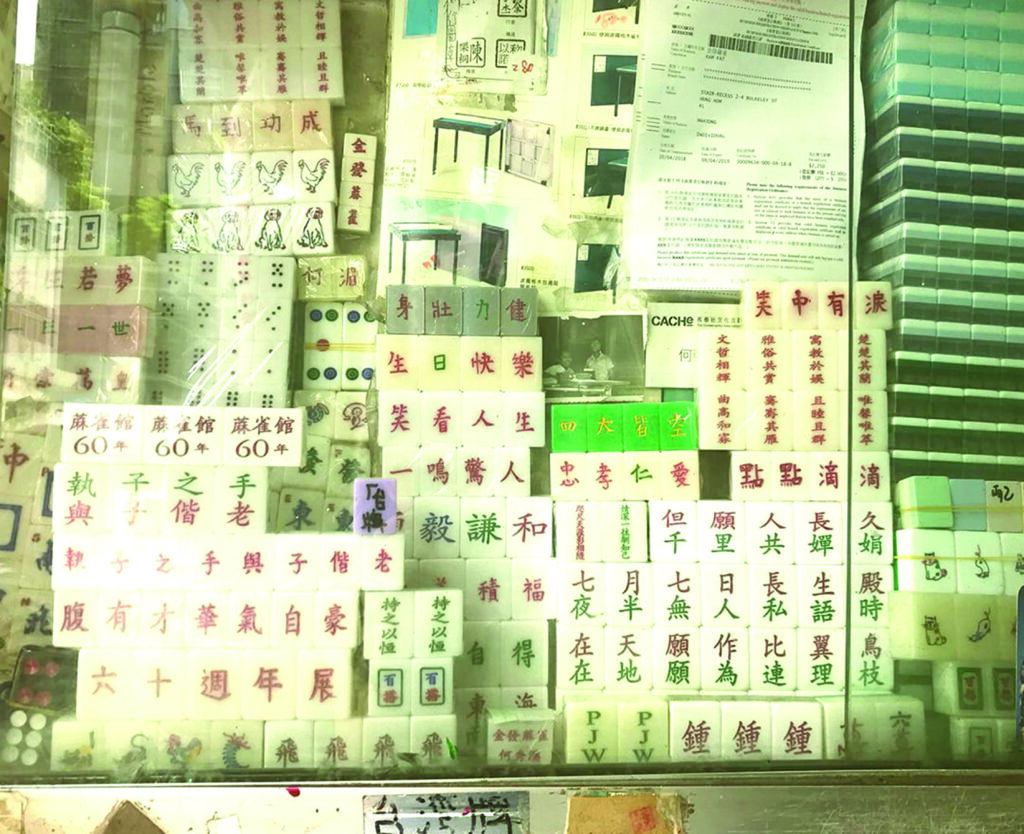
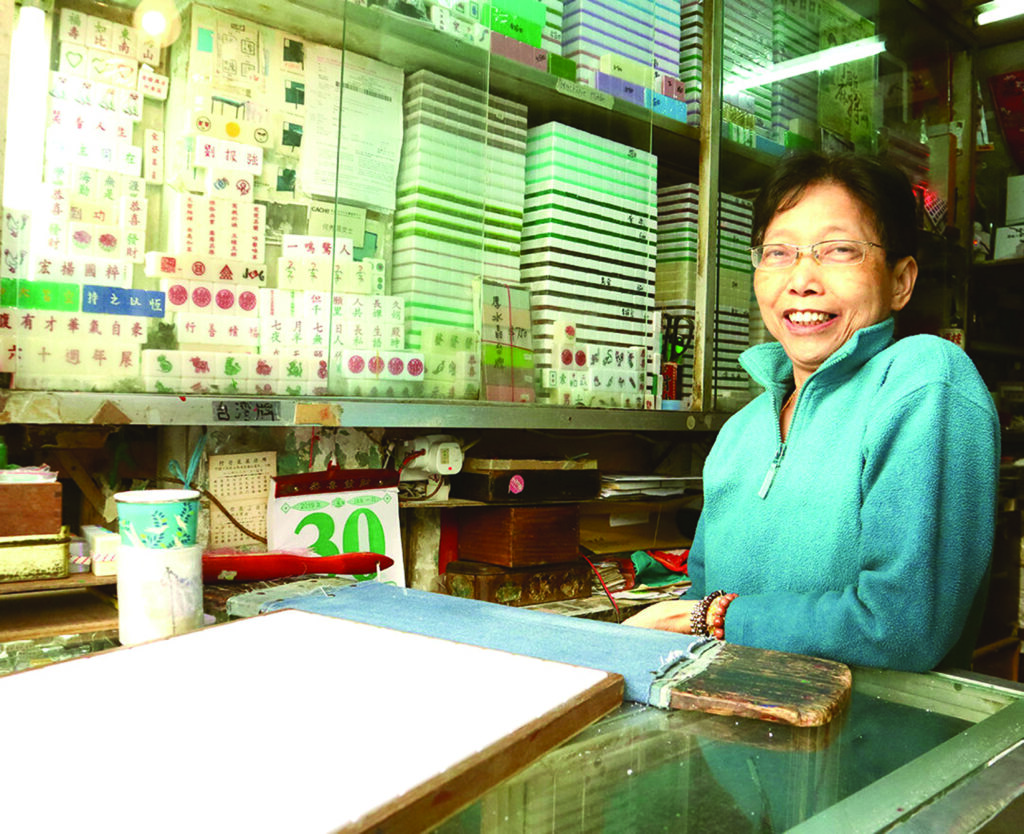
One of the mah-jong tile carvers that suddenly found herself thrust into the limelight when the Hong Kong government designated the hand-carving of mah-jong tiles as part of the city’s intangible cultural heritage back in 2014 was Madam Ho Saumei. Today, she runs her family’s Kam Fat Mah-jong company out of a tiny store in Hung Hom.

Her father founded the Kam Fat Mahjong Shop in 1962, with the business functioning both as the site of his labour-intensive activity and as his family of six’s home. Now, Madam Mei honours her father by continuing with the family trade, apparently never tiring of utilising her skills to the full as she engraves Chinese characters and alters and paints patterns. She maintains that she values every piece she fashions, tirelessly working to ensure the individuality of each mah-jong tile, items she sees as making wonderful gifts for many of her customers’ nearest and dearest.

Location: 2A-4 Bulkeley St, Hung Hom

handmade mahjong

While technology has inevitably eroded – and, in some cases, almost eradicated – the elegant, handcrafting skills that so ably fashioned the most memorable mah-jong sets of yesteryear, thankfully there are still a few master craftspeople doing their very best to preserve the classic time-honoured techniques. Next time you are considering a heart-felt, hand-fashioned gift for someone you truly appreciate, perhaps this is one way you can do your bit to support them.

Also Read: Collectible mahjong sets

The Best Dim Sum Spots in Hong Kong: Restaurants Serving The Tastiest Dim Sums

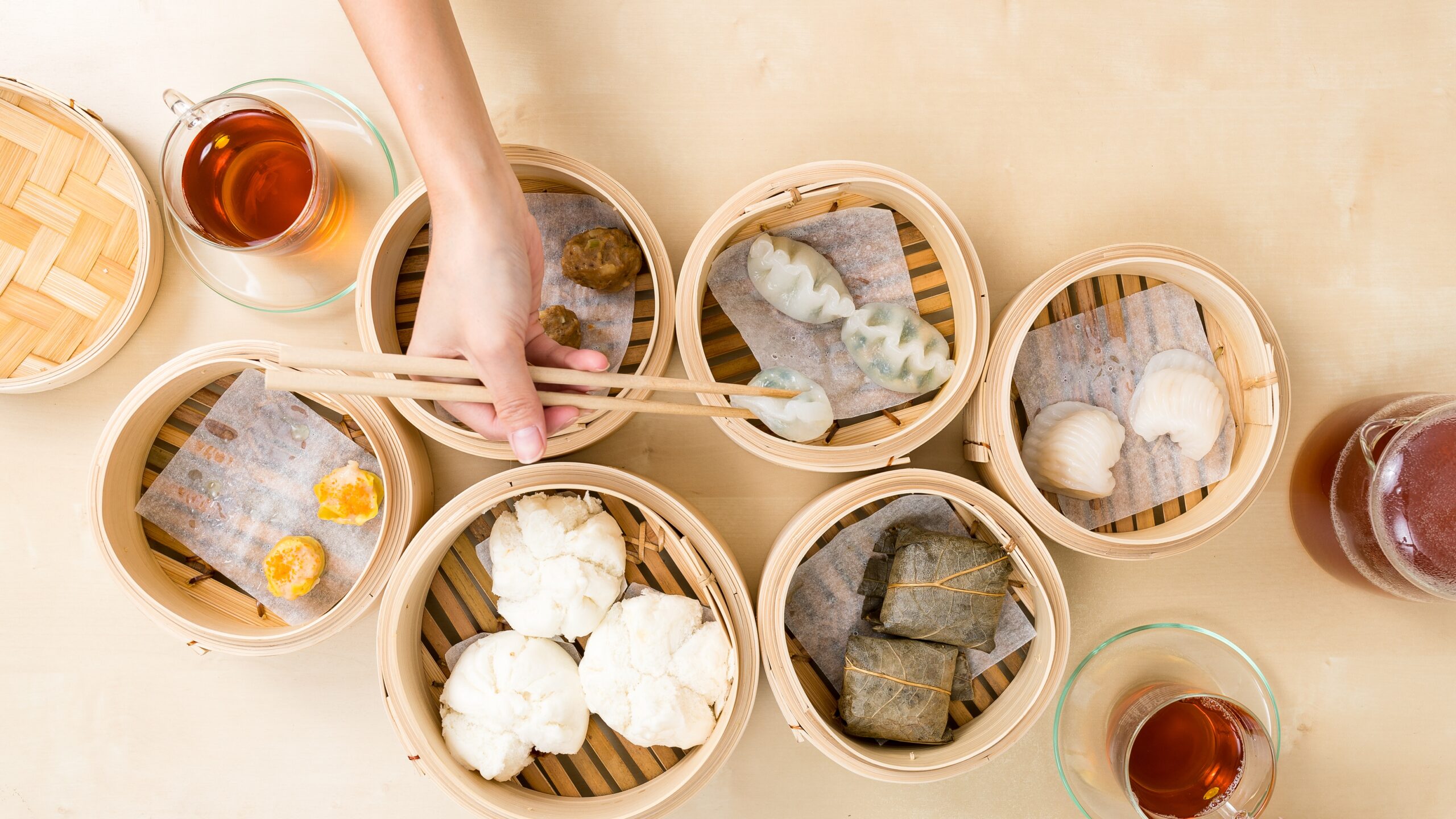
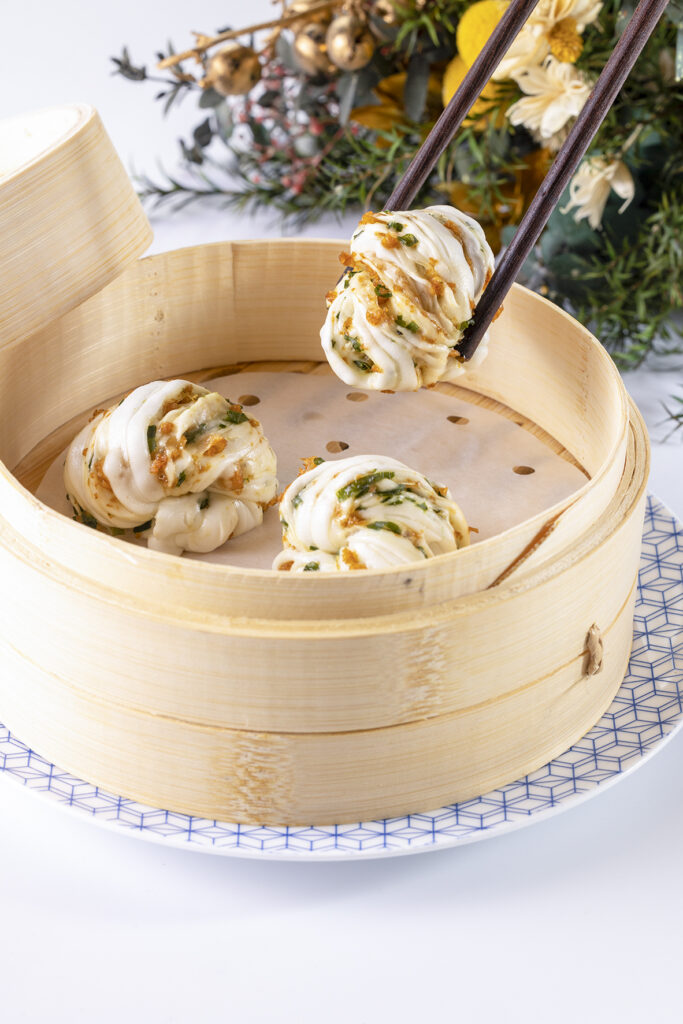
Dim Sums have become a favourite for many people because they are extremely flavourful and the choices when it comes to picking a dim sum are endless. Besides, there is nothing more mouth-watering and comforting than a steaming hot tray of this classic Chinese dish on any given day but they are particularly great to eat on a chilly or rainy day. Considering the random rain showers that we are seeing in Hong Kong in the last couple of days, we have put together the best restaurants to eat dim sums in the city.

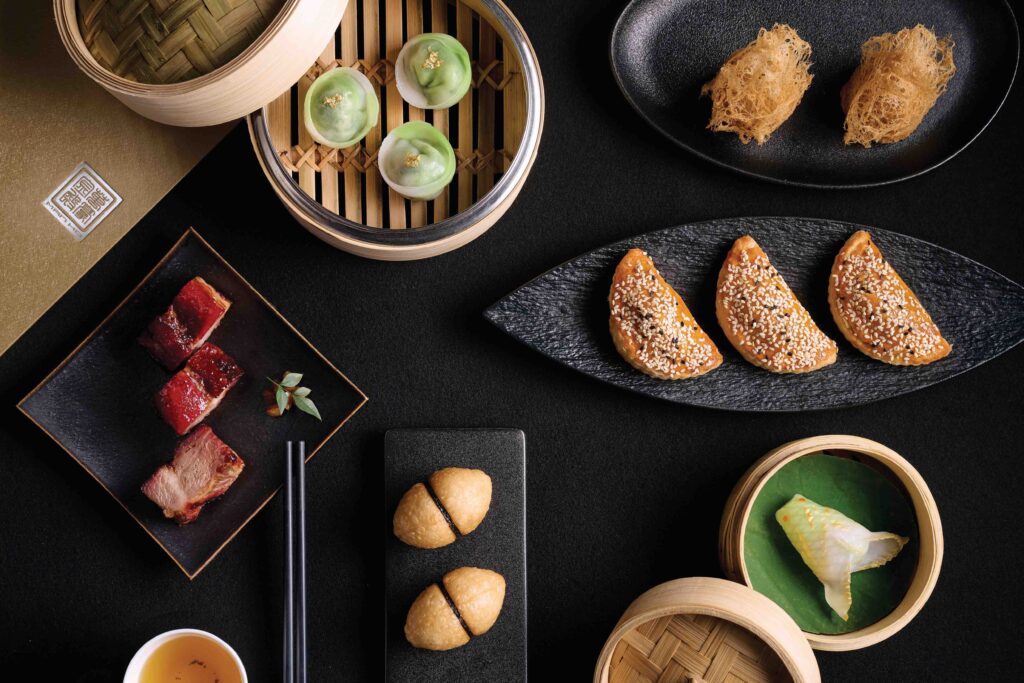
Awarded a one-Michelin star for three years in a row, the Chinese cuisine Man Ho is one restaurant where you can find Hong Kong’s best dim sums that have found a place in almost every foodie’s heart. The eatery is known for being popular among ex-pats for adding a Western approach to this otherwise oriental dish that is made with thoroughly hand-picked produce from the city’s local markets under the guidance of its Dim Sum Head Chef Leung Wing Pan. The highly-recommended dumplings here include the Baked whole-dried South African abalone puff with wild mushrooms and Steamed minced cod fish and shrimp dumpling with soy sauce.

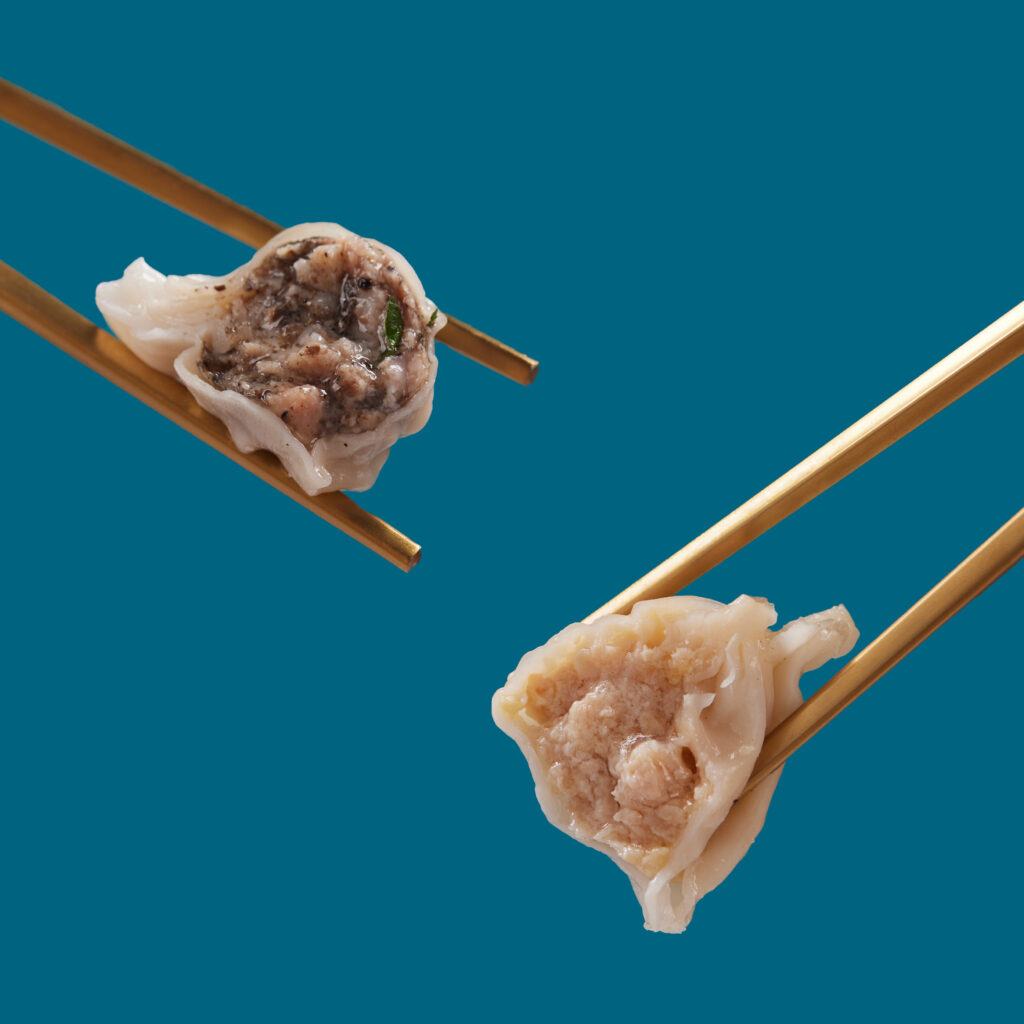
Given the popularity of dim sums, most people have savoured the dish at least once in their lives but if you want to try something different while enjoying the rush of flavours that you experience when biting on a piece of dim sum, then you should try the ones from Bino ‘N’ Booze. The hot pot restaurant offers two soup bases that have alcohol mixed in them – The Signature Red Wine Oxtail and Tomato Soup and The Pig Tripe and Chicken in Beer Soup. When combined with the carefully hand-rolled dumplings, the dumplings melt right in your mouth to give a unique yet comforting taste. The must-try here are the Abalone and Black Truffle Dumplings and the Drunken Chicken Dumplings.

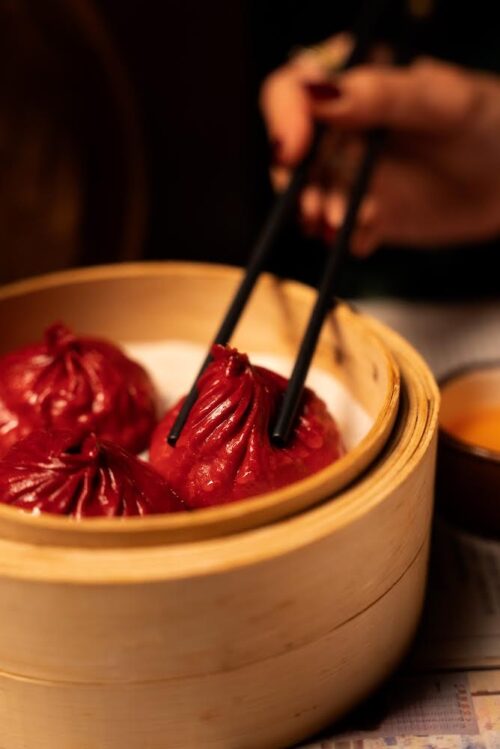
If this happens to be your first time trying a dim sum or you simply liked to be spoiled with so many choices then your go-to restaurant for dim sums should be Fox Glove. Offering nearly 30 options varying from seafood and meat to vegetable dumplings, this speakeasy restaurant allows you to try different and as many dim sums as you like. The newest addition is the Sichuan Peppercorn Xiao Long Bao which is inspired by the Shainghanese dumplings sold at a highly-raved street stall in Shanghai.

Perfect for meat lovers and vegans, Mott 32’s newly-updated Dim Sum menu puts taste at the forefront. In addition to the restaurant’s already existing steamed dim sum platters, its executive chef Lee Man Sing has collaborated with the plant-based food company Plant Sifu to launch a set of plant-based dim sum dishes that are only available until June 30. As expected from this contemporary Chinese restaurant, every ingredient is carefully picked from different parts of the world thus giving a contemporary twist to the traditional Chinese dish.

Seafood lovers can always count on D.H.K. Seafood Restaurant to devour pescatarian dim sums. What makes their dim sum or any other dish stand out is their cooking style which is a very traditional Guangdong way of cooking. You should definitely try one of their newest creations Plant-based Pork Siu Mai, Plant-based Pork & Shrimp Dumpling Soup and Plant-based Pork & Shrimp Bean Curd Roll in Broth.

What’s on? Things to do this May in Hong Kong

Whether you want to spend your leisure time appreciating some culture around the world or exploring the world of cinema or art, this May, Hong Kong is bringing you a line of events to keep you entertained over the month. Below are the ones you should definitely be adding to your calendar.

Virtually Versailles

May 2023 events

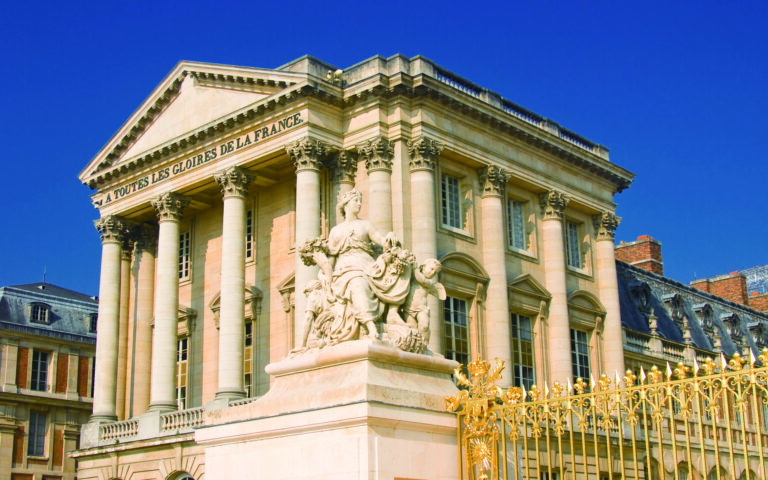
As part of Le French May when Francophone culture is celebrated all over Hong Kong, Virtually Versailles presents the nation’s heritage in the form of an interactive tour of the Palace of Versailles. Whizzing you over to the spectacular château built by Louis XIV west of Paris, this magical experience is a visual journey across time, exploring the palace garden, the splendidly baroque Hall of Mirrors, and even catching a glimpse of Queen Marie Antoinette’s bedroom from three centuries ago.

When: Until 9 July
Where: Hong Kong Heritage Museum, Sha Tin
How much: HK$7
Click here for more information.

Fete des Fleurs

May 2023 events

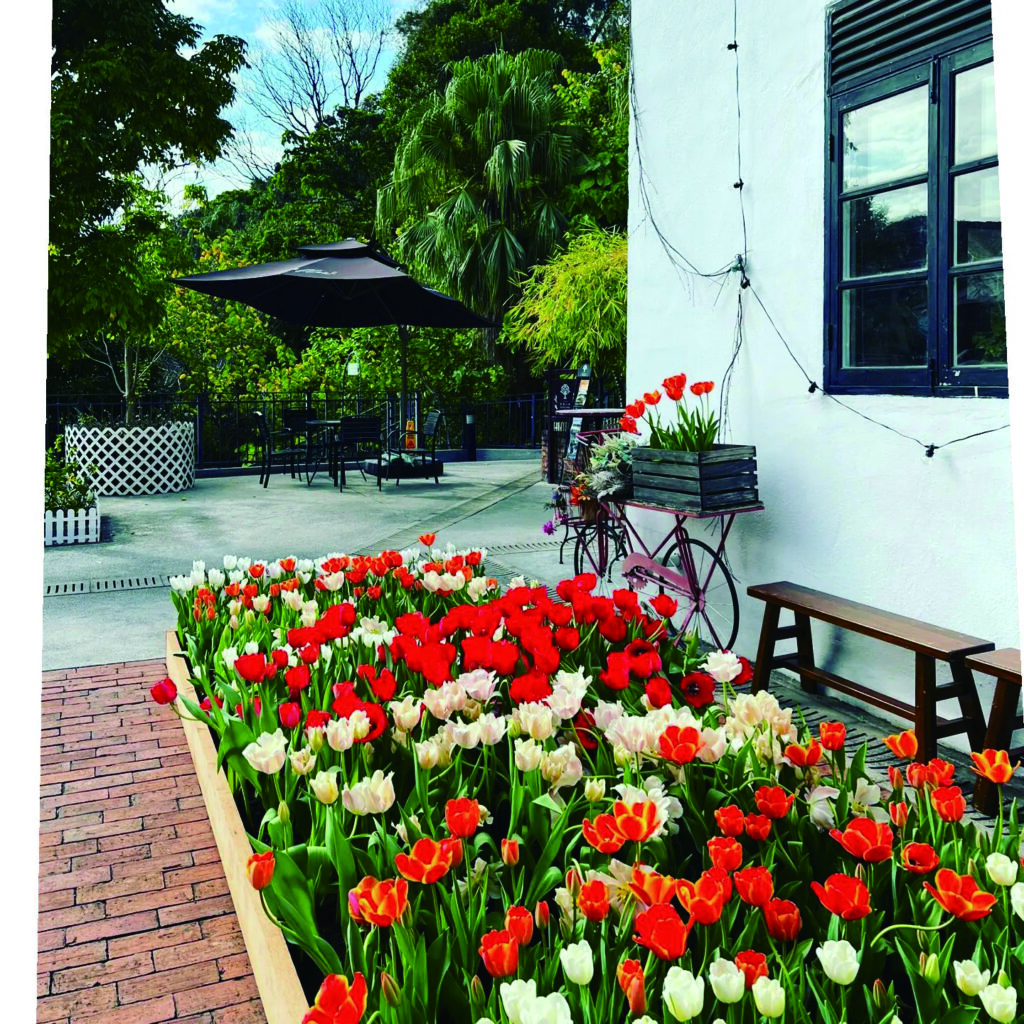
It is universally agreed that of the four seasons, Spring is a particularly beautiful time given all the flowers burst into vibrant bloom. Bringing such beauty to light is the Fete des Fleurs, a project instigated by the Sham Shui Po district office that first blossomed in March. A Fairytale Floral route and related activities have showcased a wide variety of flowers, including chrysanthemums, cherry blossoms, kapok, bougainvillaea and tulip. This month, city dwellers can look forward to even more colour from the likes of hydrangea and bauhinia.

When: Until 31 May
Where: Various venues in Sham Shui Po
How much: Free admission
Click here for more information.

Beauty and the Beast in Concert

May 2023 events

Up for a musical concert that will ignite childhood memories? Then Disney’s Beauty and the Beast concert presented by Sound of the Earth is a must for your calendar. With Ponte Orchestra playing music live, alongside conductor Stephen Lam, while the plot of the classic cartoon unravels on the big screen, a riveting performance is assured. Caught up in countless flashes of nostalgia, fans can hum along to all the old tunes.

When: 5-7 May
Where: Star Hall, KITEC, Kowloon Bay
How much: From HK$280

Dance Reflections by Van Cleef & Arpels

May 2023 events

Van Cleef & Arpels’ love of dance is inbred in the brand’s history and its cultural programme – Dance Reflections – is an extension of the passion. On a mission to promote modern and contemporary dance cultures, the 2023 rendition treads the boards and open spaces of Hong Kong in line with Le French May. Nine performances from leading dance talents include Crowd by Gisèle Vienne, Les Traceurs by Rachid Ouramdane and Save the Last Dance for Me by Alessandro Sciarroni. Prices and venues vary.

When: 5-21 May
Where: Various Venues
How much: Prices based on the show
Click here for more information.

Movie Tram

May 2023 events

Trams encapsulate one of the most important identities of Hong Kong, so what better way to explore the city’s cinematic scene than through a ride on a Ding Ding? In a must-do activity as part of the inaugural Hong Kong Pop Culture Festival, this guided tram journey allows movie buffs to learn about the local film industry – its history, action behind the scenes, and events that inspired the cult films. Participants will also rattle by some key filming locations in the Central and Western districts. HK$100.. Pcf.gov.hk

When: 6-21 May
Where: Hong Kong Island
How much: HK$100
Click here for more information.

Il Trovatore

May 2023 events

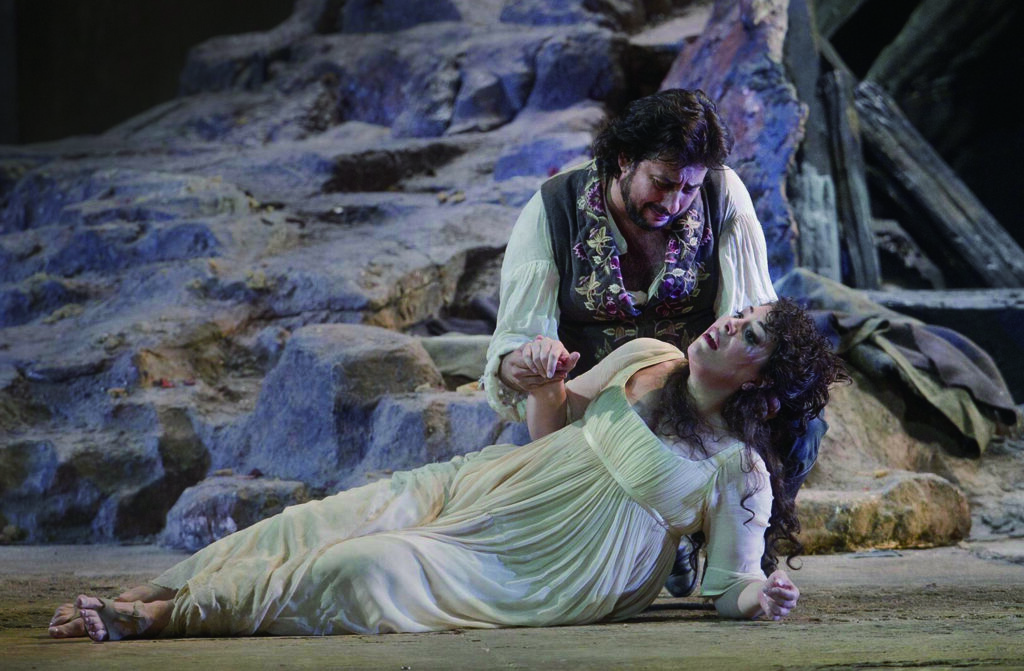
Composed by Giuseppe Verdi in 1853, Il Trovatore is adored by opera aficionados and appreciated by critics for its complex, moving and melancholic plot. Opera Hong Kong rises to the task of portraying tragic elements like child sacrifice and fatal curses in this classic work from an Italian libretto by Salvadore Cammarano. While the four acts are staged in the original language, English and Chinese surtitles allow full immersion in the performance for non-Italian speakers.

When: 11-14 May
Where: Hong Kong Cultural Centre, Tsim Sha Tsui
How much: From HK$220
Click here for more information.

Affordable Art Fair

May 2023 events

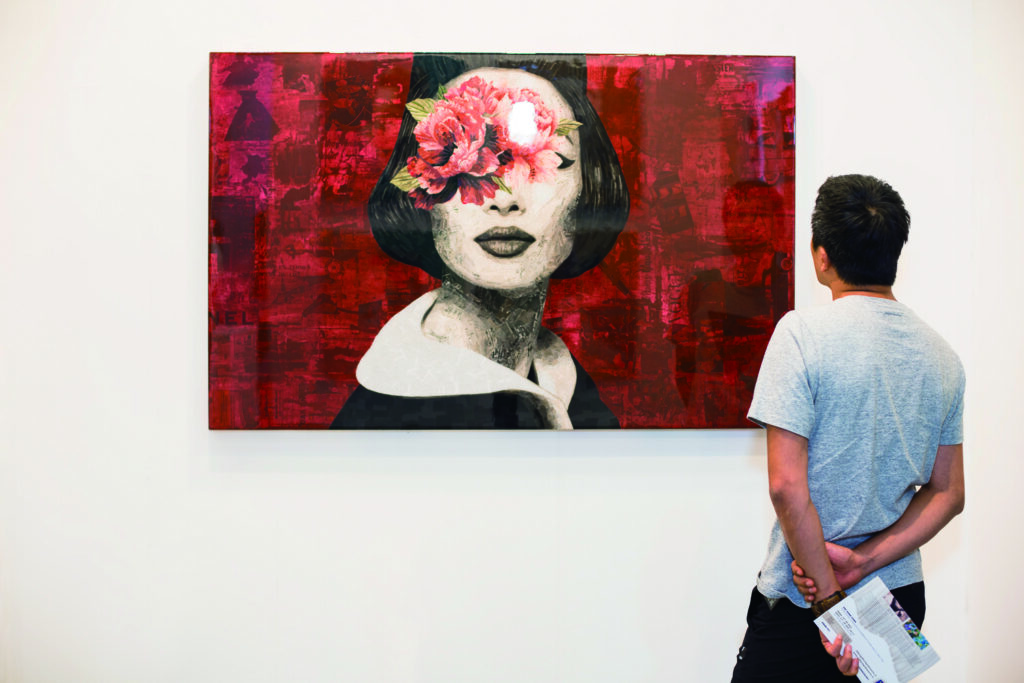
Affordable Art Fair has built its reputation by making art accessible to both enthusiasts and collectors. Visitors can discover art pieces priced at HK$1,000 and also ones that are valued at HK$100,000. Representing artists from Hong Kong and overseas, the art fair has even greater resonance this year since it celebrates its 10th anniversary. In addition to viewing inspiring cutting-edge works, interactive experiences such as tours and workshops immerse participants in a less elitist art world.

When: 18-21 May
Where: Hong Kong Convention and Exhibition Centre, Wan Chai
How much: From HK$180
Click here for more information.

Ice Tribe – Breathwork and Ice Bath

May 2023 events

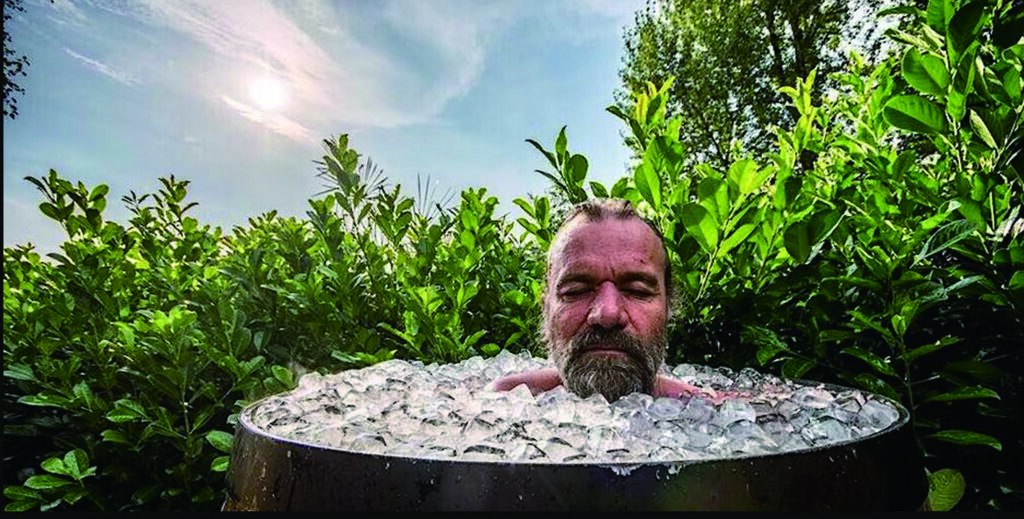
If you are happy to jump cold into every new wellness experience, then an Ice Tribe session by Primal Breathwork is definitely one you will embrace. Just as the name suggests, participants immerse themselves in ice-cold water as they follow the breathing-technique instructions of a certified breath specialist. The two-hour breathwork exercise, held monthly, is said to do wonders for your mental and physical health and help you manage stress levels too. From HK$400.. Primalbw.com

When: 13 May
Where: XP Fitness Hub, Central
How much: HK$400
Click here for more information.

Also Read: The A To Z Of Cold Water Therapy – Everything You Should Know About This Recovery Method

Treasure Tour (Hello) in Hong Kong

May 2023 events

Fourth-generation K-pop group Treasure is on a three-month tour of Asia, and Hong Kong is one of their eight-city stops. Given that the 10-member idol group under YG Entertainment has set the music scene alight in such a short period, the Hong Kong concert is sure to be a (fan) frenzied affair. Known as the Treasure Makers, the boy band’s followers will be gearing up to sing along to all the latest releases and, of course, enact the dance moves of Treasure’s viral hit, DARARI.

When: 20 May
Where: AsiaWorld Arena
How much: From HK$699
Click here for more information.

Take Your Time to Rediscover the City – A Sensory Journey by the Oriental Watch Company

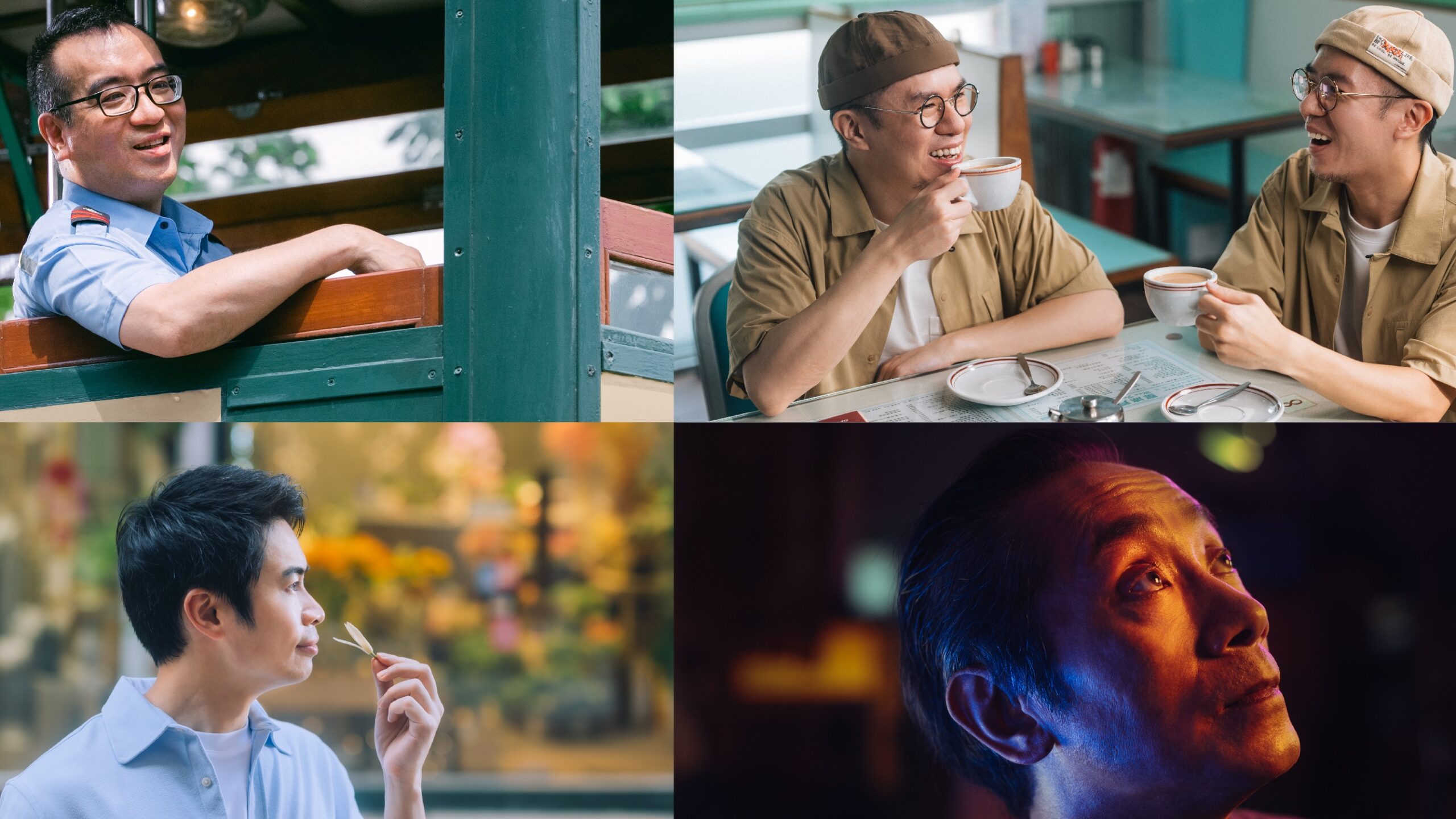
The Oriental Watch Company launched an advertisement campaign that encourages people to admire Hong Kong around them with four of their senses – sight, aroma, sound, and taste.

Naming the campaign Take Your Time to Rediscover the City, the bespoke horology brand has collaborated with Omelette Digital Agency to release four different videos each targeting a particular sensory organ.

One video titled Take Your Time to Listen has veteran tram driver Captain Luk Wenwei taking the viewers on a tram ride while he asks everyone to set aside their phones and pay close attention to the different sounds that the vehicle makes.

He adds that ding ding which is an onomatopoeia that is commonly associated with transport is not the only thing you can hear. There are other sounds like the coins shaking around in the money box and the tram moving on its tracks.

Another video called Take Your Time to See features Wu Chi-Kai who has been crafting neon lights since he was 18.

While pointing to the radiating beauty of these neon lights, he also reminds people that these lights are not very common as they used to be. Hence, he asks people to observe the city around them and snap a photo whenever they see a neon light as it is definitely something special.

For the tasting video, which is called Take Your Time to Taste, the Oriental Watch Company invited the Tsui brothers of the Milktealogy project who discuss Hong Kong’s buzzing tea culture which is locally referred to as the Cha chaan teng culture.

Then, for aroma, audiences see Jonathan, who co-owns an aromatherapy brand, in the Take Your Time to Smell video.

In this clip, he mentions the different smells people come across in just a single street in the city. He advises everyone to concentrate on the different scents as they can be pretty therapeutic.

This new campaign, which is an extension of the brand’s previous one Take Your Time, strives to bring out the charms of Hong Kong where the watch company gets its roots from.

Click here to learn more.