Seamless Serenity: Open concept, dual layers, expansive views – this redesigned Kowloon peninsula penthouse is top draw
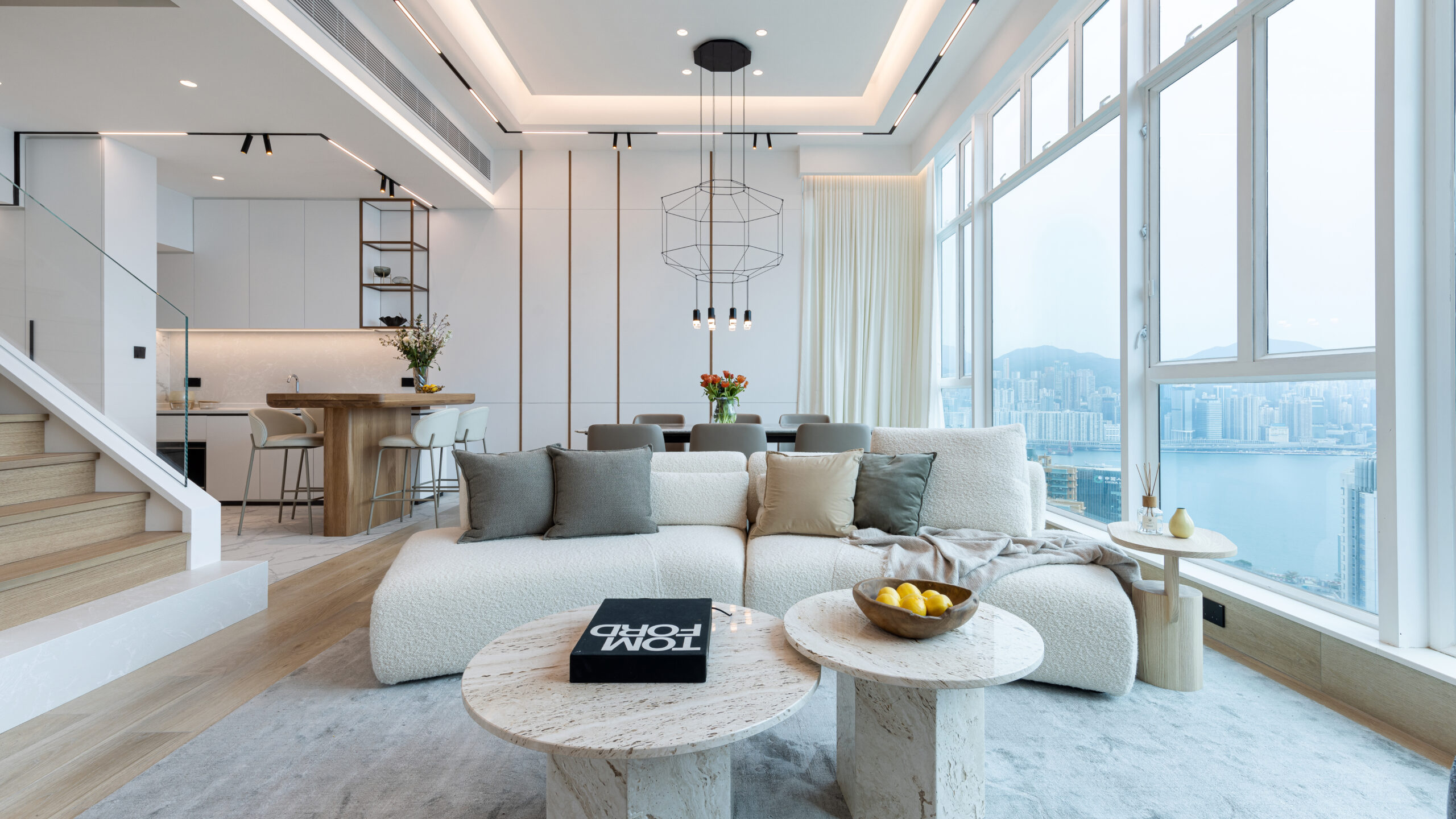
Modern, minimalist styling throughout a remodelled penthouse at Royal Peninsula in Hung Hom, Kowloon, reveals a masterclass in subtle extravagance. Entrusted to award- winning firm Grande Interior Design, the renovation of this 1,787-square-foot duplex apartment showcases a beautiful blend of aesthetics and practicality. Comfort merges with a unique design to epitomise sophistication and elegance.
From towering glass façades that offer awe-inspiring views to a meticulously designed floor plan that maximises space, the architectural brilliance here is captivating. High ceilings, an open-concept layout and seamless integration of indoor and outdoor spaces create an ambience that exudes both grandeur and tranquillity.
In the open-plan living quarters, plush sofas, custom-made cabinets and carefully curated décor reflect the discerning taste of the residents while ensuring optimal comfort. The materials used are premium, the furnishings are exquisite and the artwork is stunning. An interplay of subtle colours and natural light enhances the sense of serenity.
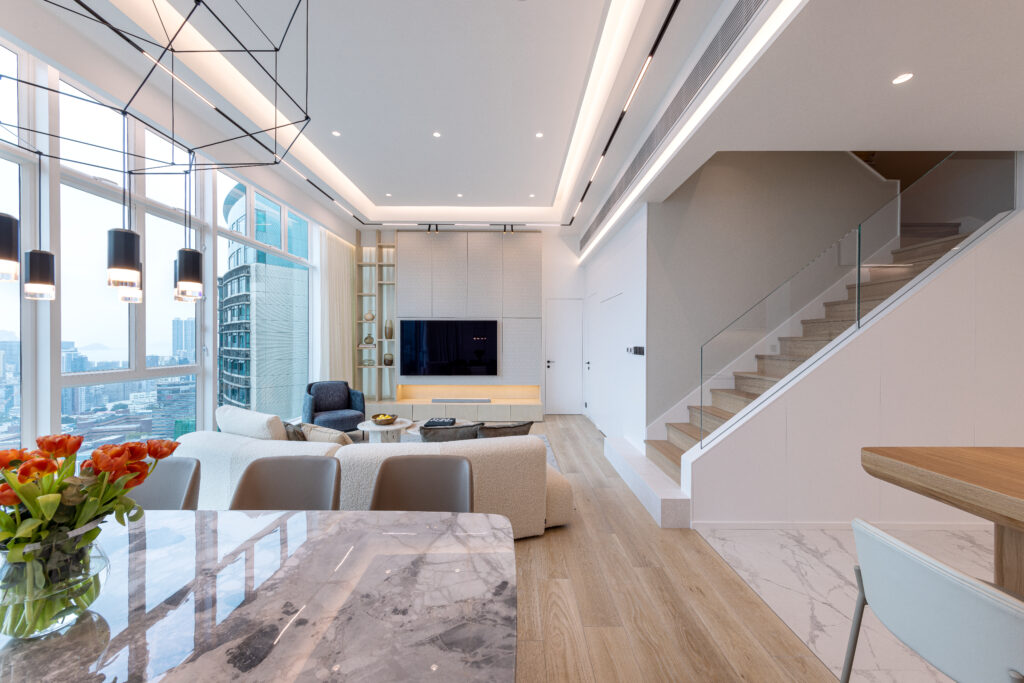
Light shades of wood for the floor and stairs, and bright white paintwork on the walls and ceiling follow the living room into the dining space and then the kitchen area. This luminous colour palette is highlighted by functional spotlights as well as a variety of lighting features to suit different activities. An airy frame ending in black- bronze pendent lamps drops down from the ceiling towards the grey marble-topped dining table, serving to mark the division between lounging and eating.
Modular furniture crafted from natural materials adorns the living area and allows for a flexible layout. The feature wall behind the TV has display shelves for art pieces and wooden cabinets for storage. Bronze lines running vertically along the back wall give a delicate layering to the dining area.
Parallel to the dining table, the designer has added an open bar area, with a wooden counter and high stools. It delineates the open kitchen equipped with spacious cabinets and attractive appliances that make preparing meals an enjoyable experience. Dressed in white and touched with marble, this area is coherent with the living and dining spaces.
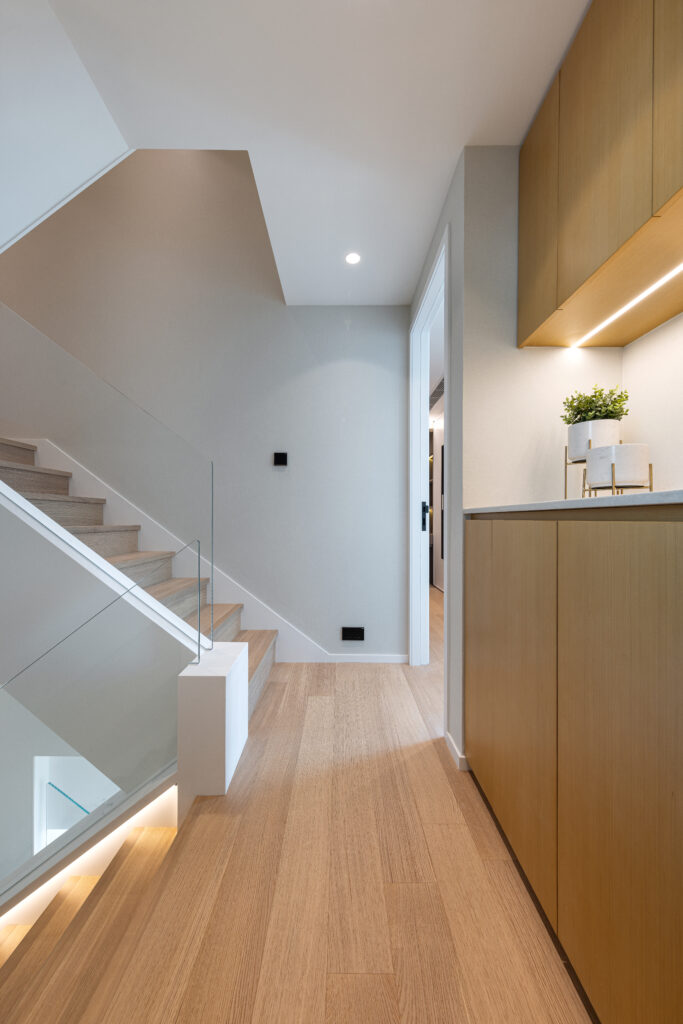
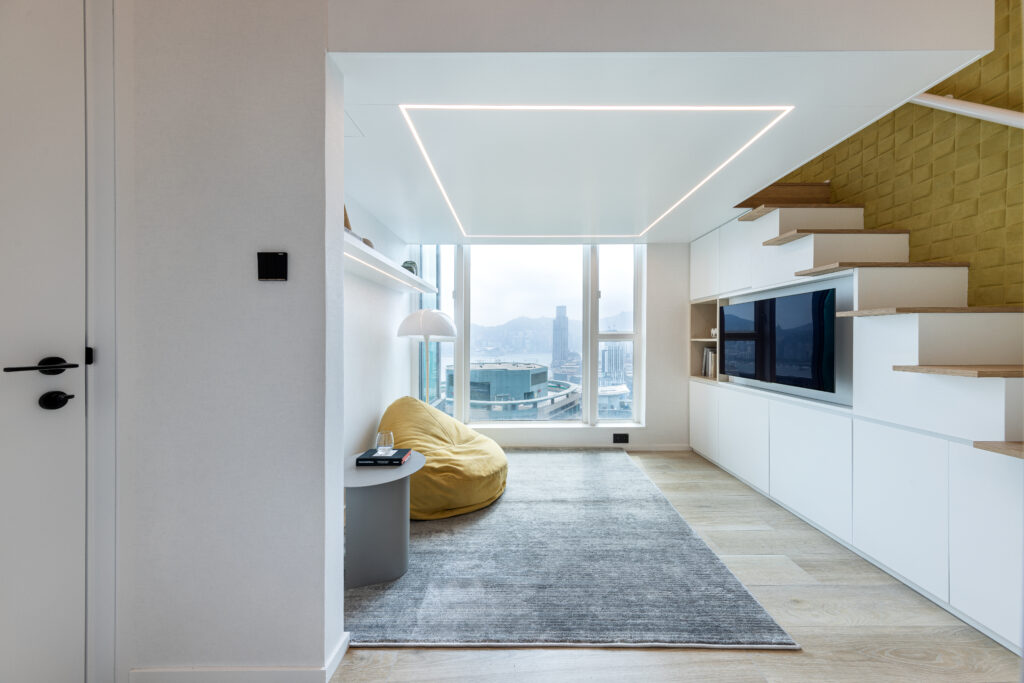
A former bedroom on this floor has been transformed into a multifunctional space by adding an upper level. The double-level design provides an area for entertaining and shared family activities below, and a guest bedroom with a private bathroom above, accessed by an internal flight of steps. It is another versatile feature of a home unhindered by boundaries.
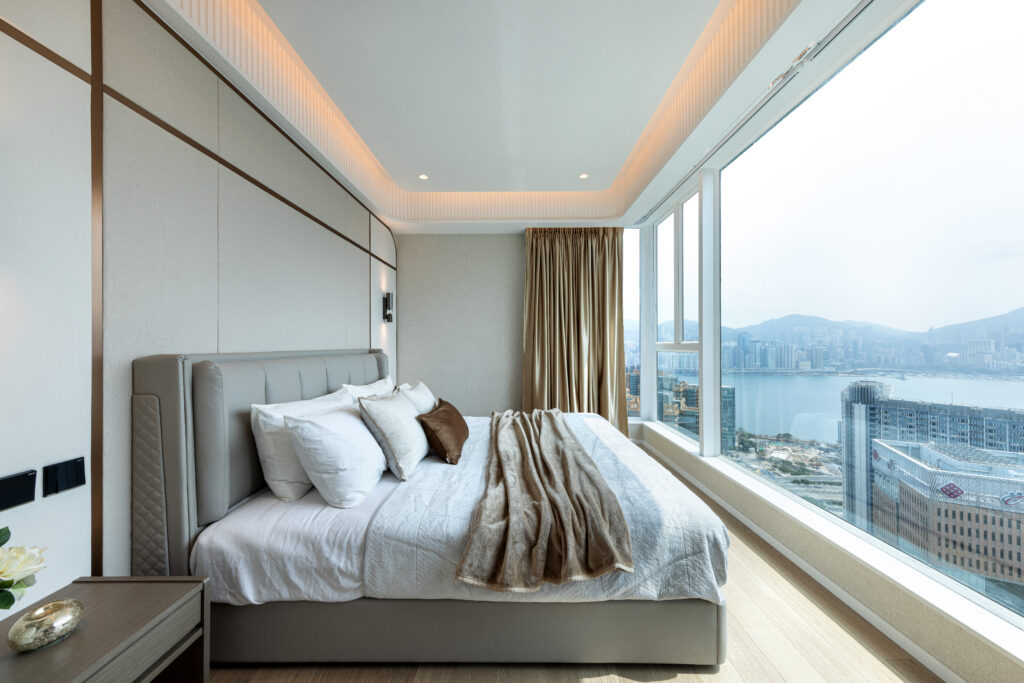
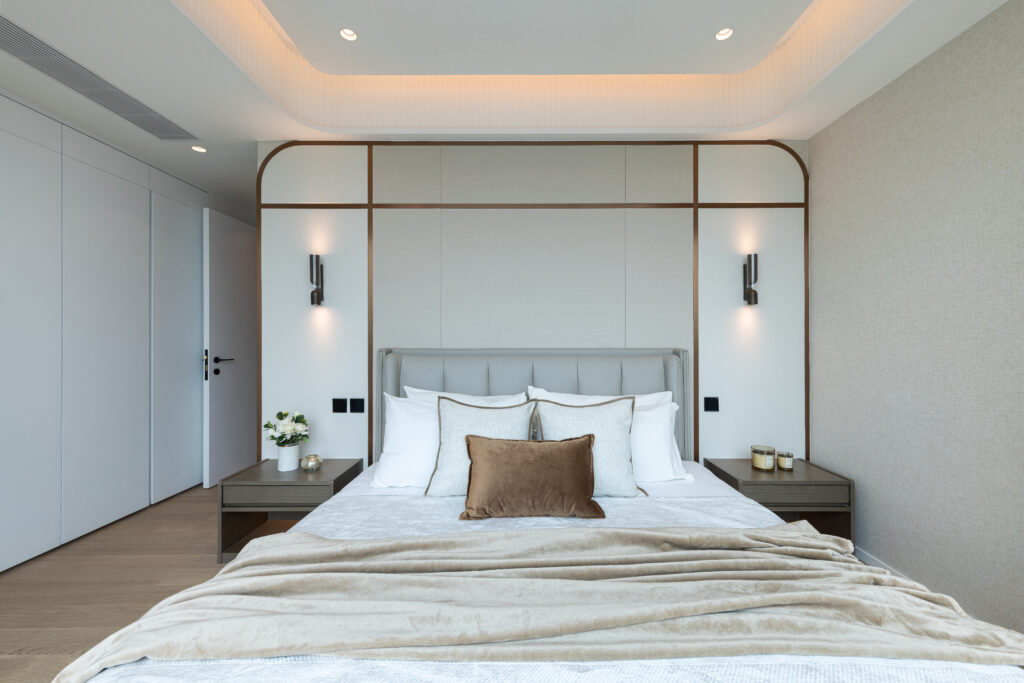
The staircase from the lounge that leads up to the more private second storey of the penthouse blends harmoniously with the interior by disappearing into the wall after the first landing. An earthy colour scheme distinguishes the master bedroom. The bronze lines of the dining area reappear, etching the wall behind the bed, while the grey fabric wallpaper provides texture. The bed faces an expansive window that affords stirring views of the urban outdoors.
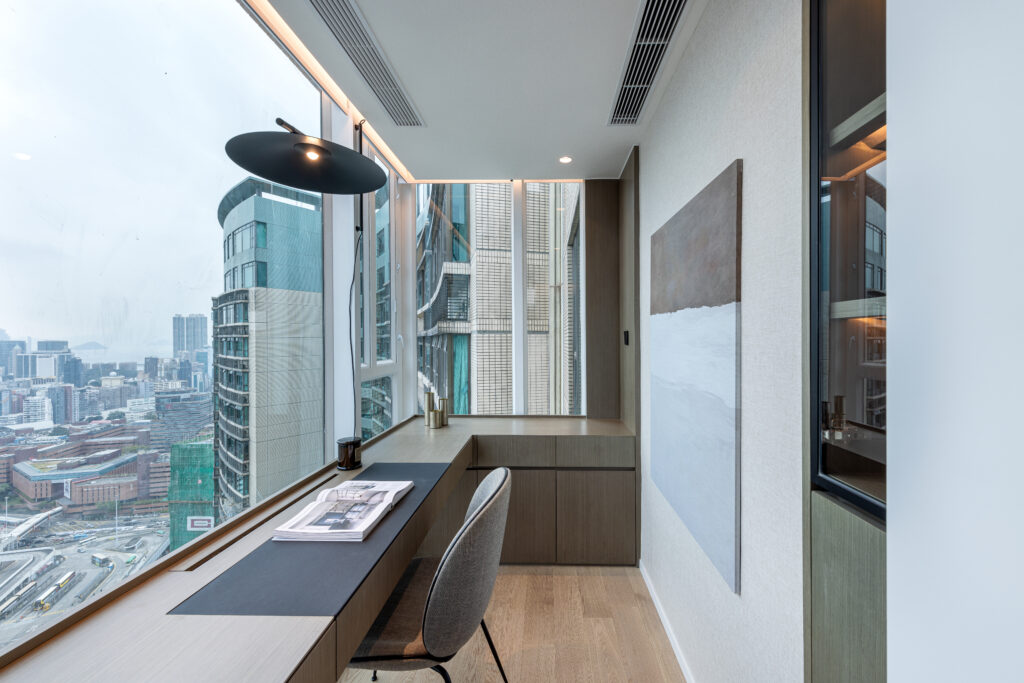
To suit the needs and lifestyle of the owners, the master suite spans a bedroom, study, walk-in closet and ensuite. A darker wood veneer creates a mature yet cosy environment. The closet is equipped with a dresser and high wardrobe to maximise storage, and the ensuite is furnished in relatively brighter tones with an abundance of glass and marble.
Adjacent to the master bedroom is their daughter’s room, where lighter earth tones evoke a more youthful ambience and textured wallpaper imparts a tranquil vibe. The ensuite here, which echoes that of the master bedroom, is accessed through a sliding door. A high wardrobe and tall mirror enhance the practicality and feeling of spaciousness in a compact closet.
The seamless flow of space and light throughout this apartment instils a sense of integration and intricacy. It is a home offering commanding views and a calming presence that makes you feel on top of the world.
Photos: Grande Interior Design
Heat Resistance: Tips to keep hydrated and avoid heatstroke as the world gets rapidly warmer
Global warming is not only a threat to the planet as a whole; it also affects the health of every individual inhabitant. July was reportedly the hottest month on record around the globe, and the number of heat-stressed days is only set to increase.
Indeed, a study published in The Lancet estimated that about 356,000 deaths worldwide were related to heat in 2019. And the World Meteorological Organisation is now warning of global warming breaking through the crucial 1.5°C cap above pre-industrial temperatures in the next five years.
With record-tumbling baking-hot spells happening more frequently, it is vital that we keep our cool and take precautions to safeguard our well-being.
Hong Kong warning system
The authorities in Hong Kong are acutely aware of the severity of the situation. A new three tier Heat Stress at Work Warnings system was introduced earlier in the summer to help tackle heatstroke among those working outdoors or without air-conditioning. If the Hong Kong Observatory’s Hong Kong Heat Index (HKHI) hits 30, this will trigger a recommended rest time for each hour of labour depending on whether the workload is “light”, “moderate”, “heavy” or “very heavy” and the level of the alert (amber, red or black). The heat index uses data that considers relative humidity, the intensity of sunlight, temperature and hospitalisation rate.
Workers deemed to be involved in “very heavy” workloads during an amber alert will be recommended to take 45 minutes of rest after working 15 minutes every hour. Those involved in this level of intense physical activity are advised to cease work completely if the HKHI hits 32 or above – red and black warnings. Workers at lower intensity of physical labour would be advised to rest for varying periods of time (or even suspend work).
The warning system is operated by the Labour Department with the Observatory assisting to broadcast the message, which can be received via the GovHK Notifications or MyObservatory mobile applications. The guidelines inherent in the warning system are only voluntary measures, though, and are not legally binding. A construction worker in Hong Kong lost his life from heatstroke this summer during an amber heat alert.
Water everywhere
The Department of Health’s Centre for Health Protection (CHP) consistently urges the community to take heed of necessary measures against heatstroke and sunburn in very hot weather. “The public should carry and drink plenty of water to prevent dehydration while engaging in outdoor activities,” warned a CHP spokesperson recently.
The importance of staying properly hydrated during hot summer days has long been advocated by medical professionals. Water is known to perform vital functions such as regulating body temperature, flushing waste from the body, supporting a healthy immune system, lubricating and cushioning joints, as well as promoting healthy digestion and improving memory, alertness, mood and sleep quality.
Some health experts suggest consuming 13 cups of beverages a day, including water. However, this total depends on the level of activity, climate and overall health. Hot and humid places mean people tend to sweat more and it is important to keep water on hand. Drinking before, during and after a workout is also essential.
Dehydration danger
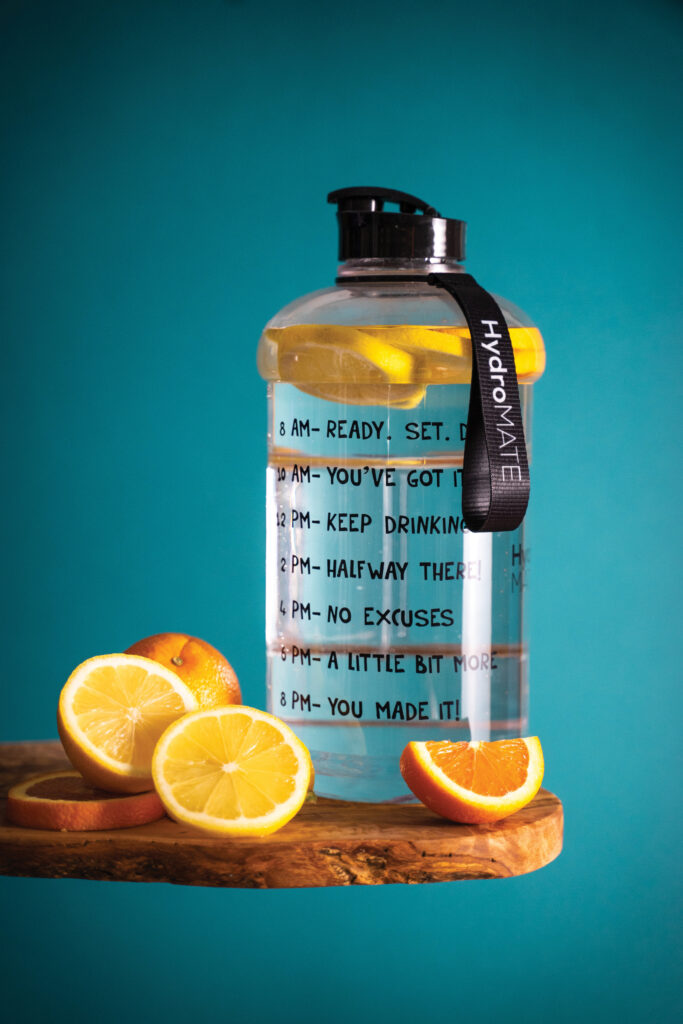
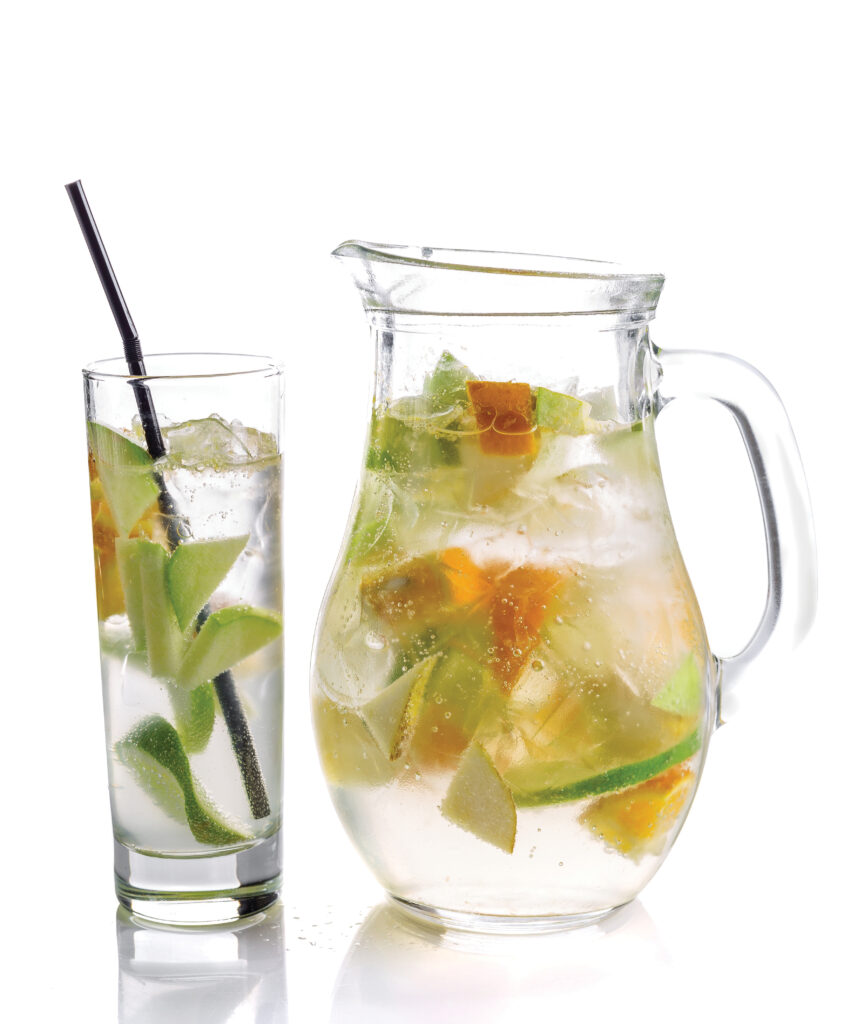
Tips for optimum hydration include ingesting a glass of water (about 8 fluid ounces) upon waking and before bedtime, drinking throughout the day, infusing water with slices of fruit, vegetables or herbs, and using a favourite water bottle to encourage fluid uptake.
Not all liquids are recommended, though. “Those engaged in strenuous outdoor activities should avoid beverages containing caffeine, such as coffee and tea, as well as alcohol, as they speed up water loss through the urinary system,” said the CHP spokesperson.
The World Health Organization (WHO) advises to check the colour of urine, and to drink more if it is dark. They warn against drinking distilled water as it leaches all-important electrolytes.
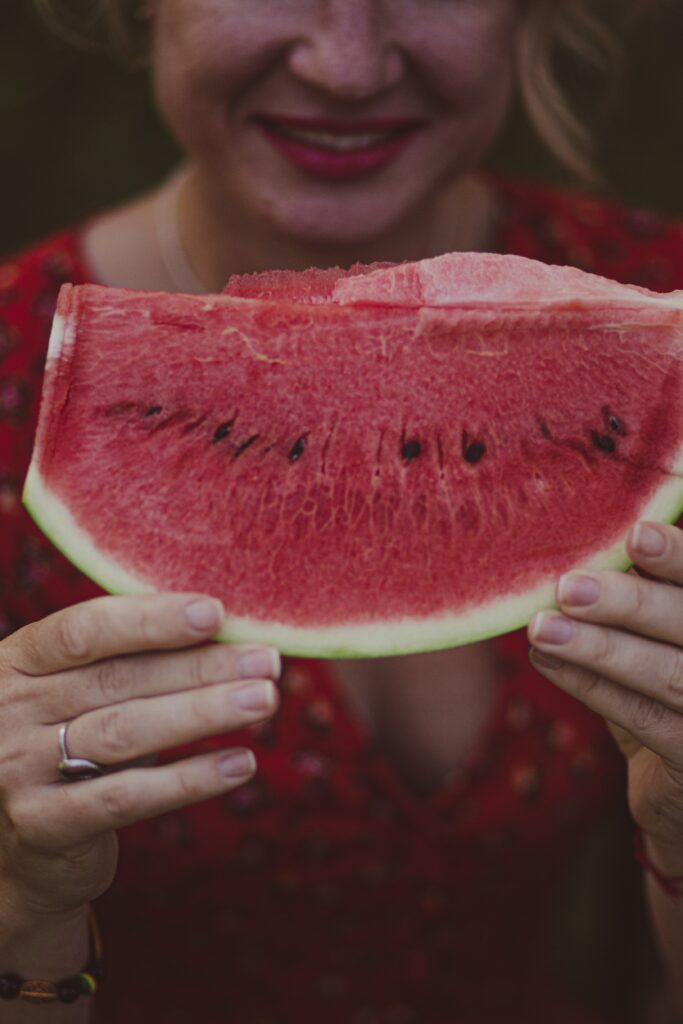
Apart from dark urine, there are a multitude of signs of possible dehydration such as thirst, flushed skin, headache, fatigue, increased body temperature, dizziness, irritability, constipation and nausea. Possible options to try to alleviate the situation include drinking electrolyte-infused water, Pedialyte, Gatorade, coconut water and watermelon, which contains 92 percent water.
Combatting heatstroke
Some groups are more vulnerable to heatstroke than others. According to the CHP, children, the elderly, the obese and those with chronic illnesses, such as heart disease or high blood pressure, “should pay special attention”.
These dos and dont’s will help reduce the risk of heatstroke:
– Wear loose and light-coloured clothing to reduce heat absorption and facilitate sweat evaporation and heat dissipation.
– Avoid vigorous exercise and prolonged activities like hiking or trekking as heat, sweating and exhaustion can place additional demands on the physique.
– Perform outdoor activities in the morning or the late afternoon.
– For indoor activities, open all windows, use a fan or use air-conditioning to maintain good ventilation.
– Do not stay inside a parked vehicle.
– Reschedule work to cooler times of the day. If working in a hot environment is inevitable, introduce shade in the workplace where practicable.
– Start work slowly and pick up the pace gradually. Move to a cool area for rest at regular intervals to allow the body to recuperate.
The WHO advises keeping a good supply of medicines, batteries and frozen or tinned food at home to avoid frequent trips to the shops during especially hot days.
Sunlight protection
As the sun blares down on these days of increasing heat, the Ultraviolet (UV) Index released by the Hong Kong Observatory is a helpful tool. When the UV Index is high (6 or above), avoid direct exposure of the skin and the eyes to sunlight.
The following measures will help protect against UV damage when out in the sun:
– Wear long-sleeved and loose-fitting clothes.
– Wear a wide-brimmed hat or use an umbrella.
– Seek a shaded area.
– Don UV-blocking sunglasses.
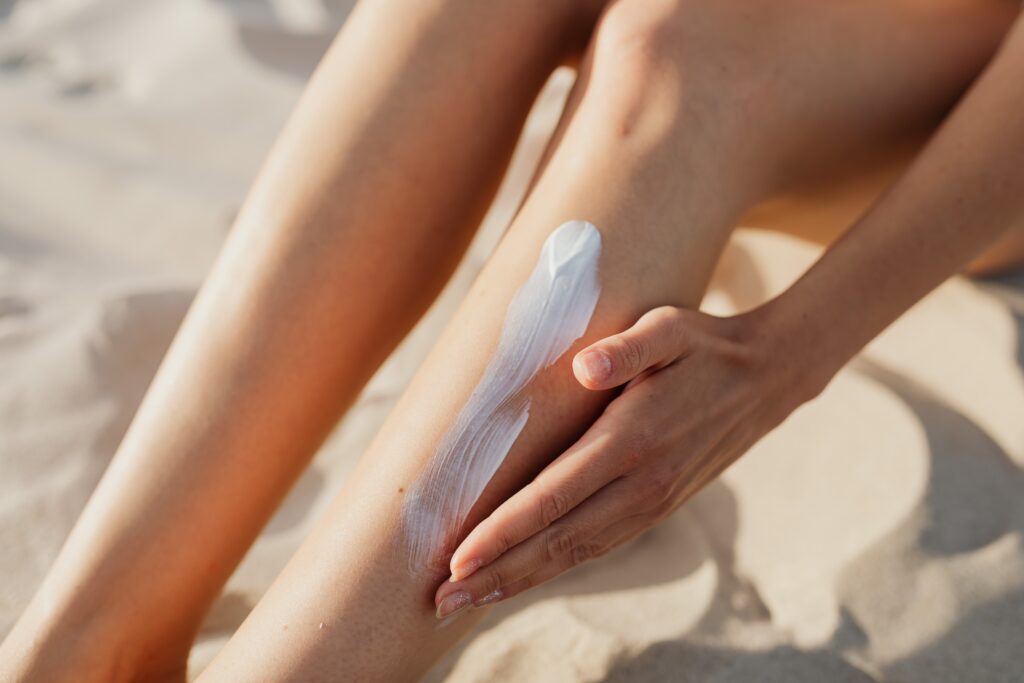
– Apply liberally a broad-spectrum sunscreen lotion with a sun protection factor (SPF) of 15 or above, and reapply after swimming, sweating or towelling off.
– When using a DEET-containing insect repellent, put on sunscreen first, then the repellent.
Cold comfort
While there is plenty for the public to do and be aware of to adapt to extreme heat, measures on an individual level and government action plans like those adopted in Hong Kong do not tackle the root cause of the problem. Global warming is a result of climate change generated most significantly by greenhouse gas emissions. Until we get serious about curtailing these, our heat stress is only going to get worse.
Sure Hammer: Having been around the auction block for 27 years, Robert Sleigh now drives Philips forward in Asia
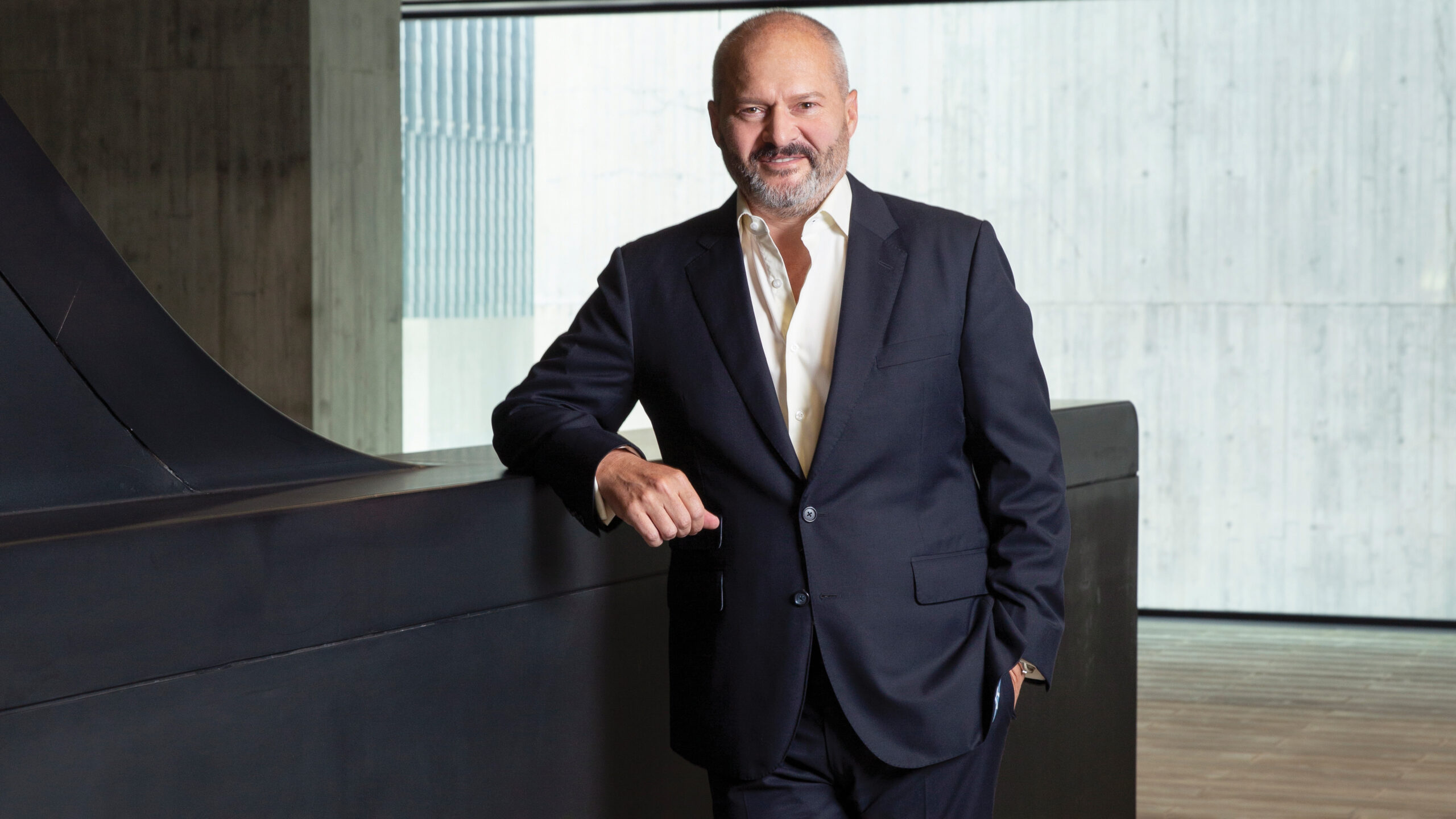
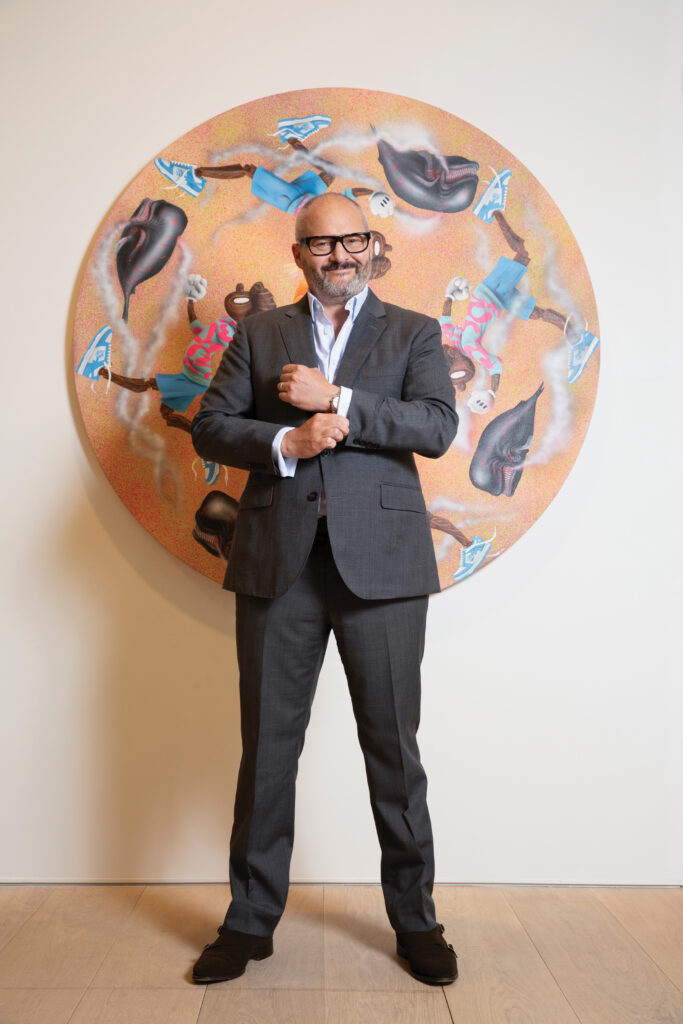
It was perhaps a “somewhat undercover” wine-appreciation society started by Robert Sleigh and a schoolfriend that heralded an illustrious career spanning the idyllic vineyards of France, the hurly-burly of New York, and now the international melting pot of Hong Kong.
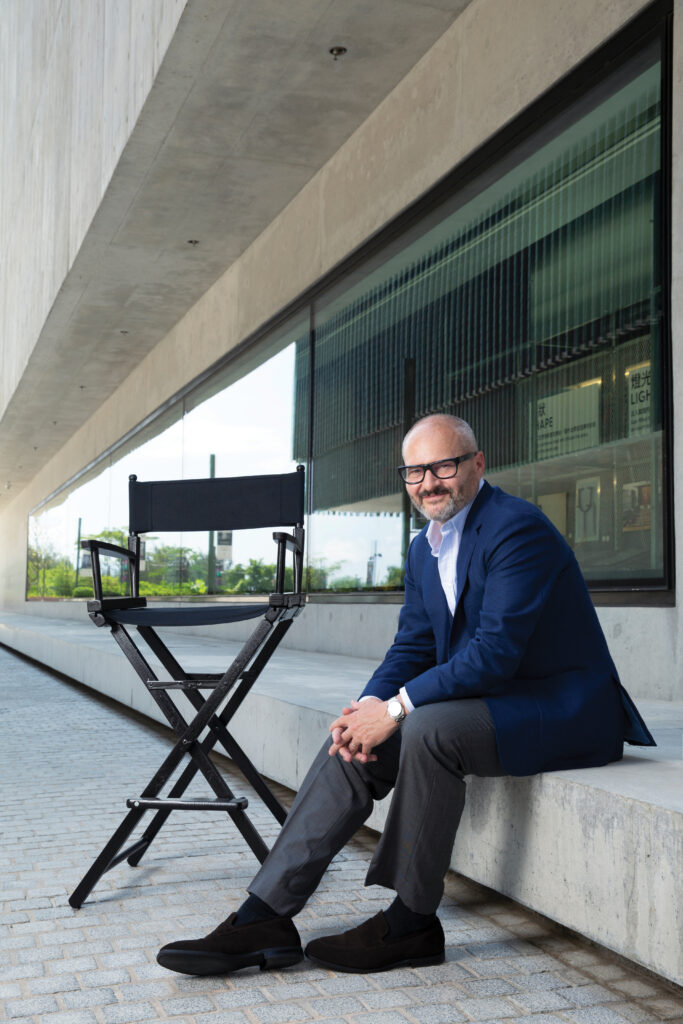
Aptly ensconced in smart new headquarters at WKCDA Tower in Hong Kong’s cultural hub, the Managing Director, Asia, of Phillips talks fondly of those early years. Sleigh’s brief now extends beyond the world’s finest bottles as he oversees the regional strategy of the historic auction house known for its 20th-century and contemporary art and luxury sales.
The Briton’s early passion for wine steered him into a driving job in London with wine merchant Haynes, Hanson & Clark. Crucially, the role allowed him to take his Wine & Spirit Education Trust (WSET) exams, as at the time only those employed in the trade could sit them. Then, as the UK economy stagnated in the early ’90s recession, he sought broader experience that would differentiate him from the crowd. Meeting some Burgundy producers at a wine-tasting event, he promptly asked if he could work for them.
Burgundy benefits
Sleigh found himself at a small domain in Beaune where the grapes were handpicked from its own vineyard and the wine crafted and bottled onsite. “I did one viticultural year in a way; it was vineyard work and cellar work, and when I first got there, they were still pruning the vines,” he recalls.
The labour was rewarding and he learnt the essentials of vinification. “Winemaking is 90% cleaning,” he says with a smile. “It is cleaning everything spotless so that you do not get bacteria in the wine and it all turns to vinegar.”
He spent three years in France and is now an unashamed Francophile who would happily drink only French wine. His second job in Burgundy was at Maison Louis Latour, a leading négociant-éleveur with many English-speaking buyers. He liaised with clients and assisted with customer service and marketing.
US points
It was this experience that likely helped Sleigh secure a “career-defining” move to the US, where in 1996 he joined the wine department of Sotheby’s auction house in New York. Aside from demand for the cult wines of Napa Valley, he noted other distinct differences in the US wine market compared to Europe. “The Americans are very much led by critic scores; the likes of Robert Parker at the time, who exerted a very powerful influence. They are buying on the 100-point scoring system,” he says.
Hong Kong hub
He was called to Asia in 2010 to manage the huge demand in the Hong Kong wine auction sector following the reduction and then elimination of tax on wine in the territory.
With the West still reeling from the 2007-2008 Global Financial Crisis, coupled with the pent-up demand for Western luxury goods from Chinese consumers with huge disposable incomes, this “perfect storm” propelled Hong Kong into the wine hub of Asia.
“The wine market has never seen anything like it and probably never will again,” says Sleigh, relating how prices took off and Hong Kong became the most important market within 18 months. “Just the amount of stimulus that happened then – it was an extraordinary time.”
Auction house
After more than 25 years at Sotheby’s, Sleigh assumed his new position with Phillips at the start of the year, tasked with a broader role in the art and luxury sector. Asian-based clients clinch about a third of Phillips’ sales, and he believes their new Asia headquarters with a purpose-built exhibition space – the largest premises of any auction house in Hong Kong – increases their visibility and power in the Asian market. “Being the first auction house to have our own permanent galleries and auction room leaves no doubt about how committed Phillips is to Asia,” he stresses.
This site, occupying the lower six floors of WKCDA Tower near the M+ museum and the Hong Kong Palace Museum, has definite advantages. “The possibilities that this location holds for Phillips are endless, especially as the West Kowloon Cultural District continues to expand and thrive,” he says. “We are excited to be at the heart of it and play an active role in its evolution.”
Early indications suggest the move to West Kowloon will be a successful one. Phillips’ 20th Century & Contemporary Art exhibition in March and April, as well as previews of watch and jewellery lots, attracted 30,000 visitors, and their inaugural evening sale there yielded notable results – Yoshitomo Nara’s Lookin’ for a Treasure sold for HK$84 million, and Yayoi Kusama’s Pumpkin fetched HK$56 million.
Asian ascendency
According to Sleigh, the art world once operated in two separate ecosystems – East and West – but Hong Kong is now part of a unified global market, with a huge collecting base that extends from Asia to all parts of the world and vice-versa. He talks of a transformation of the playing field: “It now comes as no surprise that the highest-value lot in our long history – a masterwork by Jean-Michel Basquiat – came from the collection of Yusaku Maezawa and was sold to another collector based in Asia for US$85 million.”
Since arriving at Phillips, Sleigh has noted a much younger clientele viewing contemporary art, 20th-century art, design, photographs and watches compared to those interested in wine. He is excited by how collecting is becoming integral to the Asian lifestyle – with many people travelling to the art fairs in Taipei, Tokyo, Seoul and Singapore – and sees huge growth potential and less of a weight of tradition in the art market here.
Sales drivers
Eternally fascinated by the cycle of the auction industry, Sleigh has conducted literally hundreds of sales during his career. He believes the auction ritual remains “a compelling call to action” for unique and valuable items and will always play a role when there is competition for a desirable collectible. There are those who say that all auctioneers are frustrated actors, and though Sleigh remains unconvinced by this characterisation, he concedes he has known some who like “being there in front of the world!”
He describes how having fallen asleep on a plane whilst watching the documentary The Truffle Hunters, he woke with a start, possibly due to hearing his own voice eerily on the headphones. It transpired that the director had taken an excerpt from a recording of a truffle auction for charity he performs every year.
Indeed, charity is close to his heart. He is regularly involved in charity auctions and his wife, Libby Alexander, is the co-founder and CEO of Splash Foundation, which provides swimming lessons to those in need. “We are lucky we live in Hong Kong and we are very fortunate in many ways,” he says. “There are a lot of people who are less fortunate, so I think it is important [to give back].”
Interview by: Neil Dolby Photographer: Jack Law Art Direction: Joseff Musa Fashion Stylist: Jhoshwa Ledesma Videographer:Jack Fontanilla Hair & Make Up: Owen Ko Venue: Phillips Asia HQ in West Kowloon
Bleu De France: Belon shifts the epicentre of Hong Kong’s French food a little closer to the 10th arrondissement
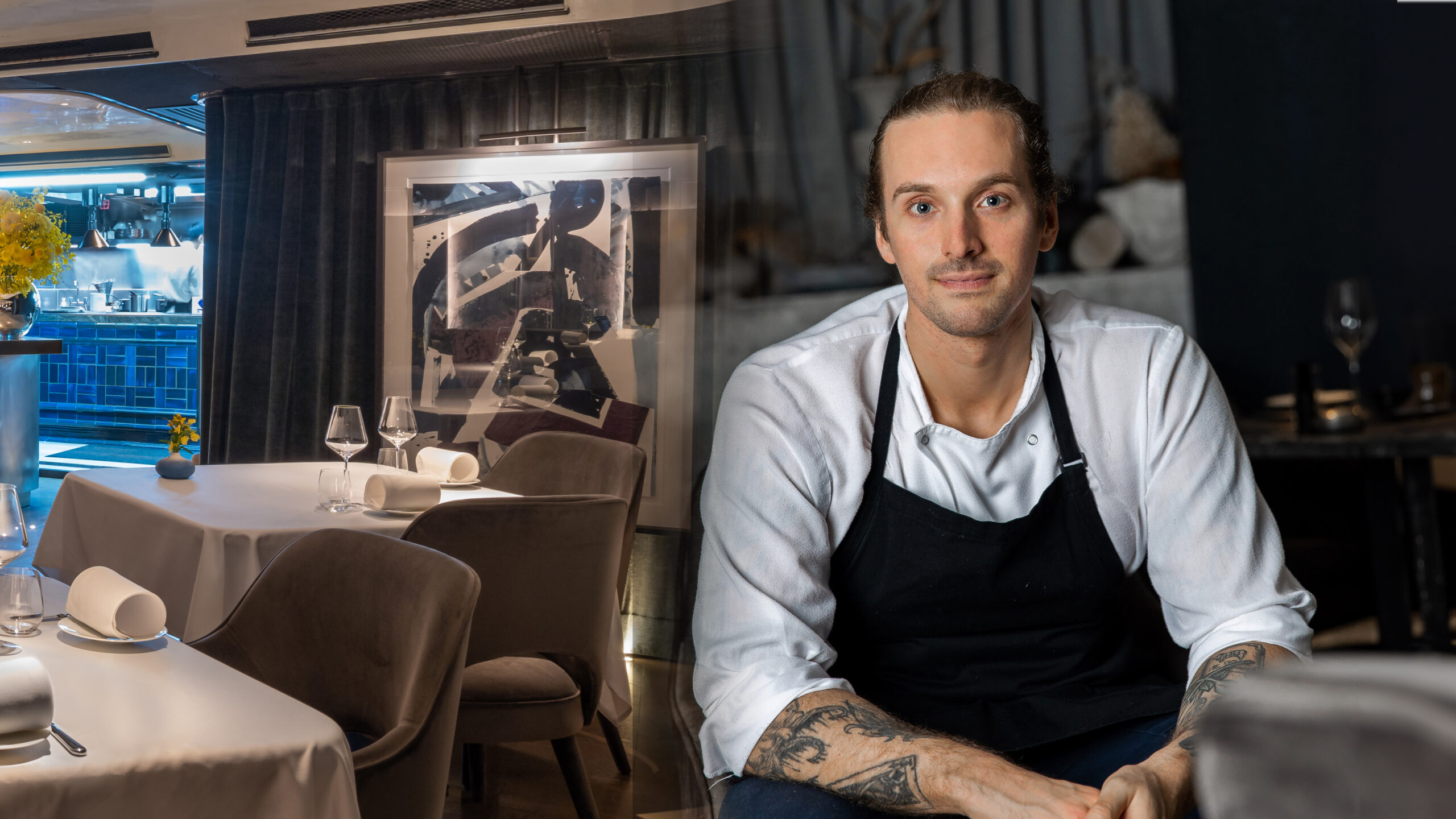
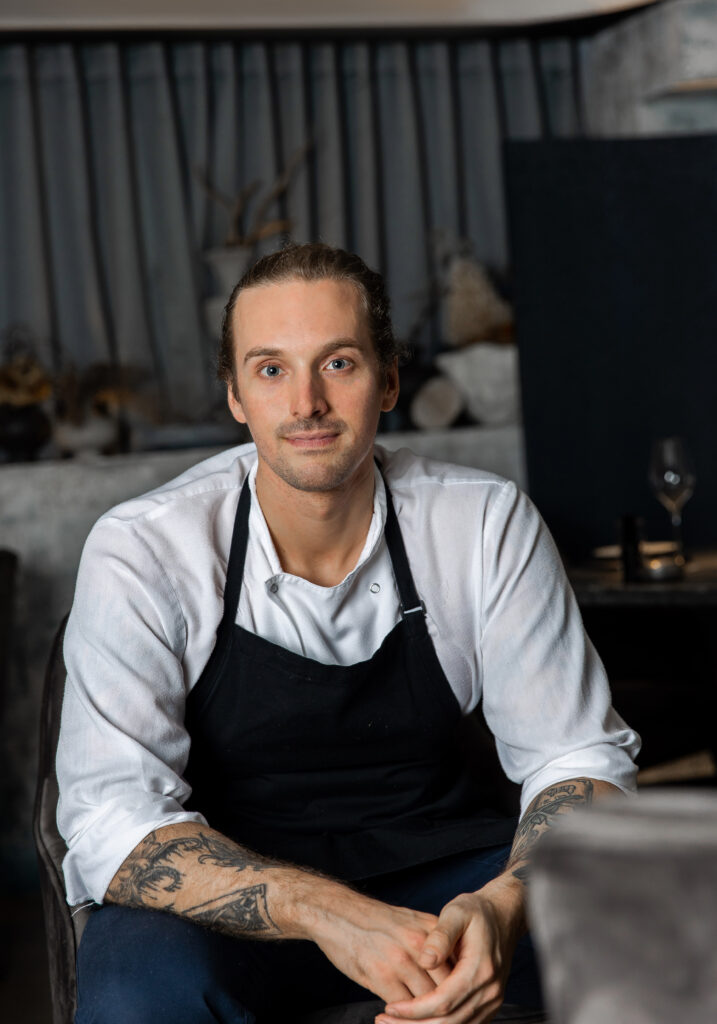
There are grand French fine dining rooms, and then there is Belon. The path it has travelled has taken many detours. When the restaurant opened, its goal was to be a French bistro, not a Michelin starred establishment, however, it quickly developed a following.
Cut to 2020, Chef de Cuisine Jacob Zuidervliet and the rest of the gastronomic geniuses behind Belon’s highly praised reputation extended the rustic luxe interior design, the ingredient provenance, and the preparation-focused dishes that have graced the pages of many publications and social media to a dining destination accessed via Elgin Street in SoHo.
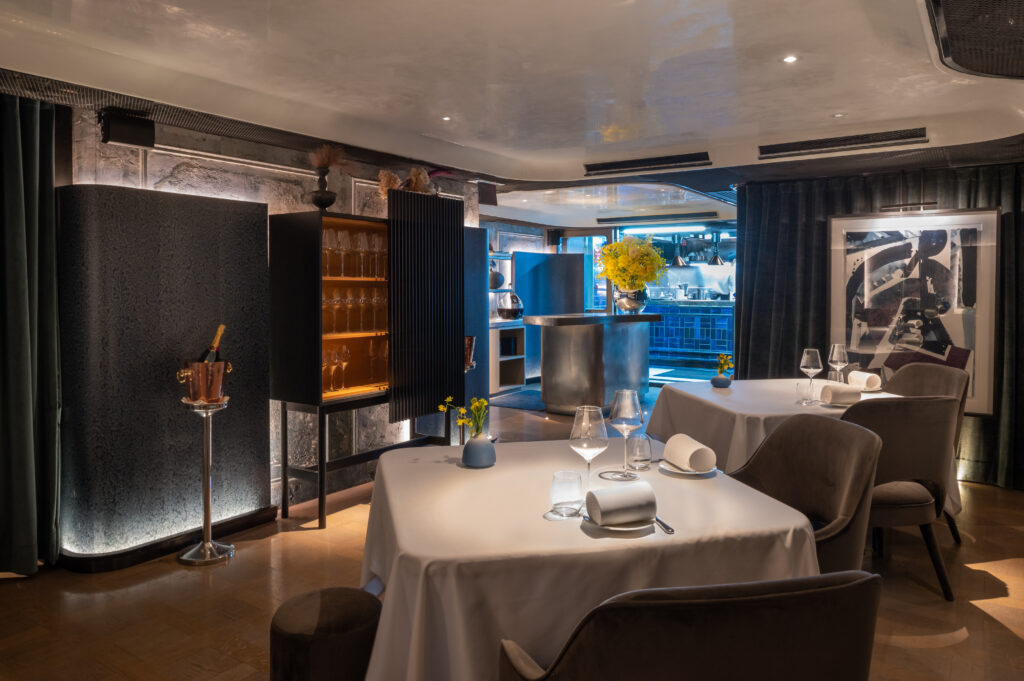
Given the hip neighbourhood locale, Belon still exudes a surprisingly exuberating fine-dining aesthetic with plaster artwork revealing a history of the fleur-de-lis motif. At the same time, it pegs itself as a homey, unhurried restaurant with an easygoing vibe – courtesy of the ’90s and early noughties hip-hop music in the background – that hides the greater ambitions of the chefs.
“I like to think that we are introducing guests to something they would expect in the grand restaurants of France, both in terms of culinary execution and service in our intimate SoHo dining room,” says Chef Jacob, “We are focused on building a restaurant experience where there is no sleight of hand or showmanship; it is about providing solid, friendly service and food that is prepared with excellence and presented in a way that is sincere to its origin.”
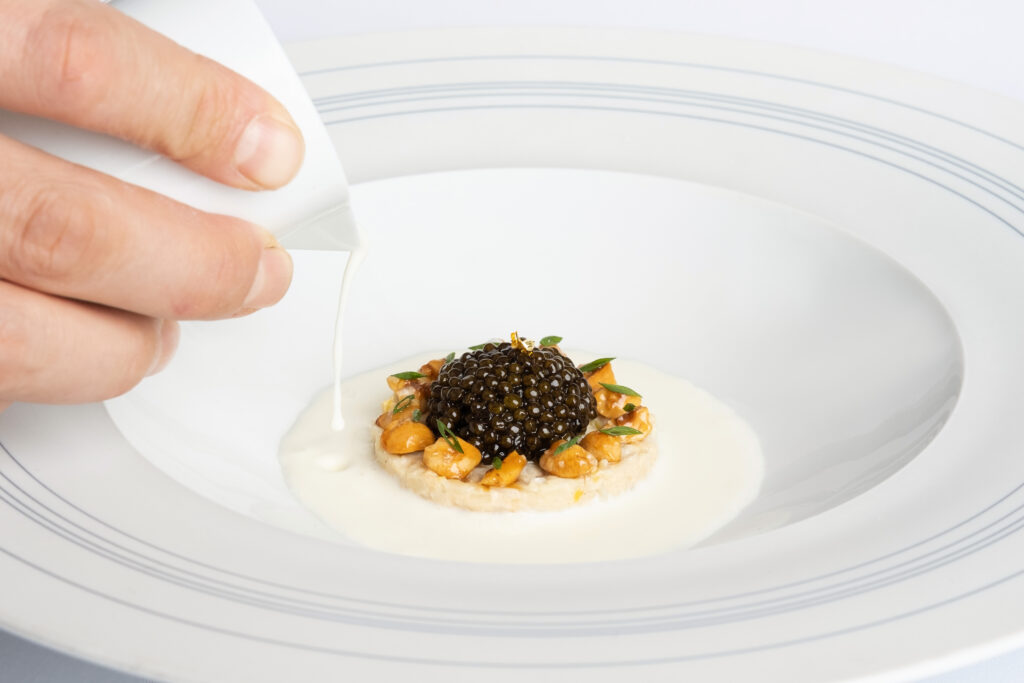
Dungeness Crab with White Asparagus and Caviar
With month-on-month menu updates, the cascading a la carte supports this endless dedication, smoothly flowing from apéro or predinner, to a tasting menu and latenight drinks while featuring distinctive and modern French staples.
The team stretches the limits of a tiny kitchen, working the wood-fired oven over time. Precision is the driving force to their efficiency and everything must be timed so that the heat levels can quickly adjust.
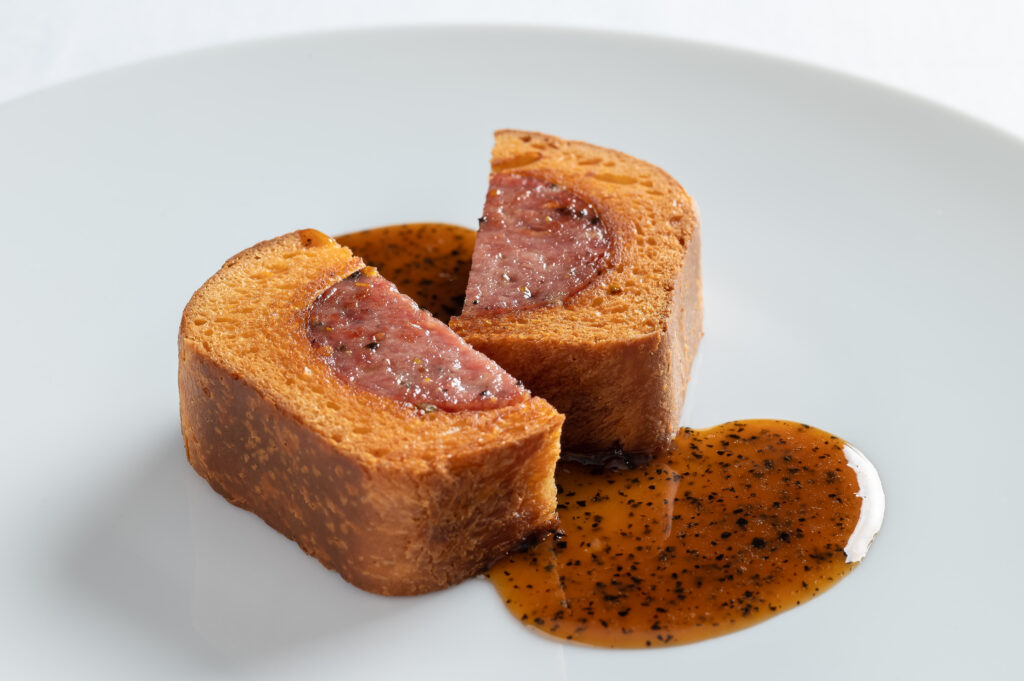
A case in point is Cervelas en Brioche, smooth pork sausage cooked inside brioche dough, the chef’s personal favourite from his vast list of creations. The commitment to quality, though, starts long before anything is fired up. “It is a deceptively simple dish when it is served, but the amount of time, practice and technique that goes into preparing it is staggering. It is an excellent representation of our style of food, simple-looking but complex in flavour and technique.”
Cervelas en Brioche
Though French, Belon brings inventive Asian touches to a playful menu. On our visit, we begin with the unabashedly French starters of Smoked Saba (mackerel) with Shishito Pepper and Yellow Courgette; Dungeness Crab with White Asparagus and Caviar; and Canadian Spot Prawn with Ravioli and Champagne Sauce.
A medley of mains comes right after: the bistro inspired Kinmedai with Cassoulet and Lardo di Colonnata; Hokkaido Scallop with Morel Farci and Sauce Hollandaise; and Quercy Lamb Saddle with Walnut and Swiss Chard.
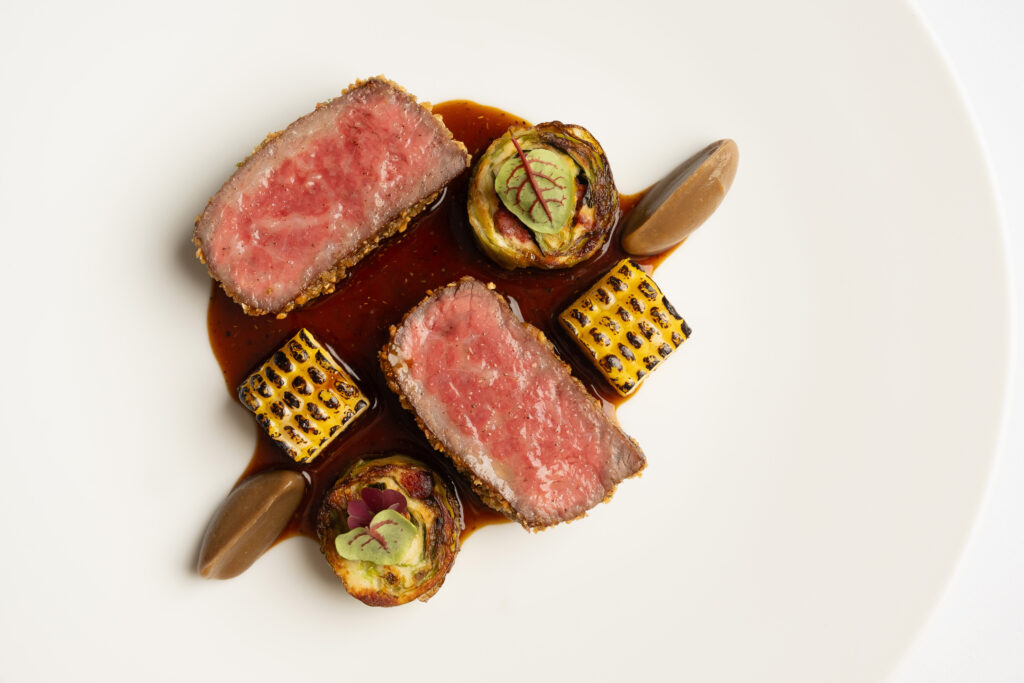
These are the temptations that will make first-timers and regulars return for more. However, the true highlights of Belon’s taste test come in the form of Whole Roasted Chicken with Petits Pois à la Française; and Miyazaki Wagyu Striploin with Pomme Aumônière and Sauce Barigoule.
Miyazaki Wagyu Striploin with Pomme Aumônière and Sauce Barigoule
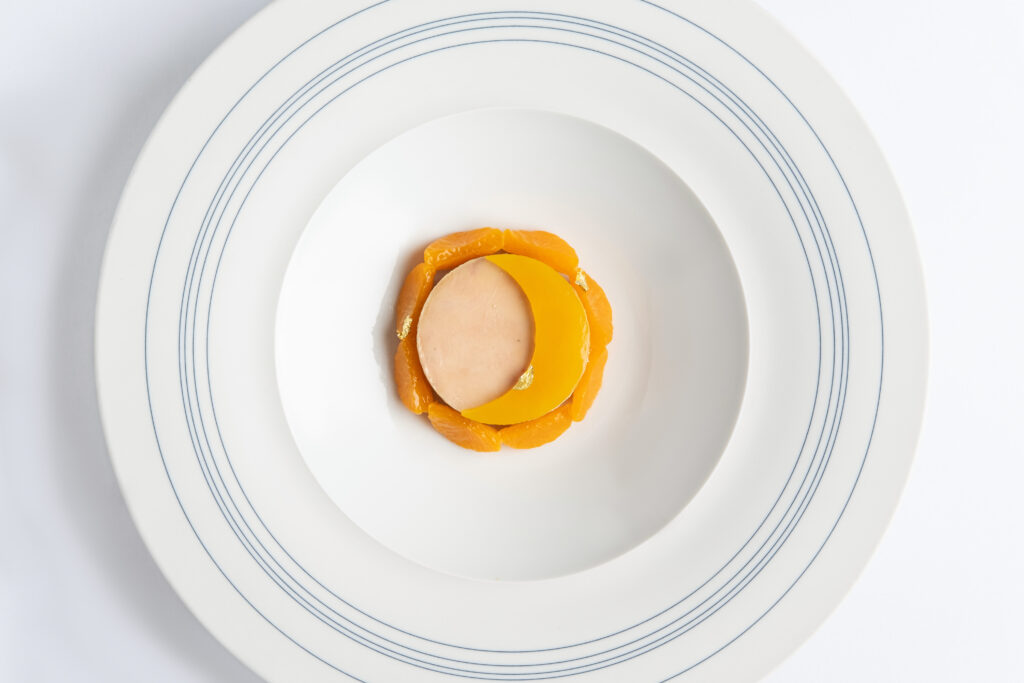
We close with an assortment of decadent desserts such as Gâteau Basque with Sherry and Foie Gras; Rhum Baba with Mango; Honey and Passion Fruit Millefeuille; and Black Truffle Gâteau Marjolaine. A portfolio of wines and other tipples complete the culinary escapade.
Gâteau Basque with Sherry and Foie Gras
A faultless dinner recommendation, Belon is infused with a deep indigo hue and understated floral arrangements, while hints of underwater geometries of fish scales, coral and sponges recall found pieces from an abandoned shipwreck that serve as inspiration for its name and the dishes. More than good food and beyond a gateway to French cuisine, this restaurant proves that it is possible to give the level of attention palates deserve.
Text: Joseff Musa Photos: Belon Video: Jack Fontanilla
Ministering Angel: Maggie’s Cancer Caring Centre & Hong Kong Ballet champion Anne Wang Liu does all she can from the heart
“Super Speed!” proclaims Anne Wang Liu when asked which superhuman ability she would choose. A self-proclaimed multitasker, she has mastered the art of operating at speed as she juggles motherhood and her life passions one day at a time.
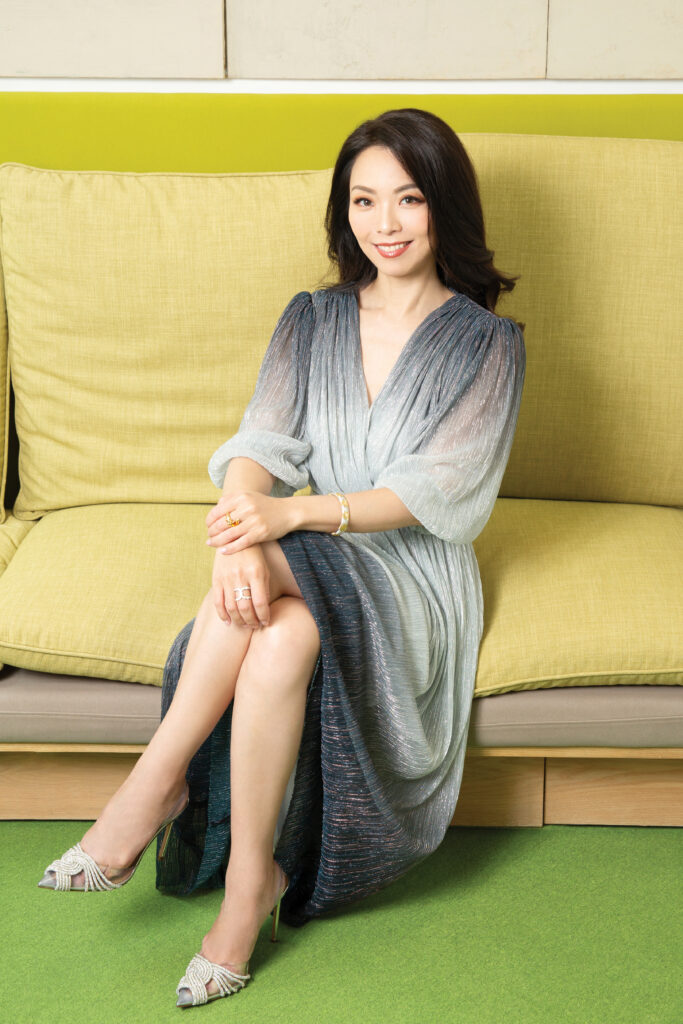
Despite her glamorous appearance – arriving in a monochromatic light-brown and skin-tone semi-formal ensemble, high block-heeled pumps in the same colour tone, jewellery from her own accessory line and gleaming black locks in relaxed big curls – more than anything she seems a diligent, efficient mum making sure everything is under control. We meet on a highly changeable summer’s day – beautifully clear at first, then gloomy and raining – a weather pattern that locals proudly claim is unique to Hong Kong. Yet for Wang Liu, it’s all about perspectives.
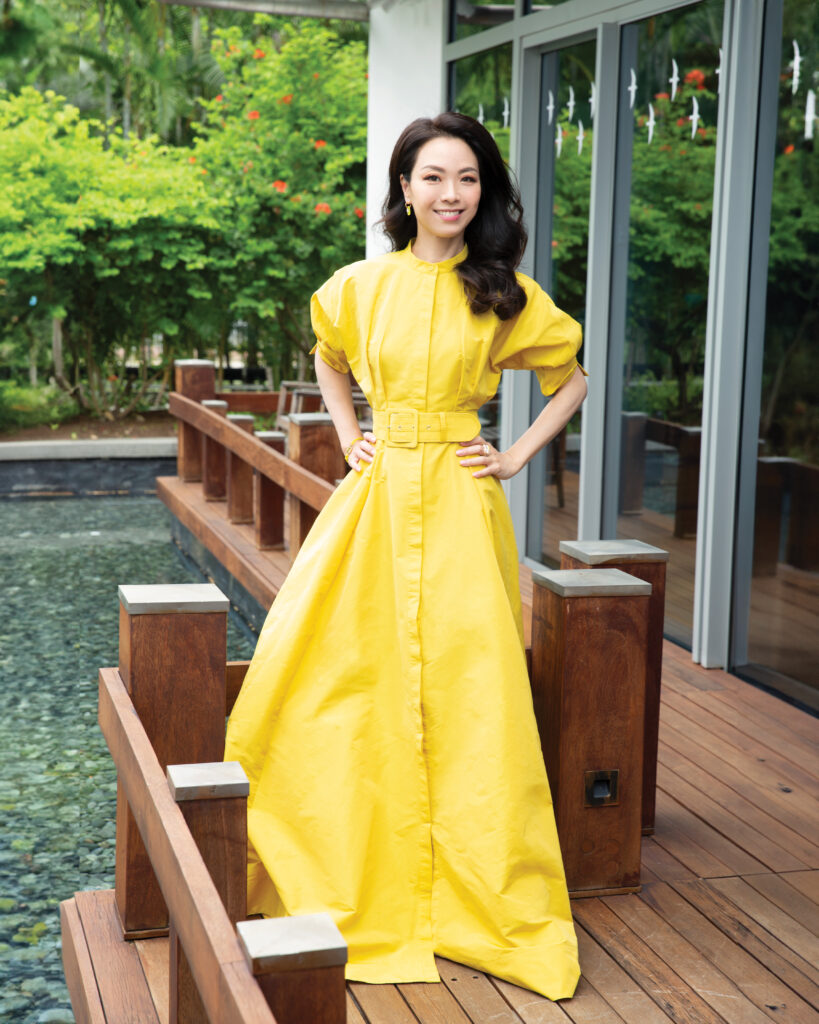
“Ah, the weather! One of the few things in life we people cannot control, right?” she says, as she smiles brightly and poses for the camera despite raindrops splattering her yellow garden dress. “That’s the thing, whatever circumstance we are put into, it’s about making things work and overcoming it.”
Raised on the outskirts of New York City, young Anne completed an economics degree at Cornell University, then embarked on a career in finance. She has contributed her planning abilities to a number of causes since she and her husband, Julian Liu – whom she met at college – moved to Hong Kong two decades ago, including Hong Kong Ballet and Maggie’s Cancer Caring Centre, which marks its 10th anniversary here.
Caring Spirit
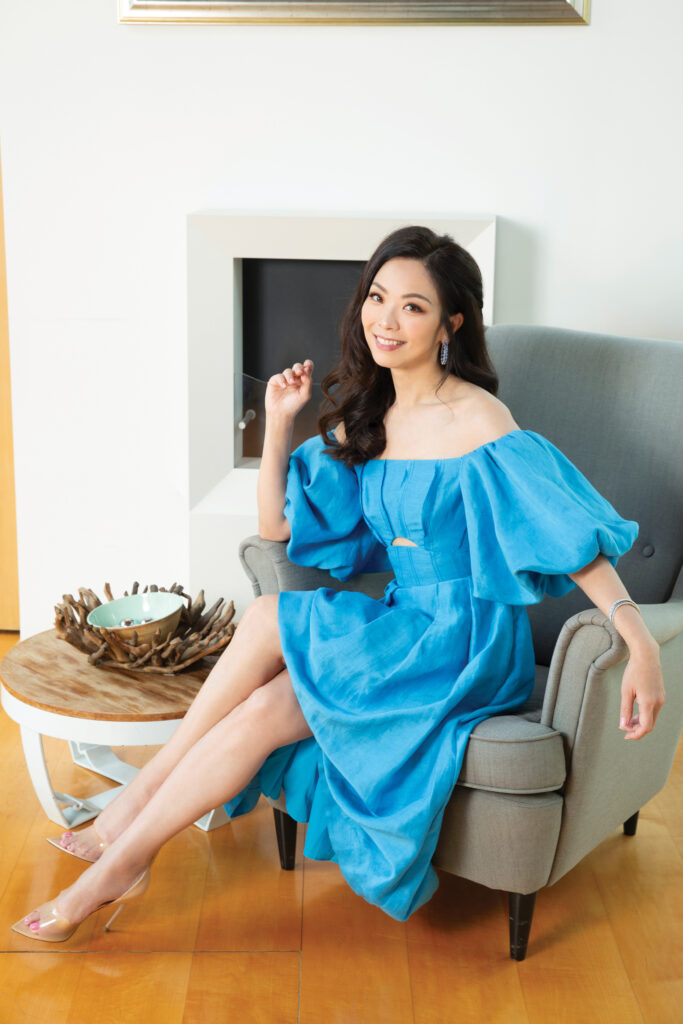
Eugenie off-the-shoulder cutout linen-blend midi dress by Aje, courtesy of Net-A-Porter
Wang Liu is a familiar face of the city’s social scene and one of the most well-loved Hong Kong socialites. Apart from being blessed with impeccable style, her vibrant personality makes her easy to like. Joining the Board of Governors of Maggie’s nine years ago reflected her selflessness and determination to give back to the community.
“When I first became involved with Maggie’s, I had friends and family who were fighting cancer and I felt that Hong Kong lacked the facilities that were needed to support patients,” she says. “Yes, we have the doctors, but social support is very important in fighting the disease. Maggie’s has a multidisciplinary team, including oncology specialists, social workers, clinical psychologists and registered dietitians to provide free, practical, emotional and psychosocial support to people touched by cancer.”
By peeling off the layers to unveil her rawness, Wang Liu moves beyond the superficiality of being judged by how she might dress for events or appear on the social pages of magazines. She goes deeper by nurturing the inside – a mindset that reveals her beautiful soul.
Fayre of Heart
The first Maggie’s opened in Edinburgh in 1996 as a new type of care centre that would make the experience of cancer more manageable for everyone. It was conceived by the late Maggie Keswick Jencks – who had spent her early years in Hong Kong – following the return of her breast cancer. The Hong Kong centre was built in the grounds of Tuen Mun Hospital in 2013 with the support of the Keswick Foundation.
As she explains, it does not have government funding and depends solely on grants and donations to continue its work: “We have an upcoming event in December, the Fayre of St John’s, with all proceeds from individuals and businesses going to cancer patients and their families. I am involved very much as the fundraising committee co-chair to raise public awareness and funds for the event.
“Ultimately, the aim is to ensure that Maggie’s has the resources it needs to provide high-quality care and support to people affected by cancer. The fundraiser brings families together for a night of song and gives a face to those suffering from cancer,” she adds.
Strength All-Around
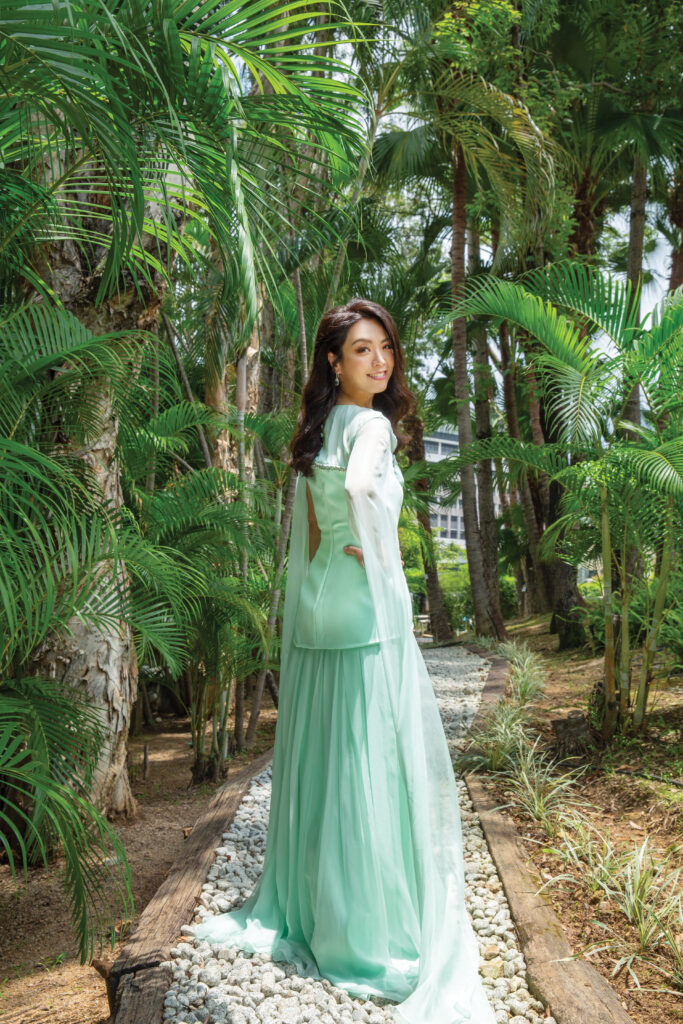
Gloria cape-effect embellished silk-chiffon and crepe gown by Safiyaa, courtesy of Net-A-Porter
As we shoot the third look, the production team is fanning an ethereal goddess-like green gown with long trails on the shoulder to give an angelic wing effect for the photos. Humming the chorus of Bette Midler’s Wind Beneath My Wings in between makeup touch-ups, our equally angelic model reiterates the fact that a strong support system plays a crucial part in life.
“My parents taught me the need for a parent to always support their children’s emotional well-being and to create an environment where my children feel safe and confident,” she says.
“My parents provided me with the opportunity to engage in many different activities. I led an active childhood, participating in sports, dance, music, student government and community service. They allowed me to pursue my personal and intellectual curiosity. Moreover, they taught me the importance of close familial ties and having a supportive group of friends.”
Acing Motherhood
It’s a philosophy she applied while raising her two daughters, Madeline and Audrey. Despite her busy schedule, she finds time to be the cool mum she wants her kids to have. Just days before the shoot, she scored much-coveted Taylor Swift Eras Tour concert tickets for the three of them.
“It was crazy! Super” she shares excitedly, the way one would with teenage peers. “I made sure we got the chance to watch Taylor Swift because both of my girls are huge fans. And now, I am too.”
When asked how old her daughters are now, she laughs quickly and says: “Next question.” Still chuckling, she proudly continues to tell her story about motherhood and how she managed to raise them just the way she wanted it to be.
“I am focused on teaching them what’s right and wrong, and luckily, they’ve turned out to be quite self-motivated. So, I don’t need to guide them as much anymore. Things are now reversed and they are guiding me,” she says.
Ballet Benefits
Lyon button gown by Rebecca Vallance, courtesy of Net-A-Porter
Exemplifying her belief in giving back to the community and helping the next generation, as co-chair of the Hong Kong Ballet Guild, she devotes her time to making the artform accessible to youngsters from different backgrounds. The annual Nutcracker Christmas Benefit, a fundraising event she considers to be one of her most significant career accomplishments, holds a special place in her heart as both her daughters have performed numerous roles over the years.
“I have watched them grow up on the stage,” she says. “Self-expression in performing arts is paramount. It allows individuals to convey emotions, stories and perspectives uniquely. This creative outlet fosters personal growth, empathy and cultural understanding, enriching both the artist and the audience. It’s a vital means of connecting and communicating in a diverse world.”
As she journeys through life learning about what she loves and embracing every moment of it, she knows that it’s a continuous process.
“My mother and sister have been a constant source of inspiration and support. Both are professional working moms that have been able to balance careers while raising a family. My children have been a constant inspiration and remind me to stay curious, adventurous and young at heart.”
Ring by Cartier Ring by Chow Tai Fook Mercier belted plissélamé midi dress by Costarellos, courtesy of Net-A-Porter
We finish the shoot and interview, typically a four-hour marathon, in just 90 minutes, and she moves seamlessly into discussions with Maggie’s staff to finalise their upcoming event. While she may not possess the superhuman power of super speed, she truly does a lot and always from the heart. Anne Wang Liu has a million obligations, personal and professional, and she gets an A+ for them all.
Interview & Art Direction: Joseff Musa Photographer: Jack Law Fashion Stylist: Jhoshwa Ledesma Videographer: Jack Fontanilla Hair & Make Up: Joenny Lau Venue: Maggie’s Cancer Caring Centre Brands: Cartier, Chow Tai Fook, Rebecca Vallance, courtesy of Net-A-Porter, Aje, courtesy of Net-A-Porter, Safiyaa, courtesy of Net-A-Porter & Costarellos, courtesy of Net-A-Porter Cover: Suri one-shoulder paneled stretch crepe gown by Safiyaa, courtesy of Net-A-Porter
Palace of Year: One year in, the Hong Kong Palace Museum has forged its own identity as a world-class cultural landmark
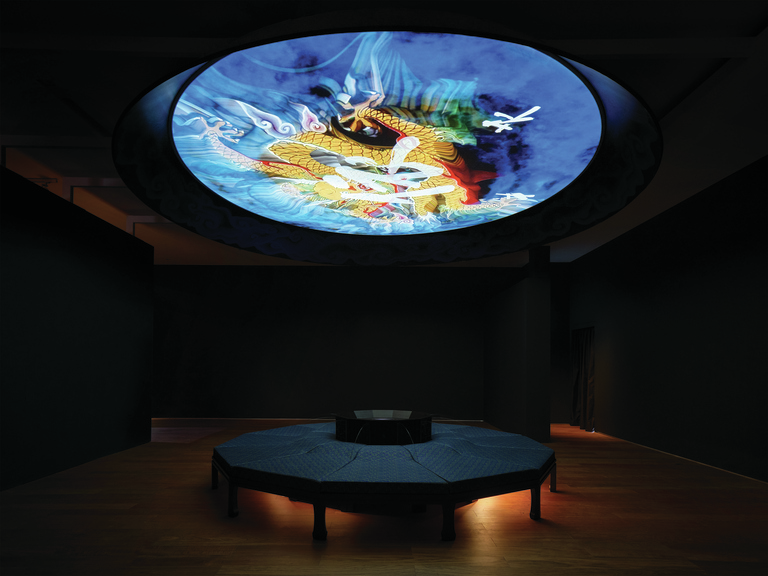
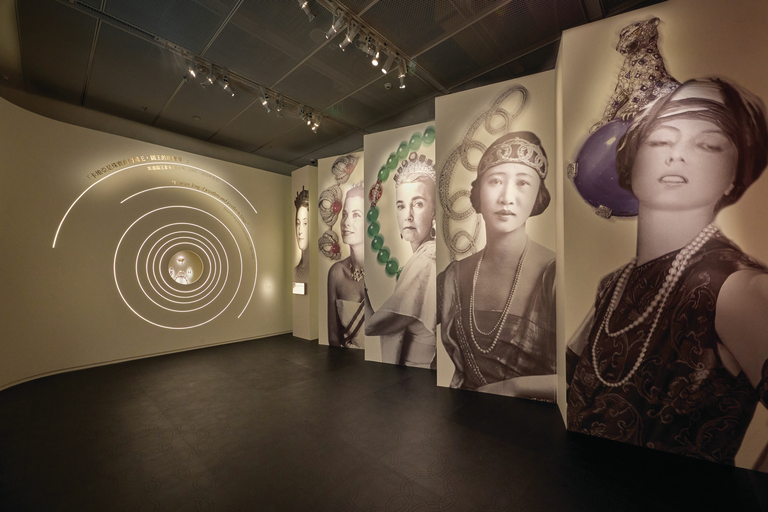
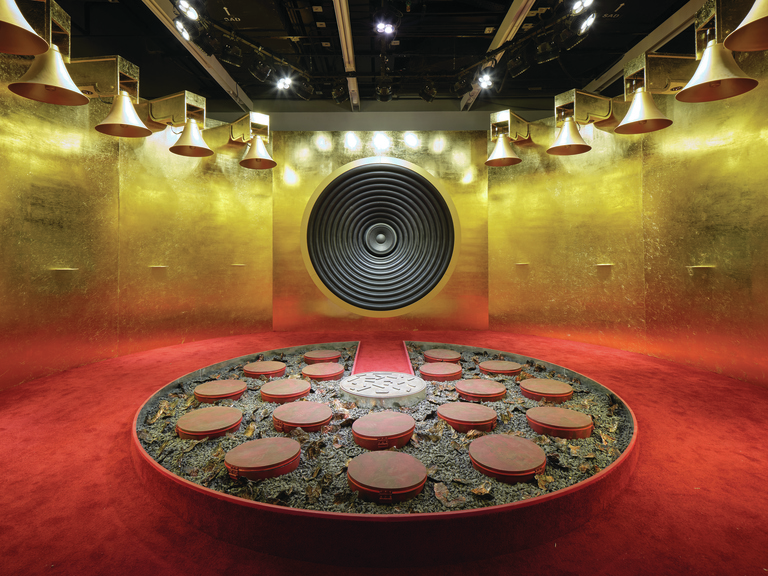
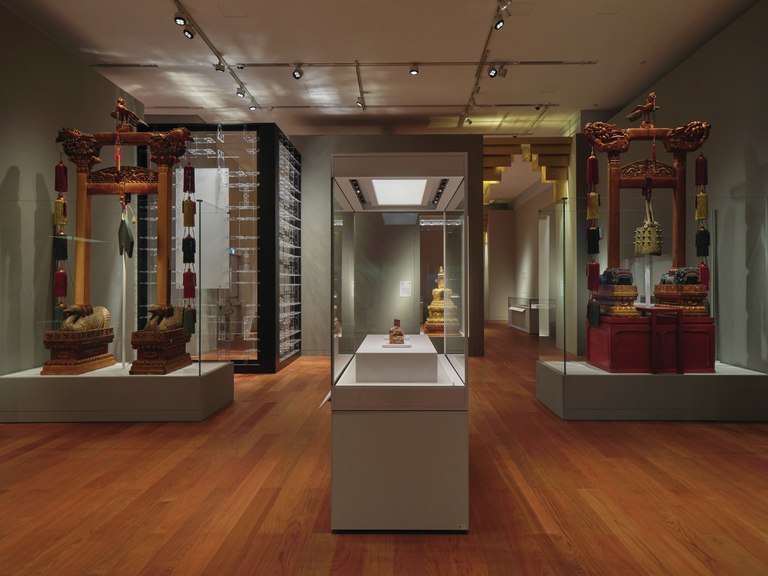
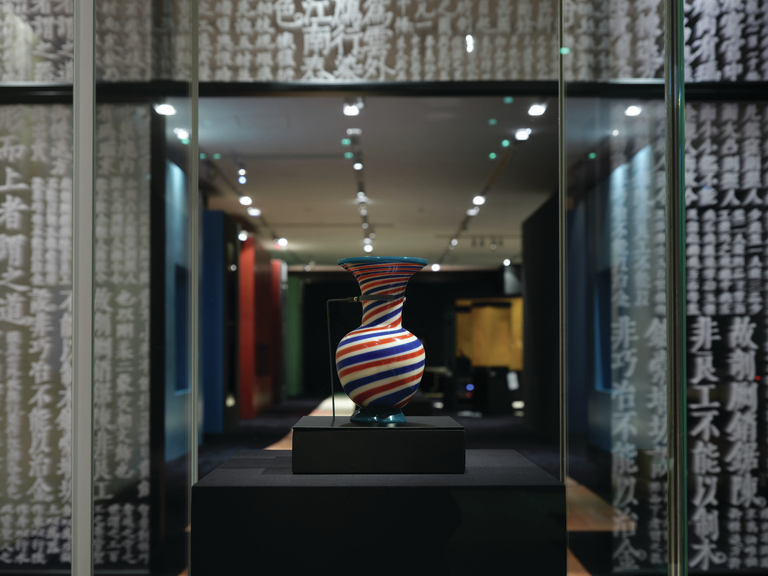
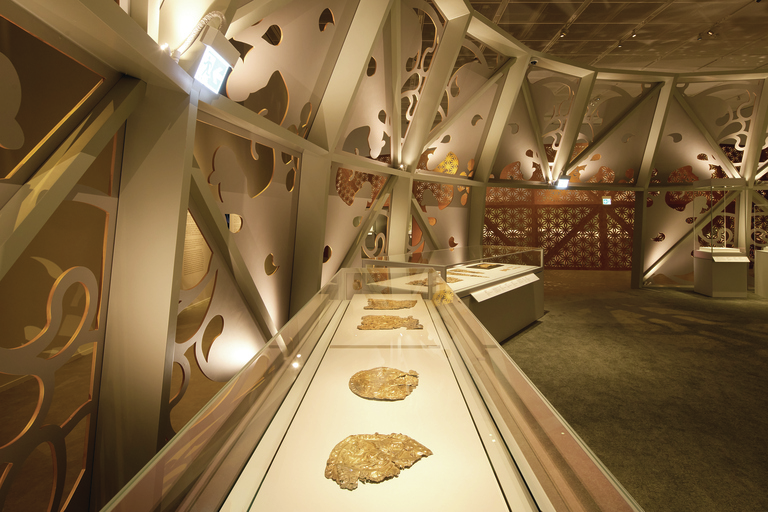
Enchanting and enriching 1.3 million visitors in its first year, Hong Kong Palace Museum is an unmissable addition to the Kowloon cityscape. From afar, the grandeur of its distinguished façade draws the eye. Inside its breathtaking space, 12 outstanding exhibitions have held court in as many months, each displaying a wealth of multimedia components, an innovative approach to curating, and a distinctive cultural perspective.
On the occasion of its first anniversary, the HKPM is well into its stride and looking confidently to the future. Since it opened its doors to the public on 3 July 2022, the museum has cultivated strong partnerships in the areas of academic and cultural exchange, in addition to showcasing some of the finest artefacts from its namesake in Beijing and other significant cultural institutions around the globe. Its presence has strengthened the dialogue between world civilisations and Hong Kong’s status as an East-meets-West cultural hub.
We are delighted to celebrate this important milestone. In the past year, the museum has brought moments of delight and amazement to the viewing public. We would like to express our deep gratitude to the Palace Museum for loaning such precious objects for display in Hong Kong, and to our donours and patrons for their generous donations and support. Kudos must go to our curatorial and operational teams for their professionalism and dedication. The museum has been empowered by the overwhelming support of the general public and visitors from around the world,” says Winnie Tam Wan-chi, Chairman of the Hong Kong Palace Museum Board. “We vow to continue to present exceptional exhibitions and programmes at the HKPM with the aim of promoting Chinese culture to a global audience, in accordance with the National 14th Five-Year Plan to develop Hong Kong into an East-meets-West centre for international cultural exchange.”
Beijing Assistance
The Palace Museum in Beijing, which houses an immense collection of classical Chinese art and artefacts, and the West Kowloon Cultural District joined hands to create the Hong Kong Palace Museum in 2015-16. The cooperation was announced in December 2016 and billed as a gift from the central government to mark the upcoming 20th anniversary of the return of Hong Kong to China.
As a result of the partnership, the Beijing museum lends items to the Hong Kong museum for both long- and short-term exhibitions. For those counting, a total of 914 items from the former’s 1.86-million-strong collection were secured for the HKPM’s inaugural shows.
The loan is the biggest granted by the Beijing institution since its founding in 1925 and features pottery, jade, bronze, costumes, jewellery, paintings, calligraphy and other national treasures – the majority showing in Hong Kong for the first time. The most priceless pieces appear for three months before being returned home to rest in accordance with established exhibition practice. Hong Kong Exclusive
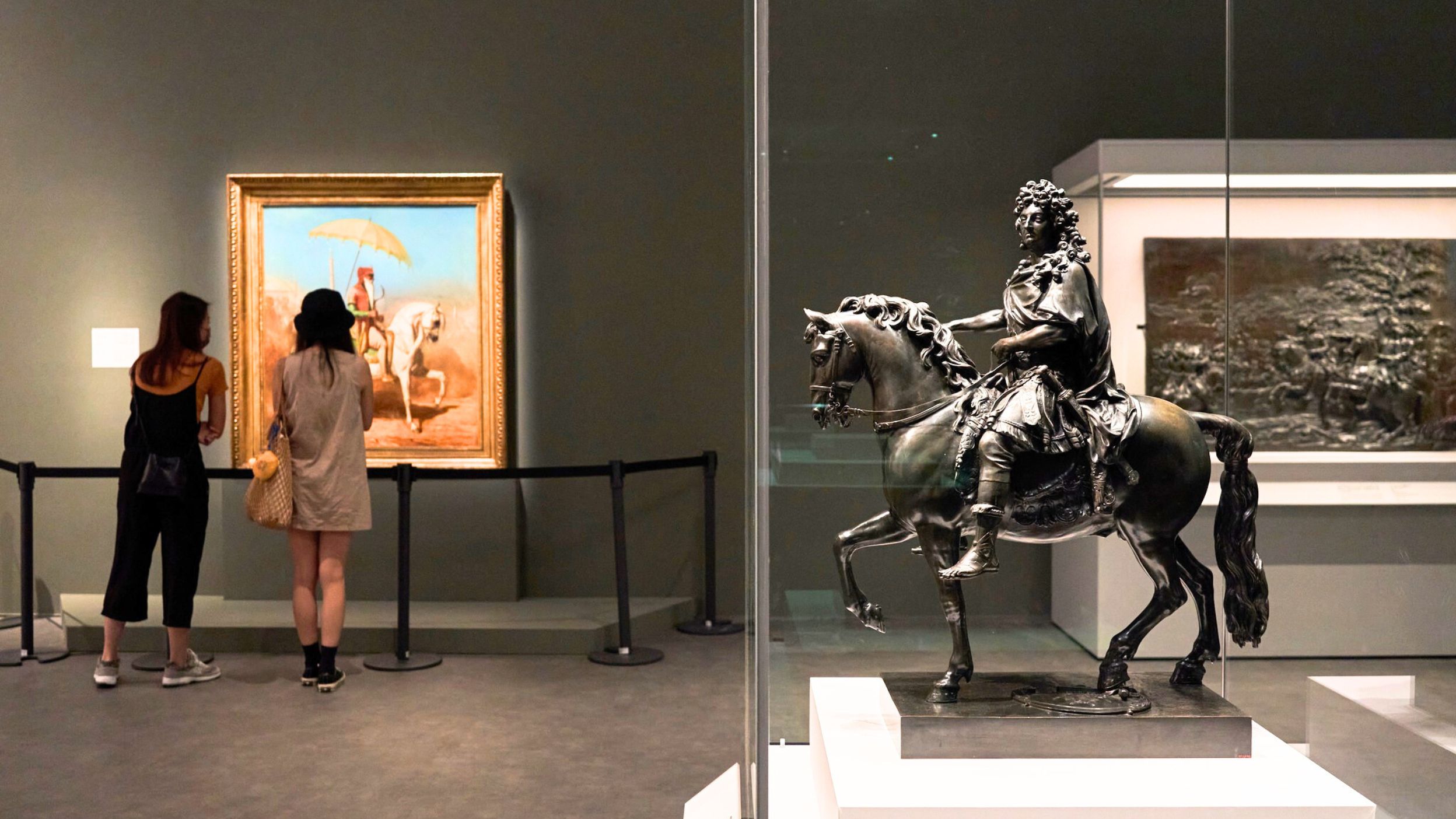
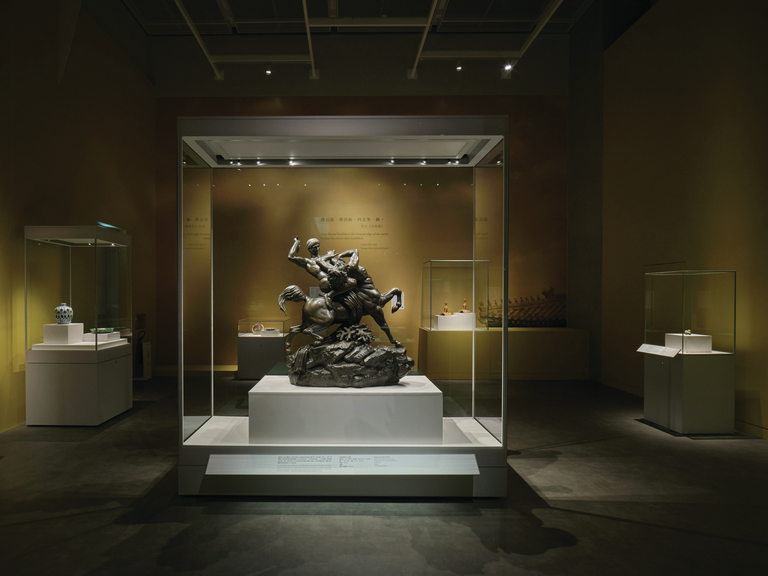
Despite the connection between the two organisations, the Hong Kong museum has forged its own identity. The HKPM team arranges loans from other esteemed institutions besides the Palace Museum. Upon its opening in July last year – one day later than planned due to a typhoon – more than 100 works borrowed from other museums and institutions in Hong Kong, as well as 13 pieces on loan from the Musée du Louvre in Paris, were invitingly in situ.
Multimedia creations from six local contemporary artists were also presented in its first exhibition, and ongoing efforts have been made to attract young people and foster an understanding of Chinese culture on a global scale.
The HKPM’s 84,000 square feet of exhibition space are spread across nine galleries over the seven-storey building designed by local architect Rocco Yim. Each gallery has a different topic, such as life, architecture, design, or art in the Forbidden City, where its Beijing counterpart is housed.
Now Showing
In the fifth three-month rotation of treasures on loan from the Palace Museum, 51 splendid works will be exhibited in Galleries 1, 2 and 5 until September 2023. Most pieces in this impressive display have not been seen in Hong Kong before and they aptly mark the HKPM’s first-anniversary milestone. They include two Grade One national treasures: a Ming-dynasty ewer resembling a pine tree and a Qing-dynasty brush pot shaped like a Chinese cabbage by renowned bamboo carvers Pu Cheng and Feng Xijue respectively. These extraordinary works headline the must-see show ‘The Quest for Originality: Contemporary Design and Traditional Craft in Dialogue’ in Gallery 5.
A recently acquired scene from The Grand Imperial Wedding of the Guangxu Emperor called “Presenting the Empress’s Investiture Book and Seal at the Hall of Union” is one of the highlights of ‘Entering the Forbidden City: Collection, Architecture and Heritage’, the presentation in Gallery 1. It is joined by the only surviving gold seal of an empress in the Palace Museum collection.
In Gallery 2, ‘From Dawn to Dusk: Life in the Forbidden City’ includes “The Maze”, a print from the Twenty Views of European-style Mansions in the Garden of Perfect Brightness series that showcases the magnificent scenery at Yuanmingyuan Park (the Old Summer Palace). This set of Qing-dynasty prints of the famed imperial garden reflects the integration of European and Chinese painting styles and landscaping features at the time.
A Gift that Keeps on Giving
A portion of China’s imperial treasures is housed at the National Palace Museum in Taipei, having been removed from the mainland during the civil war in the 1940s. The HKPM has been looking into potential collaborations with the Taiwan museum, but due to the latter’s rigorous policies regarding the loan of artworks and artefacts abroad, there are presently no plans to share collections.
However, for the recently minted Director of the HKPM Board, Andrew Yuen, introducing Chinese arts and culture to a wider audience fits his broader vision. “My hope for the Hong Kong Palace Museum still is to be the bridge between the other two ‘Palace-tinians’, between China and Taiwan,” he says.
Alluding to the museum’s genesis as an anniversary present to Hong Kong, Yuen adds: “I hope that Hong Kongers can make time to appreciate our rich Chinese culture. After all, the HKPM is built as a gift for us here in Hong Kong, so we should treasure it and feel special about having such a venue.
“From the moment you step foot in the museum, you will feel its grandeur and importance. This is really one of a kind. The plan, after all, is not to be a branch of the one in Beijing. The Hong Kong Palace Museum is really distinct from its namesake and we plan to keep it that way.”
Ultimately, the Hong Kong Palace Museum is a public venue that aims to incorporate art into everyday life rather than only being a place for those who study art and culture. It goes beyond.
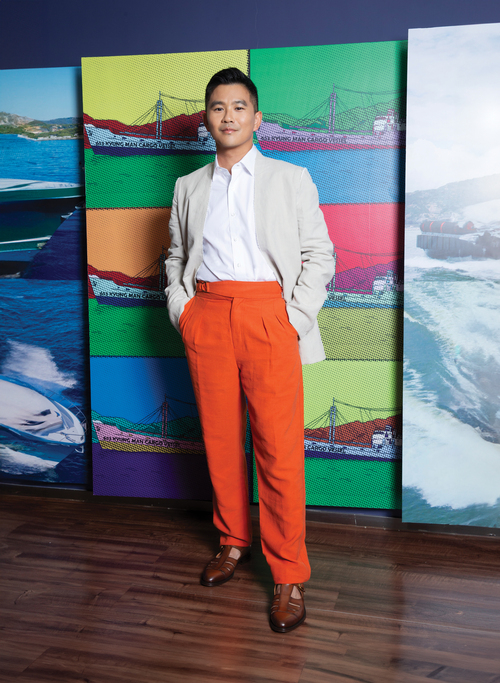
For Hans Lo, CL Yachts’ Deputy Director, innovation makes sailing through life worthwhile
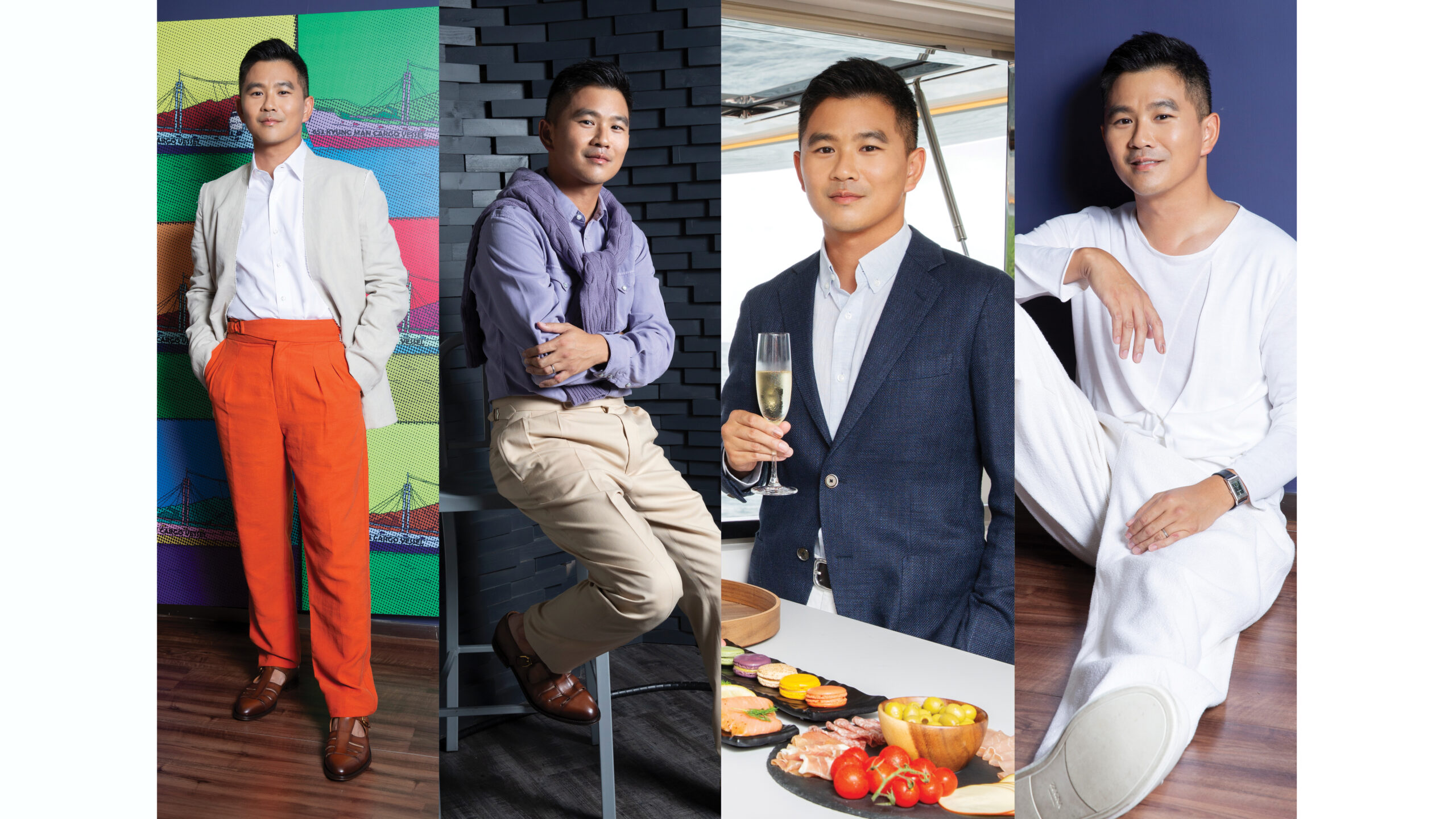
The Lai Chi Kok docks in West Kowloon, sheltered by the protrusion of land that is Stonecutters Island, is not a popular destination for most locals. At the very end of a three-minute walk through a labyrinth of rebars, tower cranes, a manually built wooden bridge and all things industrial, sits a luxury yacht, visible enough through the help of orange and white flags. This is where Hans Lo has chosen to meet.
“Yachting is a luxury business, but behind its glamour lies a lot of hard and physical work. Come right in,” says the yacht builder as he welcomes our team aboard.
As a fifth-generation member of the Lo family, who began their craft in Shanghai in the late 19th century, then moved Cheoy Lee Shipyards to Hong Kong in 1936, Hans shares in the legacy of helming the oldest shipbuilders in Hong Kong. The Los were also among the forerunners of fibreglass yacht construction, collaborating with Lloyd’s Register to create regulations for GRP (glass-reinforced plastic) boat construction back in the 1960s, and building the then-largest fibreglass yacht, the 130-foot Shango II, in 1975.
Cheoy Lee relocated its shipbuilding facility from Penny’s Bay to Zhuhai, China in 1996, and today is one of the producers of commercial vessels, considered the best in the world.
Sweater, shirt, trousers and shoes by Ralph Lauren
A Queen’s University Civil Engineering alumnus, Hong Kong-born, Canadian-educated Lo confesses to starting at the bottom in the family shipyard – laying up fibreglass and helping with vacuum infusion on a few projects before moving on to other aspects of yacht building. He quickly grasped the process of a build, and over time took on a broader role; he became Deputy Director of CL Yachts – the pleasure-craft arm of the parent company – in 2019.
Lo spent a large portion of his youth at the Cheoy Lee facility, returning during summer vacations after his family settled in Vancouver when he was seven years old. “Growing up, my family and I would go to bai san by boat, and as a kid, I thought that was just normal for everybody,” he says. “It was only later on that I realised the reason we were doing this is because our family builds ships. It’s very much a part of our life.”
True to his great-great-grandfather’s visionary roots, Lo is not standing still; he is thinking grand-scale for CL Yachts. “In 10 years, I hope we’ve established ourselves in Hong Kong and Australia – our biggest targets right now in terms of yacht sales,” he says.
His 10-year plan has already commenced. At their production facility, they are currently developing an innovative commercial project involving carbon fibre and hybrid technology for a more sustainable approach to the yacht industry – a move towards a greener carbon footprint.
Stance and Ballast
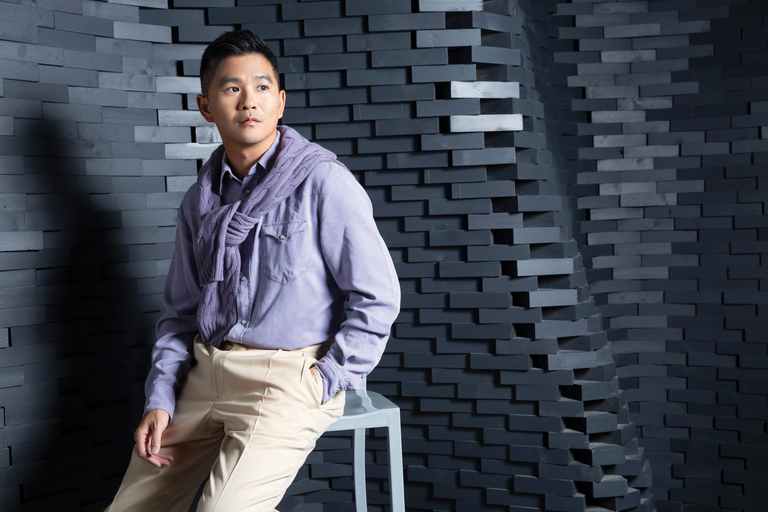
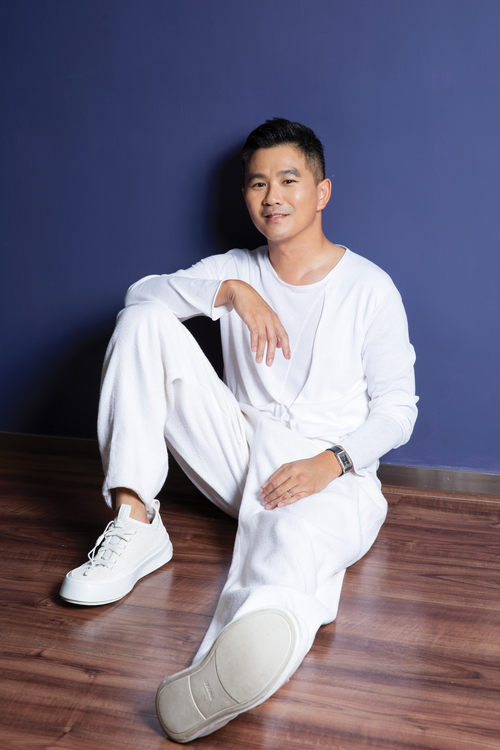
Now 40, the millennial engineer has grey hairs perfectly sprinkled through both sides of his crew cut; and he embraces them, saying: “Age is just a number and we should be proud of it. As we age, we collect learnings and these make us a better version of ourselves. I’d like to believe that I am in my prime working potential.”
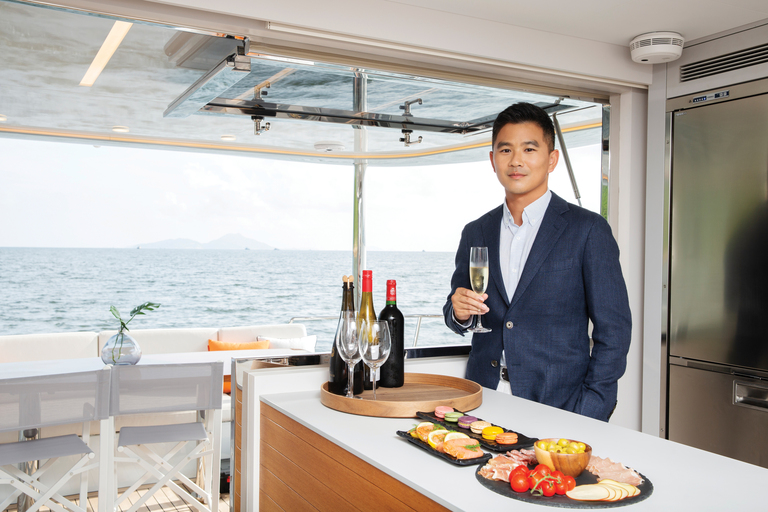
As we head out to sea for the photo shoot, he proudly shows us around their flagship yacht CLB65, hailing its development as CL Yachts’ most significant career accomplishment to date. A striking departure from traditional motor yachts, the 19.7-metre craft has received prizes internationally for its creativity, adaptability and versatility. “What makes this project more special is that the interior design was conceptualised by my wife,” he notes.
Jakcet by Zegna Trousers by Nanushka, courtesy of The Outnet Shoes by Ralph Lauren
The balancing of work and family time has always been smooth sailing for Lo, who uses the fact that he is part of a family business to his advantage. For him, family and work can be the same thing. However, he is changing things up a little to be a better dad and husband than the generation before him. Showing us a recent photo of himself, his wife and their two-year-old, he shares that his father was like an astronaut during his formative years.
“Being a father was tough in my dad’s generation. He needed to travel back and forth to Canada, and it made seeing us difficult. I want to be around for my son as much as I can. Being present is important in a young’s child life,” he reiterates.
Wave Encounters
Just as we are talking about alternative plans in life, Lo interrupts himself mid-sentence to rush to his yacht engineer, who has accidentally slipped down the stairs. As we make haste back to land, he says that every member of his team plays a crucial role in making the yacht-building business work. And so, to plan B we go – a two-hour photoshoot at the headquarters of CL Yachts where he discusses the nature of pleasure-boating in between outfit changes; with a laugh, he describes one ensemble as a boyband look.
Luxury yachting is, by definition, extreme and extravagant; some would say over the top. However, as he points out, there is a whole industry that supports the yachting sector and employs hundreds of thousands of hardworking people worldwide. “For us, there’s luxury in practicality. When you’re aboard our boats, you’ll find easy access to everything you want to do. Our boats are true sea-going vessels,” he explains.
Knitwear, trousers and shoes by Zegna
Surprisingly perhaps, and ironically, the peak of Covid brought a surge in sales. With people unable to travel and go places, many chose to invest in a yacht instead and discovered the joys of boating.
“[The pandemic] was a huge obstacle that we all had to overcome. But that’s just life. There are always going to be hurdles in our way, and we are always going have to pick ourselves up, go with the flow and with the waves,” he says, with a gleeful wink as he utters the last word.
After the indoor shoot, Lo and the entire crew jump back onto the yacht to continue with the original plan. After a few shots on deck, he entertains a phone call – a glance at what his everyday life looks like, call after call, meeting after meeting. But he emphasises the importance of taking a break, once in a while.
“We picked a good day to do the shoot and interview, didn’t we?” he proclaims, as the light of the 5 pm sun glints off his sunglasses. “We’re always due to pause and take a step back so that we can gain a new perspective on things going on in our lives. Working hard, earning money and investing in your future – these are for survival. Enjoying the finer things in life is for living.”
While Lo has work-family balance down pat, he is still juggling the pleasure of living in the moment and the necessity of planning for the future. Yet, deep in his soul, he believes life should be enjoyed as much as humanly possible. Armed with the knowledge that comes with experience, a strong family support group and another magazine cover for his beloved flagship, he is content to ride the tide to see which way the waves take him.
Interview & Art Direction: Joseff Musa Photographer: Jack Law Fashion Stylist: Jhoshwa Ledesma Videographer: Jack Fontanilla Hair & Makeup: Cyrus Tang Venue: Cheoy Lee Shipyards Boat: CLB65 Cover: Jacket and Pasnts by IRO, courtesy of The Outnet and shoes by Zegna Brands: Ralph Lauren, IRO, courtesy of The Outnet and Nanushka, courtesy of The Outnet
Prime Numbers: In Hong Kong, a personalised car registration puts you on the fast track to prestige
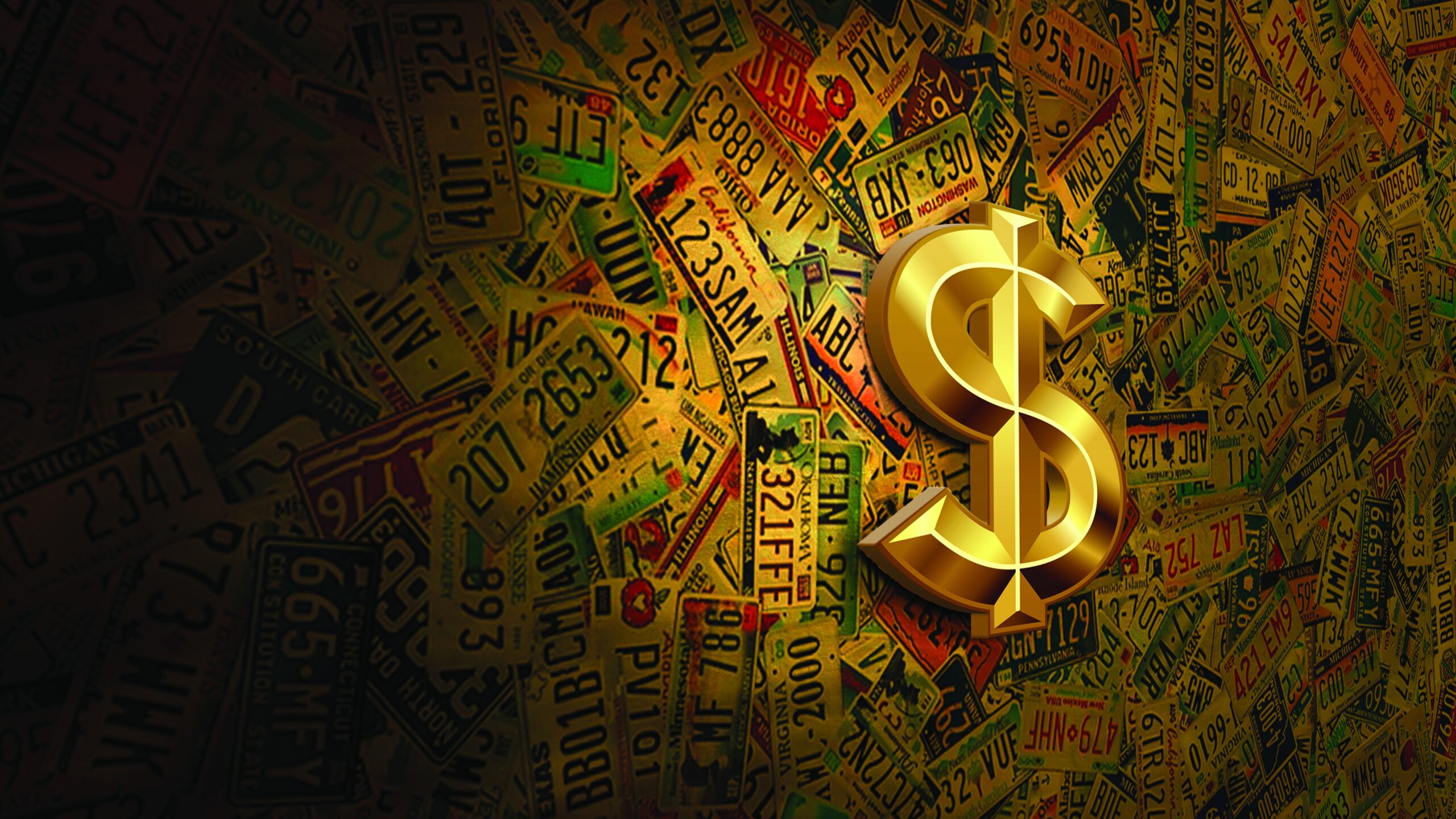
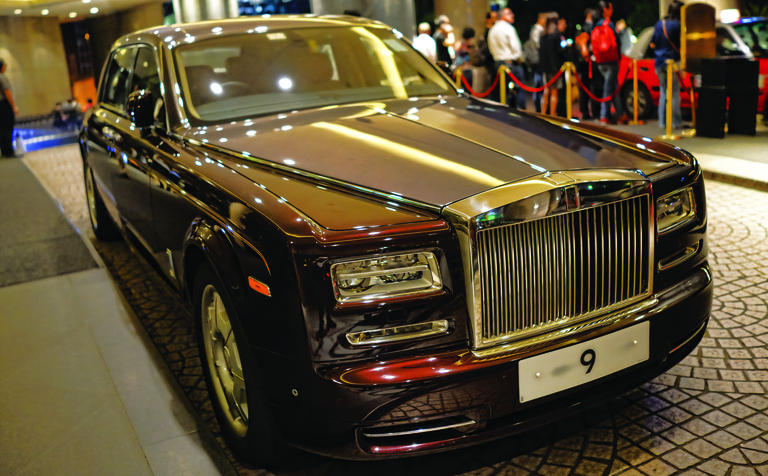
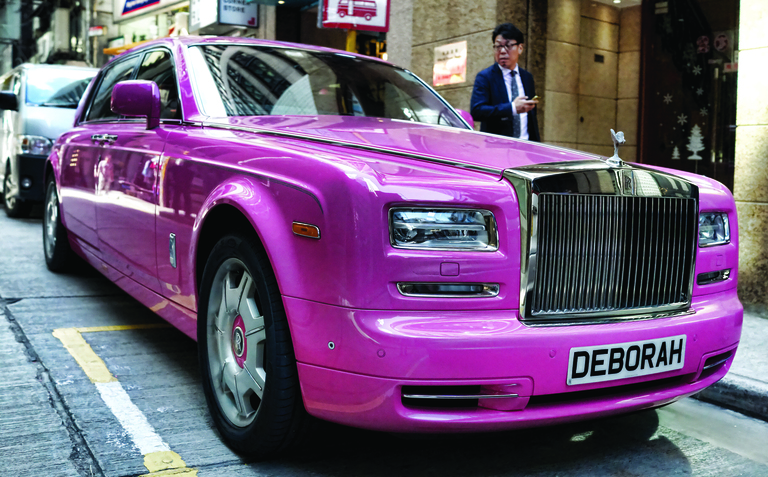
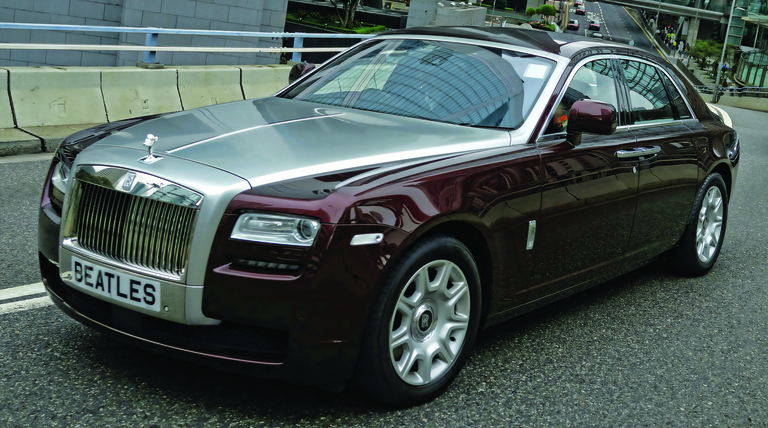
Acquiring the greatest of the best is a matter of sheer luxury for some collectors. So, to take it to the next level, why not go for a noteworthy number plate if you already have a fantastic collection of vintage cars or stable of elite speed machines? To most of us, a vehicle licence plate is a simple stamped piece of metal with an identification number. But to the connoisseur, it is a gateway to prestige and swagger.
In Hong Kong, you don’t have to be a big spender to score a PVRM (personalised vehicle registration mark). At a government auction held at the beginning of the year, HK$11,000 (US$1,400) was paid for the EL0NMUSK plate. Other attention-grabbing car licence plates included BAD G1RL, LATTE and SHADYB1Z. The registration mark 1 HH scored the highest bid, earning HK$115,000 (US$14,700) for the Transport Department.
It is at the next gear of the game when prices start to accelerate and it is a hot market. Millions of dollars have been paid by Hong Kong residents for a single desired plate. The number 18 sold for HK$16.5 million (US$ 2.1 million) in 2008, and 28 fetched $18.1 million (US$ 2.3 million) in 2016.
That sounds like a wildly exorbitant amount of money (and it is) for a small metal plate, but there’s no mystery why those big bucks changed hands. In Cantonese, ‘28’ sounds similar to the words for ‘easy’ and ‘to prosper’, so the number is thought to bring good fortune to its owner.
A plate with just the letter R – considered to have positive connotations in Chinese fortunetelling – was sold this year for HK$25.5 million (US$3.2 million). This is just shy of the record price for a PVRM, which was achieved in 2021 when a bidder paid HK$26 million (US$3.3 million) for a plate with the sole letter W.
Top Down’s Top-Up
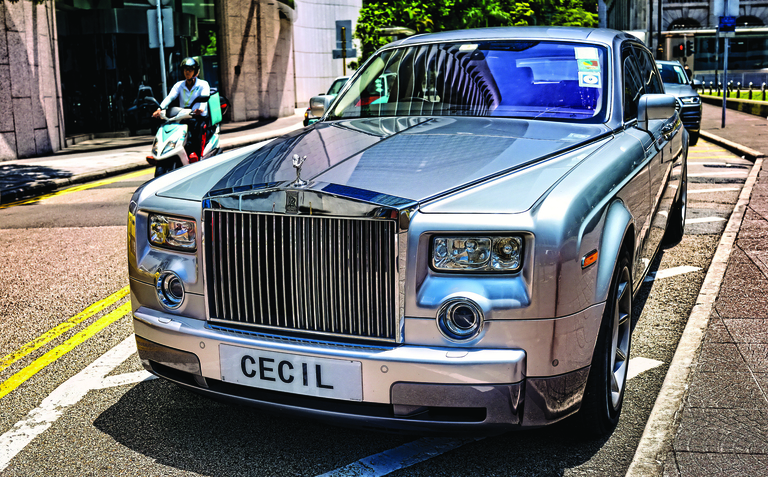
For some, a rare licence plate is a declaration of stature. A single-digit plate can say more about social standing than a garage full of expensive cars. Vanity licence plates also have sentimental value for owners. Property tycoon Cecil Chao bought his CEC1L plate for a comparatively low price of about HK$20,000 (US$2,550) in 2007. It currently adorns his burgundy and silver Rolls-Royce.
Additionally, Chao owns a Bentley with the letters CHAO inscribed front and back and a convertible Rolls-Royce bearing the number 4. Four is an unfortunate number in Cantonese and Mandarin because it sounds like the word for ‘death’, but not for the Shanghai-born magnate. He notes: “In Shanghainese, number four (sounds like) ‘happiness’ ¬– this is my philosophy of life.”
Registration Rush
The Hong Kong Transport Department has auctioned off more than 40,000 PVRMs since 2006, with starting bids of HK$5,000 (US$640). Interested parties must first find out if the department’s which can have a maximum of eight characters (including spaces). After the registration mark is approved, it is put up for auction.
Every January, May and September since the PVRM scheme was introduced in 2006, auctions have been held for personalised marks and more conventional licence-plate numbers to be sold to the highest bidders. From there, it became a phenomenon of its own. Are we a trailblazer in this aspect? Definitely. Is the rest of the world laughing at us? Maybe.
Need for Deed
Local celebrities and businesspeople want to add a PVRM to their vehicles to make them more unique. Since the scheme’s inception more than 15 years ago, a large number of licence-plate combinations have been sold at auction for prices that are nothing short of astounding. Whether or not the superstitious owners of lucky registration marks requirements are met by their proposed plate. The letters I, O and Q are prohibited from being included in licence plates, will actually experience good fortune is unknown, but the Hong Kong charities that benefit from these sales are undoubtedly better off. Funds raised through the auction of vehicle registration marks after the deduction of operation expenses go to the Lotteries Fund, a government body that finances social welfare projects and services through grants, loans and advances.
So why is this an instant phenomenon? It’s quite likely to be a guilt thing. As one of the billionaire cities of the world, Hong Kong has no shortage of ultra-rich individuals. According to a marketing study titled ‘Licensing Effect in Consumer Choice’, people who behave or feel altruistically are more likely to go on to purchase luxury products because of subconscious moral self-licensing ¬– giving to others makes people feel less guilty about getting something for themselves. It becomes easier to justify the purchase of a luxury item after a charitable act.
Feeling Lucky
But there’s also cultural reasoning behind the acquisition of personalised plates. Though Hong Kong is considered to be one of the first pioneering modern cities, it has long clung to many of the traditions and superstitions of its cultural heritage. Performing ‘lucky’ actions gives people a sense of control. Religion, science and superstition can help us feel less anxious and more comfortable in a world that seems increasing out of control. Hong Kong is not a particularly religious place, so to feel better, there’s a need to rely on either science or superstition.
The city’s superstitious beliefs are unlikely to disappear anytime soon. Superstitions may be updated over time when people know better how certain things work, but there is no anticipation that these beliefs will go away completely. Since people can never have full control over their life, swearing by the use of lucky numbers, phrases and customs is here to stay. Hence, if and when desirable licence plates like multiple 8s come up for auction, records will be smashed.
And of course, there’s always the cool factor as a motivation for splashing out – where you get to flaunt your unique number plate around the city. Given the slow pace of progress through heavy traffic, especially during rush hour, plenty of people will have time to admire it.
Global Britain: In this coronation year, Britain still retains an overseas realm that spans the globe
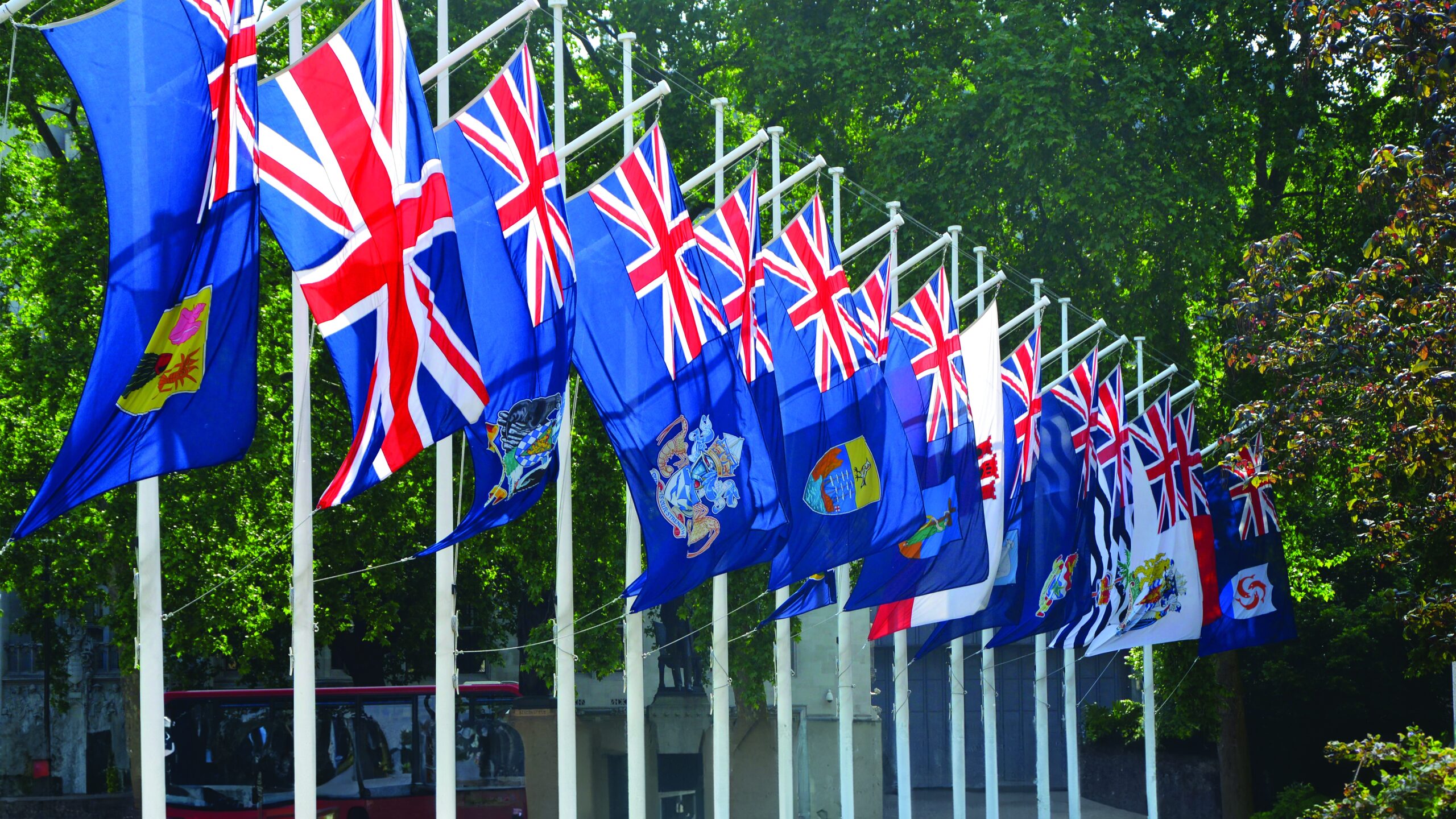
For many, the passing of Hong Kong to Chinese rule in 1997 marked the definitive end of the British Empire upon which the sun never set. However, in this Coronation Year, there remain 14 remnants of an empire which at its height a century ago was the foremost global power. These small islands and areas have been known since 2002 as the British Overseas Territories (BOTs), and while they are not part of the United Kingdom, they have constitutional and historical links with Britain and form one realm under King Charles III, along with the UK and its Crown Dependencies (Jersey, Guernsey, and the Isle of Man).
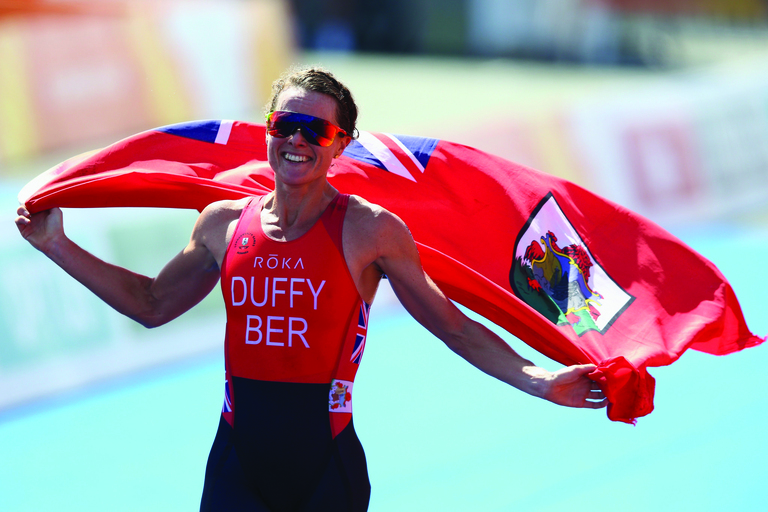
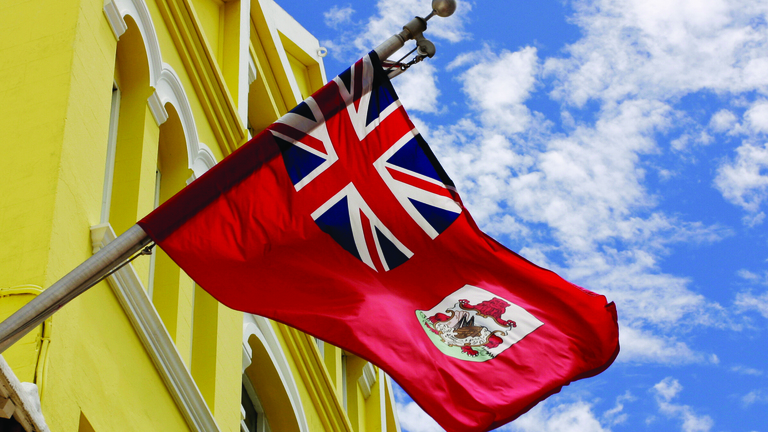
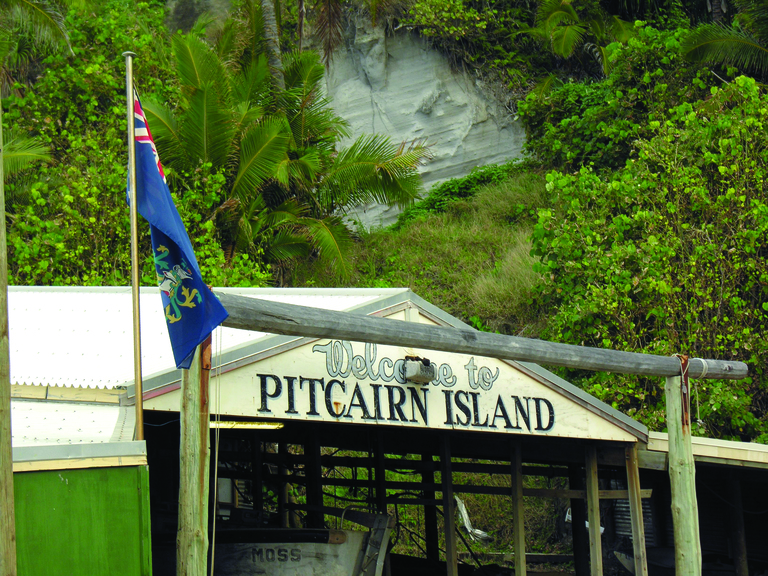
The tiny territories are spread around the globe with a total population of about 260,000. Though small in both size and population, some play a huge role in the global economy or have geopolitical or military significance far beyond their geographic area. The 14 comprise Anguilla; Bermuda; British Antarctic Territory; British Indian Ocean Territory; British Virgin Islands; Cayman Islands; Falkland Islands; Gibraltar; Montserrat; Pitcairn, Henderson, Ducie and Oeno Islands; Saint Helena, Ascension and Tristan da Cunha; South Georgia and the South Sandwich Islands; Turks and Caicos Islands; and UK Sovereign Base Areas.
Sovereignty Secured
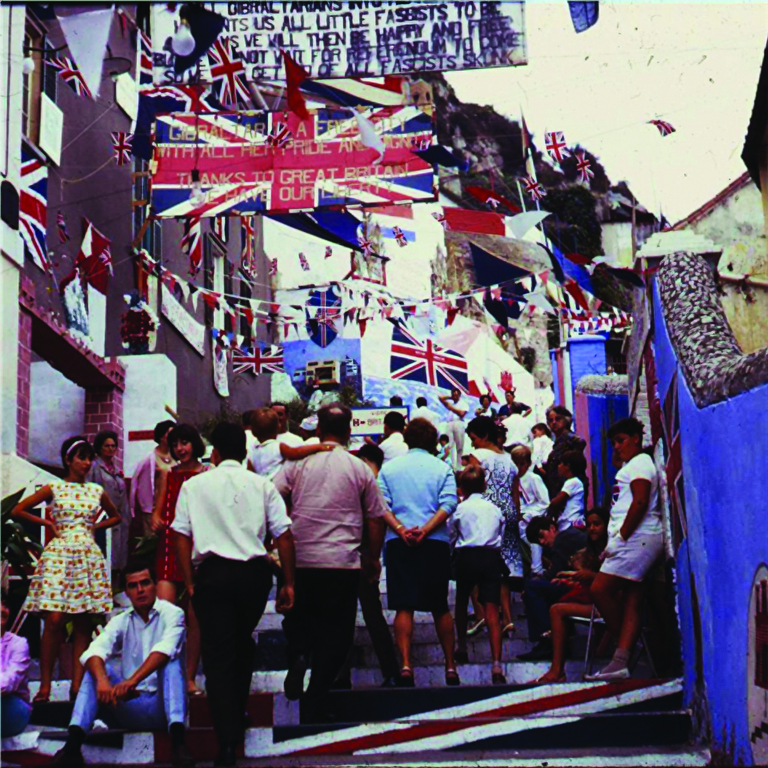
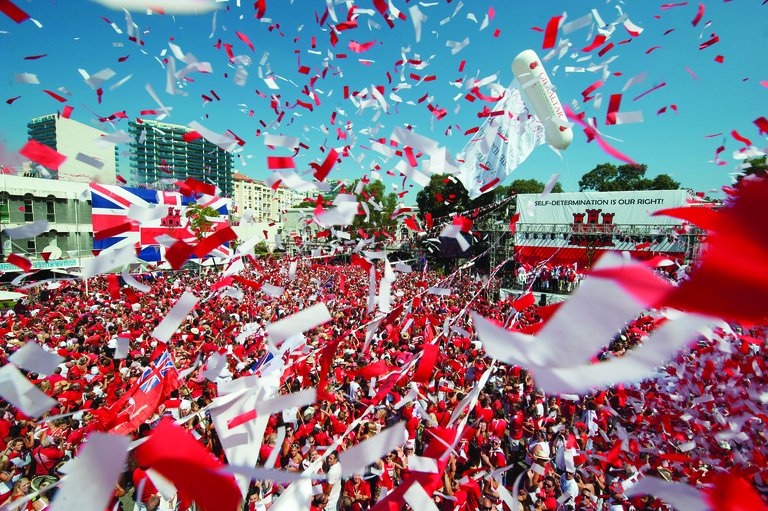
Since giving Brunei independence in 1984 and signing the agreement to hand over Hong Kong in the same year, Britain has not conceded any further territory overseas. Nevertheless, the sovereignty of some BOTs is disputed by neighbouring countries. Most notably, the UK has agreed to enter negotiations with Mauritius over the future of the Chagos Archipelago that comprises the British Indian Ocean Territory, home to the strategically vital island of Diego Garcia. Two other territories reaffirmed their British status by overwhelming margins in local referendums – Gibraltar in 1967 and 2002, and the Falklands in 2013.
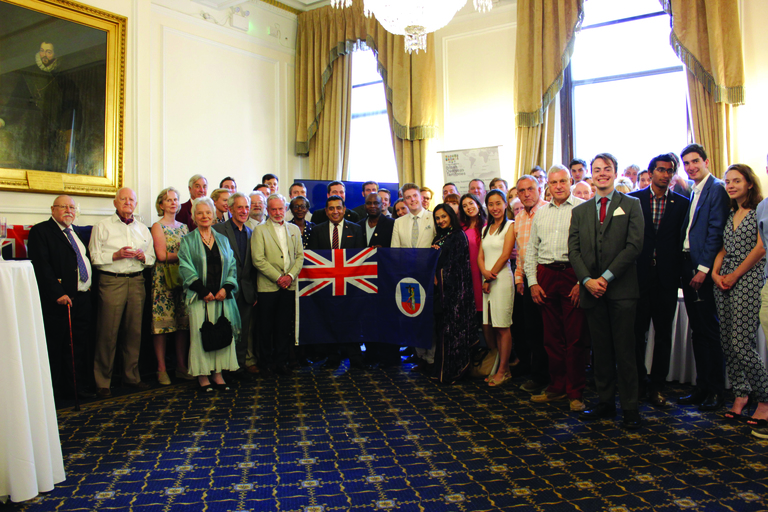
There is no one reason why territories choose to retain UK sovereignty. “St Helena and Montserrat don’t have viable economies and could not survive without the large amounts of UK aid they receive,” says Craig Brewin, an inclusive development consultant and former director of the Montserrat Red Cross. Brewin serves as Head of Research for Friends of the British Overseas Territories, an organisation that raises awareness within the UK of the BOTs.
One great advantage of the BOTs is their natural beauty. “They are all beautiful, with incredible biodiversity, unique cultures and their own histories,” notes Brewin. “The weather is predictably warm in most cases. Some are easier to get to than others, some are very expensive to visit, but there is something for everyone. Anguilla is known for its high-end facilities, and Montserrat for its villas.”
A recent communique by the Red Ensign Group, the shipping registry for the UK, BOTs and Crown Dependencies, affirms that each member takes its responsibilities to protect its land and beautiful coastlines very seriously.
Bullish Bermuda
In the wealthy territory of Bermuda, murmurings about becoming an independent nation began in the 1960s. However, the notion was rejected by a 1995 referendum, in a nod to the perceived benefits of continued UK association, particularly the protection and stability that this offers. “Despite their wealth, they are still small in population and there is a commercial risk associated with becoming completely independent,” says Brewin.
Boasting the third-highest GDP per capita in the world, Bermuda has carved a niche for itself as a reinsurance hub. S&P Global Ratings noted recently that Bermuda had become the domicile of choice for global reinsurance startups, offering advantages such as adaptable legislation and regulation, tax efficiency, established infrastructure and proximity to the US, the largest reinsurance market in the world. Institutional stability and its track record of implementing reforms to ensure sustainable finances and economic growth were also cited.
Cayman Cachet
The Cayman Islands is another wealthy BOT with a well-developed financial sector. Long-time resident Daniel Altneu, Managing Associate of law firm Bedell Cristin Cayman Partnership, highlights the benefits of British sovereignty. “Along with a host of historical, cultural and social ties, and an ability for residents to obtain full British citizenship, retaining that link affords each BOT with a significant degree of protection, security, support and resources whilst enabling them to be largely self-governed,” he says.
Altneu believes the UK link is vital to the success of the Caymans. “The additional stability that UK oversight provides is integral to Cayman’s reputation as one of the world’s leading offshore financial centres,” he says. “As a result, a growing number of wealthy individuals are relocating themselves and their families, businesses, assets and structures to Cayman, which in turn has farreaching economic benefits for the country and its people.
“Cayman boasts one of the highest GDP’s and standards of living in the world generally. Due to our traditional values of community and privacy, it is a safe and secure place to live. Residents are further attracted by its tax neutrality, natural beauty, well-developed infrastructure, stable government, strong rule of law, elite health services and education and cosmopolitan outlook.”
Offshore Might
The growth and financial influence of Britain’s network of offshore financial centres such as the Cayman Islands, the British Virgin Islands and Bermuda has come under review in recent years. Interestingly, the BBC suggested the rise of this offshore network was by accident, not design. In a bid to stem the outflow of sterling following the 1956 Suez Crisis, a curb on foreign capital investments was issued by the UK Treasury. However, the Bank of England later agreed to allow commercial banks to continue to lend and borrow to foreign clients as long as the currency was not in sterling and both sides of the transaction resided outside the UK. This was seen as an accounting device, but it had huge ramifications and spawned the growth of the socalled ‘Eurodollar’ – offshore financial markets where unlimited sums could be borrowed and lent, seemingly under the control of no state.
The UK Government has been concerned about the lack of financial transparency and problems in identifying beneficial ownership of companies incorporated in offshore territories. According to Brewin, steps are being taken by the Caribbean Financial Action Task Force to prevent money laundering and the financing of terrorist activities. The European Union closely monitors these capital markets as well, and among the BOTs it has designated Anguilla, British Virgin Islands and Turks and Caicos Islands as non-cooperative tax jurisdictions.
“The Cayman Island is occasionally misrepresented as a tax haven when it is actually a tax-neutral jurisdiction that operates at a fiscal surplus,” Altneu says, noting that Cayman ended 2022 with a US$60 million operating surplus as a result of revenues reaching US$1.25 billion.
Altneu remains confident of the future, saying: “Our residency and relocation practice is growing year on year as more wealthy clients develop a strong desire to take advantage of Cayman’s unique position of being able to offer tax neutrality and world-class professional services in one of the world’s leading offshore financial centres.”
He notes that more than half of all Hong Kong listed companies are registered in Cayman and the territory remains at the forefront of offshore transactions in eastern Asia. The Financial Times recently reported that the Cayman Islands plans to open its first Asian office to counter emerging competition from Hong Kong and Singapore as offshore finance centres.
Future Impetus
As the administrating power for its Overseas Territories, the UK Government supports their political, economic and social development and self government, and has vowed not to stand in the way of any BOT becoming independent if that is the clear wish of the local people. Though no territory is currently looking to leave the UK family, Brewin does suggest challenges lie ahead. There are internal tensions in some territories about the division of powers between the UK and the local government. Brexit has complicated matters, too, especially for places like Gibraltar where there is a huge daily cross-border movement of people. But financial safeguards remain in place since the British Overseas Territories that rely on banking, as Brewin notes, still have to comply with EU transparency rules.
(Photos: Friends of the BOTs)
Tapas Territory: The Spanish mains shine at Bayfare Social, where dining is a lively moving feast
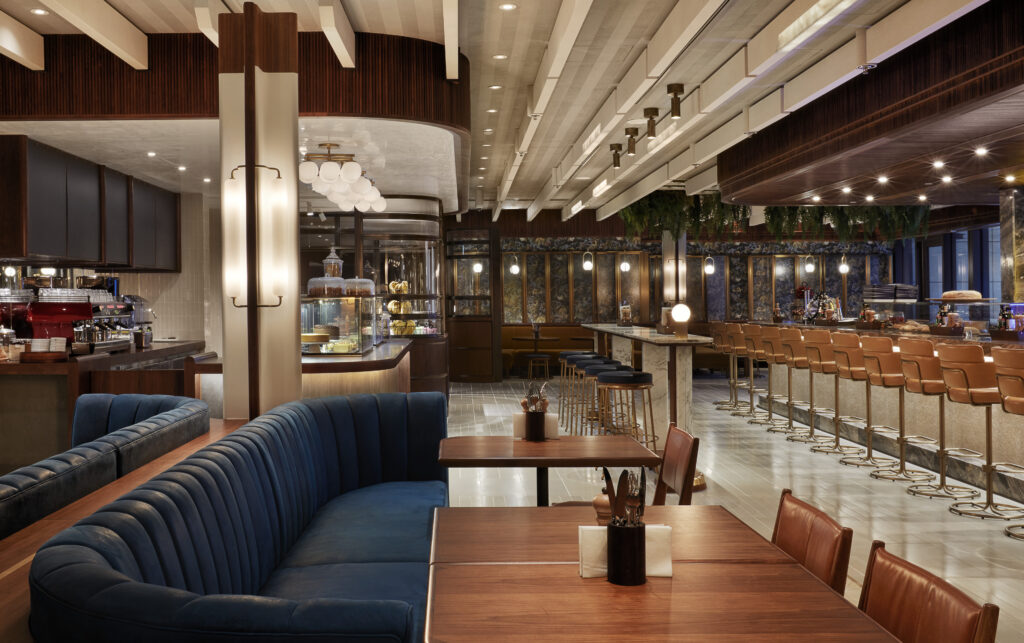
Spanish food is a vibrant testament to the country’s diverse heritage. Hong Kongers just can’t seem to get enough of this spirited cuisine, as countless new concepts have come to join the fray, injecting the landscape with a fresh, youthful spirit. At Bayfare Social, the tapas-inspired neighbourhood bar-cum gastro market that is a part of Rosewood’s throng of restaurants, it is easy to overeat. Trays of flavourful and colourful dishes are continually carried about by servers. It has the same impact and effect as sushi served on a conveyor belt, mobile churrasco and dim-sum carts. Ensconced in tall chairs at the gleaming marble dining counters, you will continue to gather morsels and much more to munch on.
As far as culinary traditions go, Spain has plenty to offer. Known for being outgoing and sociable by nature, Spaniards have a deep affinity for centring joyous occasions around a table full of food. Many would agree that a celebratory feast is an integral part of Mediterranean culture. Safe to say, there are no restrictions here, besides perhaps your budget.
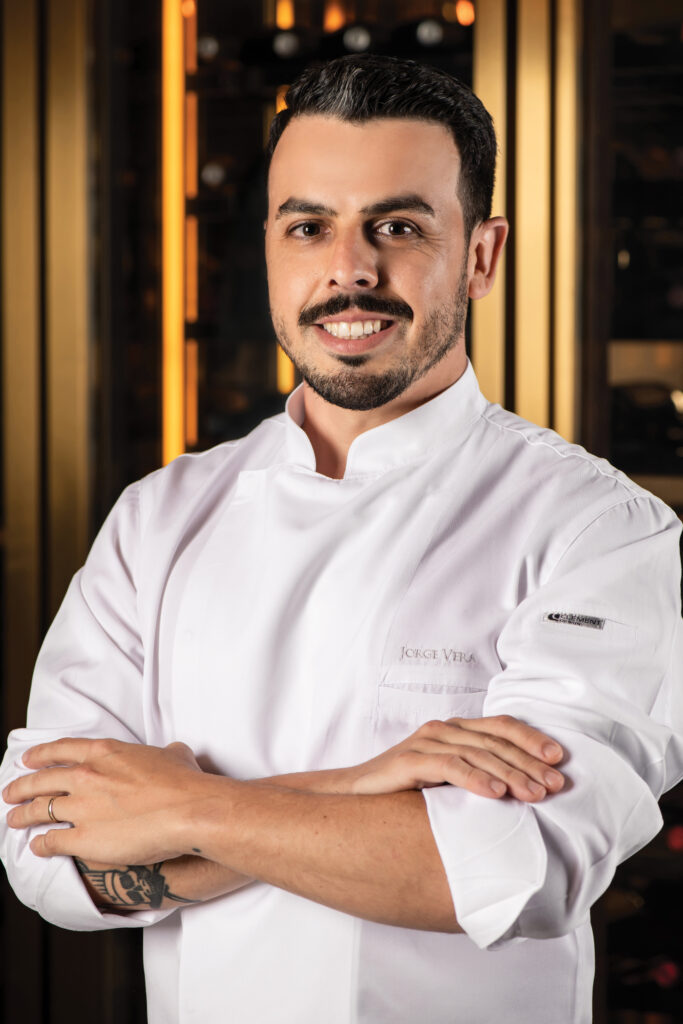
Yet, even with that particular concern, Head Chef Jor ge Ver a Gutiérrez’s offerings are as authentic as they can get without spending above one’s allotted budget. He says: “We assure our customers that the high quality of Spanish food we serve is value for money. People can really take a breather here, relax and enjoy the Spanish vibe.”
Gutiérrez has developed a dining experience unlike any other in his lively restaurant – as much about the food as it is an immersion into the simple, thoughtful, self-effacing temperament of his homeland. In their efforts to build a food commune in a bustling city location, let alone in a hotel adjacent to a shopping mall, Gutierrez and his team just happened to have also created the finest place to eat Spanish food.
This vibrant enclave is emphasised by the use of dangling ferns and wild leaves on the ceiling and the strategic placement of separate open preparation counters dedicated to wines, mains and other gastronomic offerings. It also plays with balance, from the traditional brown clay pot displays and the Machuca tiles to the edgy geometric accents and the quirky yet nostalgic menu.
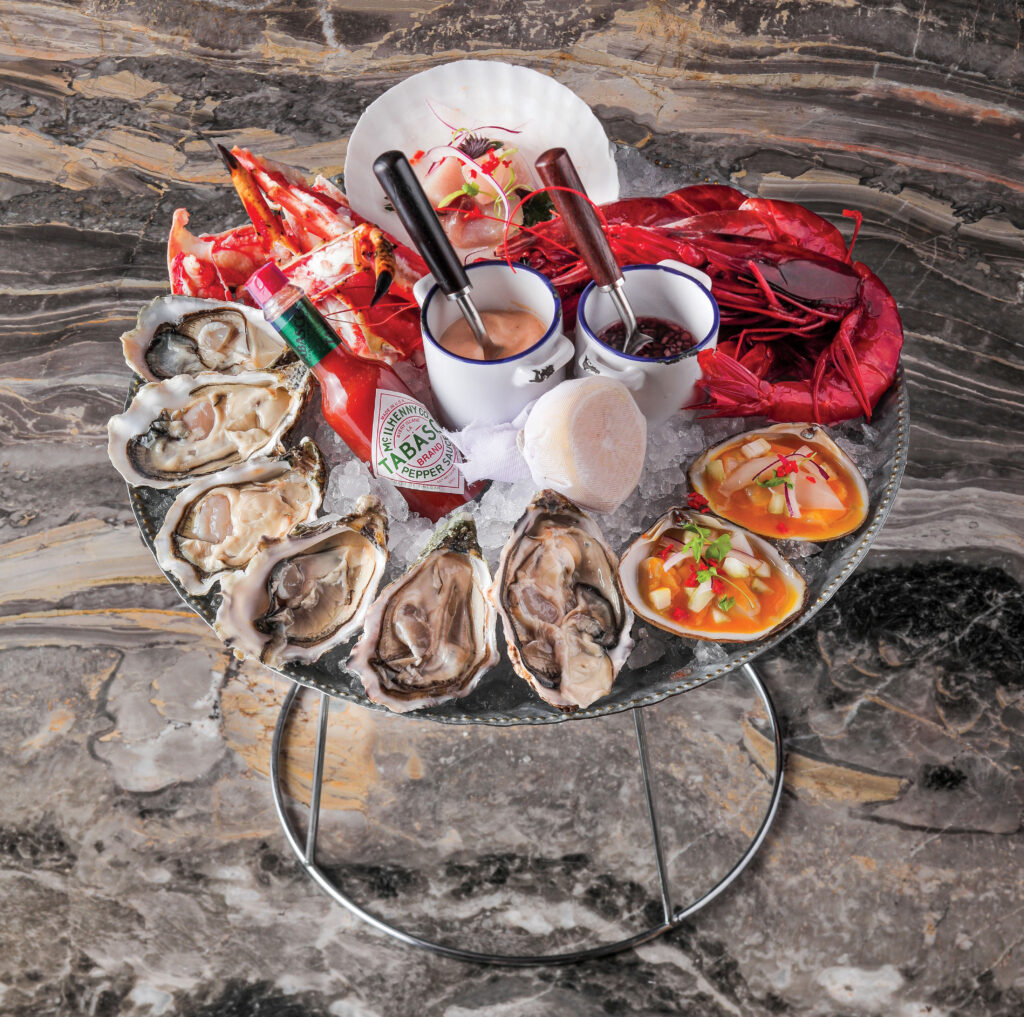
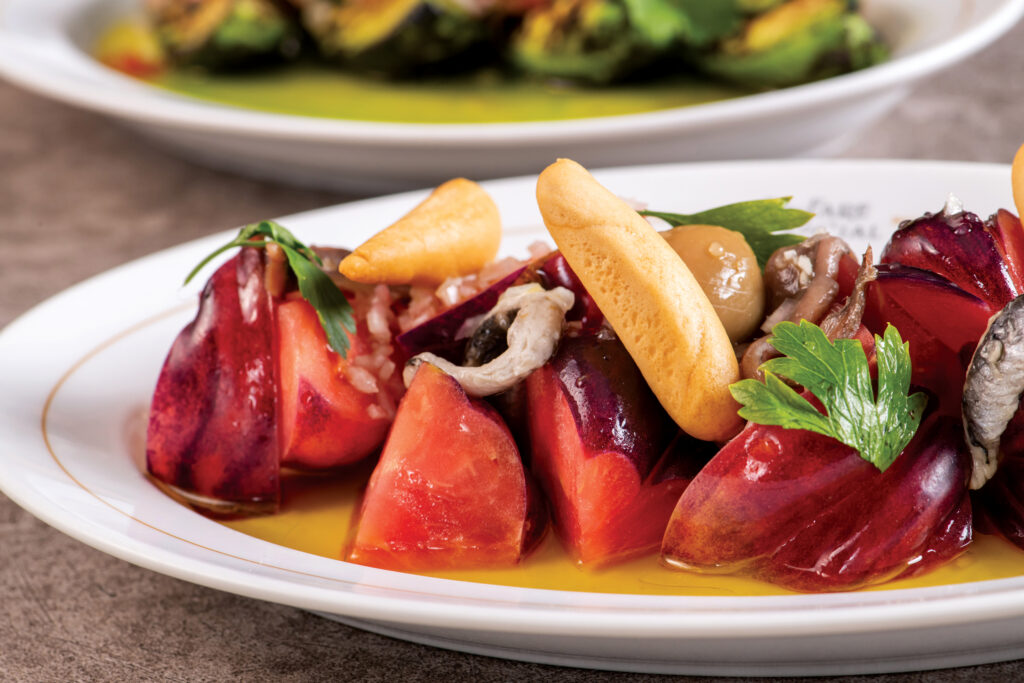
In true Spanish dining style, the elaborate spread is sure to enliven every celebration. There is charcuterie, tapas and a variety of paella. Everything is as splashy as the restaurant itself and hits a level 10 on the flavour scale. The new brunch menu, for example, begins with a refreshing and decadent seafood platter with jet-fresh Boston lobster, oysters and tiger prawns. The juicy Hokkaido shellfish in Scallop Tiradito – a Peruvian-inspired preparation – are enhanced by Spanish-style escabeche dressing and avocado.
Even the lighter options make a bold impact. Starters are followed by traditional tapas of Ibérico Ham Croquetas with aioli, Padrón Peppers sprinkled with sea salt, and Chorizo a la Sidra, a classic appetiser of chorizo braised in cider.
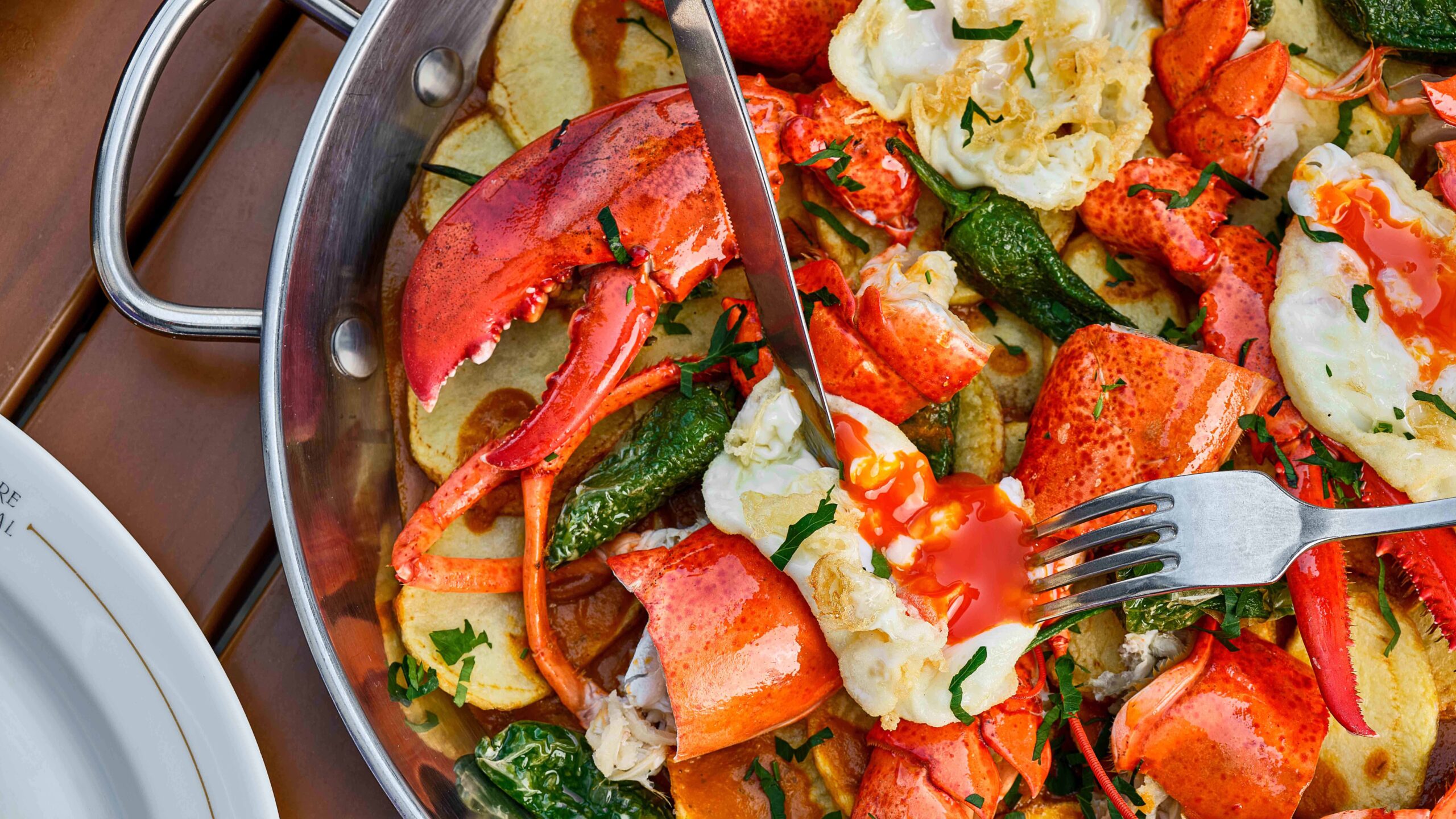
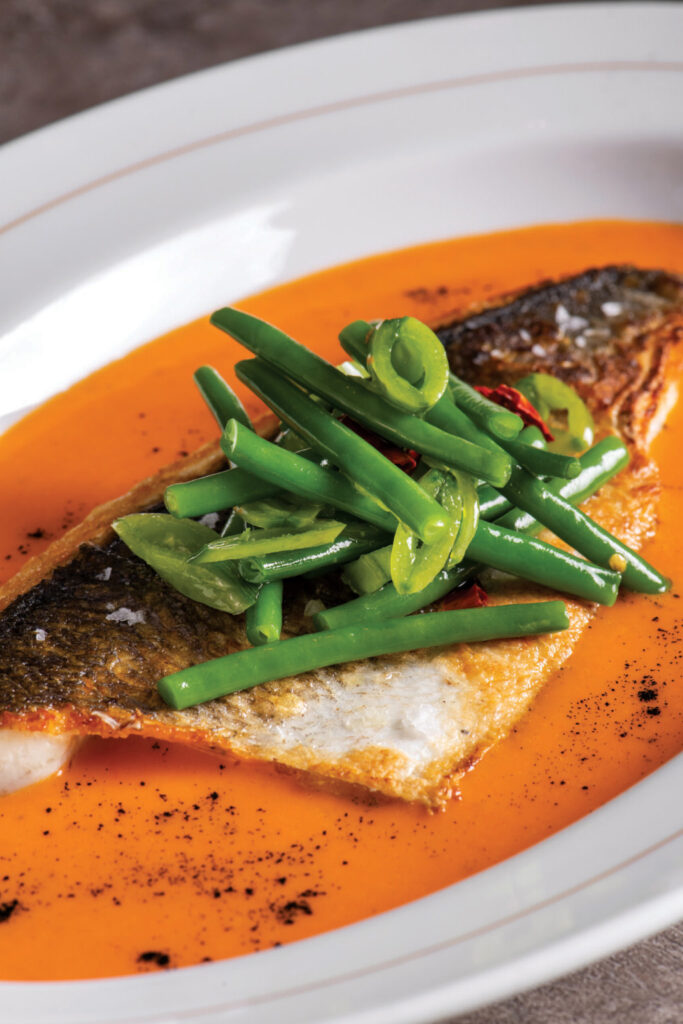
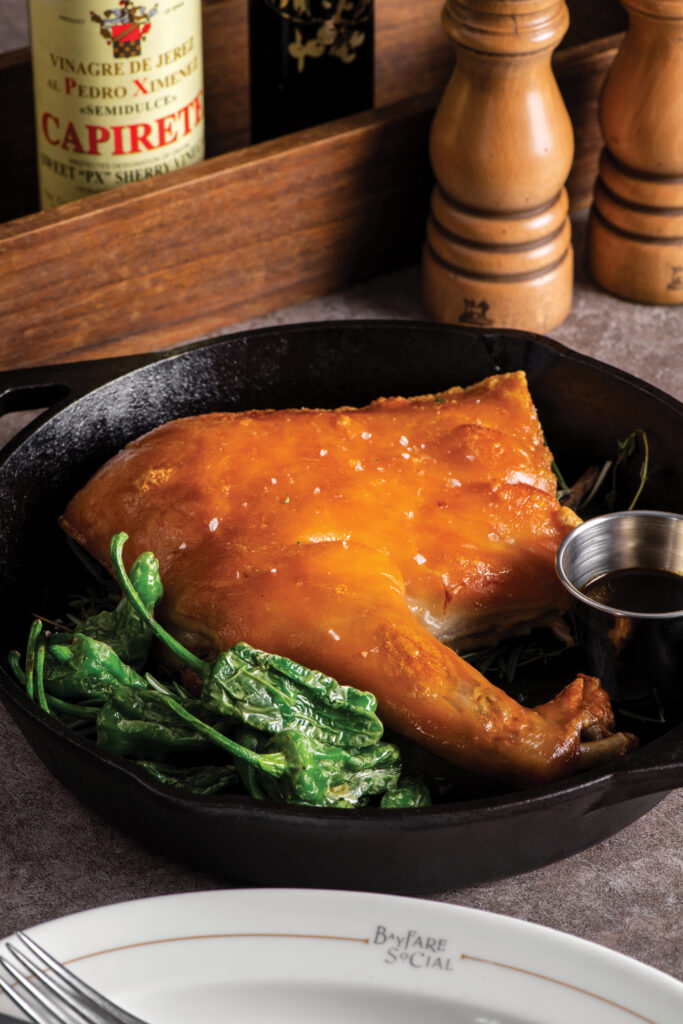
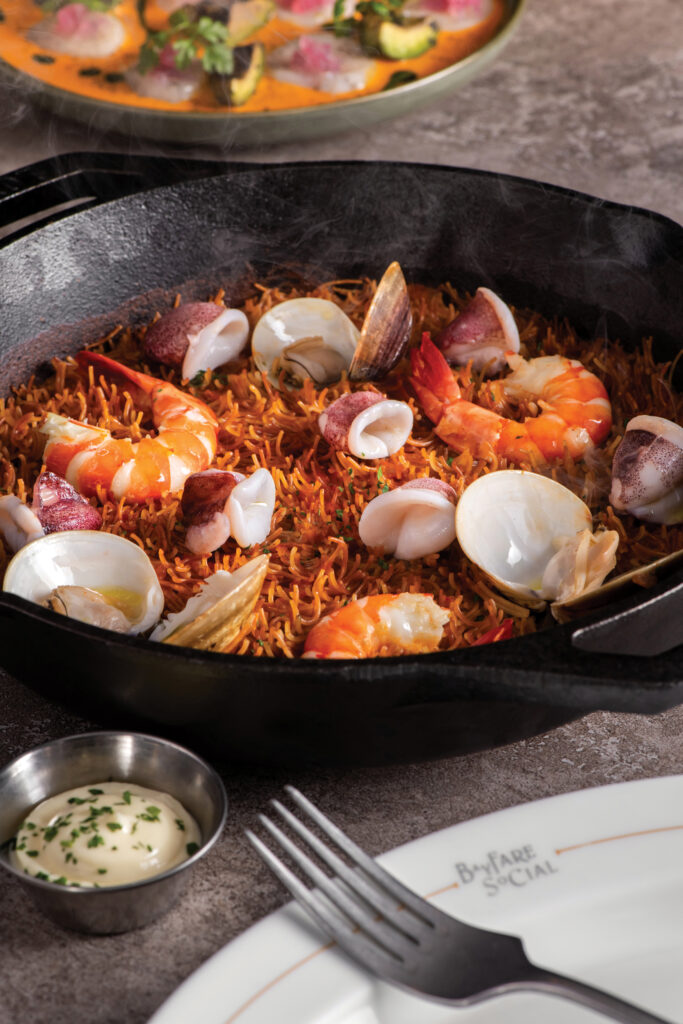
Following this eminently intriguing preamble are the hearty mains. Cochinillo Asado, the chef’s famous crispy-skinned roasted Spanish suckling pig with fried potatoes and homemade pork sauce, is smartly paired with a pan of Seafood Paella laden with clams, prawns, squid and aioli.
The best finale to this exceptional weekend spread is an indulgent dessert, courtesy of the traditional Spanish treat of Churros dipped in chocolate or tart of the day.
In Spain, gathering with friends and family to share food is a way of life that keeps people connected and is regarded as beneficial to mental health. Without fail, at the core of each gathering is a delicious spread, a tradition that Bayfare Social is committed to upholding. It not only delivers an authentic Spanish dining experience to Hong Kong but also surprises and delights with innovative twists and a huge helping of national pride.
BAYFARE SOCIAL 5/F, Victoria Dockside, 18 Salisbury Road, Rosewood – Hong Kong, +852 3981 8732