
Culture Conversations: History of Hong Kong’s bauhinia flag

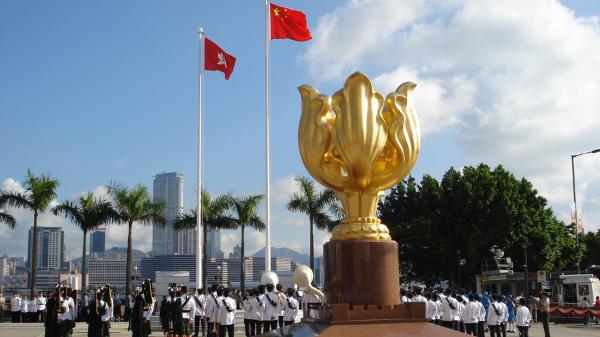
July 1997 was the end of an era – 150 years of colonial rule had just ended, the British Hong Kong “dragon and lion” flag was lowered to make way for not one, but two flags under the “one country, two systems” principle to be hoisted over the SAR. Every morning since then, China’s five-starred red flag and Hong Kong’s five-petalled, white bauhinia flower against the red backdrop, fly over the autonomous state.

The British colony-turned-Special Administrative Region of China has never flown an independent flag, but flags have played an integral role in its politics and history. Seven years ahead of the handover, the white bauhinia flower emblem was selected from thousands of submissions to be the centrepiece of the new Hong Kong flag.

The making of Hong Kong's national flag gafencu feature local culture

The bauhinia – a genus of five-petalled flowering plants – already enjoyed an elevated status in the city, with our very own hybrid cultivar being the official flower since 1965. Named in the early 20th century after Sir Henry Blake, the 1898-1903 botany-loving Governor, it was deemed an apt representation of the place itself – a conglomeration of backgrounds and contrasts.

The hybrid nature of the plant is seen as symbolic of Hong Kong’s history and how the colony had drawn its strength first from Britain and then China”

Bauhinia blakeana, or Hong Kong orchid tree, is distinguished by intense, pinkish-purple flowers that bloom from November to March. The fragrant, semi-evergreen flowering plant is an ideal streetscaping solution, but in a region which boasts a diverse flora including some 390 native tree species, the elevation to national emblem of a sterile cultivar of non-indigenous parents that propagates only by hand-grafting was met with some puzzlement. In Portraits of Trees of Hong Kong and Southern China, co-author Richard Saunders described this barren badge as an “arguably inauspicious” choice for a “city built on mixed Chinese and British heritage”.

Flag History

Golden Bauhinia sculpture the making of Hong Kong's national flag gafencu feature local culture
The national flags of Hong Kong and China by the Golden Bauhinia Sculpture

The new flag was on the drawing board as early as 1984, when the government called for design concepts that best reflected “the spirit of ‘one country, two systems’”. From among more than 7,000 submissions – many littered with dragons and stars – six sketches were shortlisted by a panel of judges, but they fell short of expectations. Thus, three of the jurists – architect Tao Ho, designer Hon Bing-wah and sculptor Van Lau – were asked to remedy the situation and submit a proposal.

“The stylised flower is asymmetrical, and therefore its form implies movement, alluding to Hong Kong’s democratic energy and economic vitality”

They put their heads together to envision an abstract design of white bauhinia petals in a clockwise motion on a red background, and it received the resounding approval of China’s National People’s Congress in 1990. Unlike the static symbol of the Urban Council, the post-handover emblem was admired for its lyrical, poetic interpretation of Hong Kong’s native flower.

“We had to avoid certain shapes like the crescent, which could be religiously sensitive,” explained Hon, fittingly a Bronze Bauhinia Star-winning artist. “A triangle enclosing a circle that suggests Lion Rock wasn’t lively enough. A sailboat couldn’t represent the whole of Hong Kong’s diverse communities. A dolphin wasn’t appropriate enough, while a dragon had varied resonances across cultures.”

The making of Hong Kong's national flag gafencu feature local culture
Hand drawn designs of the Hong Kong Flag. Photo courtesy: Hon-Bing-Wah

Settling on the flower as a “neutral” choice, Hon has related that they were “inspired by the auspicious spiral patterns found in Chinese paper-cutting aesthetics” that thus “arranged the bauhinia flower’s five petals like a windmill, incorporating movements to symbolise that Hong Kong is an energetic city that never stops progressing forward.”

Shanghai-born, Harvard-educated Ho, whose legacy also includes the Arts Centre and the panda enclosure at Ocean Park, concurred. He wrote on his website: “The stylised flower is asymmetrical, and therefore its form implies movement, alluding to Hong Kong’s democratic energy and economic vitality. The red background represents China, and the five stars… hint at the integration of the ‘one country, two systems’ policy.” The respected architect passed away two years ago this month at the age of 82.

Also Read: Reclaiming Hong Kong: A history of the changing coastline

Flower Power

legco building The making of Hong Kong's national flag gafencu feature local culture
The national flag of Hong Kong and China side-by-side at the LegCo building

Despite the name and appearance, the Hong Kong bauhinia isn’t an orchid, but rather a tree from the legume family, which includes the likes of peas and beans. The undoubtedly pretty petals were accidently discovered in 1880 by French Catholic missionary Jean-Marie Delavay while hiking in Pok Fu Lam. Fascinated by the brilliant magenta of its flowers, Delavay took a cutting and propagated it near Béthanie, then a sanatorium belonging to the French Mission. A few years later, the plant was offered to the Botanical Gardens.

Now abundant, it has been planted extensively throughout the territory since 1914. All Bauhinia blakeana are believed to have hailed from the French missionary’s ancestor tree, and since the Hong Kong orchid tree is sterile (bearing no seeds or fruit), each was cultivated by hand by someone who took the stock of an old tree, stuck it onto another root, and let the descendants grow from there.

Foreign Roots

The making of Hong Kong's national flag gafencu feature local culture
Government House on Government Hill in Central, the official residence of the Chief Executive of Hong Kong

It’s not just this barren nature that makes the flower seem an unlikely choice as a symbol of Hong Kong; its parents also have no ties to the city. In 2005, Saunders traced the origins of Bauhinia blakeana by comparing its breeding system with those of other bauhinias. He confirmed that the cultivar is the result of hybridisation between two exotic plants: Bauhinia purpurea (the purple bauhinia or camel’s foot), a native of the Indian subcontinent and Myanmar, and Bauhinia variegata (the orchid tree or mountain ebony), found abundantly in China and East Asia.

Though its rise from flower pot to flag pole may have had some detractors, the fact that our bauhinia flourished in Hong Kong from overseas heritage will endear it to many citizens who share a similar origin story. The stylised white five-petal bauhinia flower amid a red field has fluttered in the morning breeze more often of late – in schools as well as government landmarks – flies over the city in a symbolic representation of the region’s ‘one country, two systems’ governing principle.

One person’s trash is another’s treasure. While Saunders and others may have objected to its selection, the Urban Council, which oversaw public services and facilities under British rule, unanimously praised the decision. Indeed, the body had adopted the bauhinia as its logo 25 years previously. The hybrid nature of the plant is seen as symbolic of Hong Kong’s history and how the city had drawn its strength first from Britain and then China.

Also Read: Pulse of the Peak: Chronicling the ascent of Asia’s oldest furnicular


(Text: Nikita Mishra Photos: Hon-Bing-Wah)
Pulse of the Peak: Chronicling the ascent of Asia’s oldest furnicular

After almost a year of waiting, the sixth generation Peak Tram is set to launch by summer 2022 — trundling up and down the heavily forested slopes of Victoria Peak for 133 years, we look back at colourful history and the old world charm of this meticulously designed modern classic…gafencu the peak tram reopening

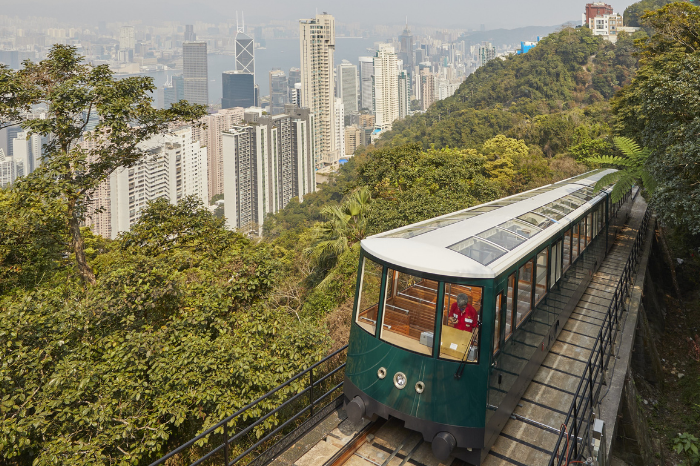
Trundling up and down the densely forested slopes of Victoria Peak for 133 years, the tramcar has long been the best way to see the sights from atop, to soak up the panoramic vistas and to absorb the boundless energy of a sleepless city that rises from sea level to Mid-Levels. For generations of families and millions of visitors, doing a weather check and then hopping on Asia’s oldest funicular railway to creak up to the Peak has been a holiday ritual.

the history of the peak tram hong kong gafencu

Humble Beginnings
Altitude is affluence in Hong Kong. By default, the higher you live, the wealthier you are. Mansions on the elite Victoria Peak make for some of the costliest real estate in the world. In the early years before the Peak Tram was constructed, just 30 or 40 well-heeled British families were in residence. From 1904 for nearly half a century, under a racially discriminatory ordinance passed by the colonial government, Chinese nationals were banned from living there unless they were domestic workers. Once that abhorrent European privilege changed in 1947, navigating the heavily forested slopes of the Peak was unequivocally possible because of the Peak Tram.

Pause for a moment and wonder how the people of the Peak functioned before the tram. With no speeding cars, mass transit system or fossil-fuelled vehicles, hauling up and down that staggering height for an arduous hour or more in sedan chairs, on horses, mules or on foot would undoubtedly have required beastly strength and, in the summer, buckets of sweat.

hong kong history of the peak tram victoria peak gafencu

More of a tourist attraction than a commuter train in today’s world, the Peak Tram climbs the 1.4km from Central in eight to 10 minutes, ascending a dizzying height of almost 400m, and navigating a 27-degree gradient on the most thrilling stretch of its single-track route. It is not only the most efficient route to the top but also the most picturesque. The journey in a boxy, burgundy carriage to the city’s best vantage points is a visual and visceral feast, revealing spellbinding views.

hong kong the peak tram history reopening sixth generation hong kong

Most of the credit for the gravity-defying funicular goes to an enterprising Scot, Alexander Findlay Smith. A young entrepreneur with a background in railways, Smith arrived in Hong Kong in the 1860s and built the prestigious Peak Hotel atop the Victoria Peak in 1873. Fascinated by the potential of combining rails and wheels, he suggested the ambitious plan for a tramcar to increase trade for his hotel.
Approval for the construction of tracks across the mountainous terrain was granted in 1882, allowing the colossal work of laying track to begin. Machine parts often weighing up to 136kg each were carried uphill by brute manpower. Six years of blood, sweat and tears later, the first generation of the Peak Tram was ready for its inaugural ascent.

the peak tram gafencu

Crafted from varnished timber, the car had a seating capacity of 30 passengers; for many years the first two seats were reserved for the Governor of Hong Kong, whose summer house, Mountain Lodge, was then on the Peak. Some 800 passengers rode the tram on the first day, and 150,000 in the first year – to put this number into perspective, in 1888 that was the entire population of Hong Kong.

hong kong the peak tram gafencu

A Slice of History
A revolutionary feat of engineering for a genius mode of transport, the first Peak tramcars were powered by coal-fired steam. The original price for a first-class ride was 30 cents, with 20 cents for second-class seats and 10 cents for third class, and tickets for the return journey slashed by half. At the last count this year, a single ticket was HK$37, thousands of times higher than the early fare, but only the cost of a Starbucks latte for a vintage Hong Kong experience.

The nostalgic, colonial vibe of the tramway, with its characteristic wooden benches, hasn’t really changed in 133 years, nor indeed the necessity of queuing for hours at peak times to board a crammed carriage. But in tandem with the extraordinary vertical growth of the majestic city skyline, the technology and structure of the funicular itself has undergone a series of makeovers since it first set wheels on the hilly terrain. The power system switched to electric in 1926; the tramcars began their shift from wood to metal in 1948; and the colour of the carriages went from deep red to green and then back to burgundy. Since the fifth-generation Peak Tram (car capacity: 120) was rolled out in 1989, it has carried some 140 million people up and down for day trips, evening dinners and scenic strolls around the summit.

the peak tram debut hong kong gafencu

A Tramcar Called Nostalgia
A further, highly anticipated modernisation has been underway. The massive HK$700 million facelift during the last eight months will reveal a passenger-capacity uptick to 210 and a weekend waiting-time cut from 90 minutes to a mere 17 minutes. The upper and lower terminuses will be extensively renovated to accommodate the bigger cars, and the control and signalling systems completely overhauled.

hong kong the peak tram 6th generation 2022

An emblem of Hong Kong, the Peak Tram has withstood the ruins of the Second World War, survived epic hillside floods and braved the current pandemic. Before 2019, it recorded an annual ridership of six million – roughly 17,000 passengers a day – and even during the peak of Covid-19, patronage stood steady at one million. It’s one of the oldest forms of public transport and a slice of local history.
Owned by the Hong Kong and Shanghai Hotels since 1971, the tramway is a landmark in the same ilk as the group’s grand-dame property, The Peninsula Hong Kong. It takes a place of pride in Hongkongers’ hearts. Hundreds of people queued for hours to ride in those iconic burgundy carriages one last time before the service closed at the end of June.

In a futuristic megapolis, the humble carriages of the Peak Tram are a reminder of the contrasts that define Hong Kong – of old and new, gritty and glossy – and they serve as a social bridge between the rich and the poor. Yes, you can whoosh to the top of the Peak in your Ferrari, but is it as enriching as chugging up in an ancient time capsule, wind caressing the hair as you reminiscence about the first tram journey you took as a child? The 10-minute ride to the top brings awe and perspective, changing more than just how you travel.

(Text: Nikita Mishra)

The Arts of Survival: Hong Kong’s disappearing crafts

Hong Kong is one of the most distinctive cities in the world. Its attributes are widely loved and reported: From the dynamic landscape of East-meets-West architecture and culinary staples, the towering skyscrapers that outline the iconic Victoria Harbour, not to mention the many picturesque islands and mountains that are mere walking distance from the heaving commercial districts.

But beyond the impressive infrastructure, a rich heritage of traditional handicrafts and art forms instil depth and additional vibrancy to the city. Steeped in Chinese traditions, and the country’s own history of folk crafts, many of these decades- and centuries-old practices have been passed down through the generations.

gafencu hong kong culture The Arts of Survival Shining a light on Hong Kong’s disappearing artisanal trades and skills porcelain painting

Yet, despite being an integral part of Hong Kong’s culture and distinct aesthetic, these home-grown crafts are struggling to survive in an increasingly modernised world. From hand-carved mahjong sets to hand-painted porcelain, these artisanal practices typically require rigorous training and exceptional skills, and with only a handful of masters remaining and not enough successors to continue their legacy, there is fear that these historical, traditional arts will die out within a few years.

gafencu hong kong culture The Arts of Survival Shining a light on Hong Kong’s disappearing artisanal trades and skills porcelain painting (2)

Hand-painted porcelain
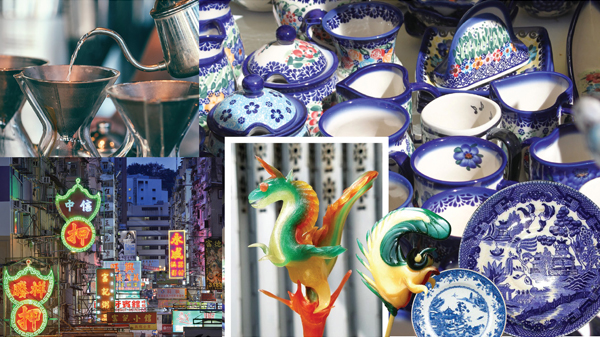
One such example is hand-painted porcelain and ceramics. In the early 19th century, porcelain was an important commodity for the British Empire, and the world trading port of Hong Kong set itself apart for its thriving industry of uniquely intricate and delicately patterned hand-painted china. The craft became intrinsic to the city’s artistic, cultural and historical identity.

Today, Yuet Tung China is the first and last hand-painted porcelain workshop in the city. Almost a century of history is rooted in its Kowloon Bay location, and now in the hands of third-generation scion Joseph Tso the business continues, albeit without a clear future as the old district of factory buildings upgrades to gleaming commercial premises. In its heyday, some 300 painters worked for the company; today only a handful remain.

gafencu hong kong culture The Arts of Survival Shining a light on Hong Kong’s disappearing artisanal trades and skills copper steel

Handcrafted copperware
Amidst the many kitchenware stores lining the streets of Yau Ma Tei, you may chance upon a pair of veteran coppersmiths at the 80-year-old Ping Kee Copperware shop. The city’s oldest coppersmiths is run by brothers Luk Shu-choi and Luk Keung-choi, who assumed the reins from their father after training in the family shop. Despite their advanced age, they continue to fashion copper pots and stills, fulfilling orders from local businesses for kitchenware and tea-brewing equipment.

But designing, hand-hammering and forging copperware is, to say the least, not an easy feat. Because of the years of hard work required to master its back-breaking skill and fastidious execution, this is a disappearing craft. Many among the younger generation have opted for less laborious jobs and higher-paid careers. The artisanal endeavour may soon be completely replaced by steel and copperware imported from China, as well as its more popular and durable counterpart, stainless steel.

gafencu hong kong culture The Arts of Survival Shining a light on Hong Kong’s disappearing artisanal trades and skills Birdcage

Birdcage making
Before walking dogs in strollers became commonplace in the city, bird-walking was a regular sight amongst Hong Kong pet owners. From the ’50s to the ’80s, raising songbirds was a popular hobby for elderly retirees, most of whom were men. The popularity of bird keeping came hand-in-hand with the demand for handcrafted birdcages, often of elaborate design and structure. These birdcages were meticulously crafted in a process that lasted for several months: pieces of bamboo were shaved into strips that were soaked in hot water for hours before being bent and moulded under a kerosene lamp, and finally nailed together. Painting the cages also took days to complete.

However, soon after a serious outbreak of H5N1 avian flu in 2008, bird-keeping became subject to stricter government guidelines. Consequently, the number of bird owners dwindled, and today the sight and sweet sound of songbirds chirping within these handcrafted birdcages is limited to just a few areas, particularly the 3,000sq.m Yuen Po Street Bird Garden. One of the few remaining masters of birdcage making is Chan Lok Choi, who now in his ’80s and spends most of his time repairing cages rather than crafting them.

gafencu hong kong culture The Arts of Survival Shining a light on Hong Kong’s disappearing artisanal trades and skills candy blowing

Candy blowing
The traditional Chinese handicraft of candy blowing derives from a 600-year-old Chinese folk art that was brought to Hong Kong during the ’60s and ’70s, and proved a real treat for young children at a time when toys were often considered a luxury.
The ‘candy men’ or ‘sugar people’, as these craftsmen are called, form these sugar figurines by first heating liquid suga, then blowing into it to form a ball-like shape, before kneading the balls into various guises, usually an auspicious animal or decorative symbol.

Today, the only candy man left standing resides on Cheung Chau Island. Visitors will find Louis To in a small corner shop crowded with wide-eyed children and families as he entertains with his skill and tales of the history of this traditional handicraft.

gafencu hong kong culture The Arts of Survival Shining a light on Hong Kong’s disappearing artisanal trades and skills street lights

Neon signage
A quintessential emblem of the city’s nightscape is the huge, overhanging neon signboards that illuminate the shopping districts of Kowloon. This unique and highly distinguishable visual aspect of Hong Kong has often been used to set the tone of futuristic- and cyberpunk-themed films, such as the Japanese animation Ghost in the Shell and the 2017 remake of American movie Blade Runner.

Yet despite being an integral part of the city’s cultural identity, neon signs have been disappearing rapidly from the streets in recent years. Since 2014, thousands of signs have been taken down and replaced with digital billboards or cheaper and easier-to-make LED signs due to governmental safety concerns.

Today, there are only a handful of neon street sign makers left in town, and Wu Chi-kai is one of them. He has been hand-making neon signs for more than 30 years and despite their large-scale removal across Hong Kong, he believes the craft will continue to attract supporters. The M+ museum in the West Kowloon Cultural District has also started collecting, preserving and exhibiting neon signs for public appreciation.

gafencu hong kong culture The Arts of Survival Shining a light on Hong Kong’s disappearing artisanal trades and skills ping-kee-copperware

These are just a few of the many traditional crafts that are fast disappearing in the city. Yet such skills encapsulate Hong Kong’s unique history and cultural identity, and as a result they are now attracting the attention and support of many young artisans and non-profit groups, as well as international media. Workshops held in creative hubs such as the PMQ building and charitable organisations like Crafts on Peel are pulling together a community of artisans to keep these art forms alive. The drive to preserve, revitalise and educate the public about their heritage is building momentum and providing glimmers of hope that Hong Kong’s traditional crafts may thrive once more.