
Portuguese cuisine gets modern makeover at Casa Lisboa

It’s hardly a secret that when it comes to Portuguese cuisine, our Macanese cousins may have a slight edge over our fair city. But all that may just change, thanks to Casa Lisboa, which recently opened doors at a new location on Wyndham Street in Central.

Casa Lisboa’s interiors

While Casa Lisboa’s traditional menu has been redolent of everything that is authentically Portuguese, the restaurant seems to have found a new direction in contemporary Portuguese cuisine, thanks to the able stewardship of Executive Chef Fábio Pombo. Drawing from his vast knowledge of Portuguese ingredients and culinary techniques, Chef Pombo has curated eight new courses that explore the more modern aspects of Portuguese fare.

Kenyan beans & green asparagus tempura

Our curiosity was piqued by the first course itself – an appetiser of Kenyan beans & green asparagus tempura. While someone with even a passing interest in food would know that tempura is a signature Japanese dish, few are actually aware that it passed on to Japan after originating in Portugal at the other end of the Eurasian continent. What sets apart the tempura at Casa Lisboa is, however, the fact that its crunchiness doesn’t compromise its garden flavours in any way. However, the appetiser that really won our heart was the oxtail pie with whipped meat sauce. Unpretentious to look at and packed to the brim with meaty goodness, this is the one dish that we’d be sure to re-order the next time we find ourselves at Casa Lisboa.

Lamb chops a mods da Quinta grilled lamb

Moving on to the mains then, the course that stayed with us was the lamb chops a mods da Quinta grilled lamb with roasted tomato, pumpkin and baby onion. Succulent, juicy and melting-in-the-mouth is just how we like our proteins to be! For guests looking to go light on red meats, the oven-baked sea bream Assada is a reliable choice. Sea bream, a popular fish in Portugal, evokes just the right amount of maritime flavours that are balanced perfectly by the accompanying grilled veggies.

Oven-baked sea bream Assada

Those looking for some carbs can try the octopus rice with spring onion, green asparagus & octopus tempura, but if you are full – and you are likely to be as the portions at Casa Lisboa are quite on the generous side – give it a miss altogether and head straight for the desserts. In keeping with the tradition of baked fruits, ever so popular in Portugal, Casa Lisboa offers a sumptuous dessert of roasted peach with Moscatel and yoghurt chantilly. The tender and creamy peach provides a perfect conclusion to a thoroughly satisfying meal.

Roasted peach with Moscatel & yogurt chantilly

It’s easy to understand, then, just why this restaurant was so packed when we visited. In a city thronging with ‘must-go-to’ eateries, we can safely say that Casa Lisboa is our ‘must-go-to-again’ destination.

Address: 2/F, Parekh House, 63 Wyndham Street, Central
Reservation: 2905 1168 or http://www.casalisboa.com.hk/

Text: Suchetana Mukhopadhyay

Review: Fine French-Cantonese fusion dining courtesy of VEA

Interiors-of-VEA-

The 852 is no stranger to contemporary fine dining, so when it comes to offering something genuinely new, restaurateurs face a real challenge. VEA, headed by chef Vicky Cheng (Hong Kong born 1 Michelin Star Chef and notably Krug Amabassade), is determined to take this challenge head on. Its recently recognised winning strategy is to offer French-cuisine-meets-traditional-Cantonese-fare atop The Wellington in Sheung Wan. 

It’s a bold move and one made all the more courageous by Cheng’s decision to pare down the  menu options and offer only a seasonal eight-course tasting menu (with optional wine or cocktail pairings). It’s this kind of bravado, however, that makes VEA all the more unique.

As with its menu, VEA’s interior is notably compact, comprising an elegant 36-seater low-lit, dining room, with many of the diners seated at one of the two bars that overlook its open-plan kitchen. The staff, meanwhile, maintain an atmosphere of convivial friendliness, with each responsible for a different course. They are also ever keen to offer insights into ingredients and flavours as each plate is presented.

Vea-Threadfin Ma Yau

The Threadfin Ma Yau, was the first dish to be served. A seasonal delicacy, Cheng said it was best prepared in the winter, the time when the fish is at its meatiest. It would be hard to dispute his assessment. This is one succulent, tender and juicy piece of meat, delicately topped with crisp, crunchy skin. A seasoning of Sichuan chilli oil and a side of fermented cabbage add a delightful hint of spiciness and an endearing texture. 

Next up was Cheng’s signature dish – Crispy Sea Cucumber – as fine an example of the chef’s devotion to introducing unusual flavours and ingredients as you are likely to get. Although not the most visually appealing of dishes – the cucumber comes covered in spongy spikes, according to Cheng, a testimony to its rarity – the tastes and textures work exceedingly well together. Surprisingly soft, the cucumber is stuffed with crab, chicken fat and served with delicate jus and rice noodles.

Vea Crispy Sea Cucumber

To follow is the rich and creamy Taiyouran egg, an outstanding dish; this is accompanied by truffles, parmesan and caviar, rendering it a fine fusion of haute cuisine and comfort food. Another standout was to follow – Longjing smoked pigeon, a beautifully presented and truly tender piece of meat. Served with preserved plums, adding a satisfying touch of sweetness, a garnish of chicken liver char siu finessed a rich taste, albeit one with a slightly gamey finish.

On to the desserts and these commence with Japanese strawberry, yuzu, elderflower and toasted rice. Diners are typically presented with six different types of strawberry (all from different regions of Japan) and then asked to choose their favourite, which is then whisked away for the pastry chef to work his magic. The result is fresh and sweet, making it a perfect palate cleanser. 

Vea_dessert_strawberries

Perhaps fatally, each course comes with an accompanying cocktail, all masterminded by Antonio Lai, the restaurant’s executive mixologist who first came to fame behind the bar at Quinary. The standouts here are the shiso lime with apple, the elderflower and gin and the shitake consommé with whisky.

VEA is a lengthy dining experience, running for about three hours in total. A briefer visit, however, would deprive you of the opportunity of savouring its innovative, bold and creatively astonishing menu. And that would be nothing short of criminal.


VEA Restaurant & Lounge, 29 & 30/F, 198 Wellington Street, Central, (852) 2711 8639, www.vea.hk

The full version of this review appears on Gafencu Magazine’s March 2018 print issue as ” La Bon Canton” by Siobhan Brewood-Wyatt. You can download the free app for digital editions of the magazine. 

Edible Stories: Creative culinary flair helps Tate keep Michelin star

Tate features delicious French-Cantonese fusion cuisine

Few fine dining restaurants are abuzz with activity on a Wednesday night, especially when the eight-course tasting menu promises to set you back some HK$1,600. However, Tate Dining Room & Bar manages to pull an elegant crowd even on weeknights, with diners flocking to try the restaurant that has won a Michelin star every year since its inception in 2012.

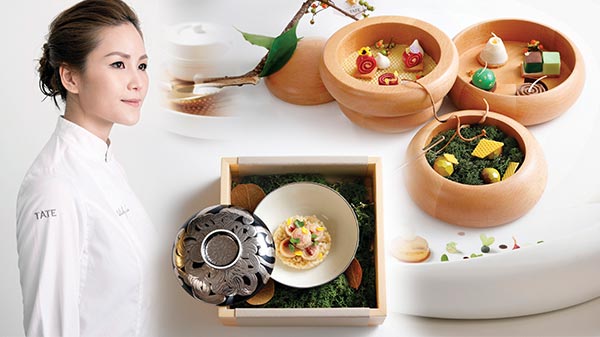
Tate, a French-Cantonese fusion restaurant in Sheung Wan, is the brainchild of Vicky Lau, an NYU Graphic Communications graduate who indulged her love for food at Le Cordon Bleu Bangkok. “I discovered that food, as a medium of expression, was a far more liberating canvas to explore creativity because of the added dimensions of taste and smell,” says Lau.

Chef Vicky Lau heads Tate

Last March, Tate re-opened its doors after relocating from its “humble” home on Elgin Street to a space twice its size on Hollywood Road. On the first floor, a neon light blinks at you from the street, spelling out “POEM”. At this patisserie celebrating the iconography of Hong Kong, Lau collaborates with pastry chef Nocar Lo to create delicate pastries and chocolates inspired by the city’s nostalgic flavours (think oolong tea mousse and chocolate red date cake). On the second level, a staircase opens up to a space not unlike a contemporary art gallery.

Lau is in the kitchen, hard at work less than a year after giving birth to daughter Kory. “Since moving to Sheung Wan we’re serving more customers every night,” she says. “We are constantly changing; in the culinary scene the only constant is change.”

Sleek Tate interiors

The latest menu, entitled Odes to, is inspired by Chilean poet-diplomat Pablo Neruda. It begins with Ode to Balance: marinated hiramasa (yellowtail kingfish sashimi) with yuzu cream, avocado and cucumber ice cream. Our group thought it was a strong start; subjected to a democratic vote, the fresh first course tied with the chicken rice risotto as the overall favourite.

The Ode to Nostalgia risotto – cooked in a supreme chicken broth with goji berry – would appeal more to Asian palates. The hot and comforting dish is an interpretation of oriental classics such as drunken chicken and rice congee.

Tate features delicious French-Cantonese fusion cuisine

Other highlights of the menu included a 10 vegetables broth poured over pan-fried red mullet fish and the generously marbled Kagoshima beef striploin with Sichuan puree. The latter, however, drew mixed reactions. Some appreciated the fatty meat, while others declared it a heart attack waiting to happen.

The lettuce-wrapped, pan-fried foie gras was a paragon of fusion cuisine: shaped like a dumpling, the leaf pocket was stuffed with dried mushroom, then steamed and deliciously paired with pine nut cream. Cantonese specialties, including dai lin abalone with vegetable ribbons and scallop espuma with fermented tofu butter, were other welcome additions to the menu.

Ode to Bees creation at Tate restaurant

Unfortunately, the dessert – an apple espuma with fermented apple and apple pie ice cream – was underwhelmingly bland. However, the mignardise (bite-sized sweets) saved the day with its assortment of honeyed creations. Aptly named Ode to Bees, the macaroons and confections – served in a beehive-shaped plate tower – wowed both visually and sapidly.

The menu unveils itself much like an art exhibition, with a story behind each dish. Lau calls her approach “culinary expressionism”, and it is this creative outlook that helped her land the title of Hong Kong’s only female chef with a Michelin star.

Tate serves up pretty dishes like Ode to Nostalgia

An optional wine pairing (HK$480/3 glasses or HK$780/6 glasses) consists of carefully curated labels hailing mainly from France. An eight-course vegetarian menu (HK$1,380) “for lovers of Mother Nature’s treasures” is also available.

“I am truly honoured to be considered among the ranks of the greats,” says Lau.

Tate's new address in Sheung Wan

A trip to Tate is truly an immersion in gastronomy and design. Lau’s harmony of art, science and story-telling continues to produce a winning formula which all but assures Tate’s tables will remain full for many more weeknights to come.

Tate Dining Room and Bar. 210 Hollywood Rd, Sheung Wan. Dinner 7pm to 11pm (closed on Sundays). +852 2555 2172, +852 9468 2172. info@tate.com.hk, tate.com.hk

Text: Julienne C. Raboca
Images: Tate

Hidden Treasures: Yusuke Takada wows and challenges with Épure pop-up menu

French fine dining establishment Épure welcomed Chef Yusuke Takada from two Michelin star La Cime for a special pop-up event last weekend. For three nights, the Osaka-based chef devised an eight-course extravaganza designed to challenge preconceptions of French-Japanese cuisine.

Where most high-end restaurants plate dishes to show off whatever delicacy is on offer, Chef Takada’s creative offerings were more akin to a game of culinary hide-and-seek.

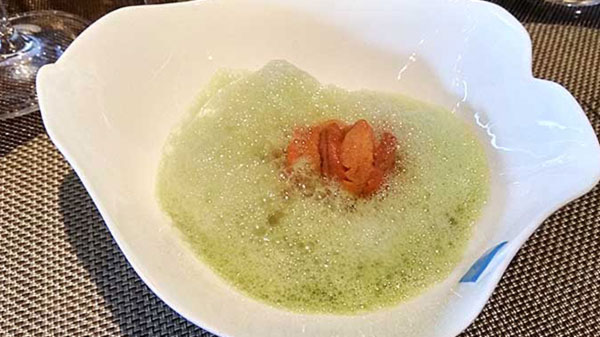
His Sea Urchin, Crab, Kobucha, Yuba was a prime example. Much like an iceberg, the layers of crab and yuba (tofu skin) were submerged under a kombucha-flavoured foam leaving just the sea urchin to peak through the top. The complexity of this multilayered appetiser was only revealed with the first bite.

Ditto the La Royale Oyster, Endive, Mojama, covered in a coating of surprisingly subtle goat cheese and walnut shavings, the Crevettes, a reinterpretation of prawn sushi using glutinous rice and hidden under a layer of amaranth leaves, and the beautifully plated Blue Lobster, cocooned in purple lettuce leaves and served with kumquats and squash.   

The main fish and meat courses were a more straightforward affair. The former was an Amadai fish steak topped with cockles and Jerusalem artichoke slices. The latter featured perfectly marbled melt-in-your-mouth A3 Kagoshima Wagyu Beef accompanied by taro and bresaola.

But lest anyone’s taste buds got too comfortable with conventional flavours, Chef Takada whipped up some truly eyebrow-raising desserts. The milder of the two was a blue cheese and caramel blend sandwiched by succulent pear slices. But the true stunner was the rather dubiously named Chestnut, Beer, Malt, featuring Guiness beer and malt whipped to a custard-like consistency paired with a whole chocolate-covered chestnut.

Chef Yusuke Takada showcased his legendary skills and creative culinary genius with his Épure tasting menu. Each course had hidden depths, both literally and figuratively, and featured non-traditional interplay of textures and flavours designed to challenge diners’ preconceived notions on French-Japanese cuisine. It comes as no surprise, then, that the three-day event at Épure sold out two months in advance.

Text: Tenzing Thondup


PIERRE delights the epicurious for Elite Dining Week 2017

Polish the Laguiole and dust off the decanters! It’s time for the second instalment of our EDW restaurant review series! Running from 9-19 November, DiningCity’s popular Elite Dining Week is a by-invitation culinary extravaganza showcasing over 30 new menus from the cream of Hong Kong’s restaurant crop. The resulting menus reflect each participant’s signature often alongside uniquely themed culinary experiences. Nowhere is this more apparent than at PIERRE – a bastion of refined French cuisine at The Mandarin Oriental Hong Kong.

For EDW 2017, Pierre Chef de Cuisine Jacky Tauvry has curated a six-course menu under the watchful eye of mentor Pierre Gagnaire. These dishes champion seasonal French produce (80 percent of the restaurant’s ingredients are sourced from French locales) and the molecular wizardry which Gagnaire finesses in his Parisian flagship on Rue Balzac.  Seasoned diners will be excited to (re)acquaint themselves with some of the Ligérien master chef’s classic creations. The Mimolette, Parmesan and Comté shavings elegantly subvert clichés associated with the ubiquitous cheese platter. The Grand Dessert is a sextet of diminutive sweets – some light others decadent – each a universe of flavour in its own right.

Gagnaire’s creative fingerprint is an undeniable part of the menu’s allure, but Tauvry injects his own insight into the proceedings with an assured and harmonious touch. Autumn is renowned for its bold hearty flavours; and the young Chef de Cuisine channels the season throughout 2017’s EDW menu. Snails persillade are perched atop a watercress velouté: evoking the imagery of a brilliantine green forest in Fall. Autumn leaves are replaced by caramelised salsifies (a root vegetable belonging to the dandelion genus) and the snails themselves – wonderfully unctuous, fragrant and moreish – would not seem out of place amidst a bounty of foraged delicacies.

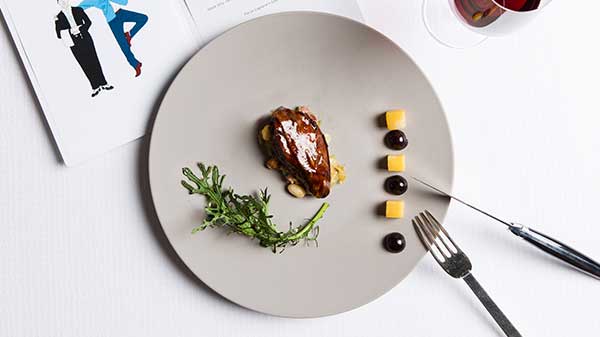
Equally, wild game is now in season: traditionally sought after for its suitability to stewing and roasting. Tauvry’s take is the Grouse fillet with white bacon. Game fowl is roasted with thyme before being finished with a hint of peaty whisky; accompanied by what Tauvry somewhat self-effacingly dubs “sauerkraut” – cabbage minced until tender with fresh barely-acidic grapes. Paired with a Bordeaux from PIERRE’s monumental cellar (Gafencu recommends the Domaine de Chevalier 2000), this course is enough to convert even the staunchest steak lover into a gun toting plaid wearing hunter – eager for their next bounty of grouse from the moor.

The PIERRE EDW menu is tightly edited and self-assured. It’s a bravura display: balancing perennial favourites, crafted by its legendary namesake, with imaginative (yet completely comprehensible) seasonal cooking. It’s the sort of menu that suffers no mediocrity. Then again, at PIERRE, even the breadbasket deserves its own standing ovation.     

PIERRE (MANDARIN ORIENTAL)
5 Connaught Road Central
www.mandarinoriental.com

Reservations at Pierre during Elite Dining Week may be made via the DiningCity app and EDW website. Prices start at HK$1,998 (plus 10 percent gratuity). Stay tuned for the next instalment of our EDW restaurant review series!

Text: Randalph Lai

HK’s most prestigious restaurants open their doors for Elite Dining Week 2017

From 9-19 November, DiningCity, in partnership with American Express, is collaborating with 30 of the city’s finest restaurants to hold its Elite Dining Week 2017. Top chefs were exclusively invited to participate by creating special tasting menus for the event, featuring their signature dishes plus optional wine pairings. Without further adieu, let’s dive into the first instalment of Gafencu’s Elite Dining Week reviews.

Themed meals and extraordinary dishes have been the challenge for this season’s edition of Elite Dining Week. The discerning foodie’s demands for flawless plating and palate pleasing concoctions are sure to be met. Take Bibo for example, whose HK$488 lunch showcases a playful yet thoughtful experiment: a deconstructed Carambar, which the pastry chef used to love as a child. He reinterpreted the candy in the form of cacao crumble, salted caramel, chocolate Chantilly and house made Carambar ice cream.

For dinner, we’re eyeing fine dining at Conrad, whose three renowned gastronomy brands are participating in different capacities. There’s the Italian Nicholini’s featuring the white truffle turbot, the Cantonese Golden Leaf highlighting their signature crabmeat fried rice with homemade X.O. sauce and the French Brasserie on the Eighth, whose HK$790 dégustation dinner wouldn’t dent the wallet quite as much as the first two.

After trying a few of the participating establishments, the Gafencu team would definitely recommend these once-in-a-lifetime tastings the likes of which will never be seen again! Stay tuned for more Elite Dining Week coverage. 

Text: Julienne C. Raboca

Online reservations for Elite Dining Week 2017 can be made at www.elitediningweek.diningcity.hk

Taste Test: Chef Catarsi debuts at Nicholini’s with white truffle tasting menu

There’s a new chef in town, or at least, at Nicholini’s Restaurant. Hailing from the Tuscan town of Livorno, Chef Riccardo Catarsi brings his signature mix of classical flavours and modern culinary techniques to the Conrad Hotel’s Italian outlet.

In a stroke of luck for the city’s foodies, Chef Catarsi’s arrival coincides with the start of Alba white truffle season. It comes as no surprise, then, that his debut seasonal tasting menu spotlights the pungent, earthy delicacy. 

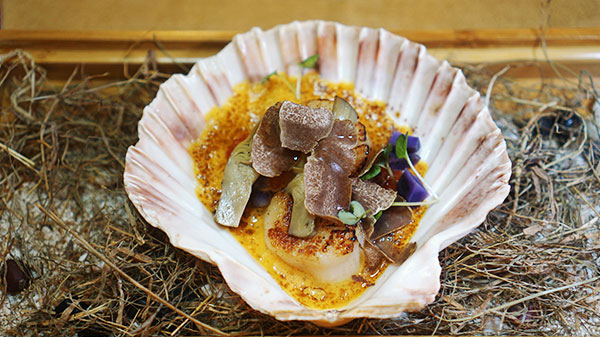
Chef Catarsi has taste buds dancing from the start with his robust Pan-fried Scallops with artichokes, purple potatoes, salmon roe, sea urchin sabayon and white truffles.

Catarsi then steps off the throttle with a subtle Turbot fish course, only to ramp it up again with the visually and flavourfully arresting Tortello with Foie Gras, parmesan cream, veal juice and white truffles. 

The main course is a Veal Tenderloin with green asparagus, chestnut cream, potato-and-beetroot mayonnaise and white truffles. There’s some intriguing textural interplay here, but ultimately the dish seems a tad too complex and heavy. 

The final dish, though, is a true truffle treat. The Café & Topinabur features an unusual Jerusalem artichoke gelato with coffee biscuits, fresh passion fruit and white truffle shavings. Deceptively delicate, it was the perfect endnote to Chef Catarsi’s creative gastronomic seasonal menu.

The White Truffle Tasting Menu is available at Nicholini’s until mid-December this year. The four-course menu costs HK$1,488, while the six-course option is priced at HK$1,888. A-la-carte specials are also available.

Text: Tenzing Thondup
Photos: Gigi Ip