
Kampai: A comprehensive guide to sake-drinking etiquette

Sake is a popular Japanese alcoholic beverage processed by fermenting rice with koji and water. It is a unique drink steeped in tradition rituals and customs that are worth knowing when drinking with colleagues or friends. 

How to order 
When ordering sake, there are a few main types that are often sought after. Junmai-shu, Ginjo-shu, Daiginjo-shu and Honjozo-shu are among the most popular types of sake. Each one is brewed in slightly different manners and can differe quite uniquely in taste.

  • Junmai has a rich and full body that is higher in acidity and served hot.
  • Ginjo and Daiginjo, on the other hand, are typically served chilled, or slightly below room temperature, to highlight its flavors. The former presents an aromatic flavor while the latter is more fragrant and full bodied. 
  • Honjozo-shu is light and smooth in body and flavor and is best served warm

How to drink 
There are many different sake, and like wine, they can be served either hot, cold, or at room temperature. Unsurprisingly, hot sake are popular during the colder season , while chilled sake is a refreshing option during the warmer days. However, there is no strict rule on serving temperatures as it is a versatile beverage that is delightful to drink at any temperature that fits your preference, so don’t hesitate with experimenting with drinking sake at temperatures. 

Being served
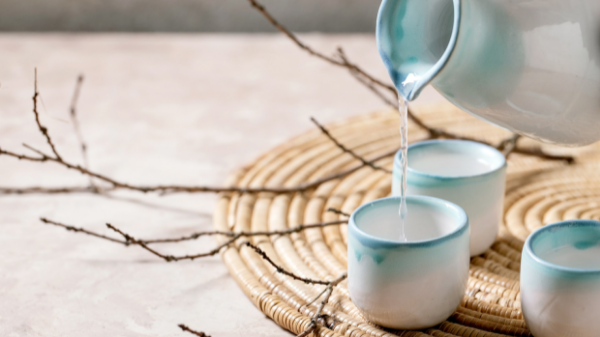
Different social settings may call for different customs and traditions, While in business settings, it is customary for the colleague with the lowest position to pour the beverage for the highest position; in family gatherings it is the youngest to take that place. Either way, when being served, always present your cup by holding it in your right hand while your left gently supporting the bottom. 

Serving others
Whether you were the first to pour or were on the receiving end, after everyone has started drinking, the sake will be poured by everyone throughout the meal. This is done by firmly holding the bottle with both hands; or depending on how small the flask is, you can hold the bottle with your right and keep your left supporting your pouring hand. One rule of thumb to always remember when drinking, to never serve yourself.  

When you’ve had enough
Rejection can be taken a rude gesture in Japanese culture, so one way to indicate that you’ve had enough to drink is to not leave your cup empty. Keeping some sake in will let your companions know that you are not not ready to be served. 

Kampai!
Finally, knowing the ins-and-outs of the etiquette of drinking in Japanese culture, all there is left to do is to cheers to a good meal and long-lasting camaraderie. Do this by cheering “Kampai!”
Locally Distilled: Have you tried Hong Kong’s hottest craft gins?

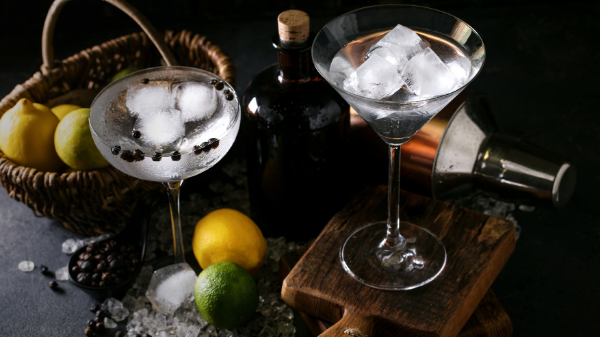
Gin enthusiasts, have you become slightly jaded with the Hendrick’s and tired of the Tanqueray’s that have become all but ubiquitous in Hong Kong’s high-end bars? Then perhaps it’s time for you to check out some of the hottest craft gins distilled right here in the city… 

Two Moons’ Signature Dry Gin
Produced completely from the Two Moons distillery in copper still and distilled in a single shot made. The distillery’s signature gin features 12 distinct botanicals (including Asian origin), resulting in a fine crisp and citrusy aromas.
Price: HK$530

NIP Rare Dry Gin
Distilled using traditional methods in an artisan Carl copper still in the NIP distillery in Quarry Bay, the Nip Rare Dry Gin’s slightly sweet and complex flavour profile features prominent notes of longjing and shoumei tea leaves, aged tangerine peel, goji berries, fresh ginger and osmanthus among other botanicals (11 in total) that pay tribute to the city’s culture.
Price: HK$480

Perfume Trees Gin
Coupling eight classic gin notes with five botanicals: sandalwood, white champaca, longjing green tea, tangerine peel and Chinese angelica wood, this spicy yet refreshing tipple concocted in the Perfume Trees Gin “lab” located in a vernacular village house in the outskirts of Hong Kong is an ode to the city’s heritage and cultural roots. 
Price: HK$388

Porcelain Shanghai Dry Gin
Handmade in a family owned distillery called Porcelain Gin, this gin embodies a rich Chinese culture in the form of its Shanghai Dry gin, comprising of at least 90 percent Chinese-native botanicals with nothing but water added after, resulting in citrus sweet notes, cardamom, and Sichuan peppercorn & lavender.
Price: HK$590


Valley Forth: How Napa Valley set out to conquer the world of high-end wine…

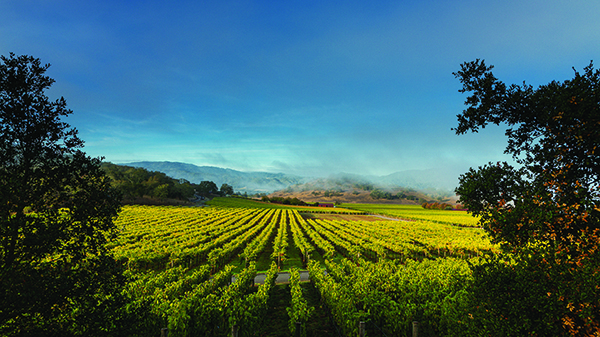
The world of fine wines has long been dominated by illustrious French Bordeauxes and Burgundies, with these illustrious creations seen as the very pinnacle all things oenological. Over, the past 50 years, however, the supremacy of these venerable vintages has been challenged from a clearly impudent – but highly-rated – ascendant territory: California’s Napa Valley.

Not entirely a newcomer, this coastal region first crossed into global wine-making awareness back in 1861, when an intrepid trailblazer – by the name of Charles Krug – set up Napa Valley’s first commercial winery, one that remains active to this very day.
Scarcely had the region begun production some 160 years back when two factors combined to virtually snuff it out entirely. The first came in the form of phylloxera, a grape root-eating louse plague. This devastated not only Napa, but also every grape-cultivating region across the United States and Europe in the 19th century.

gafencu Valley Forth How Napa Valley set out to conquer the world of high-end wine…

Thankfully, over subsequent years, it was discovered that grafting these old world vines onto the root stalk of a native species protected the grapes from phylloxera, while still retaining the preferred fruit characteristics for producing fine wines. The damage, however, was done and Napa’s viticulture was set back by decades.

Scarcely had this particular problem been resolve, when a very different calamity struck – the 1920 imposition of Prohibition across the US. It doesn’t require much imagination to realise how catastrophic this ban on the sale of alcohol was for the still-recovering estates of Napa Valley. In total, only about 60 wineries survived this wide-ranging legislation, with the innovation and determination of the remaining winemakers deserving much of the credit for ensuring the region not only survived but, eventually, came to global prominence.

gafencu Valley Forth How Napa Valley set out to conquer the world of high-end wine…

In truth, Napa’s renaissance followed many decades of hard work, with the watershed moment came in 1976 with the Judgement of Paris – a tale fabulously retold in the 2008 hit indie film, Bottleshock. During this high-profile wine-tasting event, the judges were famously obliged to undertake a blind sampling of Cabernets and Chardonnays from both France and the US. In a shocking upset that few saw coming, it was the upstart wines from the Napa Valley that triumphed, catapulting the region to the forefront of fine winemaking.

gafencu Valley Forth How Napa Valley set out to conquer the world of high-end wine… most expensive no.2 Harlan Estate

Today, Napa Valley has an abundance of quality wines, different wine varietals and a truly beautiful ambience, with its hundreds of wineries also famed for their hospitality. To all intents and purposes within the oenological sphere, Napa is now California. In fact, Napa pretty much represents the whole of the US when it comes to winemaking. While other states may have their cult wines, when it comes to the most expensive varietals, nothing can compete with the staggeringly priced bottles produced by such Napa estates as Screaming Eagle, Harlan Estate and Tusk Estate.

gafencu Valley Forth How Napa Valley set out to conquer the world of high-end wine…screaming eagle

Overall, eight of the US’s 10 most expensive wines come from Napa, with the most popular grape varietal being Cabernet Sauvignon, while the priciest is Screaming Eagle Cabernet Sauvignon, which regularly goes for a minimum of US$3,500 a bottle.
While the wines’ strong, delicious flavours definitely contribute to their exorbitant price tags, another key factor also plays a part. Even though Napa makes the most sought-after of all US wines, it only accounts for about four percent of overall production. This scarcity is reflected in the extreme difficulty in buying the region’s vintages.

In many cases, demand is so steep that wineries maintain mailing lists. Even getting on such a list is notoriously difficult and it can still be years before a newcomer gets a chance to actually buy anything. If the level of interest is anything to go by, however, it’s clearly a wait that’s more than worthwhile.

Coveted Cuppas: The most expensive Chinese teas in the world

It’s no secret that discerning tea lovers will settle for nothing less than the finest of leafy beverages, ones that embody a world of flavour and nuanced tones in every sip. Chinese teas are no different, with this traditional morning pick-me-up not only prized for their health benefits but also celebrated for their cultivation process processes, all which give them undoubtedly hefty price tags. Below are some of the most expensive Chinese teas that money can buy… gafencu most expensive Chinese teas in the world red robe da hong pao

Da-Hong Pao Tea
Da Hong Pao, also referred to as Big Red Robe tea, is famed for its healing effects and is considered the King of Chinese tea, long beloved by the upper echelons of Ming Dynasty society. Grown in the Wuyi mountains in Fujian Province, the rare and exclusive tea leaves is harvested only once a year between May and June due to the scarcity of the original tea trees remaining, which no doubt explains its exorbitant cost.
Price: US$1.2million per kilo

 gafencu most expensive Chinese teas in the world Tieguanyin

Tieguanyin Tea
Named after the Buddhist deity, the Iron Goddess of Mercy Guanyin, Tieguanyin is a type of Oolong tea — a combination of black and green tea leaves. The trees are grown on the highest mountain in Fujian Province and involves a highly complex processing by experts which lends its unique characteristics to its distinctive flavour.
Price: US$3,000 per kilo

 gafencu most expensive Chinese teas in the world panda dung tea

Panda Dung Tea
Prized for the nutritional value it is believed to possess thanks to its unique cultivation methodology, Panda Dung Tea is said to derive its flavours through the use of a special type of fertiliser. As its name suggests, panda droppings are used to fertilise the soil that nurtures this organic tea in the mountains of Ya’an in Sichuan province. Despite its rather earthy origins, it doesn’t deter tea lovers from enjoying this special leafy beverage, as proven by the premium price it commands
Price: US$70,000 per kilo

 gafencu most expensive Chinese teas in the world Narcissus Wuyi Oolong Tea

Narcissus Wuyi Oolong Tea
Among the rarest of vintage teas in existence, the Narcissus Wuyi Oolong tea recalls a unique provenance for tea aficionados. Originating in China’s Mt. Wuyi, it was first auctioned to buyers in Singapore, before becoming available to different tea collectors around the world. Ultimately finding a home in Hong Kong, this vintage tea box features a unique flavour of floral notes with chocolate and wood, nuances that are said to increase with age.
Price: US$6,500 per kilo

 gafencu most expensive Chinese teas in the world fuding white tea shaomei

Fuding white tea
Rounding out our list of expensive Chinese teas is the Fuding white tea native to Taimu Mountain, Fujian province. Cultivated in Fuding City, an important base for tea export and often billed as the hometown of Chinese white tea. Fuding white tea, also referred to Shaomei tea, boasts leaves cut from the tips of naturally withered leaves, imparting a deliciously condensed flavour profile.
Price: HKD1,300 per 350g (click here to purchase)

Natural Brews: Seven Chinese herbal teas that soothe the body and soul

Buzz-worthy cocktail lounges and sophisticated wine bars may dominate the city’s beverage market, but there is, in fact, a wholly different type of brew that locals flock to and imbibe on when in search of some much-needed rejuvenation. We speak, of course, of traditional Chinese herbal teas, holistic tipples that are based on centuries-old recipes that offer natural remedies for anything from the common cold to detoxifying the liver and relieving stress or pain. Known to locals as leung cha (which translates to “cooling tea”), these useful cuppas are known for aiding in balancing the body’s heat, and are imbued with medicinal properties that work beyond the scope of Western medicine. Below are some top sellers that have long been lauded for their healing capabilities. 

Herbal Teas for the Soul Seven medicinal teas that will serve you well gafencu wine traditional chinese medicine (2)
Image: Mezoom2 via flickr

1. Heal-All Tea (夏枯草):
Prunella Vulgaris, also known as the ‘heal-all plant’, is a herbaceous plant that possesses healing properties that help lower blood pressure and blood sugar levels. Its sweet flavour makes for an easy entry-level tea for those interested in starting a habit of drinking Chinese herbal teas.
Benefits: Detoxifies the body, reduces internal heat, improves vision, soothes swelling and headaches.

2. Five Flower Tea (五花茶):
Brewed with five types of medicinal flowers, its main purpose is to keep the digestive tract healthy. Though recipes varies from shop to shop, it often includes flowers such as kapok, kudzu, prunella vulgaris, or heal-all plan.
Benefits: Keeps digestive tract healthy, soothes sore throat and reduce inflammation

Herbal Teas for the Soul Seven medicinal teas that will serve you well gafencu wine traditional chinese medicine

3. Twenty-Four Flavour Tea (廿四味):
As its name states, this tea is made with 20 types of herbs. It is not as easy to swallow as the other teas because of its dull bitterness, but it does packs a punch of health benefits, especially for those who are acne-prone or enjoy eating fried or spicy food.
Benefits: Relieve sore throats and common cold symptoms, alleviate certain skin problems, cools down and balances the body’s heat, detoxifies the body and reduces bloating.

4. Chicken Bone Grass (雞骨草):

Made with chicken bone grass and candied dates, this dark herbal tea is bitter with a sweet aftertaste. Because of its natural bitterness, it is typically brewed with liquorice which gives it its palatable sweetness and makes it easier to drink. It is especially good for people who tend to smoke excessively, drink alcohol regularly or suffer from insomnia or stress.
Benefits: Improve digestion and liver function, clear dampness and phlegm, reduces bloating, detoxifies the body, improves liver function, relieve pain, stress and fatigue.


Herbal Teas for the Soul Seven medicinal teas that will serve you well gafencu wine traditional chinese medicine (3)

5. Fire Hemp Seed Tea (火麻仁):
Made from one of most essential traditional Chinese medicinal herbs, Hemp Seed, this nutty flavoured tea makes for a slightly sweet beverage that is suitable for any weather because of its neutral nature. It is known to be very nutritious and rich in protein, Vitamin E and mono-unsaturated fats which helps with digestion.
Benefits: Prevents constipation, improves digestion and bowel movements, promotes anti-ageing and reduces risk of cardiovascular disease

6. Monk Fruit Tea (羅漢果茶):
One of the most commonly brewed Chinese herbal teas is the monk fruit tea, a naturally sweet drink that is cool in nature. It is especially popular during the summer months for its refreshing effect on the body. Though this tea is quite sweet, it is low in carbs and calories.
Benefits: Cures sore throats and coughs, clears internal heat, clears dampness and lubricates the lungs

Herbal Teas for the Soul Seven medicinal teas that will serve you well gafencu wine traditional chinese medicine (8)

7. Chrysanthemum Tea (銀菊露)
Chrysanthemum tea is a fragrant flower-based tea that is boiled with honey and sugar cane. It is neutral in nature, making it a healthy beverage that is suitable any day of the year, without the need to relieve any particular symptom. It is also a light and sweet alternative to the other teas on the list. 
Benefits: Clears internal heat, detoxify and improves liver function, relives cold and flue symptoms and improves vision

Where to drink herbal tea:

Herbaceous Tea
Relatively new to the scene since opening in 2013, this modern outlet brews a variety of fine Chinese herbal teas by hand everyday at all of their shops around Hong Kong.

Good Spring Co.
This Chinese medicine shops in Central boasts an impressively large range of Chinese herbal teas. They’re most notably for their 24 herbs tea, sweet flower tea and American ginseng tea, all of which can be served hot or cold.

Sam Bat Mai Kudzu
This is one of the most well-known herbal tea stores in the city. Noteworthy of their recipes, locals flock to this Wan Chai shop for a much-needed herbal refreshment and detoxification. Customers can also try its famous Rorippa Indica (Yellowcress) tea.


Bourbon: Exploring the charming history of America’s native spirit

Accepted wisdom has it that the world’s first whiskies were distilled in Scotland more than five centuries ago when its then-king, James IV, ordered 500 bottles of aqua vitae (water of life) from a local monastery. In the intervening half-millennium, Scotch has become beloved the world over, with the global market valued at a staggering US$1.5 billion in 2020. Yet, some 6,000km-distant from the Highlands where it all began, an entirely different whisky has captured the hearts of discerning drinkers – bourbon, the tipple typically titled ‘America’s native spirit’. 

Bourbon Vivants How to enjoy the true spirit of the US...Blanton's_Bourbon

The exact origin of bourbon, however, remains shrouded in controversy. While some maintain it was created by the Samuels family in Kentucky in 1783, others believe it was invented by Elijah Craig, a Baptist minister, in 1789 as a variant of moonshine recipes. 

Bourbon Vivants How to enjoy the true spirit of the US...ASW_Distillery__Atlanta's_hometown_whiskey_bourbon_craft_distillery

Still another vocal lobby holds that it evolved ‘in barrel’ from one of the existing whiskies of the day, with its name said to be derived from Kentucky’s Bourbon County, home to a popular port for the shipping of various imported spirits. Wherever the truth may lie, bourbon is now one of the state’s most famed exports, with local distillers still accounting for 95 percent of all production. 

Bourbon Vivants How to enjoy the true spirit of the US...Beam_Rack house

This near monopoly may, in part, be down to the strict legal definition of what can officially be sold as ‘bourbon’, with the requirements still vigorously enforced to this day. Firstly, the spirit must be made in the United States and from a mash consisting of at least 51-percent corn. It must also be aged in new charred American oak barrels (whereas other whisky varietals, such as Scotch, are typically aged in barrels that have previously held port or wine) with ageing beginning at no more than 125 proof. The final product must then be bottled at 80 to 160 proof with no flavouring, colouring or other additives allowed aside from the basic ingredients    malted barley, rye, wheat and water. 

Bourbon Vivants How to enjoy the true spirit of the US..scotch

Despite the simplicity of its ingredients, bourbon comes in a surprisingly large array of flavours, ranging from floral and fruity iterations to spicy, dry concoctions and pretty much everything in between. While the ageing process all but guarantees that such spirits will be sweet to a certain degree, this can easily be enhanced by varying either the barrel dwell time or the exact composition of the mash, options that can impart notes of vanilla, caramel, honey or even chocolate as desired. Any floral flavours, meanwhile, are typically by-products of the yeast used during the fermentation process, which can yield hints of honeysuckle, rose petals or herbs. As a general rule of thumb for the unwary and uninitiated – the darker the bourbon, the higher the alcohol content. 

“As a rule of thumb for the unwary — the darker the bourbon, the higher the alcohol content”

As with Scotch, bourbon can be served in countless different ways. While classicists often enjoy it neat, on the rocks or maybe with just a dash of water, cocktail aficionados have, meanwhile, incorporated it into any number of iconic tipples, most notably Manhattans, Old Fashioneds or Mint Juleps, with the latter’s trifecta of bourbon, mint and sugar still a particular favourite in Kentucky, bourbon’s original stomping ground. Indeed, there are varieties of this flexible, flavourful alcohol capable of suiting any mood or fitting any occasion, which no doubt explains why it remains such a perennial favourite in the US and far, far beyond.

Bourbon Vivants How to enjoy the true spirit of the US...Suntory-whiskey-blanton-bourbon-liqueur-distilled-beverage-

Mint Julep

Ingredients: 

1. 4-5 sprigs of mint (leaves only)

2. 2 sugar cubes

3. 2.5 oz bourbon

4. Mint sprig for garnish

Instructions:

1. Place mint and sugar cubes in glass

2. Muddle well to dissolve sugar and release mint aroma

3. Add bourbon

4. Fill glass with crushed ice and stir well

5. Garnish with mint sprig and serve

Sinlessly Delicious: These zero-alcohol cocktails are not to be mocked

2020 might have seen the rise of a new trend in the form of bottled cocktails and wine deliveries. Now, though, with dining-in restrictions extended to 10pm, what better way to catch up with loved ones than to unwind over a drink or two. And if your New Year’s resolution is to cut back on alcohol, fear not, for below are some of the city’s most deliciously sophisticated alcohol-free cocktails to try…

gafencu wine Deliciously sinless These zero-alcohol beverages are not to be mocked quinary early grey tea caviar
Image: Quinary

Earl Grey Caviar Martini

Sinlessly delicious is the Quinary’s spirit-free version of its signature and all-time bestseller, Earl Grey Caviar Martini. Fresh and citrusy with cucumber, red apple juice, lemon juice and elderflower cordial. Topped with Earl Grey tea caviar and a tower of Earl Grey tea air for a sumptuous touch, this tea-based mocktail from the award winning bar is a definite must-try.
Price: $140
Location: Quinary, Central

gafencu wine Deliciously sinless These zero-alcohol beverages are not to be mocked the envoy morning dew (2)
Image: The Envoy

Morning Dew 
For a delightfully fresh treat, the Morning Dew from Central-set, colonial-inspired restaurant The Envoy serves up a Dilmah green tea and jasmine double-strength tea mocktail, topped with a own homemade pandan syrup that’s described as “pearls of dew clinging onto the tips of long blades of grass, sparkling in the light”. The British eatery, located in The Pottinger, is ranked among Asia’s Top 50 Best Bars, so this is one drink you’re all but guaranteed to enjoy.
Price: $110
Location: The Envoy, Central

gafencu wine Deliciously sinless These zero-alcohol beverages are not to be mocked ozone
Image: Ozone via Facebook

Ruby 
Set against the breathtaking panoramic views of Victoria Harbour, Ozone’s take on an alcohol-free classic Sangria comes in the form of the sophisticated Ruby. Mixed with the celebrated zero-alcohol distilled spirit Seedlip Grove 42 and Merlot Juice, this classy mocktail is an uncanny replica of its red wine counterpart. Needless to say, patrons are likely to cheer on for many rounds through the night with a sweeping view of the city skyline to drink to atop the ICC.
Price: $110
Location: Ozone, Tsim Sha Tsui

gafencu wine Deliciously sinless These zero-alcohol beverages are not to be mocked le garcon saigon (2)
Image: Le Garcon Saigon via Facebook

D’Ho Chi Minh
For a of taste of springtime in a glass, the fruity D’Ho Chi Minh by Wan Chai-set Vietnamese restaurant Le Garcon Saigon delivers exotic flavours of the tropics. Boasting delicious notes of pineapple, lychee, lime and egg white, the tipple is beautifully presented in a simple tall rock glass to highlight its vibrant hues. Inspired by Parisian brassieres, Le Garcon Saigon is chic and elegant space that serves as the perfect setting to enjoy a casual afternoon meal over drinks.
Price: $98
Location: La Garcon Saigon, Wan Chai

gafencu wine Deliciously sinless These zero-alcohol beverages are not to be mocked potato head seedlip sour
Image: Potato Head via Facebook

Seedlip Sour
For an exclusive round of drinks against the backdrop of contemporary decor, stylish furniture and funky music, look no further than the renowned Balinese restaurant Potato Head’s best kept secret, The Music Room. Among its selections of alcohol-free elixirs (courtesy of the connected Eksotika bar) is the Seedlip Sour, a spirit-free mint and oleo syrup cocktail with citrus and sugarcane juices that comes topped with the bar’s signature mojito foam.
Price: $85
Location: Potato Head, Sai Ying Pun


Monky Puzzle: The true secret of Chartreuse

When, as occasion has it, all thoughts turn to green-tinted tinctures, chances are that the mighty absinthe will be the tipple to ripple through your reflections. A very different emerald embrocation, however, has steadily been gaining global recognition, largely on account of its spicy herbal flavours and the fact its 400-year-old recipe remains shrouded in mystery. The concoction in question, of course, is Chartreuse, the French vegetal brew, the make up of which is supposedly only known to the Order of Chartreuse, a society of taciturn monks devoted solely to prayer, meditation and distillation.

gafencu magazine Monky Puzzle Only a silent French religious order knows the true secret of Chartreuse

It’s a backstory that has frequently excited a degree of scepticism. After all, various spirit brands have all too frequently titivated their origins in order to add extra layers of intrigue and allure for less worldly-wise consumers. While such tales stretch from minor embellishments to full-on heritage hoaxes, Chartreuse may just be the exception.

Its – apparently true – origins date back to 1605, a time when Duc Francois Hannibal d’Estrées, a French nobleman, gifted an ancient manuscript supposedly detailing the constituents of an ‘Elixir of Long Life’ to a Chartreuse monastery in a suburb of Paris. Many years later, the manuscript was dispatched to La Grande Chartreuse, the order’s head office, secreted away in the picturesque Grenoble mountains of southeastern France. There, an exhaustive study began in a bid to decipher the document. 

gafencu Monky Puzzle Only a silent French religious order knows the true secret of Chartreuse La_Grande_Chartreuse_p

It wasn’t until 1764, however, that Jerome Maubec, the monastery’s apothecary, finally uncovered its secrets and promptly set about putting the formula into production. It was a triumph of the time and particularly impressive in that the recipe stretches to a staggering 130 herbs, plants and other botanicals, all of which need to be precisely macerated and blended in order to achieve the perfect balance of flavours. Today, Maubec’s decoded recipe is still followed to the letter, yielding the spirit’s 68-percent alcohol content and, less assuredly, producing a cure-all tonic that can remedy a wide range of ills and grant regular imbibers a longer life.

Across the many intervening centuries, the monks have, admittedly, adulterated the recipe somewhat to create milder, more palatable brews. In 1840, for instance, they released Green Chartreuse, which came with a gentler 55-percent alcohol content. Along the way, there was also a Yellow Chartreuse”, a sweeter iteration with an even more abstemious 40-percent alcohol level. As with the original, their exact recipes remain shrouded in mystery, supposedly known to only one or two designated monk any given time.

gafencu magazine Monky Puzzle Only a silent French religious order knows the true secret of Chartreuse

These offshoots, however, remain two of the brand’s most iconic incarnations and, have been embraced the world over. The former French president Charles de Gaulle, for example, enjoyed his hot chocolate with a spot of the herbal liquor, while a character in Quentin Tarantino’s 2007 slasher film Death Proof even went as far to state: “Chartreuse, the only liqueur so good they named a colour after it.” Today, the spirit’s various manifestations are all but ubiquitous in high-end bars, while also being utilised in any cocktails looking to impart a spicy herbal zing and delivering a potent punch.

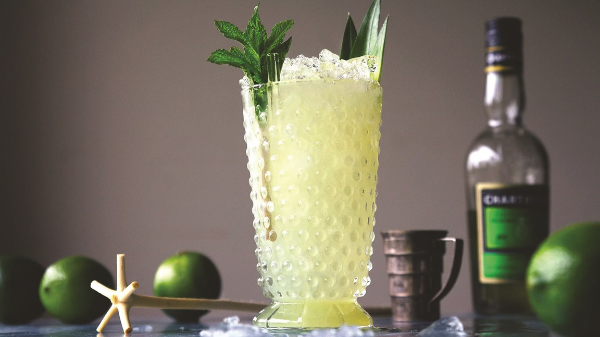
Keen to try the green? This particular cocktail comes highly recommended:

A refreshing, high-octane cocktail fueled by the herbal heat of chartreuse.

Ingredients: 

1. 1½ oz green chartreuse

2. 1 oz pineapple juice

3. ¾ oz lime juice

4. ½ oz falernum

5. Garnish: Mint sprig and lemon wheels

Instructions:

1. Pour ingredients into a shaker and stir. then transfer into highball glass.

2. Fill crushed ice and mix until the outside of the glass is frosty.

3. Top with more crushed ice. Garnish with mint sprig and lemon wheels.

Delicious takeaway cocktails to enjoy at home

Though the city’s favourite bars remain closed, there’s no reason to not treat yourself to a much-needed cocktail night in the comforts of your own home. With some of the city’s best-loved nightlife hotspots serving up delicious takeaway cocktails just a call away, you’re all but guaranteed to enjoy these unique bar-to-home experiences whether you’re throwing a house party or just looking for an easy nightcap after a stressful day.

gafencu magzine Takeaway bottled cocktails order delivery Untitled design

The Diplomat
This Central-set speakeasy US tavern is well known for martinis and creative cocktails such as the Tarling, a signature cocktail combining pandan-infused gin, white port, baking spice, clarified orange juice and coconut juice, and Boulevardier, a heady blend of Wild Turky rye bourbon, Punt E Mes and Campari bitters. Each 400ml to-go bottle serves up to four, with prices starting at HK$500.
Price: HK$500+
Available for pick up at The Diplomat, Central, Hong Kong

gafencu magzine Takeaway bottled cocktails order delivery the old man

The Old Man
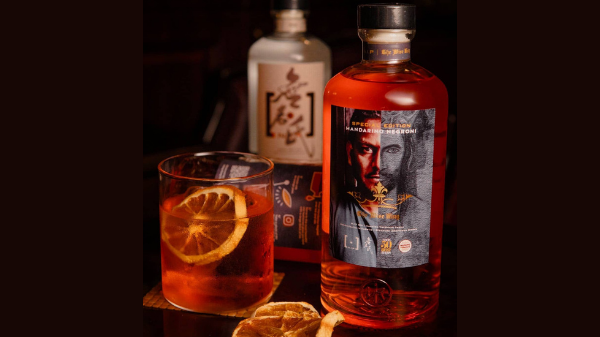
Claiming the coveted No.15 spot on The World’s 50 Best Bars list, The Old Man is bringing some of its award-winning cocktails right to your door step. From a seaweed-flavoured vodka and spiced cherry tomato to a guava Negroni or a limited-edition Hemingway series of collectible bottled cocktails, home-bound connoisseurs of mixology will be spoilt for choice at the number of premium offerings, which are available in either 500ml and 700ml sizes.
Price: HK$500+
Delivers to: Hong Kong Island, Kowloon, Lantau and Outlying Islands (free delivery with minimum order of HK$800 for Hong Kong Island / HK$1,000 for New Territories and Lantau)

gafencu magzine Takeaway bottled cocktails order delivery rosewood darkside

Darkside
Adding a touch of opulence to takeaway cocktails, Darkside, the jazz bar nestled within Rosewood Hong Kong, recently unveiled customised bottled alcoholic beverages masterminded by the luxury hotel’s beverage consultant, Giancarlo Mancino. Delving into its extensive library of aged spirits, on offer are such libations as the Godeau Cognac Old Fashioned and the 50/50 Martini with Xellent Swiss Gin.
Price: HK$458+
Available for pick-up at Butterfly Patisserie, Rosewood Hong Kong, Tsim Sha Tsui

gafencu magzine Takeaway bottled cocktails order delivery the wise kings

The Wise King

Award-winning modern classic cocktail bar The Wise King also has on offer an array of takeaway cocktails to entice your taste buds. Its expansive arsenal consists of contemporary takes on classic drinks, including the King’s Negroni, Jamon Old Fashioned, Brined Rickey, and the Pickled Margarita. Available in two sizes – 500ml for HK$500, or 750ml for HK$598 – each bottle comes with a tag hand-signed by the bar’s founder in appreciation for customers’ support.
Price: HK$600+
Delivers to: Hong Kong Island and Kowloon

gafencu magzine Takeaway bottled cocktails order delivery Coa

Coa
Named after the machete-like tool used to harvest agave – the key ingredient in tequila and mezcal – COA is an award-winning cocktail bar that puts the focus firmly on the aforementioned spirits. The agave specialists in this Central-set bar have partnered with local craft brewer Young Master Ales to create a special bottled collection of the bar’s signature cocktails, featuring the same rich flavours that discerning drinkers have come to love. Their virtual shop also stocks a selection of craft brews and spirits all fronted with artistic labels. 
Price: HK$400+
Delivers to: Across Hong Kong except outlying islands (free delivery with minimum spend of HK$700 )

Treat your loved ones to the finest Chinese wines this Lunar New Year

Chinese wines, have long stamped its cultural influence in history, impacting politics, literature and religion through the centuries. Today it remains an important aspect for a multitude of occasions, be it business dinners or major celebrations. In particular, it is a staple of any Lunar New Year festivities.

Chinese wine lunar new year baiju gafencu magazine

The words ‘wine’ and ‘spirit’ are often used interchangeably in regards to Chinese liquor, but instead of fruits, grains such as corn that are the basis of Western spirits, wheat, rice or sorghum the fermented grains of choice. The most popular type of Chinese wines is baiju, a clear colourless spirit that averages between 50 to 60 percent in alcohol content. There are a variety of 12 types of baiju, categorised by their production style, geographic location and aromas. If you’re looking to imbibe on the finest Chinese liquors this Lunar New Year, below are some of the premium brands that are worth saying “gambai” with.

Chinese wine lunar new year baiju gafencu magazine kweichow moutai

Kweichow Moutai

An intense spirit with strong notes of soy sauce, Kweichow Moutai also has complex notes of roasted nut, caramel and earthiness with a dry finish. It is not for the faint-hearted, though, as even the mildest version boasts an alcohol content of 36 percent. Long a favoured gift among society’s elite, its hefty price tags can also make you quail, but few other Chinese spirits can match its palate-pleasing flavours.

Where to get it: HK Liquor Store

Chinese wine lunar new year baiju gafencu magazine Wuliangye

Wuliangye

Also known as ‘Five Grains Liquid’, this award-winning baiju is fermented with sorghum, maize, wheat, glutinous rice and long-grain rice, and is known for its strong aroma and a mellow, lasting sweetness of pineapple. This Sichuan distillery follows a long history of traditional fermentation that dates back to the Ming dynasty and is the second biggest baiju brand, after Moutai.

Where to get it: HK Airport Shop

Chinese wine lunar new year baiju gafencu magazine Luzhou Laojiao

Luzhou Laojiao

Noted for its strong aroma and its complex peach flavour, this Sichuan-situated distillery is the oldest continuously producing baijiu distillery in the world, and still follows old age traditions of fermentation that dates back to 1573, in the Ming dynasty. 

 Where to get it: HK Airport Shop

Chinese wine lunar new year baiju gafencu magazine Luzhou Laojiao Xifengjiu

Xifengjiu

Xifengjiu is rooted in a rich cultural legacy that dates back to Tang dynasty. Fermented with sorghum, barley and peas, this Shanghai-situated distillery has, in recent years, been evolving its techniques and traditional flavour varieties to offer a wider range of options today’s more diverse modern demographic.

Where to get it: The Bottle Shop HK