
Chateau Palmer leads the charge with new bio-dynamic wine approach

Thomas Duroux, CEO of leading Margaux vineyard Chateau Palmer, kicked off his Asian tour with a visit to Hong Kong. We had the opportunity to dine with him, try some spectacular vintages and also discuss his groundbreaking approach to winemaking.

CEO Thomas Duroux breathes new life into Chateau Palmer
Chateau Palmer CEO Thomas Duroux

If the name ‘Chateau Palmer’ doesn’t sound familiar, it’s understandable. Although well-established and supremely respected in European circles (it’s considered the best Margaux appellation after Chateau Margaux), the producer is a relatively new name among Asian wine enthusiasts. But that’s changing steadily, thanks in no small part to Duroux’s innovative new bio-dynamic wines.

Since 2008 and under Duroux’s guidance, the property has stopped using any agrochemicals and artificial fertilisers. Instead, it has gone old-school, planting fruit trees and flowers and even allowing sheep to graze between the vines in an attempt to achieve complete harmony with the land. Chateau Palmer was even certified as 100% biodynamic last year.

New bio-dynamic wines from Chateau Palmer a big hit

When asked what drove the change, Duroux responded, “Ten years ago, I was convinced that our farming was not sustainable, that we had to find a different option. All these chemicals and sterile farming conditions were killing the soil.” He added, “We chose to experiment drawing from what pre-World War II producers used to do [before the age of mass-produced wine]. Slowly but surely, we’ve built our own bio-dynamic style.”

While it may sound a bit flowery, the results speak for themselves. Prices of Chateau Palmer wines have sky-rocketed in the last few years, shooting up over 10% between 2015 and 2016 alone.

Chateau Palmer is named after British soldier Charles Palmer who bought the property in 1814
Chateau Palmer is named after British soldier Charles Palmer, who bought the property in 1814

That’s not to say that older vintages from this avant garde winemaker should be written off. Quite the opposite, in fact. For instance, two bottles of Chateau Palmer 1945 are set to be sold today by American wine auctioneer Acker Merrall & Condit for an estimated HK$48,000-64,000.

Chateau Palmer is the perfect example of the direction that many established French winemakers are going (including Burgundy legend Domaine de la Romanée-Conti and Medoc favourite Pontet Canet). If its latest 2015 vintages are anything to go by, they’re headed the right way.

Text: Tenzing Thondup
Images: Chateau Palmer
 

Agave-based Spirits: Demystifying tequila, mezcal and raicilla

How to drink Agave-based Spirits
Agave-based spirits like tequila, mezcal and raicilla are taking Hong Kong by storm

Judging from the slew of upmarket Mexican restaurants that cropped up in our fair city over the past few years (11 Westside, Brickhouse and Caliente to name a few), tacos and burritos have become something of a staple for Hong Kong epicureans. But what of Mexico’s alcohols? We’re here to shed some light on some of its most famous agave-based spirits: tequila, mezcal and raicilla.

Despite its widespread fame, tequila is something of an exclusive club. By law, it can only be produced within five of Mexico’s 31 states, with Jalisco being the major manufacturer. Furthermore, only blue agave grown in these designated regions can be used to produce tequila. It’s almost identical to the rule governing the classification of champagnes.

Tequila is made solely from blue agave plants

So how to distinguish between good and bad tequila? “When you’re drinking tequila, look for a sweet potato aroma. That’s how you know it has truly preserved the blue agave flavour,” shares bar guru Jay Khan, who helms Coa, the new Oaxaca-inspired bar dedicated to agave-based spirits. Another top tip? Avoid tequilas with overwhelming caramel or vanilla aromas. These reflect artificial additions introduced during the distillation process.

It may come as a surprise that tequila is actually part of the larger mezcal family. What is mezcal, you ask? It’s the overarching term used to define all agave-based spirits distilled in nine Mexican states. Oaxaca is the leading producer. Where tequila only draws on one agave species, mezcals utilise over 50 varieties. This explains the much more diverse flavour profiles found across different mezcal brands.  

Agave stems are the basis for all mezcal spirits

Many mezcals use a similar distillation process. The piña, or agave stem, is roasted and smoked in an underground pit, and then crushed before being left to ferment in water. Even after distillation, mezcal delivers a strong smoky taste – a residual effect of this production methodology.

When you exclude mezcal and tequila, agave alcohols remain relatively unknown in our city’s nightlife scene. But one serious up-and-comer is raicilla. Although technically a mezcal, raicilla cannot be legally labelled as such because it is produced exclusively in the state of Jalisco where mezcal production is banned. Raicilla sometimes lacks the smoky flavour of other agave-based spirits because it is cooked overground in artisanal brick ovens that allow smoke to escape.

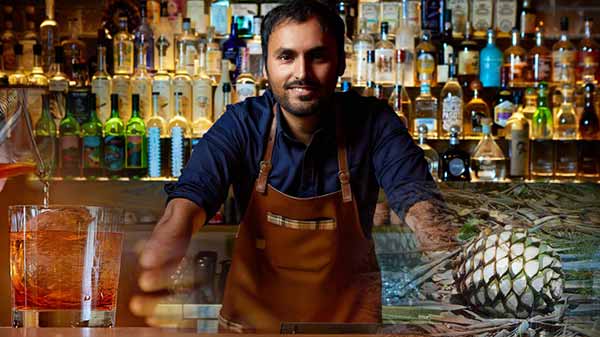
Jay Khan serves up delicious agave-based cocktails at his Oaxaca-inspired artisanal bar, Coa
Jay Khan helms Coa, the new Oaxaca-inspired bar dedicated to agave-based spirits

Don’t expect any raicilla-based cocktails though. “Raicilla’s flavours are so nuanced and subtle that it gets lost when mixed in cocktails,” says Khan, “If guests request it on the rocks, we provide ice on the side. But cooling the liquid compresses and dampens the aromas. I’d recommend having racilla neat.”

Ready to take that first step into the world of agave-based spirits? Khan recommends Coa’s signature Horchata de Pistacho cocktail, which blends Ocho Blanco tequila with homemade horchata and pistachio orgeat. If you’re feeling more adventurous, ask the knowledgeable staff for a mezcal or raicilla recommendation. Salud!

Coa. Shop A, LG/F, Wah Shin House, 6-10 Shin Hing Street, Central.

Text: Tenzing Thondup

Gaggenau’s climate-controlled wine cabinet gets a nod from champagne expert Richard Juhlin

German home appliances manufacturer Gaggenau recently has introduced a wine climate-control cabinet called Vario Cooling 400 series at the Kitchen Infinity Cubus showroom in Causeway Bay. The Vario Cooling 400 series simulates the conditions of wine cellars in a temperate country with its separately regulated climate zones where temperate, light and humidity can be controlled.

For the occasion, Gaggenau invited the world’s leading champagne maestro Richard Juhlin – famous for his precise blind-tasting skills – to emphasize the importance of proper storage for wine. According to Juhlin, Gaggenau’s latest offering is perfect for humid, tropical places like Hong Kong, as the moisture and the heat can completely tamper with the tastes of the best wines.

He also talked about a number of other factors that are crucial in bringing out the maximum flavours from a meticulously brewed bottle. Not only is it important to buy the best vintages, it is equally important to store them under proper conditions (the optimum temperature being 7 – 9 degree Celsius), use the right glasses, apply proper pouring techniques and have the right food pairings.

At the event, Richard shared his views on champagne storage and unveiled his new book Champagne Hiking – The 100 Best Champagne Locations in the World.

Photos: Gigi Ip and Kitchen Infinity

Bushido cocktails capture the samurai spirit in new Zuma Drinks Menu

Zuma's new drinks menu feature Bushido Cocktails
Zuma’s new drinks menu feature samurai-inspired Bushido Cocktails

When we checked into Zuma one Friday evening, seats by the bar were full, and we were left with nothing but options standing up or at a common table. (Ahem, reserve in advance!) We had heard rumours of the new Bushido Cocktails Menu, and wanted to try a couple before heading to Gui Boratto’s set downstairs at Mo Bar. However, to our surprise there was no whisper of the new cocktails on the regular bar menu.

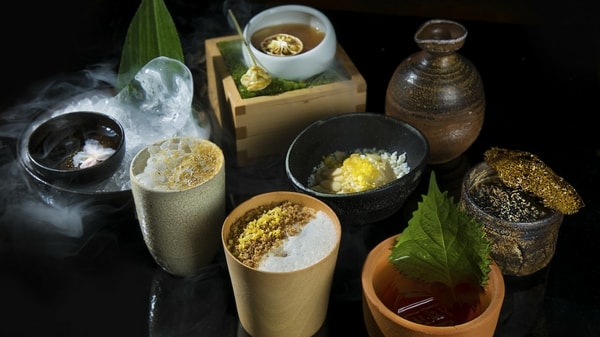
Upon asking the server for the bushido cocktails, he immediately came back with a thick wooden scroll in hand. Apparently the menu was still on its soft opening that night, and we were one of the first to try it. We unrolled the themed menu and perused the selection; each drink was named after a historical figure, and accompanied with a visual of its warrior’s mask.

Honda Negroni - Best paired with sashimi, fried squid or tempura.
Honda Negroni – Best paired with sashimi, fried squid or tempura.

We decided to taste the Honda Negroni first, named in honour of Honda Tadakatsu who was said to have never been wounded in battle. The mix blends tanqueray gin, umeshu (fruity liquor), campari, mancino rosso, shiso (mint) and clay.

“The clay reduces the bitterness and gives a dry sensation to the palate,” says Bar Development Manager Arkadiusz Rybak, who we later interviewed. “Clay is also very good for your health, just one spoon is packed full of calcium, iron, potassium and magnesium. Historians have found that primitive people carried a ball of clay with them in their packs as it was a natural medicine used for fighting stomach ailments, dysentery and food poisoning.”

Arkadiusz Rybak masterminded the Bushido Cocktails

Rybak, originally from Poland, is the mastermind behind the Bushido Cocktails Menu. “I was inspired by the samurai,” he says. “I really wanted to teach people about these famous figures from Japanese history through my new menu. Many people are aware of samurais but don’t know much about them, like the fact that there were female samurais.”

Indeed, the menu celebrates the life stories of three female martial artists called onna-bugeisha, fighters who belonged to the Japanese nobility and engaged in battle alongside their male counterparts. They were part of feudal Japan’s bushi class, while the name bushido references to the code of honour they followed.

Takeko Daquiri - Best paired with desserts or ice cream.
Takeko Daquiri – Best paired with desserts or ice cream.

The second drink we tried was the Takeko Daiquiri, named after Nakano Takeko, former leader of an ad hoc corps of female combatants. Upon being wounded, she asked her sister to cut off her head and bury it rather than have it captured and made a trophy. The Takeko is a crowd favourite and an outlier for its texture, a thicker potion of Zacapa 23 (rum), yuzu, house orgeat (almond syrup) and white chocolate snow. It could double as both dessert and aperitif, poured from a ceramic jar.

“We worked with three Japanese artisans,” says Rybak, who helped Zuma rank 24th in Asia’s 50 Best Bars 2017. “We’ve managed to present each of the drinks in a unique and beautiful way. Ultimately the experience is really important, so to add a little bit of drama and excitement we also used liquid nitrogen in some of the drinks.”

It’s not often you get Japanese style cocktails in the 852 (Read: Japanese with a view), but when you do get them, you’re in for flavours you wouldn’t normally taste in any other speakeasy. Sakura (cherry blossom), tonka bean, Hokkaido soft cheese and plum are just a few touches that set the Bushido cocktails apart.

Takeda Margarita - Best paired with Japanese Robata dishes or Zuma's tomato salad.
Takeda Margarita – Features burnt eggplant flavours to complement the tequila.

“Japanese flavours and rare ingredients make our menu very unique,” says Rybak. “They are a combination of traditional Japanese flavours and more unusual flavours that are often a surprise to our guests, such as clay, leather, and different kinds of smoky aromas taken from roasted rice or burnt eggplant.”

The cocktail scene in Hong Kong looks to be on the rise, and Zuma is obviously not one to be left behind. Whether you’re a spirits enthusiast or not, the stories behind each serving are definitely conversation starters as well as reading material to keep you entertained whilst waiting for the mixologist’s next masterpiece.

Zuma, The Landmark, Level 5 & 6, 15 Queen’s Road, Central. 3657 6388. info@zumarestaurant.com.hk. www.zumarestaurant.com

Text: Julienne C. Raboca

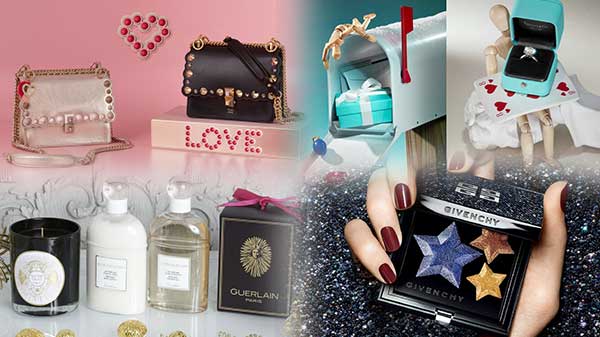
Last-minute Christmas gift ideas you just can’t go wrong with


With the clock ticking away towards Christmas, it’s more than high time to start planning for the perfect present for our loved ones. But what do you gift to the most discerning, elegant of individuals who has everything?

Fret not, for we have for you a selection of the most luxurious gifts that is guaranteed to satisfy even the most astute sensibilities.

Wine guru Eric Kwok shares Christmas gift and meal pairing ideas

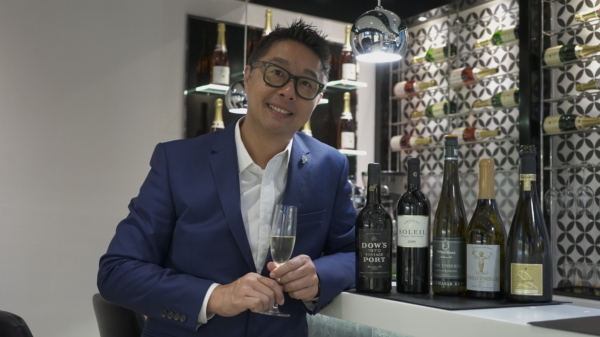
If you’re running out of gift ideas this festive season or at a loss on which wines to pair your delicious home-cooked meal with, fear not. Wine guru and Merit Lifestyle founder Eric Kwok is here to save the day.

Classically trained as a sommelier and with years of luxury hospitality experience under his belt, the knowledgeable Eric Kwok has selected a variety of luxury gifts to wow those nearest and dearest to you. He also shares some top tips to spice up your holiday menu and make your Christmas feast a meal to remember.

Justerini & Brooks MD entices and educates at exclusive wine event

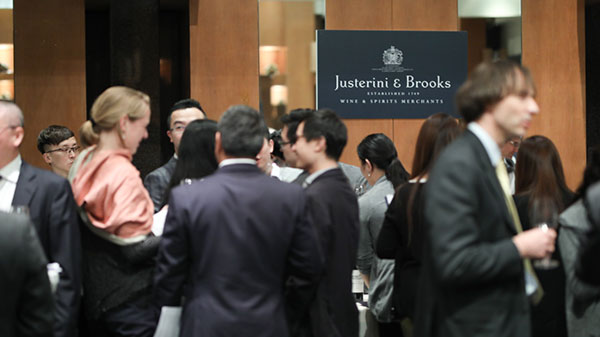
With over 260 years under its belt, Justerini & Brooks’ expertise in fine wines is legendary. It boasts a portfolio of over 3000 different vintages and holds upwards of £200 million of wines for its customers. Last week, oenophiles were treated to an exclusive tasting of standout vintages from J&B’s current portfolio at the Grand Hyatt Hong Kong.

J&B’s Managing Director Chadwick Delaney was on hand to lead the tastings, which showcased a titillating variety of wines from Bordeaux, Burgundy, Rhone, Germany, Italy, Spain and more.

Wine enthusiasts will easily recognise the more famous French vineyards on display: Chateaux Margaux, Pichon Lalande, Chateau de Meursault, Rene Rostaing, etc. But Delaney also educated attendees on upcoming regions such as Piedmont, and relatively unknown (at least in Hong Kong circles) producers such as Bernhard Huber in Baden, Germany.

The latter is a perfect example of J&B’s ability to judge and select bottles with unique provenances for its clients. Bernhard Huber’s 2014 Bienenberg Spätburgunder Grosse Gewächs, one of the bottles selected for last week’s event, has seen prices increase by a staggering 300% in just one year.

So if you’re an aspiring collector or a seasoned wine investor looking to expand your private cellar, a gander at the Justerini & Brooks website or chat with one of its experts may be worth your while!

Text: Tenzing Thondup

Australia’s emerging wine trends showcased at 2017 Wine & Dine Festival

Last week, the annual Wine & Dine Festival began under the auspices of an exclusive showcase by Wine Australia. In collaboration with Meiburg Wine Media (MWM), Wine Australia – the country’s top statutory authority – invited media and hospitality professionals to sample exclusive varietals. Notably, a number of these wines were not exhibited at this year’s Festival.

Held at Michelin starred BIBO, the event was warmly attended. Eight tasting stations, manned by diverse regional winemakers, were erected throughout the space; complemented by fresh canapés made from local Australian produce. Alex Aranchikov, Communications Manager at MWM, said that the evening’s objective was to expose Hong Kong oenophiles to contemporary developments in the Australian winemaking scene: including the focus on cool climate wines; rosé; and minimal intervention.

Highlights included cold climate releases (e.g. the Clairault Estate Chardonnay) from Clairault Streicker – a Margaret River winery that is a far cry from the stodgy syrah makers of the Barossa. Elsewhere, Paringa Estate – hailing from the heart of Victoria’s iconic Mornington Peninsula appellation – showcased their Estate Pinot Noir, a textural yet finely grained collection of red wines made from far-ranging vintages (2010-2014).

For those who missed the opportunity to attend the Wine Australia event, the MWM Wine School holds regular tastings year-round. Based in Aberdeen, they provide a comprehensive range of educational programmes suited to everyone from beginners to accredited wine masters.

Text by Randalph Lai

Zuma’s Sake Pairing Autumn Menu is the Asian answer to vine and dine

Our Features Editor was invited to an intimate dinner at yuppie favourite izakaya Zuma in the Landmark. Little did she know she was about to dine in the presence of sake royalty: Mr Hideki Sakai of Gokyo Junmai. The Sakai family is famous for brewing the “Five Bridges” sake for centuries.

After a lot of bowing and formal card exchanging, the dinner proceeded more casually than anticipated. Zuma’s downstairs dining ambience helps: high-ceilings, a buzzing after-work crowd, chefs doing their magic in an open kitchen, and floor-to-ceiling windows revealing the energetic street scene of Central by night.

“We stumbled upon the secret to our distinct flavour by mistake,” says Sakai. “Instead of brewing the rice wine in mineral water, which is better for the fermentation process, we accidentally used soft water.” The error resulted in a well-bodied product: equal parts smooth, fruity and crisp.

Sake sommelier Hiroaki Matsuno was also present that evening. He elaborated on the sake pairings alongside the restaurant’s contemporary Nikkei-esque cuisine. According to Matsuno, hiya-oroshi sake is specifically for the autumn season – stored throughout summer and released once the temperature in and out of the brewery matches.

Although winter’s warm sakes and summer’s chilled ginjos are fondly considered, the country’s best brews are said to be those of red-leaf season. Hiya-oroshi is characterised for its mellow and round disposition, the lightest and cleanest of which we tried with the appetisers: Oysters with Ponzu and Chili Daikon and Shima Aji Sashimi Salad with Green Apple Granita.

Little dots at the bottom of the short clear glasses marked the different brews we were trying. At 15% average alcohol content, sake is a match for wine’s 9-16% range, well over beer’s 3-9% ABV, and less than half of vodka’s 40%.

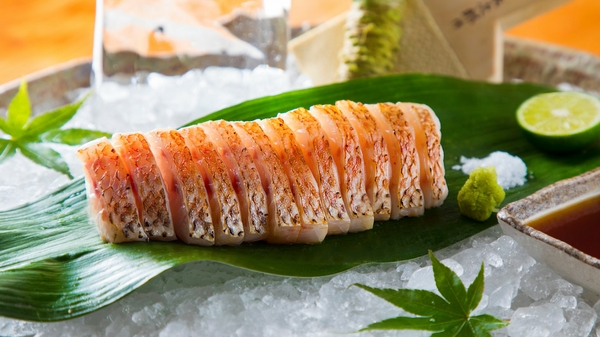
With the chef’s Premium Sushi and Sashimi Selection (course #3 – both a visual and gastronomic work of art), we had the Kyoto-sourced Tsukinokatsura. The smooth-cloudy rice brew also accompanied course #4: Akamutsu, a torched rosy sea bass) with sudachi (citrus) and fresh wasabi.

The fusion seafood pairings of courses #5 and #6 were the best applauded: Chilean Seabass with Green Chili Ginger Dressing and Hokkaido Scallops with umeboshi butter and mentaiko (Alaskan Pollock roe). The distinct and powerful flavours were well matched with Gookyo Junmai’s aromatic and fragrant tones.

The last mains were paired with Gozenshu 9 “Black” Bodaimoto Junmai, which came in a dark bottle more akin to those of cherry dessert wines. This brew (from a famous female wine master) was specifically chosen to go with the meat: a Niigata Snow-Aged Wagyu Sirloin (f1 grade). Surprisingly, the accompanying Maitake Mushrooms (course #8) proved a vegetarian alternative well on par with the meat.

Soup was the last savoury dish: Spicy crab with fresh yuzu and mushrooms. Fantastic and well-balanced, like everything in this dinner. The only over-indulgence came in the form of the Deluxe Dessert Platter, in which Zuma outdid itself with all its best-selling sweets. Do not hold back on this one, it’s worth every single calorie.

Zuma’s Sake Pairing Dinner will be available until the 9th of December. Landmark Level 5 & 6, 15 Queen’s Road Central. (852) 3657 6388. www.zumarestaurant.com


Text: Julienne C. Raboca

Mix Master: Pick your poison and pour your heart out

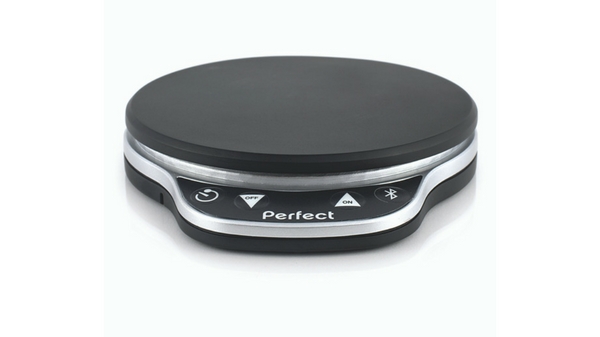
Entertaining at home is all about nailing the details, and even the most deftly executed dinner party can been undone by a sparsely stocked bar. While it’s tempting to improvise, nobody wants a concoction of vodka, cacao nibs and the leftover “mystery liquor” we all seem to haul back from holidays abroad. Enter the Perfect Drink Smart Scale & Recipe App.

Consisting of an electronic scale and smartphone app, Perfect Drink streamlines the process of making high-quality cocktails at home by making use of whatever ingredients happen to be on hand. Users begin by inputting their available poison into the app, which generates suggestions from an exhaustive catalogue of over 400 recipes. These are helpfully divided into 16 different categories, ranging from cocktails by era (Prohibition) to those calibrated by palette (spirit forward).

Once users have selected a desirable recipe, the Smart Scale calculates the precise ratios needed for a bartender-approved beverage. Simply place your vessel of choice onto the scale and pour the alcohol in until the Perfect Drink app alerts you to stop. The app also incorporates a timer for those cocktails that require shaking or stirring to finish, ensuring your drink has appropriate levels of dilution and chilliness.

Perfect Drink is currently available in two models: the PRO and the 2.0. The latter incorporates a durable stainless steel casing and an LCD display for ease of use. The cherry on top? Both versions come complete with a shaker so hosts can start crafting cocktails straight out of the box.

www.makeitperfectly.com/drink