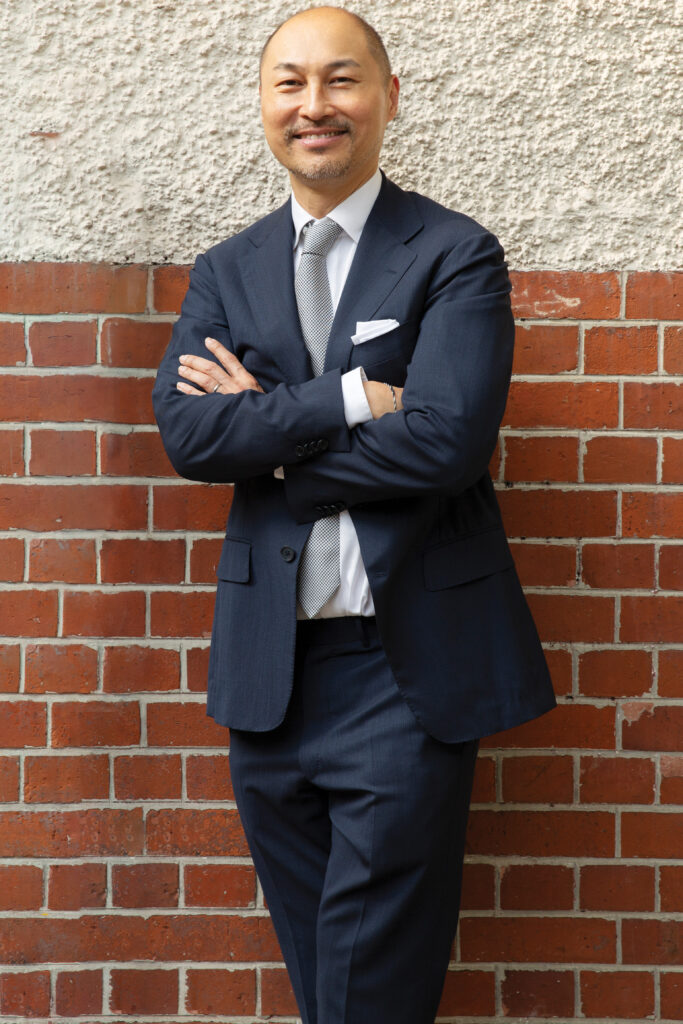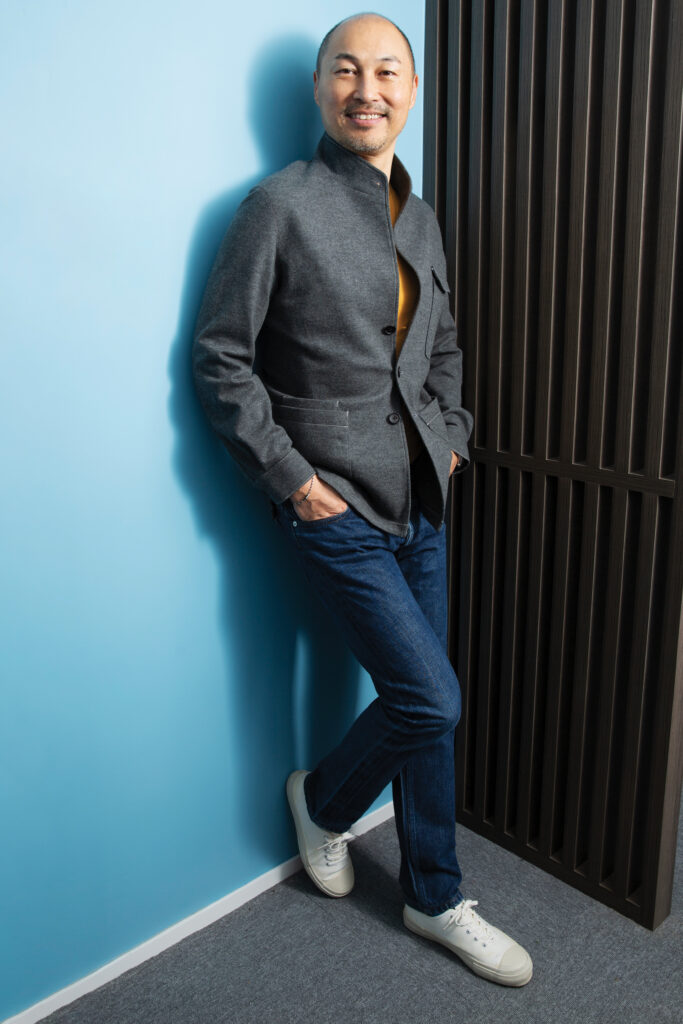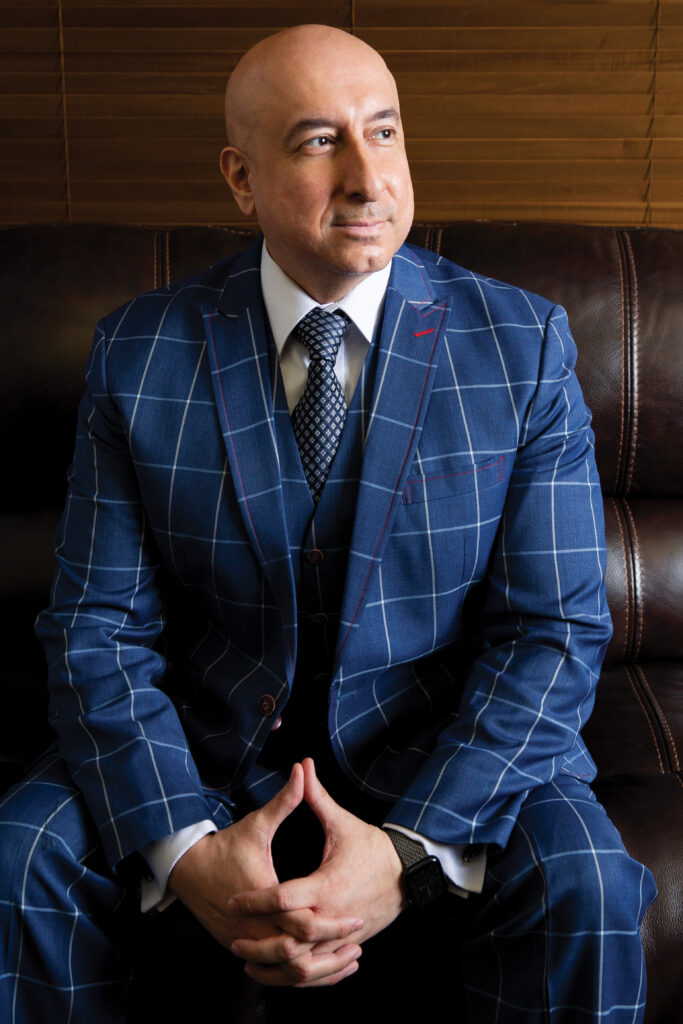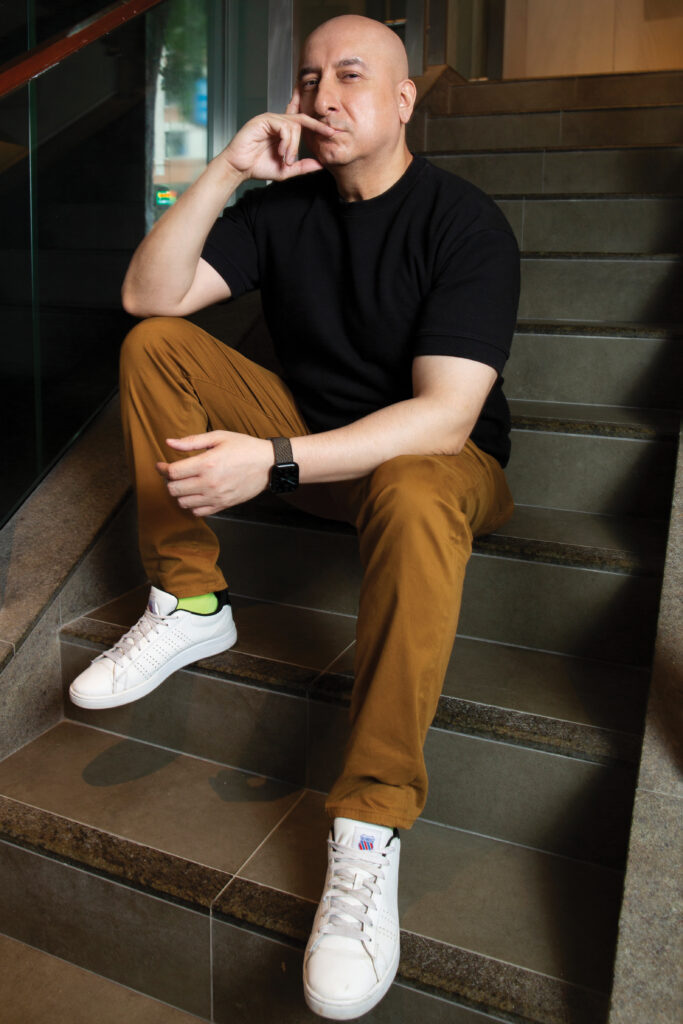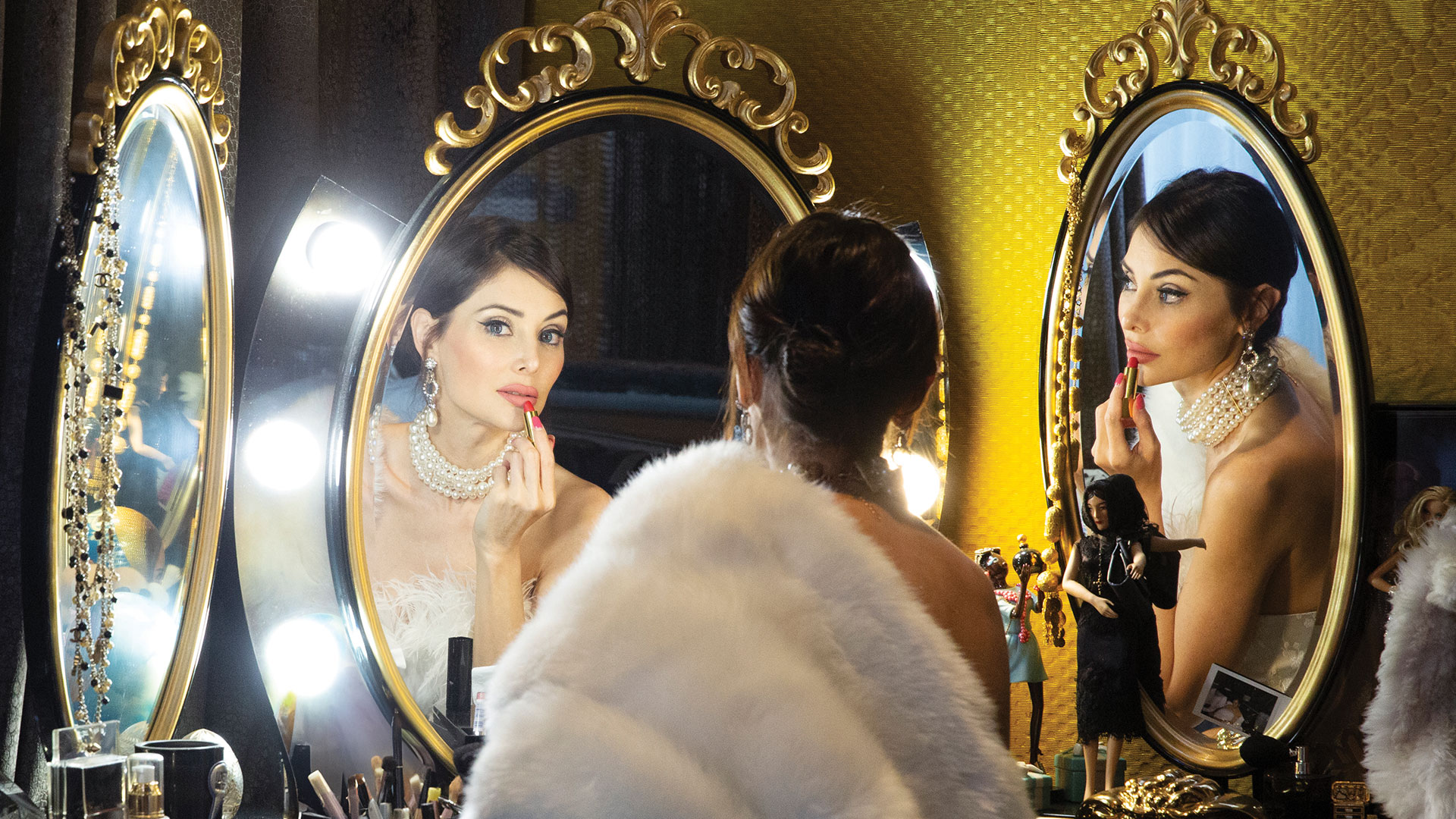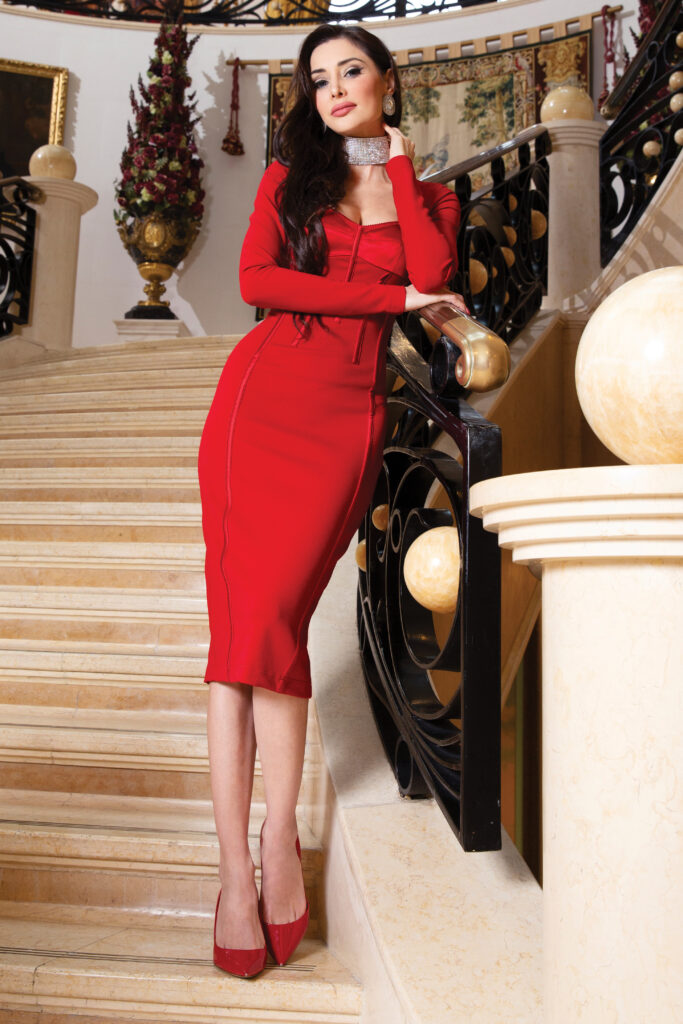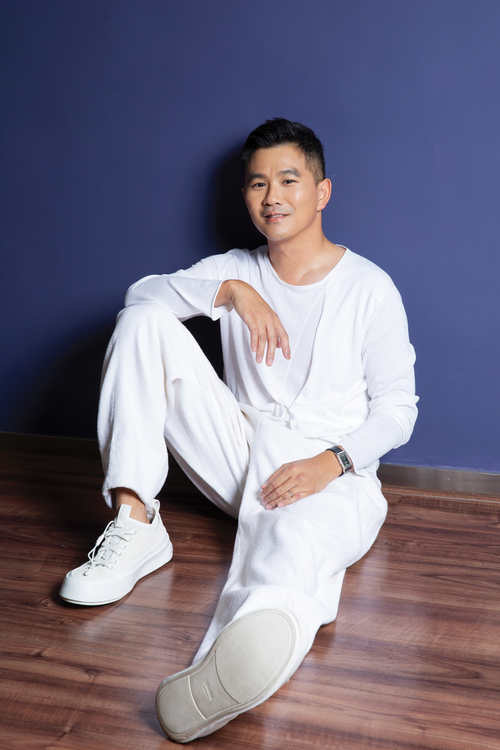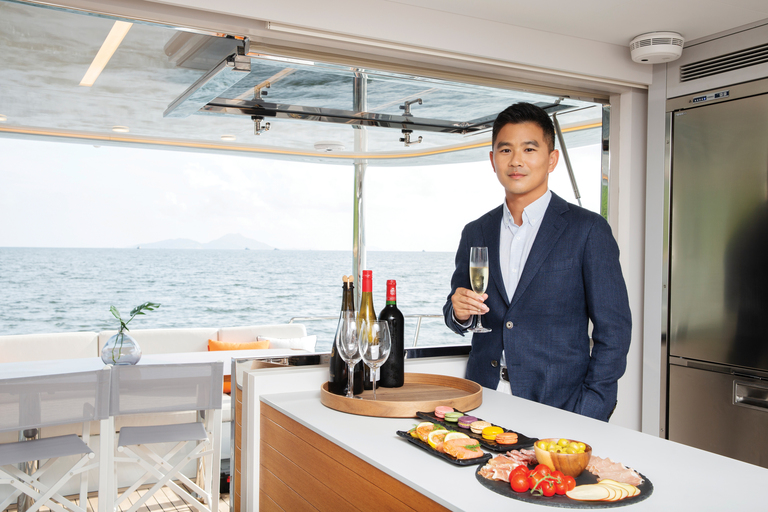
Peter Piper: PR visionary Peter Cheung is entrusted by the brands to lead them out of the box

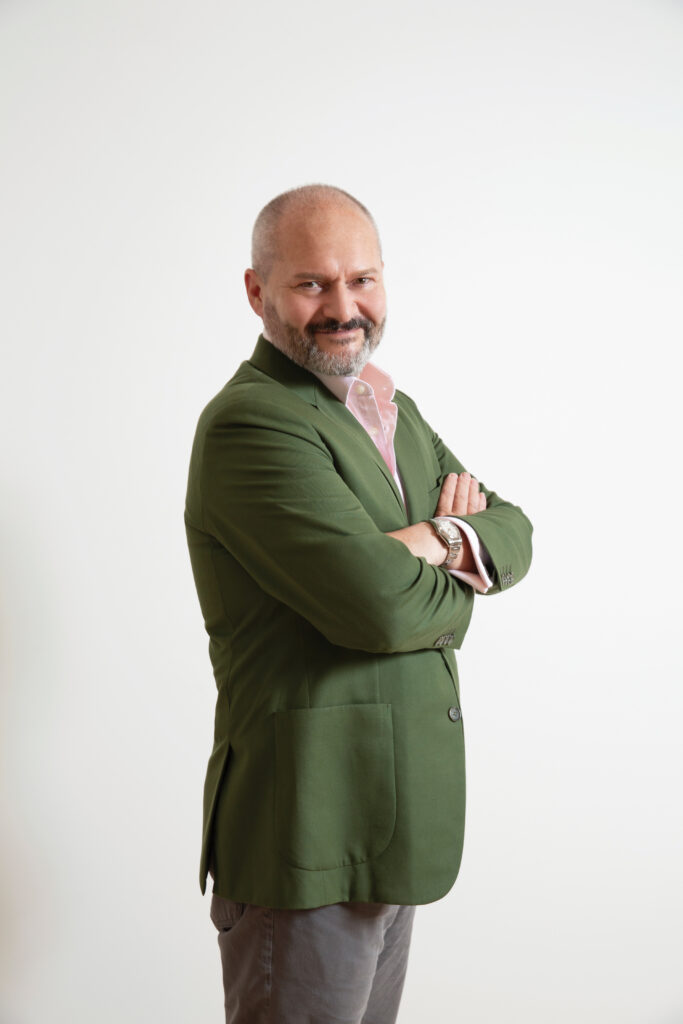
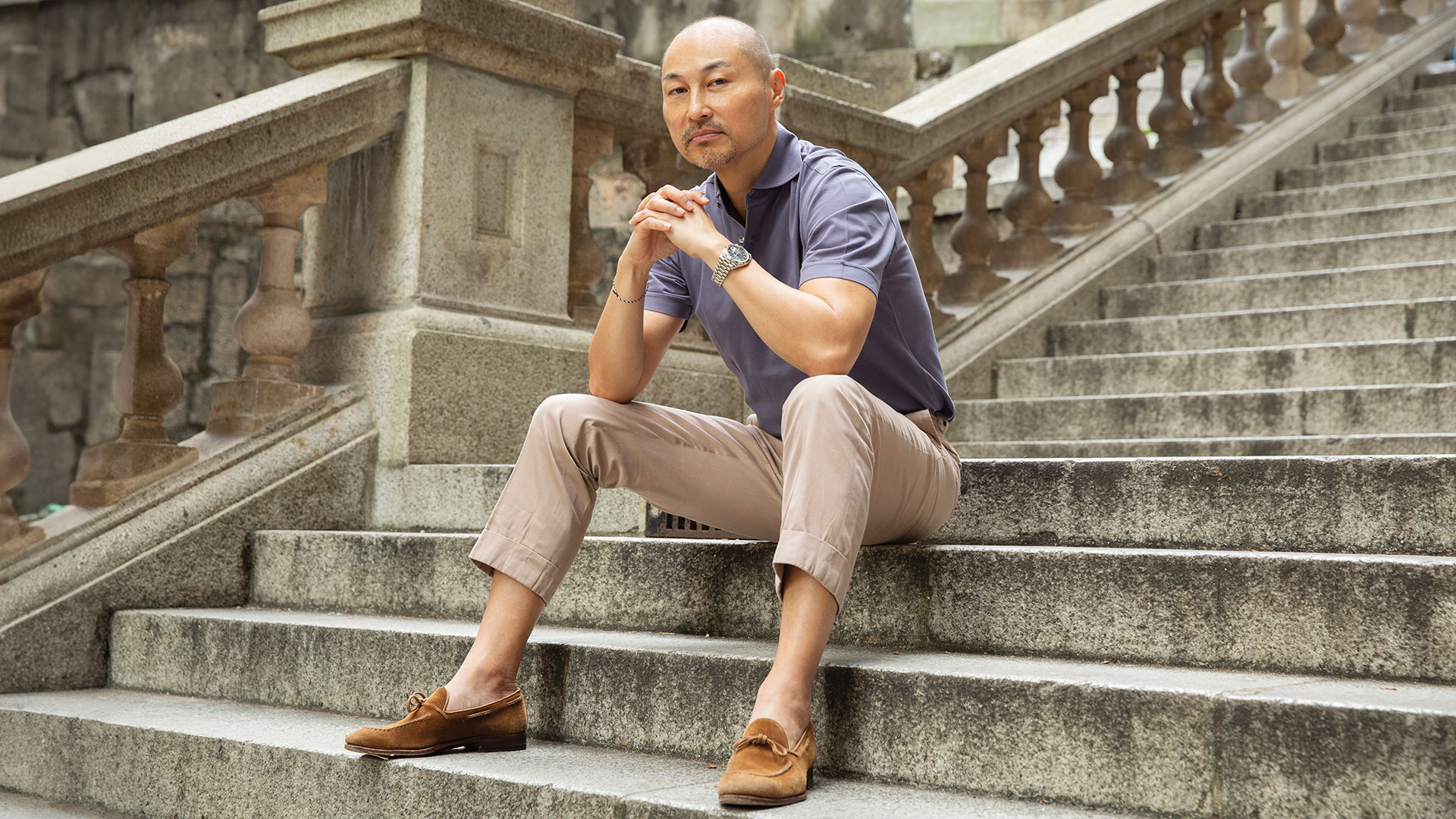
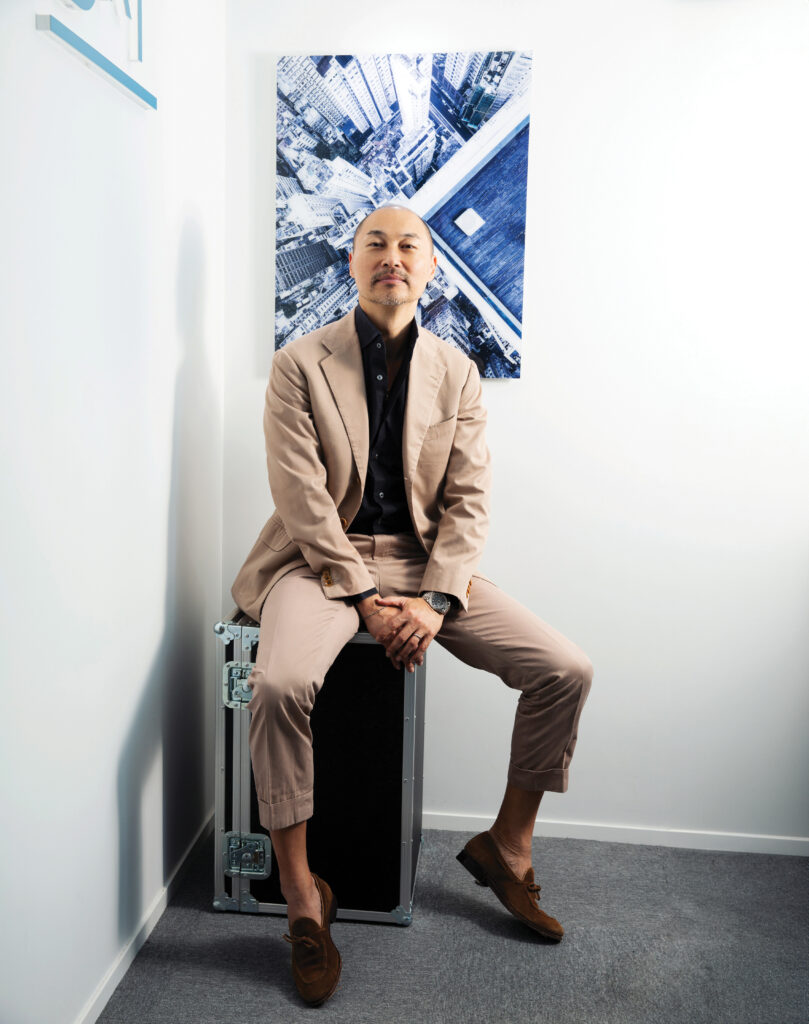
It is nearing 1 pm at the Mandarin Oriental Tamar Suite. Peter Cheung has long since arisen and absorbed himself in the morning rituals of the modern CEO: email, energised with his go-to coffee, and in this instance, employing a full glam team to ready him for our cover shoot. He is a person who uses your first name in conversation. When he walks into a public space and sits down, no one scatters. He is very approachable, and one can easily sense the warmth and vibrancy of his personality, and his fondness for all things luxurious and glamorous.

“Hi! Nice to meet you all!” he cries, without glancing up, as he greets us midway through typing an email on his phone. Once done, he looks at us immediately, winning us over with a sincere smile of apology, and continues his breezy welcome: “Nice to meet you all. Do you like what I’m wearing? I’ve purposely chosen these looks for you guys. Where do we start?”

The man who is Peter Cheung Asia, the strategic marketing and communications consultancy, had a very colourful childhood, as he would describe it. The youngest of six children and the only boy in the Cheung legacy – he was born and raised in Hong Kong until his mother relocated to Victoria, British Columbia, where he became a competitive junior tennis player; at 16 he was ranked in the top 10 of under 18-year-olds in the province.
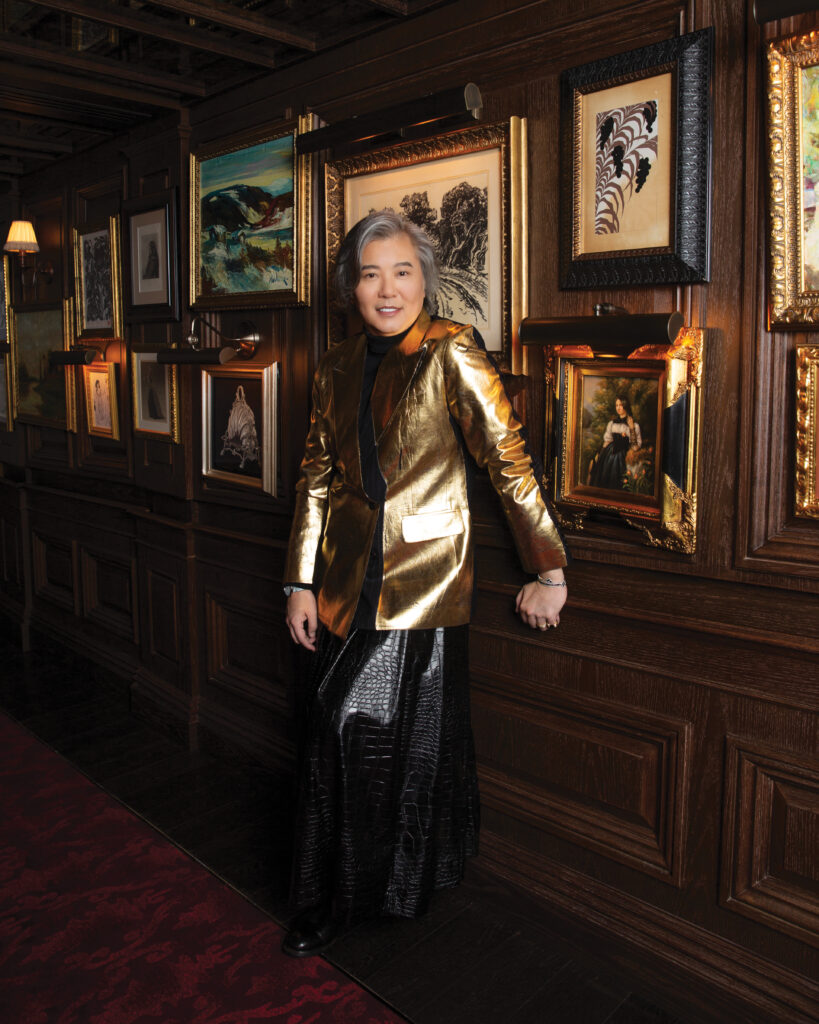
Gold tuxedo by Dries Van Noten

“It was my childhood dream to be a professional tennis player,” says Cheung. “Whenever we were back in Hong Kong, our parents would send us to the Hong Kong Country Club daily from 9 am to 9 pm. I fantasised I was an international tennis player, training at the Club by day and back to a five- star hotel at night. I really enjoyed my suite life.”

Safe to say, Peter is literally in the wealth of biographies and hagiography.

Cheer Leaders

His early teenage years, including being picked up nightly by his posse in a motorcade of chauffeur-driven cars to visit multiple hotspots, afforded him a glimpse of the luxury lifestyle. “Being here every summer in the most decadent times of the late ’80s and early ’90s, it became my mission to return permanently to the only place that I could only live that dream life – Hong Kong,” he says.

Once back, early stints in fashion merchandising and media led to senior PR roles at Sotheby’s, Dior, Versace and Van Cleef & Arpels. His father, a successful entrepreneur in the insurance field, was his most trusted adviser, even though the paths they trod in life couldn’t have been more different.
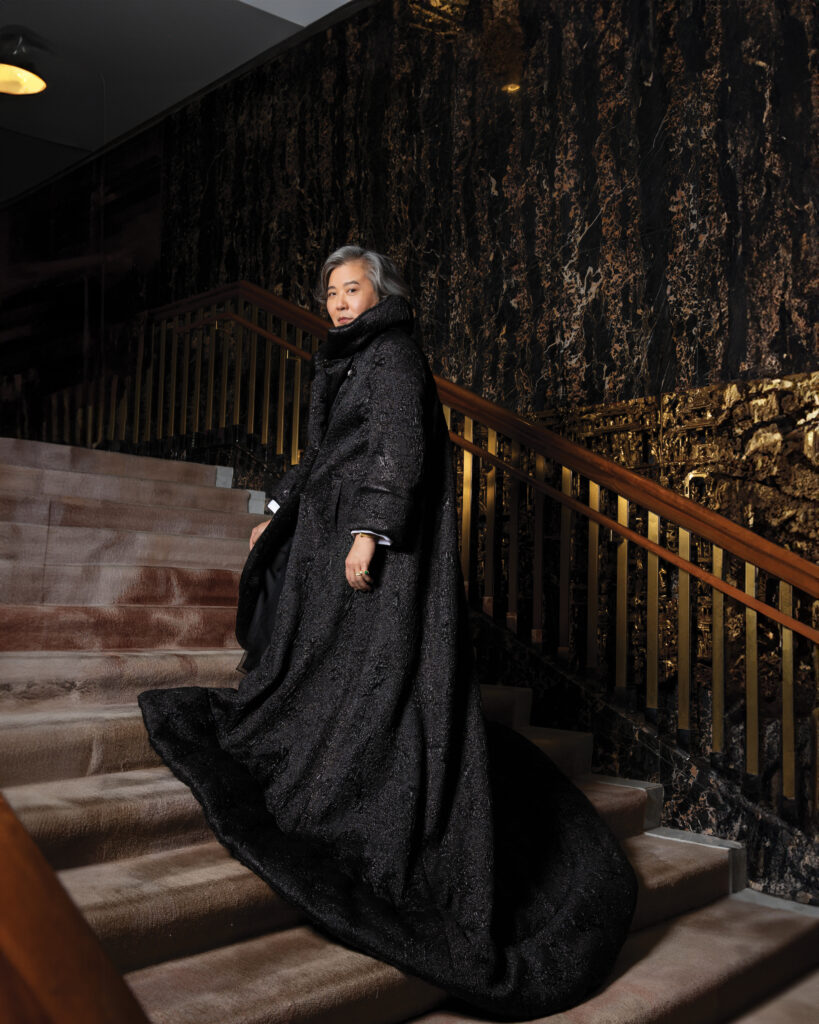
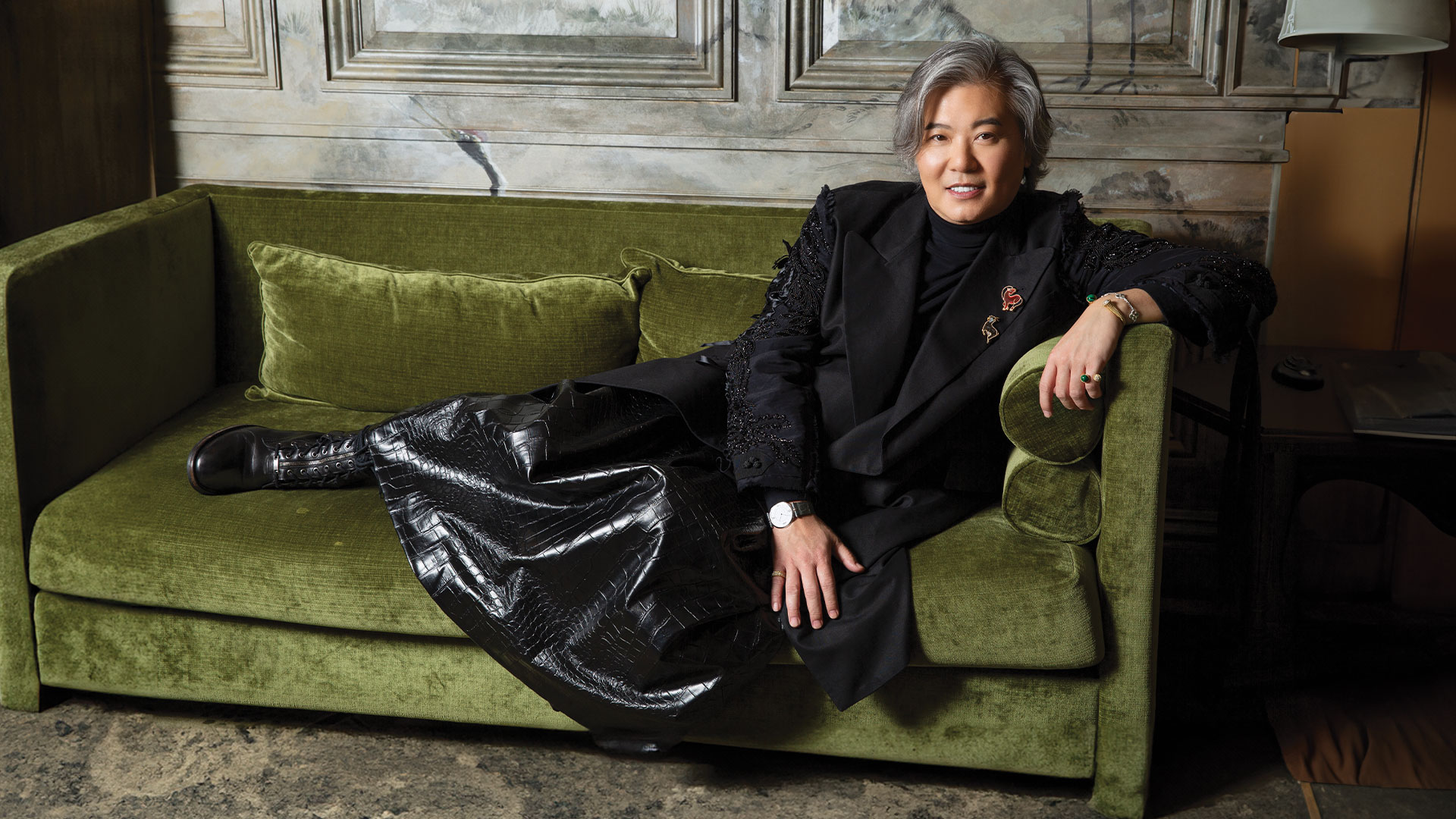
Shiny black jacquard funnel neck cape coat with padded hem and cuffs by Barney Cheng Couture

“I sought his advice always and I never made a professional move without discussing it with him,” says Cheung. “And he always said to me, you know what? You help the brands, you help your bosses, why don’t you help yourself and be your own boss? He was definitely my biggest inspiration to start my own business.”

On the other hand, his mother was his inspiration for fashion and style. His appreciation of clothes, jewellery and aesthetics from a very young age stemmed from her. “She had this amazing personality, character, beauty and style in that Shanghainese chic of a bygone era,” he shares.

“My parents, together with my five sisters and my friends have shaped me into what I am today. Shoutout to you all!” he cheers from the suite’s velvet couch.

Outside the Box

Peter still sometimes channels the kid from Canada that he once was: slightly wide-eyed and a little surprised to find himself as a marketing trailblazer in the region, more influential than most nine-to-five bankers. He defends his record as a creative leader in his own right and he elaborates on how he deals with his rivals and competitors.

“If my father did not put it on the table, I don’t know what I would be doing today. He made me realise I was in a unique position with my background, experience and expertise in that I worked in multiple product segments,” he explains. “This position is what I think sets Peter Cheung Asia apart from traditional agencies.
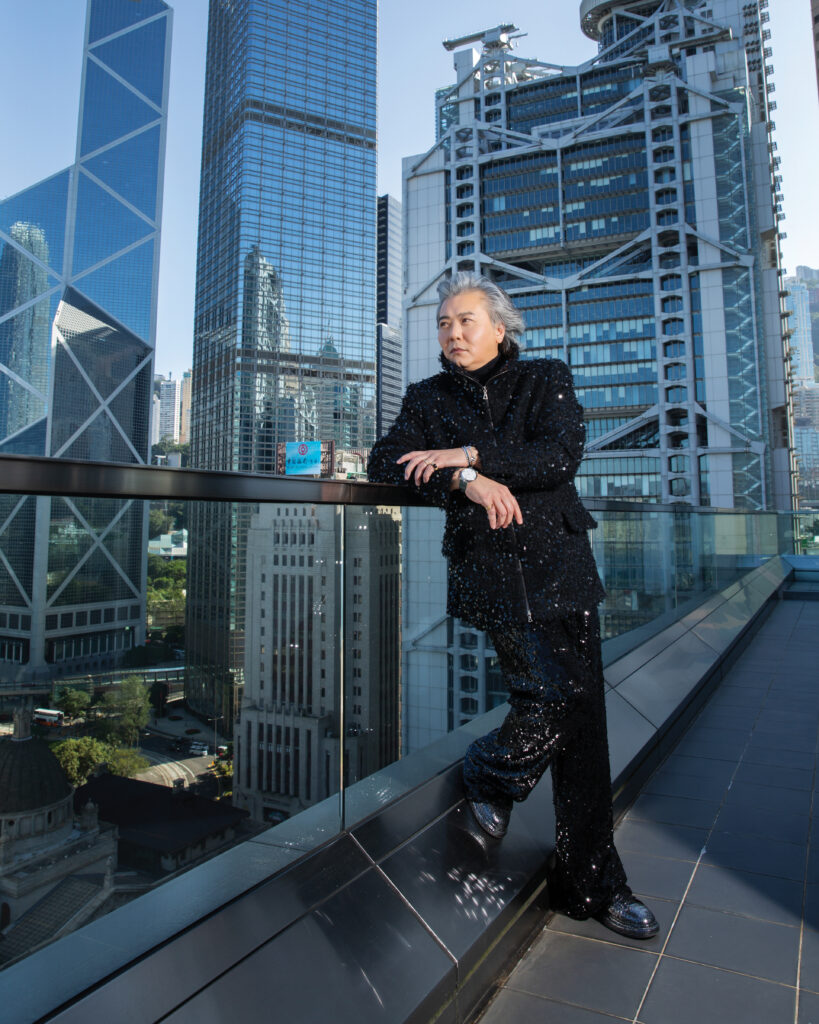
Black sequined jacket by Barney Cheng Couture
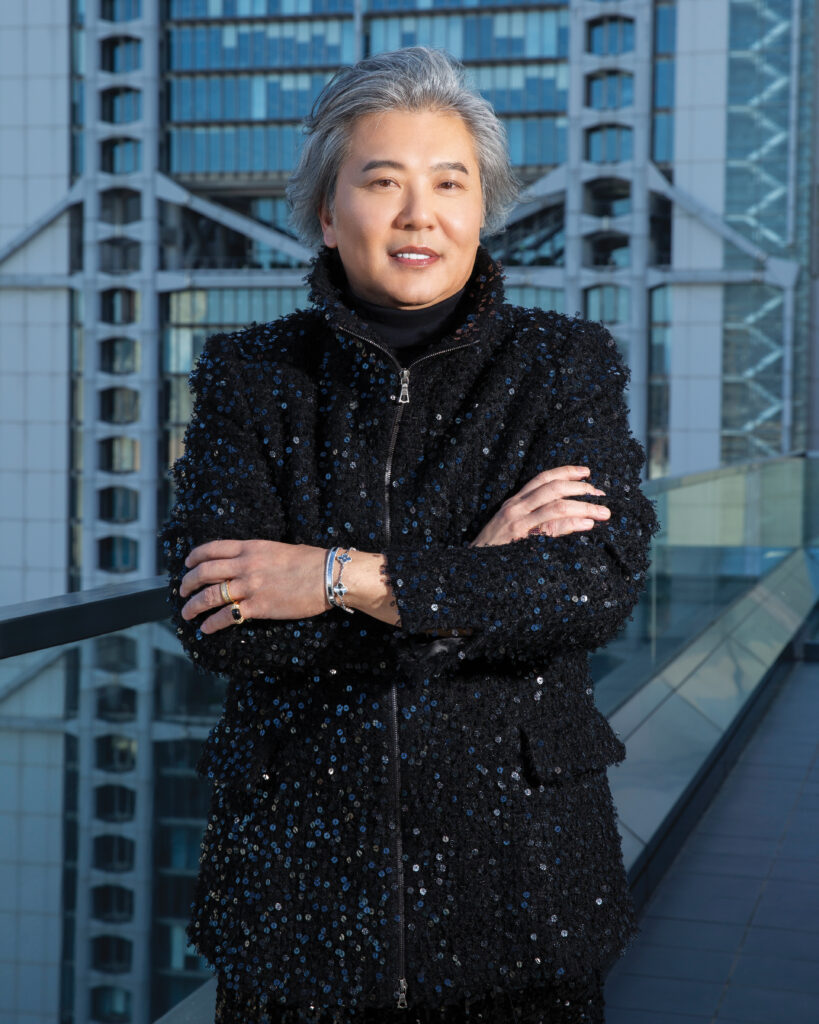
“We are a strategic consultancy offering unparalleled experience and strategies in marketing and communications services on a variety of luxury levels for developing strategies that are unique, creative, out of the box, surprising, in an ever-changing and competitive industry, but stemming from the unique and invaluable experiences through my now nearly 30 years of expertise, network and know-how.”

A natural affinity for beautiful things and love of the natural world makes him a credible messenger for a values-led company. Even as Cheung has reshaped the marketing business, he is reluctant to supply a list of his own creative achievements with the company he launched in 2015. These include steering clients in the fields of fashion, jewellery and watches, expanding into the hospitality industry (maybe inspired by the prodigal son of hotels), media, art and culture and education, and offering skills and time to several nonprofit organisations and charities.

Power Forward

His wavy silver hair is neatly maintained – oftentimes blown by the wind as he poses for the camera. He is wearing an all-black ensemble, with glittering studs and sequins from top to toe. His perception of himself, with the position he has achieved in life, remains anything but simple.

“I’ve been described as a lot of things, but probably normal is not among those. I love having ‘crazy’ ideas. What is most exciting is having an original idea, something very abstract in the beginning, and to be able to hone it, work with it, shape it, edit, add or subtract elements, evolve it, looking at it comprehensively from every angle, and then to be able to launch this idea, by now a solid strategic plan, put it in motion with maximum impact and energy, with hopefully successful results and impeccable timing, and to see something concrete come into fruition,” he says, all in one breath with a deep sigh at the end.
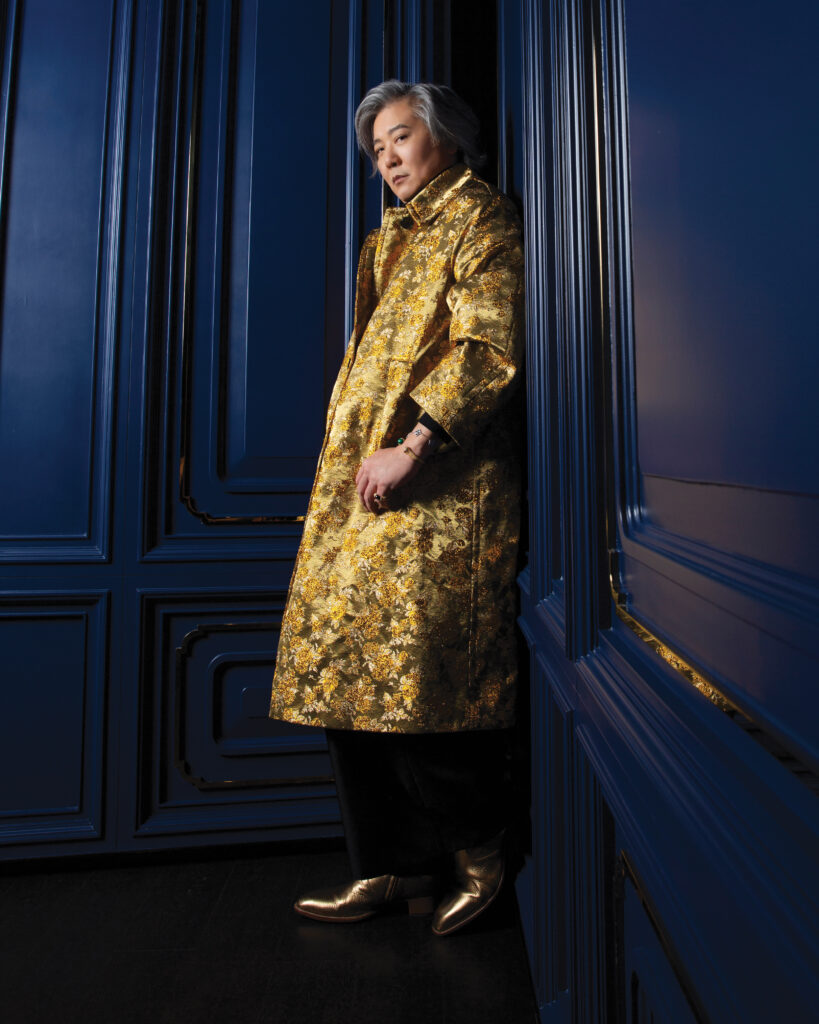
Jacquard and embroidered gold coat by Dries Van Noten

“Was that too much? In life, there’s nothing too much. As they say, there’s always more to life.”

And the future is complicated. Today, Peter Cheung Asia is a dominant marketing company in Hong Kong, having emerged from the pandemic relatively unscathed and prosperous, and also at a crossroads: perpetually on the brink of the discovery that will change the PR dynamic again, while at the same time fending off constant challenges to its existing business.

“We don’t really look back very much at all in history,” he says. “We’re always focused on the future and trying to feel like that, we’re very much at that starting line where you can really dream and have big ideas that are not constrained by the past.”

Clearly, as the visionary that he is, Cheung has the knack of turning doubters into followers and further emboldening his daring creativity through an innate curiosity about, and connection with, people and society. As we near the conclusion of our time together, an oscillating net of polite communications folks leading the way, he exchanges hellos, sorrys and thank yous with whomever we pass and are temporarily blocked because of our photoshoot. He makes this a habit, always acknowledging the goodness in people.

We pop the cork on a bottle of Champagne and raise a glass to a smooth afternoon’s work. His next move? Anywhere the wind blows.

Interview, Text & Art Direction: Joseff Musa Photographer: Jack Law Videographer: Jack Fontanilla Venue: Mandarin Oriental Hong Kong Brands: Barney Cheng Couture and Dries Van Noten Cover: Black silk organza multilayer cheongsam with gold thread Chinese pine tree motif hand embroidered embellishment by Barney Cheng Couture
Coaching Class: Mentoring maestro David Yeh Jr sets the businesses of other prominent families to rights

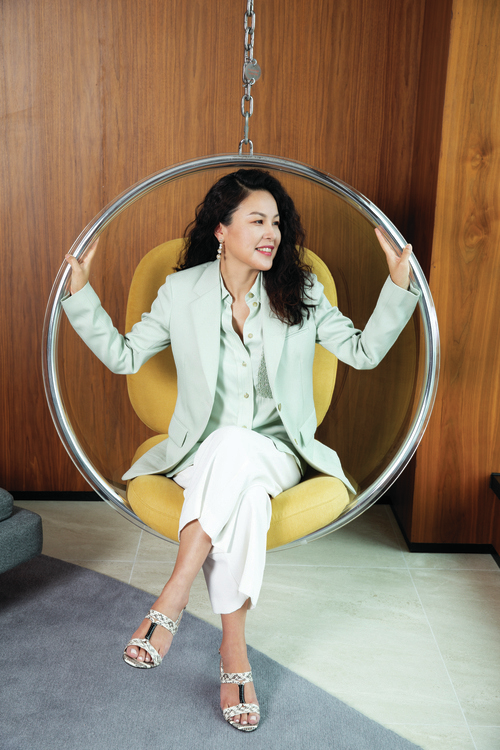
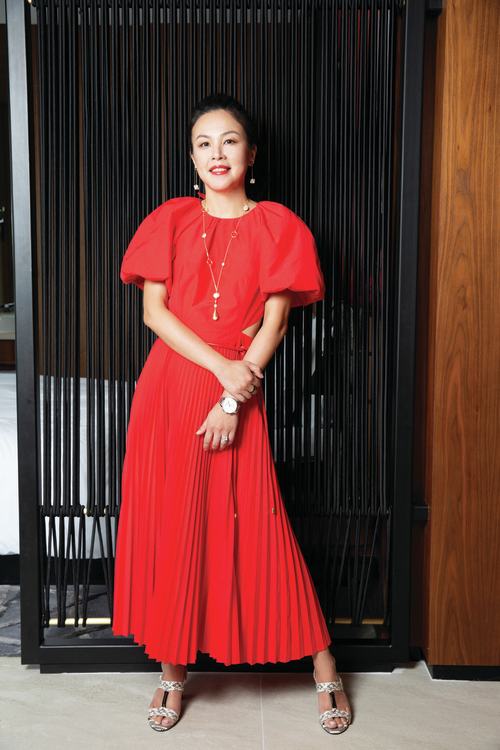
David Yeh Jr is celebrating the 10th anniversary of his executive coaching business that is undoubtedly a labour of love. He thrives on helping others and gains immense pleasure from what he does. “I hope I can continue what I do until the very last day of my life,” says the CEO (Chief Empowerment Officer) of Destiny Research Institute (DRI). “It will be meaningful if I can continue to serve mankind and help more people to achieve what they want in life.”

Yeh leads a dedicated team of corporate and wellness coaches. Speaking from the DRI office in Central, he clearly exudes a sense of pride in helping family firms and other businesses overcome a range of difficulties so they can confidently look to the future. Over the years, he has mentored and coached numerous – and sometimes long-time – clients who value the services he provides; much of his business is based on referrals.

Prior to founding DRI, Yeh had a diverse business background, mainly working in finance, investment and wealth management. Initially, after gaining a business administration degree from the University of Southern California, he worked for his father’s toy manufacturing company in a marketing capacity and the tough love from his father and general life experiences have helped mould his character and define who he is.

Junior role

Yeh Jr’s relationship with his father was difficult at times, and he freely admits he went through a “rebellious” phase, but he is obviously exceedingly proud of his father’s business achievements. He talks animatedly of how, in the 1980s, David Yeh Sr rescued beloved UK toy-car brand Matchbox from bankruptcy in a leveraged buyout and then masterminded an amazing turnaround in its fortunes and a landmark listing on the New York Stock Exchange.

It was this business acumen that the son sought to emulate, and he was eager to soak up knowledge and experience by working alongside his father at Universal Toys. As the eldest of four siblings, he had thought in the Chinese family business tradition that he would one day take over the reins himself. But Yeh Sr was a tough taskmaster and never allowed family loyalties to get in the way of sound business judgment.

Father knows best

Yeh recounts a fascinating anecdote – one he often tells at business functions – how early one Saturday morning, his father awoke him in his room in New York and took him to a huge skyscraper on Fifth Avenue. As they ascended in the lift, the son remained completely in the dark as to what was going on. The lift opened and there stood about 20 professionals in suits.

“I assumed they were lawyers and accountants, so I asked ‘what’s going on?’ My Dad – calling me Junior as he normally did – said, ‘Junior, I want to merge my company with another listed company.’ To which I replied, ‘Why on earth do you want to do that?’”

The youngster was then shocked by his father’s response: “In front of everybody, he said, ‘Junior, if I allow you to run this business, in six to nine months’ time it will be going under!’

“So imagine you are a 20-year-old and hear something like that from your own father whom you admire so much,” says Yeh. “This is pretty hurtful and it’s very hard.”

Personal growth

The humiliating experience remains seared into Yeh’s consciousness, but he did glean some long-term benefits from it. “That’s where I learned so much about family conflict and how to find a suitable and viable exit strategy for any kind of business,” he says. “That set the foundation to do what I do today.”

Although his relationship with his father, who passed away two years ago at the age of 93, was a ittle strained for a while afterwards, Yeh regards him as his hero. He still treasures his father’s wise counsel and many letters over the years offering words of wisdom.

Another defining moment for Yeh was a time of great personal loss and sadness that made him reflect on the truly important things in life. It was then that he decided to set up his coaching enterprise.

“I wanted to leverage my knowledge and skills to help business owners, in particular family-business owners, to navigate complex business environments and unlock their leadership potential,” he explains.

Having attended a host of business courses over the years, he cites Tony Robbins’ Date with Destiny as perhaps the most impactful. “It helped us to dig deep into understanding ourselves so we can understand more about what is really happening in the external world,” he says.

Family misfortunes

He describes three typical situations a family business would seek the advice of his consultancy: when there are deep-rooted conflicts among family members they cannot resolve themselves; when a previously successful business model is no longer working or struggling to gel with the current generation; and when future generations don’t want to be involved with the business and Next Gen leaders from outside the family need grooming.
Within a family business environment there is sometimes an “unspoken” issue which family members are reluctant to talk about. “We call them ‘the elephant in the room’,” he says.

Yeh maintains it is essential a potential client has full cognition of the issues confronting the business if success is to be achieved. “The key driver is whether a client is aware of the prominence of the issue they are encountering before it gets out of hand and problems begin to erupt,” he explains.

Calls for help

Another important requirement is the need to develop mutual respect and trust. “Not everyone is suitable or ready for coaching. As the famous ‘Trillion-Dollar Coach’ Bill Campbell has mentioned – not everyone is coachable. When we approach somebody, we have to know whether that person is coachable or not.”

He describes a coachable person as someone who is open-minded and willing to express themselves and disclose their own difficulties. “If I think that person is coachable, we have a much better chance in attaining positive results and being able to help them reflect on what has to be done for their future and for us,” says Yeh.
Succession and success

Succession planning is a core strength of his consultancy. “Our coaching methodology has an all-rounded approach, and different elements of life would be touched upon. In essence, these should all be correlated with a person’s mind map. Our goal is help to connect all the factors and guide our clients into steering their business path to success with well-planned succession.”

He believes companies should always continue to develop their staff. “To make this work, our target audience needs to believe continuous growth and learning are essential for themselves and their business to emerge in this dynamic changing world.”

Photographer: Jack Law; Art Direction: Joseff Musa; Videographer: Jack Fontanilla

Financial Fair Play: Whether metals, forex or other financial products, investment guru Sam Kima values integrity above all

Sam Kima is proud to have developed a rewarding career in the finance industry, a field he was encouraged to enter following advice from his father in the early 1990s. He comes across as modest and sincere, though delight in his achievements is evident on a wall of his office filled with certificates spotlighting his proficiency to trade in the markets.

“I’m still thriving in this career after more than three decades, winning accolades, awards, spanning Asia to Europe,” he says, indicating a further shelf packed full of trophies highlighting his business success.

Kima established Sam’s Investment Office in London in 2015, and also plays a huge role in sales and marketing as senior vice-president of First Gold. Jakarta-based PT Cyber Futures Indonesia, which specialises in forex, gold and derivative instruments, is another company that banks upon his expertise. He is also a professional senior analyst working under TraderHub Jakarta.

His formative years undoubtedly gave him an international outlook highly suited to the world of finance. Born in Hong Kong and further raised in California, he went on to study at the London School of Economics. He now spends his time shuttling between Hong Kong and Indonesia as well as Europe and Los Angeles, which he describes as his second home. He converses with a slight American twang, and with his strong physical presence, he easily commands attention when he articulates sentences in a deep, booming voice.

Carnegie confidence

Perhaps this innate ability to fill a room with his presence stems from the Dale Carnegie training he undertook at the outset of his burgeoning career. It was a decision that helped him achieve a better life. “Dale Carnegie is super amazing,” he says. “It has considerably influenced me on how to deal with people, colleagues, friends and clients. It guides you to be a smarter person with integrity and morality.”

He believes such training is all-important when developing a career in a people-centred occupation like finance, and credits the course with nurturing a whole raft of skills. “It develops communication, confidence, problem-solving, emotional intelligence and self-awareness,” he says.

Caring spirit

A sense of integrity is also fundamental to Kima’s attitude to work and his desire to partake in community service. For instance, every Tuesday he volunteers together with a group of influential community leaders to help serve food to more than 500 impoverished elderly people in Hong Kong. He believes these kinds of activities make someone a more positive person with other knock-on effects: “The better your character traits mesh with your career, the more productive and positive your job performance will be.”

He also reveals that he is a passionate believer in self-care and investing in activities that nurture body and mind. “This is not in a selfish way,” he adds.
Hungry for more
Kima likes to set and achieve goals, and his early banking career was spent mastering economic fundamentals like how technical charts play a big role in clients’ decision-making, and how various financial products, forex, gold and silver fluctuate according to data and news. He thrived on the adrenaline rush, constantly learning about the markets, and this made him hungry. “It is an amazing field and I loved what I experienced and was doing,” he recalls of the time.
This hunger has stayed with him. One can sense he is constantly checking the newswires to sense the market direction. The day of our meeting was soon after the terrible events in Israel and he noted a flight to the dollar as investors sought security in an uncertain world.

The fear factor

Shifting assets to the security of gold is another phenomenon in turbulent times, especially when the fear of inflation is pervasive. “As inflation occurs, investors increasingly turn to gold as a hedge, driving demand and price upwards,” he explains.

His team is part of a tightly interconnected network spanning Australia, Indonesia, the UK and Hong Kong in the rapidly developing investment brokerage field. Live analysis reports by their expert advisors on their state-of-the-art 24-hour trading platform can be the difference between clients making a profit or loss in the most lucrative forex and precious metals markets, according to Kima. He also states they can offer the most competitive spreads and that industry leaders from the Asia-Pacific region turn to his team for their wealth management and analysis reports.

Internet immediacy

He believes one of the main reasons why gold and forex investing is so easy – and attractive – is its accessibility. “Anyone with an internet connection and a computer or mobile device can access the market. Forex and gold brokers provide traders with trading platforms that allow them to buy and sell currencies, view charts and access real-time analysis and news,” he says.

His services aim to reduce the time it takes for an order to be routed to the servers for execution, something known as latency. “The high liquidity of forex and gold means that transactions can be completed quickly and easily, and that spreads are often very tight – meaning the underlying market price won’t have to make a significant positive move in order for your trade to be profitable,” he says.

Get-rich-quick worry

As he sits in his office in front of a shelf crammed with a bust of Mao Zedong, beautiful Chinese figurines and a lovely model of a traditional sailing boat, he talks earnestly about the dangers of naive and small investors who do not do their homework before putting their savings into investment vehicles. He is acutely aware that the reputation of the financial sector has taken a battering over recent years, and passionately believes that credibility is all-important when dealing in finance. Indeed, he reveals that he did an interview warning of the dangers of cryptocurrency just prior to the great unravelling.

He fears inexperienced investors post- Covid are exhibiting a dangerous get-rich-quick mentality, and perhaps with this concern in mind, he makes sure his investor clients first go through demo accounts to trade without using real money. “We must make sure that prospective clients are well educated about our markets and understand the fundamentals prior to putting funds in the real market,” he says.

Top track record

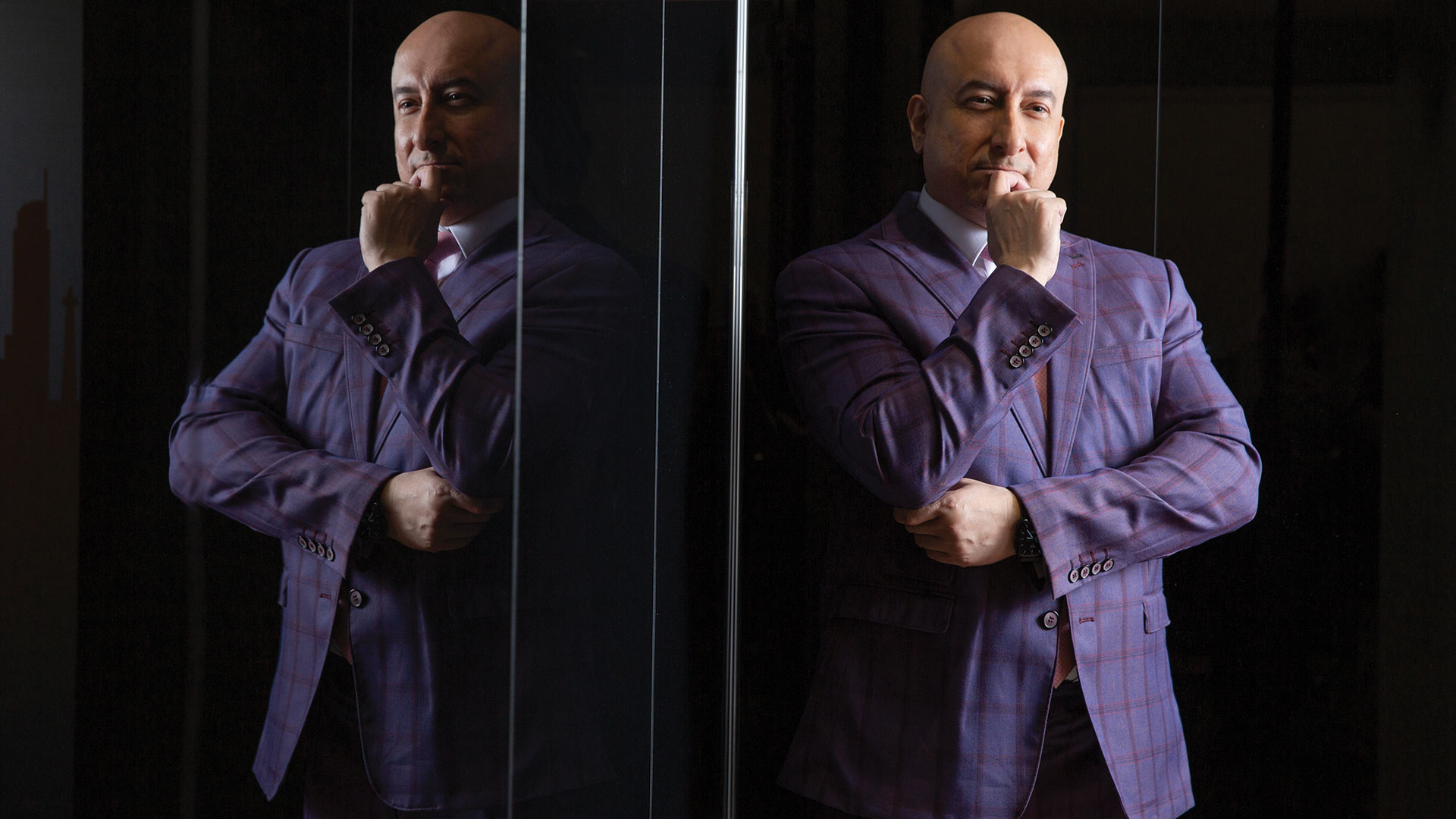
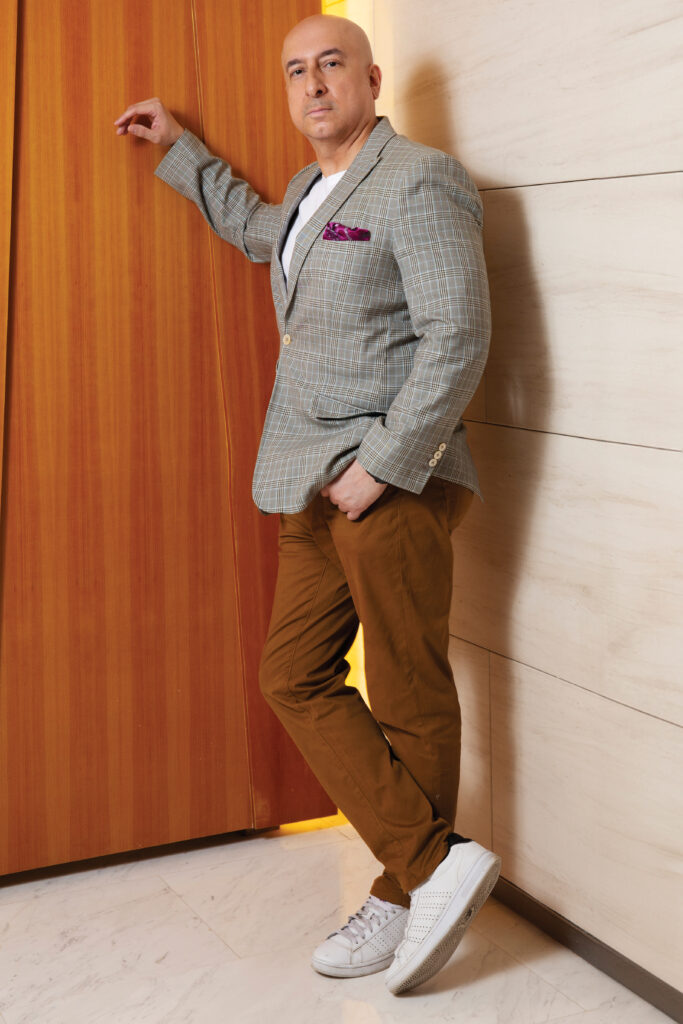
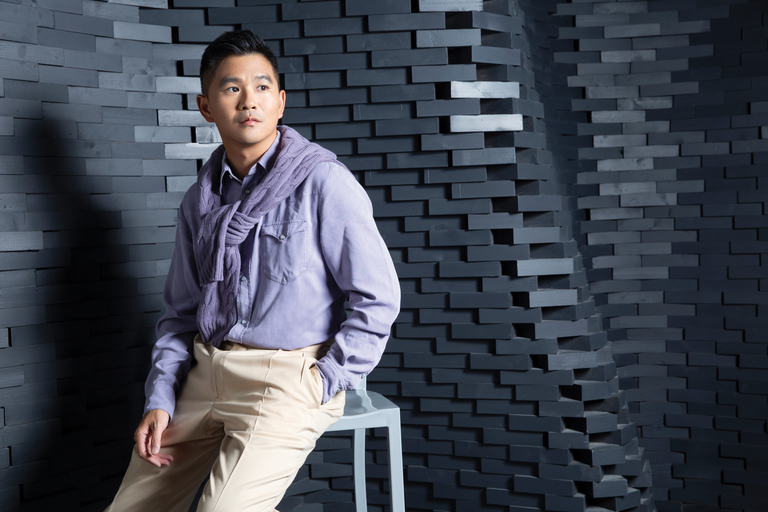
For our photo shoot, he dons an assortment of strikingly coloured suits, and there is certainly the showman side to his persona. In a wistful moment, he yearns for the return of the big pre-Covid society bashes. But he knows what traits are most important: “You will not find one bad review on a search engine about the companies I am involved with,” he reveals with immense pride.

“Integrity, loyalty, reviews, honesty and track records are the main ingredients and reasons for investing with us,” he adds.

Interview by: Neil Dolby Photographer: Jack Law Videographer: Jack Fontanilla

Dream Reality: The TV show may have ended, but Deborah Valdez-Hung’s glitzy world is only getting bigger

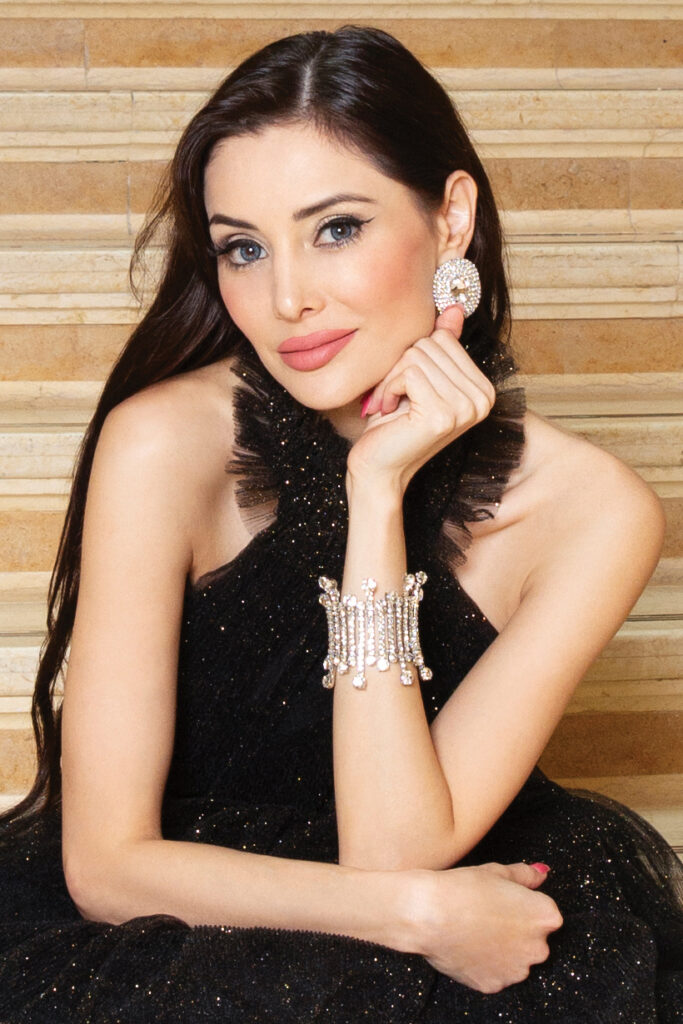
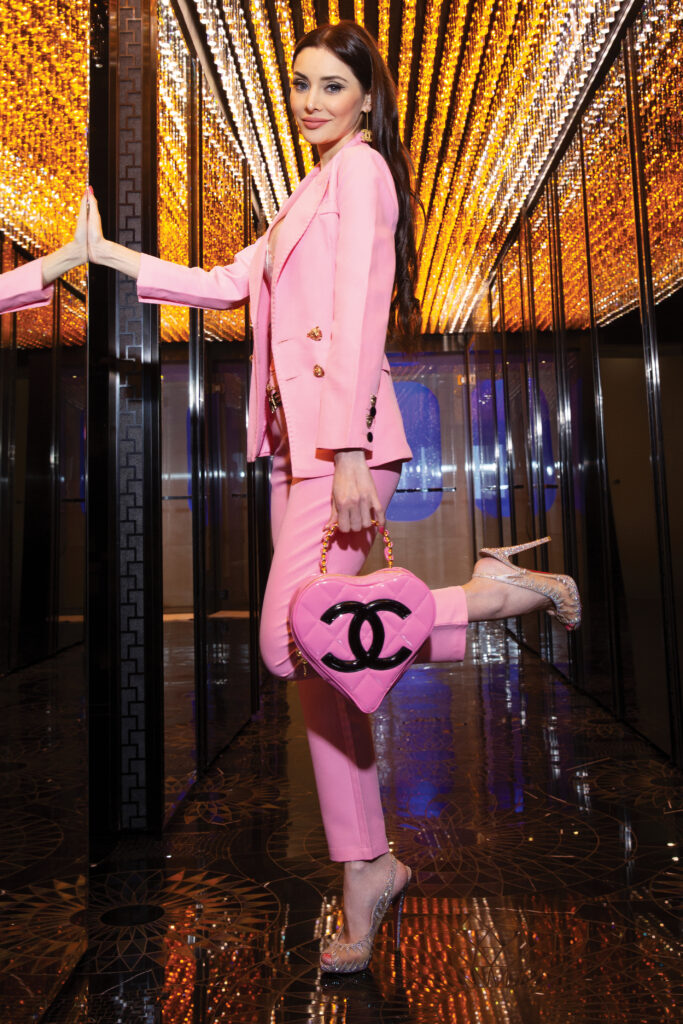
Standing in the airy foyer of her Residence Bel-Air home, Deborah Valdez-Hung looks exactly like she does in the Netflix reality show Bling Empire: New York – better, actually. With her signature configuration of bronzer, highlighter, contouring, full red lips and skin-tight designer garb, the media star is a natural standout from the handful of staff in the room, or in any room, in fact. Surprisingly, she is softer and daintier in three dimensions than she is in two. If anything is true of Valdez-Hung, it is her endless talent for optical illusions and posing for the camera.

“Let’s get straight right into it?” she asks jokingly. “Welcome. Come right in. Feel free to roam around the house and see which location we should work on for the photos. Everything here is inspired by surrealism and avant-garde.”

She leads the way to a living room containing all things maximalist, from the blue dangling light fixtures to the red velvet walls and unconventionally heart-shaped couches. All these reflect the passionate nature the jetsetter has carried from her humble beginnings in the Mexican desert to the international cities and countries she now calls home from time to time.

Model mission

A former model herself, Valdez-Hung is the owner and chairperson of Dreamodels, one of the city’s and Asia’s premium full-service modelling agencies. She is also somewhat of an influencer, given her high position and glamorous, fast-paced lifestyle that whisks her to fashion shows and other events across the globe. It appears from her Instagram, which has 772,000 followers to date, that she is still modelling and rarely short of a prominent party or exotic location to pose at.

“I have been interested in fashion since I was young,” she shares while adding another row of bling around her neck. “I did not go to a fashion or design school, but my friends have a fondness for fashion, and from there, I learned about the construction of clothing. However, my interests were beyond that, to be completely honest. That’s why I decided to become a model. It is a very competitive industry and everything changes very fast. You have to be creative and daring.”

Food for thought

An employee offers a bottle of Coca-Cola in addition to the already massive spread of branded cookies and fresh fruits prepared for the day. One cannot help but wonder, is this a way to counter the famous scene in the pilot episode of Bling Empire: New York where she was accused of not serving any food? Maybe. Or maybe not. She confesses that she just enjoys food and snacking in general, contrary to what the majority of people might think of models’ dietary habits.

Laughing while munching on lychees, she says, nonchalance personified: “I knew this would be brought up. But yes, oh my gosh! I love snacking, especially at midnight.”

She’s svelte and looks fresher and more vulnerable than she does. From the word go, Deborah is unflinchingly honest and not afraid to tackle the heavy stuff. On the other hand, her beauty is both striking and earthy.

“Modelling was also an opportunity for me to travel the world. As a kid, and up to now, I am always amazed on how rich culture can be of a certain country. The modeling stint was offered to me, and looking back, I think it would be silly of me to pass on such great opportunity.”

Denting momentarily her ultra-glam image, she admits to preferring flats and sneakers to high heels especially since she is always on the go. Despite this assertion, her landscape is one populated by diamonds, private jets and rose bouquets larger than many studio apartments here. It’s a cross-platform, finely tuned optics juggernaut that requires constant maintenance and, she insists justifiably, a lot of work.

Legal aim

Before the Hong Kong socialite lifestyle and the reality TV fame, Valdez was a practising civil lawyer in Mexico and Europe.

“I decided to be a lawyer as I wanted to help people and to have a bigger purpose in life,” she shares. “But I was also heavily influenced by my father who also has a background in law. Growing up, I was always fascinated listening to his stories and work experiences.”

And in all business situations, her legal training and background is helpful. She launched Dreamodels in 2012, the same year of her marriage to wealthy and flamboyant Hong Kong businessman Stephen Hung, whom she also teasingly dubs as her number-one fan and social media manager.

“Is this pose okay? Try taking it from a top view,” she instructs of her husband who is snapping behind-the-scenes photos of our shoot to post on her Instagram account. “Humour and laughter are parts of our culture in Mexico. I think that’s what makes us unique.”

Animal magnetism

Other cherished members of the household are not to be left out.

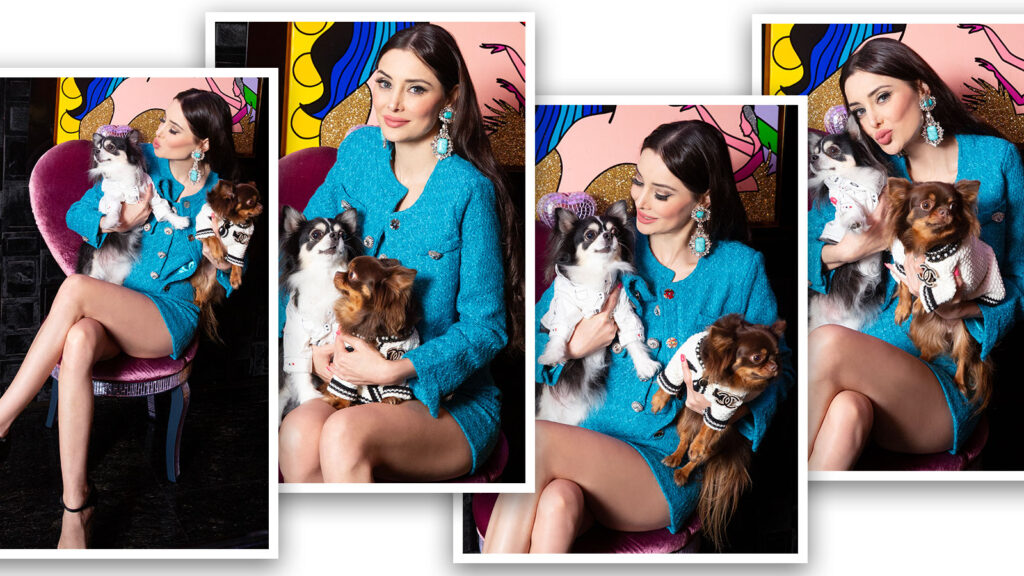
“Chiquita! Tan Hermosa!” she coos in her most loving Mexican-Spanish lilt as her dogs scamper over to join her for a photo.

There’s no question that her grueling upkeep routine is working. On the topic of animals, whose rights she strongly advocates, she becomes emphatic. She is a fur mum to two Chihuahuas who own a bedroom and a closet of their own, and she enjoys playing dress up and matching Chanel outfits with them.

“If I have all the means and energy, something I would be ecstatic about doing every day for the rest of my life is to free animals from cages, zoos and labs. I would like to volunteer and dedicate my time in helping a few animal protection associations. Or maybe I’m being too ambitious? I don’t know. But I think as humans, we should value and respect animals’ lives. At the end of the day, we are all God’s creations cohabitating on this planet,” she says fervently.

Back in her early days in Mexico, the millennial reality TV star was raised in a Christian family’s household.

Passion project

As to the legacy she wants to leave, she is starting a company specialising in accessories and faux-fur coats. “I am giving all my love to my family, friends and pets with this project. They are more than my inspirations in doing all of these things. They are my motivators too,” she says. “Passion and fashion will always be part of my DNA.”

In addition to being a person of influence, Valdez-Hung is without a doubt an “it”: a vector of debate, a media property, a mover of markets, an engine of consumer behaviour, a symbol, a brand, a cipher. As she sits at her home office table discussing work, food, dogs and life, she embodies the glamorous woman her fans aspire to.

Her husband suggests she does one more pose with her dazzling pink Rolls-Royce and is denied: “Pass. That’s been done to death.” Job done, she gets up without a murmur and, like the 6 pm sun slipping below the horizon, quietly exits the frame.

Interview & Art Direction: Joseff Musa Photographer: Jack Law Videographer: Jack Fontanilla Fashion Stylist: Jhoshwa Ledesma

Agent Of Good: Arts for Good’s Amanda Hong Sun is on a mission to inspire and connect the next generations

For the Founder and Director of Arts for Good Foundation, a value-driven social enterprise established in 2020 to foster inclusion through the power of the arts, appreciating treasured moments comes top of the list.

“Time has always been the most beautiful thing in my life, personally or professionally. I always see things first on time value, and how things change,” she says as we meet at the recently opened ESG Innovation Hub in Central and contemplate life against the backdrop of superb city and harbour views. Time transcends materialistic worth as it can never be replaced, and this intangible aspect undoubtedly appeals to her altruistic nature. “I value quality time, quality connection, quality relationships, which are all my priorities,” she shares.

Sun has spent her own time wisely as she embarked on a “self-discovery path” through life. Her family in China had a great passion for sports and wanted her to start her career by working for the Beijing Olympics in 2008. Perhaps with this seed implanted in her mind, she pursued recreation and leisure studies at a university in Canada.

A deeper love

Her time spent in Canada fostered another, deeper interest: art. Though her early years had spawned a love of a “making culture”, art had never been considered a career, not even as a hobby. “I developed my deeper love [for art] in Canada; there were many international arts festivals and great museums that connected me with nature and communities’ stories that I grew up with,” she explains. “I started knowing and building connections with artists, some from Hong Kong as well.”

Her love of the arts blossomed over the years, but making it her career was never her first thought. She just kept searching for what made her feel fulfilled at each stage of her life, perhaps changing her perspectives and making new decisions. “I think life brings arts to me, or the other way round,” she says wistfully and rather philosophically.

Giving back

During her 12 years in Hong Kong, Sun has been involved in education. As a researcher at the Education University of Hong Kong and later the Hong Kong Academy for Gifted Education, she worked in programme evaluation and learned the theories that underpin it and how arts play a key role in education. She has also undertaken a multitude of voluntary and charity work. “Giving and serving others is important to me,” she says. “Someone once told me, ‘life has no meaning if we can’t serve others anymore’. I found it matters a lot to me.”

All of this work and life experience played an embryonic role in her Arts for Good social enterprise. From daily observations of people she met from diverse demographic backgrounds – including children and youths from subdivided housing, expat families and local school students – she would endeavour to understand the deep- rooted causes of social issues and imagine a different future.

Art in society

“Through Arts for Good, we bring new perspectives of looking at social issues and how we can sustainably and multidimensionally create differences through and with the arts,” she says, expressing her mission statement. The foundation aims to provide high-quality value-based and age- appropriate art viewing, art-integrated learning projects and community service experiences for students aged from 9 to 22 in Hong Kong. Children and youths – society’s future leaders – are the target and projects are organised throughout the year, all tailored to the students they serve, as well as meeting stakeholders’ needs.

More generally, she is a passionate advocate of the power of art in society. “The arts raise perspectives of how we perceive each other, and how we interact with each other. We look at art in a civic landscape; it builds communities and helps to find our commonalities and inspire connections,” she attests.

Agent of change

Sun believes the timing of her venture was spot on. “Compared to 13 years ago when I came to Hong Kong, I think young people are now seeking more than just a paid job. For example, they want career diversity, maturity of our cultural offerings, diversity of life choices; young people are more seeking meaning and purpose in life compared to a decade ago.”

She stresses that she does not feel there is a general deficiency in cultural learning and arts appreciation in Hong Kong; it is the relevancy and agency of this learning that are her prime considerations. Her enterprise has raised fresh viewpoints on the social power of art and brought with it a new definition of social inclusion.

“We are a change agent; we need to keep changing in order to meet the needs of the young people we serve together with our stakeholders. That is [one] reason why we wanted Arts for Good to be a social enterprise, not an NGO,” she says.

Common humanity

Her enterprise educates and advocates that young people be respectful of any differences in our communities and ethical in the treatment of others. Part of its mission is to foster common cultural identities for future generations, and engage children and youths to seek common humanity values and make positive changes together. She notes: “They are not told or taught by us or by any experts. They are the ones to tell their stories for their own future in Hong Kong. We are here to support and to facilitate.”

Arts for Good is possibly the first social enterprise to aim for sustainability goals through and with the arts in Hong Kong. “We have specific sustainable goals that we hope to achieve with our key stakeholders in a long timeframe,” she says.

Inspiring fellows

Having been accepted for the Singapore International Foundation Arts for Good fellowship last year, Sun gained deeper and broader insight into how art has helped people living in less developed countries and communities. “I heard many inspiring stories, like one of my fellows from Vietnam who is a young hip-hop dancer. His story of saving lives of street children through hip-hop dancing, and reducing the crime rate within his community is inspiring and touching,” she reveals.

Stories such as these have made her more aware of the privileges that come with living in Hong Kong. “There are many children and youths who have suffered from all sorts of challenges and even threats in this troubled world, which is just heartbreaking. We just need to do our bit to make it a better place,” she says with a natural warmth that radiates from deep inside her soul.

Having now found her own niche in the arts and social impact, would she recommend it as a career choice? Flashing a winning smile, she says: “I advocate career diversity and choices no matter what [a young person wants to do in life]. I advocate arts in a beautiful life and to see life as pieces of beautiful art.”

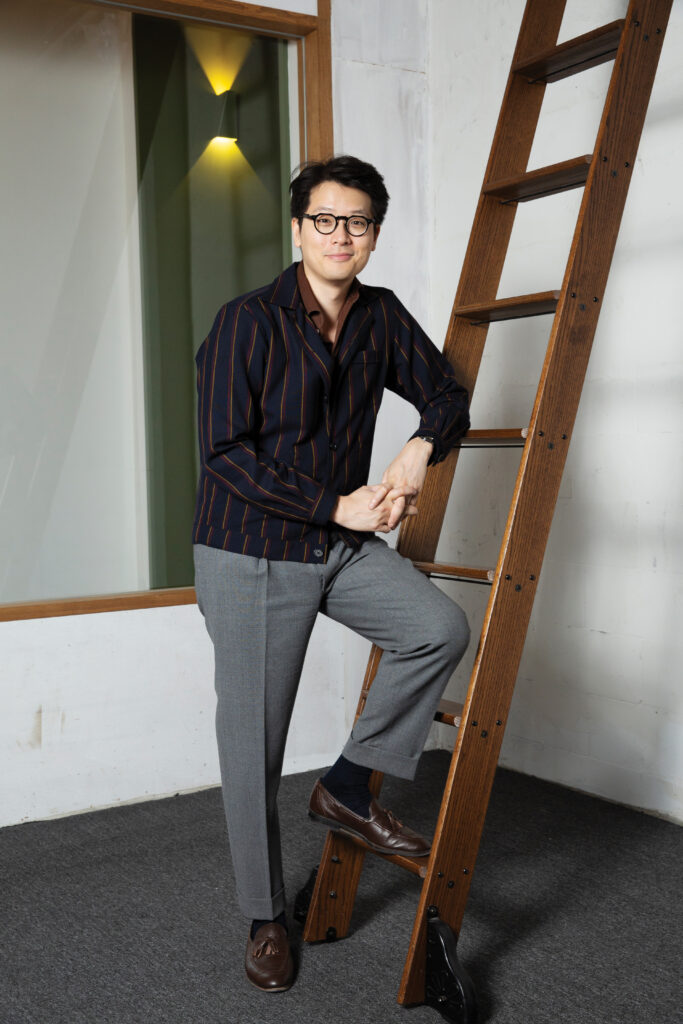
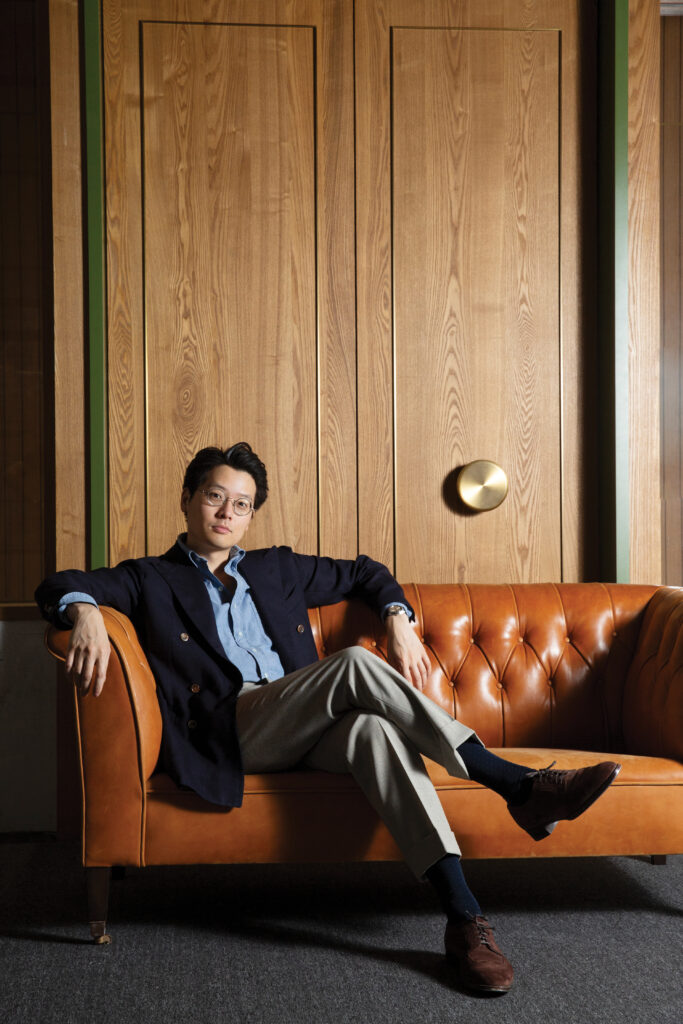
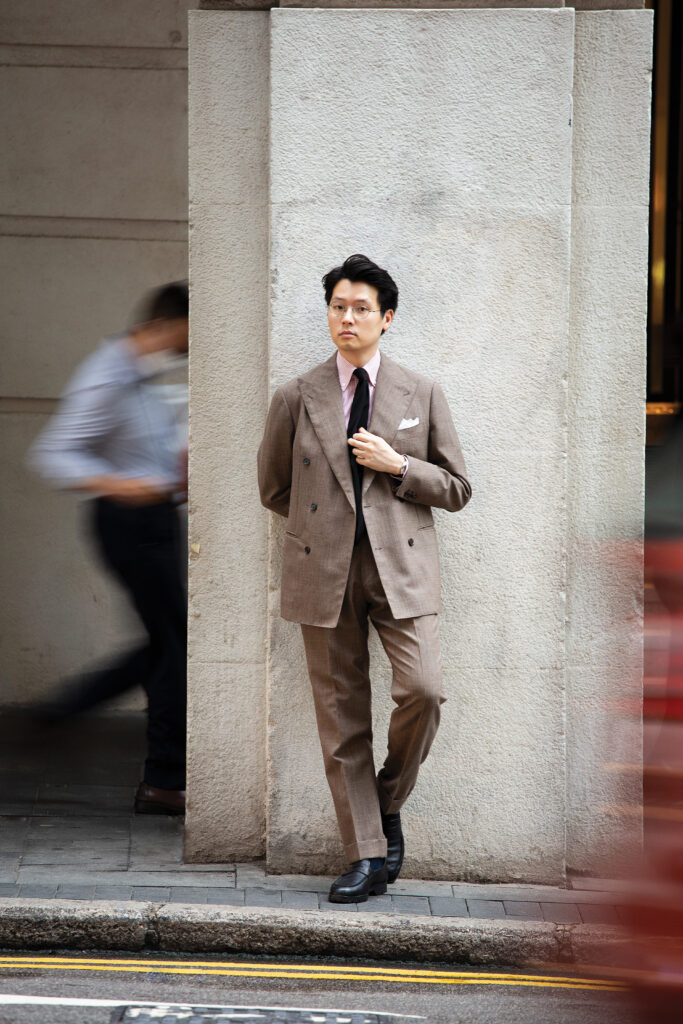
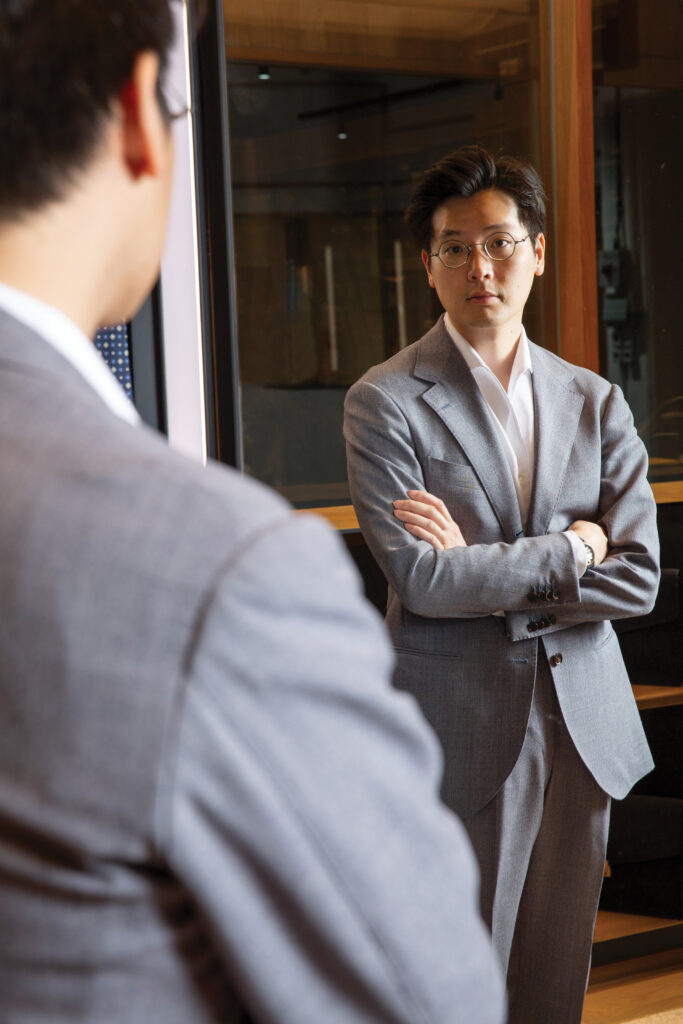
Kings And Aces: Mark Cho, the visionary co-founder of The Armoury, tailors an entire floor of luxury shopping in Pedder Building

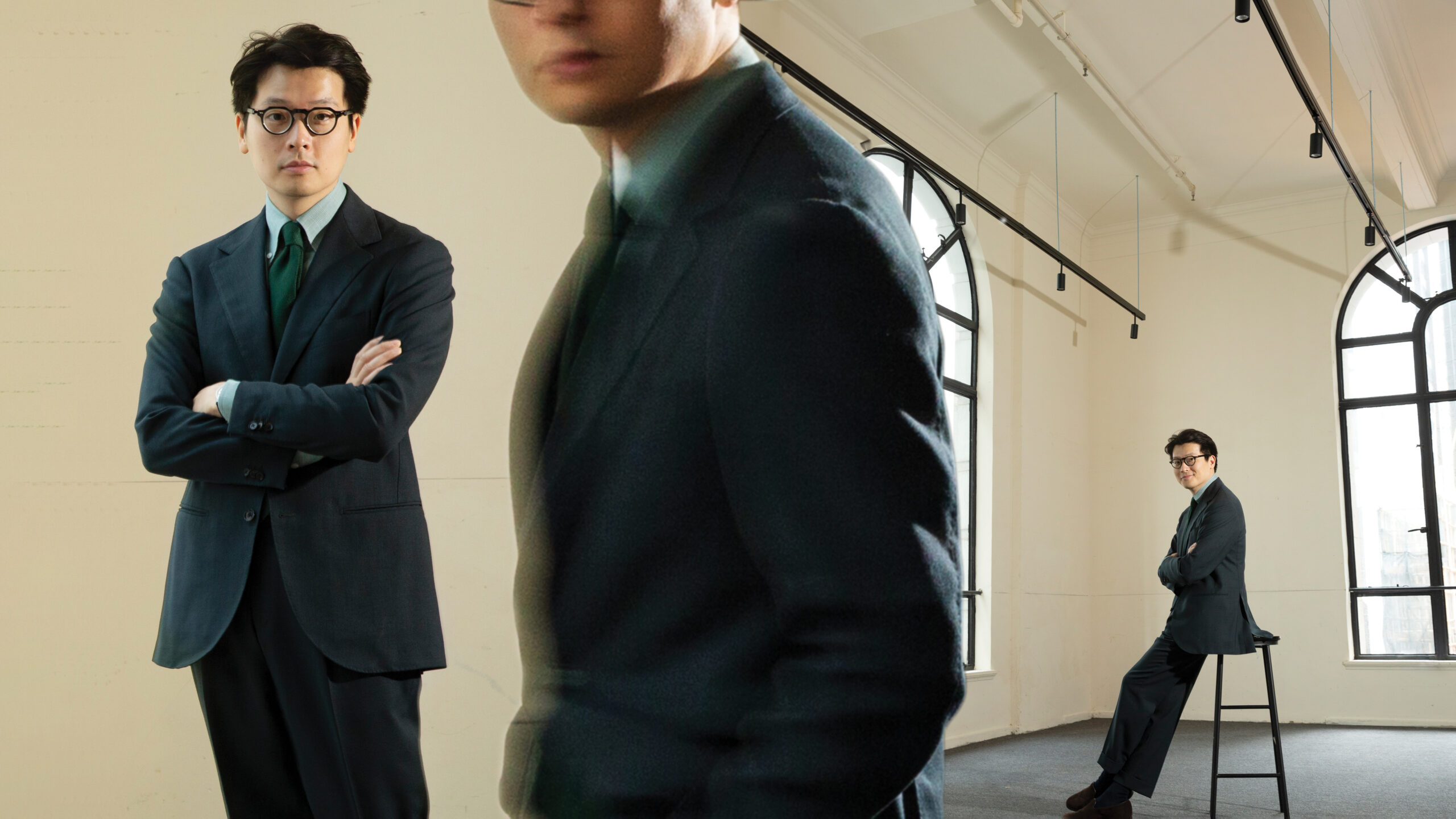
Two consecutive weekends of typhoon and heavy rain have halted The Armoury team who were working non-stop to finish their new home on the fifth floor of Pedder Building in Central. It’s close to 3 pm and Mark Cho moves along his shelves and racks of canvassed Savile Row-style suits, bench-made shoes, crisp shirts, neckties and much more in a kind of reverential awe. The 40-year-old, internationally known as the co- founder of The Armoury, co-owner of Drake’s haberdasher and director of the Pedder Arcade, meticulously checks the smallest of details, including the spacing between the textile canopy of the shop ceiling.

“Give me 10 minutes,” he says. “I just need to finalise a few things with our interior designer, then we can start [the cover shoot].”

It feels like a tacit invitation to explore the whole floor of what will become the Pedder Arcade. Cho is the director of the much- anticipated project – a pitch he delivered to the Pedder Building landlords during Covid – to create a shopping arcade that will resonate with the ones in the UK, complete with a café and dapper essentials boutiques that will become a one-stop destination for lounging and shopping.

Scrolling along the floor-to-ceiling shelves, Cho pulls out, using one hand, his selection of six different looks for our cover shoot, and in the other hand holds his go-to energy booster, a Venti Iced Americano.

At first, Cho may look like your typical businessman – oftentimes he puts on a serious face and dresses like a geezer. He has a cool composure that could read as seriousness, or perhaps he’s just drained from the weight of arcade preparation he and his team have shouldered over the past two years. Yet, he pushes through, like he has always in his life, and makes things work despite the situation.

“I was originally a womenswear designer, but my parents wanted something more of a conventional career path for me. It’s an Asian thing, I know,” he says. “And so, for a few years, I worked in the banking industry. But then life has its way of bringing you to where you are supposed to be. A place where your passion really thrives. And 13 years later, I am still doing what I am really passionate about – tailoring and dressing people.”

King of uncool

Born in the UK and simultaneously calling Hong Kong, the United States and the UK his homes, the Brown University alumnus confesses he was a bit of an outsider during his formative years. On his Instagram account, one can read and question the bio line that says ‘Making uncool uncool again’. Giving a very vague explanation, he says: “Perhaps that’s what I do best?” he gives a side smirk and at the same time a little shrug. “Growing up, I was like a mongrel because I moved around a lot.”

Moving to a more serious note, he passionately articulates the inspiration he derived from the Japanese fashion entrepreneurs and creative directors of the ’70s to the ’90s, such as Hirofumi Kurino, Yasuto Kamoshita, Osamu Shigematsu, Kenji Kaga, Issey Miyake, Yohji Yamamoto and Rei Kawakubo. He sees them as a sort of God-tier in the world of style – strong personalities with no existing playbook to follow who basically figured things out on their own and set the tone for the fashion of their entire country, as well as having a knock-on effect throughout Asia.

Tailored approach

For Cho personally, though, it was the other way around – from Asia to New York. In 2013, having successfully become classic menswear retailers in Hong Kong, with their initial 2010 shop in Pedder Building joined by another in The Landmark, he and co-founder Alan See established The Armoury New York. They honed their abilities to design collections in-house and now have a unique selection of products that are exclusively under their brand.

“Our vision is to teach people to appreciate classic style and tailoring, to offer an enjoyable and personal customer experience, and to encourage people to buy less, buy better and appreciate their clothing,” he recaps.

Taking the fifth

The Pedder Arcade passion runs deep. Almost part of Cho’s branding at this moment, it subtly informs the classic yet stylish aesthetic he has steered at The Armoury. And just as the Pedder Arcade will orbit around different players housed along the length of the fifth floor, Cho is the centrifugal force of his own creative team. His sense of dialogue and open-mindedness are evidently what makes him and his brand tick. Moreover, his ultra- responsiveness makes him the greatest ally on both strategic and creative fronts.

“Expressing yourself through clothing is very important,” he says. “People need to be who they want to be. Expressing yourself through fashion is difficult because it changes faster than you yourself might change. You can be in fashion for a moment and then out of fashion the next. Or, you can be a slave to fashion and chase it forever.”

The entire floor, best described as somewhat similar to the hallmarks of the tailor shop in the film Kingsman, is poised to be elegant, modern and romantic, with prices in the upmarket apparel boutiques ranging from HK$10,000 to $30,000. But as a thinking millennial, Cho is pragmatic, too.

He says: “I don’t see fashion as exclusive to the rich and famous. If anything, there are so many wonderful deals to be had if you’re willing to use second-hand or old stock. If life is going to be a competition, then you can always compete with your imagination instead of your wallet.”

Time is prime

A man of many interests, Cho is in a permanent state of doing. Just recently, he was on a Discord chat about watches hosted by an international publication, in addition to the challenges of making a curated shopping arcade come to life before mid-October. He works at weekends too, which is why, he thinks, he could use a little help via a superpower to freeze time.

“Ah! It must be nice to stop time even for a while. I never had enough time,” he says, while wiping his glasses, finger-brushing his hair and straightening his suit and tie ready to face our camera.

With the help of his takeaway iced coffee, Cho negotiates our six-spread photoshoot without a single flinch, even suggesting which lens would work best for each angle.

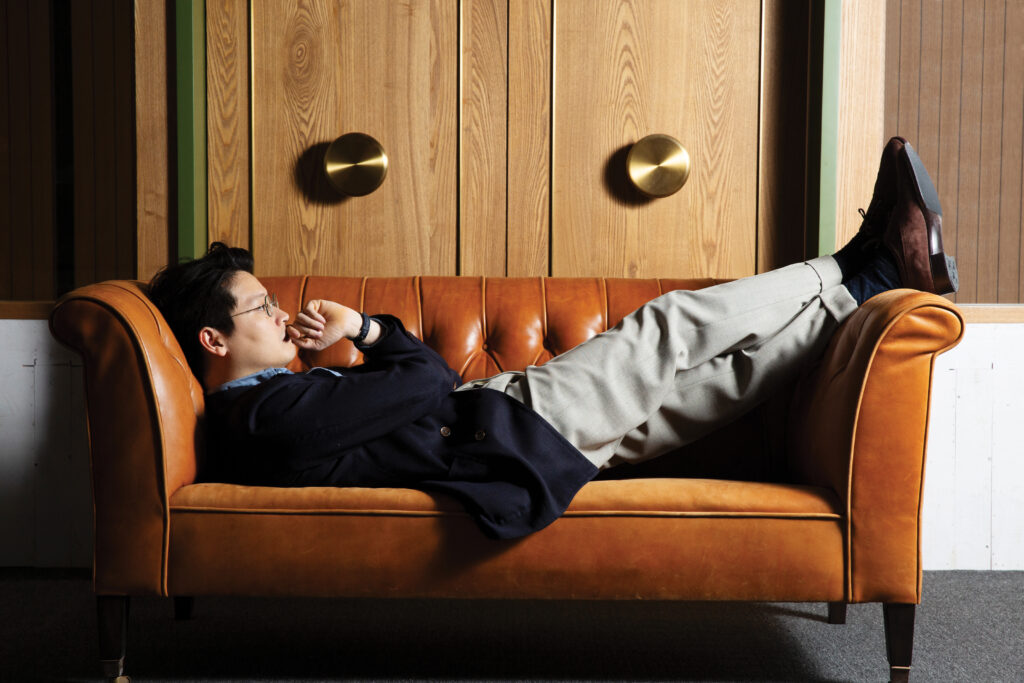
In between effortlessly poses, including lounging on a newly delivered leather couch, he has a word of encouragement for our production team: “When you have a vision, you just have to stick to it and make it work.” As the camera clicks its last shot, he immediately shakes everyone’s hand before attending to another appointment.

And unlike Kingsman’s heroes, Cho, The Armoury and the Pedder Arcade’s services are now far from being a secret. They all ace the dapper gentleman lifestyle with the right attitude, commitment and excellence.

Interview & Art Direction: Joseff Musa Photographer: Jack Law Videographer: Jack Fontanilla Venue: The Pedder Arcade

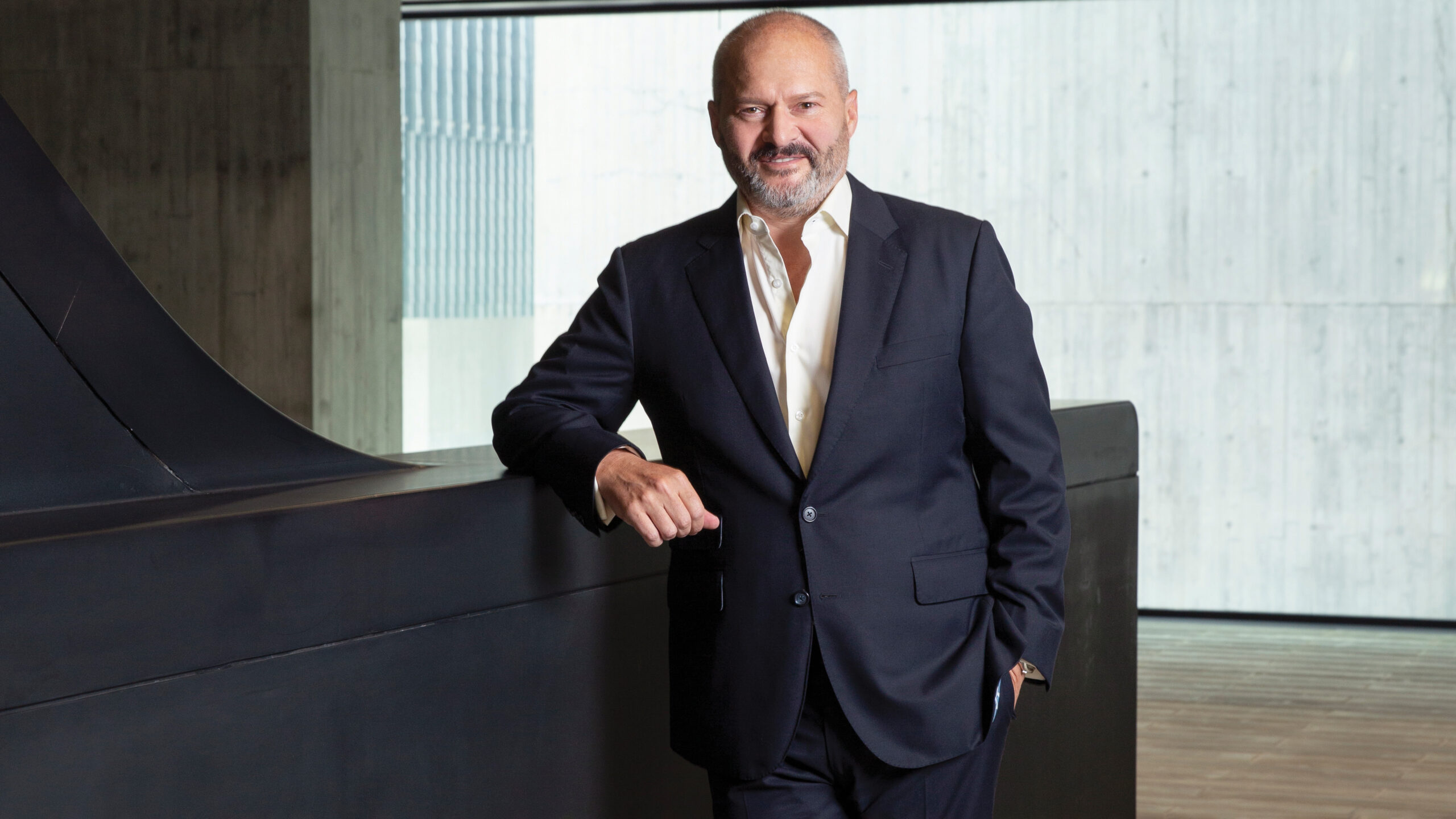
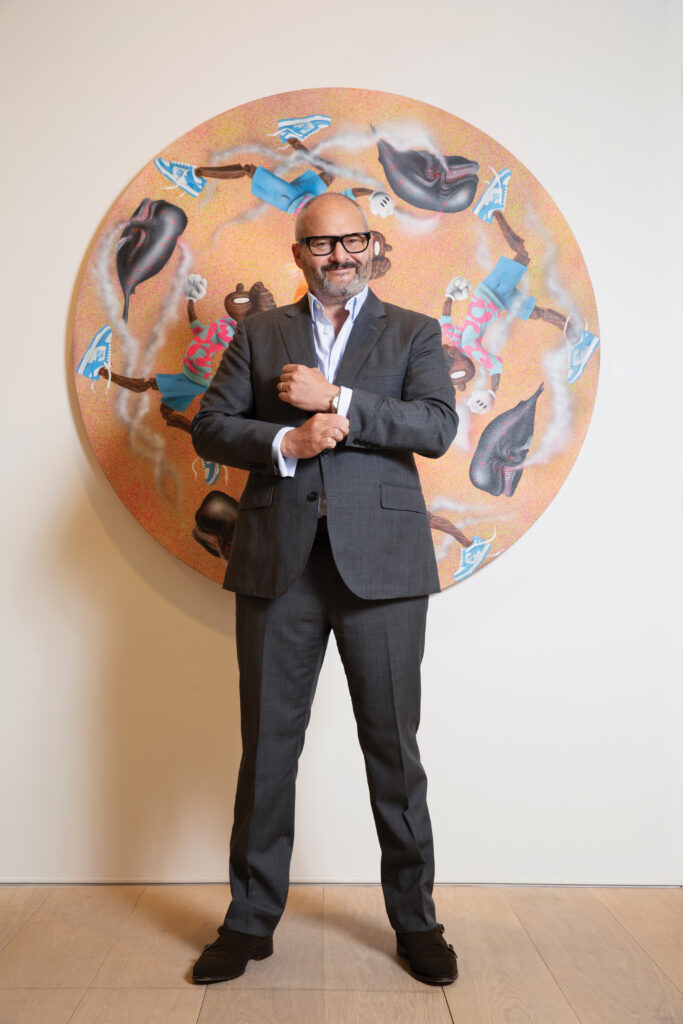
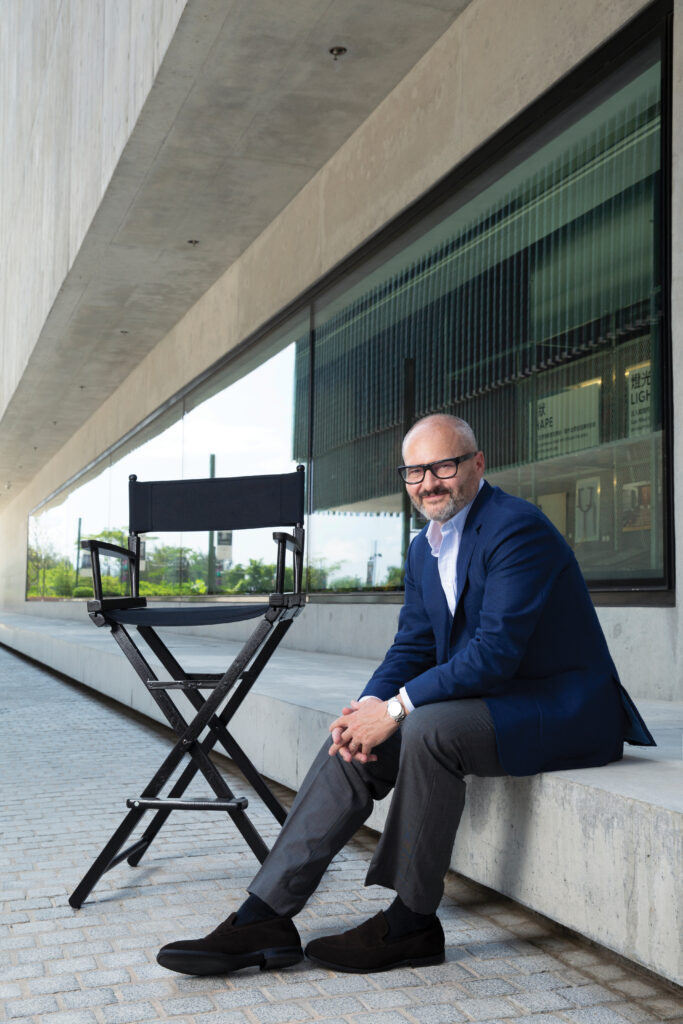
Sure Hammer: Having been around the auction block for 27 years, Robert Sleigh now drives Philips forward in Asia

It was perhaps a “somewhat undercover” wine-appreciation society started by Robert Sleigh and a schoolfriend that heralded an illustrious career spanning the idyllic vineyards of France, the hurly-burly of New York, and now the international melting pot of Hong Kong.

Aptly ensconced in smart new headquarters at WKCDA Tower in Hong Kong’s cultural hub, the Managing Director, Asia, of Phillips talks fondly of those early years. Sleigh’s brief now extends beyond the world’s finest bottles as he oversees the regional strategy of the historic auction house known for its 20th-century and contemporary art and luxury sales.

The Briton’s early passion for wine steered him into a driving job in London with wine merchant Haynes, Hanson & Clark. Crucially, the role allowed him to take his Wine & Spirit Education Trust (WSET) exams, as at the time only those employed in the trade could sit them. Then, as the UK economy stagnated in the early ’90s recession, he sought broader experience that would differentiate him from the crowd. Meeting some Burgundy producers at a wine-tasting event, he promptly asked if he could work for them.

Burgundy benefits

Sleigh found himself at a small domain in Beaune where the grapes were handpicked from its own vineyard and the wine crafted and bottled onsite. “I did one viticultural year in a way; it was vineyard work and cellar work, and when I first got there, they were still pruning the vines,” he recalls.

The labour was rewarding and he learnt the essentials of vinification. “Winemaking is 90% cleaning,” he says with a smile. “It is cleaning everything spotless so that you do not get bacteria in the wine and it all turns to vinegar.”

He spent three years in France and is now an unashamed Francophile who would happily drink only French wine. His second job in Burgundy was at Maison Louis Latour, a leading négociant-éleveur with many English-speaking buyers. He liaised with clients and assisted with customer service and marketing.

US points

It was this experience that likely helped Sleigh secure a “career-defining” move to the US, where in 1996 he joined the wine department of Sotheby’s auction house in New York. Aside from demand for the cult wines of Napa Valley, he noted other distinct differences in the US wine market compared to Europe. “The Americans are very much led by critic scores; the likes of Robert Parker at the time, who exerted a very powerful influence. They are buying on the 100-point scoring system,” he says.

Hong Kong hub

He was called to Asia in 2010 to manage the huge demand in the Hong Kong wine auction sector following the reduction and then elimination of tax on wine in the territory.

With the West still reeling from the 2007-2008 Global Financial Crisis, coupled with the pent-up demand for Western luxury goods from Chinese consumers with huge disposable incomes, this “perfect storm” propelled Hong Kong into the wine hub of Asia.

“The wine market has never seen anything like it and probably never will again,” says Sleigh, relating how prices took off and Hong Kong became the most important market within 18 months. “Just the amount of stimulus that happened then – it was an extraordinary time.”

Auction house

After more than 25 years at Sotheby’s, Sleigh assumed his new position with Phillips at the start of the year, tasked with a broader role in the art and luxury sector. Asian-based clients clinch about a third of Phillips’ sales, and he believes their new Asia headquarters with a purpose-built exhibition space – the largest premises of any auction house in Hong Kong – increases their visibility and power in the Asian market. “Being the first auction house to have our own permanent galleries and auction room leaves no doubt about how committed Phillips is to Asia,” he stresses.

This site, occupying the lower six floors of WKCDA Tower near the M+ museum and the Hong Kong Palace Museum, has definite advantages. “The possibilities that this location holds for Phillips are endless, especially as the West Kowloon Cultural District continues to expand and thrive,” he says. “We are excited to be at the heart of it and play an active role in its evolution.”

Early indications suggest the move to West Kowloon will be a successful one. Phillips’ 20th Century & Contemporary Art exhibition in March and April, as well as previews of watch and jewellery lots, attracted 30,000 visitors, and their inaugural evening sale there yielded notable results – Yoshitomo Nara’s Lookin’ for a Treasure sold for HK$84 million, and Yayoi Kusama’s Pumpkin fetched HK$56 million.

Asian ascendency

According to Sleigh, the art world once operated in two separate ecosystems – East and West – but Hong Kong is now part of a unified global market, with a huge collecting base that extends from Asia to all parts of the world and vice-versa. He talks of a transformation of the playing field: “It now comes as no surprise that the highest-value lot in our long history – a masterwork by Jean-Michel Basquiat – came from the collection of Yusaku Maezawa and was sold to another collector based in Asia for US$85 million.”

Since arriving at Phillips, Sleigh has noted a much younger clientele viewing contemporary art, 20th-century art, design, photographs and watches compared to those interested in wine. He is excited by how collecting is becoming integral to the Asian lifestyle – with many people travelling to the art fairs in Taipei, Tokyo, Seoul and Singapore – and sees huge growth potential and less of a weight of tradition in the art market here.

Sales drivers

Eternally fascinated by the cycle of the auction industry, Sleigh has conducted literally hundreds of sales during his career. He believes the auction ritual remains “a compelling call to action” for unique and valuable items and will always play a role when there is competition for a desirable collectible. There are those who say that all auctioneers are frustrated actors, and though Sleigh remains unconvinced by this characterisation, he concedes he has known some who like “being there in front of the world!”

He describes how having fallen asleep on a plane whilst watching the documentary The Truffle Hunters, he woke with a start, possibly due to hearing his own voice eerily on the headphones. It transpired that the director had taken an excerpt from a recording of a truffle auction for charity he performs every year.

Indeed, charity is close to his heart. He is regularly involved in charity auctions and his wife, Libby Alexander, is the co-founder and CEO of Splash Foundation, which provides swimming lessons to those in need. “We are lucky we live in Hong Kong and we are very fortunate in many ways,” he says. “There are a lot of people who are less fortunate, so I think it is important [to give back].”

Interview by: Neil Dolby Photographer: Jack Law Art Direction: Joseff Musa Fashion Stylist: Jhoshwa Ledesma Videographer:Jack Fontanilla Hair & Make Up: Owen Ko Venue: Phillips Asia HQ in West Kowloon

Ministering Angel: Maggie’s Cancer Caring Centre & Hong Kong Ballet champion Anne Wang Liu does all she can from the heart

“Super Speed!” proclaims Anne Wang Liu when asked which superhuman ability she would choose. A self-proclaimed multitasker, she has mastered the art of operating at speed as she juggles motherhood and her life passions one day at a time.

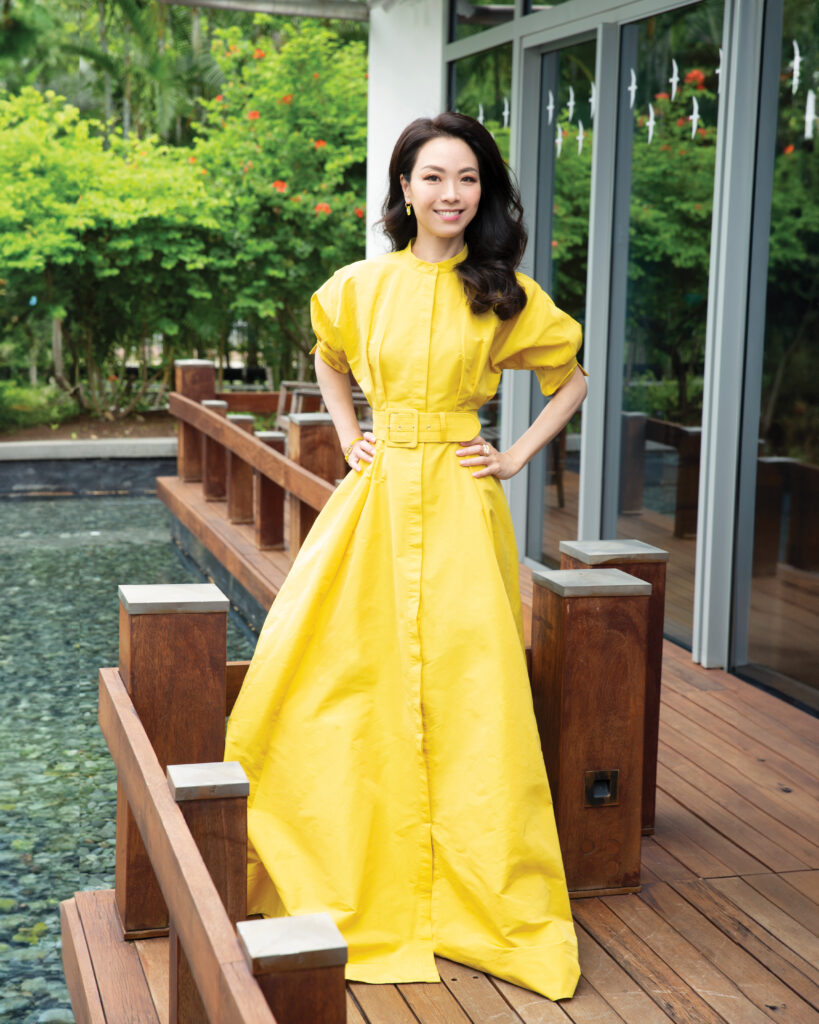
Despite her glamorous appearance – arriving in a monochromatic light-brown and skin-tone semi-formal ensemble, high block-heeled pumps in the same colour tone, jewellery from her own accessory line and gleaming black locks in relaxed big curls – more than anything she seems a diligent, efficient mum making sure everything is under control. We meet on a highly changeable summer’s day – beautifully clear at first, then gloomy and raining – a weather pattern that locals proudly claim is unique to Hong Kong. Yet for Wang Liu, it’s all about perspectives.

“Ah, the weather! One of the few things in life we people cannot control, right?” she says, as she smiles brightly and poses for the camera despite raindrops splattering her yellow garden dress. “That’s the thing, whatever circumstance we are put into, it’s about making things work and overcoming it.”

Raised on the outskirts of New York City, young Anne completed an economics degree at Cornell University, then embarked on a career in finance. She has contributed her planning abilities to a number of causes since she and her husband, Julian Liu – whom she met at college – moved to Hong Kong two decades ago, including Hong Kong Ballet and Maggie’s Cancer Caring Centre, which marks its 10th anniversary here.

Caring Spirit

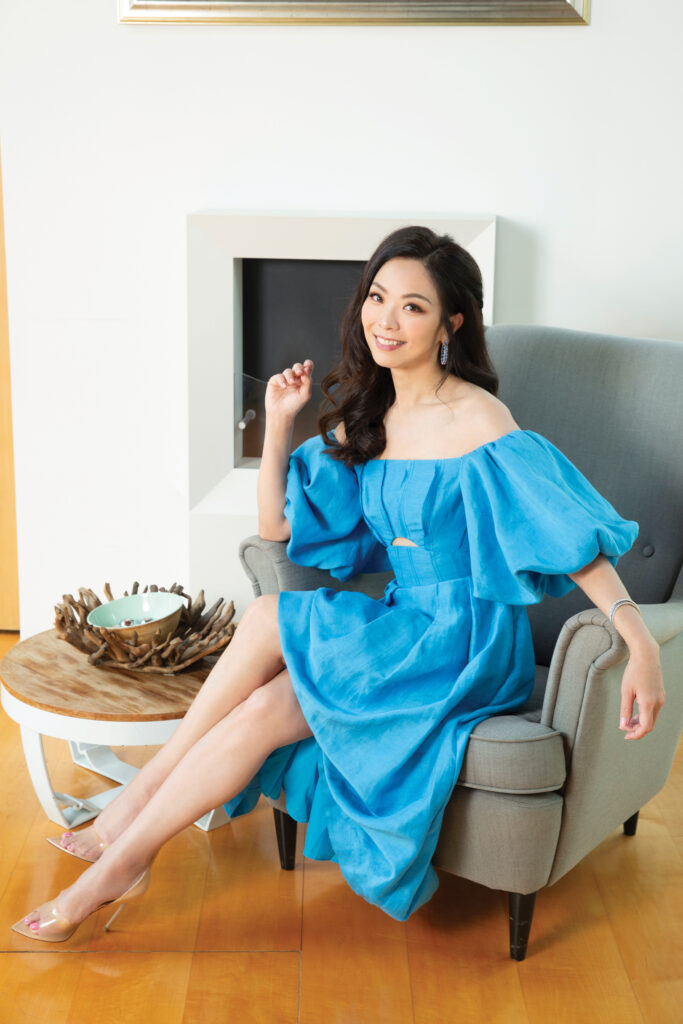
Eugenie off-the-shoulder cutout linen-blend midi
dress by Aje, courtesy of Net-A-Porter

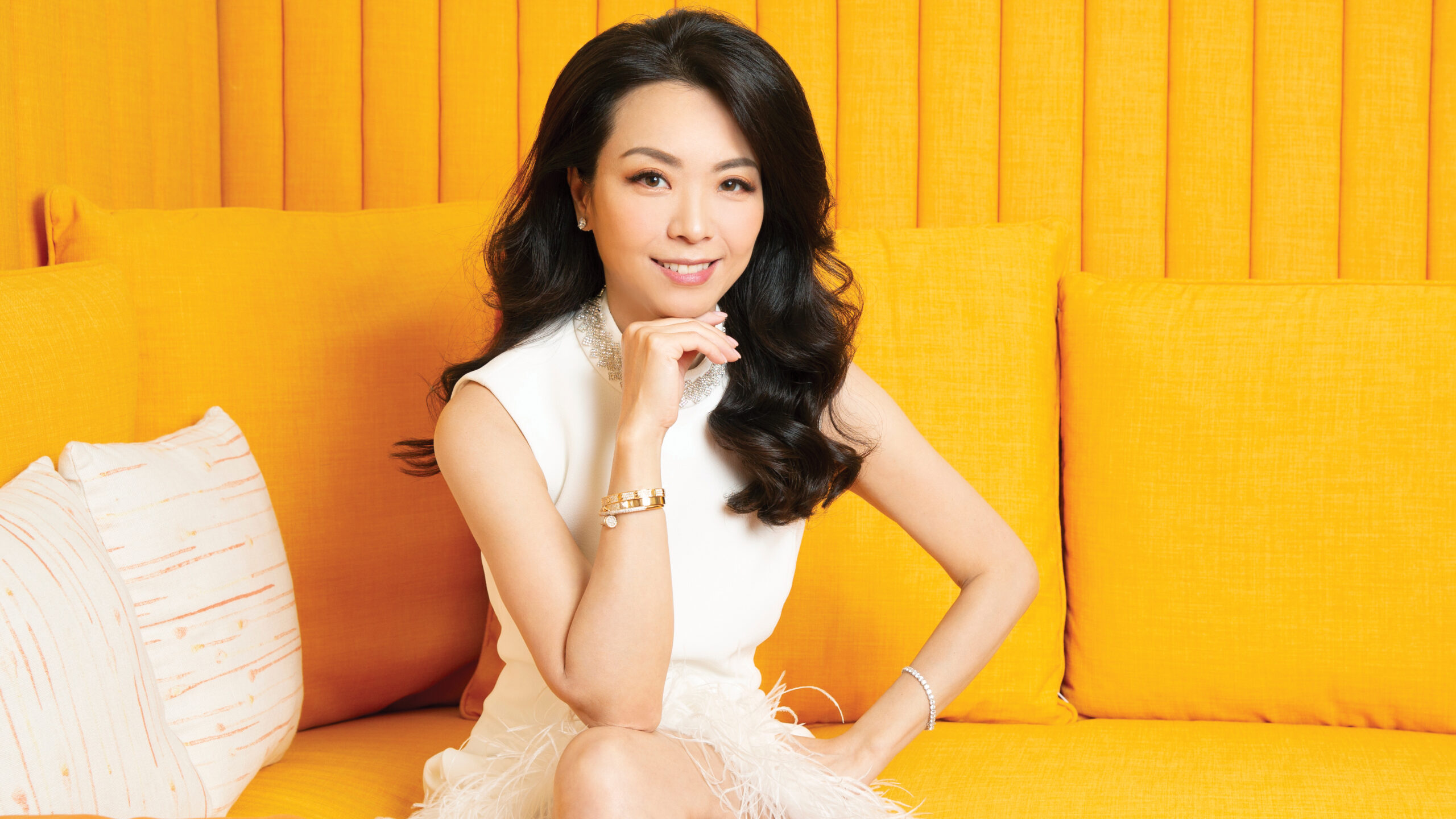
Wang Liu is a familiar face of the city’s social scene and one of the most well-loved Hong Kong socialites. Apart from being blessed with impeccable style, her vibrant personality makes her easy to like. Joining the Board of Governors of Maggie’s nine years ago reflected her selflessness and determination to give back to the community.

“When I first became involved with Maggie’s, I had friends and family who were fighting cancer and I felt that Hong Kong lacked the facilities that were needed to support patients,” she says. “Yes, we have the doctors, but social support is very important in fighting the disease. Maggie’s has a multidisciplinary team, including oncology specialists, social workers, clinical psychologists and registered dietitians to provide free, practical, emotional and psychosocial support to people touched by cancer.”

By peeling off the layers to unveil her rawness, Wang Liu moves beyond the superficiality of being judged by how she might dress for events or appear on the social pages of magazines. She goes deeper by nurturing the inside – a mindset that reveals her beautiful soul.

Fayre of Heart

The first Maggie’s opened in Edinburgh in 1996 as a new type of care centre that would make the experience of cancer more manageable for everyone. It was conceived by the late Maggie Keswick Jencks – who had spent her early years in Hong Kong – following the return of her breast cancer. The Hong Kong centre was built in the grounds of Tuen Mun Hospital in 2013 with the support of the Keswick Foundation.

As she explains, it does not have government funding and depends solely on grants and donations to continue its work: “We have an upcoming event in December, the Fayre of St John’s, with all proceeds from individuals and businesses going to cancer patients and their families. I am involved very much as the fundraising committee co-chair to raise public awareness and funds for the event.

“Ultimately, the aim is to ensure that Maggie’s has the resources it needs to provide high-quality care and support to people affected by cancer. The fundraiser brings families together for a night of song and gives a face to those suffering from cancer,” she adds.

Strength All-Around

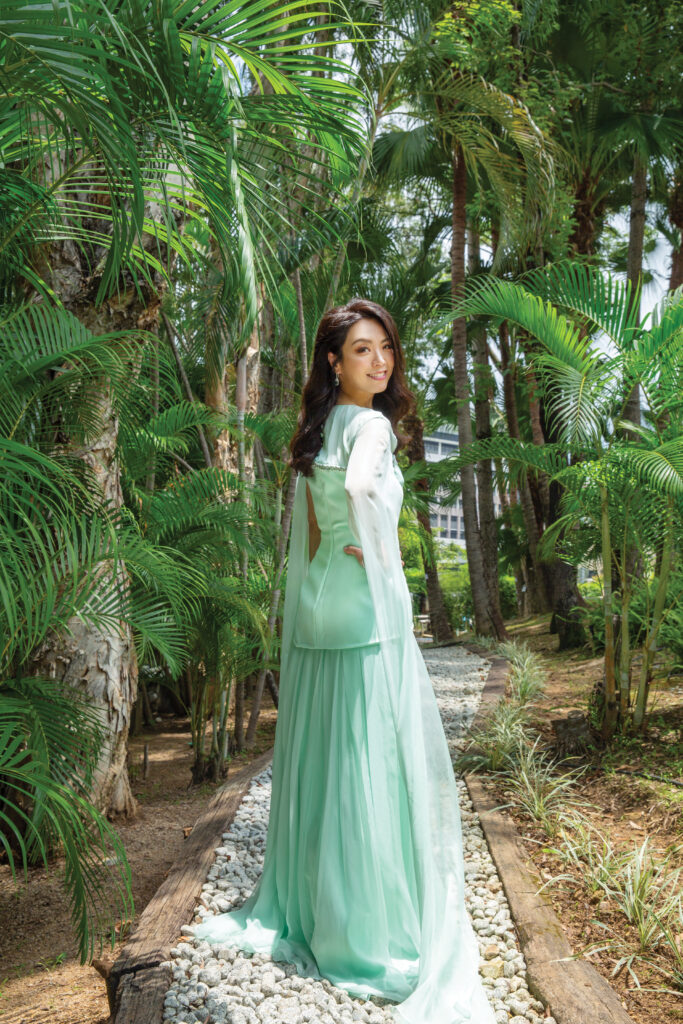
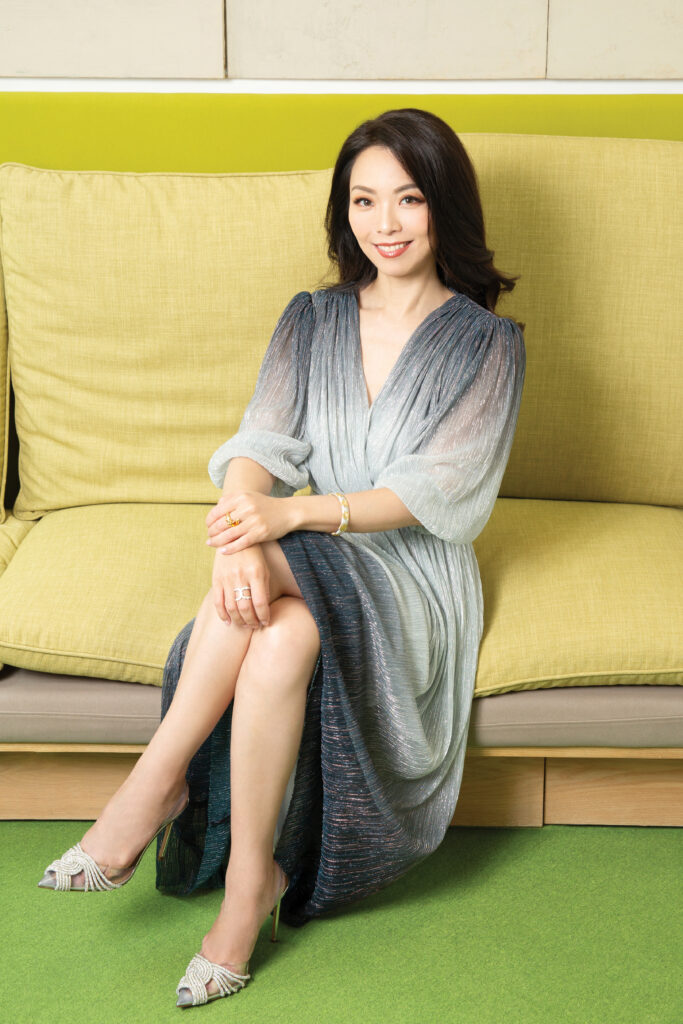
Gloria cape-effect embellished silk-chiffon and crepe gown by Safiyaa, courtesy of Net-A-Porter


As we shoot the third look, the production team is fanning an ethereal goddess-like green gown with long trails on the shoulder to give an angelic wing effect for the photos. Humming the chorus of Bette Midler’s Wind Beneath My Wings in between makeup touch-ups, our equally angelic model reiterates the fact that a strong support system plays a crucial part in life.

“My parents taught me the need for a parent to always support their children’s emotional well-being and to create an environment where my children feel safe and confident,” she says.

“My parents provided me with the opportunity to engage in many different activities. I led an active childhood, participating in sports, dance, music, student government and community service. They allowed me to pursue my personal and intellectual curiosity. Moreover, they taught me the importance of close familial ties and having a supportive group of friends.”

Acing Motherhood


It’s a philosophy she applied while raising her two daughters, Madeline and Audrey. Despite her busy schedule, she finds time to be the cool mum she wants her kids to have. Just days before the shoot, she scored much-coveted Taylor Swift Eras Tour concert tickets for the three of them.

“It was crazy! Super” she shares excitedly, the way one would with teenage peers. “I made sure we got the chance to watch Taylor Swift because both of my girls are huge fans. And now, I am too.”

When asked how old her daughters are now, she laughs quickly and says: “Next question.” Still chuckling, she proudly continues to tell her story about motherhood and how she managed to raise them just the way she wanted it to be.

“I am focused on teaching them what’s right and wrong, and luckily, they’ve turned out to be quite self-motivated. So, I don’t need to guide them as much anymore. Things are now reversed and they are guiding me,” she says.

Ballet Benefits

Lyon button gown by Rebecca Vallance, courtesy of Net-A-Porter

Exemplifying her belief in giving back to the community and helping the next generation, as co-chair of the Hong Kong Ballet Guild, she devotes her time to making the artform accessible to youngsters from different backgrounds. The annual Nutcracker Christmas Benefit, a fundraising event she considers to be one of her most significant career accomplishments, holds a special place in her heart as both her daughters have performed numerous roles over the years.

“I have watched them grow up on the stage,” she says. “Self-expression in performing arts is paramount. It allows individuals to convey emotions, stories and perspectives uniquely. This creative outlet fosters personal growth, empathy and cultural understanding, enriching both the artist and the audience. It’s a vital means of connecting and communicating in a diverse world.”

As she journeys through life learning about what she loves and embracing every moment of it, she knows that it’s a continuous process.

“My mother and sister have been a constant source of inspiration and support. Both are professional working moms that have been able to balance careers while raising a family. My children have been a constant inspiration and remind me to stay curious, adventurous and young at heart.”

Ring by Cartier
Ring by Chow Tai Fook
Mercier belted plissélamé
midi dress by Costarellos, courtesy of Net-A-Porter

We finish the shoot and interview, typically a four-hour marathon, in just 90 minutes, and she moves seamlessly into discussions with Maggie’s staff to finalise their upcoming event. While she may not possess the superhuman power of super speed, she truly does a lot and always from the heart. Anne Wang Liu has a million obligations, personal and professional, and she gets an A+ for them all.

Interview & Art Direction: Joseff Musa Photographer: Jack Law Fashion Stylist: Jhoshwa Ledesma Videographer: Jack Fontanilla Hair & Make Up: Joenny Lau Venue: Maggie’s Cancer Caring Centre Brands: Cartier, Chow Tai Fook, Rebecca Vallance, courtesy of Net-A-Porter, Aje, courtesy of Net-A-Porter, Safiyaa, courtesy of Net-A-Porter & Costarellos, courtesy of Net-A-Porter Cover: Suri one-shoulder paneled stretch crepe gown by Safiyaa, courtesy of Net-A-Porter

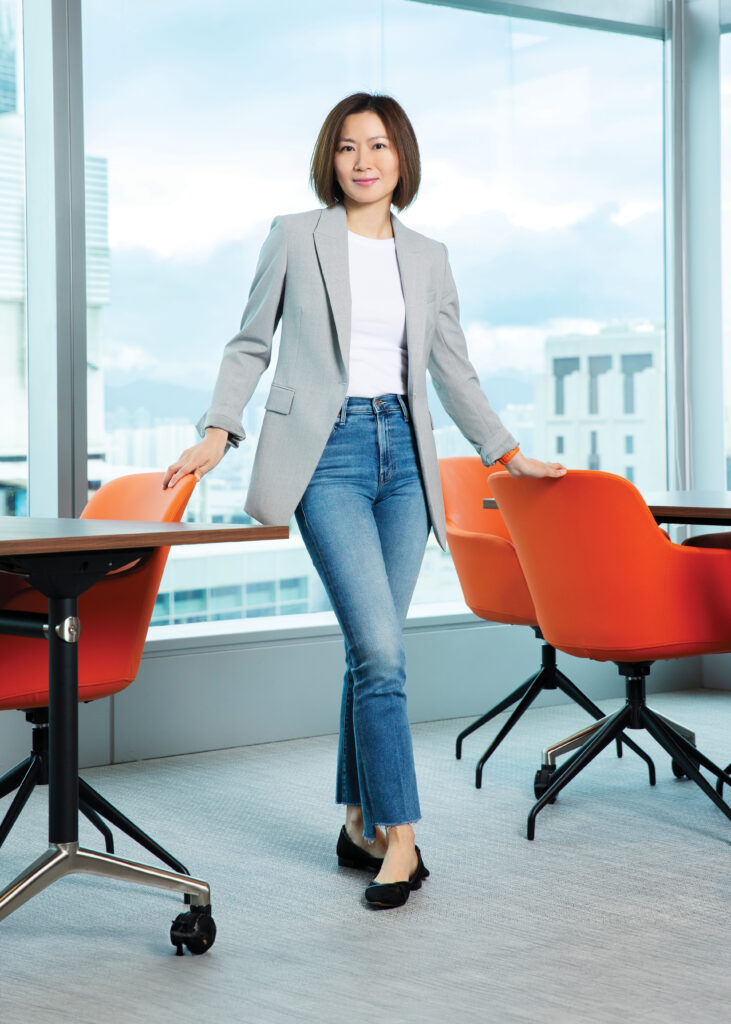
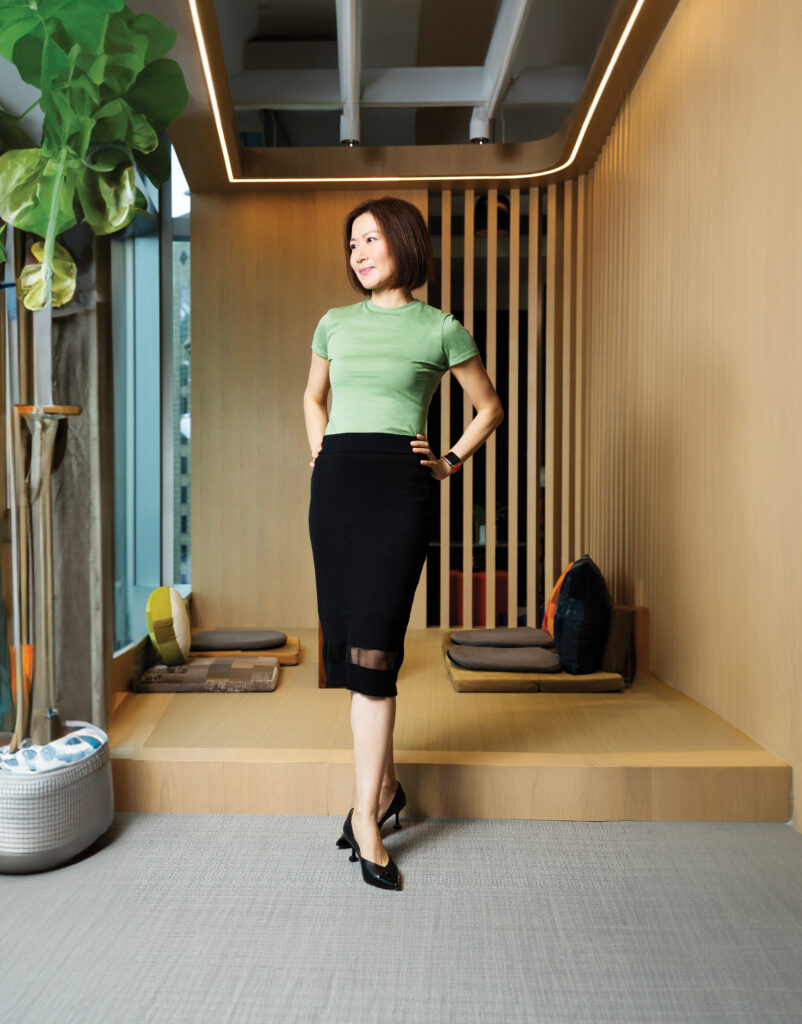
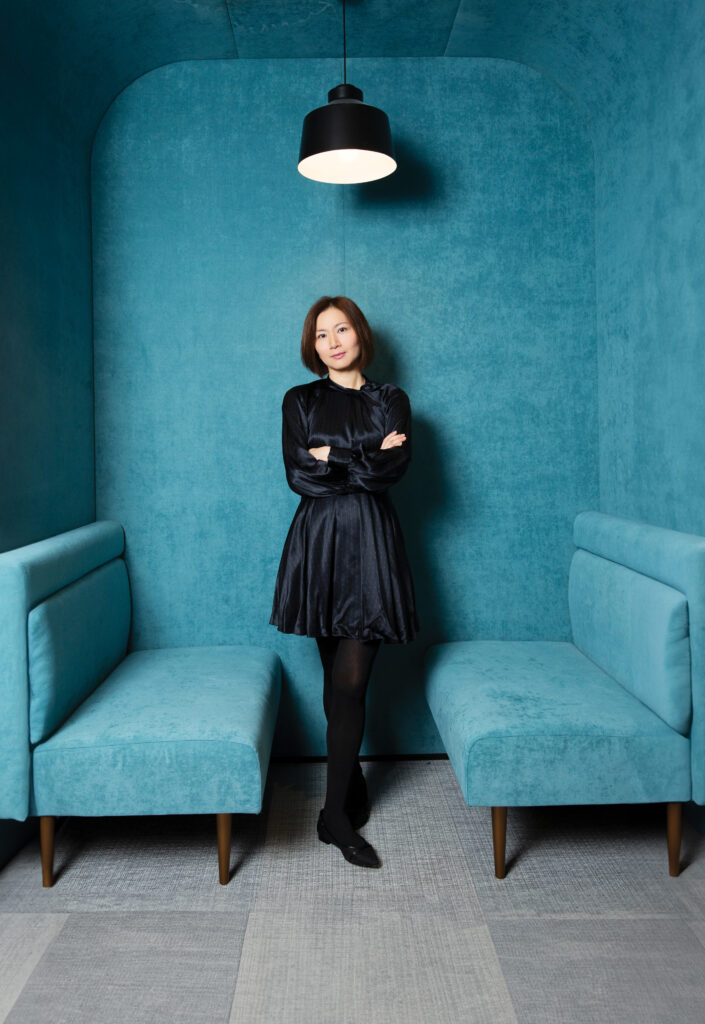
Life of Luxury: Hotel marketing maestro Joanne Tang’s Infinite Luxury Group takes high-end travel experiences above and beyond 

During her formative years in the Netherlands, Joanne Tang was admittedly shy and retiring, so it was surprising to friends and family when aged 16, she plumped for a course in hotel management that normally attracts bubbly, outgoing souls.

But now, looking back on more than 20 successful years in the luxury hotel industry from her vantage point as CEO of Infinite Luxury Group, the marketing and branding enterprise she founded in 2010, she knows her career choice was spot on.

Her family background did play its part, though. “My family owned restaurants in the Netherlands and Germany, so I grew up with the hospitality industry around me every day,” says Tang, speaking over lunch at the East Hong Kong hotel in Taikoo Shing, where she is staying during a business trip to the city. “Growing up in the Netherlands, I was exposed to both the outgoing, direct Dutch mentality and the humble, hardworking Hong Kong Chinese approach. This dual cultural background has shaped my personality and allowed me to understand and appreciate different cultures.”

Multiple Dutch

Jacket, shirt and pants by LANVIN

Amsterdam is famously cosmopolitan and diverse, a grounding that enabled Tang to be more receptive to differences in business and life in general. She also learnt multiple languages – Chinese, Dutch, English, French and German – another undoubted asset for her globe-trotting future.

At a hotel management school in the Netherlands, she developed her social skills and professional knowledge, igniting a passion to explore the world and pursue an international hotelier career. Graduating in 2000, she moved to Hong Kong and began working for major hotel chains, at first at the front desk, greeting new arrivals and thriving on interaction with guests from all around the globe. She then moved into sales and marketing.

Employed by the Shangri-La, Mandarin Oriental and then The Ritz-Carlton, she developed a deep passion for the luxury sector. “I gained invaluable experience in understanding the unique positioning and messaging of each hotel group and property,” she says reflectively, betraying every inch the persona of a confident, successful businessperson.

Crisis banishment

One of her biggest challenges was opening a new hotel for The Ritz-Carlton in Krabi, Thailand, during the 2007-2008 economic downturn, a project that spearheaded the group’s Reserve collection of high-end resorts in exotic locations. “We did that all the way during the financial crisis, and at the end the hotel opened very successfully as well,” she notes.

The crisis prompted hotels worldwide to diversify and explore new potential markets like Asia. It was a turning point too, for Tang, as this greater interest in Asian markets was vital for the success of her embryonic company. From the outset, Infinite Luxury Group gained and built upon a good reputation in the industry, and business blossomed by word of mouth. “We were fortunate to work with some amazing luxury hotels from the beginning and then it snowballed,” says Tang. In the 13 years since its inception, she has marketed more than 350 hotels and brands in Asia.

Limitless lifestyle

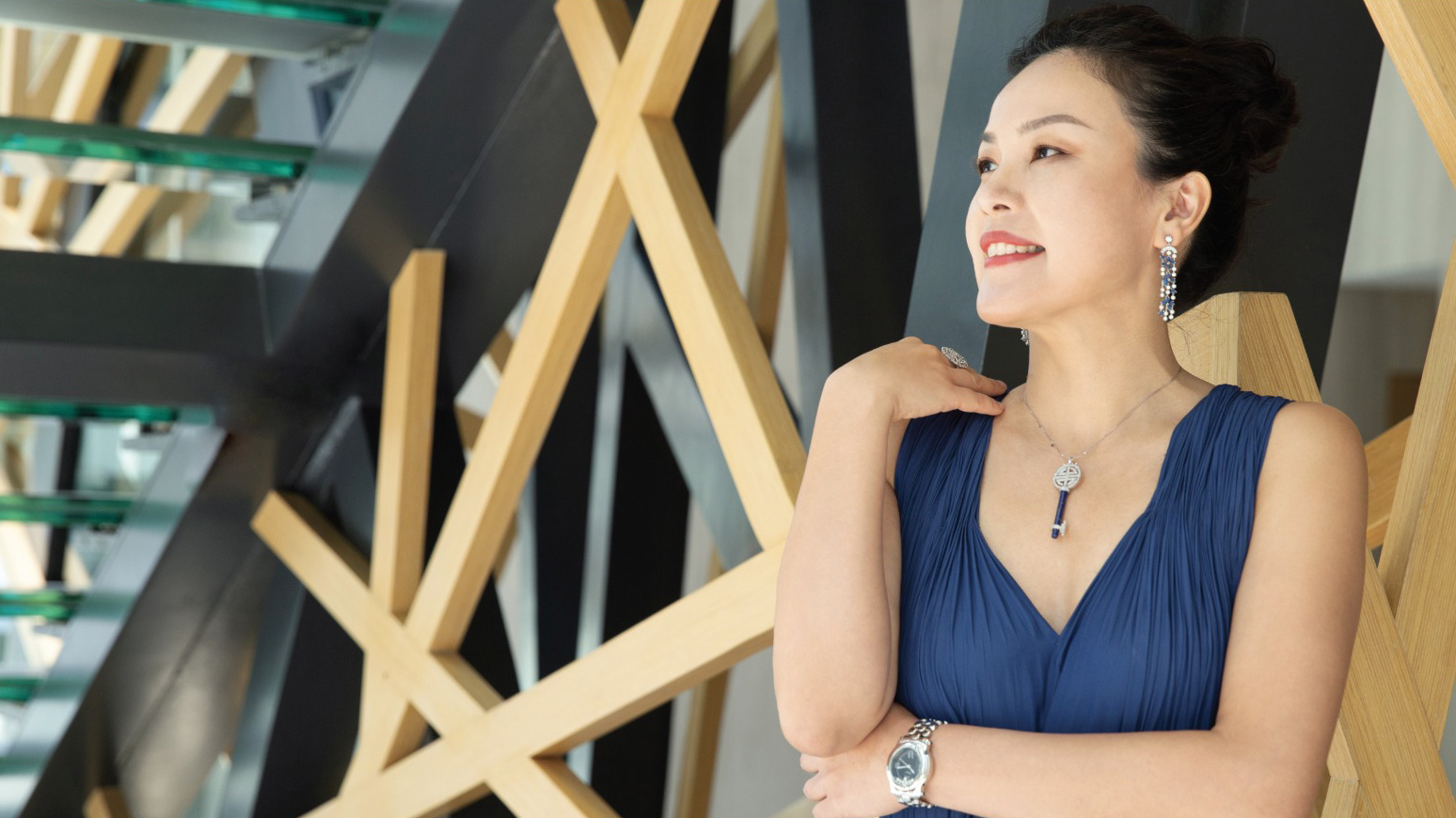
Magdalena open-back satin midi dress by Rebecca Vallance, courtesy of Net-A-Porter

Asked about the values of her company (infiniteluxurygroup.com), Tang responds by evoking a lifestyle choice: “The ethos of Infinite Luxury Group is to introduce luxury hotels and unique travel experiences to the Asian traveller. We believe in a lifestyle without boundaries, where discerning travellers can indulge in luxurious and unforgettable journeys.”

The success of her enterprise and her long list of clients reflect the expertise she offers. “One of the most rewarding experiences is seeing a hotel become successful, gaining recognition, and attracting bookings,” she says.

“Another success story is when a hotel partner decides to handle the marketing themselves for a while, but then realises the value of our expertise and returns to work with us again.”

Asian journey

In-depth knowledge of the Asian market and all its diversity has been integral to her company’s achievements. She believes it is a mistake to assume the same strategies employed elsewhere will automatically work for Asian markets.

“The Asian market is incredibly diverse, and it requires a deep understanding of each sub-market, its cultural nuances and consumer preferences,” she opines. “These considerations are even more important in the China market.”

Experiences of wealth Over the years, Tang has seen noticeable behavioural changes in high-net-worth (HNW) individuals, who are now seeking new and unique experiences having already indulged in what has become a run-of-the-mill luxury. The industry has had to focus on providing personalised experiences. Catering to the evolving needs and desires of the modern, discerning traveller does not necessarily mean greater extravagance, she insists. “It can involve bringing them closer to nature, such as wildlife safaris, remote camping in the desert, or tailored trips that delve into history and culture, like an immersive journey. Providing memorable and personalised experiences is key in meeting the expectations of these clients.”

Travel highs

Dress by LANVIN

She says establishing deep and long-lasting relationships with HNW clients can be challenging for luxury brands due to the high level of competition and the dynamic nature of these individuals for whom money is no object. She believes powerful brands are those creating extraordinary experiences by carefully crafting an atmosphere of exclusivity, unmatched service and personalised moments. “And then aiming to captivate the clientele and consistently surpass their expectations,” she adds.

Tang has noticed a definite period of postCovid ‘revenge tourism’, as if luxury travellers are trying to make up for lost time. She herself is not immune from this desire; her enviable jet-setting lifestyle sees her pack in an endless stream of exotic locations. One of her great pleasures is to rise before dawn to take in the beautiful sunrise in some far-flung destination.

The nature-lover also sees a focus on sustainability amongst luxury hotel brands of late, in some cases as a matter of self-interest. “Many hotels understand that if we do not do anything to promote sustainability part, it is not going anywhere positive,” she says.

Bridging cultures

Tang’s company is now based in Shanghai with several offices around Asia, and she is confident the luxury sector will continue to thrive in the future. It is her strong opinion that luxury travel can act as a bridge between cultures. “Luxury brands often have a global reach, and they can act as ambassadors of cultural exchange and appreciation,” she says. “Furthermore, luxury experiences and travel can expose individuals to different cultures, traditions and perspectives, promoting tolerance and appreciation for diversity.”

Interview by: Neil Dolby Photographer: Jack Law Art Direction: Joseff Musa Fashion Stylist: Jhoshwa Ledesma Videographer: Jack Fontanilla Hair & Make Up: Owen Ko Venue: EAST Hong Kong Brands: LANVIN and Rebecca Vallance, courtesy of Net-A-Porter

For Hans Lo, CL Yachts’ Deputy Director, innovation makes sailing through life worthwhile

The Lai Chi Kok docks in West Kowloon, sheltered by the protrusion of land that is Stonecutters Island, is not a popular destination for most locals. At the very end of a three-minute walk through a labyrinth of rebars, tower cranes, a manually built wooden bridge and all things industrial, sits a luxury yacht, visible enough through the help of orange and white flags. This is where Hans Lo has chosen to meet.

“Yachting is a luxury business, but behind its glamour lies a lot of hard and physical work. Come right in,” says the yacht builder as he welcomes our team aboard.

As a fifth-generation member of the Lo family, who began their craft in Shanghai in the late 19th century, then moved Cheoy Lee Shipyards to Hong Kong in 1936, Hans shares in the legacy of helming the oldest shipbuilders in Hong Kong. The Los were also among the forerunners of fibreglass yacht construction, collaborating with Lloyd’s Register to create regulations for GRP (glass-reinforced plastic) boat construction back in the 1960s, and building the then-largest fibreglass yacht, the 130-foot Shango II, in 1975.

Cheoy Lee relocated its shipbuilding facility from Penny’s Bay to Zhuhai, China in 1996, and today is one of the producers of commercial vessels, considered the best in the world.

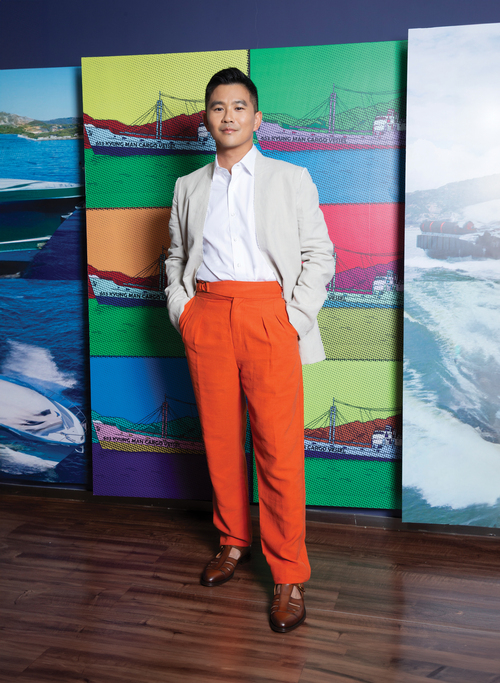
Sweater, shirt, trousers and shoes by Ralph Lauren

A Queen’s University Civil Engineering alumnus, Hong Kong-born, Canadian-educated Lo confesses to starting at the bottom in the family shipyard – laying up fibreglass and helping with vacuum infusion on a few projects before moving on to other aspects of yacht building. He quickly grasped the process of a build, and over time took on a broader role; he became Deputy Director of CL Yachts – the pleasure-craft arm of the parent company – in 2019.

Lo spent a large portion of his youth at the Cheoy Lee facility, returning during summer vacations after his family settled in Vancouver when he was seven years old. “Growing up, my family and I would go to bai san by boat, and as a kid, I thought that was just normal for everybody,” he says. “It was only later on that I realised the reason we were doing this is because our family builds ships. It’s very much a part of our life.”

True to his great-great-grandfather’s visionary roots, Lo is not standing still; he is thinking grand-scale for CL Yachts. “In 10 years, I hope we’ve established ourselves in Hong Kong and Australia – our biggest targets right now in terms of yacht sales,” he says.

His 10-year plan has already commenced. At their production facility, they are currently developing an innovative commercial project involving carbon fibre and hybrid technology for a more sustainable approach to the yacht industry – a move towards a greener carbon footprint.

Stance and Ballast

Now 40, the millennial engineer has grey hairs perfectly sprinkled through both sides of his crew cut; and he embraces them, saying: “Age is just a number and we should be proud of it. As we age, we collect learnings and these make us a better version of ourselves. I’d like to believe that I am in my prime working potential.”

As we head out to sea for the photo shoot, he proudly shows us around their flagship yacht CLB65, hailing its development as CL Yachts’ most significant career accomplishment to date. A striking departure from traditional motor yachts, the 19.7-metre craft has received prizes internationally for its creativity, adaptability and versatility. “What makes this project more special is that the interior design was conceptualised by my wife,” he notes.

Jakcet by Zegna Trousers by Nanushka, courtesy of The Outnet Shoes by Ralph Lauren

The balancing of work and family time has always been smooth sailing for Lo, who uses the fact that he is part of a family business to his advantage. For him, family and work can be the same thing. However, he is changing things up a little to be a better dad and husband than the generation before him. Showing us a recent photo of himself, his wife and their two-year-old, he shares that his father was like an astronaut during his formative years.

“Being a father was tough in my dad’s generation. He needed to travel back and forth to Canada, and it made seeing us difficult. I want to be around for my son as much as I can. Being present is important in a young’s child life,” he reiterates.

Wave Encounters

Just as we are talking about alternative plans in life, Lo interrupts himself mid-sentence to rush to his yacht engineer, who has accidentally slipped down the stairs. As we make haste back to land, he says that every member of his team plays a crucial role in making the yacht-building business work. And so, to plan B we go – a two-hour photoshoot at the headquarters of CL Yachts where he discusses the nature of pleasure-boating in between outfit changes; with a laugh, he describes one ensemble as a boyband look.

Luxury yachting is, by definition, extreme and extravagant; some would say over the top. However, as he points out, there is a whole industry that supports the yachting sector and employs hundreds of thousands of hardworking people worldwide. “For us, there’s luxury in practicality. When you’re aboard our boats, you’ll find easy access to everything you want to do. Our boats are true sea-going vessels,” he explains.

Knitwear, trousers and shoes by Zegna

Surprisingly perhaps, and ironically, the peak of Covid brought a surge in sales. With people unable to travel and go places, many chose to invest in a yacht instead and discovered the joys of boating.

“[The pandemic] was a huge obstacle that we all had to overcome. But that’s just life. There are always going to be hurdles in our way, and we are always going have to pick ourselves up, go with the flow and with the waves,” he says, with a gleeful wink as he utters the last word.

After the indoor shoot, Lo and the entire crew jump back onto the yacht to continue with the original plan. After a few shots on deck, he entertains a phone call – a glance at what his everyday life looks like, call after call, meeting after meeting. But he emphasises the importance of taking a break, once in a while.

“We picked a good day to do the shoot and interview, didn’t we?” he proclaims, as the light of the 5 pm sun glints off his sunglasses. “We’re always due to pause and take a step back so that we can gain a new perspective on things going on in our lives. Working hard, earning money and investing in your future – these are for survival. Enjoying the finer things in life is for living.”

While Lo has work-family balance down pat, he is still juggling the pleasure of living in the moment and the necessity of planning for the future. Yet, deep in his soul, he believes life should be enjoyed as much as humanly possible. Armed with the knowledge that comes with experience, a strong family support group and another magazine cover for his beloved flagship, he is content to ride the tide to see which way the waves take him.

Interview & Art Direction: Joseff Musa Photographer: Jack Law Fashion Stylist: Jhoshwa Ledesma Videographer: Jack Fontanilla Hair & Makeup: Cyrus Tang Venue: Cheoy Lee Shipyards Boat: CLB65 Cover: Jacket and Pasnts by IRO, courtesy of The Outnet and shoes by Zegna Brands: Ralph Lauren, IRO, courtesy of The Outnet and Nanushka, courtesy of The Outnet