
Games Over: Is actress Jennifer Lawrence set to quit movie-making for politics?

Dial back just 10 years and it’s pretty much safe to say that no one had heard of American actress Jennifer Lawrence. Since then, though, she has appeared in more than 20 movies and won a host of awards – including that most-prized of Hollywood accolades, an Oscar. Away from the screen, she has also become one of the prime movers in the #MeToo movement. That’s not bad going for someone who is still two years from turning 30.

Back in 2010, she was still very much below the radar. She’d appeared way down the cast list in three moderately successful movies and had barely troubled telly fans with a couple of largely-forgettable roles. Then came Winter’s Bone.

Jennifer Lawrence in her breakthrough movie, Winter’s Bone (2010)

While it’s a movie that would hardly make it to the list of Hollywood All-Time Greats, this bleak tale of a young woman searching for her meth-dealing father in the Missouri wilderness proved the perfect vehicle for young Lawrence, with audiences and professional pundits alike wowed by her steely on-screen magnetism and clear mastery of her craft.

With Winter’s Bone (2010) very much her calling card, 2012 saw her take the lead in three movies, each of which further burnished her rising star status. One of them – Silver Linings Playbook – even led to her troubling the Oscar jury once again. This time, they voted in her favour and she walked off with the much-coveted Best Actress title at the 2013 ceremony.

Oddly enough, it was Lawrence’s previously anti-acting mother who cajoled her into auditioning for her subsequently career-defining role as Katniss Everdeen, the heroine of the post-apocalyptic The Hunger Games quartet of movies. A huge success from the opening night of the first instalment onwards, the role confirmed her as Hollywood royalty, while also seeing her widely acclaimed as a feminist icon – a status she happily embraced. 

Jennifer Lawrence in her iconic role as Katniss Everdeen in The Hunger Games (2012)

Clearly, such lessons were not lost on Lawrence herself. Finding she was paid way less than her male co-stars for her Oscar-nominated performance in the 2013 crime drama American Hustle, she went very public with her dissatisfaction. In the process, she established herself as one of the key players in a growing movement that was calling for an end to gender discrimination when it came to Hollywood earnings.

After the leaking of some very personal photographs to the public Lawrence, rather than being apologetic over their nature, formally released the images herself and set about owning the situation. She also used the apparent scandal as a platform for denouncing the abusive treatment of women around the world, and, in particular, for calling to an end to Hollywood’s heterosexual male-dominated hierarchy.

At the UK premiere of her 2017 film Mother

Her avowed stance as a libertarian feminist, however, has not seen her immune to criticism. Indeed, when she appeared at the premier of Red Sparrow, her 2018 spy thriller, in a glittering Versace gown, complete with plunging neckline and a thigh-high slit, the Twitterati were quick to call out her apparent hypocrisy.

Responding to such charges with her characteristic frankness, she said: “It’s utterly ridiculous the way certain factions overreact to everything I say or do or even something as wholly innocuous as what I choose to wear. Such comments do not move us forward. At best, they are silly distractions from the real issues. Everything you see me wear is my choice. And if I want to be cold, well, that’s my choice too.”

Lawrence attending THR’s Women In Entertainment Power 100 Breakfast

Perhaps in tacit admission that red carpet glamour wasn’t necessarily enhancing her self-adopted role as a global ambassador for women’s rights, she has since announced her intention to step back from making movies, saying: “I am taking a year off to fix our democracy.” It’s a promise she seems intent on keeping.

As well as continuing to champion women’s rights, she has also emerged as a key player in RepresentUS, a US-based anti-corruption movement dedicated to ensuring future US elections are free of the dirty tricks and chicanery that have characterised the most recent campaigns.

Jennifer Lawrence striking a pose at the 2011 Academy Awards

Summing up where she is right now, she says: “Everything I care about falls under the wide net of political corruption. As I get older, I find my passion increasingly turns to politics.” Given that Ronald Reagan proved that an acting background was no bar to becoming president back in the ’80s – and that the current Oval Office incumbent first made his name as a reality TV star – Jennifer Lawrence may yet find a role more career-defining than even Katniss.

Text: Anthony Warren  
Photo: AFP
Gafencu announces its much-anticipated Power List 300 for 2018

Gafencu names 2018's Power 300
Check out Gafencu’s freshly announced 2018 Power List 300

Hong Kong has earned itself a name for being one of the most competitive cities on Earth. In a dog-eat-dog world, only the strong prevail. Gafencu’s 2018 Power List 300 showcases just that: a run-down of the most influential, dynamic and entrepreneurial minds of our time. Check out just who among the crème de la crème of HKSAR society made our 2018 Power List 300 and who has fallen from grace here.

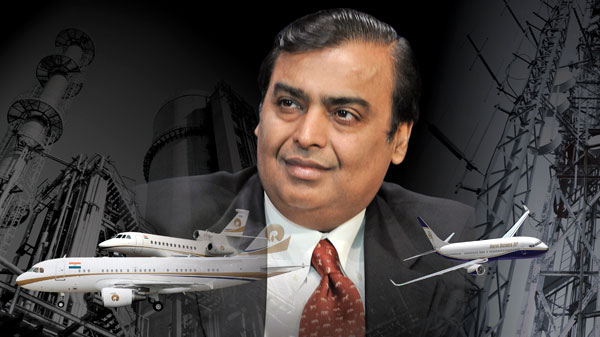
Mukesh Ambani: The Indian billionaire who has become Asia’s richest man

Mukesh Ambani, CEO of Reliance Industries, is personally worth US$48.5 billion

Mukesh Ambani is rich. In fact, he’s very rich. So rich that he is now, arguably, Asia’s most well-off individual, supplanting Alibaba founder Jack Ma, who had long held that title. Unlike the mercurial Ma, chances are you’ve never heard of Ambani. He is, however, part of a new generation of stealth entrepreneurs who craves riches, but shuns recognition.

Ambani’s wealth stems from his role as the chairman of Reliance Industries, a Mumbai-headquartered energy, telecom and textiles conglomerate. Reportedly, the personal wealth of this shadowy entrepreneur is around US$48.5 billion, a figure that puts Jack Ma’s US$36.9 billion to shame.

Mukesh Ambani and his wife Nita, who is a successful educator and businesswoman in her own right

More impressively still, this is not merely the 21st century incarnation of some deeply-rich dynasty. Mukesh Dhirubhai Ambani – to give him his full name – was born on 19 April 1957 in Yemen to a family of comparatively modest means. In 1958, the family migrated en masse to Mumbai, where Ambani Senior had plans to break into the spice trade, though he soon switched his focus to the then-emerging textile sector.

The young Mukesh was privately educated at Mumbai’s Hill Grange High School, before going on to study for a Bachelor of Engineering at the Institute of Chemical Technology, then part of the University of Mumbai. While he later enrolled in an MBA course at Stanford, it was to remain uncompleted. In 1980, he was called back home to help manage the growth of Reliance, the then-rapidly expanding business his father had founded.

Mukesh Ambani with his wife and three children
Mukesh Ambani with his wife, Nita, and their three children

In 1984, a chance encounter at a dance performance saw him introduced to Nita, his future wife, with the two going on to marry the following year. Since then, they have had three children – two boys, Anant and Akash, as a daughter, Isha. As a sign of the couple’s wealth, on Nita’s 44th birthday, Mukesh surprised her with a 180-seater Airbus of her very own. At a conservative estimate, it’s a plane that’s worth some US$70 million – and that’s without taking into account the retro-fitted sky bar, Jacuzzi and satellite TV facilities.

The couple’s home, as you might expect, is no less luxurious. Valued at US$1 billion, the family lives in Antilia, a 27-storey building in southern Mumbai that requires a permanent staff of 600 just to keep everything in order. Tellingly, it is the world’s second most expensive private residence, with only Buckingham Palace – the central London home of the Queen of England – beating it to first place.

Antilia, the 27-storey Ambani residence, is the second most expensive home in the world
Antilia, the 27-storey Ambani residence, is the world’s second most expensive private residence

For her part, Nita has not been content to stay in her husband’s shadow. A teacher by profession, she is the founder of the Dhirubhai Ambani International School, one of Mumbai’s leading private education institutions. She has also been recognised by Forbes as one of Asia’s most influential businesswomen and was the first Indian woman to become a member of the International Olympic Committee.

Anil, Mukesh’s younger brother, has also proved no slouch. As chairman of the Reliance Group, a spin-off of the original family business, he oversees a diverse range of business activities, including telecommunications, entertainment, financial services, energy generation and infrastructure development. A graduate of the University of Pennsylvania, he is married to Bollywood actress Tina Munim, with the couple having two sons. Anil is estimated to be worth some US$2.3 billion.

Anil Ambani is worth US$2.3 billion
Mukesh’s brother Anil Ambani is worth US$2.3 billion

Of the next generation, Mukesh’s 26-year-old daughter Isha is probably currently in pole position. After graduating with a degree in psychology from Yale, in 2014 she joined the board of two Reliance subsidiaries – mobile network operator Jio and Reliance Retail – and is now considered to be one of the most promising young businesswomen in Asia. Her personal wealth is currently estimated to be around US$660 million.

Over the last 16 years, Reliance Industries has established itself as one of India’s largest and most profitable companies. In 2010, its position was further consolidated when Mukesh Ambani oversaw the creation of the world’s largest petroleum refinery at Jamnagar, a city on India’s west coast. Having started out in the spice and textile sectors, the business has now extended its tendrils into energy, petrochemicals, telecom and mining.

Mukesh Ambani heads Reliance Industries, a company worth US$110 billion

Despite his success, Mukesh maintains that he still remains very much grounded, continuing to be a regular at Mysore Café, the restaurant where he ate as a student back in the 1970s. A strict vegetarian and a teetotaler, he maintains that Bollywood movies are his only indulgence, saying: “You need some escapism in life.”

To be fair, when you live in a 27-storey palace, have more in the bank than most third world nations and rejoice in the title of Forbes’ 18th Richest Person in the World Overall, you can probably get by on less escapism than most.

Text: Robert Blain
Photos: AFP  

Celebrating the Life and Works of Raymond Chow

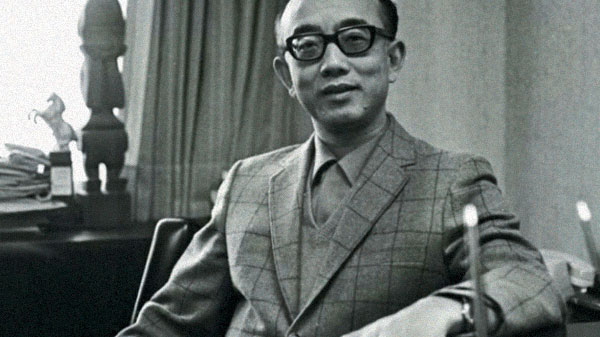
Raymond Chow, the co-founder of Hong Kong’s film production and distribution company Golden Harvest, passed away on Friday. He was 91.

Chow was a crucial figure in the golden era of Hong Kong cinema, as he paved the way to success not only domestically but internationally for the island’s films. His productions were the first to garner global attention, thanks to his ability to strike up international partnerships and negotiate distribution abroad.

Raymond Chow

Formerly an executive for the Shaw Brothers, Chow, and Leonard Ho left the studio in 1970 to start their own production house Golden Harvest. Approaching the business with a more laidback and flexible attitude, the pair were able to land contracts with rising young performers whose fresh ideas were allowed to flourish under the creatives at Golden Harvest. These future stars included Bruce Lee and Jackie Chan.

Spanning from the 1980s to 1990s, Chow’s works would dominate Hong Kong screens, lending Cantonese films a superpower status in East Asia’s market and ensuring the attention of the West’s attention to Hong Kong’s productions. To this day, two of his films remain Hong Kong’s highest-grossing domestic Chinese language films.

Raymond Chow

After the death of his partner, burdened by financial losses, Chow’s partner Leonard Cho went on to sell Golden Harvest to Chinese businessman Wu Kebo, who renamed the company Orange Sky Golden Harvest.

In life and even in death, Raymond Chow has been a true legend in Hong Kong cinema, and his memory as a lover of Kung-Fu and Cantonese will live on in the memories of movie lovers across the city.

To celebrate the man and legend of Hong Kong pictures, we are listing Raymond Chow’s top 5 box-office hits.

Enter the Dragon (1973)

Raymond Chow

The film would be Bruce Lee’s last role, as he tragically passed away after a stunt on the set went wrong. The film grossed $90 million dollars worldwide and would ensure that Lee’s memory as a kung-fu master was cemented.

The Cannonball Run (1981)

Raymond Chow

Teaming up with film studio 20th Century Fox, and big Hollywood stars such as Burt Reynold and Roger Moore, the American-Hong Kong production earned $72.2 million worldwide, one of Raymond Chow’s first international successes.

Police Story (1985) Police Story 2 (1988) & Police Story 4: First Strike (1996)

Raymond Chow

The Police Story franchise features six installments, with Raymond Chow producing three films in the series: Police Story, Police Story 2 and Police Story 4: First Strike. The first feature grossed HK$26.6 million, the second HK$34 million and the last HK$57 million and an additional US$15 million. Police Story 4: First Strike remains the fifth highest-grossing domestic Chinese film ever in Hong Kong.

Teenage Mutant Ninja Turtles (1993)

Raymond Chow

The American martial arts superhero comedy film grossed over US$202 million.

Rumble in the Bronx (1996)

Raymond Chow

Rumble in the Bronx catapulted Jackie Chan into the American mainstream consciousness, with the film fetching US$39 million at the box office.

Text: Bailey Atkinson

Christopher Wong: Our interview with HK’s go-to craft beer guru

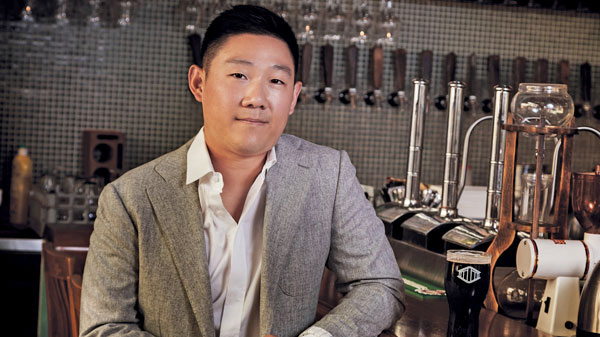
Christopher Wong gave up a promising accounting career to pursue his passion for beer. Now he is the head brewer for Hitachino HK Brewery, has co-founded HK Brewcraft and Heroes Beer Co, and stands at the frontier of Hong Kong’s burgeoning craft beer scene…


Where was your love of craft beer kindled?

Growing up, I’d always enjoyed the occasional drink with my family, but I only really and truly became enamoured with beer while I was in San Francisco working as an accountant after graduating from university. My Damascene moment came when I was introduced to a beer called Anchor Steam, which really kicked off the whole craft beer scene in the US. It completely changed my view of what a beer could be, inspiring me to take up home brewing myself.

Christopher Wong now works as Head Brewer for Hitachino

How did your first experiments go?

Well, around the time I wanted to start experimenting with home brewing, I first heard about SF Brewcraft, one of San Francisco’s most-well known beer stores, run – at the time – by Griz, a sort of Santa Claus character. The first time I walked in, I told him I wanted to brew something like Corona, one of the most popular Mexican beers. Suffice to say, he was not impressed. Instead, he scribbled something on a sheet of paper – which I still have – and that was the recipe for Lawnmower Beer. I loved it so much that my business – HK Brewcraft – is named after Griz’s original outlet.

HK Brewcraft is an homage to SF Brewcraft, where Chris first learnt home brewing

What finally made you decide to bring that concept to Hong Kong?

When I met my then-wife-to-be at a wedding in Hong Kong. I decided to move here full time, switching from my company’s San Francisco operation to its Hong Kong office. Once here, I completely changed industries and decided to head up a restaurant in Tin Hau called Kin’s Terrace. Working there meant my nights were focused on my cheffing duties, leaving the daytime free for me to focus on my home brewing, which was becoming more than just a hobby.

It was around then – in 2013 – that, realising there was no proper home brew store in Hong Kong, a group of friends and I decided to launch one. We wanted it to be a place where you could buy everything from malt and hops to actual brewing equipment, while also finding out just how to properly brew beer at home – and that is how HKBrewcraft was born. Just a few months after our first small Tin Hau outlet opened, the level of demand gave us the confidence to open a far bigger store in Central. And we’ve never looked back.

Chris gave up a successful accounting career to pursue craft beer glory

Your beer interests have broadened since then…

Definitely. Right now, I’m in charge of making beer on several different fronts. Firstly – and most obviously – there is HK Brewcraft. As well as being a home brew supplier, it also operates as an independent nanobrewery, which also doubles as a training academy for would-be home brewers. There’s also my main nine-to-five job – head brewer at the Hitachino HK Brewery, a Japanese company best-known for the Nest Beer brand.

Then there’s the Heroes Beer Co, my latest venture. It’s a very interesting idea and it’s based on the notion that everyone can be a beer superstar, a concept that is reflected in our tagline: “Unleash the hero within”. Part of our USP is that every Heroes’ beer has been inspired by a real person. Our Hunk Sir Milfee Porter, for instance, takes its name from a home brewer who was notorious for experimenting with unusual combinations. Essentially, it’s a lactose-infused brew that tastes a little like cha chaan teng milk tea.

For Chris, HK boasts the fastest-growing craft beer scene in Asia

How do you think Hong Kong’s craft beer scene has evolved over recent years?

Well, 2013 was something of a turning point for the sector. For one thing, it was the year when several of the people now seen as key players first met. That includes the crew behind Young Master Brewery, the folks at The Globe – the headquarters of the Craft Beer Association of Hong Kong – and, of course, the HK Brewcraft team. Alongside several of the more dedicated local importers, we collectively pushed to increase the range of craft beers available in the city, while also raising their profile among the local population. In addition, of course, there is Beertopia, Hong Kong’s very own beer festival. As a result of all this activity, the city’s become Asia’s fastest-growing craft beer hub.

Chris' love of craft beer started in San Francisco with Anchor Steam

Do you have a personal favourite beer?

Oh yes. For me, Anchor Steam is really something special. It’s the beer that started me on my home brewing journey and got me where I am today. Another beer close to my heart is Seriously, Heroes Beer Co’s debut brew. It takes its inspiration from old-fashioned, no-nonsense, bone-dry American Indian Pale Ale and I absolutely love it.

Thank you.

Interview by: Tenzing Thondup
Photos: Neville Lee
Art Direction & Styling: San Wong
Venue: Second Draft
Wardrobe: COS & Suitsupply


Jewel Citizen: Corina Larpin is hoping her jewellery brand Stéfère will be big in Hong Kong

Corina Larpin, jewellery designer and owner of high jewellery brand Stéfère, counts celebrities like Lady Gaga and Jennifer Lopez among her clients. Now she is set to win over Hong Kong with her bold, edgy jewellery. We talk to Corina about her brand and beyond.    


How was your personal sense of style affected by growing up in Soviet-era Romania?

Well, like many others living in the country at the time, I only truly discovered fashion, glamour and luxury after the Romanian Revolution in 1989. Back then, I remember leafing through Western fashion magazines and tearing out pages I particularly liked and then hiding them in secret drawers. I would sneak a glance at them from time to time and marvel at the sheer glamour of it all. At the same time, whenever I got the chance, I would alter the standard-issue clothes that were all we could buy in the state-run stores and try to make them look different and more individual.

Corina Larpin

What led you into designing jewellery?

Since I was very young, I have always had a passion for design and I love having beautiful things around me. Music and art are both hugely important to me. I have also always found a particular joy in jewels and have been endlessly fascinated by marvellously-coloured gems of every kind. I feel especially blessed for being able to turn my passion into my profession.

What is it about your jewellery that has seen you attract such A-list clients as Elton John, Lady Gaga and Victoria Beckham?

While that’s a question I often ask myself, it’s really one that only my customers could genuinely answer. For my part, though, I believe that they just like my style, seeing it as something rather unique. I think it also helps that I make them look cool, partly because I only use the highest-quality metals and stones, and aim to create a truly contemporary look. I always say that all my clients are my favourites and, to be honest, I am a huge fan of most of my celebrity customers, so it gives me real thrill when they wear one of my designs.

Corina Larpin

Your jewellery appears to have been inspired by a wide range of eclectic sources, from floral motifs to stylised Gothic skulls…

My inspiration comes largely from my personal take on the people, landscapes and objects around me. I also get inspiration from travel, with different countries inevitably exposing me to different cultures, insights, aromas… My son is also a source of inspiration. He is only 12-years-old and always offers me an entirely fresh perspective on things. My state of mind at any given point also hugely influences my creativity. I am a very sensitive person and find myself deeply affected by misery and poverty. Life is not just about five-star hotels and luxury living.

Corina Larpin

How would you describe your personal style?

My style is rock-chic extravagant, but seldom eccentric. I love prominent, noticeable items, whether they are clothes, accessories or jewellery. Whatever I wear, it has to make a bold statement. Right now, I am wearing a snake ring that I designed some ten years ago. I love it so much that I often end up wearing it. I love any item of jewellery that features a snake motif as it is just so fluid.

Stéfère has already proved hugely popular in Europe and the US, why have you now headed East in general and to Hong Kong in particular?

Hong Kong is a crucial junction of many great cultures. It’s a very international city and yet has remained, at heart, utterly Asian. Right now, Asia – and China in particular – is proving influential the world over in terms of culture, creativity and economic power. Hong Kong, though, is a kind of parapet that overlooks the rest of Asia, a region I am now set on breaking into and one that is always going to be a challenge, given just how selective and knowledgeable the locals are when it comes to design and real quality. To date, most of the Hongkongers I have met have really liked my big, bold style of jewellery. I enjoy designing bigger pieces far more than small ones, so Asia is just heaven for me.

Corina Larpin

You have recently just been the recipient of a Women of Hope Award…

Yes. That was a tremendous honour. I am so proud to be part of such a noble cause. Life has given me a lot, to the extent that I’ve been truly spoilt. Now, it’s time for me to give back and to aid those who haven’t had same good fortune.

Finally, tell us something about yourself that few people know…

Typically, I work 20 hours a day and I don’t take Saturday or Sunday off. Normally, I sleep for just four hours a day and, even on the rare occasions when I’m not working, you’ll find me researching jewellery trends or reading something jewellery-related.

Thank you.

Interview by: Suchetana Mukhopadhyay
Photos: Neville Lee
Video: Lai Ti Yeung
Art direction: San Wong
Make-up and Hair: Tiffany Wong
Venue: Presidential Suite, Conrad Hong Kong

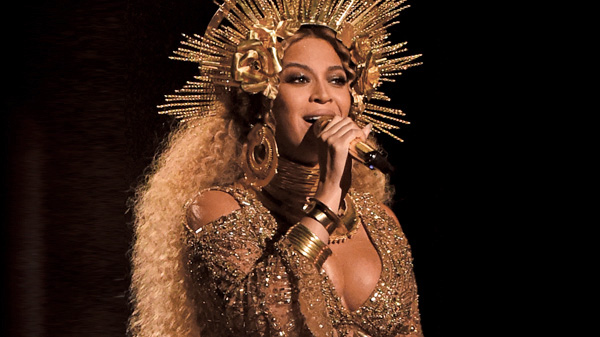
Queen Bey: Five lesser known facts about Beyoncé

As we talked about in our recent article (read here), from the moment Beyoncé burst back onto the music scene with her first single, her stunning looks, sassy energy and killer voice ensured it had hit written all over it. But even with social media scrutiny and legions of fans closely following every aspect of her life, there are a few lesser known facts about Beyoncé which you may not yet know.

Unlike other stars, Beyoncé did not adopt a stage name. Indeed she was born Beyoncé Giselle Knowles in Houston on 4th September 1981, with her name being a slight variation of her mother’s maiden name, Celestine Knowles (née Beyincé).

It was while attending St. Mary’s Montessori School in Houston that her musical ability was first recognised. Her childhood dance teacher, Darlette Johnson said in an interview on CNN in 2013, “I hummed a song and she finished it, and it blew me away. And I told her to sing it again and she wouldn’t sing it again because, once again, she was very shy. And I promised her a dollar and she sang it again.”

The number, 4, holds a special significance to Beyoncé. Not only was she born on 4th September, she also got married to Jay Z on 4th April. Her mother’s birthday also falls on the 4th of a month, and Beyoncé even has the number tattooed on her ring finger.

Beyoncé revealed her pregnancy onstage at the 2011 MTV Video Music Awards. While performing her song “Love on Top” she unbuttoned her sequined blazer in front of her fans and said “I want you to feel the love that’s growing inside of me”.

While Beyoncé may seem the epitome of perfection, the diva revealed in an interview that she had insecurities about her ears, because she was teased about them being too big, while she was young. She even admitted she always wears big earrings to cover them.

We hope these lesser known facts about Beyoncé helped you get to know your favourite star a little better.

Master Minder: Jacqueline Chow on charity and beyond

Taking care of needy, young Hongkongers has been a lifelong commitment for Jacqueline Chow

 Jacqueline Chow is a fundraising committee member of the Hong Kong Society for the Protection of Children (HKSPC) and a council member of Ebenezer School for the Visually Impaired. Brought up in a family that has been involved with charitable movements for generations, charity runs in her blood. She talks to us about what drives her and more…

Jacqueline Chow

Prior to taking on your charity commitments, you were working in the financial services sector. Was that quite the career shift it seems?

To be honest, I genuinely never had a true career shift. I have been involved in charity for pretty much my whole life. It’s actually a kind of family thing. My great-grandmother was one of the founders of the Hong Kong Society for the Protection of Children (HKSPC), an organisation that both my grandmother and my mother later played active roles in. From a very young age, I wanted to give back to society in my own way.

Can you tell us more about your family’s history with the HKSPC?

Well, my great-grandmother started the charity back in 1927, together with the wives of a number of British guys in government roles. It started small with the ladies mainly providing congee and other food items to malnourished children in some of Hong Kong’s less affluent areas, such as Mong Kok and Sham Shui Po. Later, in my grandmother’s and then in my mother’s time, the charity expanded dramatically, extending across a wide range of childcare issues. Today, it operates 27 daycare centres and takes care of more than 3,000 children daily.

Jacqueline Chow

Given the considerable expansion of both its remit and its resources, what’s next for the charity?

We do, in fact, feel that we need to broaden our reach still further, which will enable us to not just help children, but also their immediate family members, including their parents and siblings. Right now, of the 3,000 children under our care, a significant proportion belong to minority families and, maybe, those families can’t speak Cantonese or have found it difficult to get somewhere suitable to live or to secure worthwhile employment. So, to ensure the all-round wellbeing of all children, we have to make sure the wider family is also doing well. To that end, we have established two family centres that both provide a wide range of assistance and educational services through a variety of courses, including vocational training, language skills and basic childcare.

Jacqueline Chow

Obviously, the HKSPC takes up a lot of your energy, but you still find time for a number of other charitable causes…

Yes, I am one of the independent school managers at Ebenezer School for the Visually Impaired, the only school in Hong Kong that’s dedicated to helping children with eyesight problems. On top of that, I am also a council member of the SAHK, an organisation that, in less enlightened times, was known as the Spastics Association of Hong Kong. I am very proud of what the SAHK accomplishes and all the good it does when it comes to helping anyone – young or old – who is struggling to cope with any physical or mental challenges.

Jacqueline Chow

Among all your achievements – philanthropic or personal – what are you most proud of?

While I don’t have one particular proudest moment that I can single out, I must say giving something back to society, in general, remains one of the most significant aspects of my life. Having said that, I am delighted that I have been able to impart to my two daughters the same values my grandparents and my mother instilled in me back in the day. As I said, my mother worked with the HKSPC for more than 20 years and I grew up being inspired by her commitment. As a result, I am always thrilled when my daughters volunteer their time to charity. Just recently, for instance, they gave up a weekend to help out with a flag-day fundraising initiative.

Being close to such hardship on a regular basis must make it difficult for you to unwind…

I do like to take time out to travel. I have just gotten back from one trip, for example, that took me to London, Paris and Burgundy. I also love trying out all the latest make-up trends and I am now taking art classes, which I hope will help me appreciate the finer things in life even more.

Thank you.

Interview by: Suchetana Mukhopadhyay
Direction: San Wong
Photos: Neville Lee
Video: Laity Yeung
Makeup: Zoe Fan
Venue: Baker Showroom

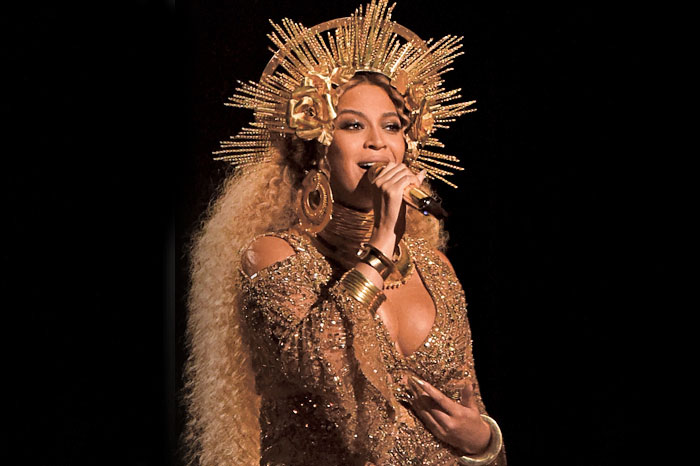
Beyonce: From pop princess to media mogul, we chart the rise of Queen Bey

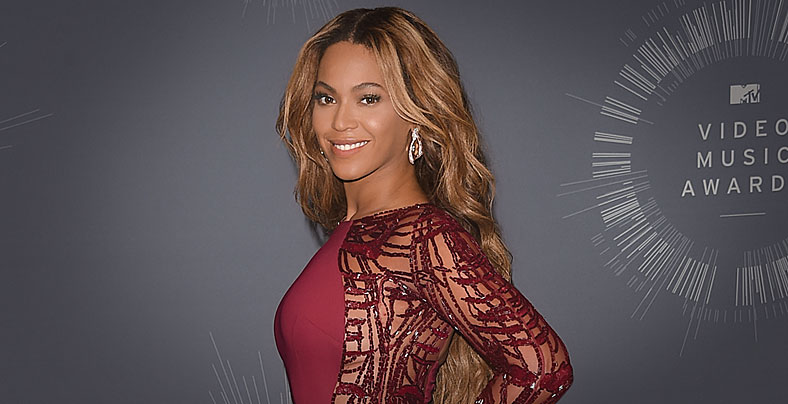
From the moment Beyonce burst onto the music scene in 2003 with her first solo single, Crazy in Love, her stunning looks, sassy energy and killer voice ensured it was a hit. Throw in a soaring R&B horn section and a vocal contribution from acclaimed rapper (and eventual hubby) Jay-Z and the success of the track was assured. As was her own inevitable ascendancy to the all-time pantheon of pop greats.

Since launching her solo career in 2003, Beyonce has never looked back

Fast forward 15 years and she is the most-nominated woman in Grammy history and, as of 2014, she is the second-most-awarded recording artist of all time (behind only Michael Jackson, who she cites as her greatest musical influence).

Beyond accolades, it’s also fair to say that she’s not short of a few bobs. In 2016-17 alone, she earned US$60 million, making her one of the world’s highest-paid performers. The vast majority of that income came from her Formation World Tour, which grossed a quarter of a billion US dollars. Currently, Beyonce and Jay-Z (who she wed in 2008) are midway through their On The Run II Tour, which is expected to earn a staggering US$5 million per night.

Beyonce is the second-most-awarded recording artist of all time (2)

Despite her fame, she is forever at pains to emphasise just how grounded and normal she remains, citing her faith as one of the things that keeps her real. Tackling the difference between her performer persona and her off-duty character, she says: “How I am on stage is very different to how I am in real life. I don’t think having a sexy image onstage conflicts with your ability to love God. No one knows what I’m really like just from seeing me from afar. I like to walk around with bare feet and I don’t like to comb my hair.

“How I feel about God and what He does for me, though, is something deeply personal. That’s very much about where I came from, my family and how I was brought up,” she adds. Whatever her religious allegiance, some deity certainly seems to be smiling on the girl born Beyonce Giselle Knowles in Houston on 4 September 1981. Before her solo success, she had already won widespread acclaim as a member of Destiny’s Child, the Texas-based all-girl trio that sold 60 million records worldwide before splitting up in 2006.

Before going solo, Beyonce found fame the all-girl group Destiny's Child

In 2002, while Destiny’s Child was taking an extended hiatus, she made her big screen debut in Goldmember, the third installment in the Austin Powers spoof spy movie trilogy. While a number of other cinematic outings followed, it wasn’t until 2008, when she took on the starring role of blues singer Etta James in biopic Cadillac Records, that her onscreen acting talent was finally widely acknowledged.

Despite being a multimedia entity – singer, songwriter, actress – she takes issue with being dubbed ‘Brand Beyonce’. She says: “I really don’t think of myself as a brand. I’m a singer, a songwriter, a musician, a performer and an actress, as well as all the other things that I do. When you add that all together, some might call it a brand, but that’s not my focus at all.”

While Destiny's Child found success, Beyonce struggled with her personal life

She has , however, happily capitalised on the power of that perceived brand in order to shine a spotlight on a number of issues that are clearly close to her heart. In particular, as befits the times, her primary focus is now on empowering women.

Addressing this particular priority, Beyonce says: “Power means happiness, power means hard work and sacrifice. I truly believe that women should be financially independent from men. Let’s face it, money gives men the power to run the show. It gives men the power to define value. They even define what’s sexy and what’s feminine – and that’s clearly ridiculous.”

Beyonce uses her fame to champion causes close to her heart

Despite – or, arguably, on account of – her crusade, her music is now seen as more relevant than ever. Her 2016 album Lemonade was one of her most acclaimed works to date, featuring in many reviewers’ best of the year recommendations.

Understandably, though, she is now at a point of rejecting at least part of her public persona, saying: “I’m so over being a pop star and I don’t wanna be seen as just a hot girl anymore. Now, I wanna be iconic. I’ve accomplished a lot and I’m highly respected, which is more important than any award or any amount of record sales.” As a summation of the life and times of Beyonce Knowles, it’s really rather hard to take issue.

Text: Robert Blain
Photos: AFP

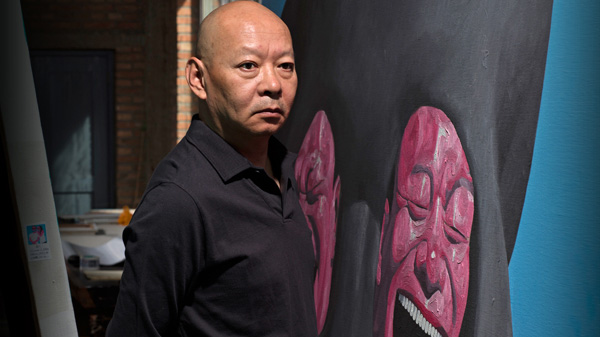
Interview: Yue Minjun, the artist behind the famous laughing face portraits

Yue Minjun, whose colourful depictions of maniacally laughing figures have captured the imaginations of critics and collectors alike, is commonly regarded as one of China’s pre-eminent contemporary artists…


How did you become one of China’s most significant and influential contemporary artists?

Well, it’s a little complicated. I was to drawn to art from a very young age. I was always very fond of using images and drawings to express my inner feelings and emotions. It was the way I tried to make sense of the things and events that surrounded me. As I grew older, I realised it was something that I wanted to pursue more seriously. That’s when I decided to devote myself to art – and painting in particular – full time. Thankfully, I eventually managed to carve out a career for myself in this field…

Yue Minjun 1

Along the way, you worked as an electrical engineer…

That was just one of the many jobs I had after I graduated from high school. At that time, I didn’t really have any real leaning towards a specific career. Instead, I thought I would take my time and explore the avenues opening up in the art world, something that allowed me to escape the limitations of the traditional education system.

Eventually, the pressures of work got me to a point where I could no longer paint or expand personally in any meaningful artistic way. That’s when I decided to enrol at a professional art school. Thinking about it now, It might have been the most important decision I ever made and was a key element in my eventual success.

Yue Minjun 2

After that, you moved to Beijing…

I decided to move to Beijing as I wanted to pursue a full-time career in art. I just loved art, and when you love something, sometimes you have to sacrifice everything else for it. Sometimes you choose an extreme path. I made a conscious choice to forsake everything else to pursue my one true passion in life.

Yue Minjun 4

Today, you are internationally known for your iconic laughing face portraits. Where did the initial inspiration for these particular works come from?

Actually they are all derived from my early life experiences. I was born at the tail-end of the Chinese Cultural Revolution, so there were a lot of government-commissioned propaganda paintings around that illustrated the apparent joy of being working class. In most of the these paintings, the subjects were laughing, but it was never clear why. People would be standing around Chairman Mao or around the produce resulting from a clearly bumper harvest, laughing all the while. I thought such images were somewhat ironic, so the inspiration for many of my later works were deeply rooted in this early experience.

The Massacre at Chios by Yue Minjun sold for HK$31.6 million
The Massacre at Chios by Yue Minjun sold for HK$31.6 million recently

Many people see your work as steeped in cynicism and being quite critical. Do you agree?

Well, yes and no. I think one of the biggest challenges in creating the laughing series was that there is really only one primary face on show and that it was always laughing. The challenge lay in creating a new story with every iteration and being able capture a new scenario every time I decided to add to the collection. They also needed to evoke different emotions and prompt the audience to consider what was really being said…

Yue Minjun 3

Your work often features strong colours and repeated motifs..

I think paintings – and any artwork in general – are really a reflection of their creators’ states of mind. Even when the completed piece is not a realism-driven encapsulation of an earlier experience, it’s still something very much anchored in reality, whether in terms of being an accurate depiction or a more symbolic recreation. For me, the use of strong colours and repetition actually come from the way I view the world.

Yue Minjun 5

You’ve said before that freedom is a major theme in your work. How do you, personally, define this fairly contentious term?

I don’t think I could explain that in just a few words, but I will try. For me, freedom is really how you relate to other people. When considering the notion of freedom, most people only think about themselves, while I believe it is actually deeply rooted in society’s sense of community and the relationships built within that framework.

Yue Minjun 6

What are your views on China’s current approach to art education?

I think the system is quite rigid. For instance, the programmes can’t be tailored to the needs or interest of any one student. It’s all homogenised and, should anyone want to veer away from the traditional approach, they will pretty much have wasted four years of their life. At the same time, it’s difficult to improve the system when there are so many students currently within it. As a result, I think it’s vital for serious students to be flexible enough to reposition themselves in terms of favoured mediums and overall approach.

Thank you.

Interview by: Dai Xuan
Text by: Tenzing Thondup
Photos: Zhang Yunjiang
Wardrobe: Loro Piana