
Brit-born actress Olivia Colman is suddenly Hollywood’s hottest property

Envisage the archetypal Hollywood leading lady. What springs to mind? Young? Beautiful? Willowy? The kind of sex appeal that would arouse an addled octogenarian from miles away? Yes. All of the above. What probably doesn’t spring to mind, however, is Olivia Colman.

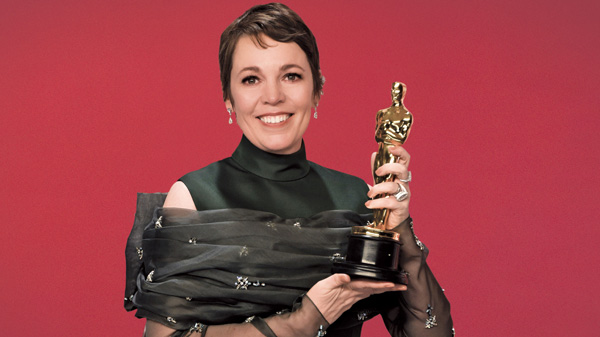
Olivia Colman won Best Actress at the 2019 Oscars

Yet, this 45-year-old Brit actress is the toast of Tinseltown as the winner of this year’s Best Actress Oscar for her portrayal of Queen Anne, the 18th century British monarch in The Favourite. For many, this was Hollywood belatedly recognising that, almost imperceptibly, the last 20 years had seen 45-year-old Colman emerge as one of the acting profession’s all-time greats.

Her relatively low profile can, in part at least, be attributed to the fact that she refined her skills not in US films but, rather, in the more rarified surroundings of UK TV. She first came to the attention of the British public playing Sophie, a neurotic ex-girlfriend-to-be in Peep Show, a cult comedy that eventually ran for nine series. Then, she conquered a series of major roles – a small-town policewoman in the smash-hit crime series Broadchurch, the evil godmother in the cult comedy Fleabag and an alien-possessed parent in Doctor Who, to name but three.

Olivia Colman in Broadchurch, a British TV series

From 2010 onwards, however, her career went through something of a sea change. Out were the goofy comedy roles and in came the meaty dramatic parts – an abused wife in 2011’s harrowing Tyrannosaur (2011) and Margaret Thatcher’s daughter Carol in The Iron Lady (2012), with Meryl Streep playing the title role. It was, however, just two years ago that Colman truly joined the big league and become internationally unmissable. That was the year she signed up for the role of the older Queen Elizabeth II in Netflix’s internationally-adored real-life royal soap The Crown.

Reflecting on her feelings when she knew she would be replacing Claire Foy, the 34-year-old English actress who had played the young Elizabeth to huge acclaim, Olivia Colman said: “I was such an enormous, binge-watching fan of The Crown. So, when the call came to join the cast, I was very uncool – ‘Yes, please, straight away, immediately’ – and didn’t really consider the inevitable pressure I was letting myself in for by signing up for something that was already so successful.”

Olivia Colman in her award-winning role as Queen Anne in The Favourite

Part of that pressure proved to be playing a woman famed for her absolute composure and reluctance to show emotions – traits that Colman sees as almost the complete opposite to her own character. Speaking after filming got underway, she said: “I emote. The Queen is not meant to. She’s got to be a rock for everyone and has been trained not to show her feelings. For me, though, when in character, if I received some bad news, I wanted to cry. In the end, I had to wear an earpiece and try and screen out my natural emotional response by listening to the Shipping Forecast whenever things got too intense.”

While playing the current Queen of England obliged her to remain uncharacteristically buttoned up, playing Queen Anne – her two-and-half-centuries-previous predecessor – in the film that took her to Academy Award glory, allowed her to give far freer rein to her emotions. In her bid to bring to life an eccentric, half-forgotten, grief-prone 18th-century monarch – one who sacrifices her regal role to win the love of certain of her most favoured subjects – Olivia Colman was obliged to shed any inhibitions and any notions of matriarchal insouciance. This freed her to deliver a true tour de force performance, one that is unlikely to be forgotten any time soon – not least because, as well as the Oscar, it also won Colman Best Actress at both the BAFTAs and the Golden Globes.

Unlike many Hollywood A-listers, Olivia Colman refined her skills on British TV

Unlike the majority of her fans – many of whom have long been convinced of her uninimitable greatness – Colman, herself, seemed somewhat taken aback by the very sweep of her success. Indeed, her Academy Awards acceptance speech was pretty much a masterclass in taking onboard unexpected adoration: “It’s genuinely quite stressful. This is hilarious. I got an Oscar…”

Her stock-in-trade self-deprecating humour aside, Olivia Colman still found space in her acceptance speech to try and inspire any watching actresses-in-waiting, saying: “Thank you. And to any little girl who’s practicing her own future acceptance speech back home, well you never know.”

Text: Suchetana Mukhopadhyay
Images: AFP
Panda Brander: Dennis Chan on his new HaHaPanda sculptures and their Chinese connection

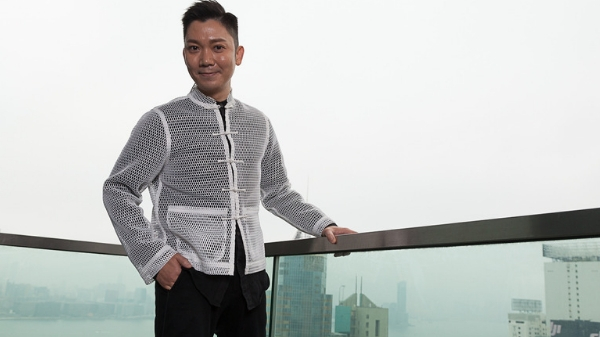
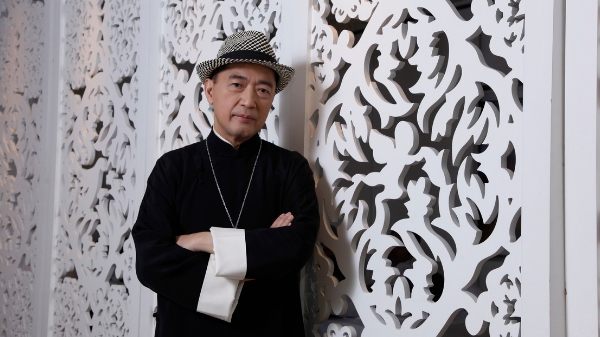
Dennis Chan, the Hong Kong-born jewellery guru who founded the much-loved haute joaillerie maison Qeelin, now looks set to dominate the art world with his HaHaPanda sculptures…

When did you first realise you were destined for a career in design?

As a child, I had no idea that design was to be the great passion of my life. In fact, it wasn’t until I finished high school that I even considered the notion. It was one of my uncles who first spotted my potential and encouraged me to take up art. My parents weren’t too keen on the idea. Coming from a family of doctors, my artistic streak was something of a surprise to them. I did manage to convince them, though, and eventually signed up for an Industrial Design programme at Hong Kong Polytechnic University.

HaHa Panda

What led you to specialise in product design?

While I was at university, I was introduced to a wide range of design disciplines, including interiors, fashion – for which I had a particular knack – and engineering. Without a doubt, though, product design – and three-dimensional design in particular – was my favourite, and that’s what I finally settled upon. I think it’s hugely versatile and essentially multi-disciplinary. Through it, you can pretty much access any other design sector. It’s a decision that’s definitely stood me in good stead over the course of my career.

Is it fair to say that all your designs have a distinctly Chinese feel to them?

For as long as I can remember, I’ve been captivated by Chinese culture. Also, I spent a large portion of my early career working in the UK, Europe and Japan. So I’ve got a very distinct East-meets-West perspective – a balance that’s a part of the charm and character of all my creations. So, in my designs, I want to bring out that traditional influence, but in an internationally contemporary fashion. I feel that, when people discuss Chinese style, they’re usually talking about old-fashioned, traditional objects, and that’s fine. We can’t stop there, though. There needs to be some inclusion of modernity as well. Take Ming dynasty furniture, for example. While it’s undeniably very beautiful, we can’t simply keep replicating it. Otherwise, 200 years from now, when future designers analyse the work being produced right now, they won’t see any unique design interpretations, they will just see something exactly the same as what was produced centuries before.

Dennis Chan

Nowadays, you are perhaps best known as the founder of Qeelin, the luxury jewellery company. What led you to branch off from jewellery design and into sculpture?

On the surface, they’re both quite similar. Jewellery is something you can use to decorate yourself with, while sculpture is something you can accessorise your home with. With jewellery, though, there are certain limitations as to how much you can express yourself. With sculpture, though, you can really express your own thinking and your own ideas. That’s what led me to launch HaHaPanda more than 10 years ago…

Why ‘HaHaPanda’?

I think the one thing everyone is seeking is (ha)ppiness. To achieve that, you need (ha)rmony, hence, HaHaPanda.

The idea to create HaHaPanda came to me first while visiting the Sichuan Panda Foundation. The undeniable naivety and purity of the baby pandas sparked something in me. As soon as I returned to Hong Kong, I started sculpting models based on the sketches and photos I’d brought back from that trip. That’s how HaHaPanda first came about.

HaHa Panda

While HaHaPanda is seen as very much part of a new wave of Chinese art, how much of it is inspired by traditional culture?

While I haven’t made a conscious decision to draw only from Chinese culture, it’s something inherent in my creative psyche. Pandas, for instance, are something I deploy as symbols for modern Chinese people. The country is increasingly opening up to the world and participating on a global scale – economically, politically and socially. I feel we’ve entered a new age – Modern China if you like – and I use HaHaPanda to express my own take on this blossoming era.

How have the HaHaPanda sculptures evolved over the years?

The initial spark came from the pandas in Sichuan and the first collection was definitely true to life in terms of their mannerisms and aesthetics. Over time, though, more abstract motifs have emerged and it’s an evolution I’m very happy with – it lets me go deeper and I can imbue greater meaning into each piece. There are two aspects to everything I produce. Firstly, it should be aesthetically appealing, and secondly, it should embody good feng shui. If you study my pandas, you’ll see they’re all curved and rounded, with no sharp edges or protrusions that could disturb the harmony of a room. Even the colours have been chosen to evoke happiness and bring good cheer. Then there are the deeper symbolisms in each piece. I created one particular panda, for instance, that was entirely covered in reversed gold coins. In Chinese culture, it can symbolise an in-pouring of wealth.

Dennis Chan

Are there any new HaHaPanda projects that you’re particularly excited about?

I don’t believe in having any boundaries and I love to express myself freely. Just because I’ve focused on 3D sculptures doesn’t mean I want to just stick to that. To that end, one of the new additions is a series of 2D wall-mountable designs, which I’m hoping to build on further by including lighting elements. I’m also in the process of creating some panda-inspired digital sculptures. Looking ahead though, there’s one particular project that I’m hugely excited about – an upcoming exhibition at The Landmark in Hong Kong. It opens in May and I can’t share too many details just yet, but watch this space…

Thank you.  


Interview by: Tenzing Thondup
Video: Kingsley Lau
Photos: Neville Lee
Art Direction: San Wong
Make-up: Mak Tung
Venue: Isola Bar & Grill

Continuum Capital founder Marie-Louise Jungels on demystifying the world of finance

Marie-Louise Jungels, the Luxembourg-born founder of Continuum Capital, talks to us about the city’s banking potential, starting her own financial firm and her upcoming book.

Tell us a little bit about your early years…

I was born in Luxembourg, a tiny country in Western Europe. I have one sister and, by and large, my childhood was pretty normal. I grew up in a very rural, cosy environment – one that would be seen as rather provincial nowadays. Growing up, I primarily spoke Luxembourgish and German, my mother’s native tongue. I also studied French and English. It may seem like a lot, but many of my countrymen are quadrilingual, as we’re right at the crossroads of so many major cultures.

And then how did your education pan out?

I completed my primary and secondary schooling in Luxembourg, but I had to go abroad to attend university, the reason being that, back then, Luxembourg had such a small population – about 375,000 people – that it didn’t really have any high-level tertiary education institutions to speak of. Ultimately, I ended up collecting several finance and economics-related diplomas from universities in France, Belgium and the US.

Was finance always your one calling?

Honestly, growing up, I would never have guessed I’d end up as a banker. I was far more interested in the arts, so much so that I seriously thought about becoming an artist at one stage. But my father who advised me that something a little more financially lucrative might be wiser in the long run. After toying with the idea of becoming a scientist or a doctor, I finally settled on economics and finance, because they seemed to offer the broadest opportunities.

 What brought you to Hong Kong?

After completing my studies, I was somewhat at crossroads in terms of what to do next. The obvious thing would have been to return to Luxembourg to work. The not-so-obvious choice, though, was to explore the wider world. I had never been to Hong Kong – or even to Asia – before and I wanted to see what could be achieved here. So I enrolled in a PhD programme in Economics at HKU, but ultimately decided to forego getting another degree in favour of gaining some real-life experience, preferably somewhere I could put all my theoretical knowledge into practice.

Having come to that decision, was it hard to find work?

It was a bit of a struggle to land my first job, largely because I was an economist interested in corporate strategy at the time, whereas Hong Kong finance companies were far more focused on immediate results rather than long-term planning. Eventually, I stumbled into private banking and thoroughly enjoyed the experience. What kept me in that sector was that I found a niche for myself – I loved managing client portfolios and met many amazing people while I was in that role. Gradually, I started to become more involved in bond portfolio management.

What led you to launch Continuum Capital, your own business?

It was down to a mix of several different factors. Firstly, I’d been working as a bond portfolio management specialist for many years and, while I enjoyed the challenges of working in a bank, I felt that it was somewhat restricting in terms of what I wanted to achieve for my clients.

In 2012, after the Global Financial Crisis, I was working for Merrill Lynch. Given the traumatic upheaval the company was going through, I thought it might be a good time to branch out on my own. Ultimately, though, it was my clients – many of whom I’d built strong relationships with over the years – who gave me the confidence to start Continuum Capital.

Tell us a little more about your business and about what makes it special…

Basically, it’s an independent asset management firm. We specialise in managing clients’ bond portfolios, working closely with them to meet their individual requirements and specifications. The company’s aim is to help preserve their wealth while building exponential financial gains over time.    

In terms of your future plans is there anything that is particularly exciting you at the moment?

Actually, I’m currently writing a book, one that looks to explode the myth that finance has to be complicated – an impression that many in the industry seem keen to maintain. I’m writing it in a way will be accessible to everyone and will enable them to gain a solid working understanding of how the different aspects the industry all inter-relate. Sadly, the world of banking is not very transparent at the moment, something that I hope my book will help change.

Finally, what advice would you give any other female entrepreneurs looking to start her own business?

Well, it takes a lot of courage to start your own company, but – having said that – I would encourage everyone to give it a try. Irrespective of your field, keep a firm grip on your finances. Above all, you must be tenacious. While there will be hurdles and unexpected setback, much the same can be said of everything else in life. Above all, always keep a calm head and ensure you are well-prepared for every eventuality – no matter how positive or how negative.

 Thank you.

Interview by: Tenzing Thondup
Photos: Jack Law
Art Direction & Styling: San Wong
Venue: Andante Lifestyle Store
Video: Kingsley Lau

Novel approach: Sarah Zhuang on her jewellery brand and beyond

Sarah Zhuang may have been born into a family of jewellers, but she has carved out her own name through her eponymous jewellery label. The Gafencu team sits with Hong Kong’s own home-grown jeweller to talk about her inspirations and aspirations.

Sarah Zhuang

With your family having been in the jewellery business for generations, were you always destined to follow suit?

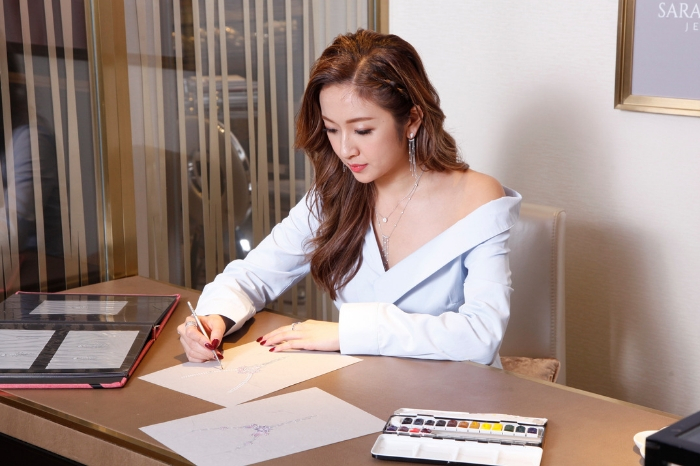
Well, I studied journalism at university and hoped to get into news broadcasting. It was my sister, Fiona, who initially joined the family business, but she soon realised that it was too overwhelming to manage on her own. That was when I jumped in to help her. She focused on the business side of things, while I managed the PR and creative sides. We soon realised that we worked very well together. To be honest, though, before I actually started designing jewellery, I had no idea that was what I wanted to do. Once I got into the groove, however, I realised I had found my true calling.

You studied at both the Gemological Institute of America (GIA) and Accademia Riaci in Florence. What impact did they have on your own approach to jewellery design?

What I learnt at GIA was very different from what I learnt in Accademia Riaci. GIA is very good for beginners, as its style is easy to pick up and they teach you a lot of the basic techniques. By contrast, Accademia Riaci teaches you the more traditional forms of jewellery-making.

Sarah Zhuang

What made you decide to launch your eponymous brand and make it distinct from Tak Fook, your mother’s established business?

Tak Fook is a very traditional Hong Kong brand and, when I took over my mum’s business, it was felt that there was a mismatch between my creations and the positioning of her brand. My pieces tended to appeal to a younger demographic and were a lot more playful. When customers came to Tak Fook and saw my jewellery, it didn’t quite fit with their expectations of the label. So we thought it’d be better to create a separate entity, one that was younger in its approach and that embodied a new design philosophy. That’s how, in 2017, Sarah Zhuang Jewellery came into being.

Where do you draw your inspiration from?

I am inspired by the multi-faceted nature of the modern woman. Something that especially influences me is the way that women adapt to the many distinctive roles they have to play in life. In essence, my brand celebrates womanhood in its entirety. Each one of my five collections depicts a particular aspect of the modern woman, which is why each one of them has a very different style.

Tell us about those different styles…

Well, I want every woman to be able to find a collection that she can truly relate to. In line with that, I have tried to portray a very different woman in each of my collections. Spread Your Wings, for instance, is a celebration of someone who’s ambitious and goal-driven, while Lady Rose is more suited to a woman who’s elegant and beautiful, rose-like in fact. Mix and Match is for those who are cool and down-to-earth, while Enchanted Pearl – which features only white pearls – symbolises someone who’s innocent and pure at heart. By contrast, Dancing Butterfly is dedicated to all the cheerful and happy souls.

Sarah Zhuang

Which collection do you see as reflecting your own personality?

The Mix and Match collection. For daily wear, I favour simple jewellery from that collection, as they tend to be petite and go with almost any outfit.

What new things can we expect from the brand this year?

We’ve been working on two new collections, both of which will launch this year. We will also be unveiling a range of men’s jewellery especially tailored to the Japanese market. We’re also continuing to work with Memorigin [a Hong Kong watch brand] on a new range of designer watches.

Sarah Zhuang

 With Sarah Zhuang Jewellery already well-established in Japan, China and the UK, are there any other territories you are looking to conquer?

We are definitely planning to target a number of US cities, as well as Paris and a few other key European markets. For me, every jewellery brand has to make its mark in the US. As it’s such a huge and competitive market, though, we wanted to build our brand strength before taking up that particular challenge.

Lastly, tell us something that people don’t really know about you…

Not too many people know this, but I write science fiction novels. I recently finished my second book, tentatively titled Parallel Dreams. I published my first science fiction novel, The End of Reincarnation, after I graduated. Since then, I haven’t really had time to focus on my writing as I have been so busy with my jewellery brand. In the end, it took me three years to finish this one, but now – at last – it’s finally done.

Thank you.


 Interview by: Suchetana Mukhopadhyay
Photos: Neville Lee
Art direction: San Wong
Video: Kingsley Lau
Makeup: Margaret Wong
Jewellery: Sarah Zhuang Jewellery
Venue: Tai Fook Showroom

Master geomancer Lee Shing-Chak predicts what lies ahead in the Year of the Pig

Dubbed ‘Hong Kong’s Youngest Feng Shui Master’ at just 19 years old, Lee Shing-Chak, expounds on what to expect in the Year of the Pig.


By the time you were 19, you were the youngest feng shui master in Hong Kong only at the age of 19. When did you know where your own future lay?

When I was growing up, my father made no secret of the fact that he wanted me to follow in his footsteps and become a practitioner of geomancy. I was just 10 years old when my formal training began. As I grew older, though, my creative leanings began to became more apparent, with a possible career as a designer being foremost in my mind. In 1988, though, as my father lay on his death bed, he repeatedly asked my mother if I was reconciled to dedicating my life to feng shui. It was his dying wish and I finally acquiesced before his passing.

Lee Shing-Chak

Do you think feng shui is at all threatened by the modern world?

When I first started out in the field about 30 years ago, many of my elders in the geomancy world and even my family advised me to seek out a different path, maintaining that faith in feng shui was in a sharp decline.

However, I accepted it as a challenge and, at that time, my way of proving the value of feng shui was through the accuracy of my predictions. This saw me foretell everything from horse racing results to the winner of the Miss Hong Kong beauty. Nowadays, though, I’m reconciled to the fact that there will always be those who believe in feng shui and those who don’t. Thankfully, the number who do believe remains reassuringly high. For my part, I’ve incorporated statistics into predicting what the future has in store. They complement the traditional geomantic metrics and have given me some fantastic successes.

Lee Shing-Chak

What do you see lying in store for Hong Kong during the Year of the Pig?

Well, the two decades from 2004 to 2023 actually constitute an ‘Eight Lucks’ period – a time of good fortune for medicine, education, childcare, insurance, property and mining. Within that period, however, the Year of the Pig will actually be the most turbulent time. My advice for 2019, then, is for those associated with such activities to stay the course, maintain an even balance and avoid any aggressive moves. Do not attempt any major new initiatives, no matter how tempting they may seem. The property market will also see some slumps, as will the stock market.

Lee Shing-Chak

Are there any particular negative happenings people should look out for this year?

Yes, the alignments of the stars seem to suggest that things will not go well on the medical front. In fact, a major illness or epidemic may emerge, something that will put many people at risk. I’d advise everyone to pay particular attention to their health and wellbeing throughout the course of this year. The current cosmic positioning of the stars also warns of subterranean dangers. There is potential for an incident involving an underground transportation system, the MTR for instance. People should also avoid visiting volcanoes or engaging in underground leisure activities. It’s also best to avoid overly-old buildings as their unstable foundations may result in a sudden collapse.

Lee Shing-Chak

What about the political sphere?

To answer that particular question, we should look to history for guidance. A full zodiac cycle – consisting of 12 zodiac animals and five elements – is 60 years long. Looking back six decades to 1959, this was the time when the US first opened its doors to China. Many economic ties were created during that period, although China was definitely under pressure and somewhat on the back foot when it came to trade negotiations. This type of trade uncertainty will be very much to the fore this year, with continuing friction with the US definitely on the horizon. Businesses should take some heart from the fact that not too much disruption is likely to come to pass.

Are there any zodiac signs that should think twice before having children this year?

 I don’t think it’s possible to predict, outright, that certain people should not have children this year. Having said that, I think potential parents should be aware of specific personality conflicts that may arise between different zodiac animals. Generally speaking, Pigs are notoriously laidback, to the point of laziness. So if, for example, a Monkey has a child this year, the resulting parent-child personality combination may not be all that productive, as Monkeys tend to be more playful and active. Pigs are also known to be stubborn on occasion. So, if a potential parent is a Tiger – a sign for famous for meticulous planning – some clashes may be ahead as the parent and child may not see eye to eye on all things.

Lee Shing-Chak

Is it true that those born in the year of a specific animal will have a ‘bad luck year’ when that sign comes around again? So, will 2019 really bring bad luck to those born in, say, 1983, 1971 or 1959?

Well, the answer is both yes and no. While it definitely is a ‘bad luck year’ for Pigs, not everyone born under the sign will experience a tumultuous year. For an accurate prediction, you need to know the exact month, date and year in which a person was born. In broader terms, the sign of the Pig is related to the element of water and also, a little more remotely, to wood. Therefore, if you were born in the spring or the winter, the negative potential is high indeed. If, on the other hand, you were born in autumn or, more particularly, during summer, then you will not be too adversely affected by any lingering bad luck.

Thank you.

Interview: Tenzing Thondup
Photos: Neville Lee
Video: Lai Ty Yeung
Art direction and styling: San Wong
Hair: Calvin Tsoi
Makeup: Jessica Chan
Wardrobe: Mountain Yam
Venue: Penthouse

Absolut Creative Competition to be hosted in Hong Kong for the first time

Since its inception in 1985, the Absolut Creative Competition – sponsored by renowned vodka label Absolut – has been a platform dedicated to fostering a spirit of artistic competitiveness, engaging some of the world’s boldest and most talented up-and-coming artists in an endeavour to find just the right interpretation of its iconic logo. Now, for the first time ever, the event will be taking place right here in Hong Kong.

To participate, entrants can start by downloading the template of the Absolut bottle silhouette from the free competition’s website. From there, they are encouraged to get artistic and create a new logo that shares the company’s vision of a better tomorrow, through any of its five central brand beliefs. What does the lucky winner get, you ask? Well, first there’s the chance to win a €20,000 (HK$205,742) cash prize. Better yet, their creation will featured in an international Absolut campaign, offering them global visibility and prestige.

With our sights set on learning more about the competition and Hong Kong’s own bustling creative scene, we sat down with two of this year’s Absolut Creative Competition local judges – Alan Lo, Co-founder and Executive Director of Classified Group, and Founder of G.O.D. (Goods of Desire) Douglas Young, to get some insight into what the judges are looking for, and some advice to today’s young Hong Kong artists.

absolut creative competition
Absolut Creative Competition judges Alan Lo (left) and Douglas Young 

As a leading voice in the Hong Kong art scene what are you doing specifically to give back to the community and its budding creatives?
Alan Lo: I’m in a very lucky position in that I can allocate time outside of work towards my philanthropic pursuits, namely co-founding Design Trust and Para Site. At Design Trust, we look to activate long-term, intelligent and meaningful platforms that fund and advocate for the positive values of design. Para Site, meanwhile is a space that allows businesses with a corporate social responsibility (CSR) programme to get involved in the local art scene.
Douglas Young: At G.O.D, we are always trying to find new talent and work with them. We fully support their work and give them exposure, even if we can’t pay them handsomely. Because the Absolut campaign is so iconic and is being held in Hong Kong for the first time, it’s a great opportunity to give back. 

absolut absolute creative

Absolut has declared that they believe brands should act in a sustainable and transparent way. What does sustainability and transparency mean to you?
Alan Lo: It’s about long term thought, and making a commitment. You don’t have all the answers, but on a basic level, it’s about a well-considered and transparent effort.
Douglas Young: On a philosophical level, we need to produce things that are meaningful. I really believe in the Renaissance of Chinese culture and traditions, and look to create things that last more than just a season. It’s more important to create products that are of value. To me that’s what sustainability is about.

Do you have any advice to isolated or marginalized youth, particularly those who wish to pursue art as a career?
Alan Lo: Go for it. Some of the best works in the world come from a place of emotion built from experiences where you have something to say. Connect and follow those in Hong Kong that foster growth. Explore grants, and keep going. Hard work leads to results, so persevere, persevere, persevere.

absolut absolute creative

Art is often political. How do you approach diversity and inclusivity without alienating any particular sub-group of people?
Douglas Young: I think as a creative person it’s very important to have the courage to speak out, and know that it’s an obligation as an artist to deal with sensitive issues and things that require change. It’s our task to move society on. Conflict is inevitable, but if we keep dialogues open, we can resolve misunderstandings. 

Thank you. 

To learn more about Absolut’s Creative Competition you can visit their website here
The last day to submit entries is 31 January, 2019 with the local winner announcement to take place in March and the global winner to be announced in May. 

Interview by: Bailey Atkinson

Mouse Builder: For Allen Au-Yeung, working at Disney is a dream job


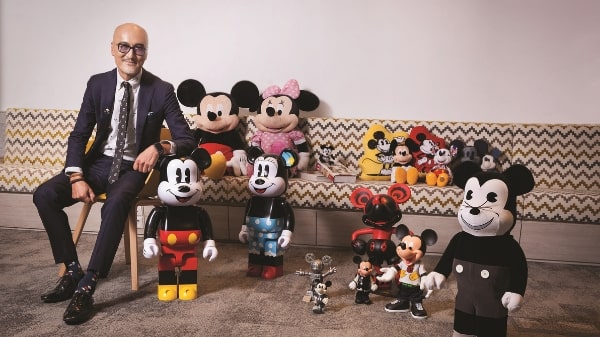
Allen Au-Yeung, Disney’s Asia-Pacific Vice President of Creative and Product Development, on indulging his creative spirit, his life-long love affair with Disney, and marking Mickey Mouse’s 90th birthday…

Allen Au-Yeung is the APAC VP of Creative and Product Design for Disney
How did you become involved with Disney?

As someone who considered themselves inherently creative, I was always fascinated by Disney’s dedication to putting creativity at the forefront of everything it did, as well as its amazing ability to consistently create the most invitingly interesting products. I felt that this was completely in line with what I was looking for at the time. I joined the company back in 1996 and I’ve never really looked back.

For Allen Au-Yeung, Disney was his life's calling

What can you tell us about your current role at Disney?

Right now, I’m the Vice President of Creative and Product Development for the Asia-Pacific region. Essentially, I’m responsible for formulating a unified creative vision for all our team members across the region. This means designing Disney creative assets that tell our brand story, while also working closely with our business strategy teams to help create new products that are in keeping with our overall philosophy while remaining wholly aspirational.

Allen Au-Yeung believes adaptability, localisation and digitisation are the keys to Disney's success

How do you think Disney has managed to stay so relevant for quite so long?

Despite being a globally recognised brand, localisation has really been the key to its success. We do our utmost to incorporate elements of local culture in any relevant and unique Disney story we set out to tell in any of our markets. During last year’s Mid-Autumn Festival, for instance, we released a range of mooncakes featuring some of our best-loved characters.

Then, of course, there’s digitisation, which is clearly the most rapidly-developing sector right now. Apart from the expected social media platforms, many of which we are already using to help broaden our demographic, we’re also placing a real emphasis on e-commerce, especially within the Greater China market.

 Allen Au-Yeung on Disney, Pixar, Star Wars and Marvel

How do you juggle Marvel, Pixar and Star Wars with the more traditional aspects of the wider Disney universe?

The key to finding the right strategy lies in knowing just what consumers are looking for. To that end, Disney spends a huge amount of money on research, commissioning studies and analysing a wide range of demographics. The end result is that we are very aware of what people want.

We know, for instance, the strong appeal our princess characters – such as Cinderella and Snow White – have for young women. Equally, we know that men prefer the action and superheroics that come courtesy of Marvel and Star Wars. Meanwhile, with the younger kids, Pixar characters like Wreck-It Ralph are hugely popular. Ultimately, it’s all about targeting the right products at the right consumer group and making sure they fall in love with us regardless of their age or gender.

For Allen Au-Yeung, Mickey Mouse is the most iconic Disney character

Given the breadth and depth of your back catalogue, is there still one character that really stands out for you?

That would have to be Mickey Mouse. He’s the character that Walt Disney himself developed and one that remains synonymous with our entire brand. His engaging personality, innate curiosity and happy-go-lucky nature have seen him consistently win hearts over the years, even though he’s now 90 years old. At heart, though, I think his appeal lies in the fact that he is pretty much the embodiment of eternal hope.

What did you do to mark Mickey’s 90th in Hong Kong?

We rolled out a variety of promotions, exhibitions and products that all commemorated this particular milestone. A few months ago, we also partnered with Times Square Hong Kong to stage an exclusive 90 Years of Mickey exhibition, which featured more than 90 unique pieces of memorabilia from the Walt Disney Archive, including 20 that had never been seen in public before. We’ve also partnered with a number of local companies to create various limited-release designs that are exclusive to the city.

Thank you.

Interview by: Tenzing Thondup
Photos: Neville Lee
Art Direction: San Wong


PR queen Patricia Cheong brings a touch of majesty to Macau

Patricia Cheong, the founder of PR firm MM Group and the primary force behind the booming public relations industry in Macau, talks about her journey from being a beauty queen to PR royalty…


 How did you evolve from being a one-time Miss Macau to becoming a leading light on the local PR scene?

When I entered the Miss Macau beauty contest in 1986, I was just 17 years old and was yet to finish college. While I had just done it for fun, it became quite an eye-opening experience. It gave me the chance to meet so many people as I travelled across the world promoting Macau. It truly paved the way for me to become a PR professional later on. If you think about it, I was playing a PR role and acting as an ambassador for Macau on the world stage. After the contest, I went back to school to finish my studies, but the seeds of my PR career had been sown.

Patricia Cheong
A Diva’s Dream watch by Bulgari gracing Patricia Cheong’s wrist

Given your success in the contest, were you ever lured by the world of film or TV?

Well, a few offers did come my way. While I never did any TV series or films, I did work on some documentaries and entertainment shows for TVB and TDM. I soon realised that it wasn’t really for me. I prefer managing the show myself, rather than being directed by other people.

 So, at what point did you decide to launch your own PR firm?

 In 1994, just a few years after I had graduated. I already knew that I was a people person, but I also realised that I could be quite entrepreneurial. So, I took a leap of faith and started the firm when I was in my mid-20s and it’s still going strong.

Patricia Cheong
Patricia Cheong in a Diva’s Dream necklace by Bulgari

You also found time to study for an EMBA…

Yes, after being in business for about 11 years, I realised I needed to hone my management skills. This led me to join the Kellogg-HKUST Executive MBA Programme in 2005, which helped me upgrade my skill set and expand my professional network.

That aside, how have you found running and sustaining your own business?

Well, it’s certainly been memorable. There have been ups and downs along the way, but, overall, I’d say things have gone fairly smoothly – except for 2008, when the economic tsunami had a major impact on all of us. When I started out, though, it wasn’t always easy, as Macau is such a small place. There was a lot of competition and comparatively few opportunities.

Patricia Cheong
Patricia Cheong in a Diva’s Dream necklace and a Serpenti Viper band ring

As a former Miss Macau, though, I was fairly well known and that helped open some doors. After 2002, however, when a more liberal approach to hotel and hospitality licences was adopted, we found ourselves in the middle of an economic boom. As a PR and marketing firm, we benefited a lot. Soon after the change, we took on Sands China as a client, followed by other local and American hotels. It was as if things had been turned up several notches almost overnight. As a result, I became heavily involved with the whole gaming trade business – from games and in-house shows to F&B, trade shows, seminars, concerts, etc.

With Macau now ranked as one of the wealthiest places on earth in terms of per capita GDP, does this make it fertile ground for new businesses?

Absolutely. It is already established as Asia’s premier gaming market, with all of the industry’s major players now having a presence here. Now, the local government is pushing to diversify further and wants businesses in other sectors to flourish as well.

Patricia Cheong
Patricia Cheong wearing a diamond ring by Sarah Ho

Given your many responsibilities and commitments, how do you go about organising a typical day?

As soon as I wake up, I check and reply to all my messages and mails. Then it’s time for my morning workout – something I look forward to every day. After that, a lot of my time is taken up with business matters, and I tend to do a fair amount of social and professional networking after work, maybe over dinner with clients and colleagues. I generally only get to bed after fielding a number of calls from our European clients. While it’s a long day, it’s generally not all work and no play. On weekends, I spend a long time at the gym and then unwind with friends over food and wine. As a Libra, I know how to balance work with fun and I think I manage that pretty well most of the time.

What advice would you give to someone currently considering starting their own business?

It’s not easy to give advice as the world is changing so fast, with many new business models emerging. Despite that, I still believe that any startup has to be unique, have a great team behind it and a real understanding of their chosen market. Above all, though, they need to think big, aim high and always have the courage to try.

Thank you.

 Interview by: Suchetana Mukhopadhyay
Art Direction: San Wong
Makeup: Margaret Wong
Photos: Neville Lee
Video: Lai-Ty Yeung
Jewellery: Bulgari
Venue: Kerry Hotel

Mistletoe Maker: Florist extraordinaire Gemma Hayden Blest on Christmas decor

Gemma Hayden Blest has been a part of making Hong Kong beautiful for nearly seven years now. Hailing from the UK, the floral designer built up a not-too-shabby resume working under brands such as Alexander McQueen and Burberry before finding her true passion – flowers. We took a stroll with Gemma down the streets of Central, and had the floral connoisseur give us tips on how to make our Christmas budding with beauty.

Flowers GHB

Gemma Hayden Blest

Tell us a bit about yourself and your work…

I work as a floral designer. My work ranges from events to shop installations to editorial. I specialise in communicating ideas through flower power, creating a mood or ambiance through flora or using them to help create a concept.

You studied fashion design; so, at what point did you know you could use that experience and expertise to channel it into floral designs and arrangements?

I love fashion and a huge amount of what I do stems from my fashion background. I think I found the lag times in fashion frustrating and prefer the speed that’s required for flowers. They have to be designed, created and enjoyed in the moment.

Gemma Hayden Blest
Arrangements by Gemma Hayden Blest

Since the holidays are typically a time of indulgence, can you give us suggestions on how to incorporate eco-friendly arrangements in decoration?

Definitely. There is no need to be excessively plastic with your designing. Invest in good-quality products that can be stored each year. The beauty in flowers is that it’s so easy to make a set of vases of candle holders look completely different each year. Pine, berries and eucalyptus are pretty long-lasting, so a few sprigs can last a few weeks.

How do holiday arrangements in Asia differ from say the UK, where you’re from?

We’re lucky to live in HK where imports are easy to get. I struggle with the loss of scent though. Boxed-up goods just never smell like freshly cut pine from the garden. I tend to give imports a helping hand with scented candles or room mist. Jo Malone does a beautiful Pine & Eucalyptus candle that helps bring back the aroma.

Gemma Hayden Blest
Arrangements by Gemma Hayden Blest

What flower is the most popular around Christmas time with your clients, and what is your personal favourite?

The Queen Amaryllis is always a popular favourite. Grand and colourful, there’s also a lovely anticipation in waiting for the bulbs to bloom that reflects the anticipation of waiting for Christmas day to arrive.

What tips can you give our readers about Christmas decorations?

A running element throughout your home will hold everything together – maybe it’s a type of ribbon or floral element or focal colour. Also a wreath on your front door sets a lovely welcoming tone for what’s inside.

Thank you.

Interview by: Bailey Atkinson
Image courtesy: Gemma Hayden Blest

Amour for Isha Ambani : All you need to know about Asia’s richest daughter’s wedding

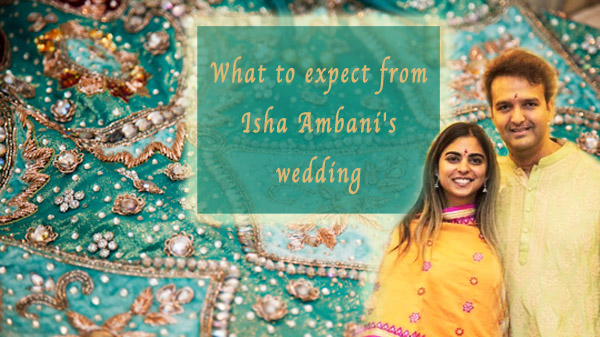
Isha Ambani is set to tie the knot with her childhood friend Anand Piramal, real-estate developer and son to one of India’s most prominent business families, today in her father’s 27-floor-building home in Mumbai, which is said to be the costliest home in the world.

Isha
Isha Ambani and husband-to-be Anand Piramal

Daughter to Asia’s richest man Mukesh Ambani, Ms. Ambani is currently being lavished with the wedding of – dare we say it – century. Pre-wedding celebration have been underway for a week now, and the luxurious celebration is nowhere near being over. Here at Gafencu we’ve kept a close eye on the ostentatious union, here are the highlights so far: 

Wedding invitation hampers designed by Dolce & Gabbana

Conceptualised and designed by fashion house Dolce & Gabbana, the lovebirds’ wedding invitations came in an elegant white and pink floral box with hand-written invitations and luxurious jewellery for guests to add to their wedding attire.

Private concert by Beyonce

https://www.instagram.com/p/BrLcnu6n-6d/

The Queen B herself graced Ambani’s guests with a private concert at the couple’s pre-wedding celebration at Udaipur. Reports are speculating her performance cost a cool USD$4 million – needless to say, a figure far greater than your classic wedding rent-a-band.

Star-studded Guests

https://www.instagram.com/p/BrMrZ5OBqFY/

The former candidate for President of the United States and Madame Secretary Hillary Clinton was among the guests in attendance for the joyous occasion.

https://www.instagram.com/p/BrPbdabFc6E/

Some of India’s greatest stars like Aishwarya Bachchan, Aamir Khan and newlywed star couple Deepika Padukone and Ranveer Singh graced the occasion.

A delightful spread of sweets

https://www.instagram.com/p/BrKmlYpj-lL/?utm_source=ig_embed

Decorated with cakes and pudding, the mere pictures of the sumptuous spread has us salivating!

Dance performance by Shah Rukh Khan

https://www.instagram.com/p/BrKOhnxAxd2/

And, of course, Bollywood’s leading ‘King of Romance’ Shah Rukh Khan enthralled guests with a riveting dance performance with wife Gauri Khan.

Here, at Gafencu, we wish the best for the upcoming union of India’s most blessed couple… even if our invitation got lost in the mail.

Text: Bailey Atkinson