
People Prone: Francis Cheng on being a people person and starting his PR company

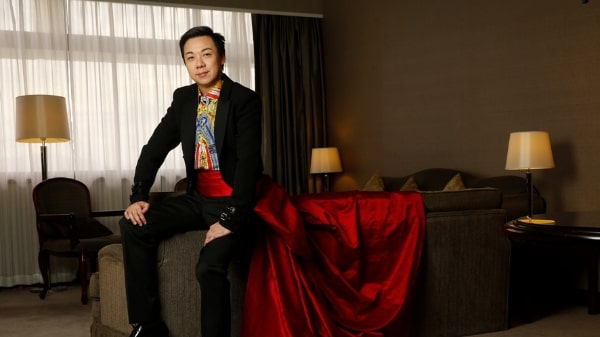
As the CEO and Founder of NumberOne PR Communications Ltd, Francis Cheng is easily one of Hong Kong’s most recognisable faces in public relations. We chat with him at Marco Polo Hongkong Hotel to find out more about his inspiring journey. 

What do you recall from your childhood in Hong Kong?

I recall just how fortunate I felt. At the time, my family ran the Kai Tak amusement park in Kowloon City and, every Sunday, we would visit my grandparents for lunch, then head to the amusement park. It was an unforgettable time. Later, I went to Vancouver and that proved to be an equally great place to be a child. I was quite short we when first moved to Canada and, at the time, the TV was full of commercials pushing the benefits of drinking more milk. I took them at their word and, 12 months later, I was 1.86 metres tall.

Francis Cheng

You also studied in Canada. How did that affect you?

When we first moved to Canada, there wasn’t a lot of Chinese about, particularly in Coquitlam, the fairly remote suburban city where we lived. As a result, my English really improved and I also began to learn about different cultures and different ways of thinking for the first time. Canada is something of a melting pot and, looking back, while I was there I really began to appreciate different cultures, religions, ethnicities and genders. That was and still is something very precious to me.

Did a career in public relations always beckon?

Yes and no. Like any child, I had a headful of dreams, but I am a Taurus and we like to play it safe, which led me to take a degree in journalism. Looking back, that sort of helped balance out my options and ultimately set me up for a career in PR.

Francis Cheng

Is there a particular philosophy that you apply to PR?

As I tell all my staff, learning to be a good PR involves learning how to become a good human being. It’s something that may take you your whole life to achieve. And even then, you can never be the perfect PR. You will always have flaws and there will always be areas where you can improve.

 What was it like when you first set out on your own in 2013 and launched NumberOne PR?

I’m a firm believer that you have to take on various challenges throughout your life. By 2013, I figured that I was up for such a challenge. When you have been an employee for a while, it’s time to consider whether you should do something in your own right. Being an employer, though, is very different from being a member of the staff. It’s a lot more pressure and you need to ensure that you have enough business coming through to support your staff and enough challenges to make sure you continue to develop.

What quality do you think makes you best suited to your current role?

My mentor, Pansy Ho [the eldest daughter of Stanley Ho, the Macau casino magnate], taught me the importance of understanding human nature. In the case of babies, for instance, if they see something shiny, they have to go and touch it. With adults, they are endlessly fascinated by diamonds and pearls. So – and this what I learnt from Pansy – it’s very much part of human nature to love beautiful things. When it comes to PR, then, I believe you must also always seek out the shiniest and best options on offer.

What advice would you give to anyone now looking to launch into PR on their own for the first time?

The world has changed – and continues to change – quite dramatically, so my personal route may no longer have any relevance. So, while my own experience may not count for too much in today’s world, I do still recommend learning from the past, especially from others’ mistakes. Once you’ve learnt how to make accurate decisions on the work front, you also need to recognise that it’s a discipline you should apply more widely. It’s part of what life is all about. On top of all that, you also seem to have an active social life.

Francis Cheng

How do you strike a balance and stay both energised and healthy?

Honestly? Sometimes I just fall asleep. I do, however, try my best to maintain a healthy lifestyle. I box and do cardio exercises at least three times a week and I also get facials and do my best to eat well. Right now, I am also trying to watch my diet as sometimes I tend to eat a little too well. Most importantly, though, I try and make sure I get enough sleep. I may check my mailbox before I sleep, but I always turn off my phone before I doze off.

You have quite an impressive Instagram following [34,400 and counting]. Would you say you have an unusual affinity for this particular social media platform?

It’s something I am very proud of. While I have little time for fake followers and pretend likes – things that always ultimately come to light – I think Instagram remains an important channel. There’s something innately positive about sharing, even within a commercial environment.


Interview by: Bailey Atkinson
Photos: Jack Law
Video: Kingsley Lau
Art Direction: San Wong
Make-up: Janae Chan
Hair: Vic Kwan
Venue: Deluxe Suite, Marco Polo Hongkong Hotel
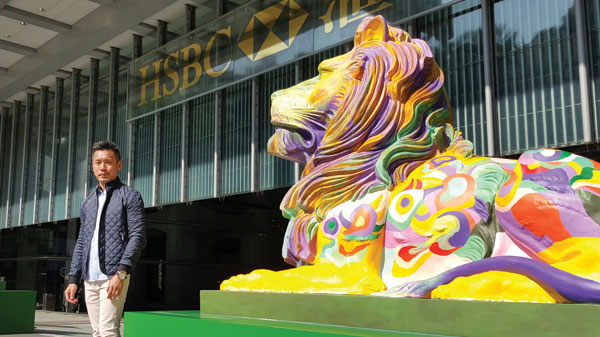

Caring Creative: A closer look at local artist Michael Lam

Renowned for his groundbreaking work and creation of HSBC’s “Rainbow Lions” statues, Hong Kong-based artist and decorator Michael Lam is not only one of the city’s brightest artists, but is also a leading champion of LGBTQ rights in Hong Kong today.

Known for his generosity, Lam has donated countless artworks to auctions, galas and charities, with all proceeds being donated to support AIDS research, LGBTQ business equality and, of course, the ongoing battle for marriage equality.            


Forever seeking new challenges within the art world, he has now shifted his focus towards home décor and is designing artworks that provide homes with a creative balance inspired by the classic precepts of feng shui. Michael’s commissioned artworks , meanwhile , remain much sought-after by both corporates and private collectors alike.

michaellamstudio@gmail.com

John Wikipedia: Keanu Reeves, the man behind the reluctant assassin…

Although gifted with a Hawaiian first name that loosely translates to “cool wind over the mountain”, life has been far from a breeze for Reeves, who turns 55 this September. His English showgirl-turned-costume-designer mother split from his Asian-American geologist father when he was just three years old, with Reeves Senior permanently exiting the picture 10 years later. At the age of 17, following a nomadic childhood and an early adolescence that saw him live as far afield as Sydney, New York and Toronto, he headed off to Hollywood with very little to lose. By then, much to the disappointment of the maternal grandparents who had largely brought him up, he had already been expelled from high school. To this day, he is yet to officially finish school.

Despite working on his thespianic credentials since the age of nine, having appeared in countless theatrical productions, he didn’t, however, register on the Hollywood star Richter scale until 1989, when he played the eponymous Ted in Bill and Ted’s Excellent Adventure, a time travel comedy that remains a cult favourite and which, in 1991, gave rise to its own, equally lauded sequel, Bill and Ted’s Bogus Journey

keanu reeves

It was while riding high as MTV’s 1993 Most Desirable Man that tragedy once again crossed his path, with his close pal and former co-star River Phoenix dying of an overdose at just 23. Clearly still feeling the shock waves more than 20 years later, Reeves told one interviewer in 2014: “River was a remarkable human being and actor. We got along very well and I miss him. I think of him often.”

To many, it seemed that Reeves threw himself into a series of even bigger projects in the wake of the tragedy, landing his most high-profile role to date in 1994’s action-drama Speed, however, just three year later he surprised the studio he turned down the role for the films sequel Speed 2. This, though, would come to be seen as a signature move by Reeves, as he has, since then, frequently ducked big-buck offers in favour of playing roles he coveted or working with actors he admired – notably Al Pacino in The Devil’s Advocate and Gene Hackman in The Replacements. It also led to him to negotiate a highly-unusual profit sharing deal for The Matrix and its sequels, which saw him take a pay cut to ensure the franchise’s special effects and costume designs remained cutting-edge, and later donating US$75 million to be shared between the production team as a sign of his appreciation.

keanu reeves
A young Keanu Reeves in Bill & Ted’s Excellent Adventure


While riding high on the acclaim occasioned by the first Matrix film, fate dealt Reeves another bitter blow when the daughter he was to have with Jennifer Syme, his production assistant girlfriend, was delivered stillborn. Not surprisingly, the subsequent grief put a huge strain on the couple’s relationship, which ultimately ended in Syme’s death two years later in a calamitous car accident. With blow piling on blow, that same year – 2001 – saw his half sister Kim diagnosed with leukemia, a condition that would take the best part of 10 years to overcome.

keanu reeves

Perhaps reflecting his own turmoil, the next decade saw Reeves increasingly drawn to playing complex, troubled men. In 2005, he took the title role in Constantine, an occult detective film based on DC Comics’ Hellblazer comic book series, while 2008 saw him memorably play an alien messenger in a remake of The Day the Earth Stood Still, a ’50s cult favourite. Reeves’ most ubiquitous role in the opening decade of the 21st century, however, was arguably Sad Keanu, a paparazzi-snapped meme that caught the then-middle aged actor alone and forlorn on a park bench, with just a half-eaten sandwich for company.

Then came 2013, the year Reeves took on the title role in John Wick, the film that arguably resurrected his career and saw him once again embrace the action hero mantle he had once so memorably discarded. Bringing the reluctantly unretired assassin to the big screen proved a natural fit with the actor’s innate stoicism and fondness for wry humour, with the casting proving to be box office gold.

Keanu Reeves as iconic Matrix character Neo

In addition to his natural affinity for characters with a dark side, many have speculated that Reeves’ own personal tragedies gifted his depiction of Wick with unusual depth. Seemingly confirming this in a 2006 interview, he said: “Grief changes shape, but it never ends. People have a misconception that you can deal with it and, one day, say: ‘It’s gone, and I’m better’. They’re wrong. When the people you love are gone, you really are alone.” As to whether his renewed success has lightened his load at all, that will have to remain a matter of conjecture. He has, however, green-lit a return to two of his greatest hits, with Bill and Ted 3 (apparently called Bill and Ted Go to Hell) already in production and rumours growing of a return of The Matrix sometime soon. And Speed 3? Well, even for the rejuvenated Keanu Reeves, it’s safe to assume that some things are just beyond redemption…

Text: Bailey Atkinson
Photos: AFP

For the full article, please find the latest issue of Gafencu’s print magazine or the PDF version on the Gafencu app. Download the app from the Google Play Store or Apple App Store.

Sarah Heller: Asia’s youngest Master of Wine and what she’s currently drinking

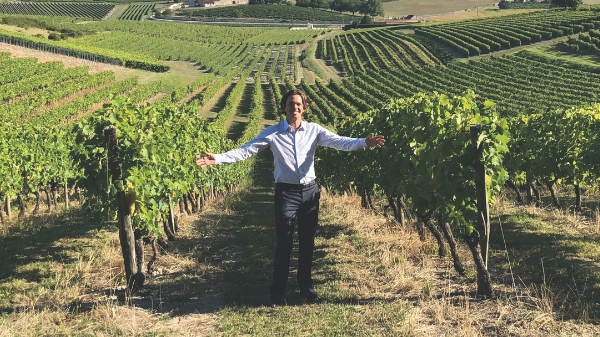
Sarah Heller discusses becoming Asia’s youngest Master of Wine, the evolution of Hong Kong’s wine industry and the vineyards she currently has her eye on…


Your wine career had something of a bumpy start…

A little bit, yes. After graduating from university, I had a job lined up with an Italian wine importer and they very generously sent me to tour a few Italian wineries over the summer. Unfortunately, part way through my first visit, I fell into a wine vat and fractured my spine, which was – in equal parts – mortifying and painful. So rather than start working, I had to return to Hong Kong for a prolonged period of rehabilitation.

When I arrived, the city had just cut all duty on wine, so the local wine market was exploding, while the US scene had become rather stagnant in the wake of the Global Financial Crisis. It became clear that I should stay in Hong Kong and I began working for Debra Meiburg, one of the first Masters of Wine in Asia, and she really encouraged me to pursue my academic interests in wine. I’ve always been a little bit of a geek, so when I realised there was an academic qualification in wine – the Master of Wine certification – I just knew I had to go for it.

Sarah Heller is Asia's youngest Master of Wine

As Asia’s youngest Master of Wine (MW), what can you tell us about this particular qualification

Well, strictly speaking, the MW isn’t an academic qualification at all. It’s more like a guild, but one that requires a lot of study, hard work and success in several examinations if you want to become a member. As an institute, it was formed in 1953 as an offshoot of the Vintner’s Guild. Essentially, the MW is seen as official confirmation that its owner is particularly knowledgeable when it comes to all things wine-related.

Sarah Heller discovered her passion for wine in Italy

How has Hong Kong’s wine market evolved over the 10 years you’ve been involved here?

Well, many things have changed. When Hong Kong first opened up and set about becoming Asia’s wine hub, the focus was almost exclusively on the fine wine segment and, in particular, on a tiny group of high-end producers in Bordeaux. Today, there’s far more diversity. While it’s still driven primarily by collectors, other sectors of the market have expanded considerably.

The food and beverage industry, for example, has become far more vibrant as things have progressed. Beyond that, there’s also an emerging group of younger collectors who have driven the move towards Burgundy, while also highlighting some of the once-lesser-known wine-producing regions, so it’s been an exciting time to watch the evolution of local wine preferences.

Have there been any particular regions that you have seen coming to the fore of late?

I think Italy has really been the one that’s proved something of a rising star over the last two years. I’m on the committee of an association called the Hong Kong Wine Society, and we’ve noticed a massive increase in interest in tastings of Italian wines, particularly prime Piedmontese varietals, such as Barbaresco or Barolo. In many ways, the Tuscan vintages are akin to Bordeaux, while Piedmonte is closer to Burgundy.

Sarah Heller is multilingual and speaks six languages

What projects are currently occupying you?

Actually, although I’m now an MW, I don’t have a regular nine-to-five schedule as everything I do is project-based. Wine education has been a big part of my career and I’ve long been involved with the Vinitaly International Academy – an Italian wine education institute – as a visiting lecturer. I’ve also designed a range of crystal glassware in partnership with Lucaris, a Thai crystal company. This will launch in November and has been crafted while keeping in mind the unique way Asian consumers enjoy food and wine.

Aside from that, I’m also collaborating on creating a new wine brand with a couple of partners – one is an Austrian wine producer and the other an Austro-Hungarian noble. This particular project came about as a way of introducing Austrian wines to the Asia market, but the project has now expanded to encompass all the wineries of Central Europe. We just launched in Hong Kong, Japan, Thailand and Vietnam and will shortly be in Poland and Sweden. We’re also hoping to produce a documentary that will chart the whole process of creating these wines sometime next year. Watch this space…

Sarah Heller is involved with many exciting wine education projects

Are there any new wines that have recently caught your eye?

I think sparkling wines worldwide have become so much more interesting over recent years. While the French champagnes are, of course, delicious, it’s invigorating to see new players coming up. Right now, I’m particularly enamoured with Franciacorte – from the northern Italian province of Brescia – that produces such sparkling wines as Ca’ del Bosco and Bellavista. While champagnes can be compared to super-skinny supermodels, these are more like Sophia Loren – full-bodied, softer and warmer. Aside from that, I’m partial to a drop of Nyetimer or Rathfinny, both of which are English wineries.

Thank you.

Interview by: Tenzing Thondup
Photos: Jack Law
Art Direction: San Wong
Make-up: Margaret Wong
Venue: The Optimist


Tête-à-tête with Prof. Eric Yim, one of Hong Kong’s true transformative visionaries

Professor Eric Yim is the chairman of the Hong Kong Design Centre, the chairman of the Design Council Hong Kong, a professor in Hong Kong Polytechnic University’s School of Design, the Director of the Ocean Park Corporation and member on the boards of a substantial number of Hong Kong’s official bodies. He’s also an award-winning architect, a furniture designer and a successful entrepreneur, but above all, Prof. Eric Yim is a true visionary who’s changing Hong Kong’s landscape, by design intervention.

Professor Eric Yim

Would you say your interest in design dates back to your childhood?

In my early years, I was more interested in the technical side of design. I completed my secondary education in a technical school in Hong Kong, where I learnt about woodwork, metallurgy, technical drawing, etc. This sparked my interest in materials, forms and spatial relationships. After that, I started to develop a true interest in design and craft. Despite that, I chose not to study fine art. Instead, I opted for architecture, believing it to be a discipline that requires both logical and creative thinking –  the perfect combination of my nascent interests. So I studied for a degree in architecture at Manchester University, before going on to complete my Masters from Cambridge.

Professor Eric Yim

 What was it that brought you back to Hong Kong after your time in Europe?

Well, after I finished my studies at Cambridge, I joined an architectural firm in London, one that specialised in the design of cultural spaces. My work there took me Zwickau in Germany, where we eventually set up an office. Once that was in place, I felt it was the right time to come back to Hong Kong, maybe for just 12 months, and get a feel for the local architectural scene. Once I returned, though, I realised it was very difficult to win cultural space commissions unless you worked in the government sector. Instead, I turned my hand to working on some designs for my father’s furniture business. Fortunately, the items I designed were well received. So I decided to launch my own business.

Professor Eric Yim

Why did you choose to branch out on your own instead of working for your father?

My father only made steel furniture, which he then sold via retail channels. For my part, though, I was designing the kind of storage systems where it is necessary to work closely with the lead architects on any development to ensure that the furniture fits exactly into the building. I was not doing retail work, but rather contract-based designing for commercial clients. When we started, it was a very small operation with just four people. In the beginning,  I was acting as the sales manager, the project manager, the delivery guy and even the cleaner.

Was it easy for you to switch to designing furniture after you’d been designing buildings?

To me, they’re basically one and the same. While the end product and scale may be different, the essence is the same. You are still trying to assemble things from a variety of materials – whether concrete, glass and bricks or steel, wood, veneer and fabric. Ultimately, if you’re designing a building or making a piece of furniture, the ultimate goal should be to create something beautiful, something that will enhance people’s lives.

Professor Eric Yim

In what ways do you think good design can truly enhance life?

Design is everywhere. Let’s say you want to go to a music concert. Even before you set foot in the auditorium, you have been affected by design. The website where you booked the ticket, the traffic on the road, the entrance to the venue…everything has to be designed. Look at the London Underground, for instance, that’s an excellent example of design thinking. Is it very beautiful? No, nobody says it is beautiful, but it does serve its purpose seamlessly on a daily basis. That’s great design right there.

Professor Eric Yim

What exactly do you mean by ‘design thinking’?

Design is a process. It’s not just someone doing fancy sketches on a piece of paper. That may be part of design, but it’s far from all of it. Real design involves proper ‘design thinking’, a process where you actually go back to the root of any problem. Let’s say you are designing a chair. You have to start off by asking: “Why do you need a chair?”, “What type of chair do you need?”, “Why do you need another chair when you already have so many chairs?”. Basically, you need to identify the purpose of this chair – the thing that sets it apart from all other chairs. Otherwise you will just be creating more and more stuff that’s destined for landfill.

What advice would you give to aspiring designers?

Be creative, but also be curious. Ask ‘why’ at every turn. Never think you’ve learnt everything that there is to learn– the world is constantly changing. Today, the same problem may require a different solution to the one it did 10 years ago. Always keep exploring possible solutions.

Thank you.

Interview by: Suchetana Mukhopadhyay
Photos: Jack Law
Art direction: San Wong
Video: Kingsley Lau
Venue: Hong Kong Design Centre

Cognac conversations with Florian Hériard Dubreuil, Brand Ambassador of Rémy Martin

The name ‘Dubreuil’ brings with it respect and responsibility in equal measure. It is after all the very same family that has held the reins of leading cognac maison, the House of Rémy Martin, since 1965. So it was a special occasion for the maison when Florian Hériard Dubreuil, a fourth-generation member of the distinguished family, and the International Brand Ambassador for the House of Rémy Martin flew to Hong Kong to facilitate a unique pairing experience with premium cognac Rémy Martin XO and gourmet chocolate, courtesy of leading chocolatier La Maison du Chocolat. We caught up with Mr. Dubreuil as he took us on a journey to reveal the legacy and opulence of Rémy Martin.

Rémy Martin

What is like to grow up in a family which has such a rich legacy?

It was both a blessing and a privilege to have grown up in such an illustrious family, which gave me the opportunity to be exposed to great experiences, great aromas, legendary cellar-masters, gourmet gastronomy… and living your life as an art. It’s also an honour to have been transmitted this special know-how to inspire other people to continue our legacy.

 What is the universal appeal of Rémy Martin XO?

Rémy Martin XO is an opulent mix of aromas with a lingering long finish. We use the eaux-de-vie from grapes grown only in the best Cognac regions – Grande Champagne and Petite Champagne, together known as Cognac Fine Champagne. And we then age it for a long time to give it a wide range of aromas – of flowers, fruits and spices, reminiscent of late-summer fruit, juicy plums, ripe figs and candied oranges, hints of cinnamon and hazelnut from ageing in oak barrels, along with a velvety texture, flamboyant mahogany colour, supreme density and exceptional mellowness.

Rémy Martin

Why do you think a cognac like Rémy Martin XO pairs so well with chocolate?

 From growing fruits to perfecting their subtle aromas, both cognac and chocolate are created in unexpectedly similar ways, developing complementary flavour profiles. Chocolate pairing especially enhances the roasted dry fruits and cocoa facet of Rémy Martin XO’s aromatic spectrum.

What are the best ways of appreciating cognac in Hong Kong’s tropical climate?

The ideal temperature to savour Rémy Martin XO is around 23˚C. But if you’re outside and it’s hot, don’t hesitate to add some ice to your drink. It actually mellows the intensity, and the fruity notes open up even more.

With climate change being a sad reality, how do you protect your vineyards from the harsh effects of global warming?

 It is our biggest challenge. We have experienced several really warm seasons for quite some time now. Whereas earlier we used to harvest in mid to late October, we harvest in early September now. There has been a lot of research over the last fifteen years to identify long-term solutions such as varietal innovation or resisting grape varieties.

To that effect, Rémy Martin has a large test plot of around one hectare for the planting of new varieties of grapes, which will meet the viticulture conditions of the future.

Thank you.


Koo’s Coup: Larry Koo, founder of KOODESIGN, on what shapes his design ethos

Larry Koo, (Lawrence Chuen Tak Koo), founder of KOODESIGN Studio, Black on White Ltd, has over 20 years of experience as an industrial designer, but his passion for design has only sharpened with time. We sit down to talk with one of Hong Kong’s leading design authorities on what shaped his journey…

 Larry Koo

You were drawn to design even as a child, we hear…

Yes, from very early on, my interests tended towards the creative side of things. In Hong Kong, though, it can be quite difficult to carve out a niche for yourself in the artistic sector. The schools here try to send you along a certain tried and tested path and don’t really allow children to explore their own creativity – at least, that’s how it was when I was growing up and I am sceptical as to whether it has really changed.

I still remember one time when I was a child and I was asked to draw a flower, so I used a black pencil on a white paper. Though the sketch was accurate in terms of likeness and proportions, I still didn’t get a good grade as I had used black pen to draw a flower and it was thought to be a poor drawing because flowers are not black in real life. In fact, it was that experience that led me to name my company Black on White Ltd.

 You chose to complete your education in the US…

Fortunately, yes, I went to a boarding school in the US for several years and that really changed my life. I was allowed to express myself as an artist and designer and that gave me the courage to explore, develop and refine my own style and technique. It’s safe to say that my stint in the US made me who I am today.

Larry Koo

You’ve worked both as a fine artist and an industrial designer, surely that required two very different skill sets?

Fine art and design are actually two sides of the same coin. While art can exist for its own sake, however, in product design, everything is commercialised, with a huge number of business considerations that have to be factored in. In industrial design, it’s always important to try to strike the right balance between aesthetically pleasing and commercially viable. My initial education as an artist and my later experience as a designer allowed me to strike that balance.

Larry Koo

You’ve also shifted from making gaming accessories and sporting goods to designing a wider range of consumer items…

 That was quite a significant change. At first, it was a tad difficult to adjust, as the work culture was totally different. Also, as I loved sporting goods myself, designing them had been quite an exhilarating experience for me. Then, when I started designing speakers – an important part of the interior decor of many stylish homes – it was initially difficult to switch gears. I still remember struggling to design my first speaker system, thinking it’s enough to just to dress up a simple box somehow. Over time, I have come to understand the consumer requirements and expectations when it comes to speaker systems, a development that has really helped me hone my skills.

Larry Koo

How has your design philosophy changed as your career has progressed?

 While I really believe my approach to design has evolved over the years, at its core it has always been about refinement. It is vital to understand the value of a proposition and to be able to execute it properly.

How do balance the aesthetics with the more functional requirements of your design briefs?

 “Form follows function”, that’s the first thing I learnt in design school. For many contemporary consumer products, however, the form itself has become a function. When you first look at a beautiful product in a display window, its proportions, sleek design, colours, etc. may very well be the key factors in your ultimate decision to buy that product.

Larry Koo

How difficult is it to come up with innovative designs in an industry that’s so competitive and always on the lookout for the Next Big Thing?

Every consumer product has a limited shelf life, with companies now launching new gadgets not just every year, but every season. It is, indeed, a challenge for the entire consumer products market. As a designer, it’s most important to me to define the purpose of each product – why it needs to exist in the first place. It is in identifying and defining that core essence that we can come up with innovations that justify its purpose and refine its offer.

What keeps you going amid such a heavy workload?

 That’d be my son, who’s five-years-old now. He’s the first person I think of every day. He’s a bit naughty, but he’s the one who keeps me going. As I mentioned earlier, I am quite disillusioned with the local school system. It may be great for some people, but it’s not for everyone. As a result, I try not to put the kind of pressure on him that I felt while I was growing up.

Thank you.


Interview by: Suchetana Mukhopadhyay
Video: Kingsley Lau
Photos: Jack Law
Art direction: San Wong
Venue: Iron Fairies Hong Kong

Sebastien Lathuile brings French charm to MAISON XXII floral workshops

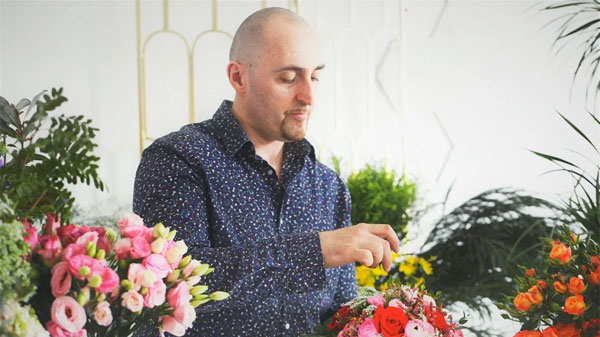
With Mother’s Day just around the corner, it was the perfect time for French floral artisan and designer Sebastien Lathuile to host a Celebrity Flower Master Class in collaboration with Hong Kong’s very own MAISON XXII. Lathuile, who is known in the floral world for his involvement within British high society events, led notable Hong Kong celebrities such as Fanny Sieh, and Marie Christine Lee towards the goal of creating their very own gorgeous “Gourmand” floral cakes at the special event.

Sebastien Lathuile

Under Lathuile’s experienced eye and guidance, the upstairs of Studio 22 within MAISON XXII became an environment not only filled with beautiful flowers, but a place where inspiration and fun could be had. Over the course of two hours, the ladies crafted delicate floral “patisseries”, which were to be “eaten with the eyes”, with careful direction from Lathuile.  

Sebastien Lathuile

Indeed, whether one was an amateur or a connoisseur to the art of flower decoration, the chance to learn from Lathuile was a truly unique and unmissable experience. We’ll surely be keeping our eyes open for the next time the artisan and designer is back in the 852. 

https://www.instagram.com/p/BwrWW05ApLg/

LA PETITE MAISON XXII
Level 3, 15 St. Francis Street, Wan Chai, Hong Kong

ED Space: A closer look into the life and songs of Ed Sheeran

While certainly not the first overtly-sensitive bloke to find success with a guitar and a mellow tune or two, English singer-songwriter Ed Sheeran has been on a seemingly never-ending roll these past few years, releasing hit after hit and breaking worldwide tour-taking records in the process, most recently selling out his two night residency at Hong Kong Disneyland, though breaking hearts yet again when the second show had to be cancelled due to uncooperative weather. In fact, the ginger singer’s ongoing ÷ (pronounced “divide”) tour has already brought in some US$432 million, while Forbes estimates his net worth to be around US$80 million. Not bad for a tousle-haired troubadour not long out of school.

Ed Sheeran

His studiedly unstudied Mister Average charm, mellow persona and wilfully wispy chin have managed to capture the hearts of ‘Sheerios’ on a global basis. Admittedly, his catchy chart toppers and occasionally saccharine lyrics have also played a part in his indefatigable rise – all of which begs the question, what exactly are Ed Sheeran’s songs about? And what was it about his seemingly unremarkable upbringing that gifted him such a clearly prodigious talent?

His singer-songwriter persona – heartfelt chap with a guitar – seemed already fully formed when he released The A-Team, his debut single back in 2011. While many were enamoured by the song’s folksy qualities, underpinning it all was a far darker tale than a casual listen might suggest. In fact, its gentle melody masks the tragic story of a homeless woman (‘Angel’) who is obliged to become a sex-worker to support her Class-A drug habit.

According to Sheeran, the inspiration for the song came to him after he played a gig at a homeless shelter, presumably a locale where many similar hard-luck stories lurk. Whatever its exact genesis, it went on to be a smash hit for the young songsmith – debuting at number three on the UK Singles chart, while also scaling the Top 10s of Germany and Australia, to name but two. 

His success reached a new high with the release  of x (“multiply”) in 2014, his second album, which went on to top charts across the world, including securing the number one slot in the crucial US market. The break-out tune here was Thinking Out Loud, the third song from the album to be released as a single.

Declaring the soulful ballad to be his walking-down the- aisle song, many fans detected a new maturity lurking below the hummability of this particular ditty. While some saw his advocacy of fidelity and forever love as betraying a more adult world view, others cynically dismissed it as the product of his increasingly sophisticated personal PR mill.

Ed Sheeran

While Thinking Out Loud would remain x’s signature anthem, the album’s fifth single, Photograph, also proved itself no slouch, going double-platinum in the UK and quadruple-platinum in the US. While that would be an astonishing achievement for any song, it’s particularly remarkable for one that nearly didn’t get released at all.

During the production of x, it was recorded some 60-70 times, with Sheeran apparently unconvinced it matched the feel of the rest of the album. As take 71, presumably, pressed all the opposite quality control buttons, the world did ultimately get to hear this brooding musical meditation on homesickness and the travails of long-distance love. It subsequently transpired that the track was a heartfelt paean, within which the lovestruck lyricist had coalesced his feelings about Nina Nesbitt, a fellow musician and his former girlfriend.

Ed Sheeran

For many, it seems as though Sheeran’s entire oeuvre revolves around his emotional attachment to troubled, unloved or much-missed women. Despite his clear predilection for the ladies, though, he has managed to duck any suggestions that he is merely a jobbing Lothario, with his reputation for straightforward sentimentality and one-man-womanry remaining – perhaps surprisingly – intact. Indeed, in March 2017 with the release of his third and most recent album – ÷ (“divide”) – his role as the world’s pre-eminent choirboy-cum-chart-topper seemed more secure than ever.

Despite this, the now-super-rich strummer showed no sign of resting on his laurels. Indeed, he told one journalist that he’d approached the latest collection as though on a mission to write the best love song of his career. When Perfect, the fifth single from the album, hit the airwaves in August 2017, the overall sentiment of fans and the music press alike was: “Mission accomplished”.

Even for an artist no stranger to superlatives, Perfect did extraordinarily well. In total, it went on to reach number one on 36 national music charts across the world, with the consensus very much that this was, indeed, the best love song of Sheeran’s career – to date at least. As the song focussed on his relationship with girlfriend – and, later, wife – Cherry Seaborn, its success was doubly-sweet for the plectrum wielding poet.

Now, with the mixture of cheers and cries of disappointment (thanks to one of the shows becoming a victim of a downpour) of his Hong Kong audience still ringing in his ears, what’s next for the the boy-next door that the whole world loves? Well, a new album for one thing, with the smart money being on him issuing a new set of songs in time for Christmas 2019. The even smarter money goes on his upcoming – apparently Springsteen-influenced – release being entitled  (“minus”). Even if he does surprise fans and dumps his love of mathematical album titles, it is most unlikely, however, to subtract from his global popularity.

Text: Bailey Atkinson

For the full article, please find the latest issue of Gafencu’s print magazine or the PDF version on the Gafencu app. Download the app from the Google Play Store or Apple App Store.

Eyres and Graces: Alia Eyres CEO of the Mother’s Choice charity

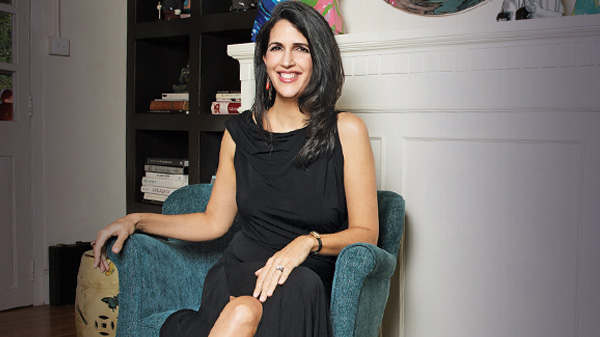
Alia Eyres may be a mother of five, but it’s her role as the CEO of renowned local charity Mother’s Choice that sees her embrace the larger community as her family…


Having looked on as your parents masterminded Mother’s Choice, were you always destined for a career in charity?

Being around my parents and their friends – the co-founders of Mother’s Choice – definitely had a huge impact on me and my younger siblings. Growing up, I saw my parents and their friends pouring their hearts and souls into this charity, committed to helping children and young women who didn’t have any support system, while doing their level best to give back to a city they had come to call home. It showed me the true worth of generosity, the value of kindness and the importance of family. 

You were a corporate lawyer before you joined Mother’s Choice – why the switch?

Well, I had been practicing corporate law for quite some time, but, alongside that, I had been volunteering at Mother’s Choice since I was nine years old. Despite that, I’d never contemplated working there full-time. Around the time that they started looking for a new chief executive, though, I remember sitting in a coffee shop near my then-office and I opened the newspaper and saw the ad for the role. It was as if a light bulb went off in my head. I suddenly realised that this was what I wanted to do with my life.

Alia Eyres

How has your experience as a lawyer helped you in your role as chief executive?

Having a background in justice and knowing how the law works have been incredibly helpful. Two of my other siblings are also lawyers in Hong Kong and experts in family law. We firmly believe that understanding the law and how the legal system works really help to make sense of how our society works overall. Many of the young women and children we work with have very real legal concerns and need someone to be their voice when it comes to seeking justice. My background means I can be that voice.

What are the key areas where Mother’s Choice can help out?

Mother’s Choice is a local charity and we work very closely with the wider community, partnering with hundreds of volunteers every week to change lives and bring hope. We do that by providing services for babies and children, and for young women who have no familial support. We also work with young people who are experiencing crisis pregnancies or youth in foster care, and operate foster programmes via local schools and community education services.  

Alia Eyres

Since becoming chief executive in 2012, what has made you most proud?
After being in my post for seven years now, I can say I’m proudest of Project Bridge – an innovative programme designed to improve the traditional foster care system. Essentially, it connects nurturing volunteer families to children in need of temporary care. Our volunteer Bridge Families provide these children with a safe and loving family environment, giving them the opportunity to build trust, to develop their sense of identity, despite any crises that may have disrupted their birth homes. 

And what have been the most challenging aspects of the role?

It’s fair to say it’s not an easy job. Every day we hear the most heart-wrenching stories – a newborn baby abandoned in a trash can, a 14-year-old girl who has been abused and raped or a family that has been torn apart. These are incredibly difficult stories to get your head around, but the good thing is I now know there’s hope for everyone. Each one of us gets a second chance. There’s no such thing as a hopeless case. There’s hope that everyone can have a good future, there’s hope for every baby, every girl and every family. I say that because we’ve seen true miracles happen. Even though it is a hard job, I have to tell you I have become a far more hopeful person than I was in the past.

Alia Eyres

How do you ensure that the children have a seamless transition when they’re adopted?

Our preparatory work focusses on the two key parties – the adoptive families and the children who they are taking on board. In the case of the families, we hold their hands every step of the way, making sure they are fully aware of the needs of the child, the legal side of things and so on. We have hundreds of volunteers, social workers and lawyers all working together so that they are well prepared for their forever homes. We also have nurses, doctors and therapists, who come in to check that their medical needs are being met so that they have a better chance of finding a new home.

How open is modern-day Hong Kong to adoption?

In the 32 years since we started, I’ve seen Hong Kong really open up to the idea of adoption and we’re so grateful for that. In the future, we would like to see people being more willing to open their homes and their hearts to children with special needs and older kids. Every child, no matter their age or condition, deserves to be part of a loving family.

Thank you.

Interview by: Suchetana Mukhopadhyay
Photos: Jack Law  
Art Direction: San Wong   
Make-up and Hair: Irene Hung  
Venue: Mother’s Choice

For the full article, please find the latest issue of Gafencu’s print magazine or the PDF version on the Gafencu app. Download the app from the Google Play Store or Apple App Store.