
Track Stars: Winning watches inspired by supercars past and present

The unrivalled technical and sporting centenary by presenting a special version of its excellence embodied in racing cars is a perfect bedfellow for luxury watches that seek the ultimate in performance standards. These are watches taking their inspiration from the high-octane world of motorsport and high-performance cars.

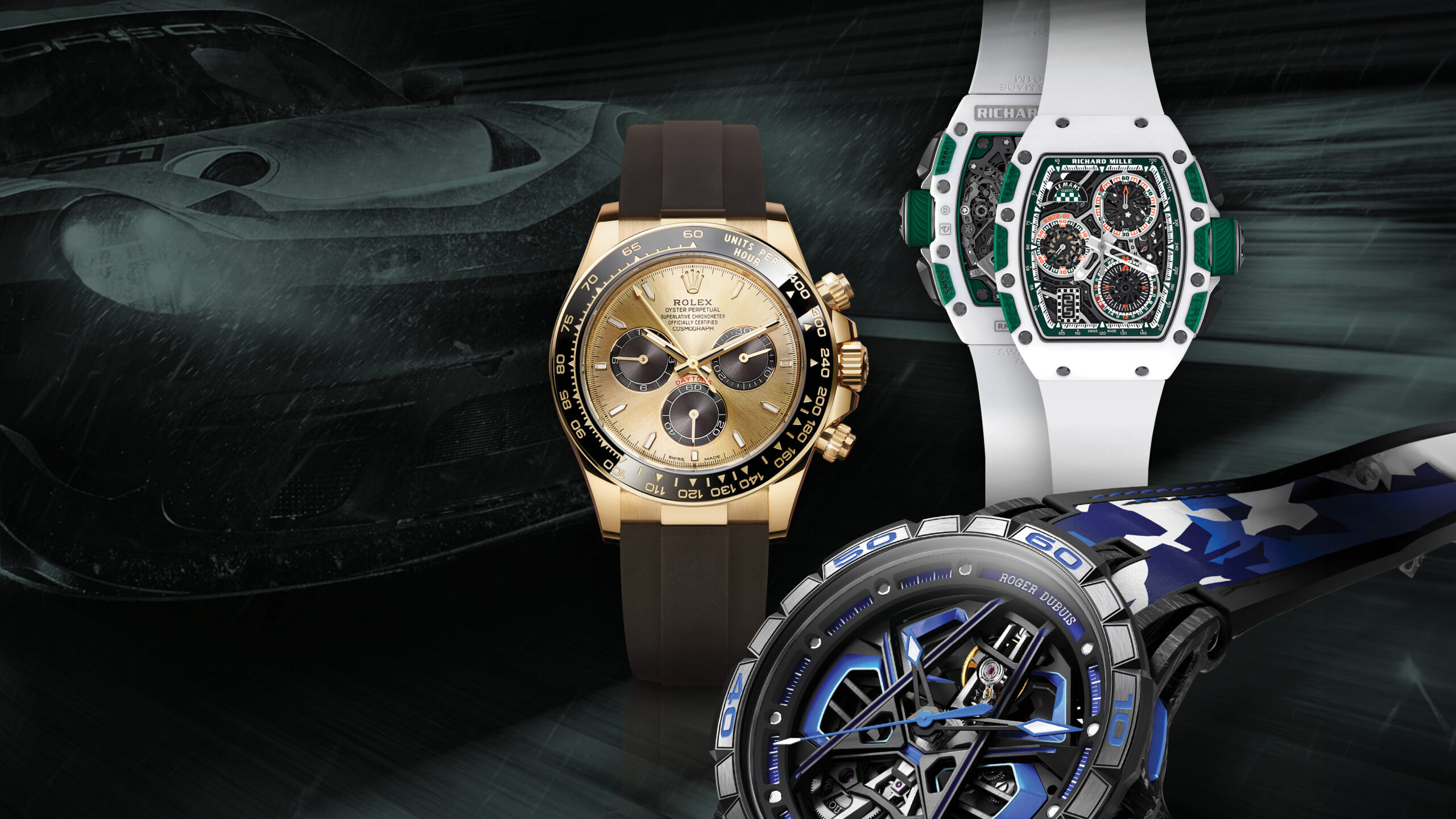
An extraordinary example is the RM UP- 01 Ferrari spawned by the now two-year-old partnership between Richard Mille and Italian carmaker Ferrari. Thousands of laboratory hours were spent refining a dashboard-like timepiece with total shock resistance and a super-slim 1.75-millimetre sleekness that remains true to the spirit of the marque. Remarkably, this perfectly flat watch retains complete internal movement within the case and boasts a baseplate and skeletonised bridges crafted of grade 5 titanium, a material specifically chosen for its lightness and toughness.
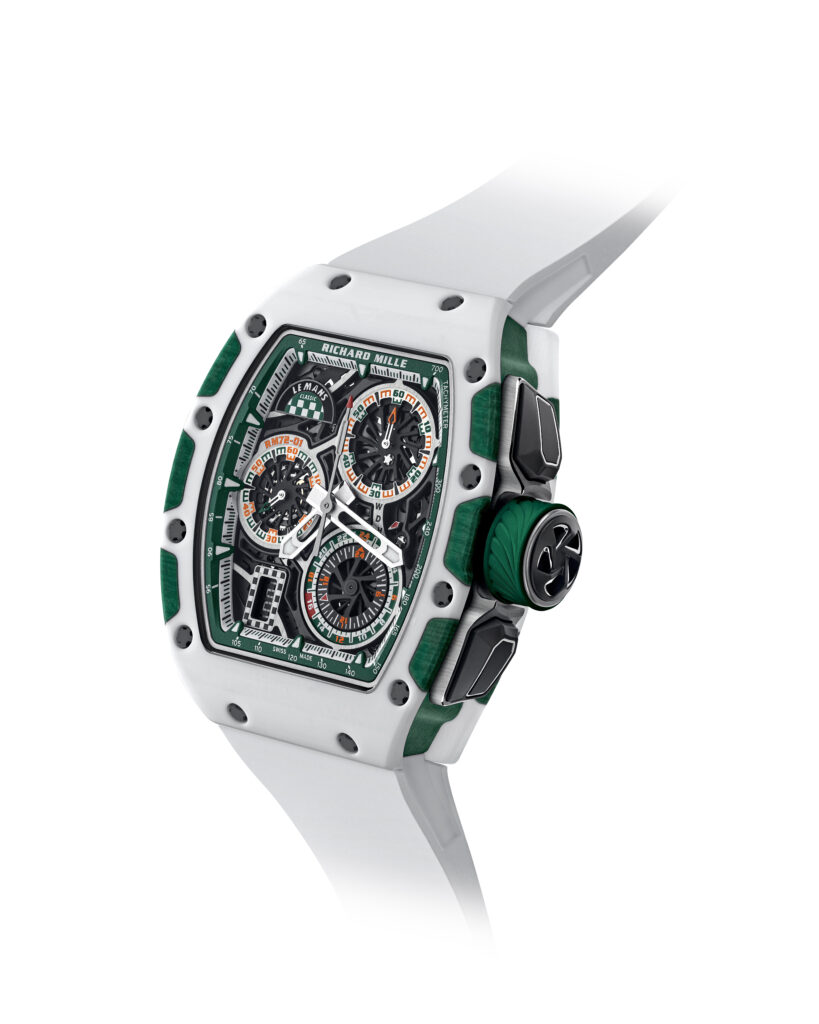
In homage to the 24 Hours of Le Mans race, which celebrated its 100th anniversary this year, Richard Mille has also released a limited-edition RM 72-01 Le Mans Classic. Crafted as per usual in the event’s colours, the 150 watches are flyback chronographs with a patented double oscillating pinion clutch mechanism to maximise performance.

Rolex marked the 24 Hours of Le Mans legendary chronograph adored by the late actor and racing driver Paul Newman. The new Oyster Perpetual Cosmograph Daytona’s calibre 4132 movement allows for a 24-hour chronograph function (as opposed to the usual 12-hour count) in tribute to the race itself. In addition, the number ‘100’ in red ceramic stands out on the tachymetric scale of this 18-carat gold watch with a brilliant black dial.
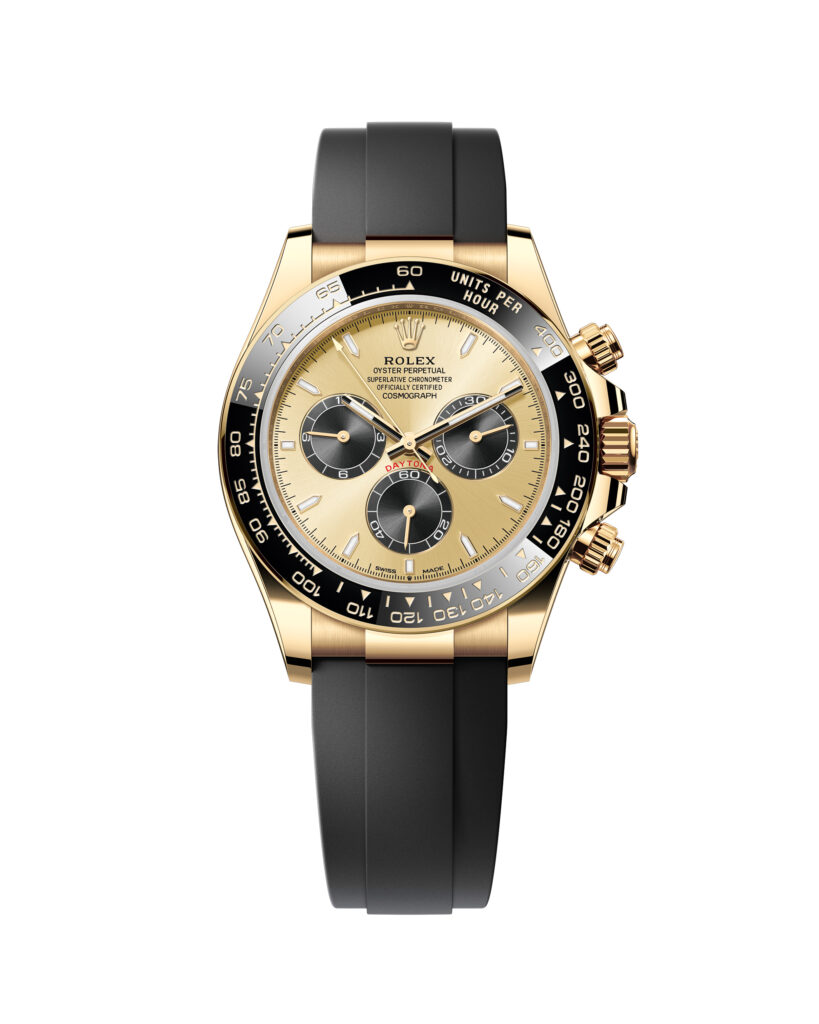
Such is the affection and status of the Daytona watch that Rolex has updated the entire range on the occasion of its 60th birthday. All iterations utilise a new chronograph movement via the calibre 4131, with innovations including the patented Chronergy escapement which is resistant to strong magnetic fields, a cut-out oscillating weight and new finishes, especially on the bridges. The new- generation Cosmograph Daytona spans a range of materials from 950 platinum and Oystersteel to 18-carat Everose gold.

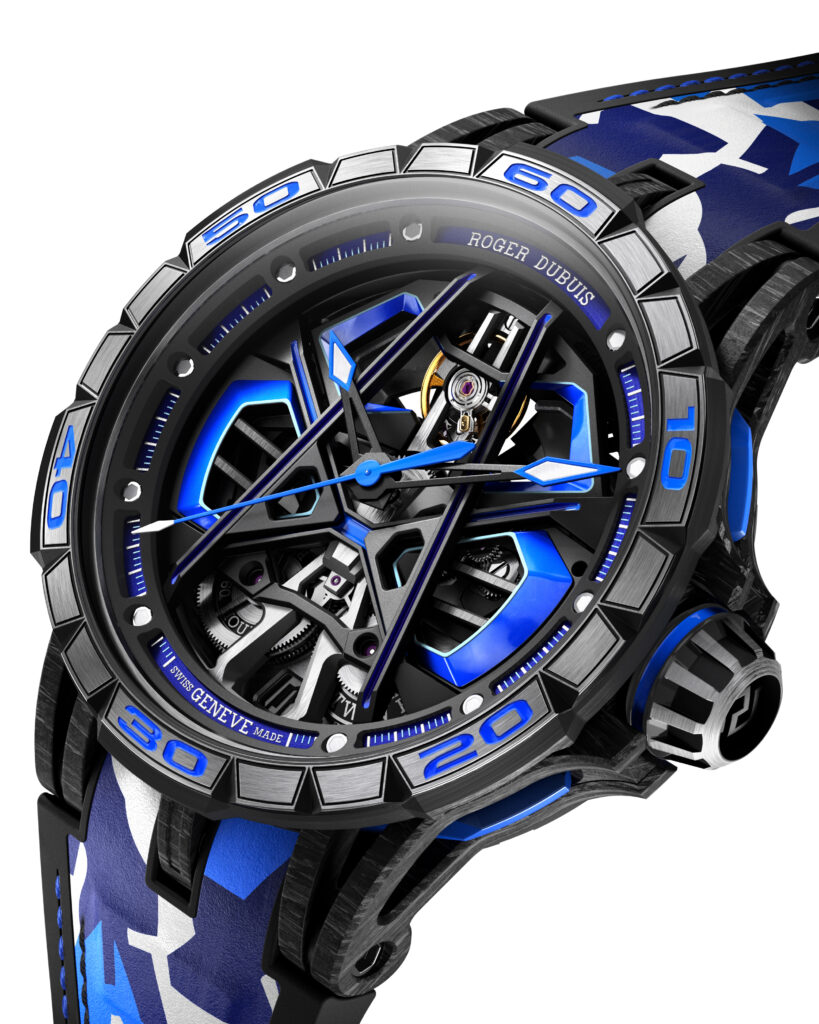
Roger Dubuis’ inspiration is the supercar designs of the Lamborghini Squadra Corse, and hot off the blocks, the watchmaker has just released a striking blue Excalibur Spider Huracán Sterrato following last year’s pulsating orange version. The new variation is housed in a 45mm carbon case engineered from a compound nine times lighter than gold – Sheet Molding Compound (SMC) Carbon – then topped by black DLC (Diamond Like Carbon) titanium.

A rubber and camouflage pattern strap blends hues of blue and uses a Combined Vulcanisation process for a seamless look. The watch also has 60 hours of power reserve and is water resistant to 50 metres. Meanwhile, a new Excalibur Spider Flyback Chronograph made its debut at the Goodwood Festival of Speed in July.
A month previously, just prior to the start of the annual 1000 Miglia race from Brescia and Rome and back in Italy, four new models of the ongoing Mille Miglia Classic Chronograph collection were unveiled by race sponsor and timekeeper Chopard. Made from Lucent Steel (eco-friendly recycled material more resilient than regular steel), the precision-engineered quartet comes in colours that nod to the paint jobs and interior finishes of the pre-1957 1000 Miglia racers – cherry red, grey blue, light green and racing black. A limited-edition version of the Mille Miglia GTS Chrono has also been released, featuring a large-diameter crown and ‘mushroom’ pushers to aid usage whilst driving.

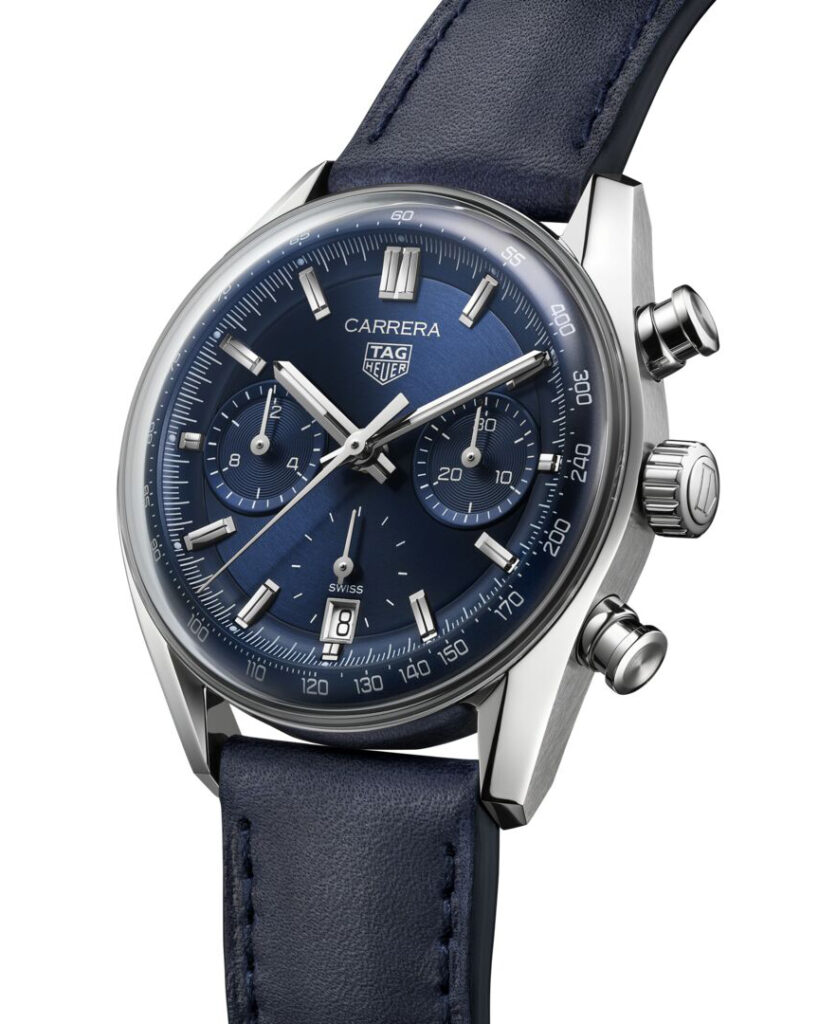
TAG Heuer has also established a reputation for fine racing watches. With 2023 marking the 60th anniversary of the famous TAG Heuer Carrera, two new models hit the ground running: a Chronograph and Chronograph Tourbillon. The latter is its first ‘Glassbox’ model – domed glass encasing the dial and tachymeter bezel – featuring a tourbillon cage. Technical developments mean the tachymeter scale can now be read from a wider range of angles, whilst improved ergonomics of the stainless-steel case promise increased comfort.

The two new models come with a black or blue circular brushed dial respectively, and incorporate an evolved version of its automatic chronograph calibre, the Heuer 02, that offers bi- directional winding. The Monaco Chronograph and Monaco Chronograph Racing Blue are also TAG Heuer racing models of note.
Clocking into the 70th anniversary of the 1953 Le Mans race, Bremont has introduced a new Jaguar-inspired watch, the C-type, in homage to the car that won it. A stainless-steel case back features a decorative coin depicting a C-type hood badge and five stainless-steel screws with polished heads. It is water-resistant to 200 metres and boasts domed anti-reflective and scratch-resistant sapphire crystal. Other racy models in the Bremont showroom include the Jaguar MKI, the Williams Racing WR-22 and the WR-45.
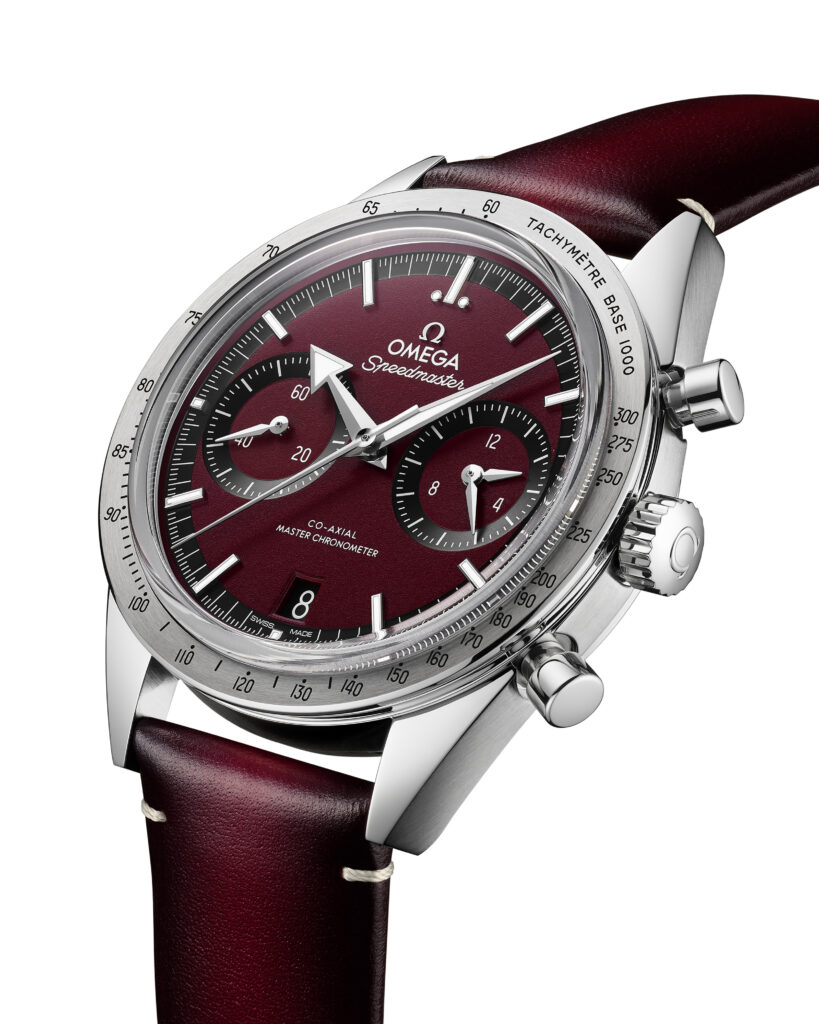
Omega’s watches have long adorned the adrenaline-fuelled racetracks of the world and its famous Omega Speedmaster was considered of such a high technical standard that it was worn by Buzz Aldrin on his moon mission. Upgraded and slimmed- down versions of the Omega Speedmaster ’57 were introduced last year, powered by the Co-Axial Master Chronometer Calibre 9906.

These eight models can claim the iconic Omega column-wheel chronograph mechanism, a rhodium-plated bridge, as well as magnetic resistance to 15,000 gauss.
Top-selling collectibles: The hottest auction highlights of this spring

Many valuable articles were auctioned during the recent Spring auctions and though every single object was unique in its own way, four items certainly stood out and impressed the bidders the most, thus achieving jaw-dropping hammer prices. Check out the latest roundup of auction lots that made history and the interesting stories associated with each of them.

Flawless Fancy

3 rings hold collectors in spell

spring auctions

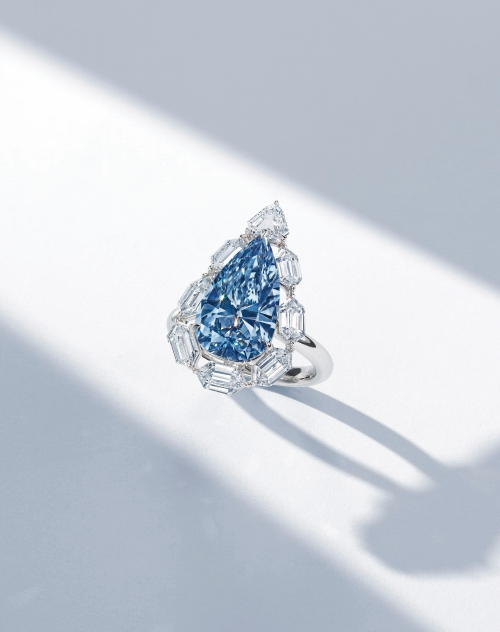
A trio of flawless pear-shaped coloured diamonds fetched a combined total of HK$132 million (US$17 million) at Christie’s Magnificent Jewels Spring Auction. Dazzling at the centre of three exquisite rings, they captivated the audience and ignited fervent bidding for more than 15 minutes.

The sale was led by a breathtaking 4.83-carat fancy vivid blue internally flawless diamond ring, for which an anonymous bidder paid an astonishing US$8.84 million. This extraordinary natural blue diamond is considered a symbol of wisdom, truth and devotion, and its exceptional rarity and vivid blue hue place it in a league of its own. The internally flawless designation emphasises the stone’s remarkable clarity and further enhanced its allure to excited bidders.

Besides this triumvirate of spellbinding coloured diamonds, Vickie Sek, Chairman of Jewellery at Christie’s Asia Pacific, was thrilled by the auction’s overall success. “Our Magnificent Jewels sale received an excellent response from collectors for the diverse selection of exquisite colourless and coloured diamonds and gemstones presented, with almost half of these lots selling above their high estimates,” she said.

Dragon High

Qianlong moonflask shines at auction

spring auctions

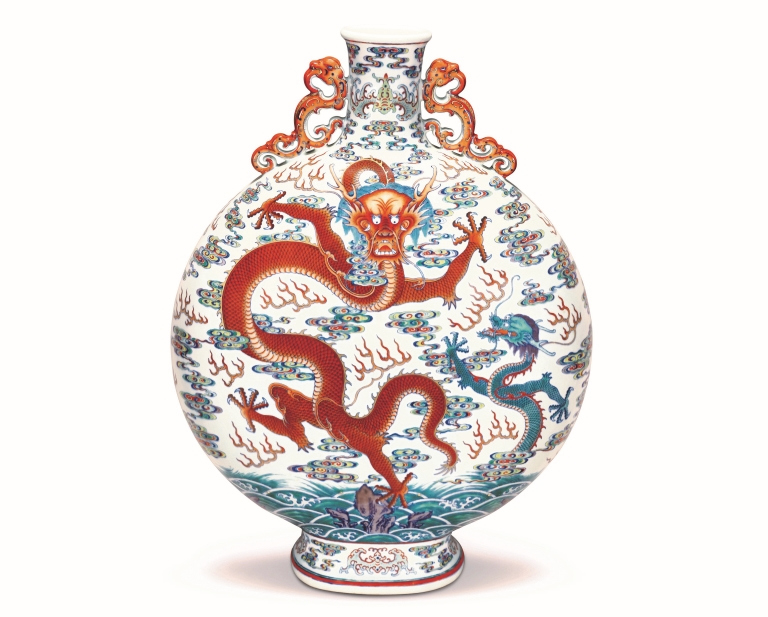
An extremely rare Qianlong moonflask was the highlight of Christie’s ‘The Imperial Palette – Three Qianlong Treasures’ auction held at the Hong Kong Convention and Exhibition Centre. Bidders were impressed by this extraordinary Chinese craftsmanship such that the final sale price topped HK$108 million (US$13.8 million).

Marco Almeida, Head of Chinese Ceramics and Works of Art at Christie’s Asia Pacific, expressed his enthusiasm for the fine porcelain collectible: “This magnificent and very rare Qianlong doucai moonflask embodies the superb artistry and craftsmanship of the Qianlong period [1736-1795]. The significant historical and cultural importance, rarity and outstanding quality of this work of art make it a true gem for collectors and enthusiasts alike.”

The circular body of the imposing flask is finely pencilled and enamelled on each side in iron-red, yellow, aubergine and shades of green. A green five-clawed dragon emerges from waves to confront an ascending dragon in iron-red amid cloud-scrolls and flames. The large rising dragon symbolises the Qianlong Emperor, while the smaller serpent represents the heir apparent.

Emperor’s Gift

Puyi wristwatch clocks world record

highest bid

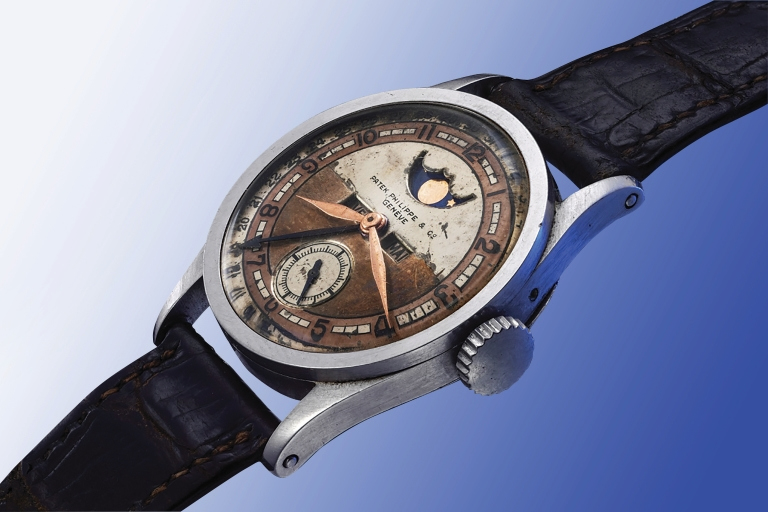
A watch of huge historical significance sparked frenzied bidding at a recent Phillips auction in Hong Kong. The Patek Philippe timepiece is the former property of the last Emperor of the Qing Dynasty, Aisin-Gioro Puyi, and sold for HK$48.85 million (US$6.26 million).

The sale of this rare Patek in platinum with moon phases, triple-date calendar and silvered dial had been much anticipated in the watch-buying community. Part of The Imperial Patek Philippe Sale, the wristwatch was subject to a bidding war by at least six collectors and was claimed after a considerable mark-up of HK$9 million on the final nod. The price is a record for the Ref. 69 Quiantieme Lune, as well as the highest achieved by a watch previously owned by an emperor.

The simple, clean silhouette and large unsigned crown express the aesthetics of Bauhaus and understated functionality, while the rose-gold ring, silvered dial and enamel Arabic numerals in a ‘roulette’ configuration underscore a supreme elegance. Purchased in 1937, the watch was kept in its original untouched condition and has a rich patina consistent with its age.

Le Mans Magic

Awesome Aston accelerates off auction block

highest bid

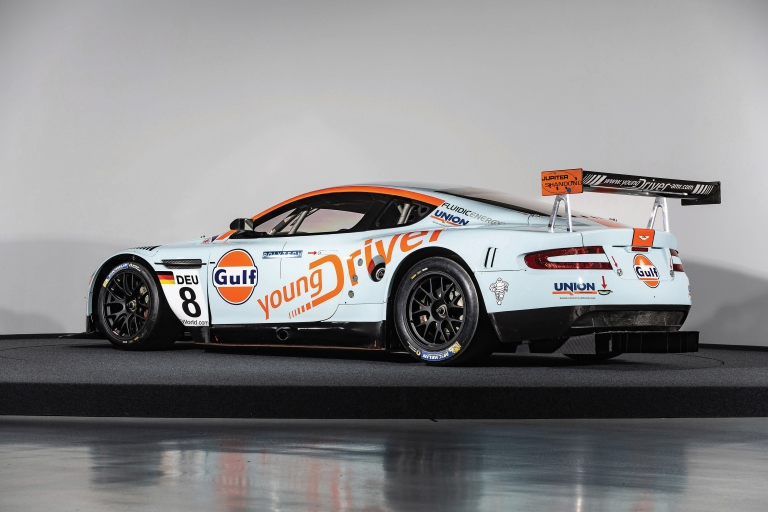
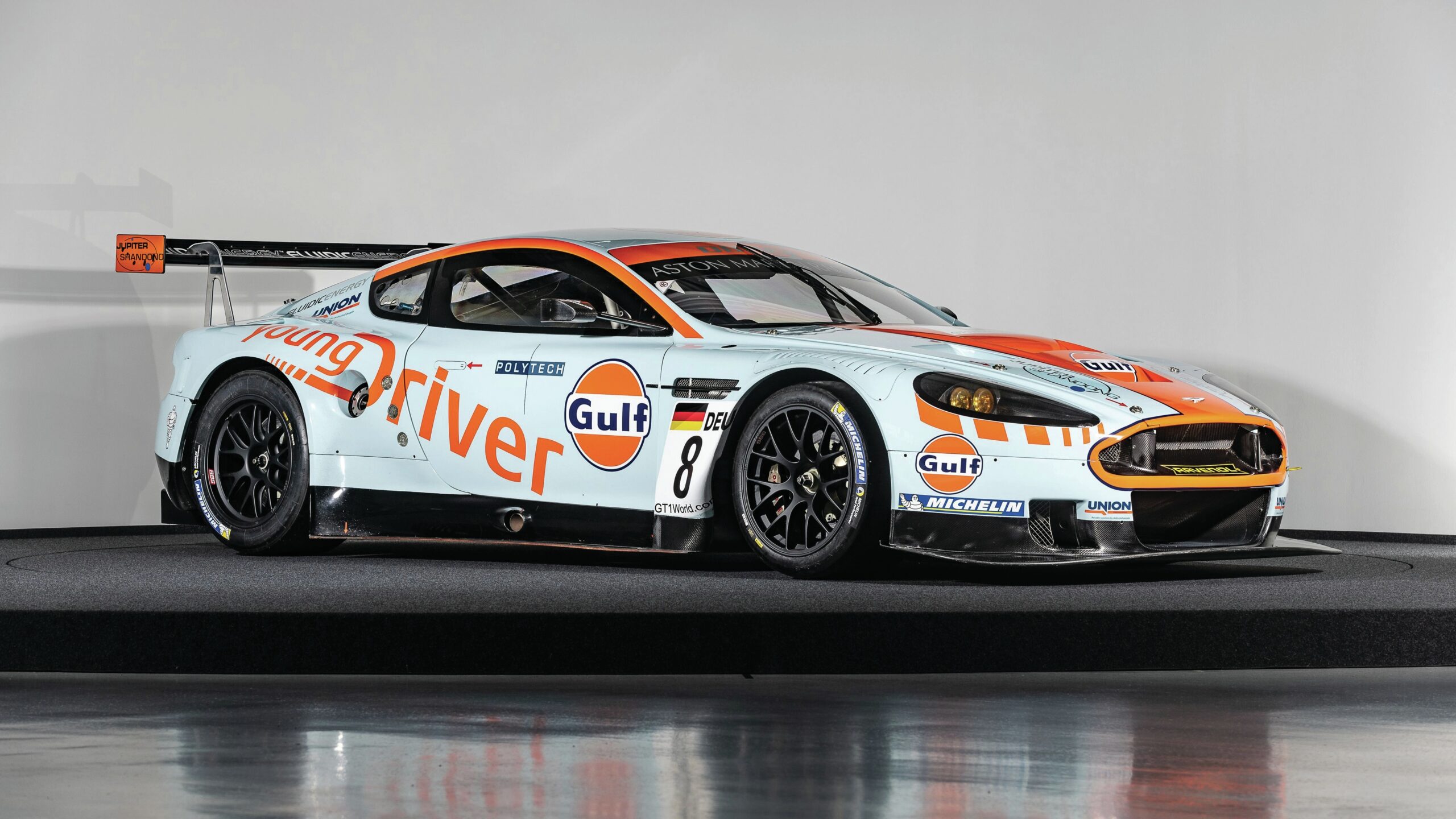
A 2007 Aston Martin racing car has sold for 2.23 million euros (US$2.4 million) at an auction held by RM Sotheby’s. The DBR9 GT1 was one of 24 sports competition cars that lined up for the Le Mans Centenary sale.

First purchased by Gigawave Motorsport team founder Henry Barczynski, the car is thought to be one of just 18 DBR9 chassis constructed by Prodrive between 2005 and 2008. It subsequently had just two other owners, while among the professionals who have sat in the driving seat are Stefan Mücke, Darren Turner, Peter Kox and Tomáš Enge.

The Aston Martin notched up third-place finishes in both the 2008 Silverstone Tourist Trophy and 2008 24 Hours of Spa. Further success was achieved at the 2010 24 Hours of Le Mans, where it was third in the GT1 class and 22nd overall. The following year it secured four podium finishes in the FIA GT1 World Championship, winning in Beijing.

The successful bidder also received three spare sets of wheels, as well as the original Pectel/Pi electronics and all relevant operating and computer software materials.

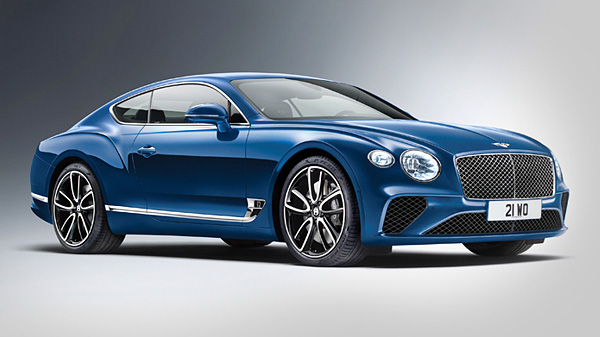
Bentley Continental GT, a grand tourer that thinks it’s a sports car

The Bentley Continental GT has managed to be a true grand tourer, without compromising its sports car-like aptitude for speed.

This may seem like a difficult feat, but, perhaps, a little history lesson might be illuminating. The original Continental GT was a triumph for Bentley. Launched some 15 years ago, the car soon became the conveyance of choice for soccer players and the more ostentatious brand of muso. The first Bentley to use production line techniques in its manufacture, it sold like spittle guards at Trump rally.

As with the car it replaces, this new Continental is large, luxurious and expensive. At 2,244kg, it is heavy enough crush any imperfections on the road surface, although its sophisticated computer-controlled air suspension allows it to simply glide over the majority of highway hickeys.

At 4.8 metres long and 2.2 wide, there’s little chance of stealing a Smart Car’s parking space. There’s also ample boot space for a good fortnight’s worth of luggage.

As well as being spacious enough, the interior is every bit as luxurious as the Bentley name entails. Indeed, its leather seats are so soft it may transpire that only the finest-quilted cattle contributed to their coverings.

The Continental’s interior is also exceptionally functional. The control interfaces are pleasingly chunky, moving with the kind of easy action that suggests that years of faultless operation lie ahead.

While upholding the values of time-served craftsmanship, the Continental’s cabin is far from old fashioned. Mounted on a three-faced tumbler, a large section of dashboard rotates to reveal blank facia, a trio of traditional dials or a 312mm touchscreen, displaying the driver’s choice of satellite navigation, climate conditions or Netflix catch-up.

On the move, the Continental is, indeed, a sumptuously smooth means of conveyance, with its air suspension suppressing any jolt occasioned by an unavoidable spot of tarmac turbulence.

The merest prod of the accelerator can shake up things a bit though. Fitted with a 6-litre twin turbo W12 engine – capable of producing 467Kw – as standard, this Continental can get very loud and very fast very, very quickly.

Any such acceleration is accompanied by a satisfying roar as the 12 cylinders and the two turbo-chargers kick in. Overall, this brief sound surge is about the only giveaway that the engine is, indeed, turbo-charged, with little or no lag between any change in throttle position and the engine’s powerful response,.

From a standing start, this big Bentley can crack 100kph in just 3.7 seconds. With a maximum velocity of 333kph, the acceleration just never seems to diminish, still pulling strongly at the speedo glides past the 200kph mark.

It’s hard to believe that any aspect of this car could be more impressive than its 467Kw engine. Until, that is, you stamp on the brake pedal. The violence of the subsequent deceleration is literally breath-taking, with the lungs squeezed of air as they’re hurled against the seat belt.

While the new Bentley Continental GT is just too truly massive to keep up with a genuinely lightweight sportster through all that really twisty stuff, it’s a more capable sports package than that offered by almost any other GT car – and all without giving up any of the genuine comfort the grand tourer name truly demands.

Bentley Continental GT from around HK$1.7m
Engine: 6.0 litre twin turbo W12
Power: 467 Kw
Torque: 900 Nm
Transmission: 8-speed dual clutch automatic through all-wheel drive
0-100kph: 3.7s
Top speed: 333kph

Fit for a road trip: Maserati’s new GranTurismo is built for long-distance cruising

How should one choose a car? Some would argue that cool-headed analysis is the way to go, using dispassionate logic to compare objective measurements of size, performance and value for money. One criterion, however, cannot be quantified and slapped onto a spread sheet. How does the car make one feel?

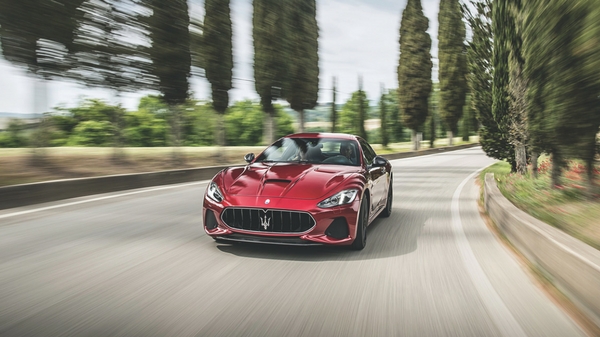
The heroic battle cry escaping the exhausts on Maserati’s GranTurismo will quell any doubts over which luxury grand tourer reigns supreme. The sound seems to bypass the ears, speaking straight to the soul with more conviction than any salesman could ever summon.

Updated for 2018, the Sport – introduced alongside the GranTurismo MC – is something of a welcome antidote to the modern trend of high-performance uber-coupes. Ferraris, Porsches, Aston Martins and Mercedes-Benzes all seem to be trying too hard. Their strenuous efforts suggest a certain lack of confidence – a fidgety need to outdo one another with this statistic or that.

The GranTurismo Sport, by contrast, is comfortable in its own Pininfarina-designed skin. Confident in its innate excellence, it seems to have nothing to prove. Much of this personality stems from its engine. The GranTurismo Sport shuns forced induction in favour of a 4.7-litre V8.

This is, admittedly, something of a trade-off. Turbo-chargers do indeed increase power output when performance is called for, while also enabling lower fuel consumption when a gentle cruise is enough. The downside is that they strangle the exhaust note, robbing it of its bellicose glory.

Free of turbos, the GranTurismo Sport can let loose a full-blooded roar at full throttle. When lifting off the gas pedal, it spits and crackles on overrun. And with 338kW under one’s right foot, the Maserati is far from lacking in the power department. Channelled to the rear wheels through a six-speed ZF semi-automatic gear box, it’s sufficient for a 4.8-second sprint to 100kph–plenty fast for any practical, real-world application.

The way the engine delivers its power is old-school. At lower revs there’s less torque, so an injudicious tap on the throttle won’t send the car lurching into the back of a truck in queuing traffic. This makes it more forgiving to drive in cities and parking garages.

Handling is less knife-edge than a sports car. The suspension is flexible rather than harsh, tuned for travelling through the imperfect real world instead of the artificially silky confines of the race track.

And unlike sports cars, the Maserati offers a softer, more forgiving ride which absorbs imperfections without losing grip, letting the driver comfortably sustain higher speeds with less exertion. Hard cornering does induce pronounced body roll and one has to wait for the car’s mass to transfer onto the outside wheels as the long-travel springs compress.

As a result, swift driving requires carefully judged timing and a measured wave of the hands on the wheel instead of aggressive stabs. The steering is accurate but lacks tactile feedback. However, what would be a downside for a track-focused car is a relaxing boon for longer journeys traversed at less than racing speed on rougher roads.

If pressed right to the limit of cornering ability, the GranTurismo Sport does produce an impressive dose of lateral force. Pushed too hard, the car will understeer, but thanks to that flexible suspension, a lift off the throttle will transfer weight forward to neutralise the imbalance.

For highway driving, the Maserati is a delight. That big V8 settles down to a baritone purr in high gear, wafting along effortlessly. The ride is smooth, with little hint of road imperfection interrupting the serenity. The cabin is a nice place to relax for hours on end while the scenery blurs past. As one would expect from a prestigious marque, there’s plenty of exquisitely stitched leather everywhere, complemented by alcantara suede.

The interior design charms with small touches of whimsical flair, from the cat’s iris-shaped central dash clock to the oversized gear selector paddles.

The updated GranTurismo range offers an 8.4-inch central touchscreen, making access and control of the satnav and other functions that little bit easier. The car is a genuine four-seater, rather than a two-plus-two, and luggage space is ample, too.

There are faster cars on the market. There are bigger and more comfortable cars on the market. The GranTurismo, however, is arguably one of the most likeable cars money can buy.

www.maserati.hk

Kowloon Bay Showroom: 2627 8986
Wan Chai Showroom:2627 8983

Text: James O’Donnell
Photos:
Maserati

For the full article, please check out the latest issue of Gafencu’s print magazine or the Gafencu app. Download the app from the Google Play Store or Apple App Store.

Raze the Roof: McLaren’s 570S Spider merges Formula 1 tech with open-top sexiness

Imagine, gentle reader, a cardboard box. Picture this box fresh and new, securely taped shut – both top and bottom.

Strong, isn’t it? Nice and rigid, resisting forces applied to it with stern resilience.

Now slice the top off and see what it becomes: a feeble, floppy mess, twisting this way and that at the slightest pressure. Removing the extra support provided by the top dramatically reduces the strength of the box as a whole.

The same, on a larger scale, is true of cars. A strong coupé or saloon body shell can be rendered a bendy embarrassment by cutting the roof off in a bid to manufacture wind-in-the-hair glee.

Car makers are usually faced with a choice between accepting the sloppy handling a weakened chop-top chassis inevitably creates or adding strengthening girders to the remaining bottom portion of the car to stiffen things up, resulting in extra weight.

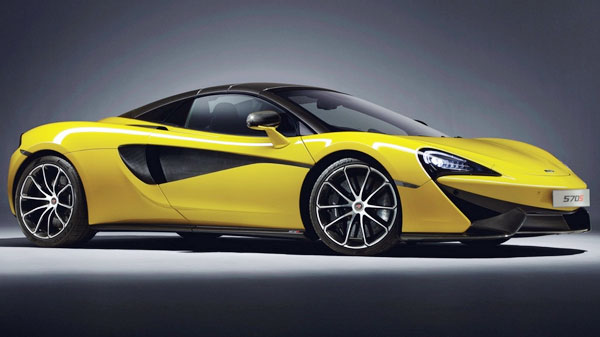
The new open-topped Spider edition of McLaren’s 570S sports car, however, is neither heavy nor floppy. The convertible is every bit as stiff and agile as its fixed-roof siblings, while squashing the scales with about the same heft.

The source of this have-your-cake-and-eat-it miracle is a solid chunk of racing car technology at the heart of all modern McLaren models – a carbon fibre ‘tub’. Most cars derive their strength from a continuous metal body shell, with forces spread across the floor and roof. By contrast, McLaren’s carbon fibre tub – so called because it’s shaped like a broad bathtub – holds strong with or without a roof.

The benefits of this carbon fibre backbone are numerous. Increased stiffness makes for more predictable and consistent handling, with the suspension geometry undisturbed by chassis flex. Reduced weight makes the car more agile, allowing for quicker acceleration and improved braking around corners.

The tub also acts as a survival cell, armouring occupants against crash damage. But perhaps the biggest boon is the feeling of shared experience with professional racers that a 570S Spider owner derives from knowing that this car is based on Formula 1 technology.

That sense of kinship with those who wear scorch-proof onesies and spray champagne for a living is further underlined by the Spider’s driving experience. It’s amazingly fast.

From a standing start, the 494kw 3.8-litre twin-turbo V8 will hurl the McLaren’s 1,498kg to 100kph in just 3.2 seconds. Given enough road and enough bravery, a top speed of 328kph is possible.

These abstract numbers do little to communicate the startlingly rapid way that the world rushes to meet the driver.

After the mental shock comes the physical. Accelerating hard isn’t so bad; simply lean back and let the headrest take the strain. Braking is a different matter. Squeezing on the optional carbon ceramic brakes is like crash landing in water. Neck muscles strain to keep one’s focal point ahead rather than straight down.

The brakes are one of the few flat notes in the Spider’s symphony of speed. While they respond well –  translating foot pressure into deceleration promptly and predictably – there’s little feel through the pedal, making the job of judging grip levels more difficult.

As a high-speed attack weapon, the Spider is an impressive performer, but it’s capable of more than one trick. With the roof fixed in place and a gentle touch on the controls, it’s also a civilised and comfortable everyday car.

Offering good all-round visibility and taking up a sensible portion of road space, it’s easy to drive through crowded city streets and manoeuvre into cramped parking spots. Although stiffer than an SUV, the suspension will soak up lumps, bumps and potholes well enough to prevent discomfort.

It’s also a competent long-distance weekend cruiser. With the roof in place there’s little clue that the Spider is in fact a convertible. The wind roar at high speeds is minimal and the road noise is acceptable, albeit more than one might expect from a typical luxury saloon or coupé.

Overall, the Spider does everything a fixed-head 570S does, with the added element of open-top driving pleasure. The only question is whether those advantages justify the HK$205,000 price increase over the Coupé. A quick top-down, full-throttle blast through a tunnel should be answer enough for anyone.

Text: James O’Donnell
Photos: McLaren

For the full article, please check out the latest issue of Gafencu’s print magazine or the Gafencu app. Download the app from the Google Play Store or Apple App Store