


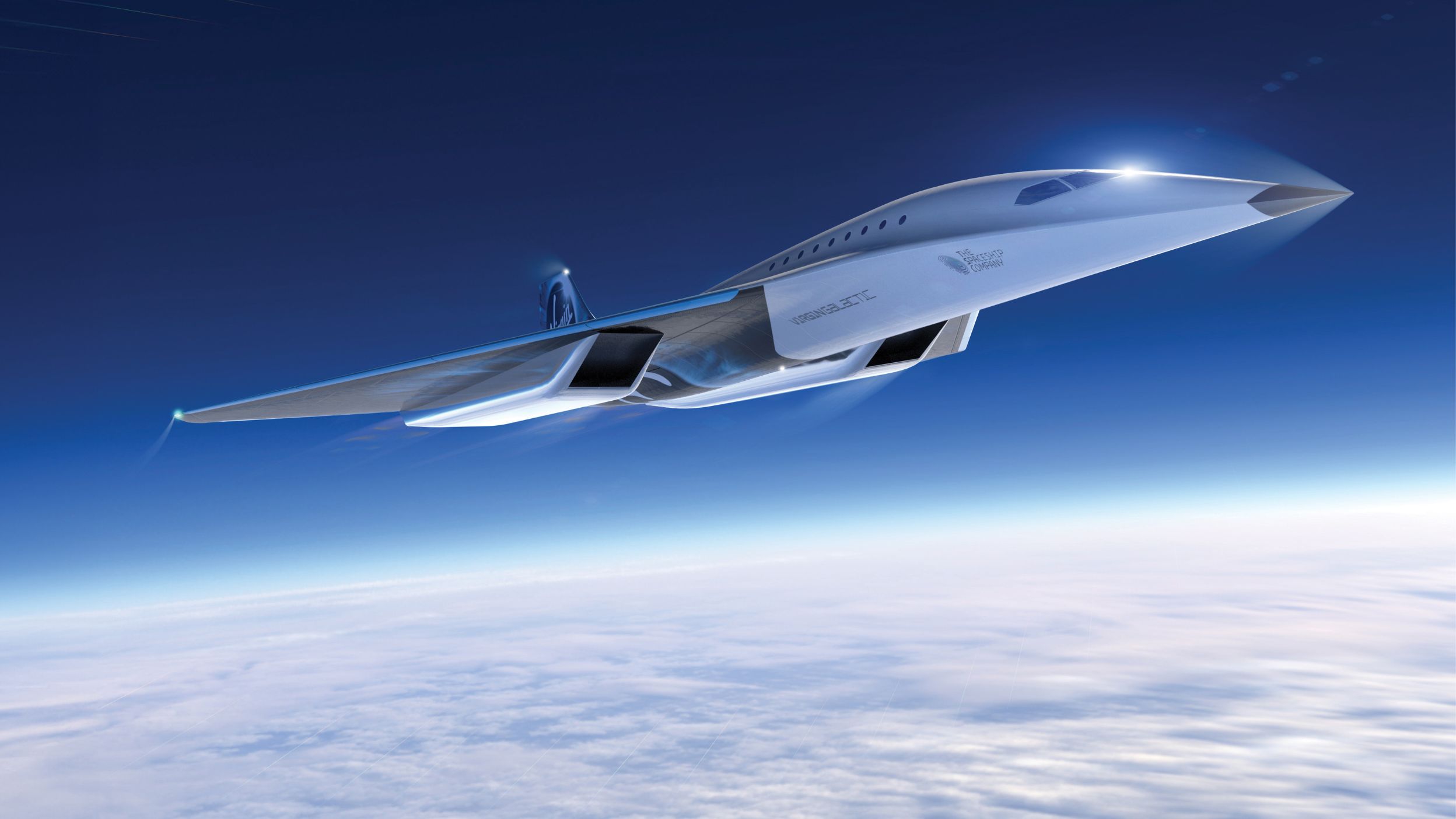
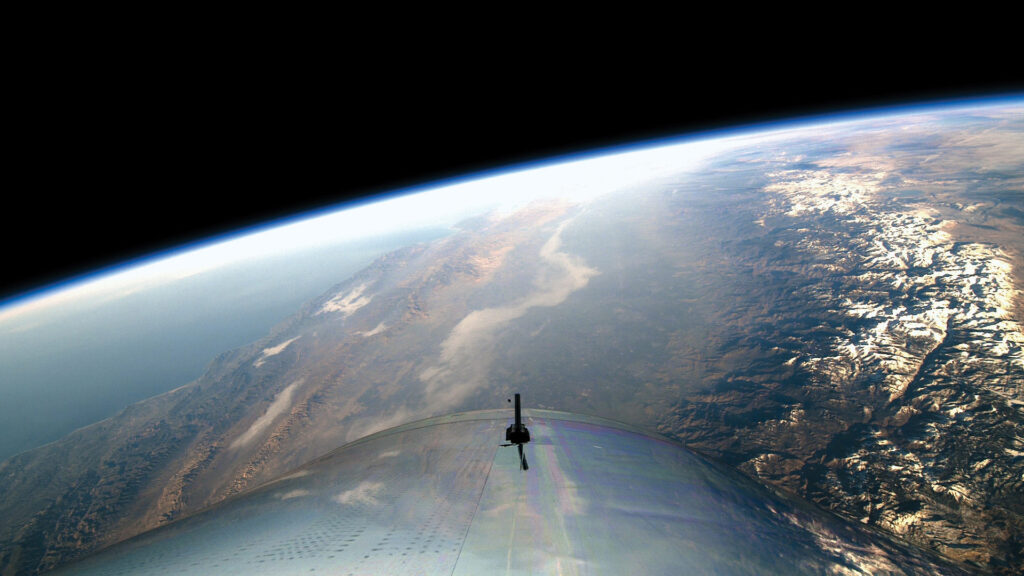
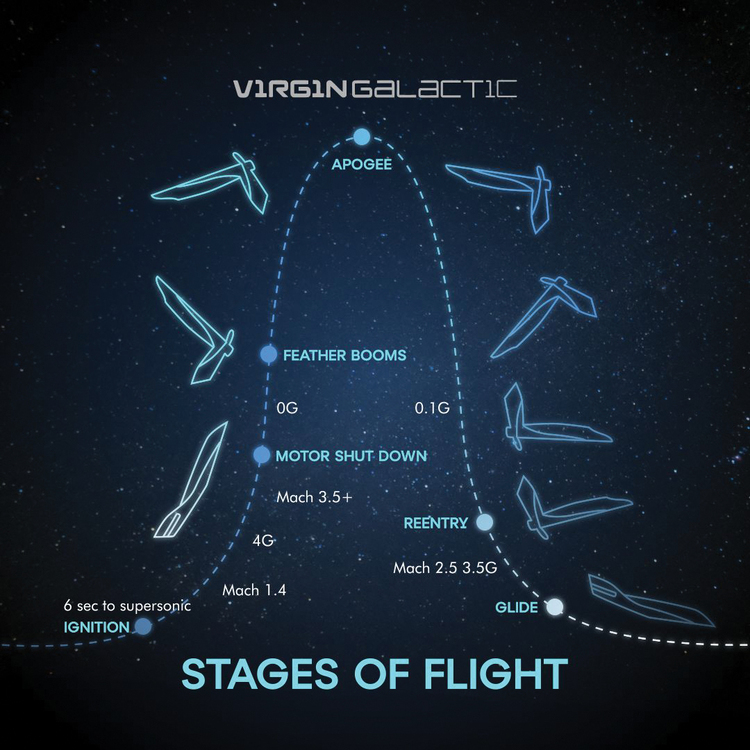
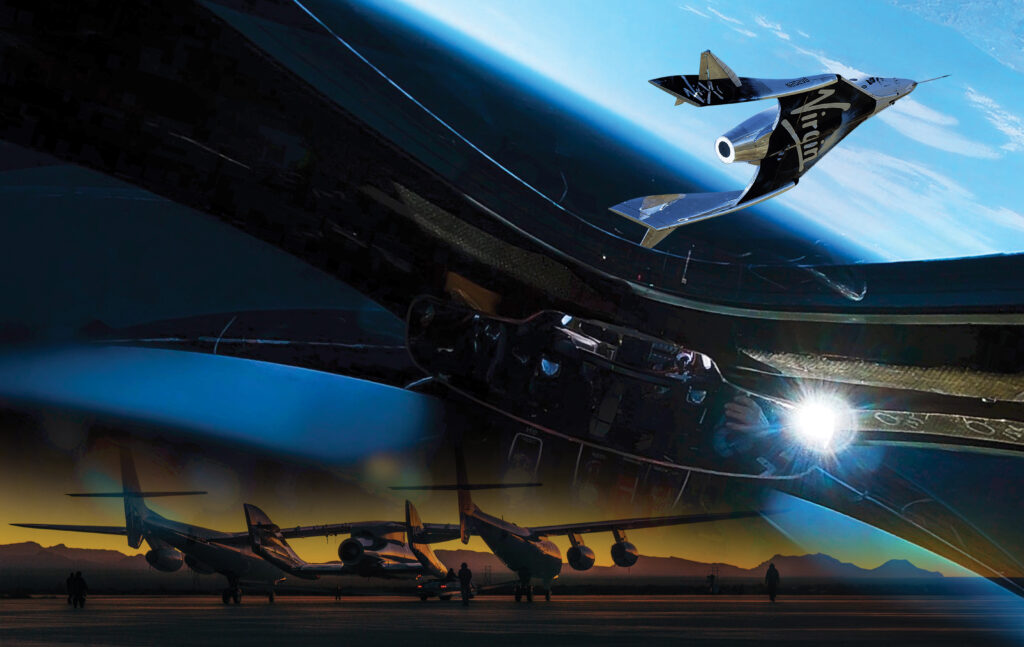
In late June, the rocket-powered Virgin Galactic 01 was released from its carrier plane and propelled itself to the edge of space, reaching an altitude of 52.9 miles and a top speed of Mach 2.88. It then entered suborbital space for about four minutes. The journey was historic as it heralded, perhaps, the dawn of mass commercial space flights – or space tourism.
Other adventurers have paid to go to space before this voyage, but these trips tended to be piecemeal arrangements and cost millions of US dollars. The Russians, for instance, have long entertained fee-paying space jet-setters, and Japanese billionaire Yusaku Maezawa, who made his fortune via e-commerce and was once a drummer in a punk-rock band, famously went to the International Space Station at the end of 2021; he now aspires to fly to the Moon. Elon Musk’s SpaceX has also sent wealthy businessmen to the space station.
Blue Origin, the private space travel company founded by Amazon’s Jeff Bezos, is another competitor of Virgin Galactic. It has already taken customers into the final frontier, though there have been no flights since last September as its craft developed nozzle failure. Operations are expected to resume later this year.
After its successful first mission, Virgin Galactic has now rolled out bolder plans; the Galactic 02 commercial spaceflight for private astronauts is scheduled to commence this month and deliver monthly jaunts thereafter. This is the culmination of a nearly two-decade vision by British billionaire Sir Richard Branson.
Dream trip
Since establishing Virgin Galactic in 2004, Branson has reportedly spent a fortune in his ambition to get mass space tourism off the ground. Last year the company reportedly made a loss of US$500 million and accrued just US$2.3 million in sales. Indeed, Branson’s wider Virgin empire was clobbered by the impact of Covid-19 and at one stage he feared all may be lost.
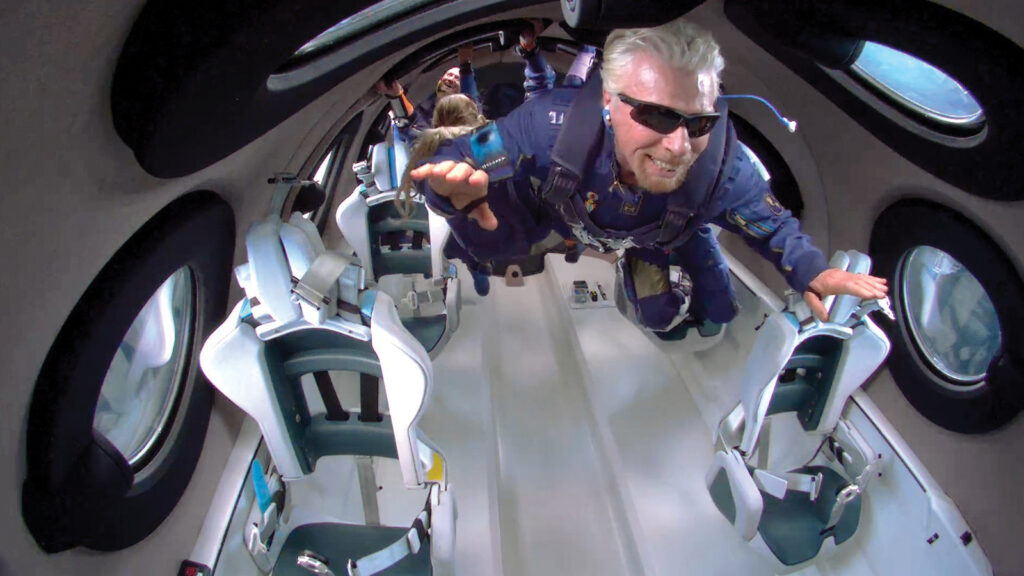
But Branson is a driven man. He conquered space himself in 2021 on a test flight, and prior to the Galactic 01 inaugural trip, he said: “I’ve always been a dreamer. My mum taught me to never give up and to reach for the stars.” He later affirmed: “Space does belong to us all.”
Commercial flights were originally due to begin last year. However, the process was delayed following an investigation into the Virgin craft deviating from its designated airspace on ascent during a July 2021 flight.
Weightless coup
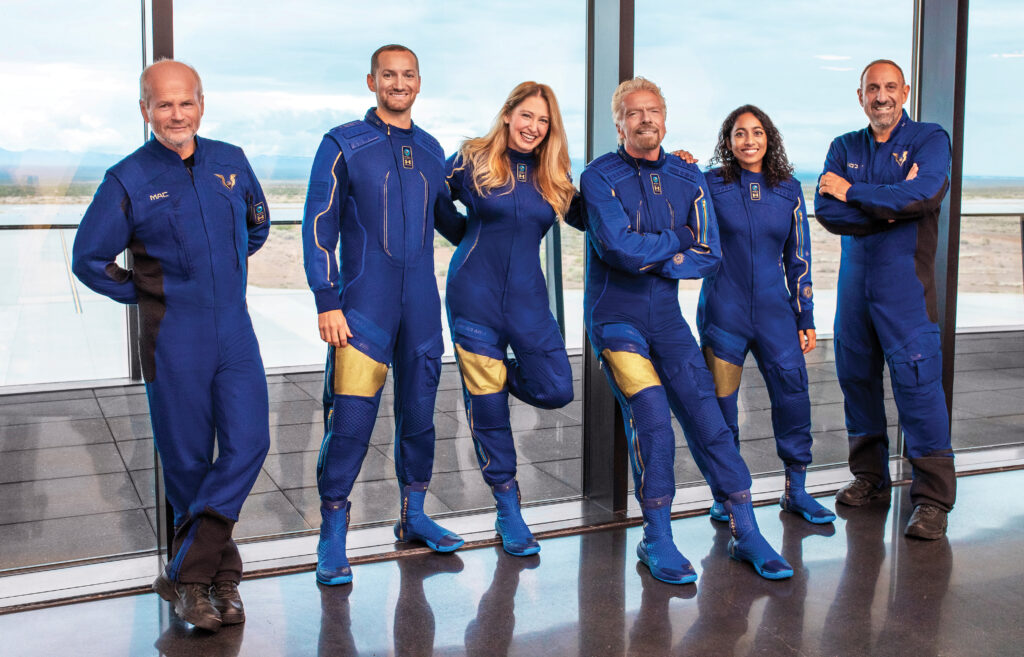
After the successful completion of test flights in May this year, the first fee-paying crew members to board the space plane were three Italians who used the voyage for research purposes. They conducted experiments involving the likes of radiation and materials science. Only one, Italian Air Force Colonel Walter Villadei, got out of his seat and fully experienced the joys of unrestrained weightlessness at the apex of the flight, unfurling an Italian flag. The other two remained strapped to their seats.
The Italians later issued a statement that the mission had allowed them to carry out their first suborbital research experiments, affording a preview of what scientific discoveries may result from reliable access to space. It is these kinds of sentiments that advocates of space tourism have long used as justification for the vast expenditure and outlay of resources involved in the dream of ordinary (well-heeled) travellers rising to the stars.
Sky-high price
The cost of a seat on a Virgin Galactic voyage has soared to US$450,000, a considerable markup on $200,000 put down by early enthusiasts. There is reportedly a backlog of 800 tickets for Branson to honour on its anticipated monthly voyages. Blue Origin tickets for suborbital flights are typically priced between US$200,00 and $300,000, with outlays much steeper for those looking to jet into orbit.
David Cullen, Professor of Astrobiology and Space Biotechnology at Cranfield University in the UK, believes normal supply and demand will affect the long-term pricing structure of space travel. More broadly, the onset of mass space tourism involves a myriad of implications and ethical dilemmas, and he and his team at the British postgraduate public research institution have been considering how biology and space engineering come together in a diverse range of situations.
It is a natural human instinct to seek the unknown and reach places few have ventured, be it the deep sea, high mountains and now the wonders of space. Cullen believes the main attraction of space for tourists joining the current suborbital flights is the brief period of weightlessness, along with spectacular views observed from the spacecraft window.
Flight risk
Such out-of-this-world experiences pose a certain element of risk. The recent catastrophic implosion of the Titan submersible on its mission to observe the wreck of the Titanic brought safety considerations of adventure tourism into sharp focus. The vessel that went down was uncertified.
Naturally, some observers will express concerns about space tourism; it is a field lacking in government regulation. Passengers on Virgin Galactic are required to sign a pre-flight waiver acknowledging the risks.
Cullen stresses that suborbital space flights (those that cannot achieve the velocity needed to circle Earth) have decent safety standards, but his optimism comes with a caveat. “The technology is clearly viable given that two different companies have already got proven technologies,” he says. “There have been zero major failures on flights to date viewed as space tourism, but as with all transport, there is a non-zero probability of failures and associated negative outcomes going forward.”
He stresses he would never make a recommendation to a potential paying customer on whether this form of travel is safe, but would educate them so they can make a better self-judgment. He highlights two potential risks: “The failure of the space system and secondly, in the future for longer orbital flights, dealing with biological/medical situations given the exposure to extended space environments.”
Sex in space
There is the distinct possibility of wealthy travellers wanting to have dates in space or even go on space honeymoons. Indeed, Cullen places romantic rocket trips as high on the list of reasons for tourists venturing into space and suggests providers may need to cater to such desires. He and his team at Cranfield University recently studied the implications of sex and uncontrolled human conception in emerging space tourism, a consideration which he feels needs to be urgently addressed.
“At present, it appears the space tourism sector has not openly considered or discussed the possible risks associated with sex interactions in space and specifically those that lead to human conception,” he says. “Further research is needed to explore the risks of early stages of human reproduction occurring in space environments of weightlessness and increased levels of ionising radiation.”
The latest Virgin Galactic mission appears to be just the start of our journey into the unknown.