


The man, the myth, the misogynist – just three of the few words that best describe Pablo Picasso, one of the world’s most celebrated artists of modern times. The many sides of his life and work come under the spotlight this year as institutions around the globe mark the 50th anniversary of the Spanish artist’s death.
Given that he was originally thought to have stolen the Mona Lisa, it’s safe to assume that the co-founder of Cubism endured early troughs among the peaks of his path to fame. Improbable though it may sound, Picasso was a prime suspect when Leonardo da Vinci’s masterpiece vanished from the Louvre in 1911. The picture was later found to have been stolen by a former museum employee, but not before Picasso was cast in a doubtful light. It was a low point in what would become a dazzling, high-profile career.
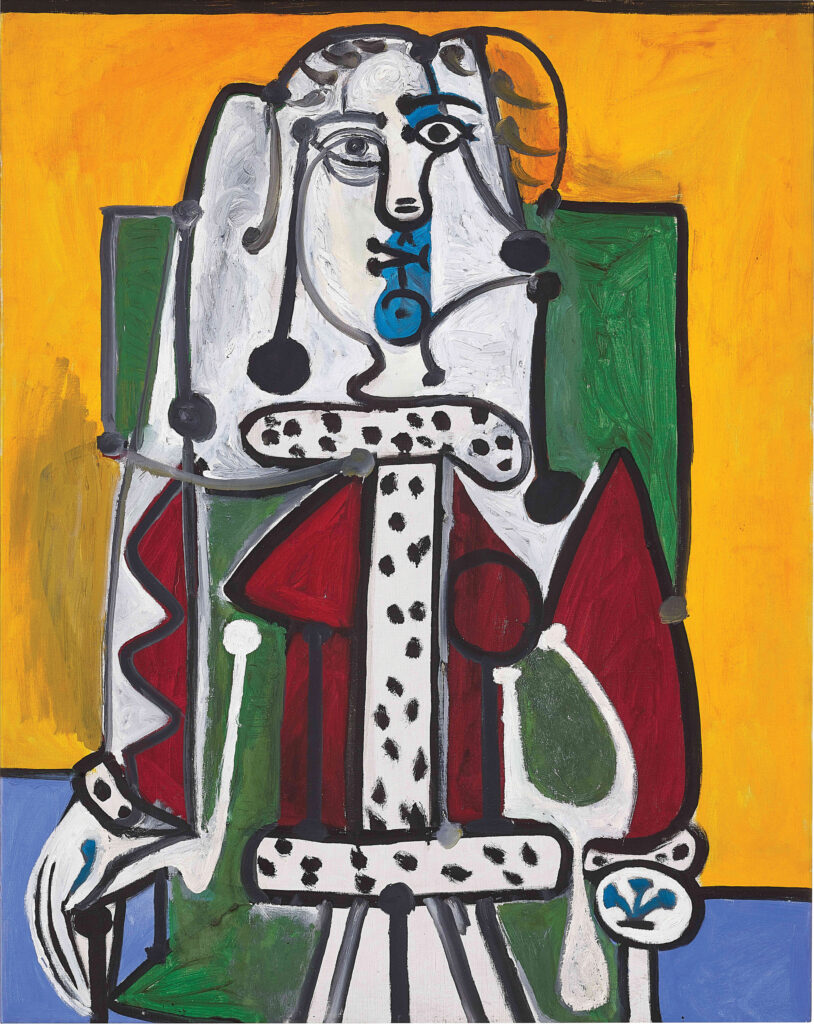
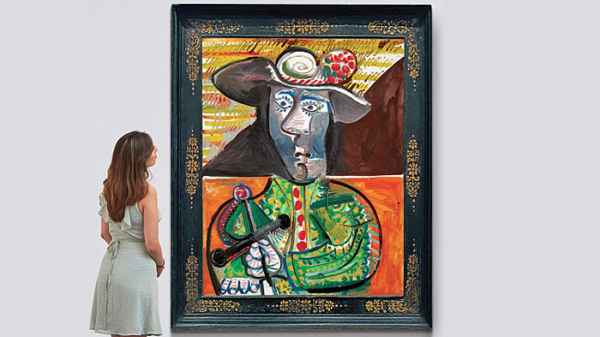
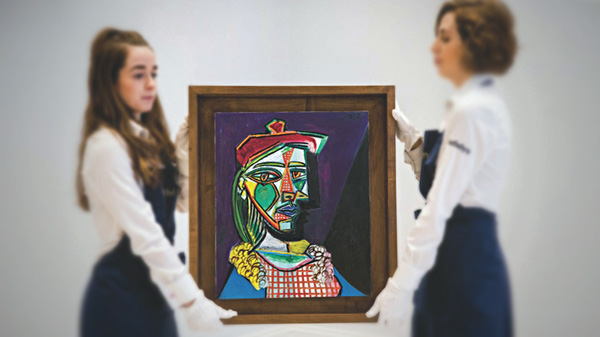
Ever prolific, Picasso created tens of thousands of works of art, experimented with a bewildering variety of styles, and never stopped innovating. His legacy is still exciting and inspiring to artists and art enthusiasts everywhere, and tributes abound half a century after his passing.
The governments of Spain and France, where he spent most of his adult life, have partnered for Célébration Picasso 1973-2023, which embraces some 50 exhibitions and events in Europe and North America. Hong Kong joined in the remembrance by showing a glistening selection of his masterpieces in an intriguing medium.
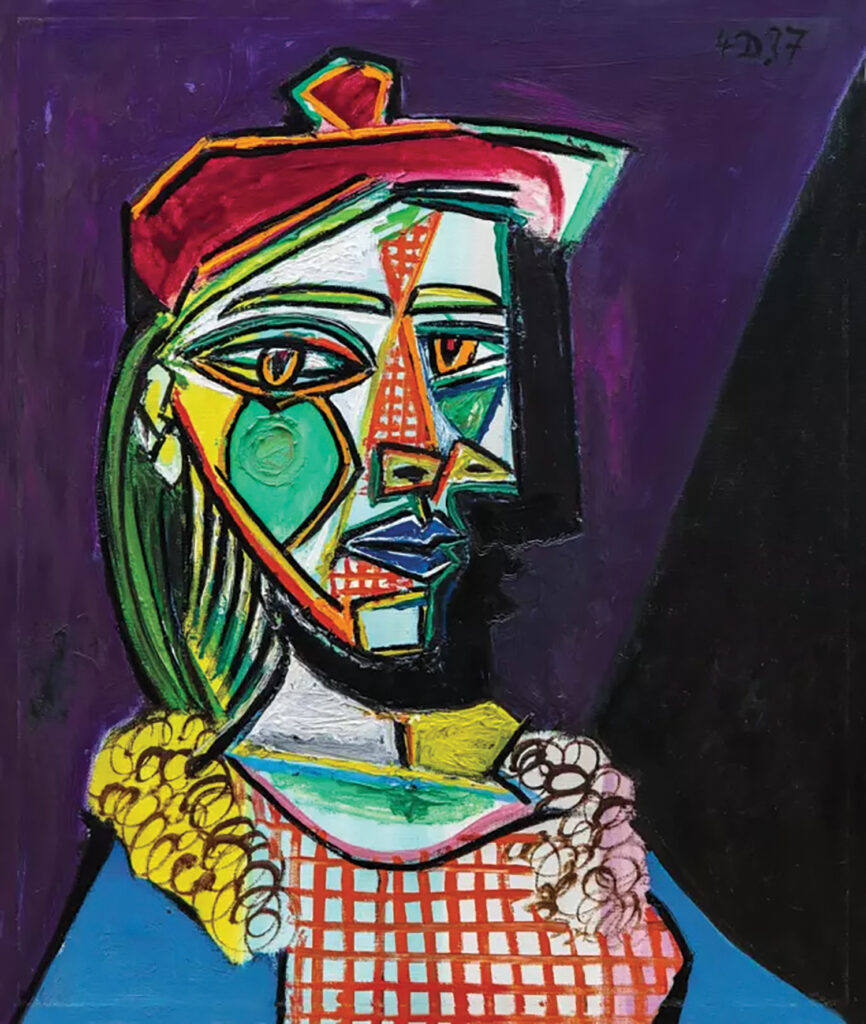
Sotheby’s, which has championed some of the happenings in this timely retrospective of his work and life, highlights Picasso’s formidable influence as the resident artist of the 20th century – an idiosyncratic eye refracting the turbulence, traumas, dreams and visions of his times into stunning visual statements that challenged convention and still pulsate with energy today.
Naturally, the Musée National Picasso-Paris is central to the year-long salute; it has already held one tribute show masterminded by British designer Paul Smith, while another from French conceptual artist Sophie Calle begins in October. It also opens a Centre for Picasso Studies in the prestigious and newly renovated quarters of Hôtel de Rohan, a short walk from the museum’s equally storied building in the Marais district. This unique resource for the artist and his subjects combines documentation, a library and archives around a research centre and a digital gateway.
Period pieces
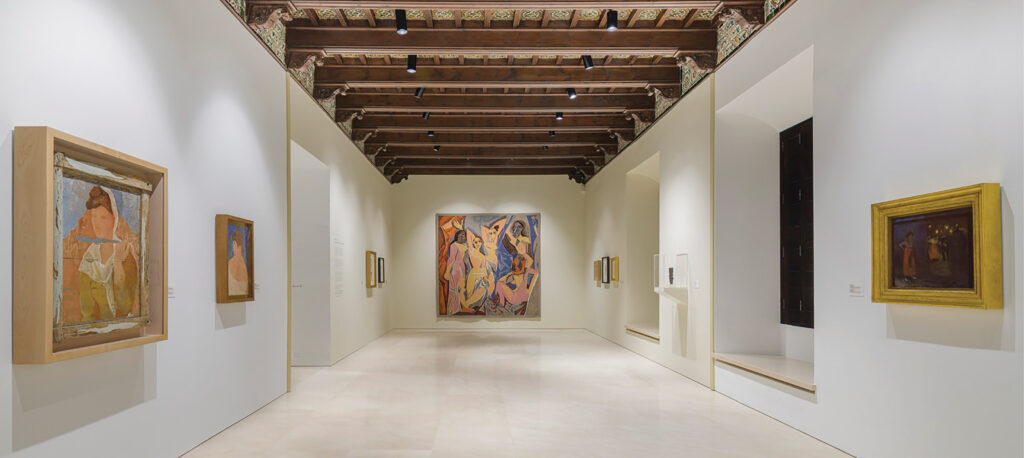
When Picasso passed away in 1973, at the age of 91, it was discovered that he kept pieces from all his periods in his 78-year oeuvre. It took seven years to complete an inventory of his works in all media, and many held by his family landed in the hands of the French authorities as payment for inheritance taxes. It was this initial body of work that enabled the Musée National Picasso-Paris to open its doors nearly 40 years ago.
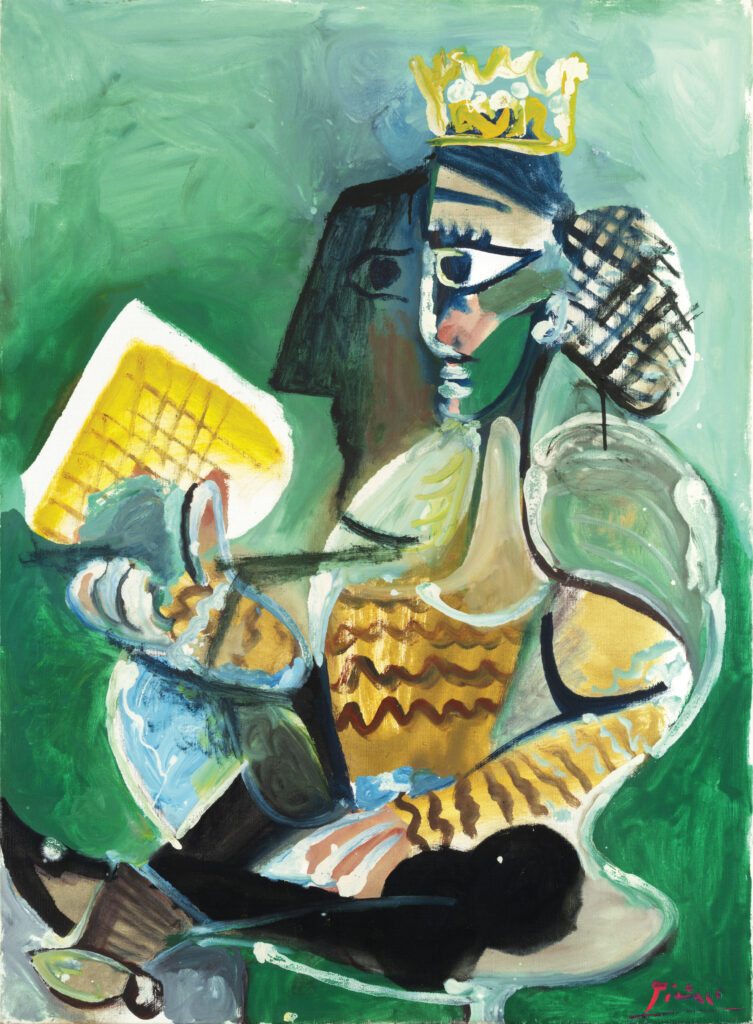
Olivier Widmaier Picasso, the artist’s grandson, gathered exclusive testimonies, historical records and personal photos from this time to make a new documentary entitled Picasso, The Legacy. Sponsored by Sotheby’s, it is an intimate exposure of the man and the splendour of his artistry.
Bohemian romance
Another way to glean more about the artist’s life is through ‘Picasso’s Montmartre with Le Meurice, Celebrating 50 Years’, an experience that combines an overnight stay at the grand hotel in Paris with a guided walking tour that propels art enthusiasts back in time to the hedonistic, bohemian era of the Belle Époque. When Pablo Picasso married Russian ballerina and early muse Olga Khokhlova in 1918, the wedding reception was held at the hotel and it was the season’s biggest affair.
Le Meurice’s expert guide succeeds in opening minds to the romance and derring-do of the youthful non-conformist in the early 1900s. When he first arrived in Paris, Picasso was regarded with suspicion as a foreigner and watched by the French police for his supposed anarchist leanings. During the walk, anecdotes are shared and landmarks are highlighted while tracing his ootsteps through the cobblestone alleyways of Montmartre where he once lived and painted.
Changing with the ages
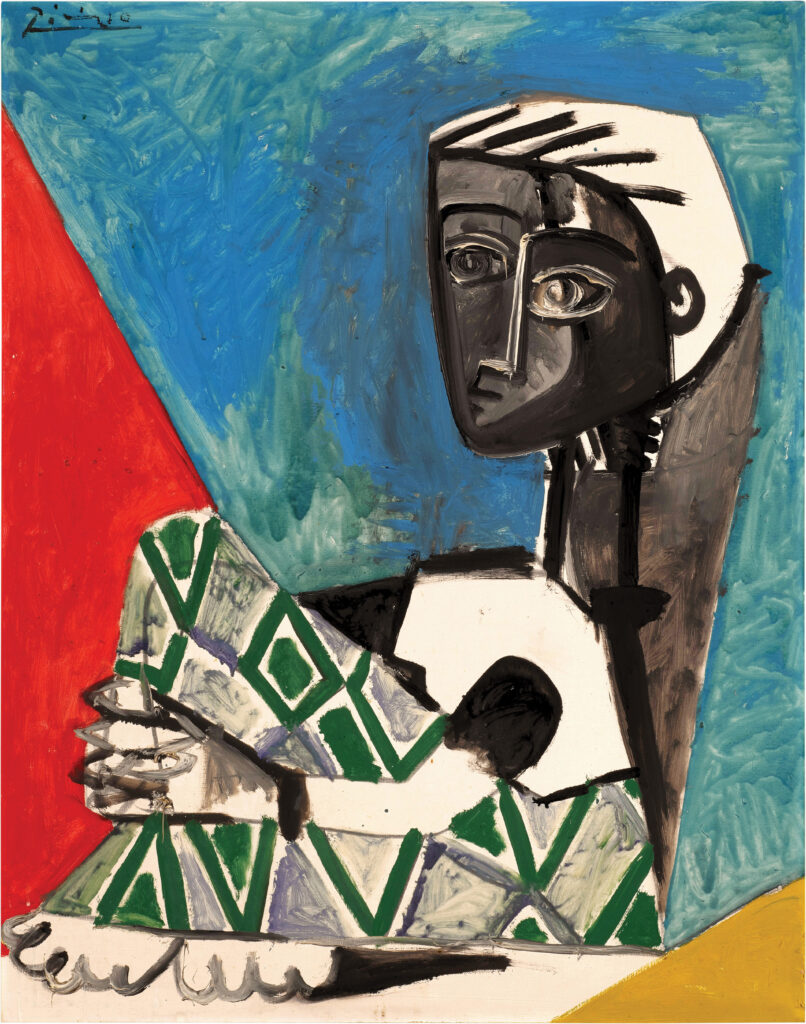
More than five decades later, in 1961, Picasso married Jacqueline Roque, the face that launched more than 400 portraits completed in the dozen years before his death. Museum Casa Natal Picasso in Málaga, Spain – the artist’s hometown – stages The Ages of Pablo, a chronological and stylistic overview of works from his formative years to the time spent with his second wife.
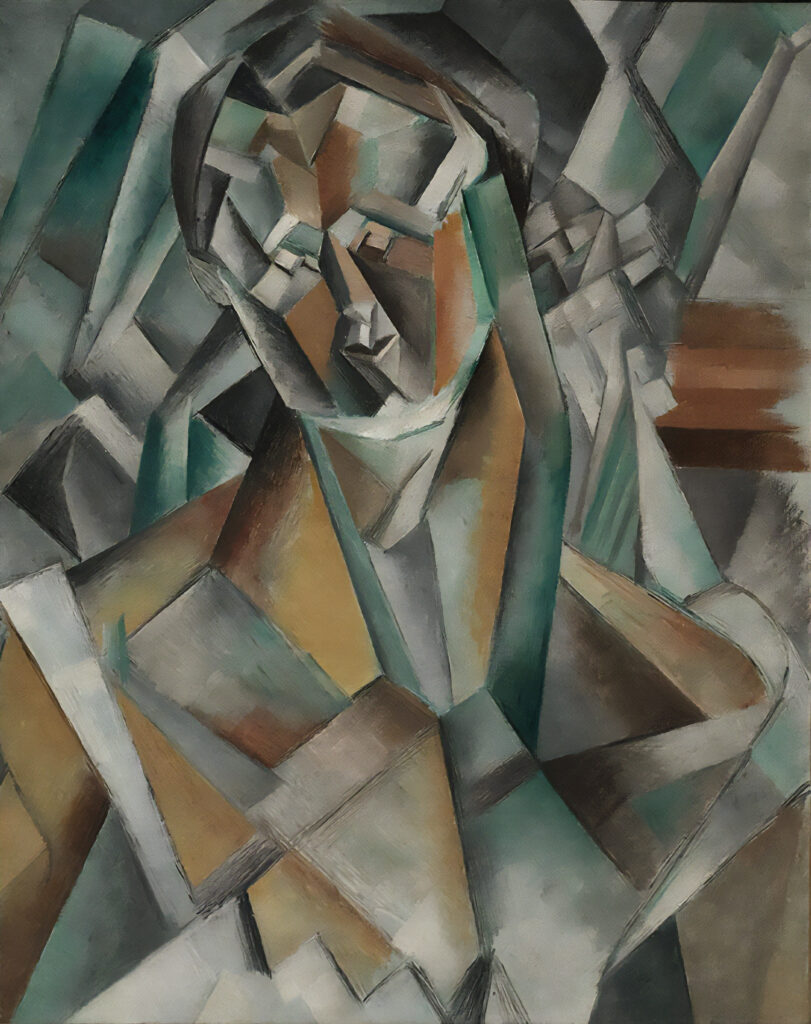
Picasso is revealed through his paintings, sketches, sculptures, ceramics and photographs, all of which have enduring value. Demonstrating his dynamic ability to convey life and emotion, the exhibition is divided into eight sections corresponding to the major phases of his art, including ‘Blue and Pink’, ‘Cubism’, ‘Classicism’, ‘Surrealism’, ‘Wartime’ and ‘The Joy of Living’.
Glass act
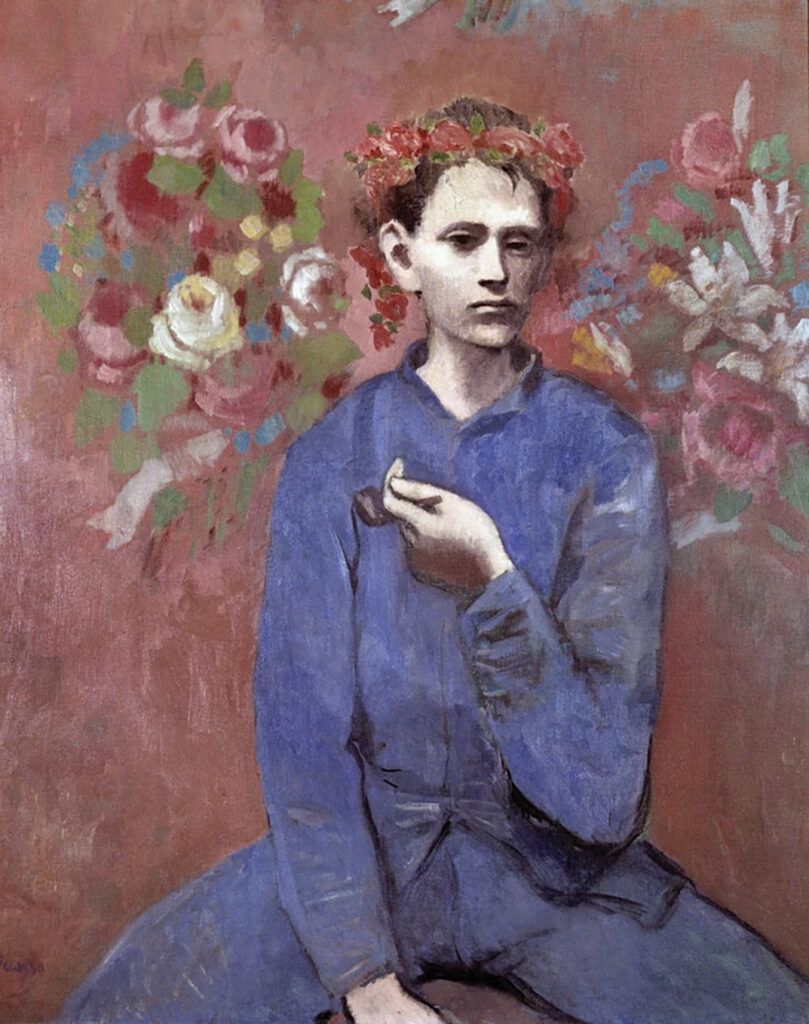
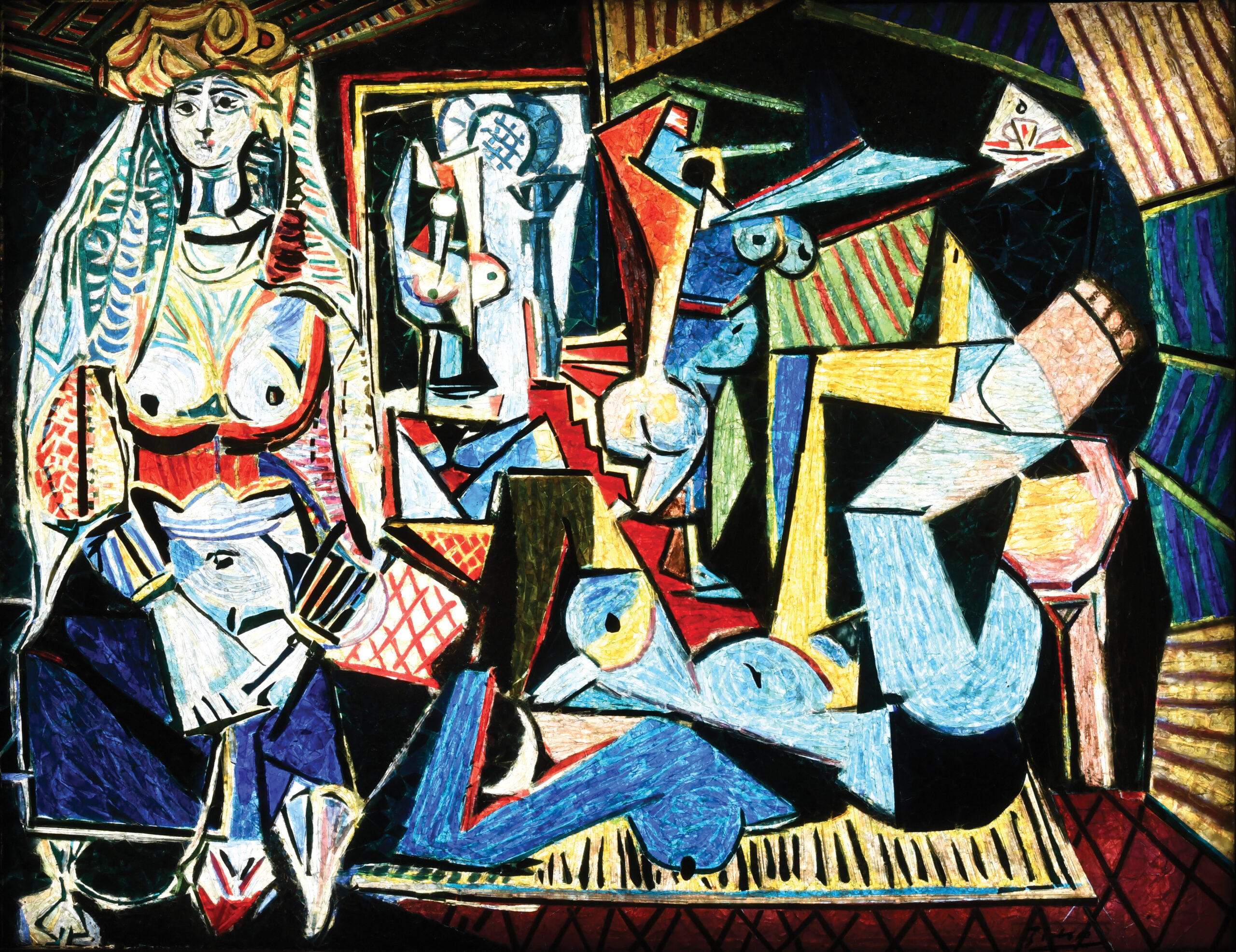
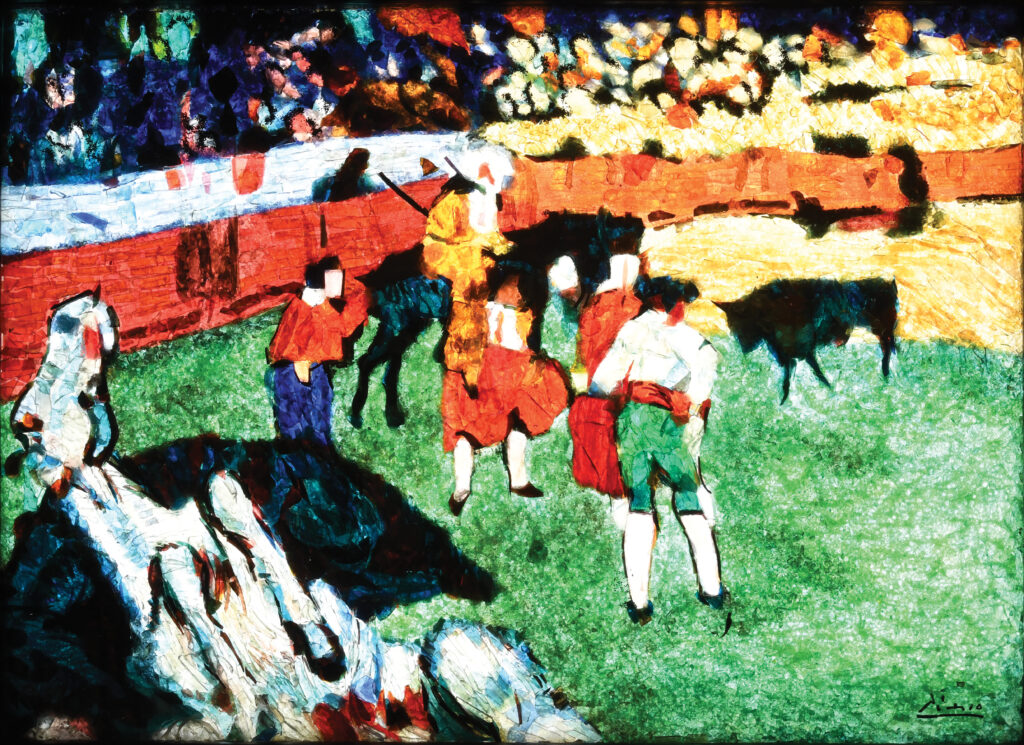
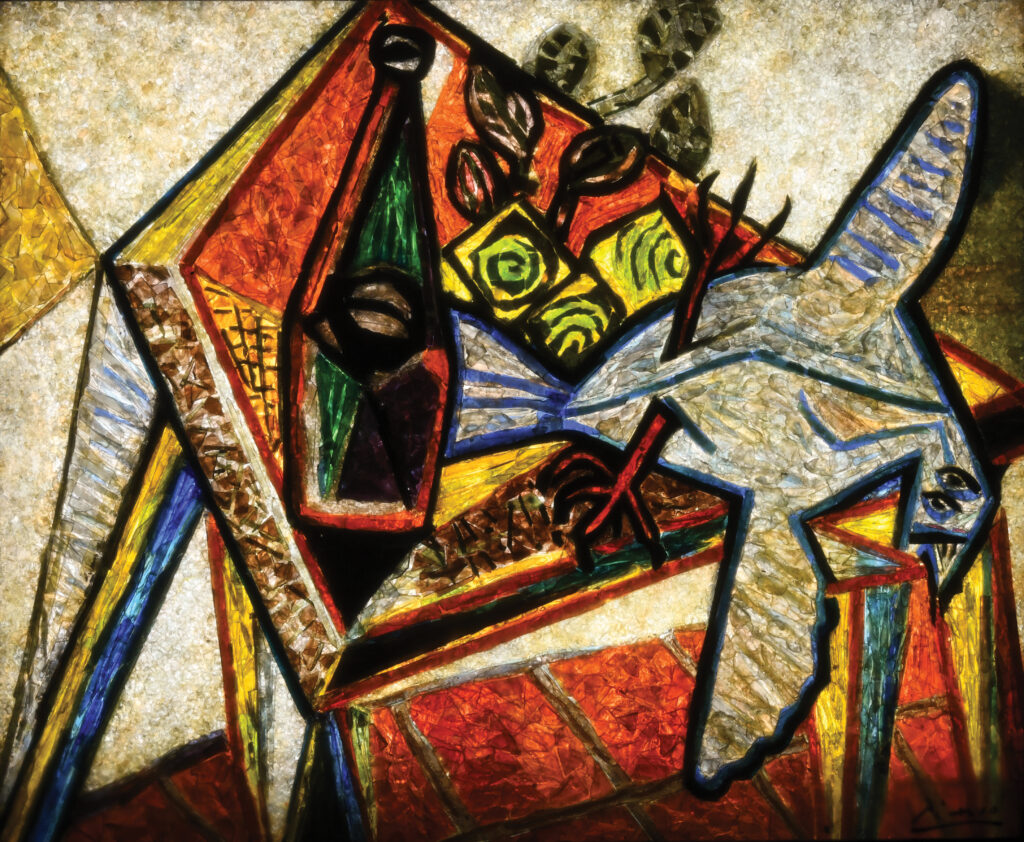
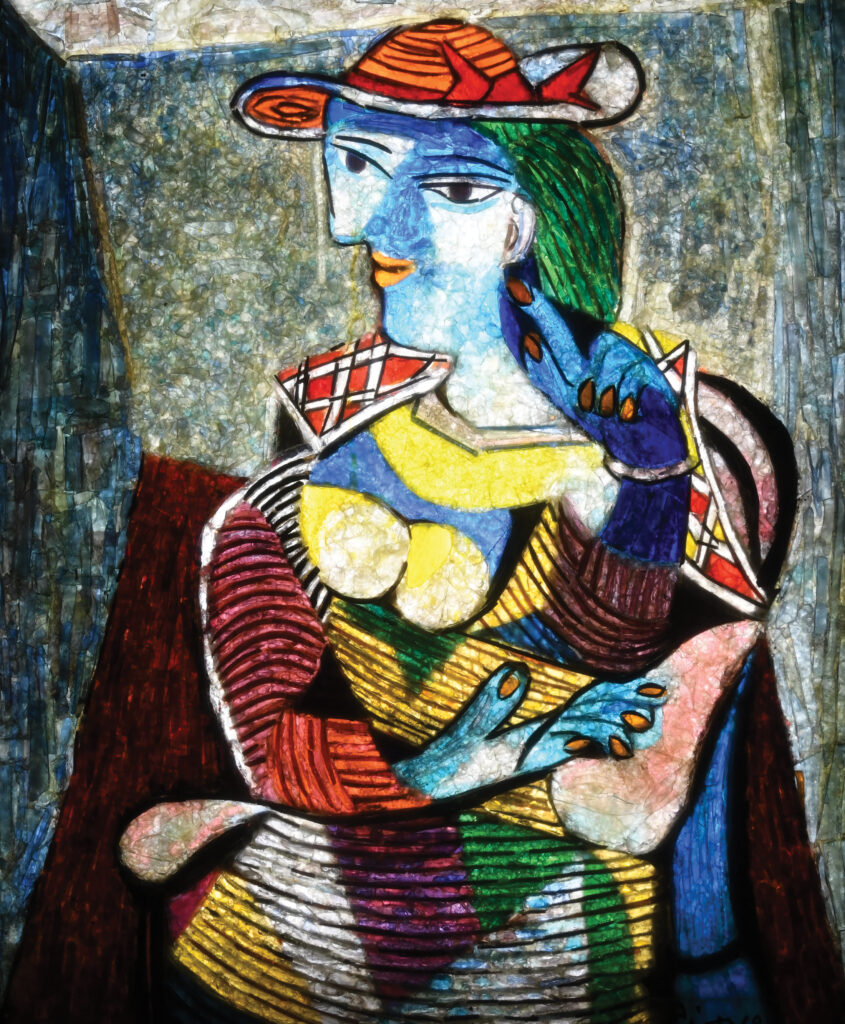
Here at home, Hong Kongers were able to join the momentous commemoration as a summer exhibition, Pablo Picasso: Paintings in Glass, threw light on some of his most-known painterly compositions. A collaboration between the University Museum and Art Gallery of the University of Hong Kong and the French May Arts Festival, it paid tribute not only to the iconic artist but also to the art form of gemmail.
A type of stained-glass mosaic developed by French painter Jean Crotti and perfected in the workshop of Roger Malherbe-Navarre, gemmail involves the expert assembly and melting of meticulously chosen pieces of glass. When Picasso first witnessed the gemmistes’ endeavour in 1954, he exclaimed, “A new art is born!” Enthused, he proceeded to layer shards of glass into graphical representations of more than 50 of his existing paintings.
The 50th anniversary of Picasso’s passing is, above all, a tremendous opportunity to honour his creative legacy while also challenging key events in his life, particularly his relationships with women who became his muses and lovers. “People were happy to be consumed by him,” his daughter Paloma Picasso, the jewellery designer, has said. “They thought it was a privilege. If you get too close to the Sun, it burns you. But the Sun can’t help being the Sun.” As evidenced by many of his life documentations, Picasso cared primarily for his creations, but what creations they were!
Photos: University Museum and Art Gallery, The University of Hong Kong