Rise of the Titans: Watches crafted from titanium meld lustrous, lightweight allure with great strength

Used by the finest watchmakers for more than 50 years, titanium is blessed with many highly desirable characteristics. While possessing the hardness of stainless steel, titanium is far lighter and it offers excellent resistance to corrosion and hypoallergenic qualities. Sophisticated craftsmanship enables the metal’s precise honing into cases and bracelets of the desired specifications. Its range of hues provides an appealing – and much utilised – extra layer of versatility, too

A combination of strength, lightness and rust resistance explains why titanium is widely used in other precision industries including the automotive, aerospace and marine sectors. Medical instruments, like quality watches, benefit from its skin-friendly properties. Pure, grade 2 titanium or the harder, grade 5, a titanium alloy including vanadium and aluminium, is the metal of choice in watchmaking.

Vacheron Constantin utilised the noble qualities of the metal in a new all-titanium version of the Overseas Tourbillon. By incorporating the robust, featherweight and hypoallergenic qualities of grade 5 titanium into its Overseas catalogue, the Maison gave a further fillip to the sporty and hard-wearing characteristics of the collection.

Unveiled at last year’s Watches and Wonders, the new timepiece is distinguished by the aesthetics of its translucent blue-lacquered dial – emblematic of the line – featuring a sunburst satin-finished base complete with velvet-finished flange. Given the rigidity of the material, the titanium-hewn case, bracelet, crown and bezel required extremely careful workmanship. Powered by the in-house, ultra-thin, self-winding Calibre 2160, the watch is further enhanced by a tourbillon regulator visible at six o’clock through an aperture in the dial.

Chopard has also harnessed the outstanding resistance and aesthetics of this metal to accentuate the signature qualities of some of its finest watches. For instance, the ultra-thin Alpine Eagle 41 XP TT (technical titanium) in grade 5 titanium radiates a darker hue than steel and attributes like lightness of feel and supreme resistance to corrosion will strike a chord with outdoor sports enthusiasts.

Its latest limited-edition L.U.C Full Strike, meanwhile, utilises the enhanced qualities of ceramicised titanium to house its famous minute-repeater movement. Achieved by the oxidation of the surface layers of titanium at extreme temperatures, ceramicised titanium is even harder than grade 5 titanium and in no way compromises the quality of chime emitted from the solid sapphire gongs attached to a sapphire crystal resonator. Joining other special editions crafted from gold, steel, platinum and sapphire respectively, the anthracite hue of its ceramicised case contrasts beautifully with a verdigris (grey-green) brass dial with a finely frosted centre.

A brand with strong aviation roots, Longines has recently added a model adorned with titanium to its Pilot Majetek range. The Pilot Majetek Pioneer Edition pairs a 43mm cushion-shaped case in grade 5 titanium with a signature bidirectional rotating bezel with Starting Time Indicator – details, along with the recessed dial at six o’clock, that betray a flying tradition. At back, the inhouse calibre L893.6 offers high resistance to magnetism and the case is engraved with the words “Pioneer Edition / One of 1935”.

Maurice Lacroix combines the fine qualities of both grades of this light metal for its new 42mm Aikon Automatic and 44mm Aikon Automatic Chronograph timepieces. Some sport dials of incredibly rich colours that perfectly offset the titanium hues of the case, while an intriguing interplay of finishes between grade 2 and grade 5 is also conjured.

Richard Mille uses the tensile and aesthetic properties of the grade 5 alloy to enhance and project the taut features of its RM 17-02 Manual Winding Tourbillon. The showcase tourbillon movement is housed in a titanium case; skeletonised baseplate and bridges come in the same choice of metal with black PVD treatment. In a show of modern and technical sophistication, the finely textured satin-finished alloy accentuates the three-part tonneau shape and line configuration of the timepiece.

Krayon’s workshops in Neuchâtel, Switzerland, have released their first titanium watch in the form of Anywhere Aurora. Powered by the Calibre C030 movement designed by brand founder Rémi Maillat, this ultra-slim watch weighs just 50g thanks to its titanium construction and the light but super-hard material is shaped and polished assiduously by hand.

The smooth glow of the shimmering case contrasts superbly with an emerald-green dial that changes radiance – from pale to iridescent tones – according to the angle of the sun’s rays. This feat is enabled by an Atomic Layer Deposition process, which coats the dial with ultrathin films of select compounds that can interact with the light. Underscoring the technical marvels of this watch, a peripheral ring around edge of the dial is split into day (mother-of-pearl white) and night (deep green) sections which change length as the days pass and seasons change – a masterstroke that can be altered as the wearer moves around the globe.

A satin-finished and polished titanium case, case back and bezel sets off the masterful visual imagery of Hublot’s Spirit of Big Bang Titanium Dragon. An amazing three-dimensional, multi-level dial recreates the traditional Chinese paper-cutting art of Chen Fenwan, morphing the watch face into a silhouette of a dragon. This fantastical motif continues its journey along the scale-like marquetry bracelet.

By introducing the Chronodate Titanium Magnetic Silver watch, Angelus embellishes its Chronodate range with a new tone-on-tone colour scheme. Bezel, bracelet, folding buckle, crown and monobloc middle case are all crafted from titanium, projecting a grey hue which extends into the sunray-brushed ‘magnetic silver’ dial. The design of the latest timepiece is deliberately configured to offer enticing colour contrasts.

Ressence’s Type 3 Eucalyptus watch features a unique titanium dial in an attractive soft green hue and a futuristic look. Backed by a patented automatic movement offering 36 hours of power reserve, its 44mm case – also crafted from grade 5 titanium – is partly filled with oil to ensure that the floating hands-free dial can be read from all angles through indicators for days, seconds, minutes and hours. A textile strap is fashioned from plush Alcantara.
State of Mind: Musicians have long sung the praises of the Big Apple. Here’s a home worthy of the hype

New York has long been an inspiration to entertainers. King of Cool and avant-garde singer-songwriter Lou Reed had a long-standing love affair with the place, and his biggest hit, Walk on the Wild Side, is set on its very streets.

Other musicians have been similarly captivated by the city that never sleeps. Piano man Billy Joel wrote the classic tune New York State of Mind in its honour, and legendary crooner Frank Sinatra possibly summed it up best with his bold, brassy version of New York, New York.

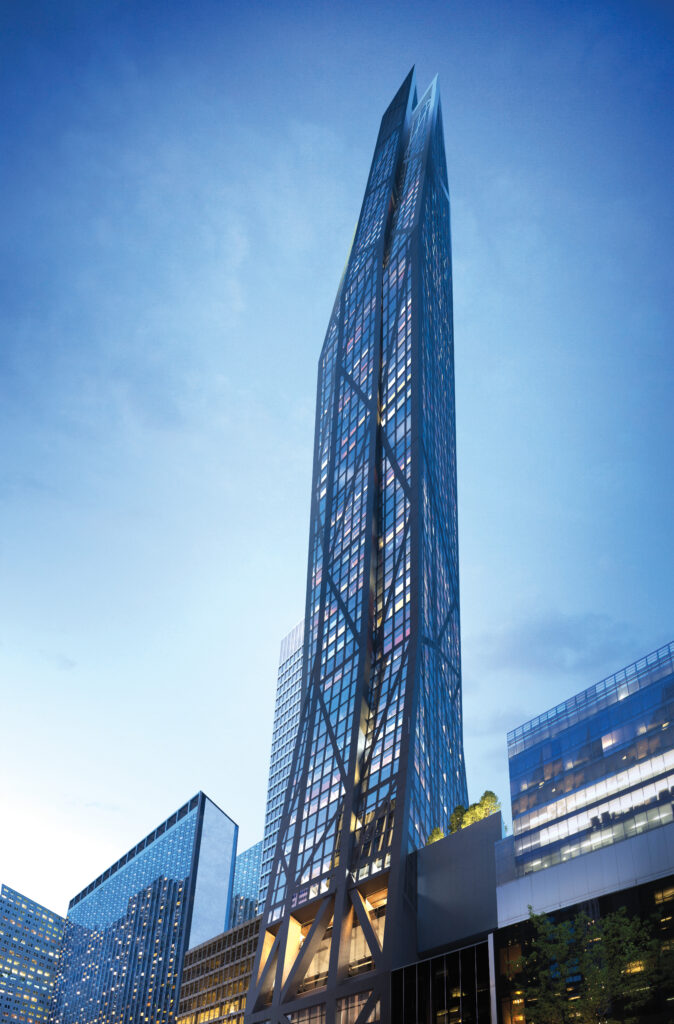
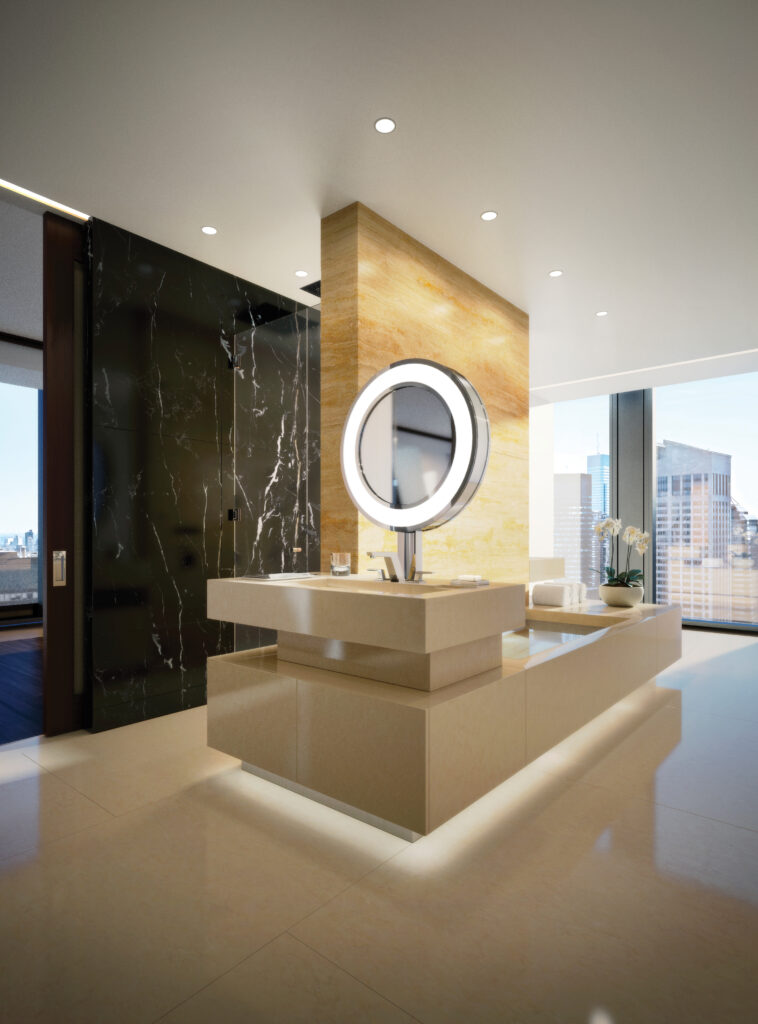
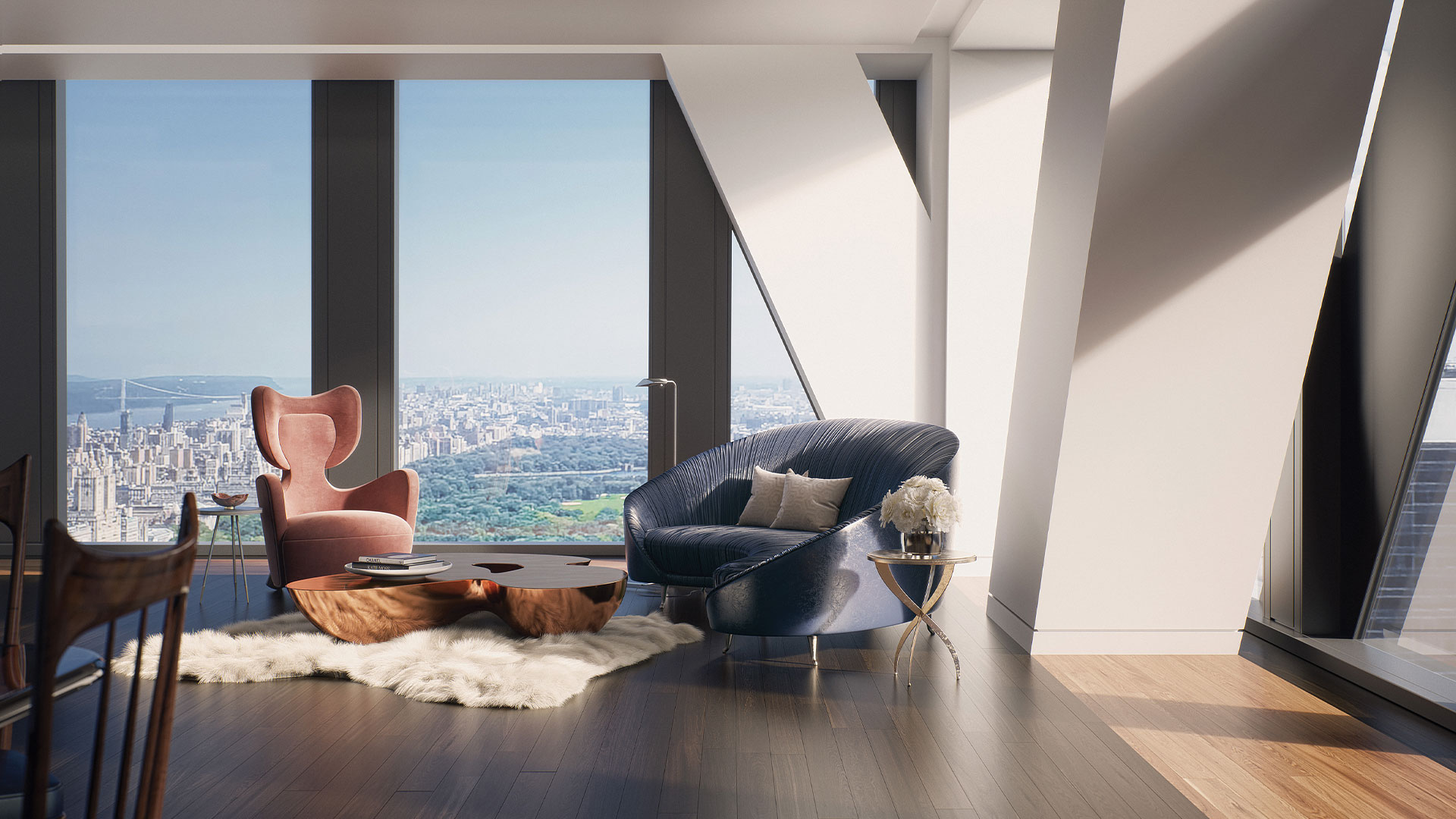
Following in this artistic tradition, our featured home this month is a modern, lofty perch situated above the Museum of Modern Art in one of New York’s most exclusive and stylish locales. The development at 53 West 53rd Street in downtown Manhattan is not yet completed, but it is on track to become one of New York’s ritziest residences. Once finished, the 1,050-foot-high tower will reshape the city’s skyline and become an attraction in its own right.

The tower – dubbed 53W53 – was designed by acclaimed French architect Jean Nouvel. His striking design for the building’s exterior, referred to in the architectural trade as a diagrid (a portmanteau of diagonal grids), is somewhat akin to an abstract sculpture – making it an appropriate home for the three floors of museum gallery space that can be found inside. The building’s intriguing and imposing look beckons the would-be homeowner to explore the world within.

Nouvel is a highly credentialed architect and designer, and is worthy of a project of such ambitious scope. A winner of the Pritzker Prize for Architecture, his diverse body of work is as impressive as it is varied. His past projects have included museums, concert halls, luxury residences and cultural commissions such as the Louvre Abu Dhabi and the Fondation Cartier in Paris.

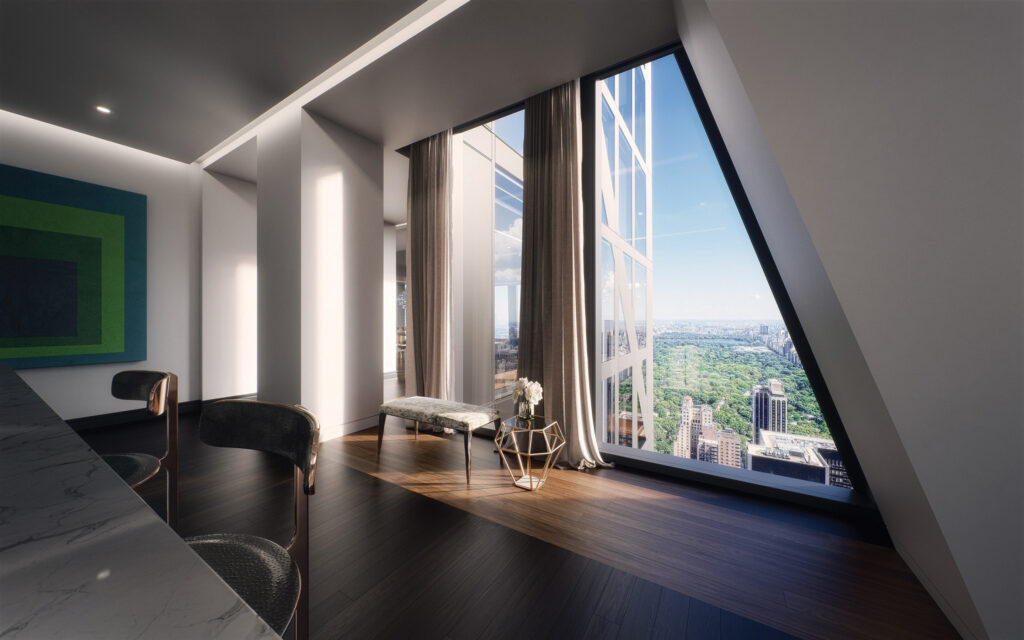
One loft in particular at 53W53 is a modern delight fit for a city slicker with refined tastes. Inside the 3,952-square-foot, three-bedroom home, there’s a gracious entry hall, a grandly proportioned living room, a palatial master suite with the aforementioned breathtaking views and two superbly appointed bedrooms, replete with en-suite bathrooms.

Interiors come courtesy of New York-based architect, designer and artist Thierry Despont. In the past, he has lent his talents to the Ritz in Paris, the Dorchester Hotel in London and Harry Winston’s flagship store in Beverly Hills.

Despont’s impeccable taste and attention to detail, apparent in all of his private dwelling projects, is on show here at 53W53 as well. His deft touch is to thank for the understated lighting fixtures and bespoke kitchens and bathrooms found within. Masterfully crafted mahogany doors with custom-designed bronze trim echo the tower’s distinctive outline.

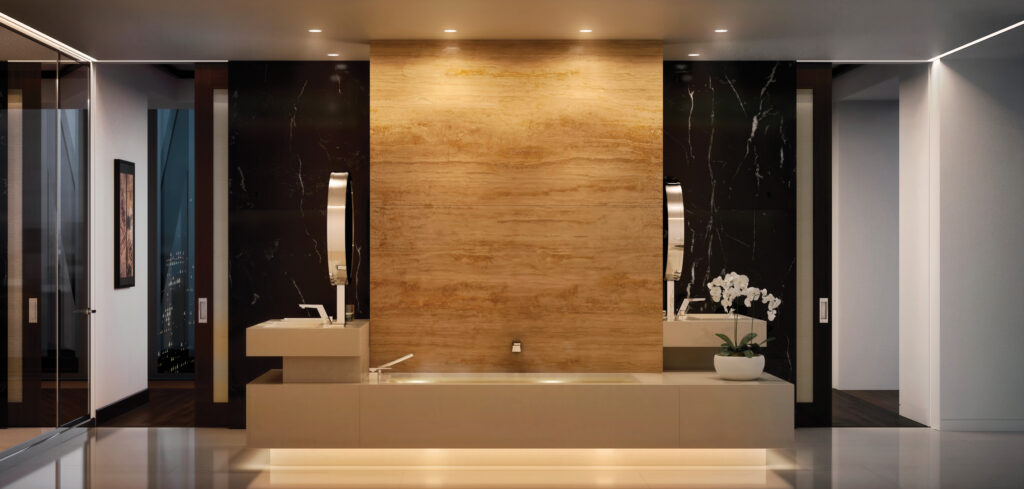
The dwelling also boasts an amply windowed kitchen with cabinetry by Italian furniture maker Molteni, classic marble countertops with backlit backsplash and state-of-the-art appliances by Miele and Sub-Zero. The master bedroom ensuite incorporates Verona limestone slab floors and golden travertine feature walls, as well as a luxurious master bath that is spacious enough to stretch out in.

Perhaps best of all, generously proportioned floor-to-ceiling windows allow for expansive views of both Central Park and the Hudson River. As for the building’s location, in terms of entertainment options you really are spoilt for choice. The residence is within walking distance of premiere live venues Carnegie Hall and Radio City Music Hall (located in the Rockefeller Center), plus St Patrick’s Cathedral, Times Square, Christie’s, Macy’s and the Empire State Building. It’s even a stone’s throw from Trump Tower, which – depending on whose dinner party you’re attending – might or might not be a good thing to mention.

It’s also within a five-minute walk of countless shops, five-star restaurants, health clubs and spas, markets and schools. Top-notch eateries in close range include Randolph’s, China Grill and the 53rd Street Gourmet Deli, and several subways stations are conveniently close by.

The loft – offered by UK real estate agent John D Wood and its US affiliate, Corcoran Group – could be yours for US$18.95 million (HK$147.6 million). Stump up for the annual $8,000 maintenance and common charges fee and the $3,849 monthly management fee and if you’re lucky, you’ll still have enough left over for a bagel and coffee on Lexington Avenue.

If this home doesn’t exactly meet your size requirements, fear not – there are other options available. Each of the 145 apartments at 53W53 is a unique dwelling in its own right. Incredibly, our featured home is not the most expensive one on offer. For those feeling particularly cashed up, its four-bedroom, four-bath – and considerably more spacious – big brother is going for $50.75 million.

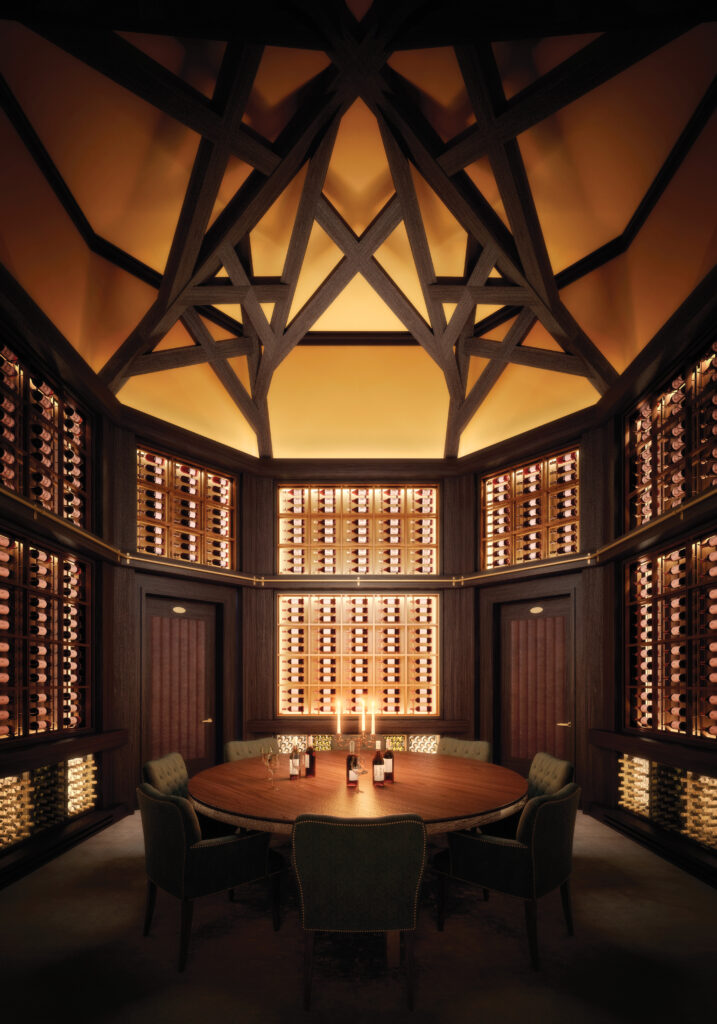
Within, it boasts a lobby library with open fireplace, wine vault, a wellness centre, squash courts, a pet-care service, 24-hour concierge and even a doorman to gently remind you to “have a nice day” as you set forth into the wider world. You even get a complimentary membership to the Museum of Modern Arts. And if money is no consideration, there are still other apartments available that are priced up to $70 million.

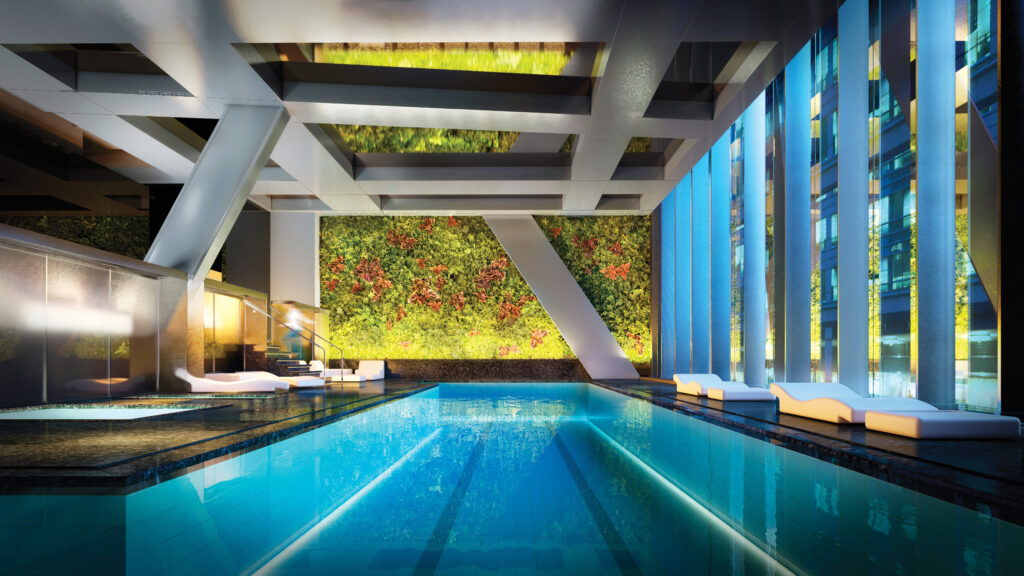
One of 53W53’s most impressive features is its stunning swimming pool, set against a backdrop of lush vertical gardens that were created by acclaimed French landscape designer Patrick Blanc. There’s a cold-plunge pool, a hot tub and a 65-foot lap pool. At 53W53, the sublime surroundings and luxurious amenities afforded to residents make it easy to forget your problems and kick back by the poolside with Billy Joel crooning from your headphones. After all, life is all the more enjoyable when you’re in a New York state of mind.

For more information on this listing, visit www.johndwood.co.uk.

A Matter of Facets: Natural diamonds have endured a rough few years, but they are recovering their supreme allure 

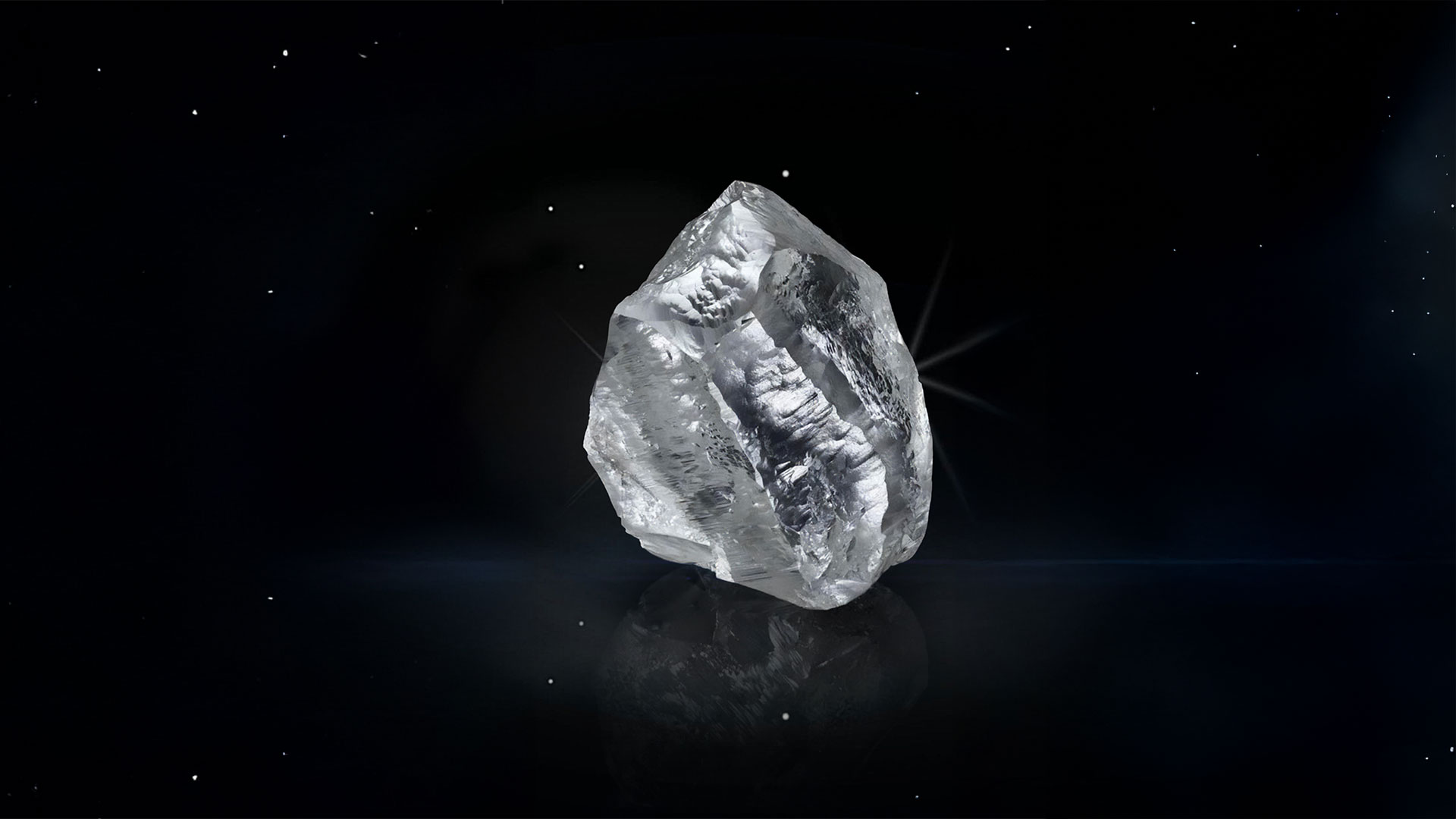
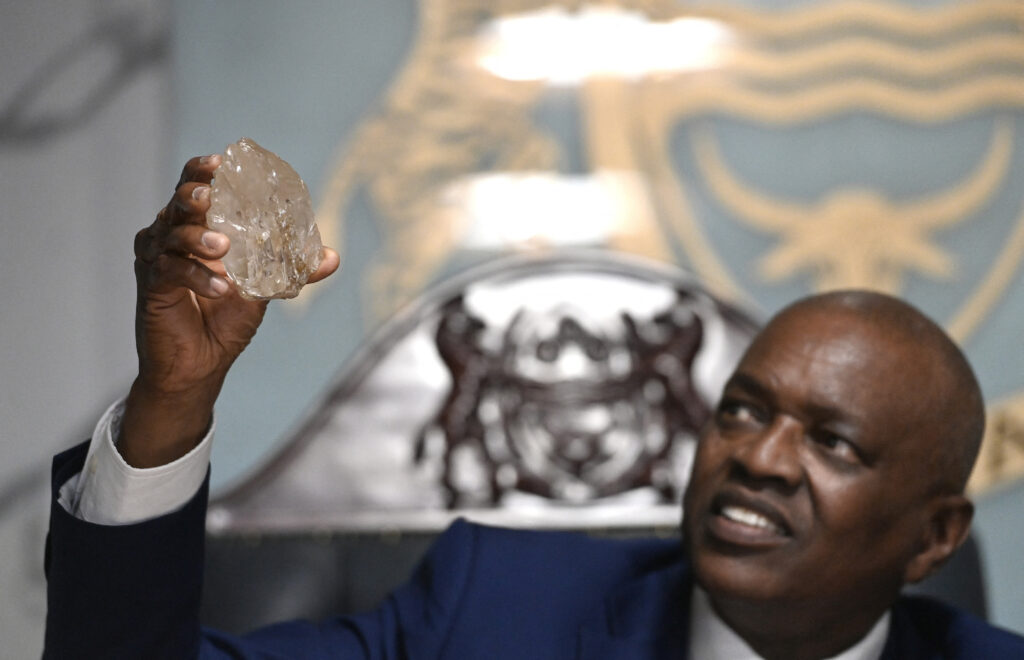
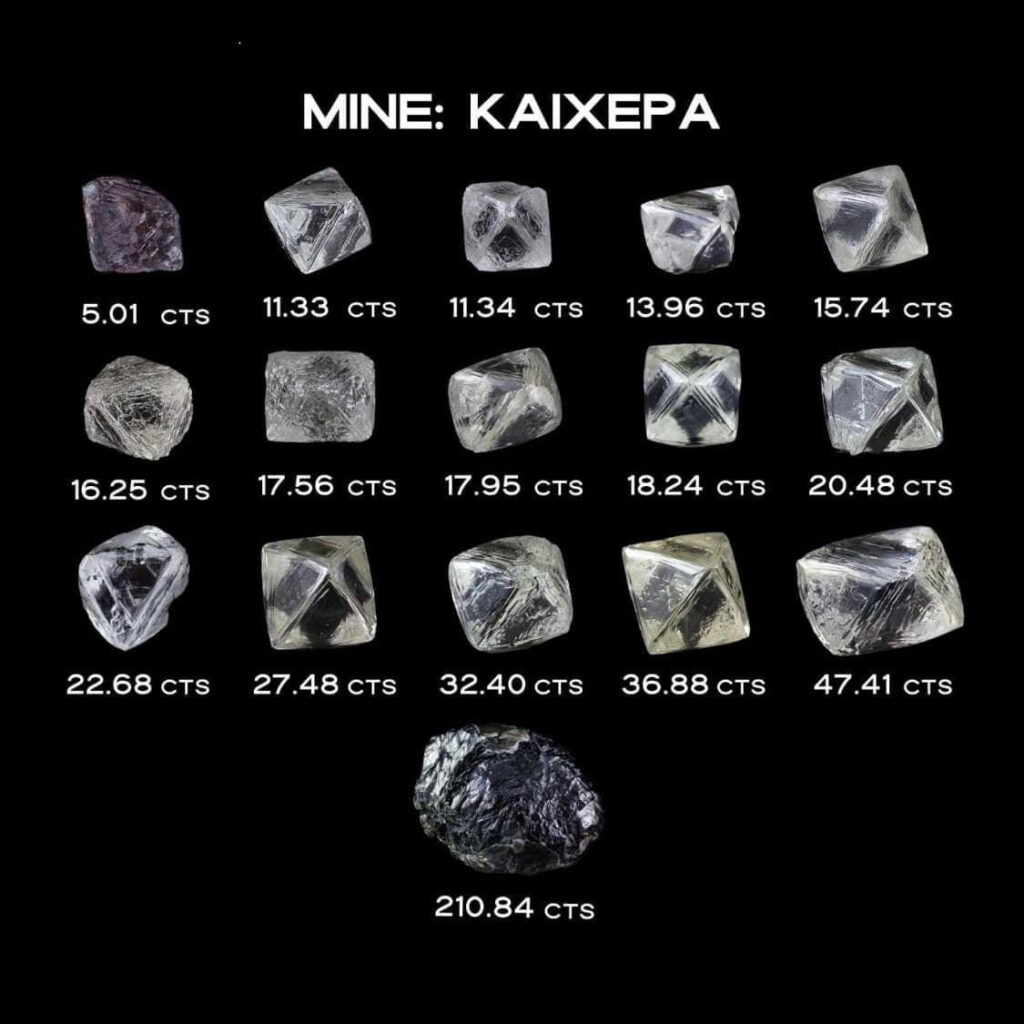
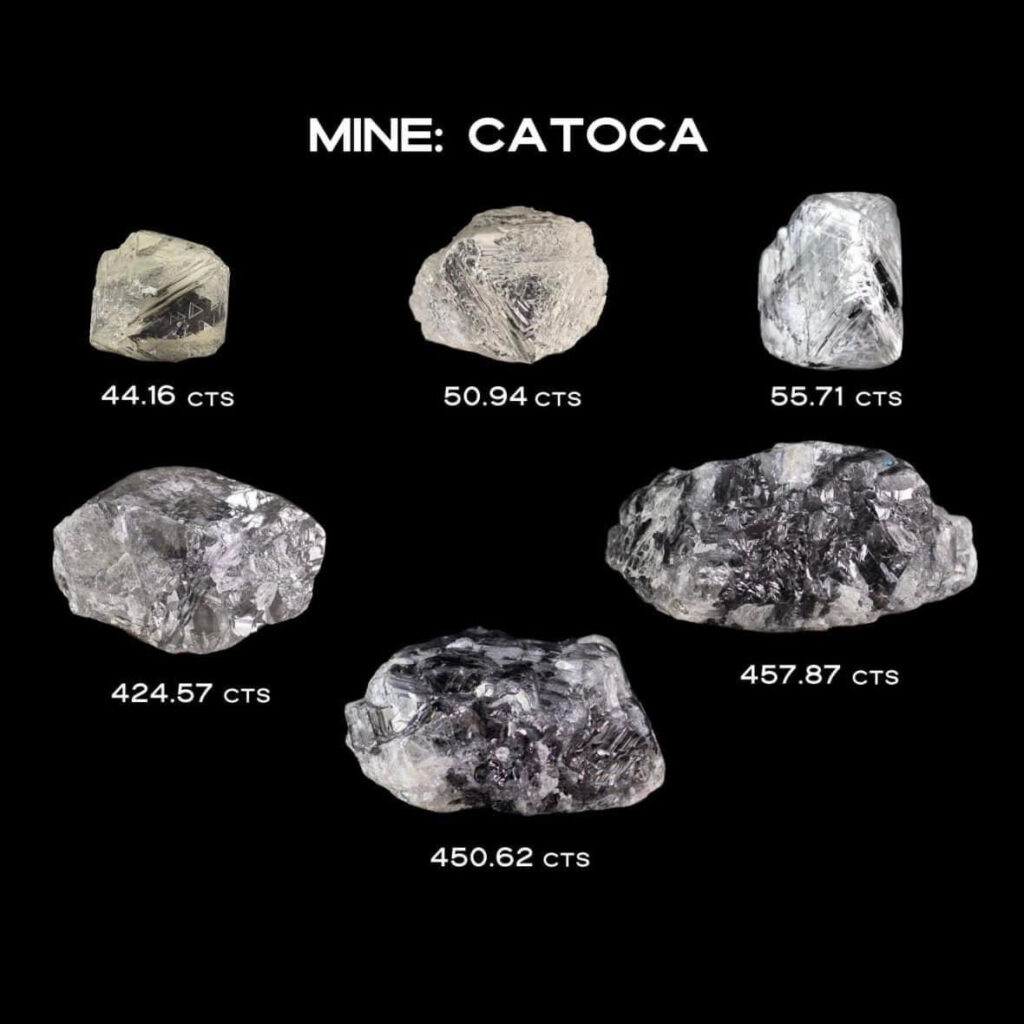
The recent huge diamond find in a mine in Botswana could not be better timed to renew the sparkle of a luxury sector plagued by flagging sales and struggling to outshine consumer demand for synthetic alternatives. Discovered by Canada’s Lucara Diamond at the Karowe mine this August, the 2,492-carat rough diamond is the biggest gemstone-quality discovery for about 120 years. The previous whopper, the Cullinan Diamond unearthed in 1905, was cut into faceted gems and now forms a part of the British Crown Jewels – putting the enormity of this recent discovery into historical perspective.

The potential of a fillip to the natural diamond market is much needed as industry sources suggest prices have dropped by more than 30% since a peak in early 2022. Such was the concern in the sector that last October De Beers suspended all online sales for rough diamonds in a bid to halt the slide. Other major players also ceased auction sales last year to suppress supply.

“The demand for [natural] diamonds has declined as its allure fades in a key consumer market, China,” says Sam Kima, Senior Vice-President of First Gold. “Falling marriage rates as well as growing popularity for gold and lab-grown gems all drove down Chinese demand for diamonds.”

He also points out that despite Indian manufacturers reducing production, sales fell at a sharper rate due to weak demand. India is thought to cut and polish about 90% of the world’s rough diamonds. “This led to an oversupply and pressure to sell. Synthetics continued to take market share from natural diamonds and will likely do so throughout 2024,” he opines.

Synthetic alternative

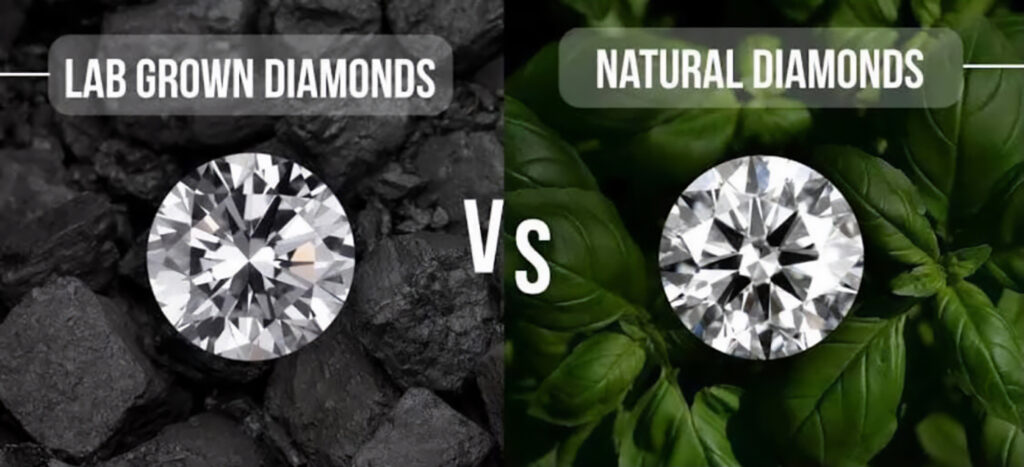
Kima suggests the price dynamics of lab-grown diamonds (LGDs) are offering affordable alternatives to consumers on a budget. “A natural stone costs roughly US$2,500, versus about US$500 for a same-quality lab-grown equivalent,” he says. “A natural two-carat round-cut diamond with a high-quality colour and clarity rating costs about US$13,000-14,000, whereas the equivalent LGD sells for about US$1,000.”

He also highlights that loose LGD sales soared 47% in 2023 compared with one year earlier.

“Theoretically, the only limitation on the supply of LGDs is the rate at which they can be made. With demand increasing, more producers are entering the LGD market and prices are dropping even further.”

Industry analysts have speculated that the boom in LGDs may now have peaked, and there are reports that some retailers are switching back to natural stones to boost profitability and margins. “Demand remains robust for natural diamonds and while they are much rarer than lab-grown, their supply is also quite tightly controlled so that prices stay robust,” says Kima.

He also questions how sustainable synthetic diamonds really are, calling for further research, and highlights other advantages of natural stones: “There is a unique rarity about natural diamonds and the journey they go on before becoming beautiful pieces of jewellery. The initial investment for a natural diamond may be higher, but their timeless elegance will never go out of style, or value.”

He insists that LGDs do not have the rare qualities and long-lasting value of natural diamonds, or their sentimental value and potential for investment. He says consumers should make up their own minds based on their values, budget and the significance of tradition, and warns that consumers should be aware of misleading marketing.

Natural shift / Lab implosion

David Kwok, founder of Absolute Luxury, a strategic consultancy dedicated to premium and luxury jewellery brands, thinks retailers will progressively move away from LGDs. In his view, the gigantic volumes required to sustain the lab-grown business to cope with the current economic environment has created a “vicious circle”.

Though manufactured diamonds now account for a sizeable chunk of the jewellery market, the dramatic 90% drop in LGD prices from $300 to $30 per carat is causing many players in the industry to reassess their role. In June, De Beers announced that it has ceased production of synthetic diamonds for its Lightbox jewellery brand and will instead manufacture and sell natural polished stones. “We believe the value of lab-grown diamonds lies in technology rather than in jewellery,” said Al Cook, CEO of De Beers Group.

Kwok cites the example of Israeli venture Lusix, which attracted funding from LVMH Luxury Ventures just two years ago, as a precautionary tale. “Lusix, a pioneer in LGDs, raised US$90 million in 2022 with high hopes for its ‘sun-grown diamonds’. Fast forward to today, the company is on the brink of insolvency,” he says.

He puts the recent plunge in prices of natural diamonds into perspective. “The industry had been one of the great winners of the global pandemic; stuck-at-home shoppers turned to diamond jewellery and other luxury buys,” he explains. “But as economies opened up, demand quickly cooled, leaving traders holding too much stock. This quickly turned into a plunge.”

He also cites inflationary pressures in the US economy and sapping consumer confidence in China as major factors in declining demand. Yet he believes the true value of natural diamonds is becoming increasingly clear, and despite initial enthusiasm, LGDs have failed to replace natural diamonds in the luxury market.

Fancy fortunes

Roi Sheinfeld, Managing Partner of diamond manufacturer M&B Group, affirms that natural diamonds will always hold that special allure for luxury consumers given that they are billions of years old. “This is especially so for well-cut fancy shapes and fancy-colour diamonds; they are always in shortage, and each of them is unique and different. Nothing can replace this,” he says.

He has not experienced a big drop in prices in the larger, higher-end fancy-colour diamonds over recent times, and believes there is no substitute for natural diamonds. He does, however, retail the synthetic version as well.

“Lab-grown diamonds are fun, and they are great for anyone who wants to wear fun jewellery without breaking the bank account or to be concerned about the safety of wearing very expensive jewellery,” he says, while indicating that it is the responsibility of retailers to explain that LGDs do not pose a resale value.

Sheinfeld is optimistic about the potential impact of the Botswana discovery on the wider impact for the diamond sector. “It’s an outstanding historical discovery and definitely puts a spotlight on diamonds and how important the industry is,” he enthuses. “I tend to agree with others in the industry that, in contrast to most rough diamonds, [this stone] will retain more value if kept uncut as a true historical collector’s item.”

Collectors’ market

Speculating on the possible buyer of the world’s second-largest gem-quality diamond, he opines: “If sold to be cut-and-polished, my best guess is that a big-name brand will make a whole collection from the polished outcome. If kept unpolished, some very lucky collector will be the happy new owner!” Indeed, it has been reported that Lucara has been inundated with enquiries since the stone was found, and it was exploring luxury brands, museums, collectors and royal families as potential buyers.

Kwok also believes the find will boost the luxury diamond market and is bullish about the broader prospects of Botswana, which has used its diamond resources wisely since independence in 1966 to build schools, roads and hospitals. He says these monster diamonds from deep in the earth – or clipper diamonds (Cullinan-like, Large, Inclusion-Poor, Pure, Irregular and Resorbed) – are typically acquired by the wealthiest 1%, possibly at a prestigious auction sale as a collector asset. High jewellery houses and large jewellery groups, private trusts, investment companies and family offices are also potential buyers.

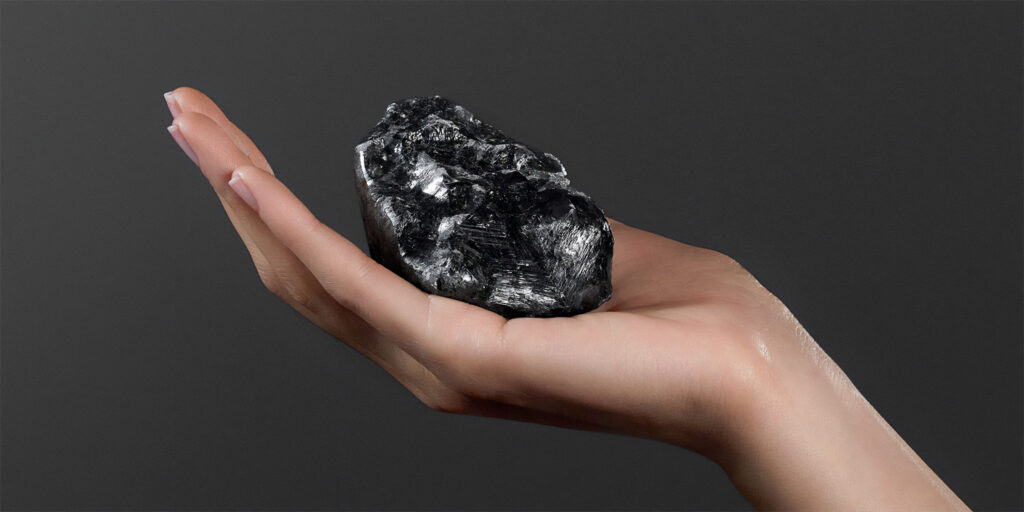
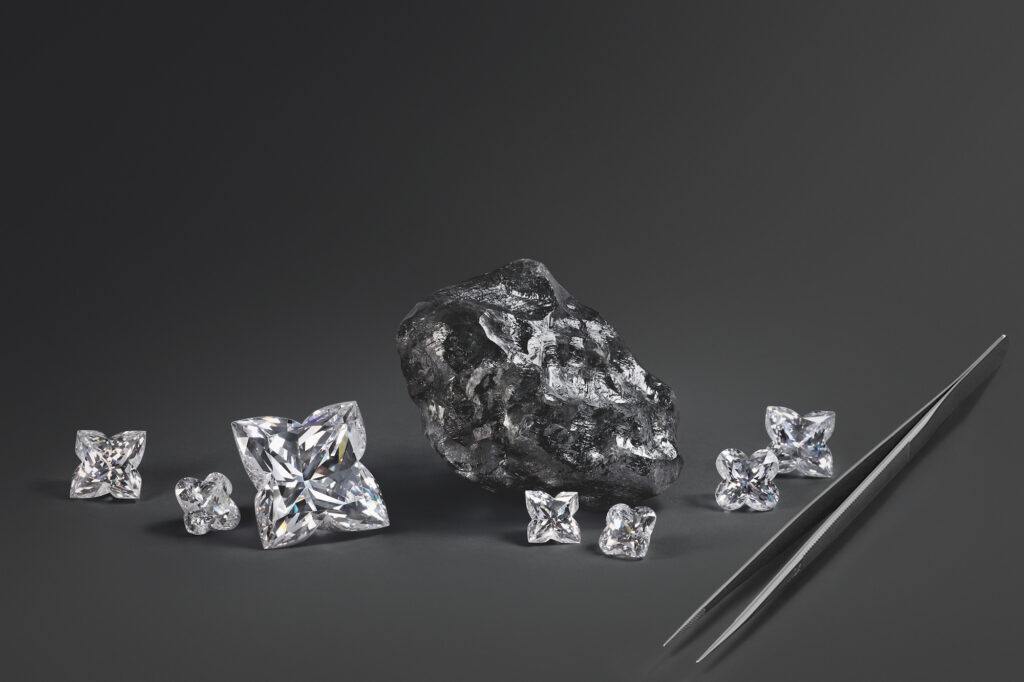
Interestingly, it was Louis Vuitton which scooped up the newly unearthed 1,758-carat Sewelo diamond in 2020, the world’s second-biggest sparkler at the time. Kima notes: “Louis Vuitton bought it for an undisclosed sum, even though it was black in appearance and it was unclear how many gems could be cut from it.”

Spring Awakening: An expansive Taipei home envelops a family in the warmth and playful elegance of the season 

Heralding change and a joyful celebration of life, the spring season has inspired countless poets and artists through the centuries. Taking inspiration from its ephemeral beauty, award-winning Taipei-based interior design firm L’atelier Fantasia imagines a 3,000-square-foot duplex residence as ‘The first drizzle of spring’. Idan Chiang, the studio’s founder, emphasises the relationship between people and their surroundings in this enchanting sanctuary created for a couple and their two children. 

The residential layout is a thoughtful choreography of privacy and interaction, with rooms positioned at the four corners of the home for the best views of the outdoors. This arrangement fosters familial intimacy while respecting individual solitude in a space where luxury, elegance and playfulness intersect. The design choices are not merely aesthetic; they are instrumental in creating a living environment that is as responsive to the family’s dynamics as it is to the changing seasons.

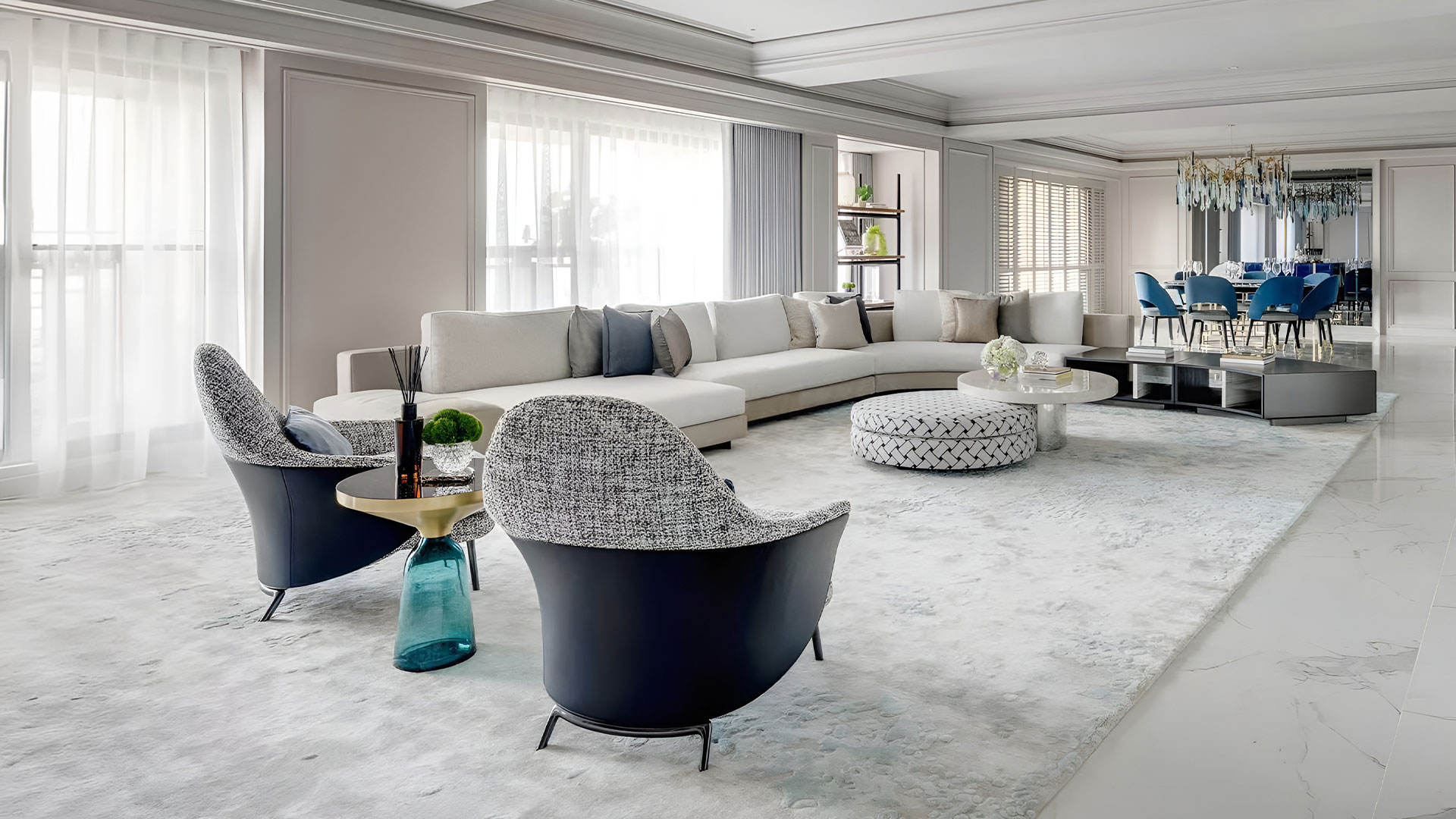
Upon entering, you are greeted by a spacious living room with a neutral colour palette of soft grey walls, cream-coloured trim and plush velour floors. The space is illuminated by floor-to-ceiling windows, framed by whisper-thin silk curtains and affording breathtaking views of the Taipei skyline. Exuding opulence and refinement, the room envelopes occupants in a sense of warmth and comfort, surrounded by plush furnishings and rich textures.

The lounge ceiling is accentuated at various points and the lighting is kept minimal, giving an elegant finish to the space. A large sectional sofa and two designer armchairs face the TV wall, complemented by circular coffee tables. The walls are adorned with a selection of artworks, including a stunning piece of traditional Taiwanese calligraphy, a modern abstract painting and compelling prints by local photographers. A grand piano sits at one end of the room, reflecting the owners’ taste in music as well as art. 

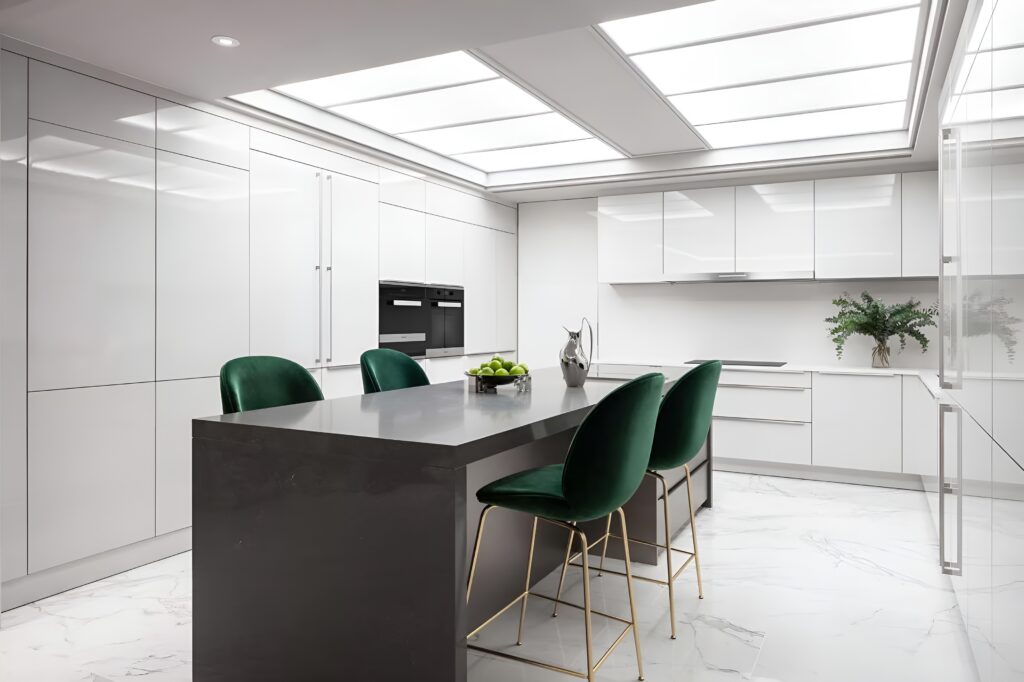
Adjacent to the living room, the kitchen is a symphony of clean lines, minimal ornamentation and top-of-the-line appliances. Crisp white cabinets, gleaming stainless-steel surfaces, and a spacious island with a built-in sink create a functional and stylish space perfect for culinary creativity. Two skylights brighten the room and green velvet dining chairs at the counter stand out amid a wash of white, bringing warmth to this space for enjoying casual family meals. 

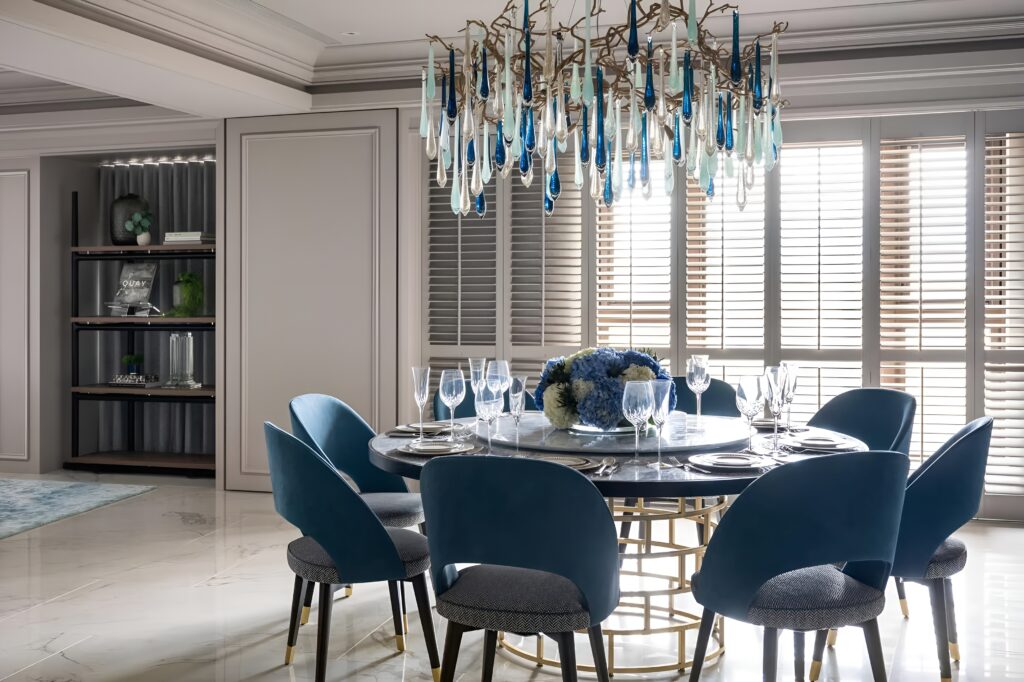
A huge lazy Susan table occupies this end of the lounge, forming a dining area for hosting guests and larger gatherings. Intricate blue-crystal pendants from the chandelier above match the blue dining chairs. Every detail, from the carefully chosen materials to the meticulously curated art, contributes to a harmonious balance of style, comfort and functionality. This area’s focal point is a breathtaking floor-to-ceiling window, offering a panoramic vista of the city skyline and flooding the space with natural light.

Upstairs is a second, cosy living room for family reunions and children’s play dates. The space is a canvas of vibrant early spring colours, woven with warmth and finesse. A tea-rose-pink faux-fur sofa on a large, round grey area rug makes the room all the more alluring. 

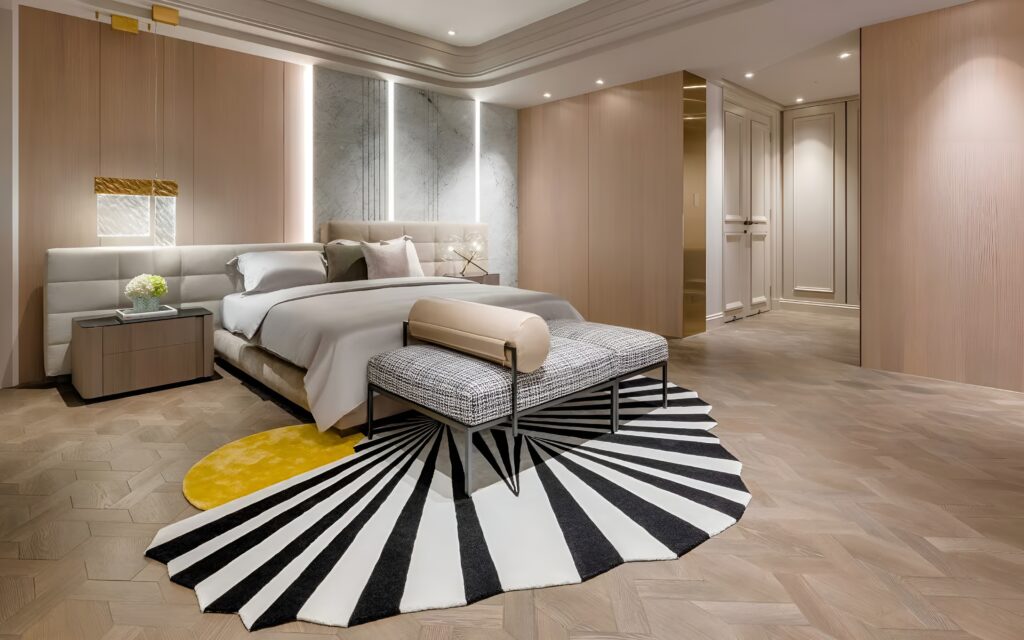
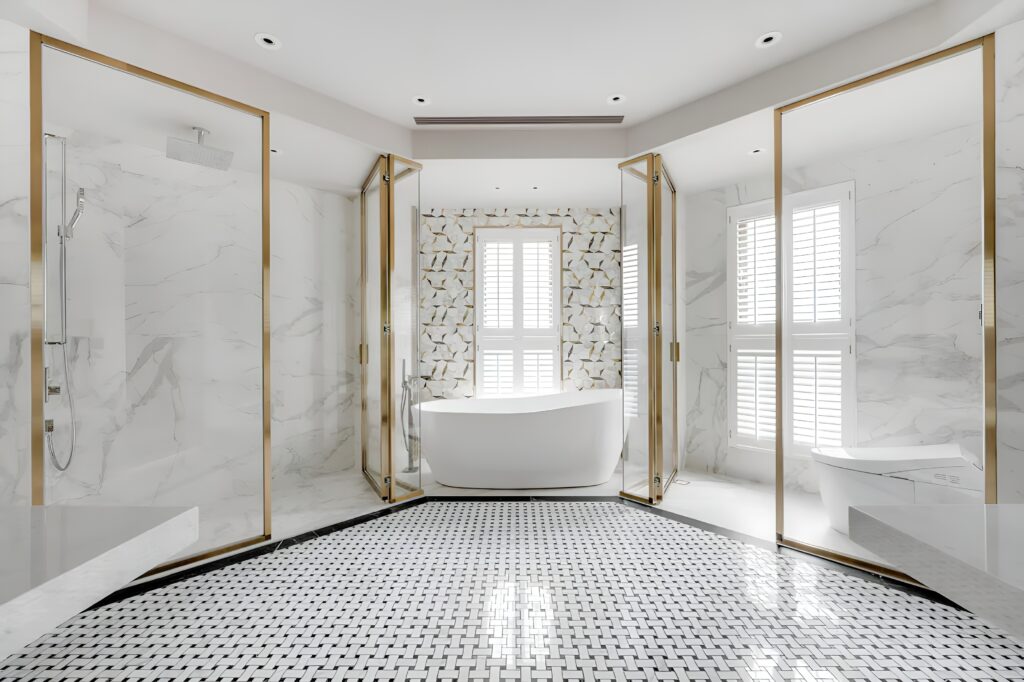
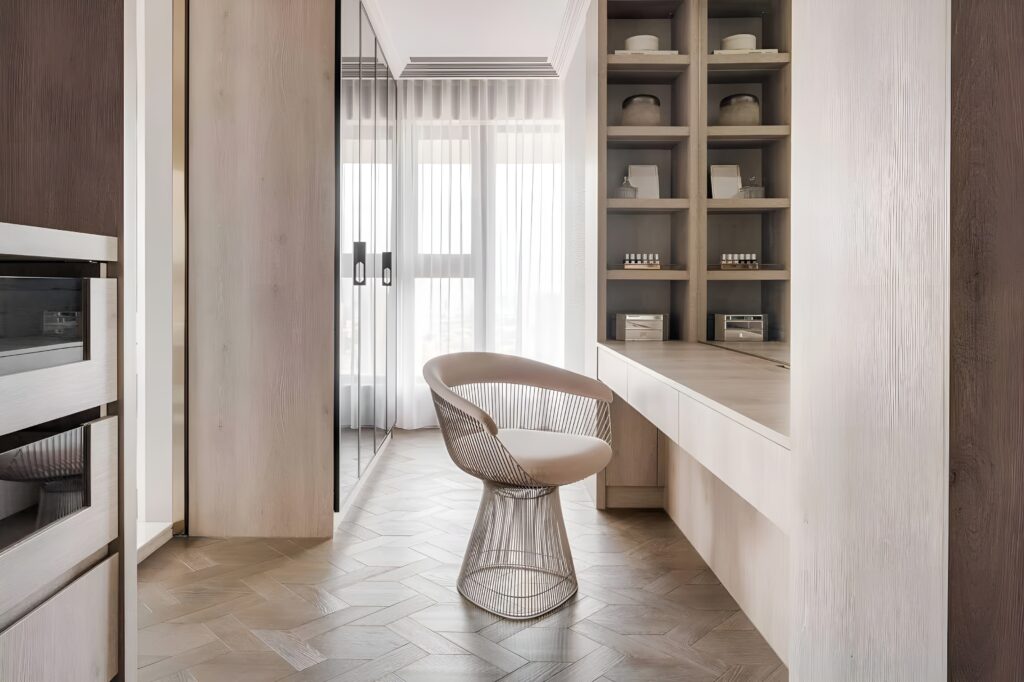
The bedrooms are serene retreats, each with plush rugs, comfortable bedding and soothing colour schemes. The master bedroom boasts an expansive walk-in closet with bespoke shelving, and a spa-like en-suite featuring rainfall showerhead, heated floors and a double vanity. The dedication to aesthetic harmony extends to these private quarters: the classical master bathroom with its interlaced floor tiling and custom-made Normandy shutters exudes the luxury of a boutique hotel. 

The children’s bedroom, adorned with balloon motifs and pastel pink tiles, has a whimsical charm, while another splendid bedroom is designed to accommodate guests. Throughout the home, the environmentally considerate use of local marble and expansive windows reflect a commitment to sustainable luxury. Quality and craftsmanship take centre stage, with top-tier fabrics and artisanal imported furniture. The design philosophy marries material texture, spatial scale and artistic deconstruction, resulting in a collage of elements that sing in harmony. 

Strategic colour-hopping seen in vivid furniture set against pastel backgrounds imbues different areas with distinct personalities, allowing family members to find a bespoke nook for repose. Thoughtful decorative elements add depth and visual interest, including potted plants, vintage decorative objects, and a stunning silk tapestry. Every detail contributes to a harmonious balance of style, comfort and functionality.

In this ode to spring, the designer has masterfully harmonised organic forms and geometric precision, encapsulating dewdrops, blossoms and arboreal silhouettes. It is an approach that not only invites the outside in but also infuses a neo-classical elegance through artful décor and statement lighting, creating a tapestry that celebrates tradition, modernity and whimsy.

Photos: L’atelier Fantasia

Enjoy fantastic luxury all-inclusive cruises with Regent Seven Seas Cruises

For the best cruises available anywhere, premier travel agents Miramar Express can offer the journey of a lifetime with their fantastic six-star all-inclusive cruise holidays with Regent Seven Seas Cruises.

Established in Hong Kong for more than 20 years, Miramar Express provides exceptional travelling experiences to the public and will organise all the finer details of the trip to make the experience a sheer joy.

Amazing destinations

They are offering the chance to book a fantastic luxury cruise on board one of Regent Seven Seas Cruises’ magnificent ships – Seven Seas Grandeur®, Seven Seas Splendor®, Seven Seas Explorer®, Seven Seas Voyager®, Seven Seas Mariner® and Seven Seas Navigator®.

Offering a new level of luxury and refined indulgence, these vessels call in at some of the best tourist hotspots dotted around the world. The fabulous destinations and melting pot of captivating cultures will combine to leave a lasting impression. Regent Seven Seas Cruises, after all, who have been delivering top-of-the-range cruise experiences for over 30 years.

The Most Exclusive Addresses at Sea™

The luxury liners boast lavish accommodations on board, with the one-of-a-kind Regent Suites (available only on Seven Seas Grandeur®, Seven Seas Splendor® and Seven Seas Explorer®) setting the bar very high in the level of opulence and sophistication.

These are suites of 4,400-plus square feet which rise above everything else on the Seven Seas with its best-in-class amenities, exclusive to its residents. The unparalleled craftsmanship and meticulous detail attended to in the creation of these masterpieces are evident in everything from the unique design choices, which include gorgeous, rare works of art, to the grander features like an in-suite, master bathroom spa retreat and a custom, hand-crafted US$200,000 Vividus bed from the renowned Hästens brand.

Delightful views

The Regent Suite at the ship’s bowcomes with an ocean view that surpasses that of the best high-rise penthouses. Each morning and every evening, experience a new and stunning vista as we sail from one beautiful destination to another. You’ll be free to enjoy an unobstructed, panoramic perspective from a glass-enclosed sitting area on the bow of all three ships and breathtaking views from the expansive wrap around balconies.

Private oasis

Seeking to elevate every experience to a matchless level is what drove the inclusion of a master bathroom spa retreat on Seven Seas Grandeur®, Seven Seas Splendor® and Seven Seas Explorer® that delivers all the pampering of Serene Spa & Wellness™ in the privacy and comfort of your suite. From a treatment area, full sauna and multi-jet shower to ceramic, heated relaxation loungers, a heated mini-pool spa and unlimited, complimentary in-suite spa treatments, we’re confident you’ll discover new levels of luxury.

Plan a cruise

Plan a cruise that will spawn memories to last a lifetime with Regent Seven Seas Cruises Preferred Sales Agent – Miramar Express.

Tel: 3960 0386

WhatsApp: 5543 3660

Email: mecruises@miramarexpress.hk

Website: www.miramarexpress.hk | www.RSSC.com

Royal Highness: Revel like royalty at grand palace hotels where monarchs and aristocrats once slept

In a world where the cost of living keeps rising, experiencing true luxury and opulence can feel out of reach for many. However, an alluring travel trend is allowing more people than ever before to step into the shoes of royalty – if only for a night or two. Around the globe, a growing number of former palaces and grand estates have been painstakingly transformed into world-class luxury hotels, offering guests a chance to live like kings and queens.

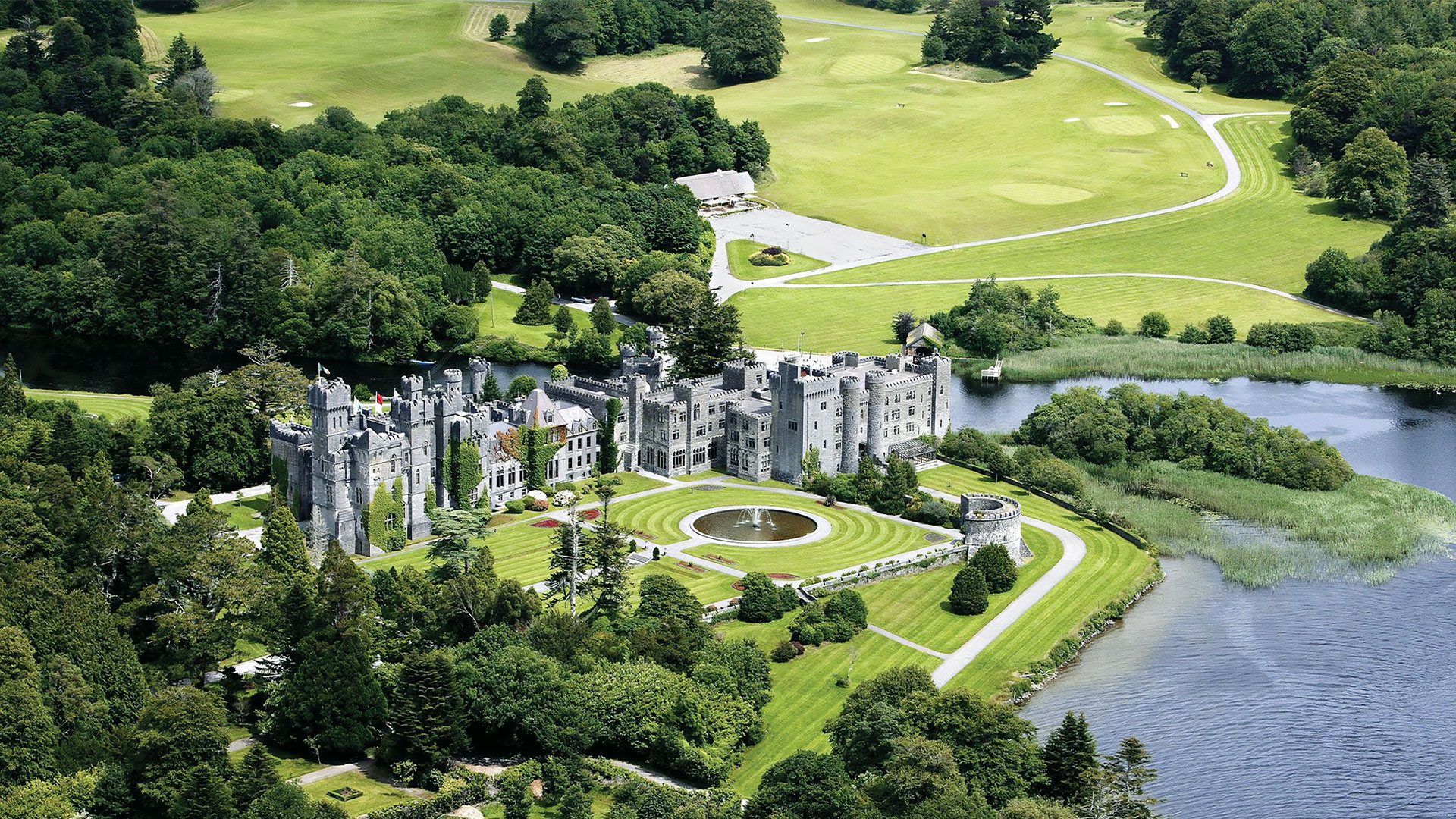
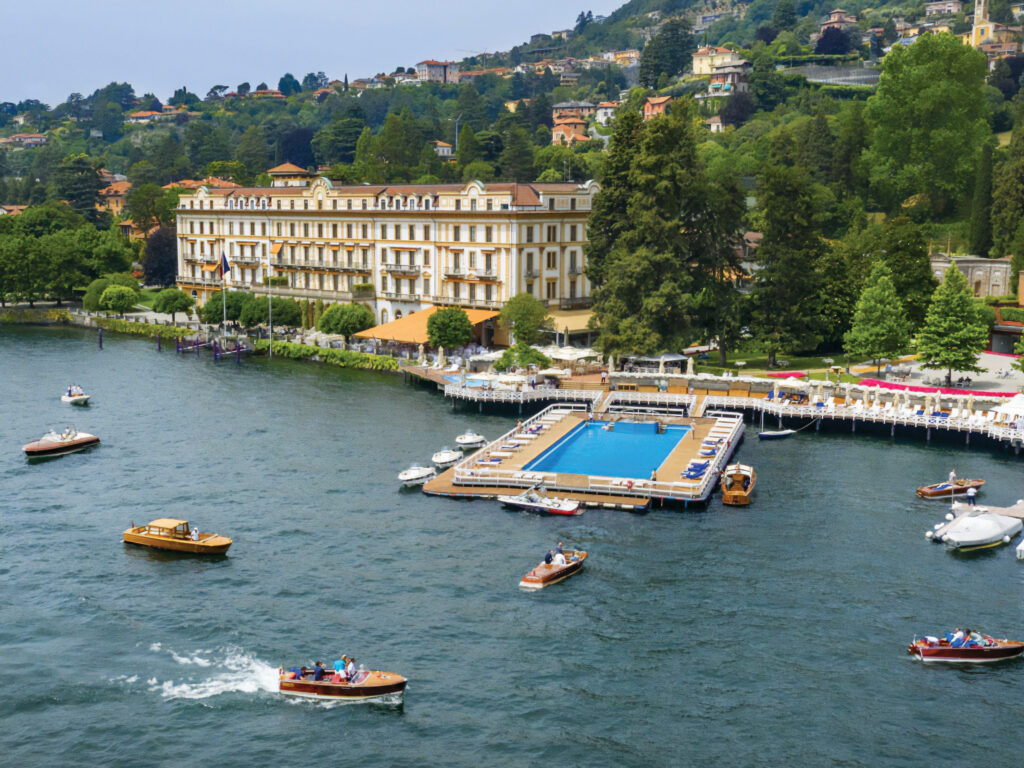
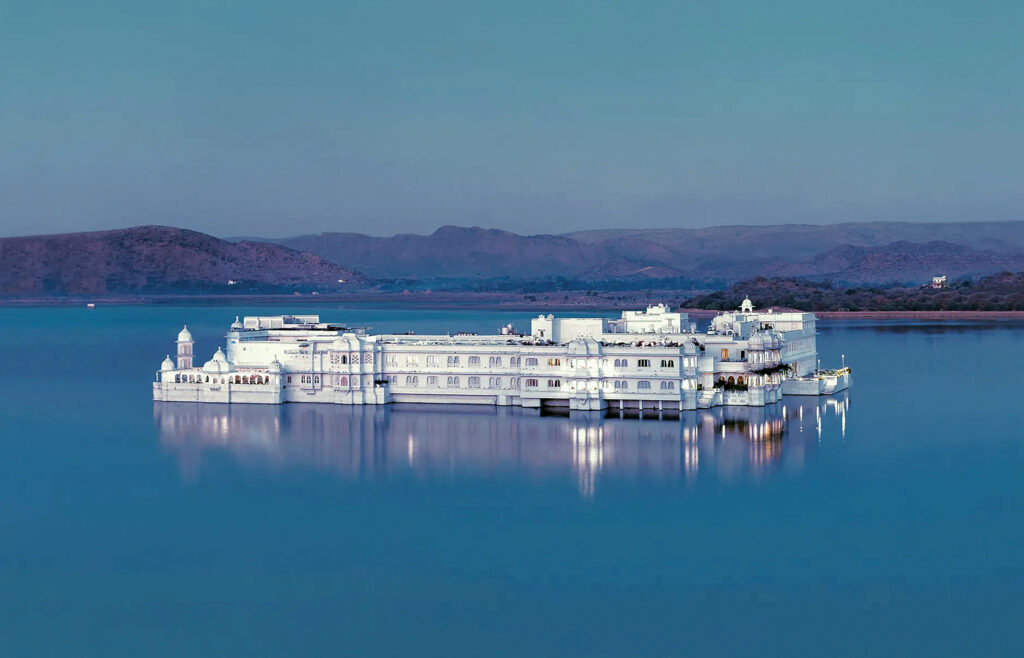
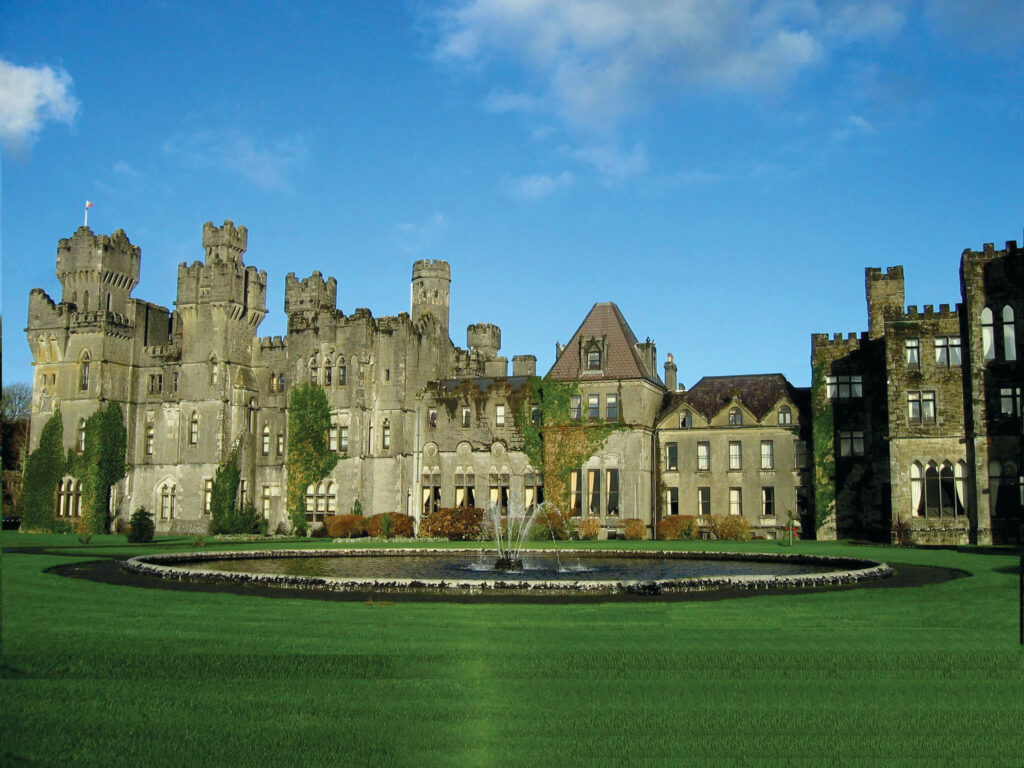
Besides the draw of their architectural magnificence, these unique properties afford the opportunity to step back to a simpler time and experience the rarefied world of royalty and aristocracy. At Villa d’Este in Italy, you can sip Prosecco while relaxing on the very same outdoor terraces that once hosted European princes. At the Taj Lake Palace in India, you will be waited on hand and foot by an army of discreet, highly trained staff, just as the Maharajas once were. At Ashford Castle in Ireland, you can imagine yourself as a lord or lady of the manor, exploring the same tapestry-lined halls that have borne witness to centuries of history.

Of course, these ancient palaces and castles also offer ample modern comforts and amenities to complement their historic charms. Lavish spas, Michelin-starred restaurants, state-of-the-art fitness centres and beautifully appointed guest rooms ensure that every creature comfort is catered to. The level of personalised service is unparalleled, with many maintaining a nearly one-to-one staff-to-guest ratio, with butlers, concierges and other attendants anticipating every need.

So, whether you are celebrating a special occasion, planning the ultimate romantic getaway, or simply craving a taste of the high life, consider indulging in a stay at one of these storied hotels. From quaffing Champagne in a marble-clad palace suite to gliding across a tranquil lake in a private boat, the chance to live like royalty, if only for a moment, is an experience you’ll never forget.

Historic Charm

Palace hotels are able to balance their historic legacy with modern luxury amenities through a fastidious approach to restoration and renovation. At their very core is the preservation of the original architectural details and character of the buildings. Great care is taken to maintain features like ornate mouldings, grand staircases, intricate tilework and towering ceilings. Furnishings and décor often pay homage to the property’s past, with antique furniture, vintage artwork and traditional textiles and materials.

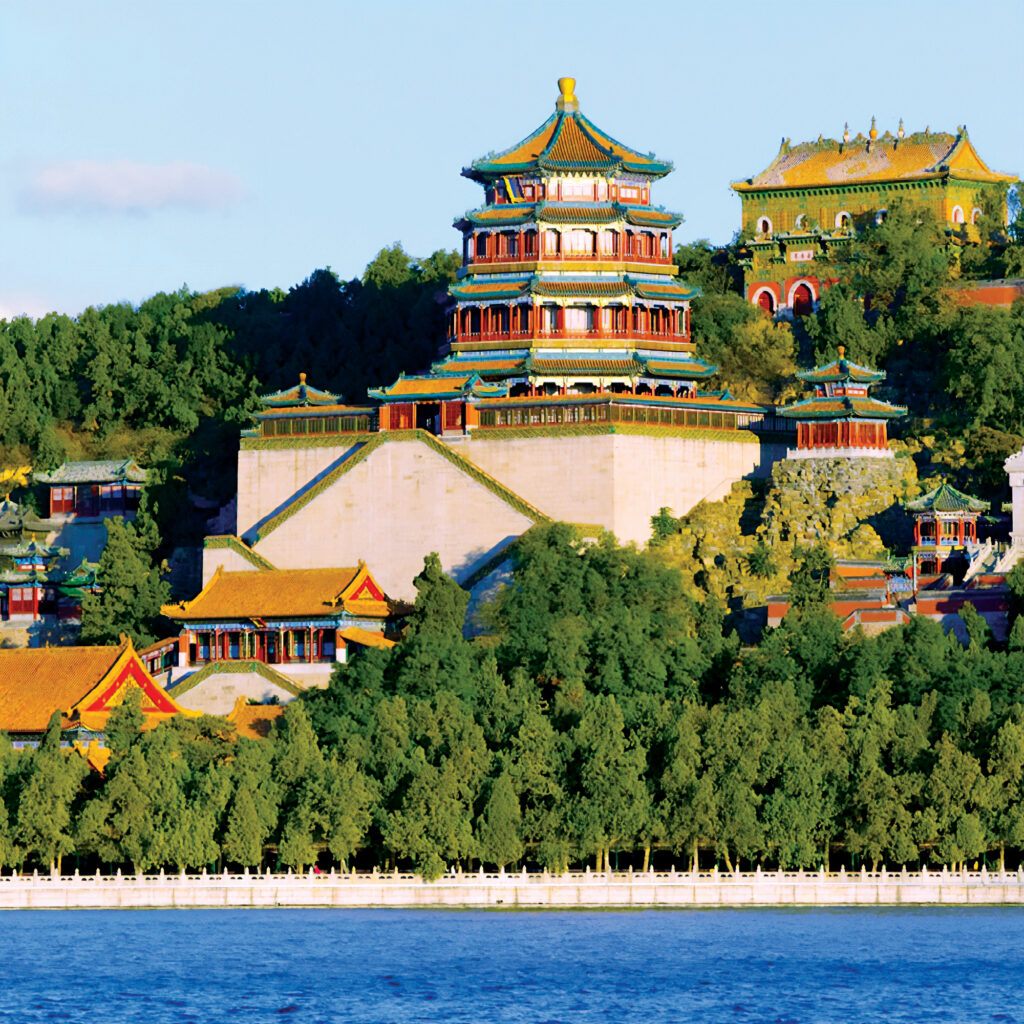
The goal is to enable guests to feel truly immersed in the history and grandeur of the place as if they have been transported back in time. At the Aman Summer Palace in Beijing, for example, the guest rooms are housed in a series of refurbished Qing dynasty pavilions, allowing visitors to experience the elegant aesthetics of that era. And at Ashford Castle, the 13th-century castle walls and towers have been meticulously restored and maintained.
Modern Essentials

While the historic shell of the palace is preserved, the hotel management companies diligently integrate all the modern amenities that today’s discerning travellers expect. This often involves thoughtful additions and renovations that do not compromise the integrity of the original architecture.

The goal is to create a harmonious fusion of old and new, where guests can experience the elegance and refinement of a bygone era alongside modern comforts and conveniences. The resulting effect is a sense of luxury that is both timelessly regal and freshly contemporary. Visitors are made to feel not just like esteemed guests but as illustrious members of a former ruling class.

Lakeside Luxury

One of the most iconic examples of this trend can be found on the shores of Italy’s picturesque Lake Como. Villa d’Este has welcomed nobility, celebrities and the international elite since first opening its doors as a hotel in 1873. Originally built in the 16th century as the summer residence of a Cardinal, this sprawling villa features stunning Renaissance and Baroque architecture, meticulously manicured gardens, and a world-famous floating pool that appears to drift on the lake’s surface. Today, its sumptuous guest rooms, suites and private villas, refined dining and impeccable service have made Villa d’Este a bucket-list destination for luxury travellers.

Here in Asia, you’ll find another former palace that has been transformed into the ultimate in extravagant accommodation. The Taj Lake Palace Hotel in Udaipur, Rajasthan, occupies a breathtaking white marble island in the middle of Lake Pichola. This 250-year-old royal residence was once the pleasure palace of the Maharana of Mewar, and its grand, ornate halls, intricately carved details and shimmering reflection in the lake’s still waters create a sense of pure enchantment. Guests arrive by private boat to be welcomed by royal guards; they can get lost in another, magical time amid the intricate network of hidden pathways and courtyards, then dine in ceremonious style on the Royal Barge.
From palace to castle, the turrets, towers and sweeping grounds of Ashford Castle in County Mayo, Ireland, have delighted guests of the landed gentry for more than 800 years; it was once the seat of the powerful Guinness family. Today, the Ashford Castle Hotel is renowned for its exceptional service and facilities. Take your meals in the George V Dining Room, the Drawing Room or the Dungeon, and experience a vast array of activities from falconry to fishing on the private lake.

Palace Pride

To our north, the Aman Summer Palace conjures up the magnificence of the Qing dynasty. After exploring the imperial marvels of the Summer Palace, guests can relax in the hotel’s own serene gardens and partake in calligraphy or the tea ceremony in the Cultural Pavilion before retreating to their luxurious suites, which seamlessly blend traditional Chinese design with modern amenities.

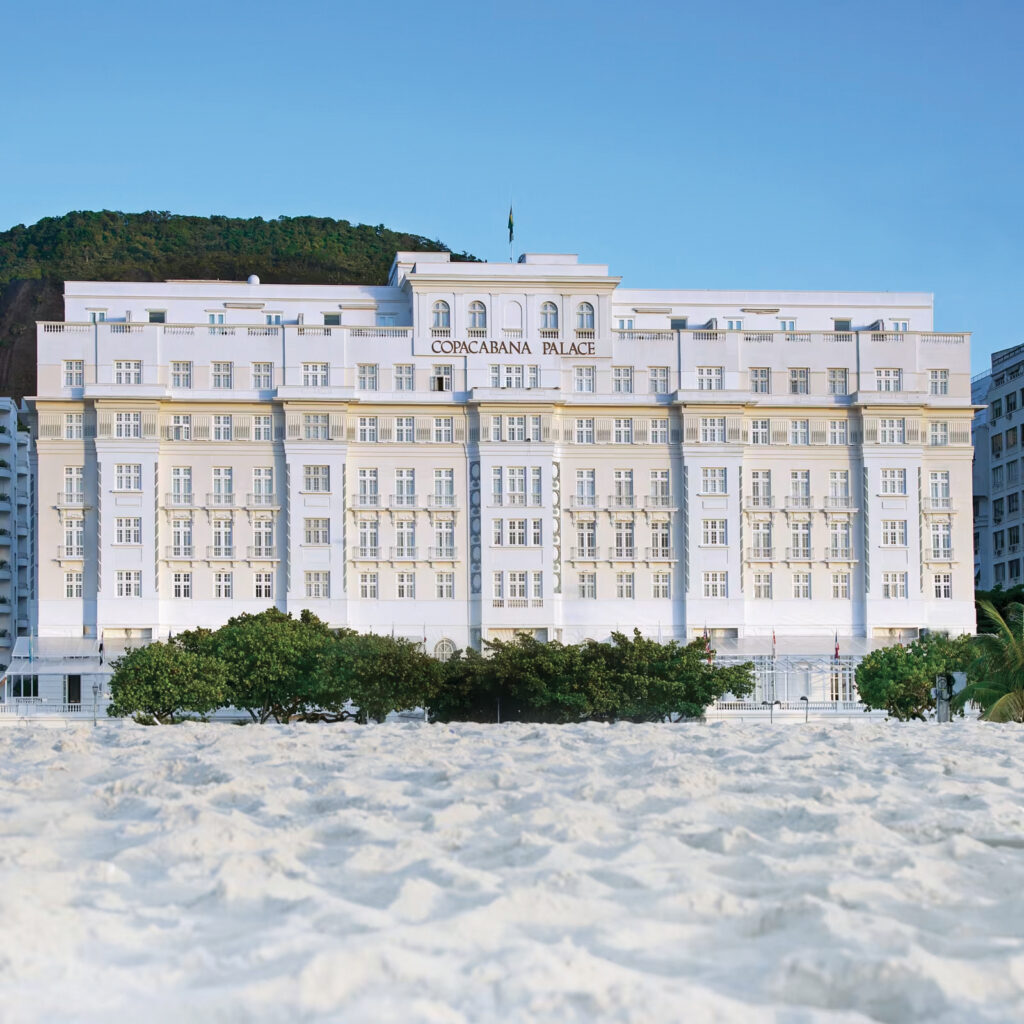
On the other side of the world, another palatial wonder awaits in the bustling seaside city of Rio de Janeiro, Brazil. Conceived by the president as the country’s premier hotel, the Copacabana Palace opened in 1923, and its striking neoclassical façade, grand marble staircase and iconic swimming pool have made it an enduring symbol of old-world glamour. Over the decades, this legendary hotel has hosted everyone from royal families to Hollywood’s biggest stars, who come to enjoy its splendid service, fine dining, prime beachfront location, and during the Rio Carnival, sensational Copa Ball.

Seychelles Serendipity: Astonishing natural beauty awaits daily discovery on these idyllic islands east of Africa 

The world’s best beaches, lush tropical vegetation, great cuisine and friendly, fun-loving people are just some of the charms of the beguiling islands in the Indian Ocean known as the Seychelles. The East African island nation comprises 115 isles scattered like sapphires and emeralds to form a multifaceted archipelago that represents an unforgettable experience for holidaymakers and honeymooners.

The main, populated islands lie a few degrees south of the equator and rise from shallow banks to mountainous granite; others are tiny coral formations. They have a tropical climate with consistent temperatures throughout the year that seldom rise above 32⁰C. The months from May to October are perhaps the most pleasant time to visit, although there can be occasional southeasterly monsoon rains.

Creole charm

About 100,000 people inhabit Seychelles, a presidential republic which became independent from the United Kingdom in 1976. Given that there is no indigenous population, Seychellois form a diverse ethnic mix of immigrants comprising French, British, African and Arab influences. The official languages are English, French and Creole, the latter being a combination of local languages mixed with the tongue of the colonial masters. The Creole spoken is Seselwa – a hybrid tongue that borrows French phonetics and syntax from its former overlords; Britain annexed the territory in 1794 during the French Revolutionary Wars. Tourism is now the mainstay of the economy.

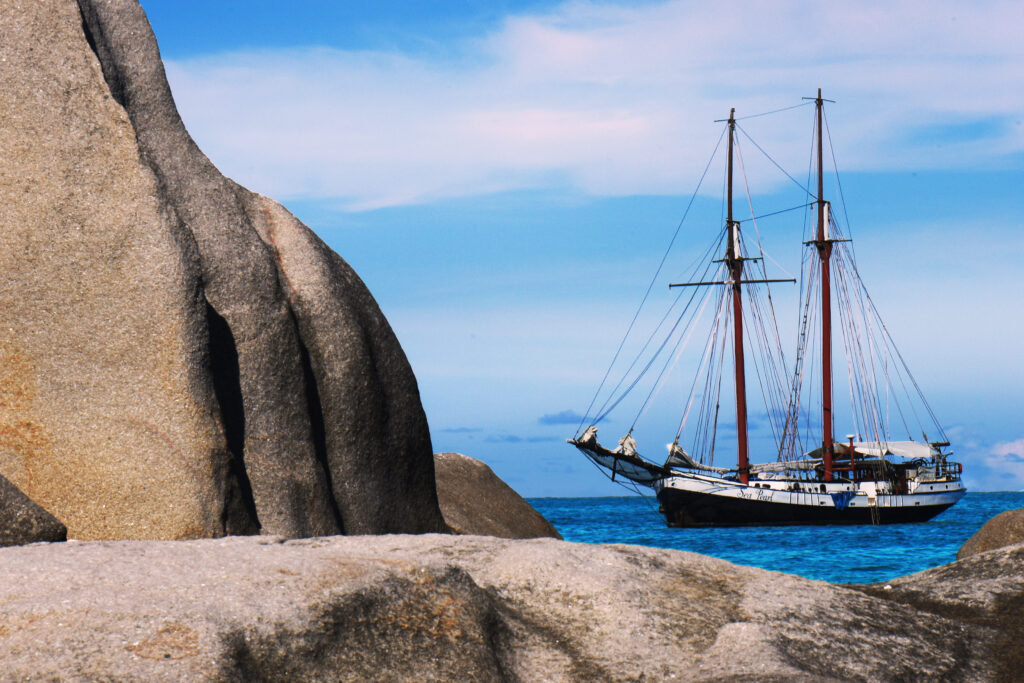
Each island has its own allure, and limiting a visit to just one would be a mistake The best option is hopping among the inner isles. Travel companies are on hand to facilitate such itineraries; many of the ships plying between the islands are agile sailing boats or traditional schooners that take a maximum of 16 passengers.

Wildlife haven

Above all, the islands are a blaze of colour and a botanical feast, spawning unique flora and fauna particularly reptiles and birds. Much of Seychelles’ natural beauty has been carefully preserved and there are many protected areas.

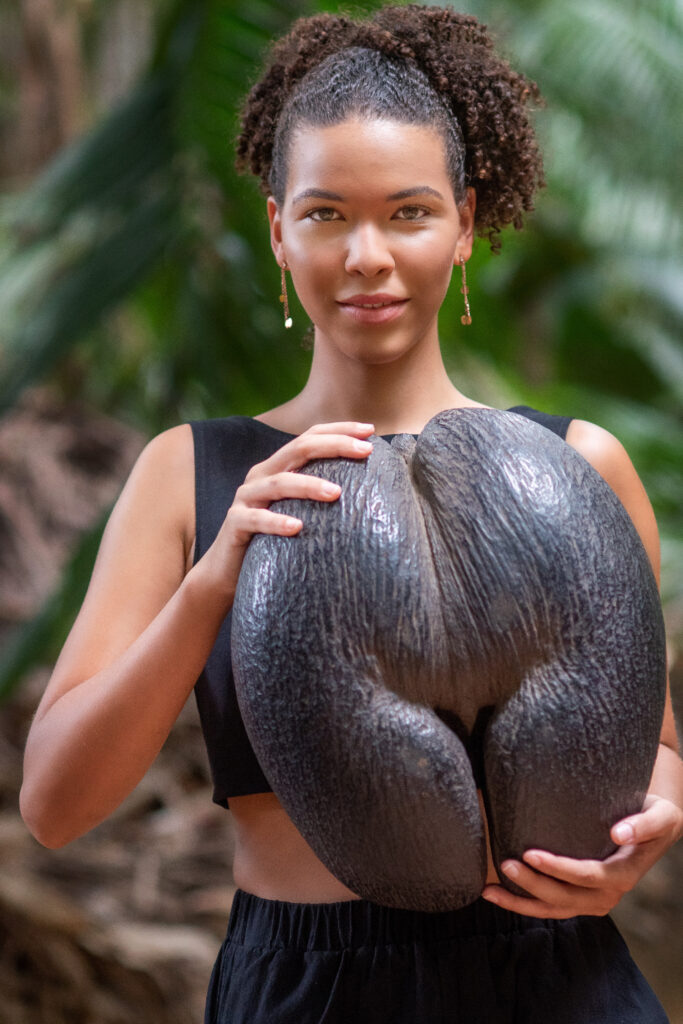
Native to Seychelles is the magnificent coco de mer tree, whose seed (the sea coconut) is the largest in the botanical world. The trunk populates the densest of forests, while the nut itself can weigh up to 30 kilograms and its erotic shape has made it the fruit of folklore.

Another highlight is the number of giant tortoises, estimated to be about 100,000-strong, with many living on the World Heritage Site of Aldabra, the world’s second-largest coral atoll. They can also be spotted on Frégate Island, and Moyenne Island in the Sainte Anne Marine National Park. An Aldabra giant tortoise called Esmeralda, which roams around Bird Island, is thought to be more than 180 years old.

Amazing exotic birds such as the white tern, paradise flycatcher and Aldabra drongo, a beautiful songbird, can be glimpsed on many of the islands.

Tropical diversity

The islands are covered in dense tropical forests of amazing diversity, especially at the higher elevations, and are home to many ornamental plants that cannot be found anywhere else in the world. For instance, the aromatic Seychelles vanilla orchid is blessed with large white flowers and is unique to the islands. Coconut and cinnamon trees, as well as spice plants, add to this fragrant botanical playground.

Areas of natural beauty abound, including the Morne Seychellois National Park on the largest island, Mahé. The Sainte Anne Marine National Park is just five kilometres offshore and is the spawning ground for hawksbill sea turtles; its bountiful aquatic creatures and diverse seagrasses also draw sightseers. The Curieuse National Park off the coast of Praslin is also rich in ocean life.

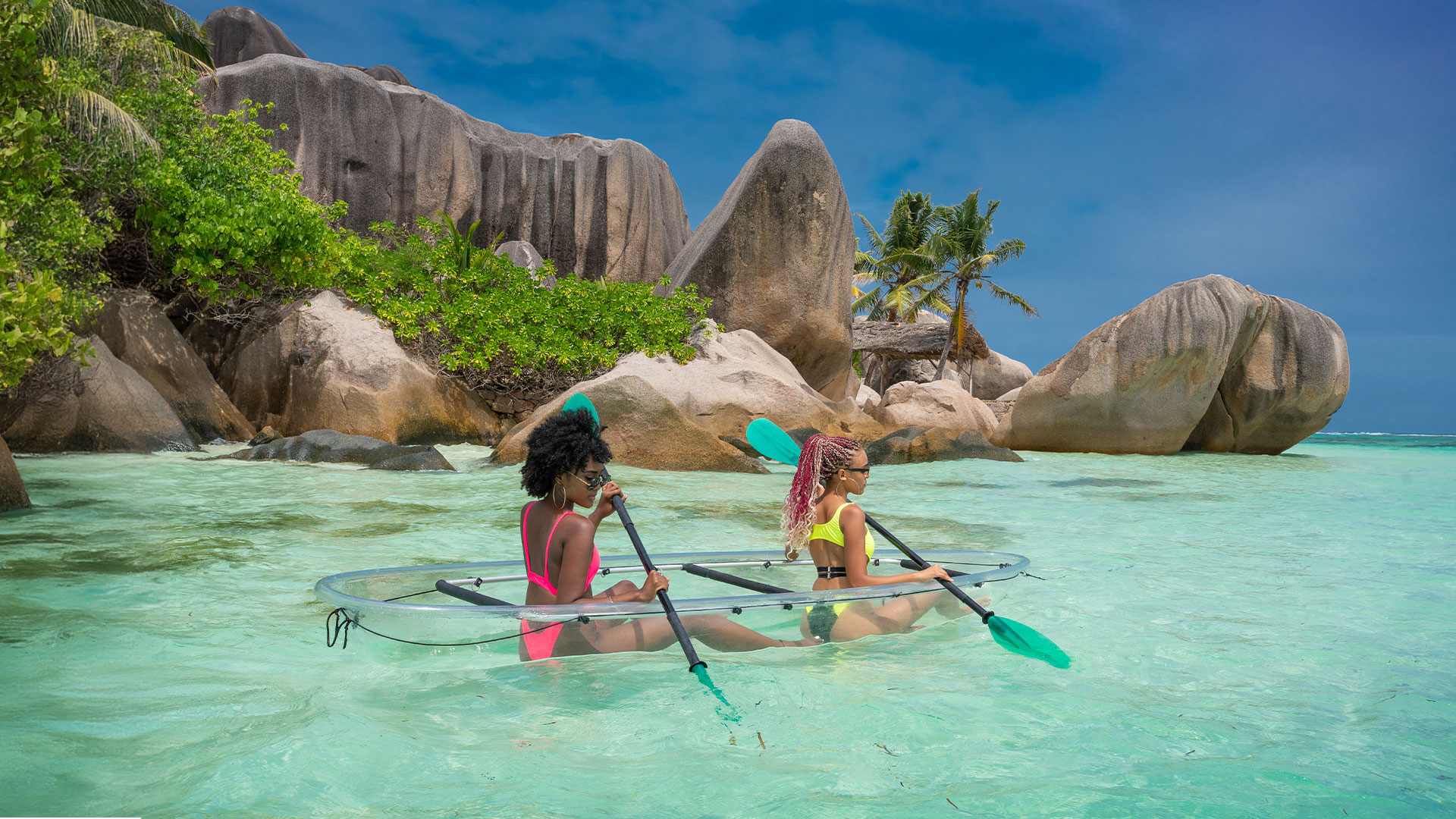
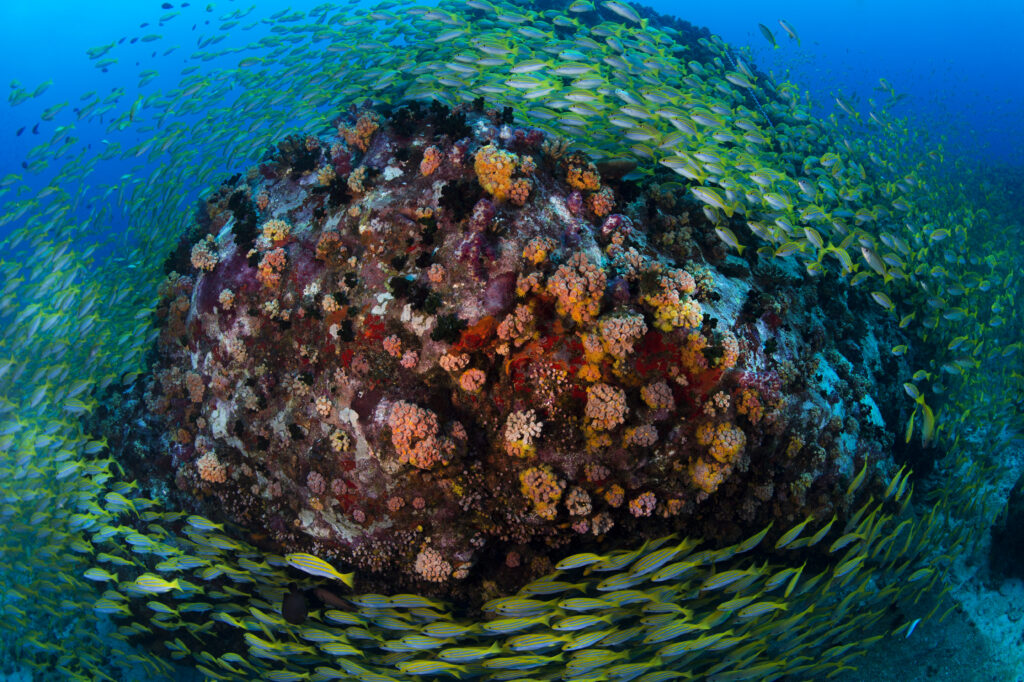
Ultimately, Seychelles offers many outdoor activities centred around birdwatching, fishing, diving, snorkelling and cruising. Glass-bottomed boat tours are an option.

Honeymoon isles

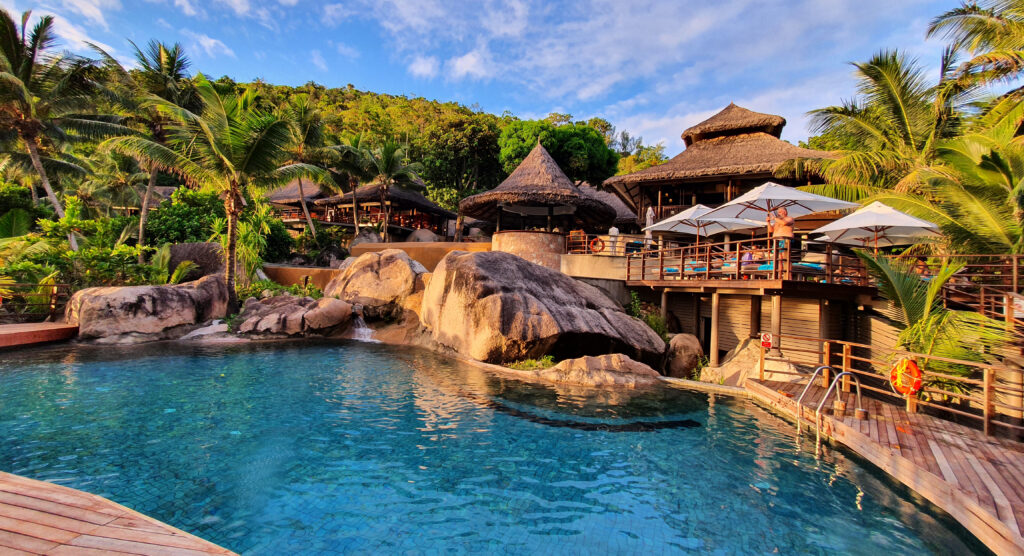
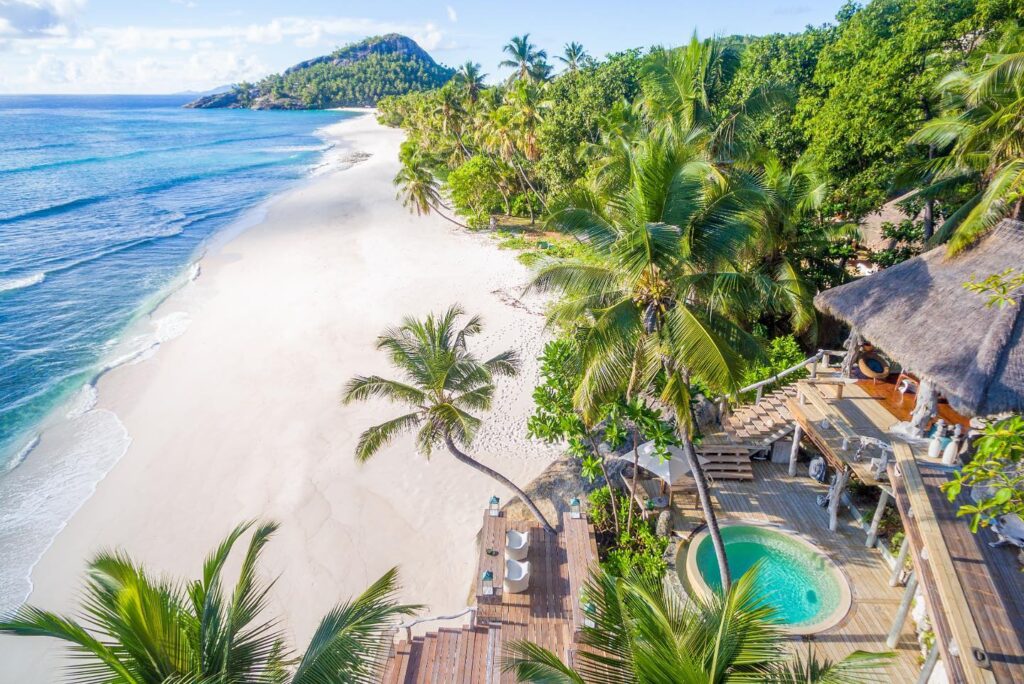
Some of the islands serve as exclusive resorts. Most notably, the world-famous eco-resort – considered the ultimate in luxury in the midst of unspoilt nature – that attracts wealthy tourists to North Island. One of a handful of privately owned Seychelles islands, this was the honeymoon destination of Prince William and Kate Middleton, who surely took advantage of its environmental credentials and various activities, from mountain biking to paddle boarding. Opened in 2003, the North Island Marriott Luxury Collection Resort boasts a range of splendid bungalows secluded along the beach and coastline, each shielded within their own private enclave from spying eyes. Guests can tap into the valuable insights of expert researchers about nature conservation on the island.

North Island was the first in the Seychelles to be explored by Europeans in 1609. It soon became a suitable hideout for pirates who made use of its many coves and caves dotted along the coast. Settlers made their living out of coconut plantations and harvesting other fruit. When this industry collapsed, the island was abandoned and much of the wildlife died out.

In the mid-1990s, private investment enabled the restoration of its natural habitat. Indigenous animal and bird populations have once again settled here and are thriving on an island which is one of the most fertile in the archipelago. Such was its beauty that Victorian biologist and artist Marianne North, known for her prolific output of plant and landscape paintings, stopped off here during her many travels to ink out on canvas its natural wonders.

Other Seychelles’ private island getaways favoured by the rich and famous as honeymoon destinations are Desroches (home to the Four Seasons), Denis, Cousine and Frégate Island Private.

Mahé magic

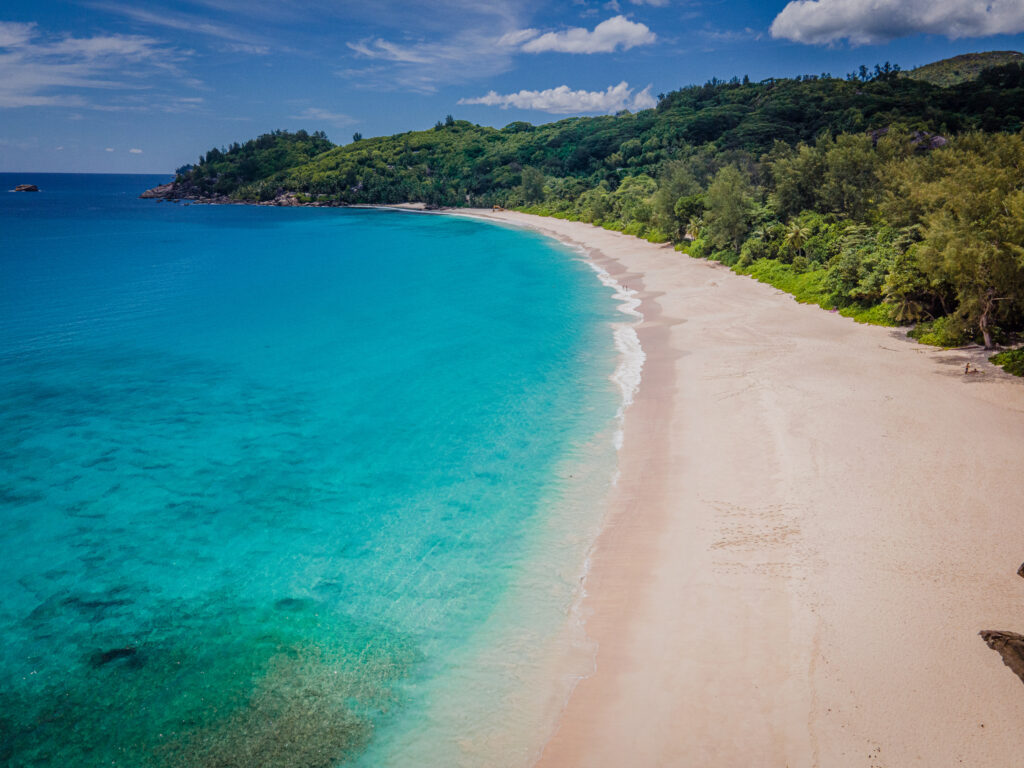
By far the largest island in the Seychelles is Mahé, full of palm trees, unspoilt beaches and the nation’s capital, Victoria, a peaceful urban retreat in the north. The Morne Seychellois peak, situated southwest of the capital and rising to a height of 905 metres, is just one of the picturesque lofty mountains often atmospherically shrouded by mist. Mahé is dotted with luxury resorts, and to the south, at Anse Intendance, lies one of the most breathtaking bays in the world.

Victoria is a tiny capital by modern standards, but there are plenty of attractions to keep the visitor occupied. Architecturally, the famous Victoria Clock Tower – constructed in 1903 and known as Little Big Ben – stands in the centre. The imposing Cathedral of Our Lady of Immaculate Conception is built in French colonial style, while not far off is the splendid Capuchin House.

Seafood and soufflé

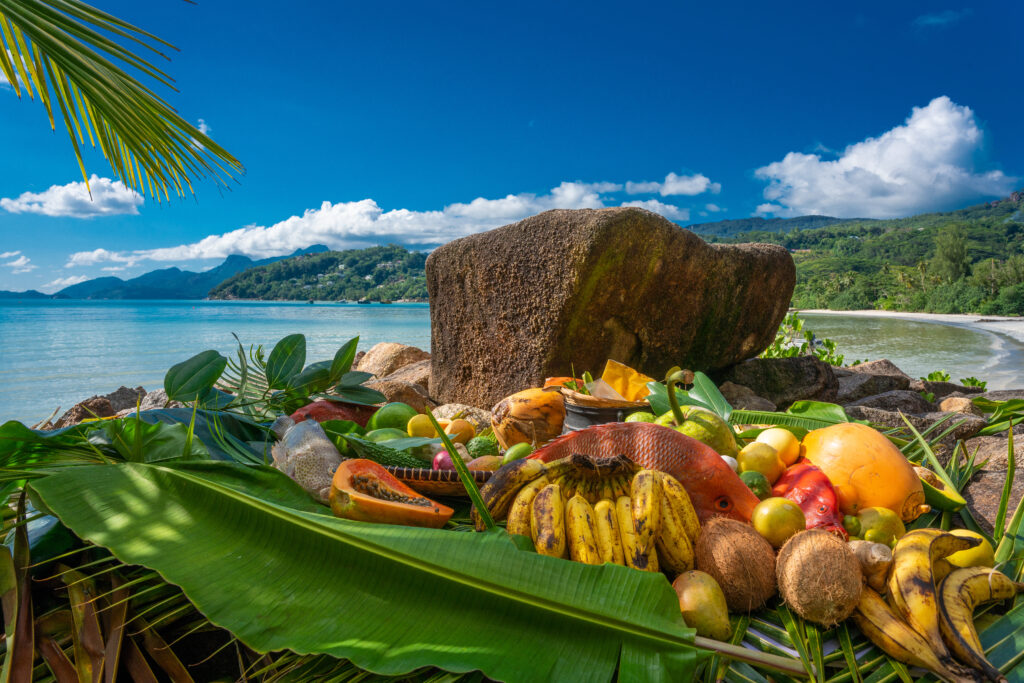
Seychelles cuisine is appealingly fresh and down to earth. Fish dishes are the mainstay, with lobster, crab and crayfish usually served grilled. Ladob banan is a popular dessert of banana cooked in coconut milk with sugar, salt and vanilla.

Chez Plume on the west coast of Mahé is an excellent French Creole seafood restaurant surrounded by beautiful tropical gardens. It offers a superb passion-fruit soufflé. The Anchor Cafe is a good place to catch the sunset and enjoy the catch of the day. The restaurant at the hilltop Le Jardin du Roi, set among spice plants and fruit and ornamental trees, has amazing cinnamon- and lemon-grass-flavoured ice cream. Mahé also offers tropical island nightlife in the form of lively bars and clubs.

Sustainable tourism

The Seychelles is one of the Small Island Developing States (SIDS) which have been encouraged by the United Nations to develop sustainable tourism. The Minister for Foreign Affairs and Tourism of the Seychelles, Sylvestre Radegonde, recently outlined how many players in the tourism sector are involved in a certification programme linked to climate change and mitigation adaption. To become Sustainable Seychelles certified, participants need to implement a variety of climate actions as part of their daily operations concerned with waste management, energy efficiency, water management, conservation and community involvement. The issuance of the first blue bond in 2018 by the government was designed to raise funds for marine conservation and sustainable fisheries. The funds raised have already facilitated the expansion of marine protected areas and sustainable tourism development.

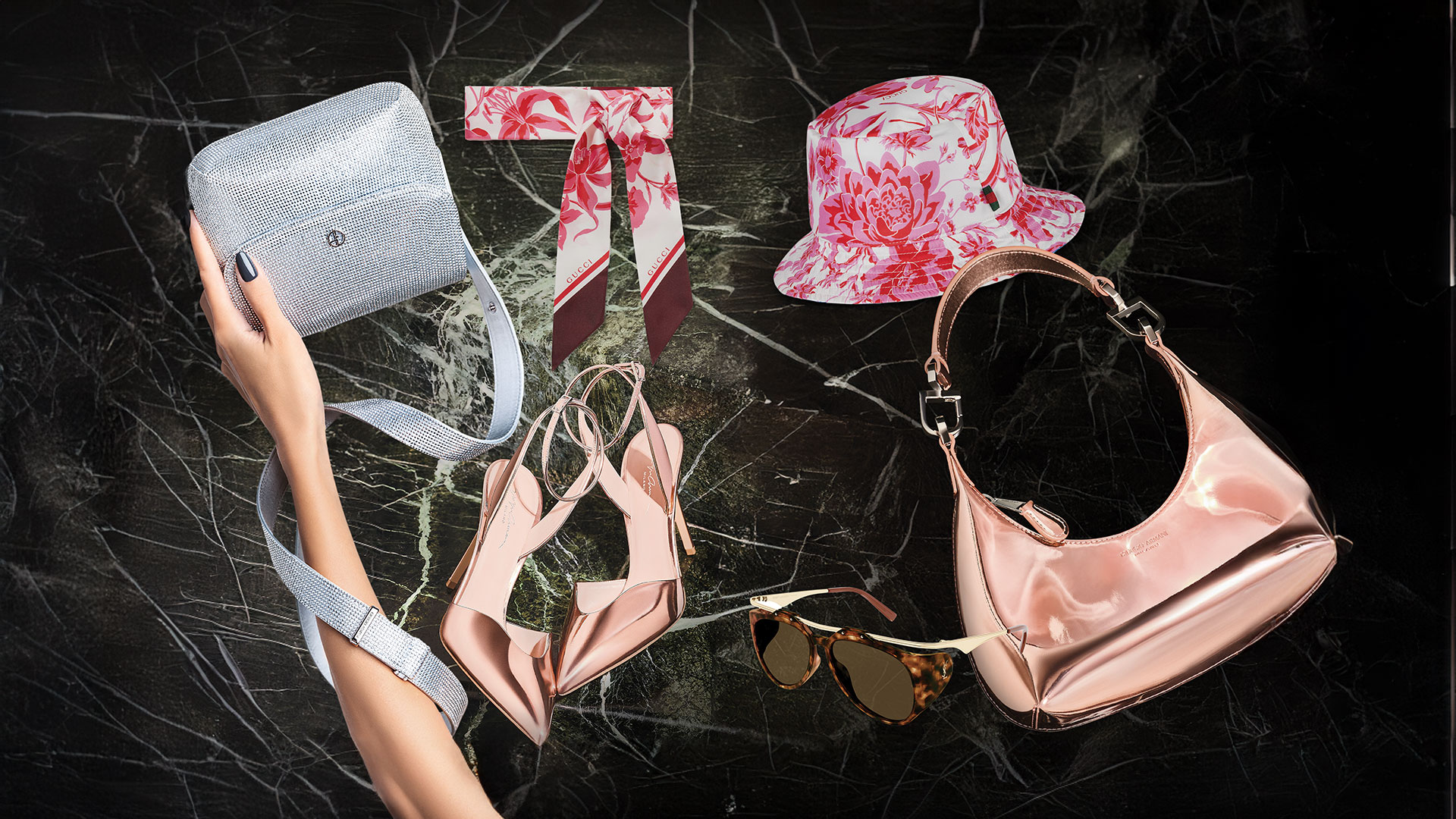
Revel in Luxury: Dazzling baubles add a touch of glamour and sparkle

Look 1

Studded purse by Giorgio Armani,  studded bag by Giorgio Armani, white hat by Canada Goose & brown and black sunglasses by Yves Saint Laurent

Look 2

White ribbon hair clip by Jennifer Behr, blue studded bag by Giorgio Armani, black studded bag by Giorgio Armani & black headband by Roger Vivier

Look 3

Belt by Giorgio Armani, metalic purse by Giorgio Armani, hat by Canada Goose & metalic sunglasses by Alexander McQueen

Look 4

Brown bag by Giorgio Armani, belt by Christian Dior, fringe bag by Fendi, black pumps by Marie Adam-Leenaerdt, pink sun visor by Christian Dior & green handbag by Giorgio Armani

Look 5

Floral hat by Gucci, pink handbag by Giorgio Armani & gold and brown

framed sunglasses by Yves Saint Laurent

Silver clutch by Giorgio Armani, floral scarf by Gucci & pink stelletos by Giorgio Armani

Peter Piper: PR visionary Peter Cheung is entrusted by the brands to lead them out of the box

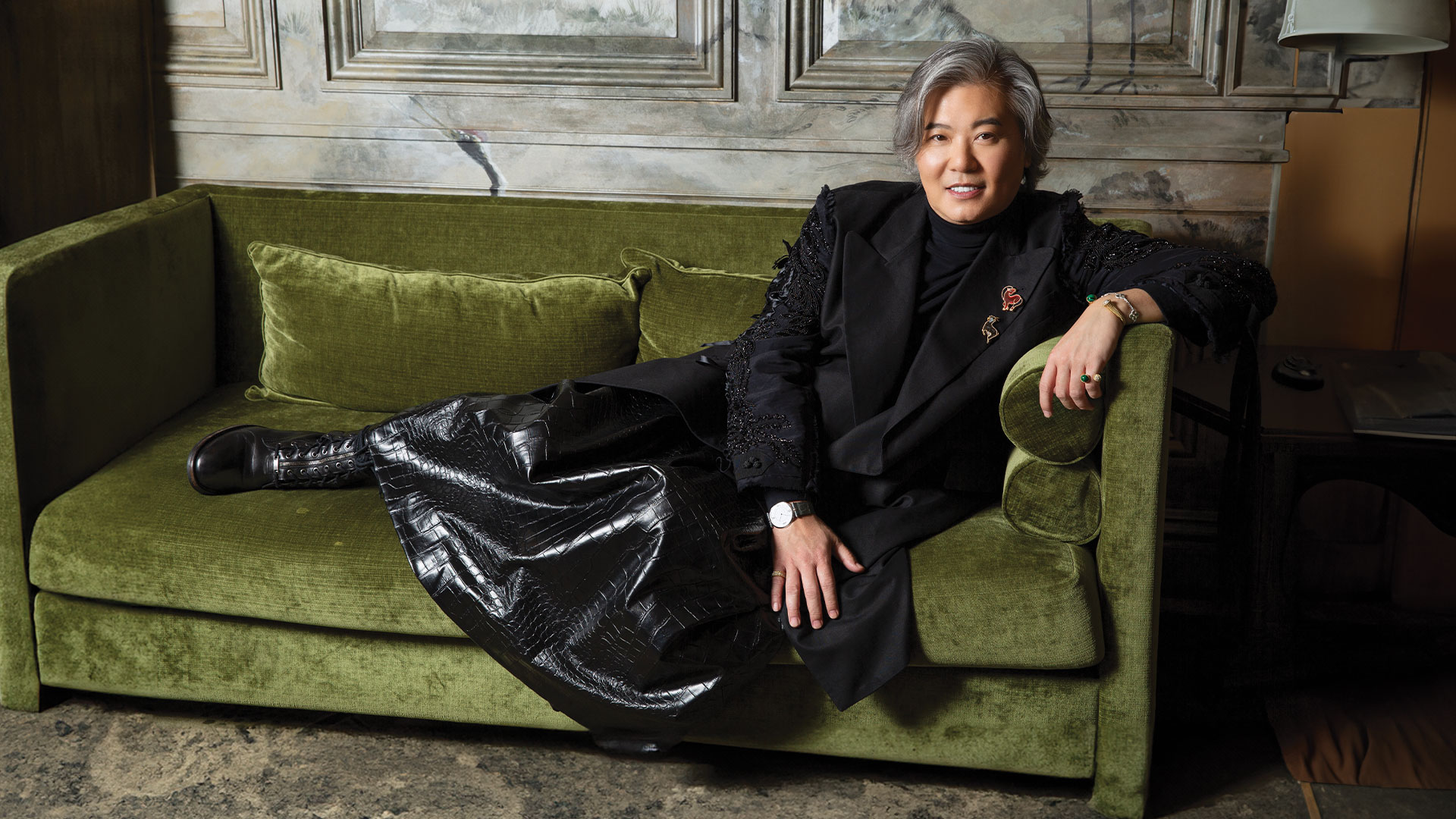
It is nearing 1 pm at the Mandarin Oriental Tamar Suite. Peter Cheung has long since arisen and absorbed himself in the morning rituals of the modern CEO: email, energised with his go-to coffee, and in this instance, employing a full glam team to ready him for our cover shoot. He is a person who uses your first name in conversation. When he walks into a public space and sits down, no one scatters. He is very approachable, and one can easily sense the warmth and vibrancy of his personality, and his fondness for all things luxurious and glamorous.

“Hi! Nice to meet you all!” he cries, without glancing up, as he greets us midway through typing an email on his phone. Once done, he looks at us immediately, winning us over with a sincere smile of apology, and continues his breezy welcome: “Nice to meet you all. Do you like what I’m wearing? I’ve purposely chosen these looks for you guys. Where do we start?”

The man who is Peter Cheung Asia, the strategic marketing and communications consultancy, had a very colourful childhood, as he would describe it. The youngest of six children and the only boy in the Cheung legacy – he was born and raised in Hong Kong until his mother relocated to Victoria, British Columbia, where he became a competitive junior tennis player; at 16 he was ranked in the top 10 of under 18-year-olds in the province.

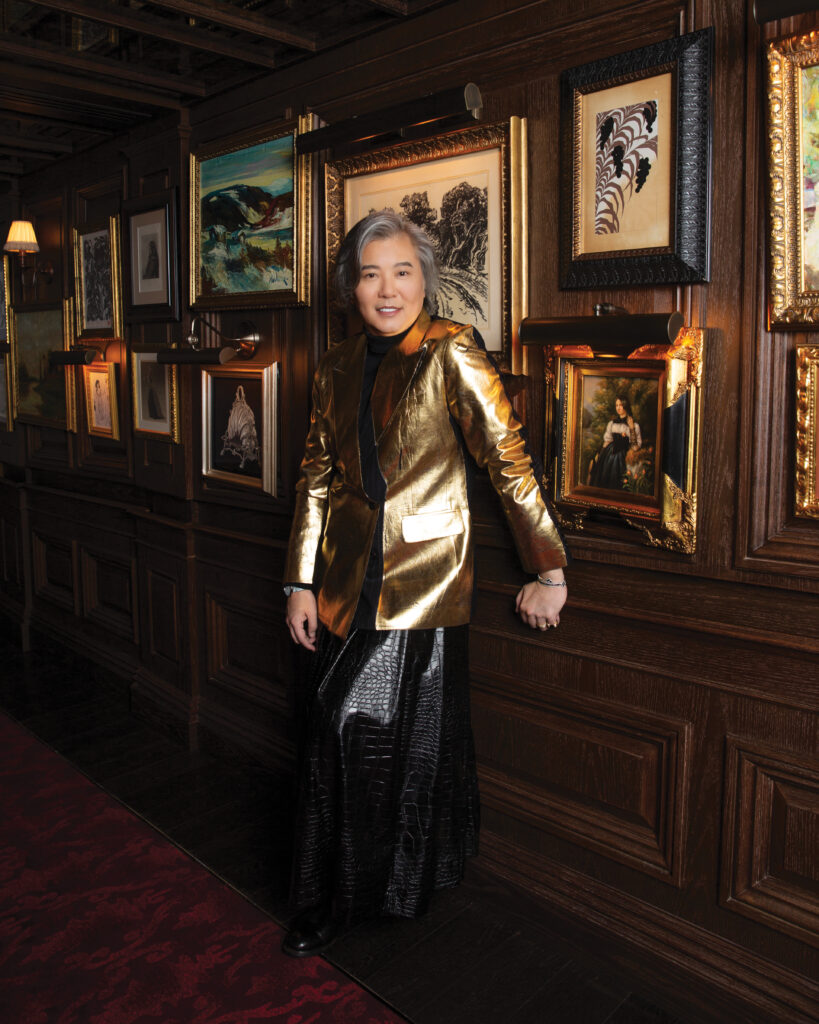
Gold tuxedo by Dries Van Noten

“It was my childhood dream to be a professional tennis player,” says Cheung. “Whenever we were back in Hong Kong, our parents would send us to the Hong Kong Country Club daily from 9 am to 9 pm. I fantasised I was an international tennis player, training at the Club by day and back to a five- star hotel at night. I really enjoyed my suite life.”

Safe to say, Peter is literally in the wealth of biographies and hagiography.

Cheer Leaders

His early teenage years, including being picked up nightly by his posse in a motorcade of chauffeur-driven cars to visit multiple hotspots, afforded him a glimpse of the luxury lifestyle. “Being here every summer in the most decadent times of the late ’80s and early ’90s, it became my mission to return permanently to the only place that I could only live that dream life – Hong Kong,” he says.

Once back, early stints in fashion merchandising and media led to senior PR roles at Sotheby’s, Dior, Versace and Van Cleef & Arpels. His father, a successful entrepreneur in the insurance field, was his most trusted adviser, even though the paths they trod in life couldn’t have been more different.

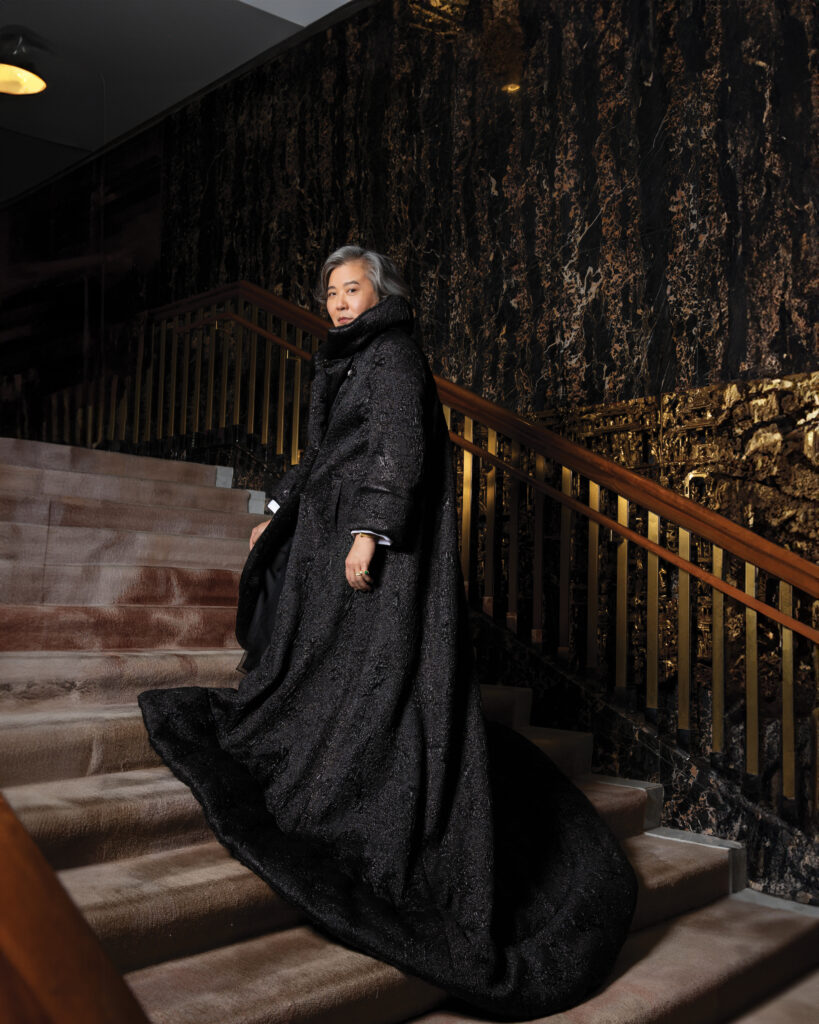
Shiny black jacquard funnel neck cape coat with padded hem and cuffs by Barney Cheng Couture

“I sought his advice always and I never made a professional move without discussing it with him,” says Cheung. “And he always said to me, you know what? You help the brands, you help your bosses, why don’t you help yourself and be your own boss? He was definitely my biggest inspiration to start my own business.”

On the other hand, his mother was his inspiration for fashion and style. His appreciation of clothes, jewellery and aesthetics from a very young age stemmed from her. “She had this amazing personality, character, beauty and style in that Shanghainese chic of a bygone era,” he shares.

“My parents, together with my five sisters and my friends have shaped me into what I am today. Shoutout to you all!” he cheers from the suite’s velvet couch.

Outside the Box

Peter still sometimes channels the kid from Canada that he once was: slightly wide-eyed and a little surprised to find himself as a marketing trailblazer in the region, more influential than most nine-to-five bankers. He defends his record as a creative leader in his own right and he elaborates on how he deals with his rivals and competitors.

“If my father did not put it on the table, I don’t know what I would be doing today. He made me realise I was in a unique position with my background, experience and expertise in that I worked in multiple product segments,” he explains. “This position is what I think sets Peter Cheung Asia apart from traditional agencies.

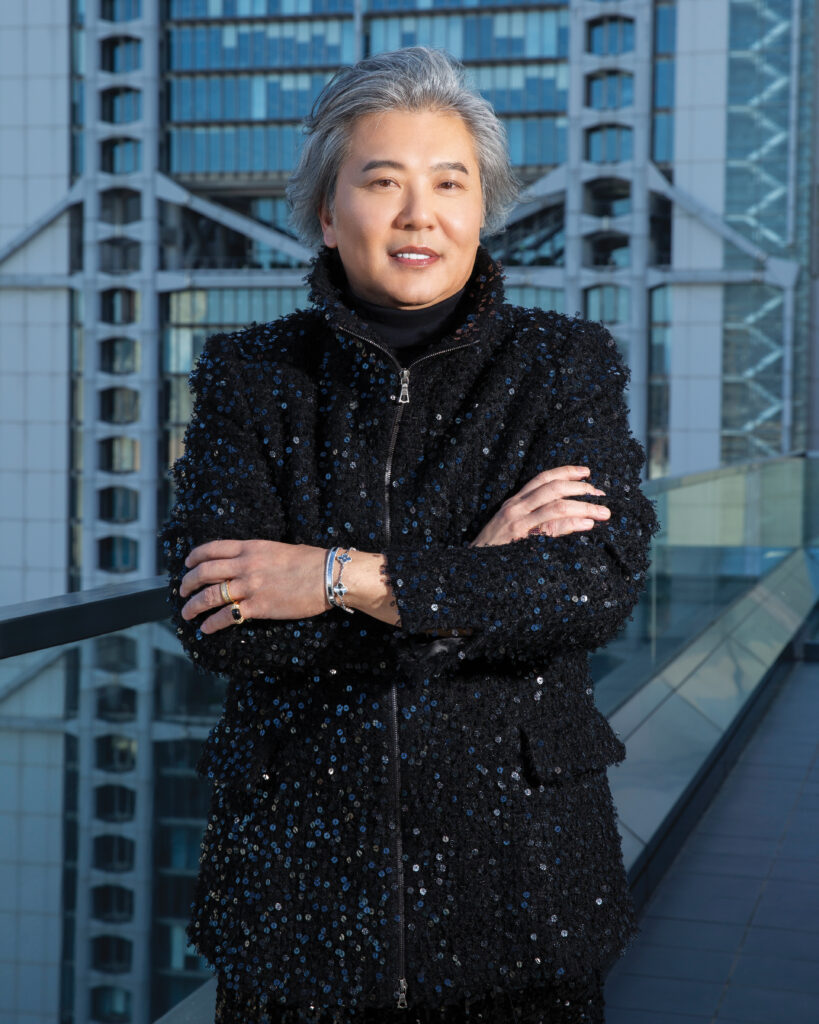
Black sequined jacket by Barney Cheng Couture

“We are a strategic consultancy offering unparalleled experience and strategies in marketing and communications services on a variety of luxury levels for developing strategies that are unique, creative, out of the box, surprising, in an ever-changing and competitive industry, but stemming from the unique and invaluable experiences through my now nearly 30 years of expertise, network and know-how.”

A natural affinity for beautiful things and love of the natural world makes him a credible messenger for a values-led company. Even as Cheung has reshaped the marketing business, he is reluctant to supply a list of his own creative achievements with the company he launched in 2015. These include steering clients in the fields of fashion, jewellery and watches, expanding into the hospitality industry (maybe inspired by the prodigal son of hotels), media, art and culture and education, and offering skills and time to several nonprofit organisations and charities.

Power Forward

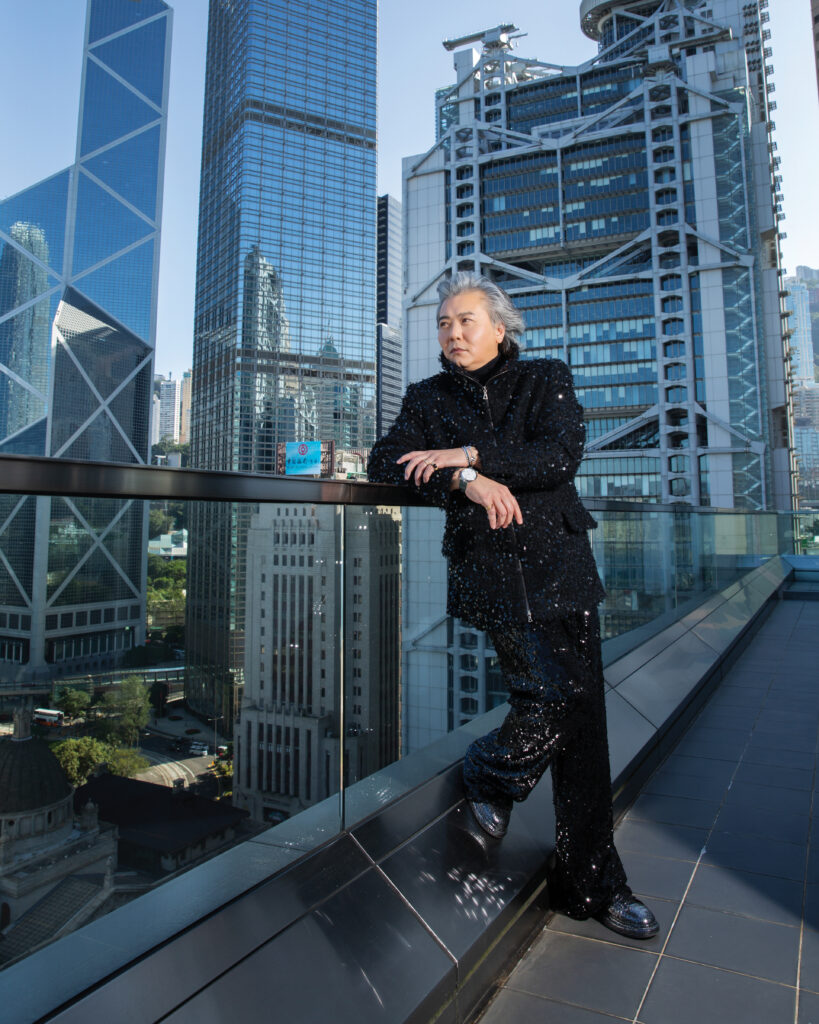
His wavy silver hair is neatly maintained – oftentimes blown by the wind as he poses for the camera. He is wearing an all-black ensemble, with glittering studs and sequins from top to toe. His perception of himself, with the position he has achieved in life, remains anything but simple.

“I’ve been described as a lot of things, but probably normal is not among those. I love having ‘crazy’ ideas. What is most exciting is having an original idea, something very abstract in the beginning, and to be able to hone it, work with it, shape it, edit, add or subtract elements, evolve it, looking at it comprehensively from every angle, and then to be able to launch this idea, by now a solid strategic plan, put it in motion with maximum impact and energy, with hopefully successful results and impeccable timing, and to see something concrete come into fruition,” he says, all in one breath with a deep sigh at the end.

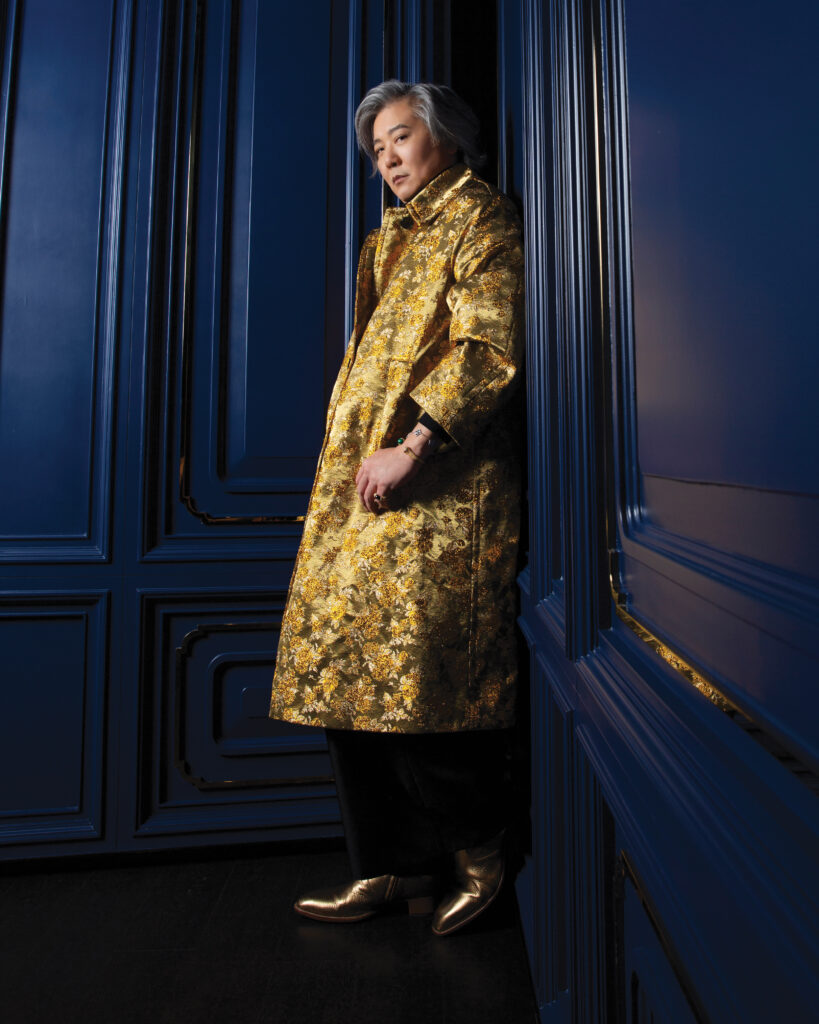
Jacquard and embroidered gold coat by Dries Van Noten

“Was that too much? In life, there’s nothing too much. As they say, there’s always more to life.”

And the future is complicated. Today, Peter Cheung Asia is a dominant marketing company in Hong Kong, having emerged from the pandemic relatively unscathed and prosperous, and also at a crossroads: perpetually on the brink of the discovery that will change the PR dynamic again, while at the same time fending off constant challenges to its existing business.

“We don’t really look back very much at all in history,” he says. “We’re always focused on the future and trying to feel like that, we’re very much at that starting line where you can really dream and have big ideas that are not constrained by the past.”

Clearly, as the visionary that he is, Cheung has the knack of turning doubters into followers and further emboldening his daring creativity through an innate curiosity about, and connection with, people and society. As we near the conclusion of our time together, an oscillating net of polite communications folks leading the way, he exchanges hellos, sorrys and thank yous with whomever we pass and are temporarily blocked because of our photoshoot. He makes this a habit, always acknowledging the goodness in people.

We pop the cork on a bottle of Champagne and raise a glass to a smooth afternoon’s work. His next move? Anywhere the wind blows.

Interview, Text & Art Direction: Joseff Musa Photographer: Jack Law Videographer: Jack Fontanilla Venue: Mandarin Oriental Hong Kong Brands: Barney Cheng Couture and Dries Van Noten Cover: Black silk organza multilayer cheongsam with gold thread Chinese pine tree motif hand embroidered embellishment by Barney Cheng Couture

Discover the most incredible auction items that broke records with their jaw-dropping prices 

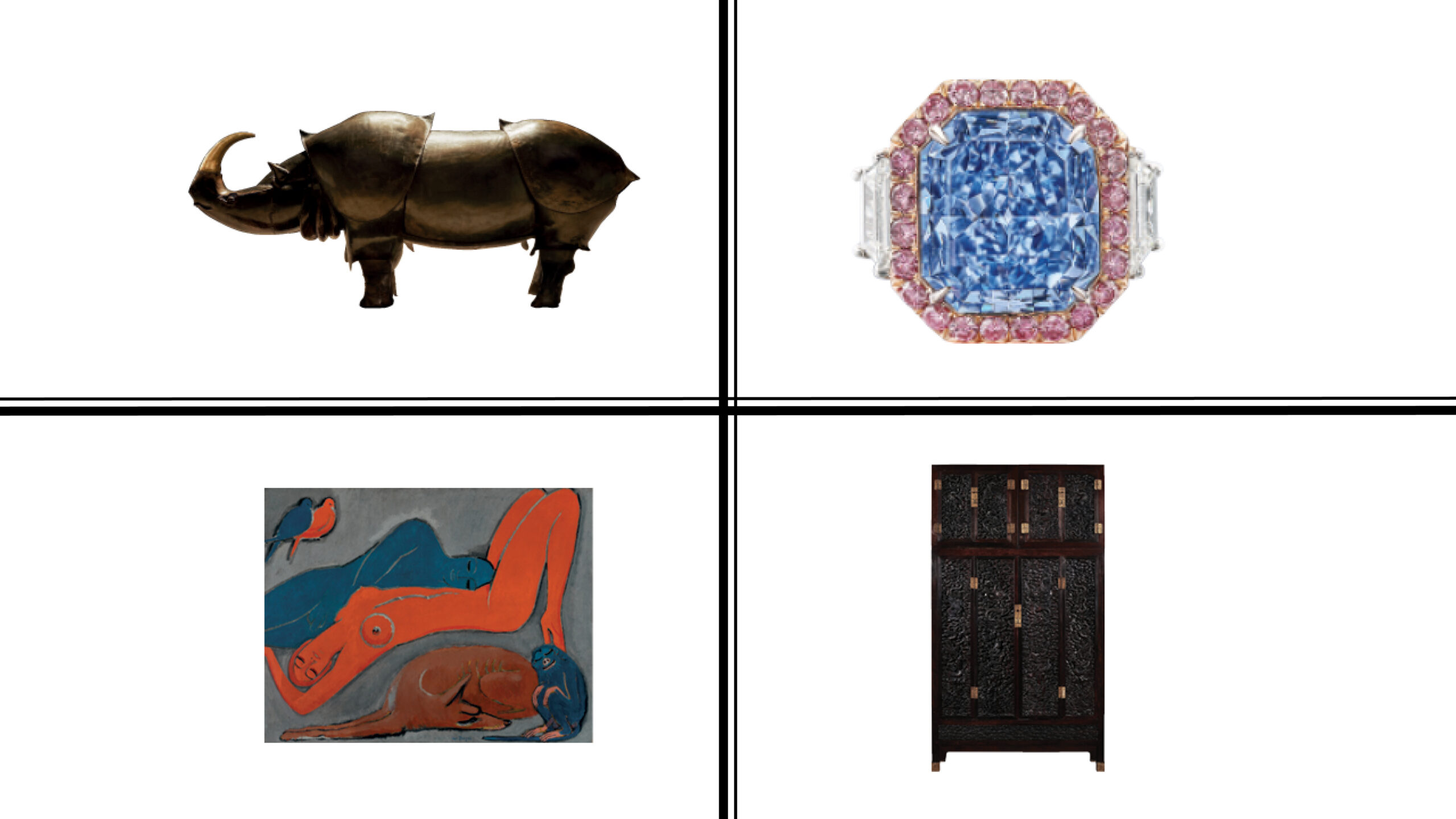
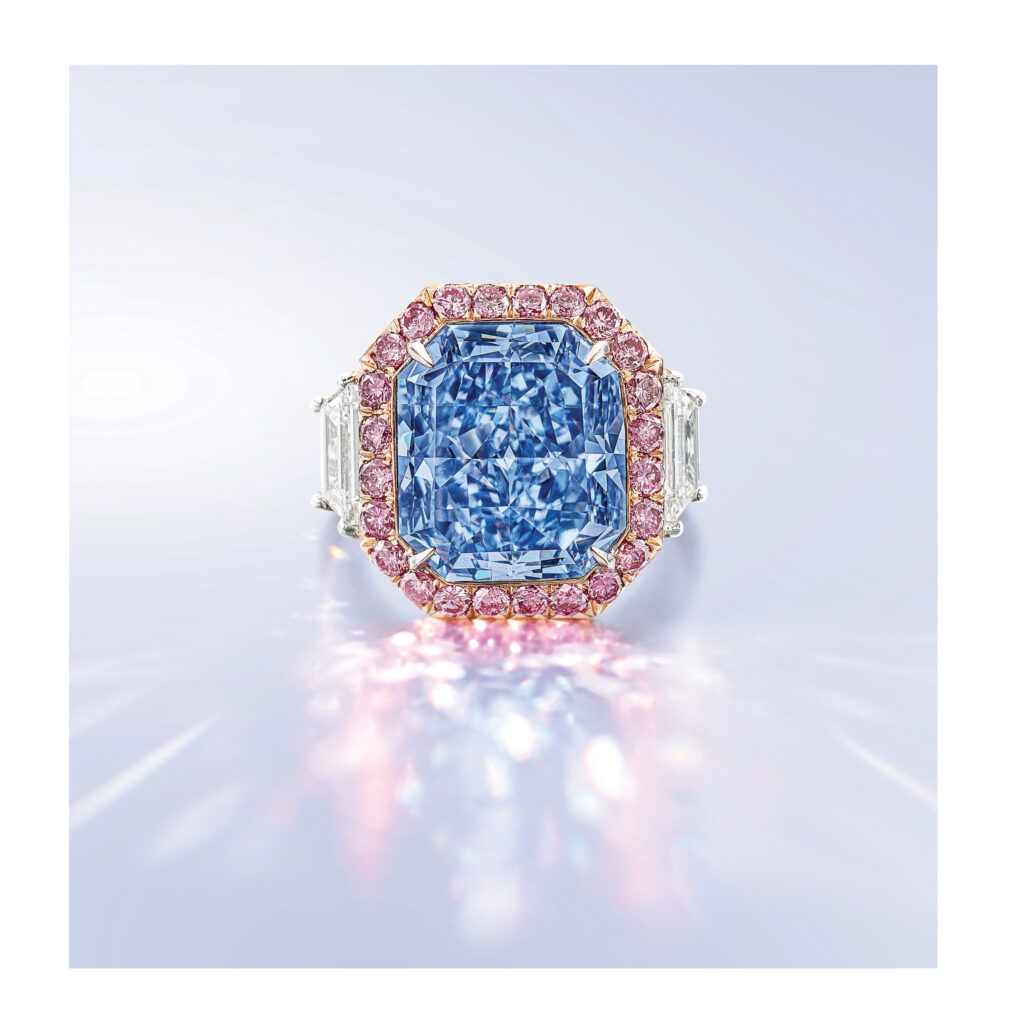
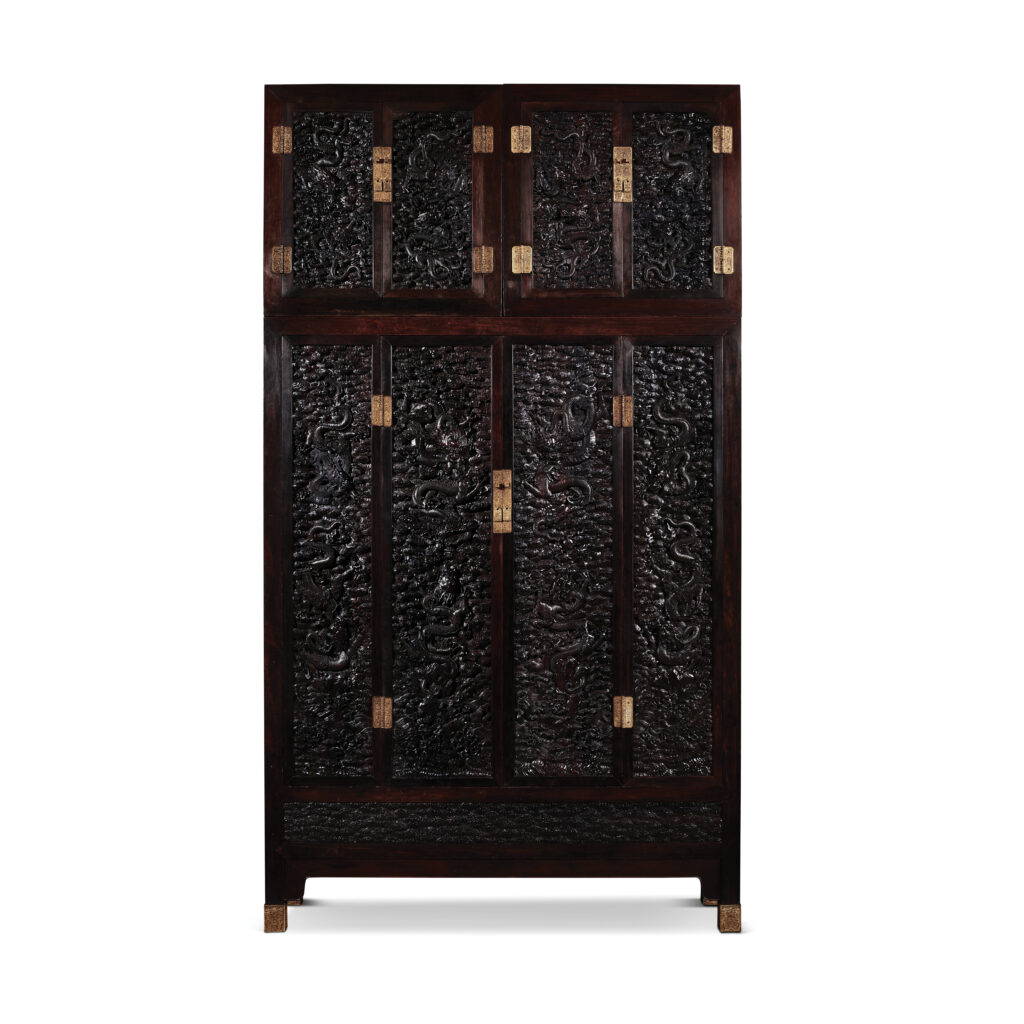
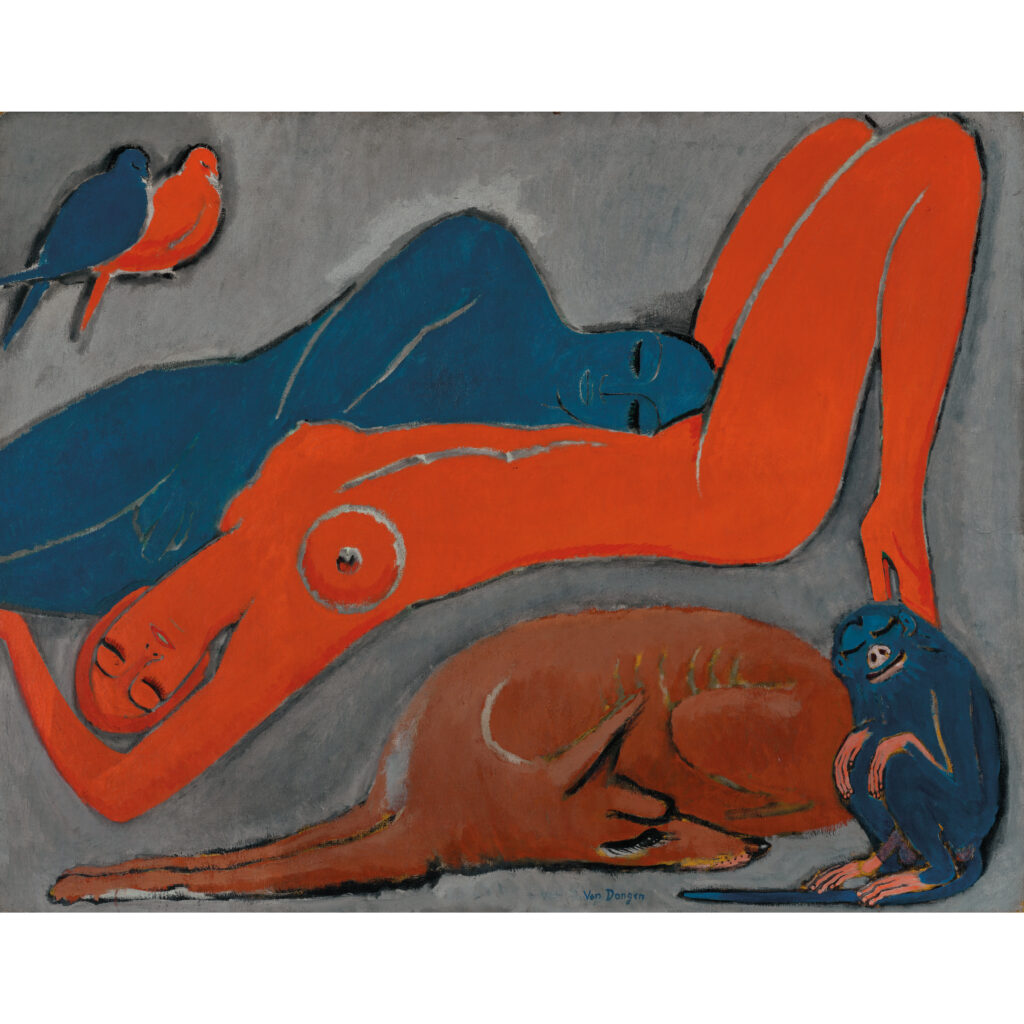
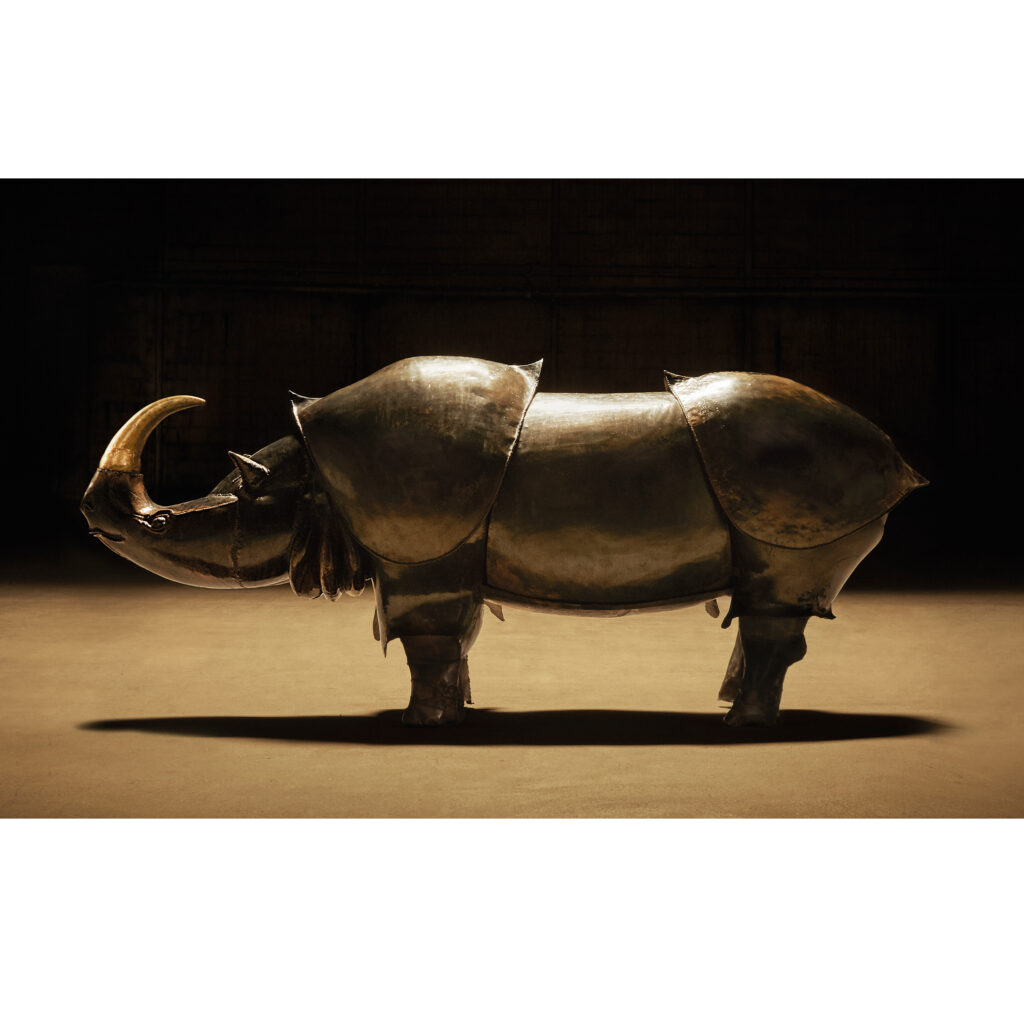
Four items that particularly stood out at this season’s auctions include an 11.28-carat fancy vivid blue diamond ring, a zitan ‘dragon’ compound cabinet, Sam Josefowitz’s masterpiece and Francois-Xavier Lalanne’s art. See how each attracted ground-breaking bids.

Brilliant Blue

Infinitely irresistible diamond ring

A superb 11.28-carat radiant-cut fancy vivid blue diamond set the auction house buzzing with its dazzling elegance, notching up one of the highest prices ever achieved for a diamond in Asia. The prized lot at Sotheby’s Hong Kong 50th Anniversary Autumn Sales fetched HK$198.2 million (US$25.3 million), with the house securing the three best-ever sales prices in Asia for blue diamonds – this one coming in third.

Praise for The Infinite Blue diamond, mounted in a diamond ring with brilliant-cut white and pink-tinged diamonds, was effusive, with Wenhao Yu, Chairman of Jewellery and Watches at Sotheby’s Asia, commenting: “[Its] beautiful blue hue, elegant cut and unique physical properties make it one of the most irresistible diamonds to appear on the market. It’s been an honour to have been entrusted with the opportunity to offer a diamond of such breathtaking beauty, its price attesting to the resilient demand for top-quality coloured diamonds amongst global collectors.”

Undoubtedly, part of the appeal of this magnificent diamond stems from its rarity, with less than 0.1% of diamonds sourced exhibiting a high-grade blue.

Household of the Blue Dragon

Emperor’s cabinet commands sky-high price

A massive zitan ‘dragon’ compound cabinet likely used by the Kangxi Emperor (1654-1722) attracted a dramatic two- way bidding war between a collector on the phone and an admiring fan at Sotheby’s auction house in Hong Kong. This superb example of early Imperial Qing furniture, which stands at a massive 3.7 metres high, finally went for HK$54.6 million (US$7 million).

The cabinet is infused with imagery carved into the silky zitan wood that adds to its allure. Dragons soar through the clouds in a display of symbolism that had deep meaning at the time, signifying imperial presence and power. Such is the quality of the workmanship displayed on the cabinet that only the most skilled artisans from one of the palace workshops under the command of the emperor’s household would have been tasked with the job.

Another reason for the impressive price – and the ferocious bidding – is that this sale represents the first time since at least the early 1940s that all components of the cabinet have been sold as one unit. The top left- and right-hand compartments had earlier been separated from the main body of this majestic piece and possibly passed inside the members of the same French family.

Quiet Reverie

Fauvist sensual embrace woos collectors

A strikingly colourful masterpiece from the art collection of the late tycoon Sam Josefowitz caught the eye at Christie’s auction house in London. Following frenzied bidding, the final price of Kees van Dongen’s La Quiétude was inflated to an astonishing £10.78 million (HK$102.3 million). This represented over twice the higher end of the estimate, such was the interest amongst enthralled onlookers in this oil on canvas laid down in 1918.

La Quiétude hit the block during Christie’s evening sales of 20th and 21st-century art in London, part of contemporary art fair Frieze Week. Typical of the Dutch-French artist’s Fauvist use of colour, the work was influenced by a 1913 visit to Egypt, where Van Dongen travelled down the Nile to Luxor and was struck by a sculpture of Ramesses II. Orientalism was in vogue, and the imagery of curvaceous bodies locked in perfect harmony draws on the erotism evoked in the Western mind at this time by the culture and civilisation of North Africa and the Middle East.

Dongen developed a great admiration for fashion designer Paul Poiret, who acquired La Quiétude direclty from Dongen.

Rare Beast

Lalanne sculpture smashes records


François-Xavier Lalanne’s masterpiece, Rhinocrétaire I, broke the world auction record for the artist at a recent sale by Christie’s in Paris. The eventual price of the almost life-size rhino sculpture-cum-functional furniture rose to €18.3 million (about HK$151 million), doubling the previous sum paid for a work by the artist.

François-Xavier Lalanne first exhibited this 1964 sculptural work in the presence of his partner and fellow artist, Claude Lalanne, at an exhibition called Zoophites. Made of patinated brass and bronze, zinc, brass, silvered brass, leather and natural wax, Rhinocrétaire I was considered by many as the standout item on display. Part of its charm is a homage to the fondness in 18th-century France for discreet drawers and hiding places. For instance, the beast’s hand-welded brass flanks contain a hidden safe as well as an illuminated desk.

Such was the enormity of the sale that the auctioneer, Cécile Verdier, Chairman of Christie’s France, commented: “A historic moment in Paris for this unique piece, which establishes François- Xavier Lalanne as one of the great sculptors of the second half of the 20th century.”