




Of the some 7,000 languages currently spoken around the globe, it is estimated about half will cease as everyday spoken vernaculars by the end of this century. Indeed, many languages previously spoken are now no longer in use. Part of the issue is that historically most of the world’s languages have not been written and this intangibility hinders their preservation.
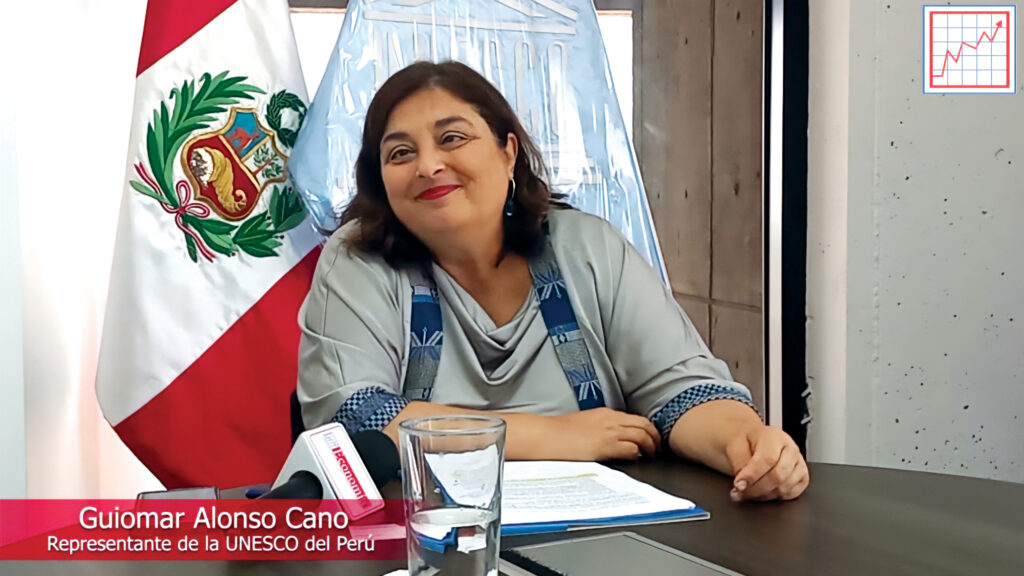
“With each language that disappears, a part of human life goes away with no possibility of return,” says Guiomar Alonso Cano, the Unesco Representative in Peru. “Not only a vehicle of communication is extinguished, but also a culture, a repository of knowledge, a system of thoughts, a way of seeing the world, a system of family relationships and values, and a force of citizenship.”
Unesco’s World Atlas of Languages indicates that about 250 languages have disappeared since 1950 alone. The majority of those in serious danger of vanishing now have less than 100,000 speakers – it is thought about 10,000 people is the minimum required for the intergenerational transmission of a language. Ultimately, this means some 2,500 languages could be lost out of the current international tally.
Power talks
Language shifts have occurred through the ages, with smaller languages often frozen out by those that are politically dominant. Indeed, following the Norman Conquest of England in the 11th century, English was hardly used for official purposes for about 350 years. Scholars suggest the sudden elevation of its status coincided with the rapid development of the written language. Other turning points in supplanting the interloping French lingo include Henry V’s shift to English in his correspondence, and the arrival of England’s first printing press in 1476, which afforded the publication of copious volumes in standard English.
Similarly, the languages of former colonial masters like Dutch in Indonesia and Portuguese in Goa are now hardly discernible as they are no longer perceived to have value.
According to anthropologist Mark Turin, an Associate Professor at the University of British Columbia, minority or local languages tend to fall away by design rather than accident. “They are often steamrollered out of use by government policy, by nationalism, by colonialism,” he says. “There’s a real sense that the cultural processes of complex societies put pressure on local languages in service of global or national languages.”
Turin champions the need to preserve as many languages as possible. “It’s important that we have as good a snapshot of linguistic diversity as we can to get a sense of how different languages express the human condition, what they see in the environment and things around them,” he says. “We also owe it to future generations to have a comprehensive document of the expressive range of human language.”
Silent threats
While pressures on indigenous and minority languages have been weighty for some time, Turin believes a combination of technology and supranationalism is placing them under greater threat. Often the people themselves, while living on together as a community, stop speaking their native tongue. “They shift to another language,” he says. Natural, political or cultural disasters, or even genocide and disease, have historically devastated communities.
The twin but distinct forces of colonialism and capitalism have played a key part in marginalising local languages, according to Turin. Where settler colonialism was at its most pernicious – in places like North America, Australia and New Zealand – indigenous communities were uprooted, relocated or in some cases annihilated. The colonists then introduced an external language through administration and education.
He cites his own country, Canada, which has been widely applauded for its federal commitment to English and French bilingualism, as a prime example. “[This is] great in some ways; at the same time, how curious and perverse that this country celebrates and accords a lot of resources to two languages, neither of which are from here, both of which came from somewhere else.”
Capitalism has not been particularly supportive of minority languages since at its core is the need for a central language to facilitate the free flow of commerce. While most of the world has throughout history spoken more than one language, the utility afforded by an international tongue explains why people start dropping their local language. “Capitalism and colonialism often reinforce the ideology of a single language for all, promoting monolingualism,” notes Turin.
Right to speak
He believes people should not have to fight for the right to speak their own language: “This is a fundamental human right, enshrined by the United Nations and many other organisations.” The UN has shown symbolic and political leadership by introducing an international decade (2022-2032) of Indigenous languages.
Research in Canada has indicated that in areas where local languages are still spoken and cultural continuity is strong, the rate of indigenous youth suicide rate drops to zero. “That’s a really interesting, powerful correlation,” says the anthropologist. “What the causation is, we’re not quite sure.”

Many communities in North America have sought support for the preservation of their indigenous and minority languages, and Turin says a combination of support mechanisms is needed to turn the tide: money and resources, as well as positive public policy and governance, and systems-administration legislation.
Shout-outs of hope
Although many languages remain under threat, extraordinary stories of resurgence, of languages bouncing back against all odds, give some grounds for optimism. The work of Jessie Little Doe Baird, founder of the Wôpanâak Language Reclamation Project in the indigenous Wampanoag communities of Massachusetts, in particular, has been singled out for praise. Such was its success in reviving a language which had not been spoken in 150 years that Baird was named in 2020 as one of USA Today’s Women of the Century.
Linguist Daryl Baldwin is also to be commended for his support of the Native American Myaamia people and their language in the Midwest. His focus has been on developing culture- and language-based educational materials to boost the numbers of native speakers in the community.
As Turin has cited, successful language revitalisation programmes need the marriage of money, resources and accommodating public policy. Among the best examples of language uptick are in the US state of Hawaii and among the ethnic Māori of New Zealand. “You can do a PhD in Hawaiian and a PhD in Māori, and defend [a court case] in Māori,” he says, while highlighting the plethora of newspapers, poetry and songs in these local languages.

Other language revitalisation projects across the Himalayas and North America are producing amazing results. “The Mohawk community [in southeastern Canada] has done incredible work, documenting their own language and producing new generations of speakers,” he says.
Voice for change
New technology such as WhatsApp and other forms of audio and video messaging can be hugely powerful in preserving and revitalising minority languages. The availability of podcasts through the radio is another formidable tool. “I’m excited by how minoritised communities and languages are making use of technology in powerful and compelling ways,” says Turin.
Ongoing globalisation and its technical interconnectivity can provide opportunities for languages to flourish. A recent book, Language City by Ross Perlin, co-director of New York-based Endangered Language Alliance, spotlights how globalisation has produced diaspora communities who carry their languages with them when they move and migrate. His organisation has identified about 700 languages spoken in New York and many of these communities resist pressure to stop using their local tongue in a bid to preserve something of their culture.
“There are now, in New York City, more speakers of some languages from northern Nepal than there are in the homeland villages from which they originated,” says Turin, highlighting how languages are highly mobile and can become reanimated in very different areas when a density of people settles there.