
Sensational Seoul: Beyond K-pop hype, the city’s glorious palaces and majestic surrounding mountains endure

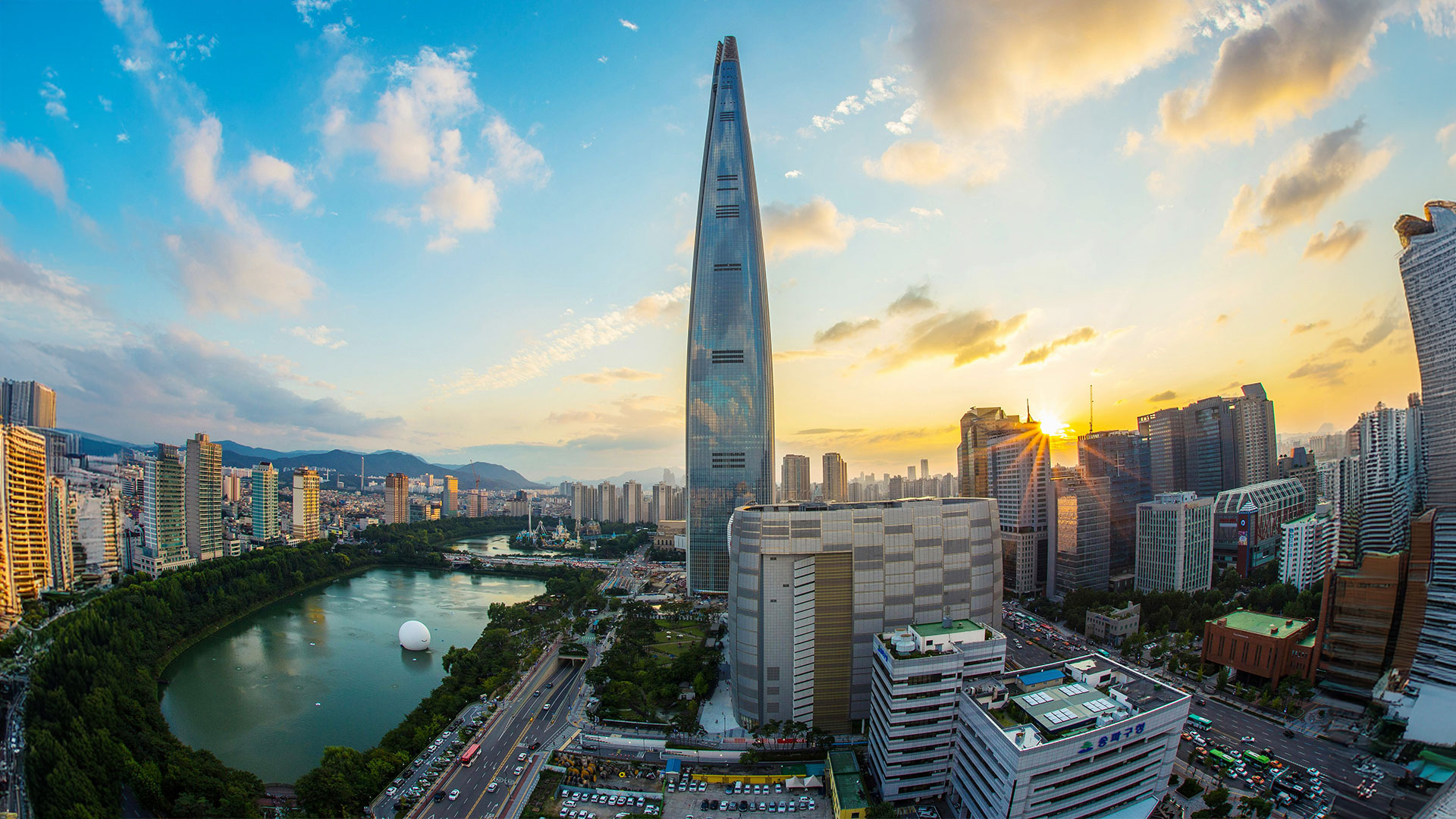
The high-rise, open-all-hours city of Seoul has many faces, from the rice-beer bars and markets to the palaces, temples, royal tombs, ancestral shrines and cultural attractions that act as magnets for tourists. For five centuries it was a dynastic seat of power, and this amazing blend of ancient history and modern-day joie-de-vivre infuses a tantalising vitality into everyday life that leaves visitors enthralled. 

A huge urban conglomeration of almost 10 million people, the South Korean capital sits about halfway down the Korean peninsula. Of course, recent history has seen Korea become a centre of geopolitical power play, and some 50 kilometres to the north is the four-kilometre-wide Demilitarized Zone (DMZ), pulling in tourists curious to witness how the country has been carved into two. 
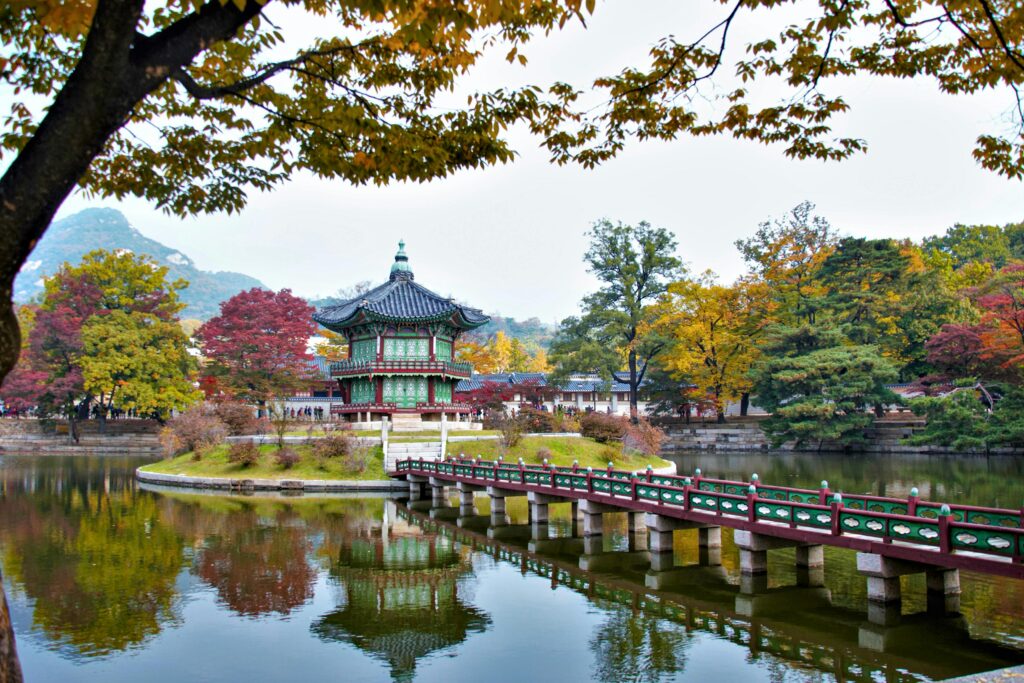
Autumn is the best season to visit as rainfall is minimal and temperatures bearably mild. This is when the slopes of the four main surrounding mountains – Bugaksan, Inwangsan, Naksan and Namsan – take on delightful hues as leaves turn into beautiful arrays of red, yellow and orange. Another good time to visit is spring; the flowers are in bloom and cherry blossom washes a pinkish white over the city. Both seasons play host to some amazing cultural and arts festivals that accompany the joys of nature. 

Palaces galore

A small settlement called Hanyang at the dawn of the Joseon dynasty in 1392, Seoul was soon renamed and bounded by protective fortress walls. The city is now blessed with five palaces, the largest of which, Gyeongbokgung, was built by King Taejo in 1395 against a splendid mountain backdrop as home for the new ruling family. It has been restored twice, following destruction during the Japanese invasions of 1592 and more recently that country’s occupation from 1910-1945. On another momentous date in Korean history, Japanese assassins broke into the palace in the early hours of 8 October 1895 and murdered Empress Myeongseong. 
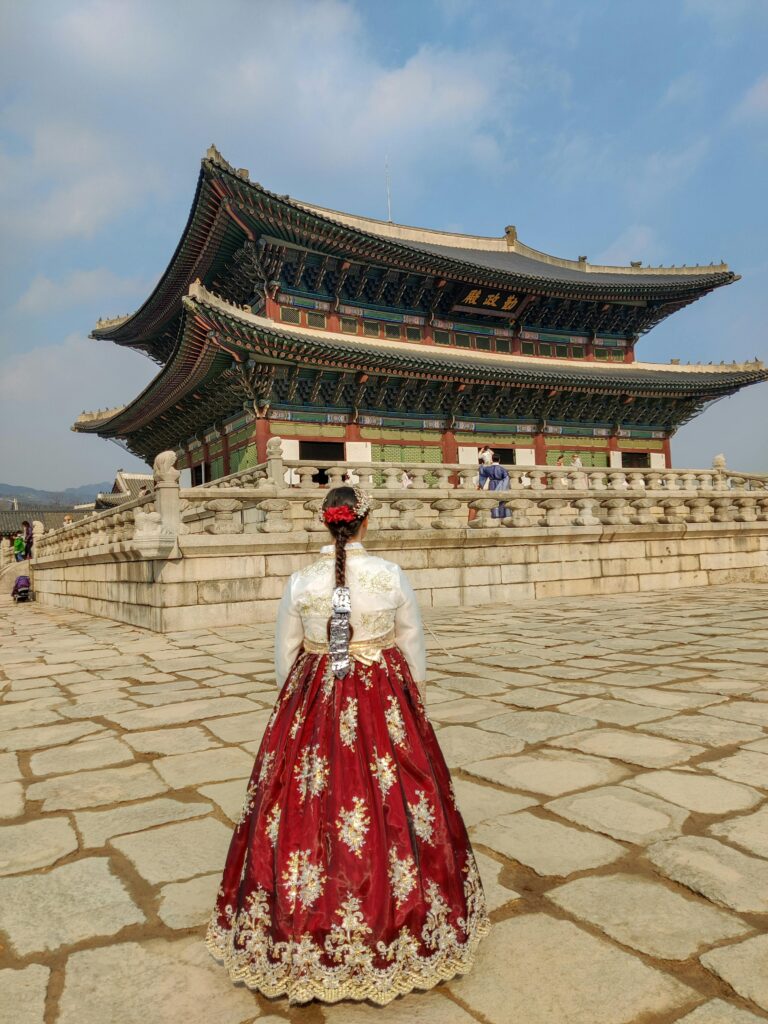
The scholars, eunuchs, concubines, soldiers and servants who once roamed this majestic compound have been replaced by hordes witnessing the changing of the guard and browsing two fantastic museums that bring Korea’s rich and often turbulent narrative to life. Royal artefacts in the National Palace Museum highlight the artistic pedigree of the Joseon era – royal seals, gold-embroidered traditional clothing and illustrations of court ceremonies. The National Folk Museum has three main exhibition halls replete with memorable attractions.
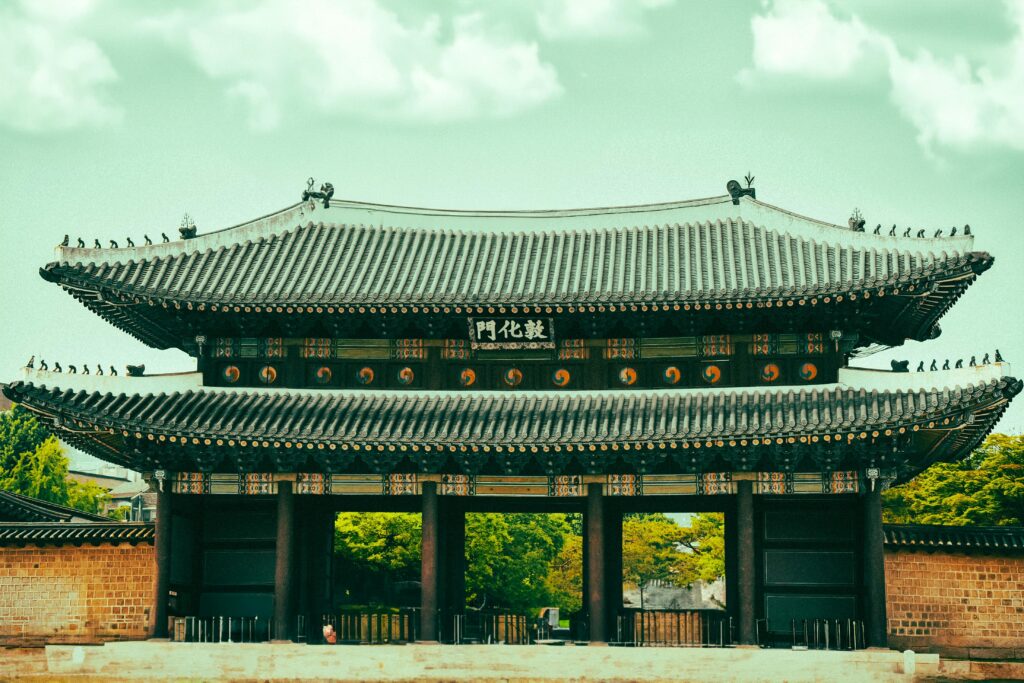
Perhaps the most enchanting of Seoul’s palaces is Changdeokgung, built in the early 15th century as a secondary royal residence to Gyeongbokgung and now a Unesco World Heritage Site. Many royal family members lived here into the 20th century, enamoured by its aura of beauty and grace. The must-see Huwon secret garden beguiles with charming vistas of pavilions on the edge of a square lily pond.  

Magnificent markets

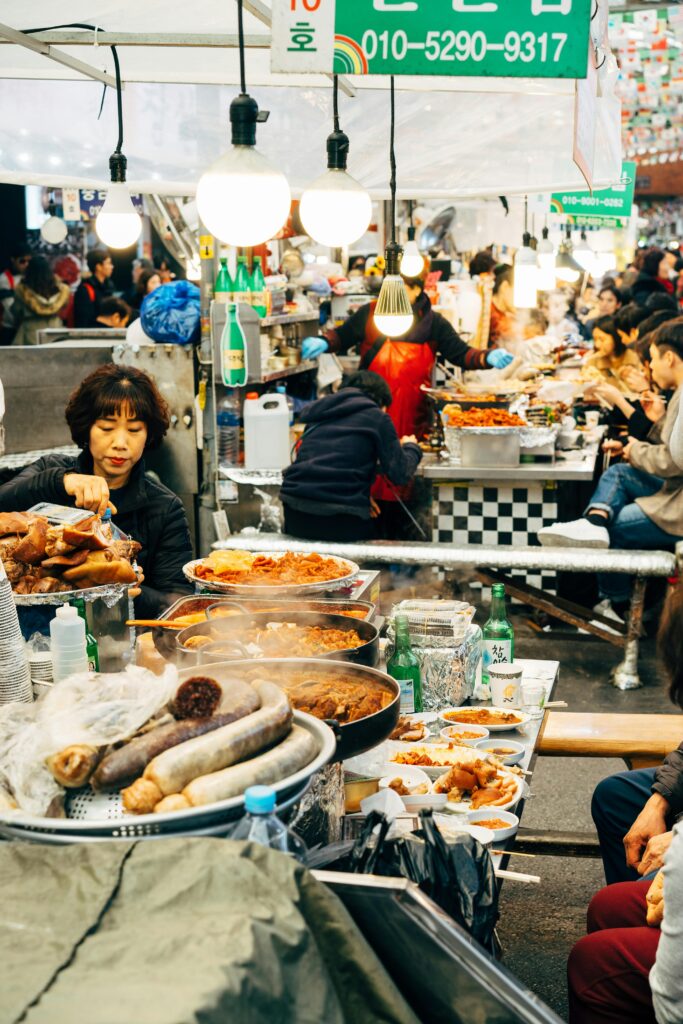
Following a palace tour, stop for some retail therapy at one of the city’s great markets. The hugely atmospheric Gwangjang Market is a mesmerising panoply of silk, satin and linen wholesalers congregated in a hive of alleyways during the day, joined by food stalls and vendors who stay active well into the night. Considered the merriest place to go for dinner and drinks, it is a veritable foodie’s paradise. Popular offerings include stewed pig’s trotters and snouts, gimbap (vegetables and ham wrapped in rice and rolled in sheets of seaweed) and bindaetteok (crispy pancakes of crushed mung beans and veggies fried on a skillet). Why not wash the delicacies down with the local liquors of makgeolli and soju?
If seafood is your preferred choice, then Noryangjin Fish Market is the place to go with its mind-boggling variety of fresh catches. Early mornings host noisy fish auctions, while the evening is particularly picturesque and a good time to wander among the acres of shellfish, spider crabs, sea worms and other salty fare.       

Night vibes

Seoul is teeming with places to eat, drink and enjoy nightlife. Fine dining is showcased at Dooreyo, celebrity chef Tony Yoo’s restaurant nestled in the heart of Bukchon Hanok Village – a tourist draw of restored traditional Korean houses. Hot soups are a favourite in Korea, and high-end O’neul in Dongbinggo-dong has a wonderful rendition of yukgaejang (spicy beef soup) simmered for 12 hours. Ssuk tteok, a rice-cake hybrid tinged green with mugwort, also entices at this restaurant that champions Korean culinary traditions and techniques.
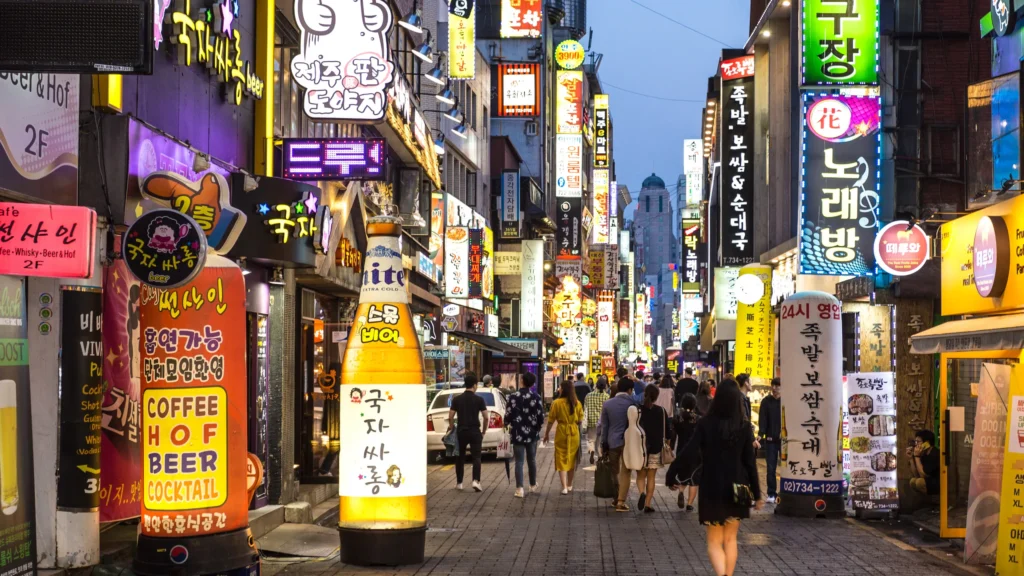
Teeming with some of the capital’s best bars, clubs and restaurants, Itaewon has become a trendy night-time area and attracts many from the LGBT community. Another buzzing district, Hongdae, is saturated with nightlife hotspots, while Samcheongdong, the historic neighbourhood east of Gyeongbokgung Palace’s Gwanghwamun Gate, entices with relaxed joints for wining and dining.      

Cultural enrichment

While famed for its glitzy K-pop stars and karaoke bars, the city has much more to offer in terms of culture, with a high concentration of museums, art institutions and galleries. You can soak up Seoul’s past and vibrant present in Samcheongdong, where art events abound during the autumn month. Art Sonje Center presents a major exhibition by Do Ho Suh, one of the most important figures in Korean contemporary art, until 3 November. The Seoul branch of the National Museum of Modern and Contemporary Art has an extensive collection of modern Korean and international artworks, and hosts the prestigious Korea Artist Prize annual exhibition.
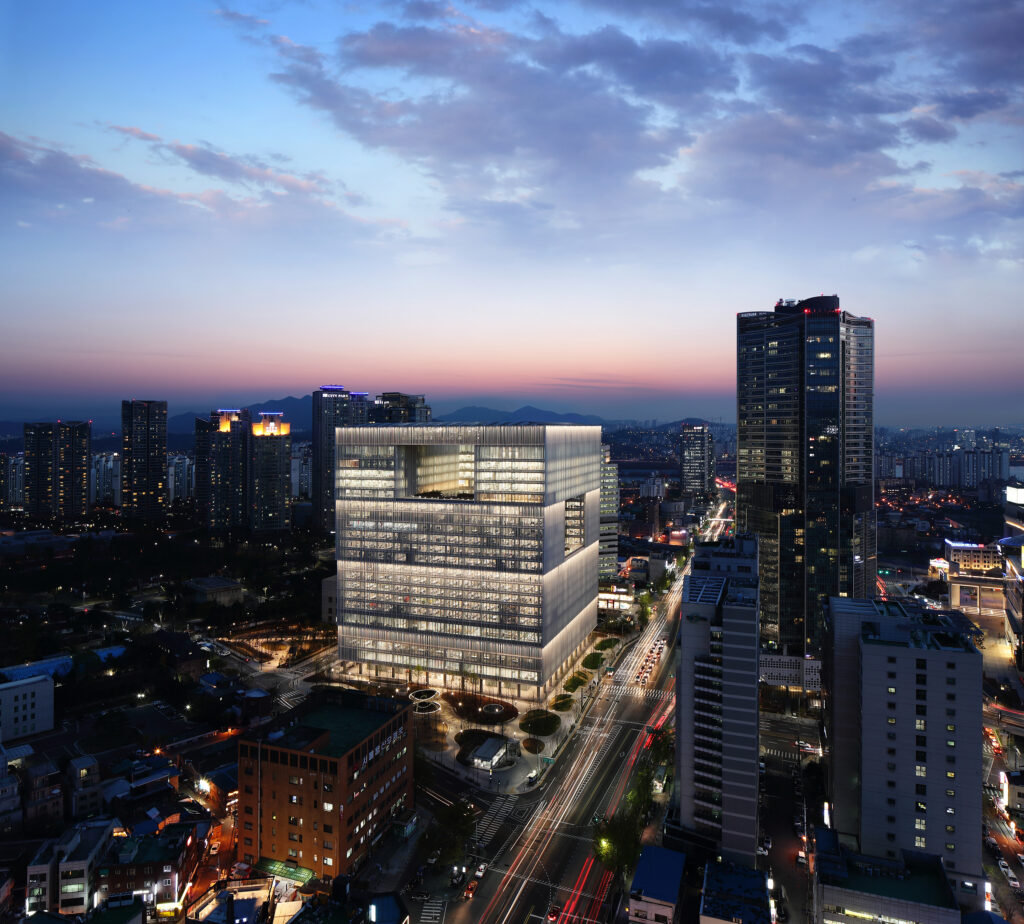
The Frieze Seoul art fair takes place in the upscale Gangnam district, south of the Han River, from 4-7 September, providing exposure for local and international artists. Some galleries have seized the chance to stage their debut exhibitions in South Korea alongside Frieze. For instance, until 12 October, Gagosian presents new paintings by Derrick Adams at the APMA Cabinet, which is located in the headquarters of the country’s cosmetics giant, Amorepacific. 

City oasis

An attraction of a different sort, Cheonggyecheon is a long-buried stream uncovered when a raised highway was demolished. Stretching almost 11 kilometres, it has transformed the city centre, creating a riverside park that offers a calm respite from the commercial hubbub and a walking course whose banks are popular with joggers. Peruse the public art dotted along the way or pay a visit to the museum which tells its history.  A spectacular two-week Lantern Festival is held in November, when thousands of glowing paper-and-paint sculptures float in the water, illuminating downtown Seoul in sparkling lights. 

Spectacular hiking 
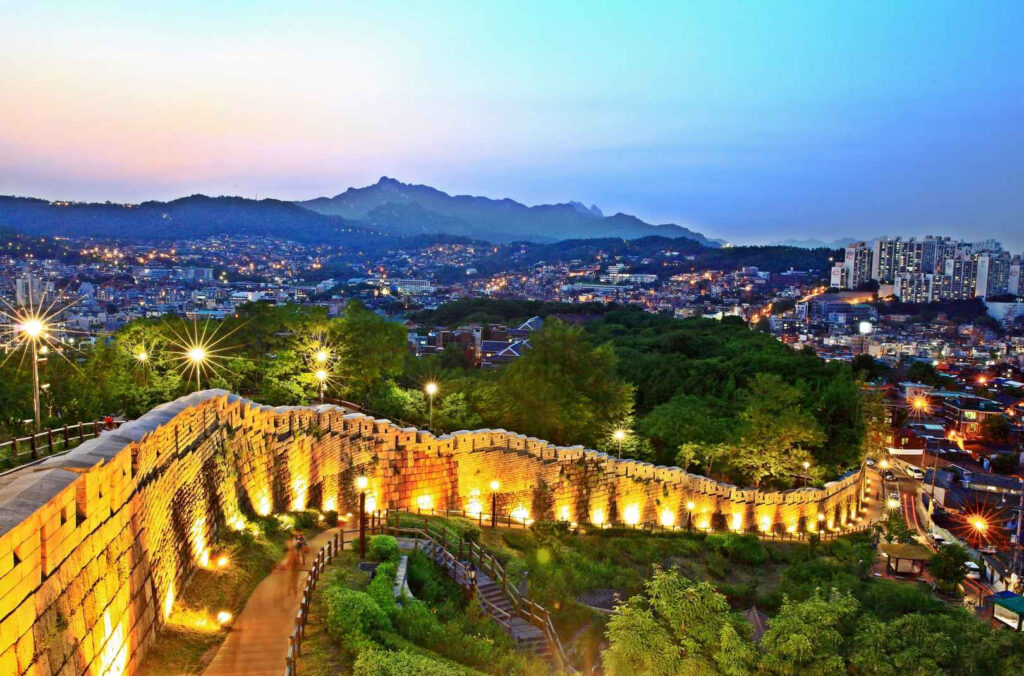
There is plenty of hiking available in the city and its mountains. The Seoul City Wall trail, snaking more than 18 kilometres along the major peaks, offers a wonderful opportunity to admire myriad architectural styles from the ancient Three Kingdoms period to modern restoration work. One option is to start your circuit of the City Wall by hiking up the tallest of Seoul’s four guardian mountains, the conical-shaped Bugaksan (North Peak Mountain). This is considered a most spectacular section of the City Wall trail, running for about 2.5km and rising steeply from Changuimun, one of the ‘four small gates’ in the City Wall. Another beautiful trail is Naksan, which is the lowest of the four guardian mountains and is blessed with the arty neighbourhood of Thwa-dong on its slopes. 

Great views
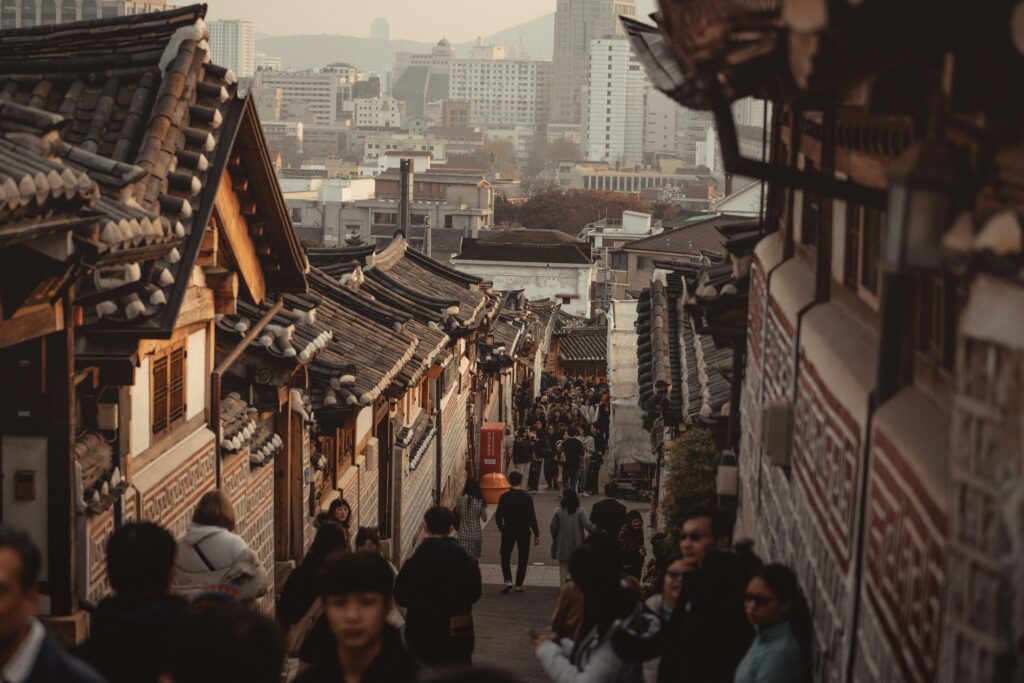
For some of the best views of the city, the section of the City Wall at Inwangsan takes some beating. The hike involves climbing past some incredible weirdly shaped rocks and giant boulders, but the trek is worth it for the most amazing views of Seoul, offering a complete panorama of this spectacular city. Several of the majestic palaces are clearly visible as well as much of the glorious Seoul City Wall, especially the sections where it meanders its course along Bugaksan, Naksan and Namsan. Hikers at this wonderful viewing point can clearly discern how the guardian mountains formed a protective shield for the old city nestled inside.

All about BTS’ J-Hope and the K-pop star’s mega success

In 13 June 2013, a 19-year-old named Jung Ho-seuk made his debut with a new K-pop boy band that would soon smash records and set hearts racing around the world. His prowess in dance, which he had practised since the tender age of six, saw him become the third idol trainee signed by Big Hit Entertainment to become a member of BTS. At that time, few would have guessed that this callow youth would shine as part of a global pop culture movement.

J-Hope and Glory The biggest money-spinner of K-pop phenomenon BTS is no slouch when sharing his success with the world gafencu (10)

Fast forward to today, and not only has BTS become the most successful, best-selling South Korean musical act in history.

The singing-and-dancing septet has hit countless other international milestones, including becoming the first Asian and non-English-speaking group to be named ‘Global Recording Artist of the Year’ by the International Federation of the Phonographic Industry; the non-profit organisation representing the interests of the recording industry across the globe, which recently reconfirmed their 2020 accolade to BTS for a second year. Dubbed the ‘Princes of Pop’, the band has garnered numerous music accolades in South Korea, and in the West.

J-Hope_at_The_Mood_For_Love_On_Stage_Epilogue_in_Nanjing,_in_July_2016_06

Such is the popularity and success of J-Hope (Jung’s stage name) and his cohorts that they’re estimated to pull in a staggering US$5 billion a year.

To put that into perspective, that’s roughly half a percent of South Korea’s overall GDP. In recognition of their efforts, in another historic first, BTS became the youngest-ever recipients of the country’s Order of Cultural Merit.

Although all members of BTS have reaped serious rewards for their years of hard work, J-Hope has been tapped as the highest earner according to a variety of media outlets. Here, we delve into the circumstances of his rapid rise, famous family members and other lesser-known facts about the mega talented dancer, rapper and singer.


Also Read: Hallyu to the World: The rise and rise of Korean Culture

J-Hope_for_BTS_5th_anniversary_party_in_LA_photoshoot_by_Dispatch,_May_2018_04

Sibling Success
Jung was born on 18 February 1994 in Gwangju, South Korea’s sixth-largest metropolitan city. Few details are available about his parents – some claim his father is a teacher of literature, while other sources identify him as a businessman.

There is, however, rather more known about his elder sister, Jung Da-won, who also uses the name Jung Ji-woo. She’s so much more than just the sister of a K-pop idol, though. An entrepreneur at heart, she runs several businesses – fashion company AJ Look, e-commerce platform Mejiwoo as well as eyewear brand Fun the Metal. The social-media whizz also boasts millions of followers on both Instagram and YouTube, and latterly signed an exclusive contract with another South Korean entertainment company, Cube Entertainment. Clearly, the Jung siblings have more than their fair share of natural talent.

J-Hope and Glory The biggest money-spinner of K-pop phenomenon BTS is no slouch when sharing his success with the world gafencu

Big Hitter
J-Hope is renowned as a skilled dancer, rapper and singer. However, during his schooldays, he had another, more athletic aptitude: tennis. “It’s funny how I started playing… my teacher asked, ‘Who wants to play tennis?’ and I was just stretching with both of my arms up high at that moment and she thought I wanted to join tennis,” recalls Jung with a laugh. Despite this accidental and somewhat inauspicious start, the tennis starlet would go on to win third place at a national tournament.

J-Hope and Glory The biggest money-spinner of K-pop phenomenon BTS is no slouch when sharing his success with the world gafencu (6)

Stepping Up
Bitten by the dancing bug as a young child, J-Hope began taking lessons at Gwangju Music Academy, whose famous alumni include fellow idols Seungri of Big Bang and 2NE1’s Minzy. He then went on to accrue several prestigious dance laurels including the top prize at a 2008 national competition.

With these experiences under his belt, he joined underground dance team Neuron before auditioning for JYP Entertainment in 2009. While the 15-year-old didn’t make the cut there, he was quickly able to turn things around and continue pursuing his dream. His sense of rhythm was applauded at Big Hit Entertainment, which signed him up later that year, leading to his spot in BTS.


Also Read: Awkwafina: The unexpected Hollywood star we didn’t know we need

J-Hope and Glory The biggest money-spinner of K-pop phenomenon BTS is no slouch when sharing his success with the world gafencu (12)

Lyrical Low
J-Hope is admired by the ARMY (Adorable Representative M.C. of Youth, or BTS’s legion of global die-hard fans) as the ever-chipper member of the group. However, that’s not to say that he hasn’t faced his own uncertainties when it comes to his music. “I’m someone who got into music from dance. [So] I still need direction when it comes to music,” he shares.

Recalling a recent painful slump in his songwriting abilities, he says: “I met a lot of producers and showed them my music and got feedback, then fell into a dilemma. I realised that I had chosen a difficult musical direction and it shook me up mentally. I wanted to resolve it quickly, but it wasn’t coming out the way I wanted, so I felt ashamed and wondered, ‘Is this my limit?’ I’m only gradually overcoming this struggle.”

J-Hope and Glory The biggest money-spinner of K-pop phenomenon BTS is no slouch when sharing his success with the world gafencu (8)

Flying Solo
In 2018, five years after his BTS breakthrough, J-Hope debuted his first solo mixtape, Hope World. While he’s not the first of the group to step out on his own – the band’s two other rappers, RM and Suga, released their albums in 2015 and 2016 respectively – Jung’s effort is, perhaps, the most successful.

Self-described as ‘my calling card to the world’, Hope World peaked at number 38 on the US Billboard 200 and made the charts in nine other countries around the world. His next solo outing (Chicken Noodle Soup, a single in collaboration with US songstress Becky G) in 2019 would go on to break even more records, and raised his profile as the first BTS member to chart as a Billboard Hot 100 solo artist.

J-Hope and Glory The biggest money-spinner of K-pop phenomenon BTS is no slouch when sharing his success with the world gafencu (5)

Despite the success he has found outside the band’s purview, Jung is adamant that BTS will remain his priority. “The team always comes first, so I focused on our projects as BTS and tried to make time [to work on my own stuff] in hotel rooms, on the airplane, whenever I could find a few minutes,” he explains.

Hope for Others
As with many of his bandmates, J-Hope is a strong proponent of giving back to society. Over the years, he’s personally donated hundreds of millions of Korean won to various causes. He has championed an array of worthy initiatives – from supporting visually and hearing-impaired children and youngsters suffering from violence in Tanzania to boosting the welfare of minors impacted by the Covid-19 pandemic – it’s clear that the star’s ability to bring literal J-Hope (joy and hope) is not just limited to the musical sphere.


(Text: Tenzing Thoundup)

Also Read: Soul Searching: Exploring the countless sights of South Korea’s capital city

5 binge-worthy foreign language shows to watch on Netflix now

Netflix currently enjoys the distinction of being one of the world’s most popular streaming platforms for film enthusiasts, as well as casual binge-watchers. Providing global access to its platform, language barriers on Netflix have come down more and more, with the continuing expansion of its offerings of foreign films and TV shows. Here are five binge-worthy foreign- language worth watching on Netflix over the weekend. 

5 binge-worthy foreign language shows to watch on Netflix Dark German

Dark (German)

A science fiction thriller that will rattle its audience with mind-bending twists that cleverly uses time travel elements in building a story that tracks four families and their connection to one another. Netflix’s first German original series will keep their audiences on the edge of their seats throughout the entire show.

5 binge worthy netflix shows that will make you smarter_money heist

Money Heist (Spain)

The international Netflix phenomenon has won over fans around the world and even inspired a documentary film that carries the same name. After four well-received seasons, a fifth and final season has been confirmed. So, those who have yet to jump onto the Money Heist bandwagon  still have time to catch up with the lovable band of misfits before their heist ends.

5 binge-worthy foreign language shows to watch on Netflix Kingdom Korean

Kingdom (South Korea)

Following the success of Train to Busan and #Alive, this horror TV series delivers another epic and gruesome zombie creation that will again provide great entertainment to international viewers. Set in Korea’s Joseon period after Japan’s invasion of the country, Crown Prince Lee Chang comes across a political conspiracy and investigates a plague that reanimates the dead.

5 binge-worthy foreign language shows to watch on Netflix atelier japanese

Atelier (Japan)

Comparable to the 2006 American film The Devil Wears Prada, Atelier follows Mayuko Tokita and her coming-of-age journey as she struggles with her relationship with her employer, Mayumi Nanjo, creator and owner of the fictional high-end lingerie design house in Tokyo, Emotion.

5 binge-worthy foreign language shows to watch on Netflix call my agent french

Call My Agent! (France)

This show’s plot revolves around a team of agents who manage some of the top celebrities in Paris. Struggling to keep their business running smoothly amid a crisis in the entertainment industry, the characters take on a wide array of challenges, including ageism and sexism within the industry, and tackle them with humorous twists and intrigues comparable to American TV series, Entourage.


Fresh dining options: New restaurants helmed by newly-arrived chefs

Now that dining restrictions are gradually getting lifted, it’s high time to explore new restaurants that started operating only this year and which feature newly-arrived chefs from overseas. Here are some of the newly-opened restaurants that offer a range of dishes, including an exotic mixed Spanish-Japanese cuisine:

Fresh dining options New restaurants helmed by newly-arrived chefs gafencu magazine ando
(image from Ando)

Ando

Along Wellington Street, nestled on the 1st floor of the Somptueux Central building is the chic dining space of Jia Groups’ Ando by Chef Ferrando Balbi. Their modern tasting menu combines Chef Balbi’s Spanish roots with his expertise in Japanese cuisine. Priced at $780 per person for a six-course lunch menu which focuses on a different ‘hero’ ingredient every month. One of their signature dishes includes a dish that reflects on the chef’s own childhood lunch favorites, the rice caldoso cooked in three stocks, and Japanese rice that is simmered in low heat for eight hours. 

Fresh dining options New restaurants helmed by newly-arrived chefs gafencu magazine cobo house
(Image from Cobo House)

Cobo House

Cobo house reopens with a fresh new concept and direction featuring an ‘unspoken’ tasting menu of western dishes. Settled on the sixth floor of the K11 Musea, the Bohemian lifestyle fine dining restaurant presents its four-course lunch menu designed by executive chefs Ray Choi and Devon Hou, both trained in Michelin-starred restaurants. The menu offers newly curated edible art every six weeks at $680 per head. 

Fresh dining options New restaurants helmed by newly-arrived chefs gafencu magazine sushi haru
(Image from Sushi Haru)

Sushi Haru

Although relatively new to the art of Edomae, Masterchef Motoharu Inazuka has proven his dedication to the craft of sushi-making which has led him to Hong Kong to lead one Black Sheep Restaurants’ new ventures, Sushi Haru. Offering Omakase style menu based on ingredients delivered fresh on the day. Lunch at this exclusive eight-seater dining space will set patrons back $1000 per person but they can enjoy quality service and the company of Chef Inazuka himself. Reservations may need to be made a month ahead of time. 

Fresh dining options New restaurants helmed by newly-arrived chefs gafencu magazine Honsik Goo
(Image from Honsik Goo)

Hansik Goo

Top Michelin Starred Korean Chef Mingoo Kang delivers to Hong Kong Hansik Goo, a Korean restaurant in Central with a creatively innovative flare. In a four-courses or full seven-course tasting menu priced at $480 and $780 respectively. There is also the option to add on some of the restaurants more popular dishes which are the Korean Fried Chicken with Yuza Jang and Paejon seafood pancake with scallion. 


See also: Top Omakase Sushi Restaurants in Hong Kong

Find more information at the restaurants’ official websites by clicking the links below:

Ando

Cobo House

Sushi Haru

Hansik Goo