Harvesting herbs with Garage Greens by Rooftop Republic and Garage Academy

The latest wellness trend that seems to be catching on in Hong Kong is urban farming. In keeping with this trend, Rooftop Republic and Garage Academy have started a collaborative rooftop farming programme called Garage Greens.

Garage Greens

Through this three-month seasonal programme that runs from August to October, Garage Greens members will be able to grow their own herbs and vegetables on Garage Academy Campus in Wan Chai, get guidance from organic farmers and even participate in cooking workshops.

Garage Greens

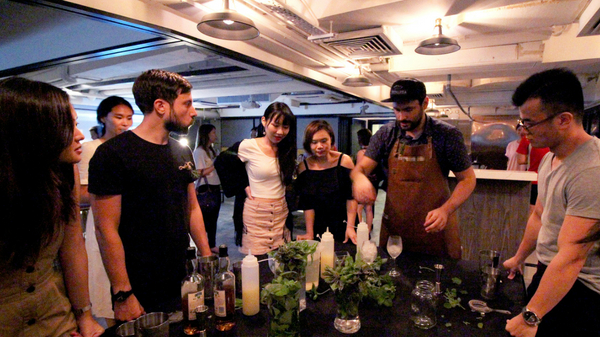
To kick-off the programme, Rooftop Republic and Garage Academy organised a cocktail soiree called Rooftop Farm to Table, featuring signature cocktails by mixologist Jay Khan from COA, a trendy new bar in Central. Jay prepared three different kinds of tipples for the evening, using drinks, using the very versatile thyme, mint and basil freshly reaped on the Garage Academy Campus rooftop. Guests were also treated to a live demo in which they were taught how to make the best use of the herbs to create the most delectable of drinks. One tip? Hand-press the leaves lightly to bring out the most flavours.

Mexican Stand-outs: Demystifying mezcal, the true spirit of Latin America

Those with a taste for tippling will already know that mezcals are the latest libations to tickle Hong Kong’s notoriously fickle fancy. Although introduced only relatively recently, these smoky Mexican spirits have already achieved stratospheric popularity among the city’s beverage cognoscenti.
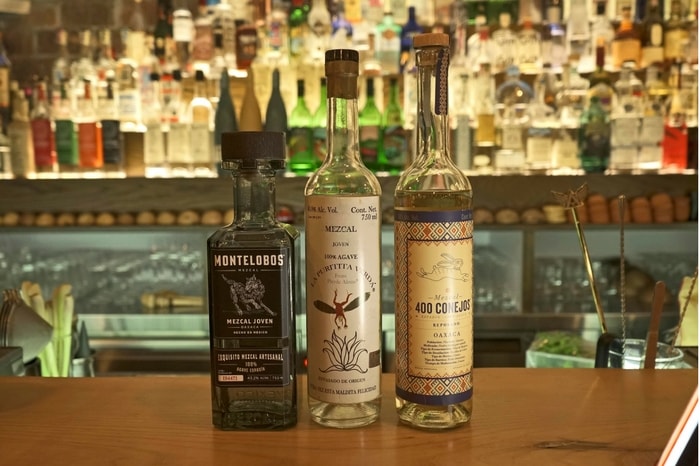
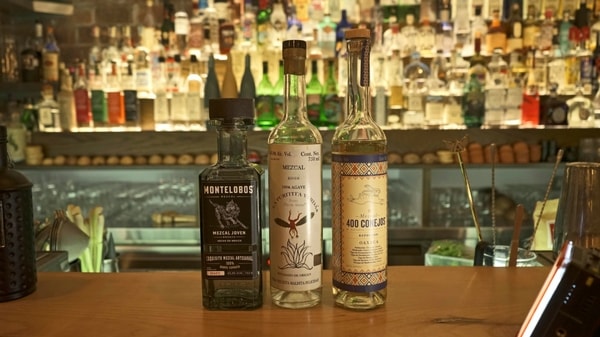
Mezcals recommendations 2

Which all rather begs the question – what exactly is a ‘mezcal’? Put simply, it’s an innately Mexican style of spirit, one distilled in nine of the country’s 31 states and all derived from the agave, a fleshy plant species native to tropical America.
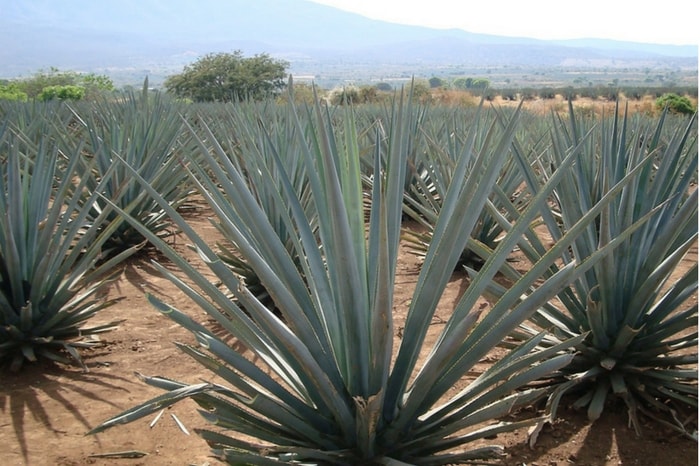
Mezcals are made by fermenting different species of agave

Mexico is home to over 30 different agave sub-species, with nearly all of them co-opted for alcoholic purposes by one distiller or another. In every instance, a similar distillation process is involved – first the piña (agave stem) is roasted and smoked in an underground pit (which gives mezcal its characteristically smoky taste). Then the residue is crushed and left to ferment in water. Perhaps the best-known of all the mezcals is tequila. This particular variant is made solely from blue agave, an ingredient that gives it its legendary kick.
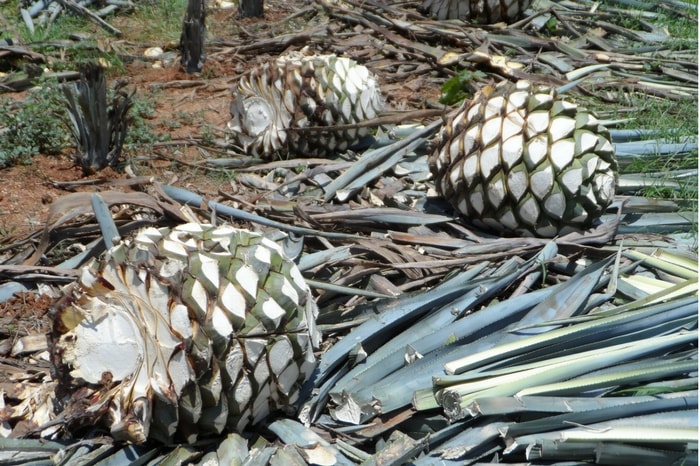
Mezcals are made from agave pinas

Armed with this basic grounding in all things mezcal then, which Hong Kong hostelry best meets the needs of the novice imbiber of Mexican hard liquor? The most obvious first stop would be Central’s COA. Taking its inspiration from Oaxaca – Mexico’s leading mezcal-producing state – this cosy new bar is the brainchild of Jay Khan, the award-winning beverage boffin best known for his work at Foxglove and Dr. Fern’s Gin Parlour.
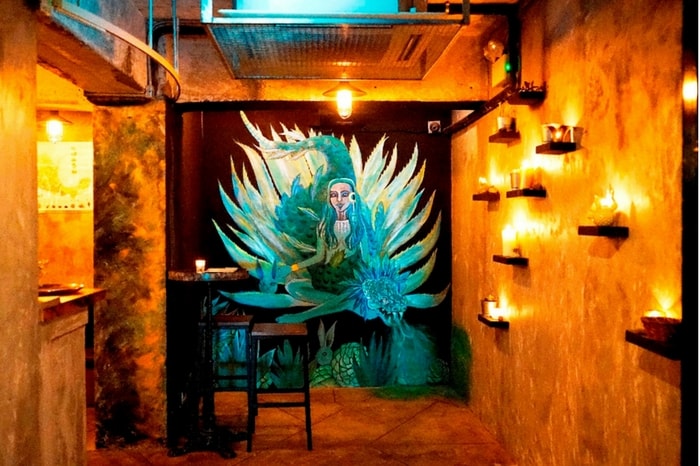
Coa in Soho is a great spot to try mezcals

Overall, COA is clearly Khan’s paean of praise to Mexican-style intoxication. It boasts mezcals distilled from 20 different agave varietals, including tequila and raicilla, and also offers other traditional tipples such as tepache, a fermented fruit-based alcohol.

While the drinkery wears its Mexican affiliations with true panache, Khan maintains the establishment remains, above all, a cocktail bar, saying: “While we do want to introduce the wonderful traditions of tequila and mezcal to our guests, we also pride ourselves on our wider artisanal cocktail range.”
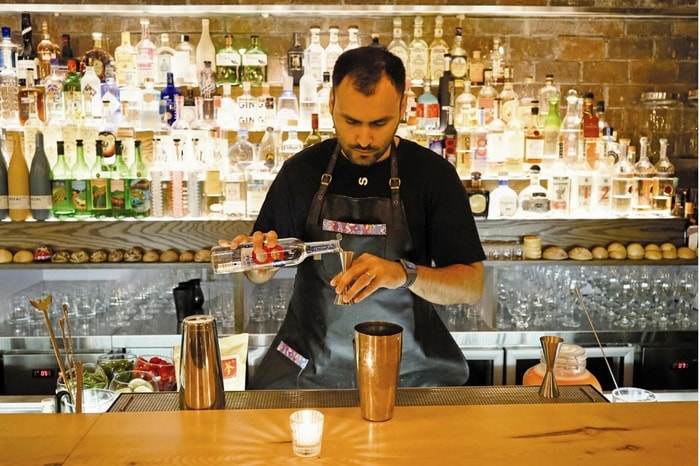
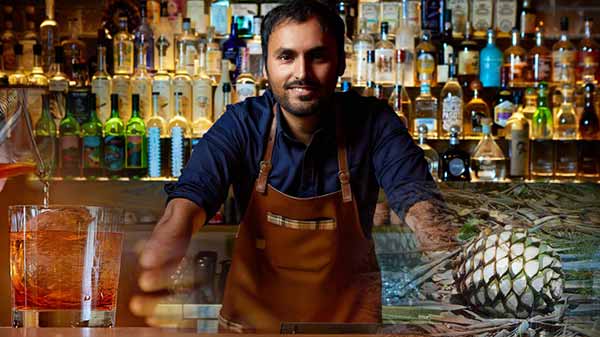
Coa founder Jay Khan is a fan of mezcals

For those solely set on a little hombre homage, however, the Horchata de Pistachio – a delicious cocktail that balances Ocho Blanco tequila with homemade horchata (a milky, nutty concoction) and pistachio orgeat, garnished with a pistachio biscuit and purple sweet potato dust – is probably the ideal place to start.

Another true Mexican stand-out is the Mezcal Paloma, a blend of mezcal, tequila, grapefruit soda and lime. According to Khan, this is the drink favoured by visiting bartenders whenever they pop into COA. A better recommendation you are not likely to get.
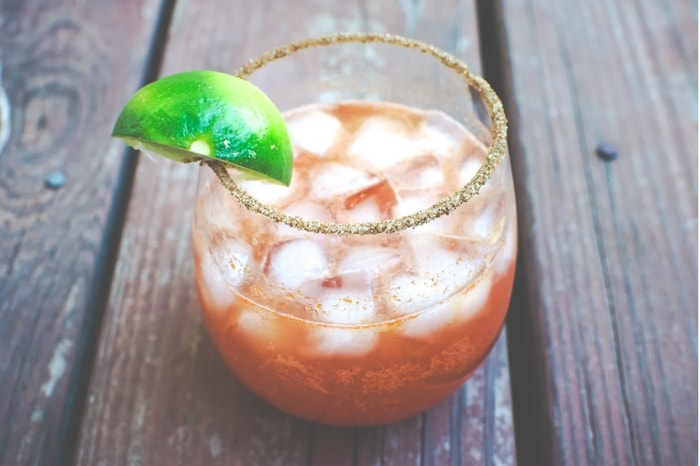
Paloma is a delicious cocktail derived of mezcals

Aware that many can prove a trifle wary of Mexican alcohol, Khan sees himself as on a mission to convert such unbelievers, saying: “When someone lands up at COA and doesn’t order a tequila or a mezcal cocktail, I have to ask them why. Inevitably, it’s because they’ve heard bad things. After they’ve tried a Horchata de Pistachio or two, however, all such inhibitions seem to vanish.”

While the pioneering work undertaken by COA (and several other like-minded hotspots, including Mezcalito, Brickhouse and 11 Westside) certainly seems to have won the city over, it’s no secret that Hong Kong has a notoriously short attention span.
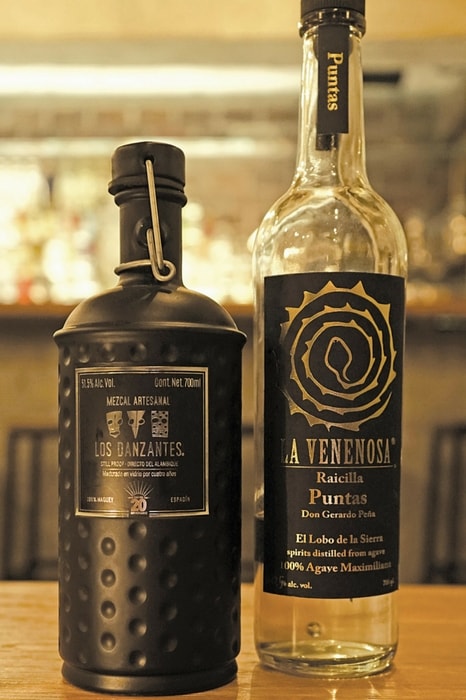
Mezcals recommendations 1

Time and time again, today’s favoured flavours have become undrinkably gauche within a month or two. Will mezcal be the one to woo the city’s drinkers into a long-term libation assignation? We certainly hope so.

COA. Shop A, LG/F, Wah Shin House,6-10 Shin Hing Street, Central.
(852) 2813 5787. coa.com.hk

Text: Tenzing Thondup

Agave-based Spirits: Demystifying tequila, mezcal and raicilla

How to drink Agave-based Spirits
Agave-based spirits like tequila, mezcal and raicilla are taking Hong Kong by storm

Judging from the slew of upmarket Mexican restaurants that cropped up in our fair city over the past few years (11 Westside, Brickhouse and Caliente to name a few), tacos and burritos have become something of a staple for Hong Kong epicureans. But what of Mexico’s alcohols? We’re here to shed some light on some of its most famous agave-based spirits: tequila, mezcal and raicilla.

Despite its widespread fame, tequila is something of an exclusive club. By law, it can only be produced within five of Mexico’s 31 states, with Jalisco being the major manufacturer. Furthermore, only blue agave grown in these designated regions can be used to produce tequila. It’s almost identical to the rule governing the classification of champagnes.

Tequila is made solely from blue agave plants

So how to distinguish between good and bad tequila? “When you’re drinking tequila, look for a sweet potato aroma. That’s how you know it has truly preserved the blue agave flavour,” shares bar guru Jay Khan, who helms Coa, the new Oaxaca-inspired bar dedicated to agave-based spirits. Another top tip? Avoid tequilas with overwhelming caramel or vanilla aromas. These reflect artificial additions introduced during the distillation process.

It may come as a surprise that tequila is actually part of the larger mezcal family. What is mezcal, you ask? It’s the overarching term used to define all agave-based spirits distilled in nine Mexican states. Oaxaca is the leading producer. Where tequila only draws on one agave species, mezcals utilise over 50 varieties. This explains the much more diverse flavour profiles found across different mezcal brands.  

Agave stems are the basis for all mezcal spirits

Many mezcals use a similar distillation process. The piña, or agave stem, is roasted and smoked in an underground pit, and then crushed before being left to ferment in water. Even after distillation, mezcal delivers a strong smoky taste – a residual effect of this production methodology.

When you exclude mezcal and tequila, agave alcohols remain relatively unknown in our city’s nightlife scene. But one serious up-and-comer is raicilla. Although technically a mezcal, raicilla cannot be legally labelled as such because it is produced exclusively in the state of Jalisco where mezcal production is banned. Raicilla sometimes lacks the smoky flavour of other agave-based spirits because it is cooked overground in artisanal brick ovens that allow smoke to escape.

Jay Khan serves up delicious agave-based cocktails at his Oaxaca-inspired artisanal bar, Coa
Jay Khan helms Coa, the new Oaxaca-inspired bar dedicated to agave-based spirits

Don’t expect any raicilla-based cocktails though. “Raicilla’s flavours are so nuanced and subtle that it gets lost when mixed in cocktails,” says Khan, “If guests request it on the rocks, we provide ice on the side. But cooling the liquid compresses and dampens the aromas. I’d recommend having racilla neat.”

Ready to take that first step into the world of agave-based spirits? Khan recommends Coa’s signature Horchata de Pistacho cocktail, which blends Ocho Blanco tequila with homemade horchata and pistachio orgeat. If you’re feeling more adventurous, ask the knowledgeable staff for a mezcal or raicilla recommendation. Salud!

Coa. Shop A, LG/F, Wah Shin House, 6-10 Shin Hing Street, Central.

Text: Tenzing Thondup