
Rice Rhapsody: In a city where rice is life, Sushi Haru’s Chef Hirokuni Shiga orchestrates a masterful omakase

As Asians, we tend to gravitate to a bowl of piping hot rice to satisfy our hunger at any time of the day. But there’s the undeniable draw of something more, for which sushi, Japan’s heart of culinary offerings, sparks an entirely new love affair. The presence of countless establishments paying homage to the intricacies and revelations of Japan’s heart of culinary offerings underscores the Hong Kong craving for raw fish atop vinegared rice.
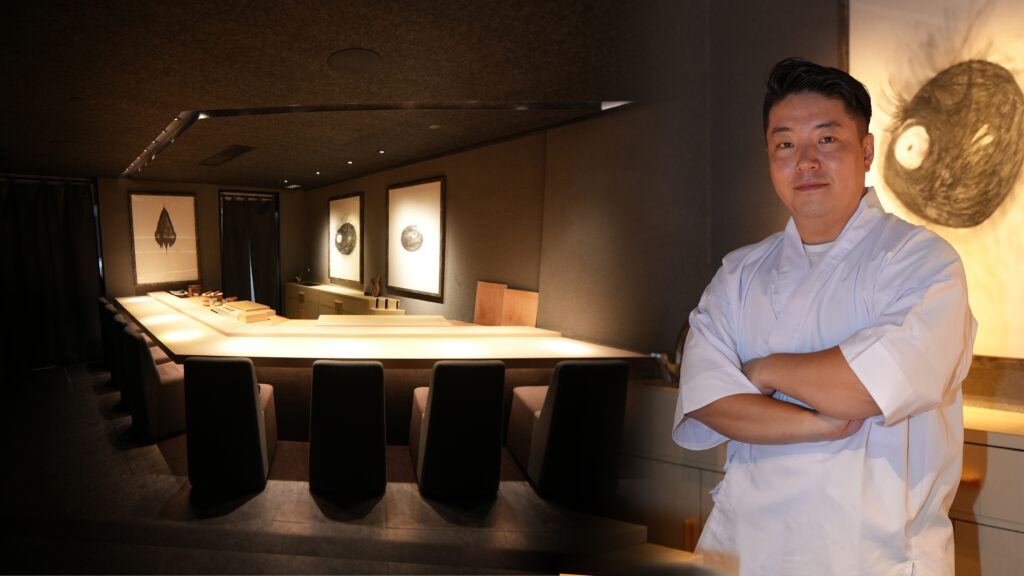
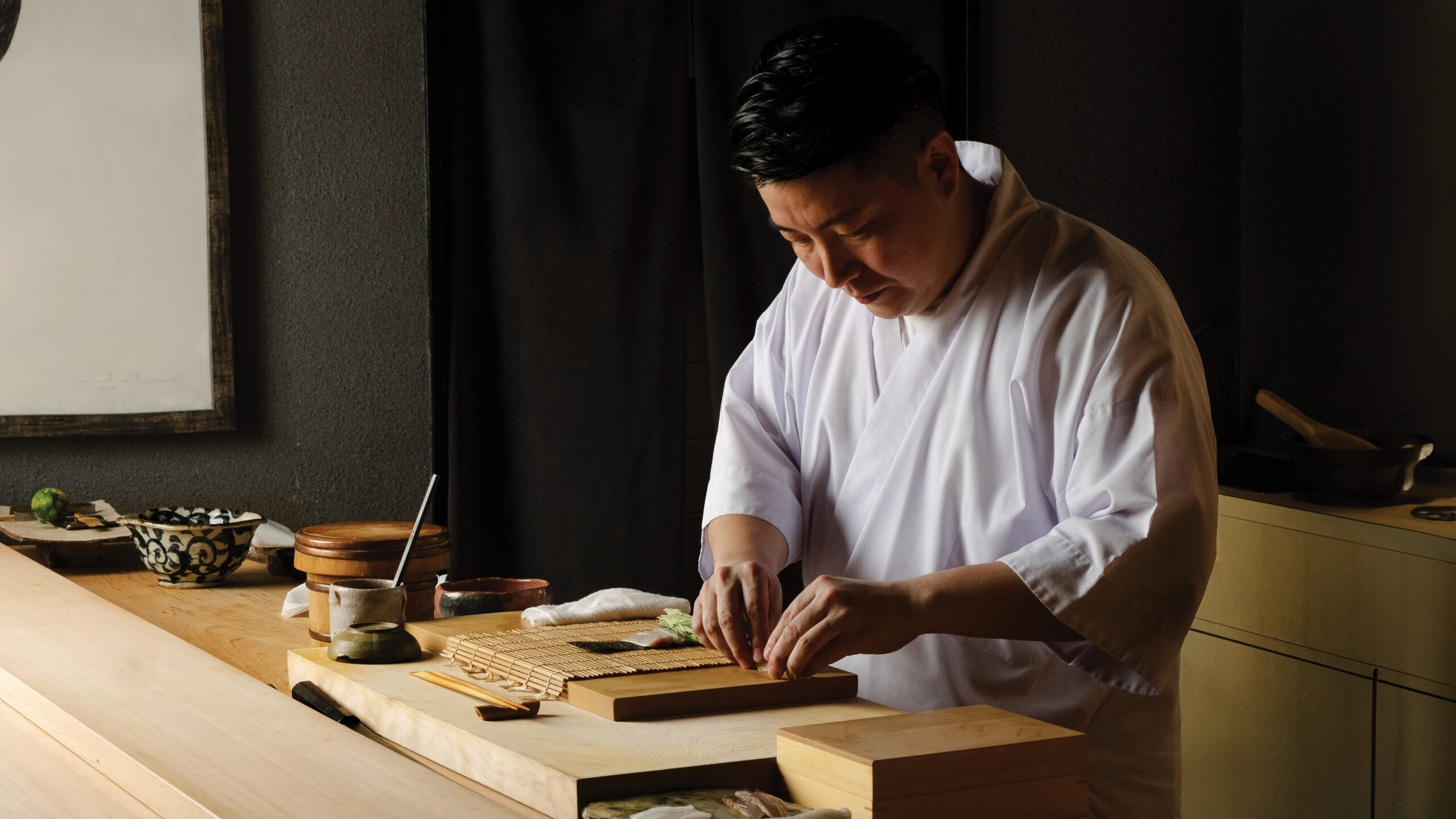
Taking over the hinoki wood dining counter of just exactly eight seats, Chef Hirokuni Shiga is flexing his faultless sense of taste at the intimate setting of Sushi Haru, at the top of Wyndham Street in Central. This humble master of Edomae sushi began his career at his family’s kappo-style restaurant and it wasn’t until he was in his early 20s that, at the invitation of his father’s friend, he had his first encounter with omakase sushi. He began an apprenticeship, and from then on, his imaginative culinary creations have captivated diners.

”What I think makes us stand out is that I am able to incorporate everything I have learned in kappo and kaiseki dining into the dishes I serve,” says Shiga, who doesn’t shy from sharing his own story from behind the counter. “For example, depending on the piece of fish I am serving, I use different types of rice and details like this help to shape the guest’s experience.”
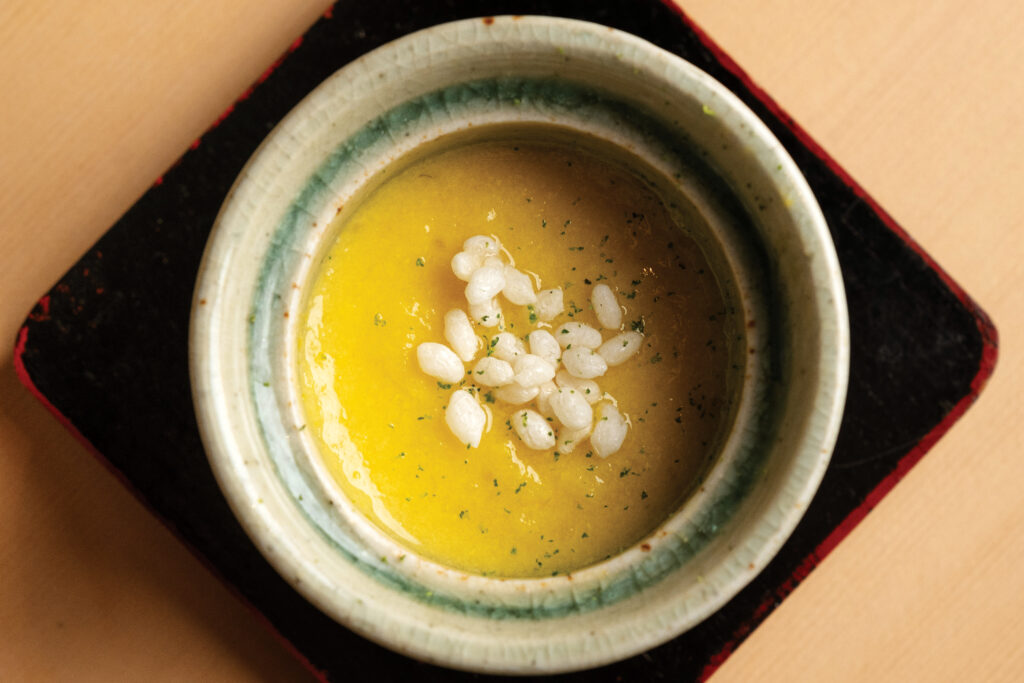
Both Hong Kong and Japan are known for wearing their history as a badge of honour. Although it may seem that tradition and modernity are forever in flux, Sushi Haru manages to pay homage to the past while expressing a contemporary vibe. The Zen aesthetic is further enhanced by a display of minimal-themed, charcoal- based framed drawings and a grey and brown colour combination – the only two hues evident throughout the restaurant.

But of course, there’s the sushi, the main star of the show, as well as the chef showing off his knife skills while finely slicing a selection of seafood. His kitchen balances flavour and subtlety without coming off at all gimmicky and then splashes of vivid, varied colour are served dish after dish. Think akami (lean red tuna), shiromi (white fish), nimono (simmered fish), kai (shellfish), ika (squid), tako (octopus), ebi (shrimp), kani (crab) and gyoran (fish roe).
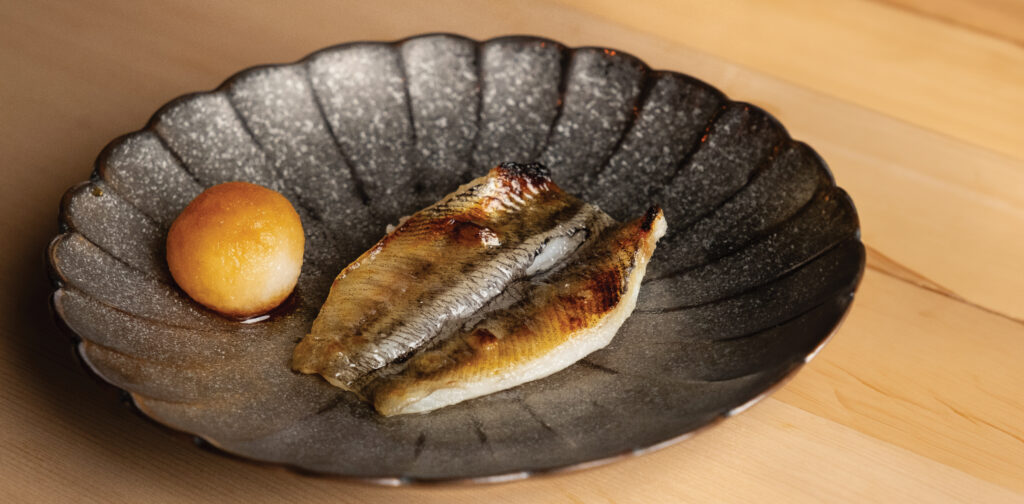
But of all these sensational toppings, it’s the hikarimono (silver-skinned fish) that Shiga names as his personal favourite. “I am most proud of our kohada [gizzard shad] and kasugo [young sea bream] because, although they are the most labour- intensive, the hard work can be tasted in the result,” he says. “Oftentimes, in the world of sushi, a true test of a sushi chef is in how they prepare kohada.”

There’s also good news for newcomers to East Asia who have yet to master chopsticks. “You can eat with your fingers or you can use chopsticks,” he adds, smiling. The dexterous chef also beguiles his audience with his step-by-step method of assembling a perfectly shaped sushi, which involves gently pressing the fish onto the rice.
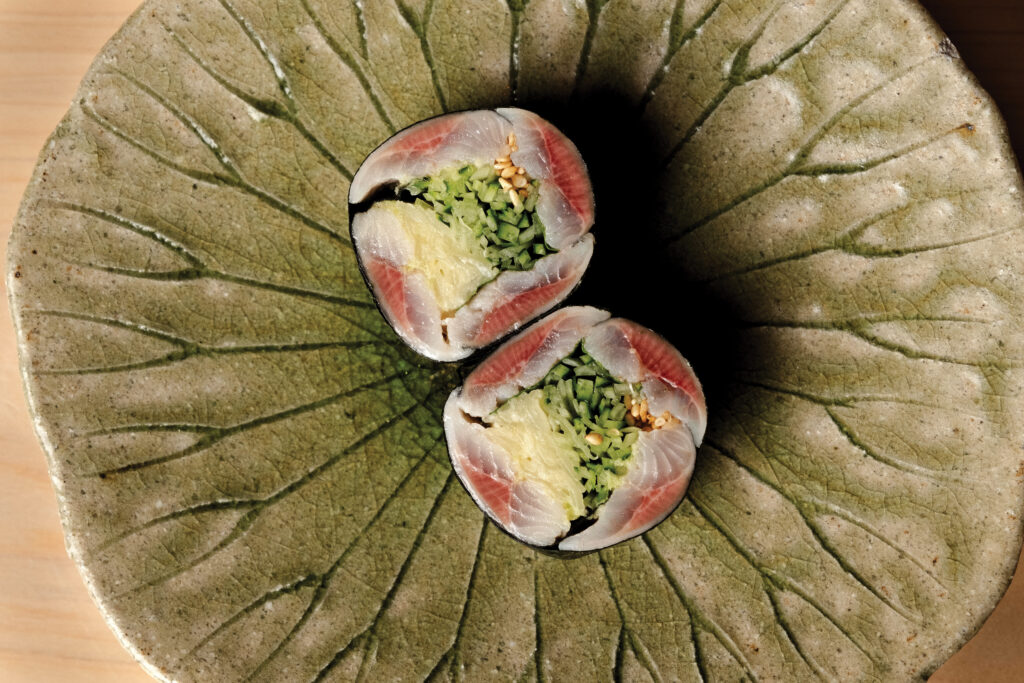
In between exquisite bites, sake and beer add a smooth, subtle sweetness to the night’s bouquet of flavours. Shiga, who is often caught raising a glass or two with his audience, also brings a citrusy kick via a fruit-infused sake to the table.

“Sushi, if you are to just look at it, is not too complicated, but the amount of care that is put into it should always be reflected on the faces of your guests,” he emphasises. “That is when you know you have succeeded.”
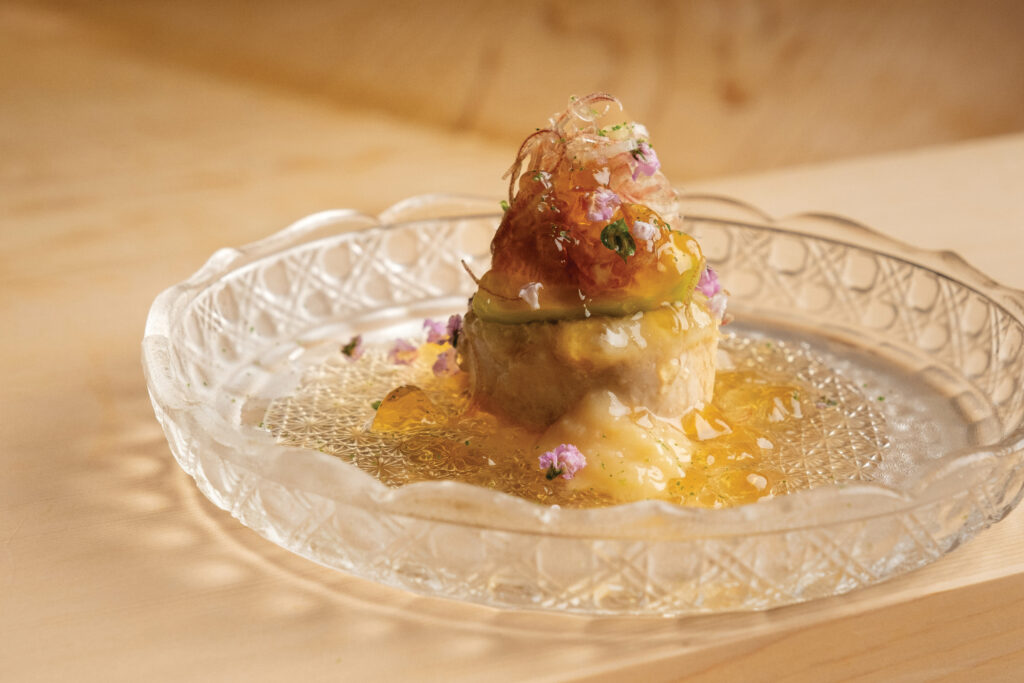
The looks of joyous satisfaction around the table as our omakase feast concludes is a testament to both Sushi Haru and Chef Hirokuni Shiga’s triumph. Rice will always be appealing anywhere on this side of the world, but Sushi Haru truly goes far beyond satisfying a craving.

Sushi Haru, Mezzanine, 33 Wyndham Street, Central, Hong Kong. Tel: 2111 1450

Photos: Jack Fontanilla / Sushi Haru Video: Jack Fontanilla
Volcanic Fury: For many tourists, there’s no crater joy than a volcano that has just erupted

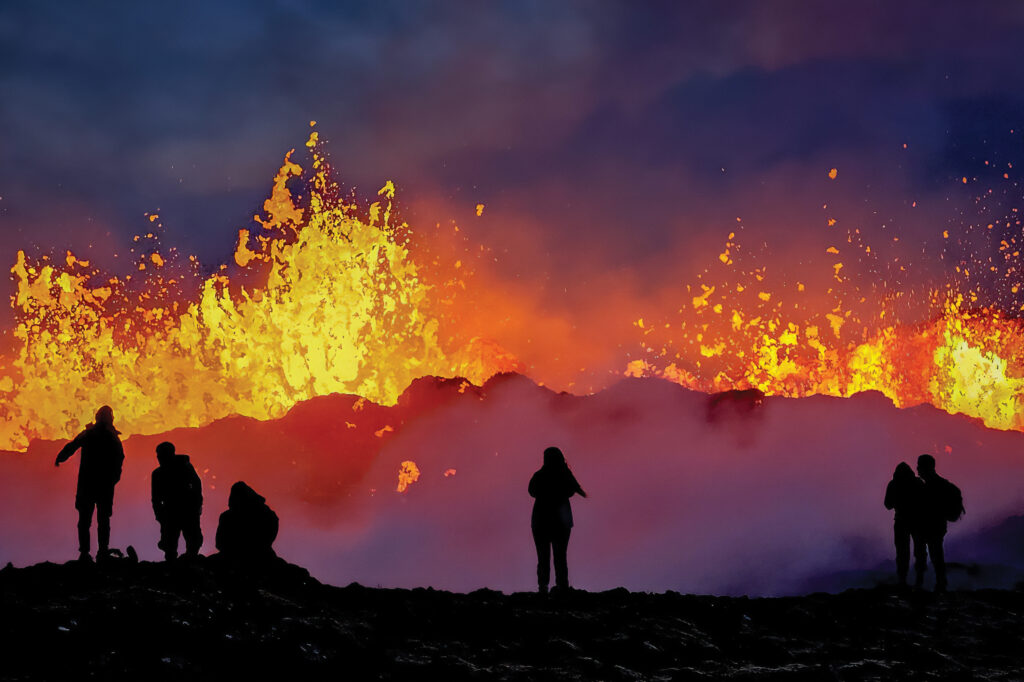
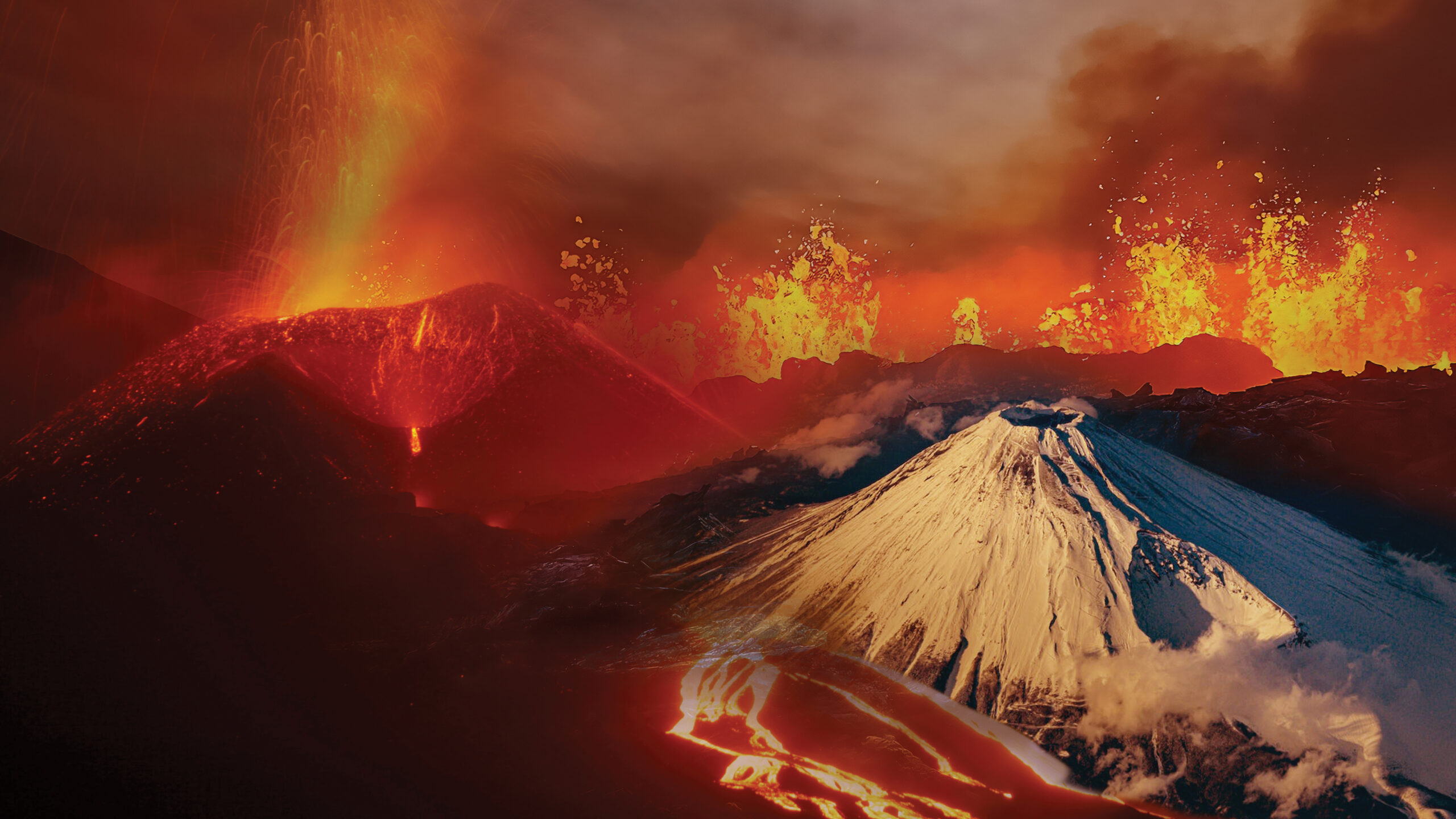
Iceland’s volcanic eruption this summer set the tourist industry into overdrive. People from all over the country and overseas made a beeline for one of the most awe-inspiring sights nature has to offer – an active volcano.

Litli-Hrútur, a hill about 38 kilometres from Reykjavík, began spewing lava on July 10, in an area which has seen an unusually large amount of volcanic activity in recent years. It is part of a volcanic system on the Reykjanes Peninsula that also experienced eruptions in 2021 and 2022 at Fagradalsfjall. Some estimates put the number of sightseers in 2021 at 350,000 as the lava flowed off and on for six months.

Since no lava was seen running from the crater at Litli-Hrútur after August 5, total visitor numbers there will likely fall short of those previously recorded in other parts of the peninsula. Acutely aware of the whims of plate tectonics, some tourists booked flights to Iceland within an hour of the initial eruption for the chance to see close up the perhaps once-in- a-lifetime opportunity of nature unleashing its molten fury.

Creation in view

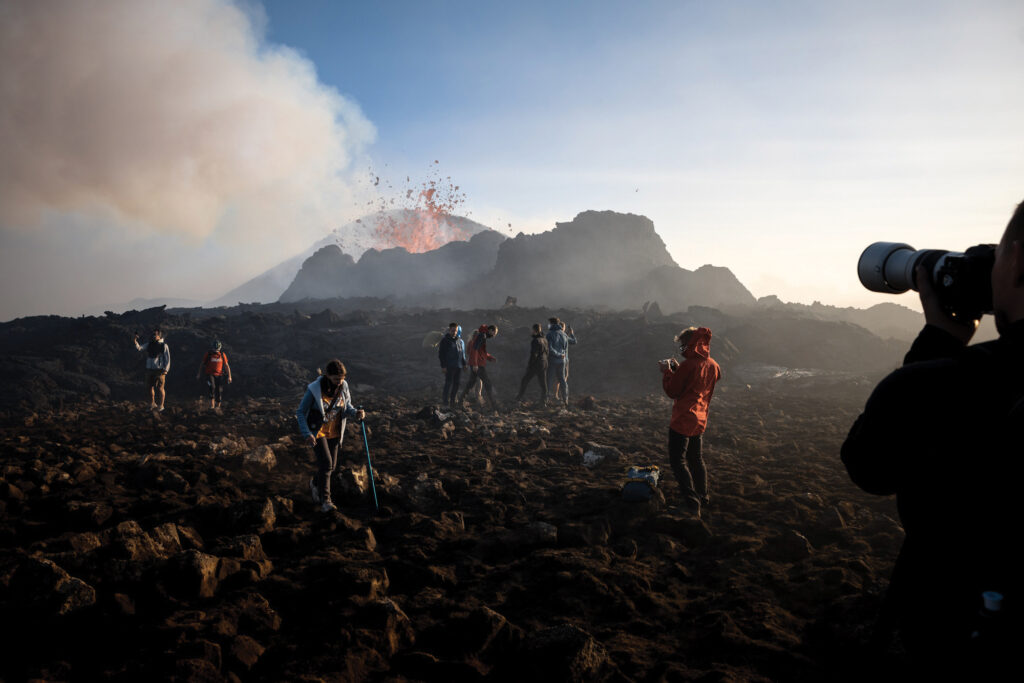
Authorities created a path to the hill and day by day a column of hikers made their way to within 1.5 kilometres of the cone and touching distance of smouldering fresh lava. Some visitors sent drones over the top of the boiling inferno to get a bird’s eye view of the mesmerising spectacle.

Indeed, flying drones over the rims of lava-spewing craters has become something of a craze for YouTubers; one ‘decommissioned’ his beyond-repair probe on a final flight down into a volcano in Iceland last year, churning out some remarkable footage.

Professor Thorvaldur Thordarson, a volcanologist at the University of Iceland, was awestruck when he saw the Litli-Hrútur eruption, telling a reporter from the Financial Times who was with him: “You’re looking at creation. The crust makes Earth a habitable place. Volcanoes maintain our atmosphere and are the reason why we have life on Earth.”

Icelandic blast

With some 30 volcanic systems running beneath it, and historically 130 volcanoes onshore and off it, Iceland has long attracted throngs of visitors hoping to catch a glimpse of an active one. Status reports on volcanic activity are regularly issued in the island nation, one of the most active volcanic regions on the planet with an eruption every four years on average.

Some eruptions can be huge, like the one in 2010 in the main crater of Eyjafjallajökull which caused a vast cloud of ash to spread over large areas of northern Europe, while in others, lava flows quietly from fissures.

Some tours of Iceland are centred purely around volcanoes – being lowered by lift into a cavernous magma chamber of the dormant Thrihnukagigur volcano, visiting huge lava cave complexes, undertaking spectacular hikes along volcanic peaks, or visiting the interactive volcano exhibition in Hvolsvöllur known as the Lava Centre.

The striking cone-shaped peak of the Snæfellsjo ̈kull National Park in the west of the country is thought to be the inspiration for Jules Verne’s Journey to the Centre of the Earth.

Volcano volume

Japan, New Zealand, Indonesia and other countries also promote their volcanic heritage. The world’s largest active volcano is Mauna Loa (Long Mountain) in Hawaii, covering more than 5,200 square kilometres.

Like Iceland, Japan is one of the most active volcanic regions on Earth. It is located above the Pacific Ring of Fire, sitting on top of four tectonic plates on the edge of a subduction zone. About 60 of its 186 volcanoes are still active in geological terms.

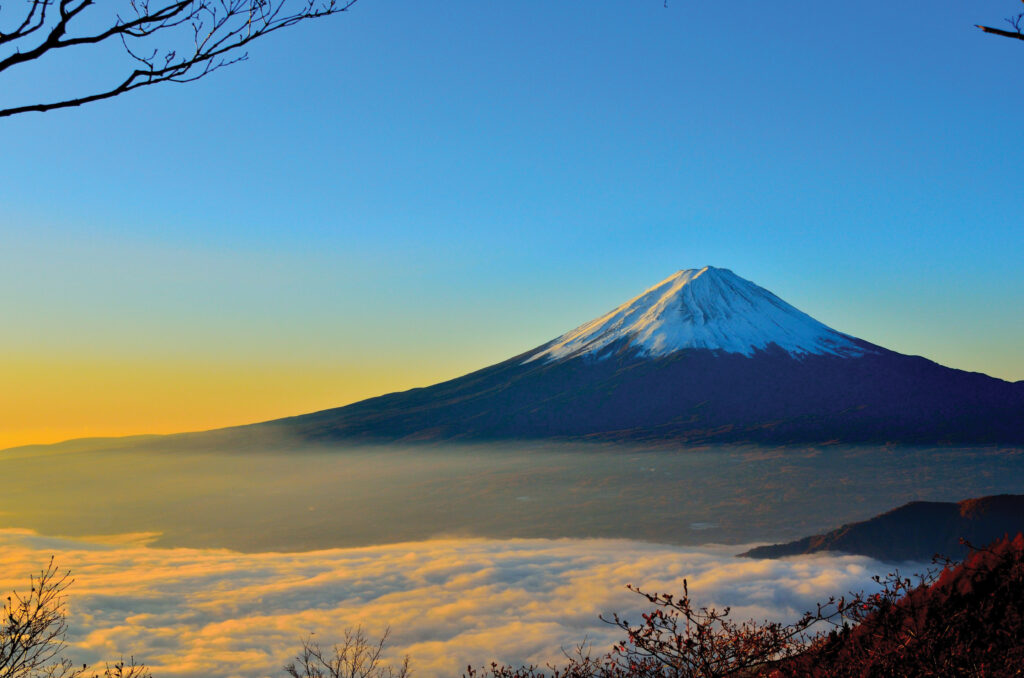
One active Japanese volcano popularly on people’s bucket lists is Sakurajima (Cherry Blossom Island) in Kagoshima Bay, appearing to rise more than 1,120 metres directly above the water, this regularly spews ash.

About half a million people live within 10 kilometres of its crater, and taking the spectacular ferry journey to Sakurajima from precariously positioned Kagoshima city is recommended. The volcano is also accessible by road around the periphery of the bay since the former island has been joined to the peninsula since a 1914 eruption spilled out three billion tonnes of lava.

Springing forth

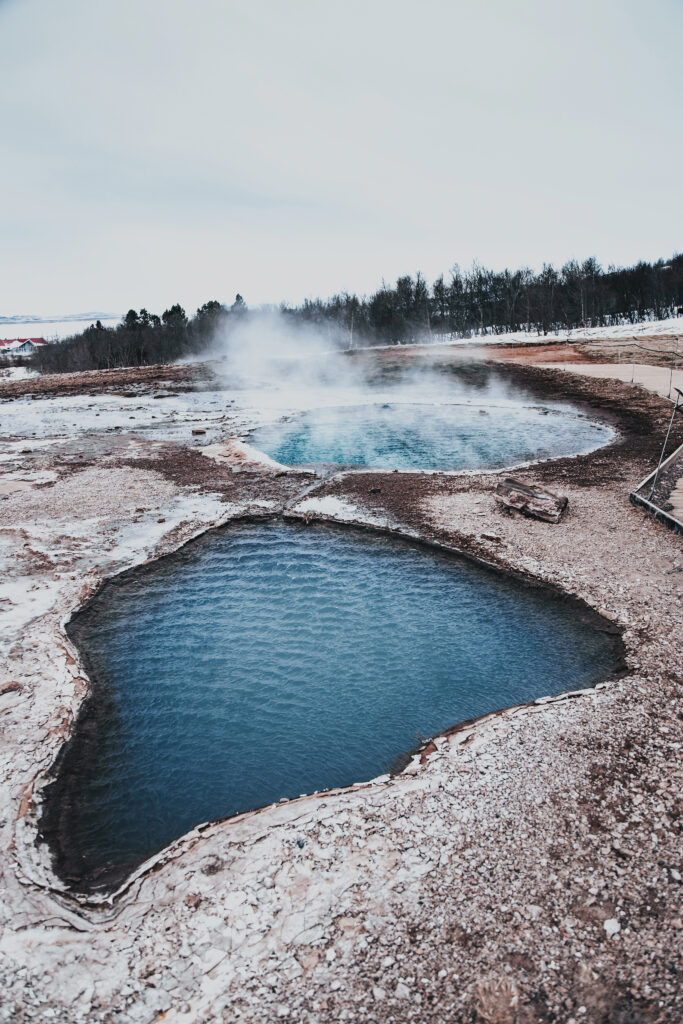
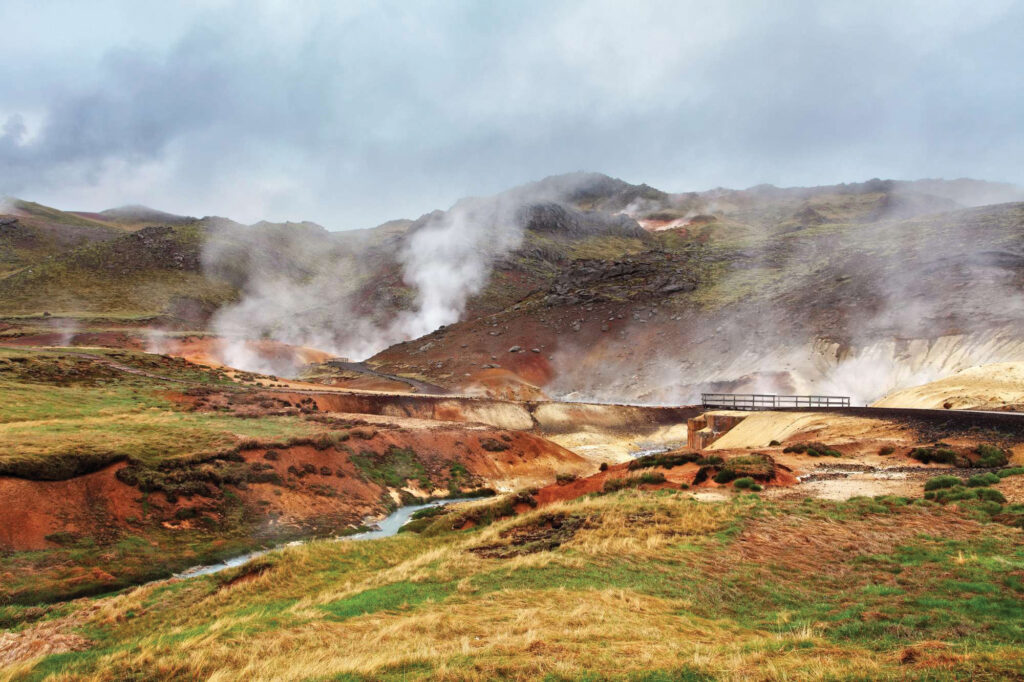
Iceland and Japan are known for their vast number of hot springs which pepper the countryside and are located close to areas of volcanic activity. Here, the water temperature increases through circulation close to magma reservoirs below the surface.

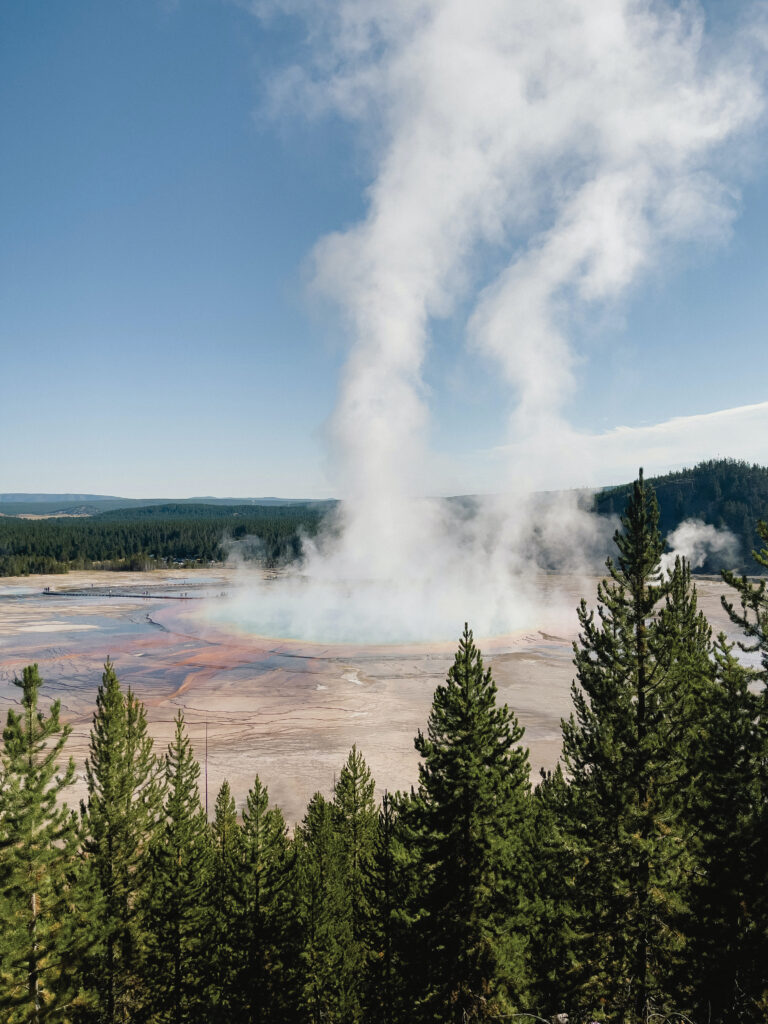
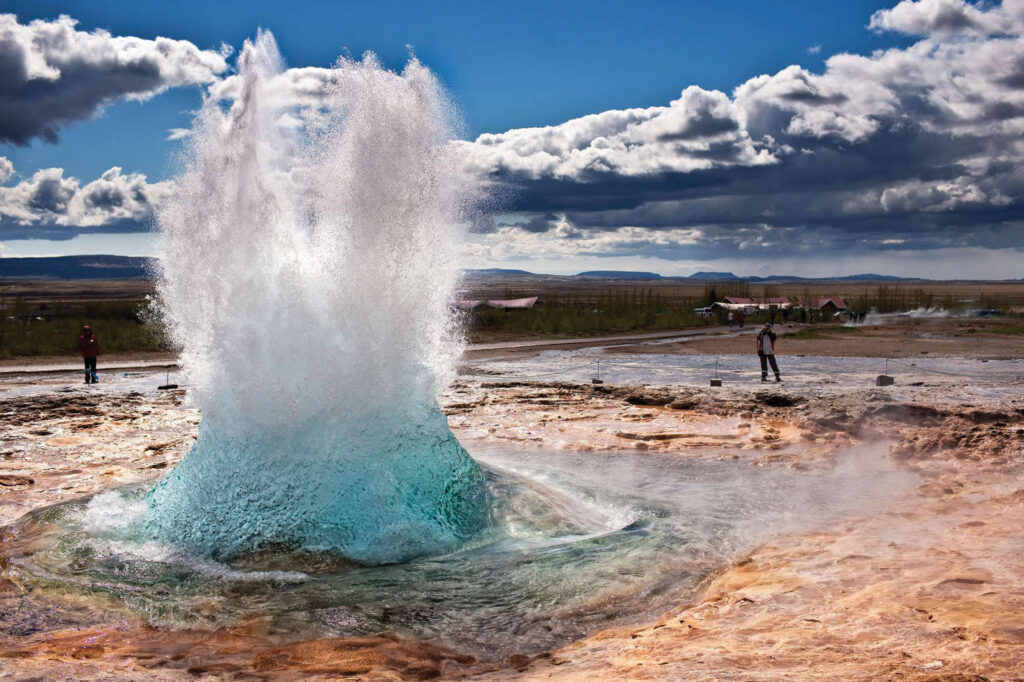
This manifestation of geothermal energy is evident in geysers, bubbling mud pools and hot springs. The mineral content of hot springs is thought to impart health benefits. In Iceland, many hotels offer baths fed by local hot springs. The Viking Pool in Leirubakki is made special with views of Mt Hekla in the background.

Japan places cultural significance on its more than 20,000 hot springs of volcanic origin. Many hot- spring resorts (onsen) follow a tradition going back centuries and are often located next to hiking, skiing, climbing and crater-viewing areas. In Hokkaido, Toyako is famous for its hot-spring baths with lake views.

Not far off, Showa Shinzan is a lava dome that emerged only in 1944, and parent volcano Usuzan stands nearby. The hot springs of Noboribetsu are a memorable must-try. In an amazing spectacle, indoor marble-tiled hot springs fed by geothermal energy at the Dai-ichi Takimotokan Hotel can accommodate 1,000 bathers simultaneously.

Zao Onsen, 20 kilometres southeast of Yamagata City, is an all-year hot-spring resort – go hiking or skiing during the daytime, then chill out before dinner in a mountain hot spring and contemplate the finer things in life.

Crater close-encounters

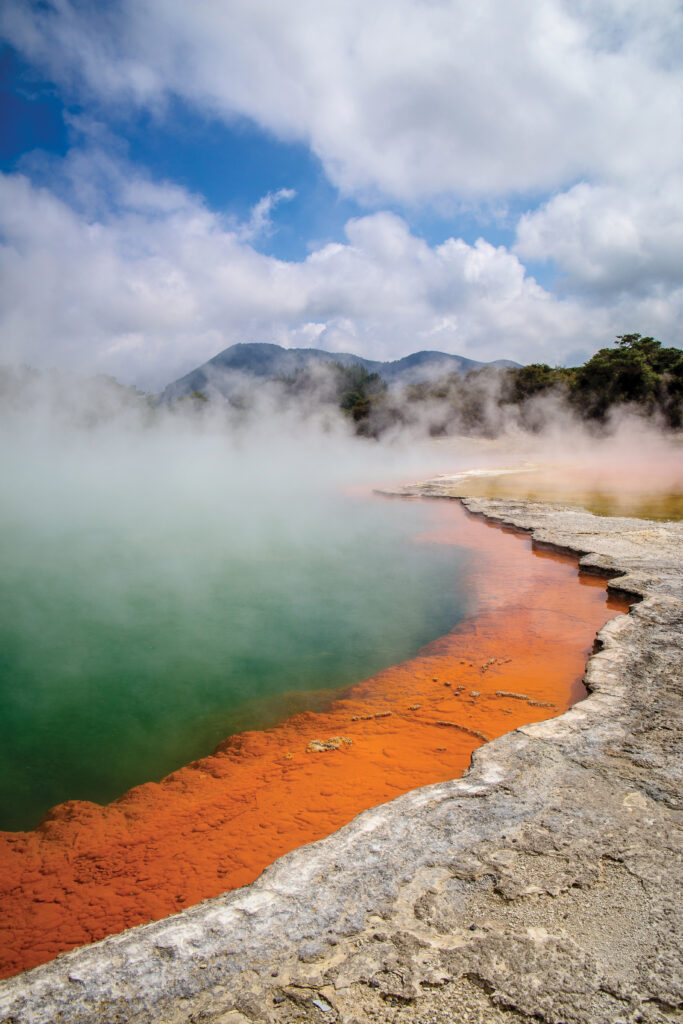
Famous for its geysers at Rotorua, the hot springs in New Zealand play an important part in the Māori culture, as do the volcanoes. The country offers some spectacular hiking across volcano areas, notably in Tongariro.

Home to three breathtaking volcanoes (Tongariro, Ruapehu and Ngauruhoe), the Tongariro Alpine Crossing has oft been described as the best one-day hike in the world, taking you over red craters, green and blue lakes and wild open countryside. It was briefly closed in 2012 due to volcanic activity from one of the cones.

With close to 130 active volcanoes, Indonesia can also boast some fantastic volcano tourism. There are organised tours to see Anak Krakatau (Child of Krakatau) in the Sunda Strait between Java and Sumatra, though it is now considered a dangerous mountain and access depends on its level of activity.

Mount Merapi is another favourite destination, especially given its proximity to the World Heritage site of Borobudur. Further to the east of Java, watching the sunrise over Mount Bromo – named after Hindu god Brahma – can provide glorious views.

Perhaps lured by the element of danger, tourists have been attracted to volcanoes for centuries. By the mid-1860s, Thomas Cook, the pioneer of package tours, was arranging visits to Pompeii in Italy, and Vesuvius, the volcano that buried it in 79 A.D.

In the 1880s, a funicular was built to take tourists to the top of Vesuvius. Active volcanoes burn on and on in the imagination of adventurous travellers, calling them to the edge of their craters.

Winter Escape: Exploring the beautiful Japanese Alps of Nagano

The ancient-modern cities of Tokyo, Osaka and Kyoto tend to dominate the itineraries of travellers seeking out the Land of the Rising Sun, but for the more intrepid adventurer, Nagano Prefecture could be just the ticket. Located in the central mountainous region of Honshu, the country’s largest island, its main city of Nagano is the highest prefecture capital in Japan. Lying some 245km from Tokyo, it can easily be reached by Shinkansen in about 90 minutes.

winter-escape-exploring-japanese-alps-nagano-japan-travel_gafencu_1

Situated at the confluence of the Chikuma and Sai rivers and enveloped by towering mountains, Nagano’s unique landscape offers a plethora of outdoor activities, gorgeous scenery and hot springs. Beyond the charms of this 377,000-strong city itself, however, are the historic towns and world-class skiing resorts that punctuate its surrounds, so base yourself here and venutre out each day to explore. Here, we highlight some of the most visit-worthy sights of Nagano in winter.

winter-escape-exploring-japanese-alps-nagano-japan-travel_gafencu_8

On Piste
The powdered peaks surrounding Nagano are not just for show. In fact, roughly 80 ski resorts lie in the vicinity of the city that hosted the 1998 Winter Olympics. Each year, thousands upon thousands of avid skiers of every skill set descend upon the region to take part in the thrilling winter sport.

One of the best spots to bring your skis is Hakuba Goryu Snow Resort, which offers well-groomed slopes of various difficulties with ski-lift access, rental gear, and an adjacent plaza packed with dining options. In addition to bunny slopes and sledding, there are also indoor and outdoor play areas to keep the little ones amused for hours.

winter-escape-exploring-japanese-alps-nagano-japan-travel_gafencu_11

Spring Fever
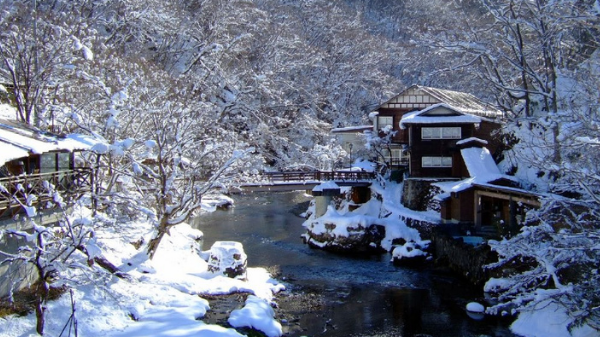
After a full day of skiing, a dip in one of Nagano’s many natural hot springs will tend to your sore muscles and provide rejuvenation. If you’re an onsen purist, make sure to include Nozawaonsen – just an hour northeast of the city – on your itinerary. This small town boasts a staggering 30 different springs, and life in the village very much revolves around Japanese bathing culture.

If you’re not in the mood to splurge out on some of the pricier options, Nozawa even offers a handful of free onsen, including Ōyu Hot Spring, which is located near the centre of town, and is famous for the wooden, Edo-style architecture of its bathhouse. Along the way, sample some of the snacks sold by street vendors, including fresh oyaki – buns with vegetable stuffing that are steamed using the piping hot water of the local onsen.

winter-escape-exploring-japanese-alps-nagano-japan-travel_gafencu_4

Bathing Apes
Nagano’s onsen hotspots are not limited to Nozawa. Roughly 30km to the south lies the Jigokudani Monkey Park, one of the prefecture’s most popular tourist attractions, which also boasts a number of trails for keen hikers. Here, waterproof footwear are advised as the paths can get quite muddy.

In addition to steaming springs and spectacular vistas of the snow-dusted peaks, the park – as its name suggests – affords visitors the opportunity to cosy up to the indigenous monkeys, which are known to share a hot-spring dip alongside their homosapien guests. 


Also Read: Kiroro in Northern Japan may be the finest ski resort you’ve never heard of…


winter-escape-exploring-japanese-alps-nagano-japan-travel_gafencu (2)

Crow Castle
Roughly an hour south of Nagano lies the stunning Matsumoto Castle, a government-listed national treasure. Care has been taken to preserve its original form, so the 30m-high, six-storey structure stands almost identical to when it was first raised in the late 16th century. The black-and-white façade calls to mind a bird taking flight, hence it has been fondly dubbed ‘Karasu-jo’, or ‘Crow Castle’ by locals.

While the castle grounds are free to wander year-round, they appear particularly picture-perfect in the snow. If you visit during peak season, you may even be able to jump on one of the free guided tours. The surrounding area is also well worth exploring, as the town boasts its own brewery and a downtown bar where weary travellers can rest their feet and sip a pint or two.

winter-escape-exploring-japanese-alps-nagano-japan-travel_gafencu_9

Ice Cool
With the majestic Crow Castle as its backdrop, the Matsumoto Ice Sculpture Festival is another major Nagano attraction during the winter season. An annual event that is usually held in late January or early February, the festival spans a weekend, during which visitors can watch amateur and professional sculptors alike carve beautiful ice sculptures of all sizes.

The main competition begins at 6pm, when participating teams are given 12 hours to complete their frozen works of art, with the winners announced the following morning. The festival is also a welcome excuse, if any were needed, to overload on regional culinary treats, down copious amounts of sake and mingle with the locals in a convivial atmosphere.

winter-escape-exploring-japanese-alps-nagano-japan-travel_gafencu_2

Enter the Ninja
Ninjas hold a special place in Japanese culture. The deadly, fleet-footed covert agents of feudal times were instrumental in waging surprise attacks. Today, their military relevance may have disappeared, yet they still capture the imagination, as seen in myriad movies and TV shows.

Kids Ninja Village, a small ninja-related theme park set amid the forest of Nagano’s Mount Togakushi, is designed to educate a new generation on the ancient warrior art. Some of this ‘ninja training’ requires an additional fee, but it’s worth the expense to watch your wannabe spies try their hand at blow darting or shooting throwing stars (shuriken). There are also two mansions, brimming with labyrinths, trapdoors and contraptions, that will have visitors of all ages on edge.

winter-escape-exploring-japanese-alps-nagano-japan-travel_gafencu

The nearby Togakure Ninpo Museum is interesting, too, with showcases of tools and weapons once used by the Togakure school of ninja, as well as photographs of the black-shrouded assassins practising various warfare and infiltration techniques. The museum also features a Ninja House, which may look like an ordinary building but reveals an interior of secret doors, passages and traps.

Sharing the same compound is the Museum of Togakushi Folklore, which exhibits tools, clothing, receptacles and furniture used by the local inhabitants of yesteryear for whom Nagano’s breathtaking snowy mountains and exhilarating hot springs were simple, everyday pleasures.


Also Read: Travellin the ancient Nakasendo Trail

Unique ways people ring in the New Year around the world

Celebrating the New Year is pretty much as universal as a holiday can get, with the toasting of champagne and partaking of festive delicacies with your nearest and dearest all commonly accepted celebratory practices. A few countries, however, have rather more unusual end-of-year traditions. Be it swinging flaming fireballs, offering flowers to the sea or simply ringing a massive bell to wash away your sins, here are some interesting New Year rituals practiced around the world. 

Unique ways to usher in the New Year around the world gafencu magazine hogmanay festival scotland

Hogmanay Festival, Scotland

Hogmanay is the Scottish word for the last day of the year. The celebration of the Hogmanay Festival is an age-old tradition that dates back to pre-Christian beliefs. Although customs vary across the country, the most exciting highlight during the eve of the New Year is watching trained professionals swing fire balls over their heads and tossing them into the sea — a ritual most commonly practiced in the town of Stonehaven that is believed to ward off evil spirits at the dawn of the new year. 

Unique ways to usher in the New Year around the world gafencu magazine white flower offerings brazil

White Flower Offerings, Brazil

Though the beaches of Rio de Janeiro are world-famous for picturesque beachfront hotels and dusk-til-dawn parties, perhaps a lesser-known attraction occurs on New Year’s Eve when, decked in all white, locals send out white flowers and lit candles into the ocean as offerings to the Ocean Goddess, Imanja in hopes that their New Year’s wishes are granted. If, however, their offerings return to shore, it is believed that the Goddess has rejected the wish. 

Unique ways to usher in the New Year around the world gafencu magazine Japan 108 bell ringing

108 Bell Chimes, Japan

Joya-no-Kane is a traditional New Year’s Eve ceremony performed at temples across Japan. The custom involves a large symbolic bell which priests and visitors of the temples ring 107 times on the eve of the new year and once more at the strike of midnight, celebrating the passing of an old year while ushering in a new one. According to Buddhist teachings, the ceremony is said to cleanse a person off his or her worldly desires, represented by the number 108. 


Unique ways to usher in the New Year around the world gafencu magazine plate-smashing denmark

Plate-smashing, Denmark

Although in other parts of the world, having someone smash plates against your front door might be taken as malice, in Denmark, however, locals show their love for their friends by throwing their broken and unused china at their door step. An old tradition that lives on today, the ritual is rooted in the belief that the broken glass will deliver good luck throughout the new year. So, the person with the most broken glass at their door could be a good indication that he or she is the most popular in the neighbourhood. 


Unique ways to usher in the New Year around the world gafencu magazine burning scarecrows ecuador

Burning Scarecrows, Ecuador

If you are curious to know which country’s custom is the most lit— literally —look no further than the celebration of Los años viejos in Ecuador. Translated to “the old year”, locals craft large puppets and scarecrows in close resemblance to the people they dislike or have died in the past, then burn these symbolic objects on New Year’s Eve. What better way to burn bridges with the people who have wronged you by burning them, metaphorically.


Travelling the ancient Nakasendo Trail

Although Japan, an indisputably internationally-connected country, is the the third largest economy in the world, following only the United States and China, a couple of centuries ago, this Asian powerhouse maintained a strict isolationist foreign policy for some 214 years, eschewing trade and political ties with all other nations. Dubbed the Sakoku period (1639-1853), this stringent policy was adopted in the opening years of the rule of the Tokugawa shogunate. Founded by the legendary military general Tokugawa Ieyasu in 1600, it held sway in Japan until 1868. 
 
Travelling the ancient Nakasendo Trail gafencu magazine
 
Among his many initiatives were moves to build an extensive communication and transportation system across Japan. Along the way, this saw him eliminating bandits from the rural countryside and constructing five express highways across Honshu, the largest of Japan’s four main islands. Although his main aim was to secure easy transit for officials, while better monitoring the locals, one of the highways stretching out from his palace in Edo – the Nakasendo Trail – is now among the nation’s most popular non-urban tourist attractions.

“The historic Nakasendo Trail is now one of Japan’s most popular non-urban tourist attractions”

Constructed upon ancient foot trails, the Nakasendo highway (literally “central mountain route”) connects the Nihonbashi Bridge in Tokyo with Kyoto’s Sanjo Bridge. Beautifully engineered and lined with verdant forests, this 534km trail was originally intended for foot traffic between the two cities. Inevitably, the intervening centuries – particularly those subsequent to the fall of the Tokugawa shogunate in the late 19th century – had seen these roads fall into ruin. Fortunately, back in the ’60s, the Japanese government, recognising their historic and cultural value, set out to entirely restore the wooden buildings along these venerable routes to their original glory. 

Travelling the ancient Nakasendo Trail gafencu magazine concrete path

Today, thanks to such renovations, as well as the introduction of a contemporary tourist-friendly infrastructure, these ancient walkways are once again welcoming curious travellers from around the world. In addition to the concrete roads that criss-cross the landscape, there are also several train tracks that ferry footsore tourists to various hubs along the route via high-speed trains. This allows visitors to not only choose just which venerable attraction they wish to visit, but also to tailor hikes according to their temperament and ability.

Travelling the ancient Nakasendo Trail gafencu magazine south milage traffic pole and sign

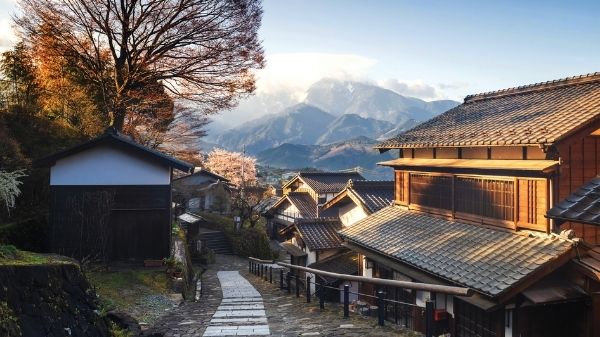
A popular starting point is Magome, the 43rd of Nakasendo’s 69 post towns, which is situated three hours’ train ride from Tokyo. Framed by verdant peaks, the sleepy streets of this heritage destination are lined with numerous tea shops, ryokans (traditional Japanese guesthouses) and even offer a souvenir shop or two. The latter feature much the same ware that has been sold here for generations – lacquerware boxes, dried fish and sake from local distilleries. Many also drop by the Wakihonjin Museum to learn more of the town’s history, before popping into the Honjin / Toson Memorial Museum, a former inn that is now a memorial to locally-born Shimazaki Toson, a highly regarded Japanese literary figure. 

Travelling the ancient Nakasendo Trail gafencu magazine tsugamo

A mere 7km from Magome, along a relatively gentle and well-marked trail crossing the the picturesque Kiso Valley, lies Tsumago, considered by many to be the trail’s crowning jewel. Thanks to the considerate restoration efforts, which saw TV antennae lopped away, electricity lines buried and cars banned during daylight hours, this beautifully preserved town is – visually at least – identical to its original Tokugawa incarnation. A charming, wholly photogenic village, it is once again punctuated by rows of traditional Japanese wooden houses, shops and ryokans. Even the mailman has to wear period-specific attire. 

Travelling the ancient Nakasendo Trail gafencu magazine Inuyama Castle and Kiso River

If you’re not too exhausted by the three-hour hike from Magome, Tsumago boasts several unmissable attractions, including the Nagiso Museum of History, a showcase of the town’s extensive restoration process. The ruin of Tsumago Castle, meanwhile, though all but lost to the ravages of time, is the perfect spot to snap a photo or two, largely on account of its breathtaking views out over the town and neighbouring Midono-juku. If you’re keen to sample the local cuisine, check out Yoshimura Soba, a popular eatery renowned for its homey soba noodles, before stopping off across the street for some old-fashioned matcha tea and mochi. 

Travelling the ancient Nakasendo Trail gafencu magazine onsen hot spring

Further along Kiso Valley lies the third of the historic trail’s trio of must-visit destinations – Narai. Located at the foot of the Tori Pass – one of the more demanding stretches of the Nakasendo highway – this was once the most prosperous of the post towns. Known as ‘Narai of a 1,000 Inns’, its long main street is dotted with various ryokans and minshuku, family-operated traditional Japanese bed-and-breakfasts. There is also the inevitable array of souvenir shops, all peddling wood carvings and dried fruit. Those wishing to relax aching muscles and sore feet should also venture into the hot springs (onsens) for a soak in one of the naturally-heated pools. 

Travelling the ancient Nakasendo Trail gafencu magazine hiking walk

Though there are other notable destinations along the trail, these three iconic post towns offer the most authentic Nakasendo experience. Unusually well-preserved, they give avid hiking enthusiasts (of every level of accomplishment) the chance to relive the glory days of the Tokugawa era by walking in the footsteps of the samurai of times classic, an opportunity rarely accorded and one not to be missed.

Fun Getaway: Places to visit during the travel bubble

Travel bugs and holidaymakers will be enlivened by positive news that a possible “travel bubble” is underway. While the Hong Kong government is still arranging talks with 11 countries, including Japan, Thailand, France and Switzerland, frequent travellers have something to look forward to in the coming months, especially with the looming change in season and the approach of the festive Christmas holidays.

In hopes of delightful travel prospects in the coming months, the following places will be worth visiting when the travel curbs are lifted: 

‘Fun getaway’ options amid travel bubble phuket phi phi islands thailand

Phuket, Thailand

Thailand offers the brightest prospects of opening a travel bubble with Hong Kong. As November marks the end of the wet season in the country, it is the perfect time for beach lovers to plan an island hopping vacation to the Phi Phi Islands and a warm Christmas on the tropical beaches of Phuket. 

‘Fun getaway’ options amid travel bubble southern okinawa japan

Southern Okinawa, Japan

Frequent travellers to Japan might be initially disappointed by prospects of Tokyo and Osaka getting stricken off the list of travel bubble destinations, for now. However, tourism lawmaker, Yiu Si-wing suggests looking at southern Okinawa as a possible travel destination option. Rainfall and humidity are relatively lower in November and the weather stays warm all year round, which makes for a comfortable time to explore beaches, golf courses and historic sites of the region, such as Peace Prayer Park and Himeyuri Monument . The region is also well-known for its brown sugar and sugarcane juice. 

‘Fun getaway’ options amid travel bubble swiss alps switzerland

Switzerland

While it looks unlikely for countries like Australia, France and Germany to open their borders to tourists in the near-term, prospects of holidays in Switzerland look brighter and more promising. In the case that a flight out to the Swiss Alps becomes part of your holiday plans in winter, you can consider hoping on the St. Bernina Express to take in the breathtaking Alpine landscapes, but not before you take a ski trip down St. Mortiz

Northern Steps: Discover northern Asia’s hiking trails

While we may be able to avoid the snowy touch of winter here in Hong Kong, our northern-nation neighbors are not so lucky, but with Spring but already sprung now is the perfect time to hop a plane and pack your hiking boots for a trip northward. Indeed, with a boundless amount of hiking trails in Northern Asia, it can be difficult to narrow down which ones should top our to-do lists in a world never before so friendly for travel. Fortunately, we’ve had the time to climb a mountain or two for you and report back with our top results.

hiking trails in Northern Asia

Zhangjiajie National Forest Park

China

Now just a quick train ride of five or so hours, thanks to the high-speed train from West-Kowloon station, Zhangjiajie National Forest Park appears to be right out of a lucid dream. However, the national park is indeed a sure thing with a beauty arguably unmatched, so much so that it was featured in the James Cameron blockbuster Avatar (2010). The unique geological formations are plentiful, with rushing rivers and trails for days. You won’t want to exclude Zhangjiajie from your bucket list, but be sure to go during off season as the sudden fame of the park has propelled visitors into the millions.

hiking trails in Northern Asia

The Imperial Route to Kumano

Japan

A cherished park in Japan for over 1,000 years, the Kumano Kodo pilgrimage route is now a registered UNESCO world heritage site and for good reason. Enjoy a stroll down the same trails that once were taken by retired emperors and aristocrats, offering routes for both short walks and multi-day treks. To give your feet a deserved break, treat yourself to one of the many traditional accommodations of the area and take a dip into the hot springs.

hiking trails in Northern Asia

Odaesan National Park

South Korea

For those eager to explore South Korea’s North-Eastern region, you best start with Odaesan Nation Park found some 144 kilometers east from the nation’s capital of Seoul. As the place to be for anyone looking to be at one with nature, Odaesan is chock-full of well-marked trails and even child-friendly. Enjoy the calming sounds of the river, and make sure to stop into the Sangwonsa Temple before calling it a day.  

hiking trails in Northern Asia
Photo: Bailey Atkinson

Taroko National Park

Taiwan

Bearing its name from the local Truku aboriginal tribe, Taroko National Park is not only one of the most beautiful sights in Taiwan, but in the world. For those searching for a truly marveling view which has been scantily touched by man, will be delighted to learn that Taroko is sacredly protected by Taiwan’s environmental protection movement. Sure to be a splendid way to immerse yourself into nature, the park is home to several hiking trails, a wide range of wildlife many of which are unique to the region and relaxed county of Hualien just minutes away.

Text: Bailey Atkinson

The journey of self-discovery with self-guided Basho Wayfarer

With the rising demand and interest in self-guided tours, leading walking tour operator, Walk Japan launches a brand new Self-Guided Basho Wayfarer. Based on the classic poetic travelogue, Oku-no-hosomichi by famed haiku poet Matsuo Basho, this 6-day, 5-night tour takes you on the Narrow Road to the Deep North of Japan’s Tohuku region.

Providing an authentic experience of Japan and plentiful opportunities for self-discovery, the self-guided tour is a great option for those looking to embark on a journey resembling that of Julia Roberts’ in Eat, Pray, Love. It is also an entertaining way to discover Japan’s northern Tohoku region, offering distinctive culture and the chance to meet its friendly natives.

Starting in Sendai, which was once the stronghold of the Date Clan, a powerful samurai family, you will begin your journey moving across to a ruined fortress at Tagajo to Matsushima Bay. Discover beautiful temples including Entsuin and Zuiganji, which will simply take your breath away. Passing through beautiful forests with foliage in a myriad of shades, arrive at Hojin-no-le, a distinctive thatched building, known as the only remaining structure where Basho is known to have stayed. Enjoy a refreshing cup of green tea as you relive Basho’s footsteps before retiring to your comfortable accommodation, complete with riverside onsen baths and delicious meals cooked by your host.

Basho Wayfarer

The Self-Guided Basho Wayfarer includes easy-to-follow, detailed instructions. Daily walking distances are between 5-14km and elevation gain averages between 100-400m. Options are provided to lengthen or shorten each day’s itinerary according to your energy levels. While walking is generally comfortable, it does include some steeper sections, including the remote Natagiri-toge pass. Your efforts to reach the top will be rewarded when you are repaid with sprawling views of the countryside below.

From the coast to forests and remote countryside, this self-guided tour available from mid-May to early November, provides travellers the joy of independent travelling and the comfort in having support available 24 hours a day.

As Basho once wisely said, “Seek not to follow in the footsteps of wise men of old, but seek what they sought

To read more about this off-the-beaten track experience, please visit: www.walkjapan.com/tour/self-guided-basho-wayfarer

Falling into Place: Gafencu’s three-day guide to seeing Kyoto in autumn

More than 2 million tourists flock to Japan to admire the pillowy cherry blossoms that sink Japan into a sea of pink for a few weeks each spring. Sakura season may steal the show, but autumn is equally enchanting. For one of the best displays of fall foliage, head to Kyoto – the former imperial capital – between mid-November and early December.

In a city that has more than 2,000 temples and shrines – many of them UNESCO World Heritage Sites – deciding which ones to skip can seem an insurmountable task. To help, Gafencu has curated a three-day itinerary of our favourite temples, historical sites and cultural curiosities.

You’ll be hard-pressed to find a more dazzling introduction to Kyoto than Kinkaku-ji. Cloaked in a coat of gold leaf, the Buddhist temple is one of the most recognisable landmarks in the city. Located nearby, Ryoan-ji is world-famous for its rock garden. Not a single tree or blade of grass can be detected here – only 15 strategically placed rocks in a rectangular plot of gravel, raked daily. Some believe the stones symbolise a tiger and her cub crossing a stream, while others say the arrangement stands more broadly for nature.

After philosophising for some time on the transience of beauty and nature, head to Ninna-ji (a 15-minute walk). Founded in 888 AD by Emperor Uda, the Buddhist temple is one of the oldest of its kind in Kyoto.

From there, hail a taxi and head to Nijo Castle, a sprawling, moat-encircled enclosure of palaces, gardens and support buildings. Each room inside Ninomaru Palace was decorated in a style that glorified the shogun, and its distinctive nightingale floors – so named for the chirping sound they make when walking across them – were cleverly designed to warn occupants of intruders.

Get an early start the next morning to beat the crowds that will inevitably clog the passageways of Fushimi Inari-taisha, a Shinto shrine and one of the most photographed spots in the city. Thousands of orange torii (gates) climb their way up Mount Inari, paying tribute to the Shinto god of rice.

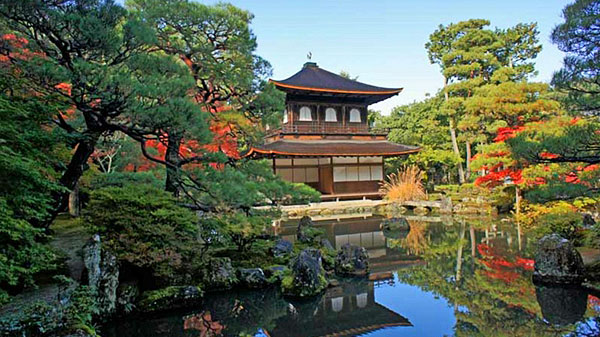
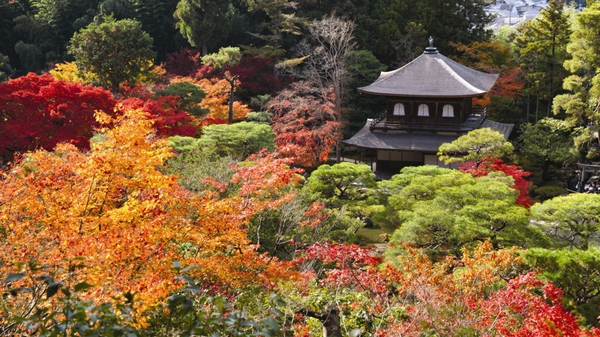
Now that you’ve seen the most popular sites in Kyoto, opt for something off the beaten track. The nearby Honen-In is a modest but magical temple tucked away in a secluded spot. In a similar vein, Ginkaku-ji, the Silver Pagoda, is the less ostentatious sibling of Kinkaku-ji.

You’d be forgiven for feeling a tad ‘templed out’ at this point, but a trip to Gion District will remedy this right away. Shops and fine dining options abound, and if you’re lucky, you may glimpse a geisha on her way to work.

Now that you’ve got the lay of the land, leave the city behind on day three and head deeper into the forest. In Western Kyoto lies the Arashiyama bamboo grove and a number of smaller temples and parks.

For your first meal of the day, try Shigetsu, a Zen vegetarian restaurant inside Tenryu-ji temple. Each dish of shojin ryori – a traditional Buddhist meal – is delightfully simple yet bursting with flavour.

Bellies now full, the bamboo grove beckons. Underneath those towering stalks, the shade-bathed path leads visitors on a trance-like journey, with the soothing sway of trees in the breeze serving as soundtrack. 

Aside from Tenryu-ji, our favourite temples in the area were Jojakko-ji and Gio-ji, which both feel worlds away from the camera-clicking masses at popular sites like the Golden Pagoda.

Nature’s beauty may be fleeting, but the restorative powers of fresh air and crisp, colourful leaves will linger long after one leaves Kyoto.

Text: Emily Petsko
Photos: Emily Petsko, AFP

For the full article, please check out the latest issue of Gafencu’s print magazine or the Gafencu app. Download the app from the Google Play Store or Apple App Store

Autumn in Japan: Wine resort in Yamanashi, a ryokan experience in Tokyo

In Asia, the well-travelled are well aware that the best place to spend fall within the region is in none other than Japan. In fact, for locals, there are seventy-two seasons in their country. They claim it is a result of their varied terrain concentrated into such a small land mass.

Essentially Japanese resort group Hoshino prepares for the upcoming red-leaf period with a slew of traditional events and openings for luxury guests looking for an authentic escape. We highlight their property in Tokyo, a ryokan style homestay modernized in all the right ways. The second part announces the re-opening of Hoshino Resorts RISONARE Yatsugatake in Japan’s less discovered wine region.

HOSHINOYA Tokyo: A Ryokan in the heart of Edo

Land in the capital, where Hoshino Tokyo’s 17-story hotel has been lauded for its infusion of local culture and natural environment. This property embodies the ryokan with its true sense of place. The concept involves turning a space into a compact universe built from the history, traditions and customs that define its locality.

Tatami mats cover every floor of Hoshino Tokyo, extending from the central lounge to the rooms. The latter are furnished with soft cotton futons and a bathtub for long, relaxing soaks. However, we would personally opt for the hot spring with a sky view on the hotel’s top floor. The outdoor open-air baths are segregated by gender, with unobstructed views of the sky. The waters come from the Otemachi Hot Spring, an alkaline water source below earth. The Japanese have used this water treatment for hundreds of years to help the body address low blood circulation or hypothermia and reduce fatigue.

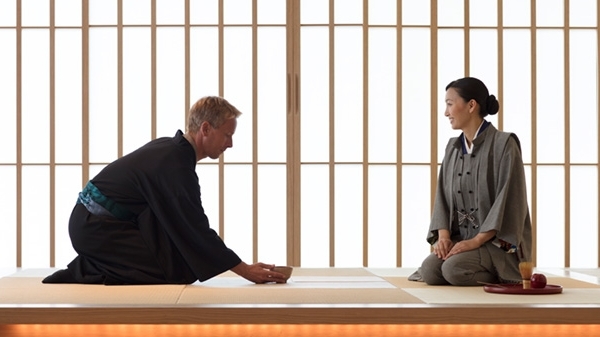
Finally, for the curious, Hoshino Tokyo hosts cultural activities such as the Omotenashi Tea Ceremony, an Incense Workshop, river tours, rickshaw rides, helicopter cruises and trips to Mt Fuji.

Hoshinoya Tokyo is centrally located by Tokyo Station and the Imperial Palace. 1-9-1 Otemachi, Chiyoda-ku, Tokyo 100-0004 Tel: +81-50-3786-1144. http://hoshinoyatokyo.com

Wine Resort Hoshino Resorts RISONARE Yatsugatake

Beautiful grapevines dot the landscape of this newly renovated wine resort two hours west of Tokyo. Hoshino Resorts RISONARE Yatsugatake is unlike any other in Japan: where else can guests enjoy close-ups of Japanese distilleries, and pair local and International dishes alike with fine wines? For the oenophiles out there, you must know that the Yamanashi/Nagano Prefecture area is acclaimed as a treasure trove for some of Japan’s finest wines.

What can you expect from this Japanese wine journey? We name but a few of the many exciting options:

Firstly, an exclusive exploration of resort partner Domaine Mie Ikeno winery, typically closed to the public. The latter insists on using all-natural distillation methods, and the hotel offers special programmes and events providing a rare glimpse into the winery’s inner workings. Hard-to-find Domaine Mie Ikeno wines are available at the hotel wine shop, the YATSUGATAKE Wine House.

Secondly, the VINO SPA®, featuring the VINO Scrub Pack – cosmetics made from the grapes in Domaine Mike Ikeno’s merlots.

Thirdly, a tour of the grape fields of the Yatsugatake Winery. Experience the passion of the winemakers on the very earth that gave birth to its 24 varieties of wine.

Wine Suite Room plans are available at Hoshino Resorts RISONARE Yatsugatake: 129-1, Kobuchisawa-cho, Hokuto-shi, Yamanashi-Ken. +81-50-3786-1144. http://risonare.com/yatsugatake/en/

Text:Julienne C. Raboca
Images: Hoshino Resorts