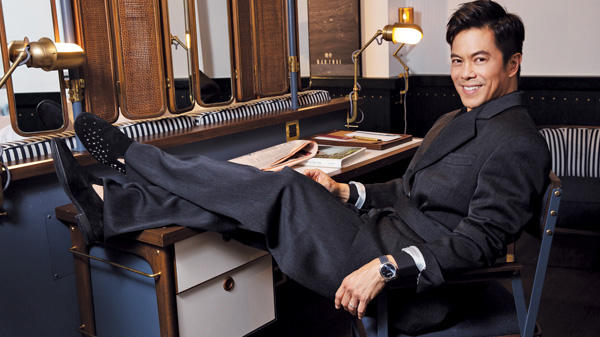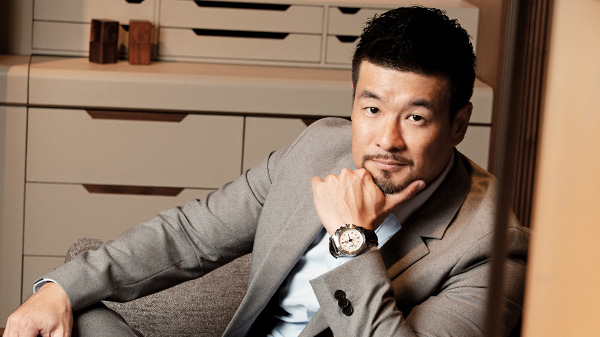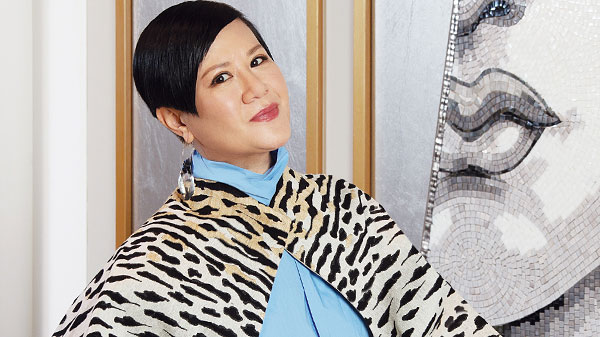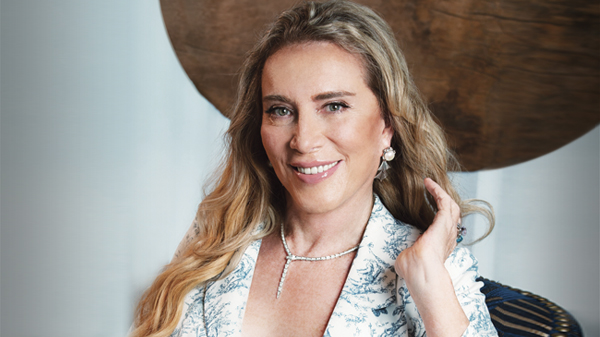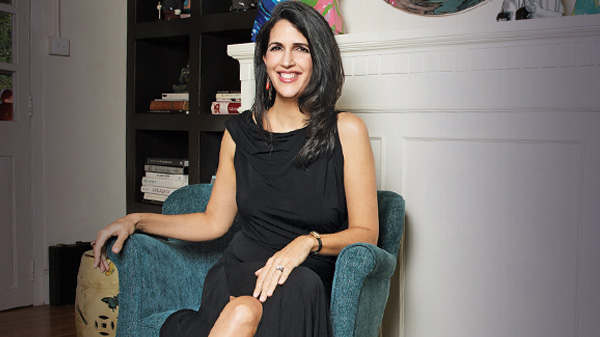


La Styla Bonita: Bonita Cheung, one of Hong Kong’s foremost fashion impresarios, now has designs on the future…

In 1998 you launched Tassels, your first fashion label. Four years later, the Bonita Cheung range made its debut, followed by Ni-Chi in 2009. Can you tell us a little about the genesis of each line?

After graduating, I didn’t jump straight into the fashion industry. Instead, I worked in the luxury jewellery sector, focussing on the marketing and advertising side. By 1998, though, I’d realised that fashion was where I really wanted to be and that I should really make the move before it was too late. Soon after, I opened my own workshop in Central and started creating bespoke items, evening and wedding pieces under the Tassels brand.

After a few years spent establishing Tassels and building up my clientele, I felt it was time to branch out under my own name. The result was the Bonita Cheung collection, which was picked up by Lane Crawford as part of its ready-made couture offering. Then, after I’d been working with Reina Chau [one of Hong Kong’s most stylish socialites and a leading patron of the arts] for several years, we both realised we shared a very similar approach to fashion and matching beliefs in the kind of styles we wanted to create. This led us to collaborate on our own ready-to-wear line – Ni-Chi. The company name was actually a combination of our daughters’ names – Nicole on my side and Chiara on hers.

bonita cheung

When you are designing outfits, how do you visualise the women who will ultimately wear them?

I always imagine that my pieces appeal to women who are not easily influenced by the trends followed by others, while also being confident and fun to be around. Ultimately, my clothes are made for the kind of woman who isn’t afraid to try something new and who relishes every new adventure.

How would you describe your own approach to fashion design?

For me, it’s all about creating something that will withstand the test of time and be marked as a classic – not in the sense that it’s in any way old fashioned, but more that it has an enduring appeal. To my mind, you should be able to dust something off a few seasons after you bought it and find that you still want to wear it, largely because it’s both memorable and unique.

bonita cheung

You’ve long been associated with the Hong Kong Fashion Designers’ Association…

I was initially approached to be one of the executive members. Later, when the chairman found I had a background in marketing, I was asked to focus more on that side of their activities. This led to me creating events that really showcased the work of the city’s fashion designers.

It was around that time that you set out to break records in association with the Danish Fashion Institute…

All that actually began with a conversation with Eva Kruse, the CEO of the Danish Fashion Institute (now the Global Fashion Agenda). Some years earlier, they held a very successful event – The World’s Greatest Catwalk – which had featured the longest runway ever seen at a fashion event. We decided to try and break that record, so we then had to find somewhere in Hong Kong that could accommodate the mammoth catwalk we had in mind. In the end, a 3.2km runway was created along the Victoria Harbour waterfront in Tsim Sha Tsui. Some 340 models took part and it took each of them 45 minutes to walk the full length of the catwalk, which saw us establish a new world record.

Last year, you were the Project Curator for Juxtaposed Fashion X Music, a major event in the city, which showcased over 150 different outfits from 75 local designers. What made you think the city’s fashion community needed to up its visibility?

Well, I think every city needs its own distinct character and fashion is a huge part of Hong Kong’s identity, not least because people here just love to style it up. While we are universally recognised as a shopper’s paradise, our local brands are largely under-exposed. On top of that, it’s far from easy for local designers to survive against all the international competition and the ever-rising rents. Having experienced all that for myself, I really wanted to help the up-and-coming generation of designers to get the kind of exposure and create the kind of noise necessary to overcome these very real challenges.

Where do you stand on the much debated diversity issues the fashion industry has had to contend with?

Well , we definitely need a greater commitment to diversity. To be brutally honest, 99 percent of models are still all drawn from the same demographic, which is a great shame. It’s really only when you have a more widely representative selection of models that you can truly showcase every design possibility. I want women – whether they are 155cm tall or 185cm, whether they weigh 100 pounds or 150 pounds – to know that they can look good in my designs. It also gives fashion an added element of reality – clothes aren’t meant to be costumes; they are meant to be worn by real people.

Thank you.

Interview by: Bailey Atkinson
Photos: Jack Law
Art Direction: San Wong
Venue: SICIS Hong Kong
Make-up: Margaret Wong
Wardrobe: Bonita Cheung
For the full article, please find the latest issue of Gafencu’s print magazine or the PDF version on the Gafencu app. Download the app from the Google Play Store or Apple App Store.

Chow Time: Little Bao founder May Chow shares her recipe for success

May Chow is heating things up in the kitchen and inspiring Hong Kong’s youth to dream big and break the glass ceiling both inside and outside the food and beverage sector…


With the gender balance in the hospitality sector still famously out of kilter, was that something you struggled with when you first entered the business?
Well, there wasn’t any obvious discrimination, with no one saying they wouldn’t hire me because I was a woman. Instead, it was more a case of microaggression, for example, with people seeing me as more suitable for a pastry chef role than taking centre stage in a hot, busy kitchen. That all adds to the perception that women should stick with the salads and not carry heavy things, that they’re somehow inferior.

While you worked with many well-known male chefs prior to opening your own restaurant, were there any women who made a strong impression on you along the way?
The first woman that I worked for was a Boston-based pastry chef named Karin. I loved her because, even though she had graduated with joint honours in aerospace and electrical engineering from MIT, she’d opted for a career in pastry as that was her passion. She trained me so well that I could make everything on the menu after just three months. For me, she was my MIT professor and she allowed me to major in pastries.

may chow
Blazer by 8 By Yoox;Tee by COS

Flashing forward a little now, in 2012, you opened your first restaurant – Little Bao. Can you tell us more about that experience?
Looking back, I was so naive. I opened that restaurant without having any clear idea as to how to go about it. I had, however, seen others do it and I believed I could replicate what they had done and be successful. At the time, I felt like I was drowning, but I didn’t. Instead, I had to learn how to do everything. One day, I would be washing the dishes, the next, I would be front of house.

The original Little Bao site recently fell victim to urban renewal plans. How did you feel about letting it go?
I actually knew that was going to happen about six years ago, but I didn’t tell anyone except my partner and a few close friends. In the end, we only announced we were closing a week before we shut the doors for good, which shocked a lot of people. Walking by it now is definitely a bittersweet experience. The last six years, after all, have been something of a rollercoaster. In truth, though, it was no longer enough for me – at least not in that particular space…

may chow
Belted jacket by 8 By Yoox; Shirt by Sandro

In 2017, you were named the Best Female Chef at the Asia’s 50 Best Restaurants Awards. Did you see that as some kind of vindication?
At the time, I was just starting my career and I wouldn’t really have chosen to win something like that at that point. I didn’t want to be a one-hit wonder – to be famous at 30 and gone by 40 – so I had to think hard about what accepting it would entail. While I was initially hesitant, I then wondered if I could put the win to good use. Ultimately, I thought that if someone very ordinary like me could gain such an accolade, that could act as an inspiration to others.

may chow
Cropped jacket and pants by 8 By Yoox; Sweater by Sandro

You came out about your sexuality a few years back. Was that difficult in a conservative city like Hong Kong?
Well, when I lived in the States, I was out among friends but still very much in the closet as far as my family in Hong Kong was concerned. Eventually, when I moved back to Hong Kong full-time, I didn’t want to revert to who I was before – an insecure 13-year-old. It was difficult to be honest about who I was, however. I was very aware of this innately Chinese desire not to embarrass your family. After about a year, though, I did come out to my parents. That was hard, but over time, my mom came to accept me and learnt to love my partner. Later, when some of her friends also found out they had queer children, they reached out to her and they were able to give each other advice and support.

You had the chance to sit down with Anthony Bourdain [the celebrated US celebrity chef] before he died. That must have been quite an occasion…
Every chef knew that having Anthony Bourdain come to your restaurant was akin to winning the lottery. A true hero of mine, not only did he come to see me, but he also brought along Christopher Doyle, my all-time favourite cinematographer, and his girlfriend Asia Argento, the Italian actress, whom I had also admired from afar. On the day he was due, I invited all my close friends to come along and help create the right ambience. When he arrived, he was very genuine – in his case, what you saw on camera was really him.

may chow
Blazer with pants by 8 By Yoox

Do you have one piece of advice for any female or queer would-be entrepreneurs who may be reading this piece?
As an entrepreneur – whether you are a woman or a man – it’s important to work hard and remain true to your initial vision. In the case of women, they should also know that there’s a lot of support out there. If any woman ever reached out to me, for instance, I’d be willing to share what I know.
Something else – something that I noticed at the recent Asia’s Best Restaurants Awards – is that men are constantly looking to promote themselves, while women are nowhere near as bold. I’m not sure if that’s because women are naturally more humble or feel that they shouldn’t behave that way, but they really should. At the end of the day, be adamant about what you want and don’t be afraid to offend anyone who might get in your way.

Thank you.

Interview by: Bailey Atkinson
Photos: Jack Law

Art Direction: San Wong
Make-up: Esther Kwan
Venue: Happy Paradise
 
For the full article, please find the latest issue of Gafencu’s print magazine or the PDF version on the Gafencu app. Download the app from the Google Play Store or Apple App Store

Transformative Times: Bobbie Huthart speaks out about her gender journey

At the age of 67, Robert Huthart, the son of a former Lane Crawford managing director, undertook gender reassignment surgery. Reinvented as Bobbie, she now lives in Thailand and is a keen campaigner for trans rights.

Did being part of the high-profile Huthart family put any pressure on you while growing up?

There was never really any pressure on me at any time. I actually had a number of great advantages. I could go anywhere and had the Lane Crawford brand backing me up. Being part of a well-off family meant I had everything I could have imagined or might possibly have needed.

Was it always on the cards that you would join the family business?

I always knew I’d enter the family business in one capacity or another. Ultimately, when I came back to Hong Kong after having qualified as a Certified Public Accountant and having worked in an investment bank for a while, my father had just taken a stake in the company – Zenith Refinery and Pacific Palters – which did very well for us.

After that, I took on an investment role within the family business, initially focussing on Phuket real estate. At the time, this saw us buying land that no one else really wanted, which led to outstanding profits further down the line. I really enjoyed everything I did, and came to believe that, as long as you have conducted yourself with real zest and maintained a positive attitude, while treating people well, you could get anything done.

Bobbie Huthart
Serpenti Tubogas necklace in 18K rose gold set with pavé diamonds on the head and the tail; Serpenti earrings in rose gold with mother-of-pearl and pavé diamonds, both by Bulgari

How do you view the world as a woman now, opposed to when you were living as a man?

When you are transitioning, you start off by taking hormones and, all of a sudden, you begin to see the world in a dramatically different way. You also find yourself having the kind of conversations that you really couldn’t have if you are a man. I find that women talk very openly with each other. I also think having lived as both genders has given me a truly unique understanding of their different perspectives on life. I believe only open discourse can unite the two for a better world.

You came out to your family back in 2015. Looking back, is there anything you’d have done differently?

I think if I had been a member of a later generation, if I had known I was transgender when I was younger, it would have bothered me not to have transitioned earlier. I wasn’t aware of all the possibilities and I think, in some ways, my ignorance was a kind of blessing. It ultimately allowed me to live two full lives in one lifetime.

Bobbie Huthart

Do you think coming from an affluent background has given you a different experience as a trans woman compared to those less-advantaged?

Well, the transgender women I talk to tell me I’m lucky because I come from a rich and accepting family. With that in mind, I try to speak out on behalf of all older transgender individuals, as well as for all elderly people in general. I want people to know they don’t need to shrivel up and die when they reach a certain age.

While I believe trans women are able to secure jobs at the lower end of the pay scale, it’s often difficult for them to progress. I also believe that this isn’t a specific trans issue, but one that affects all women. As a result, we have to collectively fight for women’s rights and move forward together.

Are there any misconceptions about the trans community that you would like to tackle head on?

I think the biggest misconception about the trans community – not only in Asia, but also on an international basis – is that it is inevitably linked to prostitution. As a Buddhist, I have no problem with prostitution, but, in general, it seems to carry a huge stigma. There is also the issue as to whether or not post-surgery you can “pass” as a member of your reassigned gender. In truth, being transgender is about what’s in your heart, rather than about your looks, and that’s what’s important.

What do you hope the 21st century will deliver in terms of transgender rights and acceptance, particularly within the Asian community?

Ultimately, I just want to get my point of view across without offending anyone. I just want us to be accepted. In the case of China, I think the process of gradual change has to begin and I believe the next generation will come to accept transgender people. So much of its culture is male-centric, with every mother-to-be wanting a boy. What happens, though, when that boy wants to be a girl? At the end of day, people need to be allowed to transition and to then be accepted.

I also believe in order for transgender people to win the hearts and acceptance of society, we must continue to do good deeds, and recognise that if we push too hard, especially in Asia, for rapid law changes, this could lead to more discrimination and hate.

Is there anything you are currently campaigning for?

Well, I currently run a foundation that aims to help transgender people in Thailand. Initially, I thought surgery always topped the agenda for trans people, but I’ve since found that isn’t necessarily the case. Sometimes, the bigger priorities are education, medication and support from doctors. And so, the foundation’s focus is now on financing education, and funding seeding capital and venture capital businesses run by trans people in Thailand. Our foundation has no name, and thus, no ego.

Finally, what’s left on your personal bucket list?

Really, I just hope to live long enough to help more people, not just for their sake, but also for my own. I am also still trying to become far less egocentric. That’s one of the biggest challenges I have ever had to face and it’s an ongoing battle.

Thank you.

Interview by: Bailey Atkinson
Photos: Jack Law

Art Direction: San Wong
Make-up: Irene Hung
Hair: Eva Lee@Headquarters
Venue: Ichu Peru
Jewellery:
Bulgari
For the full article, please find the latest issue of Gafencu’s print magazine or the PDF version on the Gafencu app. Download the app from the Google Play Store or Apple App Store

Sarah Heller: Asia’s youngest Master of Wine and what she’s currently drinking

Sarah Heller discusses becoming Asia’s youngest Master of Wine, the evolution of Hong Kong’s wine industry and the vineyards she currently has her eye on…


Your wine career had something of a bumpy start…

A little bit, yes. After graduating from university, I had a job lined up with an Italian wine importer and they very generously sent me to tour a few Italian wineries over the summer. Unfortunately, part way through my first visit, I fell into a wine vat and fractured my spine, which was – in equal parts – mortifying and painful. So rather than start working, I had to return to Hong Kong for a prolonged period of rehabilitation.

When I arrived, the city had just cut all duty on wine, so the local wine market was exploding, while the US scene had become rather stagnant in the wake of the Global Financial Crisis. It became clear that I should stay in Hong Kong and I began working for Debra Meiburg, one of the first Masters of Wine in Asia, and she really encouraged me to pursue my academic interests in wine. I’ve always been a little bit of a geek, so when I realised there was an academic qualification in wine – the Master of Wine certification – I just knew I had to go for it.

Sarah Heller is Asia's youngest Master of Wine

As Asia’s youngest Master of Wine (MW), what can you tell us about this particular qualification

Well, strictly speaking, the MW isn’t an academic qualification at all. It’s more like a guild, but one that requires a lot of study, hard work and success in several examinations if you want to become a member. As an institute, it was formed in 1953 as an offshoot of the Vintner’s Guild. Essentially, the MW is seen as official confirmation that its owner is particularly knowledgeable when it comes to all things wine-related.

Sarah Heller discovered her passion for wine in Italy

How has Hong Kong’s wine market evolved over the 10 years you’ve been involved here?

Well, many things have changed. When Hong Kong first opened up and set about becoming Asia’s wine hub, the focus was almost exclusively on the fine wine segment and, in particular, on a tiny group of high-end producers in Bordeaux. Today, there’s far more diversity. While it’s still driven primarily by collectors, other sectors of the market have expanded considerably.

The food and beverage industry, for example, has become far more vibrant as things have progressed. Beyond that, there’s also an emerging group of younger collectors who have driven the move towards Burgundy, while also highlighting some of the once-lesser-known wine-producing regions, so it’s been an exciting time to watch the evolution of local wine preferences.

Have there been any particular regions that you have seen coming to the fore of late?

I think Italy has really been the one that’s proved something of a rising star over the last two years. I’m on the committee of an association called the Hong Kong Wine Society, and we’ve noticed a massive increase in interest in tastings of Italian wines, particularly prime Piedmontese varietals, such as Barbaresco or Barolo. In many ways, the Tuscan vintages are akin to Bordeaux, while Piedmonte is closer to Burgundy.

Sarah Heller is multilingual and speaks six languages

What projects are currently occupying you?

Actually, although I’m now an MW, I don’t have a regular nine-to-five schedule as everything I do is project-based. Wine education has been a big part of my career and I’ve long been involved with the Vinitaly International Academy – an Italian wine education institute – as a visiting lecturer. I’ve also designed a range of crystal glassware in partnership with Lucaris, a Thai crystal company. This will launch in November and has been crafted while keeping in mind the unique way Asian consumers enjoy food and wine.

Aside from that, I’m also collaborating on creating a new wine brand with a couple of partners – one is an Austrian wine producer and the other an Austro-Hungarian noble. This particular project came about as a way of introducing Austrian wines to the Asia market, but the project has now expanded to encompass all the wineries of Central Europe. We just launched in Hong Kong, Japan, Thailand and Vietnam and will shortly be in Poland and Sweden. We’re also hoping to produce a documentary that will chart the whole process of creating these wines sometime next year. Watch this space…

Sarah Heller is involved with many exciting wine education projects

Are there any new wines that have recently caught your eye?

I think sparkling wines worldwide have become so much more interesting over recent years. While the French champagnes are, of course, delicious, it’s invigorating to see new players coming up. Right now, I’m particularly enamoured with Franciacorte – from the northern Italian province of Brescia – that produces such sparkling wines as Ca’ del Bosco and Bellavista. While champagnes can be compared to super-skinny supermodels, these are more like Sophia Loren – full-bodied, softer and warmer. Aside from that, I’m partial to a drop of Nyetimer or Rathfinny, both of which are English wineries.

Thank you.

Interview by: Tenzing Thondup
Photos: Jack Law
Art Direction: San Wong
Make-up: Margaret Wong
Venue: The Optimist


Catching up with Wyndham Hotels & Resorts group’s president in Greater China region Leo Liu


Since you took over as president of Wyndham Hotels & Resorts, Inc. what are your most proud moments with the company?

My first job as being the CEO to this organisation is to make everyone feel proud, because we are coming together to create a team. After six months after my appointment, I wanted to discover new things and make the company more popular. I decided to take a huge risk and organise a spectacular event inside the Imperial Palace within the Forbidden Palace of Beijing, I remember the moment of being with my team, in front of 2,000 guests — including 1,000 general managers and owners and also 30 celebrities, trying to showcase to the market how big we are — and how big we should be in the future. 

I’m also quite proud that we have quite literally expanded from 700 hotels to 1,500 hotels since the time I have joined over five years ago. It makes not only myself, but my entire China team feel extremely proud.

Under your leadership Wyndham Hotels & Resorts, Inc. has become the first international hotel group to operate over a thousand hotels in China, what are the key factors that drove this expansion?

We became the largest hotel operator in China with 1,500 hotels but we haven’t stopped yet, it is our goal and our ambition to reach 2,000 hotels within three years. We are always facing a multiple choice, first we must make the right decision, second keep a clear focus and finally, make it happen. 

I think that having such a great team and a high-potential market is a privilege to us. Once we set our direction and focus with a strong team we can make things happen successfully. We really listen to what’s happening in the market – particularly with the younger generation. We want to position ourselves as a game changer, to be different than our competitive friends.

Leo Liu

Why do you think makes your business models with Wyndham has been so successful with Chinese guests?

The first mission we offer to the market is to listen to what the younger generation wants from us, so amongst our brands that are already on offer we want to provide newer ones as well. We want to be a social hub for younger people to meet each other, making the change from spending time in coffee shops and bars to being entertained in the hotel lobby. With these innovative changes and offers we have become more popular to younger people.

Can you tell us a bit about your management philosophy?

Being a boss is just a title, the most important thing is to share your passion with your team to make them motivated, follow your focus and you as a leader, then you can make things happen.

Thank you.

Text: Bailey Atkinson

Koo’s Coup: Larry Koo, founder of KOODESIGN, on what shapes his design ethos

Larry Koo, (Lawrence Chuen Tak Koo), founder of KOODESIGN Studio, Black on White Ltd, has over 20 years of experience as an industrial designer, but his passion for design has only sharpened with time. We sit down to talk with one of Hong Kong’s leading design authorities on what shaped his journey…

 Larry Koo

You were drawn to design even as a child, we hear…

Yes, from very early on, my interests tended towards the creative side of things. In Hong Kong, though, it can be quite difficult to carve out a niche for yourself in the artistic sector. The schools here try to send you along a certain tried and tested path and don’t really allow children to explore their own creativity – at least, that’s how it was when I was growing up and I am sceptical as to whether it has really changed.

I still remember one time when I was a child and I was asked to draw a flower, so I used a black pencil on a white paper. Though the sketch was accurate in terms of likeness and proportions, I still didn’t get a good grade as I had used black pen to draw a flower and it was thought to be a poor drawing because flowers are not black in real life. In fact, it was that experience that led me to name my company Black on White Ltd.

 You chose to complete your education in the US…

Fortunately, yes, I went to a boarding school in the US for several years and that really changed my life. I was allowed to express myself as an artist and designer and that gave me the courage to explore, develop and refine my own style and technique. It’s safe to say that my stint in the US made me who I am today.

Larry Koo

You’ve worked both as a fine artist and an industrial designer, surely that required two very different skill sets?

Fine art and design are actually two sides of the same coin. While art can exist for its own sake, however, in product design, everything is commercialised, with a huge number of business considerations that have to be factored in. In industrial design, it’s always important to try to strike the right balance between aesthetically pleasing and commercially viable. My initial education as an artist and my later experience as a designer allowed me to strike that balance.

Larry Koo

You’ve also shifted from making gaming accessories and sporting goods to designing a wider range of consumer items…

 That was quite a significant change. At first, it was a tad difficult to adjust, as the work culture was totally different. Also, as I loved sporting goods myself, designing them had been quite an exhilarating experience for me. Then, when I started designing speakers – an important part of the interior decor of many stylish homes – it was initially difficult to switch gears. I still remember struggling to design my first speaker system, thinking it’s enough to just to dress up a simple box somehow. Over time, I have come to understand the consumer requirements and expectations when it comes to speaker systems, a development that has really helped me hone my skills.

Larry Koo

How has your design philosophy changed as your career has progressed?

 While I really believe my approach to design has evolved over the years, at its core it has always been about refinement. It is vital to understand the value of a proposition and to be able to execute it properly.

How do balance the aesthetics with the more functional requirements of your design briefs?

 “Form follows function”, that’s the first thing I learnt in design school. For many contemporary consumer products, however, the form itself has become a function. When you first look at a beautiful product in a display window, its proportions, sleek design, colours, etc. may very well be the key factors in your ultimate decision to buy that product.

Larry Koo

How difficult is it to come up with innovative designs in an industry that’s so competitive and always on the lookout for the Next Big Thing?

Every consumer product has a limited shelf life, with companies now launching new gadgets not just every year, but every season. It is, indeed, a challenge for the entire consumer products market. As a designer, it’s most important to me to define the purpose of each product – why it needs to exist in the first place. It is in identifying and defining that core essence that we can come up with innovations that justify its purpose and refine its offer.

What keeps you going amid such a heavy workload?

 That’d be my son, who’s five-years-old now. He’s the first person I think of every day. He’s a bit naughty, but he’s the one who keeps me going. As I mentioned earlier, I am quite disillusioned with the local school system. It may be great for some people, but it’s not for everyone. As a result, I try not to put the kind of pressure on him that I felt while I was growing up.

Thank you.


Interview by: Suchetana Mukhopadhyay
Video: Kingsley Lau
Photos: Jack Law
Art direction: San Wong
Venue: Iron Fairies Hong Kong

Eyres and Graces: Alia Eyres CEO of the Mother’s Choice charity

Alia Eyres may be a mother of five, but it’s her role as the CEO of renowned local charity Mother’s Choice that sees her embrace the larger community as her family…


Having looked on as your parents masterminded Mother’s Choice, were you always destined for a career in charity?

Being around my parents and their friends – the co-founders of Mother’s Choice – definitely had a huge impact on me and my younger siblings. Growing up, I saw my parents and their friends pouring their hearts and souls into this charity, committed to helping children and young women who didn’t have any support system, while doing their level best to give back to a city they had come to call home. It showed me the true worth of generosity, the value of kindness and the importance of family. 

You were a corporate lawyer before you joined Mother’s Choice – why the switch?

Well, I had been practicing corporate law for quite some time, but, alongside that, I had been volunteering at Mother’s Choice since I was nine years old. Despite that, I’d never contemplated working there full-time. Around the time that they started looking for a new chief executive, though, I remember sitting in a coffee shop near my then-office and I opened the newspaper and saw the ad for the role. It was as if a light bulb went off in my head. I suddenly realised that this was what I wanted to do with my life.

Alia Eyres

How has your experience as a lawyer helped you in your role as chief executive?

Having a background in justice and knowing how the law works have been incredibly helpful. Two of my other siblings are also lawyers in Hong Kong and experts in family law. We firmly believe that understanding the law and how the legal system works really help to make sense of how our society works overall. Many of the young women and children we work with have very real legal concerns and need someone to be their voice when it comes to seeking justice. My background means I can be that voice.

What are the key areas where Mother’s Choice can help out?

Mother’s Choice is a local charity and we work very closely with the wider community, partnering with hundreds of volunteers every week to change lives and bring hope. We do that by providing services for babies and children, and for young women who have no familial support. We also work with young people who are experiencing crisis pregnancies or youth in foster care, and operate foster programmes via local schools and community education services.  

Alia Eyres

Since becoming chief executive in 2012, what has made you most proud?
After being in my post for seven years now, I can say I’m proudest of Project Bridge – an innovative programme designed to improve the traditional foster care system. Essentially, it connects nurturing volunteer families to children in need of temporary care. Our volunteer Bridge Families provide these children with a safe and loving family environment, giving them the opportunity to build trust, to develop their sense of identity, despite any crises that may have disrupted their birth homes. 

And what have been the most challenging aspects of the role?

It’s fair to say it’s not an easy job. Every day we hear the most heart-wrenching stories – a newborn baby abandoned in a trash can, a 14-year-old girl who has been abused and raped or a family that has been torn apart. These are incredibly difficult stories to get your head around, but the good thing is I now know there’s hope for everyone. Each one of us gets a second chance. There’s no such thing as a hopeless case. There’s hope that everyone can have a good future, there’s hope for every baby, every girl and every family. I say that because we’ve seen true miracles happen. Even though it is a hard job, I have to tell you I have become a far more hopeful person than I was in the past.

Alia Eyres

How do you ensure that the children have a seamless transition when they’re adopted?

Our preparatory work focusses on the two key parties – the adoptive families and the children who they are taking on board. In the case of the families, we hold their hands every step of the way, making sure they are fully aware of the needs of the child, the legal side of things and so on. We have hundreds of volunteers, social workers and lawyers all working together so that they are well prepared for their forever homes. We also have nurses, doctors and therapists, who come in to check that their medical needs are being met so that they have a better chance of finding a new home.

How open is modern-day Hong Kong to adoption?

In the 32 years since we started, I’ve seen Hong Kong really open up to the idea of adoption and we’re so grateful for that. In the future, we would like to see people being more willing to open their homes and their hearts to children with special needs and older kids. Every child, no matter their age or condition, deserves to be part of a loving family.

Thank you.

Interview by: Suchetana Mukhopadhyay
Photos: Jack Law  
Art Direction: San Wong   
Make-up and Hair: Irene Hung  
Venue: Mother’s Choice

For the full article, please find the latest issue of Gafencu’s print magazine or the PDF version on the Gafencu app. Download the app from the Google Play Store or Apple App Store.


Dish of the Day: Model-turned-chef Esther Sham talks about her career

Esther Sham gave up a promising modelling career to indulge her passion for the culinary arts, and now owns two highly-acclaimed restaurants of her own…


Tell us a little about your early years…

Well, I was born in Hong Kong to a Shanghainese father and a Chiu Chow mother. I spent the first half of my childhood here, before moving to Los Angeles. Looking back, it was the perfect combination – I spent just enough time in Hong Kong to become familiar with traditional Chinese culture and was then able to immerse myself in the more Western approach to off-the-wall thinking and self-belief.

What then led you into modelling?

Well, after high school, I studied for a Bachelor’s Degree in Contemporary Art at the University of California. Once I graduated, though, I found I wasn’t actually that keen to become an artist, so I was at something of a loose end. That’s when I decided to come back to Hong Kong and try and find a ‘normal’ job for myself. That, however, turned out to be more of a struggle than I’d expected. It was around then that a number of people suggested I should consider modelling, especially as I had the height for it.

Esther Sham
Jacket and pants in jacquard, white tee and pumps, all by Prada

What was your favourite part about modelling, and what proved to be the biggest challenge?

The best thing was that no two days were alike. I was never repeating myself so there was a constant novelty to it all. It helped that I wasn’t just doing fashion, but also commercials and even cameos in TV shows. At the same time, I really came to struggle with the instability and unpredictability of the job. While one particular month could be filled with bookings, the next might be completely empty. Although I was in a relatively stable position, I ended up becoming very insecure about it all, so I feel fortunate that I discovered my love of food just a short while later. It grounded me in a way I had never been before.

Esther Sham
Red pant suit by Robert Rodriguez (Harvey Nichols)

So, how did your love of cooking develop and when was it you decided to reinvent yourself as chef?

As a kid, I have to say, I had no real interest in cooking. At the same time, though, my family was very food-oriented. Both my parents come from strong culinary traditions, so eating well cooked meals was always a given. Looking back, though, I think my passion for food is down to my parents – and to my mother, in particular. She came from a family of truly amazing female cooks and she was the one who taught me the importance of bringing happiness to your own family through good food.

While I was working as a model I wasn’t allowed to eat a great deal, so I became extremely picky in my choice of cuisine. It was then when I realised that creating good food is really an art. Then, while on assignment in Singapore, I was then exposed to a whole new culinary scene, one quite distinct from Hong Kong or Los Angeles. It ignited a flame in my heart and I started experimenting with different cuisines. Soon, I realised that my passion for cooking had out stripped my love of modelling. That’s when I finally decided to take the plunge.

Esther Sham
Pleated dress by Tibi (Harvey Nichols)

Given your upbringing in Hong Kong and the US, why did you opt to specialise in French cuisine?

When I discovered Gallic gastronomy, it was like discovering a new form of art, albeit one with any number of practical applications. Aside from the fantastic techniques and the inherent creativity, I think it was the amazing presentational skills that nouvelle cuisine demands that really appealed to my artistic nature. I fell in love with it wholeheartedly.

How did that lead you to opening your restaurants, Maison Es and Ta Pantry?

In 2008, I opened a private kitchen dedicated to serving a table of just six guests – Ta Pantry. It was a real one-woman show – from taking the bookings and creating the menus to buying the ingredients, cooking and ironing the table cloths, I did it all.

Eventually, I got married and, later, had two sons, so I was looking to develop my career in a more flexible and less time-consuming fashion. Ultimately, that’s what led me to open Maison Es in 2015. Having regular opening hours and a committed, well-trained staff to support me meant I could spend more time with my family, while still indulging my love of cooking.

Esther Sham
Demin shirt by KIMHEKIM ( Harvey Nichols) Pumps by Gianvito Rossi

Do you hope your sons will follow in your foodie footsteps?

Honestly, I think it’s a bit too early to tell, but there’s definitely a part of me that hopes they will. They’ve both already shown a tremendous passion for the culinary arts, and I believe that may be because I would constantly cook when I was pregnant. Even after my sons were born, I’d keep them close to me in the kitchen – and they were so unbelievably calm even in the middle of all that chaos. In a way, it’s already in their blood…


Thank you.

Interview by: Tenzing Thondup
Photos: Jack Law
Art Direction: San Wong
Touch-up: Zoe Fan
Jewellery: Van Cleef & Arpels
Venue: Ta Pantry

For the full interview, find our latest issue of Gafencu’s print magazine or the PDF version on the Gafencu app. Download the app from the Google Play Store or Apple App Store.

Martijn Oremus on the BMW Art Car, Art Journey and what to expect from the carmaker in 2019

The recent Art Basel Hong Kong fair marked the seventh anniversary of the fruitful partnership between the mega art event and renowned German automaker BMW. We spoke to the marque’s new managing director Martijn Oremus about this successful relationship, its Art Basel highlights and what Hong Kong’s auto enthusiasts can expect from the luxury carmaker in 2019.


Tell us about the partnership between BMW and Art Basel, and what makes it such a successful one?

The partnership between BMW and Art Basel spans seven fruitful years, but actually, the engagement of BMW in cultural partnerships goes back even further, encompassing five decades. In essence, it’s creativity that ties everything together. Creativity is key, not only to art, but to innovation, design and technology. To that end, it a fundamental part of our business.

With Art Basel being one of the leading platforms for creativity, it brings together all the relevant people from an expansive array of industries in the name of art. We are very happy to be partnered with Art Basel, not just in Hong Kong but worldwide.

Martijn Oremus with BMW Art Car No1 at Art Basel Hong Kong
Martijn Oremus, Managing Director of BMW Hong Kong, with the BMW Art Car No.1 at Art Basel Hong Kong

What can we expect from BMW at Art Basel Hong Kong 2019?

We have a range of activities going on, and one I’m particularly proud of is the BMW Art Journey. Each year, we bring young emerging artistic talents and give them an opportunity to travel the world as part of this unique art competition. It’s not just a prize but an opportunity for them to develop as artists. At Art Basel Hong Kong, we’ve announced the shortlist of potential awardees for the next Art Journey. The winner will be chosen in the coming months. This year, we have three female finalists, which is quite special.

BMW Art Car No1 circa 1975

Tell us a little bit about BMW’s all-new Art Car. What were the inspirations behind its design?

Over the years, we have brought a total of nine BMW Art Cars to Hong Kong, but this year it’s even more exciting because we have the original Art Car No.1 from 1975. It’s a particularly special occasion because this was the car that laid the foundation stone for the entire Art Car collection. It was French racer Hervé Poulain who commissioned his friend, the renowned American artist Alexander Calder, to transform on his actual BMW racecar. It is that precise car that is on display at Art Basel Hong Kong, and is the pioneer for a line that now boasts 19 unique models. The Art Car really highlights to blending of creativity and artistic flair with our cars, which evokes emotional responses in people’s hearts and emotions, much like the world of art.

Martijn Oremus is the new Managing Director of BMW HK

What’s can we expect from BMW in 2019? Which new models will be making their debuts?

First and foremost, we will have a range of new models launching in the market. First of all, the new generation of the 3-series. The 3 series for us represents the core of sheer driving pleasure. It’s the most dynamic and sporty car that we have, and will be coming to Hong Kong very soon. On top of that, this year we’ll be focussing on the luxury segment. For example, we will bring a revamped version of the 7-series, but also two all-new concept cars – the BMW 8-series and the X7, which will be the first full-size SAV in this luxury segment to be introduced to the market.

Thank you.

Interview and photography by: Tenzing Thondup
Video: Kingsley Lau

Mouse Builder: For Allen Au-Yeung, working at Disney is a dream job


Allen Au-Yeung, Disney’s Asia-Pacific Vice President of Creative and Product Development, on indulging his creative spirit, his life-long love affair with Disney, and marking Mickey Mouse’s 90th birthday…

Allen Au-Yeung is the APAC VP of Creative and Product Design for Disney

How did you become involved with Disney?

As someone who considered themselves inherently creative, I was always fascinated by Disney’s dedication to putting creativity at the forefront of everything it did, as well as its amazing ability to consistently create the most invitingly interesting products. I felt that this was completely in line with what I was looking for at the time. I joined the company back in 1996 and I’ve never really looked back.

For Allen Au-Yeung, Disney was his life's calling

What can you tell us about your current role at Disney?

Right now, I’m the Vice President of Creative and Product Development for the Asia-Pacific region. Essentially, I’m responsible for formulating a unified creative vision for all our team members across the region. This means designing Disney creative assets that tell our brand story, while also working closely with our business strategy teams to help create new products that are in keeping with our overall philosophy while remaining wholly aspirational.

Allen Au-Yeung believes adaptability, localisation and digitisation are the keys to Disney's success

How do you think Disney has managed to stay so relevant for quite so long?

Despite being a globally recognised brand, localisation has really been the key to its success. We do our utmost to incorporate elements of local culture in any relevant and unique Disney story we set out to tell in any of our markets. During last year’s Mid-Autumn Festival, for instance, we released a range of mooncakes featuring some of our best-loved characters.

Then, of course, there’s digitisation, which is clearly the most rapidly-developing sector right now. Apart from the expected social media platforms, many of which we are already using to help broaden our demographic, we’re also placing a real emphasis on e-commerce, especially within the Greater China market.

 Allen Au-Yeung on Disney, Pixar, Star Wars and Marvel

How do you juggle Marvel, Pixar and Star Wars with the more traditional aspects of the wider Disney universe?

The key to finding the right strategy lies in knowing just what consumers are looking for. To that end, Disney spends a huge amount of money on research, commissioning studies and analysing a wide range of demographics. The end result is that we are very aware of what people want.

We know, for instance, the strong appeal our princess characters – such as Cinderella and Snow White – have for young women. Equally, we know that men prefer the action and superheroics that come courtesy of Marvel and Star Wars. Meanwhile, with the younger kids, Pixar characters like Wreck-It Ralph are hugely popular. Ultimately, it’s all about targeting the right products at the right consumer group and making sure they fall in love with us regardless of their age or gender.

For Allen Au-Yeung, Mickey Mouse is the most iconic Disney character

Given the breadth and depth of your back catalogue, is there still one character that really stands out for you?

That would have to be Mickey Mouse. He’s the character that Walt Disney himself developed and one that remains synonymous with our entire brand. His engaging personality, innate curiosity and happy-go-lucky nature have seen him consistently win hearts over the years, even though he’s now 90 years old. At heart, though, I think his appeal lies in the fact that he is pretty much the embodiment of eternal hope.

What did you do to mark Mickey’s 90th in Hong Kong?

We rolled out a variety of promotions, exhibitions and products that all commemorated this particular milestone. A few months ago, we also partnered with Times Square Hong Kong to stage an exclusive 90 Years of Mickey exhibition, which featured more than 90 unique pieces of memorabilia from the Walt Disney Archive, including 20 that had never been seen in public before. We’ve also partnered with a number of local companies to create various limited-release designs that are exclusive to the city.

Thank you.

Interview by: Tenzing Thondup
Photos: Neville Lee
Art Direction: San Wong