
Wine Chemistry: At ThinkWine, entrepreneurial oenophile [or epicurean] Romain Loriot uncorks elegance and joie de vivre 

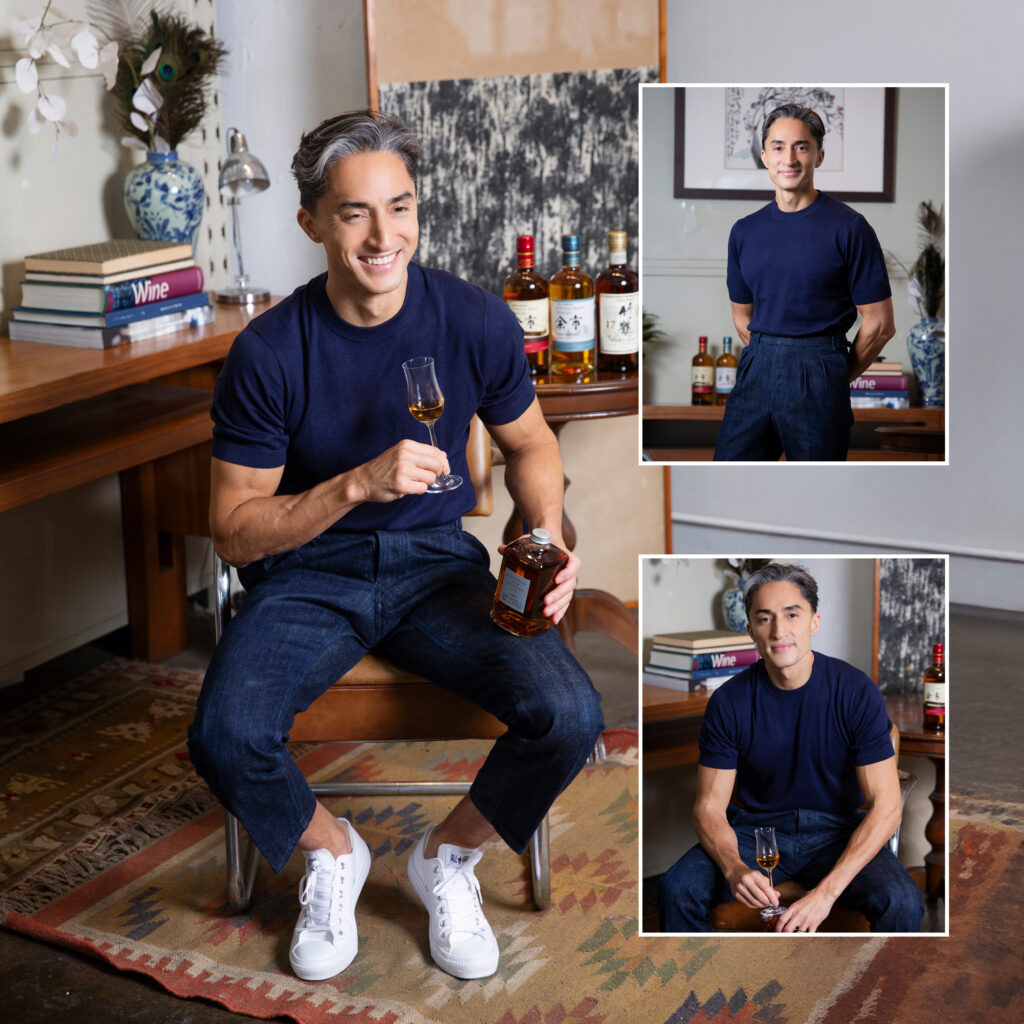
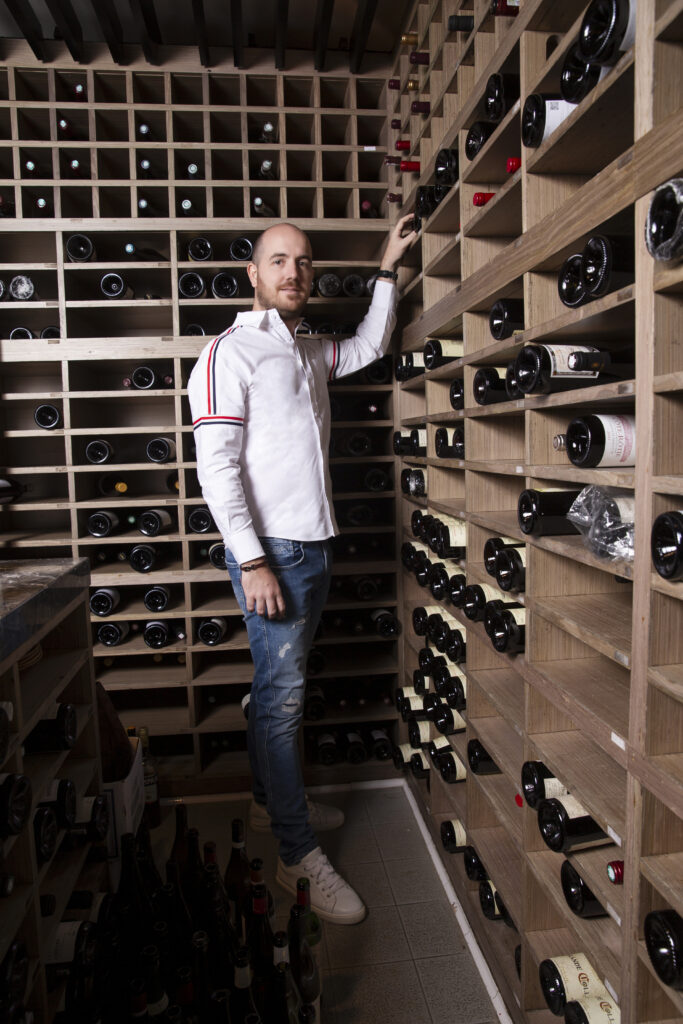
Cellaring impressive bottlings from France as well as Australia, Italy, Spain, Germany and emerging wine nations like Lebanon, ThinkWine is more than just a wine bar; it’s a sojourn through the world’s vineyards. Romain Loriot, the visionary behind the venture, commits to procuring exciting offerings for the city’s wine connoisseurs to sip in an ambience that is second to none.

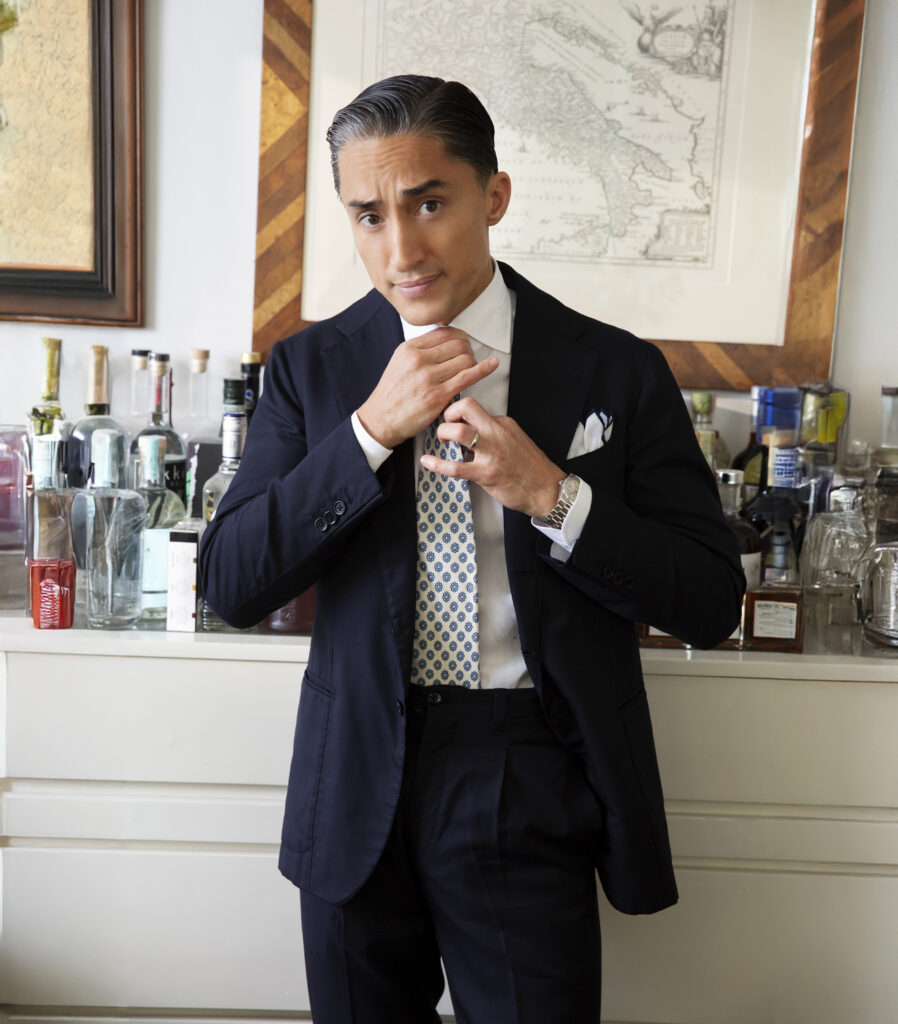
“The one problem I don’t experience anymore is fixing my hair,” says the debonair – and balding – French expatriate, poking fun at himself. “It’s a blessing and a curse at the same time.”

Loriot’s route to his vibrant/eclectic premises in Shelley Street, Central was shaped by his childhood experiences, culinary aspirations and passion for the nuances of the grape. He grew up in Montpellier, a city nestled in France’s Languedoc-Roussillon region, known for its rich wine culture. However, his early life was steeped in music rather than vines.
“Coming from a musical family, I was always surrounded by classical pieces and French singers,” he recalls. Although he played the piano, he felt a different calling. Academic struggles led him to vocational school, where he initially aspired to be a chef.

Loriot’s parents, although not industry professionals, had instilled in him a love of fine dining. Their frequent visits to Michelin-starred restaurants provided invaluable gastronomic experiences. “Without their encouragement, I might not have pursued my education at food and beverage school,” he reflects.

While he was raised in a region renowned for the beauty of its vineyards, it was his family’s dining preferences that ignited his interest in wine. “My parents encouraged me to acquire a unique skill set that would set me apart [in the F&B field] – knowledge of wine,” he says.

This support was instrumental in shaping his career. After three years of studying food and beverage management, a further year specialising in wine at a school in Nîmes was a turning point. There, he unearthed not only a fervour for wine but a natural aptitude for its appreciation.

Creative Juices

In 2011, Loriot’s professional path began in earnest as he entered the intense world of fine dining. His early career was marked by stints at prestigious restaurants, including those by Alain Ducasse, where he honed his skills as a sommelier. His time at The Dorchester in London and later at Rech, in Paris and in Hong Kong, heightened his understanding of wine and food pairing.

One of his most memorable episodes in eight years as a sommelier was at Rech in Paris, whose “talented chef had a deep passion for wine”. This synergy culminated in a unique collaboration whereby Loriot’s wine choice inspired a new dish, showcasing the harmonious relationship between cuisine and wine.
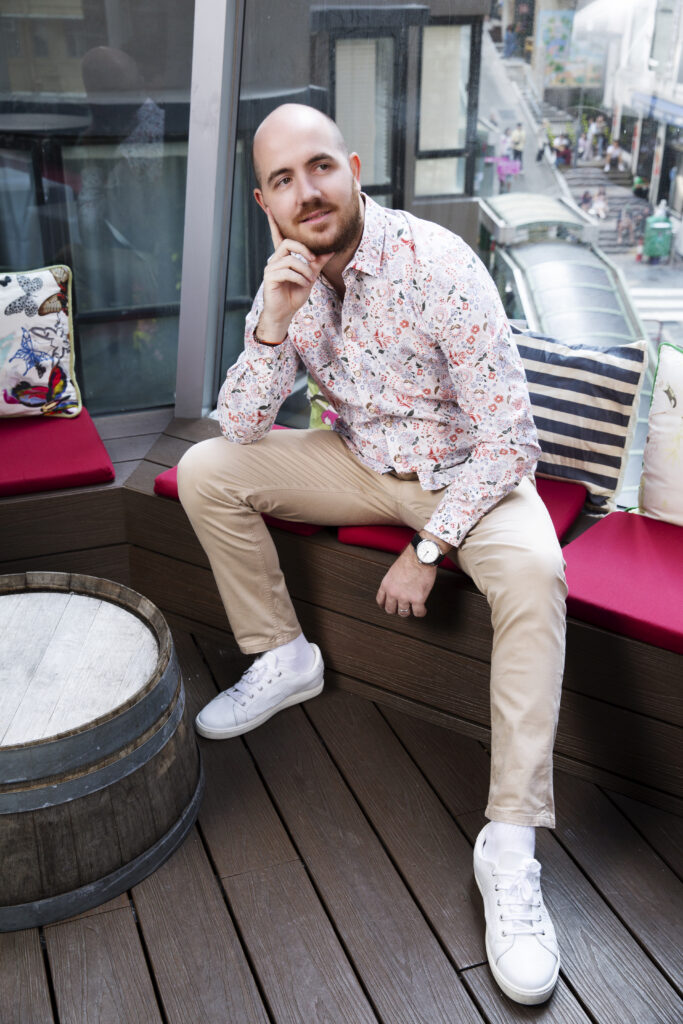
As Head Sommelier at Rech, he managed teams, oversaw stock and crafted engaging lists that reflected his wine ethos. These roles deepened his knowledge and helped him grow as a leader in a dynamic environment. “Developing unique wine pairings became a key aspect of my role,” he notes of his constant mission to enhance guests’ dining experiences.

From Think to Drink

The idea for ThinkWine had been brewing long before its 2019 launch. Loriot landed in Hong Kong in 2016, and after two years at Rech (which was located in the InterContinental Hotel) he stepped up the service industry ladder to become Group Sommelier at a thriving restaurant group. But then, inspired by personal milestones – his marriage and the impending arrival of his child – he recognised the time had come to establish a venue that encapsulated his wine vision. “We had not encountered a wine bar in Hong Kong that embodied the essence of ThinkWine,” he says.

From the outset, his goal as founder and Managing Director was to curate an exceptional list. This devotion to exclusivity and quality sets ThinkWine apart – for instance, it’s the only establishment outside France that offers bottles from Château de Cherubin & Rayas, the spectacular Renaissance castle in the Loire Valley. “We procure wines directly from France, leveraging the relationships I’ve established with various winemakers,” he explains, highlighting the meticulous selection process that defines his cellar.

At ThinkWine, patrons can expect a diverse array of wines, with approximately 75% of offerings from France. Selections from emerging wine-producing countries ensure accessibility for all enthusiasts, with bottles priced from HK$350 to $42,000. “Our focus is on the quality and flavour of the wines we choose,” he states.

In recent years, Loriot has championed producers outside his homeland, recognising their distinctive profiles. “When I arrived in Hong Kong, my knowledge was primarily centred on French varieties,” he admits. However, exposure to diverse labels from Australia, Italy and beyond has enriched his perspective. “Each country has its unique characteristics and stories behind its wines,” he adds, underscoring a pledge to showcase a broad spectrum of styles.

Glass Runneth Over

Loriot’s love of wine is intertwined with his philosophy of happiness. “Wine is indeed a significant part of my happiness,” he affirms. However, he emphasises that true fulfilment comes from balancing professional commitments with personal relationships. “The connections we build enhance our appreciation of life’s joys, including wine,” he reflects.

Looking ahead, he aims to extend ThinkWine’s scope. “In January 2023, we successfully launched our distribution channels to restaurants and hotels,” he reveals. He also envisions establishing new wine bars in Hong Kong, Macau and Shanghai, or even returning to France to share his inventive approach to wine enjoyment.

When asked about his favourite wines, Loriot expresses a fondness for Champagne and Burgundy, but also appreciates the outstanding pours of Australia that he has encountered during his time in Hong Kong. “Each vintage brings its own unique character and story,” he notes, highlighting the richness of the wine experience.
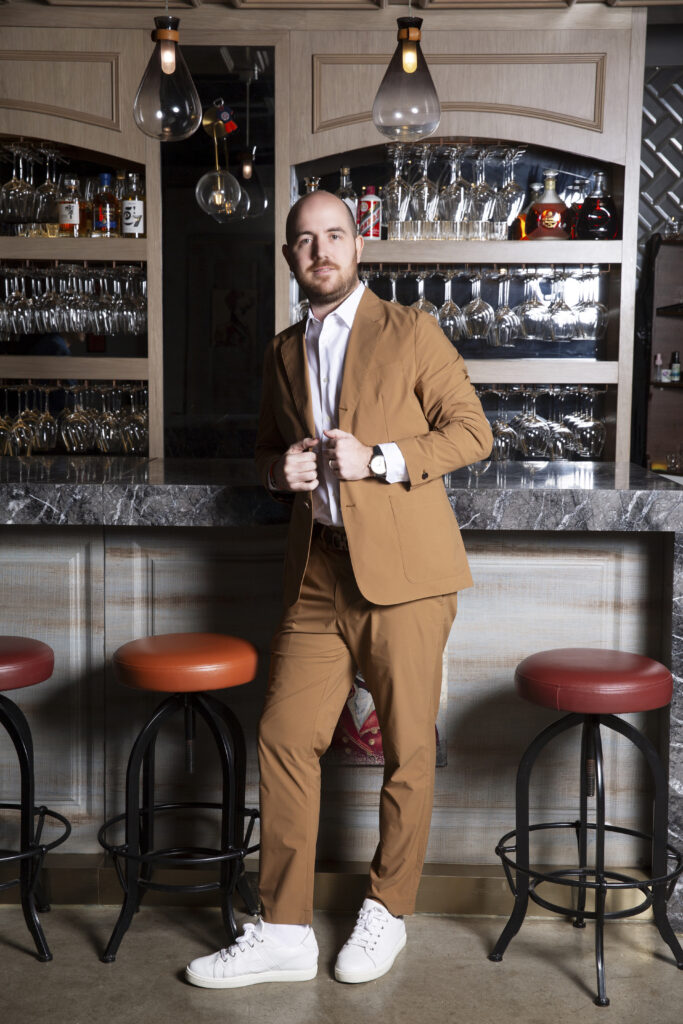
For those aspiring to enter the industry, Loriot believes a genuine passion for the winemaking craft is essential. “The initial stages can be challenging, but with perseverance and the right guidance, it is possible to achieve great heights,” he encourages, reflecting on his own journey and the dedication it demands.

As Loriot continues to curate a dazzling list and foster a deeper love for wine in the Hong Kong community, he embodies the spirit of exploration and discovery that defines the world of wine. Through ThinkWine, he not only shares exceptional vintages but also invites everyone to partake in the joy of wine appreciation, one glass at a time. Or, in his case, bottle.

“See all of this beautiful mess,” he says in delight, indicating empty bottles left over from their fifth anniversary bash the previous week. “We sure know how to throw an epic party, ha? Fun times and even more fun and brighter times ahead. I say cheers to that!”
Rustic Roots: Every bite at Racines whispers the charm of the countryside and the future of French cuisine

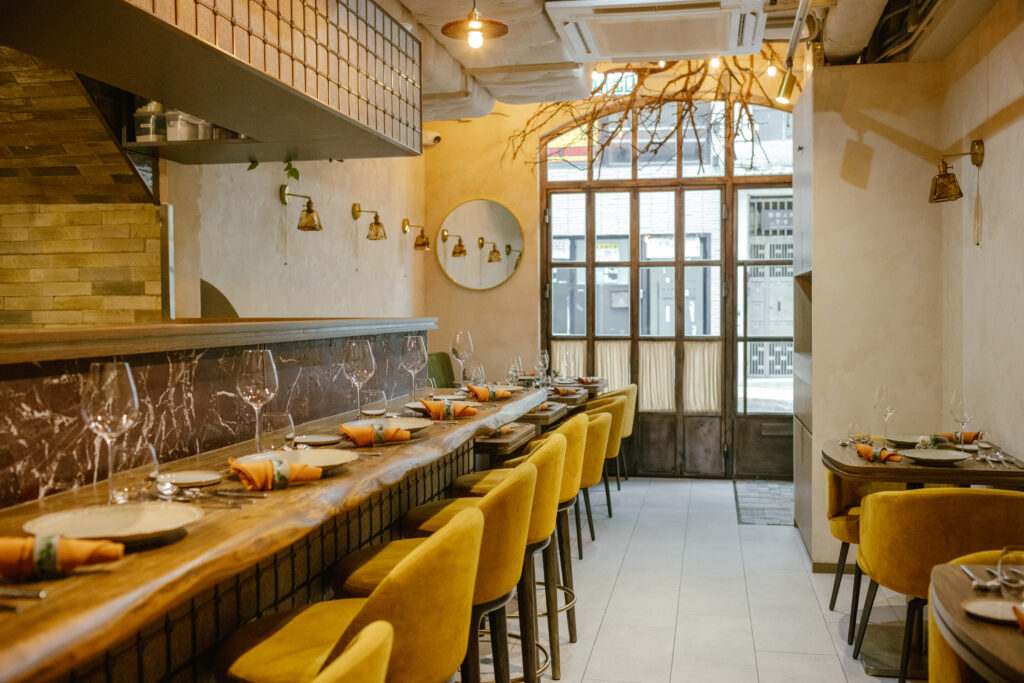
It’s 12:30 pm on a breezy autumn afternoon in Sheung Wan, but in the Racines kitchen, dinner is already in full swing. Backs are curved over dough that will soon become sourdough loaves, the evening’s sorbet is well in hand, and beloved signature staples are being prepped. The restaurant itself is homey and unhurried, with an easy-going vibe that hides the greater ambitions of the chefs. Not to mention, the surprising choice of ’90s to early 2000s hip-hop playing in the background.

Designed around an illustration of a seedling and its roots (‘racines’ in French), the cascading tasting menu showcases the finest seasonal ingredients and celebrates the rich culinary traditions of the South of France. Nestled in the heart of Hong Kong, this petite restaurant garnered a well-deserved Michelin star this year, solidifying its status as a must-visit destination for food enthusiasts.

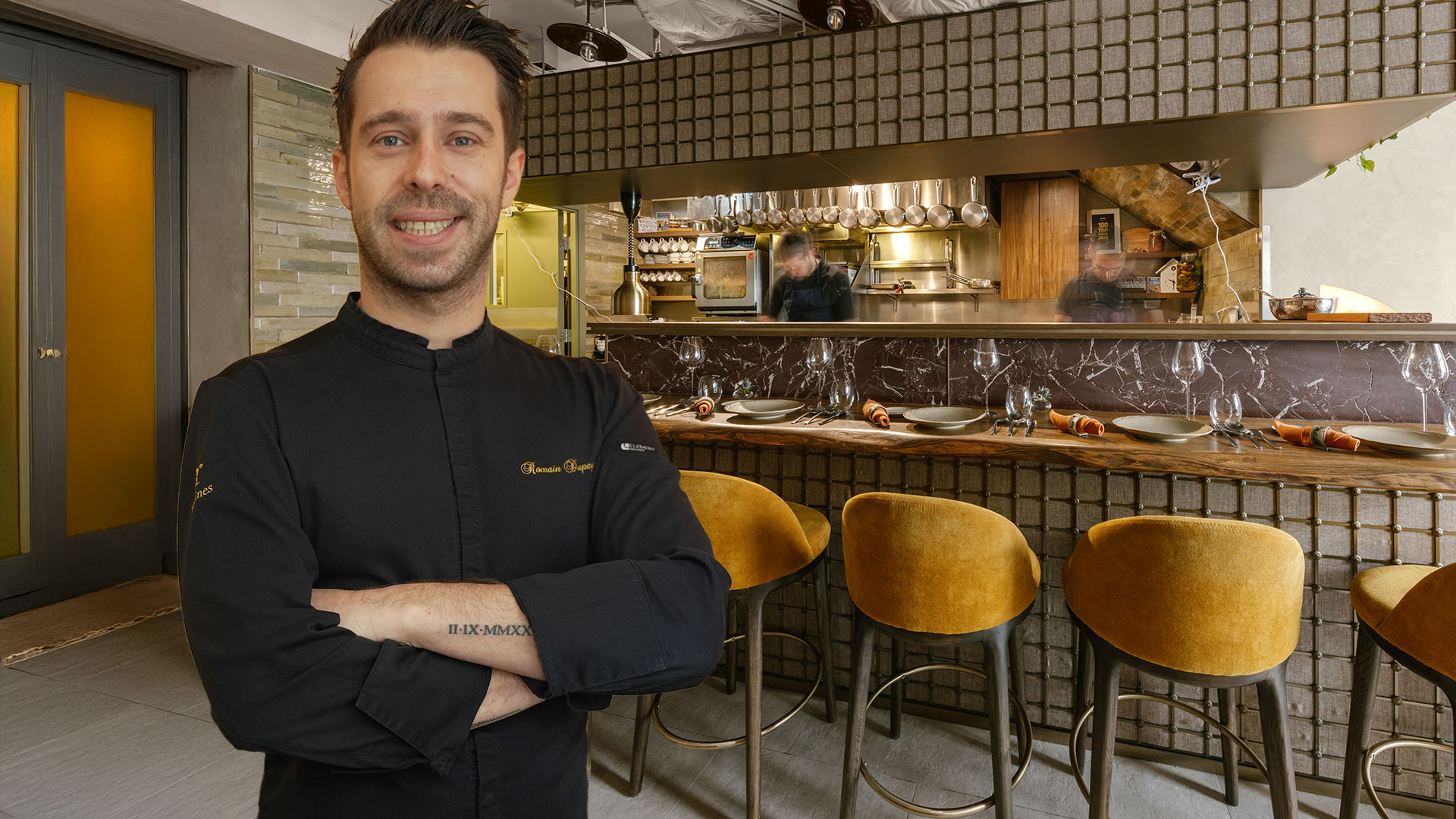
“I want our guests to feel a sense of comfort in our dining room, to relax and enjoy each dish and the elements we’ve created to reflect the autumn season,” says executive chef and co-owner Romain Dupeyre, who was raised in Nice. His co-chef, co-owner and best friend, Adrien Castillo, was a fellow apprentice at La Chèvre d’Or on the French Riviera nearly 20 years ago.
“We want to offer our guests a sense of fulfilment from the quality and creativity on their plates and enable them to feel connected to the experience, especially at our chefs’ counter where they can have a front-row seat to the team’s creative process and interact with us.”

The six-course dinner tasting menu begins and ends with a humble vegetable reimagined in unexpected ways. The opening act, Camus Artichoke, is an inventive take on traditional duck-and-walnut salade Landaise. It expertly balances earthy notes with the vibrant flavours of southern France, creating a delightful medley that awakens the senses.

“I love to put a unique twist and artistry to each dish to spark curiosity and take our guests on a discovery of new tastes and textures,” says Chef Dupeyre. “I hope to ignite a sense of excitement and wonder about the culinary possibilities of the ingredients, and so far, it’s been very well received. Guests are often surprised when this dish is presented, because it’s not how they would have had it before, but they’re open to it, and delighted by it.”

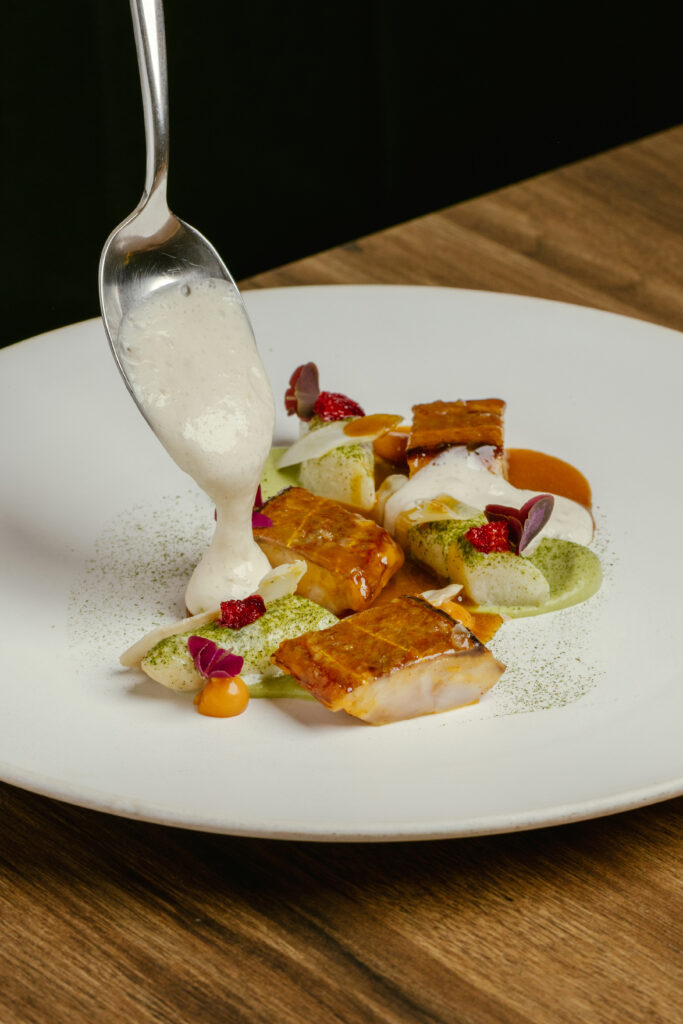
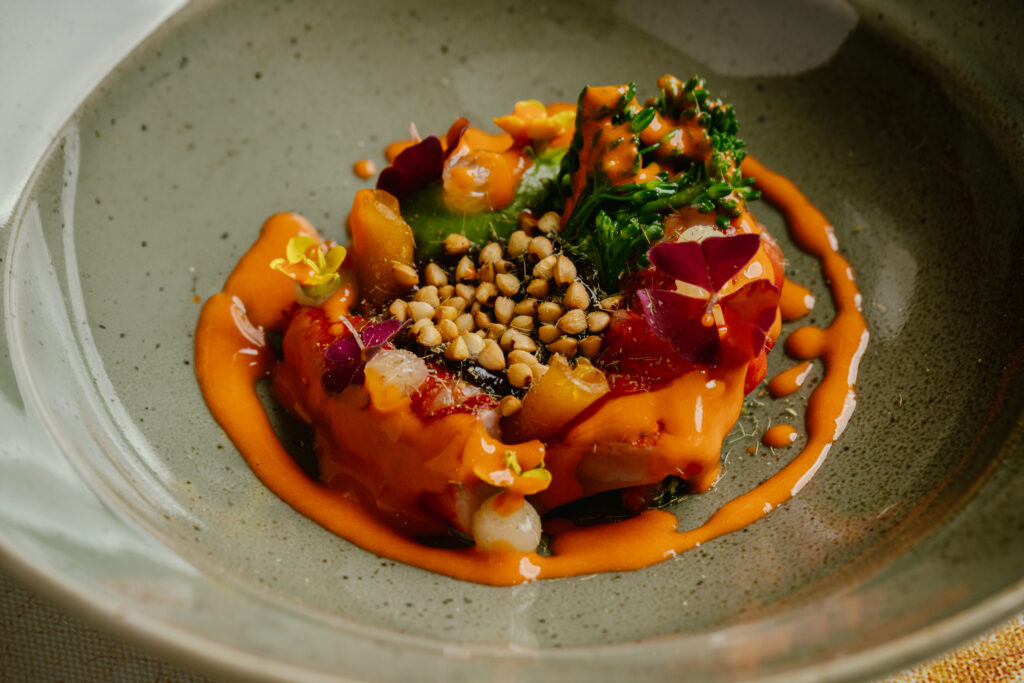
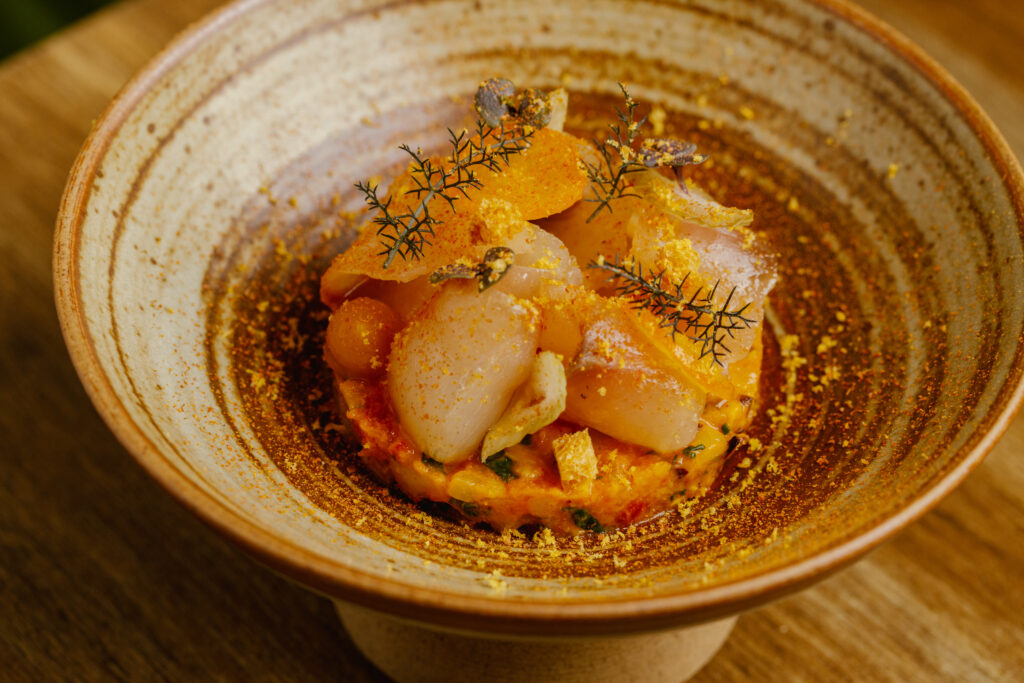
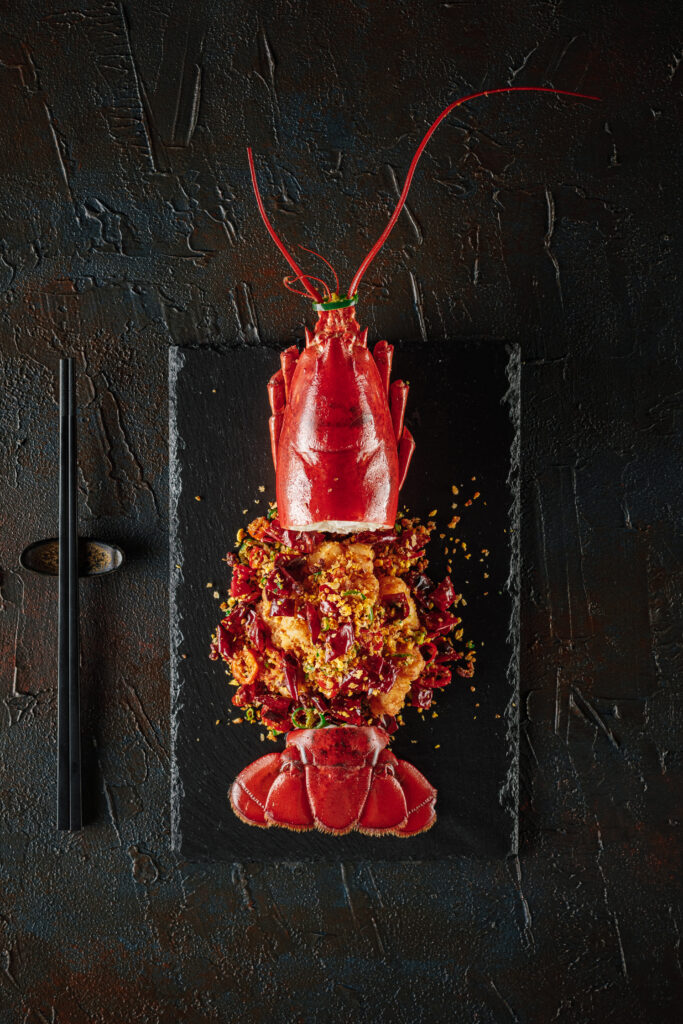
The third course is a particular standout: Mediterranean red mullet, which pays homage to the classic bouillabaisse. The dual preparation of the fish is a bold culinary statement. For the first, a cold dish, the mullet is air-dried for three days, intensifying its flavour while imparting a delicate texture. Cured in a blend of salt, sugar, lemon and orange juice, it’s both refreshing and rich. The second preparation sees the fish pan-fried to perfection, the subtle crispiness complementing the tender flesh.

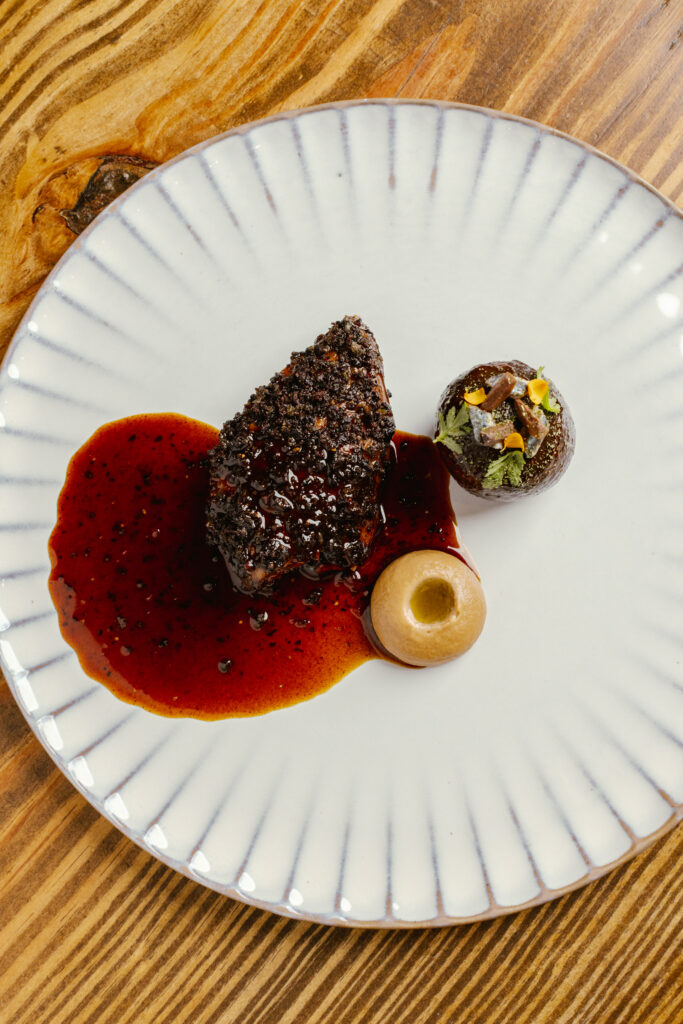
Brittany pigeon and Brandt beef from California, both elevated to new heights as main-course choices, are faultless. The pigeon, paired with figs at their seasonal peak, presents a perfect harmony of sweetness and rich, savoury flavours. Meanwhile, the ribeye flank, kissed by the smoky essence of a binchotan grill, embodies the heartiness of the season. The beef is enhanced by a selection of seasonal ingredients that deepen its flavour profile.

Following the cheese course served with house-made sorbet, Jerusalem artichoke takes centre stage, defying traditional dessert expectations. The chefs skilfully transform this root vegetable into a sweet finale that captures the essence of autumn. It’s an unexpected twist that not only surprises the palate but also leaves a lasting impression, marking a memorable end to the meal.

Complete with a root chandelier and a dining countertop engraved with the Chinese characters for prosperity and power, Racines provides irrefutable assurance that rustic dining is not and should not be at all intimidating. More than good food and more than a gateway to French cuisine, it is a sign of the times that beautifully marries tradition with innovation.

Racines, 22 Upper Station Street, Sheung Wan, Hong Kong.

Photos: Racines   Video: Jack Fontanilla

KS Studio Ltd – Innovative design studio perfects restaurant interiors

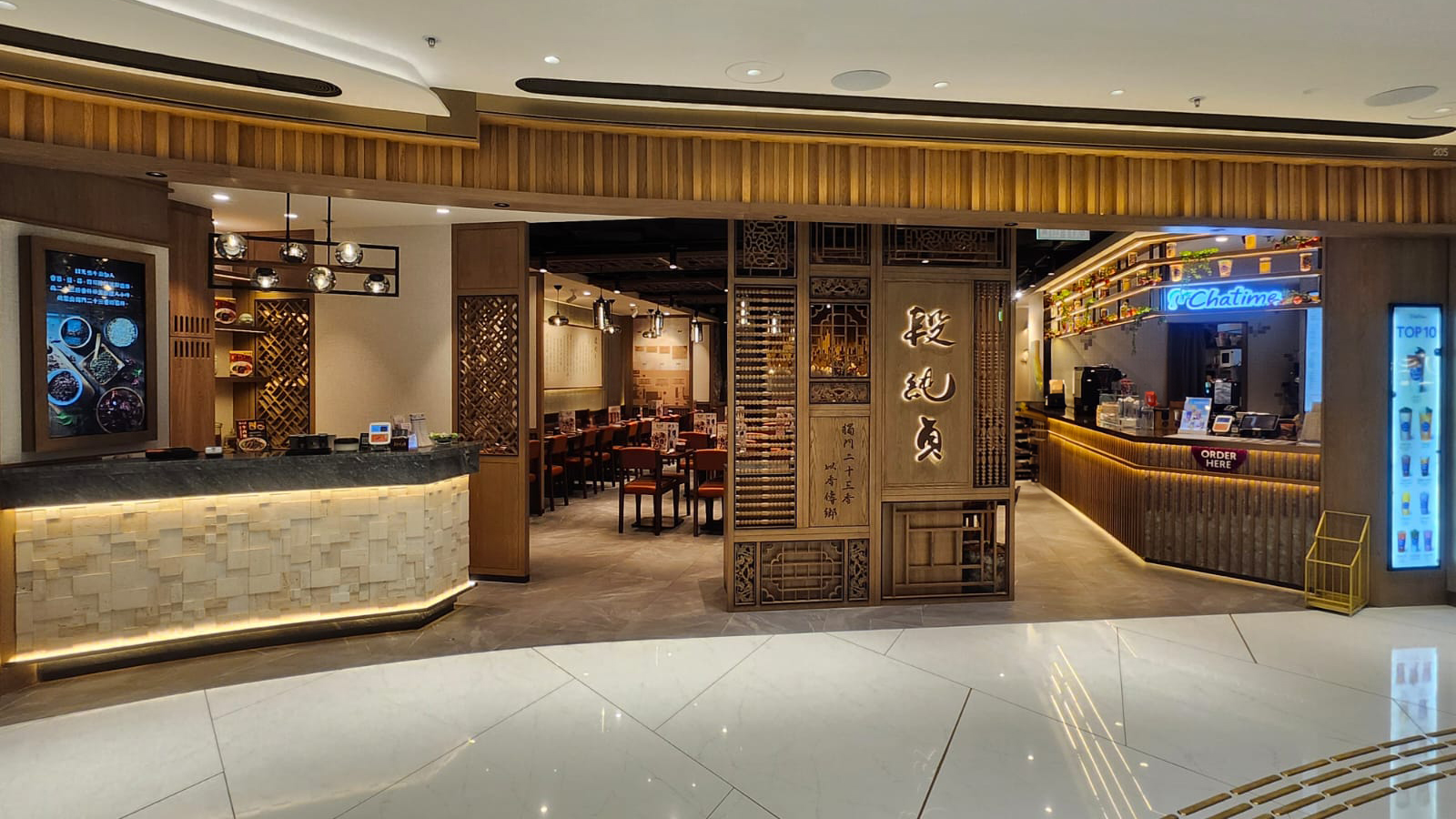
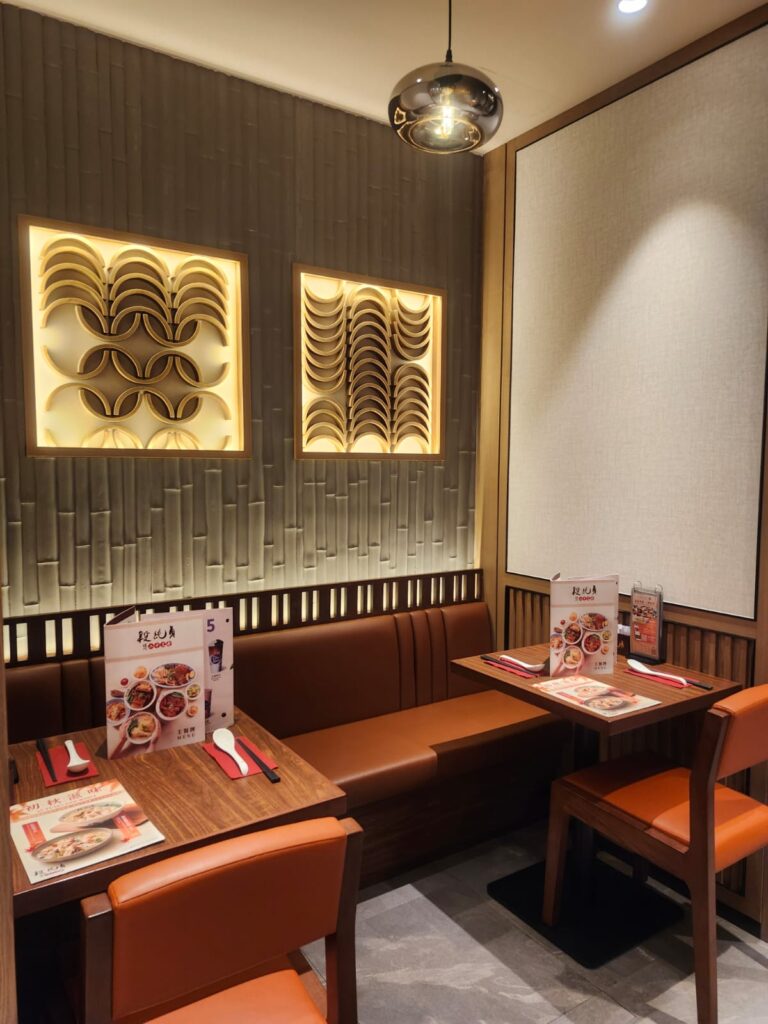
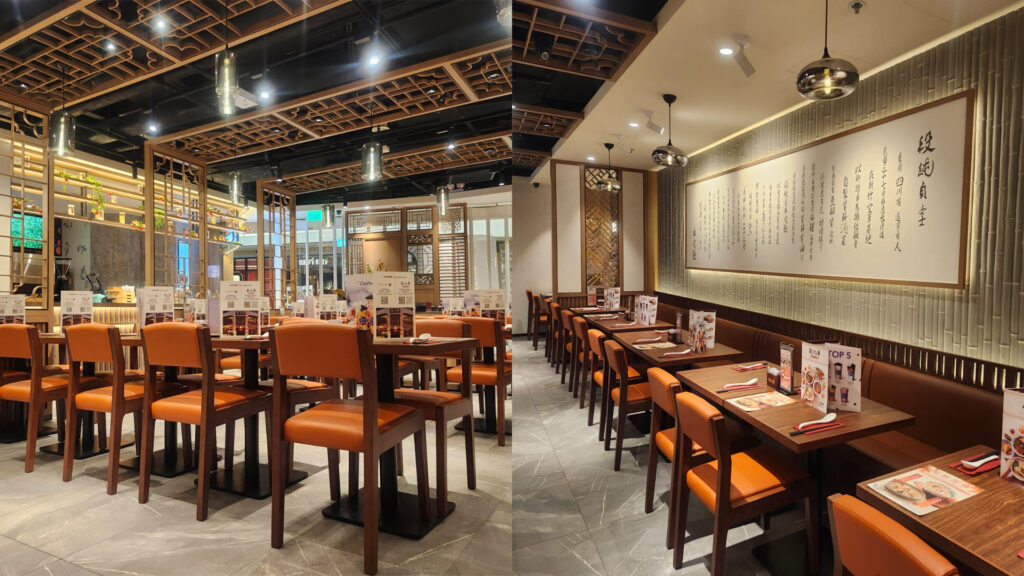
Inspired by the ‘bamboo’ theme of Chengdu, Sichuan, the restaurant creates an enchanting environment filled with bamboo forests, showcasing 23 traditional pattern designs that seamlessly connect with the aromatic experience of Sichuan Dumen’s 23 fragrance channels, highlighting the richness of 23 herbs and spices.

Fit for Purpose? Physical’s sudden demise spotlights a saturated gym sector in need of a work-over

The collapse of Physical Fitness, one of the stalwarts of Hong Kong’s gym industry, was a shock to many of its loyal customers and those unfamiliar with the dynamics of the industry. It has left some wondering whether there are simply too many gyms in Hong Kong and if they provide value for money.

Physical, which had operated in Hong Kong for 38 years and once boasted 23 branches, ceased trading this September after the Mandatory Provident Fund Schemes Authority demanded it settle unpaid contributions to more than 700 employees amounting to millions of dollars. The decision by the gym chain owners to close shop left staff jobless and triggered thousands of complaints to the Consumer Council over loss of membership fees. Some customers were on decade-long membership packages. There were also reports of lengthy packages sold just prior to its closure.

Given the recent upsurge in investment in the sector, Physical’s failure did not come as a shock to many gym insiders. “I can’t say that Physical going under felt like a massive surprise,” says Ed Haynes, founder and CEO of boutique gym Coastal Fitness, who also made reference to some of the “amazing” deals the chain offered just before its ignominious collapse, perhaps in a desperate bid to cut its losses.

Fall of the mighty

Haynes notes this is the fourth big commercial gym operation to shut down during the 16-year lifespan of Coastal Fitness – on the heels of California Fitness in 2016, Goji Fitness and the Hong Kong branches of international chain Fitness First. The latter two faltered amid the pandemic, which interrupted business and made the recruitment of new members almost impossible.

Certainly, many consumer discretionary sector businesses, including cafés, restaurants and cinemas as well as fitness centres, suffered financially during the Covid years. But the pandemic also had a benign influence on the fitness industry – people became worried about their health.

“In the minds of the Hong Kong public, the idea of health and exercise came to the forefront a lot more,” says Haynes. “In the pandemic, when everything closed and people were confined to their homes in their small and immediate environments, a lot of people actually started exercising.”

Gym crazy

Since then, he has witnessed a huge upswing in many forms of physical activity practised in the community, which in turn has prompted a proliferation of investment in the industry. “Because the fitness industry saw this big boom in exercise participation, low-cost 24-hour gyms started popping up everywhere. And I think that’s almost saturated that market,” he states.

From the less than 10 24-hour gyms believed to be operating in 2018, the number had ballooned to more than 110 by last year. Haynes believes too many gyms have opened up too quickly, causing supply to outpace demand. He also maintains that many of the newer gyms are soulless and lacking in a community feeling. “The way these gyms are set up is just you go in and do your hour; you’re isolated in many of them,” he opines.

The pandemic not only sparked an increase in physical activity but also a desire for community-based fitness where people can connect with each other, according to Haynes: “If you go out to any of the waterfronts right now, every morning, every night, they are packed with groups of people in running clubs, sweating, moving, having a good time.”

Cash flow precautions

He also outlines a key learning curve in the gym business from the pandemic years: the importance of maintaining cash flow through offering membership packages. More than two-thirds of the Coastal Fitness membership sign up for six or 12 months in advance, providing money in the bank. The pay-when-you-use model adopted by some of the newer gyms, by contrast, does not give owners this security.

Haynes has witnessed a rise since the pandemic in the purchase of long-term packages by clients willing to commit to regular exercise. He does caution against lengthy prepayment deals though; at Coastal Fitness 12 months is the maximum term offered.

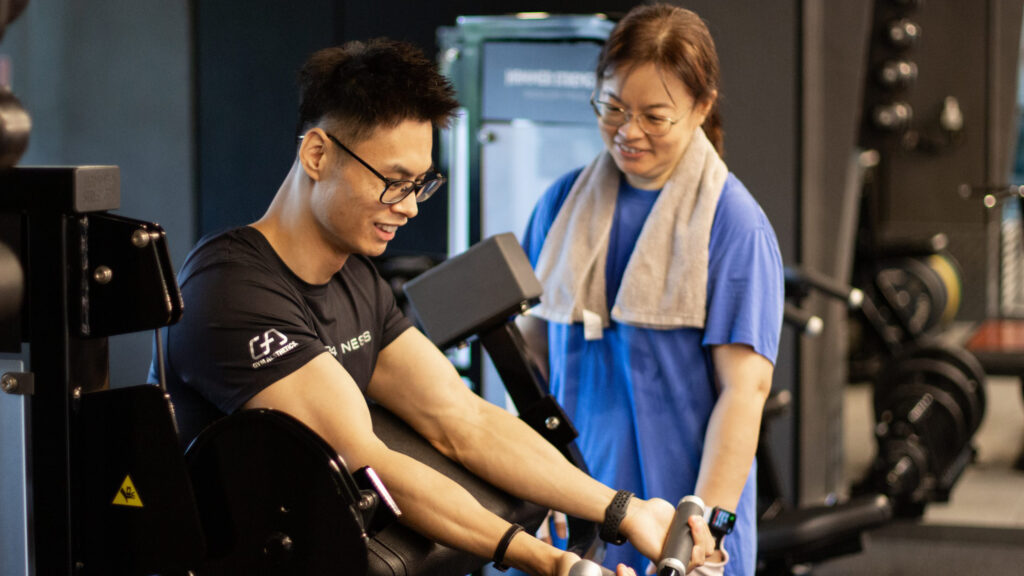
The majority of his clients come through referrals or word of mouth, and they include people from all walks of life. Most use the North Point gym’s services at least three times a week, and all receive some type of coaching, whether through attending a group class led by a coach, having a personal training session, or by following a tailored fitness programme designed by a coach.

Operational stress

During the post-pandemic investment splurge in the gym business, John Bower took on the managerial responsibilities of a new fitness start-up in Hong Kong. As an entrepreneur who had created and sold a human resources business earlier in his career, he seemed an ideal fit to launch the venture. However, the market glut in gyms soon exacerbated the stresses of running a fledgling operation, and breaking even took longer than planned. Exhausted, he quit after two years and now freelances as a personal trainer and executive coach.

Bower believes the gym sector has been flooded with entrants and the next two years will favour the consumer. He says managers of gyms should be crystal clear what market they are going to dominate. “In the longer term, the harsh truth is that many gyms are on borrowed time and need to figure out their strategy – being number one in the local market and number 10 in Hong Kong might be fine,” he says.

Far happier working as a freelance coach, he often conducts sessions for clients at the city’s many boutique gyms. He loves the interpersonal interaction with clients and can advise on all aspects of life aside from physical training. “The value of personal training is that it enables the client to physically challenge themselves,” he says.

Market jitters

Some gym-goers may be tempted to turn to personal instruction rather than sign up for memberships as fears over the stability of the wider fitness sector mount. Recent disputes over unpaid rent at branches of Pure Fitness, an upmarket chain of fitness and yoga studios, caused jitters in the market, although the issues were quickly resolved.

Hong Kong-based lawyer and writer Sanjeev Aaron Williams chose not to join a well-known commercial gym after their sales pitch left him unclear about what the fees would cover. He now attends gyms run by the Leisure and Cultural Services Department. While available at a fraction of the price of many private gyms, these government fitness rooms have their drawbacks, says Williams, such as blackout periods restricting use and irregular availability of equipment.

Essential regulation

Williams sees a future for commercial gym operators, but calls for urgent government regulation. “Gyms in Hong Kong need to be regulated by legislation and monitoring. We are behind other countries in regulating consumer protection and gym operations,” he says. “Commercial gyms in Hong Kong have been the subject of failures and scams since the 1980s when the fitness trend began. We’ve gone over 40 years without regulated protection.”

He believes any legislation should cover the entire fitness sector including large commercial gyms, 24-hour gyms, personal training studios, personal trainers, pilates and yoga studios, boxing and martial arts gyms, as well as the classes offered at these venues.

The lawyer urges a limitation on the length of prepayments, saying they should not exceed more than two years, and calls for the implementation of a legal “cooling-off period [that] should be prominently advertised on the premises and to each customer”. He adds: “Consideration should be given to increasing criminal penalties for misleading advertising and sales tactics or carrying on business when [the operator] knew they couldn’t meet their debts.”

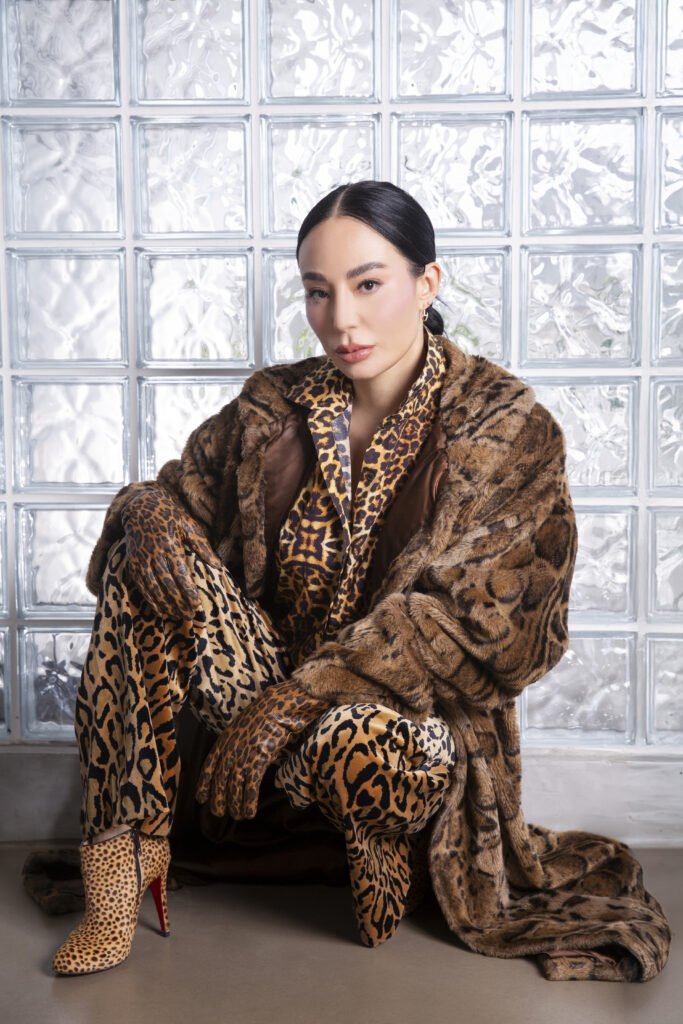
The Big Jang Theory: Juggling hospitality, fitness and family comes easy to high-flying restaurateur and wellness guru Lindsay Jang

Lindsay Jang is munching on a bowl of grapes while attending a virtual meeting for her many businesses. From the get-go, her straight-to-the-point personality is clear, ever in control, a little stern upon first acquaintance yet welcoming, and certainly far from boring, as evidenced by the vintage Playboy magazine covers she has chosen to plaster on one wall and another batch of permanent artworks displayed on her own skin.

Just a stone’s throw from the iconic harbour, both in her naturally well-lit flat in Chai Wan and her culinary locales in Sheung Wan, she has established herself as a formidable force in Hong Kong’s dining and wellness scene. As the co-founder of Yardbird and then Ronin, this very serious-looking yet very creative mum of two has become synonymous with quality, originality and community. What began with a single yakitori restaurant in 2011 blossomed into a diverse portfolio of acclaimed food and beverage venues (the likes of Roti Tori and Sunday’s Grocery, sadly now closed), as well as ventures that transcend culinary confines.

“Would I advise anyone to enter the F&B business? Definitely no,” she admits with just a glimpse of a mindful smile. “I mean, it’s hard, it’s really hard. You have to be more than 100% committed to it regardless of the result favouring your side, especially during the current landscape of the post-pandemic era.”

Culinary Cool

Jang’s journey into the restaurant industry is anything but conventional. Though her family had a Cantonese restaurant, her youth in Canada was marked by exploration – including a love of theatre – and she envisioned her future in the bright lights of New York City. “Acting and theatre training were just a part of my evolution as a young adult; I was exploring different interests,” she reflects. “It was my passion for creating experiences and bringing people together that naturally led me to the restaurant industry.” This passion has become the cornerstone of her entrepreneurial endeavours, reflecting an ethos of connection and hospitality.

The vibrant atmosphere at Yardbird, her first venue, mirrors this ambition and has become a haven for comfort-food lovers. Celebrated not only for its innovative take on yakitori but also for its sense of community, Yardbird has laid the groundwork for Jang’s impressive legacy.

Welcome Mat

In 2017, she opened a creative agency, Hecho, to produce original content and marketing strategies for brands. Her on-trend vision then broadened to include wellness, with the 2021 launch of Family Form, a mat-based body-sculpting fitness programme designed in partnership with The Upper House.

“Fitness has always been central to my life, not just as a discipline but as a source of joy and inspiration,” says the long-time yogi. Her concept of wellness – physical rigour plus mental balance, which she has called “fully immersive moving meditation” – revolves around collective experiences and the joy found in shared endeavours. It has grown to include international fitness pop-ups and Family Form salads and smoothies. This all-embracing philosophy is also used to nurture her teams, fostering environments that encourage collaboration, much like the dynamics of a well-run restaurant.

In her venues, Jang places immense value on team dynamics, viewing them as foundational to any business’s success. “Building a strong team is about fostering trust, loyalty and collaboration,” she explains. Many key staff members have been with her for more than a decade, a testament to her leadership style. Recognising each voice within her team ensures that everyone feels valued and committed to collective success. “It’s not a top-down hierarchy; open communication is encouraged,” she elaborates.

Mother Load

Juggling the demands of a successful career and motherhood, Jang emphasises the importance of time management. “I’ve developed strong time-management skills. Delegation is key for me,” she shares. By cultivating a trusted team and encouraging open communication, she fosters a collaborative environment that fuels both personal and professional growth. This respect for her team creates a harmonious atmosphere that enhances the dining experience, demonstrating that the true heart of hospitality lies in the people behind the scenes.

This approach is vital for her personally, allowing her to maintain a semblance of balance amid the chaos of running multiple businesses and raising two children. “Actually, my eldest child works part-time for my restaurant. They’ve both grown up so fast, but this is a good thing as it allows me to focus more on my businesses,” she confesses.

Healthy Working

In between poses for our photographer, the ever-committed businesswoman pauses to answer another business call. Like any entrepreneur, Jang has faced her share of challenges. Yet, her focus remains steadfast: “Instead of focusing on the super highs or getting caught up in the super lows, it’s about delivering a consistently great product.” This determination underpins her business ethos, allowing her to navigate the industry’s uncertainties.

As she looks toward the future, thoughtful expansion is key. Through cutting-edge projects like Dué – a collaboration with friend and chef Jesús Durón, which is looking to land in London and touring other cool international cities – Jang is excited to explore new culinary landscapes. “Expansion is always on the horizon. It’s about finding places where our concepts will resonate and thrive,” she says.

The entrepreneurial journey has not only shaped Jang’s professional endeavours but has also driven her personal transformation. Her evolving wellness philosophy now embraces sobriety. “Giving up alcohol has been transformative for me, both personally and professionally,” she notes. It grants her new-found clarity and enhances her ability to connect meaningfully with those around her, including her teams and customers.

Recognising the cultural nuances of dining, she states, “All of the restaurants we’ve had over the years come from a place of personal experience.” For her, it’s about creating spaces that evolve naturally from authentic experiences rather than chasing awards or accolades.

Inspiring Perspectives

As industry trends shift, she observes, “People want to feel good in any experience they choose to spend their money on.” In a world where wellness and lifestyle intersect with culinary experiences, her holistic approach ensures that each of her venues offers comfort and joy to patrons, inviting them back time and again. Full circle or an imagined conversation? Both, perhaps.

Above all, Lindsay Jang embodies the spirit of exploration, resilience and community. Her journey, marked by creativity, collaboration and a commitment to quality, highlights the potential within the F&B landscape of Hong Kong and beyond. As she embraces future challenges, her unwavering focus on connection will undoubtedly continue to resonate with those she inspires.

What’s on? Things to do this October in Hong Kong

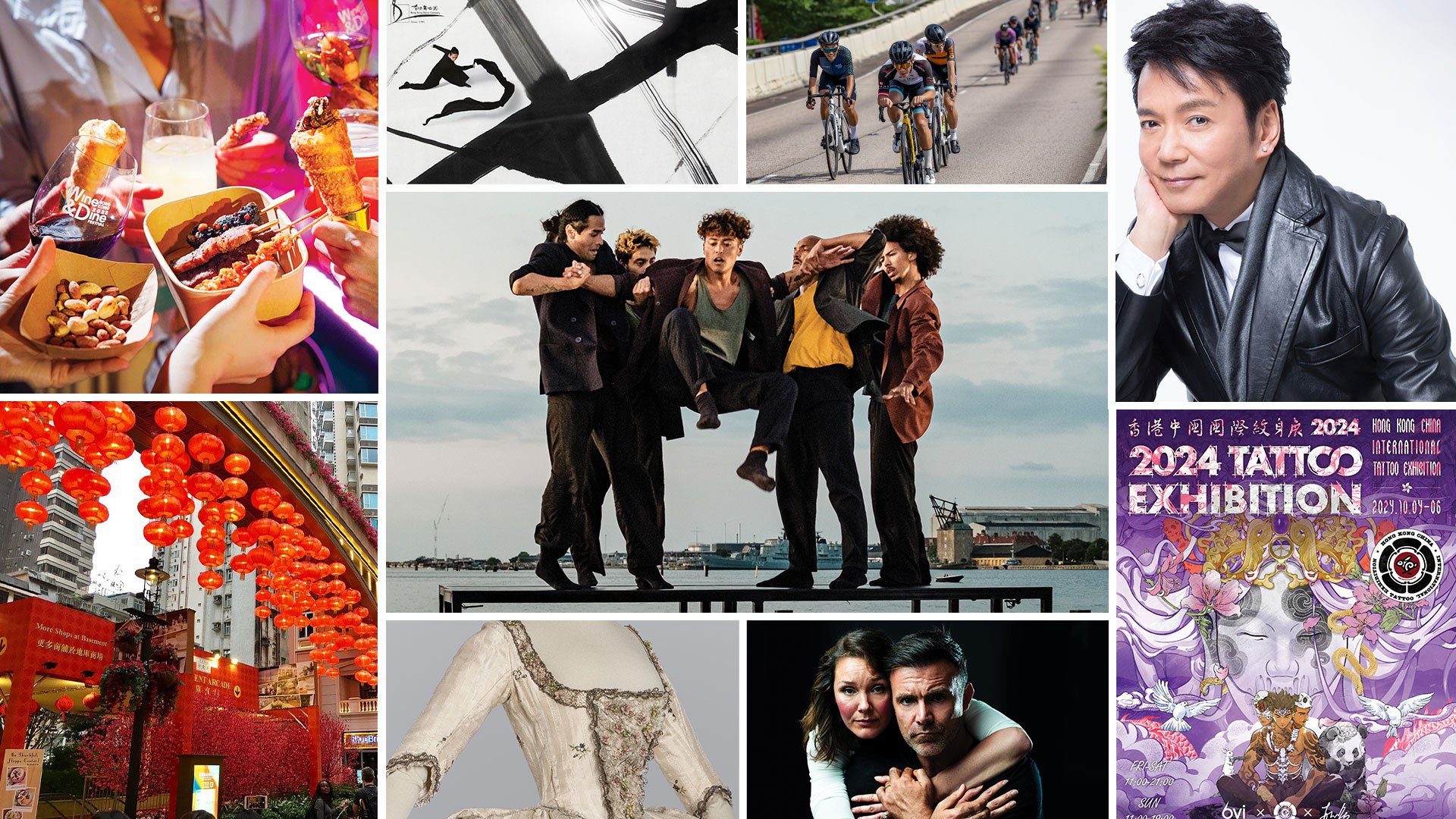
This October why not visit the Tattoo Exhibition or the wonderful Wine and Dine Festival or go and see the many great theatrical and musical performances on offer this month.

Hong Kong Performing Arts Expo

Don’t miss the inaugural edition of this cultural extravaganza. Celebrating the artistic creativity of performing troupes from Hong Kong and beyond, the five-day programme is packed full of musical theatre, dance, comedy and more. Three of the Expo highlights embrace collaborations with arts organisations from Mainland China, Japan and South Africa, offering a wonderful fusion of cultural styles and musical forms. Performance works by smaller creative groups and a series of arts conversations also feature. These discussions will examine dynamic arts scenes and global cultural trends.

When: 14-18 Oct

Where: Various locations

How much: Various prices

For more information: hkpax.org.hk

Tattoo Exhibition

The visual feast that is the Hong Kong China International Tattoo Exhibition returns following a successful debut last year, with more than 100 top artists from 30-plus countries expected to show their handiwork. Presented in collaboration with global artist agency 6VI, the joyous celebration of wonderful skin imagery includes a mammoth ‘poster marathon’ and competitions in various tattoo styles including black and white – popular with today’s younger devotees – and glorious colour. Come and exchange tattoo ideas!

When: 4-7 Oct

Where: Convention and Exhibition Centre, Wan Chai

How much: 1-day pass HK$200

For more information: hktattoocon.com

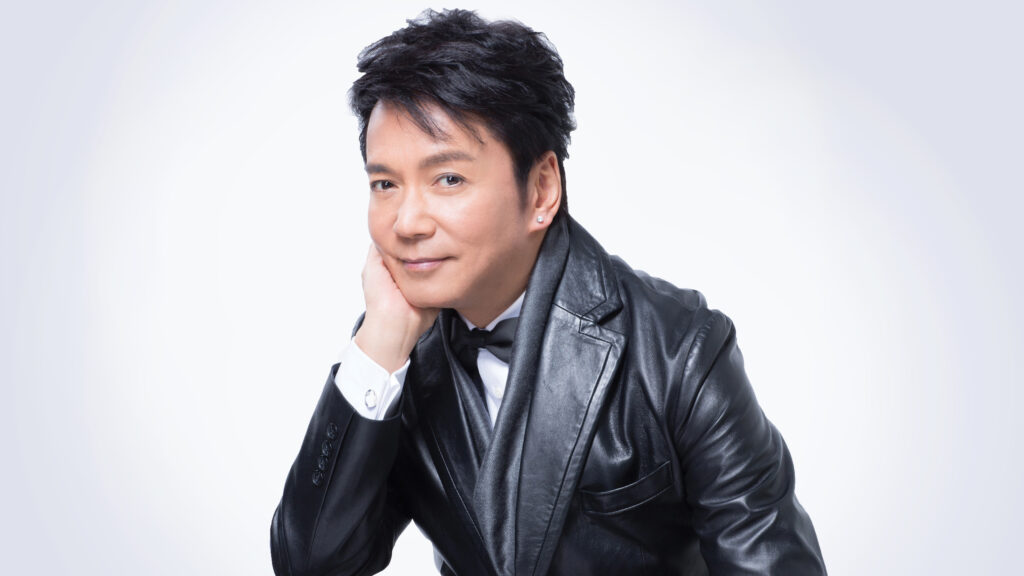
Louie Castro in Concert

To celebrate 50 years in showbiz – and the month of his 70th birthday – veteran entertainer Louie Castro puts himself under the spotlight yet again with an anniversary concert in which all proceeds will benefit his favourite charity. The Macau-born star, who has had an illustrious career spanning television shows, films and music, is bound to belt out his most famous hits for his many fans at his Happy Together 50 Years in Concert. For all fans, this is a concert not to be missed.  

When: 9 Oct

Where: Cultural Centre Concert Hall, Tsim Sha Tsui

How much: From $480

For more information: urbtix.hk

After Snowfall

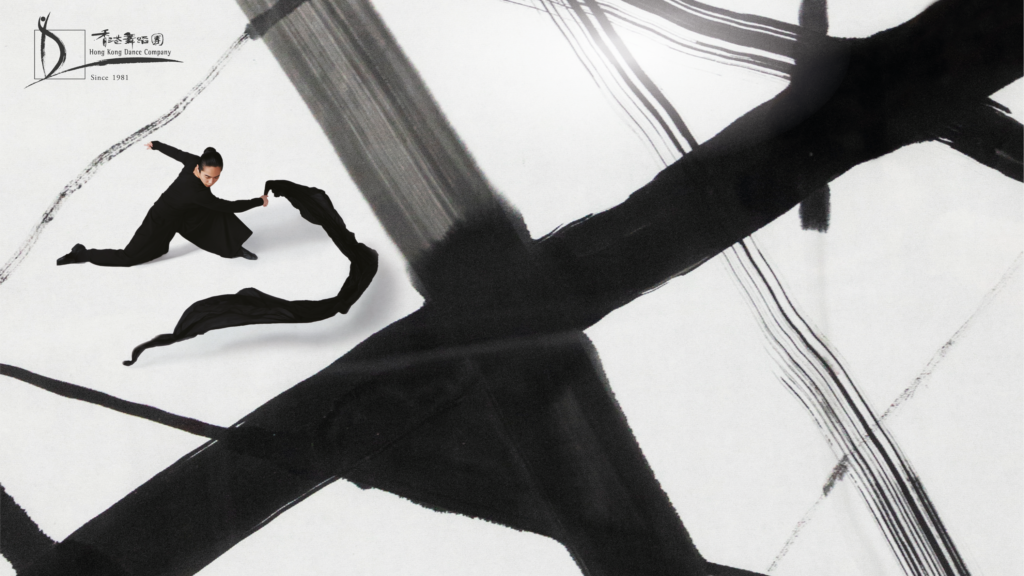
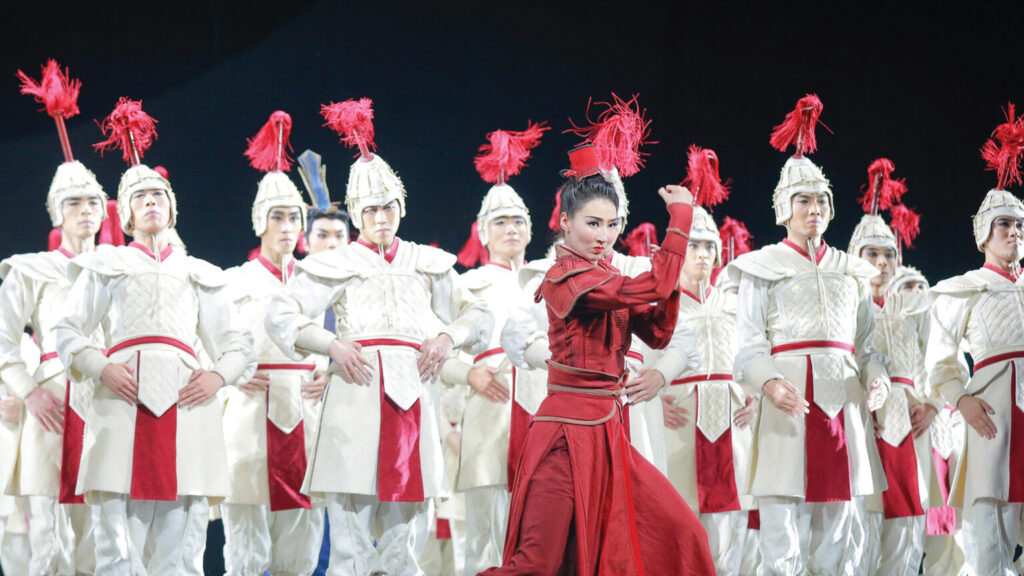
Hong Kong Dance Company ushers in its new season with a mesmerising performance that pays homage to the art of calligraphy. Inspired by writer and master calligrapher Wang Xizhi’s letters to his friends, After Snowfall is performed by dancers schooled in martial arts. Director-choreographer Yang Yuntao orchestrates a dance poem composed of movements that trace the patterns of snowfall.

When: 11-14 Oct

Where: Xiqu Centre Grand Theatre, West Kowloon

How much: From $200

For more information: hkdance.com

Hong Kong Cyclothon

The Cyclothon returns to our shores once again, allowing participants to experience the sheer pleasure of pedalling around Hong Kong and taking in amazing landmarks and breathtaking natural scenery. For the first time both the 32km and 50km rides will finish in West Kowloon. Other options include a Family Fun Ride, a CEO Charity and Celebrity Ride, and City Cycling Challenges for both men and women, while a carnival caters to those not getting on their bikes.    

When: 13 Oct

Where: Various locations

How much: Registration fee

For more information: hongkongcyclothon.com

Macbeth

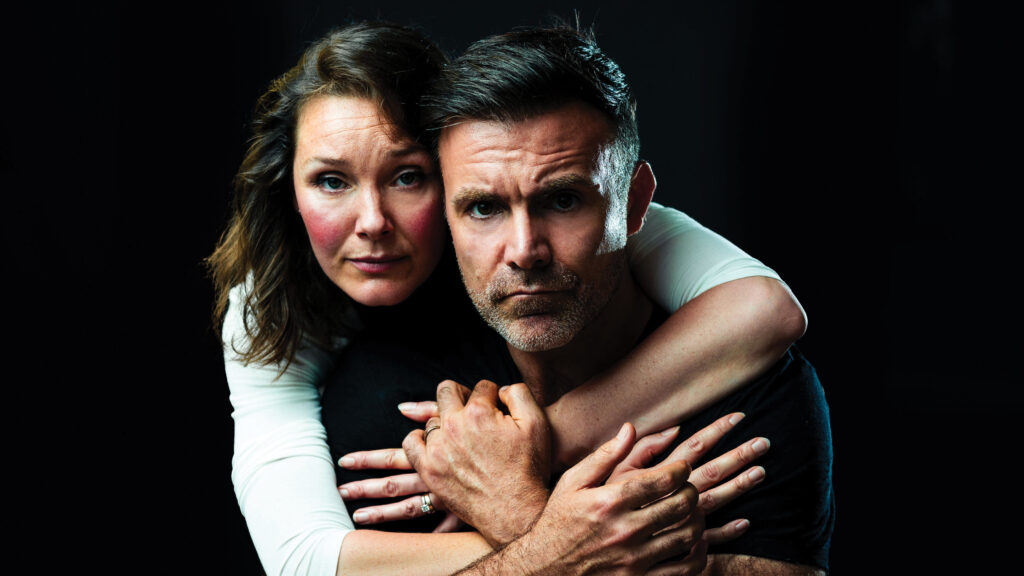
Staged by UK company Action To The Word, Shakespeare’s infamous tale of murderous betrayal comes to Hong Kong in a must-see event for all classic-drama buffs. Macbeth famously explores the human condition and how easy it is to follow the wrong path in pursuit of blind ambition. This mesmerising retelling of another of the Bard’s great works is bound to leave the audience spellbound.

When: 23-27 Oct

Where: Academy for Performing Arts Drama Theatre, Wan Chai

How much: From $688

For more information: hkapa.edu

Wine & Dine Festival

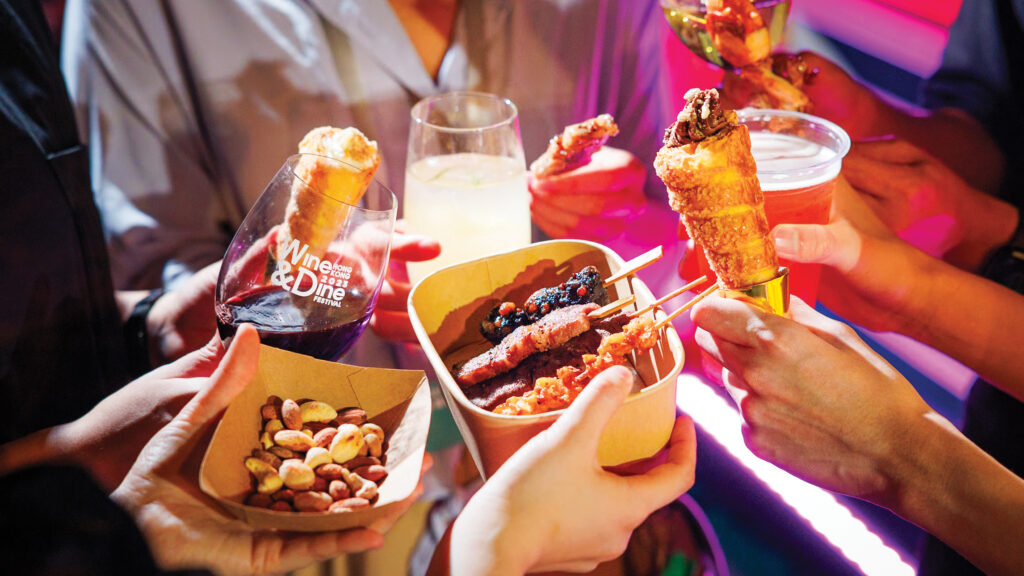
The glorious backdrop of Victoria Harbour plays host to this festival celebrating the very best wines from around the world. It includes pours from all the notable wine regions as well as gems from lesser-known wine-producing countries, natural wines and low-alcohol versions. Furthermore, a wide range of culinary delights enables connoisseurs to indulge in their favourite pairings to add that extra taste of deliciousness. Great entertainment will undoubtedly keep the party mood at an intoxicating high.

When: 23-27 Oct

Where: Central Harbourfront

How much: From $20

For more information: discoverhongkong.com

The Adorned Body

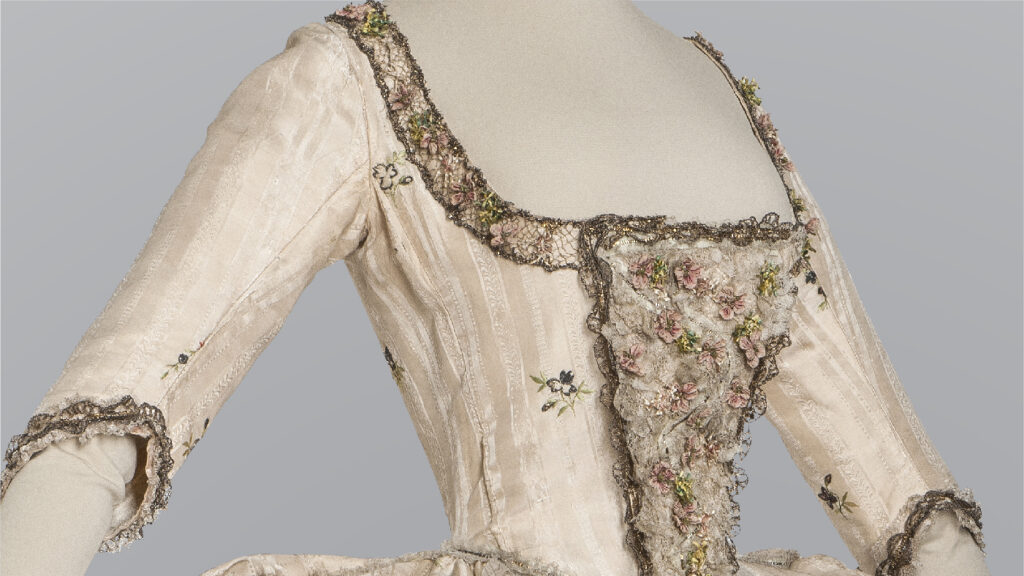
For anyone interested in French culture and fashion, this is simply a must-see. In the Asian debut of the Musée des Arts Décoratifs de Paris’ amazing collection of French costumes, jewellery and accessories, visitors can admire almost 400 items on display, taking them through a cultural journey underscored by the evolution of fashion. The exhibition is divided into five sections covering the years 1770 to 1910.

When: Until 14 Oct

Where: Gallery 9, Hong Kong Palace Museum, West Kowloon

How much: From $150

For more information: hkpm.org.hk   

Moon Fest Lumiere

The Chinese celebration of the Mid-Autumn Festival extends into mid-October at leafy Lee Tung Avenue in Wan Chai. For its signature moon-watching event, the 200-metre-long pedestrian walkway, replete with cafés, top-notch restaurants and fashion stores, is illuminated by more than 800 traditional Chinese and fish-shaped lanterns to create an atmosphere of warmth and delight. Relax and soak up the vibes of this laid-back street in the heart of Hong Kong.

When: Until 15 Oct

Where: Lee Tung Avenue, Wan Chai

How much: Free

For more information: leetungavenue.com.hk

Walk This Way: The route to a healthier, happier and more connected community, one step at a time…

The bustling metropolis of Hong Kong, known for its towering skyscrapers and densely packed streets, has long been praised for its robust public transportation system. However, the true gem of this vibrant city may lie in its often-overlooked yet invaluable network of walkable pavements. As the world grapples with the rising prevalence and associated health concerns of sedentary lifestyles, our sidewalks have emerged as a beacon of hope, offering residents a tangible path towards a healthier future.

Recognising the vital role of foot travel in shaping a liveable and sustainable city, the Hong Kong Transport Department has spearheaded a comprehensive strategy to deliver a walkable urban haven. Unveiled in 2020, the Walk in HK initiative has placed pedestrians at the forefront of transportation planning, fostering a walk-friendly environment that encourages residents and visitors alike to embrace the simple joy of strolling about town.

“Walkability is not just about connecting destinations,” says the Transport Department on its website. “It’s about creating an urban ecosystem that promotes physical activity, social interaction and environmental sustainability – all of which are essential for the well-being of the community.”

Walkways & Means

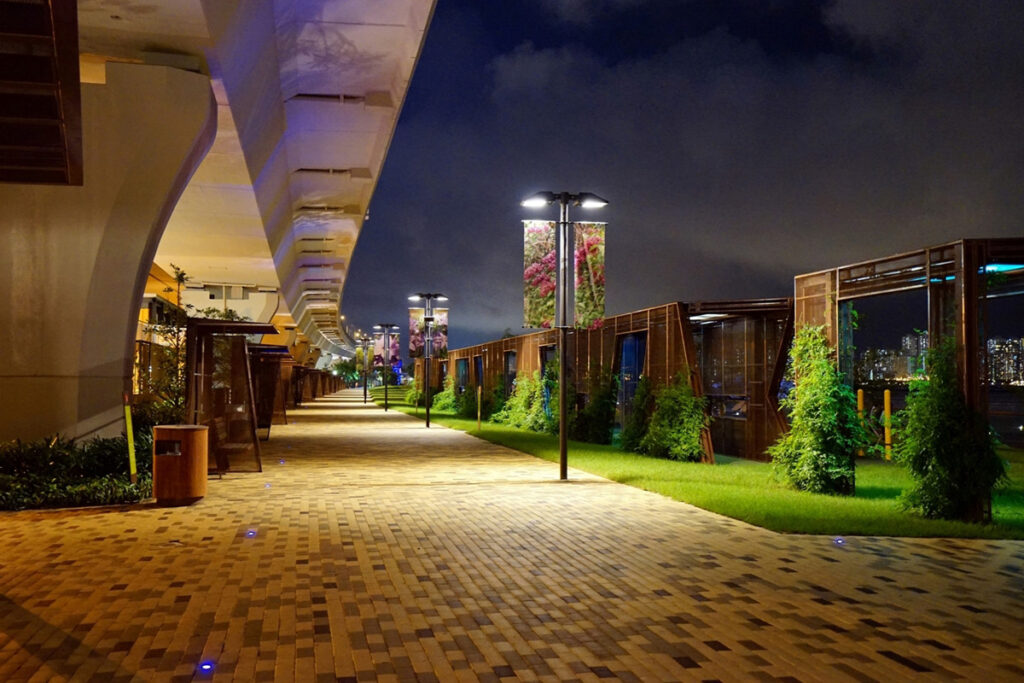
A key aspect of Walk in HK has been the provision of cover to the city’s often elevated and interconnected walkways. This has seen the government work closely with District Councils to identify strategic locations for the installation of canopies. Sheltered pathways not only shield pedestrians from the elements but also provide a more comfortable and inviting experience for exploring the city on foot.

Pedestrians have also been empowered by widened pavements, raised crossings on roads and the removal of non-essential roadside railings and traffic signage. Meanwhile, a new wayfinding signage system has eased the risk of losing one’s way in the maze of city streets. 

Stepping Stone to Health

The importance of physical activity for overall well-being is well-documented, and Hong Kong’s walkable streets provide the perfect avenue for residents to incorporate more movement into their daily routines. From the bustling Central district to the serene seaside promenades, these pedestrian-friendly pathways encourage residents to trade in their car keys or public transport passes for a more active mode of transportation.

“Walking has become an integral part of my daily life,” says local resident Rebeca Pangan. “The seamless connectivity of the sidewalks allows me to walk to work easily, run errands, and even explore the city’s hidden gems without the hassle of traffic or parking.”

The benefits of pedestrianism extend beyond physical health. Studies have shown that regular physical activity and walking can not only reduce the risk of chronic diseases but also have a profound impact on mental well being, stress, anxiety and depression, as well as cultivate stronger social connections within the community. The city’s diverse streetscapes, from bustling commercial hubs to serene green spaces, provide a calming respite from the fast-paced urban environment, allowing residents to clear their minds and find moments of tranquillity.

Strolling Players 

“Taking a stroll along the Sai Wan Pier, what we locals call the ‘Instagram Pier’, has become my daily ritual,” shares regular walker Jack Fontanilla. “The gentle sea breeze and picturesque views of the harbour not only energise me physically but also provide a much-needed mental refresh amid the demands of daily life. Plus, it benefits my social media page.”

Hong Kong’s commitment to walkable infrastructure is evident in well-designed and user-friendly areas throughout the city. One standout example is the iconic Central-Mid-Levels Escalator, which at more than 800 metres in length is the world’s longest outdoor covered escalator system. Opened in 1993, it allows commuters to navigate the hilly terrain between the central business district and residential Mid-levels without breaking a sweat.

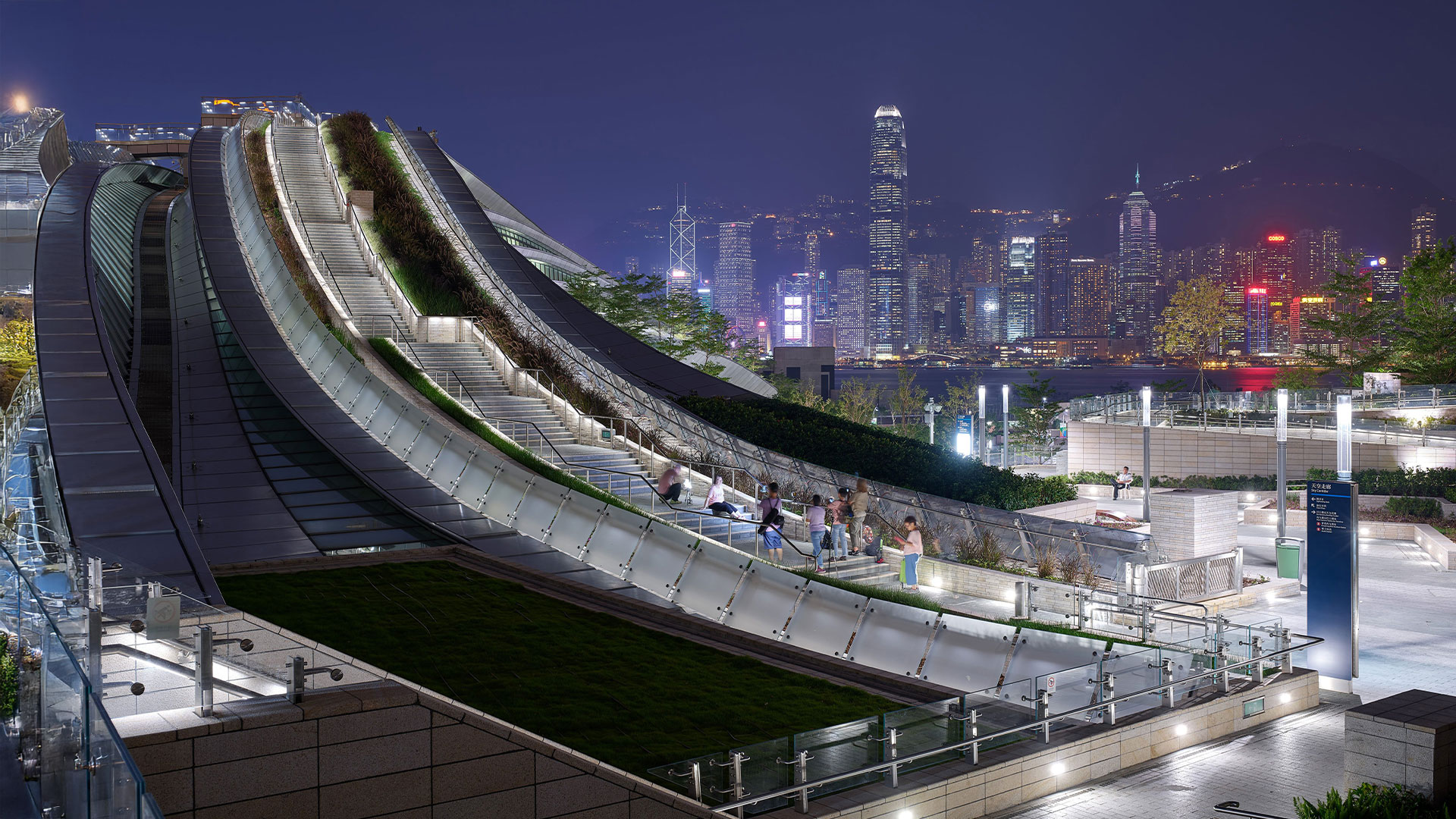
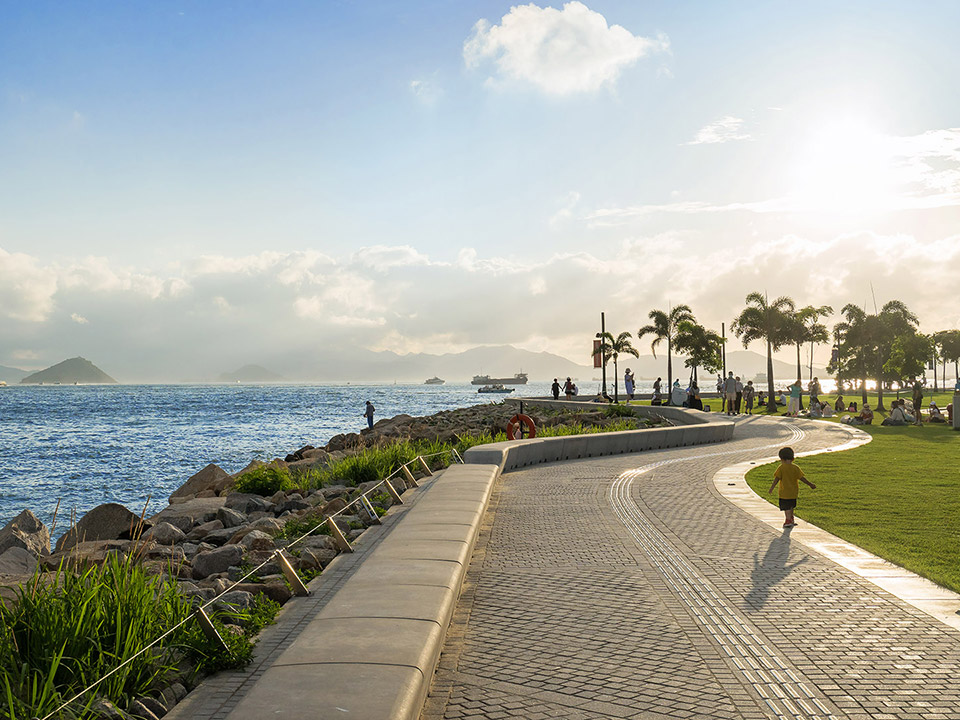
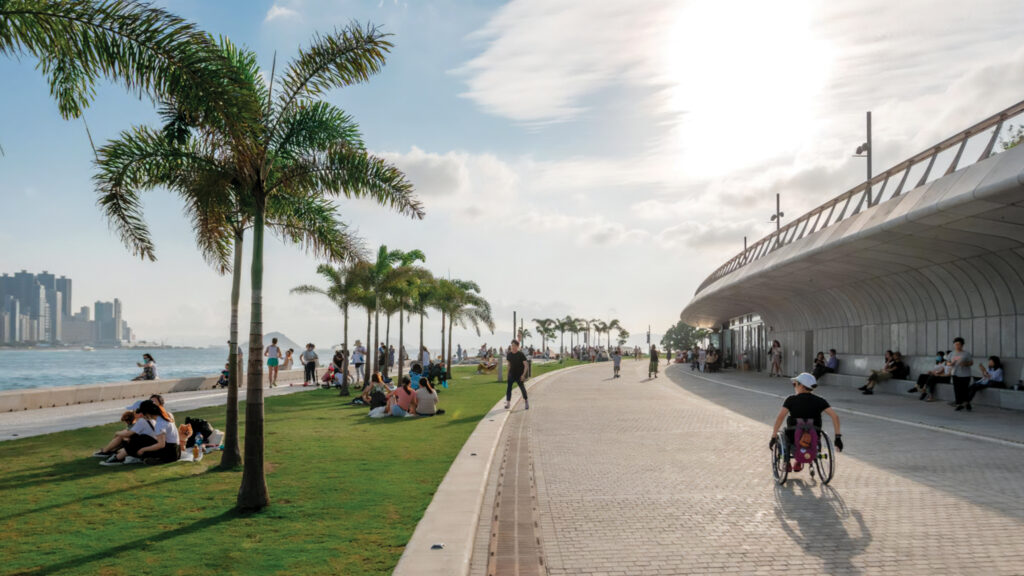
Another gem is the Tsim Sha Tsui Promenade, a picturesque waterfront walkway that offers stunning views of the Hong Kong skyline and Victoria Harbour. Its wide, well-maintained pavement provides a tranquil escape from the bustling streets, attracting both locals and visitors alike to stroll, jog, or simply take in the scenery.

The Sai Ying Pun neighbourhood, with its vibrant street life and carefully planned pedestrian infrastructure, is another shining example of Hong Kong’s dedication to walkable urban design. The area’s narrow streets, flanked by diverse shops and eateries, create a pedestrian-friendly environment that encourages residents to explore on foot, fostering a sense of community and social interaction.

Jolly Walkers

Once a largely industrial area, Kwun Tong has undergone a remarkable transformation in recent years, with the development of the Kwun Tong Promenade being a true highlight. This expansive waterfront green space has breathed new life into the community. Extending for a kilometre, the promenade hugs the shoreline, providing breathtaking views of the harbour, lush greenery, meandering walkways and serene rest areas for a harmonious balance between nature and urban elements. People of all ages are often seen out for a stroll, chatting with neighbours, or even participating in group exercises. It’s a testament to the power of well-designed pedestrian infrastructure to bring people together.

Other spots that should make everyone’s list of the must-see walking trails of urban Hong Kong are the Central Waterfront Promenade, Li Yuen Street East and West and Aberdeen Street in Central, Art Square at Salisbury Garden on the Tsim Sha Tsui waterfront, and the West Kowloon Cultural District. Those with time to walk outside of the city limits could head for Lugard Road to circle the Peak or take the Mills & Chung Path linking Ocean Park and Deep Water Bay, then stroll along the Seaview Promenade to Repulse Bay. Further away are the Bones of Miss Willy at Cape D’Aguilar, Tung Ping Chau Marine Park and Lok Ma Chau Lookout in the New Territories, and Shek Tsai Po Street Promenade and Sunny Bay on Lantau Island.

Striding Ahead

As Hong Kong continues to evolve and adapt to the changing needs of its residents, the focus on walkable pavements remains a top priority for the Transport Department. By weaving pedestrian-friendly elements into both new developments and existing urban areas, the city is poised to reap the myriad benefits of a more walkable future – from improved public health to enhanced liveability and community cohesion.

As the Transport Department shares: “We’re committed to creating a Hong Kong where walking is not just a means of transportation, but a joyful and enriching experience. By empowering people to explore their city on foot, we’re paving the way for a healthier, more connected and more sustainable future for all.”

North Star: A fusion of history and contemporary mastery, Hutong’s hero dishes lead gourmets to heavenly highs

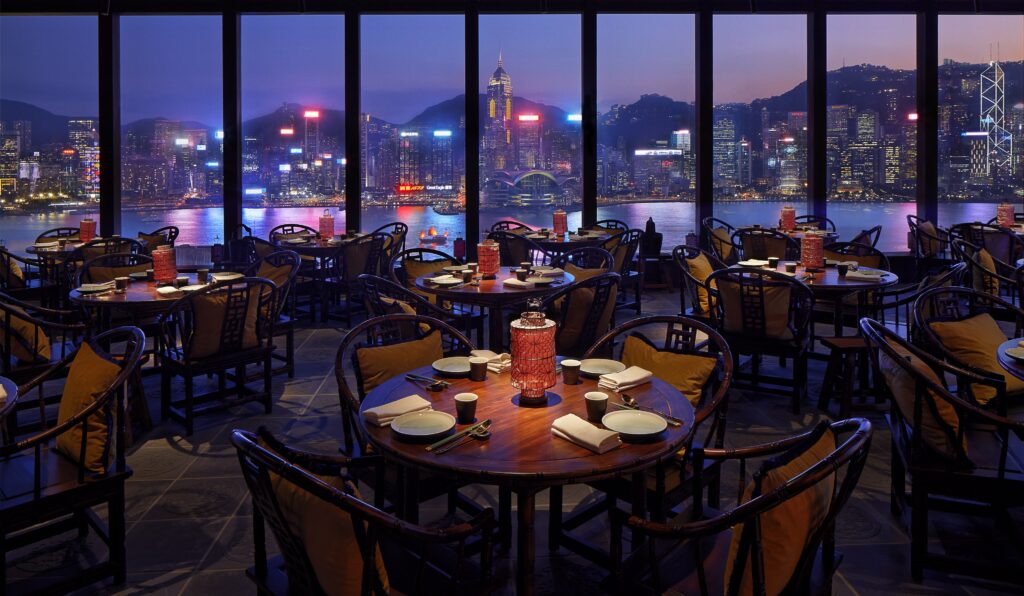
Hutong is not just a restaurant; it’s a vibrant canvas where the rich tapestry of Northern Chinese cuisine comes to life. Step into this exquisite dining venue and the elegant décor inspired by the traditional hutongs of Beijing envelops you in an atmosphere that feels both contemporary and steeped in history. 

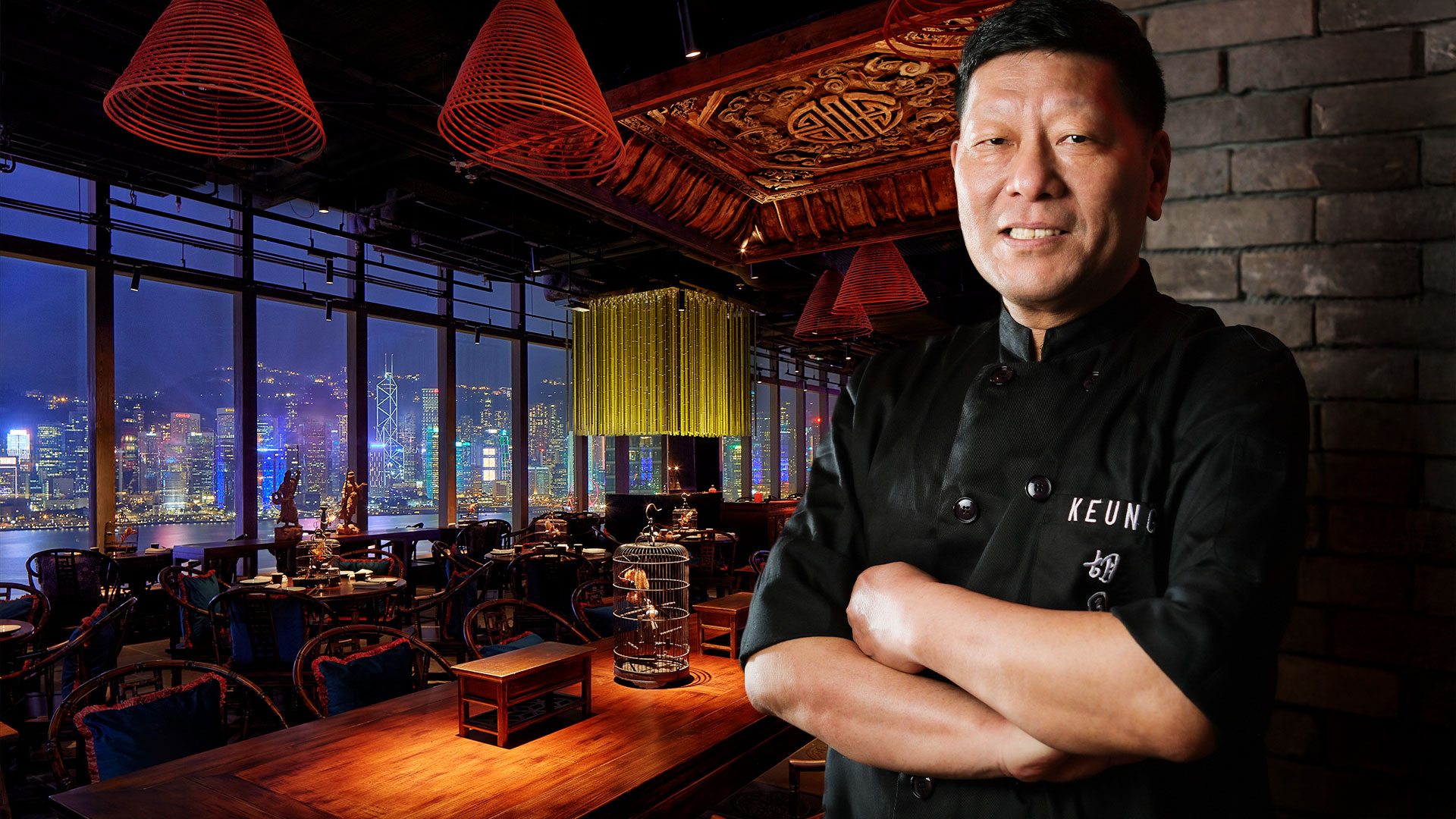
A sensational four-hands collaboration recently united colleagues and culinary virtuosos Cheung Yung-keung, Head Chef of Hutong Hong Kong, and Ren Dingxu, Head Chef of Hutong Dubai, with each bringing their extensive expertise and deep-rooted passion for the cuisines of two distinct Chinese regions. “I sought to capture the essence of Shanghainese cuisine, which is known for its rich, savoury flavours and meticulous preparation,” shares Chef Cheung about his inspiration for the collaboration. “These dishes are my homage to the culinary traditions of Shanghai, brought to life through the lens of contemporary dining.”

A symphony of flavours began with an exquisite tea-smoked pigeon, a dish that pays homage to Shanghai’s culinary traditions. Tender squab is braised and delicately smoked with Biluochun tea leaves and fragrant roses from Jiangsu. The first bite was a revelation; the subtle smokiness danced on the palate, leaving a sophisticated aftertaste that lingered, enticing the senses for what lies ahead.

Next to arrive, the dim-sum platter was a feast for both the eyes and the palate. This trio featured a lobster dumpling, where sweet lobster meets a hint of spicy seafood essence; a peach gum mushroom dumpling, inspired by ancient Chinese medicinal texts; and a wagyu beef green chilli dumpling, combining premium wagyu with the fiery kick of Sichuan’s tiger-skin peppers. Each piece is a testament to the chefs’ dedication to quality and innovation.

Honouring tradition with a modern twist, the evening continued with the braised fillet of eel with bean sprouts and dark soy sauce. Here, a secret dark soy sauce recipe enhances the fish, resulting in a dish that epitomises tenderness and richness. The contrast of lightly stir-fried bean sprouts adds a fresh crunch, creating a harmonious balance that celebrates traditional Shanghai flavours.

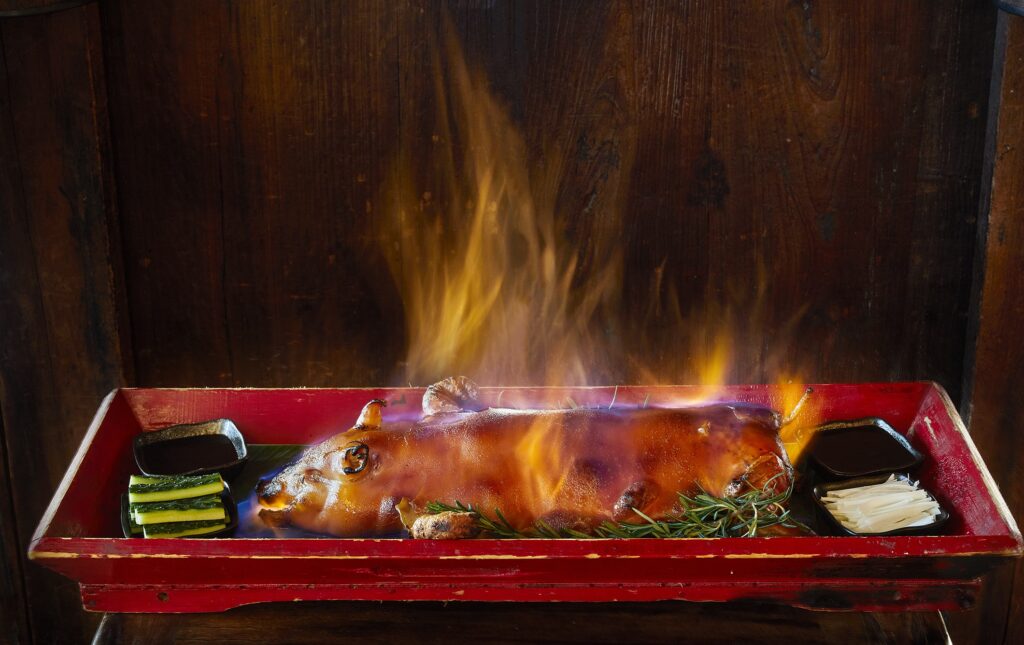
Following this was Sichuan-style Chilean sea bass with bamboo shoots, providing a modern twist on classic preparations. Grilled to perfection, the fish is enveloped in a vibrant homemade jiao mao sauce, with the bamboo shoots contributing a refreshing texture that elevates the dish. The culinary journey took a bold turn with the spicy suckling pig with kung po sauce, a delightful nod to Shanghai’s braised pork. For this dish, pulled pork belly infused with Hutong’s signature chilli oil is paired with crispy suckling pig skin, creating a delightful contrast of textures and a symphony of spicy savouriness that tantalises the taste buds.

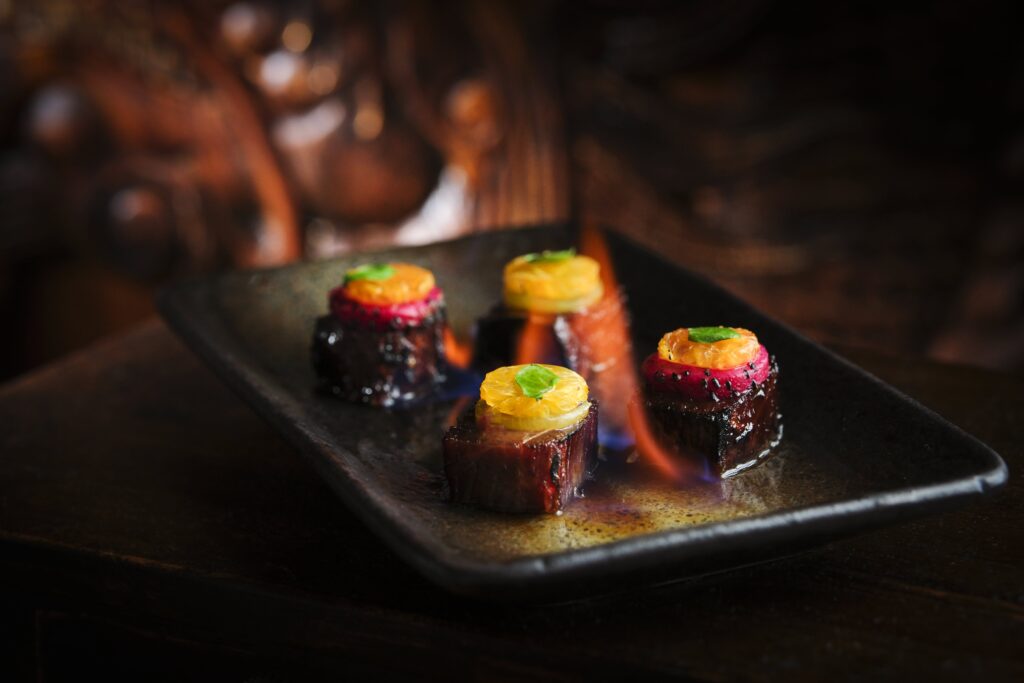
Another showstopper dish, Spanish red prawns with crispy rice in seafood broth, reflected the luxurious nature of this special menu. Prawns bathed in a rich, lobster-infused broth are complemented by crispy rice, providing a captivating crunch that enhances the seafood’s natural sweetness. The pièce de résistance was undoubtedly flaming wagyu beef char siu. A5 wagyu chuck ribs flambéed with rose liqueur and rum and accompanied by shiny Muscat grapes and kumquat create a dramatic presentation that is as much a feast for the eyes as it is for the palate. The rich, tender beef paired with the sweet, tangy fruit delivers a flavour explosion that is unforgettable.

“These dishes are my tribute to the dynamic culinary heritage of my native Sichuan,” says the visiting Chef Ren.

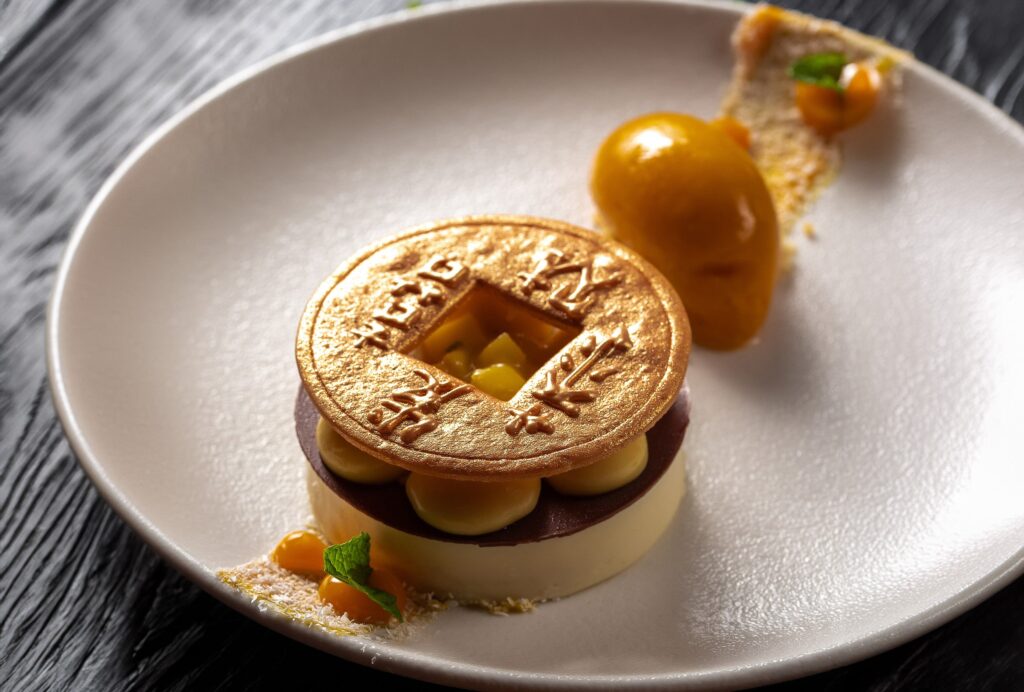
As a sweet conclusion, the Golden Fortune dessert is a symbol of prosperity and celebration. Inspired by the lychee varieties of Lingshan County in Guangxi, this refreshing finale features lychee purée, ginger sorbet and lemongrass. It was an aromatic end to an extraordinary meal, with the optional wine and sake pairings further enhancing each dish.

Whether you are a connoisseur of Chinese food or a curious newcomer, Chef Cheung orchestrates an unforgettable culinary journey nightly at Hutong in Hong Kong. 

Hutong, 18/F, H Zentre, 15 Middle Road, Tsim Sha Tsui

Photos: Hutong Hong Kong   Video: Jack Fontanilla  

Raise A Glass: Spirits are high at METABEV, as Chairman Roger Chan pours positivity and passion into the workspace

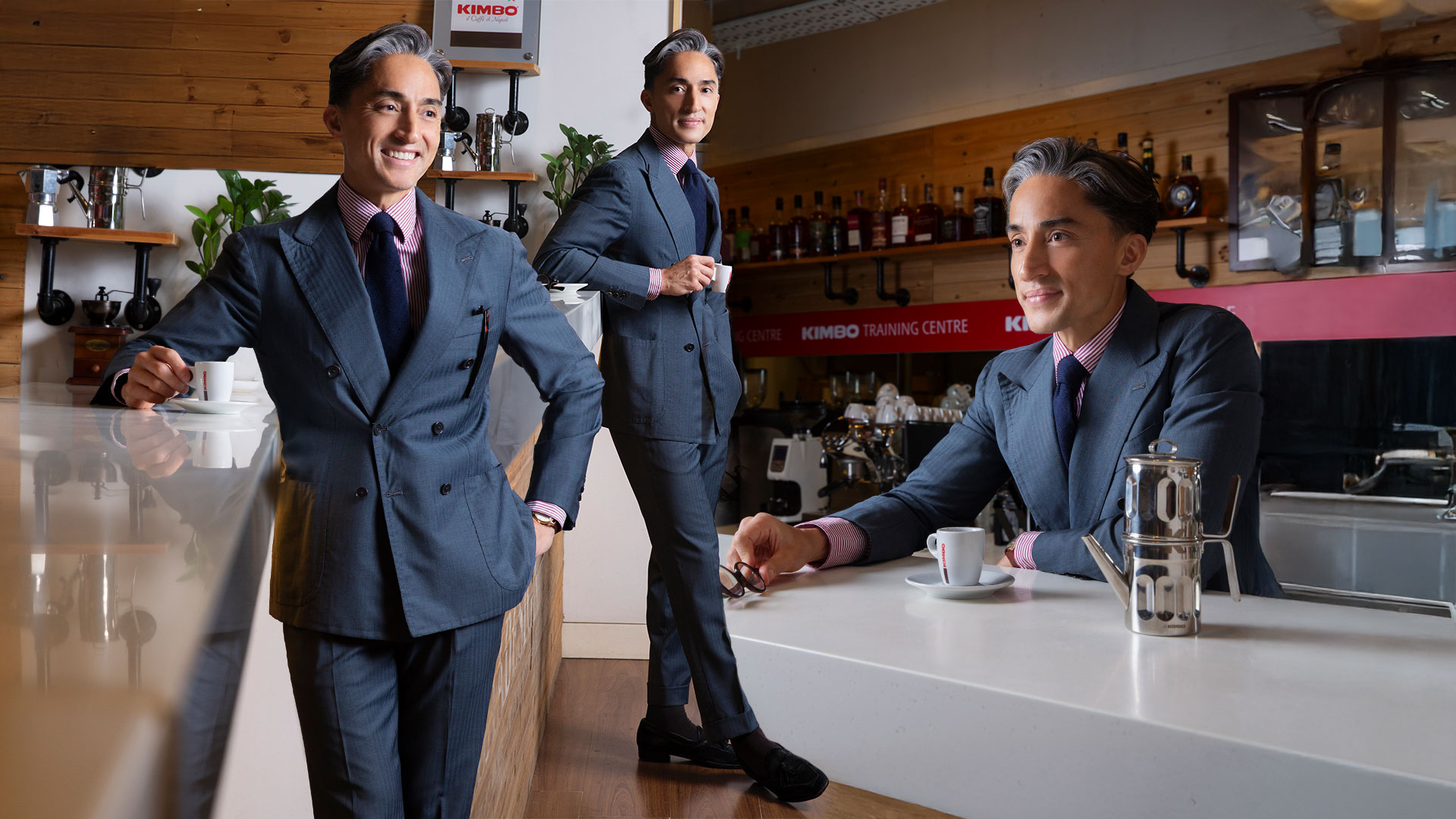
Standing as a testament to the resilience and vision of its Chairman, Roger Chan, METAGROUP celebrates its 35th anniversary this year. The company’s spacious headquarters in Wong Chuk Hang reflects its prime enterprise, drinks distributor METABEV – witness a warehouse stacked high with famous-name beverages from all over the globe; an open bar for coffee or liquor boosts of creative energy; and a smiling bunch of employees. “Yeah, this our workspace. It’s free drinks every day here basically. Feel free to grab anything you guys like,” laughs Chan. Neatly finger-combing his middle-part hairstyle in preparation for our shoot, he ushers us inside.

Refreshments are served; a shot of espresso and a macchiato on a counter bar with a vintage air. The only giveaway that we are in the 21st century is a sudden vibrating hum of an iPhone. That’s the thing about Roger Chan and the environments he creates. They are all-encompassing. No detail is spared, yet nothing feels pastiche.

The UK-born, Hong Kong-bred Eurasian has a unique personality that defies the typical boss. He’s a master of juxtapositions with a reverence for worn objects with patina. In the first few takes, he gestures a model pout, a Korean finger heart and a ’90s hip-hop sign among many other fun poses. The spaces he inhabits are both of their time and exist out of time. This is probably the kind of temporal dissonance that has made his entrepreneurial visions successful for all these years.

“Oh, you’d be surprised what I listen to when I run,” he says. “I won’t disclose it.”

Recipe for Success

Chan’s Eurasian heritage has been distilled into a remarkable journey of cultural fusion, entrepreneurial spirit and community engagement. Born to a Chinese father and a British mother, his life began in England, but his formative years were spent in the vibrant streets of Hong Kong. This upbringing imprinted within him a rich tapestry of cultural values and perspectives. “Growing up in two distinct cultures has been a blessing,” he reflects. “It has provided me with a unique lens through which to view business and relationships.”

Educated at an international school, young Roger was exposed to a myriad of ideas and practices. He witnessed Hong Kong’s evolution into a global cosmopolitan hub, and this early immersion sparked his interest in understanding the intricate dynamics of the local workforce and business mentality. “Understanding cultural nuances is vital,” he emphasises, noting that language plays a crucial role in building relationships – the all-important ‘guangxi’ that is deeply ingrained in Asian business practices. Further education took him to Miami, where he graduated in 2000 with a degree in international business & finance. His professional career began in London, but the allure of Asia drew him back. Spending a year in Shanghai and Beijing, he dedicated himself to mastering Mandarin and Cantonese, which would later prove invaluable.

Drawn into Drinks

His career trajectory saw him transition from a research analyst to a consultant specialising in market entry and strategy. Eventually, he joined Deloitte, where he navigated both regional and global roles across Asia-Pacific. This experience not only broadened his understanding of diverse business cultures but also reinforced his belief in the importance of adaptability in a constantly evolving market. The turning point in Chan’s career came unexpectedly. In 2008, his father-in-law, Angelo Pepe, fell ill, and he was called upon to take the reins of the family business. “It was a daunting moment, perhaps the hardest task of my professional life,” he admits. Having begun as an Italian furniture importer and diversified into espresso and Italian spirits, the company was struggling, facing financial losses and operational fragmentation. With no prior experience in food and beverage, he embraced the challenge head-on.

Drawing from his extensive background in consulting and market strategy, he implemented a series of transformative changes. “I had to stabilise the group without any capital injection,” he recounts. “It was about leveraging relationships and understanding the market.” Through tenacity and innovative thinking, Chan not only turned the company around but also discovered a newfound passion for entrepreneurship.

Glass Half Full

From early closures during the pandemic to various economic challenges, the city’s food and beverage landscape has shifted dramatically. Chan recognised these changes as an opportunity to innovate rather than retreat. “The challenges have changed many perspectives,” he notes. “We decided to expand regionally, opening a subsidiary in South Korea and collaborating with a creative digital agency to enhance our online presence.”

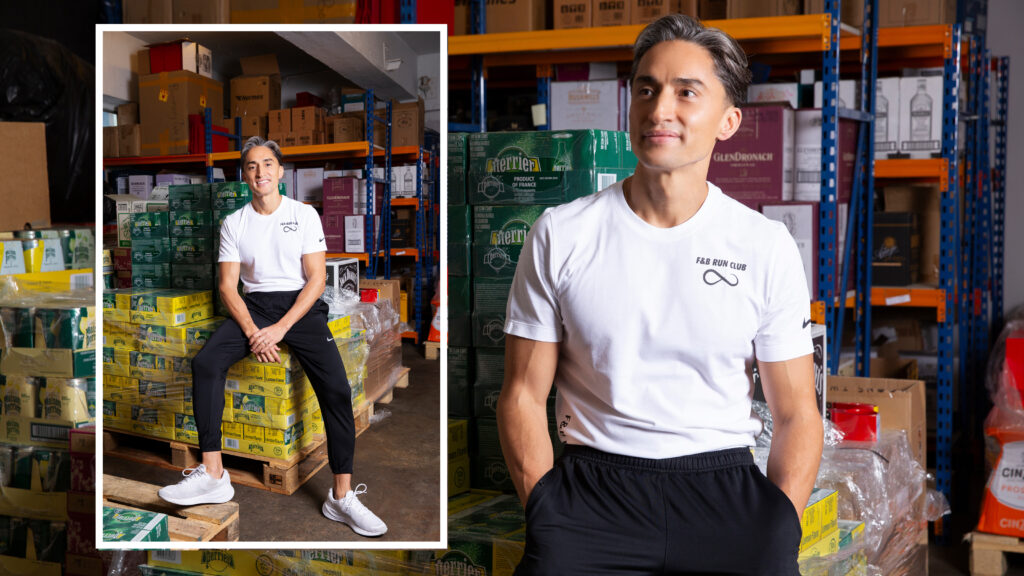
This adaptive strategy not only solidified METABEV’s foothold in the market but also inspired a unique initiative: the F&B Run Club. Launched in 2020 to unite the industry during tough times, the club embodies Chan’s belief in community support. Its first mission? To collectively run the distance to the moon – 384,400 kilometres. The F&B Run Club is a remarkable collaboration among typically competitive restaurant groups, including Black Sheep Restaurants and Pirata Group. “The pandemic has shown us that we are stronger together,” he explains. “By coming together, we can not only raise awareness but also give back to the community.”

The club has already raised more than $400,000, with 100% of the funds going to carefully chosen local charities such as the Inspiring HK Sports Foundation and Lifewire Foundation. “Supporting underprivileged youth and those facing life-threatening conditions is incredibly meaningful,” shares Chan. “It’s a reminder of how fortunate we are and the impact we can make.”

Cup Runneth Over

Central to Chan’s leadership is a commitment to wellness, both for his team and the broader community. “More than the aesthetics, wellness has helped me keep focused and positive at work and at home,” he asserts. The F&B Run Club not only promotes physical fitness but also fosters connections among industry professionals. “I’ve seen first-hand that the fitter and more active people are, the more positive and energetic they become,” he adds.

This focus on wellness aligns with his vision for a balanced work-life integration. “If it’s not adding value to family, health or wealth, I generally don’t have time for it,” states Chan, reflecting on his personal philosophy amid the pressures of business. Looking ahead, he envisions METABEV as a leading independent importer and distributor in the fine food and drinks space. With a strong emphasis on reciprocal value creation and a culture of passion and innovation, he is committed to cultivating the next generation of entrepreneurs. “I want to provide meaningful opportunities for those willing to work hard and create true wealth,” he notes.

And Chan remains optimistic. “Our city is a bridge for the Greater Bay Area and a stepping stone for brands entering China,” he says. With an eye on emerging trends, he believes that Hong Kong will remain a leader in the F&B industry. For aspiring entrepreneurs, Chan’s message is clear and provides proof of the philosophy that success is not a matter of luck but the result of dedication and perseverance: “Work with passion. Do something you love. Trust the process and hard work.”

Team Spirits

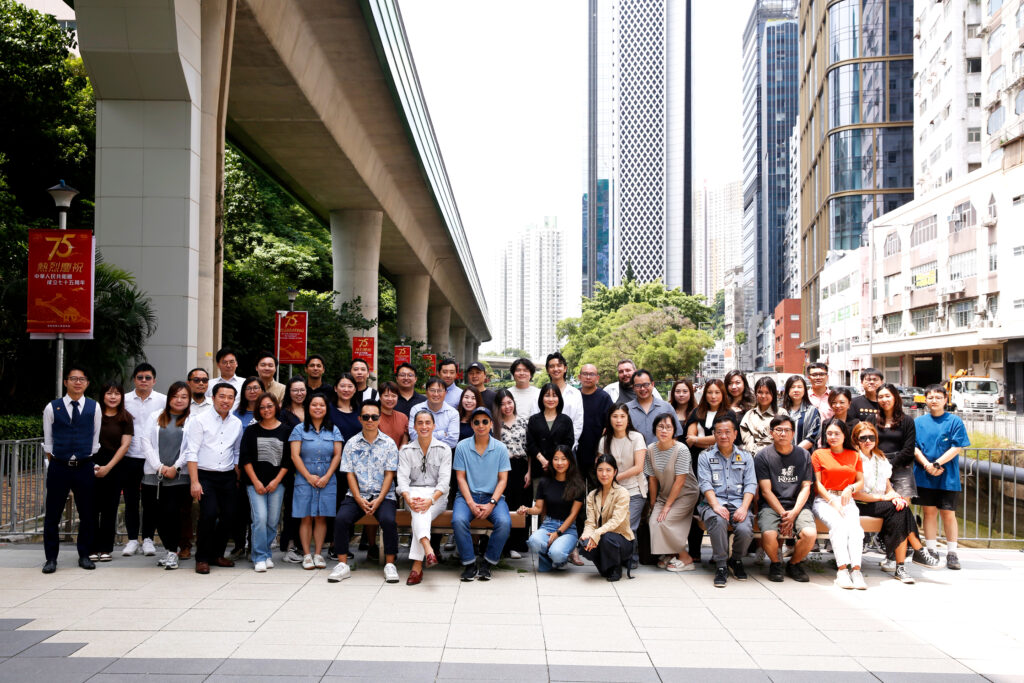
Today, under Chan’s leadership, METABEV has grown into a thriving enterprise. His approach emphasises collaboration and relationship-building, ensuring that every team member feels valued. He often reflects on the lessons learned from his father-in-law, the company founder. “I am forever grateful for the opportunity he gave me,” he says. “It taught me the importance of mentorship and the impact of legacy.” As our shoot draws to a close, he requests that we take a group photo including 50-something employees. “It’s not every day we have a photographer, so might as well do it, right?” he laughs before leaving a mindful comment. “Business is about people. Success stems from understanding and empowering your workforce. It’s not about me. METABEV is all about these people.”

Art Direction: Joseff Musa Photographer: Jack Law Videographer: Jack Fontanilla Venue: Carna & Avoca Hong Kong

Minority Generosity: The Ruttonjees, a Parsi family, exemplify the diversity of Hong Kong benevolence

Along with other great philanthropic families in Hong Kong history, the Ruttonjees have left an indelible mark on the city. Their legacy has been amazing acts of giving and the establishment of vital charitable foundations. Through their generosity, their footprint on the social fabric is wide, deep-rooted and continues to this day.

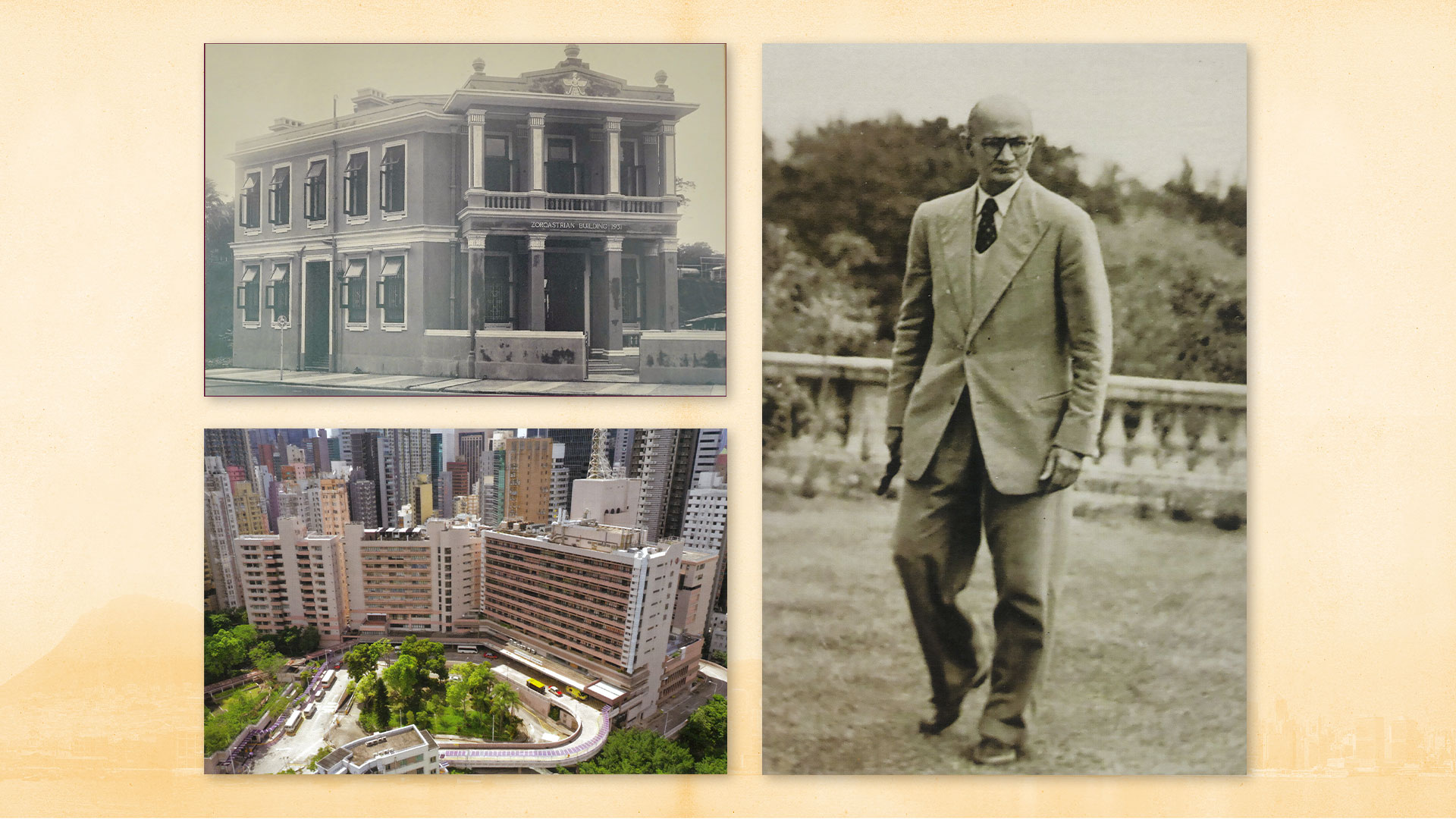
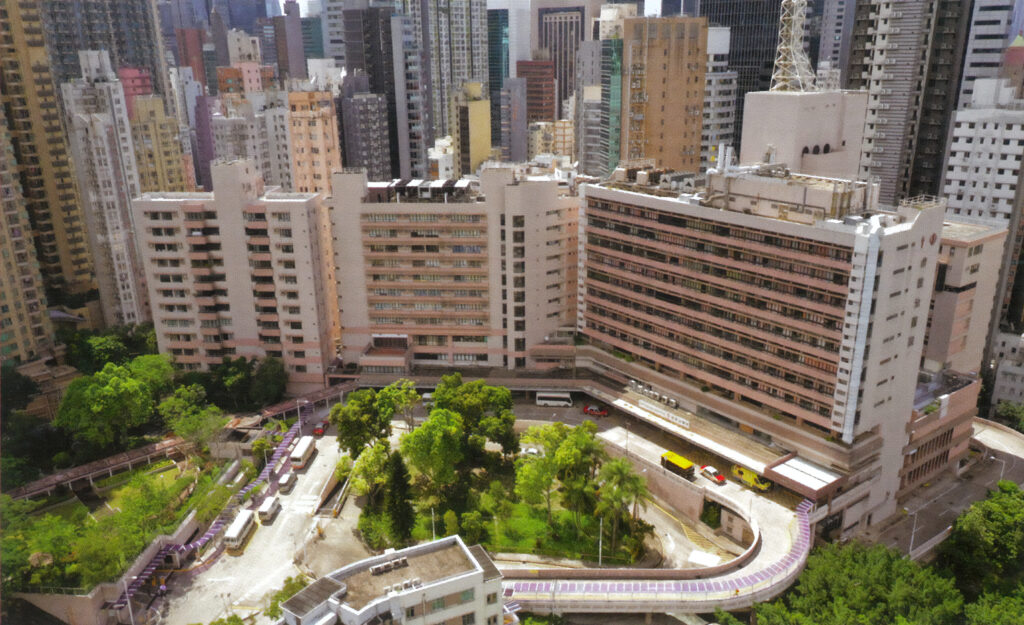
The story of the Ruttonjee family, in many ways, mirrors that of Hong Kong – an epic tale of trade, entrepreneurship, philanthropy and, sometimes, overcoming huge adversity. They are Parsis, an ethnoreligious group originally from Persia (now Iran) that migrated to India, and their patriarch, Hormusjee Ruttonjee, arrived in Hong Kong from Bombay in 1884. He soon began trading in wine, spirits and provisions and founded the family company, H. Ruttonjee & Son, Ltd. Ruttonjee Hospital in Wan Chai, formerly Ruttonjee Sanitorium and dating back to 1949, is the most visible of the family’s many gifts to the city.

The Ruttonjees: Industry, Foresight & Charities, a coffee-table book launched earlier this summer, superbly documents their contributions to the success and well-being of the community. Aside from preserving their own family history for future generations, the tome is intended as a celebration of all those industrious families who have enabled Hong Kong’s rise, no matter their ethnicity or background. It will be placed in public libraries, providing insight to all on how and why the city has thrived.

Ethnic diversity

“Since 1842, numerous ethnic groups have contributed [to Hong Kong] and this should be highlighted to the young local population,” says fourth-generation family member Noshir N. Shroff. He cites the fine examples of many other Parsis in the early years of Hong Kong such as Sir Hormusjee Mody of brokerage company Chater and Mody, and Dorabjee Naorojee Mithaiwala, founder of the Kowloon Ferry Company (forerunner of the Star Ferry).

“The Indians have been traders for a long time and have contributed to the robust Hong Kong economy,” notes Shroff, while stressing that other ethnic minorities, including the Filipinos and the Nepalese, were also instrumental in Hong Kong’s growth over the last century, working alongside the local Chinese population and the British.

Entrepreneurial drive

It was Hormusjee Ruttonjee’s determination to succeed that most impresses Shroff as he surveys his rich family history. He particularly admires his great-great-grandfather’s entrepreneurial spirit, coming to Hong Kong by ship and venturing into segments of the market where he saw opportunities but had little knowledge.

This flair for business was inherited by Hormusjee’s son, Jehangir H. Ruttonjee, who struck out on his own, founding the Hong Kong Brewery and Distillery Ltd. The Sham Tseng brewery he opened in the 1930s was subsequently acquired and operated by San Miguel until 1996.

Noshir Shroff is proud of how Jehangir overcame the many obstacles standing in the way of his vision. He was able to gain not only the necessary water rights from the government but also the support of the villagers. In a testament to his business ethics, he rented their land, one parcel at a time, rather than buying it outright, thus affording them a regular annual income.

Winning hearts

Indeed, it was Jehangir’s sympathetic interactions with the locals all those years ago that, in part, initiated the family book. When its author, Carl Lau, was conducting his doctorate research in the Sham Tseng area, the Ruttonjee name was repeatedly mentioned by village elders.

Shroff retells the story: “The villagers recalled how they wanted a piece of land for a school and clinic, and were prepared to purchase this, but Jehangir told them he would not sell – he wished to give them the land.”

When Lau eventually met Shroff and his family, it was agreed that he would write a book about their history – not just their connection to Sham Tseng but their wider business and philanthropic endeavours.

Enduring hardship

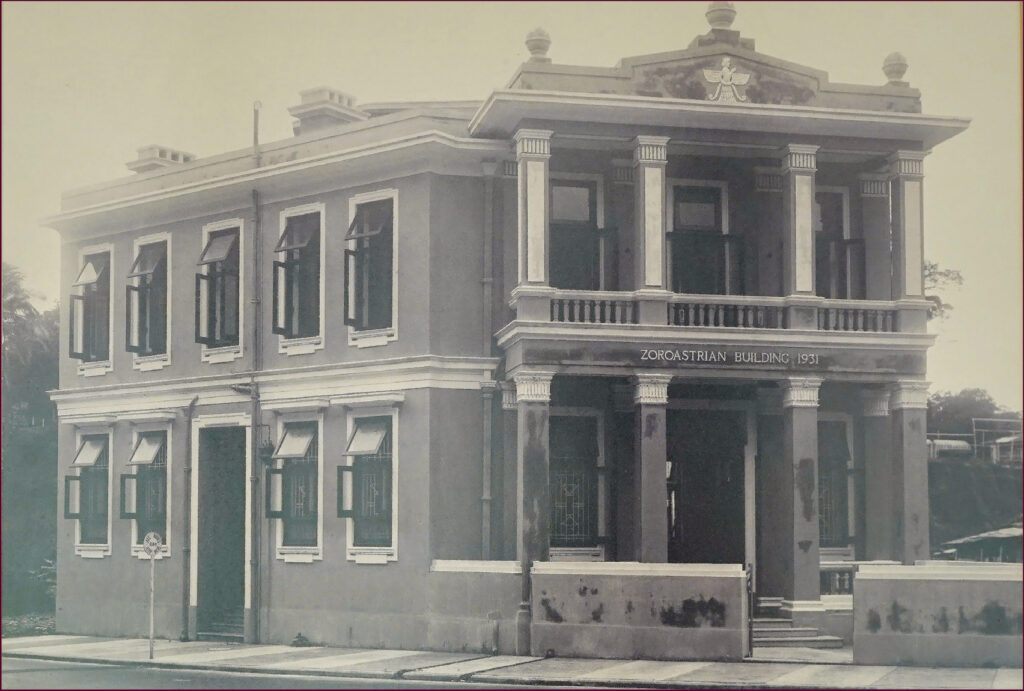
The Japanese occupation of Hong Kong during the Second World War counts among the biggest challenges the Ruttonjee family would face. In these dark times, they housed and fed many fellow Parsis in their two Duddell Street buildings, with all welcome to shelter in the basement during air raids.

Although Jehangir’s prominence and reputation initially earned him the ear of the Japanese, his activities soon began to raise their ire. “Jehangir orchestrated a fundraising campaign for the maintenance and relief of British [civilians held in the internment camps],” relates Shroff. “That was a step too far for the Japanese and resulted in him and his son, Dhun, being imprisoned and brutally tortured.”

Following a turbulent post-war period with the collapse of the stock market and crop failures, Jehangir sold the brewery business to San Miguel ¬– and in characteristic fashion steered the money into numerous charity projects.

Charity after tragedy

The tragic passing of his two daughters, Tehmi in 1944 from tuberculosis, and some eight years later, Freni of cancer, shaped the direction of the family’s charitable legacy. “Despite the grief [of Tehmi’s death], Jehangir provided funds for setting up the Ruttonjee Sanatorium for those affected [by TB]. This building is now the home of Ruttonjee Hospital, a part of the Hospital Authority,” says Shroff, who is exceedingly proud of this project.

Establishing the Hong Kong Anti-Tuberculosis Association in 1948 – now named the Hong Kong Tuberculosis, Chest and Heart Diseases Association, and involved in the management of the Ruttonjee and Grantham Hospitals – has, Shroff believes, made a huge difference to the people of Hong Kong. “Commitment to the association has become a [Ruttonjee-Shroff] tradition with several family members serving on the board of directors,” he says.

After the death of his second daughter, Jehangir erected the Freni Memorial Convalescent Home for the rehabilitation of tuberculosis patients. “Decades later, once TB was in permanent decline, this building became the Freni Care and Attention Home for the aged,” explains Shroff. The 250-bed nursing home, the Rusy M. Shroff Dental Clinic and four Chinese medicine clinics come under the remit of the Hong Kong Tuberculosis, Chest and Heart Diseases Association.

Passing the baton

Jehangir Ruttonjee was also President of the Hong Kong Society for the Protection of Children from 1950-1955, patron of the Family Planning Association of Hong Kong and chair of the Hong Kong Model Housing Society. “He died in 1960, having donated HK$2 million over his lifetime, a considerable sum in those early days,” says Shroff.

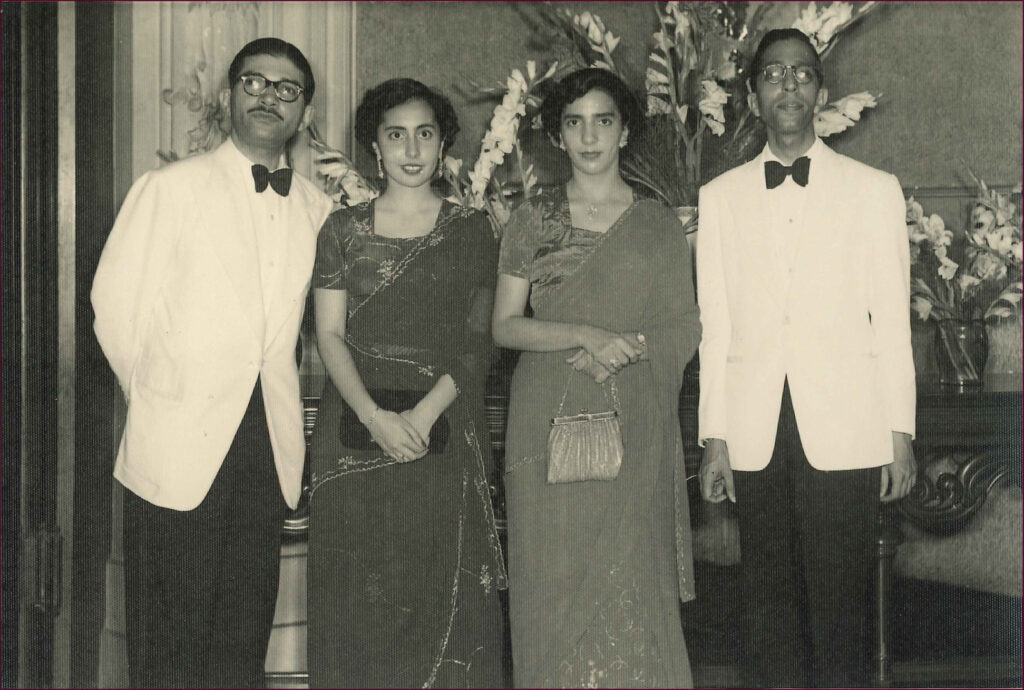
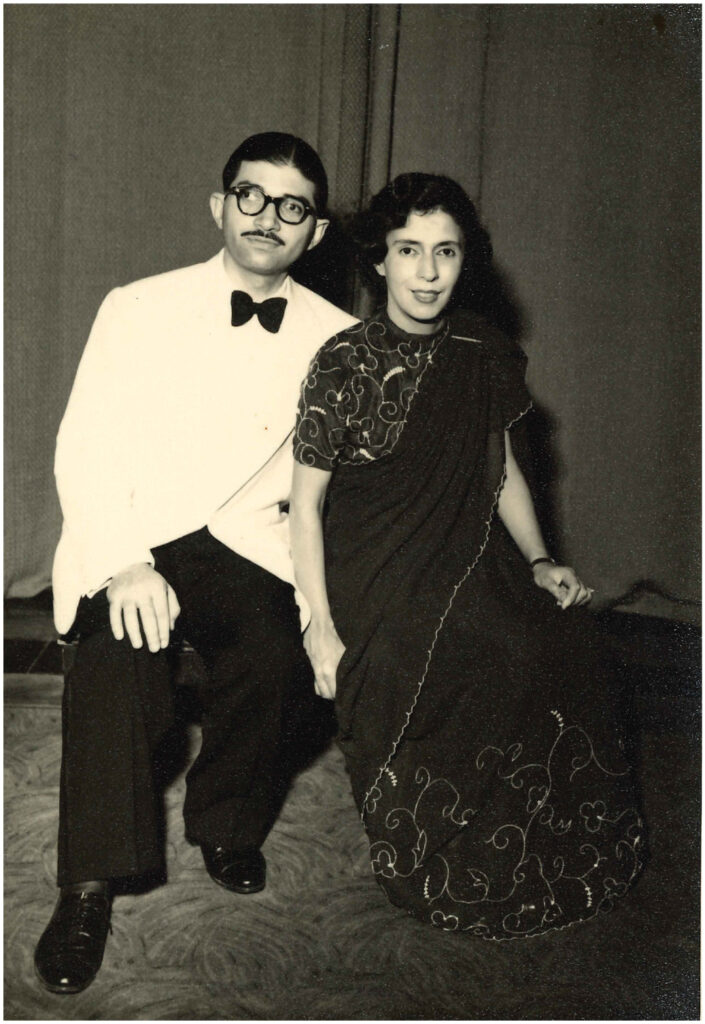
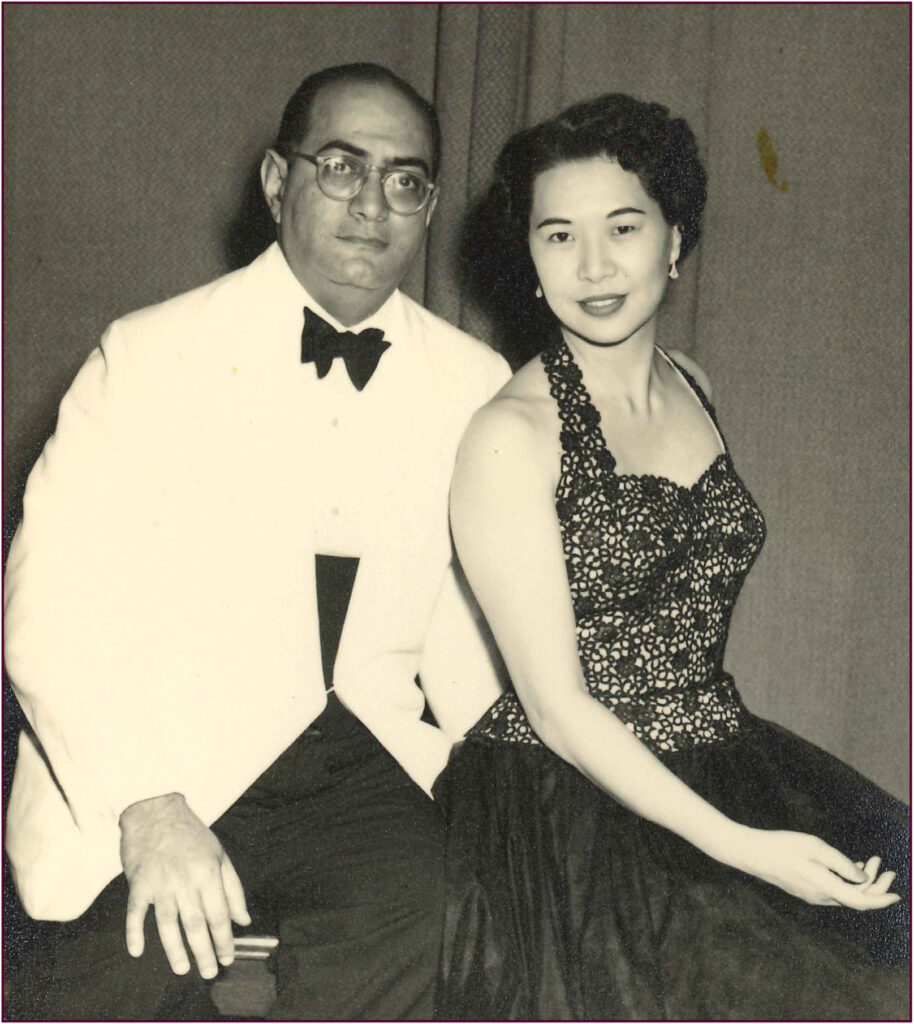
Following the death of his son Dhun in 1974, the mantle as head of the family passed to Rusy Shroff, the nephew Jehangir had adopted along with siblings Beji and Minnie after their father was lost at sea during a typhoon in 1931.

Good deeds

The importance of religious faith cannot be underestimated in the family story. The Parsi community practise Zoroastrianism, one of the world’s oldest monotheistic religions. “The core teachings of Zoroastrianism are good thoughts, good words and good deeds. Charity plays a very big part here,” says Shroff.

Other Parsi families who came to Hong Kong in the 1800s used their fortunes for the good of the city. Hormusjee Mody’s largesse, for example, enabled the founding of the University of Hong Kong.

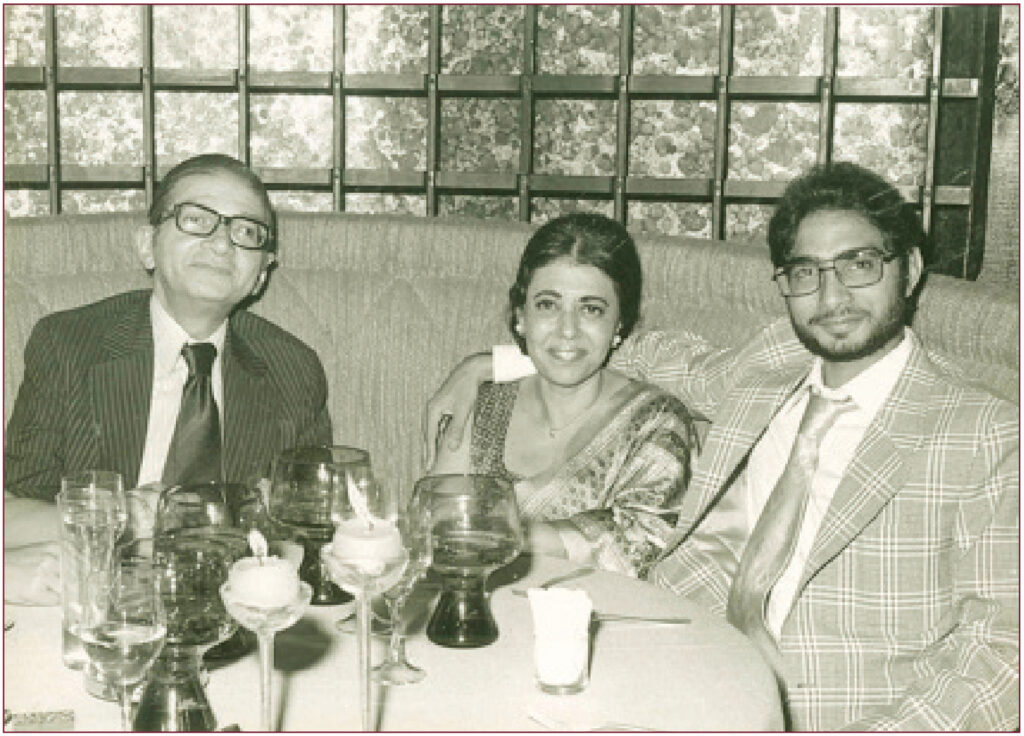
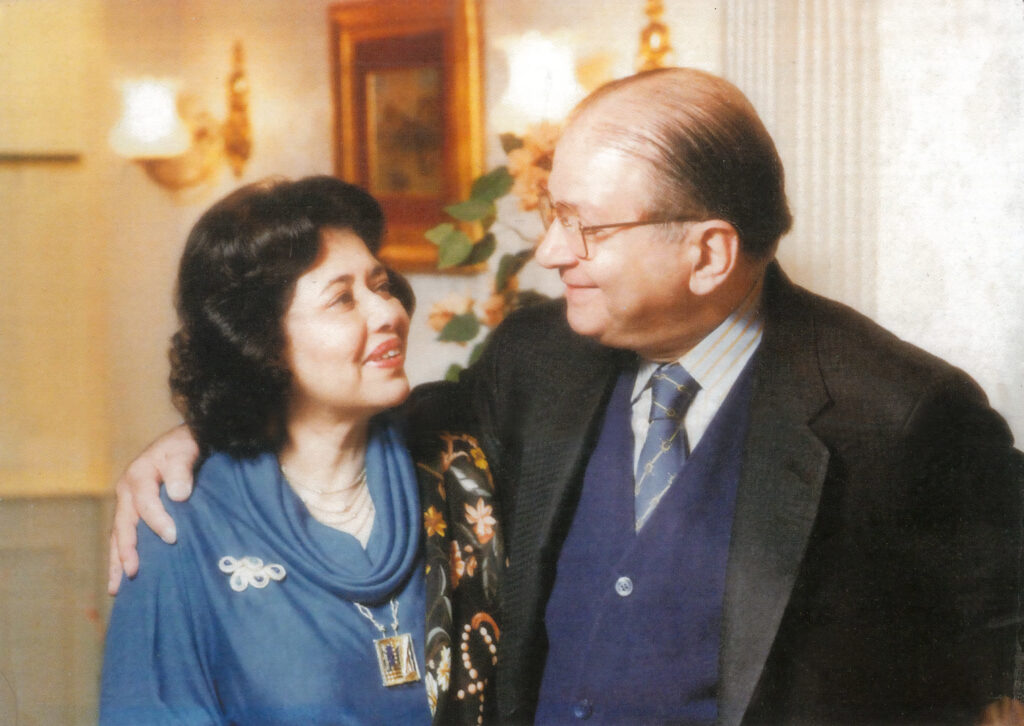
Shroff believes such acts of benevolence are the Hong Kong way. “Look at the number of charitable foundations established by our local tycoons,” he says. “They have profited by Hong Kong and are giving back. The favourite saying of my uncle, Rusy Shroff, was ‘To live is to give and forgive’.” In 2017, three months before Rusy Shroff passed away at age 100, he established the Rusy and Purviz Shroff Charitable Foundation, which has since given more than HK$200 million to charities in Hong Kong, mainland China and India.