

Moving Targets: Upping the drive for quality migrants is right on cue to ensure our world-city status

Hong Kong undoubtedly potted a maximum break when snooker great Ronnie O’Sullivan was lured to these shores under the Quality Migrant Admission Scheme. Having the English professional declare himself a Hong Kong resident, heralding its many charms and advantages, was a major coup for a city which has undergone difficult times of late.

It appears the love affair is mutual, with Secretary for Labour and Welfare Chris Sun Yuk-han offering words of admiration for the seven-time world champion who was attracted by Hong Kong’s lifestyle, closeness to the mainland and low taxes. His arrival is part of a drive by the government to entice people with the skills and talents – and in some cases capital – urgently required by the city. A slew of new initiatives is aiming to bring in these exceptional human resources.
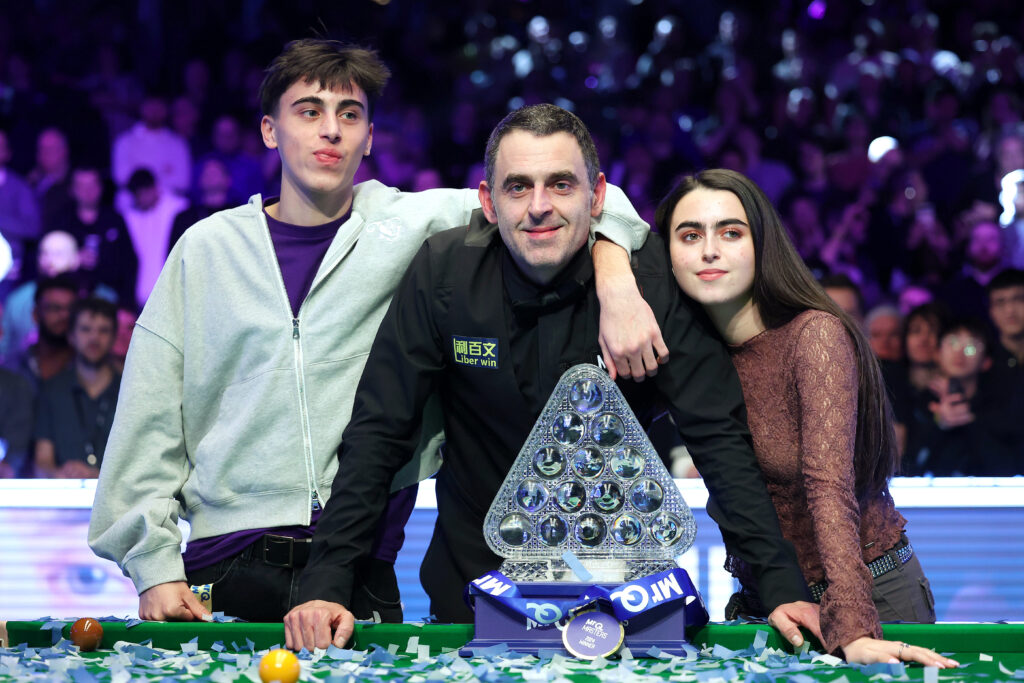
“Seeing a global sports star like O’Sullivan here not only delights fans but also highlights Hong Kong’s reputation as a world stage, capable of hosting and appreciating excellence in all forms,” says Juan Pierre Dorfling, Gough Recruitment’s Managing Director for Asia.

Hong Kong’s most wanted

Dorfling believes O’Sullivan’s residency sets a perfect example for talented individuals around the globe, no matter their field, to envisage Hong Kong as a place where they can shine. These kinds of subliminal messages are important for anyone involved in inducing holders of sought-after skills to settle in the city since the demand for such people seems only set to rise.

Deutsche Bank recently stressed the pressing need for an influx of talent as the financial market picks up and cross-border activity accelerates, and a CPA Australia survey last autumn indicated 63 per cent of executives, accountants and finance professionals expected growth in their companies over the coming year. “Broadly speaking, demand is surging for professionals with expertise in cutting-edge technology, sustainable finance, wealth management and advanced healthcare services,” says Dorfling.

Hong Kong’s aspirations to be Asia’s leading fintech hub will require not only top-notch software developers and data scientists but also professionals versed in compliance, cybersecurity and global regulatory frameworks, Dorfling indicates. “The burgeoning green finance sector is another [in need of talent]. Hong Kong’s position as a major capital market is driving demand for people who can structure green bonds, advise on ESG investing, and navigate complex carbon-trading mechanisms,” he adds.

The recruitment expert says there is an urgent need for talent that can connect local enterprise with international standards of excellence in these rapidly evolving fields. International lawyers, accountants and corporate strategists who understand both Asia-Pacific market dynamics and global best practices are also crucial.

Ultimately, steady inflows of world-class banking and finance professionals will be required to maintain Hong Kong’s position as a world-class finance centre. These include individuals who can navigate the complexities of mainland China’s markets, spearhead sophisticated investment strategies, and handle cross-border transactions with agility and compliance.

Thinning pipeline

Despite this undoubted demand, there remains a significant shortage of talent. According to the Hong Kong Institute of Human Resource Management, nearly 70 per cent of employers have reported difficulties filling specialised roles, particularly in emerging technology and professional services. Over the past few years, various international reports and corporate surveys have indicated a thinning pipeline of talent in Asia’s major financial hubs.

“Hong Kong, despite its many advantages, hasn’t been immune,” says Dorfling, indicating there is a mismatch between current skill sets in the city and the capabilities the market requires to remain globally competitive. “This shortage isn’t crippling, but it’s definitely a headwind – one that Hong Kong needs to address proactively to maintain its leadership status.”

He notes that better training of local professionals in areas such as programming languages used in algorithmic trading, or leveraging artificial intelligence to improve investment strategies, could help plug the gap. Another area of concern is locating digital marketing experts who can fuse analytics with creative strategies to target China’s evolving consumer base.

Perception problem

One talented finance professional who has taken the plunge to settle in Hong Kong is Harry Bethwaite, an Investment Associate at Capital Union Investments. The Australian, a frequent traveller to the SAR for a decade, made his stay permanent in 2023 when a career opportunity arose. “Hong Kong provides a great lifestyle, easy access to the rest of Asia, competitive tax rates and an incredible blend of East-meets-West culture,” he says. “Singapore offers this to a certain degree and is catching up in many senses, but still isn’t quite to the [same] level.”

Though Bethwaite elected Hong Kong over Singapore, he does concede that it has issues to overcome, in particular negative perception overseas. “I think Hong Kong currently has a marketing issue. I vividly remember reading an article before arriving in Hong Kong with the headline ‘The expat exodus,’” he recalls.

Reading about thousands of expatriates who had left Hong Kong due to their experiences during the pandemic and their uncertainty about the changing landscape did prompt some initial misgivings about his decision to move here. “You rarely see any positive news abroad about Hong Kong, and without it, it’s genuinely hard to envision how life is here on a day-to-day basis or the benefits of the city,” he says.

According to Bethwaite, a common error made when weighing up the merits of a potential home is to judge it on a standalone basis rather than in comparison with other locales. “From my perspective when I decided to move to Hong Kong, I thought the benefits Asia offers in terms of growth opportunities, culture, cost of living and safety outweigh the likes of London and New York,” he explains.

Improving liveability

Other professionals may be deterred by the high cost of housing or the intense work culture. Political commentator Alice Wu recently opined that the government should offer greater support to new arrivals in its attempts to plug the brain drain.

“Hong Kong’s government and business community are acutely aware of these issues and are actively working to address them ¬– through housing initiatives, improving the liveability quotient, and reinforcing Hong Kong’s position as a stable, globally connected city,” says Dorfling, who foresees a renewed interest in professionals relocating to Hong Kong.

Hong Kong’s leadership is actively implementing programmes and policies – such as the Top Talent Pass Scheme and enhanced visa policies – to simplify the relocation process.

Diversity necessity

For Dorfling, the stakes are high – and multi-faceted – for Hong Kong’s future as a thriving and diverse international city. “Hong Kong’s capacity to attract and retain top talent isn’t just an economic imperative – it’s also a cultural one,” he states. “By drawing in professionals from all corners of the globe, Hong Kong enriches its cultural tapestry, keeps its business environment fertile, and positions itself as a catalyst for cross-pollination of ideas.”

Overseas talent serves to maintain and strengthen Hong Kong’s unique position in the world economy and bolster its standing as a truly international city – “one that can meet the evolving demands of an increasingly knowledge-based economy while offering a cosmopolitan lifestyle that reflects its East-meets-West heritage,” he says.
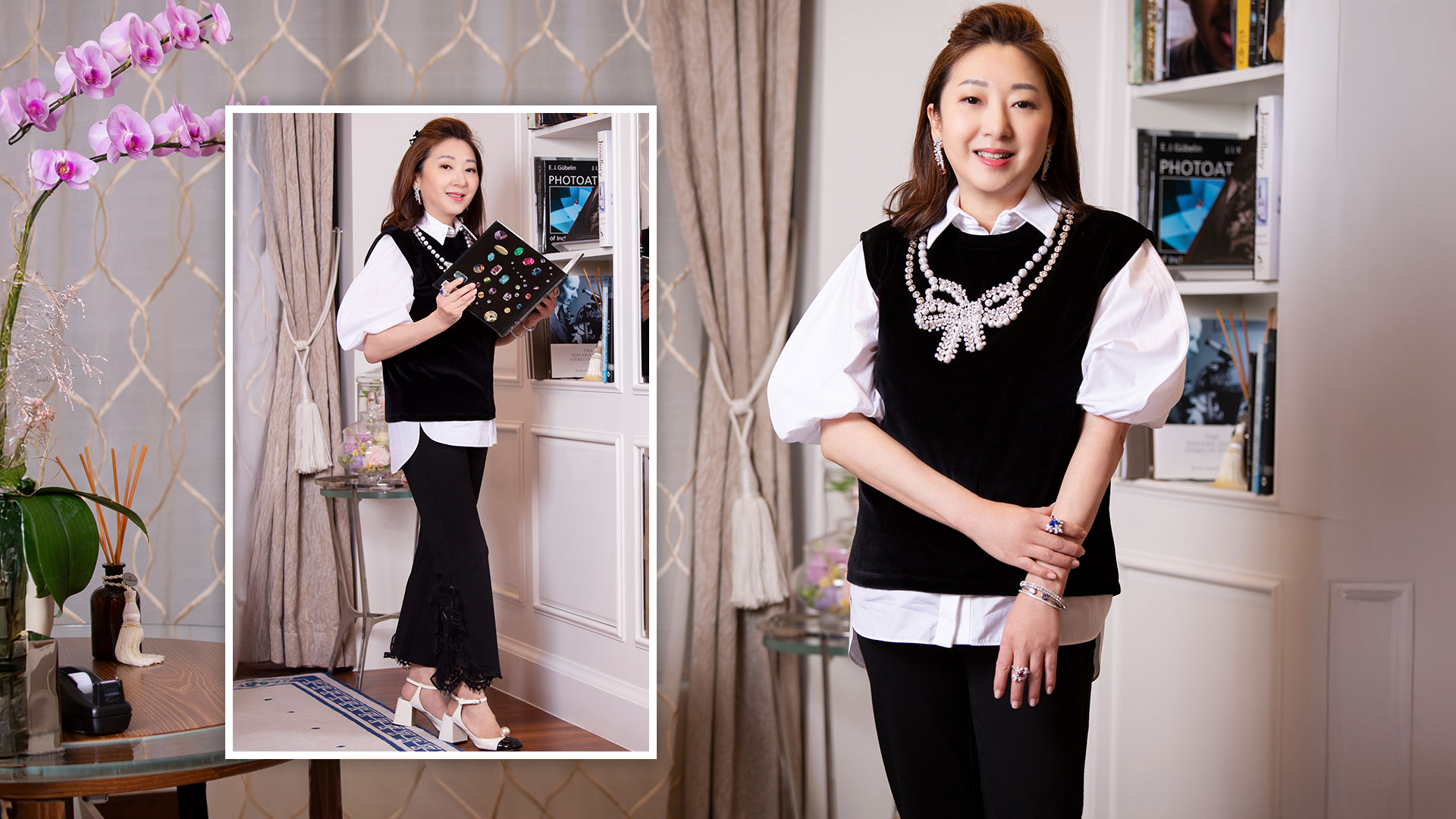
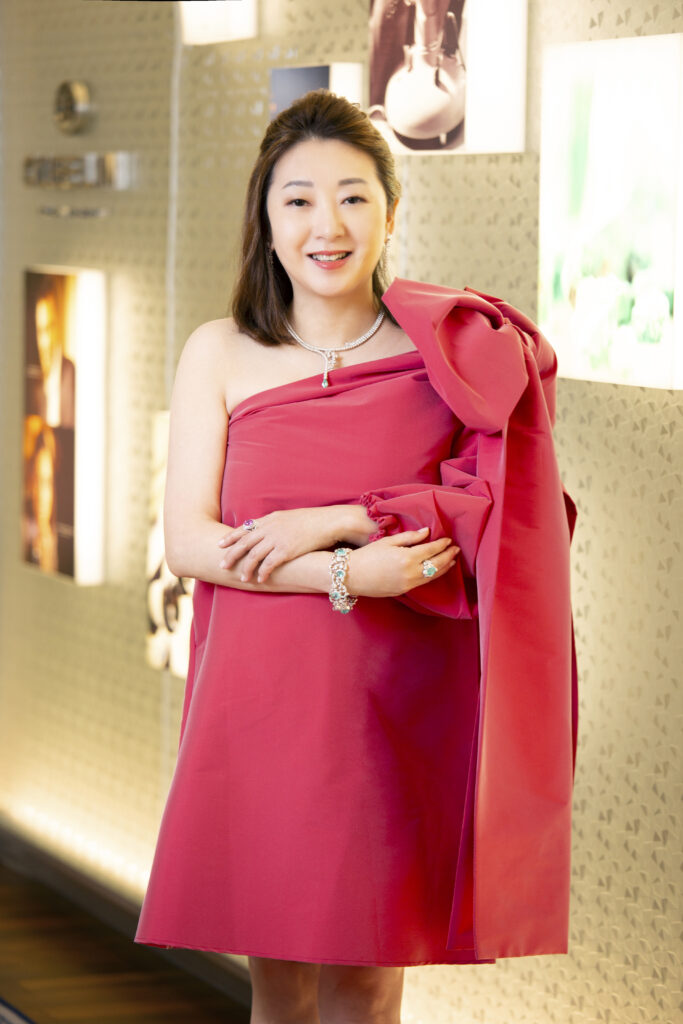
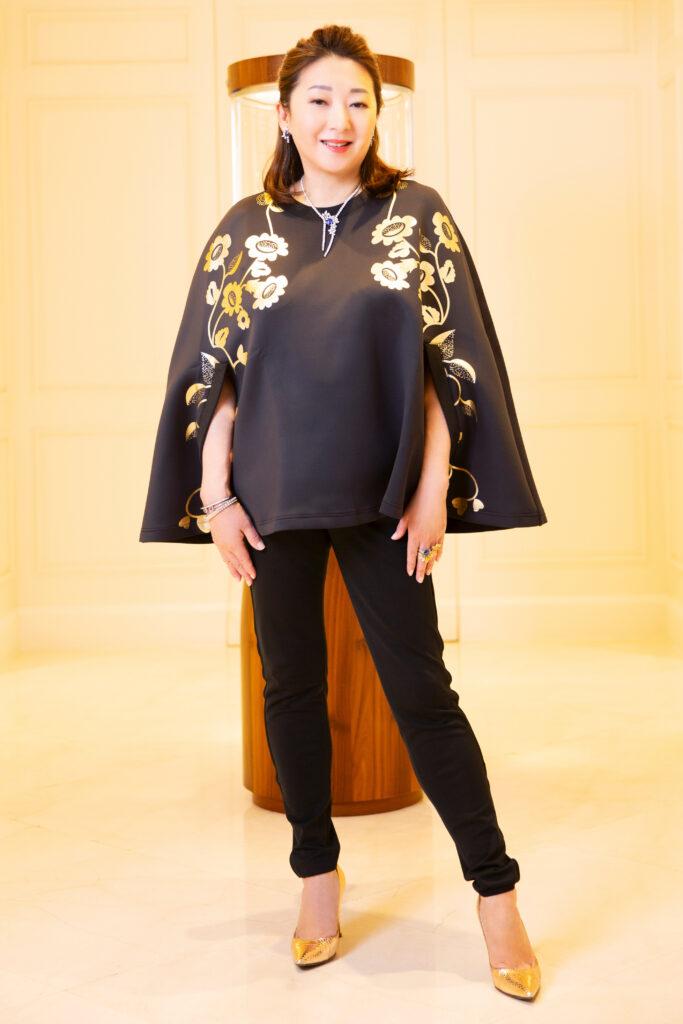
Gems of Resilience: Gübelin’s Director Asia Winnie Chan talks clarity, carat, charity and Sex and the City

It was a delay worth the wait. When our scheduled interview with Winnie Chan, the illustrious Director Asia of Gübelin Jewellery, had to be postponed due to her bout with Covid, we were left momentarily rattled. However, our prospective cover personality’s perspective on the situation sparkled with resilience. “I must admit Covid these days doesn’t bother me anymore,” says Chan, reflecting on the shared experience that has shaped many lives. “Gübelin has been hit hard by it too since the peak, but thankfully, especially due to my team and the people who continually support us, the collective effort is still there. Nothing is impossible if we really work together for the better.”

This battle against the pandemic only seems to have strengthened her resolve, echoing the tenacity that marks her leadership in one of the world’s most prestigious jewellery houses. Chan’s journey may be adorned with challenges, but like the exquisite gems she curates, it’s also filled with brilliance, and more brilliance.

Spark of Passion

Winnie Chan’s journey began in Hong Kong, but her upbringing took her across the Pacific to Hawaii and California. Her father, garment manufacturer Star Chan, would “conduct market research through shopping” and this early exposure to the world of fashion ignited her passion for aesthetics. Her mother’s love of jewellery further deepened this fascination. “She would frequently visit different jewellery and I’d come along. This constant exposure nurtured my love for the finer things in life,” she reflects.

Her upbringing instilled an ideology that intertwines luxury with a sense of purpose. “My philosophy is to live and enjoy my life to the fullest in line with God’s plan,” she explains. With such a foundation, it is no surprise that Chan has dedicated her career to luxury, from fashion to high jewellery.

A degree in business administration with a focus on marketing from Loyola Marymount University in Los Angeles – a choice guided by her father’s desire for quality education and a solid path for his only daughter – equipped her with invaluable skills. “Throughout my experience representing luxury brands, I learned that it is crucial to use different marketing approaches to appeal to the targeted audience,” she says. This understanding of market dynamics has proven essential; she previously spent eight years as General Manager of watchmaker Roger Dubuis in Hong Kong, and now oversees Gübelin’s operations in the vibrant South East Asia market.Her pivotal career moment came in 2012 when the Gübelin family approached her to establish their first retail presence in Asia. “Oh my gosh, yes! Building the Gübelin Hong Kong Salon in 2013 was a significant step,” she exclaims.

Bezels of Success

What draws her to Gübelin is its unique position in the luxury market – the Swiss house, which began in 1854 as a Lucerne watchmaker, became a leader in gemmology, renowned for its authenticity and expertise. “Gübelin jewellery sources only the rarest and highest quality gemstones, accompanied by our Gemmological Reports [issued by the Gübelin Gem Lab],” she explains. This commitment to excellence stems from a 170-year heritage founded on the values of authenticity, expertise and inspiration. She believes that Gübelin differentiates itself through its family ownership, innovative spirit and holistic gem expertise. “No other house has a renowned gem lab, which sets us apart,” she asserts with a mindful smile.

Chan’s responsibilities extend beyond retail; she also leads the Gübelin Academy in Hong Kong, sharing knowledge of coloured gemstones. She comes armed with GIA certificates for Diamond and Coloured Stone Essentials and extensive training at the Gübelin Academy in Lucerne. “The academy allows me to improve my knowledge in gemmology continuously,” she says, underscoring her commitment to education and community engagement.

In an industry known for its challenges, she identifies sourcing high-quality coloured gems as a significant hurdle. “People want to know where the stones come from,” she notes, referencing Gübelin’s pioneering Provenance Proof initiative that enhances traceability in the gemstone market. The demand for bespoke services is also rising as clients seek emotional connections to their jewels.

Dazzling Retail Landscape

With changing consumer preferences, especially in Asia, Gübelin has adapted its strategies. “Consumers now want experiences, not just products,” she explains. This shift has led to innovations like the Gübelin Museum in Lucerne, where visitors can learn the history and artistry of coloured gemstones. Locally, they conduct ‘Gem Bite’ sessions to share quick insights about gems, fostering a deeper appreciation.

Chan reflects the ethos of Gübelin in her personal life. “Dr Eduard Josef Gübelin once said that the shapes, colours and light within gemstones create optical realities,” she shares, illustrating her belief in the intersection of beauty and knowledge. She strives to contribute to society using her unique talents, paralleling the company’s dedication to craftsmanship and education.

As a frequent traveller, she draws inspiration from different cultures to ensure Gübelin meets the diverse tastes of its clientele. “Europeans often prefer high-quality, classic designs, while Asians lean towards vibrant colours and striking elements,” she observes. This cultural insight informs her approach to customer engagement. At Gübelin, the philosophy “deeply inspired” is imbued with profound meaning. “Real beauty lies not just on the surface; it also stems from understanding and appreciating its qualities – both external and internal,” she explains of an ethos that permeates all aspects of the brand’s operations.

She believes that true luxury transcends mere possession; it is about understanding the essence of the items one holds dear. With this tenet, she leads the way, ensuring that each piece of jewellery is not only stunning but tells a compelling story, weaving through the threads of its origin and craftsmanship.

A Lifestyle Embellished

Following in her own family’s footsteps, Chan is actively involved with Yan Chai Hospital – Chan lu Seng Primary School. Her father is a former Chairman of the charitable hospital and she has participated in fundraising efforts and served on the School Management Committee. “I saw real needs there, and it moved me to contribute,” she says, espousing that luxury brands can enrich their communities by fostering cultural appreciation and education, and empowering individuals through knowledge.

She cannot be pigeonholed merely as a business leader; she is also a fashion aficionado who embodies the essence of luxury she promotes at Gübelin. As a lover of glitzy shoes and sophisticated attire, she curates her own wardrobe from high-end brands, as seen when we choose from the array of clothes and shoes laid out on her office conference table for the shoot.

Also resonating with pop culture, she is a fan of the celebrated TV series Sex and the City. “I relate to those characters; they represent powerful women adept at navigating life’s complexities, all while maintaining style and grace,” she articulates. Drawing parallels between herself and such fictional icons, she demonstrates how she balances glamour with substantive leadership in the luxury space.

Future Full of Sparkle

As Wu-Tang Clan would say, “Protect Ya Neck” – and that’s precisely what Chan aims to do with Gübelin over the coming years. Envisioning a bright future for the brand in Greater China, her aspirations include “promoting high industry education standards through the Gübelin Academy, focusing on enriching learning experiences for aspiring professionals, and deepening our brand identity”. She also emphasises the importance of customer engagement and innovative retail experiences, believing that personal interactions and exclusivity will forge lasting connections with the region’s jewellery big spenders.

The luxury-sector expert envisions a future where women in leadership positions will grow exponentially. “Women are often detail-oriented and sensitive to customer preferences. I believe they will have an increasingly vital role in the industry,” she remarks.

In Winnie Chan, we find a radiant example of resilience, passion and dedication – a true gem in the world of luxury jewellery. In her world, every gemstone is a narrative, every piece of jewellery reflects a journey and every challenge faced can ultimately lead to resplendent triumphs. In the luxurious realm of jewellery, she doesn’t merely function – she shines.

Photographer: Jack Law|Videographer: Jack Fontanilla 

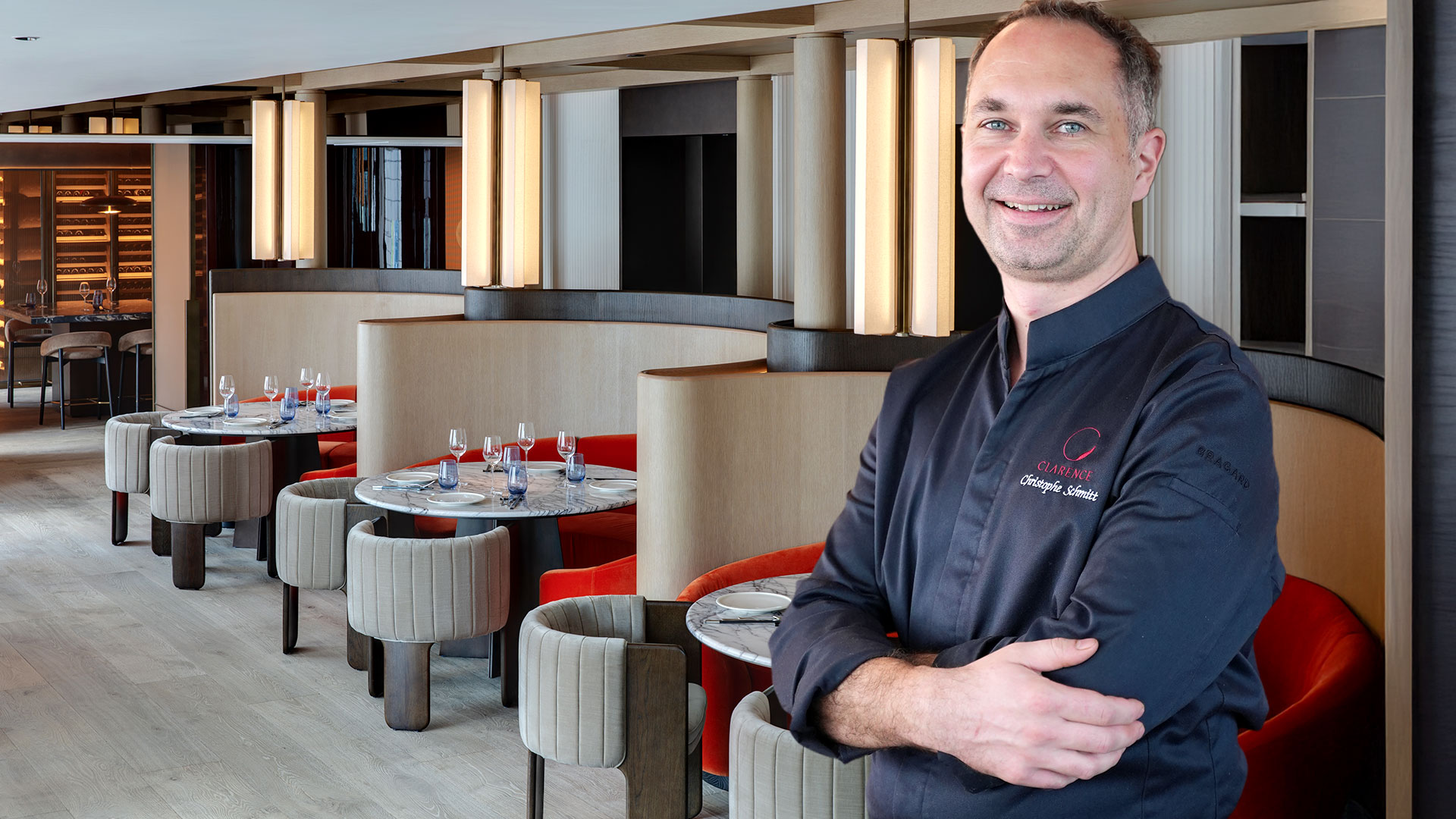
Clarence De Lune: A new Michelin-starred chef lights up fresh French dining amid dazzling night views

Clarence has become a new culinary beacon under the guidance of Executive Chef Christophe Schmitt, a fresh arrival from acclaimed Michelin-starred restaurants in France. As he unveils his inaugural dinner menu, the excitement is palpable. DeSchmitt seems utterly thrilled to dive into the vibrant melting pot that is Hong Kong. “My journey in Asia is not just a professional shift; it’s about rediscovering my love for food through fresh perspectives,” he shares.

With chic décor combined with 25th-floor views that dazzle over bustling streets, the atmosphere removes any notion of pretentiousness while maintaining a refined aura. “It’s essential to create a space that feels both inviting and sophisticated,” notes the chef. And this restaurant achieves just that.

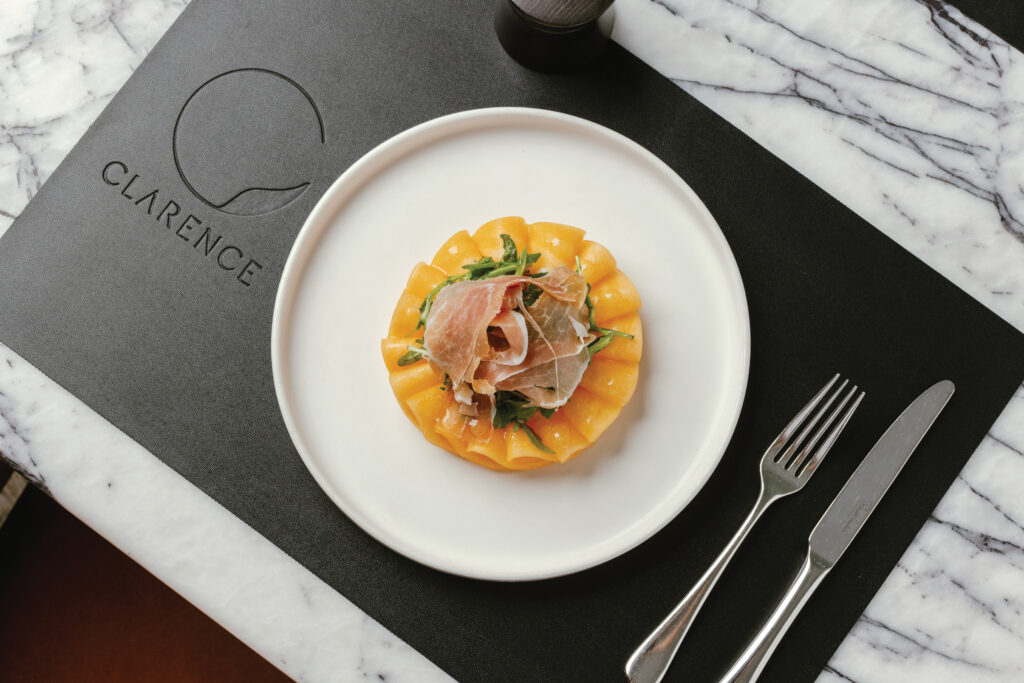
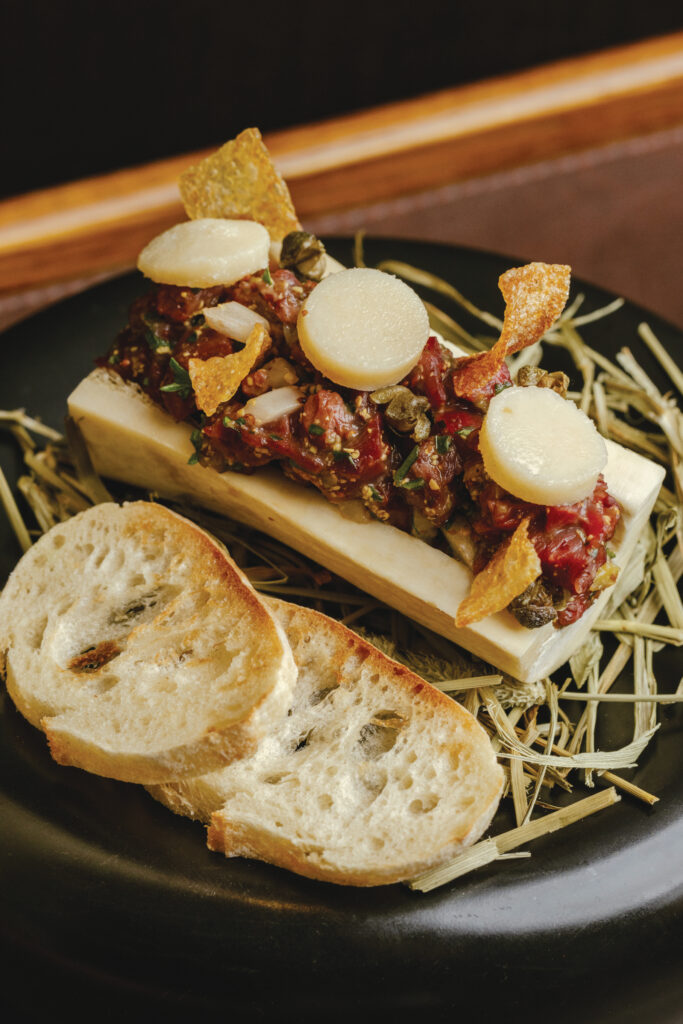
Dinner opens with the beef tartare served in bone marrow topped with a side of baguette toast. This dish is a jazz concert of textures and flavours, where the robust richness of the marrow encounters the delicate nuances of tender raw beef, all while a crispy crostini adds a relay of crunch. Schmitt remarks: “I wanted to modernise classic dishes. This tartare honours French traditions but introduces different textures for a surprising and fresh experience.”

Should you be seeking meat-less delight, look no further than beetroot and fresh goat cheese ravioli, a play of sweetness enveloped in divine pasta. The accompanying beetroot juice lends a colourful vibrance while ginger and lime pull everything into balance, revealing a dish that is as beautiful as it is delicious. Schmitt’s personal favourites infiltrate the menu; this ravioli harkens back to his admiration for artisanal goat’s cheese discovered in the South of France.

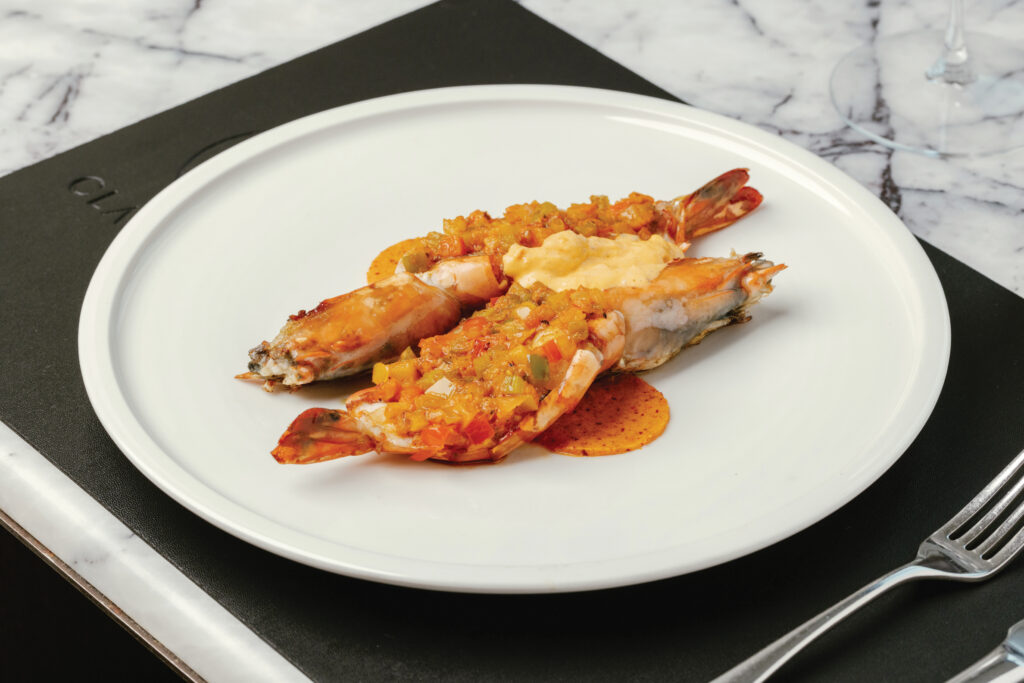
For those who find joy in the ocean’s gifts, smoked salmon with potato waffle dances over the palate, and BBQ octopus with potato foam delivers succulent tenderness that imparts warmth and satisfaction without crossing into heaviness. Clarence encourages patrons to embrace the camaraderie of shared dining; each dish has been crafted not only to tantalise the senses but also to foster moments of togetherness – the intent is for diners to savour flavours while creating memories alongside family and friends.

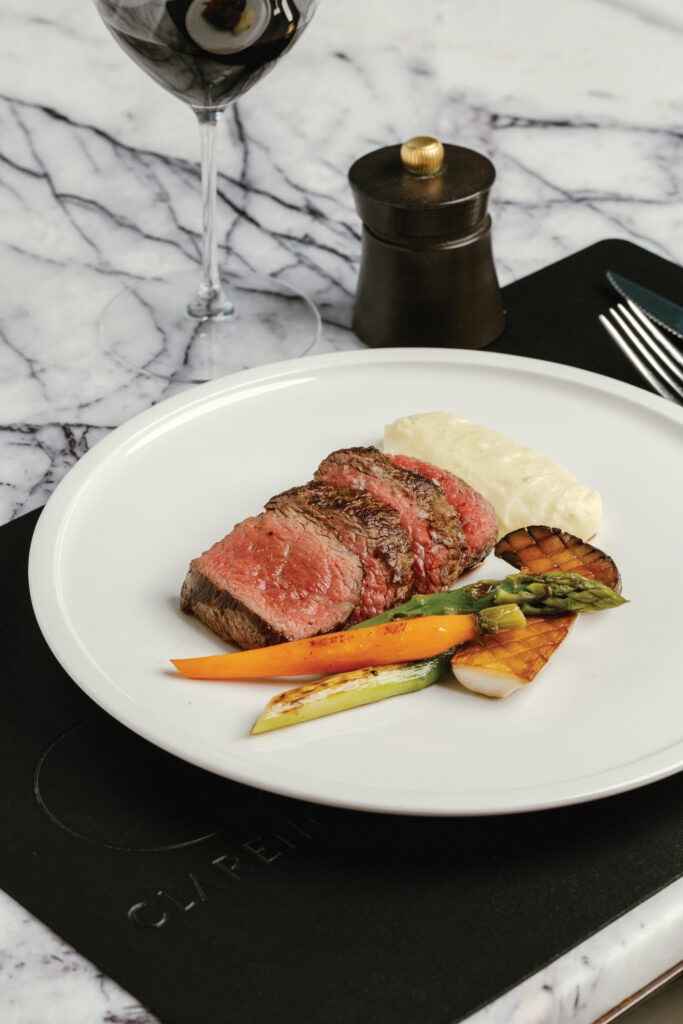
Transitioning into mains, beef fillet and foie gras pithivier stands as a beacon of indulgence. The dish teams luxurious beef and foie gras encased in flaky pastry with a truffle vinaigrette salad. It’s a decadent juxtaposition of textures designed to transcend through freshness. Schmitt reflects on this creation, noting the artistry of the pastry craft: “Each element must blend into a harmonious experience.”

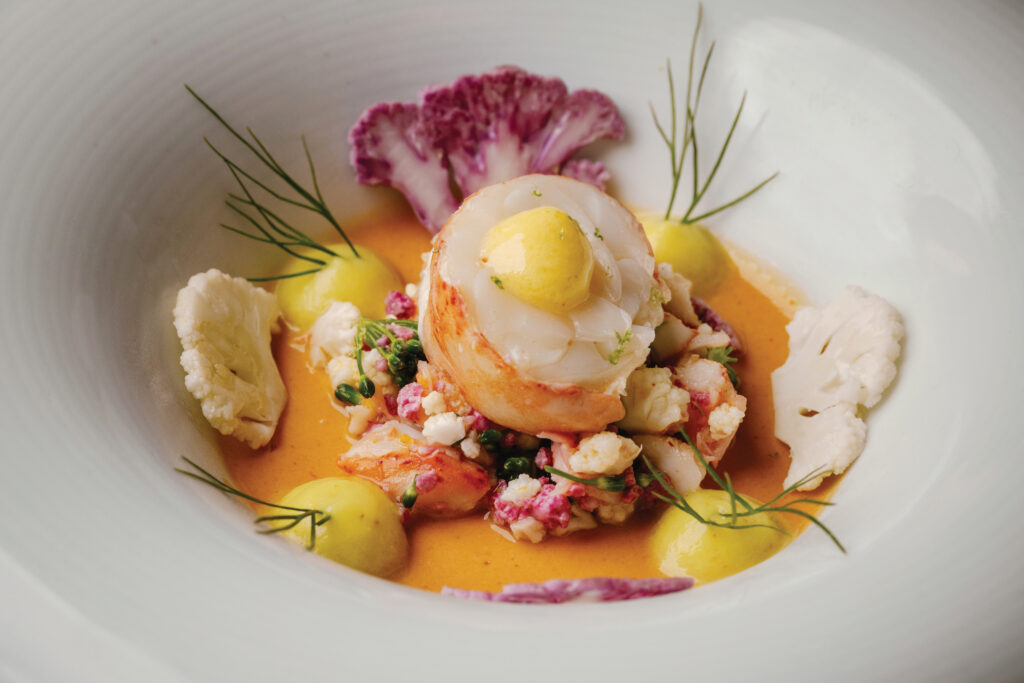
Seafood aficionados will rejoice in skate wing cooked on the bone, where brown butter and spices add a depth that feels comforting. Paired with an endive and Comté salad, the freshness of the greens cuts through the richness of the fish – a perfect dance of flavours with each bite yielding a new sensory revelation.

End your meal with the chef’s playful take on dessert. Croffle with salted caramel and Normandy milk ice cream steals the show, marrying the crispy delights of croissant-cum-waffle into one daring vessel of sweetness. And if your heart longs for warmth, hot chocolate moelleux, with its molten chocolate centre served with sumptuous ice cream, promises sweet surrender.

Beyond the dishes lies a dining philosophy that emphasises seasonality and local ingredients, and Schmitt passionately invokes the necessity of this connection. The use of Japanese sea urchin, for instance, reflects his adaptability to local produce while maintaining the finesse of his French roots. “This balance highlights how local Asian ingredients can reinvent classic dishes,” he explains.

Clarence’s carefully curated and affordably priced dinner menu offers an exceptional experience, reinforcing the new chef’s vision of a dining journey where every detail has been examined.

True enough, Clarence is a testament to the magic unleashed when French tradition interlaces with the vibrant essence of Asia. Bon appétit!

Clarence, 25/F, H Code, 45 Pottinger Street, Central, Hong Kong

 Photos: Clarence   Video: Jack Fontanilla  

What’s on? Things to do this December in Hong Kong

December brings many festive treats, none more so than a ballet performance of The Nutcracker and other great theatrical productions, plus great concerts, film and photo festivals and more besides! 

The Nutcracker

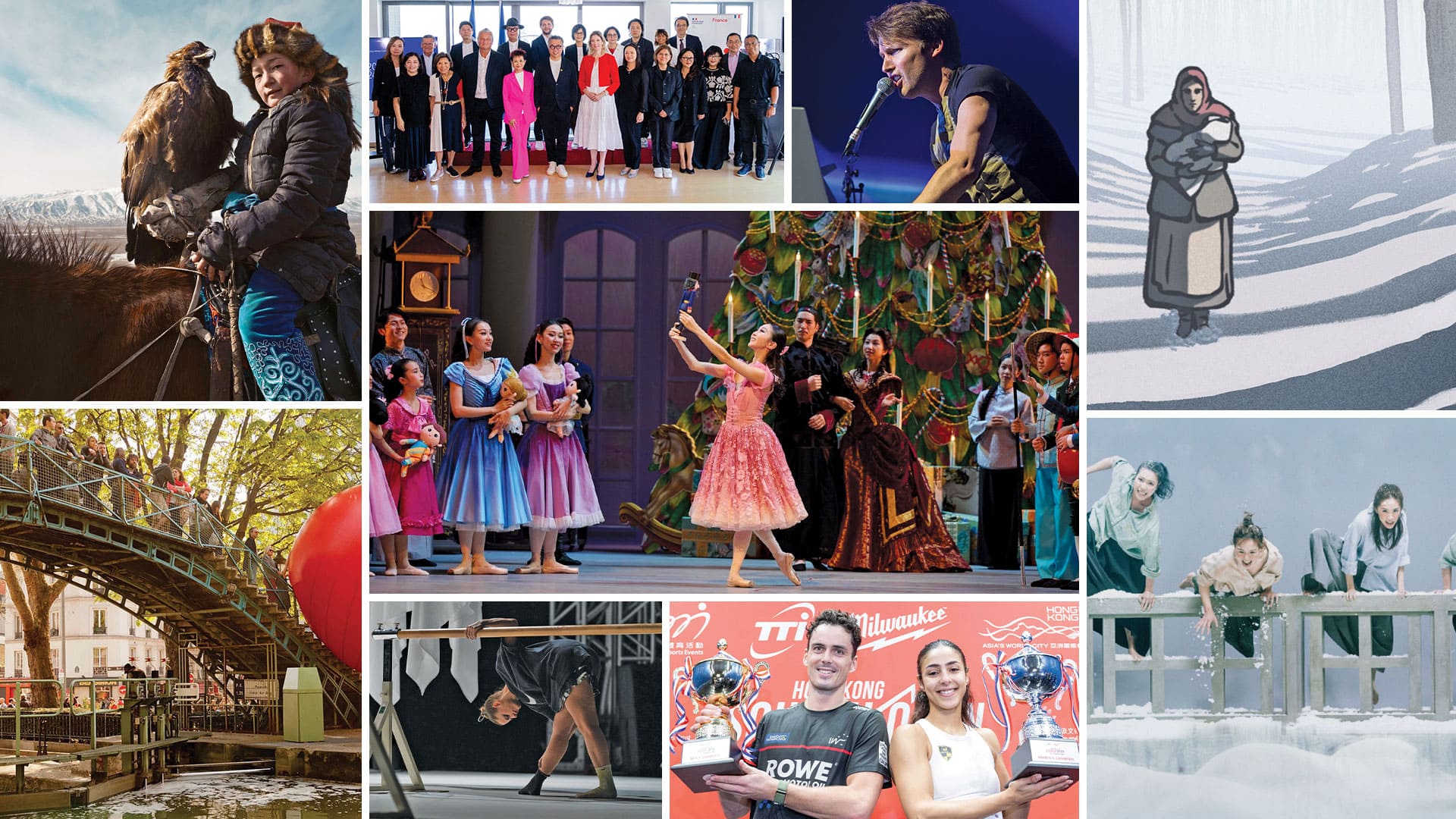
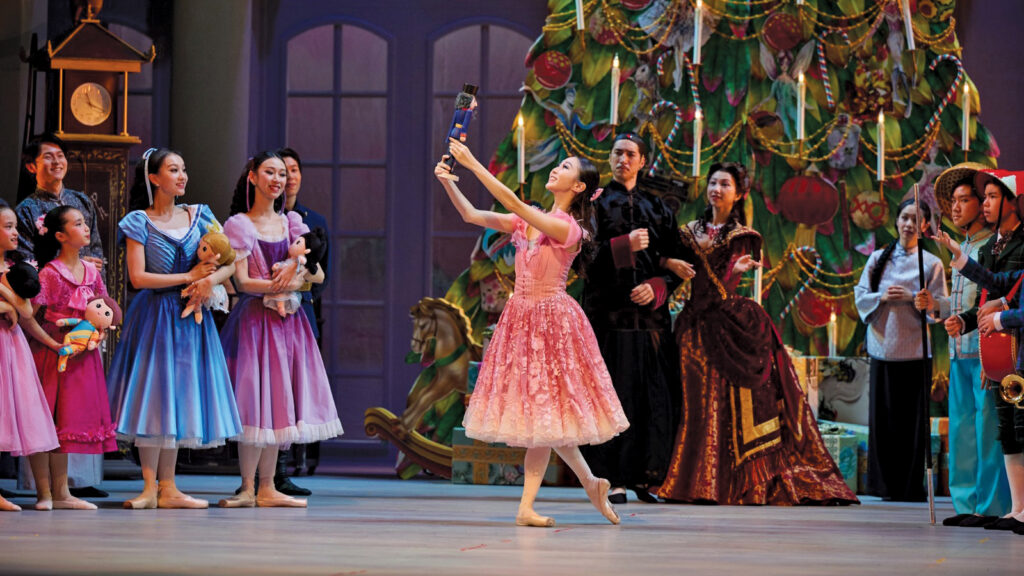
Performances by Hong Kong Ballet are always a delight to behold, and none more so than the Christmas special performance of The Nutcracker. Majestic dancers dressed in eye-catching costumes will take the audience on a journey tinged with a distinctly Hong Kong theme, choreographed by Artistic Director Septime Webre to the backdrop of live music penned by Tchaikovsky. Expect to encounter bauhinias, dim sum, jockeys and so much more on this magical quest within the snowy bamboo forest. There are also talks, workshops and the chance to meet and greet the characters.

When: 13 Dec-15 Dec, 17-22, 24-26 Dec

Where: Cultural Centre Grand Theatre

How much: From $220

For more information: hkballet.com

Business of Design Week

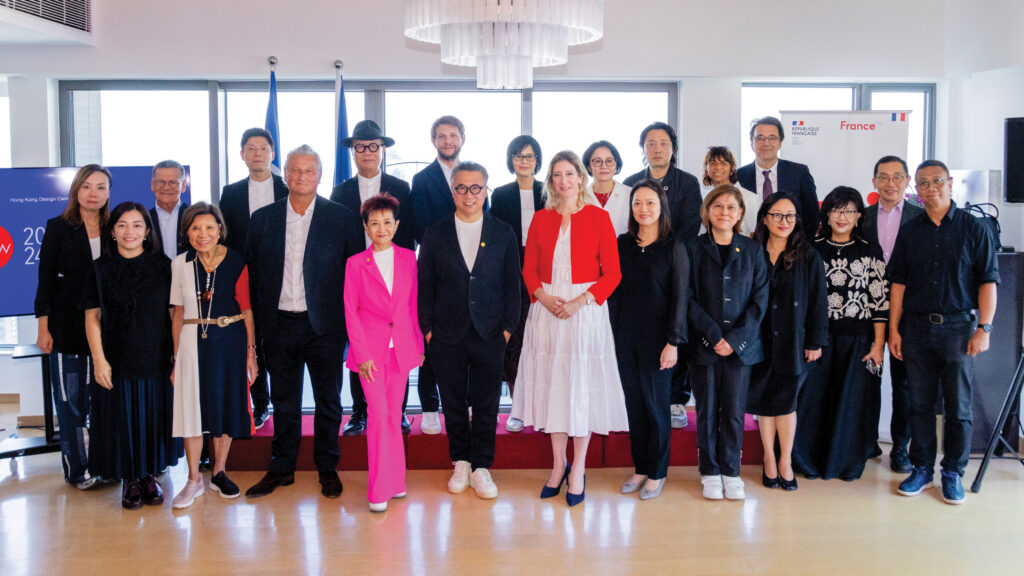
Never failing to attract some of the finest designers and entrepreneurs locally and internationally, BODW has gained a reputation as one of Hong Kong’s pre-eminent mega events. The annual six-day gathering takes the intersection of design, artistry and innovation as its theme, and France as its partner country. Displays, speeches, panel discussions cover five key topics: urban futures, brands and retail resurgence, craftsmanship and material mastery, culture and digital aesthetics, and AI and future tech.

When: 2-7 Dec

Where: Convention and Exhibition Centre

How much: From $680

For more information: bodw.com

Hong Kong Squash Open

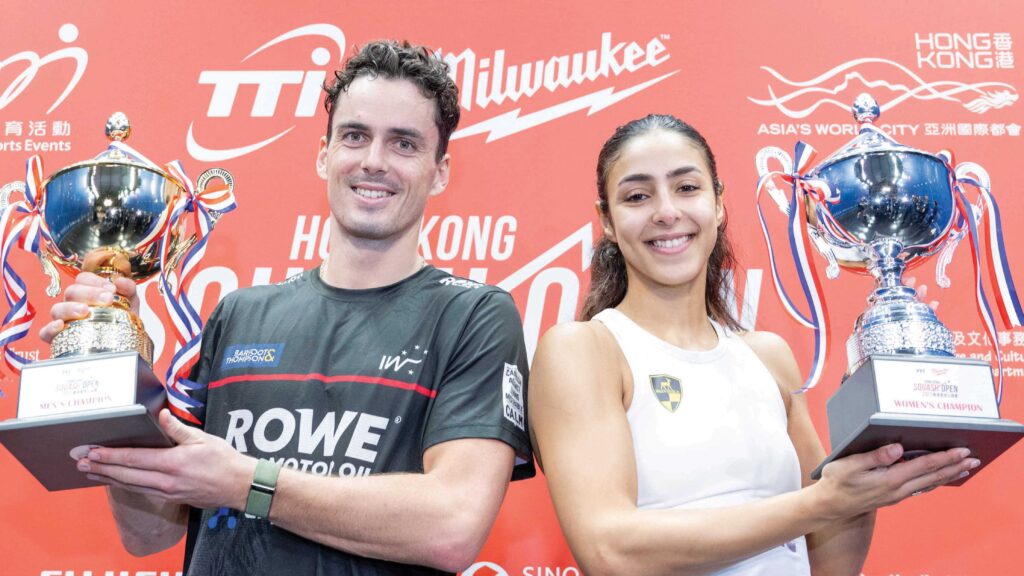
Take the opportunity to see some of the world’s best squash players pit their wits and athletic prowess against each other at this platinum event on the Professional Squash Association World Tour. The Hong Kong skyline will add extra sparkle to a sporting display of the highest order when the competition moves to a glass court at Edinburgh Place in Central at the quarter-final stage. Hong Kong’s top male and female players will perform in front of a home crowd. 

When: 2-8 Dec

Where: Hong Kong Squash Centre and Edinburgh Place

How much: From $120

For more information: hksquashopen.com

Redball Hong Kong

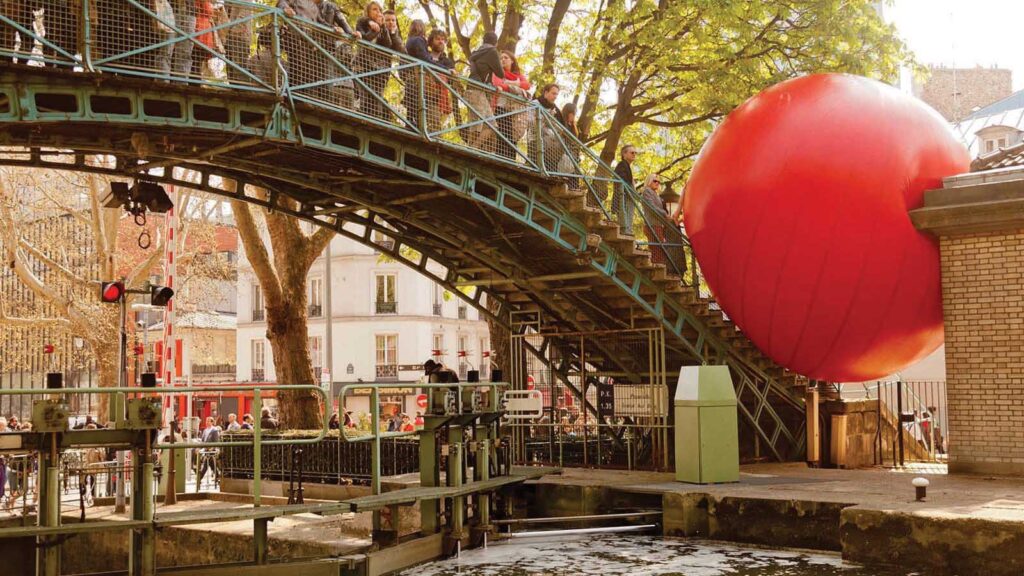
Running in conjunction with Business of Design Week is RedBall Hong Kong, a community celebration of what is considered to be the world’s longest-running street artwork. The RedBall Project by American artist Kurt Perschke has been touring the world since 2001, and during this Hong Kong residence it will relocate to various sites around the city, prompting onlookers to view familiar locations from a different perspective.

When: 6-15 Dec

Where: Various locations

How much: Free

For more information: redballproject.com

The Absolute Task

The six-month extravaganza that is Great Music 2024 comes to a sumptuous finale in November, with two recitals by Krystian Zimerman among the concluding highlights. The Pole has performed wih the world’s leading orchestras and is considered to be one of the greatest pianists of his generation. His masterly fingers will perform two slightly different concerts, where he will delight audiences with works by Chopin and Szymanowski.

When: 7-15 Dec

Where: City Hall Theatre

How much: From $200

For more information: hkrep.com

James Blunt in Concert

The hugely successful English singer-songwriter artist finally reaches Hong Kong as part of the Who We Used To Be tour showcasing his latest album. The former British Army officer has developed a legion of devoted followers since the release of his hit song, You’re Beautiful, two decades ago and the subsequent plethora of outstanding musical output covering a variety of genres. Blunt is a winner of numerous prestigious awards.

When: 12 Dec

Where: Hall 10, AsiaWorld-Expo

How much: From $980

For more information: jamesblunt.com

Hong Kong International Photo Festival

Immerse yourself in the visual treat of this amazing feast of photography and its fantastic range of images. This year the festival – first presented in 2010 – features a flagship exhibition under the theme of Mega Family: Imagining Home. Fifteen Hong Kong photographers were commissioned to cast their lens on local culture in all its manifestations linked to home and the family. Visitors are expected to find multiple connections with their own experiences.

When: Until 8 Dec

Where: Arts Centre

How much: Free

For more information: hkipf.org.hk

Hong Kong French Film Festival

Enjoy the cinematic beauty of the French Film Festival as it celebrates its 53rd edition by showing more than 50 films. This magnificent film festival is the oldest in Hong Kong, commencing way back in 1953. This year’s movie crop includes a compelling mix of new releases under the categories of Festival Exclusives and Hong Kong Premieres, Retrospective and On Design.

When: Until 10 Dec

Where: Various prices and venues

How much: Various prices and venues

For more information: hkfrenchfilmfestival.com

Freespace Dance 2024

Billed as an exploration of time and space through dance, this showcase encompasses a range of local and international dance artists who portray their chosen artform both imaginatively and creatively. Some performers – such as the Thai artist Kornkarn Rungsawang – will add a twist to their show via augmented reality. Meanwhile, Austrian choreographer Florentina Holzinger offers a mesmerising exploration of the female body.

When: Until 15 Dec

Where: Freespace, West Kowloon

How much: Various prices

For more information: westk.hk

Palate Playground: Modern Indian wonderland Leela is joyfully rooted in the flavours of a vast culinary heritage 

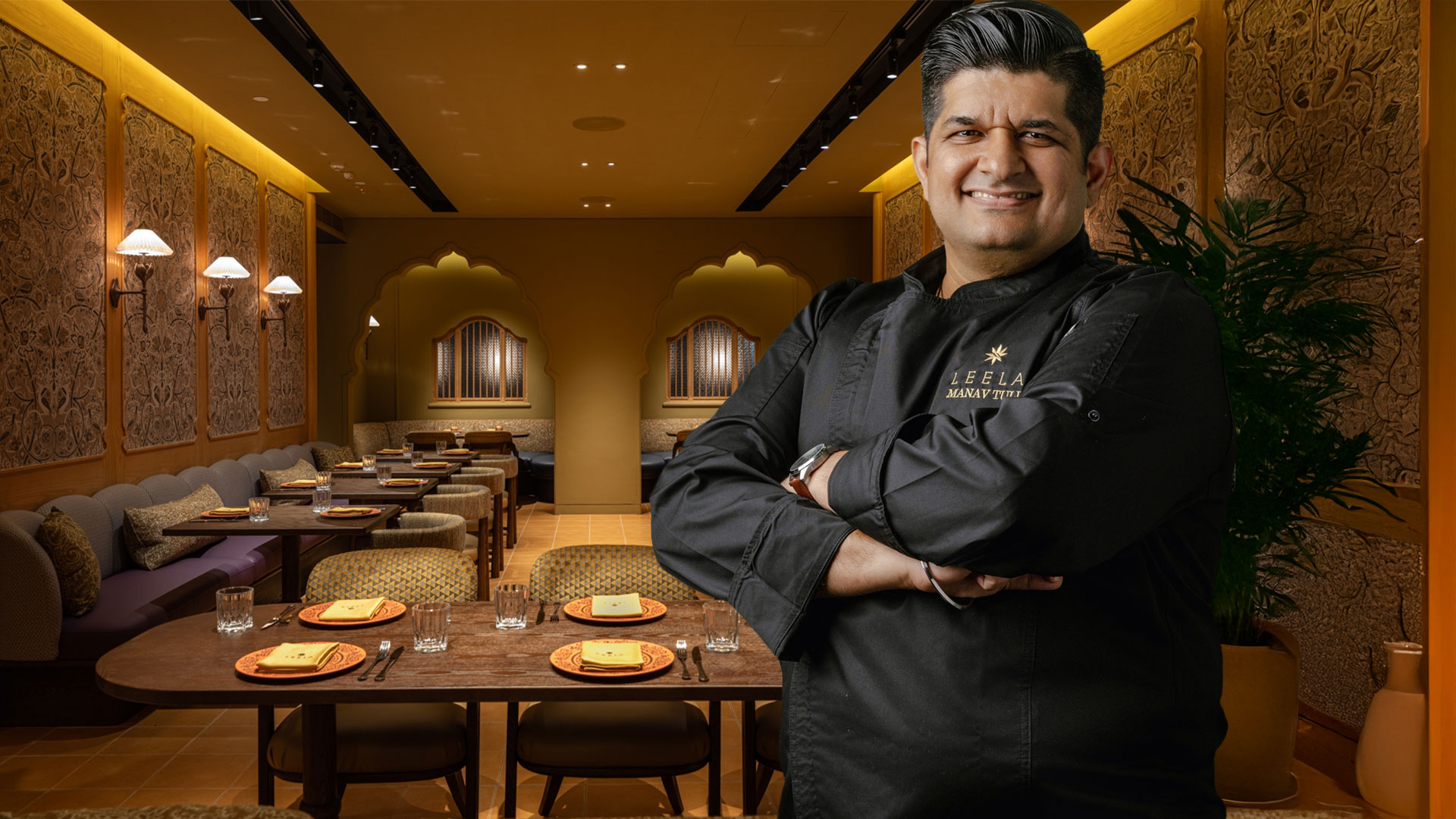
The name Leela stems from the Hindu concept of ‘divine play’, and what better way to embody that than with a menu that dances between the ancient and the avant-garde? Chef Manav Tuli, an Indian gastronomy virtuoso, helms the kitchen with infectious passion and an innovative approach to traditional recipes. Each dish is a vibrant palette of colours and spices, telling its own story while being anchored in India’s rich culinary heritage.

As the seasons change, so too does the menu, unveiling a slew of new creations crafted to tantalise the taste buds while paying homage to regional Indian inspirations. One standout is jackfruit and soya keema dabeli, an imaginative reinterpretation of a beloved street food from Gujarat that, with its tangy tamarind chutney and luscious caramelised onions, conjures the all-consuming sensation of strolling through the bustling markets of India.

“My approach has always been to present food authentically while incorporating Ayurvedic principles and local ingredients,” explains Chef Tuli. “I believe in preserving the soul of Indian cuisine by honouring our roots while giving individual ingredients the attention they deserve through optimal cooking methods. This process is ever-evolving and represents an exciting journey for any chef.”

A collaboration between Tuli – formerly of Chaat – and Yenn Wong’s Jia Group, Leela opened late last year and already has awards in the bag, including the prestigious Michelin Recommended Restaurant accolade. The modern Indian oasis is quickly becoming a must-visit destination for foodies and culture-seekers alike.

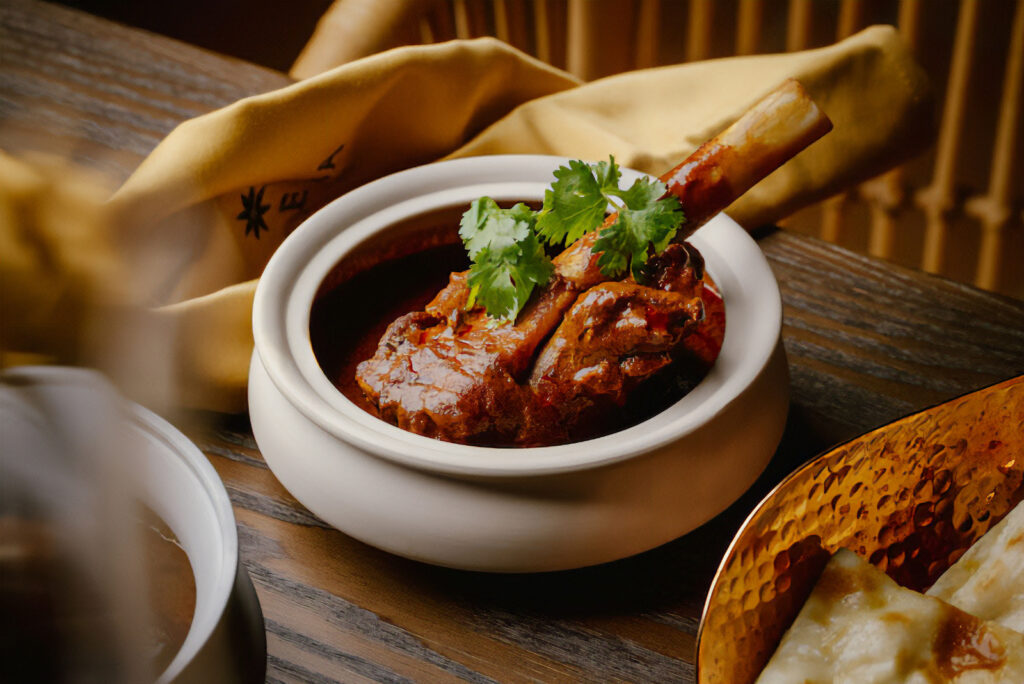
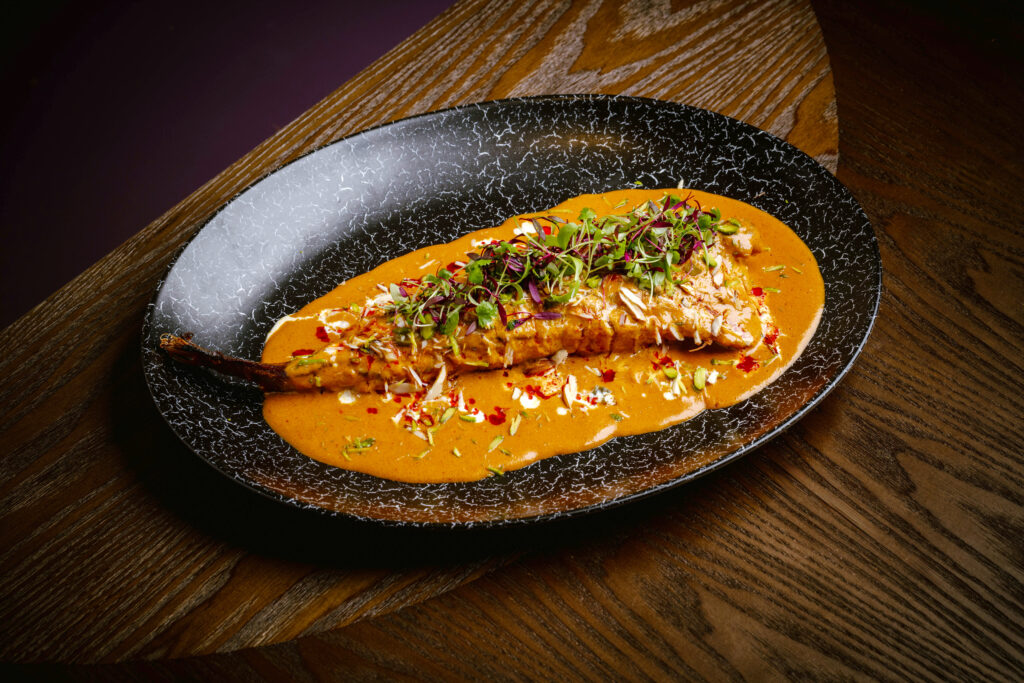
If it’s culinary nostalgia you crave, look no further than the chef’s chicken tikka kulcha. This delightful dish fuses juicy grilled chicken with pillowy Indian flatbread, accompanied by marinated onions and an animated mint and tomato chutney. Chicken tikka mirza hasnu pays tribute to the court of Asaf-ud-Daulah, inviting anyone to savour char-grilled chicken infused with a symphony of spices such as cloves, cardamom and smoky mango powder.

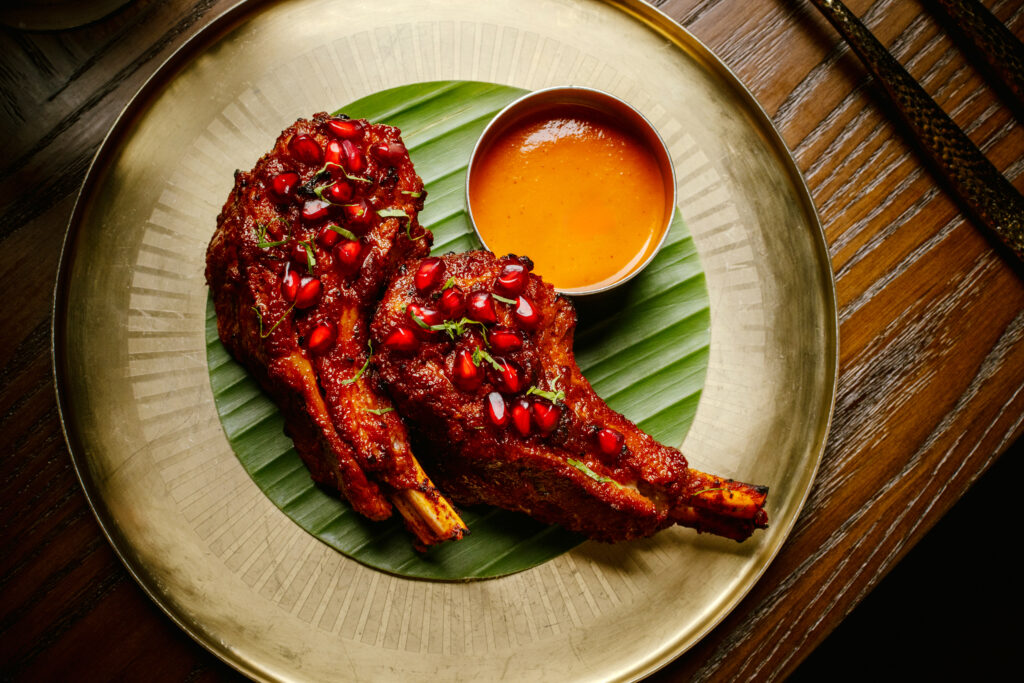
For seafood enthusiasts, tandoori squid emerges as a masterpiece, showcasing tandoor-charred U3 squid marinated in Kashmiri chilli. And if anyone considers lamb a monotonous affair, they’ll have to think again. Kandhari lamb chop morphs into a succulent delight with ginger juice and pomegranate marrying the rich flavours of Afghanistan’s Kandahar region.

Diners can also indulge in duck jardaloo, a Parsi classic reimagined with duck breast, soaked in the divine sweetness of dried apricots, or savour the communal spirit of the chaat platter, a delicious array of tangy Indian snacks that traces its roots back to the reign of Emperor Shah Jahan. But beyond just tantalising flavours, it champions sustainability. Chef Tuli ensures that the ingredients are local and fresh, embodying the ethos of using seasonal produce to minimise environmental impact while delivering peak flavour. Lotus root and edamame pulao is just one example of this commitment, using locally sourced ingredients like lotus and edamame in a refreshing medley that speaks both to the land and the palate.

“I aspire for guests to leave with a sense of discovery connected to Indian cuisine’s essence – experiencing its depth of flavours and cultural significance through each dish telling a story rooted in my culinary journey across India’s diverse traditions,” he notes. “Dining at Leela should be more than just a meal; it should be an exploration of Indian culinary heritage that fosters connection and curiosity about what Indian cuisine offers beyond typical expectations.”

The dining escapism at Leela is not just about feeding the body, but nourishing the spirit with each delightful bite. It’s more than a meal; it’s an experience that connects you to the heart and soul of Indian cuisine – a vibrant montage of spices, history and joy. Whether you’re a connoisseur of Indian flavours or a curious newcomer, the culinary playground at Leela promises to captivate your senses. Gather your friends and jump into this immersive Indian feast that celebrates food, culture and the art of communal dining like no other.

LEELA, Shop 301-310, Lee Garden Three, 1 Sunning Rd, Causeway Bay, Hong Kong 

2024 Power List: The 300 Most Powerful People in Hong Kong

Unveiling the heartbeat of Hong Kong: Gafencu’s annual Power 300 list shines a spotlight on the titans shaping our skyline and our future. From influential business magnates to visionary social entrepreneurs, discover the extraordinary minds driving innovation and redefining success in a city of ambition. Who made it in this year’s list? Click here to explore the elite ensemble that makes Hong Kong thrive! 

Wine Chemistry: At ThinkWine, entrepreneurial oenophile [or epicurean] Romain Loriot uncorks elegance and joie de vivre 

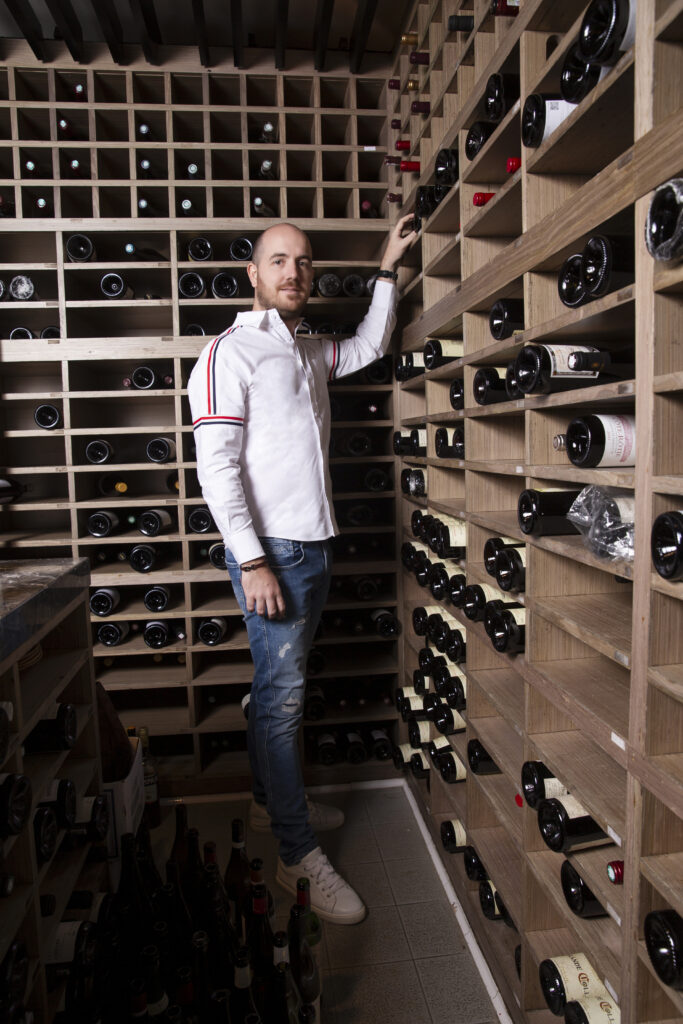
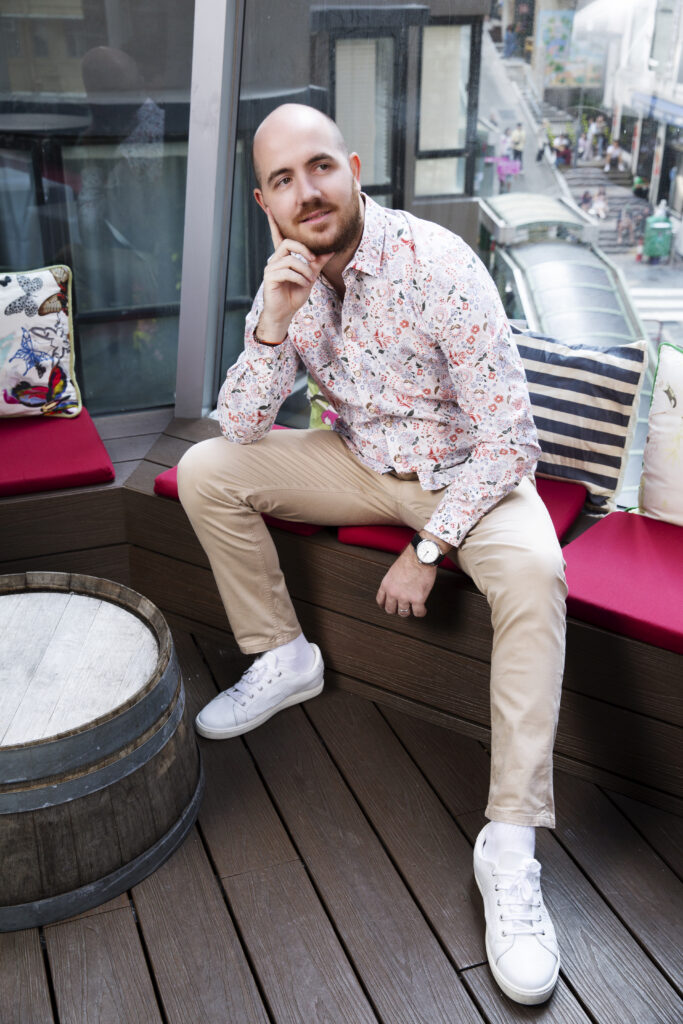
Cellaring impressive bottlings from France as well as Australia, Italy, Spain, Germany and emerging wine nations like Lebanon, ThinkWine is more than just a wine bar; it’s a sojourn through the world’s vineyards. Romain Loriot, the visionary behind the venture, commits to procuring exciting offerings for the city’s wine connoisseurs to sip in an ambience that is second to none.

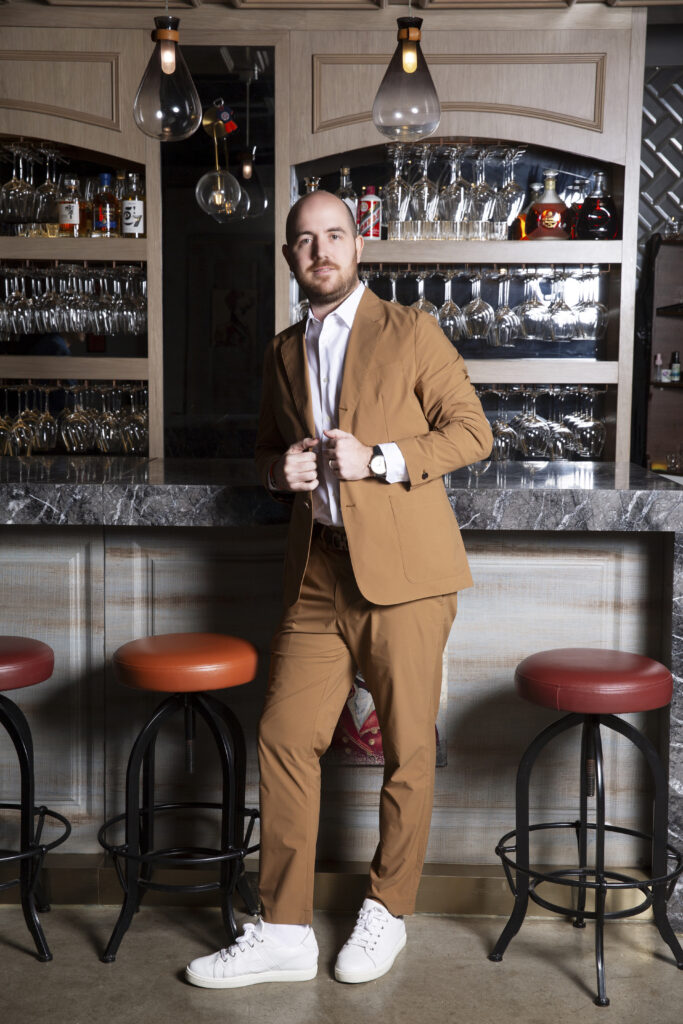
“The one problem I don’t experience anymore is fixing my hair,” says the debonair – and balding – French expatriate, poking fun at himself. “It’s a blessing and a curse at the same time.”

Loriot’s route to his vibrant/eclectic premises in Shelley Street, Central was shaped by his childhood experiences, culinary aspirations and passion for the nuances of the grape. He grew up in Montpellier, a city nestled in France’s Languedoc-Roussillon region, known for its rich wine culture. However, his early life was steeped in music rather than vines.

“Coming from a musical family, I was always surrounded by classical pieces and French singers,” he recalls. Although he played the piano, he felt a different calling. Academic struggles led him to vocational school, where he initially aspired to be a chef.

Loriot’s parents, although not industry professionals, had instilled in him a love of fine dining. Their frequent visits to Michelin-starred restaurants provided invaluable gastronomic experiences. “Without their encouragement, I might not have pursued my education at food and beverage school,” he reflects.

While he was raised in a region renowned for the beauty of its vineyards, it was his family’s dining preferences that ignited his interest in wine. “My parents encouraged me to acquire a unique skill set that would set me apart [in the F&B field] – knowledge of wine,” he says.

This support was instrumental in shaping his career. After three years of studying food and beverage management, a further year specialising in wine at a school in Nîmes was a turning point. There, he unearthed not only a fervour for wine but a natural aptitude for its appreciation.

Creative Juices

In 2011, Loriot’s professional path began in earnest as he entered the intense world of fine dining. His early career was marked by stints at prestigious restaurants, including those by Alain Ducasse, where he honed his skills as a sommelier. His time at The Dorchester in London and later at Rech, in Paris and in Hong Kong, heightened his understanding of wine and food pairing.

One of his most memorable episodes in eight years as a sommelier was at Rech in Paris, whose “talented chef had a deep passion for wine”. This synergy culminated in a unique collaboration whereby Loriot’s wine choice inspired a new dish, showcasing the harmonious relationship between cuisine and wine.

As Head Sommelier at Rech, he managed teams, oversaw stock and crafted engaging lists that reflected his wine ethos. These roles deepened his knowledge and helped him grow as a leader in a dynamic environment. “Developing unique wine pairings became a key aspect of my role,” he notes of his constant mission to enhance guests’ dining experiences.

From Think to Drink

The idea for ThinkWine had been brewing long before its 2019 launch. Loriot landed in Hong Kong in 2016, and after two years at Rech (which was located in the InterContinental Hotel) he stepped up the service industry ladder to become Group Sommelier at a thriving restaurant group. But then, inspired by personal milestones – his marriage and the impending arrival of his child – he recognised the time had come to establish a venue that encapsulated his wine vision. “We had not encountered a wine bar in Hong Kong that embodied the essence of ThinkWine,” he says.

From the outset, his goal as founder and Managing Director was to curate an exceptional list. This devotion to exclusivity and quality sets ThinkWine apart – for instance, it’s the only establishment outside France that offers bottles from Château de Cherubin & Rayas, the spectacular Renaissance castle in the Loire Valley. “We procure wines directly from France, leveraging the relationships I’ve established with various winemakers,” he explains, highlighting the meticulous selection process that defines his cellar.

At ThinkWine, patrons can expect a diverse array of wines, with approximately 75% of offerings from France. Selections from emerging wine-producing countries ensure accessibility for all enthusiasts, with bottles priced from HK$350 to $42,000. “Our focus is on the quality and flavour of the wines we choose,” he states.

In recent years, Loriot has championed producers outside his homeland, recognising their distinctive profiles. “When I arrived in Hong Kong, my knowledge was primarily centred on French varieties,” he admits. However, exposure to diverse labels from Australia, Italy and beyond has enriched his perspective. “Each country has its unique characteristics and stories behind its wines,” he adds, underscoring a pledge to showcase a broad spectrum of styles.

Glass Runneth Over

Loriot’s love of wine is intertwined with his philosophy of happiness. “Wine is indeed a significant part of my happiness,” he affirms. However, he emphasises that true fulfilment comes from balancing professional commitments with personal relationships. “The connections we build enhance our appreciation of life’s joys, including wine,” he reflects.

Looking ahead, he aims to extend ThinkWine’s scope. “In January 2023, we successfully launched our distribution channels to restaurants and hotels,” he reveals. He also envisions establishing new wine bars in Hong Kong, Macau and Shanghai, or even returning to France to share his inventive approach to wine enjoyment.

When asked about his favourite wines, Loriot expresses a fondness for Champagne and Burgundy, but also appreciates the outstanding pours of Australia that he has encountered during his time in Hong Kong. “Each vintage brings its own unique character and story,” he notes, highlighting the richness of the wine experience.

For those aspiring to enter the industry, Loriot believes a genuine passion for the winemaking craft is essential. “The initial stages can be challenging, but with perseverance and the right guidance, it is possible to achieve great heights,” he encourages, reflecting on his own journey and the dedication it demands.

As Loriot continues to curate a dazzling list and foster a deeper love for wine in the Hong Kong community, he embodies the spirit of exploration and discovery that defines the world of wine. Through ThinkWine, he not only shares exceptional vintages but also invites everyone to partake in the joy of wine appreciation, one glass at a time. Or, in his case, bottle.

“See all of this beautiful mess,” he says in delight, indicating empty bottles left over from their fifth anniversary bash the previous week. “We sure know how to throw an epic party, ha? Fun times and even more fun and brighter times ahead. I say cheers to that!”

Rustic Roots: Every bite at Racines whispers the charm of the countryside and the future of French cuisine

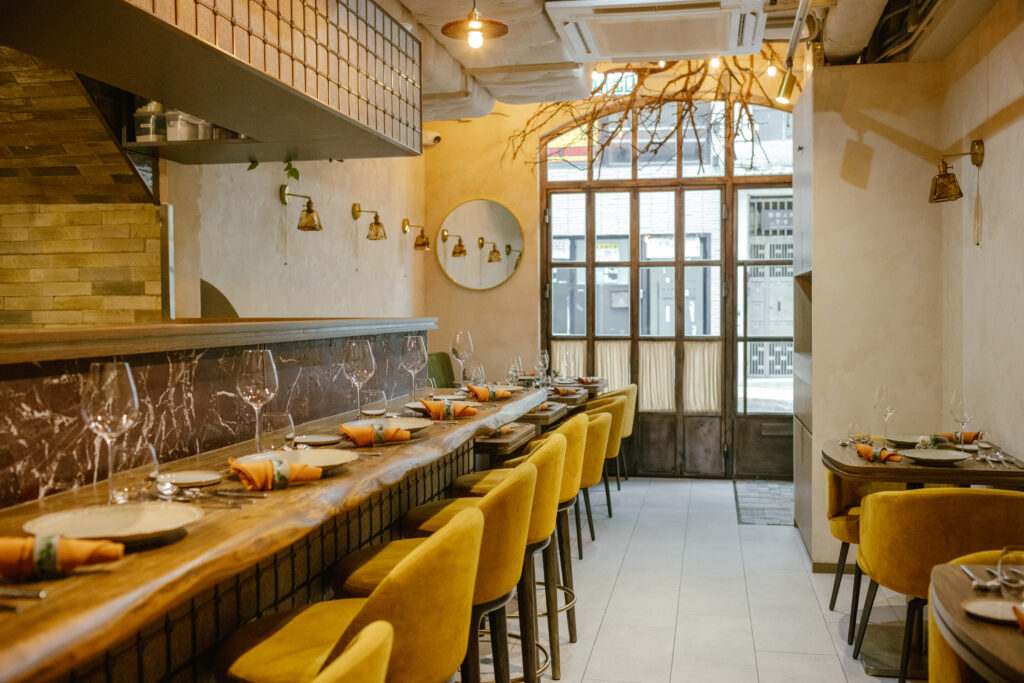
It’s 12:30 pm on a breezy autumn afternoon in Sheung Wan, but in the Racines kitchen, dinner is already in full swing. Backs are curved over dough that will soon become sourdough loaves, the evening’s sorbet is well in hand, and beloved signature staples are being prepped. The restaurant itself is homey and unhurried, with an easy-going vibe that hides the greater ambitions of the chefs. Not to mention, the surprising choice of ’90s to early 2000s hip-hop playing in the background.

Designed around an illustration of a seedling and its roots (‘racines’ in French), the cascading tasting menu showcases the finest seasonal ingredients and celebrates the rich culinary traditions of the South of France. Nestled in the heart of Hong Kong, this petite restaurant garnered a well-deserved Michelin star this year, solidifying its status as a must-visit destination for food enthusiasts.

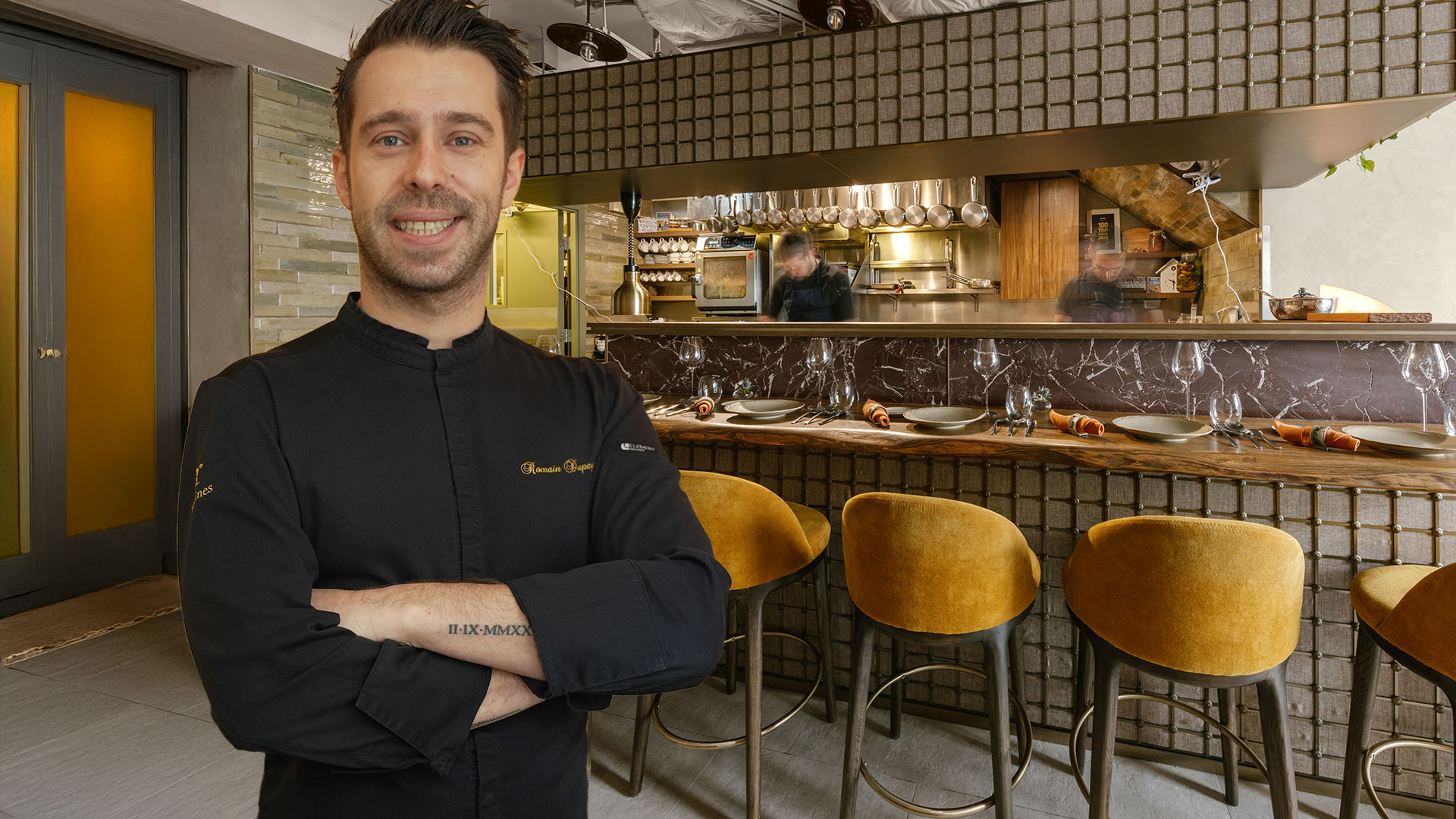
“I want our guests to feel a sense of comfort in our dining room, to relax and enjoy each dish and the elements we’ve created to reflect the autumn season,” says executive chef and co-owner Romain Dupeyre, who was raised in Nice. His co-chef, co-owner and best friend, Adrien Castillo, was a fellow apprentice at La Chèvre d’Or on the French Riviera nearly 20 years ago.

“We want to offer our guests a sense of fulfilment from the quality and creativity on their plates and enable them to feel connected to the experience, especially at our chefs’ counter where they can have a front-row seat to the team’s creative process and interact with us.”

The six-course dinner tasting menu begins and ends with a humble vegetable reimagined in unexpected ways. The opening act, Camus Artichoke, is an inventive take on traditional duck-and-walnut salade Landaise. It expertly balances earthy notes with the vibrant flavours of southern France, creating a delightful medley that awakens the senses.

“I love to put a unique twist and artistry to each dish to spark curiosity and take our guests on a discovery of new tastes and textures,” says Chef Dupeyre. “I hope to ignite a sense of excitement and wonder about the culinary possibilities of the ingredients, and so far, it’s been very well received. Guests are often surprised when this dish is presented, because it’s not how they would have had it before, but they’re open to it, and delighted by it.”

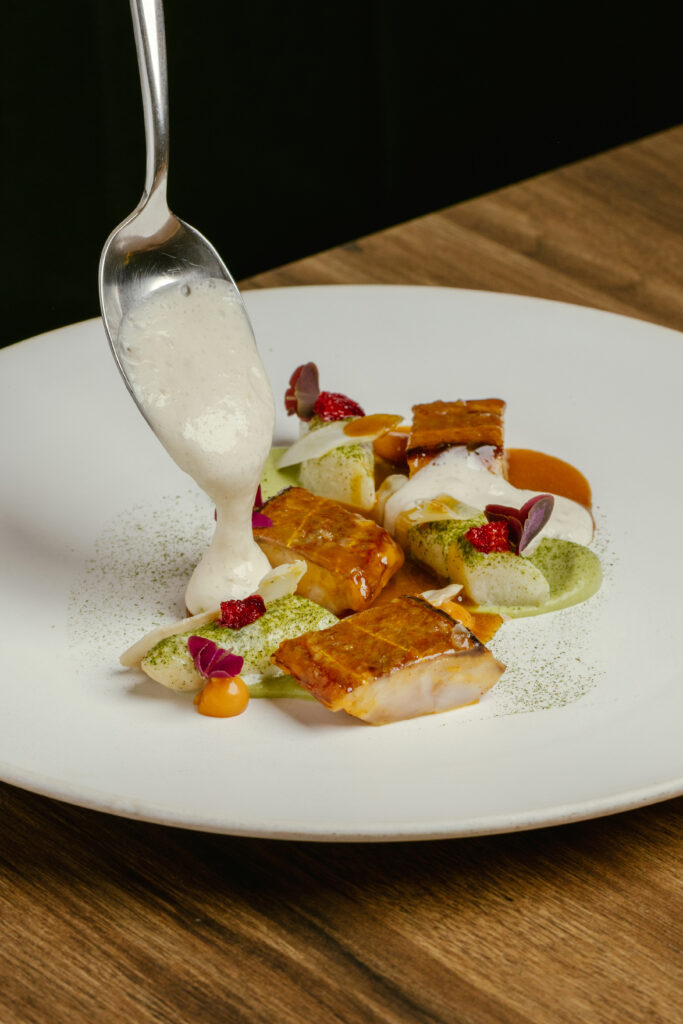
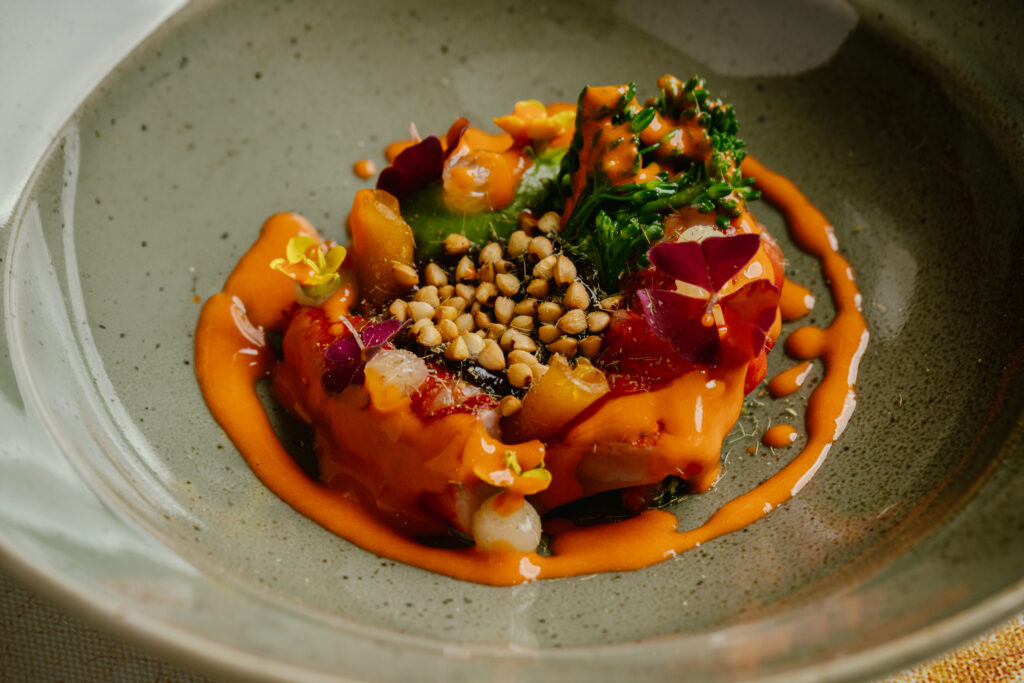
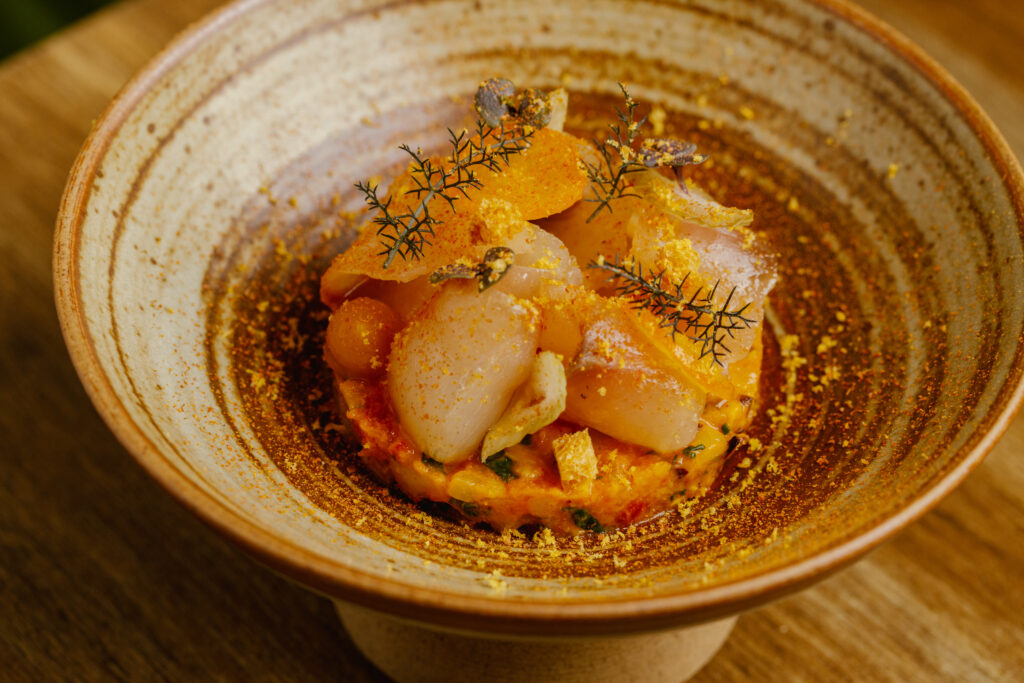
The third course is a particular standout: Mediterranean red mullet, which pays homage to the classic bouillabaisse. The dual preparation of the fish is a bold culinary statement. For the first, a cold dish, the mullet is air-dried for three days, intensifying its flavour while imparting a delicate texture. Cured in a blend of salt, sugar, lemon and orange juice, it’s both refreshing and rich. The second preparation sees the fish pan-fried to perfection, the subtle crispiness complementing the tender flesh.

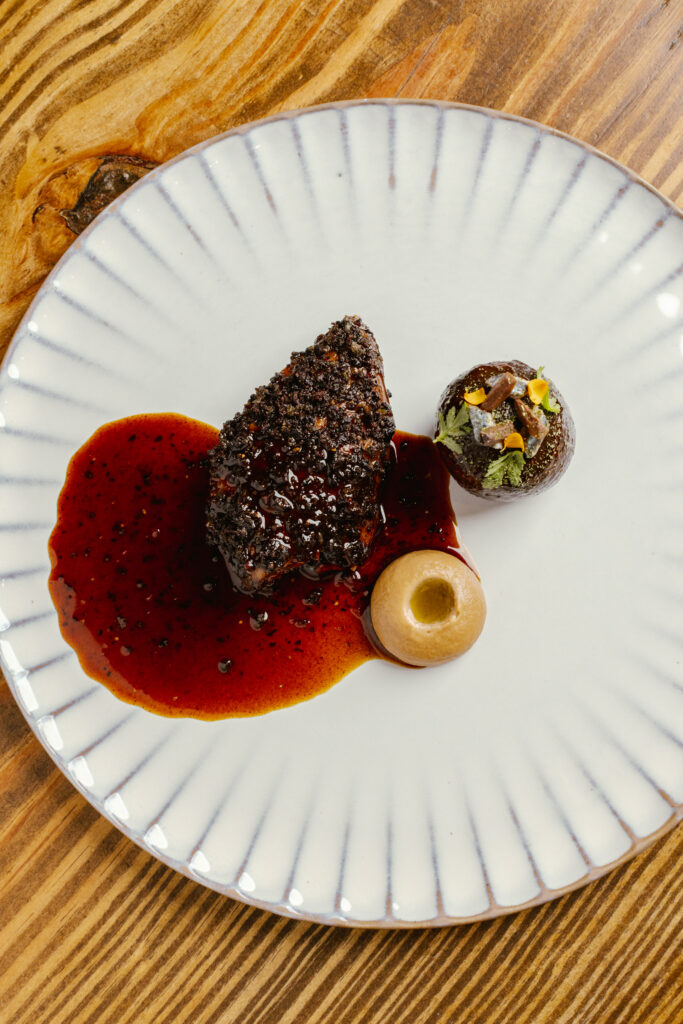
Brittany pigeon and Brandt beef from California, both elevated to new heights as main-course choices, are faultless. The pigeon, paired with figs at their seasonal peak, presents a perfect harmony of sweetness and rich, savoury flavours. Meanwhile, the ribeye flank, kissed by the smoky essence of a binchotan grill, embodies the heartiness of the season. The beef is enhanced by a selection of seasonal ingredients that deepen its flavour profile.

Following the cheese course served with house-made sorbet, Jerusalem artichoke takes centre stage, defying traditional dessert expectations. The chefs skilfully transform this root vegetable into a sweet finale that captures the essence of autumn. It’s an unexpected twist that not only surprises the palate but also leaves a lasting impression, marking a memorable end to the meal.

Complete with a root chandelier and a dining countertop engraved with the Chinese characters for prosperity and power, Racines provides irrefutable assurance that rustic dining is not and should not be at all intimidating. More than good food and more than a gateway to French cuisine, it is a sign of the times that beautifully marries tradition with innovation.

Racines, 22 Upper Station Street, Sheung Wan, Hong Kong.

Photos: Racines   Video: Jack Fontanilla

KS Studio Ltd – Innovative design studio perfects restaurant interiors

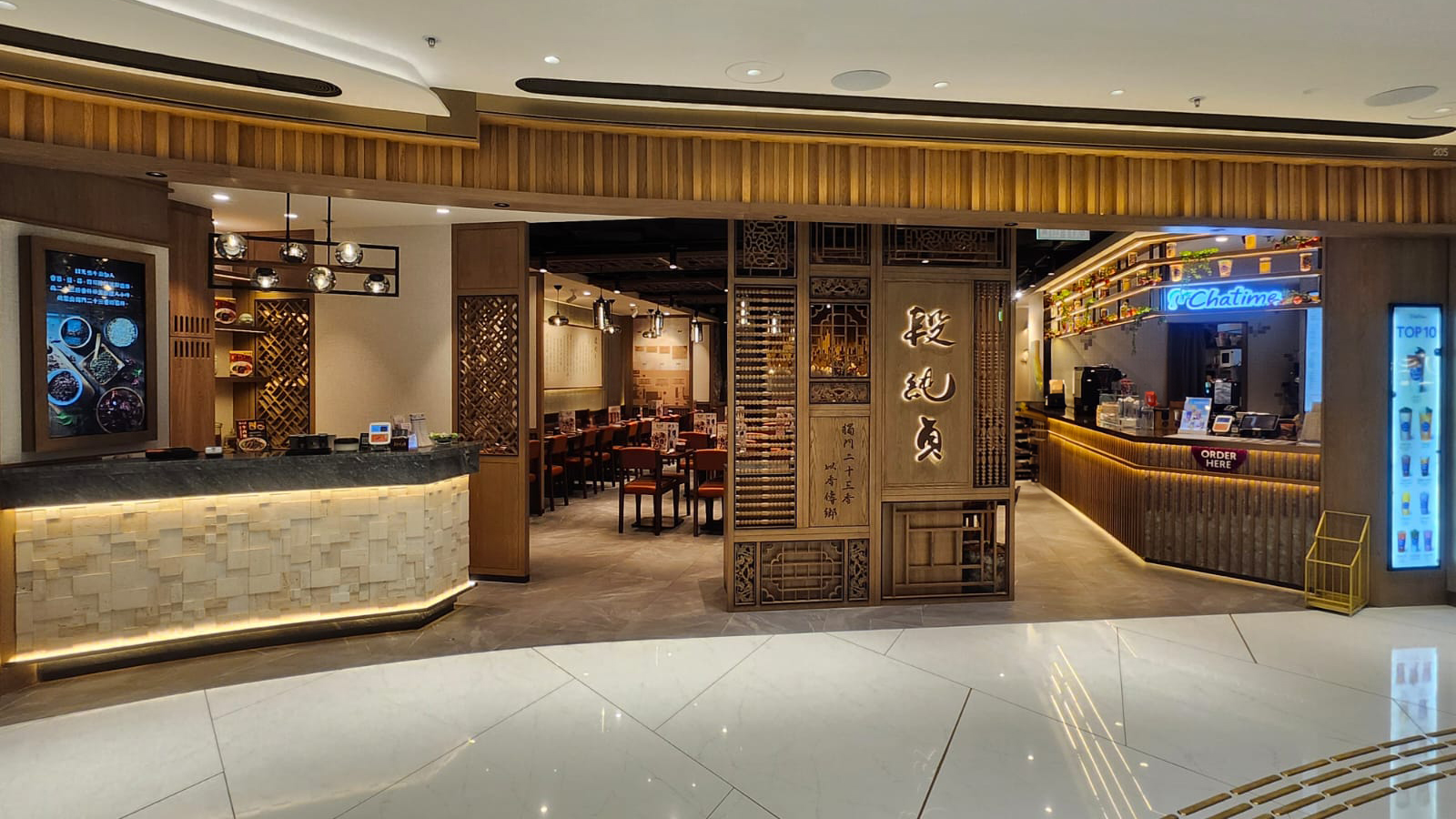
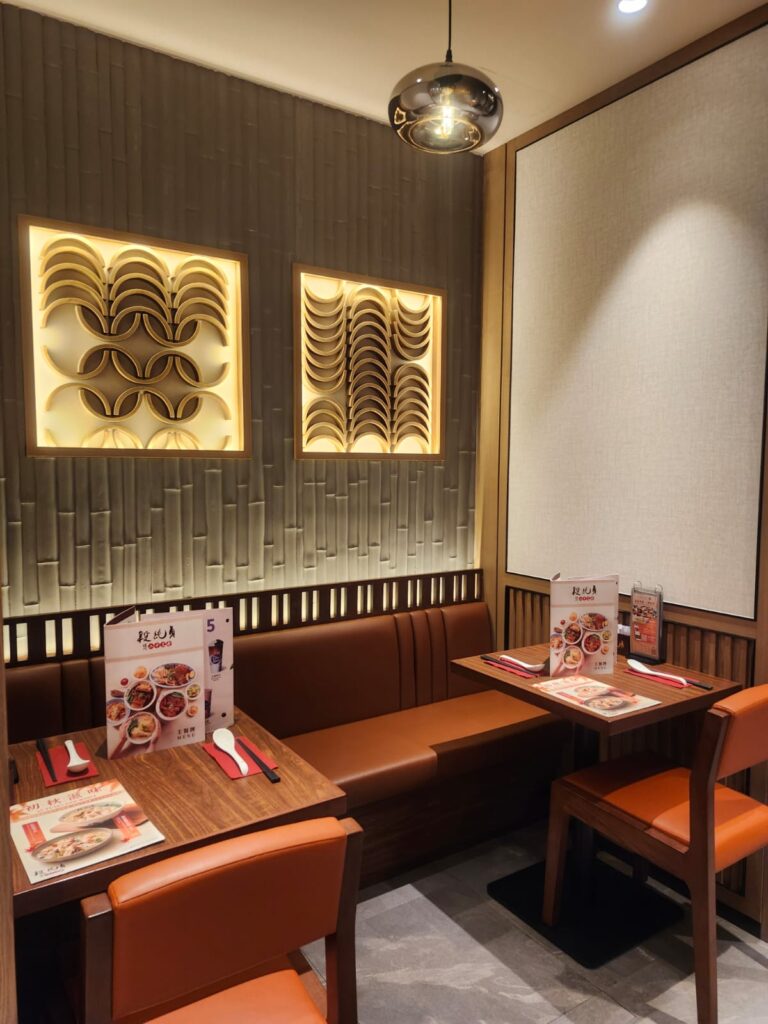
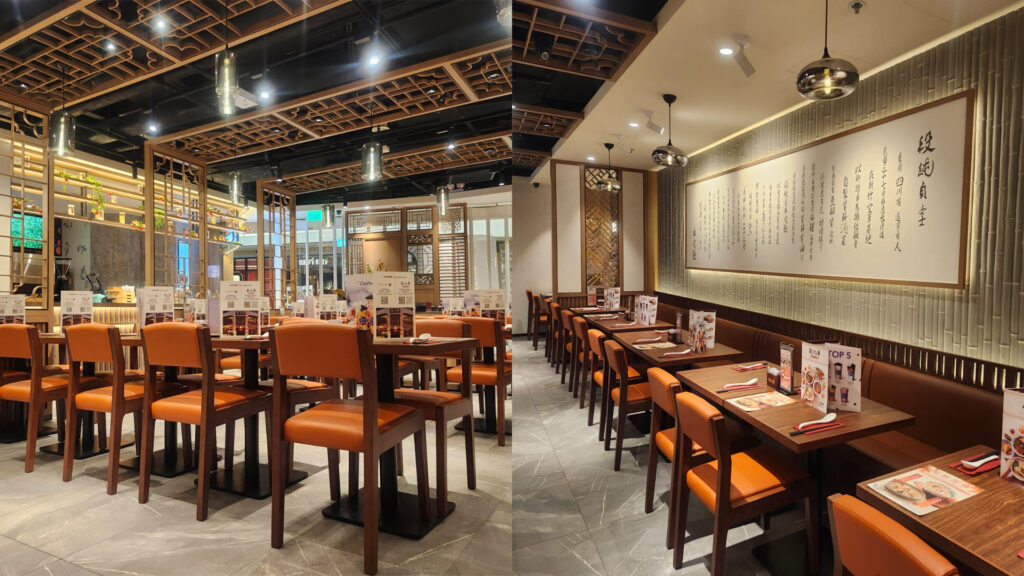
Inspired by the ‘bamboo’ theme of Chengdu, Sichuan, the restaurant creates an enchanting environment filled with bamboo forests, showcasing 23 traditional pattern designs that seamlessly connect with the aromatic experience of Sichuan Dumen’s 23 fragrance channels, highlighting the richness of 23 herbs and spices.

Fit for Purpose? Physical’s sudden demise spotlights a saturated gym sector in need of a work-over

The collapse of Physical Fitness, one of the stalwarts of Hong Kong’s gym industry, was a shock to many of its loyal customers and those unfamiliar with the dynamics of the industry. It has left some wondering whether there are simply too many gyms in Hong Kong and if they provide value for money.

Physical, which had operated in Hong Kong for 38 years and once boasted 23 branches, ceased trading this September after the Mandatory Provident Fund Schemes Authority demanded it settle unpaid contributions to more than 700 employees amounting to millions of dollars. The decision by the gym chain owners to close shop left staff jobless and triggered thousands of complaints to the Consumer Council over loss of membership fees. Some customers were on decade-long membership packages. There were also reports of lengthy packages sold just prior to its closure.

Given the recent upsurge in investment in the sector, Physical’s failure did not come as a shock to many gym insiders. “I can’t say that Physical going under felt like a massive surprise,” says Ed Haynes, founder and CEO of boutique gym Coastal Fitness, who also made reference to some of the “amazing” deals the chain offered just before its ignominious collapse, perhaps in a desperate bid to cut its losses.

Fall of the mighty

Haynes notes this is the fourth big commercial gym operation to shut down during the 16-year lifespan of Coastal Fitness – on the heels of California Fitness in 2016, Goji Fitness and the Hong Kong branches of international chain Fitness First. The latter two faltered amid the pandemic, which interrupted business and made the recruitment of new members almost impossible.

Certainly, many consumer discretionary sector businesses, including cafés, restaurants and cinemas as well as fitness centres, suffered financially during the Covid years. But the pandemic also had a benign influence on the fitness industry – people became worried about their health.

“In the minds of the Hong Kong public, the idea of health and exercise came to the forefront a lot more,” says Haynes. “In the pandemic, when everything closed and people were confined to their homes in their small and immediate environments, a lot of people actually started exercising.”

Gym crazy

Since then, he has witnessed a huge upswing in many forms of physical activity practised in the community, which in turn has prompted a proliferation of investment in the industry. “Because the fitness industry saw this big boom in exercise participation, low-cost 24-hour gyms started popping up everywhere. And I think that’s almost saturated that market,” he states.

From the less than 10 24-hour gyms believed to be operating in 2018, the number had ballooned to more than 110 by last year. Haynes believes too many gyms have opened up too quickly, causing supply to outpace demand. He also maintains that many of the newer gyms are soulless and lacking in a community feeling. “The way these gyms are set up is just you go in and do your hour; you’re isolated in many of them,” he opines.

The pandemic not only sparked an increase in physical activity but also a desire for community-based fitness where people can connect with each other, according to Haynes: “If you go out to any of the waterfronts right now, every morning, every night, they are packed with groups of people in running clubs, sweating, moving, having a good time.”

Cash flow precautions

He also outlines a key learning curve in the gym business from the pandemic years: the importance of maintaining cash flow through offering membership packages. More than two-thirds of the Coastal Fitness membership sign up for six or 12 months in advance, providing money in the bank. The pay-when-you-use model adopted by some of the newer gyms, by contrast, does not give owners this security.

Haynes has witnessed a rise since the pandemic in the purchase of long-term packages by clients willing to commit to regular exercise. He does caution against lengthy prepayment deals though; at Coastal Fitness 12 months is the maximum term offered.

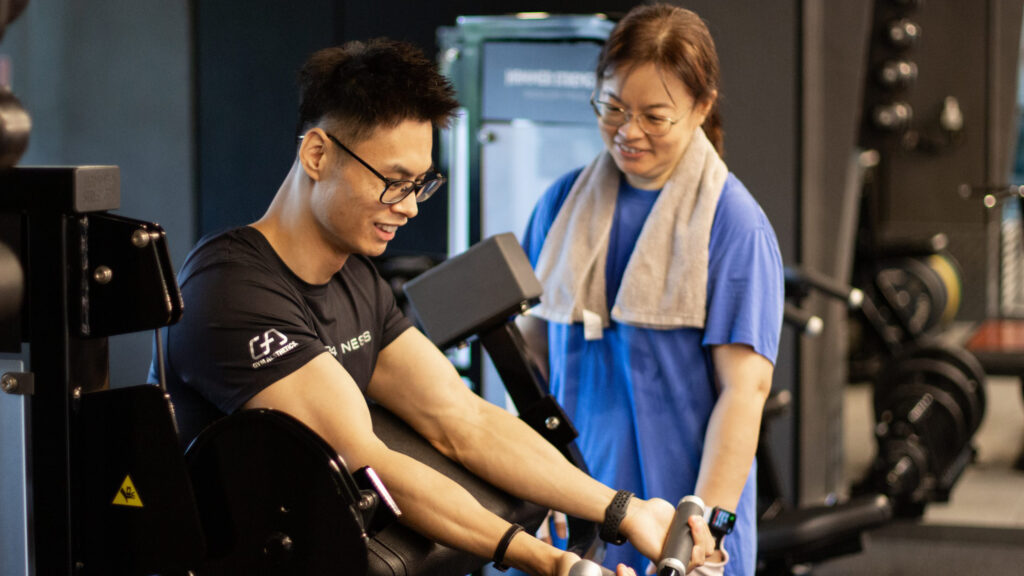
The majority of his clients come through referrals or word of mouth, and they include people from all walks of life. Most use the North Point gym’s services at least three times a week, and all receive some type of coaching, whether through attending a group class led by a coach, having a personal training session, or by following a tailored fitness programme designed by a coach.

Operational stress

During the post-pandemic investment splurge in the gym business, John Bower took on the managerial responsibilities of a new fitness start-up in Hong Kong. As an entrepreneur who had created and sold a human resources business earlier in his career, he seemed an ideal fit to launch the venture. However, the market glut in gyms soon exacerbated the stresses of running a fledgling operation, and breaking even took longer than planned. Exhausted, he quit after two years and now freelances as a personal trainer and executive coach.

Bower believes the gym sector has been flooded with entrants and the next two years will favour the consumer. He says managers of gyms should be crystal clear what market they are going to dominate. “In the longer term, the harsh truth is that many gyms are on borrowed time and need to figure out their strategy – being number one in the local market and number 10 in Hong Kong might be fine,” he says.

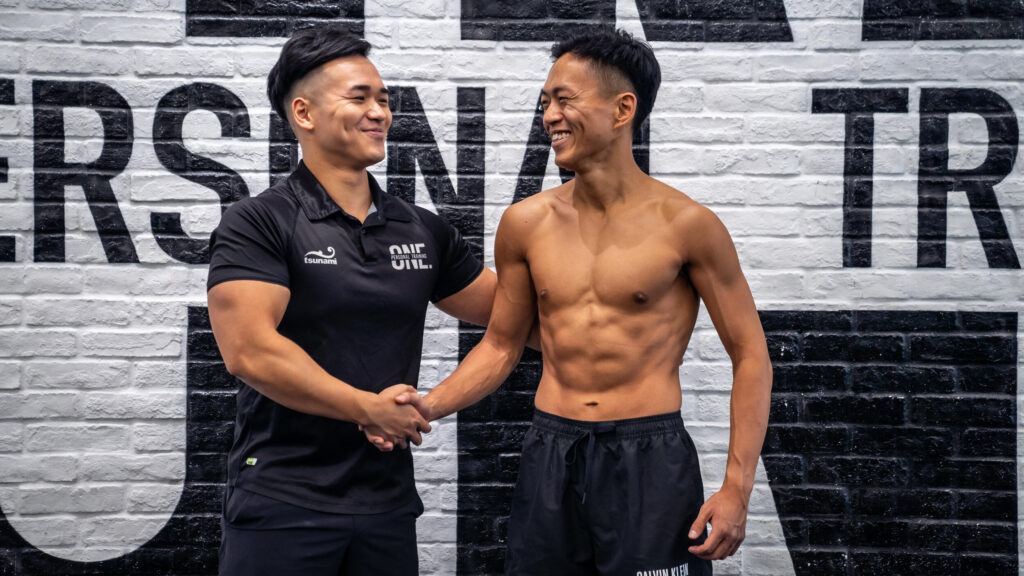
Far happier working as a freelance coach, he often conducts sessions for clients at the city’s many boutique gyms. He loves the interpersonal interaction with clients and can advise on all aspects of life aside from physical training. “The value of personal training is that it enables the client to physically challenge themselves,” he says.

Market jitters

Some gym-goers may be tempted to turn to personal instruction rather than sign up for memberships as fears over the stability of the wider fitness sector mount. Recent disputes over unpaid rent at branches of Pure Fitness, an upmarket chain of fitness and yoga studios, caused jitters in the market, although the issues were quickly resolved.

Hong Kong-based lawyer and writer Sanjeev Aaron Williams chose not to join a well-known commercial gym after their sales pitch left him unclear about what the fees would cover. He now attends gyms run by the Leisure and Cultural Services Department. While available at a fraction of the price of many private gyms, these government fitness rooms have their drawbacks, says Williams, such as blackout periods restricting use and irregular availability of equipment.

Essential regulation

Williams sees a future for commercial gym operators, but calls for urgent government regulation. “Gyms in Hong Kong need to be regulated by legislation and monitoring. We are behind other countries in regulating consumer protection and gym operations,” he says. “Commercial gyms in Hong Kong have been the subject of failures and scams since the 1980s when the fitness trend began. We’ve gone over 40 years without regulated protection.”

He believes any legislation should cover the entire fitness sector including large commercial gyms, 24-hour gyms, personal training studios, personal trainers, pilates and yoga studios, boxing and martial arts gyms, as well as the classes offered at these venues.

The lawyer urges a limitation on the length of prepayments, saying they should not exceed more than two years, and calls for the implementation of a legal “cooling-off period [that] should be prominently advertised on the premises and to each customer”. He adds: “Consideration should be given to increasing criminal penalties for misleading advertising and sales tactics or carrying on business when [the operator] knew they couldn’t meet their debts.”