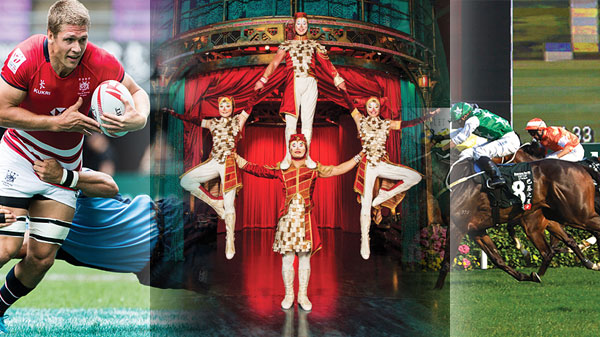

Sevens Heaven: Five decades after Hong Kong’s first tournament, tries still excite and unite the community 

The Hong Kong Rugby Sevens did not start as a spectacle at kick-off in Happy Valley half a century ago. It began, as many enduring cultural institutions do, almost accidentally. Back then, the sport existed on the margins. Rugby was played largely within the expatriate community, sustained by club culture and social networks that operated somewhat apart from the city’s mainstream consciousness. In this context, the tournament’s role in bringing the city and people from around the world together over an oval ball for an exhilarating long weekend is a remarkable feat.

Hong Kong was a very different city in the mid-1970s; smaller, rougher at the edges, and still negotiating its identity as an international hub, it was defined more by transit and trade than by lifestyle. Skyscrapers had not yet fully asserted the skyline’s authority, and while finance was growing, it had not yet become the city’s dominant narrative. The prevailing mood was industrious rather than expressive.

When the idea of hosting a Rugby Sevens tournament was first proposed during discussions between the Hong Kong Rugby Football Union and then sponsors Rothmans and Cathay Pacific, it carried none of the ambition or theatrical scale that would later define it. There was no sweeping cultural blueprint, no strategic ambition to manufacture a global brand.

The shortened format of Sevens – seven players per side for rapid matches – appealed for practical reasons. It allowed multiple games to be staged across a single weekend, making travel worthwhile for visiting teams. It was efficient, compact and manageable. In a city that valued efficiency above excess, that practicality was sufficient justification.
Rugby Roar

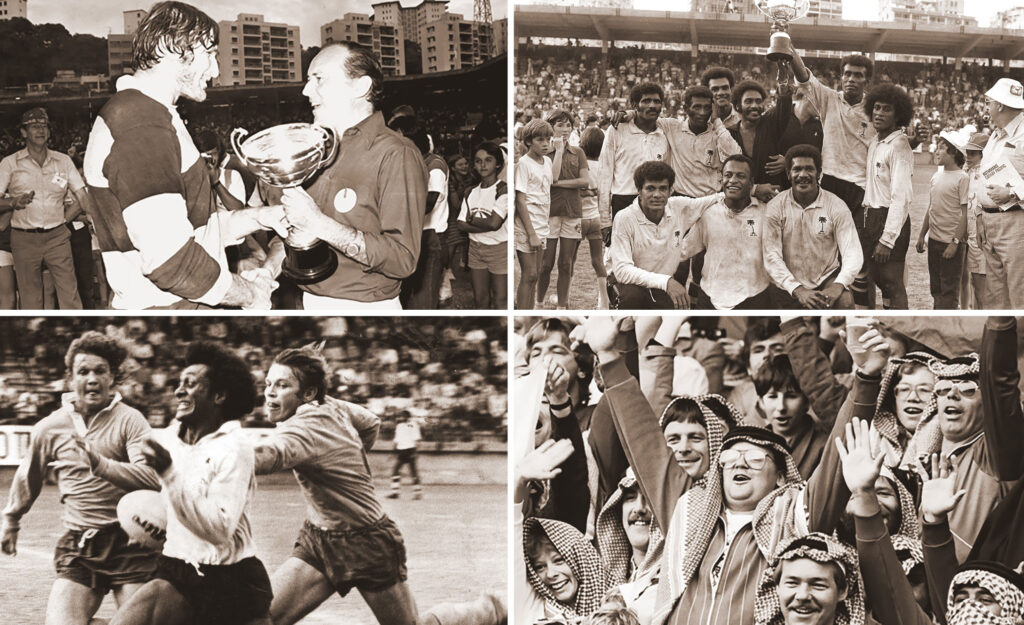
Yet that modest premise proved quietly transformative. When the first Hong Kong Sevens took place in 1976, featuring teams from across Asia and the Pacific, it did more than fill a sporting gap. It positioned the city as a regional meeting point at a time when global connectivity had not yet entered everyday vocabulary. Hong Kong’s economic role as an intermediary between continents found a cultural parallel inside the stadium. Teams arrived from different countries; supporters followed; flags appeared in the stands. For a few days, the city’s outward-facing identity condensed into a shared physical space.

What distinguished the tournament in its early years was not only the quality of play but the atmosphere that began to form around it. The shortened format generated momentum. Matches were brief, intense and closely scheduled, leaving little room for inertia. The pace encouraged constant engagement, with spectators becoming animated participants. The crowd responded collectively to sudden tries and dramatic turnovers. Laughter, chanting and applause moved in waves.

Since the Sevens grew organically, it feels fundamentally different from other large-scale gatherings. Its character formed through repetition – staged on the same weekend, year after year – and through the steady layering of memory. Attendees learned the rhythm of the event almost instinctively. They knew when anticipation would peak and when energy would dip, and this shared familiarity reduced the distance between strangers.

Success and Fancy Dress

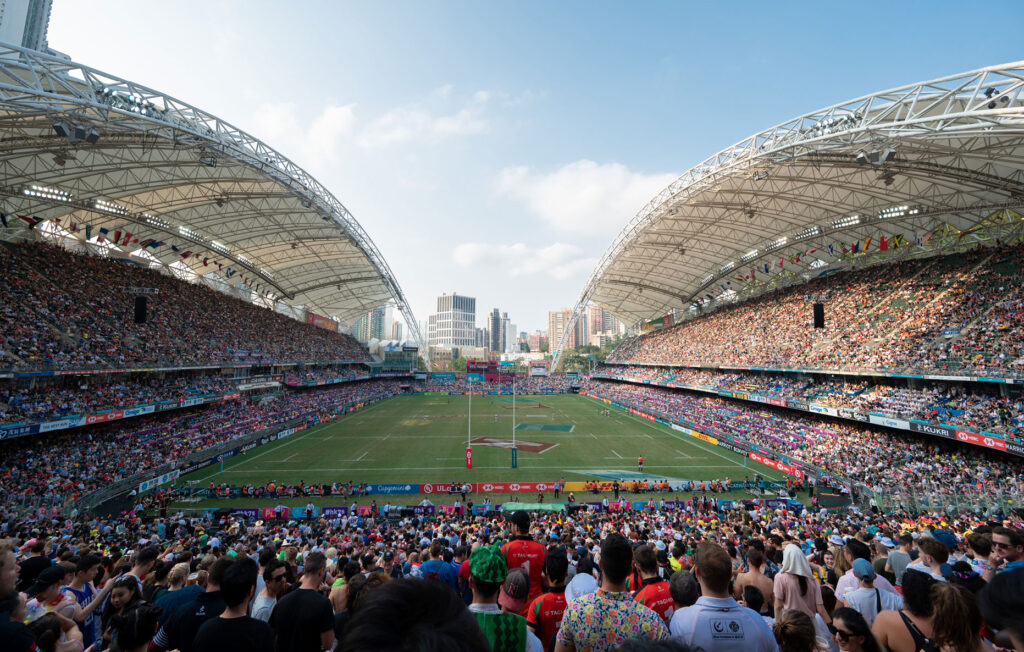
As Hong Kong established itself as a financial powerhouse and global crossroads in the 1980s and 1990s, the Sevens evolved alongside it. The tournament broadened its international reach and migrated venues – from the Football Club, where 3,000 spectators watched the debut one-day event, to the 28,000-capacity Government Stadium in 1982, which was modernised in the 1990s and renamed the Hong Kong Stadium, to the spanking new 50,000-seat Kai Tak Stadium last year. The Sevens embedded itself into the city’s annual calendar, becoming a fixed point in an environment otherwise defined by constant acceleration.

The tournament culture was shaped more by the people who attended than by official programming. Traditions accumulated gradually. Attending in fancy dress emerged not as orchestrated fashion statements but as spontaneous gestures among groups of friends. One year’s joke became the next year’s expectation. The humour was playful, and the visual chaos in the stands signalled collective belonging rather than curated identity.

This ethos was already cemented by 1997 when the tournament achieved global recognition – this was the year Hong Kong hosted the Rugby World Cup Sevens, and its success was instrumental in the launch of the World Sevens Series in 1999. Loud, irreverent and communal, the emphasis rested on a raucous collective mood – epitomised by the alcohol-fuelled party atmosphere of Hong Kong Stadium’s South Stand – rather than individual performance.

People were absorbed into a larger current of energy. Expertise in rugby was welcome but unnecessary. Enthusiasm was the only requirement, and the crowd functioned as a temporary community, unified by rhythm rather than background.

Communal Party

Until this day, exuberance coexists with inclusivity during the Sevens weekend. Families share sections with longtime supporters and first-time visitors. Colleagues temporarily suspend workplace hierarchies. Conversations unfold without formal introduction. Groups select shared costume themes that transform them into collective characters. The result is an egalitarian spectacle in which participation matters more than polish. The stands resemble a living collage, constantly shifting yet unified.

Beyond the stadium, the city subtly reconfigures itself. Bars and restaurants function as informal meeting points, encounters between strangers occur with unusual ease, and the streets feel even more vibrant. The tempo of daily life adjusts, if only briefly. The Sevens reframes Hong Kong’s intensity, and energy becomes celebratory rather than transactional.

While the tournament does not promise reinvention or transformation, it permits suspension of boundaries between economic status and cultural divide, between locals and expatriates, between residents and visitors. In a city known for discipline and efficiency, collective exuberance carries symbolic weight. The permission to relax, to cheer loudly and dress absurdly feels restorative – and because that permission is shared, it rarely tips into bad behaviour or mayhem.

Although social media captures fragments of the weekend, the memory of the Sevens resides in sensation: tired legs from standing, hoarse voices from chanting, sun-warmed skin or soaked to the skin – monsoon-like downpours are not uncommon on the tournament weekend – and the faint disorientation of Monday morning. These embodied traces anchor recollection more powerfully than photographs.
Inclusive Scores

As the Hong Kong Sevens has matured over 50 years, it has absorbed social change without abandoning its foundations. Women’s rugby has gained deserved prominence, and youth engagement has expanded. Local representation has deepened, reflecting Hong Kong’s evolving demographics. These developments extend the tournament’s inclusive spirit.

By Sunday evening, as final matches conclude and the crowd thins, the release subsides gently. Costumes are folded away until next year. Bars quieten, and the city resumes its habitual tempo. Yet a subtle recalibration lingers. The Sevens endures because it offers continuity within change. It is not spectacle engineered for consumption, but ritual sustained by return.

From 17-19 April this year, Hong Kong will gather once again over multiple rugby matches, heralding recognition of shared history, shared space and shared release. The Sevens is not about the self; it champions collective presence and community – and that enduring simplicity remains its quiet distinction and lasting relevance.

For many residents, particularly those who have witnessed Hong Kong’s rapid economic and political transformations, the Sevens acts as a temporal anchor. The city has weathered cycles of prosperity and uncertainty, demographic change and shifting global relationships. Neighbourhoods have been reshaped; industries have risen and receded. Through these fluctuations, the Sevens has remained. Its recurrence provides continuity in a landscape often defined by impermanence.
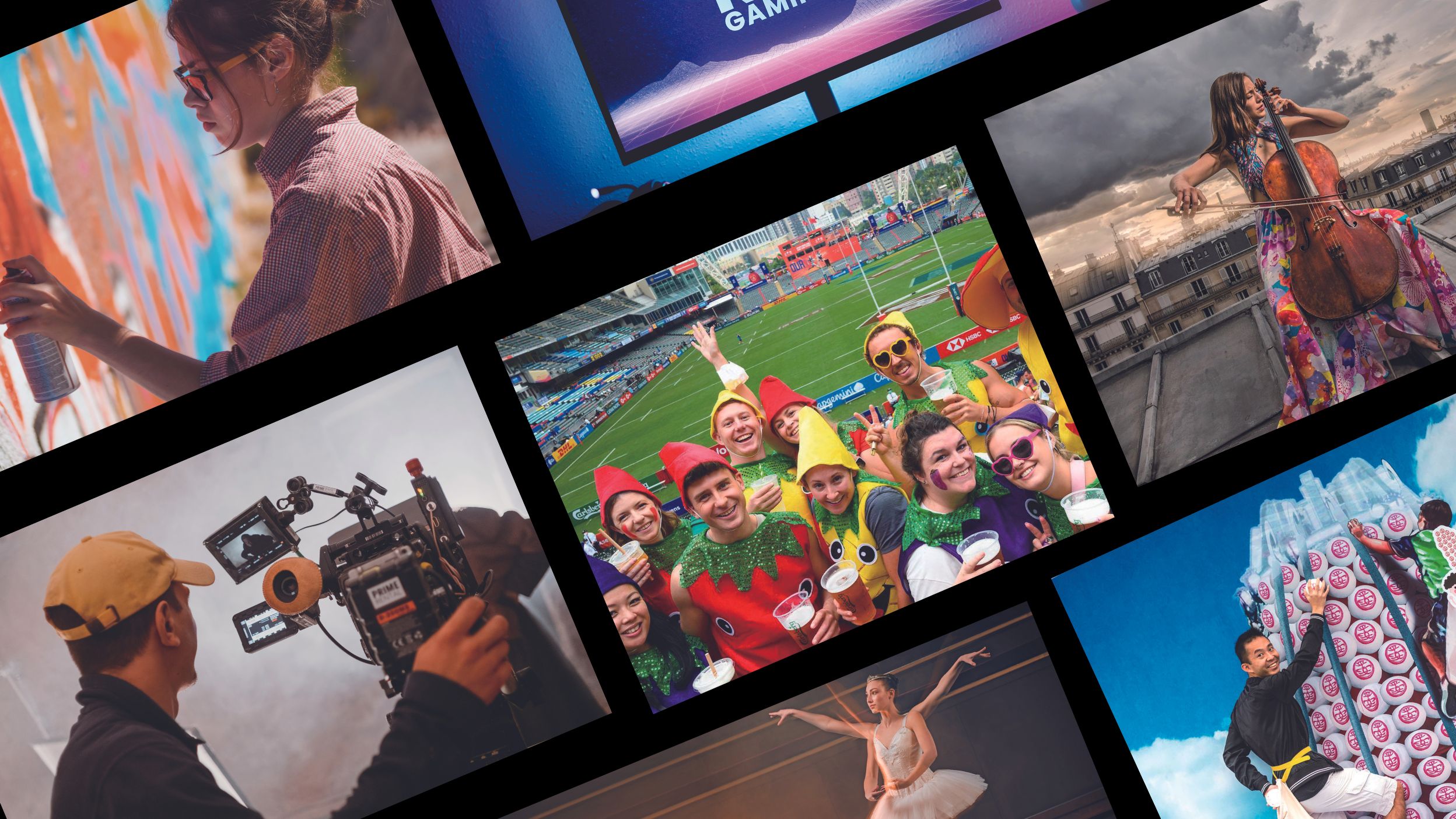
What’s On? Things to do this April in Hong Kong

Whether you are staying back in Hong Kong over the Easter break or want something fun to do to feed your excitement from returning from a short vacation, the city is hosting a list of events that are sure to keep you entertained. Check out all the compelling things to do in Hong Kong in April.

Hong Kong Sevens (Until 2 Apr)

April 2023 events

A favourite for rugby enthusiasts, the Hong Kong Sevens is returning for its annual three-day tournament. As always, thousands of fans – some in outlandish fancy dress – will be cheering from the stands as phenomenal rugby players from across the globe compete for the coveted silverware. Nearly 30 teams are going to be taking the field making it a nail-biting series for fans. Performances from pop icons like Joyce Cheng, DJ Soda, The Red Stripes and Plastic Bertrand will also bring the assembled masses to their feet. From HK$1,950. Hong Kong Stadium, hksevens.com

Hong Kong International Film Festival (Until 10 Apr)

April 2023 events

Back for its 47th edition, the annual Hong Kong International Film Festival celebrates the cinema industry in all its glory with 200 movies from 50 different countries screened across theatres in Hong Kong. This year’s Filmmaker-in-Focus is director Soi Cheang, whose cutting-edge dramas (Dog Bite Dog, Shamo, Accident, Limbo) will be among the highlights of the HKIFF airings. From HK$55. Various venues, hkiff.org.hk

City As Studio (Until 14 May)

April 2023 events

Vibrant graffitis have made Hong Kong streets a perfect backdrop for photographs, but when there is no time to go hunting for the best Instagrammable street art in town, people can always count on art exhibitions like this. Curated by Jeffrey Deitch, the City As Studio exhibition at K11 Musea collates the best of street art from different countries and time periods. More than 100 works chart the phenomenal rise of graffiti. From HK$85. K11 Art & Cultural Centre, k11musea.com

Camille Thomas Cello Recital (1 Apr)

April 2023 events

Camille Thomas is an acclaimed cellist who proudly holds a couple of awards under her name including a newcomer nod at the 2014 Victoires de la Musique Classique – dubbed the French version of the ever-so-popular Grammys. The Franco-Belgian musician is performing for the very first time in Hong Kong, where she pairs with local pianist Rachel Cheung, who was a finalist at the Van Cliburn International Piano Competition, to interpret two beloved sonatas. Given Thomas is musically gifted, it is surely a debut that ought to be wonderful. From HK$180. Concert Hall, City Hall

Creamfields Hong Kong (1 – 2 Apr)

April 2023 events

Roughly a month after Clockenflap, the city welcomes another dance and music festival – Creamfields Hong Kong 2023. Happening over the weekend before Easter, the UK-born outdoor musical gala is all geared up to feature some of the best musical talents around like Calvin Harris, The Chainsmokers, Miss K8, Virtual Riot, The Prophet, and many more. Electronic music fans can flock to three stages which include the mainstage, the Go Hard stage, and The Future Sound of Egypt stage which will sway to the sounds of Egypt. From HK$1,088. Central Harbourfront Event Space

Songkran 2023 (5 – 10 Apr)

April 2023 events

Songkran – the Thai New Year – is celebrated in the second week of April and Hong Kong steps out to mark the occasion with a five-day festival. Given the lineup of events including a street water fight party and Thai food exhibitions, it will surely be filled with fun and culture. Also, don’t forget to take your pawed companion along to enjoy the pet-friendly zones. It is also a perfect opportunity to wear traditional clothes and snap photos. Free admission. Various venues

Bun Carnival (16 Apr – 27 May)

April 2023 events

Put on your competitive hats as Hong Kong’s well-enjoyed Bun Carnival is back after a three-year break. Although the actual Cheung Chau Bun Festival falls in the last week of May, the celebrations begin as early as April on the island with training for the traditional Bun Tower climbing held midweek and scrambling contests on Sundays. As the big day looms, endless entertainment is guaranteed with stall games, variety shows and handicraft making. Free entry, Pak Tai Temple Playground, Cheung Chau

Hong Kong Web3 Festival (12 – 15 Apr)

April 2023 events

Web3 has taken tech and many other industries by storm. For those who are relatively low-tech and need to explore more, the Hong Kong Web3 Festival will be the perfect event to quench all your curiosity. It brings together more than 300 experts from the field who will share their ideas on topics like NFTs, the metaverse, bitcoin, blockchain and the Ethereum platform over four stages, and field AMA (ask me anything) questions. It is the event to attend if you want to keep up with the latest tech news. From HK$3,188, Hong Kong Convention and Exhibition Centre

Twirl of the Heartstrings (21 – 23 Apr)

April 2023 events

Twining some of Hong Kong Dance Company’s best performances from the past, like L’Amour Immortel and The Legend of Mulan, with masterful orchestra tunes by Inheritage Philharmonic, Twirl of the Heartstrings promises to be a rush of romance and culture. Choreographed by Yang Yuntao and composed by Yin Ng, the dance and the orchestral concert is sure to coax a symphony of heart-warming emotions from the audience. As a result, spectators can expect nothing less than a grasping plot and unhinged entertainment. From HK$140, Hong Kong Jockey Club Amphitheatre, APA, hkdance.com

Leisure & Pleasure: April Events in Hong Kong

Easter festivities may be behind us, but Hong Kong’s calendar still remains packed to the brim. From the rugby mania of Hong Kong Sevens to the aerial acrobatics of Cirque du Soleil’s Kooza, here’s a round-up of April events in Hong Kong.  

5 April: Ching Ming Festival

Ching Ming Festival

Ching Ming – literally translating as ‘clean and bright’ – is the day that Chinese people sweep the graves of their ancestors. The festival is an important day of commemoration, obliging families to weed graves, touch up headstone inscriptions and make offerings of food while lighting incense. Traditionally, many people burn paper offerings at gravesites for their ancestors to use in their afterlife. Don’t be surprised to see an exodus of residents moving from the city’s streets to the hillside graveyards on this well-observed day.


6 – 8 April: Hong Kong Sevens

Hong Kong Sevens

Drawing in some of the world’s greatest rugby players and thousands of fans from every corner of the globe – the Hong Kong Sevens is one of the most popular annual sporting events in Asia. With fast and furious rugby action combined with a carnival atmosphere and world rugby’s largest prize purse, the 2018 Cathay Pacific/HSBC Hong Kong Sevens will be an unforgettable three days.

Hong Kong Stadium 55 Eastern Hospital Road, So Kon Po, Causeway Bay.


6 – 8 April: Songkran Hong Kong

Songkran Hong Kong

Get ready to be drenched as the annual Thai water festival returns, once again making a splash in Lai Chi Kok. This popular festival celebrates the Thai New Year and the start of summer by spraying water on all attendees as a form of blessing. Gather your family and friends and come armed with water guns and water cannons. Complete with a traditional parade, dance performances and a beauty contest, this celebration is not one to be missed.

D2 Place, 9 Cheung Yee St, Lai Chi Kok.


13 – 16 April: Hong Kong Electronics Fair

Hong Kong Electronics Fair

The 14th Hong Kong Electronics Fair (Spring Edition) and International ICT Expo will be held concurrently this year at the Hong Kong Convention and Exhibition Centre. The shows provide an international platform for around 3,500 exhibitors, allowing them to showcase their latest electronic products and cutting-edge ICT solutions to global buyers.

Launched in 2017, this year will see the return of the Startup zone, which will again feature all the latest innovations from the world of consumer tech and beyond. Attracting more than 94,000 buyers from 138 countries and regions in 2017, this year’s show is one of Hong Kong’s most widely anticipated trade events.

Hong Kong Convention & Exhibition Centre, 1 Expo Drive, Wan Chai.HK$100.


14 April: Spartan Race

Spartan Race

The Hong Kong leg of the Spartan Race forms part of the world’s biggest obstacle event, comprising 240 races in 25 countries across the globe. If you are looking for a physical challenge and something to take you out of your comfort zone, this is an opportunity not to be missed. Participants should be prepared to run, climb, push, throw and crawl through walls, hills, trees and even barbed wire. Kids under 14 can take part in the junior races. Taking place across a 1.5km course, the emphasis is firmly on teamwork, fun and getting muddy.

HK$380 – $1,090.


19 April – 3 June: Cirque du Soleil’s Kooza

Kooza by Cirque du Soleil

Cirque du Soleil returns to Hong Kong this April with Kooza, an all-new, all-thrilling big-top production. Paying tribute to the company’s roots, the show is said to combine heart-stopping acrobatic performances with the art of clowning. The project, inspired by the Sanskrit word “Koza”, meaning “chest” or “treasure”, promises impossible feats and laugh-out-loud antics, all to a live fusion soundtrack, mixing the best of jazz, funk and Bollywood beats.

Central Harbourfront Event Space, 9 Lung Wo Road, Central. HK$488 – $1,888.


24 April: The Script

The Script to perform in HK

Following the release of their number one album Freedom Child, Irish pop trio The Script will return to Hong Kong later this month. Having sold more than 29 million records and won three multi-platinum album awards, The Script is one of the world’s most successful bands. Fans can expect to hear classic hits such as Superheroes and Breakeven, along with Rain, the first single from their new album, which stormed into the Top 10 on iTunes UK. With tickets selling out rapidly, the group’s first appearance in the city since 2011 is one for the diary.

Kowloon Bay International Trade & Exhibition Centre, Star Hall, 1 Trademart Dr,  Kowloon Bay. HK$580 – $1,280.


28 April: Women’s Five

Women's Five

Taking place in Aberdeen Country Park, the Women’s Five is more than just a run. The event is a celebration to mark the inspiring health and fitness journeys of women. Participants can choose to take part in the five-week health and fitness programme, finishing with the 5km run or alternatively sign up for only the run. Whatever choice you make, this event is aimed at honouring women’s strengths and weaknesses. Need more time to prepare? No problem. The Women’s Five will be back with another edition in November.

Aberdeen Country Park. HK$340 – $750.


29 April: Race Day

Queen Elizabeth II cup

The Audemars Piguet Queen Elizabeth II Cup is the jewel among Hong Kong’s three spring race features and comes with a purse of HK$24 million. For the first time, Hong Kong will stage all three world-class events on a single day. The Champions Mile (1,600m) and the Chairman’s Sprint Prize (1,200m) will join the G1 Audemars Piguet Queen Elizabeth II Cup to form an exciting Group 1 triple-header. This move will create one of the most lucrative days in Asia for its many equestrian fans.

The Hong Kong Jockey Club Sha Tin Racecourse Stand, Sha Tin, Hong Kong.