
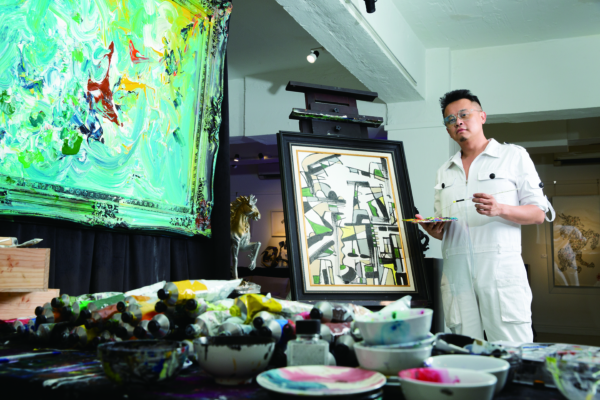
Art veteran Simon Ma’s vision of creating harmony through art

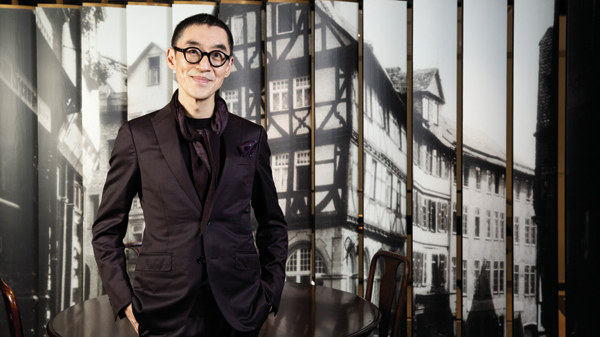
Hong Kong-born, Shanghai based, art veteran Simon Ma shares his vision of creating harmony through art with his recent travelling Drago Cavallo Exhibition

From a young age, you painted under the guidance of Chinese master Fan Tzu Teng. How did that shape you?
I was lucky to have him inspire me, and not just in painting. He also inspired me to become a good person. We believed that whatever you paint first comes from your heart, then flows through your hands – manifesting how we think and how we look at the world.

“Harmonise” is a word he always reminded me of. To harmonise with nature and with people, regardless of their background, whether they are rich or poor. This way, you allow yourself to view the world from all angles, looking at everyone and every situation from the top down, left to right and from front to back as well. He was my master in matters of the mind, too – an extremely kind and an open person, he believed that we should do charity work, with a pure heart – that is what would help one be a good painter.

For a time, you had your own company in Shanghai, Ma Design. What propelled you to make the transition from architect and urban planner to artist?

I started painting when I was seven years old, and I played music when I was 13 years old. After that, I attended boarding school in the UK and then studied architecture and urban planning at University College of London.

It’s hard being an architect. I prefer being an artist because I don’t have to just work for the client. As an artist, I can actually create anything I like, without limitations or boundaries. I started sculpting and exhibiting my work to the public in various locations around the world. To me, this is the more interesting part of art and creation, it is much more meaningful to me [than architecture. I put them there like an architecture but in miniature forms.

You recently launched a large touring artistic installation, Drago Cavallo, in conjunction with the Hong Kong Jockey Club. Could you tell us more about this?

Winfried (Engelbrecht-Bresges), the CEO of the Hong Kong Jockey Club, called me and wanted me to come back to Hong Kong to do the Drago Cavallo – Travel Around HK exhibition as part of the SAR’s 25th anniversary.

We thought the city needed new energy, something to bring everyone in harmony. The mythical dragon horse (‘drago cavallo’ in Italian) is the spirit of China – one of the eight mythical beasts that symbolises inspiration; and I think people all over the world like horses.

I actually created these lovable Drago Cavallos during Covid-19 to give people hope and new energy. So, we brought back 10,000 Drago Cavallos and are planning on displaying a 25-metre-high Drago Cavallo next year.

I’m working very hard on this, trying to harmonise Hong Kong society – in different districts and also in schools, where students can paint Drago Cavallo and understand the spirit of the two animals (dragon and horse). The cool thing about this project is that it will harmonise society through art.

The Jockey Club has also been very supportive. We are also hosting a competition, and asking everyone to join the competition and try to set up one Drago Cavallo for each district.

“I prefer being an artist because you can actually create anything you like, with no limitations, no boundaries. This is much more meaningful to me [than architecture]”

You have a strong affinity with horses. Could you share with us why that is?
The horse is the most beautiful animal. They are energetic, international and always moving forward. They never complain though they can have a temper, too; when they want to, they just go. I see myself as somewhat of a horse whisperer. I go around the world, to places like Mongolia, to see horses. And when I find them, they are like my friends. You have to build a friendship with horses before you can paint them. I paint from inside them; I’m painting their vision.

You divide your time between your Hong Kong studio in Wong Chuk Hang and Shanghai. What differences have you observed between the two major cities?
I have been in China for 23 years. Shanghai is a very fast-growing city and full of energy. Whereas Hong Kong has stopped for the past three or four years; it’s actually becoming less international. If you look at the government in Shanghai and the local community, there is such a respect for art and its artists. But looking at Hong Kong, one might question how many good artists there are in the city. Shanghai, on the other hand, has so many ‘West Kowloon’s, not just one. And there are 20 or 30 more museums as well.

But Shanghai is not an easy place to survive in as an artist. You have to be very good at what you do, you have to be really good with people, and you have to be really good with the market as well. You have to be ahead of the market rather than follow it. We change because of our environment, but the environment doesn’t change because of us.

You have collaborated successfully as an artistic designer with international brands, such as Porsche and Ferrari. How did that come about?
I think these international luxury brands are looking for a Chinese artist who can connect with people internationally and locally. I understand both cultures – especially the Italian mindset, and I can instil Chinese art into their luxurious products harmoniously; it goes beyond just mixing two things together.

You’re also pretty active on Instagram. What value does social media give you as an artist?
I am encouraging my team to be active on all social media platforms because it’s better to share and let more people appreciate your art. Why keep art to yourself? Open up and let people see it.


“I am like the horse whisperer. I go around the world, to places like Mongolia, to see horses. And when I find them, they are like my friends. I’m painting their vision”

If you could go back in time and meet anyone from the past, who would it be?
My auntie, who passed away four years ago. She gave me my name ‘Simon’. And also, my master, Fan Tzu Teng. I would pay a million dollars to have dinner with them again, because as you get older, you realise the number of people you love gets less and less. Fan Tzu Teng is like my father. He had no son, so I was like a son to him. When I approached his body at his funeral, I knelt down; I knelt all the way to his body. There were a few hundred people there and they all stood up. This is the highest respect I could give to my teacher.

When do you get your best ideas?
I always get my best ideas when I’m having a shower. I feel light, like I’m being purified by water – and all my spirituality emerges.

Do you still play music?
I love music. I still have my band in China. I used to write music before I got too busy. I’m a left-handed drummer (like Phil Collins) as well as a singer. If you ever hear me sing, you’d be surprised. Music is my life. It helps to create good art.

Thank you.


(Interview by: Robert Murry; Photographer: Jack Law; Art Direction and Styling: Jhoshwa Ledesma; Videographer: Jackie Chan; Venue: Simon Ma Gallery)
 

What’s On? Things to do this July in Hong Kong

Hong Kong Palace Museum opens, Mirror goes live, and much, much more! Get ready to fill your social calendar this July! A slew of new entertainment, concerts and exhibitions open its doors to the city. Here’s our guide to all the hottest happenings in town…

Mirror We Are Live Concern 2022

What’s On Things to do this July in Hong Kong gafencu mirror live

Hailed as the undisputed new kings of Cantopop, Hong Kong’s biggest boy band, Mirror, will be in concert in the city for 12 live shows from 25 July. Tickets for the first show were sold out within hours but with the addition of further shows, it’s still possible to snap up yours on Urbtix. Bop along to all their much-adored hits such as “Ignited”, “Warrior”, and all the others, as this 12-piece ensemble of heartthrobs strut their stuff.

When: 25 July – 6 August
Price: From HK$480
Location: Hong Kong Coliseum, 9 Cheong Wan Rd, Hung Hom Bay

Hong Kong Palace Museum Opens

What’s On Things to do this July in Hong Kong gafencu hong kong palace museum

Amid much fanfare, the HKPM opened its doors to the public on 2 July, adding to the buzz of the West Kowloon district. This important addition to Hong Kong’s artistic heritage boasts 914 priceless Chinese artworks. Many of the works from this veritable treasure trove of culturally significant works are on display in the city, while others are being displayed to the public for the first time. More than a hundred of the works on this list – including paintings, sculptures, calligraphy and pottery – are considered natural treasures.

When: July onwards
Price:
Free entry on Wednesdays for the first year
Location: West Kowloon Cultural District
For more information: hkpm.org.hk/en/home

The Loss of Face?

What’s On Things to do this July in Hong Kong gafencu art gallery

Including masterworks from influential portrait painter, Francis Bacon, and paintings by contemporary artists Adrian Ghenie, Zeng Fanzhi, George Condo and Yukimasa Ida, Villepin’s new exhibition, The Loss of Human Face? sparks a conversation about the past and the present, and explores the significance of human faces as seen through these five artists. Showcasing 20 ground-breaking works in an innovative gallery space, visitors will endeavour to make sense of these bold and striking canvases displayed in dialogue with each other. 

When: Ongoing
Price:
Free entry
Location: Villepin, G-2/F, 53-55 Hollywood Road, Central
For more information: villepinart.com/exhibition/villepin

Nature Art Jam at The Part at K11 Musea

What’s On Things to do this July in Hong Kong gafencu art jamming

Soak up the wonderful atmosphere at this refreshing summer oasis and let your child’s imagination run free with a guided tour to discover native and exotic plant species – a breath of fresh air at Hong Kong’s first urban biodiversity museum. It’s the perfect way to get in a little blonding with your loved ones in a fun and beautiful setting for both the young and young at heart to enjoy. 

When: Ongoing
Price:
HK$250 (Includes one child and one guardian)
Location: Nature Discovery Park, 8/F K11 Musea
For more information: K11musea.com

Tufting Workshop

What’s On Things to do this July in Hong Kong gafencu art workshop

For those not in the know, tufting is a manufacturing process whereby a thread is inserted into a primary base. It’s an ancient technique for making warm garments, such as mittens. This tufting workshop enables you to mix-and-match different coloured yarns and make a fluffy rug via tufting machines – boasting creative results that will be totally instagrammable. And once added to your social media feed you will be the envy of your friends with these adorbale designs. 

When: Ongoing
Price:
HK$1280
Location: S411 Staunton Road, PMQ
For more information: pmq.org.hk

Hong Kong’s Maritime Miracle: The Story of our City since 1945

What’s On Things to do this July in Hong Kong gafencu art exhibition (2)

Explore Hong Kong’s recovery from the ravages of Japanese occupation and World War II through its modern iteration with nautical artefacts and maritime-themed tech. With more than 20 thoughtfully selected exhibits, visitors can trace Hong Kong’s evolution from its first tentative steps to prosperity at the end of World War II through to its rise as an international maritime hub. A testament to the city’s admirable ability to overcome history and not only thrive, but also to prosper.

When: Ongoing
Price:
Free entry
Location: Special Exhibitions & Events Gallery, 11 Man Kwong St., Central
For more information: hkmaritimemuseum.org

The Art of Fugue

What’s On Things to do this July in Hong Kong gafencu concert

The Hong Kong Philharmonic is giving their interpretation of Johannes Sebastian Bach’s monumental musical creation, “The Art of Fugue”. This was one of the last ever piece composed by Bach and while he didn’t specify which musical instruments should be used, the HK Phil will play a selection of contrapunctus (four-voice arrangement) with four trombones. All in all a most intriguing arrangement. 

When: 6 July
Price: HK$250
Location: JC Cube, Tai Kwun
For more information: hkphil.org

2022 Korean Young Artists: “Pith of Cake” Exhibition

What’s On Things to do this July in Hong Kong gafencu art exhibition

The Korean Cultural Centre in Hong Kong proudly presents the 2022 Korean Young Artists Series: Pith of Cake, showcasing 32 fresh-and-innovative artworks, including paintings, installations and drawings from four promising South Korean artists, Jihee Kim, Lee Young Ho, Phee Jungwon and Song Myung Jin – empowering them to express their unique identity with original materials and techniques.  

When: 16 July
Price: Free entry 
Location: 6-7/F, Block B, PMQ
For more information: hk.korean-culture.org/hk

Under Armour’s Flagship Store Opens

What’s On Things to do this July in Hong Kong gafencu under armour

Shop Under Armour’s latest collaboration at its newly opened flagship store in Hong Kong. Spanning two floors between 5,300 sq ft, the store offers a diverse section of apparel for men, women, and kids. Featuring a Run Crew area, a dedicated golf section, a women’s training area, and the brand’s new special collaborations such as The Curry Flow 9, Project Rock, and HOVR Machina 3. For a touch of Hong Kong culture, he store shocwcases Hong Kong-inspired graphics by local artist Yu Cheung (Ah Yu).

Location: Manning House, Queen’s Road Central, Central
For more information: underarmour.com/en-us

Places to visit to see vibrant street art in Hong Kong

Hong Kong — home to inspiring architecture, major international art fairs, Asia’s first Digital Art Fair and more… this city has time and again reinforced itself as the region’s international art hub. And the burgeoning sub-culture of street art over the years, is no exception — firmly marking its place in the city and garnering the support and appreciation of business owners, fellow art enthusiasts, and neophiliac Instagrammers alike.

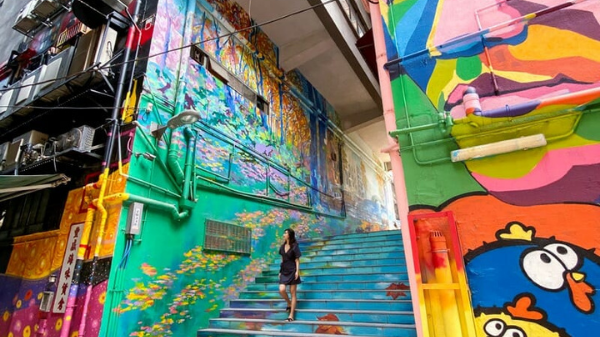
From chromatic graffiti art tucked into alleyways and across shop entrances to murals that stretch as high as the buildings they are painted on, take a pause from the bustle of the city and stroll the streets of SoHo, Kowloon and Sai Kung to appreciate the dynamic sub-culture of street art. We spotlight the best spots to take your camera and for a shot of some of the city’s most beautifil graffiti and mural paintings.

Sai Kung

Explore Hong Kong's many street art sai kung gafencu
(Whale #4 by Bo Law; Photo courtesy of HKWalls)

After the cancellation of the 2020 HK Walls street art festival, due to the Covid-19 pandemic, the collaborative project by the non-profit organisation returned last spring with its 2021 edition, choosing the famous fishing seaside town of Sai Kung as its wide-scale canvas.

The festival, which aims to create opportunities for local and international artists to showcase their talents in Hong Kong through street art, graffiti and muralism, invited 22 local male and female artists to decorate the town with murals, giving this hip town and even fresher look.

A cluster of art works can be found around the Sai Kung Market and Sai Kung Garden blocks.

Wong Chuk Hang

Explore Hong Kong's many street art wong chuk hang gafencu
(Mural SeeNaeMe and Messy Desk, aka Jane Lee; Photo courtesy of Ovolo Hotel)

Over on the far south, the hip and trending town of Wong Chuk Hang makes for a fun weekend trip with friends and family. With a slew of new dining hotspots and a vibrant new coat of murals and street are to appreciate, the area serves up long stretches of art works located along Heung Yip Road, where One Island South is situated, and Wong Chuk Hang Road, the stretch of road on which Ovolo Southside sits. Make sure to also make a stop next to the Wong Chuk Hang Playground and Yip Fat Street. These Instagrammable spots are sure to be a hit with the kids and liven up your social media feed.

Wan Chai

Explore Hong Kong's many street art oi kwan street wan chai gafencu
(Outside of Morrison Hill Swimming Pool by Kwan Clan; Photo courtesy of HKWalls)

While you’re down south, stop over at Wan Chai for some wide-scale and psychedelic murals. Starting from Morrison Hill Swimming Pool on Oi Kwan Road, you’ll find a long stretch of oriental-style graffiti work by group Kwan Clan, a collaborative effort among five Chinese artists.

Then, continue down the road and you will find several more creative pieces marking various buildings along the way, including the famous animal mural outside of the SPCA Building. And if you’re willing to stretch your legs farther, check out the realist art piece titled The Huskey by Yopey on Kennedy Street as well.

Central

Explore Hong Kong's many street art graham street hollywood road central soho gafencu
(Old Townhouses by Alex Croft; Photo courtesy of discoverhongkong.com)

Making your way in and out of the streets of the city’s shopping and dining hotspot SoHo is almost an adventure, especially when you’re on the hunt for the most iconic  murals plastered across shop entrances and tucked between shops and alleways. This area colourfully reflects Hong Kong as the cultural melting pot that it is.

Boasting some of the most Instagramed parts of Hong Kong and featuring some of the most recognisable murals around town, the street art here is hard to miss, but if you’ve never taken a second to stop and appreciate it, some of the trendiest ones to look out for are the vibrant Old Townhouses by Alex Croft outside of the GOD store on Graham street; Uma Nota’s iconic Flamingo lady by Elsa Jean de Dieu on Peel Street; the imposing Hollywood-inspired piece above Madera Hollywood Hotel; the beautiful twin coy by Christian Storm on Shing Wong Street; and the urban impressionism-style of Hong Kong by Dan Kitchener (aka DANK) and Charles Williams on Elgin Street.

Sheung Wan

Explore Hong Kong's many street art sheung wan tank street gafencu
(Bruce Lee mural by Yoo Seung-Baik, aka XEVA; Photo courtesy of Longzijun via Flickr)

If you have the bandwidth to continue to Sheung Wan, proceed along Hollywood Road until you reach the stairway that leads up to square street to reach Tank Lane. Here, the journey takes you through a series of murals by local and international artists. This is also where iconic mosiac-style portrait of hometown hero Bruce Lee by XEVA (Yoo Seung-Baik) hangs overhead. And at the end of the trip, turn into Bridges Street to arrive at Tai Ping Shan where Instagram-famous teashop  Teakha serves refreshingly delicious chai and treats.

Sai Ying Pun

Explore Hong Kong's many street art art lane sai ying pun gafencu
(One Art Lane; Photo courtesy of yogawinetravel.com)

Farther down the western side of Hong Kong island, a quaint alleyway in Sai Ying Pun named One Art Lane transports you to a multi-verse of colours and quirky characters. Its alleyways and stairways are completely covered with a collection of 26 murals by 17 international and local artists. This spot is easily accessible by train as it is conveniently situated right outside Exit B3 of Sai Ying Pun MTR station.

The Mills

Explore Hong Kong's many street art the mills gafencu
(The Past and Future of The Mills by Uncle; Photo courtesy of The Mills)

Although Tsuen Wan doesn’t score high on the list of must-see places to appreciate street art, the latest revitalised heritage building, The Mills, formerly a textiles factory, does feature over a handful of murals along the wide entrance of its building if ever you are on this side of town or visiting the landmark.  

Explore Hong Kong's many street art hkwalls sham shui po gafencu
(Rainbow Thief by Okuda San Miguel; Photo courtesy of HKWalls)

Although Kowloon side doesn’t spring to mind when on the hunt for art, its old buildings and old-style Hong Kong aesthetic provides a stark contrast to the city’s earlier commissions of murals. Decades old buildings, shop shutters and high rises along Sham Shui Po, Prince Edward, Mong Kok and Yau Ma Tei were given new life thanks to HK Wall’s 2016 project.

If you find yourself around the Yau Tsim Mong district, check out the iconic large scale multi-coloured geometric dog by Okuda San Miguel, named Rainbow Thief, that is plastered along the length of the Man Fung Residential Building in Sham Shui Po or the street art that decorate the infamous Yau Ma Tei fruit market and bustling stalls along Waterloo Road. In Mong Kok, the Public Square Street is a relatively new addition. You’ll surprised to see that these vibrant gems stand out and highlight the areas with an vibrant interpretation of Hong Kong’s multicultural city.  

Vibrant City: Hong Kong’s growing art scene

Dipping into a swirl of gentle colours, Sylvia So loses herself in a canvas of tint, sensation and memory. Inspired by the mystical work of established contemporary artist Christopher Ku, she prepares for her first solo exhibition in two years. After a tumultuous period of disruption, the homegrown artist is eager to showcase her distinct abstract works that leave interpretation to eye of the beholder. In a city rife with powerful art-world players, elite collectors and snooty aficionados, it is routine for emerging artists from Europe and the United States to clinch multimillion-dollar sales at exhibitions, while only a handful of galleries promote true local talent like Sylvia So.

Vibrant City_ Hong Kong's growing art scene gafencu (3)
(In this photo: Artist Sylvia So)

Hong Kong’s reputation as the capital of kitsch has faded, but until a few decades ago there was a dearth of culture. The city was never known for art. Luxury shopping, cheap and delicious food, a raging night life – yes, but art? No. Not unless you count the antiques pedalled in dilapidated shops as art. With intermittent fairs, just the occasional show-stopping cultural event and galleries few and far between, artists didn’t really have a strong presence or say. Having historically existed in the artistic shadows of New York, London and Paris, the Hong Kong art scene has expanded and evolved since Art Basel’s arrival in 2013. 

Vibrant City_ Hong Kong's growing art scene gafencu (5)
(Image courtesy of Art Basel 2021)

Art Fairs Roster

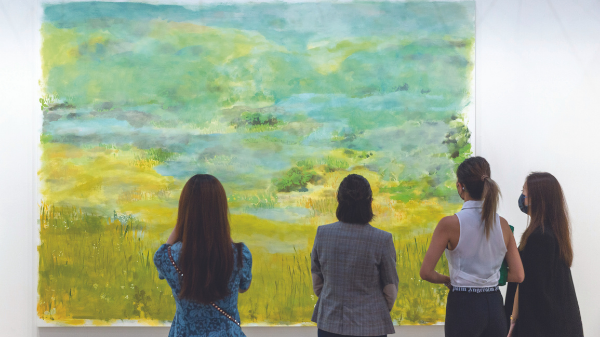
The past two years have been rough for the art sector – jolted first by pro-democracy protests, then Covid-19 – with shuttered galleries, wiped-out cultural fairs and calamitous sales tolling the bells of impending gloom. However, the diverse roster of blockbuster fairs gracing the city last summer – Art Basel, Affordable Art, Unscheduled, Fine Art Asia, Art Next Expo – was a resounding endorsement of the market’s commanding return.

Vibrant City_ Hong Kong's growing art scene gafencu
(Image courtesy of Art Basel 2021)

Traditionally, art follows money and with Hong Kong home to the world’s highest concentration of high-net-worth and ultra-high-net-worth individuals, an eastward shift in the global cultural axis is apparent. The findings of London-based art market-research firm ArtTactic are telling: Hong Kong now sits atop London as the second-biggest contemporary art-auction market in the world, tailing right behind New York. Even when the world was hurting from the pandemic during the first eight months of 2020, Hong Kong’s art-market share spiked to 26-percent from 20-percent in 2019, with US$314.6 million in sales, compared to London’s US$303.5 million. Kevin Ching, who served as Sotheby Asia’s CEO for 15 years before stepping down last April, feels there is “so much pent-up yearning and hunger for art in Hong Kong”.

Also Read: Fine Art Asia returns to Hong Kong with NFTs

Vibrant City_ Hong Kong's growing art scene gafencu (9)
(Image courtesy of M+ Museum)

Changing the Conversation

From Tai Kwun in the heart of the city to the fringes of new hub for creativity Wong Chuk Hang, galleries are flourishing. The growing interest is most visibly manifested by the high-ceilinged presence of art behemoths Gagosian Gallery, White Cube and Lehmann Maupin in the city. Their goal of mounting “museum-quality exhibitions” is a fortuitous sign that Hong Kong is clearly worth the investment.

Until a few years ago, the museum scene was woefully lacking, but here too the tide has turned. The opening of M+ is a big stride towards making the city a cultural heavyweight and remedying its reputation in art circles as being overly commercial. At 700,000 square feet, the West Kowloon stronghold is one of the largest contemporary art museums in the world, double the size of London’s Tate Modern and rivalling New York’s Museum of Modern Art – a place where you can go and see great art without someone putting a price tag to it.

Vibrant City_ Hong Kong's growing art scene gafencu (10)
(Image courtesy of M+ Museum)

One of the main restraints on homegrown talent has been the astronomical gallery rentals in a notoriously space-squeezed city. But with the opening of art-dedicated areas like the Tai Kwun Centre for Heritage and Arts, H Queen’s, PMQ, West Kowloon Cultural District and even the newly repurposed Central Market allow the burgeoning local art scene to breathe. Their diverse programme and local-artist-only exhibitions are helping the city shed its status of cultural sterility.

Excitement is high, artists like Sylvia So are optimistic. “There is a lot of potential here,” she affirms. Hong Kong is one of the few global cities in the world that is pumping in money for cultural development. “Undeniably the new art environment and government policies will greatly nurture homegrown talent.” 

“There is so much pent-up yearning and hunger for art in Hong Kong”

Local Laurels

While the blight of Covid has been cataclysmic, it has spurred a refreshing change. Travel restrictions and long quarantine meant that a majority of global artists were absent from this year’s fairs. Art Basel and Affordable Art Fair chose to shine a spotlight on local artists instead. The latter’s director, Regina Zhang Minzi, observed, “Contrary to the previous seven years when 80-percent of [participating] galleries were from oversees, in 2021 it was the other way round.”

As a result, budding artists like young graduate Chau Chung-man and 24-year-old Mandy Ma, winner of the Fresh Trends Art Graduates Joint Exhibition award in 2019, enjoyed a pivotal year, showcasing their work in the same venue as celebrated Western talent like David Farrant. 

Vibrant City_ Hong Kong's growing art scene gafencu (6)

Street Scene

Visual noise or genius born in the streets – no matter which side of the graffiti debate you are on, there is no denying the pedigree of street art. Non-profits like HKwalls, co-founded by former architect Jason Dembski in 2014, are driving forces encouraging the growth of murals through annual street-art festivals and competitions. An increasing number of graffiti artists like Bao Ho, Xeme and Catherine Grossrieder are taking to the walls to pour out their creativity and, in so doing, breathe new life into drab districts. Sometimes inspiring, often enigmatic and undoubtedly challenging, Hong Kong art is coming alive like never before.

Compared to established masters like Paris, Venice, London or New York, we may be just dabbing our brushes, but art world mainstays agree that a city often critiqued for being a superficial, commercial jungle is taking conscious steps to develop cultural depth. And it’s an exciting sight to behold. 

Also Read: Artspace K: Celebrating and spotlighting contemporary artists in style

(Text: Nikita Mishra)

F11 Foto Museum’s Douglas So on creating space for photography in the city

With F11 Foto Museum and f22 foto space, corporate lawyer turned gallerist Douglas So has deliberately refocused his energy on framing the world more beautifully.

When did your love of photography begin?
I’ve liked photography since I was in secondary school, but it wasn’t until after graduating from university that I became more interested in understanding it and appreciating the works of prominent photographers. Somehow, photography speaks to me more than any other art form. Besides, looking at good photography has certainly improved my own skill with the camera.

I also enjoy history, so film photography – especially by Magnum photographers – before the age of the internet had a huge influence on my life and in shaping my perspective of a world that I did not known before. It was also through great old works of photography that I developed a strong passion for collecting vintage cameras, particularly Leica cameras, photographs and photobooks because many important photographers at that time used a Leica. This model of camera has an association with capturing some of the most monumental events in history and iconic images of the world.

gafencu_people_interview_feature_douglas_so_f11_foto_museum_f22_foto_space-2

You were a successful solicitor before becoming a gallerist. What was that like?
Studying law was my mother’s idea. Looking back, I’m glad that I followed her advice. Apart from earning the income necessary for me to pursue my many hobbies, my career as a lawyer helped me adopt an attitude that doesn’t let me look at things pessimistically, but rather be determined to find a creative solution to every issue, even when it seems there isn’t one.

I’ve never regretted spending so much of my time being a lawyer. In fact, I quite enjoyed it. I was first at Baker McKenzie to be a private practitioner before I moved to the Hong Kong Jockey Club. I successfully completed the IPO of some of the largest companies in China, such as China Eastern Airlines and PetroChina, when the country was just starting to tap into the capital markets and a lot of rules were still unwritten. It was a very exciting time, working with some of the greatest minds and constantly encountering things we hadn’t seen before, then creating solutions for them – there was something to learn everyday.

How did you become a gallery owner?
Although I miss my days as a corporate lawyer, after a few mega corporate finance transactions, I felt it was time to move on – perhaps to avoid the anti-climax that was bound to follow. So, in 2000 I moved in-house to the Hong Kong Jockey Club. It was a totally different experience from working in a corporate context, but I had the opportunity to learn something new once again. After 10 years, I became their executive director of charities, and then started to work on projects related to arts, culture and heritage conservation. I’m very thankful to the Jockey Club for that opportunity, which really opened my mind and broadened my horizons to try something new.

“Being a lawyer helped me not to look at things pessimistically, but to find a creative solution to every issue, even when it seems there isn’t one”

You founded the F11 Foto Museum in Happy Valley in 2014. How did that come about?
Given my love of photography, I’d always wanted to establish a place in Hong Kong where the public could enjoy photography all year round. After my legal practice, I spent more and more time doing charity work at the Hong Kong Jockey Club where I was involved with arts organisations. I think it naturally led me to founding a photography museum.

Knowing my love of old buildings, in 2012 my property agent mentioned that one in Happy Valley had suddenly became available. I wasn’t sure at the time whether F11 would be a gallery or a photo space, but I felt that it was such a wonderful and unique opportunity to weave the concept of art into a beautifully structured ’30s Art Deco-style heritage building. Although I had never run a gallery or museum, I thought to myself, “Let’s do something radical – something worth trying.” Two years later came the birth of F11 Foto Museum.

Needless to say, there were a lot of challenges along the way. But luckily, throughout it all, my team has been wonderful, helping me through exhibitions and liaising with different artists from around the world, as well as looking after the usual problems relating to managing old buildings. We are now moving into our seventh year, and I haven’t the slightest regret about the decision. I believe that following my passion, my heart, was truly important.

gafencu_people_interview_feature_douglas_so_f11_foto_museum_f22_foto_space - 1

Can you share more about the role of the museum?
At F11, our mission comprises three elements. The first is to promote photography. Because of the beautiful structure of the building, we have been approached to let out the space for other purposes, but we decline each time because we want our brand and focus to be very clear. When people think about F11, we want them to think of photography.

Secondly, we want to promote heritage conservation. F11 is a museum, but it is also housed in a Grade three heritage building. We want to breathe an exciting new life into this 90-year-old building by revitalising it as an art and cultural space especially for the younger generation to experience what buildings were like when they were built a century ago.

Lastly, we aim to promote the concept of a private museum. The better-known museums in Hong Kong are public museums funded by the government, such as the Science Museum, the Museum of Art, and the Heritage Museum, but the city doesn’t have enough private museums. These offer a more diverse collection of different arts dedicated to specific themes. I thought running F11 successfully could provide a case study for other people interested in establishing private museums in Hong Kong and we can learn from one another.

gafencu_people_interview_feature_douglas_so_f11_foto_museum_f22_foto_space -5

Three years after the success of F11 Foto Museum, you established f22 foto space. Could you tell us more about your photo gallery?
We chose the names F11 and f22 because they relate to photography. ‘F’, to any photo lover, means the aperture of the lens – the larger the F-number, the greater the depth of field and the clearer the image. As a brand, it represents a philosophy to always go one step higher and deeper.

With f22, we wanted to go deeper into photography. It’s a gallery, but we wanted to try new things, too. Before its current location in The Peninsula Arcade, it was in Wan Chai and featured a cafe, bookshop and camera store, which was quite unlike F11. Photography is an all-embracing concept; it encompasses images, cameras, photobooks, video and other things. So, we thought that if we could have different spaces, we could offer a variety of attractions and cater to people with diverse tastes.

We also work with diverse artists. With F11, as a museum, we engage with more established talents. One of the reasons why we opened f22 was to work with younger contemporary artists to help promote and sell their work in Hong Kong and overseas.

“F11 was such a wonderful and unique opportunity to weave the concept of art into a beautifully structured ’30s Art Deco-style heritage building”

How can we nurture Hong Kong’s upcoming artistic talents, not just within photography but in the broader art field?
Younger artists need opportunities to work with galleries and museums to showcase their art and meet potential collectors and buyers. Especially with the internet, it’s increasingly challenging to grab the attention of viewers. So, having physical exhibitions is important to expose local artists to key institutions and curators both within Hong Kong and abroad.

Besides that, publications play an important role in establishing an artist. In spite of what is said about everything being available on the internet, it is definitely not the same experience as looking at a well-made photo book. Younger artists need to convince reputable publishers to publish their work and help promote them; it is challenging if their work cannot be exposed.

gafencu_people_interview_feature_douglas_so_f11_foto_museum_f22_foto_space -4

Do you see local photographers succeeding at an international level?
It is a pity that local photographers don’t often appear outside of Hong Kong, and many aren’t known to important international collectors or overseas museums. But at the same time, I often come across friends – collectors and curators – outside of the city who do show interest in Hong Kong photographers. 

A couple of years ago at Paris Photo, the largest international fair dedicated to photography, I realised that I couldn’t recall a Hong Kong photographer ever being showcased. This led me to ask myself, “why”. But I didn’t want to just ask the question and not be part of the solution, which is why we are making plans to only exhibit works by local talents if we participate. 

If Hong Kong photographers can appear in prestigious art and culture venues such as MoMA, the Guggenheim or the Tate Modern that would be a great achievement, and it should be a direction the city aims for as well.

Where does your passion for charity stem from and are there any organisations close to your heart?
I think that whatever the achievement of a person throughout his or her career, in the end you will be remembered by how much you have contributed back to the world. It is important to me that I not only pursue my own interests and career, but also use my skills and resources to make society a better place. 

I spend more of my time doing volunteer work nowadays, and it is a very happy and fulfilling part of my life. In addition to being the Chairman of the Antiquities Advisory Board, which advices the governent on heritage-related matters, I’ve been a board member of Unicef for the past eight years, helping them raise funds and awareness in relation to the interests of children. Especially in trying times like these, we look at how children and poor families are affected, then we contribute advice and legal knowledge to the organisation.
I’m also proud to be on the board of Food Angel. They collect food from supermarkets, restaurants, hotels and other donors across the city and distribute it to various kitchens where meals are cooked and then delivered to people in need, helping to channel all this food surplus while feeding the less fortunate.

gafencu_people_interview_feature_douglas_so_f11_foto_museum_f22_foto_space -6

Finally, what’s the biggest item on your bucket list?
I see both F11 Foto Museum and f22 foto space as my children, so I would really love to watch them grow happily and achieve their potential. For that, I know I have to work hard and never forget why I created these spaces and what I wish to achieve. 

I would also love to continue to devote at least 50 percent of my time to the community until the day comes when I am no longer needed. Aside from the two NGOs I work with now, I would love to contribute in the art, culture and heritage space. These areas are most important and endearing to me and I hope to continue this passion for as long as I can.

Thank you.


Interview by: Roberliza Eugenio
Photos: Jack Law
Art Direction: Jhoshwa Ledesma
Videographer: Kingsley Lau
Venue: f22 foto space

Art Next Expo 2021: A close focus on over 70 Hong Kong artists

If there is anything the last two trying years have proved, it is that art plays an ever more crucial role in times of change and adversity, and that the global pandemic had not dampened the determination and motivation of artistic talents in Hong Kong, Asia’s rising capital of art. Rather, it has demonstrated the pursuit for the arts and the focus and heightened interests in local artists are more prevalent than ever.

art next expo 2021 hong kong art fair art exhibition_2

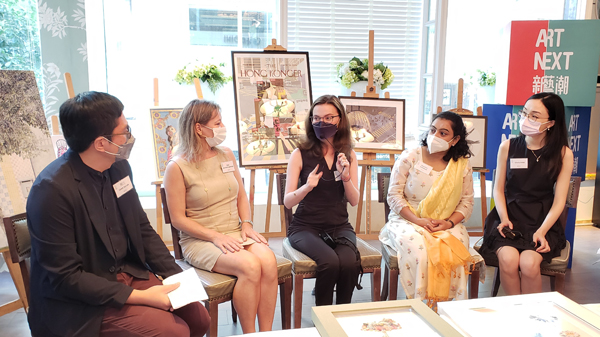
Following a series of art months, the 2021 Art Next Expo arrives without hesitation to deliver its 4th Edition of Art next Expo and Art Next Artist Awards, an exciting 3-day affair that will provide a platform for artists, galleries, institutions and collectors to connect and be inspired.

art next expo 2021 hong kong art fair art exhibition_4

“Although the pandemic has impacted global economy, the international art market continues to show strong signs of recovery, and we are particularly excited to see that more and more Hong Kong collectors are interested in the works of local artists”, said Ms. Judy Inn, Director of Art Next, “We believe art lovers will value the opportunity to meet the artists in person at the Expo.”

art next expo 2021 hong kong art fair art exhibition_1

Set to open its doors on 8 October until 10 October at the Lanson Place, Causeway Bay, visitors can expect to delight in an immersive and interactive three-day art fair that will showcase over 70 artists in three series:

Art Next Artists Series:
Providing young and emerging talents of diverse styles, mediums and backgrounds an opportunity to compete for the Art Next Artist Awards, the winner of the competition will be granted a 3-month sponsored residence programme by Taipei Artist Village.

The winner will be selected by a panel of artists and art scholars, such Professor Tang Hoi Chiu, Professor TANG Hoi Chiu, Adjunct Professor of Academy of Visual Arts at The Baptist University of Hong Kong;; art collector and artist Mrs. Celcilia Cheung; renowned Chinese ink painter Mr. He Baili; renowned artist and curator Dr. Tang Ying Chi among many others.

art next expo 2021 hong kong art fair art exhibition_3

Diversity Series:
Presenting the latest works by six embroidery artists that integrate diverse and contemporary motifs and themes into this traditional medium, exploring the limit of embroidery art as a form of art expression and fostering its appreciation by the public. This engaging exhibition is organized by Jun Enterprise, an organization dedicated to promoting embroidery art. Besides embroidery art, the Diversity Series also features contemporary ink works, geometric paintings, leather painting and artworks related to cheongsam (traditional Chinese costume).

art next expo 2021 hong kong art fair art exhibition_6

Special Project Series – Next+ :
Next Mart is a fun thematic exhibition co-curated by artists Angel Hui Hoi Kiu and KC Wong to showcase 80+ pieces of pop art and trendy art toys, including paintings, sculptures, and lifestyle goods, from 11 artists, and installations of immersive innovative multimedia works by graduates of prestigious universities.

To top it off, Art Next has specially curated the works of a group of celebrated local artists working in a variety of mediums, such as Chui Pui Chee, Aries Wu Chun Yin, Chan Sai Lok, Victor Chu Chi Kuen and Chung Wai Lun, who will showcase their latest works to visitors of the Expo.

For more information, please visit www.artnextexpo.com

Andante showcases Matteo Negri’s first solo-exhibition in Hong Kong

Andante opens its doors to a thrilling solo-exhibition in its Central showroom The Design Showcase where a selection of sculptures and paintings by Italian visual artist Matteo Negri will be displayed in his first solo exhibition in Hong Kong.

Andante showcases Matteo Negri's first solo-exhibition in Hong Kong gafencu magazine
Hong Kong’s lifestyle expert in contemporary designer furniture, lighting and decorative items Andante invites its guests into its elegant 450sq.m design space for a unique experience that will thrill visitors’ visual perception.

Andante showcases Matteo Negri's first solo-exhibition in Hong Kong gafencu magazine (8)

Featuring Andante’s new furniture collection against the backdrop of a selection of nine unpublished works by Negri. The exhibition, titled “I contain multitudes”, is a body of work that was developed in a span of three years between the year 2017 and 2020. The works comprise a collection of Lego-shaped sculptures and vibrant geometric paintings that impressively redefines how one observes and experiences physical space. 

Andante showcases Matteo Negri's first solo-exhibition in Hong Kong gafencu magazine (5)
The Milan-born artist is known for his eclectic style of pop art, use of geometrical shapes and 4D sculptures that can only spawn from vibrant and out-worldly imaginations. His artistic practice, as he expresses, is “aimed to analyse the perceptive role of the surface and the colour, both in the field of sculpture and of artworks that are two-dimensional in nature”. 

Andante showcases Matteo Negri's first solo-exhibition in Hong Kong gafencu magazine (4)
A case in point is his use of reflections as a means to keep a kinetically activated relationship with viewer and subject. The mirrored-Lego pieces used in his sculptures uses reflection to manipulate a viewer’s perception of space — keeping the object from remaining as a static and absolute form.

Andante showcases Matteo Negri's first solo-exhibition in Hong Kong gafencu magazine (3)

His vision to create an object that can go beyond “a static and monolithic vision of the usual art-work” is reflected — literally — by the aluminium, coloured paper, glass and iridescent films that are observably abundant in his work. Unsurprisingly, the outcome unveils a magical charm at every angle.

Andante showcases Matteo Negri's first solo-exhibition in Hong Kong gafencu magazine (7)

The exhibition will run until 30th April at Andante’s Central-set showroom at The Design Showcase. Availability is subject to limited seats on a first come first serve basis.

When: From now until 30th April 2021
Where: Shop D, G/F, The Design Showcase, Ruttonjee Centre, 11 Duddell Street, Central, Hong Kong Island.

For more information visit www.andante.com.