

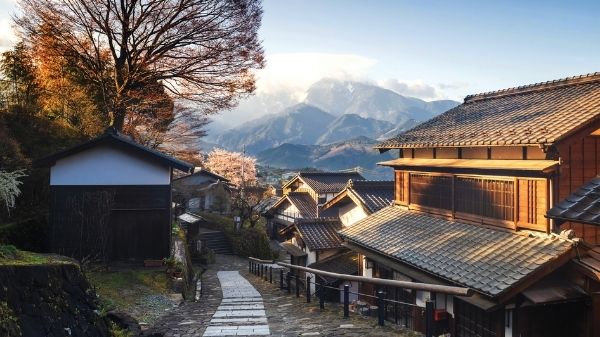
Travelling the ancient Nakasendo Trail

Although Japan, an indisputably internationally-connected country, is the the third largest economy in the world, following only the United States and China, a couple of centuries ago, this Asian powerhouse maintained a strict isolationist foreign policy for some 214 years, eschewing trade and political ties with all other nations. Dubbed the Sakoku period (1639-1853), this stringent policy was adopted in the opening years of the rule of the Tokugawa shogunate. Founded by the legendary military general Tokugawa Ieyasu in 1600, it held sway in Japan until 1868. 
 
Travelling the ancient Nakasendo Trail gafencu magazine
 
Among his many initiatives were moves to build an extensive communication and transportation system across Japan. Along the way, this saw him eliminating bandits from the rural countryside and constructing five express highways across Honshu, the largest of Japan’s four main islands. Although his main aim was to secure easy transit for officials, while better monitoring the locals, one of the highways stretching out from his palace in Edo – the Nakasendo Trail – is now among the nation’s most popular non-urban tourist attractions.

“The historic Nakasendo Trail is now one of Japan’s most popular non-urban tourist attractions”

Constructed upon ancient foot trails, the Nakasendo highway (literally “central mountain route”) connects the Nihonbashi Bridge in Tokyo with Kyoto’s Sanjo Bridge. Beautifully engineered and lined with verdant forests, this 534km trail was originally intended for foot traffic between the two cities. Inevitably, the intervening centuries – particularly those subsequent to the fall of the Tokugawa shogunate in the late 19th century – had seen these roads fall into ruin. Fortunately, back in the ’60s, the Japanese government, recognising their historic and cultural value, set out to entirely restore the wooden buildings along these venerable routes to their original glory. 

Travelling the ancient Nakasendo Trail gafencu magazine concrete path

Today, thanks to such renovations, as well as the introduction of a contemporary tourist-friendly infrastructure, these ancient walkways are once again welcoming curious travellers from around the world. In addition to the concrete roads that criss-cross the landscape, there are also several train tracks that ferry footsore tourists to various hubs along the route via high-speed trains. This allows visitors to not only choose just which venerable attraction they wish to visit, but also to tailor hikes according to their temperament and ability.

Travelling the ancient Nakasendo Trail gafencu magazine south milage traffic pole and sign

A popular starting point is Magome, the 43rd of Nakasendo’s 69 post towns, which is situated three hours’ train ride from Tokyo. Framed by verdant peaks, the sleepy streets of this heritage destination are lined with numerous tea shops, ryokans (traditional Japanese guesthouses) and even offer a souvenir shop or two. The latter feature much the same ware that has been sold here for generations – lacquerware boxes, dried fish and sake from local distilleries. Many also drop by the Wakihonjin Museum to learn more of the town’s history, before popping into the Honjin / Toson Memorial Museum, a former inn that is now a memorial to locally-born Shimazaki Toson, a highly regarded Japanese literary figure. 

Travelling the ancient Nakasendo Trail gafencu magazine tsugamo

A mere 7km from Magome, along a relatively gentle and well-marked trail crossing the the picturesque Kiso Valley, lies Tsumago, considered by many to be the trail’s crowning jewel. Thanks to the considerate restoration efforts, which saw TV antennae lopped away, electricity lines buried and cars banned during daylight hours, this beautifully preserved town is – visually at least – identical to its original Tokugawa incarnation. A charming, wholly photogenic village, it is once again punctuated by rows of traditional Japanese wooden houses, shops and ryokans. Even the mailman has to wear period-specific attire. 

Travelling the ancient Nakasendo Trail gafencu magazine Inuyama Castle and Kiso River

If you’re not too exhausted by the three-hour hike from Magome, Tsumago boasts several unmissable attractions, including the Nagiso Museum of History, a showcase of the town’s extensive restoration process. The ruin of Tsumago Castle, meanwhile, though all but lost to the ravages of time, is the perfect spot to snap a photo or two, largely on account of its breathtaking views out over the town and neighbouring Midono-juku. If you’re keen to sample the local cuisine, check out Yoshimura Soba, a popular eatery renowned for its homey soba noodles, before stopping off across the street for some old-fashioned matcha tea and mochi. 

Travelling the ancient Nakasendo Trail gafencu magazine onsen hot spring

Further along Kiso Valley lies the third of the historic trail’s trio of must-visit destinations – Narai. Located at the foot of the Tori Pass – one of the more demanding stretches of the Nakasendo highway – this was once the most prosperous of the post towns. Known as ‘Narai of a 1,000 Inns’, its long main street is dotted with various ryokans and minshuku, family-operated traditional Japanese bed-and-breakfasts. There is also the inevitable array of souvenir shops, all peddling wood carvings and dried fruit. Those wishing to relax aching muscles and sore feet should also venture into the hot springs (onsens) for a soak in one of the naturally-heated pools. 

Travelling the ancient Nakasendo Trail gafencu magazine hiking walk

Though there are other notable destinations along the trail, these three iconic post towns offer the most authentic Nakasendo experience. Unusually well-preserved, they give avid hiking enthusiasts (of every level of accomplishment) the chance to relive the glory days of the Tokugawa era by walking in the footsteps of the samurai of times classic, an opportunity rarely accorded and one not to be missed.
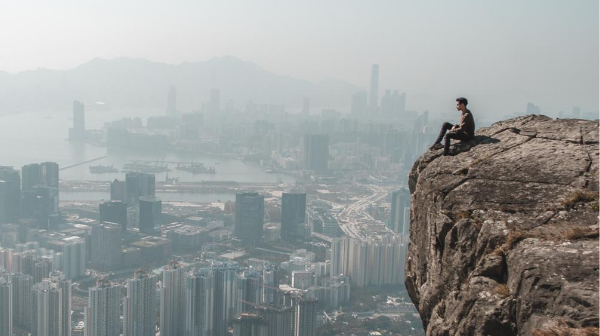
Hidden Hikes: 6 unique locations in Hong Kong

Many are turning to exploring the city’s various natural landscapes as they yearn for adventures with family members and friends. As business starts to pick up slowly and establishments get ready to reopen, there are some things that we will miss, but which in turn may be compensated by weekends that are worth looking forward to. 

If you’re looking to keep up with your adventurous spirits during weekends, here are some of the city’s hidden hiking options that offer scenic spots and unique views for weekend get-aways from crowds.


View this post on Instagram


Po Toi Islands #hike #island #hongkong

A post shared by Lucas (@lucas.fr.hk) on

Po Toi Island

As if just a speck on the map of the city, is actually a hidden gem in itself, a small island with gorgeous coastal views that not many other islands in the city can offer. Along the rocky coastlines is a gorgeous abundance of quiet waters and green terrain which at the end of the trail concludes with a seafood meal at the nearby restaurants by the pier.


View this post on Instagram


比起得不到別人的愛 無法認同自己更糟糕

A post shared by ??????? (@charlottepuiii) on

Po Lo Shan (Pineapple Mountain)

Starting from within the residential estate of Leung King Estate, the path will lead you beyond fences and into a wooded area towards an uphill trail. The trail leads to what is known to locals as the “Grand Canyon” of Hong Kong.


View this post on Instagram


The secret place. . . . #intothewoods #secretplace #calming #letsgatherround #surroundedbynature #poplar #reservoir #naturelover #gooutdoors #homekong

A post shared by V. Ha (@vanh.fs) on

Shing Mun Reservoir

The paved path of this New Territories reservoir stretches through a green forest of towering trees and past a few picnic spots towards the northern point of the reservoir. There lies a stream, which during dry seasons, exposes a picturesque landscape of Chinese banyan trees along the shoreline. 

Ping Nam Stream

Nam Chung Country trail hides away many of its mini pools, but none like Ping Nam stream which the trail eventually leads you down to lower than most have gone. Unsurprisingly, this might take some effort to get to, but at the end of it lies a beautiful gorgeous infinity pool atop a short waterfall.  

Tung Ping Chau

Perhaps the easiest hike on this list is this crescent-shaped island. The trail encircles the island’s shoreline with unique rock formations. Although the youngest rocks in Hong Kong, it is also the most unique across the region, cemented with the mixture of organic particles and minerals into sedimentary rocks.

Cape D’Aguilar

One of Hong Kong’s best-kept secrets is the Hok Tsui beacon, a historic lighthouse along the coastal shores of southern Shek O, which towers over sea-blue waters. Further on from the cape, the trail continues along several photogenic rocky shorelines and caves. Above, long after the sun has set, the sky transforms into a breathtaking blanket of stars, making this spot an amazing location for stargazing.


View this post on Instagram


“Beyond the mediocrity” — This location has been one of my most favourite places to be in hong kong for its uniqueness and beauty compare to all other suburb areas in the city. From different caves to lighthouse. From waterfronts to cliff sides. All exotic spots united into the only one and the wholly one- Cape D’ Aguilar. . . . . . . . . . #stayandwander #voyaged #fatalframes #folkvibes #traveldestinations_ig #theglobalwanderer #destination_wow #earthpix #beautifuldestinations #natgeoyourshot #natgeotravel #natgeoasia #travelgram #travelphotography #travelaroundtheworld #旅遊 #conservationhk #igdaily #ig_masterpiece #theimaged #illgrammers #meistershots #shotzdelight #hongkong #awesomehongkong #hkigers #nikonhongkong #discoverhongkong #l4bhktory #urbex

A post shared by AlvisChuiVisuals ? (@alvischui_) on