
The steaks are high: Best free-range, hormone-free beef in Hong Kong

Move aside, Wagyu! As discerning carnivores diverge from the former favourite, fatty Japanese wagyu beef in favour healthier options.

Grass-fed, free-range and antibiotic-free beef has a clear demand against its fattier, mass-produced wagyu and angus counterparts. And there is a rising category of environmentally minded carnivores who moon(n) over the healthier and leaner options, if given a choice. Here is a guide of where to buy grass-fed beef in Hong Kong:

beef steak dining best grass fed free range hormone free antibiotic free beef cattle gafencu

Spainish Galician Blond (Rubia Gallega)


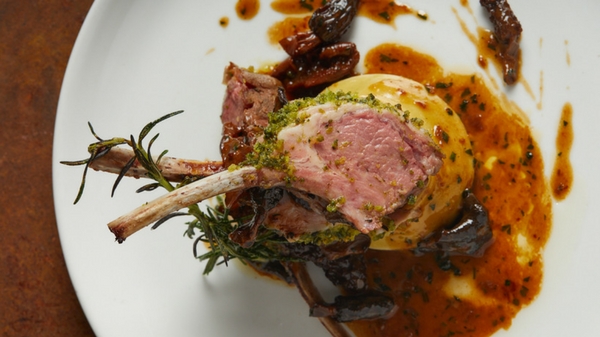
Northwestern Spain is home to one of the best quality cattle in the nation, and perhaps the world. Galician Blond, otherwise known as Rubia Gallega, is a breed nicked named “Fat Old Cows” for reasons that may be more appealing than it sounds. Raised on free-range pasture and are left to graze the abundant green lands for 15 years longer than the usual one to five years, the meat is much leaner than the more popular wagyu beef. Rather than boasting rich marbling like the more popular Wagyu, its fame, instead, derives from its mouth-watering flavour after it has been dry-aged and slow-cooked over a flattop, which is typically how it is done in Spain. The meat is 100% grass-fed and hormone-free, comes out surprisingly tender with a subtle smoky flavour that makes this a standout option.

french cote de beouf most expensive dining best grass fed free range hormone free antibiotic free beef cattle gafencu

French Côte de Boeuf
Ever wondered how much the most expensive beef costs? Kobe might be one of the most sought after meats in the market, it’s the French Côte de Boeuf that holds the honoury title of raising the most expensive beef in the world, specifically the Blonde d‘Aquitaine. Priced at US$3,200, the vintage — yes, vintage — dry aged rib steak is a richly flavoured and delicate piece of dry aged meat from a breed of cattle that are raised exclusively by the Polmard Francois Butchery’s family farm in Saint Mihiel in Northwestern France.

Cows are on a grass-only diet in large farms and no more than four are slaughtered every week. Now that’s what we call ultra-exclusive and rare. Globally, under strict guidelines only a handful of chefs are allowed to prepare this special steak, and just a few with unparalleled prowess have been granted the privilege of cooking this particular Côte de Boeuf – Hong Kong’s Chef Fabrice Vulin from Caprice is one of them.

Also Read: Mugung Hanwoo Beef Specialist brings Korea’s most-coveted beef to Hong Kong

steak dining best grass fed free range hormone free antibiotic free beef cattle gafencu

New Zealand Friesian crossbreds
Early Polynesian settlers coined this island country Aotearoa, ‘Land of the Long White Cloud’. With idyllic glaciers, magnificent rugged mountains, and vast plains of rolling hillsides, there might be no better home for some of the healthiest beef cattle in the world. Although New Zealand Friesian breeds were initially used for dairy production, 43% of the region’s cattle are now comprised of crossbreeds for meat production.

Raising in ranks,  as it contends against its neighboring Australian Wagyu beef, it enjoys the reputation for being a healthier free-range and grass-fed option for health conscious diners. Its cattle enjoy an abundance of large-scale, green pasture to feed on all year round, leading a 100% grass-fed, GMO/hormone/antibiotic-free diet.

tender italian argentinian steak dining best grass fed free range hormone free antibiotic free beef cattle gafencu

Argentinean Las Pampas
If you’re a sucker for porterhouse and ribeye steaks, there is a beef type that is worth the hype. Argentinean steaks are one of the leading beef options in the market, gracing the plates of some of the best steakhouses in the city. Though the country boasts different breeds of cows, cattle raised in Las Pampas where the cows indulge grazing over 750,000 sq.km of mostly flat grassland all day are widely known for being incomparably tender and richly flavoured, even without having to be seasoned with anything other than salt.

Putting quality and flavour ahead of production, the cows are not rushed to fatten with altered diet and hormones like their American or Canadian counterparts. This gives the meat more time to develop a rich flavour and healthier body of fat that does not pose a high risk of cholesterol and heart issues, of course if eaten in moderation.

tender steak dining best grass fed free range hormone free antibiotic free beef cattle gafencu

Italian Piedmontese
Originating in Northwestern Italy over a century ago, Piedmontese is being billed as the Italian Wagyu, but with a more consistent and leaner edibility. It is an ancient breed with ancestral roots that can be traced back 25,000 years to Zebu (or Brahman) cattle from tropical South Asian countries such as India and Pakistan, before the herd migrated to Europe, making its stop just before the Alpine boarders at the valleys of the Piedmont region. Fresh green heaven as it might have seemed to these oxen, it eventually mingled with the native Auroch breed, evolving over time into the unique white Piedmontese that it is known for today. 

Built with a solid frame thanks to a genetic code that allows them to effortlessly increase muscle growth by 14% more than the average cattle, lean and tender, this meat is truly one for savouring. Miniscule in fat content, this juicy, pristine quality meat might just make it the next big red meat to take over the global market. 

Also Read: Steak, Soup or Stirfry: Which cuts of beef are best for your dish?
The World’s Top-notch Quality Steaks

In the topic of top-notch quality steaks, from rare vintage rib steaks to grass-fed chunks, each type of beef  brings their own value to the table.

Selecting high-quality beef isn’t too challenging and difficult. However, ranking the best-quality beef can be a bit trickier. Undeniably, the beef industry is competitive and upmarket, but as consumers become more aware of the cattle industry and the health concerns of meat with growth hormones and antibiotics, the “best” might vary depending on who you are talking to. For meat lovers, the breed, feed, and marbling is an easy tell-tale of the texture and flavor that can be expected. However, nutrition, feed, and environment can be a higher priority for those who are more health-conscious. 

The following are among the world’s highest-quality steaks:

 USA Black angus Beef World's Top-notch Quality Steaks

Angus (USA)

For a long time, the US has been best known for providing the world’s top-quality AAA Angus beef. The excellent marbling and profitability of Angus beef can explain the consistently high demand for this meat type across the US and the rest of the world. But in light of sustainability issues and topics regarding the ethical treatment and health concerns of growth hormones and antibiotics in American cattle, new doors have opened for beef around the world to serve as alternatives.

free range grass fed Beef World's Top-notch Quality Steaks gafencu

Australian & New Zealand

Because Australia and New Zealand are both below the equator, both countries provide a perfect environment for raising cattle. Both countries down under have dry summers and mildly wet winters which enable cattle to graze and feed on their vastly open pastures of green lands all year round, in contrast to confined feedlots in the US. In view of this, the quality of meat of both Australian and New Zealand beef have gained the attention of health-conscious consumers who prefer grass-fed free-ranged beef as this contributes to leaner meat production and a higher amount of Omega 3 and 6 fatty acids. Outside Japan, Australia is also reputed as the largest producer of Wagyu beef, accounting for most of the worlds’ Wagyu consumers including Hong Kong, China and Taiwan.

 World's Top-notch Quality Steaks japanese wagyu gafencu

Wagyu (Japan)

Wagyu which literally translates to Japanese beef remains to be the most in-demand when it comes to premium- quality beef. This is specially true with Japan’s A5 Miyazaki and Kobe beef. This is because Wagyu has the most detailed grading system when it comes to determining the quality of beef. Despite its massive popularity, Kobe rarely exports outside of Japan, making its exclusivity alluring. Full-breed Wagyu is also amongst the top in the world in terms of rich marbling and buttery flavour. 

Côte de Boeuf france polmard World's Top-notch Quality Steaks gafencu
image from cnn.com

Côte de Boeuf (France)

A piece of the vintage Blonde d‘Aquitaine rib steak — yes, vintage — is worth US$3,200. Why is this so pricey? Because this vintage beef  is extremely rare. Raised exclusively by Polmard’s butchery in Saint Mihiel. Only a little over 100 existing pieces sit preserved in a ventilated-negative-cold room and only four of these cows from the small family farm in the Northeast of France are sent to slaughter every week. To emphasise on the value of this beef, only a handful of chefs are allowed to prepare this luxury beef after careful observation of the chef’s techniques and understanding. So far, only one of two chefs have been allowed to cook the Côte de Boeuf , one of them is chef Fabrice Vulin at Hong Kong’s own two-michellin starred Caprice.

buther's club hk Galician Blond Beef World's Top-notch Quality Steaks gafencu
image from thebutchers.club

Galician Blond Beef (Spain)

While Polmard’s Côte de Boeuf may be the world’s rarest and most expensive beef, Spain yields the best-quality cattle in the world. Their cattle are known as “fat old cows” since they are let to graze the pastures 15 years longer than regular cows that are raised for meat. Although this would mean that their marbling would be more mature and that their meat becomes leaner, it is the process after the slaughter that makes for this Spanish beef to top every other existing meat in the world in terms of flavour. The meat is dry-aged and slow-cooked over a flattop instead of over open fire as is done typically. This brings out a subtly smokey flavour unique only to Spanish beef.

korean Mugung Hanwoo Beef Specialist World's Top-notch Quality Steaks gafencu
image from Mugung Hanwoo Beef Specialist

Hanwoo (Korea)

Hanwoo Korean beef is gradually gaining its popularity, especially in Hong Kong. This beef type is favoured over any other type in South Korean and is always in high demand. Because of the local high demand of this native breed, South Korea seldom exports Hanwoo outside of the country, making this beef type exclusive to South Korea and a few privileged cities. A few years ago, Hong Kong became one of the very few cities that started importing the treasured Korean beef. The Hanwoo beef is coveted for its rich marbling and delectable chewiness. Its exclusivity and top-notch quality will surely rise in popularity around the world and anticipate further growth in demand in the near future.


Feature image from cnn.com

If you enjoyed this piece, drop us a like on our Instagram or Facebook and let us know what other types of food you would like to read about. Follows us for more stories like this.

Meat Thy Maker: Maximal Concepts’ flagship, Blue, is more than your average steakhouse


With seven properties in the region – including a speakeasy, haute Chinese restaurant and, more irreverently, a beauty centre – Hong Kong-based Maximal Concepts is living up to its name.

Founded in 2012, the group has achieved widespread recognition for its track record of opening diverse, narrative-driven F&B venues. Trend-conscious diners will doubtless be familiar: whether it’s award-winning cocktails at Stockton or late-night revels at Brickhouse, the company’s Mexican offering.

Indeed, the group’s strongest asset might be its specialised portfolio, which caters to diverse – and often ultra-specific – segments of the market. This being Hong Kong, steakhouses are one such premiere segment. Local buyers have imported an estimated HK$7.6 billion in beef this year alone, while international chains continue to expand into a city saturated with steakhouses. It’s this environment that makes the longevity of Blue, Maximal’s restaurant-cum-butchery, previously known as Blue Butcher, all the more impressive.

Originally established in 2012 (and rebranded last year), Blue made its initial reputation by specialising in Rubia Gallega: a breed of bovine hailing from the Basque region in northern Spain. These days – though Galician beef remains a fixture on the restaurant’s menu – executive chef Sebastian Comerso casts a wide net, searching internationally for the best cuts in every corner of the world.

Intent on providing a culinary experience that goes beyond the milquetoast, Blue revamped its menu in May so as to echo the resurgent movements of “slow food” and international dining.

Proceedings commence innocently enough, with the house’s steak tartare. The foundation of this dish is grass-fed Australian tenderloin, making for lean beef that is initially unctuous before giving way to a more delicate texture. Inspired by the cuisine of Catalan, Comerso dresses it as a pan tomaca, complementing the former’s richness with chunks of fresh acidic tomato. Iberian flourishes follow with salty-sweet pata negra added to the composition.

Initial impressions are followed by the Blue beef ribs – a new barbecue-centric addition to the restaurant’s menu. Comerso’s take on the ubiquitous North American dish won’t be winning any accolades for innovation, but what it lacks in novelty it compensates for in sheer execution.

Upon initial inspection, the signs all point toward a roaring good time: burnt ends gild the edges of the beef while a natural fat cap glistens provocatively. Slow cooking has preserved the meat’s moisture, imparting a tenderness so profound that it borders on ethereal – even the bones have softened, adding to the multi-textural experience!

The sourdough French toast, conceived by pastry chef David Puig, bears a croque monsieur-esque appearance – thick-cut toast topped with flambéed vanilla cream. A crisp top layer gives way to the cake-like sourdough below, and the dessert is paired with an assortment of “breakfast” spreadables and freshly grated lime zest. There’s something so delightfully taboo about consuming this creation, acutely resembling breakfast, at dinnertime. Fittingly, it is a finale capturing Blue at its best and most elemental: simple, familiar, comforting.

BLUE – BUTCHER & MEAT SPECIALIST
Address: 108 Hollywood Road, Sheung Wan
Tel: 2613 9286
www.bluebutcher.com

Text: Randalph Lai

For the full article, please check out the latest issue of Gafencu’s print magazine or the PDF version on the Gafencu app. Download the app from the Google Play Store or Apple App Store