

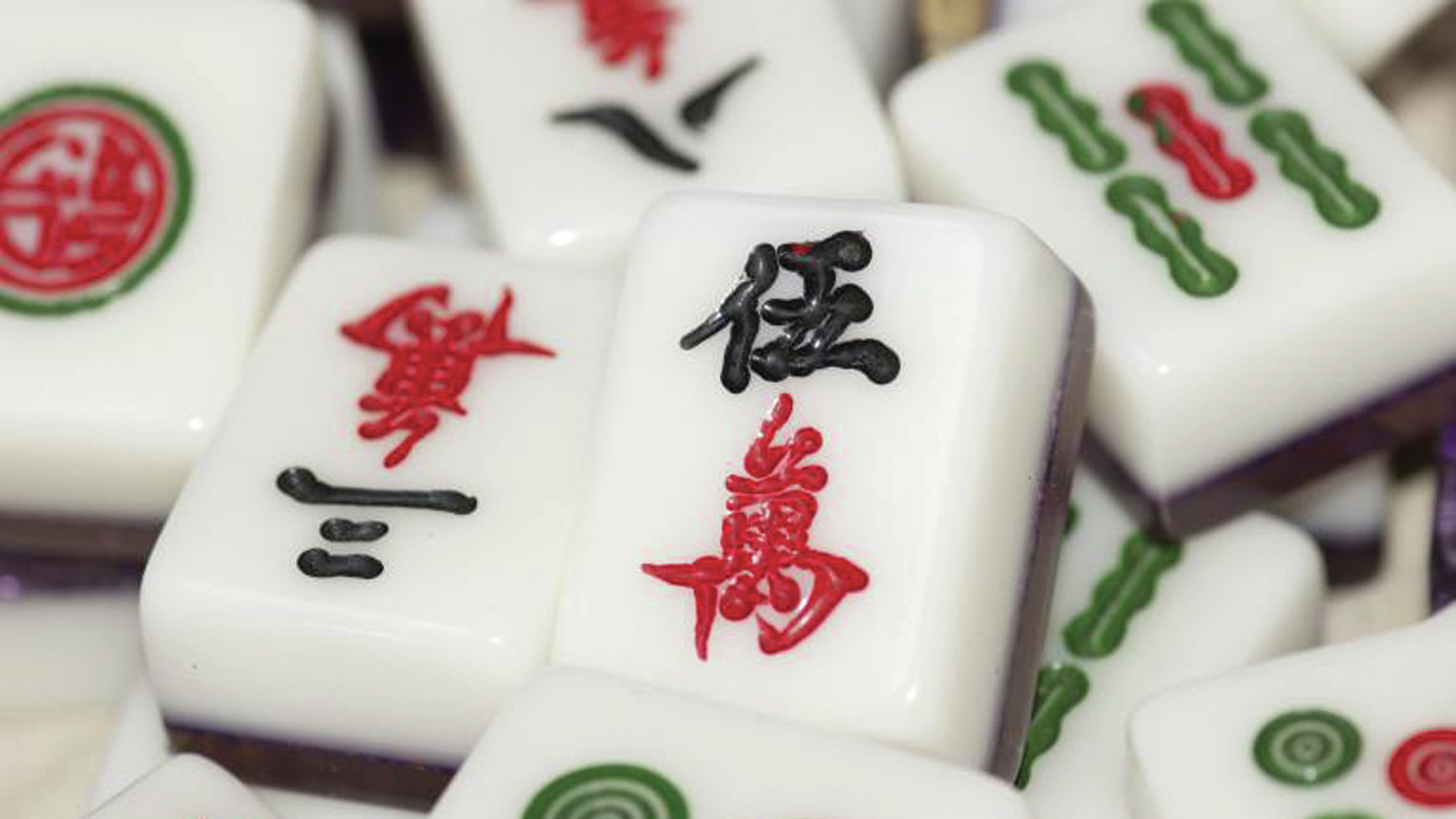
Time and Tile: Mass manufacturing has not quite yet entirely replaced hand-made mah-jong sets

Ubiquitous throughout mainland China and Hong Kong, mahjong is a much-loved pastime for the young and the old. While walking through the streets of any Chinese city, town or village, the distinct rattling of mah-jong tiles will almost certainly be the unceasing soundtrack. Commonly requiring four players, mah-jong, as any true enthusiast will tell you, is a game of skill, strategy and luck.

The game typically played at such high-profile celebrations as Lunar New Year, has long been associated with the close ties between families and friends. Indeed, it is not unusual for those hosting weddings or birthday banquets to be presented with mahjong tables and sets by the management of their chosen venues.

Also Read: Mahjong Mania: How Mahjong Conquered Hong Kong and Then the World
handmade mahjong

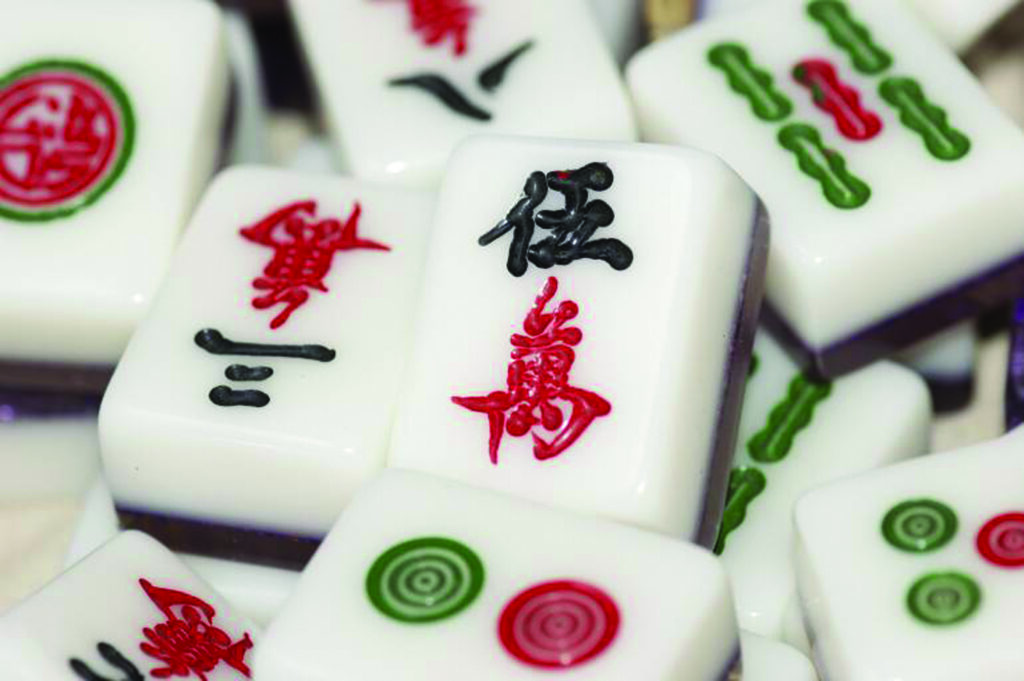
Looking specifically at the game itself, there are 144 tiles in each mah-jong set, typically adorned with Chinese characters, dots, flowers or bamboo sticks. Before starting, players shuffle the tiles face down while seated around a square table. Each player then sets up a set of tiles, much like a hand of cards and, after that, until one forms a winning combination, players alternate between drawing and discarding tiles.

While, traditionally, mah-jong tiles were handmade, inferior, relatively inexpensive, machine-made versions are gradually becoming the norm. For those who had once painstakingly handcrafted the titles, their livelihoods are now being whittled away. Indeed, the art of hand-carving mah-jong tiles is now reserved for a small – and continually dwindling – number of ardent traditionalists.
handmade mahjong

Biu Kee Mah-Jong
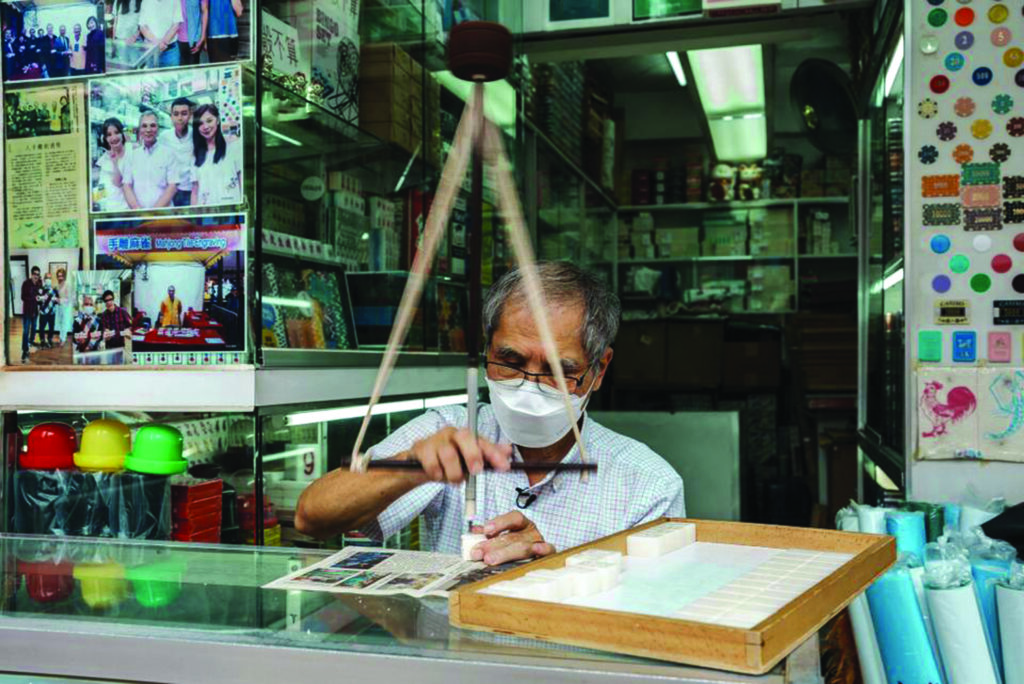
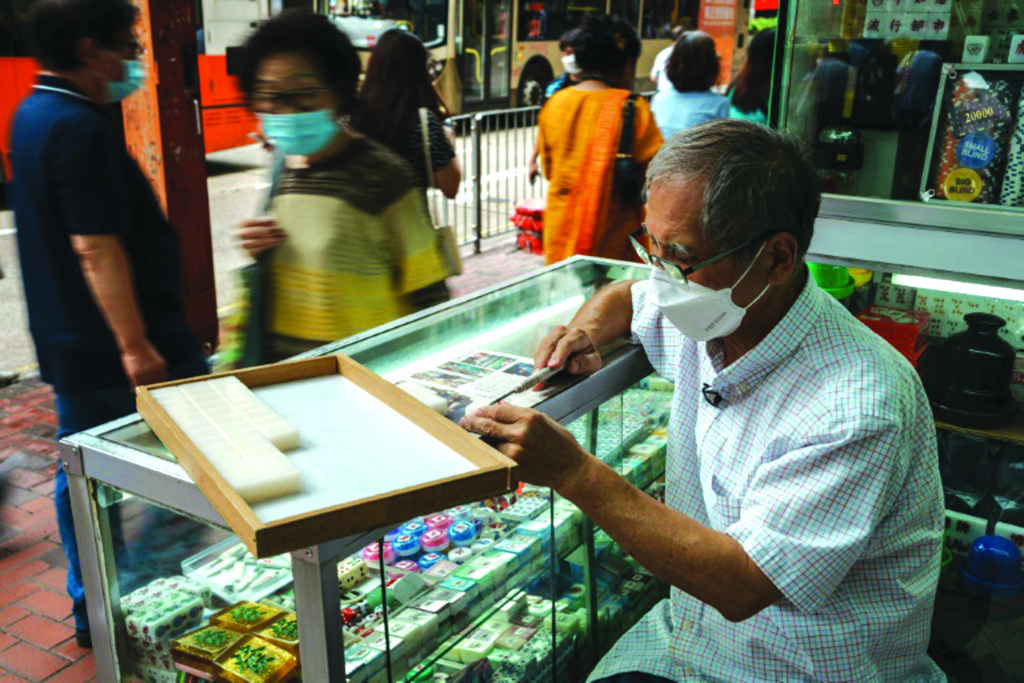
One of Hong Kong’s few remaining mah-jong tile carvers and engravers operates from a stall by the neon-lit night markets situated between Jordan and Yau Ma Tei. Here, this venerable craftsman, Cheung Shun-king, etches Chinese characters onto a piece of acrylic, then flips the tile with one hand while holding a knife in the other in order to chop into it.

In an age where low-cost mass production is the norm, this is a disappearing craft. In fact, there may only be three or four carvers remaining in Hong Kong, according to the 70- year-old craftsman. By looking to pass on his skills to the next generation – within a 100- square-foot area under the stairs of an old-style shop-house – he is trying, perhaps in vain, to rekindle interest in the old way of doing things.
handmade mahjong

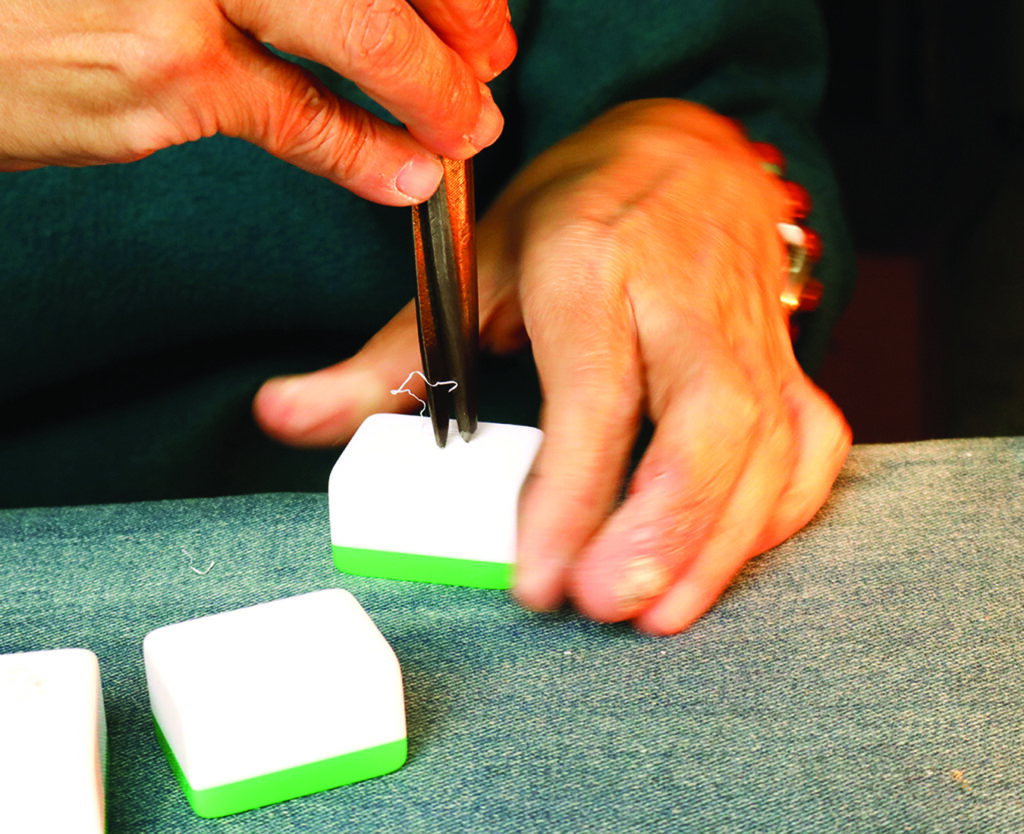
Expanding on the skills required, he says: “With hand-carved mah-jong tiles, when you look closely, you can see that each of them is different. This is because I carve them one after another, completing them one by one instead of using a mould.”

Since Cheung typically only carves at night, when he is not attending to customers or running errands, it takes him close to a week to complete one set. As part of the process, he carves the tiles, cleans them, and then paints them green, blue, and red. The final step is removing any excess dry paint. By comparison, a machine can churn out an identical, cookie-cutter set in less than an hour. According to the master, a full set of hand-carved tiles costs HK$5,500 (US$700), whereas their machine-produced counterparts sell for just HK$2,000.

Many of his clients purchase sets from him as mementoes and frequently ask for photos of him at work. Cheung, however, believes that this sudden uptick in interest may be but transitory, asserting that a recent wave of nostalgia accounts for much of the attention he is receiving.
handmade mahjong

Within his workshops, as a way of introducing his students to the technique of engraving the tiles, he is at pains to show them the right way to sit and the optimum way of handling a carving knife. Always ensuring he takes the time to instruct each person individually, he is unceasing in his commitment to passing on the skills required to render something quite so singularly beautiful with just a few artful strokes.

While he believes few will actually end up as expert carvers, he goes out of his way to ensure every participant goes home with a set they can be proud of.

Location: 26F Jordan Road, Jordan, Kowloon
handmade mahjong

Kam Fat Mahjong
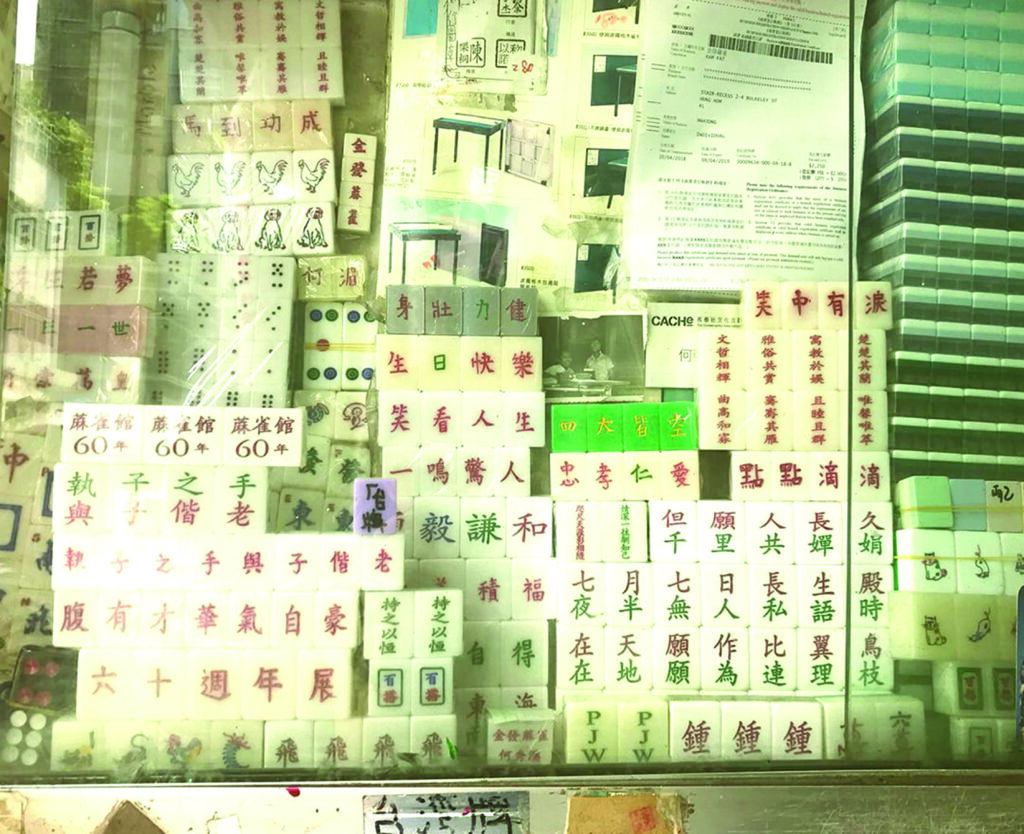
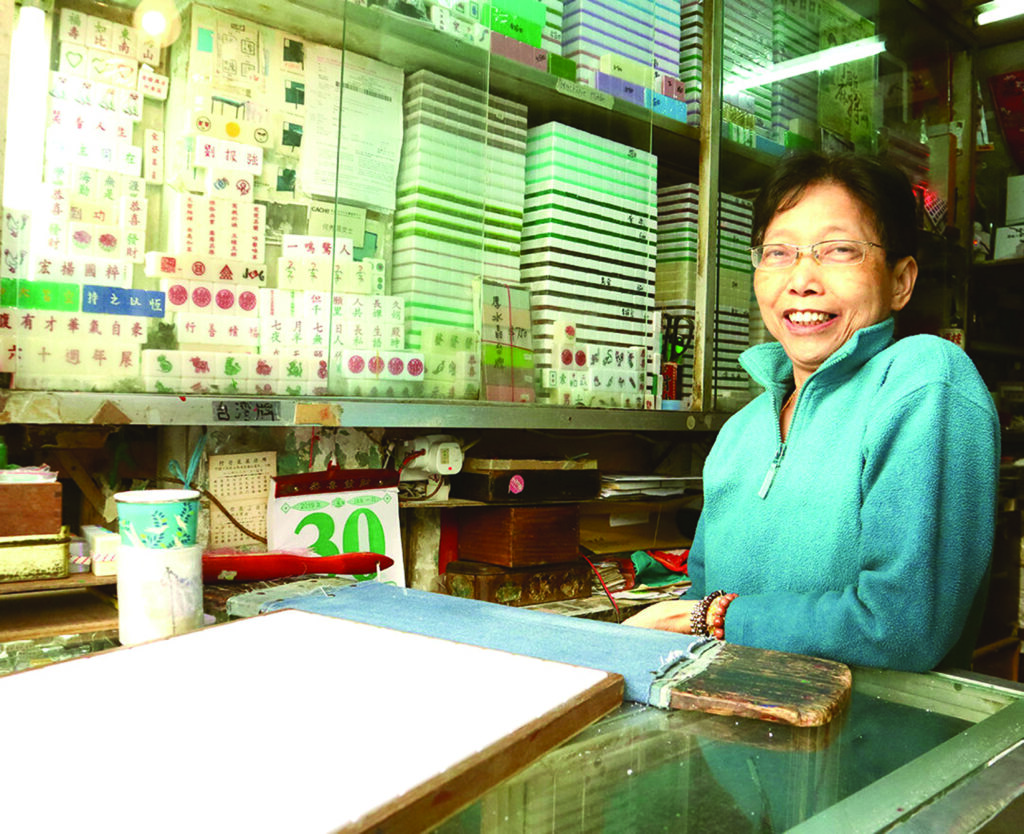
One of the mah-jong tile carvers that suddenly found herself thrust into the limelight when the Hong Kong government designated the hand-carving of mah-jong tiles as part of the city’s intangible cultural heritage back in 2014 was Madam Ho Saumei. Today, she runs her family’s Kam Fat Mah-jong company out of a tiny store in Hung Hom.

Her father founded the Kam Fat Mahjong Shop in 1962, with the business functioning both as the site of his labour-intensive activity and as his family of six’s home. Now, Madam Mei honours her father by continuing with the family trade, apparently never tiring of utilising her skills to the full as she engraves Chinese characters and alters and paints patterns. She maintains that she values every piece she fashions, tirelessly working to ensure the individuality of each mah-jong tile, items she sees as making wonderful gifts for many of her customers’ nearest and dearest.

Location: 2A-4 Bulkeley St, Hung Hom
handmade mahjong

While technology has inevitably eroded – and, in some cases, almost eradicated – the elegant, handcrafting skills that so ably fashioned the most memorable mah-jong sets of yesteryear, thankfully there are still a few master craftspeople doing their very best to preserve the classic time-honoured techniques. Next time you are considering a heart-felt, hand-fashioned gift for someone you truly appreciate, perhaps this is one way you can do your bit to support them.

Also Read: Collectible mahjong sets
The Arts of Survival: Hong Kong’s disappearing crafts

Hong Kong is one of the most distinctive cities in the world. Its attributes are widely loved and reported: From the dynamic landscape of East-meets-West architecture and culinary staples, the towering skyscrapers that outline the iconic Victoria Harbour, not to mention the many picturesque islands and mountains that are mere walking distance from the heaving commercial districts.

But beyond the impressive infrastructure, a rich heritage of traditional handicrafts and art forms instil depth and additional vibrancy to the city. Steeped in Chinese traditions, and the country’s own history of folk crafts, many of these decades- and centuries-old practices have been passed down through the generations.

gafencu hong kong culture The Arts of Survival Shining a light on Hong Kong’s disappearing artisanal trades and skills porcelain painting

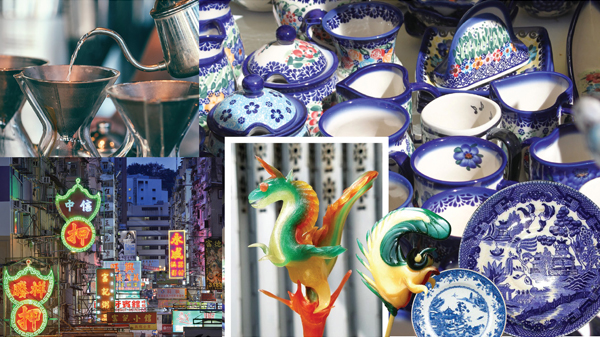
Yet, despite being an integral part of Hong Kong’s culture and distinct aesthetic, these home-grown crafts are struggling to survive in an increasingly modernised world. From hand-carved mahjong sets to hand-painted porcelain, these artisanal practices typically require rigorous training and exceptional skills, and with only a handful of masters remaining and not enough successors to continue their legacy, there is fear that these historical, traditional arts will die out within a few years.

gafencu hong kong culture The Arts of Survival Shining a light on Hong Kong’s disappearing artisanal trades and skills porcelain painting (2)

Hand-painted porcelain
One such example is hand-painted porcelain and ceramics. In the early 19th century, porcelain was an important commodity for the British Empire, and the world trading port of Hong Kong set itself apart for its thriving industry of uniquely intricate and delicately patterned hand-painted china. The craft became intrinsic to the city’s artistic, cultural and historical identity.

Today, Yuet Tung China is the first and last hand-painted porcelain workshop in the city. Almost a century of history is rooted in its Kowloon Bay location, and now in the hands of third-generation scion Joseph Tso the business continues, albeit without a clear future as the old district of factory buildings upgrades to gleaming commercial premises. In its heyday, some 300 painters worked for the company; today only a handful remain.

gafencu hong kong culture The Arts of Survival Shining a light on Hong Kong’s disappearing artisanal trades and skills copper steel

Handcrafted copperware
Amidst the many kitchenware stores lining the streets of Yau Ma Tei, you may chance upon a pair of veteran coppersmiths at the 80-year-old Ping Kee Copperware shop. The city’s oldest coppersmiths is run by brothers Luk Shu-choi and Luk Keung-choi, who assumed the reins from their father after training in the family shop. Despite their advanced age, they continue to fashion copper pots and stills, fulfilling orders from local businesses for kitchenware and tea-brewing equipment.

But designing, hand-hammering and forging copperware is, to say the least, not an easy feat. Because of the years of hard work required to master its back-breaking skill and fastidious execution, this is a disappearing craft. Many among the younger generation have opted for less laborious jobs and higher-paid careers. The artisanal endeavour may soon be completely replaced by steel and copperware imported from China, as well as its more popular and durable counterpart, stainless steel.

gafencu hong kong culture The Arts of Survival Shining a light on Hong Kong’s disappearing artisanal trades and skills Birdcage

Birdcage making
Before walking dogs in strollers became commonplace in the city, bird-walking was a regular sight amongst Hong Kong pet owners. From the ’50s to the ’80s, raising songbirds was a popular hobby for elderly retirees, most of whom were men. The popularity of bird keeping came hand-in-hand with the demand for handcrafted birdcages, often of elaborate design and structure. These birdcages were meticulously crafted in a process that lasted for several months: pieces of bamboo were shaved into strips that were soaked in hot water for hours before being bent and moulded under a kerosene lamp, and finally nailed together. Painting the cages also took days to complete.

However, soon after a serious outbreak of H5N1 avian flu in 2008, bird-keeping became subject to stricter government guidelines. Consequently, the number of bird owners dwindled, and today the sight and sweet sound of songbirds chirping within these handcrafted birdcages is limited to just a few areas, particularly the 3,000sq.m Yuen Po Street Bird Garden. One of the few remaining masters of birdcage making is Chan Lok Choi, who now in his ’80s and spends most of his time repairing cages rather than crafting them.

gafencu hong kong culture The Arts of Survival Shining a light on Hong Kong’s disappearing artisanal trades and skills candy blowing

Candy blowing
The traditional Chinese handicraft of candy blowing derives from a 600-year-old Chinese folk art that was brought to Hong Kong during the ’60s and ’70s, and proved a real treat for young children at a time when toys were often considered a luxury.
The ‘candy men’ or ‘sugar people’, as these craftsmen are called, form these sugar figurines by first heating liquid suga, then blowing into it to form a ball-like shape, before kneading the balls into various guises, usually an auspicious animal or decorative symbol.

Today, the only candy man left standing resides on Cheung Chau Island. Visitors will find Louis To in a small corner shop crowded with wide-eyed children and families as he entertains with his skill and tales of the history of this traditional handicraft.

gafencu hong kong culture The Arts of Survival Shining a light on Hong Kong’s disappearing artisanal trades and skills street lights

Neon signage
A quintessential emblem of the city’s nightscape is the huge, overhanging neon signboards that illuminate the shopping districts of Kowloon. This unique and highly distinguishable visual aspect of Hong Kong has often been used to set the tone of futuristic- and cyberpunk-themed films, such as the Japanese animation Ghost in the Shell and the 2017 remake of American movie Blade Runner.

Yet despite being an integral part of the city’s cultural identity, neon signs have been disappearing rapidly from the streets in recent years. Since 2014, thousands of signs have been taken down and replaced with digital billboards or cheaper and easier-to-make LED signs due to governmental safety concerns.

Today, there are only a handful of neon street sign makers left in town, and Wu Chi-kai is one of them. He has been hand-making neon signs for more than 30 years and despite their large-scale removal across Hong Kong, he believes the craft will continue to attract supporters. The M+ museum in the West Kowloon Cultural District has also started collecting, preserving and exhibiting neon signs for public appreciation.

gafencu hong kong culture The Arts of Survival Shining a light on Hong Kong’s disappearing artisanal trades and skills ping-kee-copperware

These are just a few of the many traditional crafts that are fast disappearing in the city. Yet such skills encapsulate Hong Kong’s unique history and cultural identity, and as a result they are now attracting the attention and support of many young artisans and non-profit groups, as well as international media. Workshops held in creative hubs such as the PMQ building and charitable organisations like Crafts on Peel are pulling together a community of artisans to keep these art forms alive. The drive to preserve, revitalise and educate the public about their heritage is building momentum and providing glimmers of hope that Hong Kong’s traditional crafts may thrive once more.