



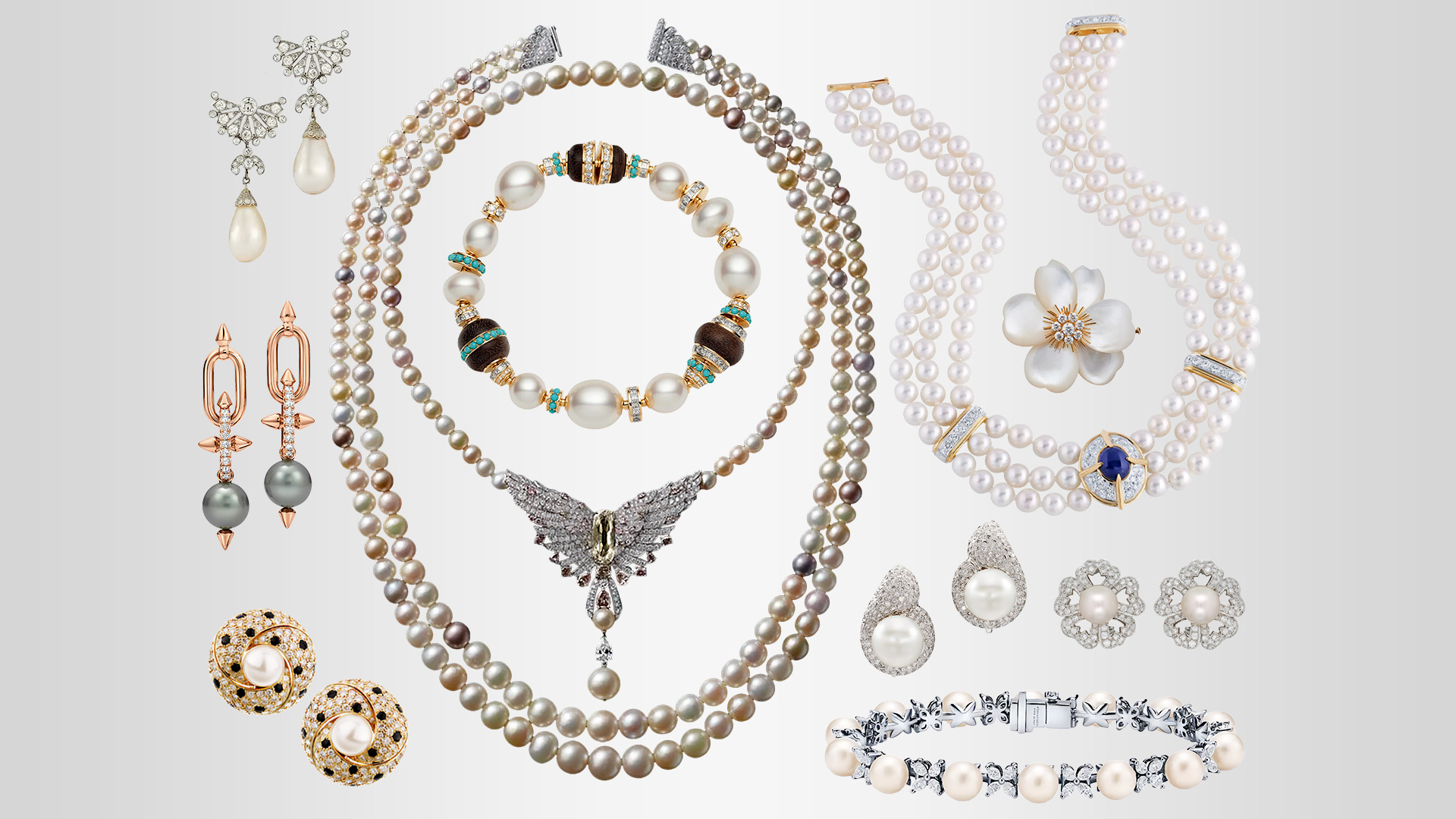
Pearls have long been associated with tradition, timeless elegance and inherited refinement, yet in recent years they have quietly reinvented themselves. No longer reserved for formal occasions or perfectly matched strands, the natural or cultured bounty of the oyster has stepped into a more expressive, contemporary role.
Formed slowly and shaped by nature, pearls are one of the most poetic gemstones. Their enduring appeal lies in this balance between time and transformation. Yet, the modern pearl necklace is not about perfection; it is about presence. Pearl designs have become increasingly fluid and sculptural, as jewellers are more captivated by individuality, texture and contrast, and less interested in symmetry and polish.
Baroque pearls, with their irregular shapes and organic forms, sit at the centre of this evolution. Their asymmetry gives each piece a sense of movement, as if the pearl itself is still in the process of becoming. Designers often allow these shapes to dictate the final form of a necklace or earring, pairing them with molten gold, oxidised silver or minimal metal settings. The result is jewellery that feels intuitive and alive.
Scale has also shifted dramatically. Oversized pearls are now celebrated rather than considered too bold. Single pearl earrings replace traditional pairs, while large pendants hang from fine chains with understated confidence. Layering has become a defining styling choice, with short pearl chokers worn against long strands or mixed with metal chains. Now a popular choice for many occasions – not just special ones – pearls move effortlessly from tailored daywear to evening looks.
Beyond the Pale
Colour plays a quiet but powerful role in modern pearl design. While classic white remains timeless, designers are increasingly drawn to pearls in soft blush, lavender, gold and deep charcoal tones. Tahitian pearls with peacock and green overtones bring drama, while golden South Sea pearls add warmth and richness.
Beyond the pearl’s base colour, overtones create subtle iridescence on the surface, adding depth and dimension. Rose, silver and green overtones are particularly prized, enhancing the pearl’s visual richness. Rather than matching colours perfectly, designers often mix them within a single piece, embracing natural variation. This approach reinforces the idea that pearls are individual by nature, each carrying its own character.
Love of Lustre
As pearl designs grow more expressive, understanding quality becomes essential. Grading pearls is both an art and a science, balancing measurable characteristics with aesthetic judgment. Lustre remains the most important factor in determining a pearl’s quality. It refers to how light reflects from the surface and interacts with the layers of nacre beneath.
Lustre gives pearls their unmistakable glow, the quality that draws the eye even from a distance. High-quality pearls appear bright and sharp, with reflections that seem almost mirror-like. Lower quality pearls lack this depth, appearing flat or chalky.
Surface quality also plays a role, though its importance has evolved. Because pearls are organic, most have some imperfections. In traditional grading, fewer blemishes meant higher value. In contemporary design, however, subtle texture is often embraced rather than hidden. Light surface markings can add authenticity, particularly in baroque pearls. Only deep cracks or heavy blemishes significantly detract from a pearl’s worth.
Shaping Up
Shape remains a defining factor in grading, though modern taste has expanded its boundaries. Perfectly round pearls are rare and still highly valued, but they are no longer the sole standard of beauty. Oval, drop, button and irregular shapes are increasingly sought after for their individuality.
Different pearl varieties bring distinct qualities to design. Akoya pearls, predominantly cultivated in cold water off the coast of Japan, are known for their brightness and classic appeal. Freshwater pearls offer diversity; Tahitian pearls introduce drama through dark, complex tones; and South Sea pearls embody luxury through size and softness.
While size affects value, it is never considered in isolation. Larger pearls are rarer and often more valuable, especially when combined with high lustre and clean surfaces. Yet a smaller pearl with exceptional glow may be more desirable than a larger one lacking vitality.
Designers select pearls not only for their grade but for how their character complements the story they want to tell. In embracing both design and discernment, modern pearls invite us not only to admire them, but to understand them and, in doing so, to see beauty as something layered, nuanced and deeply personal.