




Gafencu talks to Dom Perignon’s brand ambassador, Pierre-Louis Araud, about his role promoting the brand, the history of the world-famous champagne and how it is produced in the Champagne wine region of France.
Category: Wine
Taiwan for the Road…


Over the next few months, should you find yourself strolling through Times Square – in its New York rather than its Causeway Bay incarnation – spare a glance at the 11 high-definition LED billboards adorning the Thomson Reuters Building. They are advertising Kavalan, a single malt whisk(e)y from Taiwan. You will not be the first to be a little taken aback by seeing such a relatively obscure brand in such a high-profile location.
Most of the goods promoted here, at the so-called Crossroads of the World, are the world’s super brands, household names, veritable bywords for prestige and wantability. After all, the annual rent on just one Times Square billboard is somewhere between US$1 and US$4 million – well beyond the promotional spend of all but the most profitable of product lines.
Kavalan is certainly not in that league. At least, not yet. The Lee’s though, the family behind the brand, certainly have the money, even if – to date – not much of it has accrued from whisky sales.
Kavalan is now widely available in Hong Kong, China, and in many of the key international whisky markets, including the US and Britain. While in Asia it already enjoys a significant level of prestige, its status in the West remains that of a niche product – a distinct novelty in countries where Scotch and American spirits retain their traditional dominance.
While the majority of the big whisky brands have long histories, Kavalan has been on the market for just eight years. The company behind it, however, is a Taiwanese success with a provenance of some 60 years.
Back in 1956, the Chu Chen Industrial Company was established in Kaohsiung, one of Taiwan’s more southerly counties. Its initial line of pesticides and household cleaning products did well for the business and, in 1979, it diversified into packaged food and drinks, repackaging itself as the King Car Group in the process.
King Car, in turn, prospered, with it the Mr Brown brand of pre-mixed coffee, milk and sugar – despite sounding entirely detestable – proving an unlikely hit in Germany of all places. To this day, it remains the group’s cash cow.
In the eminently foreseeable future, however, it may at last be supplanted by Kavalan. Tien Tsai Lee, the company’s founder, has two passions – vintage cars (hence the name of his company) and whisky. It is the latter that he is now pinning the company’s future on.
Taiwan is, in fact, one of the world’s biggest markets for the spirit, with consumers buying more single malts than blends, despite the rapid international growth of the latter category over recent years. Significantly, it is now the only market in the world where that is true.
Until fairly recently, however, privately owned companies in Taiwan were not allowed to operate as distillers. Essentially, this made it impossible for such a thing as Taiwanese whisky to actually exist.

That all changed in 2002 when Taiwan joined the World Trade Organisation. By necessity, the local government had to surrender its long-established monopoly on producing alcohol.
Long hankering after having his own distillery, Lee set about establishing his own facility in Yi-Lan County. His chosen site was not far from Taipei, where King Car already had a bottled water production centre.
The prime requirement for any distillery, of course, is a good water source. Naturally, the site of the King Car’s Yuan Shan bottling operation had been chosen because of its easy access to pure mountain spring water.
Lee then engaged a team of Scottish consultants to help build and equip a state-of-the-art facility. This included establishing cooperage to manage the ex-bourbon and wine casks required to mature and finish the spirits.
The traditional pot stills he chose to employ are – not at all coincidentally – very similar to the “curiously small” stills favoured by the Macallan distillery and known for their appearance on Bank of Scotland currency notes. These were specially made for him by Forsyth’s Northeast Scotland.
Construction began in early 2005 and was completed by the end of the same year. The first distillation was then successfully completed in March 2006, with the first Kavalan single malt whisky released in 2008. In order to be sold as whisky in Taiwan, a spirit must have been matured for at least two years, compared to three in Scotland.
Although the King Car name was retained for the distillery – and has been used for some bottlings for the Taiwan domestic market – Lee sensibly realised that it was an association that probably wouldn’t travel well. This is especially true given that drink driving is an increasingly sensitive issue in many of the markets he is targetting.
The name “Kavalan” was chosen as way of honouring the history of the area where the spirit is now distilled. It literally means the “People living on the plain” and refers to an indigenous Yi-Lan tribe.
Back in 2005, however, Taiwan had no indigenous whisky makers, which saw Lee bring in a little Scottish expertise. From the outset, then, the Taiwan team was advised by Dr Jim Swan, a roving whisky consultant. Prior to his work with Kavalan, Swan had worked with distilleries in a number of unlikely settings, including England, Wales and Israel. He had also, of course, served his time in Scotland.
Ultimately, it was Swan who trained Ian Chang, the man now responsible for making the whisky. Originally from Taiwan, he also came armed with a degree in Food Technology, Flavours and Aromas from a UK university.
Chang, who jokes that “in Taiwan it’s normal to be paid one salary for several jobs”, is now King Car/Kavalan’s Master Blender/Whisky Maker, Brand Ambassador, Director of Global Business and Head of R&D.

“Kavalan gets a million visitors a year, more than the total number visiting every Scottish distillery”
While that’s a lot of responsibilities, Chang seems to have no trouble managing. He is seen as one of the brightest rising stars in the world of whisky, having worked closely with Swan on the Kavalan project since joining the company in 2005.
In the 2015 World Whisky Awards, Chang was named as Whisky Distillery Manager and the Master Distiller of the Year. It was an apt reward. On his watch the Kavalan whiskies have picked up a truly extraordinary collection of awards and accolades.
These include the Kavalan Solist Amontillado Sherry being recognised as the World’s Best Single Malt Whisky Single Cask at the World Whiskies Awards in London in 2016. This followed another WWA win for Kavalan Solist Vinho Barrique as the 2015 Best Single Malt Whisky. Not bad going for such an upstart.
With Taiwan home to countless whisky fanatics, it is perhaps not surprising that the distillery now gets more than one million visitors a year. To put that into perspective, that is more than the entire annual total number of visitors to every distillery in Scotland,
Even with that amount of liquid, there remains the problem of what distillers term the Angels’ Share – the percentage of spirit that evaporates while being matured in the barrel. The hot climate means that the Angels in Yi-Lan are unusually thirsty. For this reason, Kavalan, as with many American whiskeys, can only spend a limited time in the barrel before too much of it simply disappears. Swan and Chang, however, are treating what most would see as a handicap as something of an opportunity and reducing the time in the barrel without damaging the flavour of the spirit.
This has partly been achieved by sophisticated in-house wood management, with the barrels treated so as to extract the maximum wood character in the minimum time. It is also partly to do with the fermentation, the stills and the distilling process, all of which are geared to getting maximum character into the newly made spirit prior to maturing.
There’s no doubt that Chang and his team are making fine single malt whiskies, particularly in the case of the Solist and Distillery Reserve ranges. Most notably, the tropical fruit character evident throughout the collection makes them genuinely distinctive. In the best possible sense, they are all clearly Made in Taiwan.
As the Times Square promotion clearly demonstrates, Kavalan is certainly willing to invest in brand building. It is also possible that, as time passes, Taiwanese whisky will become an internationally recognised category in the same way that Japanese whisky already is. In 2008, the government-owned Taiwan Tobacco and Liquor company themselves started distilling whisky under the Omar brand. It’s a lot cheaper than Kavalan, while TTL’s Nantou Distillery will presumably also be looking at the export markets.
As those billboards make clear, the Taiwanese are coming. Of that, Lee has no doubt, saying: “This is about telling people Kavalan Whisky is available in the US. We’re here and we’re in business.”
World’s best bartender shakes up Hong Kong

The cocktail, it is believed, is an American invention. But if you think about a cocktail, what image pops into your head? An Englishman with a gin and tonic? Or perhaps an Italian sipping on a negroni?
If the Americans did invent the cocktail, then an Englishman has officially mastered the art of making them.
Click here for more on video
The world’s best bartender, Ryan Chetiyawardana, known as Mr Lyan, was in Hong Kong last week to promote Relearn Natural, Belvedere Vodka’s all-natural, low-sugar content Spritz cocktail series at Duddell’s.
Ryan was crowned “International Bartender of the Year” in 2015, and he has three “Mr Lyan” bars – Henry at the Hudson Hotel in New York, and White Lyan and Dandelyan in London.
Street Style Champagne Pairings


What we liked? We took our modish crew on a Sunday morning to this High Street party and it was well worth it. After Paris, Tokyo, New York it was Hong Kong’s fashionista’s turn to experience this journey (read party) in one of the city’s uptown streets. Yellow was the theme for the day as it’s the prominent colour of the Veuve Clicquot brand. The installations were unique; it had vintage rickshaws which I have previously seen only in India, precisely on the streets of Kolkata. With kids waving at us, while our videographer was capturing the action, it was brimming with sheer merriment which was evident on the faces of the attendees.
Click here to see more on video
Who’s Who? Not a celeb-studded event, but the crowd was a mix of the expat community who lives in and around Sai Ying Pung and Central, who were joined by some of the swanky local youths too. We spotted a mostly young crowd basking under the sun.
Highlights: The participating restaurants were filled with food connoisseurs who clearly enjoyed their cuisine being paired with their favorite champagne. It was a gourmet delight, our favourite was the hot barbecue chicken that we were served.
What we loved? The ambiance was fun-filled with yellow as the theme which blended well with the high street itself. We loved the music that certainly made some of us tap our heels to the tunes. Indeed a journey we would want to experience again!
What? Clicquot Journey Street Parties
When? August 28, 2016, 11am-4pm
Where? On the streets, of course! Sai Ying Pun, High Street on HK Island!
Troubled Brewing


It’s fair to say that many of those employed in the British booze business woke up on the morning of June 24th with something far worse than a simple hangover. Very few of them had expected the United Kingdom to vote to leave the European Union and fewer still of them welcomed the eventual decision.
This was particularly true in Scotland, a country still reeling from the bitter divisions wrought by last year’s referendum on Scottish independence. Prior to that vote, almost everybody in the Scotch whisky industry believed that ending the country’s centuries old union with the rest of the UK would be a disaster for an industry that turned over £5 billion a year. Of course, very few of them were willing to say so in public.
Now, in the wake of Scotland’s overwhelming vote to remain in the EU, the prospect of going through the whole ghastly process has once again reared its head. Will a second independence referendum be held? If so, what would be the likely outcome? Of course, it’s way too early to predict the answer to either of those with any degree of certainty.
In the run-up to the Brexit vote, many in the Scotch industry were considerably more frank about their views than they had been the year before. One individual with particularly strong views on the matter was Ivan Menezes, Chief Executive of Diageo, the company behind Johnnie Walker, 20 other blended and single malt whisky brands and 29 distilleries
Addressing the issue, he said: “The EU’s clout when it comes to international trade helps to open up new markets. It also delivers agreements favourable to the UK, reduces tariffs and helps resolve trade disputes.”
David Frost, the Chief Executive of the Scotch Whisky Association, pretty much echoed Menezes, saying: “EU membership has many advantages for Scotch. The single market gives us a level playing field and open access across the EU.”
Both men are now having to accustom themselves to a changed world, and both are trying to put a bravish face on it, with Frost saying: “The process of leaving the EU will inevitably generate significant uncertainty.
“Of course, we are confident that Scotch whisky will remain the pre-eminent international spirit drink. There are, however, serious issues that now need resolving in areas of major importance to the industry, all of which require urgent attention. Most obviously, we need to determine the nature of the future trade arrangements with both the single market and the wider world.”
Diageo’s official statement, however, was a little more circumspect, saying: “We respect the views of the British people in the EU referendum. As one of the UK’s leading exporters, Diageo remains committed to the long term prosperity of the Scotch whisky industry. We will now work closely with the relevant industry bodies to seek clarity with regard to the transition process.”
In fact, a great deal more dust will have to settle before anything like clarity emerges. What is clear at the moment, though, is that the ramifications of this will be widely felt across the international booze trade. This will have consequences both outside, as well as within, the borders of Britain and the wider EU.
Given that it is a relatively small country, with a population of only around 65 million, Britain punches well above its weight in the wines and spirits world. By value, the UK is the second largest importer of wine in the world (after the United States) and by volume (after Germany). Trade in this sector has more than doubled over the last 10 years and, according to a 2016 report by the Wine and Spirit Trade Association [WSTA], the UK wine industry generates some £17.3 billion of economic activity.

In the case of spirits, Scotch is obviously the big player, although Britain also exports significant quantities of white spirits. It is also at the forefront of the craft distilling boom, making many of the boutique gins and vodkas found behind so many of the most fashionable bars in Hong Kong, China and throughout Asia. Perhaps less surprisingly, it is also a major supplier of many of the craft beers that are going down so well across the region.
In the run-up to the EU referendum, a lot of drastic predictions were made by both sides of the debate. Those particular voices seem to have gone relatively quiet since the largely unexpected outcome. Certainly, at this point in time, quiet diplomacy on both sides of the English Channel would better suit the booze business than any talk of punitive tariffs and restricted market access.
Once the Brexit negotiations begin in earnest, the international booze business will have a considerable stake in the exact form and wording of the subsequent divorce settlement. This will be especially true of the major players, such as the French-owned Pernod Ricard group. Among its many subsidiaries are Chivas Brothers and 10 distilleries in Scotland, making it the world’s second largest Scotch whisky producer Similarly, France’s Louis Vuitton Moet Hennessy owns the Glenmorangie and Ardbeg distilleries. There is even a French stake in English wine production. Last year, Taittinger, the premium Champagne house,

“Quiet diplomacy would better suit the booze business than talk of tariffs and restricted market access ”
announced it had acquired land in the Southeast of England and was planning to make sparkling wine.
Britain is also the third largest market in the world for cognac – though well behind China and the US, in second and first places respectively. It is, however, well ahead of France in fifth place and Germany in fourth. In total, the British drink more than twice as much cognac as the French.
Going the other way, France is the world’s second largest importer of Scotch whisky by volume and, in recent years, it has been trading up from the moderately priced spirit to the premium stuff. Over the last decade the value of Scotch exports to France has risen by almost 68 percent.
How all of these varied interests will be affected will become clearer over time. In the short term, though, Asia will clearly benefit from the weakness of the pound, something that seems likely to persist until any new world order emerges.
Premium whiskies, gins and English sparkling wines should all become cheaper. A number of such wines are now recognized as being of equivalent quality to Champagne, although they have suffered by also being equivalent in price. Visiting the UK will also be cheaper. For whisky lovers, this is the ideal time to book that tour of the Scotch distilleries you’ve been promising yourself.
Overall, though, if barriers to trade do go up in Europe, the Scotch business, in particular, is likely to focus even more intently on the Asian markets.
The world’s third largest Scotch whisky market is currently Singapore, mostly because of its high level of re-exports to its neighbouring countries and to China. Taiwan, then, is in fourth place, with South Korea coming in at 10th.
While the current austerity measures are in force, the Chinese Mainland might prove a difficult market for premium Scotch. We could, though, see greater emphasis placed on the more modestly priced blends, with significantly more marketing spend put behind them.
In the event of a second referendum on Scottish independence – and assuming Scotland votes to go on its own way – the position would be quite different. It is, however, far from sure that a newly independent Scotland would automatically accede to EU membership. Nor is there any guarantee that there is the political will to put the choice to the country again, given the last referendum was so recent.
Still, putting a brave face on it all is very much the British way, with Mile Beale, Chief Executive of WSTA exemplifying that particular trait. Clearly looking to rally the troops in the wake of the shock result, he said: “While many of our members felt that the wine and spirit industry was stronger within the EU, we will work to assist the government in preserving our access to the single market, supporting British drinks exports and agreeing the best possible international free trade agreements.”
Good luck with that one mate.
Alsasian

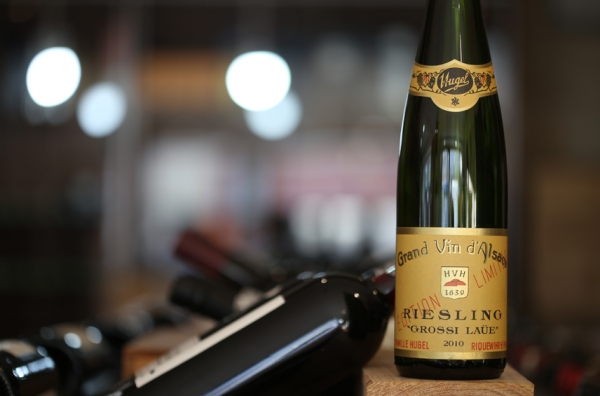
As a wine producing region, Alsace is both complicated and diverse. This is not least because, as much as the terroir, recent history has had quite an impact on the wines produced in this particular part of northeast France.
Etienne Hugel is the commercial director of Famille Hugel, one of the region’s top end producers. Staking his claim for a reassessment of Alsace’s output, he says: “Many people think it is a very simple region – just eight grape types and eight different kinds of wine. Actually, though, there is a greater diversity of Riesling in Alsace than there is of Chablis in Burgundy.
“Alsace is a mosaic of soils, with volcanic, slate, granite, schist and red sandstone all to be found. Around us in Riquewihr, on two fault lines, there is also marly soil – a clay and limestone mix, the result of centuries of sea deposits. In fact, the village has at least 10 different types of soil, within the space of just one and a half kilometres.”
The Hugel family can trace its history in Alsace back to 1639. Perhaps unsurprisingly, it is also a member of the highly exclusive Primum Familiae Vini association. This body is limited to 12 winemaking families and includes such notable surnames as the Antinoris, the Rothschilds and the Symingtons.
Set close to the River Rhine, Alsace has long been the subject of historical territory disputes. Over the centuries, its ownership has regularly alternated between Germany and France. The region formally became part of France under the Peace of Westphalia, a series of treaties that brought the Thirty Years War to a final settlement. This, though, was not the end of the story.
Explaining the shifting sands that have shaped the region, Hugel says: “We were French from 1648 onwards, but then the Germans won the Franco-Prussian War. Alsace was the price France had to pay.
“Back in 1871, the name of the company was Hügel & Söhne, the brand during the German time. Then, in 1918, we were French again. During the Second World War, of course, we were back to being German.”
Alsace is home to a number of notable producers, including Maison Trimbach in Ribeauville, Domaine Zind-Humbrecht in Turckheim, and Marcel Deiss in Bergheim. All of them – including Hugel – make wines that, while being distinctively Alsacien, embody both French and Germanic elements.
Etienne Hugel’s father and uncle were both wartime conscripts in the German army. The memory of their experiences is fresh enough for the German aspects of the house to be seldom acknowledged. Hügel – meaning “hill” – is a German name. The absence of the umlaut from the family’s wine labels, though, is no accident.
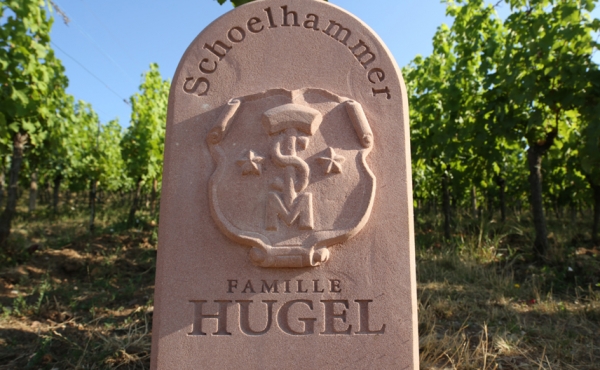
Tellingly, there are no signatures in the estate visitor’s book from 1940 to 1945. Bluntly explaining this apparent omission, Hugel says: “Nobody was considered decent enough to be allowed to sign.” A further sign of the family’s allegiance can be found in the company’s files, where a thank you letter from Winston Churchill for a 12-bottle case of wine takes pride of place.
Jean Hugel, Etienne’s uncle, was a hugely influential figure in the development of Alsace as a wine region after the end of the World War II. It is no coincidence that it was only after his death that the family reintroduced a recognisably German element to the wine’s packaging.
On a recent visit to Hong Kong, Etienne Hugel was keen to introduce the marque’s new range of wines, the successors to its Jubilee Collection, launched in 1989 to celebrate the family’s 350th anniversary. This latest range rejoices under the title of Grossi Laüe “Great Growth” in the Alsacien dialect. The term might actually have been introduced earlier had Jean Hugel felt able to countenance an umlaut on a Hugel label.
Quoting Robert Parker’s description of the family’s 2010 Pinot Noir Grossi Laüe, Etienne Hugel said: “Grossi Laüe signifies the finest vineyards … and represents an equivalent to the German Grosses Gewächs or the Burgundian Grand Cru.
“This is a Pinot Noir with real minerality, profound and deep that every year comes closer to the quality of a Côte d’Or. It is a truly profound and complex red wine, one that is aged for eight to 10 months in partially-renewed oak barriques.”
While the wine certainly tasted more like a Burgundian Pinot Noir than a German Spätburgunder, there was a degree of strategy behind the inclusion of that symbolic umlaut. In truth, the family is looking to edge Alsace’s finest into the spotlight hogged by German wines since the beginning of the Riesling revival, a phenomenon particularly notable in the United States. Making this bid more explicit still, a superb 2010 Riesling Grossi Laüe was also among the wines Hugel sought to introduce to Asia’s more discerning wine drinkers.
Clearly making his pitch to such connoisseurs, Hugel said: “Riesling is back after 30 years of hell, but now it is dry Riesling. We, of course, believe that we know how to make these particular wines much better than the Germans do.”
As well as introducing Grossi Laüe, Hugel was in Hong Kong to highlight coming changes to the style and branding of all Hugel wines. The range now features redesigned labels and a number of new bottles. The occasion also marked the introduction of several new wines in the Famille Hugel range, wines principally derived from Muscat and Pinot Gris.
While Hugel’s wines are now distributed in Hong Kong and China by Summergate Fine Wines and Spirits, this does not mark their debut. Back in 1950, they were originally introduced by Jardine Matheson.
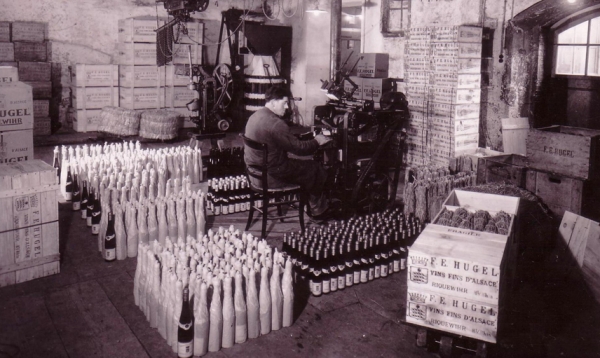
Looking back on the marque’s Asian connection, Hugel said: “In 65 years we have only had three importers working for us in Hong Kong. That tells you a lot. We’ve actually had the same importer in Thailand for 55 years, while we’ve only had two in Japan since 1950. Japan is now our third largest export market, something I think my grandfather might not entirely have approved of.”
The chief executive of the family firm is currently Jean Philippe, while the wines are made by Marc, his elder brother. Except for the United States, which comes under the auspices of his son, Jean Frederic, Etienne is the roving ambassador for the company’s wines. In this role, he has long had particular interest in Asia. His wife, Kaoru, after all, is Japanese and was formerly a sommelier at the Mandarin Oriental in Tokyo .
Clearly emboldened as to the marque’s prospects across Asia, he said: “I believe my brother is responsible for the best wine my family has ever made. I also think we have the best distribution of any Alsace wine producer.
“Hugel is now the leading Alsace wine in every Asian country. That did not come about by itself. Japan was historically our biggest Asian market, while our wine have been sold in Hong Kong since 1950, as indeed they have in Singapore. We’re now the number one Alsace brand in every market in Asia, including India and Sri Lanka. We’ve also just visited Phnom Penh, so we will soon even have wines in Cambodia.
“All of this is the result of our real focus on Asia. You don’t have to be a genius when you are visiting Shanghai, Guangzhou or Shenzhen to see that Asia will be the centre of the world. You are all very lucky. Except, maybe, for the pollution, of course.”
While it certainly sounds impressive, the numbers associated with some of those countries may well not be very large. It could also be that, in some of them, Hugel is not only the leading Alsace brand, but also the only one. That aside, the wines certainly do suit Asian climates and cuisines.
Crisp and aromatic with ample depth and complexity, there is nothing in the Hugel range that wouldn’t be welcome on a hot summer’s day. When it comes to the dry Rieslings, they seem made for pairing with Cantonese dishes. Similarly, the spicier Gewürztraminers would stand up well with Sechuan or Thai cuisine, while the Pinot Noirs are a good alternative to classic red Burgundy and duck combinations.
In truth, you can’t go far wrong with anything in the Hugel Classic range. The very best introduction to the family’s wine – and indeed to those of Alsace in general – is the Hugel Gentil, a blend of Riesling, Pinot Gris, Pinot Blanc, Gewürztraminer, Muscat and Sylvaner. Modestly acknowledging its quality, Etienne says: “We don’t make anything worse than this.” As an entry-level wine, the 2014 vintage sets the bar pretty high.
For many, though, the highpoint of the tasting was the Gewürztraminer Vendange Tardive 2007 – luscious, elegant, perfumed and literally crying out to be paired with foie gras or Roquefort.
My Sherry Amour


These days, Hong Kong and the top tier mainland cities seldom lag far behind when it comes to adopting the very latest international drinks trends – with one notable exception. To date, there are few signs that the Sherry revival – a staple of the London scene a season or two back – has made any real inroads more locally.
By contrast, gin – which underwent its own renaissance at around the same time – has received a ready welcome in the Asian markets. Sherry, though, is still languishing on the dusty shelf of last resort for many of the region’s tipplers.
That is actually something of a pity as it means many local connoisseurs are missing out on a whole range of superb expressions of one of the world’s truly great styles of fortified wine. One man, however, is on a mission to remedy this – Tim Holt, regional sales director and international ambassador for Bodegas Barbadillo in Sanlucar de Barrameda.
Holt, an Englishman by birth, is currently settled in Sanlucar, a city in the semi-autonomous Andalucía region of southern Spain. He arrived in the Sherry business by something of a circuitous route.
After completing a degree in Ecological Science at Edinburgh University, he first tried his hand at cattle ranching in both Australia and Argentina. He then graduated to crocodile and fish farming in Kenya.
Returning to the UK, he then found himself in something of a more mainstream job, working for one of the companies ultimately subsumed into Diaego, the multinational drinks company. It was here that he fell in love with both Sherry and Spain.
In 1990, he was offered a job with a small Sherry producer in Sanlucar. Swift to seize the opportunity, he immediately relocated. Set on the left bank of the Guadalquivir River, the city is the centre of production for Manzanilla, a hugely popular fino sherry.
The city also has something of a buccaneering tradition. It was the Atlantic port of departure for many of the Spanish conquistadores, with wealth from the Americas flowing back to the town for several generations.
In 1821, Don Benigno Barbadillo y Ortiguela, a Spanish nobleman, sailed into Sanlucar, fresh from making his fortune in the Americas. Finding suitable premises in an old building in the town centre – a site still standing today – he founded Bodegas Barbadillo. He then set about making Manzanilla.
While ever mindful of its heritage, the company – still owned by the Barbadillo family – is also one of the most forward-looking in the Spanish wine industry. Today it manages16 bodegas [storehouses for maturing wine] in the centre of Sanlucar, as well as owning vineyards in prime areas around the town. Its most well-known Sherry is the best-selling Solear, but it also produces a full range of other fortified wines, including Amontillada, Olorosa, and PX Sherries.
In terms of quantity, it is by far the most important of the Manzanilla producers, making more than half the Sherry that bears that name. It has also diversified into making a number of non-fortified wines. It was responsible for developing Castillo de San Diego, Spain’s best-selling white wine, and it also has interests in several regions outside Andalucia, including Ribera Del Duero.

Holt joined Bodegas Barbadillo in 2011. His brief was to develop the house’s business in Asia, as well as to work on the launch of several new top-end Sherries. Much of the business he has succeeded in growing is related to Barbadillo’s non-fortified wines.
At present, Spanish wine is growing in popularity in Hong Kong and China, thanks in part to the success of a number of Spanish-themed restaurants – notably 22 Ships and Ham & Sherry in Hong Kong, and Shanghai’s El Willy, a development underlined by the growing passion for tapas in the region.
While a clear link between Spanish food and Spanish wine is easy to establish, fitting Sherry into the equation has been a little more problematic. According to Holt, this is a little surprising; in Andalucia, Sherry is the tapas accompaniment of choice.
Emphasising its suitability for pairing with Serrano ham, chesse, scallops, croquetas and more, Holt says: “For me, Manzanilla is the classic wine match for all kinds of tapas.”
Could it be that the Sherry category just doesn’t have sufficient glamour to find success in this part of the world? If so, Holt and his team at Barbadillo are more than keen to change that particular perception.
One of the reasons for his recent visit to Hong Kong was to introduce the Barbadillo Vesos 1891 – probably the most luxuriously-styled bottle of Sherry ever produced. Its presentation has clearly been strongly influenced by the deluxe decanter style packaging pioneered by a number of the cognac companies. It has also learnt a lesson or two from several of the single malt whisky producers – most notably The Macallan’s Six Pillars decanter series.
Bottled in fine hand-carved crystal, with gold-leaf and platinum paint highlights, this most regal of Sherries comes lovingly presented in a finely-crafted Spanish leather box. Only 100 of these bottles are to be produced, each one retailing for around £8,000 [approximately HK$89,500 but dropping notably in these post-Brexit times]. While a proportion of this is clearly going towards the presentation, Holt is surely right when he says it is the quality and rarity of the sherry that truly justifies the price tag
A truly fine Amontillada, the sherry has been sourced from a cask gifted to Manuel Barbadillo in 1891 to mark the occasion of his birth. A family member and, later, a bodega director, Manual went on to win a considerable reputation as a local poet.

Explaining the choice of this particular cask, Holt said: “We wanted to share this slice of our history and put the spotlight on one of the great wine regions of the world. Hopefully, this will be something of a wake-up call.”
Hold describes the colour as “deep mahogany” was insisting the palate presents “intense nutty, woody and rich dried-fruit flavours, indicative of its age.” For those lucky enough to sample this fine sherry, it would be difficult to argue with any of that.
As to whether it’s actually worth £8000 a bottle, well that rather depends on whether you regard that sort of sum as a serious investment or not. It is entirely possible that it will appreciate over time, acquiring an enhanced value for collectors, similar to the way rare whisky decanters have done in the past.
This, though, is something of a first, so could be seen as a shot in the dark by many of the more wary investors. There is, however, at least one form of reassurance on offer…
Buyers can rest easy that any bottle they purchase comes with a 100 per cent guarantee that it is tamper-free. This comes courtesy of a smartphone readable intelligent seal, which can instantly confirm as to whether or not an individual bottle been opened, giving an unarguable assurance that its contents remain pristine and unadulterated.
By the standards set by the whisky in crystal range, £8000 is not a huge sum. Similarly, given the remarkable scale of the Barbadillo operation, the £800,000 likely to be raised from sales of the entire special edition is hardly a game changing amount/
Far more significant, however, is the collection’s role in changing overall perceptions of the value and desirabilityof fortified wines. In the end, the success of this particular special edition will depend on just how much it makes wine lovers reassess this most neglected incarnation of the grape.
In Hong Kong and China progress is already being made, with Holt reporting particular success among Shanghai wine lovers. Despite this, one huge obstacle remains – the seemingly inerasable image of Sherry as that unremarkable bottle left gathering dust on a shelf some six months after being opened.
As a fortified wine, it is widely – and wrongly – assumed that you don’t have to keep Sherry chilled. For some reason, many default to believing that it will remain drinkable – or equally undrinkable – months after it has been opened.
Given that kind of treatment, it will inevitably taste pretty dire. In order to try and dispense with that particular images, a number of Barbadillo’s Sherries are now available in half-bottles.This intended to send out a clear signal – This is a Drink Best Finished in a Single Session.
For Holt, the message is clear: “Next time you open a bottle of sherry – the good stuff – you should feel free to throw away the cork”.
Kiwinery


If you can remember the 1960’s then, they say, you weren’t really there. If, however, you can remember the 1990s then you were probably one of the very few that didn’t overdo it on the New Zealand Sauvignon Blanc.
At the time, its sudden ubiquity came as a surprise to pretty much everyone. Up until then, the Sauvignon Blancs of the Loire Valley had been seen as unassailable classics, generally regarded as the very peak as to what could be achieved with the grape.
Then came Cloudy Bay, an interloper from the Marlborough region of New Zealand’s South Island. The winery, only established in 1985, had somehow managed to stumble across a style of Sauvignon Blanc that sort of resembled the Loire wines, while being fruitier and more acidic. It was less subtle, but it was certainly different and boasted strong immediate appeal.
For a while, production couldn’t quite keep up with demand. New Zealand growers, keen to emulate Cloudy Bay’s success, were soon planting Sauvignon Blanc in every cultivatable space they could find. Almost overnight, it became the country’s signature grape.
Writing of the Kiwi Sauvignon Blancs of the time, Oz Clarke, the renowned British wine commentator, grandly dubbed them: “arguably the best in the world.” For many, this was an extraordinarily casual dismissal of generations of finely-crafted French wines.
Eventually – and perhaps inevitably – the euphoria wore off. Today, hardly anybody would endorse Clarke’s view. Not even most of the Kiwis themselves.
The great Sauvignon Blancs of the Loire Valley have now been restored to the high regard that was traditionally theirs. And the grassy, herbaceous, gooseberry-flavored upstarts from New Zealand? Sadly, they are now routinely dismissed as dull. Generic even.
Even Cloudy Bay – acquired by LVMH in 2003 as a natural extension to it’s luxury brand portfolio – has lost much of its cachet. While production has increased in volume terms, many critics believe the quality of the wines has dropped proportionately. It’s more likely, though, that their very immediacy somehow masked an particular underlying lack of complexity.

The Sauvignon Blanc boom, however, did establish that the country was capable of producing wines that are well able to appeal to the wider world. With a number of other grape varieties now coming into their own in New Zealand, some even see the possibility of a “Second Coming.”
Today New Zealand’s red Pinot Noir wines – which are actually far more interesting than its Sauvignon Blancs ever were – are widely and justly acclaimed. Indeed, their quality has inevitably, prompted comparisons with the wines of Burgundy. The styles, though, are quite different and the comparisons are ultimately unhelpful. It does raise, though, the question as to why, if Burgundy’s signature red grape can fare so well in New Zealand, do we hear quite so little of Kiwi wines made from its signature white varietal?
Chardonnay has, of course, been planted in New Zealand for many years. Cloudy Bay, for instance, produces both Chardonnay and Pinot Noir. It is the focus on Sauvignon Blanc as an export wine, however, that has somewhat overshadowed all other varietals.
That is changing – at least according to Michael Brajkovich, the head winemaker at West Auckland’s Kumeu River Wines, a family-owned operation dating back to 1944. Tellingly, back in 1989 he was the first New Zealander to qualify as a Master of Wine (MW). Today, there are 13 such masters.
Assessing the changing face of the New Zealand wine industry, he says: “As a company, Chardonnay has been very important to us for a long time and we’ve been pretty successful in that category. Along with Pinot Noir, it is really on the up and up. Wine makers and consumers are really getting into it. In Australia, too, it is also racing along in terms of quality. In terms of volume Sauvignon Blanc is still the most important grape in New Zealand but, in terms of quality, Chardonnay is way ahead.”
According to Brajkovich, it has taken some time to identify just the right terroir for Chardonnay in New Zealand, as well as to understand the special characteristics of individual parcels of it.
“Some 30 years ago we started out in the Chardonnay business and we wanted to make one really good wine. In order to do that you have to blend from a lot of different vineyards but, while doing so, you still need to keep those vineyards quite separate. Ultimately, you start to see some of the individual characters that come back, year in and year out.
“What you are seeing is terroir and it’s very exciting. It takes decades, though, to identify it, isolate it and start to appreciate it. Clearly, we haven’t been around anywhere near as long as Burgundy, so we don’t know these things until we try them out.”

Along with an understanding of the local terroir characteristics has come a more thoughtful and restrained approach to producing Chardonnay. Brajkovich sees a similar thing happening in Australia where – thanks to his MW status as well as his track record as a winemaker – he is much in demand as a wine show judge.
He says: “Actually, it’s been changing for some time. I’m chair of the judges at the Royal Adelaide Wine Show, and we’ve seen huge improvements in the quality of Chardonnay. While there’s still a constituency out there for those big, buttery alcoholic Chardonnays, they are actually harder to find these days.”
In Brajkovich’s view, the better quality Chardonnays in Australia and New Zealand are tending to come from the cooler climate areas, regions where subtler wines can be produced.
Highlighting this, he says: “The better quality wines are much more elegant in style, while the oak used is much more restrained. We’re also seeing other characteristics coming in. There’s a lot of talk about the “Mod Oz” or the New Zealand Chardonnays that are much more reductive.
“Our Chardonnays have always had a flinty character – Hunting Hill in particular. It is actually much more akin to what you would find in a white Burgundy. There are now a lot more similarities to that international cool climate style of Chardonnay than there have been in the past.
“We’re also seeing a general rise in the quality of other takes on Chardonnay – not necessarily the oak-driven barrel-fermented styles. We’re now seeing a lot more wines made in other containers – stainless steel or concrete – and in much bigger volumes. As long as they are made properly and aged for long enough, they can still develop quite a striking character.”
The wine master also believes that Australia and New Zealand are actually more in touch with the modern international preferences for Chardonnay than a number of other regions, notably California. He says: “In America, they seem to be too rooted in the past. They still produce a lot of those big buttery, more oaky and more alcoholic styles of Chardonnay. Over the past five to six years, Australia and New Zealand have both moved away from that format quite significantly.”
Despite this, he still believes it may take time for the wider world to catch on to New Zealand Chardonnay the way it has to Pinot Noir. Acknowledging this, he says: “Pinot Noir is right up there. I’m the chair of judges for the Air New Zealand Wine Awards and the most competitive category in terms of Gold Medals and overall quality is always Pinot Noir. It does well from a number of different regions. It’s encouraging, though, to see that Chardonnay is also starting to get up there.”
A fine example of the best that New Zealand now has to offer comes courtesy of Kumeu River wines, with its range now available in Hong Kong and China through Northeast Wines and Spirits Ltd. It is currently available in three tiers – an easy-drinking Village Range, analogous to Village Burgundy; a more expensive Premium Range of wines, all blended from different vineyards; and a Single Vineyard Range, with Northeast offering the Coddington, the Hunting Hill and the Mate’s Vineyard Chardonnays.
The Premium and Single Vineyard range wines are all of impressive quality. At a recent Hong Kong tasting Brajkovich’s Premium Pinot Noir and Pinot Gris went down well, though the Chardonnays clearly remain the estate’s strongest suit.
Pioneer Spirit


For many of us, there is an inevitable appeal to backing the underdogs and start-ups of this world, especially when they are going head to head with a corporate giant or two. That does, however, invite the question as to whether such artisan products boast an innate superiority, or whether they are merely capitalising on our maverick instinct to Stick it to the Man.
In the drinks sector, in particular, we are increasingly being told that small is beautiful. Prime examples here are the grower champagnes and cognacs versus those produced by the mighty conglomerates, the Louis Vuitton Moet Hennessys of this world. Such comparisons also persist lower down the food chain, with micro-brewed beers frequently pitched against the chemical suds of Anheuser-Busch InBev and co.
The artisan drinks boom – a boom that has extended well beyond alcohol and into the realms of tonic waters, lemonades and ginger beers – arguably began back in 1971 with the UK’s establishment of the Campaign for Real Ale. This surprisingly potent consumer pressure group made the big brewers of the time pause and pay attention. It made many of them reassesses their apparent policy of homogenising Britain’s entire brewing culture, forcing a reluctant public to drink beer with no special merit other than the fact it was cheap to produce. Years later in the US, where the same process was all but complete, the worms also turned.
From the late-1970s on, a number of pioneering small operators, inspired by the artisanal brewing in Germany, Belgium and the United Kingdom, set about reminding American beer drinkers that the end of the day didn’t have to be Miller time. Their mission was clear – to reintroduce beer with a bit of character.
The success of these micro-breweries ultimately paved the way for micro-distilleries. Although it’s early days yet, the fruits of this artisan distilling boom are now becoming more widely available right across the Asian region.
Micro-brewing has already taken off in a big way in Hong Kong, Japan, Singapore and Thailand, as well as on the Chinese mainland. China is by far the world’s biggest beer market, with some 50 billion litres consumed every year. Unsurprisingly, artisan breweries and brewpubs are flourishing, particularly in Beijing and Shanghai, but also out in Suzhou and further afield.

Whether artisan distilling will catch on in the same way, however, remains to be seen. There has been, though, clear interest in a number of the small batch American whiskies produced by independents. As further evidence, March this year saw the official Hong Kong and Shanghai launch of a range of artisan gins from Eden Mill, a Scottish micro-distiller.
In common with many start-up distillers in the artisan sector, Paul Miller, the founder of Eden Mill, ultimately wants his company to be known for its barrel-aged whisky. He is, however, heading for that destination via a somewhat circuitous route.
Ironically, the establishment of Eden Mill was the unintended consequence of a request to Miller from Pete Coors, a former chairman of the Molson Coors Brewing Company. Miller, a veteran drinks business executive, was working for Molson at the time, and he and his boss were in the venerable Scottish town of St Andrews for a golf tournament. Coors, however, decided that he’d had enough golf and asked if there was a local brewery he could visit.
Miller quickly established that there wasn’t one. And nor was there a distillery. Having worked in the whisky business, he decided he was ideally qualified to provide the ancient town with both.
Looking back, he says: “St Andrews has always been known as the historic home of golf. A few years ago, though, I learned about the lost brewing and distilling history of the region. In the 19th century, it was home to more than 150 breweries and distilleries. I really wanted to revitalise that history and so it was that Eden Mill was born.”
Miller leases a former Haig distillery on the banks of the River Eden as the base for his new venture. In 2012, he started brewing idiosyncratic beers, with his current range including a porter brewed with chili and ginger, as well as a beer matured for 50 days in an old whisky barrel. His full range is now sold all over the United Kingdom. It was also successfully launched in China in 2014.
In terms of whisky, his first batch was distilled in 2014. Under Scottish law, however, the company can’t sell it as Scotch until it has been matured in oak for at least three years.
Miller’s initial plan was to keep stashing batches of whisky away in barrels and to wait patiently until it was ready for release. He was, however, persuaded that he could turn a profit from the stills in the meantime by producing an artisan gin.
In truth, the artisan gin boom has proved a useful cash cow for many aspiring distillers of whisky. In between batches of white – but destined to be brown – spirit that has to be aged, such distillers can make batches of white spirits which stay white, and which can be bottled and sold immediately. On both sides of the Atlantic, gin and, to a lesser extent, vodka are keeping the artisan whisk(e)y names of tomorrow in business today.

If Eden Mill’s gins are anything to go by, though, the eventually-released whisky ought to be interesting at the very least. Four such gins were recently formally launched in Hong Kong and Shanghai. Both Miller and Ewan Henderson, an eminent food and wine consultant, were on hand to introduce these new spirits.
Addressing the gathered buyers and connoisseurs, Miller said: “We quickly learned why the St Andrew’s region had once been so prolific. It boasts a bountiful source of the ingredients, which allows for a good degree of innovation. We have the paradise of the Eden estuary on our doorstep and we can source botanicals from the local fields, forests and coastlines, all of which represent the very best that Scotland can produce.”
The first of the four making their debuts was Original Gin, a take on a classic London Dry Gin. This incorporates tart local sea buckthorn berries, fetchingly balanced with citrus elements, including lemon balm and orange peel. London Dry, of course, is a description of a style rather than a statement of origin. Around 70 percent of all the gin distilled in the United Kingdom actually comes from Scotland.
Miller’s second offering was Love Gin. This proved a softer more floral spirit with a complex flavour profile based on rose petals, marshmallow root, goji berries and whole hibiscus flowers.
Keen to establish that it is the barrel-matured spirit that he wants Eden Mill to be known for, Miller encouraged his team to experiment with short periods of barrel ageing for both its beer and gins. This resulted in his third debutante – Eden Mill Oak Gin. This has notably picked up a sweet vanilla taste from its brief wood contact, as well as a straw-like colour, although its character remains essentially botanical.
His selection was rounded off with Hop Gin. Unusually cloudy, this was made with Australian Galaxy hops, creating a rich flavour and a viscous mouth feel. According to Henderson, this one will particularly appeal to any bartenders looking to produce distinctive gin cocktails.
If craft beer’s acceptance across China is any indication, it is likely that such artisan spirits will find a ready welcome across the mainland. In Hong Kong, the market for them is already relatively mature, with a number of small retailers now solely concentrating on boutique whisky, gins and rums.
It is also interesting to note the tentative attempts by several big producers to get in on the artisan act. With many true beer connoisseurs usually contemptuous of the beer made by the international giants, many of the brewers are concerned enough to make a concerted effort to muscle in.
In 2014, for instance, Carlsberg introduced a portfolio of craft beers. In April of this year, it launched three of them – Brooklyn, Grimbergen and Poretti – in Hong Kong. Small, it seems, is now beautiful. Even when you’re big.
Malty Tasking


“ Whisky is a lot less volatile than wine, but it’s not indestructible. You can, for example, drop the bottle…” It’s a rueful reflection from David Robertson, Chief Investment Officer of the Platinum Whisky Investment Fund, speaking amid the debris of an 80-year-old single malt from the Speyside Mortlach distillery.
Robertson’s bid to place the venerable spirit on a table that proved to be stubbornly absent reduced the Fund’s whisky collection, at a stroke, from 7,682 bottles to a still respectable 7,681, with its total valuation said to be in the region of US$4.5 million. Strictly speaking, at the time of the accident though, the Speyside had yet to be formally inaugurated in to the Fund’s portfolio.
It still technically belonged to a collector with whom Robertson and his partner, Rickesh Kishnani, the Fund’s Chief Executive Officer, were negotiating. With an air of some relief, Kishnani says: “Luckily the seller was nice enough to cover that loss.”
Even without such trauma, whisky can be rendered – if not undrinkable – less agreeable to drink in a variety of ways, most of which do not involve shattered glass. Nonetheless, unlike wine – which spoils easily in less than optimum storage conditions – whisky needs only to be kept at a fairly stable and relatively cool temperature, while protected from direct sunlight, to remain in near peak condition.
Expanding on the spirit’s robust nature, Kishnani says: “With wine you have to worry about vintages, how it has been stored, and whether it is still drinking well. With whisky you don’t have to worry about any of those things.”
Another thing you don’t worry about is economic jitters on the Chinese mainland. Over recent years, much of the ridiculous inflation of the cost of fine wine has been directly attributable to the willingness of Chinese buyers to pay increasingly outlandish asking prices for premium vintages.
Of late, many such punters have exited the market. This has left some investors – many of whom were banking on the boom going on indefinitely – with significant amounts wine on their hands, much of it worth less than they actually paid for it.
The same thing could, of course, quite easily happen with whisky. There are, however, some very good reasons for assuming it won’t in the case of the bottles the Platinum Whisky Investment Fund tends to – unless, of course, Robertson goes and drops a few more of them.
Reassuringly, the international collectible whisky market isn’t dependent on Chinese money. There are plenty of serious – and seriously rich – collectors in Europe and North America, as well as in Asia. This has meant the decelerating mainland economy has had little impact on the value of the more collectible bottles of single malt.

Another factor in this retention of value is the sheer rarity of good aged spirits. Highlighting this, Kishnani says: “The most expensive bottle we have in the Fund is the 90-year-old Valerio Adami Edition of The Macallan from 1926.
“There were only ever 12 individually numbered bottles produced, with all 12 being sold. Of these, we know four or five have been consumed, meaning there are between six and eight bottles left in the world. While we don’t know where they all are, we know we have one – bottle Number Eight, to be precise.”
That particular bottle is currently valued at more than US$200,000. Even Edrington, owners of The Macallan distillery, doesn’t possess one.
Other highlights of the Fund’s portfolio, which Kishnani says is fast becoming one of the largest collections of single malt whisky in the world, include 50 year old whiskies from Springbank, Balvenie, Dalmore and Mortlach; a Laphroaig distilled from 1903 and a Highland Park distilled from 1902.
He says: “We also have a Glenfiddich 1937, a distillation from immediately prior to World War II that was bottled in 2001, which is truly incredible. After all that time, there were only 61 bottles left in the cask, so we feel very lucky.”
He deems such specimens “trophy bottles,” but emphasises that most of the Fund’s whiskies are far more affordable. At present, bottles worth less than US$500 make up 70 percent of the Fund’s holdings. These were all bought within the last 18 months and most are now worth appreciably more than they cost.
The Fund was launched in June 2014 with a mission to buy and sell all its stock within a period of seven years. To date, it has raised a total of US$9 million from 37 private investors, with US$4.5 million having already been spent. The target is US$10 million and this should be more than achievable. After all, according to Kishnani, the collection increased in value by approximately 26 percent in its first 18 months.
Most subscribers to the Fund, which is said to be the first of its kind in the world, are from Asia. They range in age from their mid-20s to their mid-60s, with the majority – unsurprisingly – being whisky lovers. They all have the option to take some of the returns on their investment in liquid form, as well as in cash, but, according to Kishnani, there are also a couple of teetotalers who see the Fund purely as an investment opportunity and never touch a drop.
You don’t have to sign up for the Fund to invest in whisky, of course. For those who are thinking of buying a few bottles to sell in the future, rather than to drink, though, there is probably something useful to be learned from its investment strategy.

Robertson, a former Master Distiller at Macallan and a former Rare Whisky Director at Dalmore, has some 20 years experience in the industry. So far, he has focused on vintage bottles of great antiquity, iconic whiskies aged up to 64 years, and limited edition bottles from Japan, while also placing a strong emphasis on “silent stills” – distilleries which have closed, with their supply of spirit necessarily finite.
Japanese whiskies from such silent distilleries are commanding surprising prices at auctions across Asia. As a result, Robertson has invested in some prime examples, and has secured a number of rare bottles of Karuizawa.
He says: “Karuizawa has become one of the fastest growing bottles at auction, both in this part of the world and in the UK. It’s a silent distillery, which is very unusual in Japan. It closed in 2000, but it’s probably still Japan’s most iconic distillery.
“Not so long ago, bottles were available for a few hundred pounds. Then they went up to more than three thousand. We bought early in the Fund’s life and at what we thought was a very attractive buy-in price – about a third of the current value. This effectively gave us a cornerstone for the growth that we’ve achieved in the last year and a half.”
He now believes, however, that Karuizawa has reached a plateau in terms of its appreciation and suggests that investors should look at other distilleries. He says: “I think Yamazaki has probably got a little left to run, while Nikka is probably a little bit undervalued right now.”
In terms of auction prices, Karuizawa is to Japanese whiskies what The Macallan is to Scotch. Robertson, however, thinks rare bottles of “the Rolls Royce of single malts” are now a little overpriced.
He says: “We just don’t see the value in it right now. Some of the brands that we see more value in are Brora, Port Ellen and Rosebank, all of which are distilleries that stopped production back in 1983. They are silent stills that are never going to reopen.
“This means the supply of whisky in the market from these places is only ever contracting, largely because people are drinking, or even dropping them.
One of the dangers of investing in rare whisky, though, is the growing number of fakes. Robertson, who personally authenticates every bottle the Fund invests in, says he has declined quite a few imposters.
Highlighting the giveaway signs of such counterfeit spirits, he says: “Normally, with an old bottle, you would expect a little evaporation, so, if the fill level is high, that looks a bit odd. You should also check all the packaging. There was a classic example of a Macallan Gran Reserva fake that we were offered which had words spelled wrongly on the back label.
“You should also always inspect the seal, and check the colour. We know the typical colour of a bottle of Founders’ Cask Karuizawa, for example. So if it’s a bit too light or dark, that rings alarm bells.”