
Made in China: The vineyards of Ao Yun

Ao Yun Vineyard in Shangri_la 2_eff

Could North Yunnan be a Shangri-La for winemaking? The producers of Ao Yun seem to think so

It’s an unlikely comparison in many ways, but according to Master of Wine and Burgundy authority Jasper Morris, the Himalayan foothills of North Yunnan remind him of Portugal’s Upper Douro valley.

Historically that’s port country – although some fine non-fortified red wines are now being made in the Douro as well. Nothing comparable to port is ever likely to be produced in Yunnan, but it’s possible that the area Morris visited may develop over time into China’s ­first genuinely great winemaking region. 

The quality of Chinese wines has improved greatly in recent years, and some internationally respected names have emerged, among them Grace Vineyard and the Changyu Pioneer Wine Company.

Joint ventures bringing in both foreign capital and expertise have all produced some decent wines, viable for both the domestic and export markets. Pernod Ricard, Domaines Baron de Rothschild and Lenz Moser all have stakes in Chinese estates.

However, what has not yet emerged is a flagship: a genuinely iconic red wine comparable, for example, to Penfold’s Grange, which set the bar for Australian winemaking in the early 1950s. There’s now the prospect of one, though.

Last year, the ­first vintage of Moet Hennessy’s Ao Yun, the 2013, was hailed for its exceptional promise, and now the second, the 2014, has been released to fulsome praise from some influential pundits. Jean-Guillaume Prats, president and CEO of Moet Hennessy Estates & Wines, said his aim is to create a benchmark of Grange’s stature for Chinese wines. He said last year that he wants to improve the wine with each vintage until it becomes “not only high-quality, but world-class”.

Progress clearly is being made towards that objective. According to Jean-Marc Nolant of the Bettane+Desseauve China Wine Guide, “Ao Yun 2014 appears far superior in its equilibrium than its previous 2013 vintage, and represents a tremendous breakthrough in quality Chinese winemaking.”

It has taken a while to get to this point, and since it was an Australian who identified the potential of the Ao Yun vineyards, the Grange parallel seems apt.

Ao Yun 2014 Bottle Shot_path

In 2009 Moet Hennessy CEO Christophe Navarre asked consultant winemaker Dr Tony Jordan, who had recently retired from Moet Hennessy’s Australian operations, to locate ideal red wine terroir somewhere on the Chinese mainland.

This was no easy task. Most of the land under vine in China is suitable for making decent wine at best – and much production falls well short of that standard. Extremes of climate make long-term cultivation of vines difficult in many otherwise promising areas.

Grapes had already been planted with some success in the part of Yunnan where Moet Hennessy has leased its vineyards, but it took Jordan four years to fi­nd the area.

Prats said the conditions are similar to Bordeaux, but with a longer growing season because of the high altitude. This may have influenced the choice of a French rather than Australian winemaker, albeit one with New World winemaking experience.  

Maxence Dulou, Ao Yun’s winemaker and estate manager, is clearly a man who likes a challenge. A 2001 oenology graduate of the University of Bordeaux, he worked in Bordeaux, Burgundy, Chile and South Africa before accepting the offer to uproot his family and move to a particularly remote part of China.

Ao Yun means “flying above the clouds”, and when Prats talks about the high altitude he isn’t exaggerating. The vineyards are situated at an elevation of 2,200 to 2,600 metres above sea level.

The drive to Moet Hennessy’s Shangri-La Winery is long and arduous, but Jordan found what he was looking for there. Around 300 vineyard plots are arranged around four villages, precariously perched on mountainous terrain overlooking the Mekong River.

All the grapes are grown organically and have to be harvested by hand. Although the growing season is longer, the vines get fewer hours of daily sunlight than in Bordeaux, but they’re also subjected to more powerful ultra-violet rays. The slow ripening contributes to the wine’s deep, dark colour and the silkiness of its tannins.

Dulou says his job is to express the purity of the Himalayan terroir and the character of the vintage. Each year since he arrived has been different, he says. This accounts in part for the seemingly dramatic improvement in the wine from 2013 to 2014.

“We are organic from the roots and are learning each season how to handle the different and unique terroir of our plots,” Dulou says. “This is especially challenging because we are talking about a completely new kind of terroir for winemaking, and each of the seven seasons we have observed until now are very different in terms of climate.”

Wine_Sept

In a nod to local tradition some of the wine is matured in Chinese earthenware jars similar to the ones used to store baijiu.  Although Dulou has overseen the planting of Merlot and Petit Verdot grapes, at the time of the 2014 vintage only Cabernet Sauvignon and Cabernet Franc were available to him, and the 2014 is a 90 percent Cabernet Sauvignon to 10 percent Cabernet Franc blend.

So what does it taste like? According to Dulou the 2014 vintage “shows more complexity than 2013 due to better climate during the season and vineyard management optimisation”.

Some collectors will no doubt want to lay down a few bottles of the wine to see how it develops over the next few years, but if you are going to open one or two now Dulou recommends double decanting – pouring into a decanter and then back into the bottle – about ­five hours before serving, at a suggested temperature of around 16 degrees Celsius.

Once poured into a Bordeaux glass, you can enjoy the wine’s deep colour; the cinnamon spiciness, leathery cigar-box earthiness and hint of mint of the nose; the soft elegance of the tannins; the minerality; and the fruitiness and touch of sweetness on the palate.

While the 2013 was typically priced under HK$2,000 per bottle, the 2014 typically costs a little more. Value for money? For drinking now, perhaps not. You could do as well or better with wine from elsewhere. For laying down, only time will tell. This isn’t yet China’s Grange, but it’s a very good wine, and the Shangri-La Winery has taken another giant step towards achieving that goal.
Dom Pérignon’s cellar master is bringing bubbly to the masses one country at a time

 
At a recent French state function the new president, Emmanuel Macron, had just been handed a glass of Dom Pérignon when one of his guests started to speak to him.

Macron had a more urgent priority. He took a sip of his champagne, paused for a moment in contemplation, and only then turned to his interlocutor to say, “Now I am ready to listen to you.”

Richard Geoffroy, Chef de Cave of Dom Pérignon since 1990, appreciates that story. Macron, it appears, believes that champagne – or at least Dom Pérignon – should be taken seriously. Geoffroy certainly thinks the same.

A Champenois by birth, he was originally headed for a career in medicine, but was so serious about the region’s wines that in 1982, after having qualified as a physician, he went back to college in Reims to study winemaking. Feeling he needed some experience in the wider world, he worked as technical adviser to Domaine Chandon in California’s Napa Valley before taking up what was clearly his true calling with Dom Pérignon.

Arguably the original cuvée de prestige, first made in 1921, Dom Pérignon now has many competitors in the category – among them Louis Roederer’s Cristal, Perrier Jouet’s Belle Epoque and Laurent Perrier’s Grand Siecle.

There are even several within the same parent luxury goods group, LVMH, including Veuve Clicquot’s La Grand Dame, Dom Ruinart and, of course, the wines of the house of Krug, which are all regarded as prestige cuvées and have a longstanding motto: “There is champagne and then there is Krug.” Geoffroy doesn’t quite see the wines he makes that way.

“For some years I’ve been facing the temptation of saying Dom Pérignon is beyond champagne. It’s foolish,” he says. “Dom Pérignon is proudly champagne, and in a way it’s always about being proudly local. It is essential champagne. It has the accessibility, the tenacity, the playfulness, the joyfulness – and yet the depth, the content.”

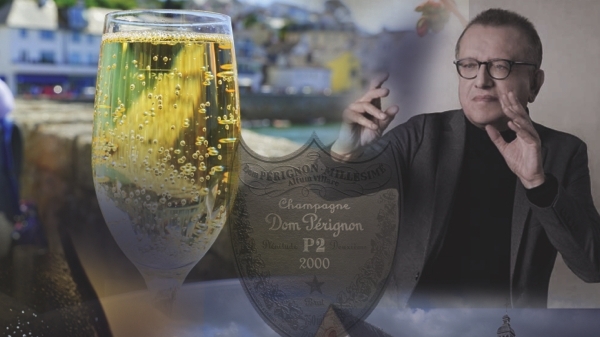
Geoffroy was in Hong Kong recently for a special dinner at the InterContinental’s Rech restaurant featuring a menu prepared by Alain Ducasse to partner Dom Pérignon P2 2000.

Since taking up his post in 1990, he has been a man on a mission – one best expressed in the often magnificent wines he has spent nearly 30 years making, but also through his role as a roving ambassador. He travels the world working with chefs to promote Dom Pérignon and champagne in general as gastronomic wines, with frequent visits to Hong Kong, mainland China and Japan.

“For a long time people have been thinking there is champagne and there is wine. Wine is serious and champagne is not,” he says. “My mission is to make it so that any mention of champagne implies grandeur and seriousness. It’s a work in progress, but I think Dom Pérignon is doing its bit.”

Among Geoffroy’s contributions has been the concept of “plenitudes”. These are windows in the evolution of a champagne, while it’s maturing in the bottle and still on the yeast that gave it its effervescence, during which it achieves certain qualities.

“A plenitude is a stage of radiance, serenity, lightness of being in maturity. A period in time which doesn’t last for too long – a few years,” he says.

For this reason he keeps a limited number of bottles of each vintage in the cellar “on the lees” (yeast) for release (with the yeast removed) when it has reached these plateaux or “perfect phases”.

“Those are periods which are worth a re-release. I’m the guy who made it, blended it and declared the vintage, so I more or less know when it’s ready for something,” he says.

The plenitudes occur at no fixed date, but the first is generally at around nine years, the second after 15 years and the third after 25 years – but possibly much later.

“I make a point that the period of the third plenitude is up to 40 years,” he says. “That doesn’t mean that the lifespan of Dom Pérignon is 40 years. It’s more than double that.
I can’t think of a single vintage of Dom Pérignon unable to reach that 100-year line or frontier.

“There are only three windows. After the third plenitude the wine keeps improving for another 50 years or more. The third plenitude is mid-life. There isn’t a fourth window. But we might release wines again as après la troisième (after the third). Why not? It would be very poetic. I’m saving wine for this, someday.”

The first plenitude of the 2000 vintage, Geoffroy determined, came in 2008, and the second, P2, in 2017. He describes the wine as “intense, vibrant and crisp with its energy at its apogee.”

“Dom Pérignon P2 2000 has surpassed its initial balance. It has grown into a wine that is more full-bodied, more complete, more coherent and more harmonious. It has become more complex and every bit as intriguing,” he says.

“It’s extra time – the gift of extra maturation, active maturation on the lees, the yeast which actually made it sparkling in the bottle and that intriguing mysterious contribution to the expression of P2. I say intriguing because it’s not the evolution of the original fruit. It’s something extra – organic – making it more intense, more textured and more complex.

“So P2 is the same blend of the same vintage. It’s not a super blend. It’s the same wine magnified through that extraordinary process of maturation.”

The plenitudes were a daring experiment which seems to have worked, and one of many spearheaded by Geoffroy over the last few years.

“We have been pushing the parameters of vintage character, and the parameters of the character of Dom Pérignon,” he says. “The most recent vintages have got more flesh, more presence. I think they have more guts than just about anybody. The 2003 was very controversial but now it’s stunning wine, and people have started to give justice to it. It’s accessible, pleasurable, elegant.”

All Dom Pérignons are vintage champagnes, and between its first vintage in 1921 and 2000, the chefs de cave declared only 37. More than two in a row were rare, but since the turn of the century Geoffroy has chosen to declare them more frequently.

“We declared five vintages in a row and some people said to me, ‘Wow, that often?’ The five are all 95-plus (Parker points) so what else?” he says.

“I’m on a mission to make good wine whenever I can make it. I have no right to write a vintage off for the sake of artificial scarcity,” he says. “The danger with champagne is artificial scarcity. It’s old-school luxury. True luxury for me is to make it as good as it can be whenever possible. It’s about authenticity and honesty.”

Text: Robin Lynam

‘London’s best whisky bar’ makes its way to Hong Kong


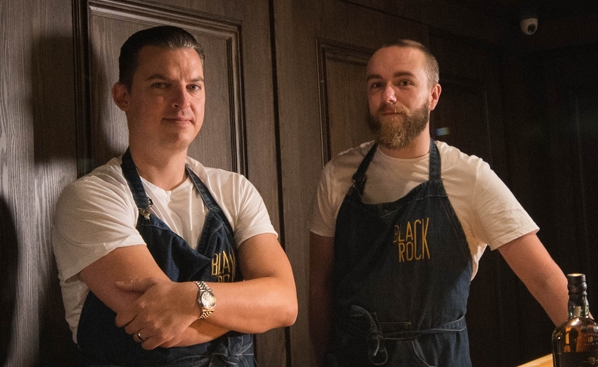
London-based whisky bar Black Rock has crossed the seas and carved out a temporary home in Central.

Located inside “Frank’s Library” at Foxglove, the pop-up bar offers single malts from Highland and Speyside whiskies, along with some extremely rare malts from the Diageo library.

Dubbed “London’s best whisky bar”, Black Rock is co-owned by industry veterans Tom Aske and Tristan Stephenson, who take a unique approach to storing whiskies.

Selections are grouped by descriptions, which include balance, fragrance, fruit, smoke, spice and sweet.

Drinks are served on a monumental 12-foot-long table, which is by far the most distinctive feature of the bar. It houses two rivulets of whisky – Morello cherries and spices on one side and a house-style blend on the other.

Items on the menu include Hong Kong-flavoured dishes made by local chefs. For every dish sold, $10 will be donated to charity.

Apart from The Singleton, other classics on offer include Johnnie Walker King George V, Lagavulin, Glenkinchie and Cragganmore.

The pop-up bar is open from 22 July to 5 August.

“Hong Kong has such an amazing selection of bars and it’s such a great opportunity to be part of that for a short period of time,” says Aske.

To book, call Foxglove at 2116 8949 or email reservation@foxglovehk.com.


Ernest Hemingway-inspired bar to open in Hong Kong

An Ernest Hemingway-inspired bar, The Old Man, will open in Hong Kong later this month.

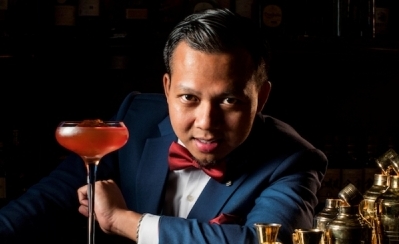
Inspired by the American writer’s style and taste in drinks, The Old Man will be run by cocktail and bar pioneers Agung Prabowo, James Tamang and Roman Ghale.

Hemingway is arguably just as famous for his ability to drink as he is for his writing. The author once said: ”Don’t bother with churches, government buildings or city squares, if you want to know about a culture, spend a night in its bars,” which is what the owners of The Old Man will be hoping people do.  

The literature-themed bar will be primarily led by Prabowo, with Tamang and Ghale expected to manage day-to-day operations.

It will be located in Aberdeen and the drinks menu pays tribute to Hemingway’s Pulitzer Prize winning novel, The Old Man and the Sea.

Before founding The Old Man, Prabowo managed the Bar & Beverage programme at the Mandarin Oriental Hong Kong and he also led Island Shangri-La’s award-winning Lobster Bar & Grill.

The bar is anticipated to include a moody and charming vibe, and a heterogeneous collection of drinks inspired by the late literary genius.

New Wine Ministries Hong Kong Limited raises funds for refugees

The New Wine Ministries Hong Kong Limited, a non-profit organisation, hosted its fourth annual Charity Gala Ball at the Aberdeen Marina Club. An auction raised funds for services for patients and the ministry for asylum seekers and refugees.


Sip of summer: Beat the heat with these seasonal drinks

Wine July

Warm weather is a mixed blessing for the wine and spirits lover. Summer is a season for cold drinks, and the finer points of many favourites tend to be obscured when they are over-chilled. It is not a time for full-bodied red wines – the bigger Bordeaux and Barolos for example – or for undiluted fine cognacs, single malt whiskies or other strong brown spirits.

So what should we be drinking over the next couple of sweltering months? Wine drinkers traditionally gravitate to crisp white wines with relatively high acidity – sauvignon blanc from France’s Loire Valley and New Zealand in particular – or rosé, which has shed many of the negative associations it acquired during the years when pink Portuguese sugar water dominated international sales of the category.

There is now a wide choice of readily available rosé wines. Some of the cheaper ones are still marred by the sickly sweetness of yesteryear, but there are many more dry or off-dry options from both the Old and New Worlds to choose from.

It is true of wine in general that you get what you pay for, but this is particularly true of rosé. Don’t be put off by the underwhelming plonk someone poured for you from a bottle bought in a supermarket for less than HK$70. Be willing to pay just a few dollars more and you will be amazed at the difference it makes.

Good rosé wines at higher but perfectly reasonable price points are available from France, Spain, Italy, Australia and California in particular.

Provence, of course, is well established as rosé country, but red Bordeaux lovers may want to try sipping some of that region’s paler wines in the summer heat.

Chateau D’Esclans in Provence has a stated mission to produce the world’s greatest rosés, and it certainly makes serious wines. For casual summer drinking, Whispering Angel is a good default choice, but seek out Les Clans, or the rarer and considerably more expensive Garrus grand vin, to see what heights can be achieved in this often underrated area.

You don’t have to abandon red wines entirely for the summer, though. Reds that are relatively low in alcohol – generally 13 percent Alcohol by Volume (ABV) or less – can stand being slightly chilled.

Consider pinot noir from Burgundy or the lighter reds of the Rhone Valley as alternatives to heavier Bordeaux blends. The wines of the Beaujolais region are particularly suitable as summer reds and, considering they’re generally underestimated, are often competitively priced. Wines from Fleurie and Morgon are also worth sampling.

Mango Coco

Tiki cocktails are usually quite potent, but if properly made with fresh fruit juices, they can slip down with deceptive ease

Champagne – which is generally served colder than it should be, even in the depths of winter – and prosecco, which is experiencing a boom in interest worldwide, are obviously appropriate summer tipples. It’s also the season for bubbly-based cocktails, with classic favourites including the bellini, mimosa and Aperol spritz.

Spirits, and spirit-based cocktails which generally pack more of an alcoholic punch, are a more complicated matter.
“Modern tiki” bars are now en vogue, and Hong Kong has two that were featured on the highly competitive Asia’s 50 Best Bars list: Honi Honi and Mahalo Lounge, both created by bartender/owner Max Traverse. The tiki trend has also made its presence felt in other Asian cities including Beijing, Shanghai and Guangzhou.

Because of the strong beach associations of the fruity drinks and the décor of the bars in which they’re served, many people like to unwind after work by spending an hour or two in a tiki bar. The ritual offers a little escapism and a taste of the tropical holiday they’ve been meaning to make time for.

Tiki cocktails, often rum-based, are usually quite potent, but if properly made with fresh fruit juices and plenty of ice, they can slip down with deceptive ease. Beware.

There are some excellent creative cocktails being made in some of these bars, and there’s a good chance you will find yourself at some point this summer drinking a mai tai, zombie or plantation punch. Make sure it’s a good one, and sip it slowly.

Olu Olu Soon_path
Although there is growing interest in spirits which come from warm climates, such as rum, tequila and mescal, bartenders say the two that attract the most interest in this part of the world are of cool climate origin – gin and whisky.

Although gin was originally consumed primarily in the Netherlands and later in England, it came into its own in 19th century India with the development of the gin and tonic – a classic combination now enjoyed worldwide.

We have become much more adventurous in our choice of gins, which are plentiful thanks to a plethora of boutique producers as well as established brands such as Gordon’s Tanqueray, Bombay Sapphire and Hendrick’s. There are now gin-themed bars that offer tens or even hundreds of them, including another Asia’s 50 Best Bars venue, Hong Kong’s Ori-gin.

Long gin drinks seem made for summer – not just the gin and tonics, but also fizzes, slings, the French 75, the gin rickey and many others – but brandies and whiskies are more of a seasonal challenge.

It is possible to serve high-quality brown spirits heavily diluted with soda and served over ice to produce a refreshing long drink. One can order a Hennessy XO with ice and Perrier in the Cognac region, but it seems a bit wasteful.

Most single malts drunk with less dilution, even if on the rocks, are too powerful for hot weather consumption. There are still options, though. Lowland single malts are traditionally much lighter in style – though generally not in alcohol – than their

Highland or Island counterparts. Glenkinchie, for example, is often designated a pre-dinner malt because of its light floral style, and it takes well to a cube or two of ice.

A cask-strength 24-year-old edition of Glenkinchie, bottled in 2016, has just been added to the Asian Moet Hennessy Diageo portfolio, although you may want to sip that one with a little chilled spring water instead of ice. Auchentoshan is another gentle Lowland single malt that’s suitable for summer sipping, but it’s best to leave the more intense Laphroaigs and Lagavulins for the onset of autumn.

Summer is also, of course, an ideal time to try a few craft beers – particularly the seasonal ones made by local microbreweries.
While we’ll all be drinking differently during the muggy months of July and August, with a little bit of seasonal know-how, we’ll at least be drinking well.

Text: Robin Lynam

The Macallan Masters of Photography series collaborates with Steven Klein

The Macallan Masters of Photography project collaborated with American photographer Steven Klein for an event in Hong Kong recently.  

Click here to watch the video

The Macallan and Klein combined to create a world that seemed to be standing still in a single moment in time – explored through a moving camera at the Hong Kong Convention and Exhibition Centre.

The Time Captured event immersed guests in a disruptive series of visual and sensational adventures, bearing the theme of time manipulation and distortion.

Upon entering the venue, guests were greeted by models posing as “Agents of Time” who through the magic of light and mirrors looked to be spatially distorted. Next up was the Fountain of Time chamber, where droplets of water fell to the ground and rose up simultaneously and a mist curtain floated in the air.

In the main hall, guests were presented with four bespoke cocktails – all inspired by Klein’s Time Captured concept: Time Distilled, Time Manipulated, Time Enriched and Time Captured.

To coincide with the collaboration, The Macallan has released the Masters of Photography: Steven Klein edition whisky, presented in a black case containing a Klein signed print, horse’s head bottle stop along with a range of whisky making tools.

Video: sundial creative Bompas & Parr. Copyright: The Macallan Single Malt Whisky

Johnnie Walker releases limited-edition premium whisky

resize

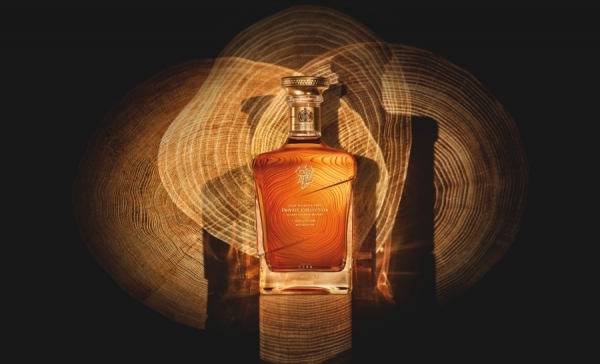
Johnnie Walker has launched the 2017 limited-edition John Walker & Sons private collection, Mastery of Oak.The one-off blends were created by Master Blender Dr Jim Beveridge and fellow blender Aimée Gibson.

“Every whisky starts out full of the promise of its distillery character,” said Beveridge. ”Oak casks offer us an astonishing number of ways to differentiate these styles further as they mature, broadening our palette of flavours for blending.”

The blenders used American oak for the first vatting, selecting fine examples of ex-bourbon casks that had contributed rich, creamy, toffee and spice notes to Malt & Grain Scotch Whiskies as they matured. The two men then focused their attention on finding refill casks for the second stage of vatting. And for the final stage, they returned to American oak combinations using experimental casks, particularly new oak that has created an intensity of vanilla sweetness.

The John Walker & Sons collection comprises a limited release of 5,588 individually numbered decanters.

A Spirited History: 19th-century whisky sees a remarkable rebirth

Wine June

Winston Churchill, who was among other things a discerning drinker, was once given a glass of fortified wine from the late 18th century. He is said to have remarked, “My God, do you realise this Madeira was made when Marie Antoinette was still alive?”

Part of the allure of very old fine wines and spirits is that they provide a direct sensory link to history. Wines and spirits dating back to the days of Churchill are rare enough, let alone bottles from the 18th century.

Madeira is remarkable in that it is often still drinkable after more than a century. That is partly because a degree of oxidisation – regarded as a serious fault in most other wines – is an essential part of its character. As recently as 2015, Christie’s auctioned a bottle of Madeira thought to be the oldest still in existence, made before Marie Antoinette was born in 1715. It fetched nearly US$20,000 (HK$155,800).

Most other wines, however carefully stored, would be undrinkable by that age, but spirits can live much longer. However, at the prices old spirits now command, very few people can afford a taste of real spirit history. A Scottish whisky company which recently launched its range in Hong Kong and Macau, through distributor Adega Royale, has come up with the next best thing, though.

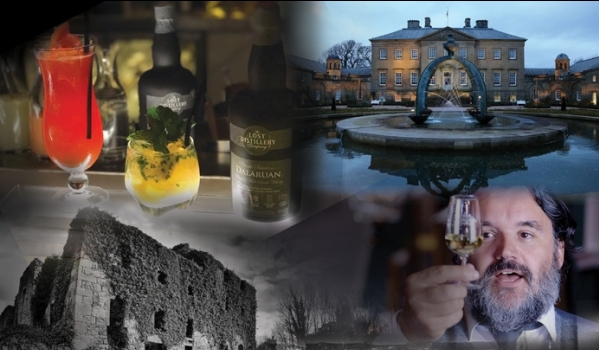
The Lost Distillery Company is not another broker of exorbitantly priced old liquids – there are plenty of those – but rather an independent bottler creating facsimiles of Scotch whiskies that went extinct long ago when the distilleries that made them closed. Fortunately, records of how the spirits were made survived.

Using that information, the company is producing whiskies it believes to be close – if not exactly – to what Scots were drinking in the 19th and early 20th centuries. At the very least, it’s close to what those distilleries would probably be making were they still in business today.

Wine June

Inendent bottlers do a service to diversity within an industry in which individuality is prized, but is constrained by the fact that so many distilleries are owned by an ever-shrinking number of corporate behemoths. British beverage company Diageo operates 28 malt distilleries alone, accounting for around one-third of the Scotch whisky industry’s total capacity.

It was not always so, though. Most single malt distilleries were originally independent operators. But during the 20th century, many were bought up by larger corporations, and more than 100 others closed their doors forever.

Some, of course, made spirits of no special distinction and went out of business for that reason. Others, however, made noble spirits but succumbed to external economic pressures. These included the catastrophic effects of prohibition in the United States between 1920 and 1933 under the Volstead Act, two world wars and the loss of captive local markets beginning in the 1860s when railways reached the Scottish Highlands.

All of these pressures contributed to the consolidation of the distilling business through the acquisition – often followed by the closure – of independent distilleries by bigger businesses. That process began in earnest as long ago as the 1920s.

Now, some of that heritage is making a Lazarus-like comeback, according to Ewan Henderson, global brand ambassador for The Lost Distillery Company. The company was established in 2013, co-founded by two Ayrshire Scots, Brian Woods and Scott Watson, with the ambition of reviving what Watson calls “Scotland’s former whisky legends.”
Henderson, an ebullient whisky enthusiast with a colourful turn of phrase, describes the company as “The Indiana Jones of whisky” and likens the research behind the recreated whiskies to “archaeology.”

The Lost Distillery’s archiving team is led by whisky historian Michael Moss, a professor at the University of Glasgow, and its members have compiled data on a steadily growing portfolio of extinct distilleries. Research has established the types of still that were used to make the spirits, the casks used to mature it and each distillery’s sources of peat, barley and water.

Jericho___book

The whiskies are available in three ranges, each presented in self-consciously retro black bottles in homage to the type that Scotch whisky distillers used before the modern age of diversified packaging. The Classic, Archivist and Vintage lines include spirits from all the Scotch whisky regions – the Highands, Lowlands, islands (including Islay), Speyside and Campbeltown.

“We’ve created a range which goes right across the flavour profile from the lighter styles with floral cereal notes right the way through to the big smoky, peaty Islay style in Lossit,” says Henderson.
The Lossit distillery on Islay closed in the 19th century. Among other spirits in the range, Auchnagie, Gerston and Jericho in the Highlands, Dalaruan in Campbeltown and Speyside’s Towiemore all disappeared during the reign of King George V, which lasted from 1911 to 1936 – although there were two Gerston distilleries, the first of which was scrapped in 1882.

The Lost Distilleries have some support from George V’s great-grandson. The company is based at Dumfries House in Ayrshire, a royal estate of Charles, Prince of Wales, although the Scots – the royalists anyway – prefer to call him the Duke of Rothesay. The association, according to Henderson, “opens a lot of doors.”

LDC library_Path“The Lost Distillery makes whiskies which are close to what Scots were drinking in the 19th and early 20th centuries”

The company is not operating its own distilleries. The modus operandi is to blend different single malt whiskies, bought from across the industry to produce spirits with the flavour and aroma profiles that research has determined the “lost distilleries” would produce if they were still in business today.

It’s an interesting experiment. The whiskies are premium priced, but nowhere near the figures old spirits from Scotland’s better known “silent distilleries,” such as Rosebank,
can command.

The heritage recreation theme sets The Lost Distillery Company apart from other independent bottlers such as Compass Box, which is also buying whiskies and marrying them together, but its creations tend to be more experimental and modern than its nostalgic, heritage-influenced counterpart. More traditionally minded bottlers such as Gordon & Macphail and Cadenheads also produce blends, but concentrate on special expressions from single distilleries.

It all adds to the growing diversity of the world of whisky, and as interest spreads to the many new international producers, this initiative serves as reminder that Scotland is still a creative leader with a rich history worthy of spirited celebration.

Text: Robin Lynam