Scottish sanctuary at Johnnie Walker Blue Label Bothy

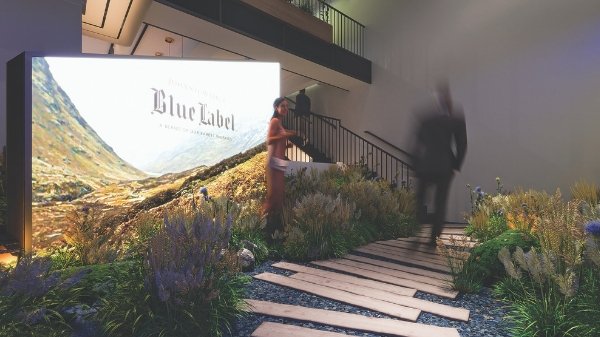
From 18 February to 2 March 2019, blended Scotch whisky brand Johnnie Walker will be creating a Scottish sanctuary titled the Johnnie Walker Blue Label Bothy to introduce a remarkable whisky experience with a unique tasting of some of the rarest whiskies from the unparalleled reserves that are used to craft Johnnie Walker Blue Label.

Johnnie Walker Blue Label Bothy

Quite fittingly, the Johnnie Walker Blue Label Bothy derives its name from the Scottish word that defines those rare hideaways found in the mountains where explorers seek sanctuary from the cold, wind and rains. Similarly the Johnnie Walker Blue Label Bothy provides an exclusive retreat for guests, transporting them to a quiet Scottish idyll away from the hustle and bustle of Hong Kong.

Johnnie Walker Blue Label Bothy

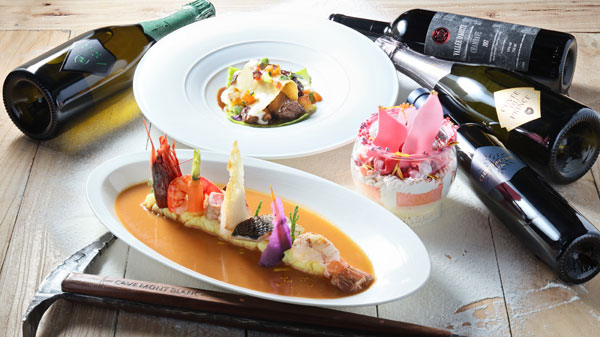
The experience is even further enhanced by a private dining menu curated by Michelin-decorated chefs Nicholas Chew of BIBO and Noël Berard of Écriture. Reservations are available for lunch and dinner sessions on 23 and 24 February 2019, priced at HK $1,820 per person (including a commemorative engraved bottle of Johnnie Walker Blue Label 75cl). For further inquiries please call +852 5200 2061 or email at marketing2@lecomptoir.hk

Terroir-ism: Winemaking terroir is under attack from global warming

While the winemaking industry is a negligible contributor to overall greenhouse gas emissions, it may turn out to be one of the early casualties of climate change. Indeed, there are already signs that the average 1 degree Celsius rise in global temperature over the course of the last century is taking its toll.

Climate change is affecting the world's traditional winemaking terroir

According to the International Organisation of Vine and Wine, a Paris-based intergovernmental body dedicated to viticulture and winemaking, global wine production contracted by 8 percent year-on-year in 2018 – a figure that pegs total output at its lowest level since 1961. The organisation also has no doubt as to just what the root cause is for this ongoing decline – global warming and, in particular, its deleterious effect on the world’s terroir.

As even the most casual of wine connoisseurs know, terroir is the cornerstone of every fine wine. Derived from the French term for “land” or “earth”, in the world of wine, “terroir” refers to the four elements that contribute to the taste, texture and bouquet of any given wine – the weather, the soil, the topography of a vineyard and the grape varietal itself.

Rising temperatures have a huge impact on terroir

For much of winemaking’s long history, the sole element controllable by humans was the initial choice of grape. Now, though, thanks to humanity’s overall impact on the climate, neither the weather nor the soil quality is exempt from man’s influence, no matter how baleful that might prove to be.

Inevitably, the repercussions of this shift in the natural order have been huge for the world’s wine-producing regions. Should temperatures become too high, for instance, the sugar content of grapes increases, while their acidity declines, inevitably compromising the quality of any wine subsequently produced. Similarly, both overly-long summers and extended winters cause soil erosion, creating weaker ecosystems and lower-quality vines. This, alone, could prove disastrous for leading producers in both Old and New Worlds.

A 1 degree celsius rise in global temperature has devastated Old World terroir

It is no exaggeration to say that the muchloved Pinots, Cabernets and Sauvignon Blancs currently produced in such regions may soon no longer prove viable. Indeed, one recent study by the US-based National Academy of Sciences went so far as to predict that the output of the traditional grape-growing regions could shrink by as much as 80 percent before the end of the century.

Given such dire prognostications, it is no wonder that the search is now on in earnest for a solution to this looming terroir crisis. One researcher who believes she may have an answer is Elizabeth M Wolkovich, Assistant Professor of Organismic and Evolutionary Biology at Harvard University.

Look to new markets for wine

Maintaining that re-evaluating currently unused varietals is essential, she says: “The Old World is home to more than 1,000 different varieties of wine grapes and some of them are better adapted to hotter climates and have a higher drought tolerance than the 12 varieties that currently account for 80 percent of the international wine market.”

As well as reappraising currently neglected varietals, another school of thought suggests re-evaluating those wine-producing regions that have historically been seen as lacking. Indeed, one country whose terroir is already seen as having benefited from changing climate patterns is the UK, a producer whose output has traditionally long been derided. Addressing this very issue, Alice Feiring, a highly-regarded US wine writer, says: “England is now definitely one to watch. Many of its newly-produced sparkling wines are truly delicious.”

Your favourite Pinots and Cabernets may soon disappear

Another beneficiary has been Belgium, with renowned British wine critic, Jancis Robinson, confessing herself astonished by the quality of one of the country’s Chardonnays. Initially believing that so sophisticated a vintage must surely be Burgundy-sourced, she later wrote: “I still find it extremely difficult to believe that anything of such quality was produced so far off the beaten track.”

Closer to home, Asia has also seen an upturn in its winemaking fortunes, with vineyards springing up across large swathes of both India and China, locations where the hugely varied terrain has led to a number of very interesting wines being produced. Japan, long famed for its domestic sake industry, is also now home to more than 200 vineyards

As both an early casualty of climate change and one of the first to take steps to proactively evolve in response to the new environmental realities, the wine industry has been seen as sending out mixed messages. While its testimony as to the very real and damaging consequences of global warming has been welcomed, some in the green lobby believe that its advocacy of capitulation and readjustment sends out a dangerous message to other less carbon-neutral industries.

Text: Tenzing Thondup

Aosta’s Aperitif: Cottage Vineyards hosts a night of suburb Italian wine

With oenophiles starting to explore the French region of Bordeaux, from 2011 onwards, Burgundy wines have grown into prominence worldwide, particularly in Asia. No surprise then that the Valle d’Aosta, which lies just 400kms northeast of this prized province near Italy’s north-west border with France and Switzerland, is coming into its own as a premium winemaking region. Here, top-notch grapes suitable for viticulture are grown along the slopes of Mont Blanc, one of Europe’s highest peaks, at an elevation of 1,200 metres above sea level. 

With the temperature fluctuating between warm and freezing, the region produces longer-lived and healthier wines of great character and purity.

However, so far the wines produced in this region had not reached worldwide fame despite their quality and uniqueness, due to the region’s inherent inaccessibility until recently. Thankfully, in 2015, all that changed as the Skyway Monte Bianco opened a cable car in the Alps, linking the small Italian town of Courtmayuer with the mountain’s southern side Pointe Helbronner, giving travellers and wine lovers the chance to visit the Alps and Cave Mont Blanc‘s new elegant tasting room.

Now, thanks to Cottage Vineyards and the Consul General of Italy in Hong Kong, oenophiles were treated to a night of tasting of five of Cave Mont Blanc’s best bevvies, accompanied by regional dishes to celebrate The Pride of Aosta: A Royal Sabrage on the Mont Blanc, the fifth in its Pride of Italy series to celebrate the 36th anniversary of Cave Mont Blanc at Cucina in the Marco Polo Hong Kong Hotel.


Cave Mont Blanc Recommendations  

‘Glacier’ Metodo Classico Pas Dosé Blanc de Morgex et de la Salle DOC 2016: Sporting notes of apple and medlar, the wine also features aromas of almond and pineapple, with a slight taste of coffee. 

Cuvée du Prince Metodi Classsico Brut Nature Blanc de Morgex et de la Salle 2011: With fine persistent bubbles, this straw yellow wine is a classic designed especially for those who prefer warm spices and honey.

‘Chaudelune’ Vin de Glace Morgex et da la Salle DOC 2016 (Ice Wine): Best served with dessert, this ice wine offers a fresh finish with candied fruits and honey aromas.

‘1187’ Me-todo Classico Exgtra Brut Blanc de Morgex et de la Salle SOC 2016: Another bottle best for those who prefer it bubbly; the wine features hints of mandarin, pear and white flowers.

Blanc Blanc de Morgex et de la Salle DOC 2018: With the slightest note of sage, this light straw yellow wine with green highlights is splashed with the delicate aromas of mountain herbs.


Text: Bailey Atkinson

The Right Pick: Perfect Valentine’s Day Gifts for Men

While we don’t believe that you have to wait for 14 February to gift a special something  to a special someone, in case you’re looking for that perfect Valentine’s Day gift for Mr. Right, here are some gift ideas you should definitely check out…

Valentine's Day gift

If your man loves exercise and outdoor sports, he’s probably already eyeing the Brompton Bicycle 20 Years in Asia Gold Edition. Striking black gloss components, including handlebar, stem, seat post and 16” wheels, alongside the black Brooks B17 saddle, handcrafted premium British leather make this any biker’s dream vehicle.

Valentine's Day gift

For the Jay Gatsby in your life, who loves to host extravagant parties, the Manhattan collection of wineware from Saint Louis’s 2018 Autumn Winter collection could be an ideal addition to his party accessories. Featuring the essential tools of mixology that help mix and enjoy cocktails at home among friends, the Manhattan collection ensures that happy hour starts at home.

Valentine's Day gifts

Another Valentine’s Day gift that may hit the right note with gentlemen who enjoy a tipple or two would be the limited-edition Rémy Martin XO and VSOP collections. Two very special limited-edition boxes join Rémy Martin’s collection of swanky gift boxes created for refined tastemakers, including an exciting collaboration with American avant-garde artist Matt W. Moore.

Valentine's Day gifts

Of course, there’s no wrong time to gift a fine timepiece to a discerning gentleman. Even better if the gentleman in question is an avid horologist, but even if he’s not, no fear, Franck Muller’s Vanguard 7 Days Power Reserve Skeleton will make him a fan in no time. Thanks to its open-faceted skeletal structure, architectural and geometric open-worked bridges are in full display, allowing one and all to admire its intricate mechanism.

Valentine's Day gifts

For the modern jet-setting man, what could be a better Valentine’s day gift than Il Bisonte’s Travel Kit in cowhide leather? Coming from a true-blue Italian brand that stands for practical luxury and timeless trends, the travel kit includes a padded eye mask, a luggage tag, a cord wrap and a passport/card case wallet in black, red or nude.

Text: Suchetana Mukhopadhyay

An Unlikely Couple: HYC Bar and Lounge fuses shisha and gin

There are many shisha bars in Hong Kong, just as there are many gin parlors. However, the newly-opened  HYC Bar and Lounge, has made the bold move to combine the two palliative pastimes in the stylish upscale atmosphere perched atop of the 22nd floor of Nathan Hill complex in Tsim Sha Tsui. 

HYC Bar and Lounge

Within seconds of entering HYC Bar and Lounge, shisha supporters and gluggers of gin will be immersed in an inviting chic environment and doted on by its warm and knowledgable staff. The atmosphere of both the inside the bar and its rooftop lounge are near-perfect for an intimate romantic date or just a night out with friends to celebrate the end of the work week. Guests can gaze across the panoramic vistas of Victoria Harbour and Hong Kong Island while enjoying this all-new nightlife hotspot’s many tantalising treats. 

HYC Bar and Lounge

Any skeptic of shisha will surely have their ears perked as they hear about HYC’s commitment to providing Hong Kong with not only the most luxurious hookah on the market, but also the healthiest too.

Indeed, HYC has partnered with only the very best in shisha developers – American company Kaloud and Canadian company Shishabucks. Taking a more modern and healthy approach to the pastime, both Kaloud and Shishabucks have created technology that includes Heat Management Devices (HMD) for a cleaner experience. These devices work to remove the need for tinfoil (a noted health threat) while optimising flavours and increasing the quality of the smoke, providing guests with a smoother and more beneficial affair.

In addition to its assortment of health-conscious machines, Shishabucks and Kaloud also offer some of the most unique flavours on the hookah market, including white gummy bear, Hong Kong milk tea, and mint chocolate.

HYC Bar and Lounge

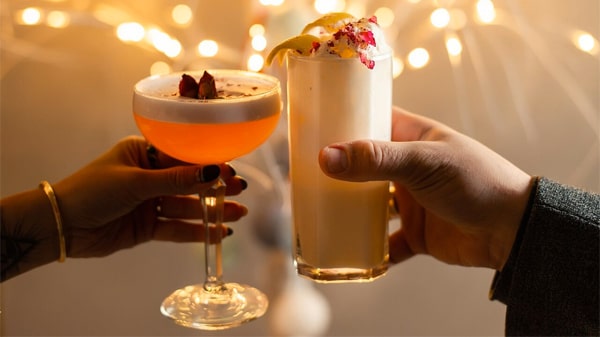
In addition to its allure as one of Hong Kong’s most luxurious and healthiest shisha venue, HYC Bar and Lounge is also home to an outstanding array of gin cocktails that pair perfectly with the light and smooth hookahs on the menu. The butterfly flower infused gin and yuzu tonic, for instance, is sure to be an instant classic. Among the cocktails to be admired is also the OKKURRR, which features the slightest hint of sweet passionfruit to balance the dryness of the Citadelle gin. 

HYC Bar and Lounge

For guests who wish to create their own cocktail, HYC also offers a mix-and-match option with the added bonus of selecting a smokey sensory experience; our favourite being the Oak.

During the month of February, HYC will be serving an array of delicious promotional concoctions, including Hendricks gin + grapefruit tonic with dry rose smoke, and cucumber chill + Japanese Yuzu with fruitbase from 8-14 February.

HYC Bar and Lounge
22/F Nathan Hill
38 Hillwood Rd., Tsim Sha Tsui

Specially Served: Diageo Special Releases 2018 Collection

Putting an end to whisky connoisseurs’ year-long wait, Diageo – world’s largest producer of spirits and beverages – has raised the curtains on the Diageo Special Releases 2018 Collection. This year’s collection feature a limited range of impeccably crafted, rare and precious Scotch whiskies, even encompassing liquid gems from long-shut-down distilleries.

As Diageo’s Global Malts Ambassador Donald Colville puts it: “Diageo Special Releases 2018 Collection allows both knowledgeable whisky fans and those new to Scotch to hunt out truly unique limited editions. The exceptional variety and quality of whiskies in this year’s collection will not disappoint, and we’re looking forward to sharing the stories behind the bottles.”

Indeed, from old favourites like the Lagavulin 12 Years and the oldest-ever Caol Ila 35 Years to rarely seen drams from Inchgower and Pittyvaich, there’s something for everyone in this collection. Let’s check out what each of the selections has to offer.

Diageo Special Releases 2018 Collection

CAOL ILA 35YO: The first-ever 35yo release of this Islay malt is also the oldest-ever Caol Ila from the original distillers. Fruity aromas and creamy-smooth texture combine with a sweet-spicy, smoky character. Matured in refill American oak hogsheads and refill European oak butts. Just 3,276 bottles.

CAOL ILA 15YO: Cal Ila is known for its peated flavour, but years ago an unusual unpeated batch was made once a year. Now, it makes a compelling annual Special Release. The first to combine refill and rejuvenated American oak hogsheads and ex-bodega European oak butts, this is an exceptional whisky.

CLADACH: The first-ever master blend of whiskies from six coastal single malt distilleries: Caol Ila, Clynelish, Lagavulin, Oban, Inchgower and Talisker. A glorious mix of whiskies from four different cask types captures the sweet-salty, spicy, smoky strands of a maritime malt perfectly.

INCHGOWER 27YO: Bottlings of this particular Speyside malt is rare and this complex, mature expression retains its nutty-spicy distillery character well. From refill American oak casks, it starts sweetly then becomes crisply aromatic with a beautiful bitter-sweet finish. Just 8,544 bottles.

LAGAVULIN 12YO: An epic expression from an historic distillery, this aspirational 12-year old is packed with sweet, smoky, drying distillery character. Look for a particularly complex spread of these aromas and flavours in this 17th annual release.

OBAN 21YO: Oban is a tiny, historic distillery, and this very rare extra-mature example, unusually matured in refill European oak butts, is mainly maritime in nature. Aromas of sand, dry seaweed and salt lead on to fruitcake and peat. The taste is intense and sweet, with some saltiness.

PITTYVAICH 28YO: Now longer-lived than the long-closed distillery that made it, the oldest Pittyvaich in this series is smoothly coating and sweet to taste. It is deceptively light, but full-flavoured and forceful, with a warm pungency in the long finish. Just 4,680 bottles.

THE SINGLETON GLEN ORD 14YO: The first The Singleton Glen Ord in this series enjoys a unique and ingenious five cask triple-maturation process that enriches the sweet Glen Ord signature notes of rich fruit. It’s thought to be the first time that five different woods have been used to mature a Single Malt Scotch Whisky.

TALISKER 8YO: The first cask-strength Talisker 8YO from the original distillers, inspired by the regular 8YO releases before the late 80s. From deep-charred first fill ex-bourbon American oak hogsheads, it is smooth, lengthy and balanced, with a sweet and youthful assuredness.

Omtis Fine Wines: Hong Kong-based luxury wine merchant turns 100

For Hong Kong oenophiles looking to buy Nicolas Feuillatte or any number of other high-end wines, their first port of call should be at Omtis Fine Wines, the family-run wine merchant that has made Asia its home for 100 years. We interview Philippe Bera, CEO of Omtis, about its partnership with the French champagne house, its centenary celebrations and its vision for the future.

Philippe Bera, CEO of Omtis

How did the partnership between Omtis and Nicolas Feuillatte come about?

Unlike most wine distributors, Omtis Fine Wines focuses primarily on the high-end. We were the agents for Domaines Barons de Rothschild wines for more than 20 years in Hong Kong and Macau, before segueing into becoming a fine wine merchant with a global presence. We then encountered Champagne Nicolas Feuillatte, a powerful brand representing almost a third of the Champagne region. Building Nicolas Feuillatte in Hong Kong and Macau was an enticing challenge, so we grabbed the opportunity. It’s been a very fruitful partnership with market penetration increasing each year.

Omtis Fine Wines is where you can find Nicolas Feuillatte, France's favourite champagne

Omtis is celebrating its 100th anniversary in Asia this year. What are the keys to success for this family-run business?

That’s a complex question. Omtis has evolved across different industries to where it is today – from importing Western movies into China in the ‘20s to being the exclusive agent for Omega and Tissot watches, not to mention other reputable Swiss luxury brands in Greater China from the ‘30s to becoming a wine distributor in Hong Kong and Macau in the ‘80s.

Luxury wine merchant Omtis Fine Wines turns 100

I think the most important factor of our success is that every new generation brought a fresh perspective. My father worked in Switzerland before joining Omtis, so he had strong connections with the watchmaking industry as well as an engineering background which helped us grow our watch importing business in Hong Kong. For myself, I worked as a banker previously, so I have a finance-driven approach to our wine business. These unique skillsets help us reinvigorate Omtis to make sure it stays contemporary and ahead of any major trends.

Furthermore, I think communication has been our greatest asset. When one generation transitions to the next, it does not mean that the previous generation’s input stops. In fact, using their experience and knowledge to complement the current generation’s visions have really strengthened our business as we expanded across industries. I talk with my father every day to get his input on our strategies.

Omtis hopes to revamp wine buying and collecting in the future

With a century under its belt, what’s next for Omtis?

Something that we’ve been working on is a brand-new system of wine purchasing and management. Currently within our industry, each step of the wine value chain is isolated and disjointed, from the vineyards to the distributors to the storage companies to the auction houses – it’s a very inefficient process. We want to help our clients keep tabs of their collections from the vineyard to their homes. From calculating storage costs to shipping details and even tracking the provenance of each individual bottle, we’re hoping to streamline and digitise the entire process, so our customers receive efficient service and full transparency.

Omtis Fine Wines is a family-run business specialising in high-end wines

For the immediate future, though, with Omtis turning 100 this year, we’re aiming to host 100 events. It’s a fun way to interact with our friends and clients, and we’re looking to host everything from intimate dinners to larger-scale tasting parties.

Thank you.

For more information, please contact sales@omtis.com

Interview: How Nicolas Feuillatte became France’s favourite champagne

Despite having only begun in 1976, French champagne brand Nicolas Feuillatte has quickly grown to establish itself as a market leader and one of the pre-eminent champagnes of the world. The brand’s Managing Director, Christophe Juarez, enlightens us on how this phenomenal growth came about…

Christophe Juarez, Managing Director of Nicolas Feuillatte

Tell us a little bit about Nicolas Feuillatte.

Champagne Nicolas Feuillatte was founded in 1976. Mr. Nicolas Feuillatte, himself, was a successful businessman who switched from running a US-based coffee bean business to opening his own domain in the Champagne region. He started a small estate and then joined Centre Vinicole de la Champagne, France’s oldest union of champagne producers, to build the Nicolas Feuillatte champagne brand as we know it today.

In the 40+ years of our existence, we’ve become very successful, both within France and on an international scale. I’m proud to say that we are now not only the No.3 champagne brand worldwide, but we are also the absolute leader, the preferred champagne of French people. In fact, we are the top-selling brand within France, which is quite a feat.

The new Espace Nicolas Feuillatte, inaugurated in April 2017

What makes Nicolas Feuillatte so unique?

First of all, we are a co-op, which means that we are owned by the growers. We currently work with about 4,500 grape growers which represents one-third of the vineyards in Champagne. This huge source allows us to achieve exactly the blending we want for the best possible flavour and quality.

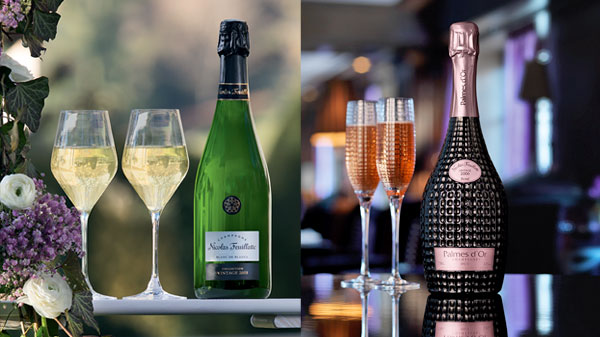
Secondly, we are known for making only the best champagnes. The jewel in our champagne collection, a special tete de cuvee, is the “Palmes d’Or”. It is created using only the most outstanding, flavour-packed grapes.

Nicolas Feuillatte Palmes d'Or Rose 2006
Nicolas Feuillatte Palmes d’Or Rose 2006, a delicious tete de cuvee

Tell us about the newly refreshed brand visual identity and packaging.

We are a relatively young brand compared to other champagne houses, and we pride ourselves on our innovative approach. We’ve just retooled our entire range of products this year, including the packaging and even our logo. Our new logo is very emblematic. We have the small grapes ringed by heart-shaped vines. The grapes represent our workforce, the people who drive our success. It is a tribute to the thousands of grape producers within the co-op who make Nicolas Feuillatte so special.

We’ve retained the signature blue label for the Reserve Exclusive Brut, which is iconic for Nicolas Feuillatte, to ensure we remain recognisable and attractive. Our bottles have also gone through a significant revamp. The Palmes d’Or collection, which features a unique and eye-catching ‘pearl-marked’ design, will be the next to follow.

Nicolas Feuillatte Blanc de Blancs 2008

What’s next for Nicolas Feuillatte?

Our focus now is very much on China. It’s an enormous market with huge potential, and we believe Hong Kong is the perfect gateway. Of course, Hong Kong already boasts a large legion of champagne aficionados, but we hope to introduce them to new expressions of our champagnes as well.

Thank you.

Burgundy and Beyond: Wine tips from Justerini & Brooks’ Managing Director

It wasn’t so very long ago that Bordeaux, that most pre-eminent of French wine regions, claimed to have something of a monopoly when it came to making the world’s finest vintages. And, to be fair, up until seven years ago, its winemakers – particularly those of the Grand Cru persuasion – were permanent fixtures at the top of any list of top tipple producers.

Burgundy grapes are among the most prized in the world

Back in 2011, though, that all changed. Global demand for Bordeaux tanked, and Mouton Rothschild and Chateau Lafite, to name but two, suddenly found themselves jostling for table space with a bunch of upstart Burgundians. Fast forward seven more years, and the supplicant has become the master, with Burgundy now, arguably, dominating the industry – its reputation impeccable and its per-bottle price becoming ever more premium.

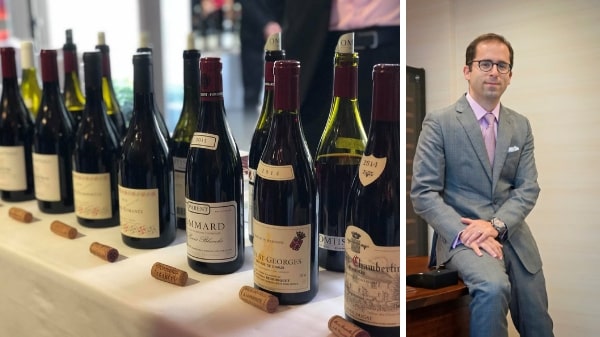
Now, though, some see signs that this prized province is also passing its peak. Where, then, should discerning oenophiles turn to for their next fine wine fix? Few are better qualified to conjure an answer to that particular conundrum than Chadwick Delaney, Managing Director of Justerini & Brooks, the most-lauded of longstanding London wine merchants…

Chadwick Delaney of Justerini & Brooks on Burgundy wines and beyond
Chadwick Delaney, Managing Director of Justerini & Brooks

What do you see as the defining wine trend in Asia right now?

That would have to be the rise of Burgundy, though that applies to the whole world and not just Asia. Most notably, estates such as Domaine de la Romanée-Conti are commanding astronomical prices, but other lesser-known producers are also doing well. This is largely down to Burgundy’s talented new generation of winemakers who, I think it’s safe to say, are going through something of a renaissance right now. After the Big Bordeaux Bust of 2011, collectors in search of alternative high-quality wines immediately fell under Burgundy’s spell.

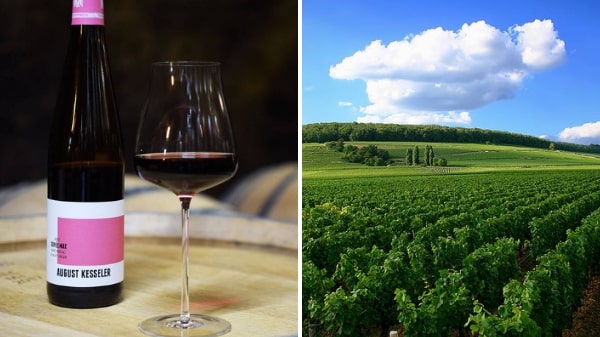
Burgundy vineyard

Following several years of soaring demand, is there a danger that Burgundy is now on course for its own Big Bust?

That’s very difficult to determine. The Burgundy dynamic right now is very different to that of pre-crash Bordeaux. Back then, it was a change of government policy in China – one of its biggest markets – that saw ostentatious gift-giving suddenly frowned upon, resulting in demand dropping overnight.

Thanks in part to its smaller production capacity, Burgundy has never been reliant on mass demand from China. In fact, if anything was to trigger a collapse in its value proposition, it would more likely be a change in priority on the part of collectors. It’s not inconceivable that they might one day think: “Instead of spending tens of thousands of pounds on a single case of Domaine de la Romanée-Conti, I’d rather find something equally satisfying, but rather more wallet-friendly…”

Barbarescu in Italy's Piedmont region may be a Burgundy successor
Barbarescu in Italy’s Piedmont region may be a Burgundy successor

Are there any other regions that you particularly see as on the way up?

There is a notable spike of interest in the wines coming out of Piedmont in northern Italy. It’s perhaps significant that there’s a number of similarities between the Burgundy and Piedmont estates. In both cases, they tend to be small, family-owned, single varietal vineyards producing very aromatic, expressive wines. In particular, Piedmont’s Barolo and Barbaresco are proving to be performers of note, suggesting to some that the region will evolve along very similar lines to Burgundy.

Looking further afield in Europe, Germany has won a number of admirers over recent years. In fact, it is officially our fastest-growing region. The German whites tend to be particularly dry, a characteristic that makes them eminently restaurant-friendly – a fact not lost on the sommeliers of many fine-dining establishments. Then there’s the pinot noirs, which, while having a unique German identity, in taste terms are also far more reminiscent of Bourgogne than any of their New World counterparts.

German wines may succeed Burgundy as the next big thing
German wines may succeed Burgundy as the next Big Thing

Thank you.

Text: Tenzing Thondup


Cloudy Bay: A tete-a-tete on the New Zealand vineyard’s iconic wines

For centuries, the French regions of Bordeaux and then Burgundy dominated any discussion about the world’s best wines. However, the past few decades have seen something of a renaissance in New World vintages – a fact not lost on eager oenophiles looking to expand their horizons and their collections. Among the new crop of up-and-coming regions is New Zealand, with its crisp, flavoursome Sauvignon Blancs firmly leading the charge. Perhaps the most notable of these Kiwi vineyards is Cloudy Bay, located at the very tip of the nation’s South Island. We talk to Jim White, Technical Director of Cloudy Bay, to find out more…

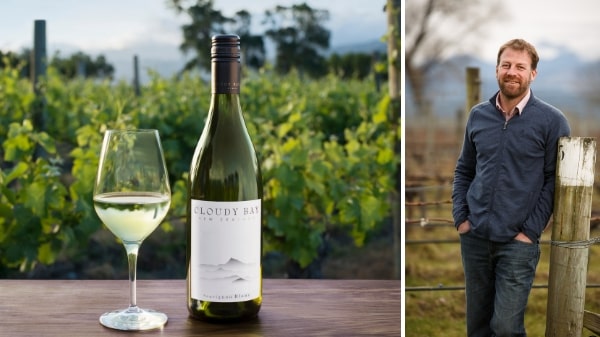
Cloudy Bay Saugivnon Blanc

What made you decide to move to New Zealand and join Cloudy Bay?

I was actually offered the role while working for the winery that started Cloudy Bay in 1985, Cape Mentelle in Margaret River. I’d visited Cloudy Bay a few years prior and fell in love with New Zealand then. It’s not every day that an opportunity arrives to be involved in grape growing and making wines at such an iconic winery as Cloudy Bay, so I jumped at the chance.

Jim White, Technical Director of Cloudy Bay Vineyard

What are some of the characteristics that set Cloudy Bay’s winemaking apart from its competitors?

We just try to make wines that speak of the soil, climate and people of our home in New Zealand, we strive for freshness, vibrant fruitiness and balance. The key to making our distinctive wines are in the vineyards, their terroirs and  the detailed work that we do during the growing season. It’s what sets us apart from other New Zealand wineries, a fact that is particularly evident in our Sauvignon Blanc.  

Passion and hard work are the driving factors behind the success of Cloudy Bay wines

What would you say are the defining characteristics of Cloudy Bay Sauvignon Blanc?

The wine always has a core of citrus (limes, grapefruit), stone fruit (peach, nectarine) aromas and flavours with hints of passionfruit, the flavours explode in the mouth, and the finish is long and dry with refreshing acidity. In one word delicious. 2018 was the warmest season on record in Marlborough, meaning our earliest finish to harvest, only by one day. The weather conditions helped create a hugely aromatic Sauvignon Blanc with ripe flavours with intense, concentrated flavour.

Fruity and dry with a long finish, the Cloudy Bay Sauvignon Blanc is a true treat

Tell us a little bit about Appellation Marlborough Wine (AMW) and what it stands for.

AMW is a self-imposed quality standard covering grape varieties (100 percent Sauvignon Blanc), grape source (100 percent from Marlborough), vineyard yields and bottling in New Zealand to ensure consumers get the very best quality Marlborough Sauvignon Blanc that the region is so famous for.  It is an initiative of 45 of Marlborough’s quality focused producers who want to enhance the regions wine quality reputation.

Finally, what is your own personal favourite wine?

That’s a tricky one to answer as I love a diverse number of wines from around the world, as they say variety is the spice of life. If I had to choose one only to drink every day, it would be a toss-up between a great Chardonnay or Pinot Noir, from where, well anywhere really as long as it’s delicious!

Thank you.

Interview by: Tenzing Thondup
Photos: Cloudy Bay