
Rare Old Time

Seamaster_Diver300M_Rio_eff

The terms ‘limited edition” or “collectible” have become somewhat debased of late. Rather than referring to items produced on a highly restricted basis for the discerning connoisseur, they have been hi-jacked by mass market chocolatiers and the like, all keen to slap a premiumish price tag on a 10-million run movie tie-in of some barely-themed confectionery.

Fortunately, in the world of haute horology at least, such terms have retained a modicum of meaning. A “limited edition” remains a timepiece that seldom troubles the double digits in production terms, while the “collectible” tag is still reserved for items of such investibility that any future down-on-its-luck generation could be wholly-schooled on the proceeds.

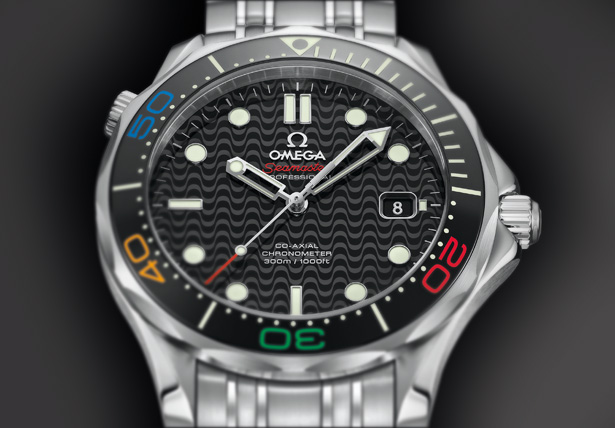
One watch clearly worthy of both appellations is the Omega Seamaster Diver 300m Rio 2016 Limited Edition. As its name suggests, this particular timepiece offers a knowing nod to the Olympic Games, the ultimate sporting competition, the latest incarnation of which is scheduled to romp into Rio this very month. Taking its inspiration from the Games’ dynamic spirit, it is a true combination of watchmaking excellence and timeless craftsmanship. Beyond that, it also find space for an apt homage to the beauty and diversity that is 21st century Rio.

The wave pattern on its classic lacquered black dial is more than a little reminiscent of mosaic design that graces many of the Copacabana’s sidewalks, while its lacquered red, green, yellow and blue numbers are a clear echo of the princely Olympic rings. Its ceramic black diving bezel, meanwhile, is the perfect counterpoint to its brushed stainless steel case. In an apt finishing touch, its screw-in caseback comes neatly stamped with the Rio 2016 logo. Reassuringly, it is also engraved with an individual limited edition number, proof undeniable of its collectible stature.

J031534200_THE_CHARMING_BIRD_AMBIANCE_eff

Similar assured of its position among the true stars of the most-collectible constellation is Breitling’s Chronoliner Limited Series. With the company committed to producing just 250 pieces, this truly limited edition time piece – courtesy of one of the world’s most admired watch brands – should be on every collector’s Christmas list. Encased in 180karat red gold and featuring a scratch-resistant high-tech black ceramic bezel, the Chronoliner can rightly claim to be every bit as aesthetically pleasing as it is functional.

Engineered to a standard designed to appeal to the most discerning of aviation professionals, the watch features a dedicated chronograph, ideal for measuring flight times, while its triple time zone display is a must for any world traveller. Its star-shaped cut-out facilitates easy handling, while its rubber strap harks back to the steel mesh design of the Breitling Classic Aero Bracelet. For those looking for a more distinguished look, contrasting leather and crocodile straps are also available.

Water-resistant to 100 metres the size is a comfortable 46mm. Powered by Breitling’s calibre 24 – officially certified by the COSC (Swiss Official Chronometer Testing Institute) – the watch is self-winding, high frequency (28,800 vibrations per hour) and features 25 jewels studded throughout its cambered sapphire crystal glare-proofing.

Taking its inspiration from nature’s aviator, Jaquet Droz’s Charming Bird champion the stylings of the very finest of our feathered friends. Its roots go way back to the Age of Enlightenment, a time when a young watchmaker of peasant stock first set about making his mark on his chosen profession.

That aspirant watchmaker was Pierre Jaquet-Droz and he, in turn, embraced the naturalist movement that was prevalent amongst many 18th century intellectuals. This gave him a particular sensitivity to the beauties of the natural world. He was the first watchmaker to introduce a singing bird motif to his pocket watches. Ultimately, it became almost his trademark, proving ubiquitous across a range of snuffboxes and other objets d’art.

SCHWEIZ IWC PILOT'S WATCHES COLLECTION 2016

The brand’s long tradition of artistic renderings is given full rein on the Charming Bird’s upper dial section. This is home to a fetching time display, while the section below is devoted to a notably artistic impression of a bird in full song, all neatly housed within a sapphire crystal dome. The collector’s edition also comes with a delicate mother-of-pearl evocation of the Swiss countryside.

The technical aspects of this timepiece are no less impressive than its aesthetic impression. This sees two different mechanisms employed to drive, the watch, apparently the result of several years of R&D. In an another innovation, the bird’s song is generated by the passage of air through three miniature sapphire crystal tubes.

On to more strictly mechanical matters and the built-in regulator harnesses a magnetic effect in order to prevent contact between any metallic components. This also acts to eliminate auditory interference within the 47mm-diameter which. The piece is available in red or white gold, with each version limited to just eight pieces.

Coming in a slightly less limited edition is Chophard’s 20-run L.U.C. Perpetual Chrono. Created with the modern gentlemen very much in mind, this watch boasts one of the “most sophisticated styles and constructions in the world of Haute Horlogerie”, at least according to its manufacturers. Powered by the L.U.C. movement, Calibre 3.10L, at its heart the piece is a hand-wound chronograph, complete with a finely crafted perpetual calendar. It is available in fair-mined 18 karat white gold and 18 karat rose gold.

L.U.C Perpetual Chrono _eff

Some 42 jewels are housed within its 45mm case, while the dial itself features large twin-aperture calendar/date displays, a day/night indicator and an orbital moon phase display – said to provide accurate readings to within a day’s deviation over a 122-year period. A truly unique watch, it embodies Jaquet Droz’s exceptional uniquely artisanal savoir-faire.

Another watch to celebrate the arcane arts of the aviator is IWC Schaffhausen’s Big Pilot’s Watch Annual Calendar Edition. This is the first time the marque has incorporated an annual calendar into its Pilot’s Watch range. There is also a special edition that pays tribute to Antoine de Saint-Exupéry, legendary writer and passionate aviator himself, and takes its name from Le Petit Prince, his much-loved children’s story.

In line with Saint-Exupéry’s long association with both literary and aviatory pursuits, the Big Pilot’s Watch Annual Calendar Edition Le Petit Prince celebrates these two pursuits. The special edition watch comes encased in red gold, an attribute that perfectly compliments the dark brown of both its Santoni calfskin strap and the shimmering blue sun-pattern finish on its dial.

The dial has three separate windows, all arrange in a semi-circle at 12 o’clock, showing the month, date and day of the week. The classic elegance of the watch is further underlined by a number of its more exquisite details, notably the white and red gold outline of the hands, numerals and appliqués, the polished bezel, the satin finished case and the beige coloured ornamental seams on the strap. The hands and indicators also come coated in white Super-LumiNova, something that helps ensure legibility even in low light situations.

This hand wound time piece comes with a seven-day power reserve, with the watch’s movement viewable through the watch’s sapphire glass back. Based on a drawing by Saint-Exupéry himself, the rears of the watch is adorned with a representation of the little prince standing on an asteroid and staring at the heavens with his eyes wide open. The very embodiment of classic understatement and technical mastery Le Petit Prince model is limited to just 250 pieces and is a true collector’s gem.

Aficionados of luxury time pieces will be reassured to hear that, while these watches are true collector’s pieces and only available in limited numbers, there is no need to pitch a tent outside a showroom and queue up. Although they are nominally available on a first-come-first-served basis, the only thing you need to do make your nearest retailer aware of your abiding interest in such high-end horological items of desire.

In fact, should your local dealership be worthy of the trust placed in them by many of the world’s foremost marques, there’s a better than evens chance that they will already have you on their radar. Gentlemen of true discernment and means are available in a far more limited edition than even the world’s most wantable watches. Once you have properly registered your interest, you can be sure that all of the latest information with regard to the most hard-to-get and collectible of chronometer should find its way to your mailbox – actual or virtual – with all the regularity and reliability of the very finest Swiss craftsmanship.
Shared Time


For many couples, paired watches are an apt symbol of togetherness, a subtle acknowledgment of that unique him and her bond. While not necessarily the most ostentatious of displays, it makes clear to those in the know that, not only are the two of you an item, but that you also plan to keep it that way for rather a long time to come. You don’t invest in matching horological accessories for someone you see as rapidly approaching their “best by” date do you?

While the idea of “his and hers” watches is certainly not a particularly novel notion, it’s a timekeeping niche that has proved unusually fluid. There is that added element that requires the twin timepieces to suitably grace the wrists of both sexes, an added frisson to the design requirements and a continuing challenge to be neither too brutalist macho in approach, or too effete for the men’s locker room when seen solo.

Despite the difficulties in negotiating so complex a design brief, it’s fair to say that his and her timepieces have come a long way since their somewhat rudimentary beginnings. Indeed, there was a time when you could reverse engineer the initial brief with a few dainty tweaks for the Mrs. Inevitably, the woman’s watch was a more slender and slightly gamine take on the man’s watch, while the man’s watch, was simply the standard model, with few – if any – couply enhancements. Things are now more sophisticated.

Contemporary complementary watches are now far more concerned with the subtle interplay of intricate differentiating details, while simultaneously maintaining a degree of overall harmonious design symmetry. In fact, in a sign of the political correctness it is no longer the done thing to refer to matching watches as “his and her” timepieces. More prosaically, they are typically catalogued as paired watches that complement each other perfectly, albeit with notable differences.

A prime example here is the Piaget Altiplano Gold Bracelet range – ultra-thin watches boasting a clean look, a minimalist aesthetic and an understated dial, along with extremely slim hour-markers and beguilingly slender hour and minute hands – no additional functions here. This is a watch for the purist.


Powered by the Manufacture Piaget 534P mechanical self-winding movement, the watches come blessed with a 42-hour power reserve. There is also the option – on the 34mm model – for the bezel to be set with 68 brilliant cut diamonds (about 0.6 carat).

Available in pink or white gold – and in a 34 or 38-mm size – these watches are equally suited to men or women. While not sold as gender-specific, it would seem politic to gift the diamond-set 34mm model to the lady in your life. Any brownie points accrued from buying this matching pair would surely be dissipated if you opted to keep the sparklier of the two for yourself.

From the same collection – but lacking the gold bracelet style strap, is Piaget’s original Altiplano line. In contrast to the Altiplano Gold Bracelet, these pieces keep time courtesy of the Manufacture Piaget Calibre 838P, an ultra-thin hand-wound movement that clocks in with a thickness of a mere 2.5mm.

Other subtle differences include a small seconds dial at 10 o’clock and the Piaget logo at 3 o’clock. Available in diameters of 34 or 40mm, the simply elegant Altiplano comes with a brown alligator leather strap and an 18-carat white gold case, optionally available with 72 brilliant cut diamonds (or about one carat). Again, these classic watches are not gender specific but it is not difficult to discern that the more diminutive model with its ornate diamond bezel might be the more popular lady’s choice.

In terms of the offerings from Vacheron Constantin, these are led by the marque’s Overseas watch collection. Available in two distinct sizes with optional trimmings it is down to the connubial consumers to match a pair as they see fit. Powered by Vacheron Constantin’s new 5100 calibre, complete with 172 intricate components, it beats at 28,800 vibrations per hour, while boasting a power reserve of 60 hours (in the 41 mm model).


Water-resistant to 150 metres and resistant to magnetism the watch is suitable for varied occasions and can be customised by interchanging straps – leather and rubber – or the stainless steel bracelet.

The paired watch in this case is the 37 mm Overseas model. While both appear superficially similar, aside from size, there are a number of other more subtle differences. The 37-mm model is powered by the calibre 5300, an automatic movement that comprises 128 parts and an impressive two-day power reserve.

A blue dial and luminescent hands – with matching hour markers – complete this classic look, while the translucent back reveals a 22 karat gold oscillating weight adorned with a compass rose. Clearly the choice for the woman in your life, this model is adorned with 84 round diamonds (over a carat) set on a six-sided bezel.

As with the larger model, this also comes with interchangeable straps and a bracelet, ensuring that you are always in tune with every occasion. The Geneva Seal is a clear testament to the craftsmanship that characterises Vacheron Constantin watches. This is an accolade reserved for only the very best in timepieces and is rewarded in accordance with the long-standing traditions of the watch making school of Geneva.

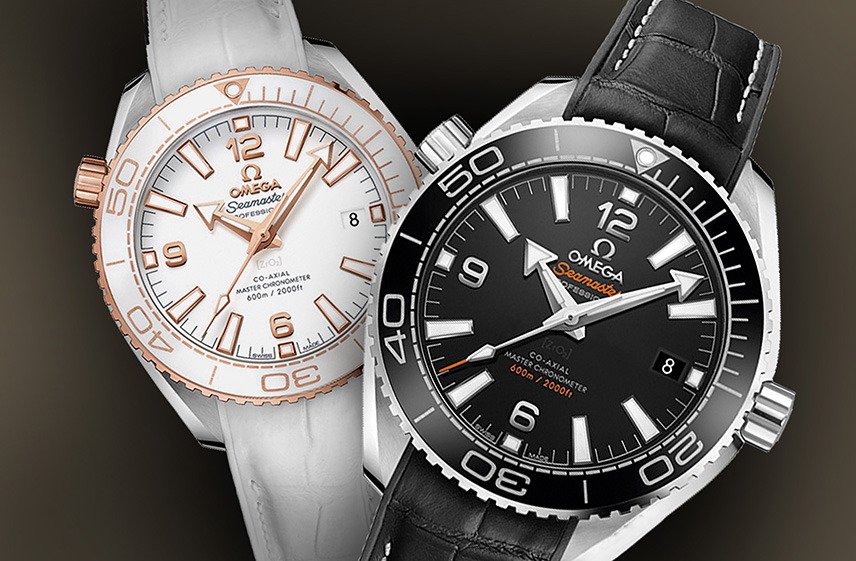
A name long synonymous with quality luxury time pieces and a certain secret agent is, of course, Omega. Couples aiming to emulate the man with a license to kill need look no further than the Omega Seamaster Planet Ocean 600m Master Chronometer.


These distinctive watches strike a perfect balance of form and function and are rated as Master Chronometers – the industry’s highest standard of certification for chronometers. In addition, they are resistant to magnetic fields of up to 15,000 gauss – considerably raising the bar and setting a new standard in anti-magnetism that has already been recognised by the Swiss Federal Institute of Metrology (METAS).

Available in black or white these trusty chronographs have that matching yin and yang chessboard look. This timeless classic features a bezel crafted from black ceramic, neatly complemented by a stainless-steel case with Omega’s trademarked Liquidmetal numbers.

Completing the mysterious look is a black leather strap with a rubber underside. The antithesis of this is the angelic white model, with its bezel and dial both crafted from creamy ceramic and its case fashioned from stainless steel. The bezel is adorned with 18K Sedna gold, as are the watch’s hands and indexes. Numbers on the bezel are made using Ceragold technology, a system that helps the diving scale numbers sparkle and shine.

At 39.2-mm wide, these watches are not for shrinking violets, but actually make something of a bold statement. Worn as a matching pair, they are the perfect complimentary set for couples who enjoy flaunting their eye for the finer things in life.

Known for its long heritage in the world of haute horologie, as well as its championing of traditional craftsmanship is Girard-Perregaux, based in La Chaux-de-Fonds. As part of its iconic 1966 collection, it has issued a select range of haute couture watches, all said to be perfect for style-conscious, star-crossed lovers.


Tailored geometric lines and meticulous finishing define these refined timepieces, as does a distinct modernist flair. The silver dial features bevelled indicators and houses leaf-shaped hands, all unique to the 1966 collection.

A sapphire crystal back reveals the inner workings of the GP03300 mechanical movement, complete with automatic winding and a 46-hour power reserve. Wound by an oscillating weight, the male version features a Cote de Geneve motif, while the female version comes adorned with a Girard-Perregaux tapestry.

With the now famous tagline “don’t crack under pressure,” Tag Heuer positions itself at the sportier end of the luxury watch scale. While these watches are built to withstand the rigours of all manner of extreme activities, they are also magnificently well designed and a worthy addition to the elite of the his and hers watch range. With a range of matching time pieces for the sporty, fashion aware couple, you can choose between simpler straight forward designs and the more meticulously accurate chronographs born from the company’s sport’s time-keeping heritage.

Stand out models here include the Tag Heuer Carrera, a clean design with a modern flavour and a somewhat utilitarian appeal. The testosterone fuelled model has a 39-mm case, scratch-resistant sapphire crystal with double antireflective treatment and is powered by the calibre 5 automatic movement.

Available with a classic brown leather strap or a steel bracelet, the Carrera is a great example of a watch that boasts functionality while maintaining a dazzling aesthetic. The fabulous female version of the Carrera comes in a 28-mm size with glittering diamonds adorning both the dial and the bezel.

Despite the addition of 56 Top Wesselton diamonds, the timepiece maintains a demure and understated appeal. Featuring a calibre 8 automatic movement, the ladies’ version boasts a 40-hour power reserve and comes with a steel bracelet-style strap.

Time Honoured

1606_Time101_Feature_Image

For many of the major watch brands, Baselworld 2016 proved a particularly nostalgic affair. Overall, it is a time of great change in the sector. On one side, high-end smart watches are redefining the world of luxury wristwear while, in a continuing worry, many of haute horology’s core markets are still blighted by economic uncertainties, with cautious spending the order of the day.

It is, perhaps, not surprising then, that many marques have turned noticeably wistful, revisiting the models and styles of their heyday. Last month, in the first part of our annual review of the very best of Baselworld, we focussed on a number of revisited classics from Rolex and Omega – the Perpetual Cosmograph Daytona and the Moonphase Speedmaster, respectively. There were, however, far more brands apparently keen to recapture that special magic of yesteryear.

1606_Time102

This was explicitly the case for Girard Perregeaux, with the high-end Swiss manufacturer making a point of highlighting the upgrade to its Laureato range. First introduced in 1975 – like today, a challenging time for the luxury watch industry – the original Laureato had to contend with the dawn of the age of the quartz movement, while a number of new materials were beginning to make an impact. While, today, it is ceramic, stone and the more exotic metals that are the arrivistes, back then it was steel.

Appropriately enough, then, the re-imagined Laureato comes in stainless steel, while also retaining the octagonal, polished bezel of its illustrious predecessor. Fetchingly framing the dial – in a choice of white, grey or navy blue – the bezel comes with the imprimatur  of a Clou de Paris checkerboard pattern, another knowing nod to the 1975 debut edit.

The 2016 incarnation has been released in a limited edition of just 225 models in each of the two dial styles. Each watch retails for around US$14,300 and, such has been there popularity, Girard Perregeaux is said be considering making the watch a permanent addition to its collection.

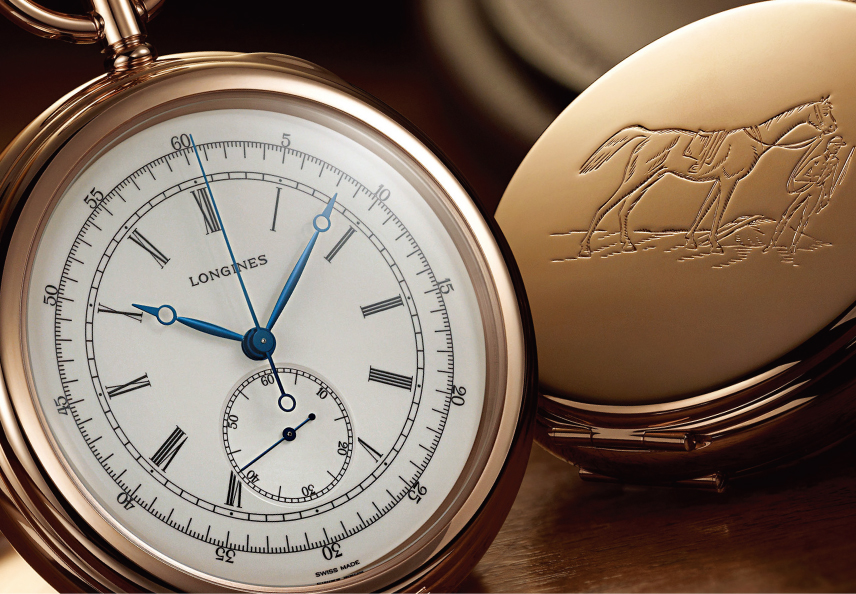
As a knock-on from so many brands consciously revisiting their past triumphs, there was also a striking return for a number of classic sporting timepieces.  One of the most significant of those came courtesy of Longines, with the company lovingly recreating its Equestrian Pocket Watch Jockey, first issued in 1878. The original watch featured the marque’s first chronograph movement, an addition that made it possible to measure performances to the split-second. It was on the back of this that Longines established its pre-eminent association with the American racetracks, a connection that has continued to this day.

The 21st century Pocket Jockey comes in a limited and numbered edition of just 20 units, with each one boasting an engraving of a jockey and his mount on its rose gold cover. Set beneath this is a hand-wound movement, complete with a column-wheel chronograph mechanism that can be activated via a push button on the winding crown. It blued-steel column wheel can be viewed by opening the engraved cover. As with its influential forerunner, the watch marks seconds – in this case via a small 6 o’clock-mounted dial.

1606_Time103

Another brand with clear links to an illustrious sporting past is Blancpain, with the company choosing to mark this with a new edition of its Fifty Fathoms Bathyscaphe. First produced in 1953, and cinematically endorsed by Jacques Cousteau, the legendary French aquanaut, Blancpain last revisited its masterpiece in 2003, the occasion of this particular watch’s  50th anniversary.

The 2016 version is markedly different, coming in a plasma grey ceramic case for the first time. It also features a deep blue dial, one intentionally evocative of the depths of the sea. Its bezel – again in plasma grey ceramic – comes equipped with a blue ceramic insert featuring Liquidmetal hour markers, an alloy said to withstand all distortions.

The watch’s original function as a diver’s watch was betrayed by its luminous bezel-mounted index, a faithful nod to the original Bathyscaphe. Priced at US$12,800, it is a fair hike compared to last year’s stainless steel incarnation. Buyers, however, seemed far from deterred by its inflated price tag, a clear sign of the quality of this quite extraordinary feat of horological engineering.

Not every brand, however, took a retrospective approach. Bulgari – in a move that garnered considerable attention – chose a defiantly forward-looking stance, introducing a timepiece that notably raised the bar. The Octo Finissimo Minute Repeater is the world’s thinnest minute repeater, elegantly employing a series of differently pitched chimes to tell the time to the nearest minute.

Complicated thin wristwatch movements, as manifestly presented here, are rare and understandably so, due to the technical challenges involved in creating them. Very few companies have mastered the requisite precision techniques, with Bulgari a comparative newcomer to this elite fraternity, gaining admission with the 2014 rendition of the Octo Finissimo Tourbillon as its calling card.

With the Octo Finissimo Minute Repeater, its case is just 6.85mm thick, more than a millimetre thinner than the previous “thinnest minute repeater” – a much-loved offering from Vacheron Constantin – and comes in at 40mm wide.

Fashioned from titanium – a logical choice given its strength and light weight, the metal also has none of the sound-deadening qualities of gold or platinum. A further stylistic innovation, although one with a clearly practical bent, is the way that the hour markers and small second dial have been cut out from the dial, rather than being embedded. As well as looking suitably elegant, this allows the interior case space to be used to its fullest as a resonance chamber for the chimes.

1606_Time104

Taking a somewhat different approach to both its past and future glories was Glashütte Original. This year, it offered a new take on its Senator Chronometer, a piece first introduced back in 2009 as a conscious homage to those marine chronometers that were produced in the 1940s and 1950s.

The version debuting at Baselworld, however, notably upgraded the design along more contemporary lines. The case was slimmer, and fashioned from white gold, as were the stylishly and elegantly designed hands.

Taking a peek inside, the Senator Chronometer is driven by the manual winding Calibre 58-01, while also boasting a refined second-stop mechanism. When the crown is pulled out, the time display stops and the second hand is reset to zero, holding there while the minute hand jumps ahead to the next full minute index. This ensures that the exact relationship between seconds and minutes can be continuously maintained.

Another brand that opted to make significant revisions to one of its landmark pieces was Tudor, the innovative Swiss watchmaker now approaching its 50th anniversary. This year, the company unveiled a new addition to its Heritage Black Bay collection, one fashioned largely in bronze.

1606_Time106

Recent years have seen the company experiment with a variety of colours for the Black Bay, with red, blue and black bezels all having put in an appearance. Bronze, of course, comes with some particular historical connotations, most notably its echo of the classic deep-sea diver’s helmet.

As with the nautical headgear that inspired it, its colour will inevitably change over time, gaining a distinct greeny patina. Other than its colour, the new model maintains a great deal of the look and style of the earlier Black Bays – snowflake hands, a large crown and a clean and easy to read design.

While this updated model characteristically features numbers at the three, six and nine o’clock positions, there are few stylistic differences lurking below the surface. This, for instance, is the first Black Bay to use Tudor’s in-house movement. As with the rest of the family, its calibre MT5061 boasts a 70-hour power reserve, while its chronometer-rated movement has been certified by the Contrôle Officiel Suisse des Chronomètres (COSC).

It is perhaps significant that at such a challenging time for the luxury watch industry, so many have chosen to emphasise their historic achievements. While Longines’ Equestrian Pocket Watch Jockey may capitalise on the brand’s legacy in a different way to Tudor’s Heritage Black Bay, both celebrate landmark achievements, while adding that degree of contemporary functionality.

At a time when new companies and new technologies are at the very gates of the haute horology citadel, it is no surprise that the old masters turn to a daunting fusion of tradition and innovation as their surest line of defence. These, after all, were the two principles on which the industry was born.