
Inner Joyce: Echoing her most soul-stirring hit, singer-songwriter Joyce Lee loves life every day without regrets

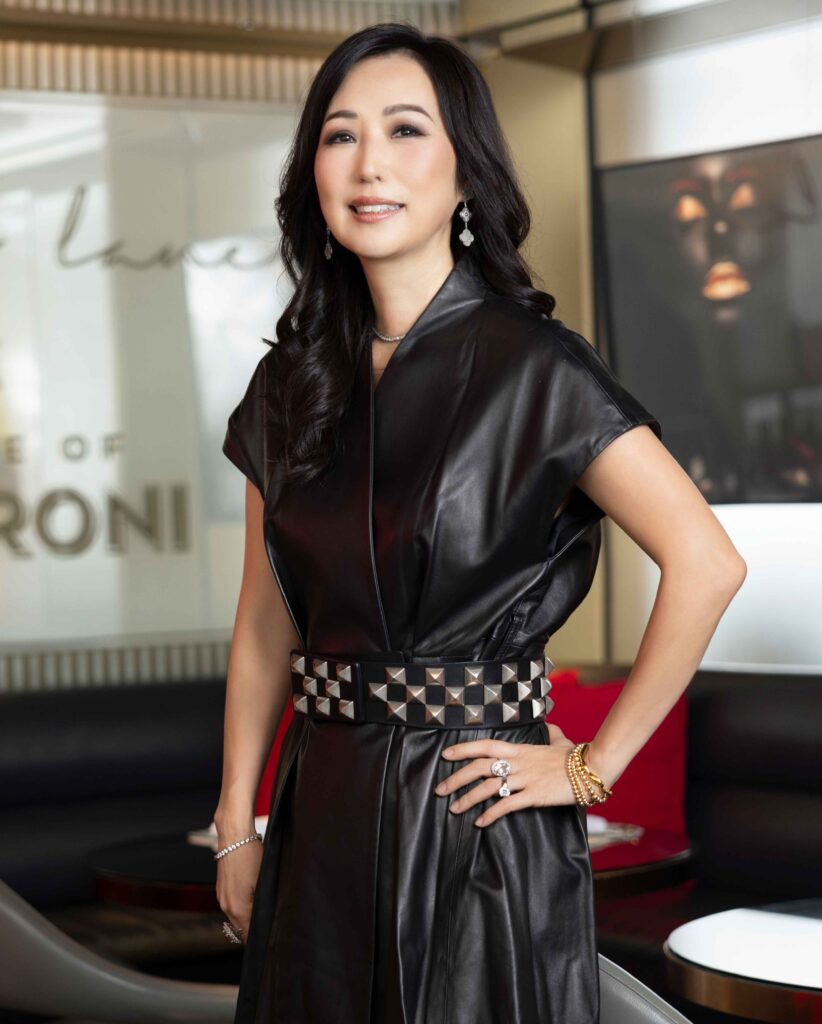
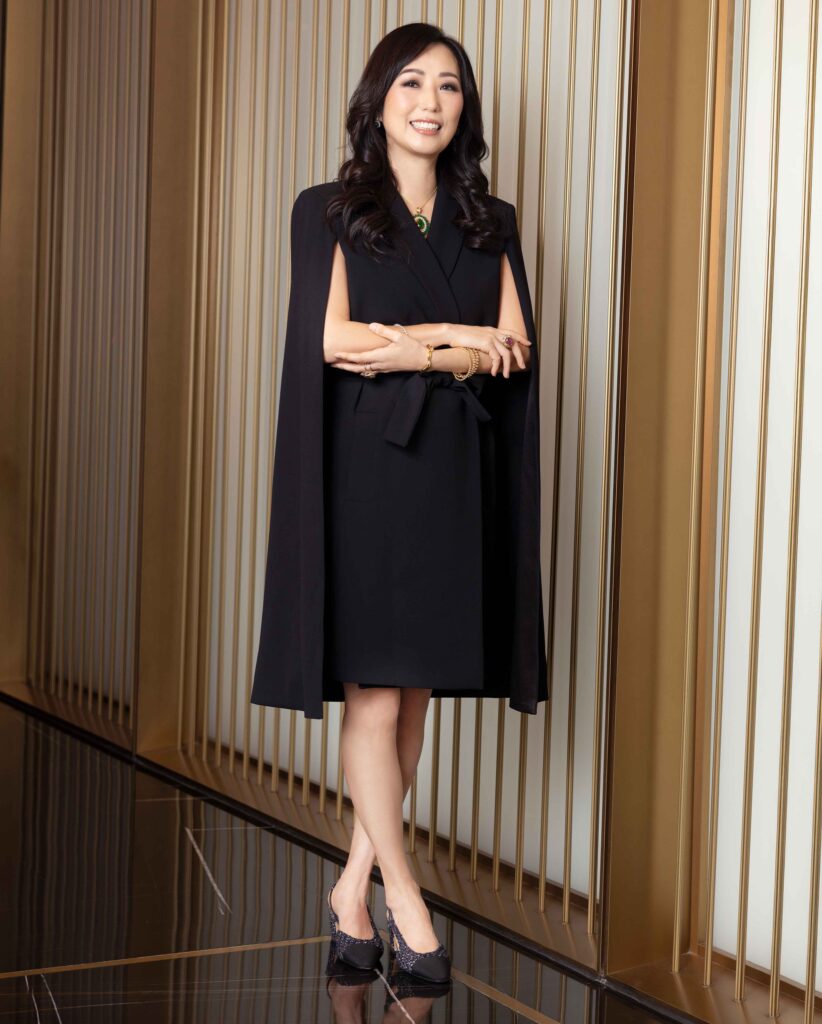
Befitting her award-winning singer-songwriter stature, Joyce Lee arrives at the Cordis Hotel in Mong Kok with an entourage – her glam team, who promptly proceed to finish her hair and makeup. She also brings along her handy speaker for sounds to transport her into photo-shoot mode. “No, please don’t put on my music,” she exclaims, laughing. “I don’t like listening to myself!”

So we blast upbeat ’80s hits, among them Madonna’s Like a Prayer, and the Canadian-born Cantopop pioneer dances while striking her signature poses: arms raised, head tilted, that knowing half-smile that has been selling records since the mid-’90s. The hotel suite suddenly feels like a living room where someone decided that the only appropriate response to life is to groove.

Before the platinum plaques and the theme songs that became Hong Kong’s unofficial background music, there was a teenager in Toronto hammering out scales at the Royal Conservatory of Music. As Lee notes, the conservatory drilled discipline and technical skills into budding musicians until they were muscle memory.

“After all those hours of practice, you will master the mechanics of it,” she affirms as her hair stylist battles a particularly rebellious strand. “Once you have that foundation down, the real magic happens when you stop thinking about the rules and start putting your heart into the music.”

Singing in the Shower

That heart first oozed melodies about age 16, usually when she was in the shower. English lyrics arrived uninvited, tagging along with the tunes. Looking back, she’s grateful for the Hong Kong lyricists who turned those early, half-formed feelings into Cantonese that still landed with the force of a quiet confession. The Canadian conservatory gave her the hands; the shower gave her the soul. The rest was just timing, and a mother who refused to let a good song die as a B-side.

After decades of drowning in Cantonese covers of American and Japanese hits, by the early ’90s, Hong Kong radio and television started championing original songwriting. Into that opening walked a 19-year-old with a piano who cooed Western-accented Cantonese that made people smile. It was in 1994 that everything clicked. Her single, One Day I Will Touch Your Heart – which her mother insisted the record company push – made the Jade Solid Gold list of the year’s top 10 songs; her first, second and third solo album went double platinum, and she was serenaded as TVB’s Singer-Songwriter of the Year.

Performing Spirit

Lee’s producer had pushed her to write as well as sing and play, but the real spark for her compositions was loneliness. Fresh from the Toronto suburbs, newly signed, friendless and culturally adrift, she wrote English lyrics because the Cantonese words for “I feel lost and I need my voice to be heard” hadn’t arrived yet. The finished song carried that wish. “I just really wished to be understood through music,” she recalls.

Her popularity was underscored the following year when she performed the theme song of A Kindred Spirit, one of TVB’s longest-running dramas. For 1,128 episodes over four years, people let the ballad Love Your Life Without Regrets into their living rooms the way they let in the evening news. Fans still stop her on the street to tell her what was happening in their lives when the first notes hit.

“It feels so lovely and humbling to realise that my music became a part of their personal stories,” she says now. It confirmed that vulnerability with a piano heartbeat travels farther than any manufactured karaoke anthem.

Notes of Emotion

Three decades later, the process looks different. Experience has piled up: personal heartbreaks and career highs; surviving cancer; and the ordinary miracles of raising three boys with husband Ted Lee. She sits with close friends, talks the ideas through, and takes their honest feedback into the studio. Producer and piano become co-conspirators. The goal is no longer just a good melody; it’s one that matches the emotional core of the story she’s trying to tell.

Trends change fast, but Lee has grown braver. “When you’re younger, you worry so much about fitting into a specific mould,” she reflects. “But looking back now, there is really nothing to be afraid of anymore because, creatively speaking, anything goes.”

Since the release of her seventh album, Fantasy, in 2005, her impact has been measured through deep connection with the community – performing at charity events, local concerts, masterclasses, even with a choir for people who simply want to sing together. If her music makes someone feel less lonely and more seen, it is exactly as it was meant.

Scene & Heard

Hong Kong’s pop scene still has that 24/7 pulse she loves – a raw energy you can’t find anywhere else. What needs work, she says without hesitation, is infrastructure: more affordable rehearsal spaces, independent gig spots where young artists can experiment without booking a commercial venue that costs more than a month’s rent. The talent is here. The rooms just need to open.

As one of the first female Cantopop singer-songwriters, Lee remembers the scepticism. Producers handed her songs and images. As a young woman carrying her own compositions, production choices and lyricism, she had to work twice as hard in the studio to prove the doubters wrong. Today, aspiring female stars face different traps – social-media scrutiny, hyper-sexualisation, the relentless demand to be ‘relatable’. Her advice is characteristically direct: “You just have to out-sing the noise.”

Empowerment, for Lee, is not a slogan. It is internal clarity – the freedom to know your worth and act on it even when society prefers boxes. It is the daily resilience of getting back up after life knocks you down; the quiet decision to keep going and find your voice again.

That same clarity fuels her work as an ambassador for OneSky (formerly Half the Sky Foundation), which trains caregivers in Chinese orphanages to meet each child’s unique needs, and the Hong Kong Breast Cancer Foundation, where sharing her story of early detection, treatment and recovery is worth it if just one person listens. When she sits at the piano now, she is simply thankful that she is still here, breathing, creating.

Quiet Applause

Lee’s success used to be gauged by chart position, awards, airplay and applause. Today attainment comes from watching three boys grow, hearing them laugh, being with Ted – “my partner in crime and my biggest fan” – and the deep gratitude of still being healthy enough to share her music. “Happiness is waking up with peace in your soul, knowing that you survived,” she shares. “Realising every day you get to create, love and give back is an absolute gift.”

One of the keys to Joyce Lee’s triumphant journey through life is finding a reason to express gratitude and finding peace in her heart. Be it by being an inspiration to others, setting an example to society, or tuning into uplifting pop songs. Shoot completed, she heads home for some much-needed swimming therapy-cum-me time. It’s a passion she picked up from Ted, another kind of baptism, of letting the body move until the mind quiets.

The woman who danced to Madonna’s Like a Prayer in a hotel suite will soon be cutting through the water with the same quiet determination that once turned a shower melody into a double-platinum career. Through her music, we feel her power; it touches our hearts, drawing us into her world.

Interview, Text & Art Direction: Joseff Musa   Photographer: Jack Law   Videographer: Iris Ventura   Venue: Cordis Hotel Hong Kong   Stylist: Cecilia Yiu   Make-up: Gaby Makeup   Clothes: Zeemo at Walk in Closet   Jewelleries: K.S. Sze & Sons Jewels

Spaceship Odyssey: Chi Lam’s courier platform charts a clear course through logistics chaos

Having pulled up to JW Marriott in a grey Tesla, AI-powered logistics platform dynamo Chi Lam strides into the room in a uniform of white T-shirt and jeans, wrists accessorised by Chinese beads and a smartwatch flashing quietly with notifications, and leather loafers that say practical, but never sloppy. Our conversation with the commander of Spaceship begins where most logistics stories begin, at the edge of something complicated, and ends up at the opposite: simplicity.

“We had to,” he says of the company’s decision to move its operations and technology presence from Hong Kong to Shenzhen. “It was just the right thing to do. It’s a strategic and practical decision.” Then he smiles, like he’s about to reveal a number that sounds too good to be true. “I’m not even exaggerating that it’s a 20-times saving with just our rent changes. It’s crazy, I know.”

True to the logistics empire he is building, even big decisions have to make sense in the real world of cost, capacity, speed and stability.

Ready for Take-off

Lam frames Spaceship like a mission: make logistics easier to use and accessible to everyone, by using big data and AI to help business customers save shipping costs and time. Since launching in 2019, the one-stop international courier comparison and booking platform has soared. Internal numbers are impressive: more than 130,000 members who can “with just a few clicks” find global delivery services that fit their needs, and 2.5 million-plus items shipped.

But his focus isn’t only growth; it’s growth that is scalable, repeatable and operationally sound. Looking forward, the company co-founder and CEO eyes the US and its opportunities as a major e-commerce market with complex multi-warehouse, multi-carrier needs. “That complexity fits Spaceship’s strengths,” he notes.

Logistics is a business where competition and service expectations are unforgiving, though. “Customer-acquisition costs can be high and operational mistakes can become expensive very quickly,” he states. So Spaceship is validating with selected merchants and partners before scaling aggressively. Localisation, reliable partnerships and consistent service quality is the current flightpath.

Fuelled by Loss

Before Spaceship had metrics, it had a personal foundation. Lam doesn’t romanticise his youth. He reveals that his understanding of work, responsibility and success changed dramatically when he was in secondary school. “My father passed away during that period, and from that moment, I felt that my role in the family had changed,” he shares. Success became something heavier and clearer than just achievement. “It became much more connected to responsibility. It meant being able to take care of the people around me.”

He expounds: “Losing my father was one of the moments that changed the way I looked at the future. I realised early that I couldn’t simply wait for opportunities to appear. If I wanted to create a better future, I had to actively build it.”

Lam chose to study nursing at the Hong Kong Polytechnic University. Then life handed him another classroom: e-commerce. He founded cross-border e-commerce platform Kaiser Bloc in 2010, and added to his portfolio in 2017 by co-launching Shopkyo, a site focusing on Japanese goods.

“I originally thought selling the product would be the hardest part. In reality, operations were often much more difficult. Logistics was one of the most painful and fragmented parts of the entire process,” he recalls. Spaceship was thus born – not from abstraction, but from lived frustration.

Humanising the Mission

His nursing degree shows in his emphasis on outcomes instead of only workflows. “Studying nursing taught me that behind every system, process and decision, there is a real human being,” he says. That human angle matters because logistics can look cold from the outside.

“In logistics, people often focus on parcels, routes, prices and delivery times. But behind every shipment, there is a merchant serving a customer or an individual waiting for something important.

A logistics delay may look like only a data point inside a system, but for a small merchant, it could mean an unhappy customer, a refund, a negative review, or the loss of future business.”

He labels logistics as stressful because merchants often feel that they don’t have control or visibility once an order has been shipped. Spaceship’s goal is to deliver visibility, options, better service choice, earlier risk detection and confident responses.

Flying Beyond Fear

Every business founder has a story about fear. Lam has a story about clarity. “During difficult periods, I believe the most important thing is to be transparent without creating unnecessary panic,” he says.

There was a time their startup had roughly two months of capital left. “It was a very stressful situation. The company, the employees, the customers, and many families were depending on the decisions we made. We became much more disciplined about costs, priorities, revenue and execution. We focused on activities that could directly improve the business.”

Today, he validates his earlier, smaller experiments. “Shopkyo taught me that perseverance is important, but perseverance alone is not enough,” he admits. He learned the difference between courage and stubbornness. “Continuing in the wrong direction for a long time is not necessarily courage. Sometimes it is simply an unwillingness to accept that an assumption was wrong. You can remain committed to solving a meaningful problem while changing the product, business model, or approach.”

As a leader, he focuses less on titles and more on substance and readiness. “I don’t think responsibility comes from a job title. It comes from being willing to step forward when people need you, especially when the situation is difficult. I focus on whether someone has relevant experience, strong judgment and the willingness to be honest.”

He adds: “Great leadership is often visible in small daily actions rather than major speeches. I don’t believe leadership means having all the answers. It means creating an environment where the team can find better answers together. All of those outcomes matter, but reducing uncertainty is one of the most meaningful impacts we can create.”

Automation Helps, Humans Lead

Logistics is chaos dressed up as spreadsheets, and Lam, it seems, has always been the kind of person who hates that disguise. “We begin by accepting that logistics will never be a completely controlled environment,” he says. In Spaceship’s orbit, AI helps with prediction and consistency while humans handle context and accountability. “The objective isn’t to remove people from logistics; it’s to remove repetitive work and give people better information so they can make stronger decisions.”

Echoing the kind of philosophy that would sound poetic if it weren’t also practical, he says: “Technology only creates value when it improves the real experience of the person using it. AI has made communication faster, but faster communication doesn’t automatically create deeper understanding.” It doesn’t replace trust-building. “Real connection still requires empathy, honesty, attention, and the willingness to understand another person’s situation.”

Lam believes AI’s biggest value is connected decisions, not isolated improvements. It can analyse more variables than people can handle manually, a benefit that can be used to improve customer experience. Instead of ‘Your parcel is delayed’, the system should help explain why, what’s likely next, and what to do. “The biggest value of AI will be turning fragmented logistics data into useful decisions,” he concludes.

Clear Landing

Lam glances at his smartwatch from time to time during our shoot, like the device is another tool in an already thoughtfully built system. And when he talks about AI at Spaceship, it comes back to that same attitude – intelligence that improves real experiences, not intelligence for its own sake. For Chi Lam, the future of logistics isn’t just faster shipping; it’s clarity, predictability and better decisions made possible by technology.

As we wrap, he lands on a principle that ties everything together: “At Spaceship, we want AI to make people more capable, not less responsible.”

Interview, Text & Art Direction: Joseff Musa   Photographer: Jack Law   Videographer: Iris Ventura   Venue: JW Marriott Hotel Hong Kong

Stage Whisperer: HKAPA Director, Anna C.Y. Chan is instilling integrity and intellectual rigour into citywide performing arts

At 9 am on the dot, Professor Anna C.Y. Chan is already almost done with her hair and makeup – and only ‘almost’ because she’s expertly multitasking like someone who has spent a lifetime training her body to listen before it speaks. While her stylist makes final adjustments, the HKAPA honcho is on a conference call. As we arrive, she gestures towards her ears, wireless buds snug in place, and without breaking rhythm, flashes us a warm smile. She quickly ends the call, stands and proceeds to shake hands with the entire crew.

Chan confesses that she doesn’t really like shopping unless it’s for homeware. But, with a quick laugh, she confirms that she has “a full rack of designer clothes and shoes ready for today”. She then clarifies the deeper reason behind her wardrobe choices. Almost all of her clothes are from local designers.

For the 35-year veteran of Hong Kong performing arts, dressing is not about labels; it’s a quiet public service. “This is my way of showing support to the local art and creative sector,” she says. “Art is a very vast industry. It can be anywhere, really.”

Inside the naturally well-lit office of the Director of the HKAPA (The Hong Kong Academy for Performing Arts), the walls display taste and curiosity. Books are stacked and arranged, with fashion volumes such as Chanel and Dior near performing-arts tomes, including Why They Dance: Narrations of Hong Kong Dance, and photography books by Annie Leibovitz alongside family portraits.

Dance as Body Language

When Chan converses, she doesn’t speak like someone who manages art; she talks like someone who has lived inside it and then later built the structures that allow others to live there, too. “Becoming an artist is not only about skill but also about resilience, vision and meaningful contribution,” summarises the former professional dancer.

Young Anna studied at an Anglo-Chinese Catholic school, where music, drama and visual arts weren’t optional extras but part of the curriculum. “When I began ballet in the 1980s, I quickly realised it wasn’t only about technique,” she says. “Ballet teaches etiquette, posture, presence, and how to carry oneself with awareness and respect. Through it, I discovered that the body could become a language beyond words. Dance isn’t merely a performance; it’s communication and lifelong education in humanity.”

Her family had a strong business mindset, teaching responsibility, strategic thinking, resilience and long-term vision, but there was also a person who raised the bar. Her pivotal mentor, Hong Kong ballet pioneer Jean M. Wong, instilled technical excellence and uncompromising artistic integrity. As a teenager performing in community settings, Chan saw how dance could connect sectors of society and share beauty and cultural values beyond the stage. At the Royal Ballet School in London, teachers refined her standards and exposed her to international rigour.

Working professionally in London while pursuing postgraduate studies deepened her engagement with dance not just as performance, but also as research, scholarship and cultural discourse. Later, colleagues and mentors at the HKAPA and the West Kowloon Cultural District, where she was the inaugural Head of Dance, broadened her scholarly and global outlook.

Director Shift

Chan’s career pathway unfolded seamlessly: performer to educator to producer to arts administrator to cultural leader, each role expanding the others. “Those layered experiences across different landscapes strengthened my adaptability and expanded my vision beyond any one aesthetic. Even now, they continue to shape my commitment to performing-arts education that is culturally grounded, intellectually rigorous and forward-looking,” she affirms.

The transition from an artist to an institute director could have required a total reinvention. But Chan sees it differently: “What I had to relearn was scale and scope. Leadership demanded strategic planning, governance awareness, financial responsibility and long-term thinking. It became less about delivering excellence personally, and more about creating the systems and conditions that allow others to thrive.”

A natural performer, Chan quickly adapts to our cover shoot. She tries dance-inspired stances – clean lines, graceful timing – then suddenly shifts into some fun, wacky angles, before effortlessly switching back into more elegant expressions. From Plaudits to Passing on Passion

After decades of awards, publications and leadership, she speaks with gratitude first. “I feel deeply fortunate, because not everyone gets to pursue a career driven by passion,” she explains. “In earlier stages [of my career], success might have looked like achievements and milestones. But now my greatest fulfilment comes from witnessing the growth and success of others: students, colleagues, collaborators.”

However, she agrees that leadership can be isolating, especially when navigating complex decisions and carrying responsibility that ultimately rests on one’s shoulders. “I draw strength from strong bonds with my colleagues, students and stakeholders, because accountability may be personal, but the mission is shared,” she notes. “Resilience isn’t about standing alone. It’s about remaining connected to people, to values, to the larger vision collectively shaped.”

We discuss initiatives like the Jockey Club Dance Well project, which offers dance to people living with Parkinson’s. “It reshaped how I understand embodiment and dignity,” she enthuses. “Participants aren’t framed as patients receiving therapy. They’re approached as dancers creating art. That shift in identity is where true dignity resides.

 “The arts are for all,” she champions firmly. “Access to performing arts education and participation can’t remain elite or concentrated. It must be citywide, reaching every district and community.”

Contributing to Society

As a government-funded academy, the HKAPA’s responsibility as framed by Chan is twofold: uphold artistic integrity and ensure the work contributes meaningfully to society. “Protecting artistic freedom begins with rigorous standards, encouraging critical thinking, and creating space for creative exploration in Hong Kong and the region,” she says.

In her view, artistic freedom and public value aren’t in tension; they align through purpose, quality and service. “Sustainable funding structures and fair commissioning policies matter so artists can focus on creation rather than constant survival. Institutions must also invest in research, documentation and development of new work rooted in local context, so artists aren’t only presenting but generating original ideas.”

Arts in the AI Era

When asked what she tries to pass on to the next generation, Chan returns to a human message: seeing dance as a platform for cultural dialogue and community engagement. As a performer, she learned discipline, integrity and humility. But the world her students enter is different now, shaped increasingly by AI, rapid technological change and shifting professional landscapes.

“Beyond professional rigour and ethical responsibility, I want students to develop digital literacy and critical thinking,” she asserts. “They should be able to work alongside technology without losing artistic voice.”

She also emphasises adaptability, cross-disciplinary collaboration, and a strong moral compass, especially around authorship, data ethics and cultural sensitivity. “Remaining curious, always, is essential,” she adds. “Ultimately, I hope to equip them to sustain careers in the performing arts and also become cultural leaders who navigate an AI-driven society while preserving the humanity at the heart of the arts.”

Picture Perfect

Towards the end of our photo session, Chan requests to pose against a giant mural created by HKAPA students. “This is my way of supporting the arts, my students and the academy,” she says. Then, with a gentle reminder that underscores her leadership philosophy, she adds: “At the end of the day, this is not about me. This is about promoting and supporting the art scene we have here in Hong Kong.”

As the crew packs up, it’s hard not to see the through-line of our audience with Professor Anna C.Y. Chan – technique, integrity, curiosity and community, working together like choreography.

Interview, Text & Art Direction: Joseff Musa   Photographer: Jack Law   Videographer: Iris Ventura

Bridge Partner: Translating his dual identity into business strategy, influential investor Chibo Tang connects East and West

We meet venture capitalist Chibo Tang on the same day Donald Trump lands in China for a face-to-face with Xi Jinping and a possible reset of superpower ties. Since Tang is a super-successful investor who sees himself as a bridge between East and West, this coincidental concurrence feels like fate – like the universe itself is orchestrating product placement, or magazine calendars and geopolitical giants accidentally have the same Wi-Fi password.

Tang, characteristically calm and composed, acknowledges the symbolism but doesn’t oversell it. The Hong Kong-based Managing Partner of Gobi Partners smiles like a man who’s heard too many ‘signs’ to be impressed by one more. Born in China and educated in the United States, he has turned that dual identity into a professional strategy. His story is one of connecting worlds, forging partnerships, and leading teams who play to win.

The parallel between our rather more humble get-together and the ground-breaking sit-down of world leaders in Beijing clicks even harder as we begin our cover shoot at Chinesology. The restaurant’s contemporary aesthetics reflect the value and beauty of reactivated Chinese cuisine, adding new elements without abandoning tradition. In short, Chibo Tang and Chinesology share the mindset that modern innovation should respect its roots, not bulldoze them. They’re both focused on translation, timing and balance, on bridging two worlds without losing the plot.

Values Asset

Tang talks like a man who’s seen enough cycles to know that the world never moves in straight lines, and yet, somehow, it moves. He doesn’t romanticise his origin story; he lays it out simply like a business founder explaining how they achieve product-market fit: “I grew up in a family of academics. [While] my parents brought me up with traditional Chinese values, I ended up spending a lot of time reading and gaming. By the time college applications rolled around, I was convinced that I didn’t want to be an academic. I wanted to explore an intersection of business and engineering.”

Then came a hiccup that highlights Tang’s mentality to a tee – when the universe says ‘no’, he treats it like data. He had set his heart on attending Olin College of Engineering in Massachusetts, yet despite a perfect SAT score of 1600, he didn’t get in. But he believes “everything happens for a reason”, and brings that same energy into investing.

Activating Plan B, Tang went to Harvard College and acquired a bachelor’s degree in applied mathematics and economics. “Ambition was all my own,” he says. “Grades and academic prowess never meant much to me. Straight As [only] mean that you’re good at taking tests. I look at results, not at résumés.”

Empathy Engine

It’s a tactic that has served him well in a career that kicked off as a management consultant developing consumer segment activation strategies, and spanned spells in Shanghai prior to assuming, in 2009, his current role at Gobi, one of Asia’s leading early-stage venture-capital firms.

The deeper you go with Tang, the more you realise the bridge isn’t just professional. It’s personal, and he doesn’t skip the hard part. “The toughest challenge was probably coping with the discrimination that comes with being an immigrant in a foreign land,” he confesses.

As one of just a handful of Asian kids growing up outside Boston, bullies were part of his early life when he moved to the US aged three. He credits his parents, who sent him back to China every summer, with shaping him into a blend of two worlds. “Ultimately, being able to identify as both cultures – relating with either and offending neither – is the perfect background to help bridge the two,” he states.

Tang might be described as the ‘chillest’ boss in venture capital. He’s often seen in a hoodie and running shoes, plus a carry-on suitcase, unladen with ego or entitlement. “Is it happy hour yet?” he laughs mid-shoot. “I think I need a mojito after all of these [photos].” He casually calls his assistant “dude” as if he’s managing a team but not trying to intimidate anyone into productivity.

Investor Intelligence

Yet his brain runs 24/7. He’s always thinking of more: how to offer more, help more, connect more. Even in conversation, his mind is doing what his role demands: turning relationships into opportunities. He shares that Gobi Partners has grown AUM (assets under management) more than 10-fold to nearly US$2 billion since he joined in 2009. Next year is Gobi’s 25th anniversary, and they have an internal target to triple their AUM over the next few years. Expansion into emerging markets along the Belt and Road is part of the impetus.

Tang has a structured way of sizing up startups. “The most basic framework is threefold – market size, product and team,” he says, breaking it down like a checklist. “I’ve also added a fourth dimension, which is capital market momentum.” Challenging the US$1 billion unicorn hype, he adds: “Unicorns are aspirational, but many fall back soon after reaching that status. Valuations are products of the market, and hype cycles can outrun fundamentals.”

He also references the decacorn threshold (startups privately valued at US$10 billion), explaining that many unicorns get stuck in a “middle-income trap” – too big to be acquired, too small for IPO against established mega-caps.

Heart Burners

Returns matter in the world of venture capital, though for Tang, being able to say “I helped bring these technologies to the world” is more satisfying. His philosophy of success hinges on managing burners – the life version of resource allocation. Outlining the four burners theory, he opines: “It is impossible to keep all burners going strong. Your time and energy are finite, and there’s family, friends, work and health. You can’t keep all burners high all the time. You must choose what to feed and what to let lower.”

He argues that true success is achieving balance, and happiness – like money-making – comes as a by-product of this, but with impact and meaning. To him, venture capital sits at the intersection of wealth creation and societal progress.

Ultimate Fate

Personally, he wants to keep expanding his global perspective, meeting at new ‘courts’ with people he can learn from. His big life lesson? “The journey isn’t the destination. Milestones are rest stops, not the finish line, and then the road onwards continues.” 

He and his wife, Karen Wong, who accompanies him at the shoot, have been married for almost two years. He believes in the concept of yuanfen – fated affinity or destiny – and the couple used feng shui to guide their choice of wedding day.

Head in the Game

Outside of work, the six-foot-two millennial enjoys playing basketball. It’s mid-May when the NBA playoffs are in full swing, and he is following two teams, the Oklahoma City Thunder and the Los Angeles Lakers. In sport as in life, he believes in being the bridge between two viewpoints. Which brings us full circle. Our meeting ends in the same way as it began: musing on the idea of connection.

Bridging two worlds isn’t a slogan for Chibo Tang; it’s a skill, a strategy and a philosophy. At the end of the day, thriving in business and progressing as a team aren’t just about winning. They are about bridging, so different worlds can finally play on the same court.

Interview, Text & Art Direction: Joseff Musa   Photographer: Jack Law   Videographer: Iris Ventura   Venue: Chinesology

Soaring Star: Cast to the head of a century-old jewellery legacy, Camille Sze seizes the moment to shine

Camille Sze arrives for our cover shoot like the universe is already in on the joke. She makes a face, half comedian, half reluctant model, and gestures toward the camera crew with the energy of someone who definitely wasn’t born for posing. “I know I can’t master this part,” she says, trying a confident stance. Pausing as if expecting her body to correct itself, she manages something between a runway strut and a confused Roomba. The crew laughs; Sze laughs louder.

She doesn’t give up on the pose, though. She grins, adjusts her hands, and leans into her own “quirky” personality with a defiant intensity. Suddenly, the shots snap into place, each one a little better than the last. The President of K.S. Sze & Sons models the way she treats jewellery: not as a performance, but as an interactive craft.

Unusually, Sze has selected two locations for our cover shoot, because if you’re going to tell the story of a woman who returned to her Hong Kong roots to lead a ‘star’ legacy jeweller, you can’t do it with one address. She demands city-wide, connection-forward bling in more than one language. So after wrapping up at Nuovo furniture showroom, she breezes into private members’ club HKGTA Town Club with her entourage of makeup artists, stylists, assistants and K. S. Sze & Sons staff – an entire moving constellation of people who know her rhythms and standards.

Switching a standard photo into a signature statement, she strikes a pose with a bracelet worn on her leg. “It’s my way of stepping into my parents’ and family’s decades-long legacy,” she explains. “It’s challenging, but it’s every moment worth it.” With this gesture, she demonstrates how her sense of humour becomes sincerity and her sincerity strategy. Sze has not only inherited the heritage, but she’s learning to wear it with comfort, impact and a future built into every jewel.

Family First

Before the 2023 passing of her father, Dr. Nien Dak Sze, Sze’s life carried the familiar rhythms of the US, where she was born and educated, and where her family name – though registered in New York as a limited liability company – is a less familiar brand. K.S. Sze & Sons, known as ‘Gold Star Jewellery’ in Chinese, was founded in Shanghai in 1923 by her grandfather, landed in Hong Kong in 1949, and has enjoyed pride of place as a prestige jeweller in the Mandarin Oriental since 1963, before moving to Ice House Street just recently.

Despite being armed with over a decade of award-winning creative and strategic work for Fortune 500 brands, the Harvard University alumnus’s self-doubt shows as she relates her rise to head of the family business, presenting it not as destiny, but as uncertainty, then commitment. “I never asked [the family] if I was capable of taking on the role; it seemed like a rabbit hole of negativity none of us had time to consider,” she notes.

“What I did openly acknowledge was an urgent goal of appreciating and understanding the culture of Hong Kong.” She pauses, as the pivot in the narrative turns from pressure to purpose. “Not only does this matter as a business practice, but it matters to my personal growth, above all.  Am I a tourist here in Hong Kong? Or, is it more accurate to say, I am finally home?”

It’s a question that threads through everything Sze does, especially the way she handles the jewels themselves – treating her heritage not like a museum artefact but as something alive and will evolve if you let it.

Second Century

“It’s 2026, and it’s still here,” she says of the now fourth-generation jeweller. “Mission accomplished. But there are a lot of challenges ahead.” The ‘mission accomplished’ tone is not complacency; it’s earned endurance. But now the work changes; her aim is to transform the brand as it journeys to a second successful century.

She’s deeply grateful to her mother, Cecilia Wong Sze, for “putting up with a lot of mistake-making”, a phrase so human it almost feels like a rare gemstone: polished honesty. “I see myself as a genuine work-in-progress,” she states, adding that beginners are bestowed a gift seasoned professionals sometimes lose: the willingness to ask, test and revise.

The mother’s experience has shaped the daughter’s confidence, not by silencing mistakes but by creating an environment where mistakes can become learning. “We are a team,” she says. “But let me be perfectly honest about a clear line of distinction: she is my mother, a trusted guide to listen and learn from. I am more than lucky… I am truly, truly blessed.” Cecilia provides the strategic elegance, while Camille is the relentless driver behind the transformation.

While recognising that working closely with family comes with “pitfalls”, she also names the antidote: trust. She credits her staff as “the walls holding up the company’s earned trust. With that trust comes something indispensable: we create room for each other as a team to grow.”

Priceless Luxury

Sze offers a sharp, practical definition of luxury – one that isn’t designed for social media: “The apex of luxury is not the sheen of marketing.” For her, luxury is comfort, atmosphere, and the feeling that jewellery lovers will be treated with dignity and patience. “Ownership standing guard on the premises is rare in the jewellery business,” she says.

Then she reframes the company’s business philosophy: clients are not trend-chasing consumers; they are collectors, appreciators, people who have risen with Hong Kong’s own jewellery evolution. They don’t want gimmicks; they want fit, adjustment, convenience and aftercare. “We don’t Google their status,” she says. “We don’t play games with their right to be served.” She calls her clients brilliant and their creativity priceless. Jewellery isn’t viewed as a product line, but a shared narrative.

Sentimental Sustainability

She describes stepping into her father’s shoes after his passing as a challenge, then a bond “post mortem”. She unpacked boxes, thousands of gems, read his handwritten notes and treasured his keepsakes. From that exploration came the Leftovers project, a personal search for ways to keep her father closer through the objects he helped shape. It has become popular with a wave of clientele who want to renew their own jewellery and remembrances.

“For every missing earring, there is an opportunity to create a charm or pendant,” she says. “For every heirloom buried at the bottom of a jewellery box, there is an opportunity for deeply meaningful transformation.”

Under her leadership, the company has created custom pieces that transform these ‘leftovers’, including a diamond-encased David Yurman dog tag. Shattered jade doesn’t get thrown away; it gets treasured, reinterpreted and reimagined for clients. They even accept customer requests to repair beloved jewels from other brands, from Cartier to Mikimoto. To Sze and family, it’s an honour and a privilege to help savour love for jewellery.

Camille Cameo

Today, she wears her father’s vintage Burberry necktie close to her heart, adorned with some of her latest creations. She stops for a moment during the interview, eyes focused somewhere between concentration and courage. Then barely audible, like a private thought meant for the universe alone, she whispers to herself: “Let’s do this, Dad. We got this.”

Camille Sze doesn’t just represent K.S. Sze & Sons, she inhabits it – humorously, bravely, and with the kind of conviction that only comes from learning to be at home in your own story. And when a century-old business becomes yours to transform, you don’t pose perfectly for the camera. You revise and adjust constantly, and while you keep the gems close, you step forward.

Interview, Text & Art Direction: Joseff Musa   Photographer: Jack Law   Videographer: Iris Ventura    Hair styling: Annakay Simpson-Upadek   Makeup: Jaime Smith   Venues: Nuovo Collection Showroom & HKGTA Town Club   Jewelleries: K.S. Sze & SONS Jewels, Friendship bracelets, earrings and anklet   Wardrobe: Katerin Theys

Theatres of Dreams: WestK performing tsar Paul Tam keeps the stage arts alive and inspiring for all

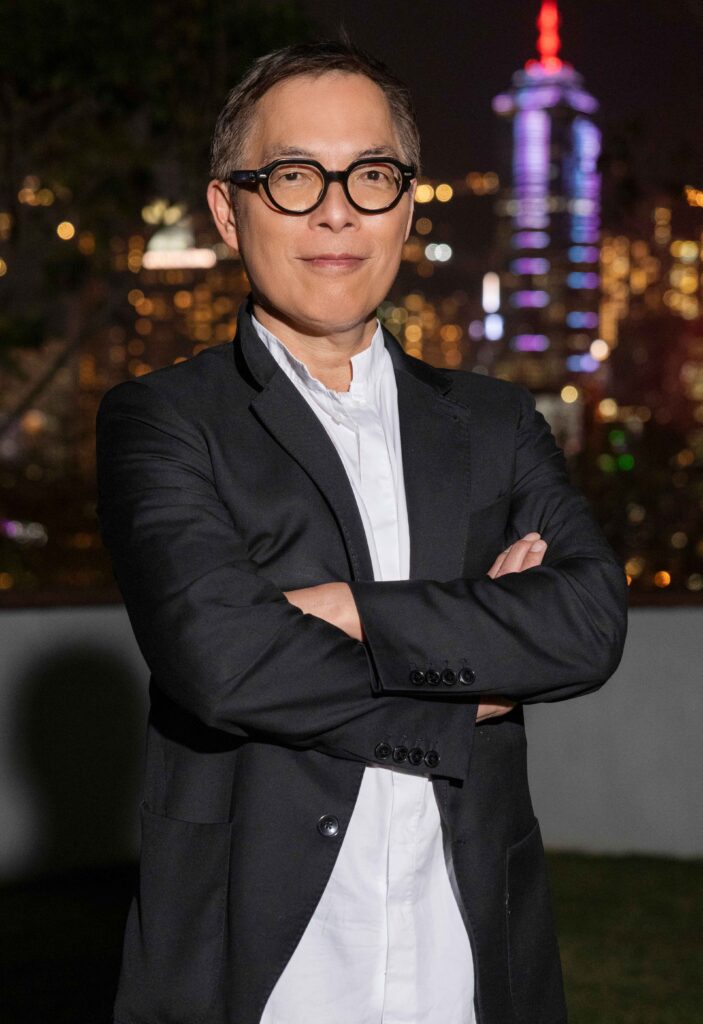
Our audience with Paul Tam, Executive Director of Performing Arts at the West Kowloon Cultural District Authority (WKCDA), takes place a day after this year’s Oscars ceremony. Outside, the breezy, insistently alive March weather makes you believe culture isn’t merely something you attend, but something you inhabit.

We begin with the controversial, viral hot take of that week: best-actor nominee Timothée Chalamet’s implication that “no one cares anymore” about performing arts like ballet and opera. This criticism of efforts “to keep [them] alive” offended many in the industry. We are expecting Tam to hit back, or perhaps diplomatically sit on the fence, but he does neither.

“I mean, did Chalamet lie though?” he asks. “Let’s be real – performing arts, ballet and opera have been here for ages and ages, and yes, it has been challenging for these industries. That’s why people like me have this responsibility of bringing fresh takes and ideas to make it still relevant up to this day and the years to come.”

After a beat, he continues, friendly, precise and almost coach-like: “I take his comment as a challenge more than offensive. It reminds us that when we discuss the future of these art forms, it’s important to frame our ideas thoughtfully and constructively, in a classy and decent way. ”

Classy and decent. It feels like a stage direction, and from there, the interview unfolds like a performance – part Q&A, part manifesto, part invitation to rethink what art institutions owe the future.
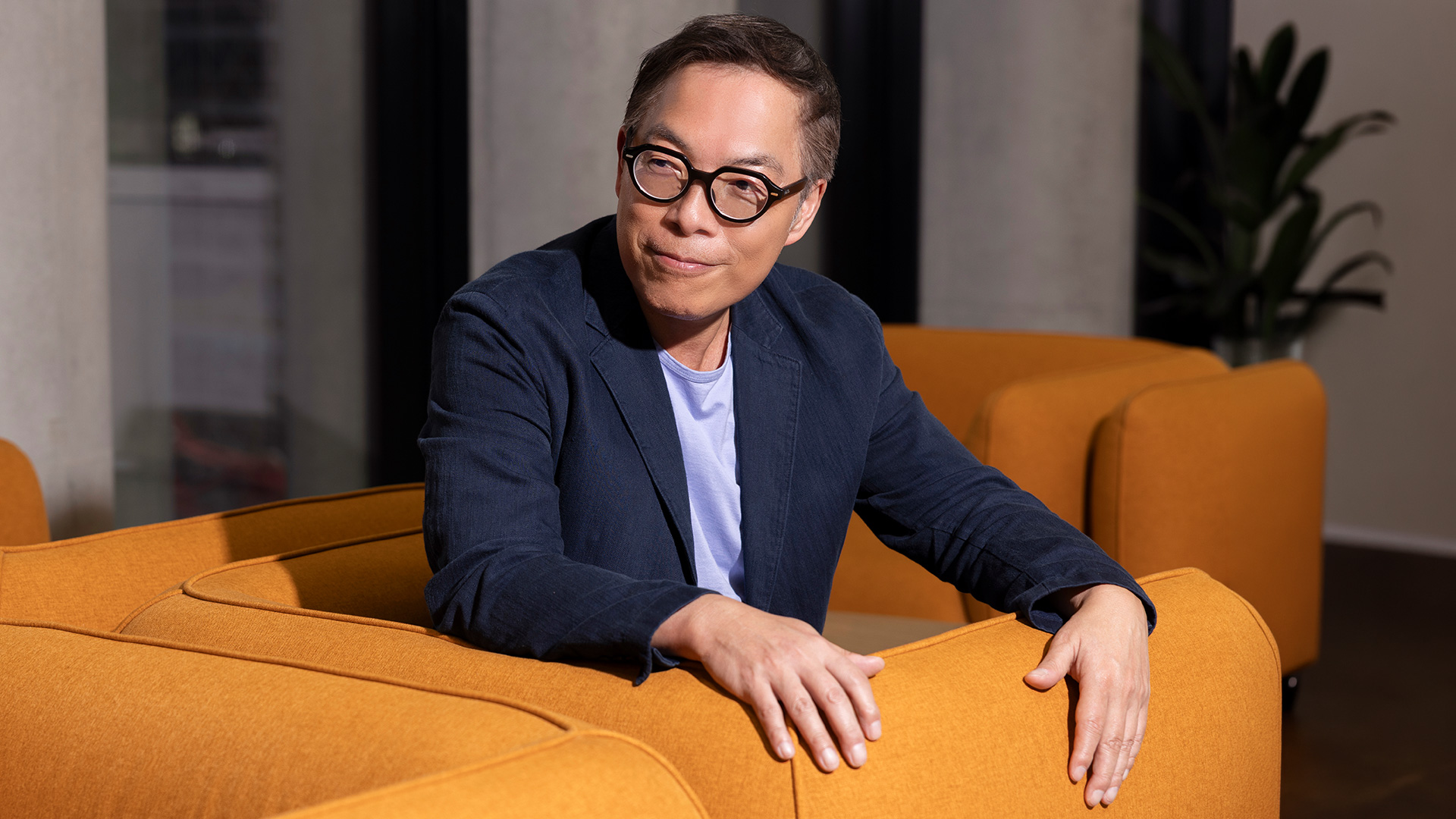
Curtain Up

When you meet arts leaders, you often meet the origin story of their taste. For Tam, it began long before he played a concert-hall piano. “I grew up in a traditional Chinese family,” he shares. “My father was a successful restaurateur, often out and about entertaining with my mother. He bought a piano for my sister, and out of a mix of sibling rivalry and natural curiosity, I started tinkering with it at 14. Within just a few years, I had completed all my grades.”

He majored in piano performance with a minor in composition at Canada’s York University and dreamt of becoming a “jet-setting concert pianist”. “I thought I was pretty good, until my final year, when my piano professor told me, ‘Paul, you’re good as a chamber musician, but you’ll never be good enough to be a concert pianist.’ Those words crushed me, but they also gave me clarity.”

Redirection was required. “I decided to pursue an MBA in Arts Administration. If I couldn’t be on centre stage, I thought at least I could help others get there – one of the best decisions I have ever made.” The phrase ‘help others get there’ echoes like a motif throughout our conversation. More than a career choice for Tam, it became a belief system.
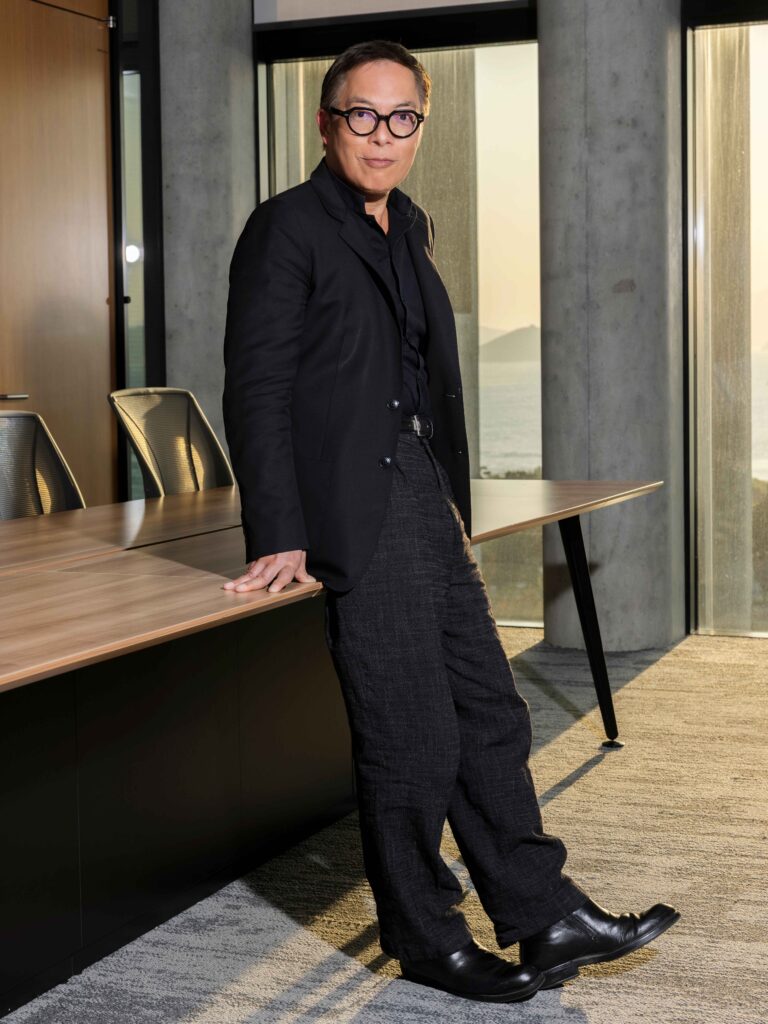
Management Spotlight

Before joining WestK (West Kowloon Cultural District) in 2020, his many arts-management credits included a total of 10 years at the Hong Kong Philharmonic Orchestra, and six years as Executive Director of Hong Kong Ballet. “[In 2014] the company was emerging from a challenging period,” he explains of the latter. “My task was to reimagine this venerable institution with a renewed vision and a refreshed identity.”

From that effort came the slogan ‘Never Standing Still’, a mantra that embraces an intriguing rhythm, like choreography you still remember after leaving the theatre. An artistic inflection point followed: “Then came Septime Webre, the Artistic Director of Hong Kong Ballet, whose arrival in 2017 marked a bright, new chapter. With his bold vision of global expansion and a distinctive balletic style, both approachable and deeply expressive, the company took off quickly, growing from strength to strength ever since.”

By becoming approachable and deeply expressive, the venerable art form breaks free of its museum-ballet constraints, gaining relevance in the modern age.
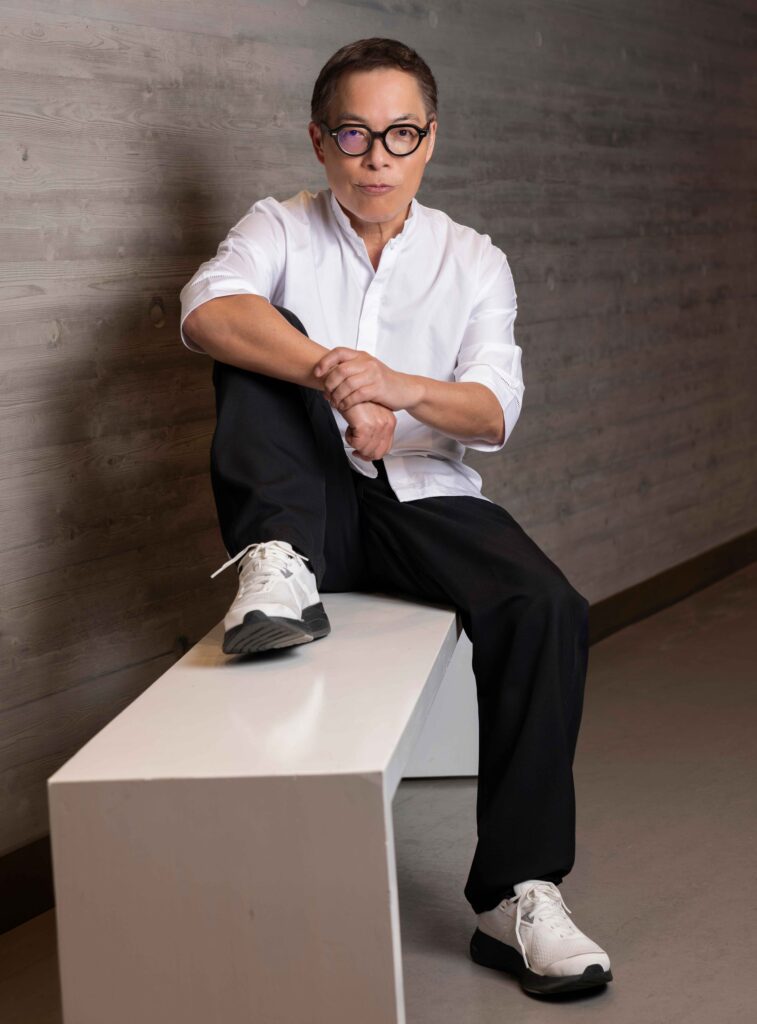
Home and Art

Tam’s philosophy as an arts leader is expressed in warmer tones than the usual institutional vocabulary. Speaking of WestK Performing Arts Centre (WestK PAC), which is slated to open next year, he expounds, “I hope it becomes a true home for the arts; a place where artists can test ideas, refine their craft, create new works, and grow alongside our creative producers, while everyone – patrons or casual visitors, locals or tourists – feels a genuine sense of belonging.”

And then, the practical definition of a ‘true home for the arts’: “From our two museums to the WestK Performing Arts Centre, [these] are not just centres of entertainment, but hubs of inspiration and civic connection, [where] we create and present some of the finest artistic experiences from Hong Kong, the Chinese mainland and beyond.”

He describes the intended outcome in a near cinematic metaphor: “The vision is for a vibrant, year-round programme that attracts local audiences as well as visitors.”

Centre Stage

As WestK expands, Tam’s job becomes less poetic and more technical: as well as year-round programming, there are scales of theatre, transportation adjacency and audience-building pipelines to consider. “We’ll soon have three major venues, and within them, over 10 theatres of varying scales, all forming the backbone of our growing WestK theatre hub,” he says.

“With major transportation networks such as the High-Speed Rail terminal right at the doorstep, you could think of the hub as Hong Kong’s own mini-Broadway, or West End, stretching two kilometres from Xiqu Centre to Freespace, surrounded by restaurants, shops and a lively cultural buzz.” It’s urban design as programming strategy, and culture as a street-level experience, not a distant destination.
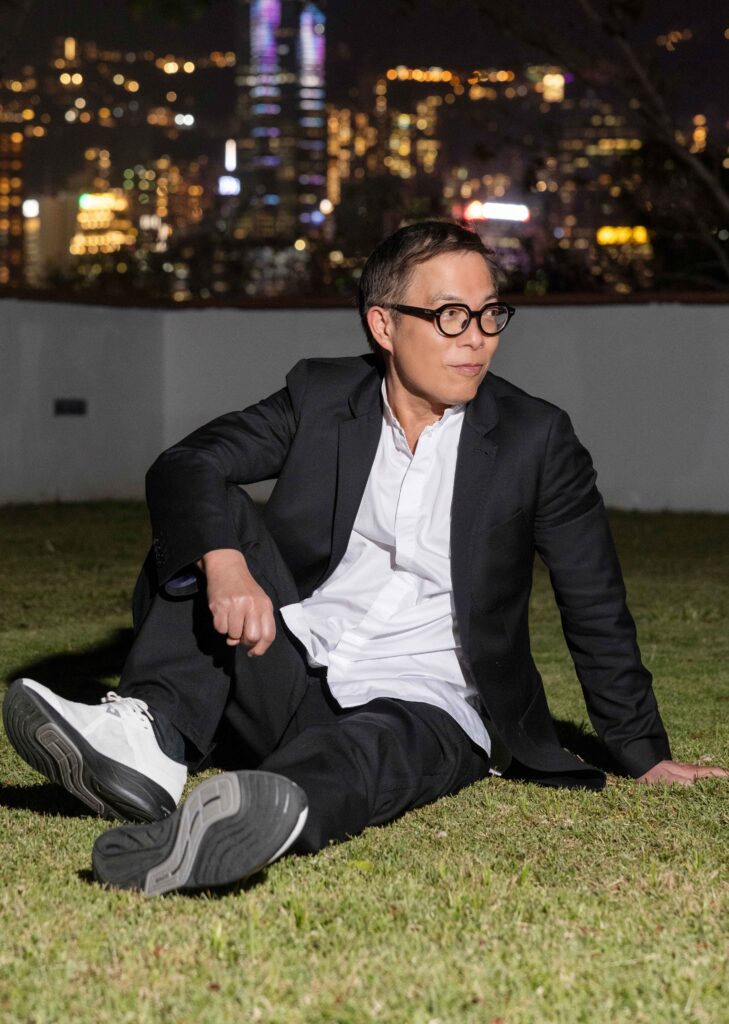
Audience for All

Some critics argue that the arts remain elitist, something for those who already have the cultural capital to feel comfortable in expensive seats. “There is some truth to that,” allows Tam. “Arts can feel exclusive and elitist: a top-tier Met Opera ticket can easily sit beyond a typical salaryman’s budget, and a highly abstract contemporary dance work can intimidate many first-time audiences who worry they ‘won’t get it’.”

His focus is on what institutions can do in response, through programming and accessibility design. “I believe in curating a programme that resonates with all the voices of our community. From The Impossible Trial [a Cantonese musical commissioned by WestK] and Freespace Jazz Fest to Hedwig and the Angry Inch [a Cantonese version of a very famous rock musical by John Cameron Mitchell] and cabaret, we embrace both mainstream and alternative voices.”

He also stresses inclusivity as infrastructure, not PR: “Inclusivity is everything we do, too. We’ve built accessibility into our programmes; for example, our WestK FunFest, the largest performing arts festival targeting family audiences, provides special access tours for visually impaired visitors led by sighted and visually impaired guides, and Hong Kong Sign Language tours conducted by deaf guides and interpreters.” So the question shifts: not ‘Who belongs?’ but ‘How can we design belonging?’
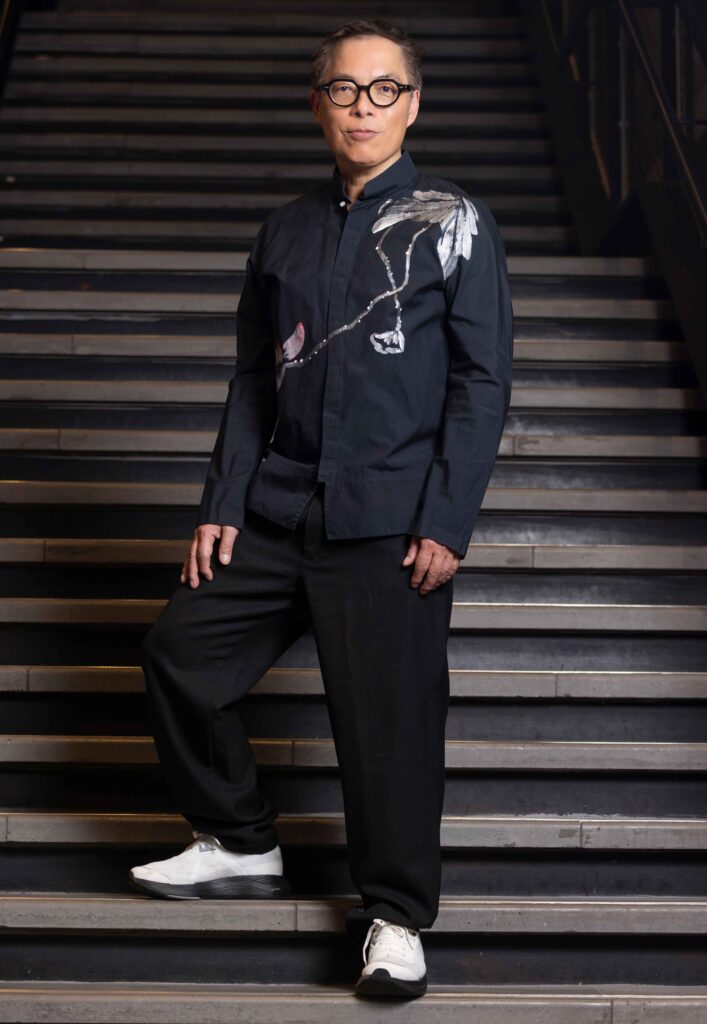
House of Applause

While Tam didn’t realise his concert-pianist dream, he still lives for the applause. “Every applause still touches me deeply and is the main source of my professional happiness,” he says. “I’ll never forget working off-stage at a concert at the Hong Kong Coliseum with Hacken Lee and the Hong Kong Philharmonic years ago. Almost 10,000 people were cheering for a truly memorable performance. I was in tears, tears of joy. That’s the magic that keeps me going every day.”

This is the emotional engine behind his optimism. It’s also a reminder that arts leadership isn’t only planning calendars; it’s planning moments when people feel something together. Asked if this will be his legacy, his answer is both modest and pointed. “Legacy is a big word. But if, in some small way, I’ve helped make Hong Kong’s arts ecology just a little richer, more connected and more alive, then that’s enough.”

It’s clear that Tam moves through his work with class, integrity and passion. He circles back to his earlier caution about the Chalamet controversy: ideas must be presented with dignity, like art staged to respect the audience.

Interview, Text & Art Direction: Joseff Musa   Photographer: Jack Law   Videographer: Iris Ventura

Women’s Might: Fearless author and speaker, Sylvia Yu Friedman dedicates her life to redressing inequality and injustice

Relentless activist, best-selling author, award-winning journalist and documentary filmmaker, inspirational speaker, philanthropist, investment advisor – Sylvia Yu Friedman is running out of hyphens to add to her name, with each title building on the last. Yet none fully capture the woman who has dedicated her life to amplifying the voiceless while embracing her own multifaceted identity. Is it all too much of a mouthful? Maybe, but each one represents a layer of a life dedicated to impact.

As the aromatic scent of a perfectly blended coffee wafts temptingly over our alfresco breakfast setting at The Murray, she announces to the world: “I need my morning booster.” Twenty minutes later, her coffee remains untouched as she passionately discusses her transition from a safe corporate world to a fearless champion of women subjected to sex trafficking. Despite the glitz and glamour that sometimes surround her, it is clear there is more beneath the surface – a deeper purpose that drives her every move.

From Pain to Power

Born in Vancouver to Korean immigrant parents, young Sylvia faced racism “long before it was widely acknowledged”. “Adults and kids called me a ‘chink’, and I was mocked for my food and culture,” she recalls.  “I was mortified and ashamed of my heritage, which led me to disconnect from my roots.” At 12, she vowed to suppress her Korean identity and blend into a predominantly white society.

This early racial prejudice ignited her passion for social justice, but her journey of self-acceptance was a long and winding road. It was decades later, while living in Beijing and travelling to remote Chinese villages, that she rediscovered her roots: “It was a full circle, and I began to embrace my Korean heritage again, especially through the lens of Korean dramas and storytelling.” Her early anguish became her greatest superpower. “The area of your greatest pain is often your greatest strength,” she asserts.

Standing Up for All

Friedman’s relationship with her father was fraught with gender bias. “He treated me like the son he never had,” she explains. “I felt I had to prove my worth through achievement. It was exhausting, and I felt an ongoing identity crisis as a woman.” A breakthrough came when a mentor urged her to forgive her father and embrace her identity. That act of forgiveness kindled her determination to uplift women and fight gender inequality across Asia.

Her advocacy is rooted in her own experiences and her unwavering belief that – quoting US civil-rights activist Maya Angelou – “each woman standing up for herself is standing up for all women”. Her message to women everywhere: forgive, recognise your strengths, celebrate your unique identity, and pursue your purpose without fear.

Champion of the Oppressed / Empowerment Spools

Yu Friedman’s career reads like a daring adventure novel. She’s interviewed traffickers, followed undercover police, and risked her life infiltrating dangerous locales. “I’ve experienced the underbelly of human trafficking – criminals, pimps, victims – and lived to talk about it,” she says with a mix of awe and resolve. Documenting stories of suffering and resilience has taken her across China, Southeast Asia and beyond.

Her investigative journalism on modern slavery in China, Hong Kong and Thailand culminated in a documentary series, which earned her wide recognition and a 2013 International Human Rights Press Award in Hong Kong; her 2015 book, Silenced No More: Voices of Comfort Women, enabled survivors of Japanese military sex slavery to be heard. “Those encounters enlarged my heart and transformed my purpose,” she notes. “Helping the overlooked and the oppressed gives my life profound meaning.”

Each chapter of her 2021 memoir, A Long Road to Justice, detailing her front-line experiences in Asia, is a testament to fortitude and hope. One of her most harrowing moments occurred while filming in China. Surrounded by traffickers and thugs, she managed to delete incriminating footage just in time, her life flashing before her. “It made me realise what trafficked women go through daily,” she reflects. “That moment birthed my life’s mission: to use my influence to fight slavery and exploitation.”

Her resilience was tested during her investigations. During one terrifying night infiltrating a brothel, she recalls deleting footage under threat, feeling faint and experiencing her first miracle: the police arriving just in time. That event profoundly shifted her perspective. “True freedom comes from serving others,” she declares.

Money for Good

Beyond writing books and consulting for an investment company in Seoul, Yu Friedman serves as a strategic advisor to philanthropists and influential families, a role that requires balancing influence with responsibility. “Supporting philanthropists means providing honest feedback and respecting confidentiality,” she explains. “Some families impact me greatly – like the one that bought homes for their staff or the anonymous donors who give quietly but generously.”

She recounts meeting a Hong Kong family of limited means who exemplified genuine generosity. “Their happiness and humility touched me deeply,” she shares. “Discretion and authenticity are the true marks of leadership.”

Righting Gender Wrongs

Her latest non-fiction book, Fearless: A Guide to Freedom and Fulfilling Your Fullest Potential, published in 2024, is a heartfelt guide for young women and changemakers. Her core message: embrace your identity, learn from adversity, and dare to dream big. “I wish I had known these lessons earlier,” she confides. “Your most painful experiences are often your greatest teachers; suffering can build resilience, grit and wisdom.”

An unwavering advocate for women’s empowerment, she highlights the stark realities of gender inequality – pay gaps, underrepresentation and societal biases. “Women still earn less, have fewer leadership opportunities and face discrimination,” she says. “Feminism must evolve to ensure true equality, especially in Asia, where cultural norms often hinder progress.”

Legacy of Love

For this relentless campaigner, happiness is rooted in inner peace, purpose and compassion. “I’ve learned to slow down and prioritise relationships,” reveals Yu Friedman. “Forgiveness and self-love liberated me from the past.” She defines success as cultivating meaningful connections and giving back to the marginalised. “Success is about relationships, impact and leaving a legacy of love and hope,” she notes.

Throughout her work, she relies on her spiritual faith. “My Christian faith sustains me during the darkest moments,” she says. “It reminds me that light can overcome darkness, and love can conquer hate.”

Love plays a central role in her life, both personally and professionally. Her husband, Matt Friedman, an internationally renowned human-trafficking expert, is the founder of The Mekong Club, a Hong Kong-based non-profit organisation that engages the private sector to address modern slavery; she serves as its Ambassador and voluntary fundraiser. She believes that leading with love creates safe, empowering environments. “When we lead with kindness, we unlock potential,” she affirms.

Heroes for Today

Friedman aspires to continue transforming stories into powerful media, envisioning a future where the Korean entertainment industry leads the way globally. Her plans include producing films and TV series that challenge stereotypes and showcase Asian women as heroes and role models. Through such powerful stories, she hopes to inspire the next generation and motivate others to use their talents and influence for good.

Notably, she is quick to appreciate the good and hard work of others. During an outfit change during our shoot, she is fervent in her praise of a helpful member of the hotel staff, asking if she can write a commendation letter to their manager. “That’s my way of saying thank you,” she explains. “Even small acts of kindness matter.”

Sylvia Yu Friedman’s warmth, compassion and gratitude radiate through her entire being – mentally, emotionally and physically. And finally – after an hour or so of conversation – she takes a sip of her morning coffee.

Interview, Text & Art Direction: Joseff Musa   Photographer: Jack Law   Videographer: Iris Ventura   Venue: The Murray – Hong Kong
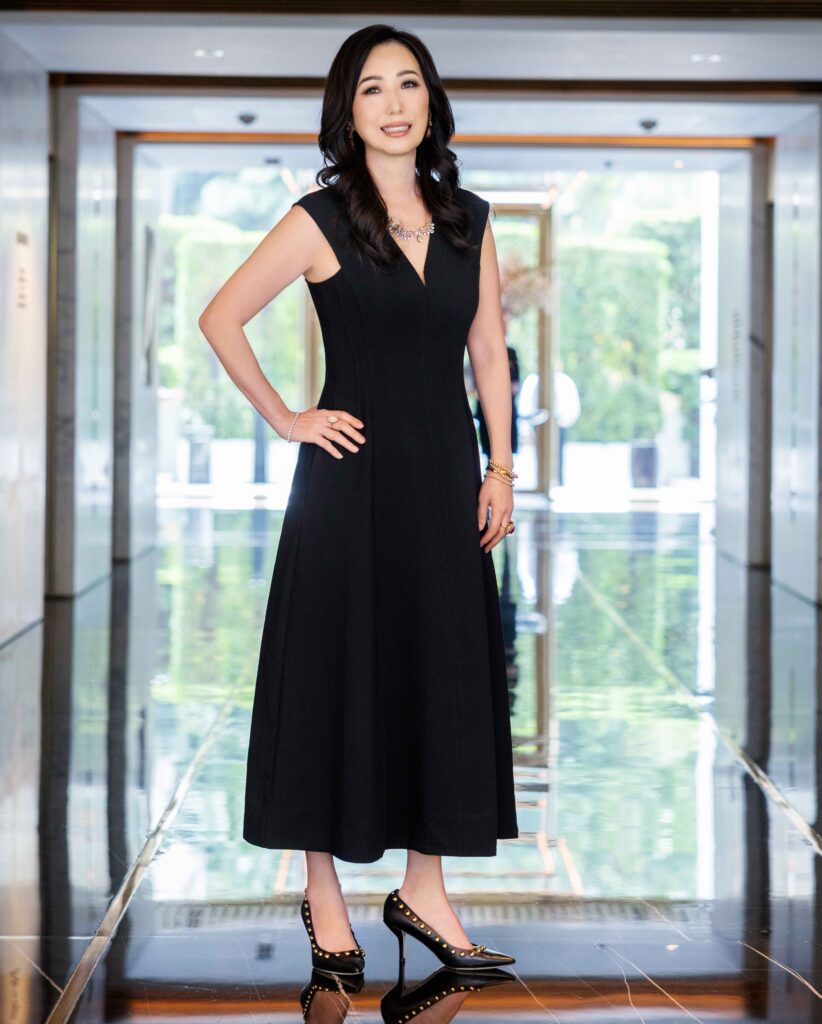
Going Places: GoGoX CEO Steven Lam’s wild ride from frustration to freight fortune

Rewind to 2013 in Hong Kong, and Steven Lam is staring at a stack of takeaway boxes, sweating bullets because booking a van feels like negotiating with a secret society. “We needed vans to deliver our takeaway boxes to restaurants, and the process was a nightmare,” he recalls, flashing his trademark grin. “We’d call a radio-dispatch centre, get a ridiculously high quote, and have no idea if the driver would even show up. It was inefficient and opaque.” Having heard the same story from others, he realised “everyone had a van-hailing horror story. That’s when the lightbulb went on: if we could fix this for ourselves, we could fix it for the entire city.”

This is the origin of GoGoX – formerly GoGoVan – Asia’s answer to Uber but for delivery, boxes and basically anything that needs to move without the drama. Lam, co-founder and self-proclaimed ‘Cheap Everything Officer’ (CEO), has turned that headache into a logistics powerhouse operating in 370 cities – from China and South Korea to Singapore, Vietnam and India. It was Hong Kong’s first unicorn, born from a 2017 merger with Chinese freight giant 58 Suyun, and now boasts 7 million registered drivers.

But Steven Lam’s story is no overnight success. It’s a tale of grit, gaffes and going all in, told with the kind of humour that makes you laugh while learning.

Kowloon Cram

It starts in Kowloon public housing, a concrete jungle where life was more shared spoon than silver spoon. “Growing up in a public-housing estate teaches you two things very quickly: resourcefulness and the importance of community,” says Lam, chuckling like he’s reminiscing about a quirky family reunion. “You learn that nothing is handed to you, and that if you want something, you have to figure out a way to earn it or build it. Space is limited, resources are shared, and you see firsthand how small efficiencies can make a big difference in people’s daily lives.”

It’s the kind of upbringing that turns kids into mini-entrepreneurs. Lam’s business vibe is frugal, folksy and focused on fixing real messes. “Business wasn’t some abstract concept I learned in a classroom; it was about solving real, practical problems for real people,” he adds. “It taught me to be frugal, to be scrappy, and to never underestimate the power of a simple solution to a common frustration.”

High school didn’t end with confetti for young Steven. After bombing Hong Kong’s public exams, he ditched the script and headed to the US for community college. “My results weren’t what I had hoped for, and for a moment, it felt like the traditional path to success was closed to me,” he admits, with the honesty of someone who’s turned lemons into a logistics empire. “But instead of seeing it as a failure, it became a crucial turning point. It forced me to be honest with myself and realise that there had to be more than one way to build a future.”

American Hustle

Stateside, it was all about reinvention. “Nobody there cared about my past exam scores; all that mattered was the effort I put in each day,” he notes. “It was incredibly humbling and empowering at the same time.” He later funded his degree in business administration at the University of California, Berkeley by flipping second-hand iPhones and bikes – pure hustle. “That experience taught me that your starting point doesn’t define your destination. It taught me resilience and proved that with hard work, you can create your own second chances.”

Enter GoGoVan co-founders Reeve Kwan and Nick Tang, his university ride or dies. “Looking back, the most important thing was that I wasn’t facing these financial pressures alone,” he shares. “The key to overcoming them was the friends who were right there with me.”

Reselling iPhones “was our first real business together, our way of earning our first pot of gold,” he laughs. “That experience taught us so much more than just how to make a profit. It taught us how to hustle, how to solve problems on the fly, and most importantly, how to trust each other completely when the stakes were high.” Three guys in a dorm, haggling over gadgets, forged the trust that built GoGoX.

At Berkeley, Lam soaked up big ideas, but real lessons came from slinging food at a San Francisco Chinese restaurant. “They were two sides of the same coin,” he quips. “UC Berkeley gave me the framework – the theories, the economic principles. It taught me what was possible. The Chinese restaurant, on the other hand, taught me raw, unfiltered business. It was about customer service, inventory management, cash flow and teamwork under pressure, all in real-time.” It’s where the GoGoX seed sprouted – delivering food, spotting gaps.

Thinking Beyond Boxes

Back in Hong Kong, Lam launched BoxAd, selling adverts on takeaway meal boxes. “BoxAd was my real-world MBA,” he says. “It taught me essential lessons about sales, rejection, and the hustle required to get that first ‘yes’.” But the gold was in the grit: dealing with van bookings exposed logistics lunacy. “Every day, I was on the street, not just selling ads but also hiring vans to deliver the boxes. I spent hours talking to drivers, hearing directly about their struggles.”

Thus, with HK$20,000 in savings, GoGoVan was born. “Those conversations and relationships were the true foundation of the company, and I’m still in touch with some of the very first driver-partners,” reveals Lam. “My philosophy is that every step in your journey has a purpose. BoxAd wasn’t a setback; it was the catalyst.”

Scaling was epic. “First, convincing the first 100 drivers … [but] once we had that initial critical mass, the network effect started,” he recounts. Funding, merger, IPO – boom. As Cheap Everything Officer, he balances bargains with brilliance. “The title started as an inside joke [reflecting early penny-pinching]. But ‘cheap’ doesn’t mean low quality. It means being relentlessly efficient.” AI routes keep costs low, and quality high.

GoGo Further

“In the beginning, success was survival. Today, my definition [of the concept] is about impact.” Being named a World Economic Forum Young Global Leader last year widened his worldview. “It connects you with leaders. This has influenced my vision for GoGoX to be more than just a logistics company.”

What fuels him? “The world of logistics is still incredibly inefficient. That puzzle continues to fascinate me,” he says. Plus, responsibility to stakeholders. Happiness? “For me, happiness is the feeling you get when you are engaged in solving a meaningful problem with people you trust.”

His plan for GoGoX is to innovate with AI, expand in Southeast Asia, and go green with EVs. “Within the logistics industry, I hope our legacy is that we proved technology could democratise access. In the broader community, I hope my story serves as an example. [Given] the sheer scale of the opportunity [though], we have only scratched the surface.”

And there it loops back: from that van-booking nightmare to reimagining Asia’s moves, Lam turned frustration into fortune, proving that sometimes, the best way to go forward is to fix what’s holding everyone back. In Hong Kong, where deliveries seem endless, he’s the guy who made “go” mean something magical.

Interview, Text & Art Direction: Joseff Musa   Photographer: Jack Law   Videographer: Iris Ventura
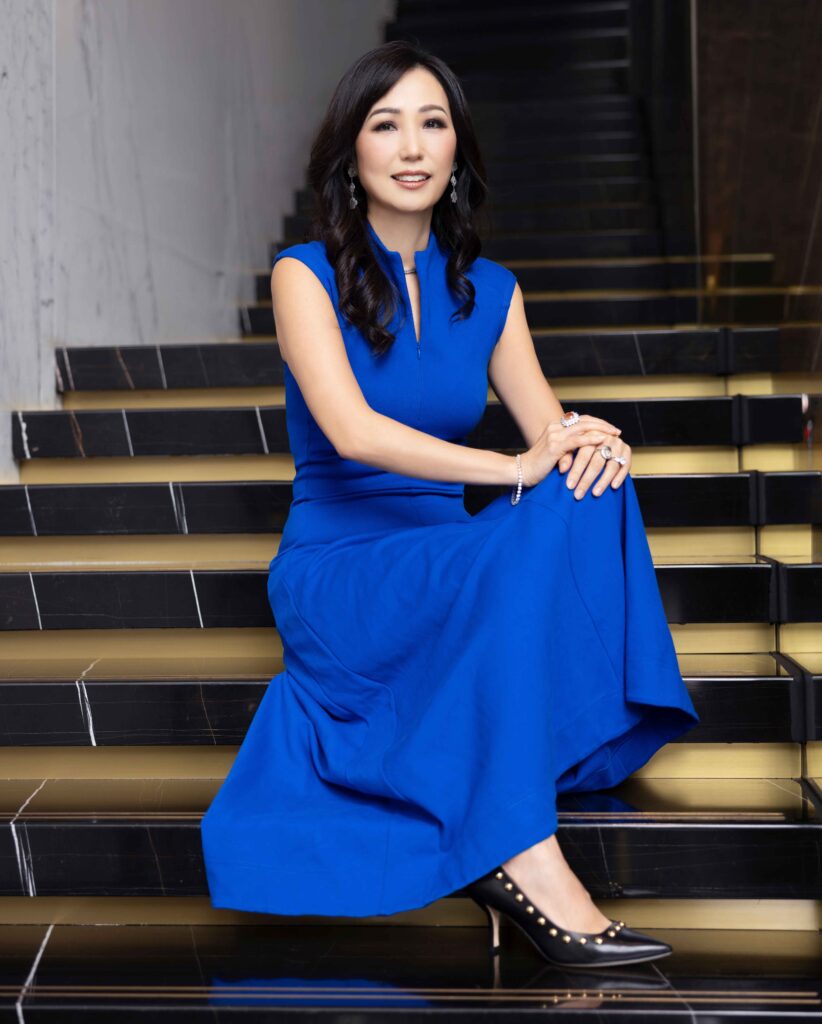
The Artful Alchemist: A journey from childhood sketches to global glamour, Leta Ng’s life is with a touch of jade and a dash of daring

Leta Ng brings her polished poise to balancing beauty, bridging cultures and the Venice Biennale

Leta Ng has just finished her hair and makeup when we step into her suite at the Grand Hyatt. The celebrated Hong Kong-based Singapore-born jewellery designer is adjusting a lighter shade of hosiery that doesn’t quite match her outfit; a detail most wouldn’t notice, but Ng is all about precision. Sunny afternoon light spills through the window, casting a gentle glow on her flawless features. Today, she’s dressed in a fully embroidered, beaded gown that whispers luxury, accessorised with a vintage watch, a striking necklace and earrings that could tell stories of centuries.

Ng is poised, yet her energy radiates a playful confidence. As she adjusts her hair absentmindedly, we realise this is someone who embodies the art of meticulousness, someone for whom every detail matters, and yet, she radiates effortless grace.

Jewels of Inspiration

Growing up, young Leta’s world was filled with glamour and creativity. “My parents always encouraged creativity,” she recalls. “But my greatest inspiration was my uncle, the renowned artist Jimmy Lin Chong.” The Taiwanese actor, who passed away last summer, would design exquisite party and evening dresses for his young nieces, sparking her love for aesthetics. “I loved drawing from a young age,” she shares, eyes twinkling. “Winning a kindergarten prize for a cat drawing felt like the start of everything.”

Her childhood memories are a mosaic of art and glamour, woven through her upbringing. These early influences laid the foundation for her passion. She emphasises how being surrounded by beauty and artistry from an early age made her view the world through a creative lens. It wasn’t just about aesthetics; it was about storytelling, identity and self-expression.

Her nomadic childhood, living in Singapore, Canada, Belgium, Bermuda and beyond, further shaped her perspective. “Each culture I’ve experienced has added unique styles and traditions to my creative toolbox,” she explains. “My work naturally becomes a bridge; mixing, translating and creating something new that feels both fresh and deeply familiar.”

From Finance to Finery

Ng’s journey was anything but linear, though. She chose to study finance and investment, a training that now informs her design process. “I blend artistic vision with analytical discipline,” she explains. “It’s about balancing beauty with structure, ensuring each piece is both stunning and enduring.”

 “Life’s journey is full of joyful surprises,” she admits. “Trading financial spreadsheets for gemstones was a twist of fate. But it made sense, as precision is everything. In finance, a decimal point changes everything; in gemmology, a fraction of a millimetre transforms how light dances within a stone.”

Her lifelong passion for gemstones was reignited when her husband, Paul Lau, then Legal Director, Europe of GE Capital, was posted to Belgium. Antwerp’s legacy as the diamond-cutting capital of the world drew her into a new realm, one of sparkle, precision and age-old craft. She pursued formal studies at GIA and the HK Institute of Gemmology, deepening her understanding of the stones she now crafts into art.

Crafting Conversations

Ng’s jewellery is renowned for its boldness and innovation. Unapologetically expressive and fiercely authentic, it is meant to empower the wearer. “Every piece tells a story,” she affirms. “My collections are built on a simple truth: you are one of a kind.”

Her early ‘Big, Bold and Beautiful’ collection in 2012-13 epitomised this philosophy. “It was about confidence in oneself,” she affirms. “A modern classic rooted in heritage and earth.” Jadeite carved into statement pieces, set with diamonds and semi-precious stones, became her signature. The choice of jadeite is no accident. “Beyond its beauty, jadeite carries centuries of belief in luck, healing and protection,” she notes.

The ‘Blossoms of Joy’ collection was inspired by the delicate fleeting beauty of natural blooms. “Joy in the natural world,” she states. “A poetic whisper of fleeting beauty.” Her ‘Love is Ultimate’ collection, crafted in trinity gold – white, yellow and rose – symbolises faith, hope and love. “Love is the greatest gift,” she emphasises. “From confidence to intimacy, these collections deepen and expand the celebration of beauty, connecting the physical, emotional and spiritual.”

Weaving Heritage into Modernity

Travel is a vital part of Ng’s creative process. “Travel sparks my creativity,” she says. “Immersing myself in local art and traditions gives me a rich palette of techniques, symbols and aesthetics.” She reinterprets ancient motifs, be they from the emerald kingdoms of Colombia, the exotic orient of Istanbul, or the Byzantine isles of Greece, blending them into contemporary designs that honour heritage while embracing innovation.

To Ng, jewellery is both art and investment. “The artistic value lies in the uniqueness of the design, the heritage behind each piece, and the craftsmanship,” she explains. “As an investment, the quality of gemstones and metals matters most.” She favours the exclusivity of one-of-a-kind pieces, which “makes them precious, both in value and sentiment”.

Her approach is rooted in passion. “My artistic voice always leads,” she affirms. “Commercial sense informs but never dictates. I create for the love of beauty and craft, trusting that passion will find its audience.” For newcomers to jewellery design, she advocates gaining formal gemmological knowledge, studying auction trends and consulting experts.

Art, Culture and Community

Ng’s role as Vice-Chair of the Friends of the Hong Kong Museum of Art underscores her belief in art’s power to foster community. “A gemstone is a canvas, and design is the artistry,” she reflects. “A finished piece is a story of culture, worn close to the heart.” She sees jewellery and art as vessels of collective memory, tangible links to heritage, identity and shared values.

Exemplifying her dedication to elevating Hong Kong’s cultural presence, she is involved in the Hong Kong exhibition for May’s Venice Biennale, which the Hong Kong Museum of Art is co-organising. “Supporting this milestone is about showcasing Hong Kong’s artistic journey,” she shares. “It’s exciting to be part of a global dialogue that celebrates our city’s creative spirit.”

Looking ahead, she is eager to explore new collections and collaborations. “I want to push boundaries and celebrate individuality,” she states. Her personal definitions of happiness and success have evolved. “Fulfilment and purpose are key,” she says softly. “Having navigated different chapters, I now find joy in giving back to the community that gave me so much. Hong Kong has been my home for over 18 years, [thus] I choose to invest my time and energy back into this vibrant city.”

Ng’s membership in La Confrérie de la Chaîne des Rôtisseurs underscores her appreciation for culinary culture. “It’s about fellowship, excellence and service,” she explains. Her father-in-law, Dato Lau Foo Sun, was the founder Bailli Délégué (president) of the association’s Malaysian chapter, and she upholds the Lau family heritage of conviviality and shared passion.

Parting Reflections

Before leaving, we share a leisurely high tea, discussing pastries, motherhood and life’s puzzles. “Motherhood, it keeps puzzling me,” admits the mum of 1, Katarina, smiling. “It’s a very complex job, but a very rewarding one, definitely.”

Humour is her secret weapon; during the shoot, she tries goofy poses, laughs at herself, and admits she’s not a fan of public speaking. “I apologise, really,” she deadpans. “I will never get used to talking in front of a camera.”

Her eyes, her expressions, her laughter – these are her true bling, revealing a soul that is as rich and layered as her jewellery designs. Leta Ng is a luminous example of how art, humanity and authenticity can intertwine. And as she would say, with a wink and a smile, “Keep shining, and never forget to enjoy the bling.”

Interview, Text & Art Direction: Joseff Musa   Photographer: Jack Law   Videographer: Iris Ventura
Creative Thinking: Educator and entrepreneur, Joanna Hotung shapes the next generation with an inquiring mind and eye

You know you’ve arrived at Joanna Hotung’s studio-meets-testing-ground slash office when you see paintings and digital artworks plastered across the muted walls of a quiet corner in Wong Chuk Hang. “These are made by my [younger] daughter [Sophia], who is an artist,” she says with a warm smile. Inside, a large room bursts with shape and colour, every surface crammed with books and journals – a testament to the insatiable curiosity and diverse interests of the educator-cum-entrepreneur slash advocate for young people, healthcare and the arts.

Despite Hotung’s fastidious approach to art, which she admits is wholly intuitive, the space radiates creative freedom. “It’s very chaotic and very colourful. You guys might have a hard time finding a spot [to set up for the shoot],” she laughs.

Surveying her domain, her eyes twinkle with pride. “Two months from now, I’ll be celebrating my 60th birthday, and I’m looking forward to becoming a grandma next year,” she shares, her voice tinged with excitement. “It’s milestone after milestone, and I’m super proud of these.”

Hotung’s warmth and zest for life are palpable, blending seamlessly with her many accomplishments and her ongoing journey of growth. “I’m not a fashionista,” she insists as we begin shooting, but her wardrobe of carefully curated pieces from international and local designers suggests otherwise. Each outfit is a statement of her multifaceted identity. Her style subtly echoes her broader approach to life: bold, eclectic and unapologetically authentic.

Artistic Roots

“I remember as a child I always wanted to be a teacher,” she recalls. “I would organise my friends into groups, and we would do arts and crafts or try to sew or knit together, following patterns from a manual my grandma sent me from England.” Her early creativity was complemented by a love for visual and performing arts, nurtured by her parents, who took her to exhibitions and performances. She also participated eagerly in speech and music festivals, learning the piano, clarinet and ballet along the way.

Her family played a pivotal role in shaping her values and approach to leadership and social impact. “I was brought up very much with a can-do attitude and to be self-sufficient,” she says. “Going to boarding school in England at age 10, I learned that it’s okay to come first, last, or somewhere in between, as long as I tried my best.” Her father told her ‘whatever you try your hand at, you’ll be grateful for the experience later, and it will turn out to be useful in some way’. This wisdom has stayed with her, guiding her through successes and setbacks alike.

Her worldview was enriched by attending international schools in Hong Kong, Geneva, London and Beijing. “The diversity of those experiences shaped my outlook,” she notes. Being Eurasian, she felt like she could fit in anywhere, though she admits there were moments of culture shock, especially in Beijing during the 1980s. “That year was one of the most impactful of my life,” she reflects.

Vivid Vision

Hotung’s foray into entrepreneurship was born out of her desire to fill a gap she observed firsthand. “My two daughters were studying in a local kindergarten, mainly to learn Cantonese,” she recounts. “I appreciated the skills, respect and discipline they learned, but when my four-year-old was told by a teacher she couldn’t paint an elephant orange because elephants can only be grey, I saw a huge gap in creative learning.” That incident sparked her decision to start her own art school, Kids’ Gallery, focused on developing creativity and inquiry-based learning.

“I was lucky in 1996 to be early to market,” she says proudly of KG Group, which expanded from arts and crafts to drama and dance, English-language centres and a production company, all dedicated to fostering confidence, curiosity and communication. “It was about nurturing a love for arts and empowering children to be curious,” she explains.

This holistic approach laid the foundation for her lifelong commitment to education and social impact. In 2013, she established the Mills International Preschool in Yau Tong, and sits on the boards of Youth Diabetes Action, the Hong Kong Arts Festival Society and Gleneagles Hospital, among others.

Cultural Fusion

Prior to dedicating herself to education and social causes, young Joanna had stepped onto the corporate ladder. “I started out in the Marks & Spencer graduate training programme in London, then I moved into management consulting at PwC.” But with her children’s arrival, she sought more control over her time and choices. “It’s never easy juggling both,” she admits. “I was lucky to run an education business that my children could participate in after school; they took every course on offer!”

Her multicultural background deeply influences her approach to education and mentorship. “I believe I can understand and curate the best of both worlds,” she says. “I’m a big believer in the discipline and hard-work mentality of Asian culture, and I also admire the confidence and individuality of Western culture.” Her goal is to provide opportunities that allow young people to balance these qualities, creating well-rounded individuals prepared to navigate a complex world.

She notes that young people are remarkably resilient. “Sometimes, we overprotect our children,” she says. “But facing challenges and discomfort helps them develop resilience and critical skills.”

Empowering Expression

Hotung has been a passionate advocate for the vital role played by the arts for almost 30 years. Although she has sold the KG Group, her commitment continues today. “In a world of constant change and AI, the arts and creativity are more important than ever,” she asserts. “They help develop critical thinking, empathy and problem-solving skills. Engaging with the arts encourages confidence and self-expression, empowering children to find their unique voices.” She emphasises that arts are not just entertainment, they are essential tools for shaping resilient, innovative and compassionate future leaders.

Her future plans involve expanding her educational initiatives through the Hotung Mills Education Foundation. “It supports arts, healthcare and education,” she explains. Her vision for mentoring the next generation centres on fostering adaptability, creativity and ethical decision-making amid technological revolutions. “I want to empower young leaders to embrace innovation while staying true to their values,” she says.

For her, happiness is rooted in her family and purposeful work. “Seeing the growth of those I work with gives me joy,” she shares. Her definition of success has evolved from achievements and recognition to making a lasting impact and maintaining balance. “It’s about impact, learning and wellbeing,” she emphasises.

Her work with initiatives like Youth Diabetes Action has brought countless rewarding moments. “Seeing young people gain confidence in managing their condition and watching families find a supportive community is incredibly fulfilling,” she says. “We’ve sponsored life-saving tech and helped shape brighter, healthier futures.”

Future Force

Her legacy, she hopes, will inspire a culture of lifelong learning, empathy and innovation, particularly empowering women to challenge the status quo. She dreams of a future where young people are brave and creative, ambitious yet grounded, and ready to shape a more inclusive society.

“I want them to be hardworking, courageous, adaptable and compassionate,” she says. “They have the potential to build a better, more equitable society.” She implores the older generation to listen more to young leaders and give them space to share their ideas, blending lessons from the past with visions for the future.

Indeed, Hotung’s output is about more than aesthetics. Beneath the quirkiness lies a purposeful knack for making a difference. The choice of ’90s-boyband tunes during our shoot, her display of Chinese ceramics, and her Scandinavian and European furniture reveal her deep love for her Eastern and Western backgrounds. She fully embraces both, weaving them into her life and work: vivid, ever-evolving, deliberate and meaningful. True impact comes not just from the boldest strokes but from the thoughtful blending of diverse influences, creating a masterpiece that inspires and uplifts generations to come.