
Despite claims of ‘whitewashing’, Matt Damon remains one of Hollywood’s most bankable stars

Flickr_eff

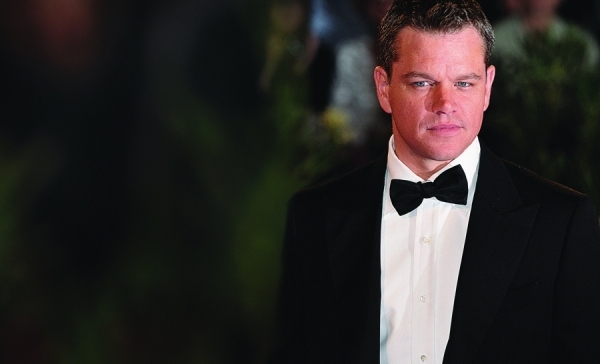
Matt Damon – Hollywood’s Mister Nice Guy – is not happy. Famously, it takes a lot to rile the hero of the Jason Bourne movies, a man known for his relaxed attitude and sunny demeanour. Criticism over his latest would-be global blockbuster – director Zhang Yimou’s action adventure epic The Great Wall – has clearly ruffled his feathers.

The criticism is not, however, over the quality of his performance. Instead, the debate centres on whether he should have been included in the cast in the first place. The other stars of the movie, which sees a band of heroes fight to protect medieval China from an army of mythical monsters, are mostly of Chinese origin, including such worthies as Lu Han, Jing Tian, Hong Kong’s Andy Lau and Taiwanese-born Eddy Peng.

In certain quarters, Damon’s presence among them has been blasted as “whitewashing” – the practice of casting white actors in Asian roles. In the past, such transgressions have included Yul Brynner playing the Thai ruler Mongkut in The King And I, Mickey Rooney as a Japanese landlord in Breakfast At Tiffany’s and John Wayne’s take on Genghis Khan.

Among those commenting adversely on this latest example is Chinese-American actress Constance Wu. Inevitably taking to social media, she said: “We have to stop perpetuating the racist myth that only a white man can save the world. Our heroes don’t all look like Matt Damon.”

Damon claims the cast was “wounded” by the accusation and says that the charge is inaccurate. Although the film is set in China, he claims he was playing a character who clearly wasn’t supposed to be Chinese. He also points out that the film is a fantasy story, saying: “Look, if people see this movie and feel like there’s whitewashing involved in a creature feature that we made up, I will listen to that with my whole heart. I will think about that and I will try to learn from that.

Jason Bourne 2016 Real Paul Greengrass Matt Damon. Collection Christophel © Universal Pictures

“I will be surprised, though, if people see this movie and actually have that reaction. In fact, I will be genuinely shocked. As a progressive person, it’s a perspective I really do agree with. I try to listen and try to be sensitive. Ultimately, though, I feel you are undermining your own credibility when you attack something without seeing it.”

Damon’s rather bruised response to the row may reflect his lack of experience in dealing with controversy. Unlike many movie stars, he has demonstrated an enviable ability to steer clear of trouble throughout what has been a long and distinguished career.

It’s been some 20 years since he and Ben Affleck, his lifelong best friend and high school companion, burst on to the Hollywood scene in Good Will Hunting, an Oscar-winning classic. The two young actors not only played the main characters in this tale of a young maths prodigy, but they also wrote the screenplay.

Since then, he’s appeared in some 60 movies, including such critically acclaimed outings as Saving Private Ryan, Invictus and, more recently, The Martian. Indeed, the last two saw his performance nominated for an Academy Award.
Despite his more serious works, though, he is still probably best known for his portrayal of troubled tough guy Jason Bourne in a series of action films. In all, he’s starred in four – The Bourne Identity, The Bourne Supremacy, The Bourne Ultimatum and Jason Bourne, last year’s reprise of the franchise.

Bourne is a more complex figure than those typically found in action movies. When we first meet him, he’s a former CIA assassin suffering from amnesia, who is trying to trace his real identity while evading his erstwhile employers, who are now only too keen to eliminate him.

The Martian Year : 2015 USA Director : Ridley Scott Matt Damon. It is forbidden to reproduce the photograph out of context of the promotion of the film. It must be credited to the Film Company and/or the photographer assigned by or authorized by/allowed on the set by the Film Company. Restricted to Editorial Use. Photo12 does not grant publicity rights of the persons represented.

While the franchise has inevitably been compared to James Bond, Damon regards that as misleading. He says: “Bourne is much more relatable. Think about it. Bond is from the 60s, so he has the values of that time. He’s a misogynist and an imperialist. He swills martinis, kills people and cracks jokes about it.

“It’s so anachronistic that a whole comedy franchise – Austin Powers – grew up around the concept. At its heart, it asked if we wake up as a guy with those values, how ridiculous would we look in our world?

“Jason Bourne, though, is thoroughly modern. He’s an anti-establishment figure who doesn’t trust institutions. He’s a serial monogamist who’s only really loved one woman. Once she’s gone, he does nothing but think about her. And he always feels guilty for everything he’s done.”

The Bourne films, a hit with critics and audiences alike, turned Damon into a megastar. Indeed one publication calculated that, in terms of money earned at the box office, he is Hollywood’s most bankable performer.

These days, he is only too aware of just how indebted he is to Bourne, saying: “It’s incalculable how much these movies have helped my career. Suddenly it put me on a shortlist of people who could get movies made. Now, directors call me and that’s the best part of it.

“This has meant that I have been able to do films that had wonderful scripts but, on the face of it, were not going to be box office successes. I had the luxury of jumping into them because I knew I would later have another chance to play Bourne.”
Last year, nearly a decade after publicly declaring that he was finished with the role – memorably saying, after the release of The Bourne Ultimatum, “We have ridden that horse as far as we can” – he returned as an older, but no less troubled Bourne. While his memory was now restored, his relationship with the CIA was as fraught as ever.

Bourne Ultimatum, The (2007) Pers: Matt Damon Dir: Paul Greengrass Ref: BOU026AA Photo Credit: [ Universal / The Kobal Collection / Boland, Jasin ] Editorial use only related to cinema, television and personalities. Not for cover use, advertising or fictional works without specific prior agreement

This time around, preparing for the part was trickier. Recalling the rigour required, he says: “I trained a lot more than I ever had done before, largely because [director] Paul Greengrass really wanted me to be physically fit and lean.

“He said when we see Bourne in the first frame of the movie, if we look at his face and he seems like he’s lived well over the past 10 years, then we don’t have a movie. He told me I had to look like I’d suffered. And the only way to do that was to suffer.”

So suffer he did, enduring two high-intensity gym sessions every day for 10 weeks prior to filming. He also stuck to a strict diet of vegetables and protein for months on end.

He doesn’t appear to regret it, though, saying: “It was great to just slip into that old skin and be on set again. Doing another Bourne movie was exciting.”

This time, though, is it really the end? Typically cautious, he says: “The worst time to ask that question is right after we’ve just made one. My guess is it will be a while before we’ll even get around to talking about doing another one. They might have to reboot me before I bow out.”

Not that he doesn’t have enough to keep him occupied in the meantime. The Great Wall is just one of the projects he’s been involved with over the last 12 months. Downsizing, a quirky science fiction comedy, comes out later this year, as does Suburbicon, a dark crime drama courtesy of the Coen brothers. A little further down the line, filming has just begun on Ocean’s Eight, a movie that will see Damon reprise his role from the Ocean’s 11, 12 and 13 bank heist trilogy.

He’s also followed Ben Affleck into the director’s chair and has produced his first feature film – Manchester By The Sea. A New England based drama, it was released to widespread critical approval last year.

Great Wall movie poster

Explaining his recent whirlwind of activity, Damon says: “I got greedy. I hadn’t worked for a year and a half, and then I had the opportunity to work with Ridley Scott [director of The Martian], Zhang Yimou, Paul Greengrass and [Downsizing director] Alexander Payne. I just couldn’t say no.”

Given the whitewashing controversy, whether or not he should have said yes to appearing in The Great Wall remains something of a moot point. The criticism he’s received, however, seems to stem mostly from his homeland and not from China, where audiences largely seem bemused by the row.

And, rather than baulking at Damon’s involvement, Zhang suggests the film’s critics should take pride in just what the movie has achieved. He says: “For the first time, a film deeply rooted in Chinese culture, with one of the largest Chinese casts ever assembled, is being made for a world audience. I believe that is a trend that should be embraced by our industry.”

Fine sentiments indeed. It can be nothing but good news that China’s cinematic talents are being displayed on an international stage. If Damon’s presence in The Great Wall actually encourages American audiences to appreciate them, there will surely be very few left complaining.

Andy Wong discusses fur and fashion

_MG_6166Andy Wong is a director of both Mandarin Fur and the Hong Kong Fur Federation.

Your childhood was split between Hong Kong and Toronto. How was growing up in Canada different to growing up here?

First of all, the weather is completely different. One is freezing and the other is humid. I was raised in Toronto from when I was seven years old. My whole family emigrated in the run-up to 1997, along with many other Hong Kongers.

As my father still worked in Hong Kong, though, he travelled back and forth quite frequently. In my case, I didn’t come back to Hong Kong permanently until I was 22 and had graduated from university.

Initially, it wasn’t easy to adjust to life in Canada, especially with regards to the language differences and the need to learn English. It took me about a year to adapt to Toronto’s culture. As I was the youngest, it was easier for me. My older brother and sister found it more of a struggle.

Click here to watch footage of the interview

How would you describe your university experience?

I was a student for one year at the University of Toronto. I was studying economics, but then I realised I didn’t really like it. I found it boring and it really wasn’t me. Fashion, though, was something I’d liked since I was a teenager. When I was about 13, I started following designers, reading fashion magazines, going shopping and doing a lot of fashion research. So, after one year of university, without telling my family, I transferred to another school – the International Academy of Design and Technology. There they taught vocational programmes in areas such as interior design, fashion design and computer graphics. I graduated from there in 2002.

It was quite a fun time. I made a lot of new friends at college, especially in the fashion design department. I came to realise you could wear whatever you wanted to. I used to wear skirts and dresses to school and had my hair in dreadlocks. I can’t even begin to describe how I looked back then. After turning 30, my look became a little more mature. As you age,your fashion tastes change in line with your advancing years. It wouldn’t be so easy to wear a skirt now.

After I graduated, I moved back to Hong Kong, believing I would have better chances of work here. My family had already returned, which was another incentive.

_MG_6109_path

How did your family get started in the fur trade and what made you join the family business, Mandarin Fur Limited?

My grandfather worked in Nanjing, one of the centres of the mainland fur industry. Way, way back the emperor of China was said to have commissioned workers from Nanjing to make fur items for the royal family, believing them to be the most skilled in his kingdom.

Sadly, my grandfather passed away when my dad was just 14. He then travelled to Hong Kong on his own and found work under a master who taught him the secrets of the fur trade. After that, he got married and, in the 1970s, he started his own business – Mandarin Fur.

Once I had graduated, he asked if I wanted to work for the company, recognising that I was already working in the fashion sector. Although, initially, I feared it might be a little dull, in the first two years of working for my father I had to travel all over the world for work. It was then that I realised what a fascinating role it was.

I wasn’t expected just to look at the business angle. I also had to consider the factory requirements, current fashions, available fur materials and the role played by auctions. All fur is bought through auctions.

There are a lot of misconceptions about the industry. Some think that the animals are skinned alive, but I can tell you that’s not true. Some 97 percent of all fur is sourced from farm-raised animals. They die painlessly and their fur is then sent to auction. Once we have successfully bid for particular fur pieces, we send them to a semi-dressing factory, where they treat the skins and make them softer. They are then sent to another factory for the processing to be completed.

_MG_6079“My favourite designer would have to be Hedi Slimane, Yves Saint Laurent’s former creative director”

As you travel extensively for work, do you still enjoy leisure travel?

Before I went to college, I visited Japan with my father on a couple of occasions in order to meet customers, which was a great experience. After I joined the business full-time, travel became something of a burden. Now I don’t fly if I can possibly avoid it.
I work alongside my brother, so he tends to do the travelling while I stay in Hong Kong and take care of business here. In the first two years, though, I couldn’t even speculate as to just how many miles I covered.

The most painful experience – and hence the most memorable – was when I went to Milan for a trade fair for a week. As soon as I arrived back in Hong Kong, my father told me I had to go to Denmark for another event. That was really draining and I have been reluctant to fly ever since.

While I used to like travelling, as I get older I tend to like relaxing and spending time with family and friends far more. I still love Japan, so that’s maybe my number one choice if I have to travel. I used to like going to Western Europe, too, but I came to realise that Eastern Europe is fascinating when it comes to sightseeing. There are still a lot of Eastern European countries that I haven’t had a chance to visit.

_MG_5908N_path

You are also involved with the Hong Kong Fur Federation. What does that entail?

I am actually one of its directors. It involves quite a lot of meetings, most of them related to fur fairs. The next one is taking place in February – the Hong Kong International Fur and Fashion Fair – which is the largest event we organise. Aside from that, we’re also responsible for the general promotion of fur in Hong Kong.

When people think of fur, they tend to think of Italy or Europe as being the focal point of the industry. Hong Kong, though, is actually number one in the world when it comes to fur exports. Our international fur fair is a four-day event and, on the first day, we always hold the Hong Kong Fur Gala. This is a huge event with about 140 tables. It’s the biggest event of its kind in the world, never mind just in Asia. It’s far bigger than anything Milan can offer.

During those four days, it’s basically an open exhibition, allowing overseas clients and buyers to shop for furs. More than 100 companies and buyers from around the world take part, visiting each booth and selecting pieces that they like. It’s a hugely important event.

_MG_6260

Is it a seasonal business? Do Hong Kong’s hot summer months see a downturn in sales?

Actually, our primary market is not in Hong Kong at all. So, in terms of sales, the weather here doesn’t affect us. Overall, some 95 percent of sales do not come from Hong Kong, but from our export markets instead.

In Hong Kong, we tend to mostly sell to friends or to someone who is looking for a particular luxury item. As Hong Kong is quite warm, people wear fur mainly to parties or high-profile events. They don’t wear it on the street. Looking beyond Hong Kong, though, the market is immense. People still wear a lot of fur in Russia, for example, where they really need it. It’s freezing there and the same applies to northern China. In fact, most of our buyers are in Korea, Russia or America.

_MG_5753

As a self-confessed fashion fan, which designers do you most admire?

My favourite would have to be Hedi Slimane, Yves Saint Laurent’s former creative director. He left the brand in March last year and now I’m looking forward to seeing where he ends up. He’s definitely my number one, the closest I get to having a fashion idol. My second choice would be Raf Simons, the chief creative officer of Calvin Klein. He’s simply amazing. Essentially, he incorporates architecture into his design. He doesn’t follow trends, so his collections are always one-of-a-kind. The last one would be Thom Browne, the founder of the Thom Browne menswear line. He’s always my first choice for suits.

When you are not working, how do you unwind?

In addition to spending as much time with my family as I can, for the past 10 months I’ve been a regular visitor to Zerve Bar in Causeway Bay. I come a few times a week and always play beer pong. It’s got to the point where I don’t even have to come with my friends because they’ll already be here when I show up. Back in September, some friends asked me to join their beer pong tournament. At the time, I declined, thinking I was too new to the game. The next one is going to be held in June and then I will be taking part. It will be my first ever beer pong competition. I regret never having tried it in college. It really is hugely enjoyable.

Thank you.

Sharie Ross-Tse on her infusive love of life

A-105S_eff
“I hope I have equipped my children to enjoy art – in all its forms – as informed onlookers”

Sharie Ross-Tse is the co-founder of Reviv Hong Kong.

What was it like growing up in Hong Kong? Was it a good place to be a child back then?

I was what I would call a product of the British Empire, but I had a great childhood. I was at Glenealy Junior School until P6M, followed by the Island School for a year. Despite the colonial overtones, it was a great time to be a kid.
I’m a Hong Kong girl through and through and my husband’s just as enamoured with the city as me. To our very cores, we’re steeped in the place. It’s just been such a big part of our life experience.

Our children were also born here and they’ve grown up understanding their Chinese heritage, while also appreciating just what an amazing place Hong Kong is in so many ways – efficiency, culture, food … They’re both at school in the UK now. That’s the same route that my husband and I took. We were very keen on them having the same experience.

Click here to watch more of the interview

At university, you majored in Political Science and Classical Studies. How did that come about?

I didn’t have as much foresight as some people when it came to choosing what to study. These, though, were subjects that interested me at the time. Classical Studies basically encompasses every aspect of a certain period of ancient history – drama, literature, astronomy, poetry … I loved them all. Political Science, meanwhile, appealed more to my contemporary interests. I was good at both subjects and knew I would pass them.

IMG_0826_eff

You’re co-founder and director of Reviv HK. What can you tell us about the company and what inspired you to get involved?

Essentially, we are a global wellness provider. We offer IV vitamin infusions and intramuscular booster shots. At present, we have 35 clinics and more than 150 service points around the world. More are opening all the time.

In Hong Kong, where everybody works at the speed of light and we’re all in a very hectic and toxic environment, it’s ideal as part of a health regime. People here aren’t just adversely affected by pollution, there’s also problems with regards to how little we sleep, how indulgent we are with our food and how often we travel. This leaves anyone liable to being run down, stressed or jetlagged. As sport, wellness and health have always played important roles in our family life, I was intrigued when I first came across the Reviv proposition.

At the beginning, I wasn’t 100 percent convinced. It all seemed such an alien concept to me. Then, while we were in the UK, I decided to give it a go. Initially, I had an intravenous wellness infusion, something we call a megaboost. It’s actually packed full of vitamins.

At the time, I think I was already coming down with the flu and I was also quite badly jetlagged. When I woke up the next day, though, I felt wholly energised and completely fatigue-free. A day or so later, I was still feeling pretty great. That was when I realised that there could be a huge market for this treatment in Hong Kong.

It’s very easy to administer. The IVs are all made up of water-soluble, all-natural vitamins. They are far more effective than oral supplements, which have to go through your whole digestive system before you get any benefit. The majority of the time you’re only absorbing about 20 percent of the vitamins via that particular route. With the IV, you potentially get to absorb 100 percent.

How has Reviv been received in Hong Kong? What has been the reaction from those not overly fond of needles?

The reception has been very positive. We’ve had lots of people trying it for a variety of reasons, including concerns over wellness or stress. We’ve also treated a number of athletes, some of whom came in with sore muscles or dehydration and wanted to get back to their optimum health as soon as possible.

We’ve also had clients come in with jetlag. Sometimes, they may have just arrived from New York that morning and need to fly on to Australia later the same day. Of course, some people are a little nervous about the needle, but they have the reassurance that we are a registered company with an affiliated doctor and qualified nurses on hand. Only properly qualified medical professionals are allowed to administer the IV.

Despite that, we still have a number of people who come in once or twice before they pluck up the courage to try it. In truth though, we are very adept at minimising the pain, so that most people don’t feel any discomfort at all.

A-503-2S_eff “I think I am probably better equipped than a man when it comes to multi-tasking” 

What do you attribute Reviv’s success to?

Well, it’s not an entirely new treatment. IV infusions have been commonplace in hospitals for decades, if not longer. It was originally introduced by a team of four emergency room doctors who were constantly seeing people coming in and needing treatments for colds, hangovers or allergies of some kind.

Looking to take the strain off the Emergency Room, they saw intravenous vitamin shots as a way of helping those with minor, non-chronic ailments. Now, of course, Reviv is a truly global concern, with clinics throughout the US, Europe, Africa and Australia. Often, clients book a session straight after a flight and some of the clinics now have a concierge service, allowing them to take the treatment directly to the client wherever they may be.

So how does a typical day pan out for Sharie Ross-Tse?

My husband and I are both very into sports and fitness, so we tend to get up quite early in the morning to exercise. On a typical day, I’ll be up at 7am, hopefully in time for my 8am spin class at XYZ, the fitness centre started by a friend of mine – Belinda Koo – three years ago. I’m a huge fan – it’s really given something very different to Hong Kong. Normally, I try to do one or two classes a day there.

After that, I usually pop into the clinic and meet up with Jenny Leung, my partner in the business. This gives us the chance to go over anything we need to discuss. At the same time, it also gives me the opportunity for a quick IV session if I am feeling a little jaded. The rest of my time is spent in meetings at the clinic and, once every two to three weeks, I’ll have a board meeting at the Hong Kong Ballet or the Hong Kong Adventist Hospital Foundation. The afternoon, then, is when I often get a call from my daughter in London or I might have another meeting across town. I am always trying to develop the business and looking to meet with potential partners.

A-312_eff

You mentioned the Hong Kong Ballet and the Adventist Hospital Foundation. What is your involvement with those organisations?

I’ve been a ballet enthusiast for many, many years. Whenever and wherever I travel, I always try to take in a show. I am not sure, though, just how much the average audience member understands the hard work that goes into every performance. I don’t think they realise just how much time the ballerinas have to spend rehearsing and just how much every production costs to stage.

I’ve been involved with the Hong Kong Ballet on and off for 13 years now and it has been a really great experience for me.
When my children were about five and six, I got very involved with the Ballet Guild’s annual Nutcracker benefit, an event held at the Shangri-La Hotel every December. It’s a wonderful way of introducing young children to ballet, allowing them to be participants rather than just spectators – even if they’re not born ballerinas.

I hope I have nurtured in my children a true appreciation of the arts. I want them to understand how difficult it is to be a performer, while also equipping them to enjoy art – in all its forms – as informed onlookers.

As for the Hong Kong Adventist Hospital Foundation, I was asked to join the board about three years ago, and through the guidance of my friend Jo Soo Tang, the chairperson of the Foundation, we work on several initiatives a year designed to raise funds and provide medical assistance to children, the elderly, cancer patients and anyone else who could use a helping hand.

A-367_eff

How do you manage to juggle all of your various responsibilities?

I am truly blessed in that I have the privilege of managing my own time. Not many people are able to do that in this day and age. A lot of people talk about how women can’t have everything – they can’t be good mothers, effective leaders and successful in business. They have to make a choice.

Now, in Hong Kong at least, there are a number of like-minded women – myself included – who are proving that, actually, you can have it all. It’s a challenge we’ve accepted. And we’ve made it work.

It helps that Hong Kong is an extremely efficient city. It’s small enough that you can get most places around the island within 20 minutes. We also have an excellent public transportation system which makes getting around for work very easy.

I also have a very active social life as we have many friends in Hong Kong. On top of that, I have a very supportive family and an excellent home network in terms of staff.

I am also lucky in that I have a great business partner, while my husband is extremely supportive of everything that I try – and hope – to do. Whenever I make a mistake, he’s always there to help – just as I am for him.
So, overall, is it difficult to juggle everything? Well, yes. As a woman, though, I think I am probably better equipped than a man when it comes to multi-tasking. I am not saying I manage everything perfectly, but I’ve made my choice and I do my best to fulfil every role required of me.

Thank you.

Gafencu’s top 5 interviews of 2016

With the New Year nearly upon us, it’s time to look back at some of Gafencu’s top stories of 2016.

Throughout the year we have interviewed a number of discerning men and women, including Hidy N.g, founder and design director of Hidy N.G and Nathan Louey, private client director and consultant for Remy Martin, to name a couple.

But out of all the interviews, which ones were the most popular with our readers?

Below are our top 5 interviews of 2016, in no particular order.

Click on the photos to read the full interviews.

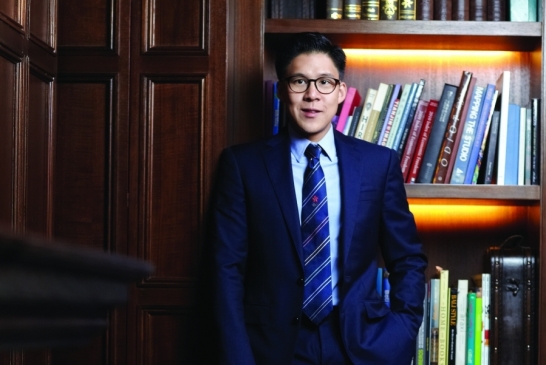
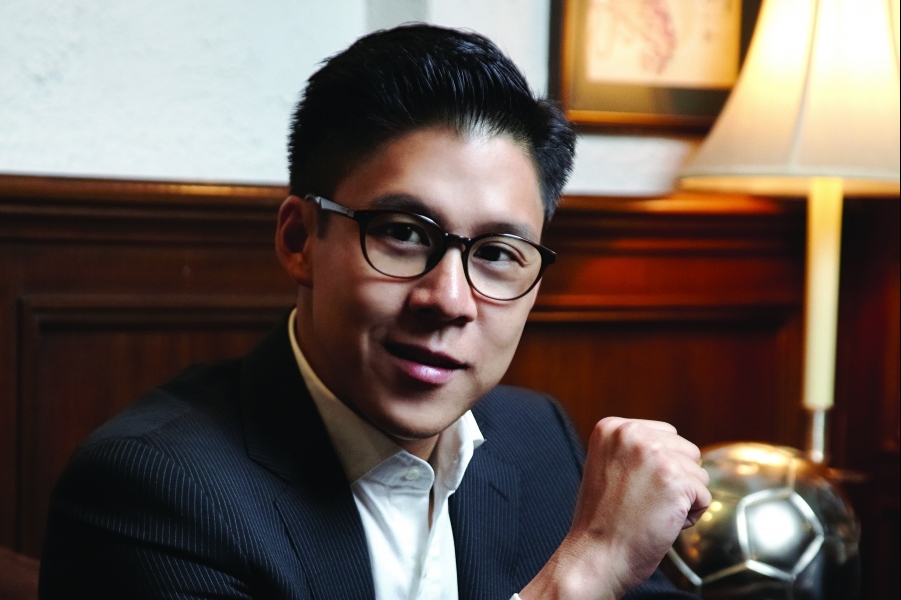
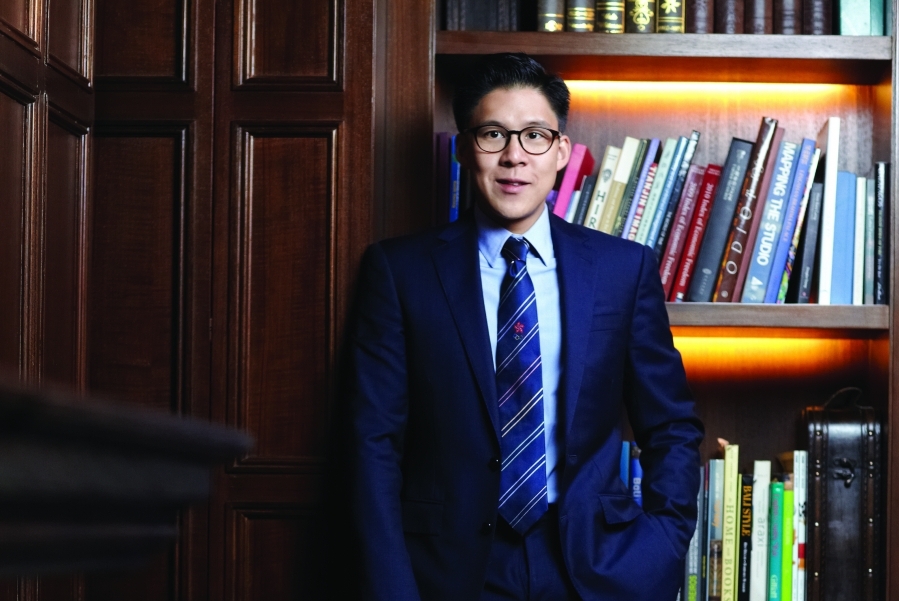
Kenneth Fok spoke to Gafencu in December about the Hong Kong Olympic team and his work in Nansha.

Kenneth fok

Nathan Louey sat down to chat about how he became the “king of cognac”.

Louey

Marie-Christine Lee was Gafencu magazine’s first ever female cover star in November.

B-467

Dr Lau Chu-Pak is one of Hong Kong’s leading collectors of Ming period furniture.

A9RD0DB-1-e1472701632596

We spoke to one of Hong Kong’s leading designers, Hidy Ng, earlier this year.

Opening2

Andrea Buccellati discusses keeping jewellery in the family

As one of Italy’s most prestigious jewellers, the Buccellati name is synonymous with exquisite gems and watches.

The company’s president, Andrea Buccellati, spoke to Gafencu recently about how he got started in the family business, why Buccellati never uses outside designers and how his daughter is moving the brand forward.

Describe a typical day for you.

I don’t really have a typical day because I cover the business worldwide. When I have the time, however, I follow the production of new designs day-by-day, including any prototypes we have.

My role as president also takes me across the world because it is important for the Buccellati brand to be close to its clients. Travel takes up a lot of my year.

You started working with your dad when you were 16. Did you explore any other career options or were you always destined to join the family business?

I think it was destiny in a certain way to join the family business. I have always loved to create and use my hands, even when I was a little kid. Thankfully, I had the perfect opportunity to develop this with my family.

When I was 12 years old I knew I wanted to work in the family business and at 16 I started to work in the office with my father after school.

At the start it was just to learn how the business worked. But once I turned 18, I started the serious full time work every day.

The Buccellati tradition is to keep creative skills within the family and not use outside designers. Why is this?

It is a very important tradition because the history of the Buccellati family is to have designers from each generation.

The logic for this is very simple: you keep the style and tradition within the family. By sticking to this tradition, you don’t have a lot of influence from outside markets which means you don’t copy other products.

Also, it is not enough to just design, you have to know how to create jewellery. And in order to create jewellery for us, you have to live Buccellati.

My daughter has followed in this tradition and she is the future of Buccellati.

How do you and your daughter, Lucrezia Buccellati, work together to design the jewellery?

We see each other in Milan and New York, where she lives. We spend time together working on designs and coming up with ideas.

Inspiration is very important and when I am in New York I am in contact with a different world. It is a more dynamic world than in Italy.

How has working with your daughter helped to move the brand forward?

Lucrezia is the first woman to ever have this role within the company (creative designer) so she comes in with a lot of new ideas and she helps us take a different approach. Her input is for a product that is wearable, young and fresh. She is the perfect person to move Buccellati forward.

What do you draw inspiration from when you’re creating jewellery?

Sometimes I will see a beautiful painting and imagine jewellery. Sometimes I look at a beautiful woman or nature or architecture. It is a mixture of many things.

How do you view Hong Kong as a jewellery destination compared to the US and Europe?

The mixture of different cultures makes Hong Kong a very interesting market. Our Asian clients are more concerned about the details of a piece and understanding the background of the jewellery. It is not just about buying.

Lumen Kinoshita talks about keepsakes, karma and learning from the sub-prime crash

A-3762

Lumen Kinoshita is a director of the KGI Asia finance firm and the designer of the L. Luminous jewellery collection.

How was Hong Kong as a place to grow up?

It was fun, although my family spent a fair amount of time in Malaysia before we moved back to Hong Kong. We returned at a time of great political change with the end of colonial rule – that didn’t stop me having a pretty good childhood here, though.

Click here to watch the interview with Lumen

Raised in Hong Kong, then educated in the UK and Canada… So where, exactly, is home?

Definitely Hong Kong – even though my parents are not typical Hong Kongers, having moved to the city later in life. They were originally from China, with my mother being Fukienese. When I was growing up, I didn’t really think of myself as Cantonese, especially as my father was also only half Cantonese. We embraced Hong Kong, though, despite not feeling like locals. While I may have looked at it with a little bit of distance from time to time, I definitely feel like Hong Kong is home.

A-3580

“A steep learning curve is obligatory in the financial industry” you once said. What, though, is the key thing your professional life has taught you?

The importance of being aware of technology. The world has become a much smaller place and things now move much faster. There is also a constant stream of new products, something that caused a rude awakening for a lot of people in the industry a few years back. Coupled with sub-prime mortgages and all that, it was scary. Looking back, though, you could see all the little warning signs. Of course it was not just about data, it was about emotion, desire and greed. It was a very human thing.

How did you come to design your own jewellery collection?

Basically I have always loved accessories and I have always collected a lot of African beads and other such items. You know how it is – you have these things hanging around and, after a while, they become threadbare. Eventually decided I should make something out of these accessories, something that would make then them more relevant and allow me to enjoy them again. That’s how it started. I made a few things for myself as I like a bit of bling.

I went to a fashion show at Joyce (the Hong Kong boutique) and ran into their merchandiser. He took an interest in the pieces I had made and they asked me if I would do something for them. I have always seen Joyce as wonderful and very fashion-forward, so I was more than happy to make jewellery for them for a few seasons. I felt very fortunate to have been given the opportunity.

A-3516

When you are designing a collection where does your inspiration come from?

It mostly comes from what I already have. I try to work with the colours and with what I like. It is often something that has an emotional or sentimental value for me. One of the pieces I am currently wearing, for example, features a small coral heart pendant, something that I have had since junior high school. I wouldn’t wear it now as it seems too small, girlish even. I wouldn’t want to sell it either, though, or just push it aside. Instead, I incorporated it into a design, making it relevant for me again. I also like the idea of putting different things together to create a new whole.

You are known for your iconic fashion sense. Do you feel fashion plays a big part in your life?

I think so, I like fashion. I know it is going to sound clichéd, but my favourite designer is Alexander McQueen, largely because he has such a wonderful cut. For me, other designers, such as Giorgio Armani just don’t have the same fit. I don’t have a long body so, for me, McQueen’s cut is just right. I have always appreciated his style. Even though he wouldn’t be aware of it, I’ve always made to support him as a designer I particularly like. Even when he has had a sub-par season, I still try to buy something of his. Over the years, I have amassed quite a collection of his things. After he took his own life, suddenly everyone decided they loved him.

B-4055

When you are designing a collection where does your inspiration come from?

It mostly comes from what I already have. I try to work with the colours and with what I like. It is often something that has an emotional or sentimental value for me. One of the pieces I am currently wearing, for example, features a small coral heart pendant, something that I have had since junior high school. I wouldn’t wear it now as it seems too small, girlish even. I wouldn’t want to sell it either, though, or just push it aside. Instead, I incorporated it into a design, making it relevant for me again. I also like the idea of putting different things together to create a new whole.

You are known for your iconic fashion sense. Do you feel fashion plays a big part in your life?

I think so, I like fashion. I know it is going to sound clichéd, but my favourite designer is Alexander McQueen, largely because he has such a wonderful cut. For me, other designers, such as Giorgio Armani just don’t have the same fit. I don’t have a long body so, for me, McQueen’s cut is just right. I have always appreciated his style. Even though he wouldn’t be aware of it, I’ve always made to support him as a designer I particularly like. Even when he has had a sub-par season, I still try to buy something of his. Over the years, I have amassed quite a collection of his things. After he took his own life, suddenly everyone decided they loved him.

Long after his death, Walt Disney’s magic kingdom still flourishes

Walt_diseny_Cinderella castle
Walt Disney – good old Uncle Walt – must be chuckling on high. With the fiftieth anniversary of his death just around the corner, the company he created is now a vast multi-national entertainment empire, the second biggest media conglomerate on the planet, a cinematic colossus that owns everything from Snow White to Star Wars, while running one of America’s biggest TV networks, the world’s most popular chain of theme parks, and a multi-billion-dollar merchandising operation – not to mention a record company, sundry real estate interests and a cruise line.

It’s all a far cry from the two-bit partnership Walt set up with Roy Disney – his pretty much forgotten brother – back in the Hollywood of the early 1920s. Initially, the plan was to market a series of Alice in Wonderland-themed animated short films Walt had created, but it was clear, even then, that the man behind Mickey Mouse, fancied himself as good a businessman as he was an artist. No doubt, he would have more than approved of just how things have turned out.

It’s not just the company Disney founded that has flourished since those days, however – so have the legends surrounding Walt himself. The myth – perpetuated by Disney Studios to this day – tells of an innovative artistic and business genius who rose from humble beginnings to fame and fortune, revolutionising the world of cinema and delighting audiences throughout the world along the way.

Much of this is, of course, true. It’s undeniable that Disney and his designers transformed animation into an art form, revolutionising the techniques used to bring their drawings. Perhaps even more significantly, raised the status of cartoons forever, elevating them from being a five-minute into being a fully fledged lead feature.

The picture we have of Disney as an entrepreneurial genius, though, is perhaps less deserved. It’s fair to say that his company’s commercial success owes as much to luck as to anything else. His first few business ventures were all resounding failures and the embryonic Disney Studios might have suffered the same fate had it not been for one cartoon creation…

It’s probably not the one you’re thinking of. The studio’s original star was not a mouse, but a rabbit called Oswald who starred in 26 short films. It was here that’s Disney’s dubious business skills became apparent. He lost control of his creation to Universal Studios, having failed to secure the copyright.

Walt_Disney

Oswald’s hasty replacement was a suspiciously similar-looking rodent, a mouse originally dubbed Mortimer, until Disney’s wife persuaded him Mickey was more box-office friendly. It was pure chance, then, that led to the birth of a true cinematic legend

Mickey made Disney’s reputation, winning him the first of his astonishing 26 Oscars. To this day, he remains the most honoured filmmaker in Academy Award history. Ironic really, given that Mickey wasn’t even Walt’s creation.

Though Disney provided the preliminary sketches, it was Ub Iwerks, his partner, who first rendered Mickey in a form that we would recognise today. Disney did, however, provide the mouse’s squeaky, high-pitched voice right up until 1947.

While Disney may not have been entirely responsible for the creation that kick-started his company, few could argue that it was anything other than his visionary genius that ultimately propelled the studio to greatness. It was Walt who embraced complex new techniques, while encouraging his artists to refine their skills and make their drawings ever more lifelike. This ushered in the Golden Age of Animation, the era in the late 1930s and 1940s when the Disney studio churned out a seemingly never-ending stream of classics – Snow White and The Seven Dwarves, Pinocchio, Fantasia, Dumbo, Bambi …

In process, though, he once again came close to destroying the company. Snow White (1937), for example, went wildly over budget, nearly bankrupting Disney in the process. Meanwhile, the Second World War was hitting box-office receipts hard, especially in Europe, with Bambi (1942) making a huge loss. By 1944, Disney Studios was US$4m (HK$31m) in debt and being kept alive solely at the discretion of the banks.

It was until the release of Cinderella (1950) that the company found a firm financial footing, with the movie raking in an impressive US$8m (HK$62m) in its first year alone. Disney, though, had little to do with that. By then, he’d become a somewhat semi-detached presence, his attention fixed on new projects, such as Disney-themed TV programmes and his pet obsession – Disneyland, a fabulous family-friendly amusement park.

Pinochio_1940

In fact, Disney had very little direct input into any of the animated classics his company produced in the last decade and a half of his life. While it was true that he oversaw the production of Sleeping Beauty and 101 Dalmatians, the actual work was left to Disney’s leading artists – a group known as the Nine Old Men.

While the Nine Old Men were creating the masterpieces which were to define Disney Studios, Walt was getting involved in politics. A founding member of the right-wing, anti-Communist Motion Picture Alliance For The Preservation Of American Ideals – alongside John Wayne and Ronald Reagan – he also appeared before the US Congress’s Un-American Activities Committee, denouncing several of his former animators as Communist agitators.

Disney’s political leanings have attracted considerable criticism since his death, with him frequently billed as an anti-Semite, a racist, and a rose-tinted apologist for the more unsavoury parts of American history. Those who knew him and worked with him, however, are unequivocal in denying the charges. Well, the first two at least.

While Disney was happy to employ Jews in senior positions in his company, doubts remain. Examples of offensive Jewish and black stereotyping abound in his earlier films. In 1938, he even offered Leni Riefenstahl – a notorious Nazi propagandist and filmmaker – a tour of his studios just a month after Kristallnacht, the infamous night when Jewish shops, hospitals and religious establishments across Germany were ransacked. While Disney may not have been a racist, many of those he chose to associate with clearly were.

Despite Disney’s unsavoury politics, the company he founded seemed to suffer no ill effects. By the time of his death in 1966, Disney was synonymous with providing clean, wholesome family entertainment – not just in the cinema and on TV, but also at the increasingly successful Disneyland park.

Walt Disney drawing Bambi

Disney’s determination to create Disneyland had proved to be one of his few undoubtedly wise decisions and ultimately saved the company. Just a few years after his death, Disney Studios went into decline.

A series of ill-thought out projects in the 1970s – most notably, The Black Hole, a costly attempt to make a Star Wars style science fiction blockbuster – left the company financially vulnerable. By the 1980s, it was only Disneyland – and its sister attraction Disney World – that kept the company afloat, generating nearly three quarters of the group’s entire income.
Things had to change. In 1984, a new boss, Michael Eisner, was appointed. This was the first time someone from outside Walt’s family had been made head of the company. He upgraded and expanded Disney’s cinema output, producing such hits as Good Morning Vietnam and Pretty Woman; while at presiding over a new generation of animated classics, including The Lion King and Aladdin. Disney’s second Golden Age had begun.

Over the course of 30 years, Eisner and his successor – current boss Bob Iger – reinvented Disney, taking it from being a faltering film company to becoming a true multi-media giant. They bought television networks, most notably ABC and the ESPN sports channel. They acquired a number of production companies, ranging from the Muppets to Marvel Entertainment. They even paid an eye-watering US$7.4bn (HK$57.4) for Pixar, the innovative animation company behind Toy Story and Finding Nemo fame. More recently – in 2012 – they paid US$4bn (HK$31bn) for Lucasfilm, the makers of Star Wars.

They also opened four more enormous theme parks – in Japan, France, Hong Kong and Shanghai. All the while, Disney continued to maintain its reputation for highly successful animated feature films. Its 2013 mega-hit Frozen, for example, is the highest-grossing animated movie of all time. At the last count, the Walt Disney Company’s market value was some US$179.5 billion (HK$1.39tn).

It’s a success story that Walt himself could scarcely have dreamt up. Certainly, not back in the days when he lost the rights to his first creation, Oswald the Rabbit, with all hope of a successful future in the film industry seemingly at an end.
Even in the case of Oswald, though, Walt eventually got the last laugh, if somewhat posthumously. A few years back, in a deal with Universal, Disney re-acquired the rights to the veteran bunny without even handing over a cent. Today, Oswald is a video game star – proving that Walt Disney’s characters, like the company he founded, have a seemingly endless ability to adapt and prosper.

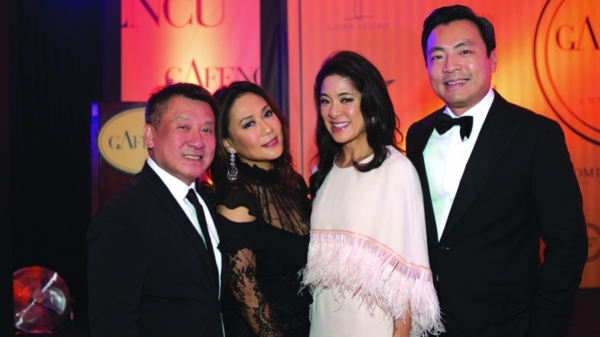
Having a Ball: Roundup of Gafencu’s Gala Dinner

Last month, Gafencu’s annual Gala Ball featured a veritable who’s who of local and international glitterati, socialites and power brokers at this exclusive extravaganza. Held at the glamorous Conrad Hotel in Admiralty, among the VIPs was Clara Lee, the fast-rising South Korean actress, and popular Hong Kong singer Joyce Cheng.

The night was also abuzz with celebrations of Gafencu’s 10th anniversary. A cornerstone of the event was the Gafencu Awards, recognising the success of HK’s movers and shakers in entertainment, medicine, F&B, business and more. Guests enjoyed a superb mix of gourmet food, wines, live music and dancing on this most enchanting of evenings.

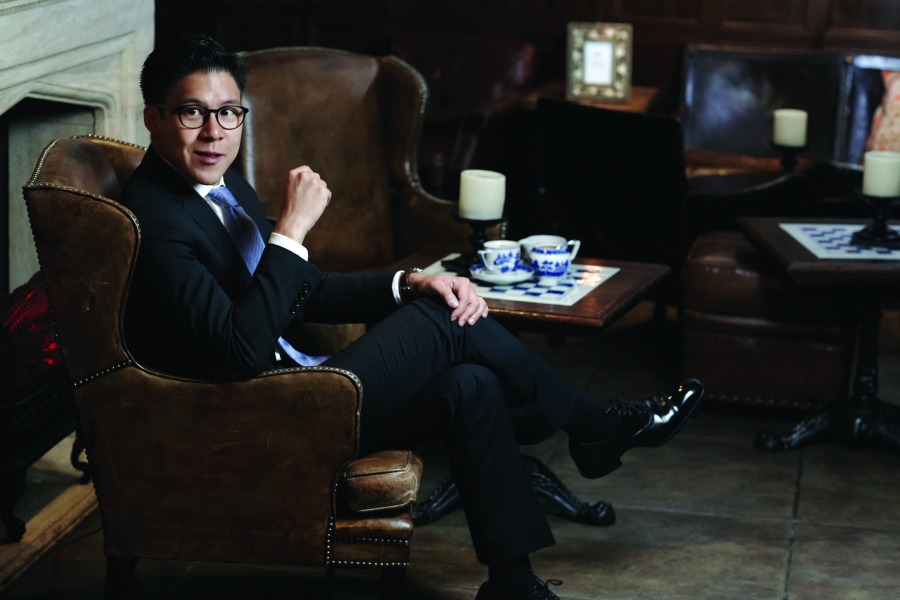
Kenneth Fok explains how he stays one move ahead

_MG_02732-34 PM

Kenneth Fok is the vice-president of the Fok Ying Tung Group and the honorary deputy secretary-general of Hong Kong’s Sports Federation and Olympic Committee.

What can you tell of your role as the vice-president of the Fok Ying Tung Group?

My work is mostly focused on the Nansha district of Guangzhou. My involvement stems from my grandfather, as it was his ancestral home. Over the past 20 years, he and my father – Timothy Fok – have put a great deal of effort it into developing the area.

It’s not property development in the accepted sense, it’s really been about more working on designs for the new look of the city. There is quite a lot of vacant land, so – as well as developing residential properties, we are also involved with a lot of the recreational facilities. This means, over the past five years, we’ve run a golf course, a hotel and a yacht club.
In the case of the yacht club, we didn’t have to just build the facility. We also had to nurture the lifestyle that surrounds it. This saw us launch a sailing school, encouraging children to take to the water for the first time.

That’s really where I fit in – looking to the future, planning what we do next, while also managing day-to-day operations.

What is the most challenging aspect of your role?

That is probably adjusting to China’s unique business culture. As I said, I am very involved with planning for the future and one of my key challenges is to try and persuade government officials to accept our ideas. We sometimes try to bring in a more radical, city plan, which might not fit in with their own ideas.

I was educated in the UK, spending 12 years there in all, getting to known many of its more charming towns. Later, I discovered the French way of life, then the Italian way of life. None of that matters to the average Chinese government official, though. They always want a glass building or a tall mega-structure.

_MG_03342-46 PM

If you say: ‘Hey this is not the future. There are a lot of problems with modern cities – pollution, congestion… Can we try to look at things a different way?’, it is far from easy to convince them. That is the hardest thing, not the nuts and bolts of building design. The most challenging is always trying to convey a new idea to someone, something they might never have considered before.

Why limit your ambitions to Nansha?

It’s where we’re from, so there’s a very real feeling of connection, something that’s very important to my family. In China, people are always aware of their roots.

Aside from that, of course, there is the area’s geographical significance. It was once on the very perimeter of Guangzhou, at the time when the city was still seen as the capital of of the south. As it was removed from the centre of things, it was seen as less desirable – it was a place where industries disposed of their rubbish.

If you look at a map, though, it’s at the centre of the river. It’s close to Hong Kong, it’s close to Guangzhou and it’s close to Macau. Actually, it’s a gem.

It’s where the Opium Wars were fought. It’s where they burnt the opium – right across the mouth of the Pearl River. As well as its historical signifcance, it’s also very centrally situated geographically.

For us, we believe that people value space, greenery and clean air. If you look at New York or London, people don’t necessarily live in central London or in Manhattan. Similarly with Nansha, if the interconnectivity of the area is good, people will be willing to move their family out up to an hour away, but only if there are good schools, good parks, entertainment, culture and the kind of spaces they might not necessarily find in the city centre. So we’re really trying to attract the kind of people who would enjoy something of a different lifestyle in an old part of the city.

Soon, things will change again. The government is planning to build a cruise terminal in Nansha, so we will be getting a tourism centre and a commercial centre.

_MG_03492-47 PM

You recently led the Hong Kong delegation to the Rio 2016 Olympic Games. That must have been quite an experience…
It was exciting, but even before we left there had been so much negative news. The newspapers were full of stories about the Zika virus, about the city not being ready, the cycling track not ready, theft, robberies…

Despite all that, we made our way there safely and it all seemed fine. The athletes, themselves, thought it was fine too. As to the Olympic Village – despite the complaints of the Australians – it was more than acceptable. Everyone was happy.

Rio, itself was beautiful, though you did have to be sensible about where you went. You couldn’t just wander off anywhere, especially if you were wearing a gold watch. Most of the people are friendly, though, and the beaches are beautiful.

At the end of the day, the organisation was great. There were glitches, of course, but that always happens. There wasn’t anything that couldn’t be overcome. At every Olympics, be it Beijing or London or wherever, the media complains right up until the opening day. Once the results start coming, though, everyone concentrates on then rather than the flaws.

In the end, it was a pity we didn’t get a medal – especially as Singapore got a gold medal. That was a real jab in the kidney. Even though Rio was so far away, people really got behind our team. They were especially behind Sarah Lee, the cyclist. She had a crash and then, in the next race, she was holding hands with the woman that crashed into her. That really showed the Hong Kong spirit.

As well as international sport, you are also a supporter of local sport, something notably lacking in Hong Kong. Do you think much can be done to change that?

We have to start at the grass roots, with youth training and the first thing is facilities. No one can find football field to play on at the weekend. That is a huge problem and will take a long time to solve. Then there is the question of the school curriculum. We need a proper sports policy, one supported by the relevant government departments. Sport starts with the Education Bureau and then moves on to the Home Affairs Bureau. They need to generate community involvement across the city, encouraging young people to get more involved in sport.

_MG_01362-10 PM

In general, how do you feel you’ve made a difference in Hong Kong?

About two years ago, we started the Sports Legacy program. This saw us hire ex-athletes, say a rower or a fencer. We then embedded in schools in the less-privileged communities, somewhere like Tin Shui Wai. These ex-athletes act as an extra PE teacher, introducing activities that these schools would never normally offer. As a result, we’ve seen more kids playing sports. Maybe they’d never rowed or fenced before, but now they’re converts.

Before enrolling on the programme, many of these kids did not have a sense of direction, they didn’t know where their life was heading. Once they were paired with our athletes, though, it gave them a sense of direction. It introduced a touch of discipline and gave them a goal.

This is something the wider community can now get involved in through sponsorship. We need to roll this program out into more schools. The key is for people within the community and for successful companies to put resources into this through schools.

Which sport are you personally most passionate about?

I like golf. It’s an interesting mental game. You have a good hole and you’re happy, then the next hole is a disaster. It’s very much a mental challenge. It’s always been branded as an old man’s game, but I find it very challenging on a personal level. I don’t want to sound like a philosopher but it’s like life. I’ve never had 18 holes of good golf. You start well on the first nine, then it becomes a disaster by the end. That’s life, right? It teaches you the importance of managing your expectations.

What’s a typical day for you?

Well, I have a young family so the day starts early – definitely early. I get up at 7 o’clock, have breakfast with the family and then my three-year-old son has to be at school for 8 o’clock. A couple of times a week, I take him and then carry on to work.

I try to clear all of my emails before noon, followed by lunch in the office or with clients. In the afternoon, I have a lot of public service work. There’s a lot of running around, having meetings with the government and so on. There’s also sporting engagements and meetings with the Olympic Committee.

In the evening, I eat out with business partners and friends. Increasingly, though, I try and spend more a more evenings at home. Family is just so important.

Thank you

Click here to watch Kenneth on video

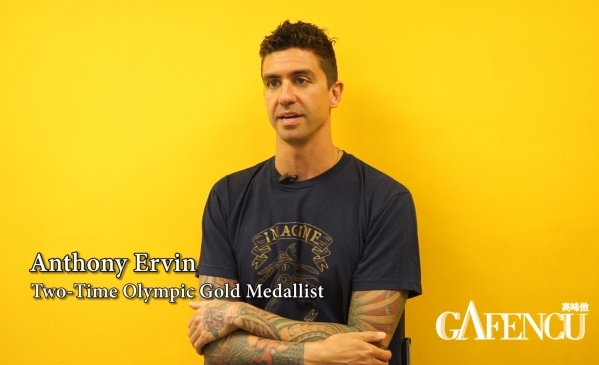
American swimmer Anthony Ervin talks about his journey to Olympic gold

American swimmer Anthony Ervin’s journey from winning a gold medal at the 2000 Sydney Olympics to waiting 16 years for his next gold medal at the 2016 Rio Olympics is anything but typical.

Ervin, who has two gold medals in 50m freestyle, quit the sport in 2004 after his success at the Sydney Olympics.

For years he lived a life about as far removed from that of an Olympic athlete as you can get: he dabbled in drugs, joined a rock band, battled with depression and considered suicide.

He even sold his gold medal from the Sydney Olympics to raise funds for the Indian tsunami in 2004.

Ervin’s love for swimming was rekindled when he started teaching kids how to swim in New York. He returned to the pool in 2011, managing to finish fifth in the 50m freestyle Olympic final in London in 2012.

At the Rio Olympics earlier this year, Ervin became the oldest swimmer to win an individual event at any Olympics when he won gold in the 50m freestyle at the spritely age of 35.

Watch Ervin’s exclusive interview with Gafencu about his Olympic experiences and why he decided to walk away and then return to swimming, in the video above.