
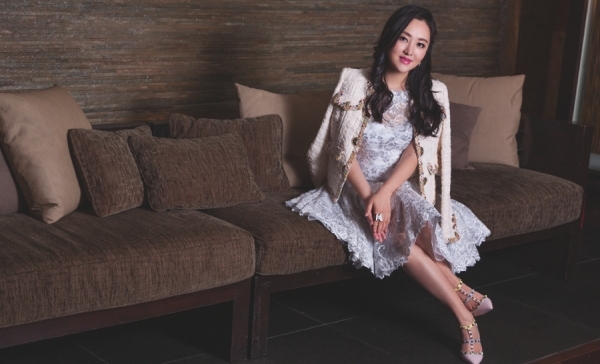
Singer Charlene Chou Xuan on spreading traditional Chinese music to new audiences

_MG_4385

Singer Charlene Chou Xuan, dubbed the “new golden voice” of China, is known for her unique style of music, which blends Western and Eastern elements. Originally from Hangzhou, she now lives in Hong Kong and runs the Zhou Xuan Arts Centre, which she founded.

Click here to watch the video

Were you named after the iconic Chinese singer and actress with whom you share a name?

My name was given to me by my mother. Zhou Xuan was a famous singer in the ‘30s, and she is my mum’s idol. My mum loves all of her songs, and so that’s the story of how I got my name.

I was born into an artistic family. My mum was a music teacher, and my dad was an art instructor. They are ordinary people who love music and dance. I was fortunate to grow up in such a warm and happy environment.

When did you first know that you wanted to be a singer?

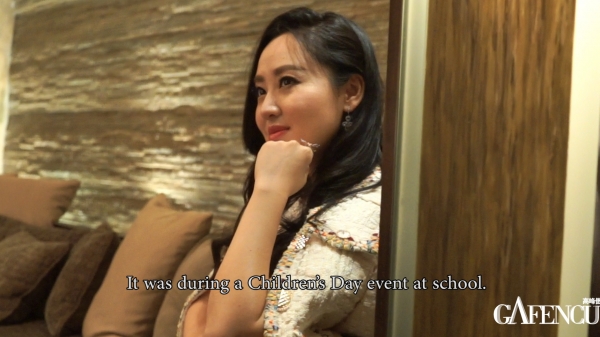
My first stage performance was when I was three years old during a Children’s Day event at school. Even as a child, I never felt stage fright. I remember singing one song after another that day. It was then that my parents discovered my talent.

When did I decide to become a professional singer? It was probably when I enrolled at the Zhejiang Vocational Academy of Art. I was about 12 at the time. Now, here I am. I often have the chance to perform on TV and at a number of concert halls around the world. Various media have named me one of the top 10 female sopranos in China. They call me the ‘new golden voice,’ which I am very proud of. I will always try my best to live up to that title.

What has been your most memorable performance?

My first concert ever was held at the Hong Kong Cultural Center on 16 November 2005. There I was, just a girl from Hangzhou performing in the big city. I never would have imagined back then that I’d move to Hong Kong one day. It must have been fate that brought me here.

During my first concert, I was very nervous because I was under a lot of pressure. It was my first time performing professionally on-stage, let alone an international stage. Fortunately, the show was perfect. After the concert, people came up to ask me for photos and autographs. My first concert was a success and an unforgettable experience.

Who are your musical idols and inspirations?

My mum was my first music tutor. I listened to her songs throughout my childhood. I had many other instructors during my formative years, including Professor Jin Tian Lin, who also mentors China’s First Lady, Peng Liyuan, who happens to be a contemporary folk singer.

I have also had the opportunity to meet and collaborate with some exceptional artists, including Lü Jihong, Zhang Ye, Liao Changyong and Dai Yuqiang. We have become very good friends. I also look up to Li Guyi, a well-known singer in China.

What kind of music do you listen to?

I love all kinds of music. I studied Chinese national music at college, but I also listen to Italian music across the genres of bel canto, opera and pop. I have made an effort to learn diverse styles of music. I hope that my songs appeal not only to Chinese, but also to international audiences. I believe that music has no borders.

How do you manage to blend such diverse elements from Chinese and European music?

I take some artistic liberties in my music. For instance, in one song I combined the Italian aria Nessun Dorma with the Chinese folk song Mo Li Hua (Jasmine Flower). I sing in two languages in that song, and foreign audiences love it. Now, I am trying to combine songs from Madama Butterfly with Taiwanese pop singer Teresa Teng’s songs. Teng was known for her folk songs and romantic ballads.

You travel a lot for shows. How is Chinese music received in other countries?

When performing abroad, I sing both Chinese and foreign songs. As long as the songs are good, music is an international language. Many foreigners have been moved by my music. They loved my songs, even though they didn’t understand the lyrics. That is what I mean when I say music has no borders.

Do you enjoy working abroad?

I do. It gives me the chance to visit new places, and it’s just like a vacation. Italy in particular is one of my favourite places to perform. I often travel to Italy with my family on holiday. There are so many delicious types of food, beautiful landscapes, classic architecture and shopping malls.

As for my family, they have been very supportive of my career, and they love music as well. I have an adorable son, and a daughter who is almost one-year-old.

_MG_4725

What’s life in Hong Kong like compared with your hometown?

My hometown is Xi Hu (West Lake) in Hangzhou. Xi Hu is considered a paradise in China. The landscape is beautiful, and it’s a UNESCO World Heritage Site. I was chosen to sing a song dedicated to Xi Hu. If you have a chance to visit the city, you will hear my song as soon as you get off the plane. They play it all day long in the airport and on buses in the city.

Life is very relaxed in Hangzhou because it’s important to the locals to enjoy life. They walk around Xi Hu and have tea time with friends. It’s a slow-paced way of living. Hong Kong, on the other hand, is a very busy city. Everything is fast. After a long week spent in Hong Kong, I like to fly to Hangzhou for the weekend, just to slow down a bit – to rest and enjoy life.

You have opened your own music centre in Hong Kong. What inspired you to enter the field of education?

I opened my art centre last November. It’s something I have always wanted to do. My ambition is to promote Chinese art education in an effort to encourage children who have a passion for music. We offer lessons in dance, piano and violin, as well as vocal training in traditional Chinese music. The centre is for both children and adults. My youngest student is three years old, and the oldest is 70. I also set up a Hong Kong-China musical exchange association. It’s responsible for art education and cultural exchanges between Hong Kong and mainland China. We are going to host an event this August.

What has been the biggest challenge you’ve faced?

The biggest challenge has definitely been opening the music centre. Education is a long-term cause. The behind-the-scenes work that no one sees is what is most difficult. My school is like my third baby. It takes great effort and patience to nurture it so that it grows up big and strong.

What’s next for you?

I’ll perform in Eastern Europe with a Chinese delegation in July, on invitation from the Lincoln Center for the Performing Arts in New York City. For 20 days, we will travel around the region on tour. I’m currently preparing to launch a worldwide tour, and right now we’re just waiting on confirmation from the venues. The worldwide tour could last up to one month. We won’t return home until we finish the tour, and we will visit one country after another.

Text: Emily Petsko
Charlene Chou

Singer Charlene Chou Xuan, dubbed the “new golden voice” of China, is known for her unique style of music, which blends Western and Eastern elements. Originally from Hangzhou, she now lives in Hong Kong and runs the Zhou Xuan Arts Centre, which she founded.

Rex Tso talks about how he got started, memorable fights and his new-found fame

Opening_Man

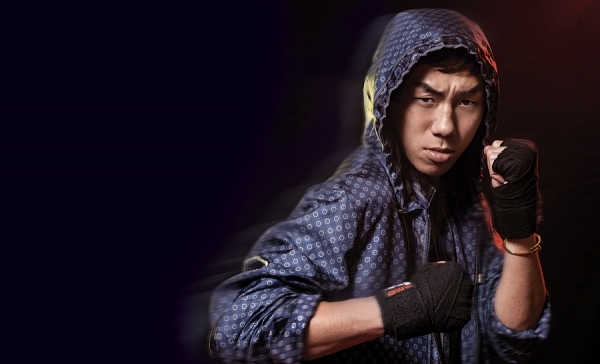
Boxing champion Rex Tso is considered to be one of the sport’s brightest stars. Last March, on home turf in Hong Kong, he successfully defended his WBO International and WBO Asia titles against Japanese boxer Hirofumi Mukai.

Click here to watch the video

How did you get into boxing?

My dad taught me how to box when I was five years old, and when I was 16 I joined the DEF boxing gym to train and help out as an assistant coach. Back then I viewed boxing as nothing more than a sport, and this made me lazy.

It wasn’t until Jay Lau Chi Yuen, who is now my manager and the person who brought professional boxing to Hong Kong in 2011, asked me to participate in some amateur fights that I saw it as something I could do as a career. I fought in a few fights when I was 22 and 23 years old.

When did you decide to go pro?

I competed in my first professional boxing fight when I was 24 years old. As an amateur I was a lazy boxer, and I still had that attitude when I turned professional.

 “I try not to let the other boxer rest because I want to fight from the moment the bell rings”

At the beginning, I didn’t care if I won or lost. Boxing was something I did out of personal interest. When Jay asked me to turn professional, I kept on thinking to myself, ‘What is a professional? And how can I be called a professional?’

Then I started to worry because my fitness was in poor shape and I hadn’t been taking it seriously. When I was an amateur I’d won fights simply because I’m a smart boxer, and so I felt I didn’t need to train properly. But when I turned professional I realised I needed to train harder.

My first professional fight was four rounds and I wasn’t thinking about winning the fight. I was thinking about trying not to get knocked down in the first round.

But when I won the fight and the crowd stood up to clap and cheer my name, that was when I knew I had to train harder, improve my body and learn new boxing skills from my coach. It was then that I knew I wanted to take boxing seriously.

How would you describe your boxing style?

I would say I have an aggressive boxing style. I try not to let the other boxer rest because I want to fight from the moment the bell rings. Fights are scored every round so I try to win every round.

Where did your nickname “The Wonder Kid” come from?

Quite a lot of people think my coaching team gave me this nickname, but actually it was given to me by a Filipino referee. I had my second, third and fourth professional fights in the Philippines and all of my opponents were Filipinos. At the start of one of the fights, the crowd cheered the Filipino boxer as he made his way to the ring, and they booed and jeered at me. They even shouted that I should go home, which I only understood later when someone translated it for me.

The fight was four rounds, and I felt I was losing in the third round because my opponent’s boxing style was different to what I was used to. I had practiced with a right-handed, short boxer, but my opponent was left-handed and much taller. My coach told me that if I didn’t knock him out in this round, I would lose the fight. Once the bell rang for the third round, I punched him as much as I could until he could no longer defend himself, forcing the referee to stop the fight.

When I was announced as the winner, the crowd stood up and cheered me. The referee was surprised I was still smiling even though the crowd had hurled insults at me and it seemed like I would lose the fight after three rounds, so he gave me the nickname ‘The Wonder Kid.’

How do you prepare for a fight?

I start preparing three months in advance. In the morning I do physical training, like fitness, running and weightlifting. I also focus on boxing techniques to build up muscle. The afternoon is reserved for boxing training.

I follow a balanced diet for the first two months. I eat a fistful of rice and meat, and I usually start to lose weight 10 days before a fight. Normally my weight is 130 lb, but in the build-up to a fight it drops to between 125 and 128 lb. Ten days before a fight it drops to 115 lb, and during this time I only eat vegetables. And 30 hours before a fight I don’t drink or eat anything to make sure I make the weight class. I also run in a sweat suit to help me lose weight.

3rd Spread Man

What’s been your toughest fight?

During my last fight against Hirofumi Mukai I faced a lot of situations that were new to me. In the second or third round, I was hit by a punch that made me lose hearing in my right ear for more than 10 seconds.

I broke my nose one month before that fight, during a training session with a Filipino world champion. I was so worried that I wouldn’t be able to fight and it was so painful that I cried. Mukai punched me in the nose during our fight, but thankfully the bone had healed.

How did it feel to successfully defend your WBO International title and WBC Asia title and win the WBO Asia-Pacific belt in front of your home crowd when you beat Hirofumi Mukai?

It was great that I didn’t disappoint everyone, and I was lucky to fight and win even though I was hurt. I was worried that I hadn’t trained enough because I had to take it easier after my injury.

The atmosphere at the stadium was so exciting. Even when I was in the dressing room I could hear the crowd cheering on the other boxers. And when it was my turn to fight, I felt energised when I heard the crowd cheer my name.

You’ve fought twice on the undercard for Manny Pacquiao. How were those experiences?

Manny Pacquiao’s fights are always huge events. The fights were valuable experiences for me as they helped me get used to the pressure of fighting in front of a huge crowd. I was also grateful to watch Pacquiao and learn from him. He can fight under pressure and he shows that you have to enjoy the crowd, not be afraid of it.

He is very nice and willing to help other boxers. We have met before but my English is not that great so I just said ‘hello.’

What do you hope to achieve as a boxer?

I want to challenge the world champion one day. Before that I want to fight the best boxers so I can learn from them.

_MG_5710

 “I used to be lazy, but now I can be someone who encourages others. Words can’t express how much this change means to me”

How do you think boxing is viewed in Hong Kong culture?

In the past, people had a negative view of boxing. When people thought of boxing, they would imagine gangsters, violence and fighting. They didn’t recognise it as a sport. Nowadays, people have taken the time to understand boxing and they realise it’s a sport because it requires skill. It isn’t just lawless fighting.

I think the change has come about due to more media exposure. I have spent the past two years competing in Macau, and the media exposure from my fights there has opened up boxing to a wider audience. So when we organise boxing competitions in Hong Kong, locals are now aware of the sport and the reaction and attention it receives is stronger. Once someone watches a boxing contest in person, they will have a better understanding of the techniques and skill involved.

Would you say you’re a role model to young boxers?

When I win a fight, people cheer for me and the focus is all on me. Some young boxers might crave the attention instead of taking up boxing for the sake of the sport. When it comes to boxing, you don’t get into it because of the result. You have to first experience the process – go through training and fight in competitions – and then you can start thinking about winning and the pride that comes with that.

I think I am influencing people in a positive way. In the past, I was a very lazy person, but now I can be someone who encourages others. Words can’t express how much this change means to me.

How are you handling your new-found fame?

I still feel embarrassed. I’m still not used to the attention I get when I walk down the street, but every coin has two sides. When people on the street know who you are and ask for photographs, and suddenly a five-minute walk becomes much longer, you might think you’ve lost some of your freedom. But this is a negative way of thinking. I prefer to view it more positively. When more people recognise me it means that more people know about boxing, and that’s the kind of recognition that matters to me. Also, when people ask me for photographs, it means they don’t hate me, I think!

What do you do in your free time to relax?

Eat! I am happiest when I am eating because I have to lose so much weight to prepare for a fight. I don’t have a favourite food, but eating any type of food is a way to pamper myself.

Which sporting figures do you look up to?

I admire Manny Pacquiao. He is a legend in the boxing world. Every boxer knows about him because he is so successful.

What will you do once you retire from boxing?

I haven’t thought about retirement. When I started out as a professional boxer, I never thought about doing it long-term. Even after my first few fights, I didn’t know how long I would last as a boxer. But now, as long as I stay in good health, I plan to continue as long as I can. There is an age restriction for amateur boxers but not for professionals. I am checked before each fight to make sure I am in good health. When my body can no longer handle it, that will be when I call it quits. I know that plans change and something I want to do next year could change tomorrow, so I enjoy the moment while it lasts.

Thank you.

Text: Andrew Scott, Alice Chang

The Outnet’s Andres Sosa talks women’s online fashion

Andres Sosa, EVP THE OUTNET 5

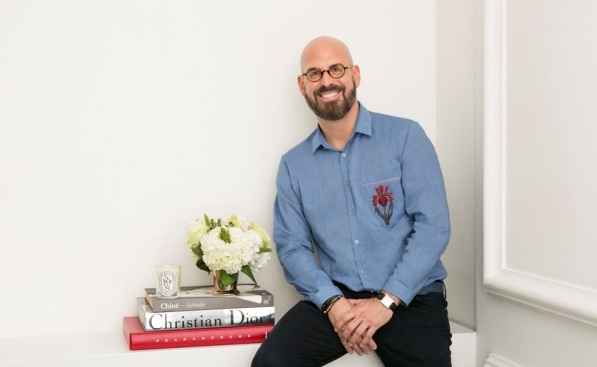
With the ever-increasing number of fashion stores and outlets in Hong Kong, traipsing up and down the hilly roads looking for the perfect outfit can turn into a hike. For women who prefer not to break a sweat when looking for new clothes, online retailer The Outnet makes shopping a little bit easier.

Established in 2009 by the same people who founded Net-a-Porter, The Outnet stocks over 350 previous-season fashion brands for women and is available on mobiles, tablets and desktops.

Andres Sosa, the executive vice president of the sales, marketing and creative department for The Outnet, was in Hong Kong recently. Sosa has more than 20 years of experience working in luxury fashion and he is responsible for developing globally integrated strategy and retail marketing for The Outnet’s global sales, marketing, creative and e-commerce teams.

We spoke to Sosa about who The Outnet customer is, the company’s global strategy and selling to the Asian market.

Who is The Outnet customer?

When we launched in 2009, we originally thought that The Outnet customer would sit in a younger demographic and be someone who might not initially be able to purchase luxury brands at full price – but we were soon proved wrong.

We know that our customer is savvy but she isn’t necessarily motivated by price as she shops for both current and previous-season fashion. She has a great lifestyle and travels on average six to nine times a year for leisure and is around 35-38 years of age.

For our customer, The Outnet is a reliable source of unique finds from her go-to designers. As a retailer, it is key for us to influence and help our customer without dictating to her, as we are aware she knows what she wants and is a confident shopper.

How do you build a relationship with a market when you have so many different markets? A customer in Asia is not necessarily going to be the same as in the Middle East.

Being able to understand the customer is so important for us. We have an incredible customer insights panel of over 10,000 people globally, who we reach out to regularly. This means we can create an overarching global strategy, which can then be easily adopted to each of the eight key markets we operate in.

Having this knowledge means that we know our customer so well. We have the ability to tell when and how she shops, what brands she loves the most and what she wants to see on site. For example, we know that brands such as Marni, Dolce & Gabbana, Valentino and our in-house brand Iris & Ink all resonate highly with our Hong Kong customer.

Having access to this information means we are able to tailor our approach for different markets. We can react to the obvious factors such as the weather between the two hemispheres, but we can also employ geo-targeting for the region which enables us to personalise content and target specific designers and promotions for our customer. This also extends to the site as we are able to create home pages with different designer offerings in relation to the preference our customers have in different markets.

For example, Hong Kong customers will see designers in the dropdown menu which perform best in the region. We can also cater for key calendar moments, such as Chinese New Year and Singles Day. Having the opportunity to visit in-market also allows us to talk to customers first hand – we have a very hands-on approach. The customer is at the foundation of everything we do.

How has The Outnet been received by the Asian market?

Asia in general is a really interesting market for us and we were very lucky that our business grew quite organically, allowing us to garner a loyal and devoted customer base. Our challenge now is to continue to gather new customers whilst still ensuring that we speak to our original base, without trying to grow too fast.

It’s also important for us to drill down deeper in Asia and not to generalise – we know that our customers are very different across the Asian markets that we operate in.  It’s really important for us to ensure we provide a strong selection of choice and variety. Offering high-end luxury brands that we know perform well locally alongside the contemporary brands provides a curated edit that really is the best in the marketplace. This combined with our discounts of up to 70 percent off makes us a compelling and exciting shopping prospect.

What exactly is the VIP Front Row initiative and is it available in Hong Kong?

We wanted to create a dedicated programme to reward and engage our high-spending and loyal customers, hence the birth of Front Row which is now in its second year of operation. We see great engagement from our Front Row members in Hong Kong. As a part of the initiative, we offer key functions and treats including private and preview sales, giving customers the opportunity to shop for coveted designers such as Balmain, Emilio Pucci and Valentino before they are uploaded to the site.

We also offer a Personal Assistant function which is our instant messaging service, giving our customer easy access to our dedicated customer service team who are on hand 24/7 to offer styling tips and to assist with any queries. They are also able to reserve products for VIPs wherever they are based in the world. Alongside this we offer invitations to in-market events such as our recent tours in Hong Kong at Art Basel and our intimate dinner with Para Site. (Click here to view the story)

What do you make of the retail landscape in Hong Kong?

It’s interesting for us as a brand and has huge potential as the shopper is so engaged and has a wealth of choice. Brick-and-mortar stores are still key, which you can see especially when you walk through Central – the wealth and breadth of stores is incredible, it’s a real consumers market. We know the trend of online retailing across APAC is at an all-time high and this is definitely the case in Hong Kong. It’s a really switched on and aware market, especially when it comes to technology, so it’s important for us to continue to drive forward and stay ahead of the curve when it comes to technology and shopping trends.

Are you optimised to sell via smartphones?

Very! We know that over 50 percent of our customers shop from mobile devices as she can do this whenever and wherever it suits her. We added the Android app to our digital offering late last year and we are excited to see the growth from the APAC market, especially as we know that within the region mobile use now over-indexes desktop, accounting for over 50 percent of sales in the region.

As a brand, the ongoing development of mobile-first technology is a key focus. We are continually updating our site, ensuring that we provide a seamless shopping experience across multiple platforms that resonates locally whilst continuing to speak to a worldwide audience.

What part of your job inspires you the most?

Can I say everything! I’m very lucky – being EVP of such a global brand allows me to travel regularly. Being in-market and seeing the current retail landscape and meeting customers first-hand is one part of my job that I find really inspiring – and then having the ability to translate this actionable strategy is the exciting part. Hearing our customers say such positive things about The Outnet really cements why we all come to work each day – it’s great to hear.

Who do you admire in fashion?

I think it would be hard to pinpoint just one person. I’ve been so lucky to have the opportunity to work with some really inspirational people throughout my career. You can admire people for so many things, for their vision and entrepreneurial skill through to their innate and amazing sense of style. That’s one of the best things about fashion and the creative industries, it’s such a fantastic melting point of so many different people – it can inspire every day.

Text: Andrew Scott

Dress to impress: Non-profit bids to keep cheongsam relevant

Group Photo (1)

Cheongsam, for many, is the embodiment of a bygone era where older women would attend a formal event and spend the entire evening sitting or standing uncomfortably in the figure-hugging one-piece dress.

However, one non-profit organisation is trying to change this perception by reviving and fostering appreciation of cheongsam.

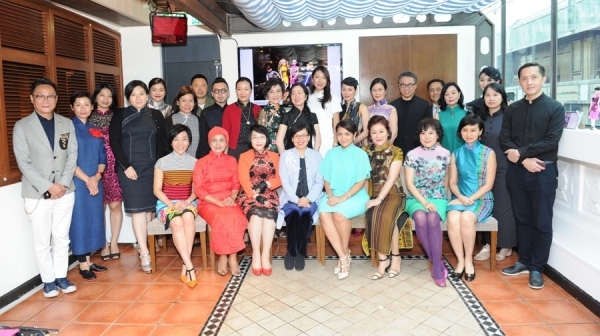
Cheongsam Connect, founded in 2015, recently held an event at the FCC to promote the traditional dress. The event was attended by seven designers who showcased the unique cheongsams they’d designed for the wives of consular generals from Finland, Hungary, Indonesia, Ireland, Korea, Malaysia and Turkey.

The seven designers created unique designs of the traditional dress for each lady. One dress specially designed for the wife of the Irish consulate general, featured a shamrock pattern on lace and the green, white and orange colours of the Irish flag.

We spoke to one of the designers, Grace Choi, and co-founder of Cheongsam Connect Donna Cheung about how they promote cheongsam and how it’s marketed to younger women.

Designer Grace Choi

( ) Designer Grace Choi and spouse of consular corp of Malaysia

What’s your involvement with this event?

I designed a cheongsam for the Malaysian consulate general’s wife. I actually designed it for her to wear to a gala dinner event to show off cheongsam culture and my brand.

What made you quit a successful career as a model to start your company, Yi-Ming?

My life has been surrounded by fashion so I have learnt a lot about fashion, design, marketing and sales. A lot of my friends kept on asking me where to buy cheongsam. It was then that I realised it was a good market to get into because there is no real choice, especially in modern styles.

How is cheongsam received by younger women in Hong Kong?

It isn’t that popular to be honest. If you look at Japan where girls wear a kimono on the street, you don’t really see younger women wearing cheongsam here. They will only wear it for special occasions.

It is only really middle-aged women who wear cheongsam, but what about the younger generation? If the younger generation fails to embrace this culture then it will disappear. That’s why my designs are aimed at younger people.

How do you try to attract younger women?

This is where the design is really important and what sort of material I use. Traditionally with cheongsam, women will use a traditional tailor. But in the modern day, women don’t have the time to choose the fabric, go for a fitting and wait three months for the dress.

Now they can walk into a shop and get the size and walk out. It makes their life easy. If you don’t do it this way, then less and less women will choose to wear cheongsam. It needs to be suitable for this day and age.

How has western style influenced your cheongsam designs?

You can see a lot of western colour patterns and fabrics and materials. Usually the traditional cheongsam uses silk and patterns with a dragon, phoenix or flowers. I still use a lot of floral patterns but the design is slightly different. I will use my own photos of flowers and then put the digital print on the dress.

Also, stretchy fabric is really important. In the past a woman would have to wear the same bra when she goes for the fitting and when she wears the cheongsam. Nowadays we make cheongsam from flexible and stretchy fabric. It is also important that the cut isn’t too tight so a woman can sit down comfortably.

Cheongsam Connect co-founder Donna Cheung

What’s your role with Cheongsam Connect?

I co-founded Cheongsam Connect with Anita Tsang over two years ago. It happened by accident actually.

I attended a social dinner and we all decided to wear cheongsam, which was the first time I’d worn the dress in 40 years. During the dinner, I was taken in by the elegance of the women wearing their cheongsam and this opened my mind to this beautiful dress. Since then Anita and I have organised more social events to promote cheongsam.

How do you promote cheongsam?

We wear cheongsam for all occasions. Traditionally it is associated with formal wear: wedding banquets or galas. We try to advocate wearing it to work in a simple plain colour or a modest colour. To wear with jackets or on business trips and even luncheons and teas.

We also have young women who wear cheongsam for sport. A lady actually ran the Boston Marathon in one. I play ping pong in my stretchy, casual one.

Text: Andrew Scott

Lasting Legacy: Ex-director of The Macallan on the world’s most valuable whisky

Image 3

Sotheby’s recently held an auction in Hong Kong where the Macallan in Lalique Legacy Collection – a set of six crystal decanters containing the rarest of The Macallan’s single malts aged from 50 to 65 years old – sold for US$993,000 (HK$7.7 million).

David Cox, who recently retired as director of fine and rare whiskies for The Macallan, flew into Hong Kong for the ‘Finest & Rarest Wines and The Macallan’ auction.

David, who worked in the scotch whisky industry for 35 years, played a lead role in the development of The Macallan in Lalique Six Pillars series.

We spoke to David after the auction about the Six Pillars, brand identity and how The Macallan is received in Hong Kong and China.

How did The Macallan establish such a strong brand identity?

Before The Macallan was marketed as a brand in the 1980s, the product had long been admired and sought after by blenders as a ‘top dressing’ single malt. It was also popular among a small number of consumers who enjoyed its distinctive rich, full-flavoured character, much of which owed to The Macallan’s use of sherry casks from Spain for maturation.

Since that time, what was something of a cult-like following by a few has turned into an ever-growing loyalty by many around the globe. This is down to the merits of The Macallan’s product reaching a wider audience through active engagement with trades and consumers. This engagement is grounded in some product truths –  the Six Pillars –  which have been consistently talked about and understood by trades and consumers. Consistency has therefore been critically important, which is based on a great appreciation of outstanding and distinctive product quality.

Have you tweaked the brand at all for the China and Hong Kong markets?

We maintain the prestige and luxury positioning for all markets across the world. It is arguably the most precious whisky in the world, substantiated by the multiple world records of ‘The Most Expensive Whisky Ever Sold In Auction’ by The Macallan 64 Years in Lalique Cire Perdue Decanter and The Macallan Imperiale 6L M-Decanter Constantine.

How’s The Macallan received in China and Hong Kong?

The Macallan is received exceptionally well across Hong Kong, Taiwan and China. The consumers are basically professional, upper income and high net-worth individuals. The brand also has a good following among younger consumer groups, which is a visible trend in Asia among single malts.

The younger consumers are more open in terms of trying new categories of drinks, single malts among the many they are experimenting with. They collect, collate, categorise, compare and conclude which ones they prefer and for what occasions.

What’s the biggest challenge for The Macallan in this region?

Supply has always been an issue.The challenge is to always stay vigilant, always aim to be better and to always put consumers at heart. We always remind ourselves to stay close to our customers, be relevant to consumers and be aware of any changes in the market.

What is The Macallan in Lalique Six Pillars collection?

It is a celebration in crystal decanters filled with some of The Macallan’s oldest and rarest whiskies – the oldest was filled to cask in April 1945.

The Macallan’s Six Pillars are six facets of The Macallan which, when taken together, help explain the distinctive, rich character of the whisky.

Capture16066a_b

What exactly did you do in your lead role in the development of The Macallan in Lalique Six Pillars series?

I was introduced to Lalique back in 2004, and at the time my plan was to develop a series of decanters in crystal to celebrate the six pillars, releasing one every other year, making this a 12-year project.

I was immediately struck by the extraordinary artistic legacy of Lalique and felt they would not only deliver an outstanding series of unique crystal decanters, but that we also shared many values which would ensure a partnership of understanding and longevity. I am delighted to say this proved to be the case.

You were in Hong Kong for the auction at Sotheby’s. How did it go?

The result exceeded our expectations. The combination of The Macallan’s unrivalled reputation in single malt whisky, allied to Lalique’s artistic inspiration, helped to ensure that the Legacy Collection, the only complete collection of Six Pillars decanters ever released by The Macallan, achieved a world record hammer price for a single lot at auction. Most satisfying of all, though, is the proceeds will be divided equally among five charities.

The Hong Kong charities are:

Society for the Community Organization, which supports disadvantaged people in Hong Kong.
Food Link Foundation, which specialises in coordinating food needs for disadvantaged families in Hong Kong.
Crossroads Foundation, which supports disadvantaged people in Hong Kong, specifically helping unemployed people who lack the required skill sets between jobs.

The regional charities are:

Watsi, which provides support to those in need of medical and surgical support and works globally and regionally.
One Sky Foundation, which supports orphans in Asia-Pacific.

Each of the five charities will receive a 20 percent donation of the net proceeds. The first three charities are based in Hong Kong and the last two work in Asia-Pacific, so Hong Kong charities will share 60 percent and Asia-Pacific charities will share 40 percent of the net proceeds.

In 2015, The Macallan was the most valuable whisky brand at auction, why do you think that was?

The Macallan has been the most valuable whisky brand at auction ever since the first whisky auctions were held in Scotland in the late 1980s. I think it derives from a combination of our great reputation, a track record of high prices and ever increasing value and, in the case of some Macallan products at auction, of scarcity.

Text: Andrew Scott

Jason Cohen discusses the hospitality industry, forging success in Hong Kong

Opening

Jason Cohen is a founding shareholder and executive director of the Cé La Vi Group, an owner’s representative for The Fleming hotel and CEO of Representasia.

How did you get into hotel and restaurant marketing?
I grew up in Hong Kong and my family travelled a lot when I was a kid. My parents had a lot of friends in the hospitality business – GMs of hotels or in the restaurant business. From a very young age I grew up with a deep interest in the hospitality business and it was all basically through travel.

Click here to watch the video

When I moved back to Hong Kong from Australia – where I went to boarding school for two years and then university in Melbourne – I was trying to decide what to do. I was a little bit lost and unsure. My uncle worked for the Grand Hyatt hotels and I’d done an internship at the Hyatt before. He asked me if I wanted to work there. I worked at the Hyatt for a few years and then I went on to manage a small boutique hotel, which was the first hotel in Asia by (renowned architect and designer) Philippe Starck. I found that moving from hotels to food and beverage and then on to nightclubs was a natural sort of gravitation, which is how I ended up where I am today.

How has the market changed in Hong Kong since you’ve been here?
I moved back to Hong Kong in 2000 so the handover had already happened. I don’t think we saw a quick change in anything at that time. But now, 20 years on there has been a massive change. At the moment, Hong Kong is going through a little depression so it’s been tough for hospitality. Hotels are down. Restaurants and nightclubs are down. The market has changed in the sense that in the last few years we have significantly fewer Chinese mainland tourists, who I think have been good for Hong Kong. However, Hong Kong is still a great place to have a business and a great place to live, which is why I had no problem moving back here from Australia. Melbourne was like a backwater compared to Hong Kong and I couldn’t wait to move back here. I was always going to move back once I’d finished what I was doing in Australia.

A-3865


You work with The Fleming hotel. What’s your role there?
The Fleming hotel is owned by the Hui family. My childhood friend John Hui and I basically started it 10 years ago. We took this rundown property in Wan Chai and converted it into a boutique hotel. Because of my experience in the hotel industry the family asked me to help with the project.

It’s a very exciting time because we closed it last summer to carry out renovations and we are reopening it in August/September this year as a brand-new property. Everything is different, from branding and the interiors to the food and beverage offering. It’s a small boutique hotel with 66 rooms and it has a chance to stand on its own in the market. We are not competing at a star rating because we are a boutique hotel. The Fleming can also offer connections to the local market and curate an experience to each traveller, which I think big hotels struggle with.

What’s your role with Cé La Vi?
My partners and I started Cé La Vi in 2010. The first one opened in Singapore on the roof of the Marina Bay Sands. Since then we’ve opened branches in Bangkok, Hong Kong and we have a beach club in St Tropez. We are opening a Cé La Vi in Kuala Lumpur in October/November this year. We have plans to open one in Taipei and Dubai. We always try to choose iconic locations for whatever city we plan to open a Cé La Vi in.
In 2014, we sold a stake to a private equity fund run by LVMH called L Capital. Now I’m responsible for the Hong Kong business with the general manager and I’m focused on expanding the business into Asia and greater China.

 “My working life has been success mixed with failures along with investing in some things that have worked and some things that haven’t worked.”

You travel a lot with work. What are your favourite countries?
I travel a lot to Singapore because the head office is in Singapore. Recently I’ve been travelling a lot for work into China. I was in Taipei recently. From a personal perspective, though, I love Japan. From Tokyo to the mountains of Niseko. I started snowboarding a few years ago and I’m completely obsessed by that.

What’s a typical day for you?
At the moment The Fleming is under renovation, so I’m working more out of the Cé La Vi office. I start and spend my day there. Four days out of five I’ll have lunch at the venue and hold meetings in and around Cé La Vi.
I always try to find an hour to go to the gym in the afternoon and head home to have dinner with my daughter around 5:30pm. I then shower and change and head back to Cé La Vi – depending on the event it could be an early or late night.

A-4213_path

How do you unwind after work?
I try to go to the gym for an hour every day and that really helps. On the nights I am home I try to eat a healthy meal. And we are obsessed with watching TV shows. I also enjoy a good cigar every now and then.

What other restaurants in Hong Kong do you like?
I’m a huge fan of all the Black Sheep restaurants. Recently the restaurant I thought had some of the best western food in Hong Kong was Belon on Elgin street. I’m a huge fan of Ho Lee Fook and Mott 32. We also eat a lot of traditional sushi.

A-3934

How important is family to you?
Family is pretty much everything. I’m very lucky because my wife grew up in Hong Kong. My daughter is now here too. Both of our mothers are in Hong Kong and we see them regularly. We have a tight family unit and a good network of friends due to me growing up here.

What’s your proudest moment?
It would be the day my daughter was born from a personal perspective. From a work perspective, it was the day we inked the deal with L Capital.
I don’t come from a financial background or legal background so being involved in a big private equity deal was a huge learning experience. It took two years to get to that point and once we signed the deal it was a huge sense of accomplishment.
My working life has been a gradual process: Success mixed with failures along with investing in some things that have worked and some things that haven’t worked, but you have to keep moving forward. That’s how I look at life.

Thank you.

Text: Andrew Scott

Claudia Shaw reveals how she juggles family, spirituality, writing and a successful career

A-8204_eff

Claudia Shaw is a buyer and head of style advisory for Chanel and has also co-authored two cookbooks.

As someone who was raised in Hong Kong, do you feel like it’s a good environment to grow up in?
Yes, I did and I do. I think a lot of people think of Hong Kong as a very dense city with not a lot of open spaces – but we have so many amazing and beautiful parks, mountain trails and beaches. I think that is a side of Hong Kong not many people realise we have. Growing up, I spent a lot of time outdoors. My mother is Austrian and we did a lot of hiking and swimming and that was all very much a part of my childhood. I always feel I was very fortunate to have grown up in a bustling metropolis that also has a great deal of nature and outdoor activities. So it was a great mixture of the two.

Click here to watch the video

We have so many country parks that are protected so you can actually walk and not see any high-rise buildings and find yourself out in nature where there are snakes and wild boar. Just the other day I was out walking and I came across a little python strewn across the path. And quite recently near my home I came across a wild boar rummaging right next to me and I just thought how incredible that is for such a busy city.

You are renowned for your style and your fashion sense. Is that something you have to work at?
I would say it comes quite naturally and it is not something I find incredibly difficult. I think that is because I am quite relaxed about it and I never try too hard to be something. I don’t follow fashion religiously or believe something is the style for the season so you must have it. When you are relaxed about things they come easier. It’s also about knowing your own style. I know what is comfortable and what works for me. I was also fortunate enough to grow up with a mother who had a great sense of style so I guess that was instilled in me.

A-8497_eff

How would you describe your sense of style?
I think there is a sense of timelessness to it and I feel like that is why my relationship with Chanel has been so long and solid, because it is very much my sort of style. I wouldn’t say it is simple but it is timeless. There is no wildness about it. It is not overtly anything but it has a very classic sophistication without being outdated.

You mentioned your relationship with Chanel, can you tell us what that entails and what it has meant to you?
It affords me a lot of interaction with people and that is what I have very much enjoyed over the years – not just with Chanel but also developing relationships with clients, giving them confidence and advising them to try different things to expand their horizons and step out of their comfort zones a little bit.

The other side of the industry is being involved in the buying. For example, going to Paris several times a year and really tapping into your creative side – not that I am creating, but you still feel the buzz and you feel the creativity, and that gives you a sense of excitement.

You also enjoy cooking and have written two cookbooks. What motivated you to do that?
It was quite simple actually. A friend and I were both sitting at lunch and discussing how we both love cooking, we both cook a lot for our families and we come from families where food is such an important part of daily life.

So we were talking about how much we enjoyed eating at each other’s houses and I think I mentioned that I would love to write a cookbook one day. Then we just said ‘let’s do it’ without thinking about whether it would be complicated or how we would go about it. It was just one of those things where nothing is impossible if you set your mind to it.


You have used the proceeds of your books altruistically. Can you elaborate on that?
The first book benefitted a group of local charities and proceeds from the second book went to Room to Read (an organisation to improve literacy in the developing world). It’s about giving back. I feel that we are so fortunate and life should not always be about oneself. It should not just be about me. You need to ask, ‘What can I do to give back?’ I feel that is one of the great purposes of life.

Are charities something you feel strongly about?
I’m not sure I would say charities in particular but rather service, the act of giving back. How can I be – without sounding too lofty – of service to humanity? It’s this whole idea of giving and the idea that as you give, so shall you receive.

I understand spirituality is something that you are quite involved with?
For quite a few years I have been studying with a teacher who founded a meditation centre called the Samadi Training Centre for the Soul. It’s a place where you can go to connect and meditate, and for me that has been very grounding. It’s as if I have a world on the outside connected to people and society and beautiful clothes and glamour. And then I have a side that is very much focused on being centred and grounded in a much more spiritual way.

A-8377_effAre you religious?
I find religion quite man-made. There are a lot of rules and they can be quite exclusive whereas when I say ‘spirituality,’ it is inclusive of all religions.
I was brought up Catholic so I am very comfortable in a Catholic church. But I find religion and spirituality can be two different things.
I find organised religion too dogmatic. I am not sure God, being all benevolent, meant for us to live by all those rules.

What is a typical day for you?
Usually I am up quite early and I start with a morning meditation session for an hour. It is the perfect way to start the day. In the beginning, it was a little difficult with the early morning practice but even the Dalai Lama is up at 3:30 in the morning. When you talk to Buddhists they always say meditation should be done early in the morning because that is when your mind is the calmest and the energies in the world are the calmest.

You have a successful career and a public persona as well as a close family and your private persona. How do you manage to juggle all that?
Sometimes I feel a little frazzled and feel like I’m being pulled in different directions. But my spiritual practice has involved not letting the mind control feelings. If your energy is a certain way, that is the way you will think, so it is really about pacing yourself and prioritising. Sometimes family takes priority and other times work does, but the main thing is to avoid cutting corners.
Whatever you are doing, do it all the way and don’t move on to something else until you are done. Give 100 percent and stay in the present.

So you are not one of those people that wish there were more hours in the day?
Well yes there are times! Sometimes the outward persona is not what is happening on the inside! But you know what they also say: ‘Fake it ‘til you make it.’ There are those times when you have to pull yourself together and put the theory into practice.

A-8818_eff 

What is your advice for women looking to enjoy a successful career and a family?
I think you have to do it because you love it. If you are doing it for any other reason and you are not happy doing it, you won’t be successful. I have to say in the beginning it was difficult juggling motherhood and work but I was really fortunate with Chanel in that they allowed me the time to be with my children so I feel I am successful at work but I wasn’t an all-out career woman. I had the ability to be with my children when I needed to be, thanks to the company. If I hadn’t had that freedom and if I had been made to choose one or the other, my kids would certainly have come first.

Has motherhood had a dramatic impact on you?
I think I became less self-centred. Before you have children life revolves around you, because you have no one else to be responsible for. When you have children life is about them and you come out of yourself and you have to think about someone else for a change. In the same vein at work, if you are not listening to your boss or your colleagues you are not a good employee.
I can’t imagine life without my kids. They drive you crazy sometimes but they are an absolute joy as well.

What was your dream profession as a child?
I wanted to be a ballerina as a kid, I really loved ballet. I also love the art world but when I first came back to Hong Kong (the art scene) was quite small. I kind of fell into fashion but I believe that the universe is precise so I must be where I am meant to be.

What does the future hold for you?
I would like to see how I can give back and be of service. Learn more in order to give more. If anything, that is what I hope my future holds. Maybe using my experiences – whether they be good or bad – and helping someone else who finds themselves in a similar situation.

Thank you.

Text: Hans Schlaikier

Herr and Mighty: Watch our interview with Central’s newest barbershop owner

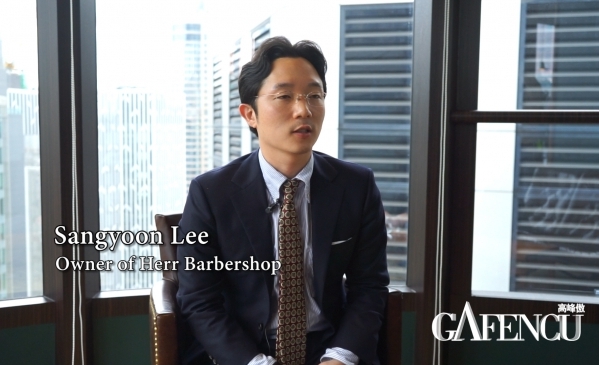
South Korean barbershop Herr opened its first foreign branch recently in the heart of Central, on the 29th floor of Attire House.

Herr was founded by Sangyoon Lee in Seoul in 2013 to encourage men to look their best, while feeling comfortable enough to build a rapport with their barber, who in turn shares knowledge on haircare and grooming.

Herr offers an intimate experience, with only two barber seats and with its view out of the wraparound window on the 29th floor, guests escape the hustle ‘n’ bustle below.

Herr is a barbershop aimed at the discerning, modern Hong Kong gentleman, which is evident by some of its collaborations in the past — Louis Vuitton, Gucci, Tods, Club Monaco, Patek Philippe and Four Seasons Hotel.

Due to its partnership with Attire House, visitors to Herr can also peruse ready-to-wear clothing, bespoke tailoring or enjoy a drink in the roof-top bar.

We met with Lee to find out what Herr offers and why he chose Hong Kong, and we watched a shaving demonstration.

Herr barbershop

29th Floor

8 Wyndham Street

Asia Pacific Centre

Central

2619-9007