Sonus Faber’s CEO on how its new speaker collection pays homage to Italian roots

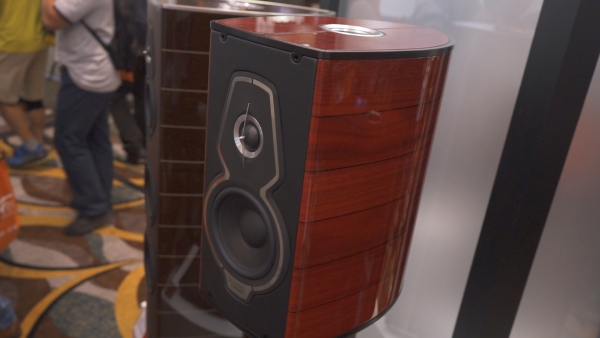
Hong Kong techies turned up in droves to get their hands on the latest high-tech gadgets at the 2017 High-End Audio Visual Show. One of the more luxe exhibitions featured top-shelf audio brand Sonus Faber’s new Homage Tradition Collection.

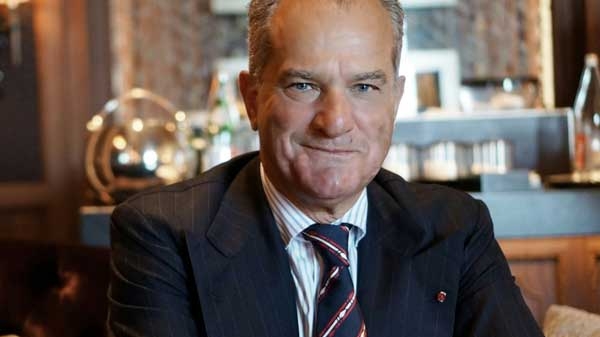
We caught up with CEO Filippo Fanton to find out what was on offer, and why the collection is a true ‘Homage’ to the brand’s Italian roots.     

Shop Talk: Our chat with Salvatore Ferragamo’s son ahead of flagship reopening

Leonardo Ferragamo, fifth son of Italian fashion label Salvatore Ferragamo’s eponymous founder, was in town to celebrate the reopening of their flagship Canton Road store. He spoke to us about his childhood, his special relationship with Hong Kong and his various projects.

Was fashion a personal interest or did you join the family company out of a sense of duty?

My father, Salvatore Ferragamo, immersed all his children into the world of fashion at an early age. It’s impossible to be surrounded by such passion and dedication and not feel at least slightly invested. I also watched my elder siblings enter the company and achieve personal successes. Call it sibling rivalry, but it made me want to do the same.

What significance does Hong Kong have for you and the Salvatore Ferragamo brand?

My first trip to Hong Kong was also my first trip to Asia. I came to explore the region years ago as Director of Commercial Activity for Salvatore Ferragamo. The trip left me with a contradictory sense of frustration and excitement. Excitement at the vibrancy and potential I found, and frustration that we hadn’t already tapped into the markets here.

I returned to Florence to share my findings with the family. Four days later, I was on a plane back to Hong Kong. We opened our first store here in 1986, and the city became our gateway to the rest of Asia.

Hong Kong remains special for my family to this day – the fact that we are all in town to celebrate the reopening of our Canton Road flagship store demonstrates that clearly.

Aside from your role in your family’s company, what other projects are you involved in?

I am chairman of Nautor Swan, a highly regarded Finnish luxury sailing yacht builder. The company builds fantastic sailing vessels for both leisure and competitive use. We just celebrated our 50th anniversary.

I’m also president of the Lungarno Collection, a luxury Italian hotel group. We have many properties in Florence and one in Rome. Each one has a unique personality and architecture, but all are dedicated to providing guests the utmost in service and luxury.

Do you find it difficult to balance such diverse interests?

It can definitely be challenging at times, but it’s a challenge I thoroughly enjoy. I’m truly blessed because each project I’m involved with is something that I’m deeply passionate about.   

Thank You.

 Text: Tenzing Thondup

The Vinci Code: Vinci Wong on becoming Tung Wah chairman and LGBT rights in the city

Vinci Wong is founder and chairman of Chinese medicine pioneer 3 Kings Holdings, a subsidiary of the Wongs’ WKK Group. Following his highly publicized marriage to partner Kevin Chow last year, he also prepares for the coming year as chairman of the city’s most prominent charity organization, the Tung Wah Group of Hospitals. We caught up with the former TVB star at the new Kerry Hotel (a Shangri-la brand) in Hung Hom.

Your career took off when you became a talent with TVB and artist with ATV. Did you always see yourself getting into entertainment?

I’ve been enamoured with the entertainment industry since I was young. I liked to express myself. Whenever they had games on those radio programmes I’d always phone in – not for the prizes, but for the thrill of hearing my own voice on air.

What were your first steps into that career then?

My first forays were in radio, during my days in Vancouver. I spent high school and university in Canada, where I entered an international Chinese DJ contest. I got into the top 10, which landed me a gig in one of Vancouver’s Chinese radio stations. I worked there for four or five years. Once I finished my studies, I came back to Hong Kong and joined Metro Plus Live, and then TVB.

What made you decide to move?

It was time. I was with TVB from 24… 13 years later I was already towards my 40s.

I had a lot of opportunities, but it was getting repetitive. A lot of shows are done every year, like the annual countdown, beauty pageants, charity shows. I found myself standing on stage and saying the same thing again and again. I kind of got scared, asking myself ‘Do you want the rest of your life to be like this, doing the same thing?’

I couldn’t find anything new about what I was doing. I could still manage to change myself, but had I waited 10 more years it would have been too late.

Let’s talk about your upcoming year as chairman of Tung Wah, which starts next April. What are your plans for that?

I want to create more awareness about Tung Wah. Most people might think that it’s old fashioned as it’s been around for 150 years, but I want to change that. I hope I can leverage my prominence as somebody people have been seeing on TV over the years.

When you married your partner of 7 years, Kevin Chow, in Vancouver last year it made the headlines in Hong Kong as the first same sex marriage in local entertainment. How did people react?

My family, relatives, old school friends and even the management at Tung Wah – they all supported me. This gave me a lot of confidence to take the next step in our relationship, and I’m thankful for that.

It’s been in my head for a long time: If I met someone I think is the right one, should I get married? But before meeting Kevin, there was never the right person.

How was your journey coming out?

Whether straight or gay, you just know it inside of you. It wasn’t something I ever questioned. In my generation especially it wasn’t easy; I told my family when I was in my twenties and I had other problems making me unhappy. On top of all that I was tired of hiding my sexuality, so it happened all at once. I told them about my problems, ‘Oh and by the way, I’m gay’ [laughs].

They might not have embraced it at first, but it wasn’t a big drama. In the end they not only accepted it but wanted me to find the right person with whom to have my own life and family as well.

After you married Kevin, you became a role model for the city’s LGBT community. How are you handling that unintended role?

I do my best… a lot of organizations like Pink Dot and BigLove Alliance call us to support their events; we’re asked to join demonstrations like the gay parade.

We would definitely want to do more for society, for younger ones of future generations. We’re talking about equality here. Same sex marriage is a must in the future.

Text: Julienne C. Raboca

For the full article, please check out the latest issue of Gafencu’s print magazine or the Gafencu app. Download the app from the Google Play Store or Apple App Store


Remembering Sir David Tang: Entrepreneur, raconteur and all-around Renaissance Man

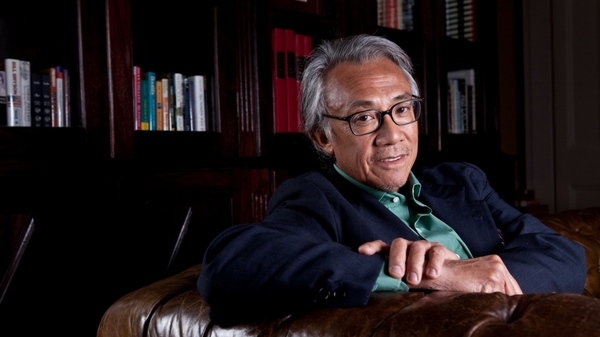
In 1996, Australian journalist Clive James made the (then relatively laborious) voyage from Hong Kong Island to a quiet seaside villa in Sai Kung. His mission: an audience with Sir David Tang, a prominent Hong Kong businessman and founder of the China Club.

In those days, the 1997 handover loomed large in the minds of the city’s European expatriates, and the event was a focal point in James’ Postcard From Hong Kong documentary. To that end, he sought authoritative commentary on Sino-British relations from the back channel diplomat equally at home in both worlds.

When pressed on the supposedly irreconcilable differences between English-style governance and a resurgent Beijing, Tang simply replied, “Being pro-China doesn’t mean that you’re anti-British, nor if you’re pro-British that you’re anti-Chinese. They are not mutually exclusive.”

That soundbite – so often sidelined in favour of uproarious morsels from his Agony Uncle column in the Financial Times – encapsulated the cultural agility with which this raconteur navigated life, business and politics.

Locally, the Tang lineage is well documented. His grandfather, the legendary Tang Shiu-Kin, founded the Kowloon Motor Bus Company in 1933. Tang later emigrated to Britain in the 1960s and began his formal education at the Perse School, where he demonstrated an affinity for mathematics and languages (French, Latin and Russian).

Beginning in the early ‘80s, Tang embarked on a colourful career. After practicing law in the employ of his grandfather he engaged in international oil exploration under the mentorship of English swashbuckler Algie Cluff.


He later became the exclusive distributor of Habanos S.A. cigars in Hong Kong, all the while founding numerous autobiographical businesses – namely The China Club and Shanghai Tang – that have gone on to achieve institutional status. The latter enterprises, particularly throughout the 1990s, were instrumental in enriching Hong Kong’s cultural capital: birthing a fantastical visual style that evoked various artistic traditions, all of Chinese heritage.

Under the guise of high-concept chic, foreigners were – perhaps for the first time in centuries – reacquainted with the notion of something “made by Chinese”. David Dodwell, executive director at the APEC Trade Policy Group, says this was a purposeful rebuke to the “tawdry mediocrity of ‘Made in China’”. “‘Made by Chinese’ was something to be proud of, and it imbued the inspiration for Shanghai Tang,” Dodwell says.

Tang’s legacy of fearless outspokenness extends beyond the business world. Much fanfare has surrounded his too-numerous-to-name philanthropic endeavours: fundraising for the Hong Kong Cancer Fund; founding the Hong Kong Downs Syndrome Association; and patronage of the Hong Kong Youth Arts Foundation. But it is his contribution to Hong Kong’s socio-political discourse that illustrates a man concerned with more than pecuniary self-interest.

In his article The fine art of cultural know-how, written over a decade ago, Tang predicted the difficulties that today grip development of the West Kowloon Cultural District (WKCD). Tang likened the advisory group initially responsible for consulting on the construction of WKCD museum facilities to “people [who] do not live in the real world… those who believe that by just learning one bar a day on the piano, they can in 17 months play the whole of Rach Three.”

Measuring 40ha in area, the WKCD has held only one notable public exhibition to date while first phase building works suffer continuous delays. It was a criticism levelled in the spirit of genuine concern: evident in his subsequent calls for creative leadership sired within the totemic institutions of the Tate Modern and Guggenheim.

“We are smart,” Tang wrote, “but no matter how smart we are, we are in nappies in this business, and need to trace through that scimitar curve of learning.”

It seems a disservice to reduce a man such as Sir David Tang, KBE to a pithy anecdote. After all, he carried more legendary party lines in his breast pocket than most comedy writers think up in a lifetime. In addition to his writings, which will preserve his spirit for many years to come, he is survived by his wife and two children.

Text: Randalph Lai

For the full article, please check out the latest issue of Gafencu’s print magazine or the PDF version on the Gafencu app. Download the app from the Google Play Store or Apple App Store


Maverick misfit: Wing Shya on the art of being ‘wrong’

Wing Shya, a name that needs no introduction. We caught up with the maverick film and fashion photographer before the launch of his limited-edition photography books and an exhibition at Shanghai Centre of Photography on 7 November. From being an ideal ‘misfit’ to his idiosyncratic interpretation of Hong Kong, Wing touched on all things close to his heart.

What inspired you to become a photographer?

I had no plans of becoming a photographer. I chanced to do a photography project for some schoolmates, which they really liked and came back with more work. As I got more involved with photography, I realised that I really enjoyed shooting.

How has your education in the West influenced your work?

I found the cultures in Asia and the West to be radically different. While in Asia, we are inclined to be more conservative, in Canada, where I studied, I found out that we had freedom to try out everything. There was nobody to say ‘no’. That kind of creative freedom helped open my mind and expand my artistic horizons.

How was the experience of working with director Wong Kar-wai?

Wong Kar-wai is more like a father figure to me. He takes very good care of his entire crew. His ‘never-give-up’ philosophy of life has inspired me immensely. His genuine love for his work is also something that I have imbibed. I can easily say that Wong Kar-wai and his whole team have changed my life.

How do you balance the world of fine art with film and fashion?

I don’t believe in such strict labels. I treat them all equally as just work. I strive to blend the boundaries between fine art, fashion, photography, film, etc. I sometimes incorporate a ‘movie’ style of shooting to fashion shoots. I want to mix all the genres to have more fun and be more creative.

How do you satiate your own creative instincts while doing commercial work?

When I was young, I used to be selfish. I would push my clients to agree to my vision. But with age, I have become more understanding of my clients’ needs. We have an ongoing dialogue to understand their expectations better. We take into account market surveys. At the end of the day, I want them to earn more money as well. Through collaboration, we strike the right balance.

Hong Kong comes alive as a character in your work. How does the city inspire you?

I perceive a strange dichotomy in Hong Kong. While it’s such a busy city with so much noise, the individuals themselves are like islands of isolation in the midst of the busy, pushing, shoving crowds. I like making my photos super-noisy with bursts of colours, high saturation and sharp contrast. I want to capture the noise and the chaos of Hong Kong. But at the same time, I want to capture the loneliness of the people in the midst of the noisy milieu. I see Hong Kong’s women with such pretty faces and beautiful dresses, but their faces reveal their isolation. So through the blank stares of my models, I want to capture that ethos of loneliness. That’s my interpretation of Hong Kong.

How much importance do you lay on technique while shooting?

 I think the soul of the photo is more important. I have very limited idea about technique. I like using so-called ‘wrong’ techniques. I love being wrong. I love being a misfit. There are too many people using the ‘right’ techniques, I prefer to be wrong.

What is your advice to aspiring photographers?

My only advice is, don’t listen to my advice or anyone else’s advice. Just listen to your own heart and follow your own direction.

Exhibition details:

7 November 2017 – 14 January 2018
10.30 a.m. to 5.30 p.m. (open on all national holidays)
Shanghai Centre of Photography
2555-1 Long Teng Avenue, Xuhui District, Shanghai, China
Books are available for pre-order ($2,388 until 7 November)
http://www.forwardassembly.com/projects#/wing-shya-photography-book/

Text: Suchetana Mukhopadhyay

Gaw-Inspiring: Christina Gaw talks finance, family and faith

Christina Gaw is the managing principal and head of global capital markets at Gaw Capital Partners. She’s also a board member of the Women’s Foundation and treasurer of the Hong Kong Ballet.

Where is Gaw Capital primarily doing business?

The company currently has about US$15 billion under its management, and about half of that is in the Asia-Pacific region. The other half is evenly split between Europe and the US.

You formerly worked with Goldman Sachs and UBS. In your experience, how is working in a private company different to an international institution?

I spent nearly 16 years altogether at Goldman Sachs and UBS, which taught me a great deal about corporate governance. With big companies there’s a lot more hierarchy to contend with. Private companies, on the other hand, have the advantage of being flexible and less structured, allowing creativity to be displayed and embraced foremost.

What’s the biggest risk you’ve taken? Did it pay off?

After working at Goldman Sachs for nine years, I received an offer to work at UBS – a huge decision at the time. I ultimately went for it, and looking back, it was a wise career move because it allowed me to work for two very good but different institutions.

When faced with uncertainty, one thing I take comfort in is my faith. I’m a Christian and I pray any time I have to make big changes in my life. Once I have the prayers going, I can enjoy some peace of mind and trust that everything will work out if I welcome change. That’s why I tend to embrace risk in a positive way.

Considering that you work with your two brothers, how do you compare to them in terms of skills and styles of management?

My two older brothers and I are all very different, but our skill sets complement each other. Goodwin, my oldest brother, is a talented entrepreneur. In his role as chairman of Gaw Capital, he generates new ideas – sometimes a tad too many ideas, in my opinion, because I have to execute them [laughs].

Kenny is an extremely bright mathematician who has a keen eye for details, which complements Goodwin’s ideas and intuition in real estate.

As for me, I’m the fundraiser. My strength lies in interpersonal skills, and I think I’m very good at articulating what the other side of the table is thinking about. Being diligent in understanding investors’ needs is very important.

Do you have any role models you look up to?

My grandmother! My mum’s mother is 100 years old and she’s very healthy and energetic. She had her own textile business and moved here from Shanghai. Imagine being a business owner in those days and then having to start all over again in Hong Kong after the Cultural Revolution. It’s a tremendous example of tenacity and determination.

What hopes or dreams do you have for your children in terms of career?

I go to work happy and excited every day because I truly love what I do, which just so happens to be finance-related, but for my children it could be something completely different.

At this point, I want to give them the confidence to nurture their interests and talents. When I talk to young students, I always advise them to show energy and enthusiasm, engage others through networking and cultivate a sense of entrepreneurship. Not everyone wants to create a business, but you’ve got to have ownership of your work. To me, that’s entrepreneurship.

Thank you.

Text: Emily Petsko

For the full article, please check out the latest issue of Gafencu’s print magazine or the Gafencu app. Download the app from the Google Play Store or Apple App Store

Bow Ties and Timepieces: Accessories for today’s gentleman

Hong Kong horseracing is about to get glamorous with the upcoming Gentlemen’s Bow Tie Raceday.

The annual event – co-hosted by Oriental Watch Company and The Hong Kong Jockey Club – is a chance for HK racegoers to spruce up their everyday outfits with a bow tie for a more Dapper Dan-esque look.

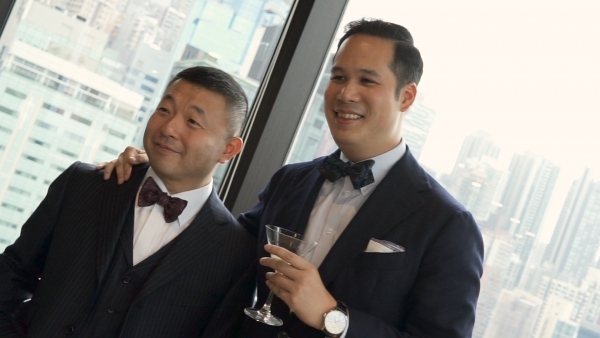
Not sure what to wear? No worries. We sat down with debonair men-about-town Albert Wong and Brandon Chau ahead of the event to get some tips.

Watch the video to find out what bowties represent to them, what they look for in a watch and what makes these the perfect accessories for today’s modern gentleman.

Alan Chan and Denise Lau on their new partnership to promote artistic living

Celebrated designer and artist Alan Chan recently collaborated with luxury furniture store colourliving in a bid to transform living spaces into objet d’art. The partnership will also yield some bespoke new services including personalised gift shopping, wedding registry and interior styling.

We caught up with Alan and colourliving’s CEO, Denise Lau to find out how they met, why they click their vision for the future.

What makes your partnership so successful?

Denise: We share a mutual vision on art and culture and how they affect lifestyles. For colourliving, we always wanted to curate a luxury lifestyle for customers. Luxury doesn’t have to be expensive. Luxury is an attribute of any object that you treasure or value, and something that makes you happy. The germ of this partnership with Alan was sown over a dinner conversation where we discussed our aspirations and found out we have a lot in common. It’s a blessing for us to be partnering with Alan.

Alan: I am not a businessperson. I believe, in order to be creative, you should distance yourself from a business perspective. So I am happy to rely on Denise to look at the business side of things, as she has a very sound judgment on these matters, while I am an emotional artist. It has been a very harmonious relationship so far, with clearly defined roles.

You are launching several bespoke services as well. Why?

Denise: For us, home is where our heart is. Space filled with a lot of nice furniture is not necessarily a complete space. There also has to be a personal touch, be it flowers, painting or any object that you cherish. This not only applies to homes, but also to corporate offices, hotels, showrooms, etc. We believe there is a lot of room for creativity for dressing up and beautifying any space.

Alan: Based on our experiences, we would like to advise collectibles for our customers that will enhance their living space. We want to help our customers create unique, personalised space, and to curate bespoke houses. It’s a completely new concept in Hong Kong in the retail furniture sector.

Do you have any design tips for our guests?

Denise: Ideas come to you when you are relaxed. Ideas come to you when you travel more. So take a step back, soak in the ambience in which you are and beautiful, unique ideas will come to you about how to make your living space a memorable one.

Thank you.

Interview: Tenzing Thondup

Charles Pang’s son celebrates 100 days with much fanfare

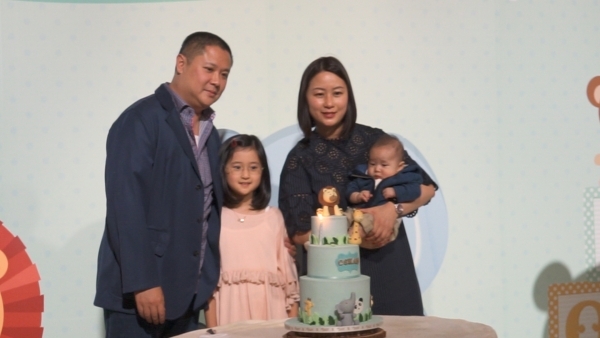
According to Chinese tradition, passing a newborn’s first 100 days is cause for celebration. Proud parents Charles and Carolyn Pang marked the auspicious occasion with a lavish party at Hong Kong’s luxurious Four Seasons Hotel.

The intimate celebration was well attended by close friends and family – some who flew in just for the special occasion. A slew of local celebrities also came to show their support for baby Oskar.

The children were entertained with cotton candy, colourful manicures and balloon animals, while the adults enjoyed an evening of fantastic food and great conversation.

Oskar, the star of the show, happily posed for photos with his well-wishers throughout the night.

William Lok speaks about racing and the recent Le Mans victory

WIN Motorsport founder William Lok has driven his team to a regional Le Mans victory, and he doesn’t plan on slowing down now. As a professional racing driver, he founded WIN Motorsport, the first Hong Kong racing team to win a regional Le Mans Prototype championship.

What was your first time behind the wheel like?

I was 14 years old. I had a job as a paperboy in Canada and I made the rounds by bike in the summer. When it got to be winter it wasn’t so pleasant, so I started stealing my mom’s car. It took a quarter of the time, and for the rest of my shift, I’d take her car for a couple spins. One morning I came home as usual and she was standing in the garage.

We struck a deal that if she allowed me to take my driver’s exam on my 16th birthday [the legal age in Canada], I wouldn’t steal her car anymore. She agreed, and on the morning of my sweet 16, I got my driver’s licence.

Once you started (legally) driving, how did you break into racing?

My mother moved back to Hong Kong when I was 17, which gave me the freedom to start learning about racing. One day I walked into a garage to ask for a job, and one of the guys asked, ‘What are you good at?’ I said, ‘I don’t know, I just love cars. If you let me touch a car I’ll be happy.’

So I started working there as apprentice to the mechanic. After a couple years, the boss of the garage recommended that I go to Portland’s International Raceway for a track day. So I went down there and met one of the instructors, a BMW North America champion.

He taught me proper racing techniques, and at 19, I was offered entry to the BMW North America Junior Programme. The problem was that I didn’t have enough money to join. Working part-time and studying was already taking up a lot of my hours, and back in those days, my wages just weren’t enough to cover the cost.

I didn’t even talk to my mom about it because I grew up in a single-parent family, and a very traditional Chinese one at that – my mom didn’t consider sports a career. After that, I didn’t think about racing anymore. I graduated, moved back to Hong Kong, started my own trading company and became a normal businessman.

So what rekindled your dream of becoming a racing driver?

Timing and fate. The end of 2008 was the global financial crisis, so business was not going well for anyone. My companies weren’t doing too bad, but there simply wasn’t enough work for me. To fill my free time, I decided to enter an amateur race in Zhuhai. I hadn’t driven a car on any track for 18 years, let alone that particular track.

That day, I broke the Geely touring car challenge lap record for the track. I thought to myself, ‘If I haven’t driven in 18 years but I can break a lap record, there must still be something there.’

After that, I decided to start doing amateur racing as a hobby. I didn’t do well at first – for a whole year I couldn’t even break into the top 10 of a race. But in 2010 I competed in a GT race and finished on the podium. Standing on that podium made me smile and gave me a feeling I hadn’t experienced since before my mother’s death from cancer in 2004.

Her last words to me were, ‘I’m not asking you to be the most successful man in the world. I just want you to be healthy and, most importantly, happy.’ If my mother could see me now – the fact that I’m doing well professionally and writing history for Hong Kong and Chinese people in motorsports – I think she would be proud of me. Every time I win a race, the first thing I do is kiss my mother’s ring to thank her.

You’ve certainly made many motorsport fans in Hong Kong proud. How did your career progress from there?

After winning a few GT races at a competitive level in Asia, I decided to try something with more down-force – we’re talking about the Formula and Le Mans prototypes. When I told one of my friends, he jokingly said to me, ‘Bro, you’re like 40 and you’re trying to graduate to more down-force? The kids are 14 at those races!’ But I figured if I never tried, I would never know. I knew I wouldn’t be a Formula One driver, but who says I’m not a Le Mans driver? Who says I can’t do Indy? I’m happy I went for it, and I’ve worked very hard to make it a reality.

Looking back at what I’ve achieved so far, it’s nothing huge but it’s a good start, and I’m going to keep dreaming bigger. One very important thing in motorsports is that there’s no best – there’s only better. I’ve got to strive for better every time, even if I win a race by a minute, two minutes or five minutes. Being on the podium is nice, but coming in second means you’re the first loser. That’s the ego you need to have to be a champion driver.

Just four months after founding WIN Motorsport, your team went on to win the Asian Le Mans Sprint Cup 2017. How did you feel in that moment?

For me to have a team that just formed this year, and to start in the Sprint Cup and walk away with four pole positions, five wins in six races and one spot on the podium – it’s quite amazing honestly. I can’t thank the team more.

To be able to achieve something like that in the first season is astonishing. But again, we strive for perfection and there’s still a lot more we can improve upon.

My feelings that day were mixed, though. Two weeks before the race, my godmother in Vancouver – who cared for me after my mother returned to Hong Kong – became very ill when her cancer relapsed. I went to Canada to say goodbye, and from the burial service I flew directly back to Hong Kong to compete the next day. It was difficult, but I just took all that energy and put it towards winning the race for her.

I shed quite a few tears when I learned I had sealed the championship. It was an emotional moment. On top of that, carrying the Hong Kong flag on an international stage and showing people that I come from a city where there’s no race track – not even a go-kart track – made me proud to be a Hong Konger, a Chinese and an Asian in motorsports.

How did you meet your girlfriend, actress Christine Kuo?

We actually bonded over racing. We have a lot of mutual friends, and each time we met she wanted to know more about the sport. We are currently training her as a development driver, and when we got her on the track we were surprised by her calmness. It’s rare to see that. Motorsports may be male-dominated, but any woman can do it. It just so happens that more men are participating in the sport. But if anything, women drivers are calmer and may even make better decisions.

It’s amazing to see an Asian woman take an interest in racing – especially Christine, a former beauty pageant queen and actress who’s not really the sporty type. Where else can you find such an extraterrestrial beauty who loves racing? I never believed I could find someone like her. I thank my mother for sending an angel from heaven.

There are rumours that you might propose soon. Is it true?

We plan to get married. We want to spend the rest of our lives together, whatever we do. We just need to find the right time. She dealt with some sickness, but now she’s bouncing back in her industry and getting very busy. I’m also racing more and getting tremendously busy. I am only going to propose once in my life, and I’m only going to get married once in my life, so we need to plan it carefully rather than be bound by a timeline. When people ask if we’re engaged, I say, “We haven’t made it official, but in our hearts – yes, for sure.” Everything else is a matter of gesture.

When you want to slow things down, what do you do to relax?

Anything with sunshine and a beach. I don’t even need a mojito – I just need a glass of watermelon juice and I’ll be happy to chill with friends, family or my girlfriend. To me, that’s a perfect day.

What’s the next big championship or goal for you?

The next big goal is winning the Asian Le Mans (endurance) Series this winter to gain entry to the Le Mans 24 Hours endurance race. I prefer endurance races because it’s a total team effort, and no one is less than anyone else on the team.

We’re like a family – we play pranks on each other. On the birthday of our chief driver and coach, Richard Bradley, we tied him to a chair on the track and dumped ice water on him. That’s what we do when we’re not racing. But when we’re on the track, we’re so focused that we can’t hear anything except racing language.

I want to lead the first Hong Kong team with a Hong Kong driver to a Le Mans victory. Right now the only Hong Kong driver to make it to the Le Mans podium drives a GT. It’s still a very good achievement, but I want to win it in a Le Mans prototype, because that’s what that race is designed for.

My goal is to outdo myself every time I hit the track. I’ll do better than the last race, have a quicker lap time or do a longer stint with more consistent driving. I like to challenge myself.

Thank you.


Text: Emily Petsko
Photos: Neville Lee
Art Direction: San Wong
Video: Johnny Yau