
Meghan-Harry’s Big Day: Top five trivia on the royal wedding

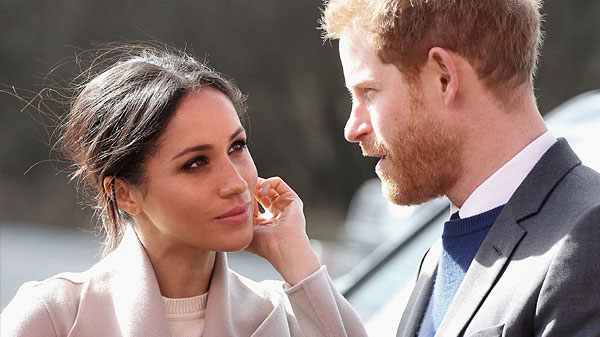
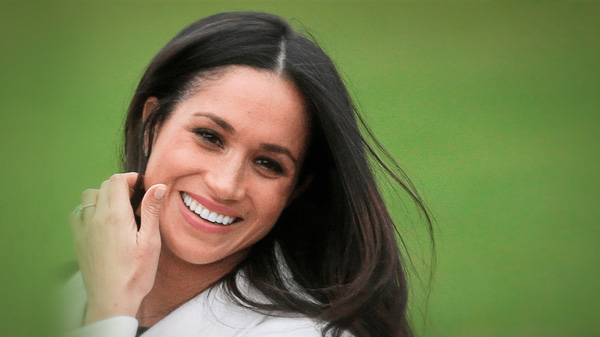
19 May is not just going to be a big day for Britain’s Prince Harry and Meghan Markle (read more about her here), but it may just prove to be the day when England’s rather antiquated royal family gets the shot of life it needs to stay relevant in today’s context.

So with the entire world giving in to the ‘royal wedding fever’, can we stay far behind? We have for you our top five trivia on the royal wedding ahead of the big day.

royal wedding

To commemorate one of their first dates together – a camping trip to Botswana – Prince Harry Prince designed Meghan’s engagement ring himself from a diamond sourced from Botswana’s famous diamond mines. The ring also features two gems from Harry’s late mother Princess Diana’s collection, and is crafted by royal jewellers Cleave and Company.

The bride’s wedding ring is, however, specially sourced from a royal reserve of Welsh gold. This unique gold comes from the Clogau St. David’s mine in Wales, and has been used to make royal rings since Queen Mother’s wedding to Prince Albert, Duke of York, in 1923. Since then, wedding rings for various royal princesses, including Diana and Kate Middleton, have been made from this gold.

royal wedding

Adhering wholeheartedly to the royal custom, Prince Harry sought the Queen’s permission before proposing to Meghan. Given that the British sovereign – in this case Elizabeth II – has to approve all royal weddings, it seemed Harry wasn’t taking any chances. After all, the last time a British royal family member married an American, he had to abdicate his rights to the throne!

In keeping with traditions then, Meghan Markle has already been baptised into the Church of England – one of the prerequisites for entering the royal fold – and is all set to become an UK citizen. The secret ceremony – in which only a handful of royal guests were invited – included holy water from the River Jordan being poured on her head.

But even if Meghan Markle may have conformed to this one tradition, she seems to be by far the most rebellious, progressive, liberal royal that we may have seen in a long time! When she was just 11, she campaigned against an ad for a washing-up liquid that seemed to imply that a woman’s place was in the kitchen. After she enlisted the support of a number of high-profile women, including Hilary Clinton, the then first-lady, the manufacturer surrendered and the ad was pulled.

Here’s hoping this firebrand feminist can inject one of the world’s most conservative families with a right dose of modernity!

Text: Suchetana Mukhopadhyay
Chloe Ho on her multicultural upbringing and life-long love affair with ink

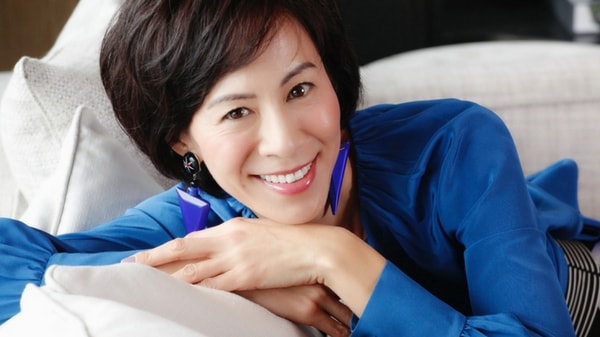
Feted at exhibitions in New York and Hong Kong, artist Chloe Ho and her ink works are the talk of a generation.

When did your artistic impulses first emerge?

Even when I was very young, I expressed myself through art. In Chinese International School (CIS), I was always drawing in the playground and my schoolmates would ask if I wanted to be an artist when I grew up.

In 1997, I won a contest for postcard design run by Time magazine. That led to my first appearance in an exhibition, with the winning entries showcased in the China Club. I was eight and that was the first time I received recognition as an artist. From then on, things just started to build.

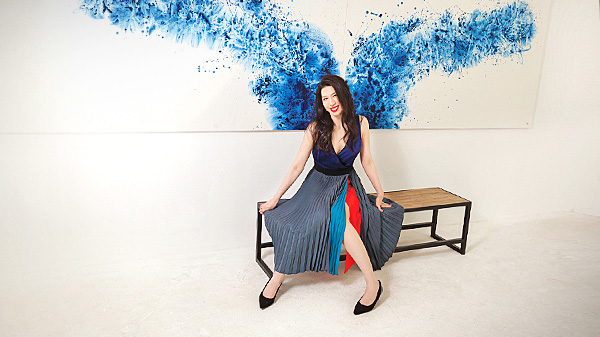
Chloe Ho sits in front of Wellspring, her ink-and-acrylic-on-rice paper creation

How does your international upbringing manifest itself in your works?

I see myself as something of a sponge. My international education exposed me to a range of artistic traditions from many different countries. Ultimately, I combined many of these influences when I came to create my own works, something that freed me from the stylistic rules of any one school or aesthetic.

Never one to follow trends, Chloe Ho sets the bar high with her ink artworks

You are particularly highly-regarded for your work with ink. What drew you to this medium?

For me, ink is almost a religion. I first fell in love with it holding a brush in a Chinese art class at CIS. Since then, my passion has only grown.

It is, however, an unforgiving medium. Ink does what it wants to do. Ink is bold and unapologetic, but it can also be subtle and sophisticated. It’s something you can’t enhance or emend. Ink is naked and unalterable. It’s a lot like life – you don’t get a do-over.

Chloe Ho Recently closed her Ascendence solo show

You’ve also experimented with 3D effects and virtual reality art…

For me, that strange marriage of art and technology is fascinating. It’s a new and evolving medium and one that raises fundamental questions about what we consider art to be. 

My most recent show – Ascendence – was focused on the concept of time, while also embracing humanity’s progress and the way we now use technology in our everyday lives.

Alongside this, I explored the possibilities opened up by VR painting, creating an installation you could walk through. Essentially, it was an immersive, ‘inner universe’ experience, one where users could actually interact with the art on show.

Chloe Ho poses at her art studio

To date, what have you been most proud of?

That’s a tough one to answer. There’ve been quite a few highlights along the way. Recently, my work was featured in the MGM Chairman’s collection. My show at New York’s Forbes Gallery also stands out for me. More recently, my Ascendence show wrapped here in Hong Kong. It was great that it was just so well received by Hong Kong art lovers.

Having said all that, as an artist, you always believe that your best work is yet to come.

For Chloe Ho, ink is almost a religion

Aside from your artistic endeavours, what else takes up your time?

I’ve been short-sighted nearly of my life and, a few years back, I suffered from a detached retina. As a result, optical health is a subject that is very close to my heart. It was this experience that inspired me to get involved with eye care in Hong Kong, and to launch the Chloe Ho Safeguarding Sight Initiative, a joint venture with the Hong Kong University School of Medicine. Together, we raise funds to help ensure that underprivileged children and adults get proper access to routine retina health checks and treatments. We also fund a free eye-testing service in Sham Shui Po.

For Chloe Ho, Hong Kong is buzzing with art

As an artist, how do you view your likely legacy?

The legacy of any artist has to be the work they leave behind. If it is to outlast its creator, it has to be strong enough to stand on its own and speak across the gulf of culture and time. I hope my body of work will convey how I feel about the world and the issues we all face.

On a more personal level, I hope to leave a legacy of kindness and generosity and I hope that I have – and will – inspire others to follow their artistic passions.

Thank you.

Interview by: Tenzing Thondup
Photos: Neville Lee
Art Direction & Styling: San Wong
Make-up: Margaret Wong
Hair: Eric Lee @ Kim Robinson Salon

Will Meghan Markle be the one to give a shot of modernity to British royalty?

Will 19 May see Britain’s Royal Family finally get the upgrade it needs to remain relevant in the 21st century?  After all, the royal family is ‘allowing’ a divorced, mixed-race American into its cloistered ranks. With the marriage of Prince Harry – the second son of the current Queen’s eldest son – to Meghan Markle (who ticks all of the above boxes) being widely welcomed by royals and common folk alike, the royal family may have just got the shot of life it needs to stay relevant in today’s context.

The Royal Family hasn’t always been so inclusive. Back in 1936, when Edward VIII wanted to marry a woman who ticked only two of those boxes (divorced and a US citizen), he was obliged to abdicate following fierce censure from all quarters.

So, then, just who is this woman that has won the heart of a prince and is now wooing the approval of Brits of every hue? Previously best-known for her role playing a newly-qualified lawyer in Suits, a US legal drama, Meghan Markle was born in Los Angeles in 1981 to a Dutch-Irish father and an African-American mother. Clearly proud of her ethnicity, she says: “While my mixed heritage may have once created a grey area with regard my self-identification, it allowed me to keep a foot on both sides of the fence and I have come to embrace that.”

That Meghan had all the makings of a strong, independent woman was apparent from early on. When she was just 11, she campaigned against an ad for a washing-up liquid that seemed to imply that a woman’s place was in the kitchen. After she enlisted the support of a number of high-profile women, including Hilary Clinton, the then first-lady, the manufacturer had to pull down the ad.

Subsequently, she used her celebrity status to continue to drive her feminist agenda, largely via The Tig, her campaigning blog. She has also worked closely with the United Nations to promote gender equality. In 2016, she also travelled to Rwanda to promote World Visions’ Clean Water Campaign.

Commenting on how she balances her career and her charity commitments, she said: “It’s true that my life shifts from refugee camps to red carpets. I choose to do both, however, because these worlds can and do co-exist. For me, they must.”

In the UK, she has already begun her charm offensive, one targetted at both the British press and her future brother-in-law’s subjects. To date, though, one or two of her initiatives have backfired a little. She was criticised for sporting a messy bun (royals don’t do bad hair days) and for hugging a schoolgirl in public (apparently another unroyal activity).

One who knows better than most just what she should be doing is Grant Harrold, former butler to Prince Charles, her prospective father-in-law. Giving the princess-to-be a few words of advice, he says: “She has to be careful about what she says, how she says it, and how it’s taken as, after the 19 of May, it will very much reflect on the royal family.”

From the outside, though, it seems that she may already be getting a sense of the enormity of it all. Her choice of wardrobe and her daily schedule all become headlines and are closely scrutinised and followed by royalists across the world. A number of them go as far as to ape her style, which is seen as being trendier and more accessible than that favoured by Kate Middleton, the wife of Harry’s brother, William.

Fashion brands, however, are not the only ones benefiting from the royal marriage. Meghan’s entry into the royal fold is expected to boost the British economy by $1.4 billion (£1 billion). This windfall is expected to be largely derived from the tourism and hospitality sectors, with sales of T-shirts, hats and other merchandise all set to surge as the wedding day approaches.

All the media frenzy and cold profit calculations aside, Meghan and Harry, for their part, seem content to keep things as low profile. But with the wedding itself said to be costing $53 million and Meghan’s dress alone valued at $550,000, it is unlikely that they will be able to duck the spotlight until long after the last bit of royal confetti has blown away.

While cynics have billed this latest royal wedding as a planned distraction from the UK’s ongoing Brexit turbulence, many have been far kinder. Indeed, some have seen it as a sign of hope, arguing that if the royal family can transcend its centuries of snobbery and privilege, then many of the worlds’s other elitist establishments can surely follow suit.

It’s a heavy burden of expectation to put on the 36-year-old’s shoulders. Meghan Markle will, however, have a worldwide audience of some two billion when she ties the knot in Windsor Castle. With that number of well-wishers on board, how can she fail?

Text: Suchetana Mukhopadhyay, Photos: AFP

Cruise Controller: Loui Lim truly has a Dream job…

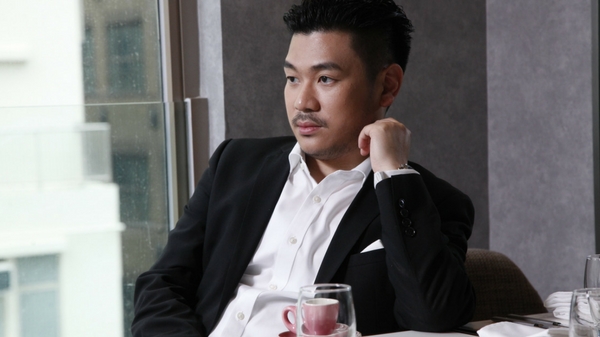
Loui Lim, the youngest son of Malaysian billionaire, Tan Sri Lim Kok Thay, looks poised to carry on his family’s legacy. At just 29, he’s the Director of Dream Cruises Holding Limited, Dream Cruises Management Limited and Genting Dream Limited and also the Vice President, Brand Strategy, Marketing and Communications of Dream Cruises.

Gafencu reporter Suchetana Mukhopadhyay talks to Loui Lim about his Dream job and beyond…

Loui Lim

You had quite an unusual childhood…

I actually grew up across three different continents. I was born in Australia, spent much of my early childhood in Malaysia and was then educated in the UK. Many of my earliest memories are of painting. I was quite artistic as a child. I’d spend a lot of time in the garden with a pencil and a sheet of paper, doodling away at whatever caught my fancy.

Given your diverse experiences, is there any place you are particularly attached to?

I spent my formative years in the UK, so it holds a very special place in my heart. When I first arrived in London, I was particularly drawn to the cultural contrast between the very posh neighbourhoods of West London and the very gritty, very hipsterey feel of East London.

Loui Lim

As the son of a successful businessman, do you feel a particular pressure to excel?

Children born high-profile families inevitably feel a certain kind of pressure and this obviously intensifies if you are working for the family business. I know my father faced a similar pressure from his own father when he first joined the business. It is his success that inspires me.

Given that you have management positions across several family businesses, how do you ensure you have enough time for everything?

It can, indeed, be difficult to manage you time when you have a multi-faceted role to play. You need great organisational skill, something I am still trying to master. Overall, though, there is no clear answer and you just have to attack everything head on.

Loui Lim

With the cruise sector becoming ever more cluttered, how does Dream Cruises manage to stand out?

Dream Cruises is uniquely focused on catering to Asian guests, with World Dream in Hong Kong/Guangzhou to service to the China and North Asian market and Genting Dream in Singapore for the Southeast Asian market.

Our itineraries encompass popular destinations around the region from the islands of Okinawa to Phuket and Ko Samui in Thailand, Halong Bay in Vietnam and North Bali, Indonesia.

We offer all the home comforts and services that Asian people have come to expect. As a company of Asian origin, I believe we understand the needs of our customers far better than any of our competitors.

Tell us a bit more about another of your businesses – Crystal Air Cruises…

It’s been an exciting year for Crystal Air and we have just stared operating a Boeing 777 service. As you know, Boeing 777s are commercially-proportioned airplanes and would normally accommodate up to 300 passengers. We, however, have customised it, optimising its use for just 88 travellers. It now offers leather flatbed seats, gourmet chefs, multilingual attendants and executive-class comfort.

Loui Lim

With luxury travel booming right now, how are you looking to capitalise on this?

There is, indeed, a surge in demand for luxury travel at the moment. People are not just looking for a generic experience, they want something unique and inspirational. And they’re willing to pay for it. Our businesses are very well positioned to capitalise on this trend as they can provide genuinely immersive and inspirational experiences. On Dream Cruises, for instance, we frequently invite motivational speakers, wellness gurus and similar inspirational individuals to come onboard.

We’re also planning to launch two more global-class ships, both of which will harness the very latest in artificial intelligence, voice and facial recognition technology and many other digital innovations. These ships will offer a state-of-the-art VR experience, as well as water parks, amusement areas and even a roller coaster. Come 2020, we will launch the world’s largest mega-yacht, purpose-built to sail to Antarctica.

Loui Lim

Do any of your recent travels stand out as particularly memorable?

Well, we organised a special New Year’s itinerary for Crystal Skye. This saw us fly our guests to Sydney to watch the New Year countdown fireworks over Sydney Harbour. Then we flew them back in time, travelling across continents so they could experience the New Year countdown again, this time on the sandy beaches of Honolulu. That was an incredible experience and one I will never forget.

In term of your charity work, are there causes that particularly appeal to you?

There’s this great charity, Impact Hong Kong, which helps get homeless people off the street. It finds them jobs, provides them with accommodation and gives them a second chance in life. It’s a great cause and I am planning to get more involved with it. Not so long ago, I’d attend social events for a number of charities, such as amfAR. Now, though, I’d much prefer to get involved at a face-to-face level, so that I could actually see that I was making a difference.

Thank you.

Text: Suchetana Mukhopadhyay
Photos: Neville Lee

Sweet Talk: Gafencu interviews Nicolas Lambert, Asia’s Best Pastry Chef 2018

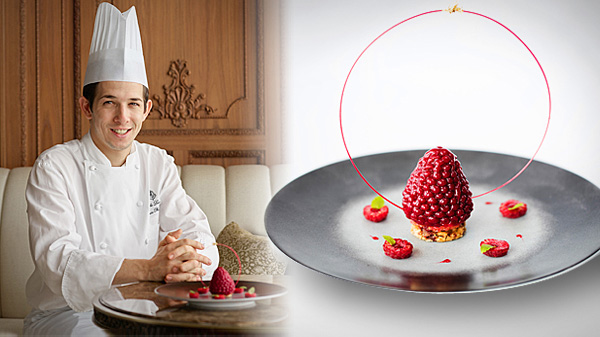
Nicholas Lambert, pastry chef of Four Seasons Hong Kong, may be just in his early 30s, but all the accolades showered on him so far (and all of which he so deserves) speak volumes about the talent of a man whose vision is well beyond his years. The latest trophy under his belt is the coveted Asia’s Best Pastry Chef 2018 Award, sponsored by Valrhona, a title that he has just won at the highly prestigious Asia’s 50 Best Restaurant Awards held in Wynn Palace Macau recently. We caught up with Nicolas Lambert just after the Awards Night to talk about all things sweet.   

Nicolas Lambert
Chef Nicolas Lambert, Asia’s Best Pastry Chef 2018

Congratulations on winning the award for Asia’s Best Pastry Chef. How do you feel?

It came as a total surprise! Winning this award is such an emotional moment for me. I need to thank my wife, my family and my team at Caprice for all the support. After three years of working in Hong Kong with Four Seasons Hotel, I can easily say that this is the best achievement I could have got so far.

What were the challenges along the way?

The journey wasn’t exactly an easy ride. When I first arrived in Hong Kong, I didn’t speak English at all. But I am grateful for all the support that I have got from my colleagues, particularly from my pastry team at Caprice, all of whom who have been there for me since the very beginning.

Nicolas Lambert
Chef Nicolas Lambert’s creation: Matcha, coconut and strawberries

Do you have any mentor that you look up to?

Philippe Torti, my first boss, is a person I really look up to. He’s like a second father to me. He had mentored me through my first five years of learning how to make pastry.

What is the inspiration for your favourite dish?

I love desserts with hazelnut. I can find inspiration everywhere – in a museum, in nature, while looking at a painting or anywhere else – but never in other pastry creations, because it is very important to have my own unique style and identity. I want my pastries to be shaped by my personality.

Nicolas Lambert
Chef Nicolas Lambert’s signature dish: A composition of raspberry delicacies

You have achieved so much at a relatively young age. What’s next on the cards for you?

  I am young in terms of age, but I started making pastries at the age of 15, so everything I have done in these 15 years has been a labour of love and passion. For me, going to work everyday is immensely enjoyable.

Moving on, I will continue to travel more and meet as much people new people as possible. I believe that when you open yourself to new experiences, anything can be possible. Working in the hospitality industry opens door to many countries – there are 100 or more Four Seasons Hotels and Resorts to explore!

Thank you.

Interview by: Suchetana Mukhopadhyay

Jacky Tang: Man of Note

Jacky Tang is a man donning many hats. As well as heading the Portfolio Management Group and co-heading the Investment Strategy Group in Asia at Goldman Sachs Investment Private Wealth Management, Jacky Tang is also an adjunct professor at the City University of Hong Kong, the chairman of the Rehabilitation Service of the Evangelical Lutheran Church Social Service and the founder of the Chi Mei Children Education Fund.

jACKY tANG

What can you tell us about your early years?

I grew up in Hong Kong and finished my schooling and university career here before going to the UK and then to China for further studies. I had a very regular childhood and, while I was quite interested in sports, I was also academically-inclined. As with most Hong Kong kids, I tried to strike a balance between the two, while also being quite a good singer, well, good enough to win a few competitions at least.  

For you, did the world of finance always beckon?

To be honest, I got drawn into that particular world almost by accident. My dream career was always to be a doctor and my parents wanted me to go to medical school. When I finished school, though, I wanted to go to the same college as my then-girlfriend and she decided to attend the Hong Kong University of Science and Technology, which unfortunately didn’t have a medical department. Going against my parents’ wishes, I then signed up for an engineering degree.

By the time I graduated, though, the technology bubble had already burst in Hong Kong, leaving me without a job and obliging me to look for options in other sectors. Thankfully, a finance company took me on as a quantitative analyst. Ever since then, I have stayed in the finance sector.

Jacky Tang

You have a full-time job at Goldman Sachs, while also being involved in charity work in both Hong Kong and China, as well as undertaking academic duties at the City University of Hong Kong. How do you manage to find time for it all?

Time management is like playing Tetris – you have to position each tile properly and, once each line of tiles is aligned, it vanishes. It’s all about how well you allocate your time and you have to find the right pace. Alongside that, you have to leverage your work.

How does a typical day pan out for you?

I wake up at 5am, read newspapers, get ready and aim to be in the office by 7am. My office hours are typically engaged in meetings and research. Then, over dinner, I tend to meet up with my associates from various NGOs. Afterwards, I may go home or go to the gym. My day ends after a round of conference calls with colleagues in other time zones, such as New York.

Jacky Tang

You were recognised as one of Hong Kong’s Ten Outstanding Young People in 2017. How did it feel to get that particular accolade?

I felt very honoured. I have been working in finance and supporting charities for 15 years now, always trying my best and hoping for a good result. I see the award as recognising all that.

 You are well-known for championing care for those with mental disabilities. What drew you to that particular cause?

Well, if you look at Hong Kong’s budget, there’s quite a focus on services for the elderly, which makes sense given the city’s changing demographic. For people with mental disabilities, though, even while there is a budget, it’s nowhere near big enough.

The other big issue is that the average life expectancy of mentally disabled individuals has increased considerably, creating an issue as to who exactly will care for them in their old age. It’s a problem that, I think, needs to be discussed more widely. In line with that, when we organise events or functions, we always hold them in shopping malls, ensuring that as many people as possible are aware of what we are doing.

If you hadn’t gone into finance, is there an alternative career you would have liked to have followed?

If I could start all over again, I’d like to be a singer. As I said earlier, when I was young I was quite a performer and even finished in the top 10 of one Hong Kong’s most popular singing competitions. To go any further in that competition, though, I would have had to sign a contract and my parents weren’t keen on the idea. Nowadays, I only really sing karaoke but, as everyone knows, good karaoke is really more about socialising than singing…

Thank you.


Interview by: Suchetana Mukhopadhyay
Photos: Neville Lee
Art direction: San Wong
Venue: Le q Café & Bar

For the full interview with Jacky Tang, please check out the latest issue of Gafencu’s print magazine or the PDF version on the Gafencu app. Download the app from the Google Play Store or Apple App Store
Snow Queen: Patty Tung of Fera skiwear fame talks family and fitness

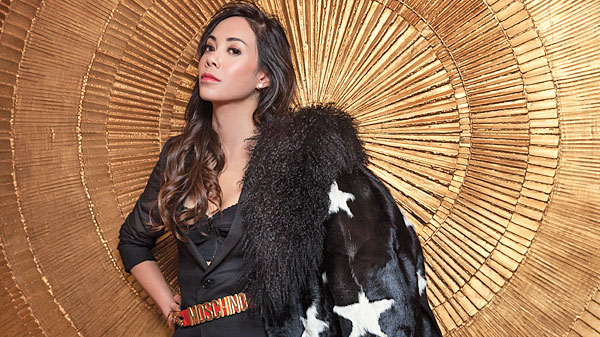
Patty Tung runs the Asian operations of Fera, the ski/leisurewear brand started by her mother. In an exclusive interview with Gafencu, she reveals how fitness and family are eternally intertwined…

Let’s start at the beginning – how did a California girl end up in Hong Kong?

Even though I was born in California, as kids we always spent the summer in Hong Kong visiting relatives. I fell in love with the city and thought: ‘Wow, this place is amazing.’

Was there any culture shock when you moved here permanently?

It was already familiar to me from my childhood visits and my husband is from Hong Kong too. As a result, the city was a constant in my life even before we relocated here.

Patty Tung shares her story in an exclusive interview with Gafencu

You’re now running the Asian operations of Fera, your mother’s ski/leisurewear brand. What can you tell us of its history?

After moving from Shanghai to Hong Kong, my grandfather opened a factory here, initially making dress shirts. He then expanded into insulated jackets, a move that saw him working with many premium European ski brands.

In the ‘70s, it struck him that US skiwear was nowhere near as good as that available in Europe. With my mother already based in the US and keen for a new adventure, it was the perfect opportunity to expand into a new market. Using our family’s strong manufacturing background, they set about creating a fashionable skiwear brand – Fera.

Patty Tung and her beloved pooch Blanc

How would you define Fera’s USP?

Our motto is ‘Look good, feel good’. While some brands, such as Gore-Tex, major on their technical specifications, we have a more happy-go-lucky ethos. For us, it’s all about wearing something that looks good, feels comfortable and makes you more confident.

Patty Tung draws on her own experiences when designing for Fera

How did you come to be involved?

I didn’t get involved full-time until about seven years ago. At that time, as a hardcore skier, I wasn’t really designing for Fera, but more for myself, which wasn’t really what our buyers were looking for.

After a while, I started to take stock of what was actually selling and it wasn’t at allwhat I expected. At the time, our most popular product was a quilted jacket with a fur-trimmed hood – a world away from the kind of technical skiwear I was designing. That’s when I really started to appreciate what we’re really all about. It’s about versatility, not technical specifications.

Patty Tung draws on her own experiences when designing for Fera

What lies ahead for Fera?

Right now, we’re expanding and looking to establish ourselves in China. We’re also looking to relaunch our kids’ range. People go skiing as families and we have to factor that in.

How much crossover is there between your work life and your personal life?

Thankfully, my whole family loves skiing. So, every winter, we product test our inventory for ourselves. Even though the Fera range isn’t super technical, it more than meets our needs.

Patty Tung is an avid skier

Do you hope your sons will take over from you one day?

I think that’s too far ahead to even think about it too seriously. When I was growing up, it was never a given that I would join the family firm, so there’s no pressure on my kids.

I have told them, though, not expect to have a tenured spot waiting for them and they are used to me saying: ‘You can’t work with mummy or daddy until you’ve proven yourselves.’

Patty Tung hopes to merge fitness and nutrition

Aside from Fera, what else is on your current agenda?

My southern California roots really dictate my lifestyle. Although I grew up in a place where jogging and aerobics are huge, having young children obliges you to give all that up. Two years ago, though, I started working with a personal trainer.

I’ve relished the new challenge and I now feel more energetic and younger than I did five years ago. I want to help others embrace this mindset as well, so I’m thinking about how to merge this with my thoughts on nutrition, a subject I have a degree in. It’s all bubbling in my head at the moment…

Patty Tung says working out makes her feel younger and more energetic

What inspires you? Is there a particular maxim you have taken to heart?

That maxim would be: ‘Always learning’.

As for a role model, that would have to be my mother. She really has done it all. She was a competitive swimmer in China and then helped my grandfather launch his factory in Hong Kong. When she moved to the States, she spoke virtually no English but still got into UC Berkeley. As well as being a pioneer female chemist, she also started Fera, got involved in real estate and manages her own stock portfolio.

She taught me that there’s no limit to what you can achieve if you put your mind to it. While we may not have the same interests, it’s her example that keeps me learning and trying new things.

Thank you.

Interview by: Tenzing Thondup
Photos: Neville Lee
Art Direction & Styling: San Wong
Make-up: Irene Hung
Hair: Billy Wong (E3)

For the full interview with Patty Tung, please check out the latest issue of Gafencu’s print magazine or the PDF version on the Gafencu app. Download the app from the Google Play Store or Apple App Store


#NoFilter: The unseen side of social media ‘influencers’

We all know that girl on social media; the influencer. Her photos are pre-screened by Hudson, Sierra and Ludwig – her trusty team of Instagram filters. Her head tilts to the same side in every selfie, like the victim of a chronic disease whose sufferers speak only in hashtags.

On the surface, life seems easy for “influencers”, a budding group of social media mavens who are shaking up the global advertising and marketing sectors. Influencers allow companies to skirt the limitations posed by online ad blockers while also capitalising on consumers’ growing demand for online product reviews.

The unseen side of social media influencers

“Collaborations with influencers include product trials in which brands send influencers a gift and expect a mention on social media, as well as brand ambassador schemes for continuous collaborations and special event campaigns, such as hosting a yoga workshop for a wellness influencer to interact with her fans,” says Samantha Chung, Digital and Social Media Executive at Petrie PR, a public relations agency that has worked with high-profile influencers such as Mr and Mrs Monnet, a travel and lifestyle couple with 273,000 followers on Instagram.

According to AdmanGo, which monitors ad-related services in Hong Kong, brands pay mid-tier influencers (with at least 50,000 followers) up to HK$30,000 per collaboration. For top-tier influencers with more than 100,000 followers, payments can surpass HK$100,000. Top earners tend to be those specialising in beauty, fashion and travel but influencers in these fields must always be conscious of their public image – a fact that 22-year-old Franka Kit learned the hard way.

As a fan of YouTube videos and plainspoken makeup gurus such as Megan Parken (Meganheartsmakeup), Kit started her beauty channel in 2015. However, it got off to a rocky start as she struggled to amass more followers, combat negative feedback and manage a life spread thin by her digital career.

“When I started out, I was very unhappy,” says Kit. “Since I was still developing my video editing and content creation skills, guys in my school dorm would make fun of my videos and play them at full volume.” Others critiqued her appearance, but she didn’t let those comments defeat her. 

She started out with just eight YouTube subscribers – all of whom were close friends – and worked her way up to nearly 49,000. Now, it’s not uncommon for fans to approach her on the streets of Mong Kok and ask her to pose for a photo with them. She has worked with big-name brands such as Lancôme, Guerlain and Benefit.

The unseen side of social media influencers

This particular morning, Kit is filming herself at home testing the latest Urban Decay cushion compact foundation sponsored by her own wallet. She then heads to class at the University of Hong Kong, where she is a final-year student, and posts an Instagram story in between lectures to inform fans whether the product is long-lasting. After class, she whizzes off to attend a skincare product launch. She cooks for her family in the evening then retreats to her room to edit photo captions or video sequences.

At 9pm – “the golden time” – Kit uploads her content and starts tackling her schoolwork. But she still has a few comments to reply to. Her Instagram inbox is swamped with requests from fans for personal skincare advice. Her Gmail is cluttered with cosmetic brands seeking collaboration opportunities. “I have so many ideas, but not enough time to edit my videos,” says Kit.

After graduation, she plans to pursue a full-time career in the marketing or law sector while managing her YouTube channel part-time. “Although my friends are supportive of my work, my family is more traditional. They don’t like the idea of a girl seeking so much publicity,” Kit says. “Also, it’s not possible to make a living off YouTube in Hong Kong.”

https://www.instagram.com/p/BVhjYWNFwi_/?hl=en&taken-by=frankakit

She makes between HK$100 and HK$1,000 per sponsored Instagram post, and her monthly revenue from business collaborations ranges from HK$1,000 to HK$4,000.

Samantha Chung, of Petrie PR, believes a full-time influencer with a personal project – for example, running a fashion label – can survive in Hong Kong. Solely living off paid posts, however, is unsustainable.

 “Honestly, how many products can you promote on your account? If you promote a lot people will stop believing in you because you are taking money from brands,” she says. “The essence of being an influencer is to promote a lifestyle, not a brand.”

And while for some that lifestyle may be lounging on an inflatable pink bird by the beach, most take their influence a tad more seriously.

The full version of this feature appears on Gafencu Magazine’s March 2018 print issue as “#NoFilter” by Mary Hsiao Chu-an . You can download the free app for digital editions of the magazine.

Frock Star: Yen Kuok talks fashion, family and business

Yen Kuok, daughter of “The Sugar King” Robert Kuok, is the Founder and CEO of second-hand luxury e-commerce site Guiltless

Kuok gives us the lowdown on her passion for fashion and the evolution of Guiltless in this exclusive online Q&A following our March 2018 print coverage.

Tell us about Guiltless. What inspired you to start it?

Guiltless, as its name implies, tries to help the modern woman sort through her guilt-filled closet. Thanks partly to the popularity of online shopping, a lot of people are accumulating excess clothing. This is creating a real problem given that most people have a limited amount of closet space.

Many Asians are also keen to be seen in the latest seasonal styles, but they don’t want to be wear the same outfit twice. In light of all of this, I thought there really should be an easy way for people to recycle – or upcycle – their clothing. In the States, buying and selling second-hand clothing is pretty much a way of life, but it’s never really caught on in Asia

What inspired you to name your venture Guiltless?

Well, my basic thought was that it was all about helping the ladies of Hong Kong deal with the guilt occasioned by their over-full closets. It’s also a way of allowing them to shop guiltlessly, as they know there is now a recycling channel in place. 

Yen-Kuok_Interview

You’ve followed quite a different route to the rest of your family….

I’ve always been the black sheep of the family. I’ve always been the one that went off and did their own thing. I was the only one to attend a local school all the way through and I was also the first to move out.

As the youngest of my father’s eight children, I knew that my older brothers and sisters had already stepped up and taken key roles in the family business. I then had the luxury of going my own way and trying something new.

Talking of something new, last year you trialled a Guiltless pop-up shop for two months. How was that received?

Very well. So, well, in fact, that we kept it open for two months rather than just for one month as we had originally planned. It was very encouraging to see that Hong Kong people have embraced the recycled clothing concept, buying into it for both environmental and financially prudent reasons.

Yen-Kuok_Interview

Overall, has being the daughter of such a well-known businessman as Robert Kuok been a blessing or something of burden?

I’ve always see it as something of a negative. From being very young, my parents were very keen that none of us took their wealth for granted. My mum, in particular, was very strict with me while I was growing up, even to the extent of giving me the bare minimum of pocket money – literally just a few dollars. My friends always had more money than I did and I would be like ‘Can I borrow from you to buy hamster stickers?’

At school, it also counted against me. Whenever I achieved something, people would assume strings had been pulled or an expensive tutor had given me extra coaching.

As a champion of recycled clothing, are you still allowed to have a favourite designer?

I really like Anna Dello Russo. She has a lot of personality. She takes risks and goes out of her way to look good, which is very refreshing. I think, above all, you have to be honest with yourself and Anna Dello Russo certainly is. Her attitude is very much: ‘Yes I’m over the top, but everyone knows it and I love it.”

I also really like Iris van Herpen, a Dutch designer. She was one of the first commercial 3D-printed designers and her stuff is still relatively hard to find. Her outfits are very intricate, which fits in with my rejection of minimalism.

Yen-Kuok_Interview

Overall, having done so many things and played so many different roles, how would you like to be remembered?

I really like the idea of being seen as a woman who was strong and self-sufficient, yet nurturing. Someone who took care of others and was, hopefully, wise beyond her years. I like to think that I long ago realised that the world was not all about me. While I’m still a long way off achieving all of those goals, they are still what I am aiming for and they’re still the way I’d like to be remembered.

Thank you

The full version of this interview appears on Gafencu Magazine’s March 2018 print issue as “Frock Star” by Julienne C. Raboca . You can download the free app for digital editions of the magazine.


Oprah Winfrey: American Idol or Savvy Media Queen?

Oprah Winfrey is North America’s first multi-billionaire woman of colour, she’s an international icon, a force of nature and even tipped as the best bet for de-Trumping the White House come the 2020 US elections.

As a black woman born in 1954 in Mississippi, her life should have followed the standard narrative of the time – discrimination, poverty, violence and lack of opportunity. Raised by her grandmother on a small farmstead, her highest aspiration could have been to secure a safe job as a domestic servant in one of the state’s less-openly racist households.

And even that would have been denied her. Raped when she was just nine-years-old, she was pregnant by the time she was 14, with sexual abuse an everyday feature of her teenage years.

Despite all this, she persevered with her education, ultimately winning a full scholarship to Tennessee State University. Success in local beauty pageants and a move into radio presenting soon followed. Within three years she was the youngest news anchor and the first black female news anchor on a Tennessee TV station and taking the first steps to becoming the global, multi-media icon she is today.

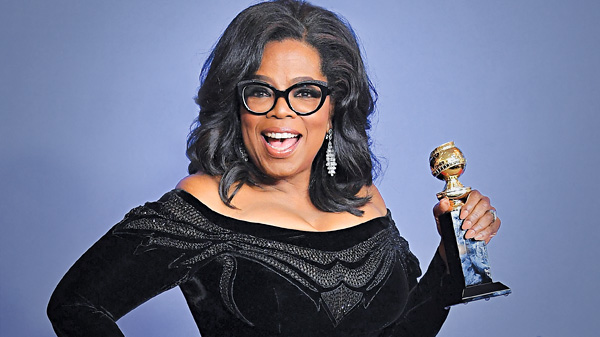
Oprah Winfrey never forgot the deprivation of her early days, however. Speaking at the 75th Golden Globe Awards in January this year, she said: “Tonight, I want to express gratitude to all the women who have had to endure years of abuse and assault just because they – like my mother – had children to feed, bills to pay and dreams to pursue.” (Read more here)

While many of her commentaries and addresses have made headlines over the years, this one struck a particular chord. Coming amid allegations of embedded sexual abuse within the Hollywood star system – revelations triggered by the outing of movie mogul Harvey Weinstein as a serial molester – Oprah’s words were seen as a clarion call for down-trodden women everywhere.

The fact that she was speaking against a backdrop characterised by the weaponised sexism wielded by Donald Trump, the 45th US president, made her speech still more potent. Indeed, it was this occasion that sparked the “Oprah for President” movement, with millions of Americans seeing her as the perfect antidote to Trump.

The furore that surrounded her appearance almost obscured the significance of the occasion. As the recipient of the 2018 Cecil B. DeMille award, she became the first black woman to be given this particular accolade, one of the highest honours in the world of entertainment.

This honorarium aside, her many fans – including Steven Spielberg, the legendary film producer – were quick to endorse her as a potential presidential candidate, with the hashtag “#Oprah2020” soon trending on Twitter.

Presidential aspirations aside, America’s relationship with Oprah Winfrey has been multi-faceted. As the first black billionaire, she is shero-worshipped as a role model by her own community while, as a woman, she has become the poster girl for neoliberal feminism.

It is not even too much of a stretch to say that her career has, effectively, put the whole of the US on the therapist’s couch. The Oprah Winfrey Show – the groundbreaking talk-show that brought her to international acclaim during its 25-year run – saw her pioneer the so-called confession culture. This saw her create an environment where guests – and Oprah herself – could confess to past misdemeanors, come clean about current scandals and pledge to make amends.

Oprah Winfrey

But this approach to life has been perceived as too simplistic by some. Assessing the shortcomings inherent in the TV presenter’s worldview, Christina Greer, associate professor at Fordham University, said: “As much as we know Oprah Winfrey, we don’t know her. She’s been ever-present in our living rooms for at least 35 years now, but do I really know how she feels about the welfare state?

“While I know she owns multiple houses, I don’t know where she stands on housing policy. I do know she’s a lot more inclusive than our current president and, for many people, that seems to be enough. One great speech, though, should not necessarily make someone a preferred presidential candidate when we already have a lot of better qualified women.”

That may be so, but with so many in her divided nation urging her on, the girl from Mississippi may just take up this ultimate challenge.

Text: Suchetana Mukhopadhyay