
Art-to-art talk with Gilles Dyan, founder of Opera Gallery

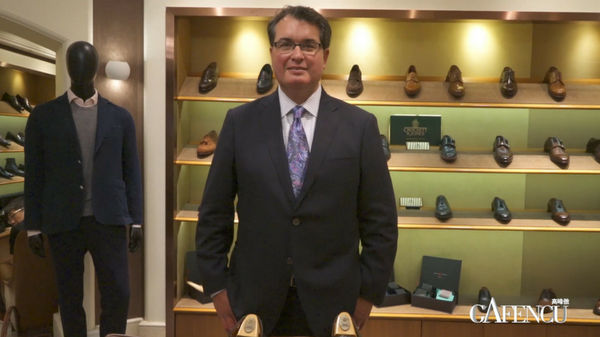
Gilles Dyan, founder and co-chairman of the highly acclaimed Opera Gallery, has had a meteoric career to say the least. From starting by selling prints from door to door to owning one of the most respected art galleries in the world, his journey is as colourful as the art he sells. We sit down to talk to him on all things artistic.

 Gilles Dyan

Q: You started as a door-to-door salesman selling prints. Now you own one of the leading art galleries in the world. Tell us about the journey.

Gilles Dyan: I have always been passionate about art. My youth was somewhat chaotic and I needed to start working at an early age. I didn’t have the chance to go to university to study art. However, I was very fortunate to grow up in Paris, surrounded by beautiful art museums where I would spend all my free time. Of course, with no proper artistic background, I couldn’t pretend to work in an art gallery…So, I became a door-to-door salesman selling prints and original paintings by local artists! I actually loved it and, without undue modesty, I became quite good at it. Somehow, I got invited to participate in an art fair in Singapore. My booth was such a success that I managed to find the financial backing to be able to open my first Opera Gallery in Singapore.

I opened a gallery in Paris soon after. This was in 1994. The Hong Kong space was opened in 2005. My years as a door-to-door salesman taught me that you don’t need to be rich or educated to appreciate art or to own art. Most people I sold to at the time were people who didn’t always have big means and were intimidated to walk into art galleries. That is how I got the idea of creating spaces that could be accessible to everyone, showing masterpieces by established artists alongside pieces by young emerging artists. Art should be accessible to everyone, not just to the elite.

Q: Opera Gallery already has presence in so many countries. Are there others opening in the near future and, if yes, in which countries?

Gilles Dyan: Opera Gallery has 13 spaces around the world, in Singapore, Hong Kong, Seoul, Dubai, Beirut, New York, Miami, Aspen, London, Paris, Monaco, Geneva and, since March this year, in Zurich. I think that is already quite a lot, don’t you? Of course, I still want Opera Gallery to expand but I want to do it carefully. We are not a supermarket chain! I want to continue being able to show good-quality and carefully-selected art in each Opera Gallery space and I don’t believe you can do that if you expand too rapidly. Let’s say I am studying a few opportunities, but it is too early to divulge any details.

 Q: How do you decide which artists to work with?

Gilles Dyan: Opera Gallery shows works by established artists as well as works by younger emerging artists that we try to promote. You wouldn’t believe how much talent there is out there! We receive portfolios by young artists every day and from everywhere around the world. So how do we choose? First of all I only work with artists whose work I personally like and admire – it is much easier to promote the work of an artist you really appreciate, that you believe in. Basically, I follow my instincts – the art must talk to me. I love all the artists we have in all 13 galleries! Secondly, I am very attentive to our collectors’ demands of course – and lastly, I rely on my staff a lot. I am lucky enough to have a wonderful staff who have discovered very talented local young artists.

Q: How important is it for Opera Gallery to promote local artists in each city where the gallery is located?

Gilles Dyan: It is very important! We are lucky enough to be established in countries where there are incredibly talented artists. Not only do we try to promote these young talents locally but our ultimate aim is to show their work in our other galleries internationally. Our collectors love to discover new talents. This is one of the things I appreciate most about having galleries worldwide – to have my European collectors discover Asian talent and vice versa.

Q: Lastly, are there any recent artists who have stood out and made a lasting impression on you?

Gilles Dyan: This is a tough question because, as I told you before, I admire each and every artist whose work I show in my galleries. Of course, some of them go on to become more successful than others, but frankly, each artist I have exhibited over the years has affected me some way or the other.

Thank you.
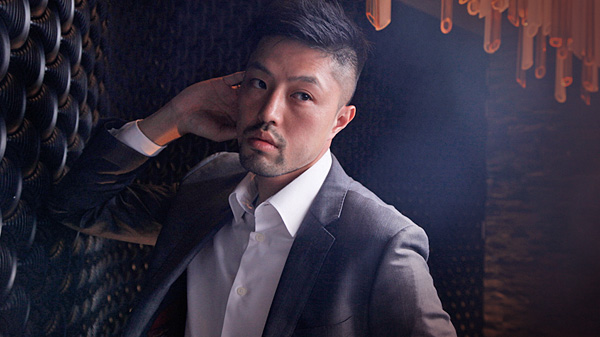
Interview by Suchetana Mukhopadhyay

Mr Big Shots: Ryan Sun on taking snap decisions

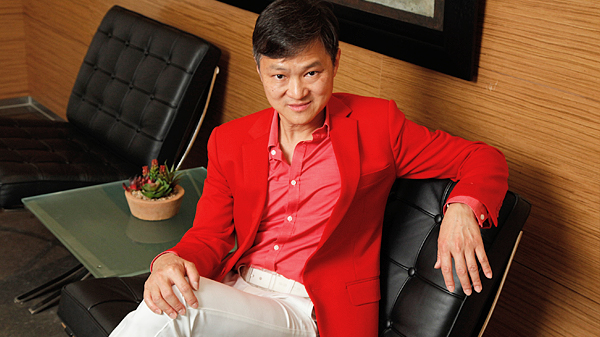
Ryan Sun is the managing director of Fotomax and the corporate resources director of Fuji Photo Products. He talks to us about his everyday focus at work and home, and also on the bigger picture in the photography industry.


You grew up in one of Hong Kong’s more high-profile families. How much of an impact did this have on your formative years?

To be fair, I think it was my parents who had more of an impact. I have always seen them as mentors. It was also their decision to send me to a US military academy, which taught me the real value of many things in my life. To a certain extent, I have always been in awe of my father. Now that I have children of my own, though, we are much closer. One thing that still inspires me is the fact that my mum and dad have been together for more than 50 years, but are still very much in love. From that, I hope I have learnt how to be a better husband to my own wife.

 Ryan Sun

What can you tell us about your current role at Fotomax?

I worked on the business development side of Fotomax for two years before becoming the managing director. Now my role is very much about taking strategic decisions, evaluating the company’s performance and being responsible for the overall growth of the business. I also have to consider not only what is good for the company but what is best for the overall group. So, for instance, I wouldn’t give the go-ahead to open a Fotomax outlet right next to a Fuji Film shop, as we’re ultimately part of the same family.

In an age where there is almost a universal fixation on social media, has this devalued photography or has it retained – or even enhanced – its worth?

While there are now more people taking photos than ever before, often this is simply in the hope of notching up ‘likes’ and comments on social media. Beyond that, it often seems as though such photos are seldom cherished in their own right. That, however, is where we come in.

Ryan Sun

Let’s say every member of a family of four takes four to five photos a day. That’s around 600 photos per family per month. It’s our role, then, to print out these photos in a personalised format – such as in a photo-book – so that they can be cherished forever.

To that end, we have an online platform where people can upload all their photos easily and create a ‘memory book’. That way, even when your photos are old news on someone’s newsfeed, they’re still close to you.

What gets you out of bed every morning?

My daughter – Makayla – my family and my employees. I am always driven to do the very best for my family as I am a firm believer that there are no free lunches in

life. I see it as my role to work hard so that my family can enjoy some of life’s luxuries. For my employees, I want to provide a harmonious and happy workplace. Basically, I want all my staff to also be able to leave work on time and go home to their loved ones.

Ryan Sun

How does a regular day shape up for you?

For the past three years, I have been waking up at 7am, even on weekends, to prepare milk for my baby. Even though she’s now three years old, I still wake up at 7am so I can see her before she starts her day. Then I carpool to the office with my father and brother, catching up with them on work issues as we head in. With most of my day consumed by meetings, I make it a point to head home at 6pm sharp, so I have plenty of time to spend with my family and, in particular, with my daughter.

When it comes to your daughter, what are the occasions you treasure the most?

Well, my wife and I love taking her on holidays. We don’t take a nanny, as we want it to be just the three of us. After each trip, I create a photo album and Makayla just loves leafing through the pictures. She also loves going to Ocean Park, so it falls on me to take her there nearly every month.

Ryan Sun

Famously, you’re a collector of sneakers. How did that particular passion come about?

When I was a kid, I wanted to come up with a real style statement, something that would genuinely make me stand out. That’s when I discovered the Bape brand of really cool camouflage-patterned sneakers. This was just after I had completed military school, so it suited me to find something that reminded me of my life as a cadet. That’s how I started my collection and I now have 35 pairs of sneakers, all of which I still wear from time to time.

Tell us something about you that would surprise even those who think they know you well…

Well, don’t tell anyone, but I am really not much of a party animal. People think I am, but really I’m happiest when I am just at home, spending quality time with my wife and daughter.

 Thank you.

Interview by: Suchetana Mukhopadhyay
Venue courtesy: Fang Fang
Styling: San Wong
Photos: Neville Lee
Video: Lai Ty Yeung

Where actress-turned-entrepreneur Fanny Sieh goes, others inevitably follow…

Fanny Sieh, co-founder and co-owner of restaurant group Maximal Concepts, shares her top tips for leading a balanced lifestyle and finding entrepreneurial success…


So, how did it all begin for you? 

Well, I was born and brought up in Hong Kong by two fantastic parents. My dad ran a successful business in the textile industry and, looking back, I think he was the perfect example of that first generation of Shanghainese entrepreneurs who made it big in Hong Kong back then. I will be forever grateful for how they brought me up. They’re the ones who motivated me to become a Grade A student, while encouraging me to try a range of different hobbies, ballet, tennis, swimming… All in all, I’d say I had a perfect childhood.

Your education was a little unconventional…

True. I started out at Maryknoll Convent School in Kowloon Tong, where English was the primary teaching language. This made me quite Westernised at a young age. At 13, I took the initiative and applied to a few prestigious prep schools on the East Coast of the US. I was eventually accepted by Northfield Mount Hermon School in Massachusetts.

Fanny is the co-founder and co-owner of restaurant group Maximal Concepts

And New York was next…

As you might imagine, nothing terribly exciting happens in Massachusetts. So, to compensate, I won a place at NYU and headed off for four very exciting years. It exposed me to people from all walks of life – Wall Street corporates, fashionistas, the arty brigade…

My major was English Literature and Humanities and, at the time, I had plans to become a psychiatrist. In the end, though, I returned to Hong Kong to work in the film industry instead. It was around that time that I really got involved with the local social scene, eventually coming to be regarded as the Queen of the Ball.

The former actress has long been regarded as Queen of the Ball in the HK social circuit

You’ve long been a champion of the healthier lifestyle. What’s the appeal there?

Oh, I love living as healthily as possible. It makes me feel lighter and more energetic, while I also sleep better, have a better complexion and even a transformed aura. Adopting this particular lifestyle has definitely changed me and only for the better.

It even led you study for degree at San Francisco Cooking School. Did that give you any particular healthy eating insights?

Firstly, I’d say, always eat what’s best for your body – you really are what you eat. Don’t go overboard with carbs and meat – throw in a few veggies and fruits. Secondly, stay away from animal fats, junk food and sweets. Swap them for healthier nibbles – avocado, salmon and natural salt-free nuts. Finally, do some research. Study nutrition and take the time to read labels when you go shopping to work out what’s healthy and what’s not. Of course, healthy eating is only part of healthy living. Exercising regularly is very important, and you also need to cultivate a healthy state of mind.

Fanny's restaurant Mott 32 has healthy eating in its DNA

As co-founder and co-owner of Maximal Concepts, the company behind a number of Hong Kong’s best regarded restaurants – notably Mott 32, Blue and Brickhouse – has your love of healthy eating informed them?

Definitely. We currently have eight restaurants, but my favourite is Mott 32. It’s an East-meets-West Chinese restaurant. While it doesn’t only serve vegetarian food, healthy eating and sustainable food quality are very much part of its DNA. Our concept is to get ingredients fresh from the farm to the table. We’ve also banned MSG, cut down on the salt and refined sugar content and prioritised the use of fresh herbs and seasonings.

What’s next for Maximal Concepts then?

We’re very excited about Mott 32’s global roll-out. We opened our first Vancouver branch last year, with Bangkok soon to follow. The one I am most looking forward to, though, is our Las Vegas launch. While I can’t give you an exact date just yet, just watch this space…

For Fanny, attitude, skills and knowledge are the keys to success

As a successful businesswoman, what do you think are the key attributes that an entrepreneur needs to have?

The key is ASK – attitude, skill, knowledge – and a willingness to learn. Take notice of the world around you – its politics, its economic realities and the kind of people you find yourself among. That’s how you can spot trends at a very early stage, well before they fully emerge. Most importantly, don’t let tunnel vision hinder your mindset. Have a clear vision and try to make that a reality. I always bear in mind what Michelangelo said: “Every block of stone has a statue inside. The sculptor’s task is to find it.”

Fanny attributes her parents for her independence and can-do attitude

What advice would you give to the women out there who are thinking about starting their own businesses?

Don’t be a follower, be a leader – though that’s quite a challenge in the social media-fixated world of today. Basically, don’t let negative comments distract you from achieving your goals. There will always be people looking to tell you that certain things are beyond you, especially if you are a woman. Ignore all that. You’re not here to satisfy those people or to win their approval.

Thank you.

To read the full version of this interview, please check out the latest September 2018 issue of Gafencu’s print magazine or the PDF version on the Gafencu app. Download the app from the Google Play Store or Apple App Store.

 Text: Tenzing Thondup
Photos: Neville Lee
Art Direction & Styling: San Wong
Jewellery: Exclusively from Bulgari
Make-up: Irene Hung
Hair: Michael Lo @ LA BIOSTHETIQUE


Michelle Sun on honing the coding skills of four-year-olds

Michelle Sun, Hong Kong-based engineer-turned-entrepreneur, is the founder and CEO of First Code Academy, a programming school that teaches children from the age of four onwards how to code and create mobile applications, with a particular emphasis on introducing girls to the tech sector.

Michelle Sun

How did the concept of the First Code Academy come about?

I was working as a Silicon Valley software engineer when the opportunity came up to teach children how to code. I was delighted to discover that very young kids are quick to master the required skills. I decided to build on this and bring  what I had learnt back to Hong Kong. This, ultimately, led to the launch of First Code Academy.

With kids as young as four now enrolled at the Academy, are they really ready to learn programming?

These days, children start using iPads and computers at a very early age, well before they are four. For our part, we teach them how coding can help them create new things. Our approach to coding involves a lot of fun activities, all conducted in an informal atmosphere, with kids learning by playing with robots, etc. rather than staring at a screen.

Michelle Sun

Given how quickly programming languages become obsolete, how do you ensure what the kids learn remains useful?

 It’s a fact that coding languages become obsolete quickly, so it’s inevitable that an eight-year-old currently learning Python may not find it useful when he graduates in 10 years’ time. We bear this in mind when we design our courses and ensure that our focus is always on the creative side of coding.

No matter what programming language they are learning, we encourage our students to develop two particular skills – problem-solving and unleashing their imagination. As they get older, their creativity and problem-solving abilities continue to be assets, with the programming language they were learning almost immaterial.

How much of an effort is it for you to stay up-to-date with the latest coding languages?

 It’s an ongoing challenge but, fortunately, it’s one of the aspects of my job that I enjoy the most. When we are preparing a curriculum for an upcoming course, we start by looking at what’s new in the market and what’s soon to be released. Then we have to think about how to present it to our students in a way that is easy for them to digest.

Michelle Sun

Aside from programming languages, what are the other key challenges that you face?

Well, being an entrepreneur comes with its particular challenges. I find I have to wear many different hats every day. Sometimes I have to act as the company’s public face, while, at other times, I may be picking up trash in some of the classrooms. In between these extremes, there’s also a whole load of other things – meeting with teammates, formalising curriculums and a lot of marketing activities.

How did you feel when you were selected as one of Forbes Asia’s 30-Under-30 and also as one of the BBC’s Women Entrepreneurs Under-30?

 They are huge honours and I feel particularly lucky to be recognised for doing something I love.

The real upside, though, is that these awards help build awareness of what we are doing in the wider community. A lot of parents – and even students – are aware of the awards, so that’s a plus. It gives recognition to our whole team, who have worked extraordinarily hard to get us where we are today.

Michelle Sun

With technology still very much a male-dominated sector, has that presented any particular problems for you?

While technology is still largely a man’s world globally, I have been lucky enough to be part of a growing community that actually supports women who are active in this sector and I have benefited from that in a lot of ways. I learnt how to code in a women-only coding boot-camp, for instance…

Despite that, women are still seriously under-represented in the sector and that’s a pipeline problem. The number of women who choose to major in engineering or computer science is still very low, which is something we are helping to address.

Our gender mix – across our four-to ten-year-olds – is almost 50:50. Once you look at the comparable secondary school figures, though, the ratio is 80:20 in favour of guys. Part of our role is to introduce coding to girls when they are still very young, before the idea that tech stuff is exclusively a guy thing can ever cross their minds.  

 What inspired you to launch the Hong Kong chapter of Women Who Code?

Women Who Code is a global initiative, one that I’ve benefited from personally. I felt, though, that Hong Kong was lacking something similar on a local basis. I wanted to create a safe place for women, somewhere they can discuss the uniquely female problems the tech sector throws up.

Thank you.          

 Interview by: Suchetana Mukhopadhyay, Art direction: San Wong, Photos: Neville Lee, Video: Lai Ti Yeung, Makeup and hair: Margaret Wong, Venue: Apartment Suite at The Landmark Mandarin Oriental

From Miss World to prime-time star, Priyanka Chopra wins the world every time

While most 18-year-olds are contending with exam nerves and driving lessons, Priyanka Chopra was already Miss World…

Priyanka Chopra

Being crowned the world’s most beautiful woman, however, only proved Chopra’s entry to wider society. Since then, she’s gone on to become a global style icon, a Bollywood legend, an award-winning Hollywood star and much more.

Though now it seems unlikely that anyone could ever deprive her of her many achievements, these would have been all but inconceivable back in 1982 when she was born into a military family in Jamshedpur, a small town in India. With the Miss World win tucked under her Gucci belt, it was only a matter of time, however, till Bollywood – India’s take on Hollywood – came calling.

Priyanka Chopra

Looking back on her first steps onto a sound stage, Priyanka Chopra says: “When I got a movie offer, I thought: ‘Ooh, let’s try this too’. While I hadn’t come from a film background and I hadn’t learnt anything about films or film-making, I found I had a thirst to know everything about it. I immersed myself in cinematography, editing, soundtracking, post-production…” 

Eventually, her hard work paid off, but it’s fair to say she was no overnight success. Initially hired as an eye-candy, it wasn’t until 2004 that she finally proved both a critical and commercial hit. This was the year when, playing against type, she stole every scene as Sonia Ray, a manipulative man-eater, in Aitraaz, a romantic thriller that stormed both the box office and India’s film awards.

After this, the floodgates truly opened. A string of box-office hits, nationwide recognition and awards – including the Padma Shri (one of India’s most prestigious civilian honours) –  quickly followed. It was almost inevitable then that Priyanka Chopra should set her sights higher still, aiming for musical and screen successes in the West.

Priyanka Chopra

But her foray into the former met with mixed success. Both her albums failed to create a buzz, pretty much marking the end of her musical ambitions. Fortunately, she had a more luck in the acting stakes, with small screen success hers for the taking.

And take it she did, going on to secure the lead in Quantico, a peak-time terrorism drama that saw Priyanka Chopra take on the role of Alex Parrish, a newly-recruited FBI agent. The role made her a household name and won her the Best Actress award in the prestigious People’s Choice Awards. But before the celebrations were over, dark clouds were gathering around the Quantico lot.

Priyanka Chopra

With Quantico getting cancelled just weeks into its third season, the show hit a new low when one particular plotline saw it attract international condemnation, while many personally vilified Chopra for turning her on her own people. The plot – branded “ridiculous”, “stupid” and “implausible” by online critics – saw Parrish (Priyanka Chopra) set out to thwart a conspiracy by rogue Indian scientists to blow up New York, and then blame it on Pakistan.

With many alleging that she had betrayed India by acquiescing to such a grotesque plotline, pretty much all of the outrage occasioned by the episode in question focused on its leading lady.

With the series already cancelled, however, it is a storm that Chopra will surely weather. Indeed, the bandwagon seems to have already moved on. Right now, the media is more focused on her ‘am I / aren’t I?’ relationship with Nick Jonas, an Americna singer. Whether this is true love or a tactical diversion from her own goal on the Quantico front is of, course, highly debatable.

What is less debatable, however, is that even as her FBI procedural heads off to re-run heaven, Chopra’s own career remains very much on course. With two new Hollywood projects already in the pipeline, as well as an expected return to the Bollywood throne, her most intriguing new venture will see her branching out in a whole new direction, with Unfinished, the first volume of her memoirs, set for publication next year.

Text: Suchetana Mukhopadhyay

Arthur Lam on co-founding Synergy Group and saving the planet

Arthur Lam tells how he found Synergy with saving the planet…

Arthur Lam on co-founding Synergy Group and saving the planet

Tell us about your childhood…

I was born in Hong Kong and lived here until I was 13 when I was sent to boarding school in Melbourne. After the end of one term at St Joseph’s College in Central, my mum suddenly told me: “You are not going back there, we are sending you to school in Australia instead.” At the time, I was really shocked and I really didn’t have too much time to prepare myself. Looking back now, though, I am glad that it happened. I had to become independent of them and it was a great learning experience for me. Overnight, I lost a lot of my shyness and became far more open and confident.

You went on to study mechanical engineering at the University of Notre Dame…

At the time, I was somewhat undecided as to what I wanted to study, so my college counsellor told me to try the very hardest course first, which turned out to be rocket science. Thinking that was pretty cool, I stuck with aerospace engineering for the first two years. Then, realising that my prospects as a non-American citizen were not particularly great in that sector, I switched to mechanical engineering in my third year and, ultimately, graduated in that.

 Arthur Lam on co-founding Synergy Group and saving the planet

In 2009, you co-founded Synergy Group, now one of Hong Kong’s leading energy-management businesses. What drew you to that particular sector?

Back in 2008, following the onset of the global financial crisis, everyone stopped spending and cost-cutting was the priority for nearly every business. As I had trained as an engineer, my partner asked me to review the prospects for a patented energy-saving product. As I looked into it, I realised that this product – created in Hong Kong – was one of those rare things that actually lived up to its hype. No only that, but its investor had no real grasp as to how to commercialise his system.

Even back then, I understood that, with the global population soaring, while natural resources were dwindling and costs were going up, energy efficiency was going to be a huge issue.  I also wanted to prove that I could do things in a truly different way, yet still be effective. All of that, then, led us to found Synergy.

Arthur Lam on co-founding Synergy Group and saving the planet

What is Synergy Group’s unique selling point?

Traditionally, companies such as ours specified products and delivered an energy-efficient budget, allowing clients to make savings on a monthly basis and then getting a payback after a certain period. By contrast, our Energy Management Contract (EMC) states that we will provide everything – from manufacturing and design to importing and installing – and clients don’t have to pay us anything. Every month though, when we save them ten dollars, they have to give us five back. It’s a true win- win!

What excites you most about your industry?

Energy is always going to be a key issue, especially now that sustainability and conservation are so high on the agenda. As a business, we never forget that everything we do helps our planet. It gives me a great sense of satisfaction to know that we are doing something that genuinely benefits the whole world.

Arthur Lam on co-founding Synergy Group and saving the planet

What do you see as Synergy Group’s key achievement to date?

For me, founding Synergy and getting it listed on the stock exchange in 2015 – the first energy services company to do so – was an achievement in its own right. In terms of projects actually completed by the company though, the work we did for Singapore’s Changi Airport stands out.

Three years after we launched, we landed the project commissioned by Singapore’s government. It turned out to be a life-changing experience as it built my confidence and demonstrated to me that we were doing something truly meaningful.

Who would you say is your inspiration?

Of late, Elon Musk is someone I’ve been looking to learn more from. He is a true entrepreneur and a clean tech pioneer. What inspires me about him is the way he has picked himself up when he’s been in difficult situations. One of the marks of a true entrepreneur is the way you tackle problems. During Synergy Group’s journey from life as a start-up to being listed on Hong Kong Stock Exchange, there were a lot of ups and downs. It wasn’t all glamorous.

Arthur Lam on co-founding Synergy Group and saving the planet

What does the future look like for Synergy Group?

We are aiming to be a leader in global clean tech sector, one that rewrites the rulebook through continuous innovation. To that end, most of our efforts are now focussed in the APAC region, although we have also recently ventured into South Africa.

What advice would you give to those hoping to follow in your footsteps?  

I would say be true yourself and find your passion. Once you find your passion, it will become clear what you can uniquely bring to the table. It’s also important that you show that you are happy to accept challenges, while creating opportunities for yourself by always demonstrating that you are the best person for the job. 

Thank you.


The full version of this interview will appear on Gafencu Magazine’s July/August 2018 print issue as “Lam’s Tale”. You can download the free app for digital editions of the magazine.

Interview by: Hira Desai; Photos: Neville Lee; Location: Molteni&C 

Best Foot Forward with Alden, the most trusted shoe-makers from the US

Luxury shoe store Tassels has recently played host to the exclusive Alden Trunk Show 2018 in Hong Kong. Founded in 1884 by Charles H Alden, Alden is a family-owned business that hand-makes shoes in Massachusetts for four generations now.

The company is known for its innovation in shoe technology, from producing Goodyear welted men’s traditional shoes to designing orthopaedic shoes that allow proper fitting and help in correcting feet problems. It is Alden’s thorough research and development that makes it a leader in specialised shoes as well as in traditional footwear.

We spoke to Steve Reinhart from Alden on what makes Alden the indispensable shoe brand for gentlemen. Check out the full video.

Warren Lee: The friendly face of hostile takeovers

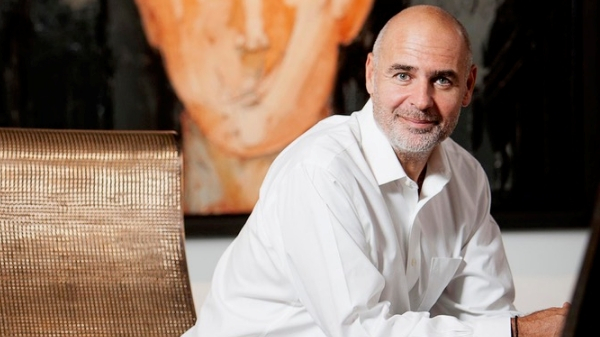
Warren Lee is the founder of Yu Ming Group and a chairman of the board at SHK Industries.

Warren Lee
Warren Lee initially wanted to be a police officer before taking up a career in finance

When you were growing up, Hong Kong was still a British dependency. Did that leave any lasting impression on you?

I went to school in Hong Kong until I was 15 and then, after that, I went to boarding school – and, later, university in England. In total, I think I went to 13 different schools, which was a bit unusual.

By the time the handover came along, I was 34. So, I lived for quite a while under the British and I’ve now worked for 20 years under the Chinese. It would be fair to say I’ve seen the good side of both administrations.

Even back then, did you see yourself heading for a career in finance?

Actually, I wanted to be a policeman. As my father was a chief inspector and my sister was in police auxiliary services, it seemed a fairly viable option. My parents, however, had other ideas. When I told them I wanted to follow in my father’s footsteps, they rejected the idea out of hand. While my parents rarely agree anything, they were unanimous in this instance.

Why were they so against the idea?

In my father’s day, the police force was a respected career option. More recently, though, a lot of that respect has gone. I guess my parents could see the way things were going. To this day, I still have a lot of respect for the police, but there has been a lot of public hostility towards them over the years.

Warren Lee
Warren Lee has plans to expand Yu Ming Group beyond Hong Kong

So, instead, you were drawn to the world of finance in general and the world of hostile takeovers in particular. How did that come about?

In 2001, though, we invested in a project related to a listed company. There was then a dispute between the investors and the management and, largely to protect our investment, we had to take action against the management. It turned out to be a very expensive course of action and we ended up spending millions of Hong Kong dollars to take out an injunction. You can imagine how we then felt when the injunction was discharged only a few days later. It was then that I started thinking about how to best protect the interest of shareholders in the event of any hostile takeover.

What was your strategy and how soon did you get to put it to the test?

Well, the next year, we found ourselves working in an advisory capacity to another company that was locked into dispute between shareholders and management. I came up with an idea that wouldn’t necessitate any legal intervention. Instead, we took advantage of an existing provision in the Takeovers Code and, with a little creative re-interpretation, we managed to turn it to the advantage of the shareholders. That was how it all started and, since then, we’ve been able to help our clients with a number of similarly innovative approaches.

Warren Lee
When he is not working Warren Lee loves going scuba-diving or skiing with his kids

Given the sometimes controversial nature of hostile takeovers, have you ever found yourself facing an ethical dilemma?

When a client comes to me, I rarely ask who’s right or wrong. We do, however, realise that when two parties are in dispute one of them must be wrong or, at the very least, one of them must have unrealistic expectations. My role, then, is to advise them legally and see that their interests are best protected. While I am aware of the ethical issues, I don’t lose sleep over them.

Is Hong Kong a hotbed of hostile takeovers at the moment?

With a lot more mainland businesspeople investing in Hong Kong over recent years, the number of disputes has grown. More often than not, the mainland business community favours verbal agreements and, unfortunately, less documentation can lead to a mismatch in expectations. A lot of Chinese businessmen also tend to use agents and, sometimes, these middlemen can turn greedy when they having millions of dollars passing through their hands every day.

You’re known to be keen sportsman, but is there just one sport that you’re truly fanatical about?

When I was a child, I loved football and table tennis. I was quite good at table tennis and was even second runner-up in a Junior Hong Kong Open one year. There was a reason why I was quite so good, though. When I was very young, table tennis tables were found only in community centres and police recreation rooms. If you wanted to play, you had to fight for your spot and, having got it, you had to keep on winning if you wanted to stay on.

Years later, while living in London, I took up bicycling. Everywhere I went, I rode my bike. I became very attached to it – it was like a pet to me. I still go cycling whenever I can, at least once a month.

Thank you.

Interview by Suchetana Mukhopadhyay; Photos: Neville Lee


Un-Ironed: Stripped of his Marvel alter-ego, can Robert Downey Jr win over his villainous darkside?

Well, did he? Or didn’t he? Was he? Or wasn’t he? As all true believers can testify, such questions can only be a reference as to whether superhero Tony Stark – the role the ever-dissolute Robert Downey Jr was surely born to play – survived Avengers: Infinity War.

Despite the fact most of the world has already seen the big screen outing that Marvel has been building up to over the last 10 years, it would be invidious to spoil the pay-off of this most behemoth-like intergalactic-bad-guy-bashing motion picture. Suffice to say, post Infinity War, the universe is a little less super.

As for Robert Downey Jr, are his electro-magnetic flight boots among those that need filling? Well, that would be telling. If, however, the Marvel universe has said goodbye to its pre-eminent playboy turned metal-clad crusader, it could prove as big a threat to its continued existence as any magic diamond-wielding apocalypse junkie.

Robert Downey Jr and co broke box office records with Avengers Infinity War

Since 2009, when Marvel took its first tentative steps into the multiplex with the original Iron Man movie, Downey has been the uncrowned king of the franchise. This is almost wholly down to the actor’s immensely likeable take on Stark, a man with a nuclear plant for a heart, an eye for the ladies and a nice line in snarky putdowns.

Back in 2007, though, when Marvel was first casting for its Iron Man, Downey was something of a gamble, largely an account of his tumultuous personal life and his unrivalled reputation for unreliability.

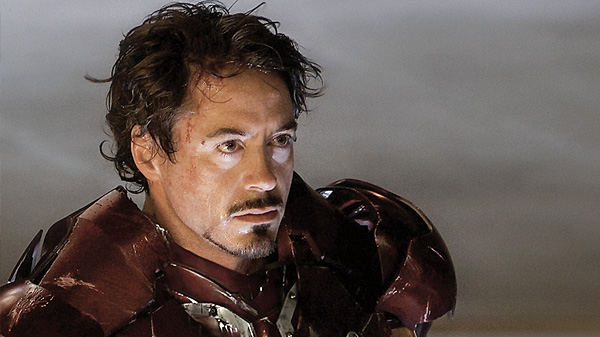
Robert Downey Jr in front of an Iron Man suit

Unlike many other Marvel heroes who got their powers after being bitten by a radioactive rabbit or inherited them from their semi-deity dads, Stark had to fight to become Iron Man, desperately assembling the metal suit he needed to keep his damaged heart beating. It’s not too much of a stretch, then to see certain parallels with Downey, an actor who slowly rebuilt his reputation after a series of sackings, prison sentences and drug-related escapades.

By rights, though, his career should never have hung by such a slender thread. Born in 1965 to Robert Downey Snr, a counter-cultural filmmaker, and Elsie Ann, herself an actress, a movie career for Robert Downey Jr seemed almost pre-destined. Making his first film appearance aged just five, he was nominated for an Oscar for Best Actor 22 year later, after playing the title role in Chaplin, Richard Attenborough’s acclaimed biopic.

By rights, Robert Downey Jr's career should have been iron-clad

Just as his success seemed assured, his long-simmering drug problem began to spiral out of control. Soon, a litany of repeated arrests, imprisonment, failed attempts at rehab, divorce and unemployability laid waste to both his personal and professional life.

After several highly-publicised and notoriously-unsuccessful attempts to get straight, Downey finally began to turn his life around in 2003, a transformation that he puts down to a combination of meditation, a twelve-step recovery programme, yoga and martial arts. Reflecting on his current booze and pharmaceutical-free existence, he says: “I don’t drink these days. I am allergic to alcohol and narcotics. I break out in handcuffs.”

These days, Robert Downey Jr avoids alcohol and narcotics

It was Mel Gibson, a long-time friend, who underwrote Downey’s movie comeback by paying the insurance bond required for him to take the lead in The Singing Detective, a 2003 musical. Although the film was panned, Downey’s performance was considered a tour de force, leading to him taking the starring role in a series of high-profile movies, including Gothika, Kiss Kiss Bang Bang and Tropic Thunder. Downey was back, baby, and big style.

Robert Downey Jr is the uncrowned king of the Marvel Cinematic Universe

It was Iron Man, though, that truly anointed him as one of Hollywood’s favourite sons and marked his first appearance in a box-office beating, cineplex-packing, all-action blockbuster. It also triggered a huge upturn in his financial fortunes, with his earnings rivalling even those of billionaire Stark, his cinematic counterpart.

With the Avengers assembling yet again next year, Marvel is set to replenish his coffers at least one more time.  After that, Robert Downey Jr is signed to play a rather more modest superhero in 2019’s Voyage of Doctor Doolittle. There are also rumours that he will return to his other movie franchise, once again reprising his surprisingly muscular take on Baker Street’s finest – the inimitable Sherlock Holmes. 

After the next Avengers movie, Robert Downey Jr might reprise his role as Sherlock Holmes

It is Iron Man, however, with whom he will be forever synonymous While we will have to wait 12 months to see if the armour-clad Avenger can truly save humanity, it’s clear he’s already been the salvation of at least one of the movie world’s most wayward sons.


Text: Suchetana Mukhopadhyay
Images: AFP

Ella Lau on her life-long love of children, education and philanthropy

As founder and supervisor of Parkview International Pre-School (PIPS), Ella Lau is in a class of her own

1. Ella Lau originally studied fashion management

What can you tell us about your own school days?

I attended junior high school in Hong Kong, and then went to high school in the US. Back then, fashion was my passion, so I enrolled at the Fashion Institute of Design and Merchandising in California with a view to studying merchandising and management.

How did you then enter the world of education?

I’ve always loved children. In school I spent my free periods serving milk and cookies to the kindergarten classes. Once I graduated, I always made time to hang out with my married friends and their kids. My father noted my interest and encouraged me to channel my passion into a career.

2. It was her father who pushed Ella Lau to pursue education as a profession

How did you end up helming PIPS?

Again, I have my father to thank for it. At the time, he was friends with Hwang Chou-Shiuan, the man behind the development of Hong Kong’s Parkview housing estate project. It was this connection that helped us get approval to open a kindergarten within the site. PIPS opened its doors for the first time in 1989, nearly 30 years ago.

What was the original concept behind the PIPS project?

Well, aside from creating a dedicated pre-school for the residents of Parkview, we wanted to create a high-quality bilingual early-learning programme that taught children to think creatively. I believe this is essential to position them for success in a world that seems increasingly complex and ever-changing.

3. Ella Lau opened Parkview International Pre-School almost 30 years ago

How has PIPS kept its competitive edge?

Well, we always try to stay a little ahead. We were the first independent kindergarten to adopt the International Baccalaureate (IB)’s Primary Years Programme (PYP). Two years ago, our Kowloon campus was also accorded IB PYP status.

Beyond that, it’s the happy and positive learning environment that our staff strives to nurture that sets us apart. We also put a lot of effort into reassuring and supporting our students when it’s time for them to move onto the next stage of their education.

Do you have any other new projects looming?

Actually, now that PIPS has a new school board in place and a new principal on board, we’re back into expansionist mode and are looking at both local opportunities and a few ideas that are beyond Hong Kong’s borders.

4. Ella Lau is a well-known philanthropist

Do you have any advice for young parents?

Well, for better or worse, Hong Kong is the kind of place where parents focus almost exclusively on the academic success of their children. Those kids that do well academically can get away with almost anything.

It is hugely important, though, to remember that not all children excel in book learning. With this in mind, parents need to accept the multiple intelligences of their kids – some may be gifted when it comes to music or the arts, while others may find sporting success. Encouragement of these talents is critical for a child’s positive self-image.

5. Ella Lau advises parents to accept their kids' multiple intelligences

As a noted philanthropist, are there any causes particularly close to your heart?

Although I’ve never considered taking singing up professionally, music has always been a passion of mine. A few years back, I found myself in a studio recording for a CD and it was something I enjoyed enormously.

It was this love of music that led to my involvement with the Hong Kong Philharmonic Orchestra. Having performing them onstage during a fundraiser, I was invited to help organise one of their charity concerts. Despite having no experience of staging a concert, I agreed to chair the organising committee. That concert ended up raising over HK$5 million. I’ve since done similar work for the Hong Kong Chinese Orchestra as well.

I’m also on the Board of Directors of HK Spinal Cord Injury Foundation and serve as Vice-Chairman for Hong Kong Foodlink, which helps provide hot meals for the needy, another cause that’s close to my heart.

6. Ella Lau's biggest regret is not having children of her own

If you could live your life over again, is there anything you would change?

As someone who has always loved children, I often wonder what it would have been like to have a child of my own. If I could do it all again, I think that would be the one thing that I would change. I have been fortunate enough to have a number of nephews and nieces that I am very close to, so that has been some compensation.

How would you like to be remembered?

My philosophy has always been to create happiness and to help others whenever possible. Ultimately, then, I hope I’ll be remembered as a kind, happy-go-lucky person whose positive vibes brightened the lives of those around her.

Thank you.


Interview by: Tenzing Thondup
Photos: Neville Lee
Make-up and Hair: Celia Chong @ Celia C. Makeup
Location: Parkview Clubhouse and Suites