
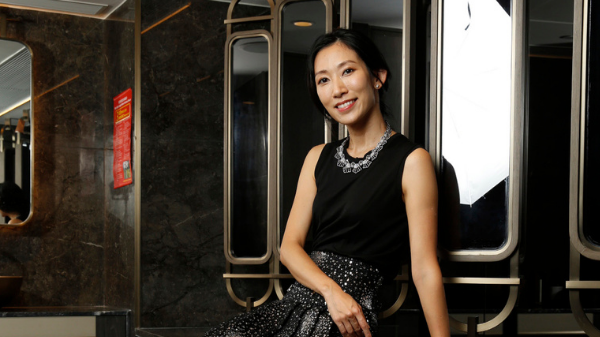
Design Perspective: Candice Chan, Founder of J Candice Interior Architects, on the inspirations behind her award-winning interior designs

As the founder and creative director of J Candice Interior Architects, Candice Chan shares her unique views on Hong Kong’s interior design scene, the benefits of the female perspective and the trials and triumphs of balancing motherhood with a successful career… 

Design Perspective Candice Chan J Candice Interior Architects gafencu magazine people interview feature 1

Can you describe your journey to becoming an interior designer? 

I was pretty much born and raised in Hong Kong and spent my childhood until high school here. After graduating, I enrolled in New York’s Syracuse University, majoring in interior design. I then moved to New York City and worked for a mid-sized architectural firm which specialised in historical preservation work. I worked there for three years, and that was my first job as an interior designer. 

I still remember my first day there, when my advisor asked me to meet her at an old Broadway theatre in Manhattan. Everything was under scaffolding and we had to walk up a staircase to reach the top. Once there, I saw that we had reached the theatre’s ceiling, and there were all these artists doing restoration work on the crown modings and paintings… It was stunning to see all of that in action, and it made a big impression on me. 

Design Perspective Candice Chan J Candice Interior Architects gafencu magazine people interview feature - 5

Did you always know you wanted to be an interior design?

I think I did once want to become a shoe designer or an animal trainer or something to that end when I was a child, but by the age of 13 or 14, I naturally gravitated towards interior design. I think what really steered me towards that passion was seeing my parents – who were in the F&B business – launch new restaurants. They’d always take me along to construction sites and ask me what I imagined the space would look like, and I would immediately conjure up everything from colours and textures to how customers would interact with the area. I even told myself that I would have to set up my own design firm by the time I turned 30.

 “It’s not just the visual aspects of travel that inspire me, it’s the emotions and atmospheres as well”

Design Perspective Candice Chan J Candice Interior Architects gafencu magazine people interview feature - 6

And did you manage to fulfil your childhood dream?

Actually yes, and even earlier than my target age! When my husband moved to Hong Kong 10 years ago, I followed him back here and decided to launch my own business – J Candice Interior Architects. 

What is the driving philosophy behind J Candice Interior Architects?

Well, being led by a female designer, we offer a different point of view. In general, we’re great listeners, so we really emphasise listening to the client’s design brief to get a true understanding of exactly what they’re looking for. Also, as a woman, the ego enters the equation a lot less. Rather than putting our own personality into a project, for example, we’re dedicated to placing the client’s interest in the foreground and following their exact vision. 

Where do you find inspirations for your designs?

Well, we have a very broad portfolio – commercial properties, F&B, kindergardens, hotels – we like doing all sorts of things, and travel is pretty much the main source of inspiration for these designs. It’s not just the visual and physical aspects of things I see abroad, but it’s also the emotion and atmosphere they evoke. For example, my husband and I visited a tango club in Argentina years ago, and I still remember the energy, the thrumming music, the vibrant dancing… and this is something I’ve drawn upon when creating spaces like that now. 

Design Perspective Candice Chan J Candice Interior Architects gafencu magazine people interview feature - 4

Of all the designs you’ve worked on, are there one or two that are particularly close to your heart?

Yes, definitely. Where we are right now at the private boxes of the Jockey Club Happy Valley Racecourse is a great example of a personal creation that I’m especially proud of. The boxes have a stunning view of the racecourse and parade ground, and it’s a place where you can really entertain your friends and family, have great pet encounters and so forth. Those who know me know I love to place a few bets, so this project really allowed me to work on something that personally connects with me. 

Another special one would be redesigning the Mandarin Oriental, Hong Kong’s cake shop. It’s a place where my now-husband and I used to while away resonated with me emotionally to be able to envision a new concept for the space. 

What are some upcoming projects that you’re looking forward to?

We’re currently building the Radison Red Hotel in Guangzhou, which is a 10-minute walk from the Guangzhou train station. It has 180 rooms and includes restaurants and function rooms, all of which we’re designing so that’s super exciting for us. We also have a few upcoming F&B outlets at the soon-to-open Grand Lisboa Palace in Macau. In particular, we are working on a 20-seat Japanese restaurant to be led by a Michelin-starred chef from Japan, and I’m thrilled to be helming that design as well. 

Design Perspective Candice Chan J Candice Interior Architects gafencu magazine people interview feature - 3

You’ve received a plethora of awards over your career, most recently including the Asia Pacific Interior Design Award by the Hong Kong Interior Design Association. Which one means the most to you and why?

It’s always an honour to receive awards, and it’s a great recognition for the entire team. Having said that, I don’t set out to chase awards, I’m more content when I walk into the office everyday and make a living out of doing something I love. If I had to choose an award, though, it would be the first one, the “Most Promising Young Lady” award I received. I received that accolade when I’d just started out, and it was hugely gratifying to have someone else recognise my talents when I still wasn’t certain of how much I’d eventually achieve. It was definitely a major confidence booster at the time. 

What are some of the challenges faced by Hong Kong interior designers compared to their international counterparts?

In Hong Kong, the major challenges that interior designers like us face is probably space limitations. Everything is on a much smaller scale than you’d find elsewhere because land is so expensive here. Also, there’s not much variety in the layout of space or landscapes. It’s rather repetitive. Ultimately, this means everyone emphasises things like storage areas and space efficiency, rather than opting for a more innovative approach. In a way, it limits our creative capacity, but it also has the happy benefit of making us more adaptable and flexible in our designs. 

Design Perspective Candice Chan J Candice Interior Architects gafencu magazine people interview feature - 8

Can you share a major obstacle you’ve faced in your career, and how you overcame that?

This year! 2020 has been a challenge for everyone in Hong Kong, for everyone in the whole world. A lot of projects we’d undertaken were put on hold once Covid-19 hit at the beginning of the year, including several F&B outlets, and some were even cancelled because of the economic situation. 

 “Covid-19 pushed me to take on different types of projects, so it was something of a blessing in disguise” 

It was obviously tough, but I just tapped into a different mental zone and set out to find new opportunities instead. At the time, there was a sudden influx of residential projects, maybe contributed to by the fact that people who were stuck at home suddenly decided that it was time to renovate and refurbish their houses. In the past, I was a little reluctant to venture into the residential side of design, because I was afraid I’d get too attached to those kinds of projects, but Covid-19 was just the push I needed to get my feet wet. The past few months has seen us pick up several residential ventures and learn new things, so it was a bit of a blessing in disguise. 

Design Perspective Candice Chan J Candice Interior Architects gafencu magazine people interview feature -6

As a female business owner, do you find it difficult to balance your career and motherhood?

Definitely. I have three little ones at home aged seven, four and one-and-a-half, so they need my attention constantly. Obviously, I make sure that I meet all my work responsibilities, but as a mother, you don’t want to miss out on any milestones, especially when they’re so young. So I try to attend all their school activities and ensure I’m home for dinner every day. Growing up, my parents had a similar rule, and I really enjoyed having that time to talk with my mum and dad, so I want to encourage a similar atmosphere with my kids. Playing with them and watching them grow is really my biggest hobby right now. 

Finally, if you could visit any place on Earth, past or present, when would it be and why?

I once saw a photograph taken by legendary Swiss photographer René Burri in the ’60s of two monks in Kyoto bowing to each other, and there was something so romantic and organic that really made me want to be there. I think the world today is so full of technology and bright lights and so much constant stimulation that you can never really switch off. 

Thank you.

Interview: Tenzing Thondup
Photos: Jack Law
Styling & Art Direction: Jhoshwa Ledesma
Venue: Hong Kong Jockey Club Happy Valley Racecourse
Jewellery: No. THIRTY THREE
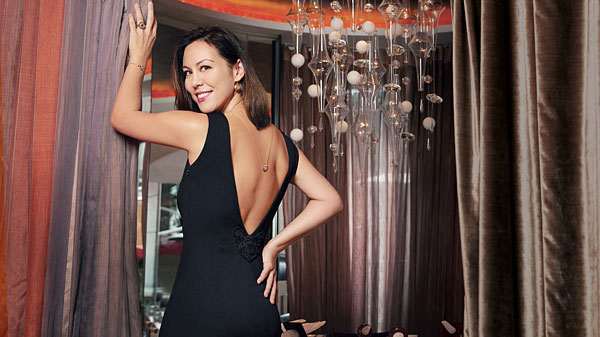
Jewellery Niinja: Jeanine Hsu, founder of niin, shares some golden memories, celebrating ten years of ecofriendly jewellery

Jeanine Hsu has transformed her passion for art and fashion and with her drive for sustainable business practices into a hugely successful global eco-jewellery brand – niin. We sit down with her to find out more as she looks back on a decade of sustainably-sourced success…

You have quite eclectic origins…

Yes, I have an Austrian mother and a Chinese father, a combination that has seen me travel quite a bit. I was born in London, but moved to Hong Kong when I was seven, then returned to the UK for my last couple of years of high school. My school was like a little cottage in the midst of huge green space. At the time, I felt that being immersed in nature was akin to finding my happy place. I was fortunate to have had such a multicultural upbringing.

How did your education progress?

After finishing boarding school, I went straight into a foundation degree in art and design at the Wimbledon School of Art, which nurtured my love of sculpture, painting and fashion. After that, I decided that, if I was accepted into Central Saint Martins, I would pursue a career in fashion. To my surprise I got in. The rest, as they say, is history…

Jeanine Hsu 1

And once you received your degree…

I immediately started working for a number of fashion brands in London – particularly up-and-coming ones (as well as Vivienne Westwood) during London Fashion Week and I was a creative assistant. I also worked in the operatic and theatrical sphere in Austria during the festival period, creating costumes for performances like Mitridate and Der Jude Von Malta, At the same time, I was selling Indian jewellery every Saturday at London’s Portobello Market that I had sourced from a family friend. While I saw that primarily as a way to supplement my wages, it was where I learnt to work hard waking up at 4 am every Saturday, come rain or shine. It was also where I discovered that jewellery was something that allowed me to combine my love of sculpture and fashion.

Jeanine Hsu 2

Did the desire to be a designer also date back to that time?

When I was young, I was not particularly into fashion, but I was always very conscious of style. I was into designing and drawing and I always felt happy and content when I was being creative. While I never really knew exactly what I wanted to do, I had a naïve and somewhat romantic dream of doing my own thing, whatever that might turn out to be. That aspiration led me to initially pursue a career in fashion and, later, to designing jewellery for my own eco-friendly brand – niin.

What led you to start that particular brand?

Having worked for a number of years in the costume design and fashion industries, I was well aware of just how much waste there was and that really bothered me. I started to question whether that had to be the case and it became my mission to create a brand where, from beginning to end, I would only make use of waste / offcut materials and where the designs would be eco-friendly, while still making people look and feel great.

Jeanine Hsu 3

What truly sets niin apart?

At heart, it’s a global eco-jewellery brand that is sustainably and ethically-sourced and one where I design and source everything myself, while always striving for as small an environmental footprint as possible. We use smaller, artisanal workshops, supporting talent in rural areas and we give back via targeted charitable donations. We would like to reach a point where everything we use is sourced from recyclable materials and where we can help the communities that form part of our production chain.

In the more than 10 years since niin launched, our procurement process has become more and more eco-friendly. The use of abalone shells, for instance, typically requires trawling the seabed, but I hit upon the idea of sourcing them from seafood restaurants. It’s something we first tried on Lamma Island, where we asked restaurateurs if we could have the shells they’d already used. We now also ask furniture companies for the offcuts from their production lines, which we then use in my designs. The priority when using sustainably-sourced materials is transparency – I want to know exactly where they’re coming from.

Jeanine Hsu 5

Where do you find inspiration from?

Pretty much from everything I encounter on a day-today basis. Of course, I feel the most creative when I’m immersed in nature, as I think that really helps with my mindset. That’s where living in Hong Kong really helps – go twenty minutes in any direction and you will find yourself in the midst of a forest green or beachy blue space.

What’s next for niin?

We’re in the process of expanding across the region. We launched in China last year, and now we’re looking at setting up in Bali. We also have some exciting collaborations coming up, but I can’t say too much about them right now…

In 2017, you received the Women for Hope Eco-Warrior Award. How important was that for you?

I wasn’t expecting it at all, so it was a lovely surprise, while also being super humbling. It made me feel really proud. Prior to that, I felt like I was just doing my own thing in my own little bubble, so receiving the award really gave me the drive to carry on pursuing my craft. The award also put me in contact with other like-minded women, creating a whole new support network for me.

Jeanine Hsu 4

Are there any other projects that are currently exciting you?

Oh, absolutely! When I was first starting out in the jewellery industry, my sister-in-law introduced me to a community of Filipino craftspeople. Now, 10 years on, I. I Will help to set up a vocational training school for the community. We’ve just confirmed the project and I’m so happy to be able to give back to people who really helped me get niin noticed in the first place.

What’s been your greatest achievement to date?

Undoubtedly, my kids. I have learnt so much about myself from my three sons, while also coming to understand what it means to be truly selfless. When it comes to raising children, you have to give 100 percent of yourseit is the most challenging and rewarding experience imaginable.

Finally, what’s the key item still lingering on your bucket list?

Visiting South America I was supposed to go with my girlfriends after graduating high school, but I ended up enrolling on an art foundation course instead. When my boys are older, it remains my dream to travel there with them and my husband.

Thank you.

Interview by: Tenzing Thondup
Photos: Jack Law
Art Direction: San Wong
Make-up & Hair: Margaret Wong
Venue: Gaia Ristorante

A Patient’s Man: Dr Kevin Lau on compassion in medicine and giving back

A stalwart on Hong Kong’s charity circuit, Dr Kevin Lau, founder of Trinity Medical Centre, maintains hospitals need to be more hospitable, and expounds on the importance of helping those less fortunate…

What are the most important things you remember from your early years?
Well, I was born in Hong Kong, but my family emigrated to Canada when I was just seven years old, which is really where I grew up. It was another seven years before we returned to Hong Kong, allowing me to complete my education at Island School. I then enrolled to study medicine at HKU, subsequently completing my Bachelor of Medicine and Bachelor of Surgery (MBBS) programme there, before moving on to become a specialist in radiology.

Dr Kevin Lau 1
Dr Kevin Lau, founder of Trinity Medical Centre

Had the medical profession always beckoned?
To be honest, I didn’t grow up thinking I was destined to be a doctor. In fact, I was open-minded as to what I might do and keen to explore different paths. In the summer prior to my last year at high school, it was my mother who steered me toward medicine, suggesting that I became a volunteer at the Queen Mary Hospital. That proved a life-changing experience.

Up until then, as I’d come from a fairly privileged background, I’d rarely interacted with doctors and hardly at all with patients, so spending time at a hospital gave me an entirely new outlook on life. One patient that I became particularly close to was suffering from end-stage renal failure and had to have dialysis constantly. For me, it was a real eye-opener to talk to someone with such a chronic illness, to witness their emotions and to come to understand their needs at such proximity. It made me realise that being a doctor wasn’t just about prescribing medicine or specifying treatment. No, instead it was about making very real human connections and demonstrating the kind of empathy that can make a world of difference. It was that realisation that, ultimately, led to my decision to become a doctor.

Dr Kevin Lau 5

What made radiology stand out as your preferred specialty?
I’ve always been influenced by the many great teachers I’ve met along the way and, in particular, I really looked up to my radiology professors at HKU. While they were incredibly giving towards their patients, they were equally dedicated and committed when it came to their research responsibilities. I also found that I preferred seeing one patient through the whole course of their treatment, which was, again, something that radiology facilitated.

You now run your own practice…
Yes – the Trinity Medical Centre, which I launched with my partner back in 2016. Given my specialty in radiology, we initially set up as an imaging service centre. Over the years, though, we’ve also established a dedicated medical unit that services insurance companies with regard to policy application check-ups, while undertaking a number of general lab procedures, such as genetic tests and health check-ups.

From our point of view, while medical and professional standards are typically very high in Hong Kong, there are often shortcomings in terms of how people are treated on a personal level. As a result, we are always at pains to deliver more empathy and compassion when dealing with patients. From the very beginning, that’s what my partner and I wanted Trinity to become synonymous with. It was always our aim to offer the highest level of professional medical services, while maintaining a five-star hospitality feel.

It’s an approach that’s been pretty well-received, so much so that we’ve expanded. Not only have we doubled the space we occupy in Central Building, we also opened a separate medical centre in Tsim Sha Tsui two years ago.

Dr Kevin Lau 2

Overall, how do you feel Hong Kong’s medical sector compares to others around the world?
Well, Hong Kong spends roughly three to four percent of its annual GDP on the city’s medical needs. Bearing that in mind, we have achieved some pretty amazing things. Let’s look at one obvious metric – life expectancy. People in Hong Kong, on average, live longer than people anywhere else in the world – and that’s something we should all be very proud of.

Another significant statistic relates to our high cancer survival rates, something that medical professionals associate with the quality of a city’s healthcare system. While there are still aspects of our system that could be improved, I think we should still be proud of what we have achieved.

On a more personal note, what has been the most rewarding thing for you career-wise?
Every time someone comes in for a regular scan and we manage to detect cancer at an early stage, that’s hugely gratifying. This is particularly the case with something like lung cancer. If we can catch it at an early enough stage, there are a wide range of very effective medical options on offer.

In addition to that, there are occasions when our work has clearly improved the everyday lives of patients. I took part in research, for instance, into the use of MRIs to help diagnose breast cancer. This showed that, ultimately, MRIs were a highly accurate non-invasive way of determining whether complete mastectomies were required or whether breast conservation surgery remained an option.

 Dr Kevin Lau 3

You are famously committed to giving back to society. Where do you think that compulsion stems from?
I think it’s something that dates back to when I was at Island School. It was an international school, so we were all aware that we were quite privileged and I distinctly remember the vice-principal always reminding us just how fortunate we were. That kind of privilege, though, brings with it responsibility and an obligation to help those less fortunate. And, as you achieve more in your life, that responsibility also increases proportionately. 

Which causes are currently particularly close to your heart?
Anything relating to healthcare in general and children in particular has always been important to me. Having said that, the one cause that most people associate me with is the Make-A-Wish Foundation, a charity I’ve been involved with since my university days. I first signed up as a volunteer and was later appointed to the board here in Hong Kong. In 2012, I was then asked to take over as chair, something that I continued to do until 2018. Locally, I now serve as an honorary advisor and, in 2019, I was invited to join the Foundation’s international board, which has seen me heavily involved in the plans for its 40th anniversary celebrations later this year.

 Dr Kevin Lau 4

As well as your private charity work, you’re also involved with several government bodies…
Yes, for one, I’m on the board of the Children Development Fund, a government charity that helps low-income families by providing mentorship programmes and work experience for young people. Caring for the elderly is another cause close to my heart and, in line with that, I’m a member of the Industry Training Advisory Committee for Elderly Care Services. There really isn’t enough focus on geriatric care in Hong Kong and, with our increasingly ageing population, this really needs to be a priority. The biggest challenge is just how difficult it is to recruit and train enough people and that’s now the Committee’s primary objective.

Given all your varied commitments, do you actually find any time to relax?
Well, as I have three young children, I like to spend as much of my free time at home as I possibly can. My wife and I also encourage each other to take some time out for ourselves, which I think is hugely important, as it gives us the support we need to fulfil all our varied responsibilities.

Thank you.

Text: Tenzing Thondup
Photos: Jack Law
Art Direction: San Wong
Venue: Director Suite @ The Langham, Hong Kong

HSBC Private Banking: The one-stop solutions provider for Ultra High Net Worth individuals

Jackie Mau, HSBC Private Banking’s newly-minted Regional Head of UHNW for Asia Pacific, is undeniably uniquely positioned to spearhead the bank’s new agenda to court the wealthiest individuals across the region. After all, not only has the 16-year HSBC veteran been on the front lines of the bank’s Bangkok, China and Hong Kong offices, he most recently spent 18 months as Co- Head of Investment Services and Product Solutions (ISPS), where he was one of the driving forces behind building the capabilities of the Investment Counselling and Product Specialist teams.

Since his shift to Private Banking four years ago, Mau has been in charge of its investment business, managing some of the most complex asset portfolios for the region’s richest magnates. Through this experience, he has a solid understanding of the needs of UHNW individuals, and how they have transformed. “UHNW clients are no longer looking solely for traditional private banking offerings, nor are they targeting the cheapest, most competitive prices,” explains Mau, “It’s more about finding the right thought leadership and enabling them to deal with different stages of their wealth life cycle.”

These are challenges that he’s more than willing to tackle as he takes up his new role. “Ultra High Net Worth is a very exciting segment of private banking. UHNW wealth is expected to rise to US$43 trillion in the next five years globally, with Asia as one of the fastest growing regions. Having the opportunity to work for HSBC in different countries and lines of business, there are several focal strengths that I aspire to bring to these UHNW families.”

UHNW

The Next Generation and Succession Planning

Given HSBC’s 154-year legacy of partnering with generations of the world’s most successful families, it boasts a distinct expertise in succession planning. “Succession planning is often a sensitive topic to discuss,” says Mau, “one that is layered with nuances and challenges. Depending on the situation, we not only provide solutions, but also partner with them to create an inheritance structure and a much more sustainable framework for their estate.”

“But it’s more than just about succession. There’s a growing trend for the next generation – usually overseas-educated and much more independent – to succeed and inherit family businesses at a much younger age. In these instances, not only do we offer a platform for them to learn what services we can provide them with, but we also create a forum to help them connect to other business leaders, entrepreneurs and start-ups should they wish to explore new avenues beyond their family business.”

 Thought Leadership

Beyond the multi-needs services that HSBC Private Banking provides, it also emphasises thought leadership, providing clients with forward-thinking ideas and innovative means to fulfill their personal and family wealth ambitions, as well as making positive changes in the community that they serve.

“Thought leadership is important for our clients. For example, take sustainability. Recently, we just invited some clients to visit our long-running flagship Next Generation Sustainability Leadership Programme in Borneo. Bringing them for that hands-on experience in the rainforest to learn more about the impact of climate change and sustainable practices, and allowing them to come home full of actionable ideas on how they can integrate sustainability into their family business and everyday life has a much greater impact than just hosting seminars, talks and the like, and really galvanises them into action,” explains Mau.

Connectivity through a Universal Banking Model

Ultimately, Mau hopes to mobilise the different lines of business within HSBC as well as its connected international presence to woo the world’s successful families. “We pride ourselves on our global network. HSBC’s one-bank, universal banking model is unique in the market, one that can give you access to commercial banking, investment banking and retail banking to serve the needs beyond wealth management. Be it the case where your daughter is moving to the UK, or setting up a foundation for philanthropy in Asia, or acquiring a business in France, we will be there to help UHNW clients every step of the way,” he explains.

To meet the international multi – needs of UHNW families, HSBC Private Banking has created two new teams – UHNW Solutions and UHNW Segment Management – to help provide much more bespoke, customised solutions and grant institutional access for Private Banking clients, presenting an unparalleled all-in one solutions package.

“Our strength really lies in our connectivity. We cover clients with a very wide range of backgrounds, even in the entrepreneur stage, and in various sectors across different regions. Our job is to connect them. We can step up to be the bridge when they’re seeking something outside their sphere of influence. Somehow, somewhere, there will always be opportunities, and we will be there every step of the way to ensure their needs are met with the all resources at HSBC Private Banking’s disposal.”

PS: The information contained in this article has not been reviewed in the light of your individual circumstances and is for information purposes only. It does not purport to provide legal, taxation or other advice and should not be taken as such. No client or other reader should act or refrain from acting on the basis of the content of this article without seeking specific professional advice.

Tracking the 54-year legacy of Princess Yachts, and spotlighting its latest creations

For over half a century, luxury yacht maker Princess Yachts has delighted the world’s discerning seafarers with some of the most sumptuous, innovative vessels to grace its oceans. Now, having just launched the new Y85 Flagship Flybridge Motor Yacht and on the eve of the unveiling of its all-new X95 Superfly flagship model in January, Gafencu chats with Kiran Jay Haslam, the brand’s Marketing Director, about its long history and the secrets behind its continued success.

Princess Yachts
Princess Yachts Chief Marketing Officer Kiran Jay Haslam

Tell us about Princess Yachts and what sets it apart from competitor brands.

Princess was founded in 1965, and in our 54-year history we have remained true to our mantra of “Crafted in Plymouth, England” – that makes us extremely unique, not just in the world of luxury yachts, but in manufacturing as well, as we still go from raw material to finished yachts on our premises here in the South West of England. We have 3200 full time employees designing, building and delivering our yachts in over 103 countries across the globe, and since the company was founded we have manufactured over 17,800 yachts. Our detail oriented and sophisticated design processes are leading in the luxury yacht sector.

Princess Yachts

How has the luxury yachting industry evolved over the past decade? What new features are customers looking for?

Customers are always after luxury – and for us that is defined as design simplicity and a level of relaxation and comfort that is second to none. It is quite complicated to design something that is simple – and quite simple to design something that is complicated! So we see more customers looking for that design simplicity. The truly revolutionary change is coming, however, as never before have we had so many customers expressing a desire to embrace eco-friendly and sustainable materials and products. Princess customers are also continuously looking for a yacht that allows that wonderful interaction of a group of friends or family aboard. The typical features we see our customers appreciated are strong seakeeping and safety, and space! You can never have enough space aboard, so we are always redefining space and looking at packaging that space to provide as much opportunity to store and enjoy extended time aboard.

Princess Yachts

Can you introduce us to the new Y85 Flagship Flybridge Motor Yacht? How does it differ from its predecessors, and what new innovations can be found on board?

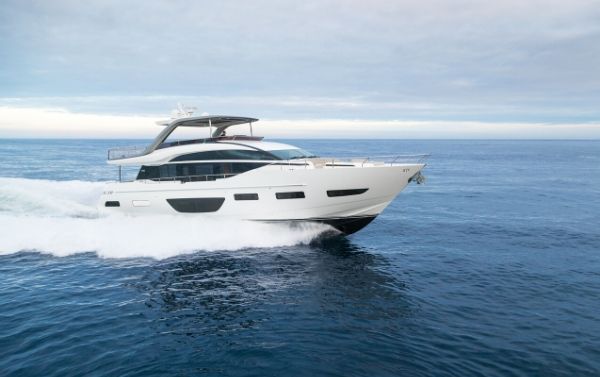
This is a truly exciting product in our range. It is a mini megayacht! And by that I mean, we have squeezed some wonderful features that one would expect to see on a megayacht but on an 85ft hull. Privacy for guests in the main saloon, a converting open-closed galley, expansive glazing bringing in the outside world, a jacuzzi on the flybridge, and four cabins with one a full beam master cabin. The exterior space is exceptional and we have applied our detailed approach from our interiors to the outside surfaces and finishes.

You’ll also be unveiling a new design – the X95 – in January. Tell us more about this upcoming launch.

Well, the X95 is the first of our X Class – our new flagship line of Superfly yachts. It re-invents space aboard, with volume that is class leading. We have developed a very efficient wave piercing bow, and the result is an incredible weight distribution and hull performance that is stable and safe in even the roughest of weather conditions. The design of the X is very ship-like and vertical, and we have 5 cabins, an enormous cockpit, skylounge, and the best part? The super flybridge! We have called this product “superbly” as the 29 metre yachts had a 22 metre-long flybridge that connects the aft deck with the foredeck. This yacht has more interior space than our 35M, and even prior to launch it is our most successful model – in terms of pre-launch sales. We will give visitors an under-the-skin experience at boot Dusseldorf in January, and the first customers will take delivery of their boats throughout 2020. I invite Gafencu readers to join us for the Dusseldorf boat show to also experience this!

Princess Yachts

How important is the Hong Kong / Greater China market to Princess Yachts, and what unique design influences are crafted for this region?

Hong Kong and China are very important markets for Princess. Hong Kong has always been a yacht-savvy marketplace, however, the Chinese market is really developing rapidly into a yacht connoisseur market place, too. I often get asked what design features and influences do we craft for Asia, and I must say, I never like to patronise or generalise on a culture specific level, so my answer is simply: we design and craft features for each and every one of our customers, specific to their individual tastes. Most owners really just want a unique way to make their boat individual without compromising on functionality, performance or safety.

Thank you.

CDMF Carol Singing Festival raises city’s spirits for a good cause

The 10th successful iteration of the Child Development Matching Fund (CDMF)’s annual Carol Singing Festival came to a rousing close as students from the prestigious Harrow International School sang at the One International Finance Centre (IFC) Concourse this month. 

CDMF Carol Singing Festival

The event, which aims to raise awareness and funds for the problems faced by underprivileged youth across the city, saw over HK$100,000 raised for CDMF through the youth performance. 

In addition, in the wake of the months-long troubles that have gripped the Fragrant Harbour, the young singers also expressed their love and support for the people of Hong Kong through their vocal talents.

This year, the choir was organised and directed by Christy Yung, a high school student from Harrow International School, along with her classmates ‒ Natalie Tsz and Sammie Zhangas. The 20-student-choir performed seven Christmas carols. 

Apart from spreading strong and meaningful messages, the troop did not fail to emphasise on the spirits of Christmas through this event.

CDMF is a charity group that encourages people to invest on matters that will aid the future generations. They believe that “inter-generational poverty” is one of the most significant problems in Hong Kong. 

Guardian Angelina: Jolie’s transformation from Hollywood A-lister to humble humanitarian

As far as Hollywood A-listers go, few can match the long-lived success that Angelina Jolie has achieved. Having made her big screen debut at the tender age of seven and cast in her first leading role when just 20, the 44-year-old Tinseltown thespian has over 50 films and five directorial credits to her name. She’s also received countless accolades, including an Academy Award, two Screen Actors Guild Awards and three Golden Globes.

Jolie

More than her numerous onscreen plaudits, though, Jolie seems to have found true fulfilment in an entirely different sphere of her life – humanitarianism. Indeed, few actresses have embraced charitable causes as wholeheartedly as the Maleficent star, with women’s rights, conservation, child immigration, education and human rights all falling under the purview of her philanthropic efforts since becoming a Goodwill Ambassador for the United Nations High Commission for Refugees (UNHCR) in 2001. Speaking of her motive for joining the august body, she said: “We cannot close ourselves off to information and ignore the fact that millions of people are out there suffering. I honestly want to help. I don’t believe I feel differently from other people. I think we all want justice and equality, a chance for a life with meaning. All of us would like to believe that if we were in a bad situation, someone would help us.”

Jolie

This drive to help others likely stems from Jolie’s own troubled upbringing. Born on 4 June 1975 to two thespian parents – US actor Jon Voight and French screen siren Marcheline Bertrand – she first debuted in a bit part alongside her father in the 1982 comedy, Lookin’ to Get Out. Yet, she was already estranged from Voight, who had abandoned the family when she was just one.

During her tumultuous childhood, she seldom showed any real inclination towards acting though. Something of a wilful child, she has said of her young self: “When other little girls wanted to be ballet dancers, I kind of wanted to be a vampire.”                                                       

“We cannot ignore the fact that millions of people are out there suffering. I honestly want to help”

Her teenage years turned out to be equally difficult. She attended Beverly Hills High School but felt isolated at the affluent school because her single mother had to make do on a more modest income. After repeated bullying, she dropped out at the age of 14, though she returned to finish her degree two years later. Jolie’s early attempts at modelling – at her mother’s urging – were also doomed to end in failure.

By the time she hit 20, Jolie had tried “just about every drug possible”, including heroin. She also confessed to suffering from depression, self-harming and having suicidal thoughts. Speaking of those difficult times, she reflected: “For some reason, the ritual of having cut myself and feeling the pain, maybe feeling alive, feeling some kind of release, it was somehow therapeutic to me.”

Jolie

Despite these difficulties, Jolie still managed to get her fledgling onscreen career off the ground. After acting in her brother’s university movies and nailing a few big screen roles, she landed her first Hollywood starring role in 1995’s cult classic, Hackers. Two years later, she finally entered the big league with her Golden Globe Award-winning role in the TV biopic George Wallace (1997) and as supermodel Gia in the 1998 HBO movie by the same name. Her superb performance in the latter even had one renowned critic stating: “Jolie is fierce in her portrayal – filling the part with nerve, charm, and desperation – and her role in this film is quite possibly the most beautiful train wreck ever filmed.”

“I feel empowered that I made a strong choice that in no way diminishes my femininity”

Yet even as her professional life soared to new heights, her personal life was anything but jubilant. Her first marriage to British actor and Hackers co-star Jonny Lee Miller lasted just three years. Her second marriage to actor Billy Bob Thornton (after a whirlwind romance in which she stole him away from his fiancé, actress Laura Dern, for whom the relationship’s demise came as a shock) was similarly short lived.

Despite the scandalous start to her next relationship with Brad Pitt (she was seen as the cause of death for the marriage of ‘America’s sweethearts’, Pitt and Jennifer Aniston), it seemed to have the makings of a true Hollywood happily-ever-after when she wed her Mr and Mrs Smith co-star in 2014. Sadly, after five years of marriage and six children together – including three biological offsprings and three adopted kids – the relationship once again ended in divorce.

And the misfortunes kept on piling up. Her mother – perhaps the biggest influence in Jolie’s life – suffered from breast cancer and eventually succumbed to ovarian cancer in 2007. After learning that she too had an 87 percent risk of developing breast cancer due to a defective BRCA1 gene in her DNA, Jolie made the difficult choice to undergo a preventative double masectomy surgery in 2013 in a bid to avoid suffering the same fate as her mother. While her decision certainly caused consternation in many corners, she had no regrets. In fact, she even wrote: “On a personal note, I do not feel any less of a woman. I feel empowered that I made a strong choice that in no way diminishes my femininity.”

Thankfully, despite her lack of luck in love and her health concerns, motherhood seemed to provide the actress with the stability she craved. Indeed, her fortuitous decision to accept the role of Lara Croft in the 2001 film adaptation of the Tomb Raider game saw her journey to Cambodia for its shooting. It was there that the spark to adopt her very own child began, ultimately leading to her adoption of Maddox, a Cambodian orphan, later that year. Speaking of that life-changing experience, she said: “It’s the greatest responsibility. It’s another life and you have to make sure they’re okay and they’re ready. There is nothing else you’re doing that is more important.”

Jolie

That very same experience also kick-started Jolie’s interest in humanitarian causes. At the time, Cambodia was still reeling from the effects of war, and the suffering that Jolie witnessed there led her to contact the UNHCR upon her return to the United States. She soon became an ambassador for the organisation, and shortly thereafter, she began to visit refugee camps across the world, using her celebrity status to draw attention to the plight of the people there.

Jolie continues to juggle her humanitarian concern and the care of her six children with the considerable demands of her cinematic career. She has even found a way to combine the two, having made her directorial debut with the 2018 historical thriller, First They Killed My Father, an adaptation of a memoir by Loung Ung, who witnessed firsthand the atrocities of the Pol Pot regime and the Khmer Rouge as a child.

That’s not to say that she’s abandoned her onscreen calling either. She most recently reprised her role of Maleficent in the sequel to Disney’s live-action adaptation of Sleeping Beauty (Maleficent 2). Next up, she’s set to star in another fantasy mash up – combining the worlds of Alice in Wonderland and Peter Pan – in Come Away. Then, of course, she will join the gigantic Marvel Cinematic Universe as Thena in The Eternals (November 2020).

Jolie

Throughout her career, Jolie has taken on roles that have been as engaging as they are varied – from adventurer to disturbed psych patient (Girl, Interrupted) to the voice of Tigress in Kung Fu Panda. However, it seems to be in the pursuit of her humanitarian passions that the actress has found her true calling as a ‘Guardian Angelina’.

TecknoMonster brings aerospace tech to the world of luxury luggage

The world of high-end lifestyle accessories has just taken a giant leap into the future thanks to the innovative vision of Italian marque, TecknoMonster. Developed by genius designer Giacomo Valentini, it blends the avant garde stylings and ergonomics of aerospace design with the much-lauded traditions of Italian handcraftsmanship. The end result is an enormous success, spawning countless luxury lifestyle products that perfect blend form and function, while proffering even more durability and security than ever before.

TecknoMonster 3

Valentini himself hails from a family of designers that have a 160-year industrial history in North Italy. Having completed stints in the worlds of fashion and industrial design, he then turned his attention to the world of luggage-making and discovered that, while trends have come and gone, the overarching design ethos of luggages have remained almost unchanged since the ’70s. “There was a need for an upgrade”, explains Valentini, “something to link to the new era.”

TecknoMonster founder Giacomo Valentini

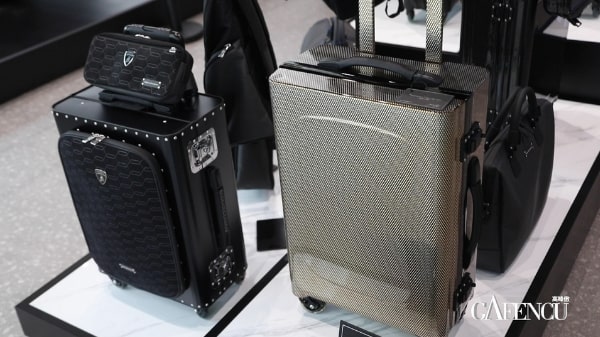
As founder and designer of TecknoMonster, his goal is to create the most sophisticated accessories for “people that want to be in the new world”. So, his company foregoes traditional materials like leather and aluminium in favour of more robust carbon fibre and titanium for its luggage designs.

TecknoMonster 2

Through his groundbreaking research in material development, Valentini has also pioneered techniques that allow the inclusion of hitherto-unusable materials such as wood and enamel in his creations without sacrificing on quality and durability. Beyond that, TecknoMonster also customisation services to its high-end clients. Be it to enhance aesthetics or increase security – the luxury brand offers bulletproofed products as well – no ask is beyond its innovative reach.

TecknoMonster 1

For more information about the brand’s mission, vision and cutting-edge designs, check out our interview with the visionary founder of TecknoMonster below, or visit https://www.tecknomonster.com/.

2019 Power List 300: Gafencu unveils HK’s most powerful movers and shakers

Gafencu unveils its 2019 Power List 300

Hong Kong has earned itself a name for being one of the most competitive cities on Earth. In a dog-eat-dog world, only the strong prevail. Gafencu’s 2019 Power List 300 showcases just that: a run-down of the most influential, dynamic and entrepreneurial minds of our time. Check out just who among the crème de la crème of HKSAR society made our 2019 Power List 300 and who has fallen from grace here.

Andrew Leung has transformed his retail passion into business success

Bitten by the retail bug when just a child, Andrew Leung, scion of the iconic Diamond Restaurant-owning family, now helms Diamond Restaurant Food Products and the Pharmabelle skincare brand.

What was it like to grow up in the family that owned Diamond Restaurant, one of the city’s most iconic restaurants?

Honestly, I was really lucky to grow up in such a family, particularly since it meant we got to eat great food quite often. I was also fortunate enough to meet up with my grandparents every Sunday at Diamond Restaurant – which for decades was one of the most famous banquet halls in the city – for yum cha, along with all my uncles, aunts and cousins. The usual schedule was that we would eat with grandma first, then accompany grandpa while he played poker with his friends after the meal. It was a lovely opportunity to spend time with them, something I treasure to this day.

Andrew Leung 1

Did this background inspire you to join the food industry or did you have other career aspirations?

I was very influenced by my mother. When my brother and I were growing up, she was the CEO of Clarins, and instead of the usual family outings, she would take us along with her when she conducted spot inspections at Clarins’ cosmetics counters. It was my first taste of the retail business, and I think that was when I was bitten by the retail bug, even though it’s not exactly something you can add to your CV.

So you decided to pursue a career in retail…

Not immediately, no. I graduated with a degree in Accounting and Finance from Birmingham University, although it wasn’t an industry I ever worked in. I ended up landing my first job at an advertising agency in Hong Kong, but it wasn’t until eight years later that I joined Cartier and finally got a chance to give retail a try.

Andrew Leung 3

What was your proudest accomplishment while working there?

Oh, there were so many high points but a few really stand out. When I joined the company, I started as a communications manager. I think there was a bit of fate involved, because right at the beginning, in 2010, I was assigned to help launch the revamped Prince’s Building flagship, the fourth Cartier flagship in the world. I was lucky enough to be assigned by headquarters to do a local campaign. For this, I was allowed to shoot a 30-minute show, one that featured some of the city’s most famous faces. Everyone shared their personal Cartier stories, and the programme was so successful that it became TVB’s most viewed episode that year. I never expected such a commercial programme to touch so many people, and I’m so proud of what we achieved.

After that, I approached Nigel [Luk, Cartier’s regional managing director] about expanding my career into the management level. In order to do that, though, I needed to learn how to make money for the company as well, so I asked if I could shift to the retail front. It worked out and I ended up staying with Cartier for eight years.

Andrew Leung 2

Through it all, was there ever any pressure for you to join the family business?

Not really. According to Chinese tradition, it is normally the sons who inherit the business, so seeing as I was the daughter’s child, I wasn’t expected to take it over. It was supposed to be inherited by my uncles and cousins instead. Ultimately, the family made the decision to close the restaurant in 2002 as the industry was in something of a slump, and interest had moved away from traditional banquet halls like our restaurant to function spaces in luxury hotels instead.

But the ‘Diamond Restaurant’ name was revived once more in 2012…

That’s right. When my grandfather, who had started the restaurant in 1947, passed away in 2004, my mother and her 11 siblings all gathered for a family conference to decide what to do with the name. Ultimately, they ended up selling the property itself, and my mother, who had just retired from Clarins, stepped up to keep the name and the heritage alive. In 2012, my mother co-opted me into her efforts, and we launched Diamond Restaurant Food Products, which began the next chapter of its existence.

Andrew Leung 4

So, what exactly does Diamond Restaurant Food Products specialise in?

Given our family’s unique insight into sourcing the best ingredients for Chinese cuisine, evolving it into a retail-oriented business seemed like a logical progression. It allowed my mother and me to utilise our past experiences at Clarins and Cartier to create products that would appeal to today’s urban denizens. Hongkongers are very cosmopolitan – they love good food but they also want convenience. So, Diamond Restaurant Food Products steps in to fill that niche with high-quality ready-to-serve items. Currently, we have nine products, ranging from wild Tasmanian abalone, braised abalone from Taiwan and scallop XO sauce to tangerine pu’er tea. The idea is to offer restaurant-quality ingredients that can be cooked within the comforts of your own home.

Andrew Leung 6

You also introduced a new skincare brand, Pharmabelle, to Hong Kong. Tell us more.

Pharmabelle is a skincare brand that was founded in Australia seven years ago by a noted pharmacist who already oversees another well-known skincare label. Since then, we’ve introduced the products to  the Hong Kong market, which includes everything from daily-use toiletries like body washes and body oils – especially focussing on contouring – to face products. Pharmabelle’s unique selling point is that it uses natural ingredients rather than the typical chemically driven items sold by other brands. This means that it’s gentler on the skin while still boosting its health and appearance. It’s received quite a warm welcome, and today, our products are available everywhere from Harvey Nichols and Wing On to K11 Beauty.

Andrew Leung 5

Can we expect anything new in the coming months?

Absolutely. We just wrapped up a special pop-up store at Harvey Nichols, and also launched a new Pharmababy line in August, which focusses on the skincare needs of babies. Thanks to its natural ingredients, mothers won’t need to worry when using these products on their precious little ones. Also, with Christmas coming up, we’re excited to launch a series of special seasonal promotions at Harvey Nichols, K11 Beauty, Wing On and the Royal Yacht Club.

What’s the top item on your bucket list?

I’ve always been musically inclined – I completed the Grade 8 musical exams in both piano and singing, and I’m a huge fan of musicals – but a relatively new interest for me is that I want to learn how to perform Cantonese opera. While it’s not something I commonly share, my grandfather is actually Leung Sing-por, one of the most famous performers of the genre. Unfortunately, he passed away when I was just three, so I think this is my way of getting closer to him and his legacy.

Thank you.

Interview by: Tenzing Thondup
Photos: Jack Law
Art Direction: San Wong
Venue: Natuzzi Showroom