
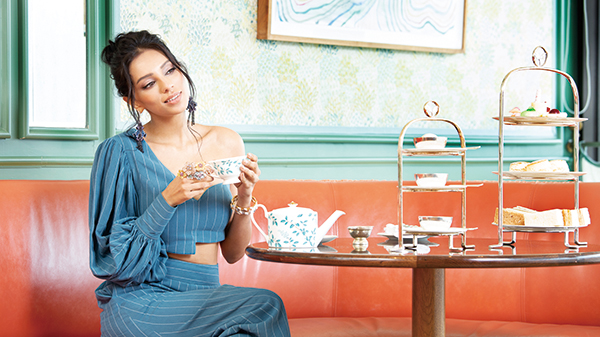
Multi-faceted jewellery designer and founder of L’Dezen Payal Shah adorns the brightest of stars

As the child of diamond merchants, Payal Shah may have been destined to design jewellery, but with L’Dezen, she has cut her own dazzling path. She speaks endearingly of her celebrity clients, her affordable new line and going home for lunch every day…

Your parents were diamond merchants. Were you fated to follow them into the industry, or did you have other aspirations growing up?
Honestly, the biggest thing I learnt from my entrepreneurial parents is what it takes to run a good business. My dad is great at marketing and my mum is a whiz at managing the accounts. That said, I don’t know if I really wanted to be a jeweller from the get-go. I was more interested in creating design solutions, which led me to study architecture at university. For me, the attraction was that it would open up so many career opportunities, be it engineering, product design or interior design. Ultimately, though, I came full circle by starting my own jewellery brand in 2011.

gafencu_people_interview_payal_shah_ldezen_1
Wardrobe: Earrings, bracelet and ring by L’Dezen by Payal Shah; Top and pants by Jina Shili; Heels by Amina Muaddi, courtesy of Lane Crawford

What led you to launch L’Dezen?
I started L’Dezen almost by chance. After I studied architectural design in London, I returned to Hong Kong to work for a hospitality firm. I’ve always had a love of design, and in addition to my day job, I used to make jewellery for my personal use. This was obviously influenced by the fact that both my parents are diamond merchants, so I had ready access to these beautiful stones.

As I was creating these pieces for myself, I attended the Hong Kong International Jewellery Show, and one of the businesses there loved what I was wearing and asked if I would be interested in making a capsule collection for them. They then flew me out to Vegas, and I remember how much fun it was and the amazing reception my pieces received. That set off a spark in my head, and I said, “I think I need to start my own business.” It didn’t happen immediately, though; I continued collaborating with that brand to learn more about the industry and how it works. Eventually, as I gained confidence and found the right resources, I started L’Dezen. That was about 10 years ago.

gafencu_people_interview_payal_shah_ldezen_2
Wardrobe: Earrings and ring by L’Dezen by Payal Shah; Jacket, top and long skirt by Arpita Mehta; Heels by Mach & Mach, courtesy of Lane Crawford

How would you describe the style of L’Dezen?
L’Dezen jewellery for me is the solution to all things beautiful, with a flexible edge that means our clients can wear these beautiful forms of art from day to night. I love that our pieces can be avant-garde, feminine or rock-chic, depending on how you style it, with the same creation looking entirely different on two separate people. Ultimately, it’s the strong, bold asthete of the jewellery that helps someone’s inner personality shine through.

Looking back, what are the most meaningful pieces you’ve designed?
The most unique piece is a pair of irregularly shaped earrings featuring a winged flower motif. I originally made it for a competition here in the city, and when it won, I was so proud to have my work showcased during the Hong Kong International Jewellery Show at the Hong Kong Convention and Exhibition Centre. Then, a few years later, I was asked to style Mary J. Blige for the Met Gala – which was a huge honour, because when it comes to fashion, this may be the most important event of the year. She ended up wearing that same pair of earrings, and as she’s such a cultural icon and fashionista, having her don them was pretty much an award in itself.

gafencu_people_interview_payal_shah_ldezen_3
Wardrobe: Earrings and sweater by L’Dezen by Payal Shah; Boots by Bottega Veneta, courtesy of Lane Crawford

You’ve worked with so many A-listers. Which among your celebrity encounters particularly stands out?
Oh, I have the cutest story. During the first years of L’Dezen, I randomly got an email from Mindy Kaling and it was so innocuous! It was from a Gmail account, and she said, ‘Hi, it’s Mindy Kaling. I love your pieces, and I was wondering if you’d be interested in styling me for the Cannes Film Festival.’ Honestly, I thought it was spam or a prank, because I love her so much and see her as a role model, given her trailblazing career as a successful South Asian woman in Hollywood.

So, I replied that I would love to, but asked to continue the conversation on Facetime, so that I would have proof that it was really her. She instantly sent me her number and the next thing I know, she’s sending me looks she’s interested in, and I’m helping her narrow down jewellery choices to match. It almost felt like we were best friends picking out outfits for a Friday night. She was so down-to-earth, and that made the entire experience even more special.

Do you have any upcoming projects or collections that you’d like to share?
L’Dezen is our high-end, handmade jewellery line, and over the past two years, we’ve added a few more styles to that, but simultaneously we’ve launched a sister brand called Psylish. Basically Psylish addresses where the demand is today, which is for flexible jewellery that can be worn day or night. It still has that L’Dezen aesthetic of being beautiful and quirky yet elegant, but is more accessibly priced to appeal to a younger crowd. Having both brands is great because I can be more artistically creative with one, while the other allows me to reach a bigger audience.

gafencu_people_interview_payal_shah_ldezen_4
Wardrobe: Earrings and ring by L’Dezen by Payal Shah; Top and skirt by Été; Heels by Cult Gaia, courtesy of Lane Crawford

With two businesses now up and running, what’s a typical day like for you?
Both L’Dezen and Psylish are run from one office, so thankfully I don’t have to be back and forth between the two. An average day for me starts with prayers, drinking some healthy green juice, then walking 10 minutes to work. For lunch, I normally go back home; we have lunch as a family every day, which is a great way to catch up with everyone since we don’t see each other that often on the weekends. Evenings tend to vary: sometimes I attend an event, other times I hang out with friends, and I try to fit in regular workouts whether it’s muay thai or going for a run. To wind down, I like to watch a TV show or movie before heading to bed.

Covid-19 has had a big impact on everyone. What challenges did you personally face, and what lessons have you learnt?
Well, I used to be in and out of the city quite a bit pre-Covid. In fact, I travelled so often in the past eight years that I was already considering a more consistent lifestyle, one that would keep me here for longer stretches of time. I had already been deep diving into e-commerce because it might allow me to continue reaching an international audience without having to hop on a plane every couple of weeks for trade shows, trunk shows and so forth. Hence, for me at least, the timing of the pandemic was quite fortuitous; it forced me to adopt the more stable lifestyle I was aiming for, one with a better work-life balance.

gafencu_people_interview_payal_shah_ldezen_5
Wardrobe: Necklace by L’Dezen by Payal Shah; Mini shirt dress by Alexander Wang, courtesy of Lane Crawford; Heels by Alexander Wang, courtesy of Lane Crawford

If you were stuck on a desert island, what three items would be must-haves?
Sunscreen, to protect my skin from all that exposure; my Apple Watch, to keep me fit and track the time; and red chillies – eating chilli with food is an absolute must for me.

Finally, what book would you recommend everyone to read?
To be honest, I’ve probably only read a handful of books in my entire life, but I’d really recommend Ladies Who Launch in Hong Kong by Maseena Ziegler, which features the stories of eight women who ran start-ups in the city. I reached out to the author, who had lived her whole life here before moving to New York, and she ended up becoming my mentor. 

On the other hand, I’m a big fan of podcasts, and one I’d highly advocate is Business Wars. It pits two major companies from the same industry together – Nike vs. Adidas for example – tracking their differences, similarities and rise to fame. It’s engaging, educational and I can’t see anyone not loving it.

Thank you.


Interview by: Tenzing Thondup
Photographer: Jack Law
Videography: Kingsley Lau
Art Direction & Styling: Jhoshwa Ledesma
Make Up Artist: Iana Zinovieva Hair Stylist: Vic Lai
Locations: 181 and at Fortnum & Mason and The Hari Hong Kong
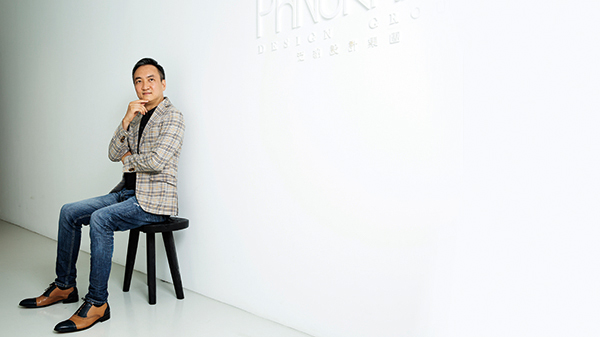
View Panoramic: Horace Pan, award-winning designer and founder of Panaroma Design Group

As the founder of Panorama Design Group, Horace Pan explores exciting new domains in interior architecture. As a university educator, his mission is to help the next generation of designers build a distinctive Hong Kong identity…

Tell us about your early years.
I’m Indonesian-Chinese, though I was born in China as my parents had emigrated there from Indonesia in the ’60s. Because of all the uncertainty during the Cultural Revolution, they wanted to relocate to their homeland via Hong Kong. Ultimately, they never made it all the way, and I’ve pretty much spent my whole life here. The international influences of my childhood have really left their mark on me, giving me a unique perspective that informs my work as an interior designer.

Horace Pan Gafencu Sep_2

What led you to found Panorama Design Group?
I practised interior design for seven years before starting Panorama. Then I had a gut feeling that I should explore new domains of interior design and new methodologies, taking a different approach to what I was already doing. I thought the best way to accomplish this was to found my own company.

Does your firm have a particular area of speciality?
Panorama is headquartered in Hong Kong, with branches across Chinese cities such as Shenzhen and Chengdu, as well as an upcoming location in Malaysia. We specialise in many different domains of interior design across the region. We do hotels, club houses and F&B venues, for example, and health- and wellbeing-oriented spaces, so we are pretty multi-disciplinary and also cover many different topologies of space.

Horace Pan Gafencu Sep_1

What would you say are the unique selling points of Panorama?
It’s really in the name itself, and for us ‘Panorama’ means ‘wide-angled’ and ‘full-spectrum’, so I would like my team to have a different, unexpected approach to any projects and initiatives we collaborate on. Let’s take a hotel, for example. We don’t want to follow the traditional precepts of design, but rather focus on creating a kind of crossover experience. This is exactly what we did for MeeHotel in Shenzhen last year, a project that’s garnered us 12 international awards so far, with several judges praising us for breaking new ground in the boutique hotel domain. I think its success is largely down to the fact that we combined a keen understanding of the local culture and bamboo materials with a unique spa-like overall concept for what is actually a business hotel.

Ultimately, whether you call it a surprise, a breakthrough or a point of difference, our design firm is known for creating something unexpected. We’re famous for conceiving this kind of branding or commercial design strategy before we come up with any proposal. This leads to another of our strengths – research – which is critical to any successful project.

Horace Pan Gafencu Sep_4

How has the ongoing coronavirus pandemic affected your business?
The biggest issue is that we can’t cross the border into mainland China, where the bulk of our projects are located. Right now, we can only see the sites virtually through apps like Zoom, which some clients are understandably not thrilled about. Though our ongoing projects have adjusted to the new normal, it’s with new proposals that we encountered the most challenges. For Chinese clients, we are considered a foreign consultancy, so we really had to go the extra mile to persuade them that they should choose us rather than, say, a local contractor who can oversee everything in person. The onus has been on us to prove – be it through past success stories or a cohesive agenda that outlines the entire design and construction process – that we can still produce a superior product for them despite our location.

Horace Pan Gafencu Sep_5

Do you have any exciting new projects in the pipeline?
Absolutely. We are in the midst of designing new elements and experiences for luxury brands in department stores in China, which we will be rolling out soon. In the first of these, we’re exploring a crossover of the spheres of art, technology and fashion to set a new benchmark for how consumers experience high-end brands.

Your projects have earned more than 150 international accolades. Which one is particularly close to your heart?
That would have to be my first award-winning project, the one that won me top honours in the Living Space category of the 2000 Asia-Pacific Interior Design Awards. This was roughly around the time I started Panorama. I was the only one of the five finalists who was an independent entry, and I got the shock of my life when my name was called as the winner. Interestingly enough, the project – Pan House – was actually my own home. It was a small three-storey village house sandwiched between two other similar structures. I think the reason why it garnered such critical acclaim is because I successfully transformed the traditional space into an entirely new domain. Each floor features a uniform grey cement motif, but I fitted different coloured filters to the windows to create separate atmospheres for each level.

Horace Pan Gafencu Sep

How do you rate Hong Kong’s interior design industry on a global level?
I think our biggest strength is that we are used to delivering projects within a short time span, with capabilities of revamping restaurants, residences and the like within a few short months. This is our unique edge, because other countries can’t match our fast-paced work ethic.

Having said that, there is one serious shortfall in that we don’t have a true ‘local identity’ per se because a lot of our cultural heritage and architecture has pretty much been erased. This is no good for local designers. You need to have roots and craftsmanship traditions that inform your designs, as they have in other countries like Japan and Sweden. There’s no such thing as a ‘Hong Kong style’, I think, and I feel conflicted about this and try to address it in my capacity as an Assistant Professor at Hong Kong Polytechnic University.
Finally, could you tell us something people don’t know about you.
I was approached by Hong Kong director Wong Kar-wai’s team to lend Pan House as the set for the romantic drama film 2046, starring actres Faye Wong. Ultimately, I declined, as I didn’t want too many people in my personal space.

Thank you.


Interview by: Tenzing Thondup
Photos: Jack Law
Videography: Kingsley Lau
Styling & Art Direction: Jhoshwa Ledesma
Venue: Panorama Design Group office


Stitching Sustainability With Innovation: Will Lam, MD, High Fashion International Group


Picking up on a family passion, Will Lam has raised the bar in intelligent, responsible garment manufacturing. The Managing Director of High Fashion International Group cuts to the chase, advocating innovation, education and the occasional game of chess…

gafencu magazine people interview will lam high fashion centre WDistrict office

Your family has more than 40 years of experience in the fashion industry. What does fashion mean to you?
From a business perspective, I think fashion, simply put, is to fulfil desires. It’s about understanding the constantly changing market and what customers want ­– listening to and meeting those demands. 

Fashion is ever changing and I’ve had time to build up my knowledge of the industry. Both my parents started fashion businesses, so I was exposed to it early on in life. From a young age, I spent a lot of time watching my parents gain insight into the world of fashion; even our Sundays were spent together visiting brands for a better understanding of the market.

What path did your education take, and how has it impacted your professional life?
I received a Bachelor’s Degree in Finance at the Chinese University of Hong Kong before completing my Master’s at one of the most prestigious institutions in the United States, Princeton University. Both experiences were very beneficial to my personal and professional growth. I was especially impressed by the engagement and interactive discussions between students and professors when I was in Princeton University. The students were very intelligent and the professors were supportive; this helped mould how I run my own company.

For the past decade, you’ve been the top management of High Fashion, the company founded by your father. Did you have other career aspirations growing up or did you always see yourself within the family fold?
I was quite heavily influenced by both my parents. They were both entrepreneurs, and I think witnessing them build their businesses from scratch inspired me to run a business myself. 

But beyond the fashion industry, I love the technology industry. In fact, our company – as well as my family and I, on a personal level – has invested in several start-ups. We develop ecovation programmes that help young entrepreneurs aspiring to start big businesses. I love new ideas that contribute to innovative business models to transform industries – not only in fashion but every sector of the economy.

gafencu magazine people interview will lam high fashion centre WDistrict

What have been the major contributing factors to your company’s success?
High Fashion is the global leader in silk manufacturing and one of Asia’s leaders in sustainability and providing affordable, luxurious garments. We are also a fully vertical supply chain. We provide a one-stop service for all types of customers from all over the world, from textiles to garment production.

I believe that innovation has been the most important factor in our success. Our clients are some of the most well-known brands in the world, and they are constantly looking for unique and creative ways to meet the demands of their consumers. At High Fashion, we seek out new fabrics, new ways of servicing, new re-engineering processes, as well as forms of technologies that allow us to produce a consistent flow of innovative products.

But on top of that, our diverse team has been key to the growth of our business. I believe that having an office culture that nurtures creativity is another important factor for a company’s success. We encourage staff to share new ideas and be open to collaborations, and embrace trial and error as part of the learning process.

Could you give us an example of how creativity and innovation have boosted your business?
I am always grateful to our staff and their support in growing a successful company. In turn, I feel that it is my responsibility to provide them with the best environment in which to perform and grow. We offer platforms that allow them to continue learning, which is especially important now that we see new businesses disrupting traditional organisations. We like to promote a fast-learning culture that encourages staff to learn about new market trends, visit different exhibitions, take part in seminars and network with other professionals. We also guide them through three to five years of career planning, organise management programmes and sponsor Executive MBA programmes outside of our company.

This allows the team to consistently contribute new and diverse ideas in meetings. It’s a very effective process that we focus on in order to deliver a continuous stream of innovative products. I believe this is one of the reasons why the majority of our staff have stayed loyal to the company – most of them have been with us for more than 20 to 30 years. 

gafencu magazine people interview will lam high fashion centre WDistrict innovative manufacturing

You’re known as a supporter of intelligent garment manufacturing. Can you tell us how this has changed and benefited the company’s productivity?
I think intelligent garment manufacturing is a trend that will last long into the future. Everyone is talking about the new economy, implying how technology plays a huge role in transforming traditional businesses. Because the garment industry is quite labour intensive, technologies like robotics and digitalisation offer businesses a leg up.

We look for ways to capture different ideas that are imbedded in technologies and apply them to garment manufacturing. In the past few years, we’ve spent a lot of time on automation. We were able to increase our productivity by 30 to 40 percent without having to reduce our labour force. And this is just the beginning: we will continue to learn about integrating automation into garment production. New companies are already adopting automation and advanced technology, which is why I believe technology will be an inevitable transition for the garment business, and will transform traditional companies into faster-growing entities.

Sustainability has become a hot topic in fashion. Could you share your thoughts on the subject?
Sustainability is the key to a more secure future for the generations to come. We hold great value in the initiative to help our customers transition from less sustainable into more sustainable products. This is where my belief in education comes in. Whenever we work with clients and consumers, we inform them about the importance of sustainability and how we can provide them with sustainable products. For example, incorporating sustainable production processes such as recycling and up-cycling. 

Our factory is one of the best known for sustainability; it holds a green-level certification – the highest level in China – and we are one of the few garment factories that uses solar power to recycle energy throughout the production process. Thinking two or three decades into the future and how our business affects the planet, we will introduce new elements of sustainability in our production process and supply chain wherever possible – ensuring more eco-friendly production that avoids excessive waste and reduces the carbon footprint.

gafencu magazine people interview will lam high fashion centre WDistrict shared space

Corporate Social Responsibility (CSR) has also been a priority for High Fashion. Why do you feel it’s so important to give back?
I think education is very important; I’m very grateful that I had the opportunity to learn a lot when I was at university. Which is why I feel that it’s important to provide that same exposure to youngsters who have limited resources and avenues in which to develop their interests and career path. We strongly support education by providing opportunities for university students to join exchange programmes overseas. We have also built schools in Asia – China, mainly – such as the High Fashion Women’s Institute in Hangzhou that has offered tertiary fashion education for over 10 years.

What upcoming projects or new initiatives are you most excited about?
Since 2020, we have been working on WL District, a newly renovated, open shared space that allows CEOs and creatives to collaborate and network. Whether hosting an event or holding an exhibition, we aim to provide a space that allows like-minded individuals to come together with their unique backgrounds, expertise and skills. From the concept to the interior design, we’ve put careful consideration into every aspect of creating a venue that inspires creativity, collaboration and innovation.

What’s your favourite way to relax? Do you have any hobbies?
My favourite sport is tennis. Before I joined the company, I didn’t do much exercise, but I found that exercising helps me both mentally and physically – I feel more energised and focused. You need to be quite determined and disciplined to do well at tennis, and it’s helped me stick to my routine and improve my efficiency.

I also like chess, a game my father introduced me to when I was a child. Not only does it help with my concentration and problem-solving skills, it’s an activity that I enjoy doing with friends, as we can catch up over a game. Although it might seem mentally strenuous, I actually find it relaxing: it offers me mental clarity.

Thank you.


Interview: Roberliza Eugenio
Photographer: Jack Law
Videographer: Andy Wan
Art Direction & Styling: Jhoshwa Ledesma

Also Read: Interview with Big Honor Entertainment’s Veronica Lam on continuing her father’s legacy whilst finding a groove of her own

The Chemistry of Beauty: Founder and skincare formulator of Skin Need Christal Leung on the secret to less-is-more skincare

With the opening of her Hong Kong lab next month, cosmetic chemist Christal Leung is on a mission to simplify skincare and bring it closer to home, while delivering supremely customisable skincare products through her brand, Skin Need.

gafencu magazine people interview crystal leung skin need 1

In your opinon, where did your personal passion for skincare stem from?
It began at a very young age. When I was a teenager, my mum ran a beauty salon and I was there every weekend to help with bookings and scheduling. Seeing her approach to skincare – customising products with fresh fruits and vegetables – and watching the way she brought joy and confidence to her customers, I realised that this was what I wanted to do as well, to create this kind of positivity and joy no matter which industry I would dedicate myself to. Unsurprisingly, that turned out to be the beauty industry.

How did your skincare label, Skin Need, come about?
Actually my mother was the one to start it. A lot of the products she used in the salon were manufactured and imported from the United States and other Western countries, which meant they were geared more towards Caucasian skin types and environments. She wanted something that was specially created for the humidity and temperatures of Hong Kong, something that would suit the lifestyles of the city’s residents. So, she worked with cosmetic chemists in the States and brought over her own products for customers in her salon. When I became a cosmetic chemist and joined Skin Need 12 years ago, I began evolving, reformulating and upgrading them.

gafencu magazine people interview crystal leung skin need 5

What do you think sets Skin Need apart from other brands in the market?
I think what makes Skin Need unique is that we didn’t come from a commercial approach – we weren’t thinking of what kind of gap we wanted to fill in the market or what ingredients we’d use to make it different. Our philosophy evolved from the experiences and skincare problems that my mother encountered over her career, and how she felt beauty products should actually be addressing those needs.
A lot of companies promote a hero product, a one-size-fits-all that everybody should be using, be it a serum, a cream or a sunblock. But my mother felt – and I concur – that our skin is always in a very dynamic environment of external and internal change, based on factors, such as weather, stress levels and hormones. So, at Skin Need we aim to create a skincare regimen that can really evolve with the needs and changes of your skin.

For example, when hormones cause the dermis to become dehydrated or oily, you need to customise your cream immediately to boost its moisture levels. On the other hand, when your skin is very dry or sensitive due to stress, you have to add emollients to nourish and rejuvenate it back to full health. Ultimately, the strength of Skin Need is our ability to create customised skincare regimens that can meet a customer’s unique needs. What’s more, we also empower users to observe changes in their skin daily, and offer a range of oil-based and water-based serums and different active ingredients that can be blended into their creams to suit their exact needs on any given day.

gafencu magazine people interview crystal leung skin need 4

Do you have any upcoming projects on the horizon that you’re excited about?
Yes, I’m currently in the midst of a very hectic and exciting project, which is set to open its doors next month. I’m building a Good Manufacturing Practice (GMP) certified lab in Kwai Chung, which will have five clean rooms and assembly lines for the bottling and filling of cosmetics. We’ll also have homogenisers and production capabilities to produce skincare that are ‘Made in Hong Kong’. Ultimately, while our products are still manufactured in the States, we’ll ship them en masse to the city to be packaged here, so we can greatly cut down our carbon footprint and fuel consumption.

Can you share one or two common mistakes people make in their daily skincare regimen?
The issue I face most often is that customers use too many products too often for no good reason at all. Because of all the information that is so readily available on the internet – you know, ‘you have to use retinoids, it does magic for your skin’ or ‘the salicylic acid concentration has to be one percent’ – everyone feels like they need a bit of everything. This, in turn, drives suppliers to produce in higher amounts than needed without educating consumers on which products should be used in tandem and which shouldn’t be used together at all.

So, one of the most common problems I encounter is users layering an amalgam of products like acids with highly purifying clay masks, and adding retinoids as a last step and so forth. It’s just crazy because ultimately, you’re compromising the barrier protection of your skin. You harm it by ignoring the fact that you need a balanced skin pH level so that it can fend off bacteria. Not only are you not going to get the results you want, you’re damaging your skin in the process, which leaves you open to a plethora of problems in the future that didn’t exist in the first place.

gafencu magazine people interview crystal leung skin need 2

So, what’s your tip for simplifying skincare?
I think hydration is important for everyone. If your skin is dehydrated, then using humectants such as hyaluronic acid and natural moisturising ingredients like Vitamin B5 in your daily routine are a must. For those suffering from an oily dermis, these hydrants also help balance oil production. In fact, our body can’t produce its own water, so when it gets dehydrated, its automatic response is to create an oily barrier instead – this is what causes blocked pores and blackheads. Studies show that hydration can help counteract the effects of ageing skin and sensitive skin too, so I really can’t stress enough the importance of moisturising your skin properly.

As a balance to your busy schedule, how do you like to relax during your down time?
To be honest, work is pretty much my hobby. It’s something I feel so passionate about and find so much joy in that I don’t feel like it’s work. Having said that, last year my sister told me that I was too much of a workaholic and needed to find a pastime, so I joined the Entrepreneurs’ Organization. It’s a group of like-minded entrepreneurs who come together not so much to talk about potential opportunities and connections but rather to share and reflect on the hurdles that come with running your own business, and also to expand our collective horizons through learning opportunities conducted by experts. I was invited to their board this year and at the moment I’m spending my spare time curating learning experiences for our members.

Finally, what is your biggest guilty pleasure?
Junk food. I absolutely love tucking into a bag of chips or a box of chocolates, so I’m really lucky that I have skincare products that can counteract their side effects!

Thank you.

Credits

Interview: Tenzing Thondup
Photographer: Jack Law
Videographer: Kingsley Lau
Art Direction & Styling: Jhoshwa Ledesma
Jewellery: No. Thirty Three Joaillerie
Location: WULT, Central


Big Honor Entertainment’s Veronica Lam’s creative spirit shines bright

As Executive Director of Big Honor Entertainment, Veronica Lam continues her father’s legacy as an innovative promoter of musical talent. She looks back at life with dad and forward to creative new ventures in the future.

What was it like growing up in such a prominent family? Would you say that your childhood was pretty normal?
It’s difficult to say whether my childhood was normal, as I don’t have anything to compare it to. It wasn’t the standard upbringing, since I was raised by my maternal grandmother, while my younger brother lived with my paternal grandmother. It wasn’t until my teens that I started living with my dad [the late Lam Kin-ming of Crocodile Garments fame], which I can say gave me a more independent frame of mind than many of my peers. One thing that I do remember fondly is being surrounded by a lot of relatives.

Gafencu Magazine Interview with Veronica Lam Big Honor Entertainment Hardbit Music record label
Button shirt and trousers by Germain Paris

What path did your education take, and what aspirations did you have growing up?
I completed my high-school years at a boarding school in the UK, and that really left an impression. While I was living in Hong Kong, my father was pretty strict, and we had to come straight home after school every day. We weren’t allowed to hang out with our friends much at all. So, going to boarding school suddenly afforded me the freedom to branch out and explore new things. I always had a creative bent, so when I graduated, I applied for an art course, but ultimately gave that up to pursue a bachelor’s degree in business statistics at the University of Reading.

Gafencu Magazine Interview with Veronica Lam executive director of Big Honor Entertainment Hardbit Music
Turtleneck by St. John; Heels by Giuseppe Zanotti

You’re the Executive Director of Big Honor Entertainment, the business founded by your father. Why did you join the family firm, and what are your responsibilities?
I tried my hand at banking for a couple of years after university, but quickly realised it wasn’t something I wanted to do. I felt pretty lost and rudderless, so my dad asked me to join him at Big Honor Entertainment. At first, it was meant to be temporary, with me following my father to his various meetings and commitments, but 10 years later, I’m still here.

Big Honor is comparable to an investment company, albeit one that focuses on investing in musical events and shows. We do create our own, but with so many acts circulating, we also pick and promote those that fit our company profile. For the past decade, we have targeted Korean and Japanese talents, but with the ongoing pandemic, none of them can fly to Hong Kong, so we’ve refocused more on local bands, investing in movies and themed events. As Executive Director, it’s my responsibility to evaluate whether or not certain projects are worth investing in, as well as introduce fresh entertainment propositions to the city, and even instigate and implement new musically-focused initiatives of our own.

Gafencu Magazine Interview with Veronica Lam Big Honor Entertainment Hardbit Music art photography
Outfit by St. John; Heels by Giuseppe Zanotti

When did you discover your passion for the arts and photography in particular?
I remember one day when I was in high school, my dad came home with a pocket-sized, credit card-thin camera. This was advanced technology at a time when mobile phones couldn’t take photos. I took the camera wherever I went, and started documenting inspirations for my high-school art projects. I was completely hooked. There are so many special moments happening all the time, and taking photos is the quickest, most logical medium to retain those precious experiences.

Tell us a little about your photography work under VL Visuals.
I founded VL Visuals to display my photography artworks. The seeds for the idea came about when I helped promote the Yan Chai Hospital charity by producing a picture booklet detailing the hospital’s various services using photography as the key medium. Then, I collaborated with fresh young illustrators in the city on the photos I shot. The picture booklet was very well received, and it gave me the confidence to continue exploring my passion for photography. Not long after that, I stumbled upon gold leaf art while travelling in Japan, and that led me down a whole new avenue of creativity. That’s when I started doing exhibitions and presenting my works at art fairs around the world, including Hong Kong, London and Paris. The reception these received gave me the ego boost to continue.

Gafencu Magazine Interview with Veronica Lam Big Honor Entertainment Hardbit Music art
Cardigan and pants by M.D.M.S; Heels by Giuseppe Zanotti

Where do you find inspiration for your photos, and what are the challenges of capturing a truly great image?
Most of my inspiration comes through my travels. While I feel some people seek to capture stunning sunsets, I much prefer scenes with fog or haze, as I like moody, dark tones. What I enjoy, however, requires a lot of strength, for example, waking up at 4am in the morning to clamber up a mountainside with heavy equipment. Being a woman with weak arms doesn’t help much, and I’m basically a night owl, so I do understand and admire those who put so much effort into taking gorgeous photos!

Gafencu Magazine Interview with Executive Director of Big Honor Entertainment Veronica Lam Hardbit Music
Nordek Blazer and pants by Acler, courtesy of Lane Crawford

What led you to found Hardbit Music?
I was already involved in signing and handling musical talent at Big Honor, and my brother and I both enjoyed attending DJ shows, so we thought, why not branch out and try that as a side project. DJ events have a certain image though, and there were some concerns that this might negatively affect our company name, so we created a new brand – Hardbit Music – to host large-scale DJ-led musical events in the city.

How do you feel the ongoing coronavirus pandemic affected this business?
Honestly, the entertainment industry was one of the sectors hardest hit by Covid-19. Obviously, we couldn’t hold large-scale events or fly in musical acts to the city anymore… it was a serious challenge in every sense of the word. Looking back, it definitely taught us to become more creative with our ideas and to think outside the box in terms of coming up with innovative new solutions and concepts. In particular, it inspired me to start my latest project, which is called the B.Live app.

Gafencu Magazine Interview with Veronica Lam Big Honor Entertainment Hardbit Music
Turtleneck by St. John; Heels by Giuseppe Zanotti

What’s this new app all about?
At a time when in-person musical events are all but non-existent, we have to keep creating new spaces for musical acts within the entertainment industry. B.Live is a streaming app that offers viewers multiple angles during broadcasted events, so they can decide how they take in their favourite acts. Not only does the app allow people to enjoy music in the comfort of their homes, it also features chat rooms so users can interact with friends while experiencing the shows. That’s not all: in addition to musical content, we’ll also be uploading theatrical shows, tutorials and more. The app is slated for release in August, so watch this space…

Gafencu Magazine cover Interview with Executive Director of Big Honor Entertainment Veronica Lam Hardbit Music
Stow blazer dress by Acler, courtesy of Lane Crawford

As you juggle your various responsibilities, how do you like to unwind?
When I get stressed, I take to the treadmill to work up a good sweat, or I blast music out loud and dance by myself in front of the mirror. I used to unwind by editing photos at home, but these days I have so much editing to do that this has lost its shine a bit.

If you could go back and relive any moment of your life, what would it be and why?
I would love to be able to go back to the day I got married. I wish I could relive the moment where my father walked me down the aisle. It’s an especially poignant memory for me, as he passed away recently, and I’d like to hold his hand tighter and truly thank him for being there.

Finally, what’s your biggest guilty pleasure?
I’m the biggest SpongeBob SquarePants fan, and I love collecting SpongeBob paraphernalia. I’ve got T-shirts, plush toys, vinyl figures, stickers… you name it, I’ve got it. Every time I see those big, watery eyes, it just reminds me of how silly he is and how he doesn’t take himself seriously, a bit like my husband. It instantly lightens my mood!

Thank you.


Interview by: Tenzing Thondup
Photographer: Jack Law
Videographer: Kingsley Lau
Art Direction & Styling: Jhoshwa Ledesma
Hair and Make-up: Heti Tsang
Cover: Stow blazer dress by Acler, courtesy of Lane Crawford

Jimmy Yu of Royal Catering on carving his own compelling path in life

Exquisite canapés and fish and chips do mix for Jimmy Yu. The sociable founder and CEO of Royal Catering is also on a mission to bring new tastes to China – and aid to communities in need through his charity, Smile With Us.

Could you tell us a little about your upbringing and education?
I was born in Hong Kong and moved to UK when I was 12, attending boarding school at Stamford [in Lincolnshire]. I wasn’t always the most well-behaved student and often got into trouble. When I was at university, I got caught in an incident that resulted in my house arrest for 12 months. Because I wasn’t allowed to leave the house, I spent the first few weeks ordering takeaway, but eventually grew tired of it. It was then that I decided to take up cooking.

Gafencu Magazine interview people Jimmy Yu Founder and CEO of Royal Catering China Royal Food Culture Smile With Us Scotts Fish and Chips leicht

What are your fondest childhood memories, and how did your family impact the person you are today?
As I mentioned, I wasn’t always on my best behaviour growing up, but I was fortunately blessed to have very supportive parents who encouraged me to explore my curiosities and pursue every venture. After the incident, which my parents were obviously not too happy about, I realised how phenomenal they were to remain supportive and extremely patient with me despite my wrongdoings. I turned over a new leaf and things started to get better from there. I’ve been able to do and experience a lot of different exciting things in my life, as well as explore my own path and start my own business.

Now that I am a father myself, I’m motivated to work harder and give the best I can to what I do. And similar to how my parents were with me, I want to support my daughter and give her the freedom she needs to explore the things she wants to do, while, of course, keeping a close eye on her.

Gafencu Magazine interview people Jimmy Yu Founder and CEO of Royal Catering China Royal Food Culture Smile With Us Scotts Fish and Chips AT LEICHT SHOWROOM

What led you to found Royal Catering? Did you always want to be in the food and beverage industry?
Although I had my fair share of misdemeanours during my school days, academically I did pretty well. Ever since I was in secondary school, I knew I wanted to start my own business. After boarding school, I enrolled at Regent’s Business School [part of Regent’s University London], where I received a full scholarship.

Upon returning to Hong Kong, I spent almost six years working as a Society Editor at an English luxury lifestyle magazine. But having spent half a decade in the industry and witnessing the transition of publications from print media to digital platforms, I felt it was the right time for me to move onto something new.
My entry into the F&B industry was, admittedly, unexpected, but it made the most sense to me. My years as a Society Editor, travelling the world, trying a range of new cuisines and indulging in some of the best canapés each region had to offer, not only allowed me to build a huge network of professional connections and industry friends, but also helped me realise what I loved doing – eating. Towards the end of 2015, I founded Royal Catering Hong Kong, which provides high-end catering services for luxury brands and private clients including Rolex, Ferrari, Lamborghini and D&G.

Gafencu Magazine interview people Jimmy Yu Founder and CEO of Royal Catering China Royal Food Culture Smile With Us Scotts Fish and Chips DOLCE GABBANA

You’re very involved in the F&B industry. Why is the food business meaningful to you?
I am a big believer in doing what you love and loving what you do. For me, it’s eating. In Chinese there’s a saying that implies that the clothes you wear, the food you eat, the place you live in and the places you travel are the four pillars that make a good life. I felt that being involved in F&B was the best way for me to help give people a taste of the good life. And catering, unlike restaurants, is never limited to set menus and a particular cuisine, so every single client, season and meeting presents a new challenge to develop something different and unique. In my opinion, it’s not just about the food itself but also about presentation and the value of the entire experience for the client and their guests.

Gafencu Magazine interview people Jimmy Yu Founder and CEO of Royal Catering China Royal Food Culture Smile With Us Scotts Fish and Chips dolce & gabbana

You’re also the CEO of China Royal Food Culture. Could you tell us more about this?
With Royal Food Culture, we try to bring the best of Western cuisine to China. Contrary to its culinary landscape in the past, China is becoming more modernised. People are excited to try new things and explore different cultures. The F&B market has been growing rapidly in the last couple of years. For instance, when I franchised Scotts Fish & Chips diner in Chengdu two years ago, I found that the people there were very hip and trendy; they hold onto the local culture while embracing the Western culture.

Although going to McDonald’s and KFC have become commonplace, and dishes like spaghetti are no longer exotic, the dining scene in China is still lacking in terms of Western varieties, which I want to bring into the country. I want to bring the best of the West to the East in areas where people would appreciate it the most.

Gafencu Magazine interview people Jimmy Yu Founder and CEO of Royal Catering China Royal Food Culture Smile With Us Scotts Fish and Chips

Do you have any exciting new projects?
I’ve always found China to be an interesting place. I travel to many different places around the world, yet China still impresses me. Following the successful opening of our first – as well as China’s first – British fish and chips diner two years ago, I’ve been returning to the country in the last few months, preparing to open a new location. Though the pandemic put much of my business plan on hold, it is set to open very soon.

Gafencu Magazine interview people Jimmy Yu Founder and CEO of Royal Catering China Royal Food Culture Smile With Us Scotts Fish and Chips dolce & Gabbana in leicht showroom

Aside from your work, you also co-founded Smile With Us. What led you to start that charity, and what is its mission statement?
My parents instilled in me the values of kindness and helpfulness so I have always felt obligated to give back to the world. Before I started this charity, I would take a week or two off every year to volunteer in a different country. I’ve been to Botswana, Cambodia, the Philippines and several places in China to help underprivileged children and their families.

Although it’s impossible to help everyone in the world, through Smile With Us we try our best to help different communities facing various challenges. In our first year, we helped those with hearing and vision disabilities. The following year we tried to reach out to people suffering from mental illnesses, and during the pandemic, we helped to distribute masks to the needy and sanitise their homes.

Finally, what is the most interesting thing that you’ve ever done?
I’ve done lots of crazy things from sky diving to bungee jumping. I’m big on sports, too, so I enjoy anything from golf and badminton to tennis and snowboarding. Back in the UK, I used to go camping and I backpacked through Spain. That’s something interesting I’d like to do again in the future – to backpack around the world, meet people and learn new cultures first hand.

Thank you.


Interview by: Roberliza Eugenio
Photographer: Jack Law
Videographer: Kingsley Lau
Art Direction & Styling: Jhoshwa Ledesma
Location: The Leicht
Wardrobe: Dolce & Gabbana


Far Sighted: Jeffery Yau, visionary founder of Puyi Optical, celebrates the brand’s 20th anniversary

Over two decades, Jeffery Yau has successfully steered two distinct luxury retail businesses – eyewear and watches. The master multitasker and gleeful shopper speaks of his bifocal worldview, and why his customers always come first.

What are some of your most vivid childhood memories?
I come from a big family, especially on my mother’s side, which boasts more than 80-90 members, so I have more cousins than I can count. Some of my fondest memories growing up are of weekends spent with them at my grandfather’s house. It was great fun and I was never lonely. My family ran a watch and jewellery business, so I spent a lot of time in my parents’ shop tinkering with things and seeing how retail worked.

Those were seminal moments for me, and instilled a passion for the horological arts. I remember when I was in high school, I’d save up my pocket money to buy watches like Swatch and Casio – I actually managed to collect a few hundred pieces. I never thought I’d eventually turn this passion into a career, though…

gafencu magazine people interview Far Sighted Jeffery Yau, visionary founder of Puyi Optical, celebrates the brand's 20th anniversary 1

Where were you educated, and what were your aspirations at that time?
I studied at DBS [Diocesan Boys’ School] until Form 4 before moving to Sydney to complete my high-school education. I then enrolled at Washington University in St. Louis for my college years in the US. I was fortunate enough to meet my now-wife while I was home for summer break after my first year, and she joined me over there as well.

At the time, I knew I wanted to major in business, but I had no clue what I’d do once I graduated. I eventually returned to Hong Kong and got a job at an advertising agency. It was really fun. I was working in the account servicing department, and learnt much of my marketing sense and social skills from the single year I spent with them. Then I joined my father at the family company, but when he decided to close up the shop after a couple of years, I chose to start something of my own.

gafencu magazine people interview Far Sighted Jeffery Yau, visionary founder of Puyi Optical, celebrates the brand's 20th anniversary 2

What led you to found Europe Watch Company?
Well, as I mentioned, my family has been in the watch and jewellery business for many years, so I was fortunate to have the opportunity to learn about this industry from a very young age and foster a passion for the sector myself. As a man, my preference was watches over jewellery, so when I had the chance to open my first shop in Tsim Sha Tsui East in 1997 with the support of my family. I chose to specialise in watches and optical products. Initially, it was dubbed the Europe Watch and Optical Company.

The timing was pretty bad though, as that year also heralded the Asian financial crisis. I opened the shop in October 1997, and the first few years were challenging, to say the least. In terms of selling watches and optical products, I believe the approach is pretty similar – the most important thing is to build a customer base, which takes time. Looking back, I was youthfully optimistic and didn’t realise how many obstacles I would face to make it a success. In particular, I thought selling watches alongside optical goods made sense; however, I found that having this dual approach meant that we were perhaps not as professionally focused as other companies.

So, once we started becoming financially stable, in 2001, I decided to split the company into two businesses – Europe Watch Company that sold watches, and the newly-minted Puyi Optical, which specialised solely in optical products. Ultimately, it was a sound business decision, and I enjoy being able to switch between the two luxury-focused entities.

gafencu magazine people interview Far Sighted Jeffery Yau, visionary founder of Puyi Optical, celebrates the brand's 20th anniversary 5

Can you tell us more about Puyi Optical and what falls under its purview?
Since the beginning, I’ve positioned Puyi as a high-end optical brand that sells only the most luxurious eyewear. The brand focuses on a combination of fashion and lifestyle, design and craftsmanship, and also vision care and optometry. It’s definitely not easy to have such a broad, holistic approach, but it’s what makes our brand unique. We believe that customers are the most important part of the business, and you always have to please them and create the best experience for them in order to find success.
We started with one shop and today we have a presence in 86 stores across 23 cities including Hong Kong, Beijing, Shanghai and Taipei. This year is our 20th anniversary, and it’s been a long journey, a lot of blood, sweat and tears, and I’ve been fortunate to have a great team supporting Puyi. Today, we have 1,100 staff across the group, and we even have an in-house training school – which we call Puyi Academy – offering lessons on product knowledge, sales and communication skills, as well as technological know-how. This results in staff that are not only professionally skilled, but can also deliver the highest level of service.

For me, the most important aspect of the business is our customers, what they think, how they feel, what they want, and so forth. This kind of feedback is critical to help us maintain and expand our brand. I personally read any comments that we receive. If we claim we are a luxury brand, we have to be perfect in every aspect, be it customer service, product range or eye examinations.

gafencu magazine people interview Far Sighted Jeffery Yau, visionary founder of Puyi Optical, celebrates the brand's 20th anniversary 44

Do you have any exciting projects on the horizon?
Yes, plenty! Even though the overall economy is still in recovery, we’re celebrating Puyi Optical’s 20th anniversary, which is a big milestone. So, we’ve many plans in the months to come, including collaborations with our partner brands, such as Gentle Monster, Chrome Hearts and Gucci, that have been in the works for two years. It’s our pleasure to offer crossover designs to our loyal customers – and a few designs have already sold out.

The business has also been expanding, and we still have six or seven shops slated to open later this year, mainly in China, where the market has matured significantly. Hopefully, we will cover more Asian cities in the future as well. Actually, my dream is to have Puyi Optical stores around the globe.

gafencu magazine people interview Far Sighted Jeffery Yau, visionary founder of Puyi Optical, celebrates the brand's 20th anniversary 3

As a successful business leader of not one but two companies, in your opinion what are the keys to success?
First and foremost, you have to like what you’re doing. Actually, ‘like’ isn’t strong enough. You have to be passionate, almost obsessive, about it. I spend six days a week in the office, and even in my down time I’m constantly pondering and tinkering with different work issues in my head.

Next, communication is critically important. Whether it’s dealing with staff or speaking with international fashion houses or optical brands, being able to build strong partnerships and trust is key for long-term growth. Also, retail is all about the details, so you have to be able to manage many things simultaneously. Multitasking is my daily work – in a sense, it’s almost a skill – and it’s something that allows me a greater understanding of the big picture, which in turn helps guide each company.
Finally, you have to learn to be flexible and resilient. Take the past two years, for example, when the world has struggled with the ongoing Covid-19 pandemic. When you’re dealing with this kind of crisis, you need to be able to take a step back, downsize, reduce spending and come up with creative and effective solutions that can tide you through the difficult times.

gafencu magazine people interview Far Sighted Jeffery Yau, visionary founder of Puyi Optical, celebrates the brand's 20th anniversary cover

Between your many responsibilities, how do you spend your down time?
Honestly, I don’t really have time for hobbies as such. As I mentioned, I’m pretty much in the office six days a week. During my down time, though, I try to spend as much time as possible with my family and my parents. Normally, my 21-year-old son and 18-year-old daughter would be studying in the US, so the best thing to come out of the pandemic is the surge in family time it’s afforded us.
Finally, do you have any guilty pleasures?

Normally, guys don’t like shopping but I absolutely love it, perhaps because I’m in the retail industry myself. Now, with online shopping, it’s even more dangerous! I enjoy spending money because it’s a means of enjoying success, and I have a history of buying things I can barely afford. For instance, when I was 29, I bought my first car, a second-hand Ferrari. I had to pay by instalments, but the feeling of accomplishment I got from being able to do so, using money I had earned myself, was exhilarating.
It’s still something that I find rewarding today. In fact, as a music aficionado and amateur guitar player, I’ve also become something of a guitar collector, and I have about 60 pieces from all over the world. Some of them aren’t that expensive, but others are collectibles, and I’m very proud of these.

Thank you.


Interview by: Tenzing Thondup
Photos: Jack Law
Videographer: Kingsley Lau
Art Direction & Styling: Jhoshwa Ledesma

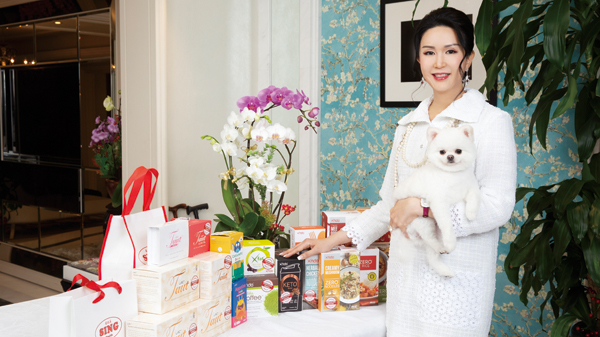
Law and Orders: Lawyer turned entrepreneur Lianne Lam heads Sing Health, the all-new health food

Wellness and healthy eating are the core precepts of Sing Health, the all-new health food brand masterminded by lawyer and entrepreneur Lianne Lam…

gafencu people interview lianne lam lawyer turned entrepreneur new health food sing health (7)

Tell us a little about your early years in Singapore and the UK…
Well I was raised in a very conservative, typically ‘old Chinese’ family in Singapore as one of three sisters. I went to an all-girls school there, before enrolling as a boarder at Cheltenham Ladies College at the age of 16. After I graduated, I was accepted into King’s College and the College of Law in London, which is where I obtained my law qualifications.

Did you always know you wanted to become a solicitor?
Honestly? I always wanted to become a lawyer. Coming from a traditional Chinese family, I was encouraged from an early age to pursue a career in law or medicine. It was lucky, then, that I loved reading legal cases and had a strong desire to uphold justice even as a youngster.

Having said that, after I spent a few years as a lawyer at an international firm in London and then moved to Hong Kong, I did branch out. I was very into education at that time, so I decided to run an Australian childhood neuro-physiological development centre called Kindyroo. It was basically for toddlers aged two to three years, and I continued to be involved with them until my two sons came along.

gafencu people interview lianne lam lawyer turned entrepreneur new health food sing health (6)

In another departure, you’ve just launched your own health food brand, Sing Health…
Well, Sing Health is a new venture with a focus on nutrition and diet-friendly foods, which are basically guilt-free alternatives and a means of promoting healthy eating. We are the exclusive distributor for a well-established Singaporean brand, XNDO Products, and I’ll be opening our first flagship store in Mongkok. Our mission is actually very simple and based on four key concepts – Replace, Block, Boost and Detox.
We plan to offer a range of quick meals that are calorie-controlled and high on taste, with a choice of 30 Asian flavours. We’ll also be offering functional beverages in order to help with weight loss programmes. Our teas and coffees, for instance, contain the hero ingredient MCT, which helps to step up the metabolism, while the white kidney beans in our milk tea act to block carbohydrates. Our shop will also be stocked with vitamins and supplements, including ones for children that taste like jelly – something I assure you that kids will love.

What was it that persuaded you to enter this new sector?
Back in March 2020, I was with my family in London during the time of its first Covid-19 lockdown. There was a lot of endless rumours about what would happen and how bad things were going to get. The only places we could go were parks for exercise, while we could also still shop at essential stores, including pharmacists and food outlets. Every day, I’d queue up at these shops on the high street in order to purchase healthy foods, juices and supplements, such as vitamin C, D and antioxidants – anything that could boost my family’s immune system. That’s when my eureka moment occurred, and I suddenly thought that starting a business related to healthy eating would be a good forward direction for a healthy life. That was the seed of what would eventually become Sing Health.

gafencu people interview lianne lam lawyer turned entrepreneur new health food sing health (5)

What are the particular benefits you are aiming to offer?
Well, firstly, our nutritious meals are low in calories and high in fibre and protein, while also having a low transfat content. Basically, we are offering quick-to-prepare dishes that are satisfying, yet guilt-free on account of their healthy content. We’re trying to promote a way of losing weight while eating healthily.

For my part, I believe everyone should mentally train themselves out of any detrimental eating habits, while introducing nutritious meals and supplements to their family. It’s very important that we educate the next generation with regard to the importance of fitness and dietary wellbeing.

Any more projects in the pipeline?
Well, as I mentioned, Sing Health’s flagship store opens later this month in Mongkok, so I’m super excited about that. I’m then looking forward to introducing even more premium healthy food brands, while working with business partners who share the same vision as me.

gafencu people interview lianne lam lawyer turned entrepreneur new health food sing health (4)

You mentioned the pandemic earlier – what has been your personal takeaway from that?
I think the biggest thing for me has been the realisation that we can’t simply take life for granted and that you have to prioritise your health and that of your family. I’ve spent a lot of time educating my kids about the importance of healthy living, warding them off fast food and getting them to focus on maintaining a positive lifestyle.

Having said that, the past year has been something of a blessing in disguise because it’s given me so much quality time with my husband and my boys – particularly with my eldest, who would have otherwise been away in boarding school completing his A-Levels. This has seen us explore a range of new family activities, such as watching YouTube and TV, while also learning how to cook and bake together. Without the pandemic, we may never have had this special time together.

gafencu people interview lianne lam lawyer turned entrepreneur new health food sing health (8)

The pandemic aside, how do you normally juggle your work responsibilities with looking after your kids?
I have to say it’s no easy feat. At one time, when the boys were younger, I used to do all the school runs and support all their after-hours activities. There came a time, though, when they were old enough to no longer constantly require my attention. That’s when I took a step back and let them develop naturally. As they’re older and more independent now, it means I can focus on myself and my new baby, Sing Health.

If you were stranded on a desert island, which three items and one person would you most want to have with you?
Firstly, a satellite phone so that I can call for help and reach out to someone to rescue me. I’d also have to have my passport for official identification purposes, allowing me to catch the first flight post-rescue to wherever I need to be. Finally, I’d pack a gun for protection, because you never know what might be lurking on the island… As for who I’d like to bring along, that would definitely be my husband, Matthew… he’s my soul mate and pillar of strength, and I would want to share everything, whether good or bad, with him.

gafencu people interview lianne lam lawyer turned entrepreneur new health food sing health

Finally, tell us something most people don’t know about you…
It may surprise some people to know that I’m actually very old-school, very traditionally minded. I still read printouts of emails and contracts, for instance, rather than going through them on-screen… I also love to relax by watching hair-raising horror movies – that’s something no one really knows about me. My go-tos are all of Alfred Hitchcock’s movies and The Sixth Sense. A good horror movie can make my day or even my week sometimes, because it scares the hell out of you, which is kind of therapeutic in its own way.

Thank you.


Interview by: Tenzing Thondup
Photos: Jack Law
Videographer: Kingsley Lau
Art Direction & Styling: Jhoshwa Ledesma
Hair & Make-up: Heti Tsang

Young Bucks: The youngest billionaires, possibly gifted and loaded…

As might be expected, the 10 highest-placed high-earners – with the exception of Mark Zuckerberg, Facebook’s 36-year-old chief executive at number seven – were typically around 70. While most have seemingly spent a lifetime accumulating their enormous wealth, a lucky few have built their billions while most of their contemporaries are still saving for a deposit on their first apartment. Five such fabulously – and precociously – wealthy individuals stand out as particularly intriguing…

gafencu feature Young Bucks Of tender years, possibly gifted and loaded evan spiegel

Evan Spiegel
Age: 30
Net worth: US$4.3 billion
Source of wealth: Snapchat

Snapchat, the hugely popular social media platform, first came to fruition when its founder Evan Spiegel first pitched the idea to his class in Stanford University in 2011, however, he was laughed out of the room. Fortunately, this didn’t stop him from teaming up with two fellow students to actually create the app later that year. In 2012, he dropped out of university to focus on developing the platform. It then went on to secure more than a million daily users by the end of that year. 

Spiegel become the world’s youngest billionaire in 2015 and then one of the world’s youngest public company chief executive in 2016, the year that Snapchat had its IPO. Today, he is still the head of the social media giant and controls an 18-percent stake in Snap Inc, its parent company. With a current estimated net worth of US$4.3 billion, he’s married to Australian model Miranda Kerr, with the couple sharing a son, two-year-old Hart. Three years ago, Evan was granted French citizenship in recognition of his contribution to the country’s economy and culture, He has, however, also retained his US passport.

gafencu feature Young Bucks Of tender years, possibly gifted and loaded gustav magnar witzoe

Gustav Magnar Witzoe
Age: 27
Net worth: US$2.9 billion
Source of wealth: Salmon fishing

As the son of Gustav Witzoe, the man who founded SalMar, one of the world’s largest salmon farming companies, Gustav Junior was born with a figurative silver fishing rod – rather than spoon – in his mouth. Upon turning 20, his father transferred a significant proportion of the company’s stock – valued at some US$1.8 billion – to him in order to dodge paying an immense amount of inheritance tax later. Inevitably – and pretty much overnight – this made him one of the most affluent individuals in Norway, his home country.

Witzoe began his own career with a brief stint as a milker at one of SalMar’s salmon farms before signing on with a modeling agency. While he has a moderate degree of involvement in the family firm, he is keeping busy as an angel investor in technology start-ups and property ventures. Perhaps unsurprisingly a big fan of the finer things in life, his happy snaps have seen his social media presence skyrocket, with the 28-year-old currently maintaining a 110,000-strong following on social media giant Instagram.

gafencu feature Young Bucks Of tender years, possibly gifted and loaded…katharina and alexandra andresen

Alexandra & Katharina Andresen
Age: 24 and 25, respectively
Net worth: US$1.3 billion each
Source of wealth: Investments

As with fellow Norwegian, Gustav Magnar Witzoe, the Andresen sisters joined the junior billionaires’ club thanks to a transfer of shares from their family firm, again as a means of dodging the Scandinavian nation’s legendarily colossal inheritance tax. In this instance, the family firm in question was Ferd, a wildly successful investment business with interests in both a multitude of funds as well several large real estate holdings, which was founded by their father, Johan Andresen, in 2001.

The sisters’ respective 42-percent stake in Ferd sees them both boast a net worth of US$1.3 billion. The elder, 26-year-old Katharina, graduated from Amsterdam University College and is currently based in London where she’s continuing her education. Alexandra, Johan’s second daughter, meanwhile, was the youngest billionaire on Forbes’ list for the three years (2016-2018), only losing her crown when she turned 21. Accomplished in her own right, she’s a three-time junior Norwegian dressage horse riding champion and models for KingsLand Equestrian, a sports-oriented clothing company.

gafencu feature Young Bucks Of tender years, possibly gifted and loaded kylie jenner

Kylie Jenner
Age: 22
Net worth: US$1 billion
Source of wealth: Cosmetics

Even before making her solo fortune at the head of Kylie Cosmetics, Kylie Jenner was no stranger to fame. In fact, as the youngest daughter of the Keeping Up With the Kardashians clan, she has seldom been off the telly since well before she was a teenager. A major mover and shaker on all things social media, she has also gained considerable attention for her various romantic relationships, though, more recently, she’s now totting up the likes for her cute posts with her adorable daughter Stormi Webster.

There was, however, some controversy with regard to the legitimacy of her reign as the world’s youngest billionaire. She assumed the role as of Forbes’ 2019 rankings and was subsequently acclaimed as ‘the world’s youngest self-made billionaire’ but was summarily dispatched mid-2020 following ‘new financial findings’. In fact, an extensive report, entitled: Inside Kylie Jenner’s Web of Lies – And Why She’s No Longer a Billionaire, accused the beauty mogul of forging tax documents and inflating the size and scale of her business. 

The many tales of Keith Griffiths, founder of Aedas architecture and design firm

World-famous architect and educator Keith Griffiths, founder of the Aedas architecture firm, on his small-town Welsh roots, design journey, opinions on Hong Kong’s infrastructure and more…

gafencu people interview keith griffiths aedas architecture and design company hong kong (7)

You were born a world away from Hong Kong in Wales…
Yes. I’m completely a country mouse. I grew up in a tiny village called Merthyr Tydfil on the west coast of Wales. Home to just 1,400 people, it’s as far west as you can go before you drop into the Atlantic Ocean. It was very barren but also very beautiful. Set on a peninsula measuring six miles by one mile, that was my whole life while growing up. Although the education I received and the atmosphere were great, frankly it was an extremely boring place to be young. In the end, I couldn’t wait to get away.
It was a seminal experience, though, and it taught me how to communicate. Given its tiny size – our school had just 300 children – I had to learn how to deal with any situation, how to problem-solve and how to see the best in people. After all, you need to deal with them in any case. Leaving there, when I was 17, was a relief, though.

gafencu people interview keith griffiths aedas architecture and design company hong kong

And where did you leave for?
I ran east, initially to Cambridge University, where I spent six years. It was a great introduction to wider society and I really enjoyed the experience. I then moved to London – finally a big city with a rich culture, architectural traditions and international influences. I was there for five years until famed British architect Norman Foster sent me to Hong Kong in 1983 to look after the HSBC project. I’ve been here ever since.

What made you decide to settle here?
It was down to two factors really. First of all, in 1985, when the HSBC Building project was completed, Hong Kong was just recovering from the 1982 economic collapse. There was a lot of optimism in the air and a surplus of work opportunities. It was very different to the UK, where the economy had all but stagnated. At the same time, the Falkland War was going on and I had a real issue with what I saw as a political conflict and a gambit for Margaret Thatcher to hold onto power. Removed from the situation, I could see things dispassionately and perceive it as the humanitarian crisis it truly was. Ultimately, then I decided Hong Kong was my best option when it came to creating a life for myself.

gafencu people interview keith griffiths aedas architecture and design company hong kong (2)

This all led, eventually, to you founding Aedas, your own architectural firm…
I founded Aedas about 30 years ago and we’ve since spread out across the world. When we first started we were very small, but we grew quickly. This was partly because we took on a lot of infrastructure projects such as railway and airport work, which, in the ’80s, saw us move into South East Asia, then the Middle East and finally China. We now work across the board in every area of design, including mixed-use infrastructure, museums, hotels – you name it, we do it as we’re now a big group. Overall, we have about 1,200 staff, most of whom work either in China or Hong Kong.

What do you see as your USP?
One of the factors in our success is that we like our architecture to be relevant to the city we’re designing for. In order to accomplish this, we really need to understand the culture, the people and the climate. So, every time we pick up a major project we set up a local office, which is why we are now active in 12 locations around the world. It’s this desire to really understand the place we’re designing for – rather than just importing a generic international style of building – that makes us different.

gafencu people interview keith griffiths aedas architecture and design company hong kong (6)

What are the challenges that come with running such a multinational business?
Actually, running Aedas is surprisingly easy. We’re designers and designers communicate through design. If you try to run designers through management tools, you’ll fail – it would be like herding cats. So, instead, we use design tools. We don’t have any professional managers as everyone at Aedas is either an architect, an interior designer or an urban planner. Our directors are also similarly qualified, so everyone speaks the same language, regardless of their background. This really enhances our communication capabilities, which in turn yields big rewards in terms of our completed projects.

gafencu people interview keith griffiths aedas architecture and design company hong kong (5)

Over the years, have there been some project that were particularly close to your heart?
In our three decades of operation, we’ve designed many, many buildings. It is, however, true to say that you always believe the building you’re currently working on is going to be the best. If it’s not, then you’ve done something wrong as you should be looking to improve all the time. So in terms of the buildings I’m particularly proud of, it’s always going to be the most recent ones – most notably, the West Kowloon Train Terminus, a world-class building and the gateway between Hong Kong and the mainland.

How do you decide which projects are right for you and Aedas?
Architects tend to be very humble, so we rarely turn a project down. Generally, though, we have a business development team whose job is to source our projects. Sometimes they bring direct commissions – which account for about 40 percent of our overall business – other times they propose we participate in design pitches, which make up another 40 percent of our work, with the balance coming from work for previous clients.

gafencu people interview keith griffiths aedas architecture and design company hong kong (3)

Focusing more locally, what do you see as Hong Kong’s unique architectural challenges?
The thing to remember about Hong Kong is that it was the world’s first extreme high-density, high-rise city, making it all but inevitable that a number of issues are going to arise. Among these, the biggest problem is land use. In total, just 25 percent of its land has been developed, with only seven percent allocated to residential buildings. By comparison, Singapore has used 30 percent of its available space for or residential properties, a move that is reflected in its bigger apartment sizes and wider availability of property.

Moving to architecture, we’ve had some significantly good developments over recent years, including such world-leading designs like the new M+ project and the revamped Tai Kwun compound. Hong Kong was also the first to introduce live-work hubs as the norm, as embodied by such neighbourhoods as Central, Soho and Shatin, while also being in the podium-and-tower style of design. We are, however, still stuck in an infrastructural mindset that was first introduced in the ’80s, and I think we need to evolve and produce new types of buildings, which can better meet the needs of this high-density, high-rise city.

Looking to the future, what projects are you particularly anticipating?
We actually have a number of exciting projects in the pipeline. We’ve been very successful recently in securing several government projects in Shenzhen. We’re also working on a number of headquarter buildings in its business district, which are truly world-class creations. The regulations in Shenzhen are rather different from those elsewhere in China, so we’ve been able to do some really interesting architectural designs. We’ve also been working on a new border-crossing facility at Huanggang – between Hong Kong and the mainland – which is a very large building and something I’m definitely proud of. In all, we have about 100 live projects in China, though, so it’s hard to single out just a few.

Thank you.


Interview by: Tenzing Thondup
Art Direction & Styling: Jhoshwa Ledesma
Photos: Jack Law
Videographer: Andy Wan