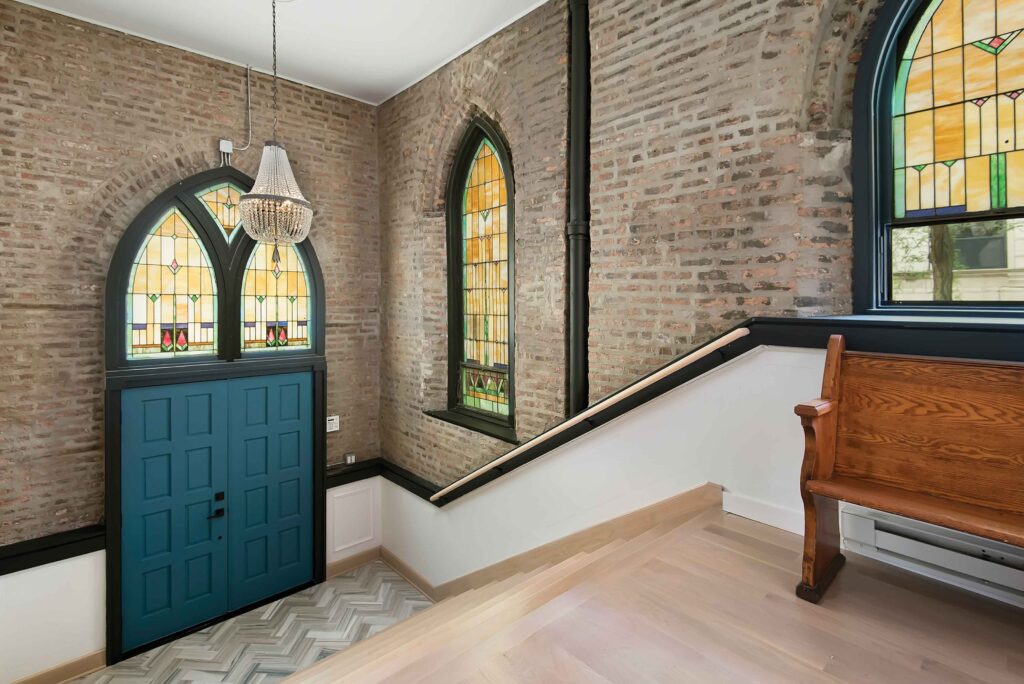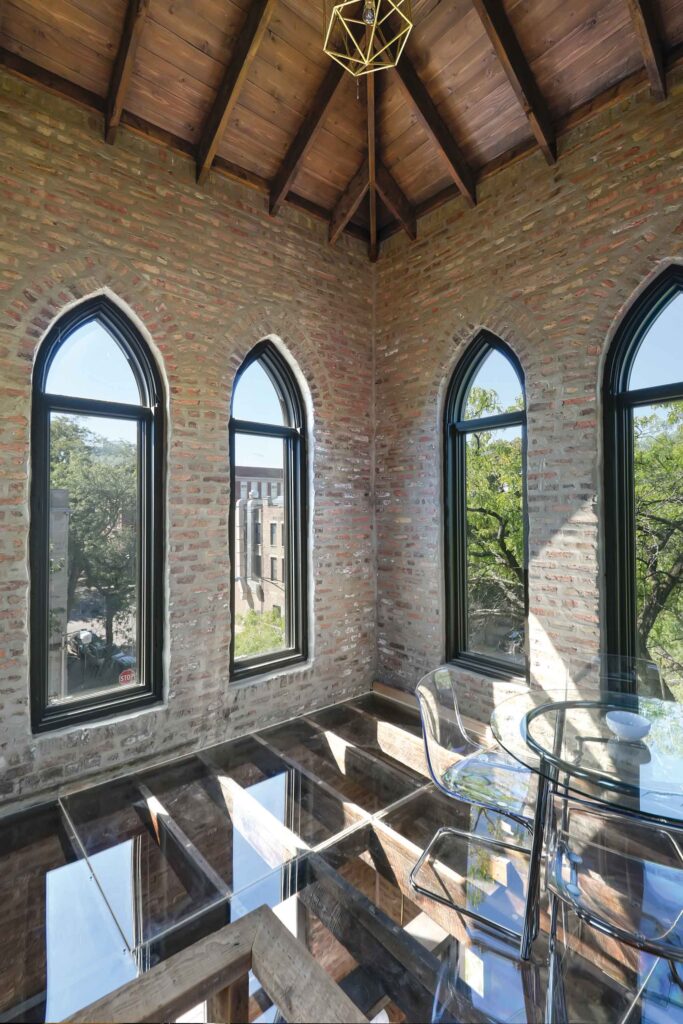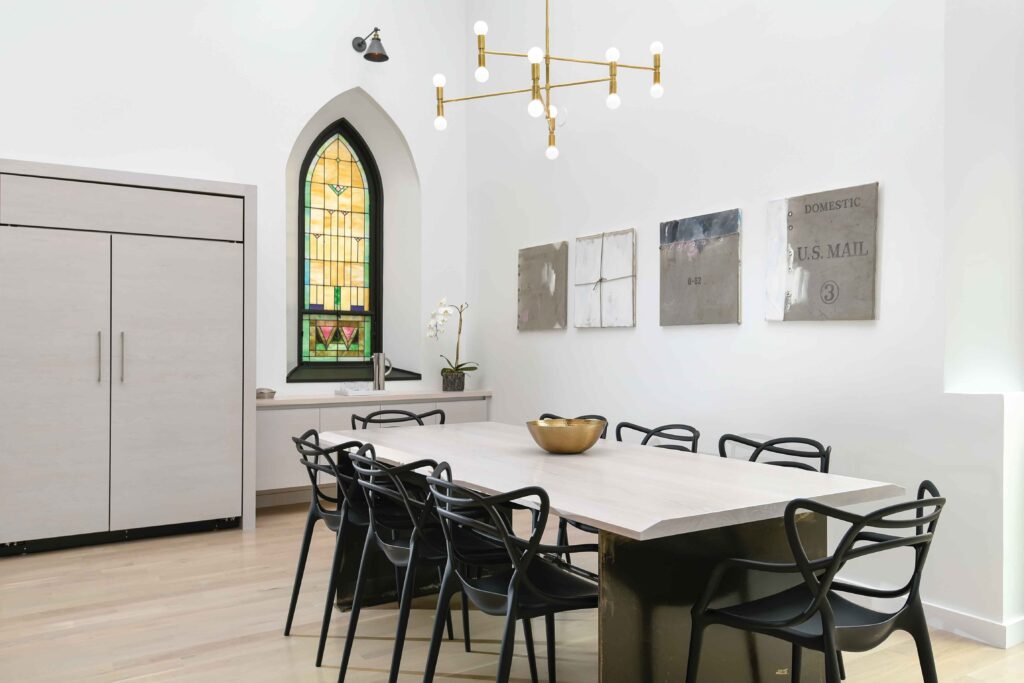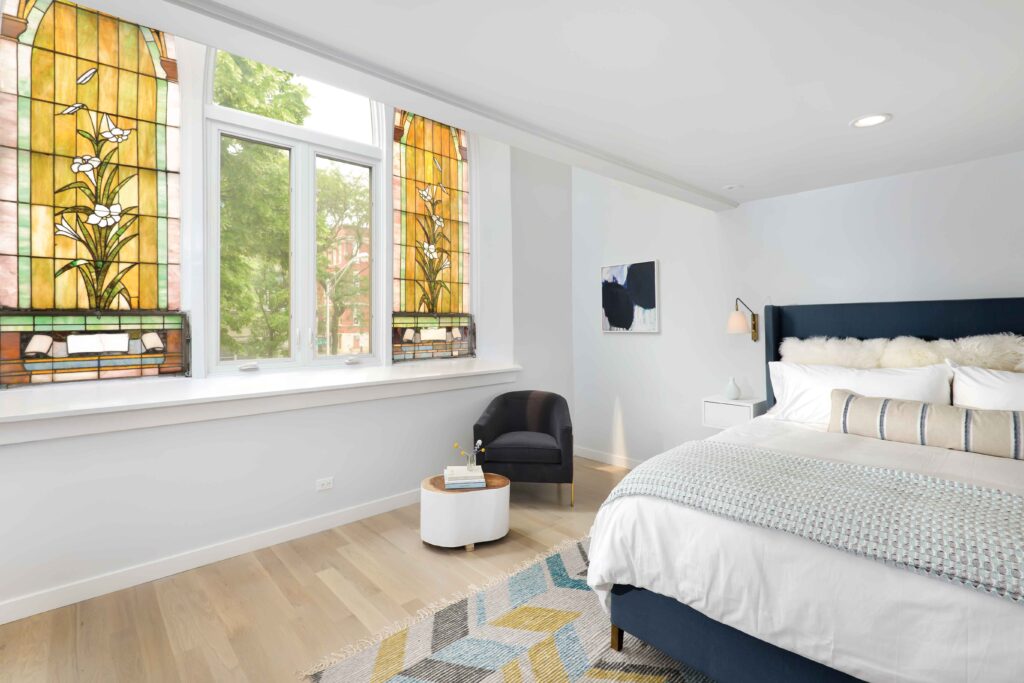

Beaux Châteaux: The French countryside affords plenty of scope to be le roi of a castle

Some 400 years ago, an Englishman’s home was his castle. For the French, on the other hand, it would have been a château. Today, if the opportunity arises to live like a king in a stately, secluded setting in the French countryside, why not spoil yourself? Purchasing a château to savour a taste of royalty is entirely possible for those of means.

France is home to tens of thousands of châteaux, some of which are visited by millions of Instagram-obsessed tourists each year. The gilded Palace of Versailles near Paris and the mysterious Mont-Saint-Michel in Normandy have captivated visitors for centuries. While these icons are the property of the French government, there are plenty of less legendary castles on the books of luxury realtors that enable the wealthy to be shielded from the public eye, yet steeped in all the historical charm for which French châteaux are known.

Here we view two resplendent palaces that monarchs of business have called home, and visit an array of former French fortresses that have become more approachable for private buyers.

Cannes Chic

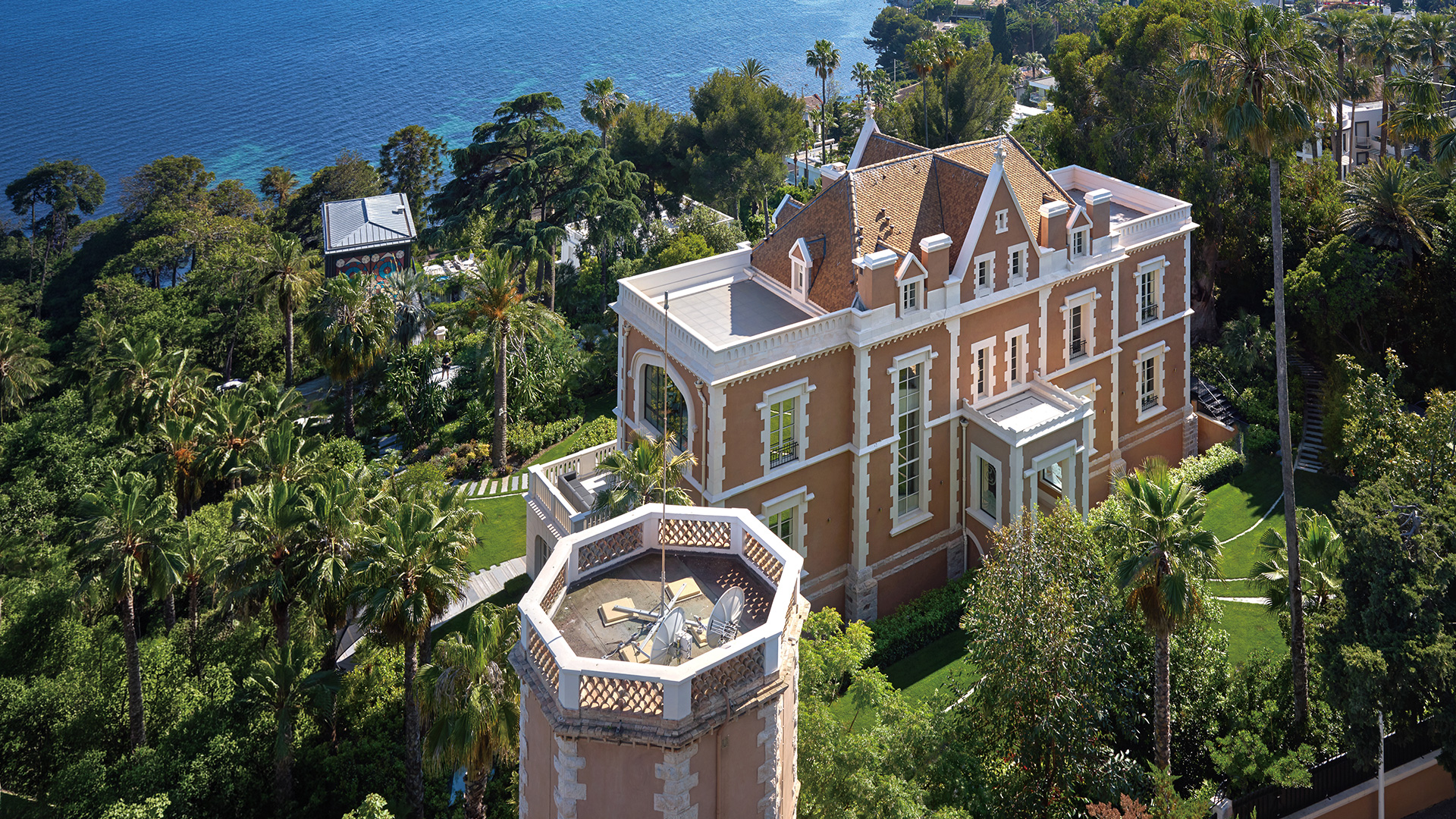
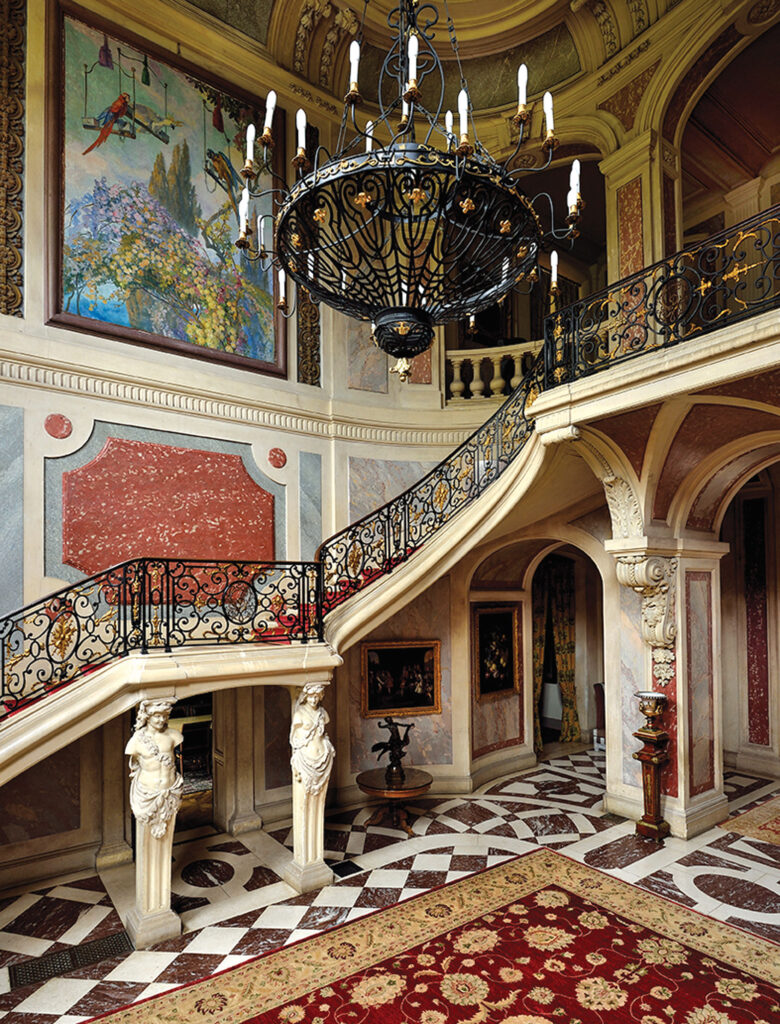
Occupying a piece of prime real estate along the Avenue du Roi Albert in Cannes overlooking the French Riviera’s sparkling waters, Château Soligny could not be more idyllically situated. Thought to have been built by architect Emile Raimbault around 1870, it soon became the home of Aristide Boucicaut of Le Bon Marché department store fame.

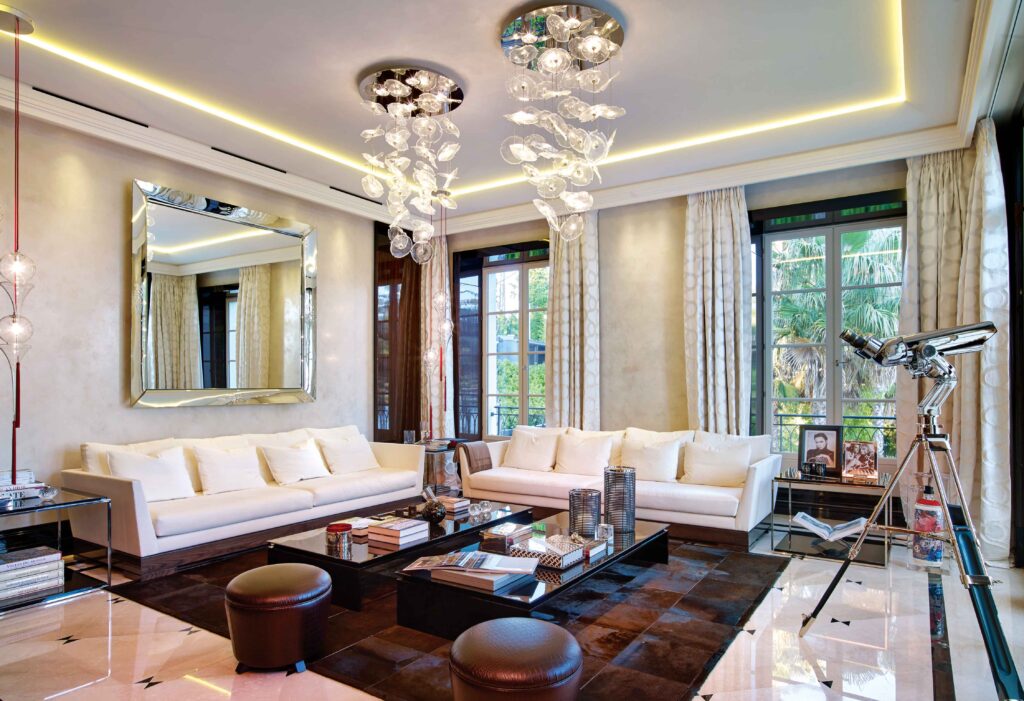
The peach-coloured Belle Époque mansion has since been expanded and revamped, while retaining its original character. Accessed via a Japanese pathway surrounded by rare trees, streams and waterfalls, plus an infinity pool and pool house, the residence spans five storeys. Interiors are sleek and polished, featuring materials like ebony, marble and mother-of-pearl. Modern conveniences include a lift, a six-car garage and a home cinema, and of course, it wouldn’t be a French castle without its own wine cellar. It was recently purchased for €55 million (HK$497 million) by a wealthy private individual through Christie’s International Real Estate.

Spellbound Splendour

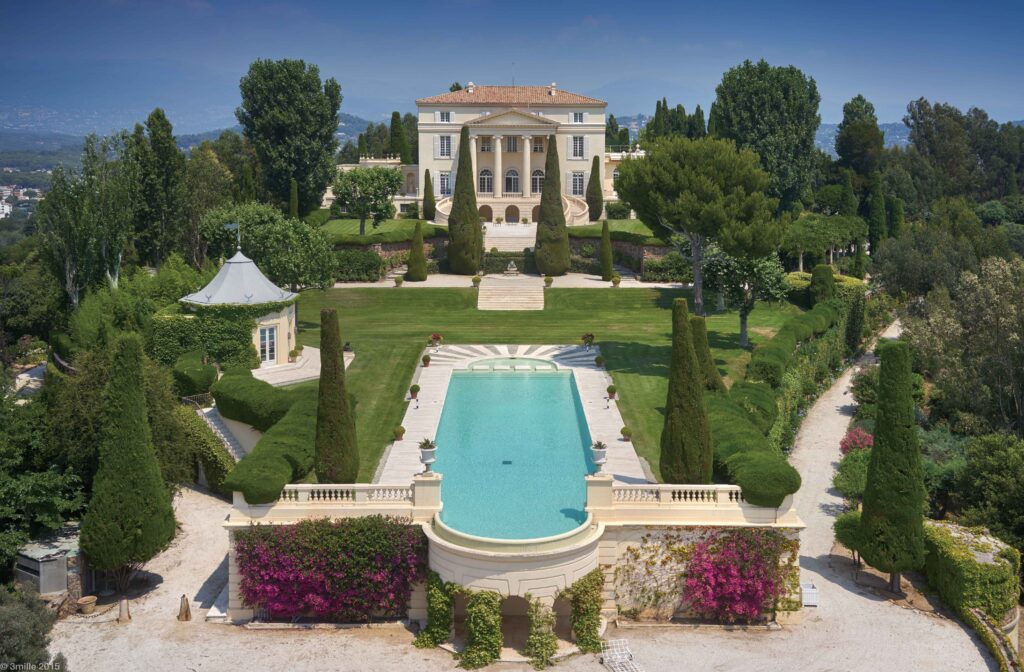
Hailed as the largest estate in the Cannes area, the Castle of la Croix des Gardes enchanted Hollywood actress Grace Kelly when she visited to film the 1955 Hitchcock thriller To Catch a Thief. Constructed in 1919, it has counted Swiss industrialist Paul Girod and Perrier owner Gustave Leven among its owners. Now with 25 acres of Italian-style gardens, a neo-Palladian-inspired façade, a 36-metre saltwater infinity pool, and stunning views of the Côte d’Azur and Estérel massif, it’s little surprise that those lucky enough to stay here fall under its spell.

The property currently affords temporary king-of-the-castle status – it can be rented out in its entirety by the week, along with a private butler, chef and security team, from Mandarin Oriental Exclusive Homes. Exquisite interior refurbishments throughout the 16 suites, including hand-stitched embroideries, bespoke cabinetry work and hand-painted wallpapers, are the work of London-based Katharine Pooley Design Studio.

Medieval Majesty

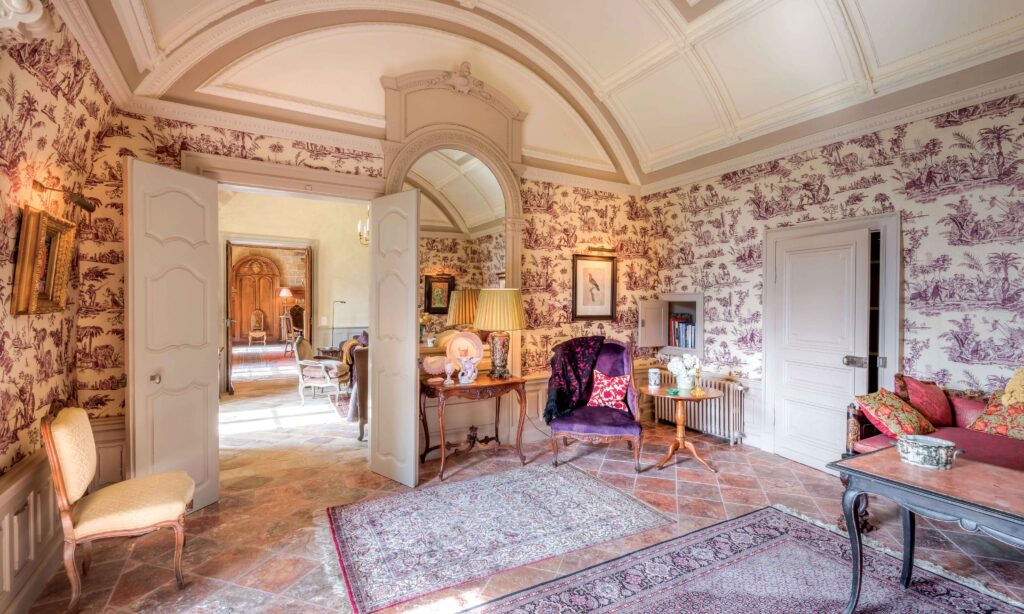
Built on Roman foundations in Uzès, near Avignon in southern France, is a 12th-century walled fortress originally intended to protect the duke and the land he ruled over – but you won’t find chamber pots in the bedrooms or cauldrons bubbling atop an open fire here. The 20-room castle was renovated in the 18th century, providing a bright, beautiful staircase, ample natural lighting through large windows, and polished woodwork that has been preserved to this day. It comes with a surfeit of amenities, including an expansive English garden, swimming pool, tennis court and artist’s studio.

Cinderella Castle

There’s a château located near Vienne, not far from Lyon, that’s fit for a princess. Attracting attention when it first came onto the market for its uncanny similarities to Disney’s Cinderella Castle, this former luxury hotel offers the chance to live your very own fairy tale. The 19th-century Renaissance-style dwelling now houses 10 en-suite bedrooms, two dining rooms, two reception rooms, a bar, an office and more. Its proud owner can step outside to pick fresh produce from the estate’s vegetable garden while taking in wonderful vistas of woodlands and distant rolling hills.

Moat Control

Equipped with a moat and stone-gated entrance, a 16th-century château in the verdant Loire Valley will inspire you to live out your storybook fantasies. A short drive from Tours, the castle was owned by French kings for 200 years and used by the crown’s tax collectors. For those with an aversion to driving, the 10-hectare estate is also equipped with a helicopter landing pad. In addition to the moat, some of the château’s original features are still intact, including large fireplaces, vaulted ceilings and a pigeon tower.

Treasure of the Earth

Lovers of Périgord truffles will adore a Renaissance-style château in Ribérac, a tranquil market town within the Dordogne, as its 57 hectares of woods and gardens include multiple spots for truffle-hunting. Other standout exteriors of this property marketed by Sotheby’s International Realty are a kilometre-long stream and an Olympic-sized riding arena. Interiors blend three different architectural expressions of 17th- and 18th-century grandeur. A total of 40 rooms and a separate 400-square-metre reception would allow the buyer to invite up to 50 guests for their château-warming party – or rent out the estate for special events.

Normandy Conquests

For those who want to experience a taste of the country without straying too far from Paris, a castle in Normandy would be ideal. One medieval pile comes with a spacious courtyard and a park filled with yews and laurels, as well as sweeping views of the green valley beyond. Although the site has undergone renovations, the interiors have stayed true to the style of the period. The master suite boasts a French Empire-style fireplace in turquin blue marble, while other bedrooms – there are 18 in total – feature Louis XVI panelling.

Look out, too, for another 18-bedroom Normandy château that has a beautiful aspect, sitting on 80 hectares of land with its own private lake. This one is comparatively more modern, though, having been built in 1867. The property is registered as a historic monument, but it has been restored to pristine condition and encompasses first-rate amenities. It would be hard for the king of this castle to feel bored: there’s a home cinema, a fitness room and spa, and an indoor swimming pool with – appropriately for this year – an image of five horses adorning the pool floor. 

Fine Art of Living: A home in this soaring Manhattan landmark with MoMA on the doorstep inspires respect

New York has always been more than a city. It is a state of mind, a pulse that beats through music, theatre and art with unmistakable force. That creative legacy is equally apparent in the architectural masterpieces that shape its skyline. One of New York’s most distinctive modern addresses, the residential tower at 53 West 53rd Street rises quite literally above the cultural heartbeat of the city – it peers over the Museum of Modern Art (MoMA) – in one of Manhattan’s most prestigious and style‑forward neighbourhoods.

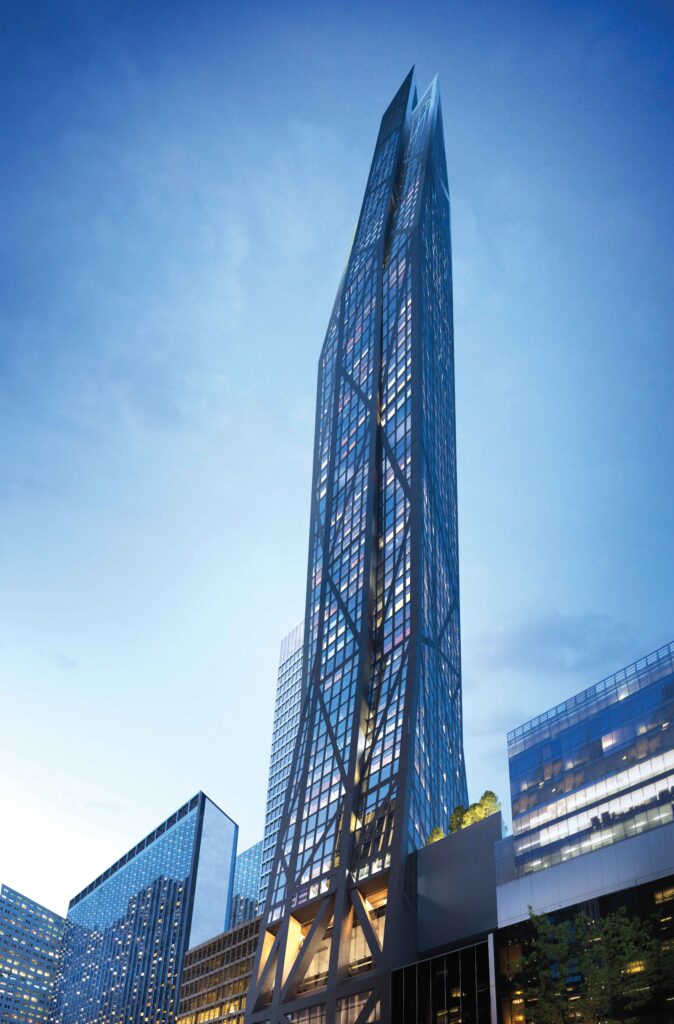
The edifice, known simply as 53W53, has permanently reshaped the Midtown skyline, asserting itself as both an architectural statement and a destination in its own right. Upon its completion in 2019, it made the top 10 of the tallest buildings in the city (dropping to 12th tallest by the start of this year). It measures 320 metres (1,050 feet) from the lobby to the tip of its tallest spire and comprises 77 storeys – though due to quirks of the internal numbering system, the top level of apartments occupies the 87th floor.

The majestic tower is the work of celebrated French architect Jean Nouvel. Its exterior is defined by a dramatic diagrid structure, a lattice of intersecting diagonal lines that gives the building a sculptural, almost kinetic presence. From certain angles, it appears to taper and twist as it rises, like an abstract artwork rendered in steel and glass. It is a fitting visual language for a building that houses three floors of museum gallery space, blurring the boundaries between art, architecture and daily life. The tower’s striking silhouette invites curiosity, drawing the eye upward and hinting at the world of refinement contained within.

Nouvel’s credentials place him among the most respected architects of his generation. A recipient of the Pritzker Architectural Prize, his body of work spans continents and typologies, from museums and concert halls to luxury residences and major cultural institutions. Projects such as the Fondation Cartier in Paris (1994) and Louvre Abu Dhabi (2017) demonstrate his ability to merge intellectual rigour with emotional impact. At 53W53, that philosophy translates into a building that feels both daring and deeply appropriate for New York: bold, vertical and unapologetically modern.

The 53W53 interiors are the work of Thierry Despont, the late French-born, New York-resident architect, designer and artist whose understated approach to luxury earned him an international following. His client list reads like a ‘who’s who’ of fashionable society and captains of industry, including Bill Gates, Leslie Wexner, Calvin Klein and Oscar de la Renta. He designed Harry Winston’s flagship store in Beverly Hills and parts of the Ritz in Paris and London’s Dorchester Hotel. His residential work is characterised by precision, restraint and a deep respect for materials – qualities that are evident throughout the luxury apartments at this prestigious address.

Lighting is subtle and atmospheric, designed to enhance rather than dominate the spaces. Kitchens and bathrooms are bespoke, created specifically for the building rather than adapted from a template. Rich mahogany doors, meticulously crafted and finished with custom bronze trim, echo the angular geometry of the tower’s exterior, creating a quiet dialogue between inside and out. Every element feels intentional, contributing to an environment that is luxurious without ever feeling ostentatious.

Each of the 145 residences within this architectural icon is unique, with those on the higher floors epitomising elevated city living. One in particular, encompassing 3,952 square feet, stands out as a contemporary sanctuary designed for those who appreciate space, light and thoughtful detail. This three‑bedroom home unfolds with a sense of calm grandeur. A gracious entry hall leads into a generously proportioned living room, where scale and simplicity create a setting equally suited to quiet evenings or elegant entertaining. The master suite is expansive and serene, complemented by two additional bedrooms, each with its own beautifully finished en‑suite bathroom.

The kitchen is as practical as it is beautiful. Bathed in natural light, it features sleek cabinetry by Italian design house Molteni&C, paired with classic marble countertops and a softly illuminated backsplash that adds warmth and depth. State‑of‑the‑art appliances by Miele and Sub‑Zero ensure professional‑grade performance, whether preparing an intimate meal or hosting a lively gathering. It is a space that encourages both creativity and connection, central to modern urban living.

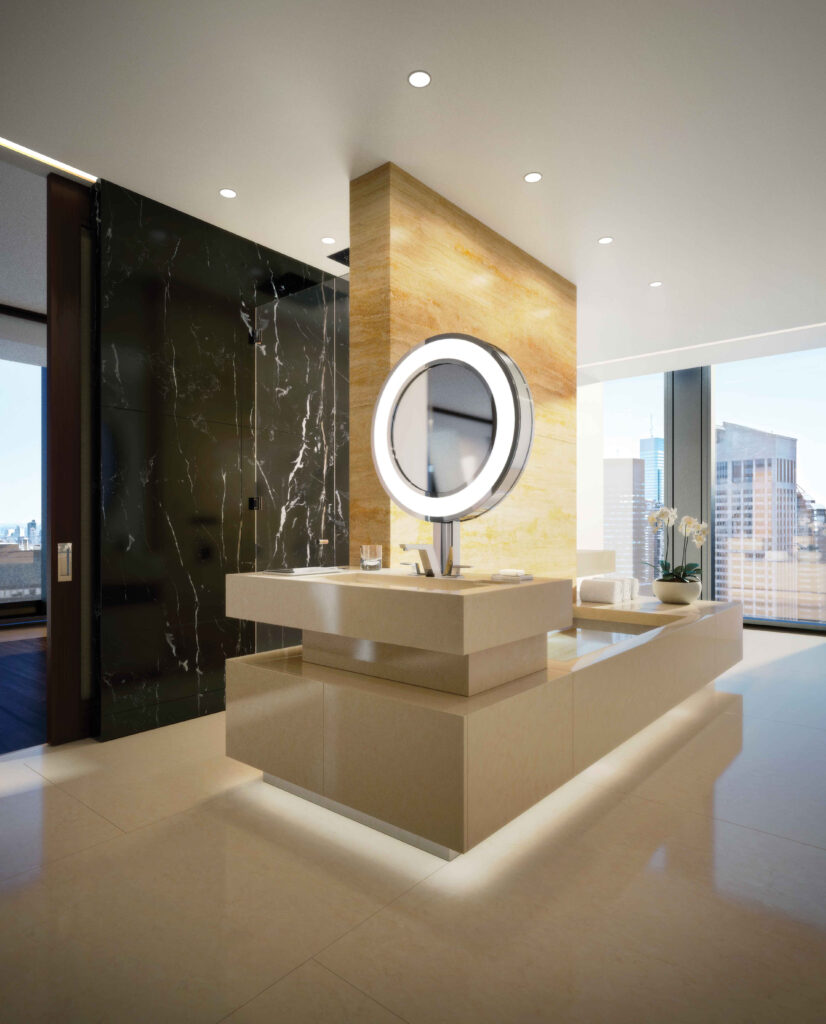
In the master bedroom, the emphasis shifts to indulgence and retreat. The en‑suite bathroom is graced by Verona limestone slab floors and golden travertine feature walls, creating a spa‑like atmosphere high above the city. The bathtub itself is generously scaled, inviting long, unhurried moments of relaxation. In a city that rarely slows down, this private refuge offers a rare sense of stillness.

What truly elevates the residence, however, is its relationship with the city beyond its walls. Floor‑to‑ceiling windows span the living spaces, framing panoramic views that stretch from the lush expanse of Central Park to the shimmering waters of the Hudson River. By day, the vistas are a study in movement and light; by night, the city transforms into a glittering tapestry. Living here means experiencing New York as a constantly evolving artwork, one that changes with every hour and every season.

The location places residents at the very centre of Manhattan’s cultural life. Carnegie Hall and Radio City Music Hall are nearby, as are landmarks such as St Patrick’s Cathedral, Times Square, Christie’s, Macy’s and the Empire State Building. It is the kind of address that needs little explanation at a dinner party, quietly conveying access to the very best the city has to offer.

Within a five‑minute stroll from entrances on 53rd and 54th Streets are luxury boutiques, health clubs, spas, gourmet markets and respected schools. Dining options range from celebrated establishments to beloved local favourites, while multiple subway lines ensure seamless access to the rest of the city. It is a neighbourhood that offers stimulation and ease in equal measure.

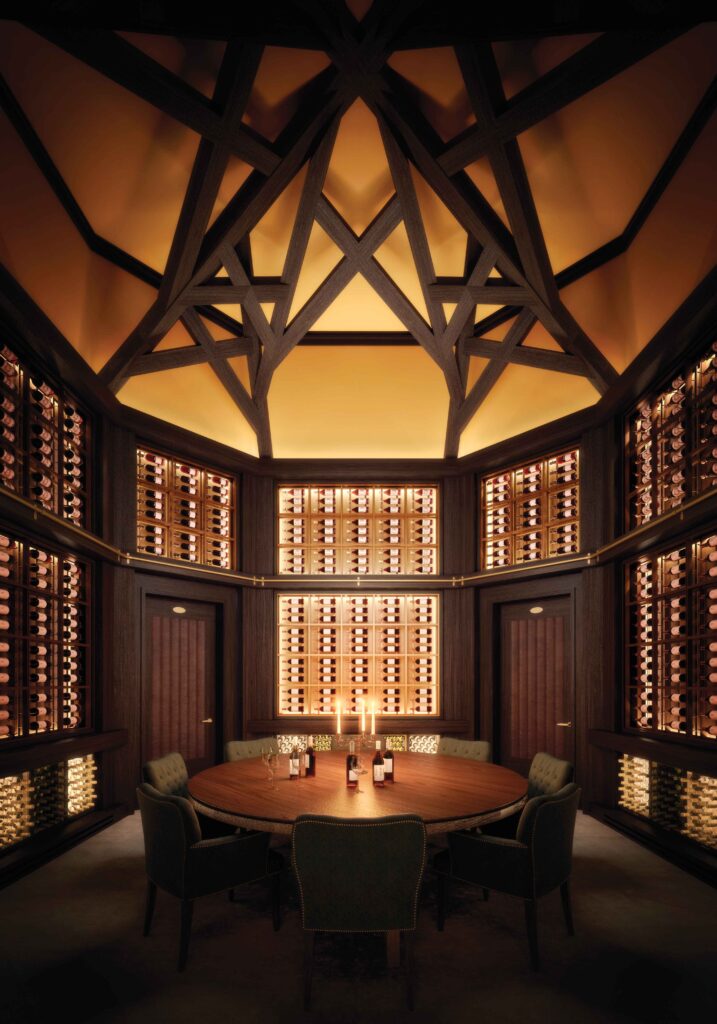
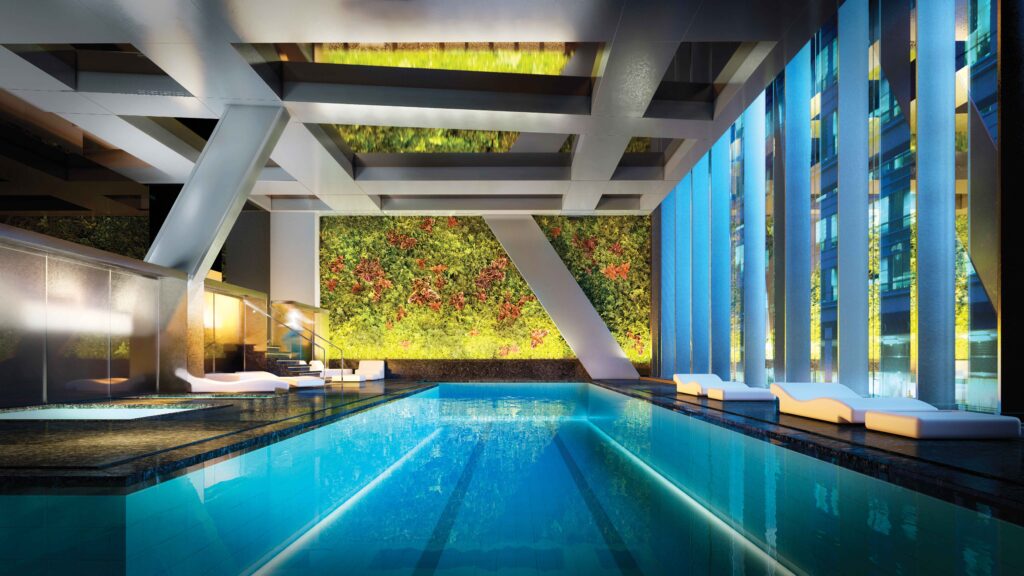
The 53 restaurant, presenting elegant contemporary Asian cuisine, is situated on the tower’s ground floor. Adjacent to the lobby is a library with a fireplace – an inviting spot for residents and their waiting guests to browse on a chilly winter’s afternoon. MoMA showcases art over 40,000 square feet on the lower floors, a sunny terrace beckons on the sixth level, a fitness centre, swimming pool and golf simulator sprawl across the 12th floor, and wine-storage spaces flank an octagonal wine-tasting room whose double-height gold-leaf ceiling glistens as legendary vintages are poured.

At 53W53, architecture, art and lifestyle converge in a way that feels uniquely New York. This is not simply a place to live, but a vantage point from which to experience the city at its most inspiring. For those fortunate enough to call it home, the rewards are more than enough to satisfy even the most devoted lover of the city that never sleeps.

Float Chambers: Buoyed by visionary architects, a new wave of pioneers is setting up home at sea

Planted firmly on solid earth, it is easy to forget that land covers less than one-third of our planet. The remaining 70 percent is dominated by water – vast, shifting, reflective and endlessly intriguing. Oceans, seas, rivers and lagoons shape weather patterns, support ecosystems and inspire human imagination.

With such an immense and mysterious portion of the world covered in water, it seems curious that most of us restrict our travels to terra firma. Why remain tethered to dry land when the planet itself encourages deeper exploration? Why settle for a predictable crash pad when a literal splash pad can offer immersion, novelty and serenity in equal measure?

Around the globe, a growing number of visionary architects and developers are reimagining how and where people can live, rest and escape. Their answer lies not beside the water, but directly on it, and in some extraordinary cases, beneath it.

Luxurious floating villas, river homes, overwater bungalows and even submerged suites are transforming oceans and waterways into destinations rather than obstacles. These innovative retreats combine cutting-edge engineering with indulgent comfort, creating spaces that feel adventurous without sacrificing familiarity. Water, once viewed as a boundary, becomes an integral part of the experience, gently rocking guests and residents into deeper relaxation.

There is certainly no shortage of floating hideaways worth splashing out on. Options range from Polynesian bungalows perched above turquoise lagoons to spaceship-shaped dwellings that appear to hover above the sea. Some are romantic and rustic, others bold and ultramodern, but all share a commitment to blending architecture with environment.

These amphibious residences are designed to appeal to thrill-seeking maritime marvellers and cautious landlubbers alike. Whether you crave excitement or tranquillity, water-based living offers a perspective that is both grounding and transformative. Dive right in, the water is inviting – but pack a large suitcase because one night will never feel like enough.

Underwater Habitat

One of the most ambitious examples of underwater luxury can be found in Dubai. The Floating Seahorse villas in the extravagant Heart of Europe development are just one part of an extraordinary archipelago of resorts – the World Islands – conceived by Nakheel Properties. Construction of the man-made islands just off the coast of the United Arab Emirates metropolis was curtailed by the 2008 financial crisis, but nearly 50 of the partially submerged residences, designed by architects from the Kleindienst Group, are due for completion this year.

Located a short boat ride from the mainland, the floating villas present an intriguing prospect for the intrepid homeowner or holidaymaker. Each 4,000-square-foot property is arranged across three levels. The upper deck rises above the waves, featuring an open-air lounge, a minibar and a private Jacuzzi ideal for balmy evenings beneath the stars. At sea level, living and dining spaces connect seamlessly with the surrounding water.

Most impressive, however, is the submerged lower floor. Here, floor-to-ceiling windows in the master bedroom and en-suite bathroom reveal the underwater world of the Arabian Gulf. A vibrant artificial coral garden attracts marine life – occasionally real seahorses – creating a living panorama.

Homemaking Waves

Another bold Dubai project, launched by Dutch developer New Living on Water a decade ago, involves pod-shaped floating residences that resemble sleek spacecraft resting on the sea. Despite their futuristic appearance, these homes are fully practical, each connected to land by a private car jetty. Inside, the amenities are nothing short of astonishing. Residents enjoy a lift, a six-car garage, an outdoor terrace, a private dining room, underwater viewing areas, and should the surrounding water not suffice, a swimming pool. Emphasising sustainability, the pods are powered by renewable energy sources and come in three sizes.

River Beds

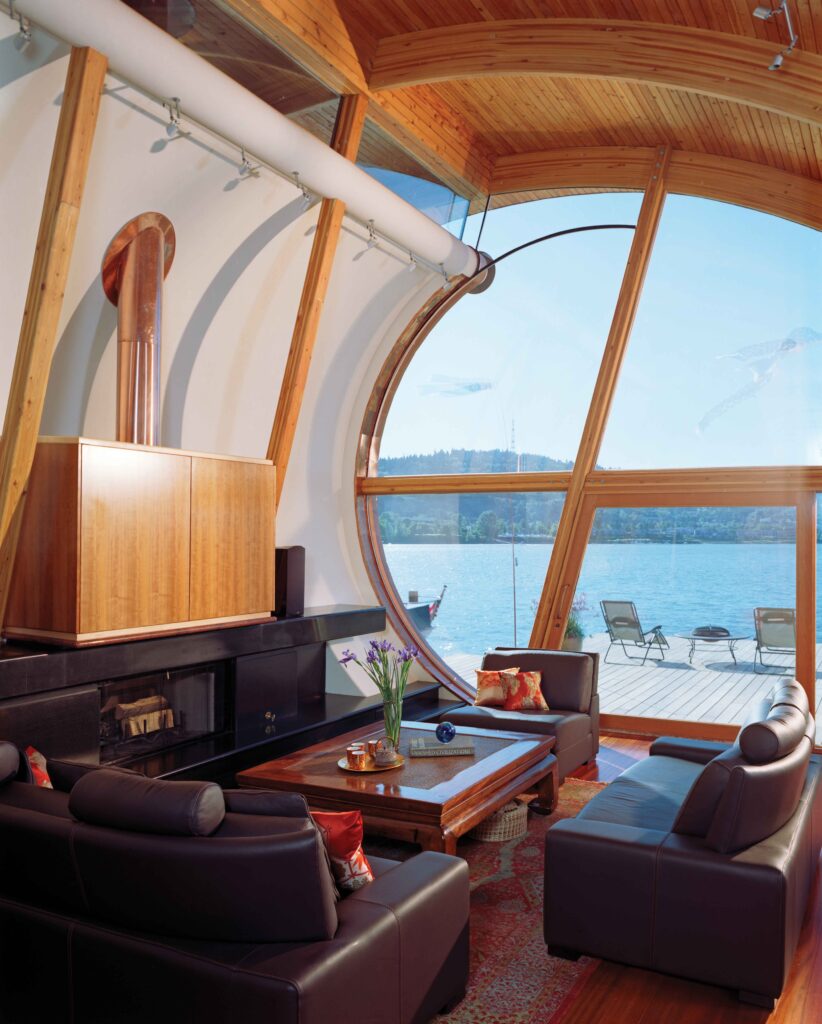
Floating homes need not be futuristic to be breathtaking. On the Willamette River in Portland, Oregon, the Fennell Residence proves that water-based architecture can be poetic and organic. It was designed by Robert Harvey Oshatz in 2005, and would make little sense if it were located elsewhere, since its flowing curves mirror the slow movement of the river itself.

Douglas fir beams and Western red cedar shingles in wave-like patterns define the exterior, while Brazilian cherry floors bring warmth indoors. A sliding glass door opens onto a customised deck suspended above the water, while the master bedroom overlooks the dining area and the river beyond. A dramatic floor-to-ceiling window in the living room frames the sunset, marking peaceful days spent drifting gently with the current.

Life Afloat

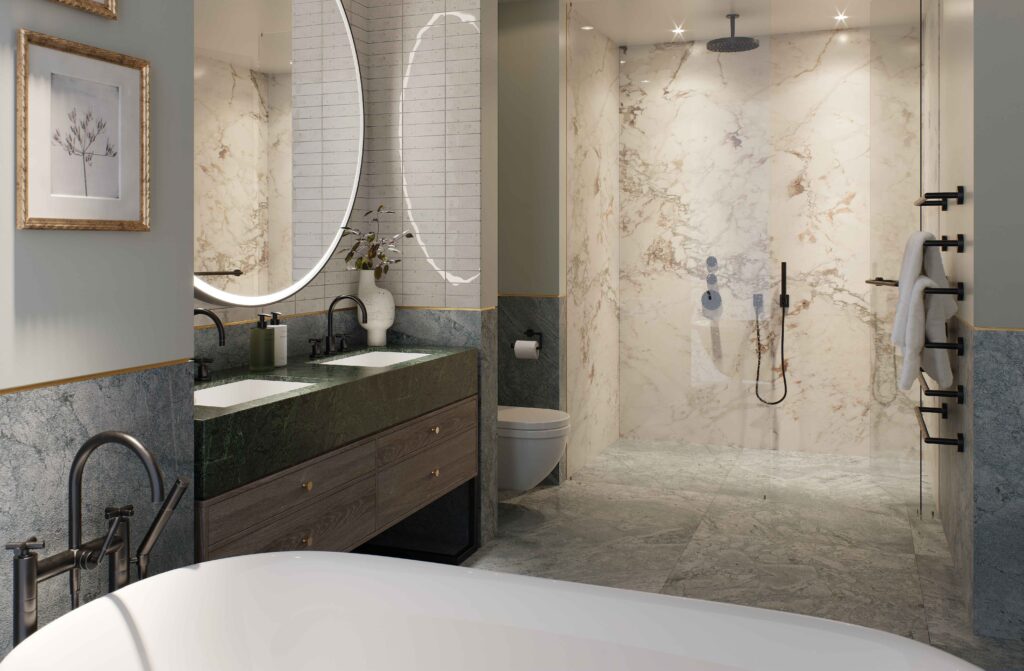
Uniqueness reaches another level in the plans of Singapore-based architect Dymitr Malcew, who offers a bespoke floating-house service for those with access to a calm stretch of water. Rather than producing identical units, Malcew will tailor each home to its specific location, climate and client preferences. Supported by a floating platform, the residence can be docked at a marina or relocated with relative ease.

A wraparound terrace, accessible from the master bathroom, the living area and additional bedrooms, encircles the sleek structure. Expansive glass walls blur the line between inside and out, offering uninterrupted views of the surrounding water. For nature lovers, the experience is immersive, peaceful and deeply restorative.

Mile Low Club

For daring voyagers who prefer a more dramatic descent, luxury holiday rental firm Oliver’s Travels offers the chance to sleep beneath the ocean’s surface aboard a private submarine. Dubbed Lovers Deep and designed for romance, the vessel can be moored at a choice of locations. Guests are accompanied by a professional captain, a personal butler and a private chef. An aphrodisiac-style tasting menu features oysters, caviar and decadent chocolate fondant. Rose petals can be scattered throughout the suite, while breakfast in bed arrives with chilled Champagne. Surrounded by deep-sea life and enveloped in silence, the outside world feels impossibly distant.

Lagoon Lounging

Famed for its crystal-clear lagoons and gentle climate, the Maldives remains synonymous with overwater luxury. Soneva Jani, located in a serene Indian Ocean lagoon, exemplifies this reputation. The resort offers 24 overwater villas, each thoughtfully spaced to ensure privacy. The two-bedroom retreats feature retractable roofs for stargazing, upper and lower decks, private pools, and slides that plunge directly into the sea. At night, warm interior lights shimmer across the lagoon. Guests can dine, unwind and explore at The Gathering, a floating hub housing a spa, library, wine cellar, boutiques and restaurants.

Water Revel

Among the many glorious floating villas available at the French Polynesian playground of Bora Bora, The Westin Resort & Spa’s premium overwater bungalow is a standout, overlooking the dramatic remnant of ancient volcano Mount Otemanu. Indulge in a plunge pool and private terrace hovering above the South Pacific, where blue-green waters stretch endlessly toward the horizon.

Together, these remarkable homes suggest a future where water-based living becomes less novelty and more aspiration. Floating architecture encourages slower rhythms, deeper awareness, and a renewed respect for the planet’s fragile aquatic environments.

Outside the Box: Beautiful decks, pools and dining areas – live the dream outdoors as much as in

The luxury of space is often in short supply, leading smart homeowners to maximise the use of every nook, or where possible, expand their residence. From conservatories to loft conversions, redesigning to increase internal square footage can transform a property. In recent years, though, the interior-design world has turned its sights to another alternative – outdoor living. Far from simply accommodating a garden or swimming pool, outdoor areas are now being recreated by savvy architects as versatile spaces for dining, entertaining, exercising and relaxation.

The sign of a well-conceived design is how seamlessly the outside and inside areas fuse; the finished product should feel like a natural extension of an existing space. These seven properties achieve this and more, reflecting some of the world’s greatest outdoor-meets-indoor residential designs.

Wonder in Wood

Architect Arthur Casas of São Paulo-based Studio Arthur Casas designed his own dream residence in Brazil’s Atlantic Forest, which extends its lush tentacles through his home state. Iporanga House, nestled within a nature reserve, has enviable external space, and effortlessly blends the indoors with the out. Orthogonal lines and minimalist décor underscore a sharp, fuss-free design. Exposed brick walls add a touch of rustic charm, while glazed sliding doors ease the transition from external to internal.

Chunky panelled Cumara, a durable local hardwood, clads the house and the broad terrace and pool deck extending out on one side. The wooden decking leads into a bespoke kitchen and sleek dining area, then flows flawlessly through the entire ground floor. With no one area dominating the layout, the elegant open-plan aesthetic lures Casas and his guests outdoors, where the surrounding tropical foliage adds a sense of serenity and calm.

Casa Grand

Another standout São Paulo offering comes in the form of Casa 6, an aesthetically imposing split-level home designed by Brazilian architect and filmmaker Marcio Kogan. This modern portico structure brings a sense of contemporary grandeur to suburban living. Supported by slim pillars, one part of the house is suspended over a versatile outdoor space, sheltering it from the elements. A roughly hewn stone wall acts as a backdrop for the rustic furniture in this casual lounge.

Further spacious outdoor living, including an inviting dining area, is found in an adjacent low-build area. A green-lit lap pool, which leads down from the sliding doors of the kitchen, is the perfect place for an evening swim. The surrounding sub-tropical ferns, palms and flowers are a fragrant reminder of the residence’s Brazilian rainforest location.

Aqua Allure

Water is the watchword at Acqua Liana, a breathtaking seven-bedroom ocean-front residence located within Florida’s exclusive Manalapan Beach estate. The home offers tropical outside living at its most extravagant. The brainchild of real-estate mogul Frank McKinney, it features a meandering lazy river, a lap pool and deck, a lagoon plunge pool, a spacious spa with a waterfall, a kitchen-and-dining water wall, a glass water floor revealing brilliant hand-painted tiles, and an arched aquarium wet bar. His-and-her ocean-view bathtubs, a sandy expanse of private beach, and a private dock large enough for a 36-metre yacht complete the waterworld pleasures.

Materials such as bamboo, coconut and reclaimed teak keep things natural, a suitable touch for a home which was hailed as ‘Florida’s greenest mansion’ upon its completion in 2006.

The Hawaiian Koa-wood kitchen opens directly onto blossom-filled gardens, creating a sense of lush greenery throughout.

Sea Escape

Over on the US Pacific Coast, exceptional sea views and a sense of seamlessness between the interiors and the great outdoors make an oceanside residence designed by Gwathmey Siegel Kaufman Architects an ideal Malibu vacation home – or a haven for year-round living. For this Californian project, the New York-headquartered firm envisaged a façade that emphasises contrasting heights. A circulation zone runs parallel to the external wall that connects the different levels both physically and visually. Ample glass windows and accents of wood add to an ambience of space, nature and light.

The layered design at the back of the property truly shines. Framing a handsome swimming pool are a deck and dining area, a raised sun-lounging platform, a small balcony, and an elevated covered space that allows residents to lounge while contemplating the sea. The surrounding lawn is an oasis of green, and minimalist outdoor furnishings complement the stark, sleek beauty of the main house.

Infinity and Beyond

Among the many mansions littering LA’s prestigious Bel Air district is an ultra-modern residence where the outside living space showcases A-list-worthy features. A 40-metre infinity pool affording views across the Los Angeles Basin takes centre stage, flanked by an immaculately manicured lawn and deck area. The designers focused on bringing the inside out, installing elegant sofas and lounging spaces that offer relaxation with all the usual comforts.

Attention-grabbing modern art and sculptures dot the grounds of this contemporary home, providing quirky contrast to the garden’s pristine white walls. Another welcome inclusion is a sunken fire pit, which enables al-fresco fun with guests even on the occasional chilly Californian evening.

Above the Beach

A penthouse blueprinted and built by Sydney-based MPR Design Group offers a spectacular, uninterrupted view of the city’s iconic Bondi Beach. When constructing a futuristic white metal-clad structure atop an existing Art Deco building, the architects went to town to create an expansive contemporary area for outdoor relaxing and entertaining. External lines and fittings are blurred, imparting a sense of both modernity and softness. In an arresting floating joinery element, an external horizontal blade serves as a daybed.

Wide lime-washed timber floors form a sleek, smooth deck, where a large dining table and chairs are positioned at one end – an idyllic spot for supper under the stars. An open-plan kitchen which any host would be proud of is conveniently accessed by huge sliding doors – and these can be opened to extend the outside space further.

Leaf Motif

Back to Brazil, where the magnificent Casa Folha – built beside a beach in Rio de Janeiro state – is based on the principle of merging separated spaces. Modelled on Brazilian indigenous houses, this distinctive property is shaded by a six-pointed ‘leaf’ roof (folha means leaf in Portuguese). Dozens of sliding glass doors open into an array of external living areas.

Architect studio Mareines+Patalano built in some serious spots for rest and relaxation. The swimming pool snakes into the house, effortlessly blending both indoor and outdoor worlds, before transforming into a pond complete with exotic fish. The front pool deck – scattered with bespoke sofas – is the perfect place to unwind, while in the outdoor lounge towards the rear, hammocks sway gently above a deck made from sustainably sourced wood.

Circles of Life: A spectacular home in the Utah mountains showcases harmonious coexistence between humans and rugged nature

At first glance, this sprawling property in Provo Canyon, Utah, might be mistaken for a natural extension of the majestic Wasatch Mountains that surround it and enter through a plethora of oversized circular windows. Nestled within some 120,000 square metres (30 acres) of rugged terrain about 72 kilometres (45 miles) south of Salt Lake City, the house appears to have emerged organically from the arid landscape, as if the mountains themselves had shaped it. This illusion of harmony with nature is no accident – it’s the result of meticulous planning, visionary design and engineering feats that quite literally moved mountains.

Building a modern home with full amenities in such a remote and rugged location required a team of professionals endowed with ingenuity, perseverance and a deep respect for the land. Magleby Construction, a Utah firm which has twice been recognised as Custom Builder of the Year by the US Association of Home Builders, took on the task with bold ambition. The first step was to carve out a road through the mountains to bring water and utilities to the site. This wild, western edge of the Rocky Mountains is not easily tamed, and transforming the locale into a liveable sanctuary was a monumental undertaking that set the tone for the rest of the build.

Rising to the challenge, Salt Lake City architect Michael Upwall designed a home that would not merely sit on the land but grow from it. Deeply influenced by the American Craftsman movement of the late 19th century emphasising functionality, simplicity and handcrafting, he envisaged the property as a natural extension of its environment, blending seamlessly with the terrain and climate. This philosophy guided every aspect of the project, from the initial sketches to the final touches.

To complement Upwall’s vision, award-winning landscape-architecture firm ArcSitio was brought in to shape the outdoor spaces. Their approach was equally rooted in ecological sensitivity. Rather than imposing artificial elements onto the land, they sought to enhance and celebrate its existing features. Natural springs were tapped to create serene ponds, which serve as chemical-free swimming or plunge pools that are sustainably purified using aquatic plants, beneficial bacteria and microbes.

The result is a landscape that feels untouched yet thoughtfully curated – a place where homeowners and guests can immerse themselves in nature without sacrificing comfort. But achieving this balance was anything but simple. The planning and development spanned four years and spawned a home of epic proportions: 22,500 square feet of living space that includes six bedrooms, seven bathrooms, a grand two-storey foyer with a floating staircase, a formal dining room, a two-level library and a state-of-the-art home theatre.

For those who embrace both work and play, the residence offers an array of amenities designed to entertain and invigorate. Among the indoor attractions are racquetball, volleyball and half-basketball courts, a gym, sauna, steam room, HD golf simulator and two four-car garages – one for everyday vehicles and another dedicated to sports cars. Perhaps most striking is the 18-metre-high (60-foot) indoor rock-climbing tower, a bold centrepiece that speaks to the adventurous spirit of the home.

Outside, the property continues to impress. A circular covered entranceway welcomes guests with elegance, while expansive decks and patios provide ample space for relaxation and gatherings. An 18-metre man-made outdoor swimming pool and hot tub are surrounded by artificial creeks and rivers, complete with cascading waterfalls that add movement and sound to the tranquil setting. A natural swimming hole offers a vantage point for cliff jumping, adding a touch of thrill to the serene environment. Lush landscaping merges into the adjacent national forest, opening up endless opportunities for hiking and biking in summer, and snowmobiling and backcountry skiing when winter sets in.

As a mountain retreat, this Provo Canyon property checks every box. But it’s not just the location or amenities that make it special – it’s the interior design. Masterfully executed by Roxbury Studios, a firm based in the Utah capital, it blends 30 different architectural genres, drawing inspiration from medieval, classical Italian, Art Nouveau, and even Hawaiian styles. According to designer Roxanne Hepworth, the risk of creating a chaotic mishmash was real. However, by using each genre as a subtle reference point rather than a dominant theme, the team achieved a harmonious balance that feels both eclectic and cohesive.

Lighting played a crucial role in bringing the interior to life. Given the massive scale of the house and its soaring 7.6-metre (25-foot) ceilings, illuminating the space required careful planning. The designers had to ensure that artificial lighting complemented the abundant natural light streaming in through the large round windows. These vast portholes not only flood the home with sunlight but also frame stunning views of the surrounding boulders and mountains. Equipped with motorised shades, they allow residents to control the ambience with ease, adjusting the light to suit their mood or the time of day.

The lighting scheme includes a variety of fixtures strategically placed to enhance the architecture and create a warm, inviting atmosphere. Despite the reliance on artificial lighting, the house remains deeply connected to the natural rhythms of the day. Sunbeams dance across the floors in the morning, casting intricate shadows that shift as the hours pass. In the evening, the interior glows with a soft radiance, offering comfort and serenity.

One of the most remarkable aspects of the home is how it manages to offer both grandeur and intimacy. Despite its vast size and luxurious features, it feels personal and welcoming. Every room has been designed with intention, every corner tells a story. Whether you are curled up with a book in the library, enjoying a meal in the dining room, or gazing out at the mountains from your bedroom, there’s a sense of connection – to the space, to the landscape, and to the people who brought it all to life.

More than just a home, the property is a testament to what can be achieved when vision, craftsmanship and respect for nature come together. It stands as a beacon of sustainable luxury, proving that comfort and environmental consciousness need not be mutually exclusive. From its chemical-free pools to its energy-efficient lighting, every element has been thoughtfully considered.

In a world where development often comes at the expense of nature, this home offers a different narrative – one of coexistence, creativity and care. It invites us to rethink what it means to build, to inhabit, and to belong. And perhaps most importantly, it reminds us that the spaces we create are not just places to live, but reflections of our values, our dreams and our relationship with the world around us.

Great & Small: Living in cramped yet stylish flats, Hong Kongers have mastered the art of saving space

In Hong Kong, space is a luxury few can afford, and every square foot is precious. While residential prices have dropped by some 22 percent over the past five years, the Hong Kong housing market remains the world’s most unaffordable. Rents are soaring as high as the skyscrapers that define the city’s landscape, driven in part by an influx of mainland professionals preferring not to purchase homes in the current economic climate. For investors in rental accommodation, that’s welcome news. For residents, however, it means continuing to navigate the challenge of living large in small spaces.

Tiny flats are not just common; they are the standard. In a city where a 300-square-foot apartment might be typical, the art of maximizing space has become a way of life. Transforming a compact home into a functional, stylish sanctuary involves strategic planning, creativity, and a willingness to rethink traditional notions of comfort and design. As an interior stylist from a major urban center puts it: “Anyone with a small space should start by considering what activities they want their space to support first and then set things up accordingly.”

That advice rings especially true in such environments, where residents often find themselves juggling a bed, wardrobe, sofa, television, and dining area within a footprint that barely accommodates their needs. While some turn to decluttering experts to pare down possessions, others embrace inventive solutions: multipurpose furniture. These are not just clever hacks – they’re lifelines for those trying to make the most of limited space.

Modular Marvels

Multipurpose furniture has long been a staple in Hong Kong homes. Foldable tables, stackable chairs and collapsible beds have been part of the city’s domestic landscape for decades. But until recently, many of these items were purely utilitarian, lacking the aesthetic appeal that modern homeowners crave. A sofa-bed, for example, might have served its dual purpose but failed to impress either as a comfortable couch or a restful bed. The design was often clunky, the materials basic, and the overall look uninspired.

That’s changing. Recognising the growing demand for stylish yet space-efficient furnishings, luxury brands and interior designers are stepping up their game. Today’s modular furniture is sleek, sophisticated and surprisingly versatile. It’s no longer just about saving space – it’s about enhancing it. The mantra ‘less is more’ has evolved from a minimalist philosophy into a practical design principle.

Space Maximization

Consider designers known for innovative approaches to interior space. They can transform apartments into a showcase of spatial efficiency. In a walk-in wardrobe, custom-built steps with liftable plywood lids create hidden compartments for shoes, bags, umbrellas, and seasonal clothing. This clever use of vertical space not only declutters the room but adds a striking architectural element.

Their design philosophy of ‘minimalism to maximization’ emphasizes integrating storage into the very fabric of a home. Recommendations include installing concealed cabinets behind feature walls, using sliding doors to partition rooms, and building mezzanine floors to create additional living areas. These solutions are especially effective in high-ceilinged flats, where vertical space often remains unused.

Transformer Triumph

Another notable innovation in transformable furniture features high-end brands specializing in modular pieces that combine elegance with efficiency. Their designs include beds that fold into wall units, desks that vanish when not in use, and sofas that convert into bunk beds. What sets these apart is their dedication to style—each piece meticulously crafted so functionality complements aesthetics.

With the rise of remote work, the demand for adaptable home offices has surged. Modular solutions include desks that double as dining tables and shelving units that can be transformed into workstations. These designs enable residents to maintain a professional workspace without sacrificing living space.

Technology is also playing a significant role in redefining small-space living. Smart furniture equipped with sensors, lighting controls, and voice-activated features is entering the market. Imagine a coffee table that charges devices, adjusts height, and offers hidden storage – all via a smartphone app. Or a piece with a built-in fridge. These futuristic designs are more than novelties; they represent the next frontier in home design.

Personalised Pieces

The appeal of multipurpose furniture extends beyond practicality. It reflects a broader shift in how people view their homes. In a city where space is limited, every item must earn its place. Furniture is no longer just about filling a room; it’s about shaping it. The right piece can redefine a space, turning a cramped corner into a cosy reading nook or a narrow hallway into a functional storage zone.

This evolution in design is also influencing consumer behaviour. Homeowners are increasingly willing to invest in quality pieces that offer long-term value. Rather than buying multiple items for different functions, they prefer a single, well-designed unit that serves multiple purposes. This approach not only saves space but also reduces clutter, creating a more harmonious living environment.

Interior designers are responding to this trend by offering bespoke solutions tailored to individual needs. Custom-built furniture is becoming more accessible, with local artisans and boutique firms providing personalised designs at competitive prices. These pieces often incorporate sustainable materials and innovative mechanisms, reflecting a growing awareness of environmental impact.

Living Small But Well

Ultimately, the success of small-space living lies in the details. It’s about choosing furniture that adapts to your lifestyle, organising your belongings with intention, and designing with both form and function in mind. While space should be used strategically, it shouldn’t come at the cost of style or comfort.

Despite the challenges of limited space, Hong Kong residents continue to find creative ways to make their homes both functional and beautiful. The city’s unique blend of tradition and innovation is reflected in its interiors, where ancient fung shui principles coexist with cutting-edge design. Whether it’s a tiny studio in Sheung Wan or a compact flat in Kowloon, the goal remains the same: to create a space that feels expansive, inviting and uniquely personal. Through thoughtful design, smart choices, and a touch of ingenuity, Hong Kongers are proving that less truly can be more.

The Art of Longevity: A veritable gallery of delights, this Kowloon Tong residence displays the passion of its retired owners

The dream for many homeowners nearing retirement is simple and deeply felt: to spend one’s twilight years somewhere special. A sanctuary where years of diligence are rewarded with peace, purpose, and beauty. While this vision remains elusive for some, one fortunate Hong Kong couple brought it vividly to life. Nestled in Pearl Court in the calm sanctuary of Kowloon Tong’s Beacon Hill, their newly remodelled apartment now serves as both an elegant gallery and a refined home.

Having recently stepped back from their professional obligations, the couple’s intent was to devote more energy to their passion for fine art. They engaged interior designers Alain Wong and Ada Cheung of Comodo Interior and Furniture Design to shape a space that echoed their artistic sensibilities and practical requirements. The result? A genteel suburbanity permeates every artfully crafted nook and ingeniously integrated cranny of the home, nestled amid the beguiling calm of Beacon Hill.

A Haven of Balance

Crossing the threshold reveals an atmosphere of discreet refinement. Spanning over 1,800 square feet, the two-bedroom, two-bathroom residence includes a study, open-plan living and dining room, and a state-of-the-art kitchen. Storage areas are plentiful, designed to safeguard not only household necessities but also artistic treasures accumulated over decades.

To fulfill their curatorial ambitions, the design brief called for a space that could function equally as a luxurious residence, gallery, and secure archive. Wide aisles between the shared spaces [give] the couple’s cherished acquisitions room to hang and be admired and contemplated in the manner they deserve. This openness fosters leisurely exploration while accentuating each piece’s presence.

Refined Functionality

Practicality was paramount—especially given the owners’ advancing years. The home’s smart configuration serves this demographic gracefully, with amenities and spatial adjustments aligned to the couple’s lifestyle. A guest room was sacrificed to make way for integrated, automated shelving systems—an essential concession for aging art lovers seeking both convenience and security.

In another deft touch, part of the original living room was repurposed into a second bedroom. Rather than compromising the communal spirit, this recalibration fostered a more intimate, welcoming environment. Structural supports that could have disrupted the aesthetic were recessed into bespoke wardrobes, reflecting the designers’ attention to both utility and finesse.

Light, Space, Serenity

Concerns over reduced living room space were counteracted with deliberate design choices. Pale wood veneers and matching furniture create an airy ambiance, while large balcony doors invite natural light into the space. The interplay of light and material imbues the room with warmth, avoiding the enclosed feeling often feared in multifunctional layouts.

Elsewhere in the apartment, nooks and recesses have been artfully utilized—transformed into curated displays or bookshelf alcoves. These clever interventions optimize available space without appearing cluttered, echoing the homeowners’ devotion to presenting art with intention and respect.

Even the dining area doubles as a miniature gallery. A standout cabinet—complete with a bench for quiet reflection—invites visitors to pause and immerse themselves in the room’s evolving collection.

Comfort Meets Customization

The bedrooms were tailored to each resident’s preference. Headboards in light grey fabric and veneer add a sense of composure and warmth. Wall coverings in textured wood tones, highlighted by bronze and steel accents, enrich the setting with understated opulence.

Here, comfort reigns without compromising aesthetics. Spacious yet cozy, both rooms facilitate deep rest, enhanced by soft materials and tranquil lighting. These personal sanctuaries reflect the couple’s appreciation for thoughtful design and their desire for an environment as nurturing as it is beautiful.

Elegance in Utility

The study is minimalist by intent—its pared-down design allows air and energy to flow freely. This restraint is purposeful, offering a counterpoint to the more embellished areas of the home. Hidden within the cabinetry is a folding bed, providing seamless accommodation for occasional guests without disturbing the room’s uncluttered layout.

The bathrooms continue this ethos of sophisticated simplicity. Marble countertops and oversized bathtubs evoke spa-like indulgence, while the inclusion of bright lighting and discretely placed support bars ensures safety without visual disruption. It’s a triumph of subtle integration—proof that accessibility and elegance need not be mutually exclusive.

Home as a Canvas

Beyond bricks and beams, what makes this apartment truly remarkable is its ability to honor the couple’s passions. Every corner offers space for discovery. Artworks and literary references are interspersed throughout, each positioned with care. The blend of comfort and culture elevates the experience of simply being in the home—it invites reflection and kindles creativity.

This is not merely a space to retire to. It’s a living canvas where each day unfolds alongside cherished works. With careers behind them, the owners have created something more than a residence—they’ve authored a personal museum, alive with meaning and history.

A Sanctuary Realized

Beacon Hill’s tranquility cradles this retreat. Its setting far from Hong Kong’s urban din grants the apartment a quietude that few other locations can rival. The rhythm of birdsong, filtered sunlight, and leafy vistas infuse every room with serenity. It’s an environment where contemplation and appreciation come naturally.

The couple’s selection of Pearl Court was not incidental. With its generous layouts and verdant surroundings, it presented the ideal foundation. But it was the renovation—both functional and expressive—that brought their vision to fruition.

Conclusion: Artful Living, Gracefully Achieved

This apartment represents more than a well-appointed retirement home. It is a celebration of a life lived fully, curated with love and seen through the lens of art and legacy. The couple’s journey from aspiration to realization stands as a testament to design’s power not only to beautify—but to support and enrich.

From the broad aisles made for admiration to the quiet corners made for reflection, this space tells a story: of two lives converging into a tranquil, expressive whole. The result is not just a gallery or a residence—but a philosophy of aging with grace and living with art.

Flowing Lines: Splash your cash on a new bathroom awash with comfort and luxury

An often-overlooked space in the home, the bathroom is experiencing a comeback in the world of interior decorating. Designers are realising the potential to create beautiful, relaxing spaces rather than simply a practical room for washing away the dirt of the day. Looking beyond conventional configurations, they are embracing a larger trend of maximising every inch of the home and creating aesthetically pleasing multi-purpose areas where residents find joy in lingering.

From luxurious sunken baths to cannily placed windows that allow both privacy and outstanding views, bathrooms are becoming a major focal point in high-end homes, whether a standalone mansion or a ritzy apartment. Materials and traditional designs are also being re-thought and deployed in imaginative ways – wooden bathtubs, minimalist features and innovative lighting all serve to create a unique space.

The seven bathrooms showcased here reflect the ultimate in comfort, style and pampering decadence. Each offers a splashy statement far beyond the bog-standard designs of yesteryear. 

Soak in Oak

This Beverley Hills bathroom oozes relaxation and serenity. From the smallest details to the larger picture, everything about the space is perfect. The floor-to-ceiling windows overlook the gardens and deck, allowing plenty of natural light to flood into the room. At night and on gloomier days, ceiling spotlights help create a bright yet contemporary feel.

Its centrepiece is a huge, exquisitely handcrafted, egg-shaped wooden bath. Amid a sea of modern materials like glass and steel, the tub offers solid, old-world contrast and a refreshing touch of originality. When teamed with the deep-oak colour of the floor, the wood brings grandeur to the otherwise pared-back décor, and the white walls are minimalist enough to let the fixtures speak for themselves.

Bathroom with a View

For a panoramic splash, look no further than this hotel-worthy bathroom with a stunning sea view. While huge windows overlook the water, it is the large circular bath–big enough for two – that outshines all else, even the plush marble floor.  For those who habitually luxuriate for an eternity in the tub, a flat-screen wall-mounted TV offers one means of entertainment.

The decidedly upmarket feel continues with the choice of pale-green mosaic tiles to frame the windows. ‘His-and-hers’ double wash basins are, of course, standard in a bathroom of this standing. Polished dark wood cupboards under the vanity offer ample storage space for today’s growing lines of clean-beauty products.

Bathing Ace

So much more than a bathroom, this artful space designed by French architect Jean-Marie Massaud for Axor serves as a dressing room, study and reading room. And for whatever purpose you care to use it, the room whispers simple, practical elegance. The large free-standing bathtub, surrounded by soothing candles, is the perfect place for a de-stressing dip, while the discreet corner shower, part hidden by a large marble feature wall, is contemporary and understated. A solid pewter sink completes the soothing aesthetics.

If you fancy curling up with a good book at the end of a busy day, the comfy chair and large rug installed in this multi-functional space provide the plush comforts of a living room. A large central rock sculpture, meanwhile, is designed to invoke calming meditation – or perhaps uplifting inspiration.

Nature Calls

This sumptuously simple shower room is the perfect place to gaze up at the trees while you wash, thanks to the beautifully rendered ceiling beams cleverly overlaid with glass. The overall look is one of rustic charm, yet this is offset with a decadent marble floor and marble-topped seating area. The dark- and medium-hued wooden ceiling adds to the feeling of bathing in nature. It’s the city-dweller’s answer to an idyllic al-fresco bathroom in Bali without the worry of plunging winter temperatures or nosy neighbours.

Thick, opaque glass tiles offer privacy from the outside world, as well as a blurred hint of the greenery beyond. The expansive glass-fronted walk-in shower is amply proportioned, allowing you plenty of space to relax and unwind. Although the lack of in-shower storage may deter those requiring several bottles for cleansing, the uncluttered lines are undeniably soothing.

Making Waves

This gorgeous bathroom’s focal point is its impressive freestanding tub – a Ysola whirlpool bath by Italian home design firm Teuco boasting both hydrosilence and hydrosonic technology. The former dims the sound of the pumps whirling the water; the latter uses ultrasonic waves for deep massage.  The tub’s curved edges and black padded back rests ensure a comfortable fit for two bathers, and its clear side window – complete with mood-lighting – gives the room a contemporary feel.

A large shower with a faux pebble floor and floor-to-ceiling windows that draw in plenty of light offer a sense of nature and brightness. A well-placed rug, a table and books bring a homey feel to the bathroom, while the flowing white curtains add to the sense of tranquillity.

Shower Certain

Designed by Flaminia, a 70-year veteran of stylish Italian sanitaryware, this large bathroom provides a luxury take on simplicity. It has been purposefully created as a clutter-free space, with a few statement pieces doing all of the talking. Most notable is the double walk-in shower, which is framed with floor-to-ceiling glass partitions. The discreet entrance allows the cubicle to flow seamlessly into the rest of the room, while chunky white shelves positioned inside hold all the designer toiletries the modern bather might require.

The dark-wood floor could make it all feel oppressive, but this is counteracted by a full-length horizontal window along the lower wall that cleverly deflects outside light inside. White walls also help keep things bright. Two sleek oval wash basins complete the necessary fixtures; above these, a slim internal window creates an additional element of spaciousness. A bespoke metal foot-bath brings a final touch of edginess.

Streamlined Splash

Another Flaminia-designed space highlights how today’s bathrooms need not conform to the norm. They can be sleek and contemporary, crisp and stylish. Here, a freestanding bathtub with black surround is complemented by a streamlined above-sink cabinet that has an integrated circular mirror and serves to hide away any clutter.

This minimalist décor delivers a bold iteration of modernity, with the flowing layout keeping things pleasingly spacious. A lack of windows in the bathroom – an all-too-common phenomenon in new apartment buildings – is counteracted by sharp, defined edges and a simple colour scheme. A royal blue feature chair adds a quaint touch, while the white-on-white shelves and walls complete the futuristic vibe.

Sun Blissed: Serenity and activity merge harmoniously at home in Thai residential resort Sunplay Bangsaray  

New Way of Living in Thailand 

Thailand has long been hailed as the perfect holiday destination. Its pristine beaches, verdant hills, rich culture, mouth-watering cuisine, and year-round high temperatures draw tourists from all over the world. Frequent visitors, especially those from cooler climes, may be so charmed that they decide to make their sojourns more permanent by buying a property to call home—whether for retirement or just the winter months when daily sunshine is almost guaranteed. 

Those setting down long-term residential roots in the Eden that is Thailand are spoiled for choice. A building boom over the past few decades has yielded a plethora of gorgeous pool villas dotted around the prime seaside resorts. One such community, Sunplay Bangsaray, stands as an exceptional lifestyle estate offering space, nature, comfort, and convenience. Conceived by award-winning Bangkok-headquartered developer Sunplay Asia, it tempts new converts to the serene and harmonious Thai mindset, where every day is a pleasure. 

Sunplay Bangsaray: A Seamless Blend of Luxury and Nature

Located in Bang Saray, a beachside hamlet 20 kilometers south of Pattaya, this residential resort occupies a stunning site, nestled in idyllic greenery a short drive inland and sheltered by gently rolling mountains. Bangkok’s Suvarnabhumi airport is 90 minutes north by car, while U-Tapao airport is just 25 minutes to the southeast. 

Spread across 28 hectares, Sunplay Bangsaray is a low-density luxury development, offering 50 private pool villas and 70 high-end condominiums surrounded by lush tropical gardens, landscaped water features, and expansive green spaces. Designed to harmonize with nature, the architecture embraces open layouts, soft lighting, and materials that reflect the earthy elegance of Thai aesthetics.  

For those who crave activity beyond a morning swim in privacy, the estate offers biking trails, tennis courts, a gym, and easy access to elite golf courses. Whether residents want relaxation or stimulation, Sunplay Bangsaray provides an ideal balance of serenity and engagement. 

A Benchmark for Thai Luxury Living

Geared towards purchasers seeking an extravagant vacation property or a refined retirement residence, Sunplay Bangsaray first made waves in 2018 when it won Best Condo Architectural Design at the prestigious PropertyGuru Asia Property Awards. Overnight, it was propelled into the league of Thailand’s most distinguished developments, alongside iconic apartment complexes such as 8 St Thomas in Singapore and Mount Pavilia in Clearwater Bay, Hong Kong. 

During its initial marketing drive, the developer positioned Sunplay Bangsaray as Thailand’s first fully-integrated active lifestyle community, targeting buyers from across Asia and beyond eager to inspect this unique, bespoke collection of residences. 

Among Thailand’s many second-home and retirement property offerings, Sunplay Bangsaray stands out for having truly lived up to its promise. While some luxury developments lose their initial charm, this intentionally designed resort village continues to deliver an effortless luxury experience while fostering a community-driven environment. 

The Residences: Elegance and Privacy 

Sunplay Bangsaray initially comprised three distinct residential collections: 

•  Bangsaray Heights Condominiums 

•  Exclusive Pool Villas 

•  The Villa Collection (which was swiftly sold out) 

The condominiums offer the best of both worlds—luxury five-star hotel amenities with the privacy of a thoughtfully crafted home. Available in one-, two-, and three-bedroom configurations ranging from 90 to 280 square meters, these residences are spacious, bathed in natural light, and designed for comfort. Penthouse options feature expansive sea-view balconies, while floor-to-ceiling windows create an almost organic connection with the tropical landscape. 

For those seeking absolute privacy, the villas offer an exclusive retreat, complete with private pools and natural ventilation systems. Each villa’s central living space opens on both sides, creating an elegant flow between interior and exterior. Dense tropical foliage serves as a natural screen, ensuring both privacy and tranquility without feeling confined. 

The Sunplay Club: A Vibrant Community Hub 

While seclusion and tranquility define Sunplay Bangsaray’s residences, homeowners do not have to compromise on convenience or social engagement. The estate’s Sunpl ay Club is a 5,000-square-meter residents-only complex overlooking the lush greenery, designed to enhance wellness and cultivate connections among residents. 

Key amenities include: 

•   Multi-cuisine dining featuring fresh, locally sourced ingredients 

•   Fitness facilities offering group yoga, personal training, and outdoor workouts 

•   Art and wellness classes to inspire creativity and relaxation 

•   Concierge services to manage travel, events, and personal requests 

•   A private kids’ club, ensuring family-friendly entertainment 

•   A 24-hour medical facility for top-tier healthcare access 

With activity and leisure in perfect balance, residents can choose to retreat into solitude or immerse themselves in a dynamic lifestyle. 

A Community Designed for a Lifetime 

Unlike standard vacation residences, Sunplay Bangsaray has the ability to accommodate long-term stays. This state has been designed for both short-term luxury living and permanent residence.

Residents find everything they need within the estate, allowing them to stay comfortably for a week, a month, or an entire lifetime. With Sunplay Bangsaray offering a harmonious blend of nature, privacy, convenience, and vibrant social engagement, it is no surprise that many buyers opt to make it their forever home. 

Final Thoughts: The Future of Luxury Living in Thailand 

Sunplay Bangsaray remains one of Thailand’s finest residential resorts, embodying serenity, activity, and effortless sophistication. Whether for seasonal retreats or long-term residency, the development offers a new benchmark for integrated lifestyle estates. 

For those seeking a sun-blessed sanctuary, where nature and modern convenience merge in perfect harmony, Sunplay Bangsaray is truly a home like no other.

Home Viewing: Cutting-edge audio-visual equipment shapes the private theatres of dreams

If staying in rather than going out to catch a movie is your cup of tea, then why not invest in a deluxe home theatre or upgrade your existing audio-visual hideaway? Ever since our ancestors first scratched their primitive tableaux on cave walls and sat back to watch them by the light of a flickering fire, home entertainment has been treasured. Fifty thousand years later, creating a first-class private theatre in a study, den, extra bedroom, basement or garage has become a requirement of the refined modern lifestyle.

Home-theatre newbies first need to think about space: do you have a spare room you are willing re-assign for this dark pleasure? If yes, then the next step is to engage a specialised designer or engineer to perform an acoustical analysis, and then draft the mechanical and electrical layouts for your space, listing the various devices and installation methods required, the position of electric wires, and the materials to be used in the walls.

Next, it is time to choose the perfect speakers. Simply selecting a set with high output is not usually the best course of action: your decision should be based on the room size and where you intend to place the equipment. Patience is a virtue in the budding home-theatre baron, as careful equipment selection is a process that should be guided by experts who will help you determine the most suitable positions and angles. Most insiders recommend that you don’t mix and match brands as they all have different tones and acoustical effects; even if these are only minor differences, it would be a shame not to maximise the potential of your sleek new equipment.

The material used in the construction of the room is also very important. The space will be bombarded with sound waves once the power of the amplifier and speakers is unleashed, so some strengthening modifications may be necessary to avoid damage to the walls. The sound absorbency and reflection effects of different materials vary, and this determines the location of the panels, speakers, theatre screen and seats.

Sounds Sensational

The placement of subwoofers, for instance, significantly affects the sound quality, and some experts stress the importance of placing them on specially designed platforms for improved acoustic quality. Cement, steel and industrial rubber can be used to absorb and therefore minimise vibrations from the speakers – unless you are keen on the unintentional cinematic effect of a throbbing seat. In general, the room will not need to be reconstructed unless it has an awkward design that prevents the installation of equipment. “Custom-designed and custom-built to fit your décor and exact acoustic needs, all speakers can be 100 per cent hidden and shaped according to the decorator’s needs,” says Véronique Adam, Head of Acoustics at Geneva-based home-audio specialist Goldmund.

There has always been a misconception that a private theatre is not much different from a hi-fi room. The main difference, it might be thought, is the presence of a large screen. But whereas a hi-fi room tends to consist of just a few seats positioned in the middle of the speakers, a private theatre may have 10 or more highly modified seats, with Dolby Surround providing thrilling 360-degree aural stimulation to each occupant. This may require 20-30 speakers to be installed behind the walls, which seems a lot but if your home is a veritable palace, it can be as many as 60, giving you better surround sound than many public cinemas.

The home-theatre design industry has matured and is highly professional today, with a plethora of companies providing different and unique technologies to cater to individual customer needs. With sound sources at the front and rear of seats providing the most stable and extensive ranges, it is possible for modern home-theatre systems to vividly capture even the subtle whisper of falling leaves.

Amplified Pleasure

Problems such as sound effects causing overlapping distortion have been all but solved by engineers, who utilise the locations of bass amplifiers and high-frequency speakers to reduce these errors to a negligible impact. Of course, all of this is designed to make your ability to control your home-theatre experience as simple as possible, aided by features such as AMX remote control, a touch screen that lets you manipulate the different visual- and sound-effect functions with ease.

As stated, it is not a case of simply selecting the most powerful and expensive amplifiers as the best choice for your theatre. Putting overly powerful amplifiers in a small room will result in an unpleasant, overpowering sensation or ‘shock to the system’, even at low volumes. According to Dutch electrostatic speaker designers Final, high-performance electrostatic speakers require more powerful amplifiers with 100-200 watts per channel. It is suggested that series speaker panels, used in creating surround sound, will work well with 50 watts per channel.

With the global gaming market now worth some US$200 billion a year, another popular use for home theatres is as an exciting environment for the latest game consoles like PlayStation 5 Pro or Xbox Series X. In such an environment, PC games are taken to the next level.

Dressing for the Theatre

Achieving the highest quality enjoyment relies not only on the performance of your audio equipment, but also on the total design of the room. Most devices are hidden behind the walls and ceiling if the space is large enough. You have the opportunity to tailor a private-theatre room according to your own tastes and preferences; in fact, the cost of decorating can surpass the cost of your super audio system. Some enthusiasts incorporate special themes in the room, from Egyptian style to sports memorabilia.

The decoration of your private theatre has a direct impact on the quality of your viewing experience. Illumination is generally provided by LED lights, just like in public cinemas. Chairs can be the traditional kind, which have a drink support and flip-up seats to give the room a more spacious feeling.

Screen Saviours

If you can’t spare a dedicated room for this kind of extravagance, your living room can become a temporary home theatre instead with the acquisition of a projector and a flat screen – devices that are designed to save space. The nifty little Nebula Capsule 3 Laser Projector is a great option for movie nights, beaming 1,080-pixel HD visuals across a 120-inch screen. With full 3,840 by 2,160 pixels, the Epson Pro Cinema LS12000 offers amazing colour accuracy, contrast and detail.

Screen size is important as it affects how clear the image is and how comfortable your viewing experience will be. If the room is small, there is a danger of being overwhelmed by the size and the proximity of the screen. In more cramped surroundings, don’t plump for any larger than a 100-inch projector screen, while 120 inches is a safe choice for a medium-size room.  For optimum viewing comfort, locate your seats two times the width of the screen away.

US visualisation technology company Planar brings leading-edge technology, design adaptability and the slimmest profiles to its LED and LCD video walls. With a range of models and sizes to choose from, home-theatre devotees can seamlessly integrate their screen with the architectural elements of the room and complement their interior décor. Staying home to be entertained has never been more compelling.