
Pearls Reoriented: Modern wisdom has reshaped the rules on wearing the lustrous jewels of the sea

Pearls have long been associated with tradition, timeless elegance and inherited refinement, yet in recent years they have quietly reinvented themselves. No longer reserved for formal occasions or perfectly matched strands, the natural or cultured bounty of the oyster has stepped into a more expressive, contemporary role.

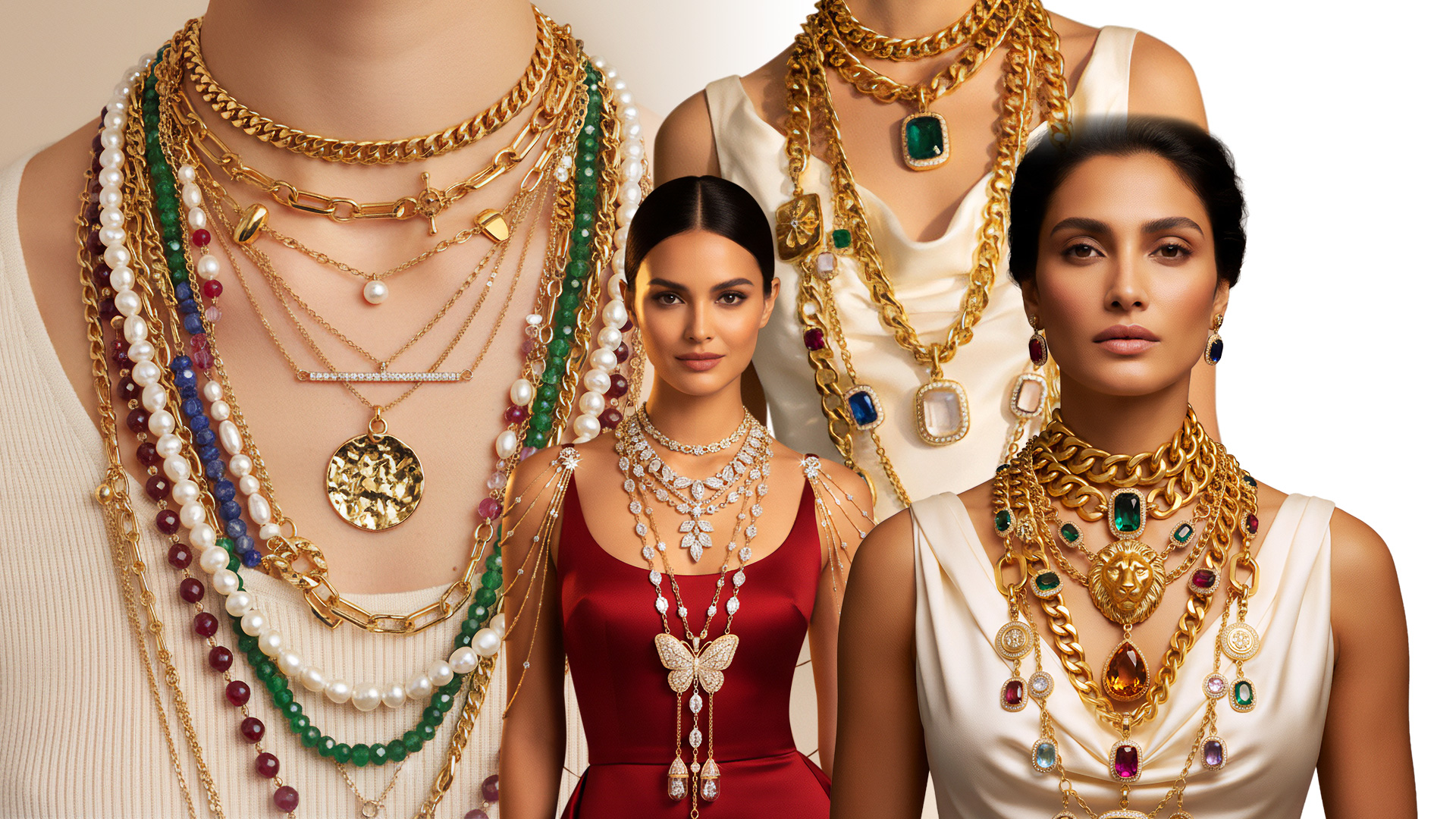
Formed slowly and shaped by nature, pearls are one of the most poetic gemstones. Their enduring appeal lies in this balance between time and transformation. Yet, the modern pearl necklace is not about perfection; it is about presence. Pearl designs have become increasingly fluid and sculptural, as jewellers are more captivated by individuality, texture and contrast, and less interested in symmetry and polish.

Baroque pearls, with their irregular shapes and organic forms, sit at the centre of this evolution. Their asymmetry gives each piece a sense of movement, as if the pearl itself is still in the process of becoming. Designers often allow these shapes to dictate the final form of a necklace or earring, pairing them with molten gold, oxidised silver or minimal metal settings. The result is jewellery that feels intuitive and alive.

Scale has also shifted dramatically. Oversized pearls are now celebrated rather than considered too bold. Single pearl earrings replace traditional pairs, while large pendants hang from fine chains with understated confidence. Layering has become a defining styling choice, with short pearl chokers worn against long strands or mixed with metal chains. Now a popular choice for many occasions – not just special ones – pearls move effortlessly from tailored daywear to evening looks.

Beyond the Pale

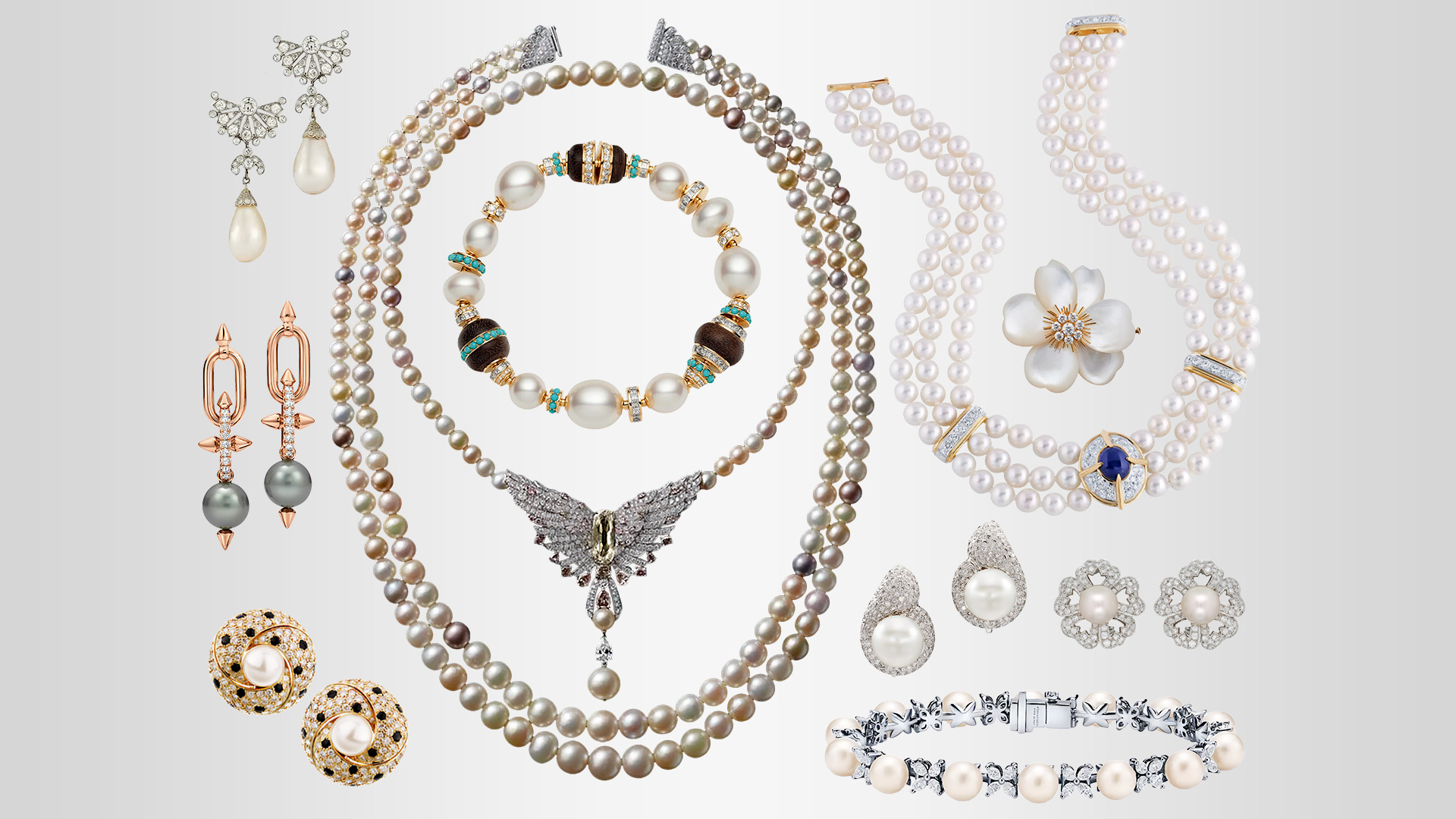
Colour plays a quiet but powerful role in modern pearl design. While classic white remains timeless, designers are increasingly drawn to pearls in soft blush, lavender, gold and deep charcoal tones. Tahitian pearls with peacock and green overtones bring drama, while golden South Sea pearls add warmth and richness.

Beyond the pearl’s base colour, overtones create subtle iridescence on the surface, adding depth and dimension. Rose, silver and green overtones are particularly prized, enhancing the pearl’s visual richness. Rather than matching colours perfectly, designers often mix them within a single piece, embracing natural variation. This approach reinforces the idea that pearls are individual by nature, each carrying its own character.

Love of Lustre

As pearl designs grow more expressive, understanding quality becomes essential. Grading pearls is both an art and a science, balancing measurable characteristics with aesthetic judgment. Lustre remains the most important factor in determining a pearl’s quality. It refers to how light reflects from the surface and interacts with the layers of nacre beneath.

Lustre gives pearls their unmistakable glow, the quality that draws the eye even from a distance. High-quality pearls appear bright and sharp, with reflections that seem almost mirror-like. Lower quality pearls lack this depth, appearing flat or chalky.

Surface quality also plays a role, though its importance has evolved. Because pearls are organic, most have some imperfections. In traditional grading, fewer blemishes meant higher value. In contemporary design, however, subtle texture is often embraced rather than hidden. Light surface markings can add authenticity, particularly in baroque pearls. Only deep cracks or heavy blemishes significantly detract from a pearl’s worth.

Shaping Up

Shape remains a defining factor in grading, though modern taste has expanded its boundaries. Perfectly round pearls are rare and still highly valued, but they are no longer the sole standard of beauty. Oval, drop, button and irregular shapes are increasingly sought after for their individuality.

Different pearl varieties bring distinct qualities to design. Akoya pearls, predominantly cultivated in cold water off the coast of Japan, are known for their brightness and classic appeal. Freshwater pearls offer diversity; Tahitian pearls introduce drama through dark, complex tones; and South Sea pearls embody luxury through size and softness.

While size affects value, it is never considered in isolation. Larger pearls are rarer and often more valuable, especially when combined with high lustre and clean surfaces. Yet a smaller pearl with exceptional glow may be more desirable than a larger one lacking vitality.

Designers select pearls not only for their grade but for how their character complements the story they want to tell. In embracing both design and discernment, modern pearls invite us not only to admire them, but to understand them and, in doing so, to see beauty as something layered, nuanced and deeply personal.

Locked in Love: Iconic to every luxury jeweller, the radiant bangle is a precious statement of personal sentiment

In the ever-evolving world of fine jewellery, few designs have the enduring appeal and emotional resonance of the ‘love bracelet’. Typically fashioned from yellow gold and diamonds, these luminous slip-on or hinged bangles are both sophisticated and symbolic, evoking a deeper narrative of devotion, permanence and personal meaning. A central focus for the world’s most prestigious jewellery maisons, the new generation of love bracelets embraces timeless craftsmanship while reflecting modern aesthetics.

For 2026, yellow gold has reclaimed its place at the forefront of luxury. Having been overshadowed by white gold and platinum in the early 2000s, it has surged back in recent years with a warmth and richness that feels both nostalgic and contemporary. Its sun-lit glow offers unparalleled versatility: it flatters every skin tone, pairs seamlessly with diamonds, and effortlessly elevates everything from a tailored suit to a silk evening dress. A precious yellow-gold bracelet exudes exactly the kind of understated opulence that feels right for now.

 Cartier, of course, remains the quintessential reference point for bangles that symbolise sentiment as much as style. The iconic Cartier Love bracelet, first introduced in 1969, continues to be one of the most recognisable symbols of commitment. From its oval shape to its locking mechanism and screwdriver ritual, every element is infused with emotional meaning. Diamond-set versions in 18-carat yellow gold transform the classic bracelet into something altogether more glamorous. Meanwhile, the maison’s Juste un Clou and Panthère lines offer edgier interpretations of gold and diamonds, appealing to jewellery lovers who seek modern sculpture over tradition.

 Tiffany & Co. brings contemporary American glamour to the trend for meaningful bracelets. The Tiffany T and T1 bangles in yellow gold, many accented with perfectly aligned diamond pavé, offer a minimal yet powerful aesthetic. Their architectural precision has made them a favourite for those who prefer clean lines over ornamentation. Inspired by a padlock from 1883, the jeweller’s Lock design has become a modern heirloom in its own right, symbolising connection and unity, while the HardWear chain band in yellow gold with pavé links provides an urban, fashion-forward take on the classic gold bracelet.

Italian houses instil sensuality into the sentimental bracelet. Bvlgari’s yellow-gold Serpenti coils, often lined with diamonds around the serpent’s head and scales, embody the brand’s signature balance of mythology and glamour. The B.Zero1 diamond-set bangles, with their iconic spiral design, feel both modern and rooted in Italian history.

Parisian jeweller Van Cleef & Arpels offers an ethereal, romantic dimension with its beaded Perlée bangles and signature Alhambra flower bracelets, many of which incorporate delicate diamond settings in warm gold. Van Cleef’s craftsmanship emphasises softness of line, clarity of detail, and a poetic interpretation of luxury.

Fellow French maison Boucheron infuses boldness and architectural daring into the trend. Its Quatre Classique bracelet in yellow, white and pink gold blends diamonds with intertwined Double Godron and Clou de Paris motifs and Grosgrain texture, delivering a confident, urban‑luxury feel. The gold links of the Serpent Bohème bangles, with their drop-shaped diamond motifs, strike a beautiful balance between historical design and modern refinement.

Swiss houses like Chopard and Piaget elevate the theme with distinctive movement and playfulness. Chopard’s Happy Diamonds bracelets, featuring floating diamonds suspended within a sapphire crystal, add a kinetic sparkle that feels joyful and contemporary. Piaget’s Possession bangles, marked by their signature turning bands and diamond accents, bring an interactive element to the elegance of yellow-gold jewellery.

 Hermès offers exquisite yellow-gold bracelets such as the Kelly bangle and the Chaine d’Ancre diamond-set design. These pieces bridge fashion heritage with fine jewellery craftsmanship, resulting in heirloom-worthy creations that resonate with both collectors and style connoisseurs.

What unites luxury ‘love bracelets’ across brands and aesthetics is the sense of meaning they carry: they are gifts for milestones, symbols of commitment and statements of self-love.

The inherent radiance of yellow gold and the timeless fire of diamonds have become the language of modern affection, cementing the sentimental bangle as one of the defining jewellery directions for 2026. 

In a world that moves quickly, these bracelets offer a moment of permanence. They become part of the body, part of the story, part of the wearer’s identity. Whether stacked or worn solo, minimal or richly embellished, heritage or fashion‑forward, a yellow gold and diamond bangle embodies the essence of luxury today: personal, meaningful, beautiful and built to last generations.

Archival Revival: Jewellers dip into the past for new pieces that embrace artistry and shout soul

Vintage revival is emerging as one of the most powerful jewellery trends for 2026, driven by a cultural craving for craftsmanship, history and emotional resonance. In an era defined by fast fashion and digital overload, consumers are gravitating toward pieces that feel enduring, tactile and meaningful.

The new wave of vintage‑inspired jewellery doesn’t simply imitate the past; instead, it blends archival influences with fresh, contemporary touches. The result is a romantic yet relevant aesthetic perfectly suited to the mood of the year – one shaped by nostalgia, renewed appreciation for artistry, and an appetite for designs with soul.

Midas Touch

At the heart of this revival is a return to ornamental goldwork. Modern jewellers are embracing the intricate metal treatments that once defined mid‑century ateliers. Brushed gold, matte finishes, millegrain edges, hand‑applied engraving and softly sculpted contours are replacing the slick, high‑shine finishes that dominated the previous decade.

This tactile approach to gold instantly gives pieces a sense of depth and history, even when they are newly created. The warmth of these mellow, lived‑in textures pairs beautifully with coloured gemstones, particularly the soft lilac, icy blue and periwinkle hues that are gaining momentum. Combined, they create pieces that feel both precious and poetic.

Blooming Marvellous

Archival floral and botanical motifs are also shaping the narrative. Jewellers are revisiting classic petals, vines and laurel leaves, but through a refined, contemporary lens. Instead of heavy Victorian blooms, today’s designs are sleeker, slimmer and more wearable. A diamond‑tipped petal here, a pastel amethyst nestled in a vine setting there – the details evoke vintage romanticism without feeling costume‑like. This nature‑inspired direction makes the pieces especially appealing for the soft sensibility found ahead of Valentine’s Day next month.

Another defining element of the vintage revival is the resurgence of sculptural curves and ribbonlike forms. These flowing lines are inspired by the sentimentality of early 20th‑century jewellery and the couture flourishes of mid‑century design houses. The recent iterations appear as swooping earrings, fluid collar necklaces and glamorous cocktail rings that ripple like silk caught in motion.

Romancing the Stones

Gemstones are also experiencing a vintage‑forward shift. Rather than the sharp, geometric cuts that defined the last decade, jewellers are embracing the softer shapes of the past – think cushion cuts, old‑mine ovals, pillowy cabochons and antique‑inspired facets that diffuse light rather than explode it. Colour plays an equally important role. Pale purples – lavender amethyst, lilac quartz, kunzite – form the heart of the palette, evoking a dreamy, nostalgic quality. Meanwhile, deeper tones such as garnet, citrine, smoky topaz and mossy tourmaline channel a more bohemian, arts‑and‑crafts revival energy.

Pastel gemstones, in particular, feel aligned with February’s romantic mood and the broader cultural shift toward softness and sentiment. Soft gold loops framing pastel stones have already emerged as an early signature of the year. Their beauty lies in their balance: they are ornate yet airy, decorative yet wearable, expressive yet refined. They offer a romantic flourish without overwhelming the wearer.

Back to the Future 

The influence of heritage craftsmanship is felt throughout the trend. Many maisons are revisiting the meticulous techniques found in their early archives: bead‑set diamonds, ornate filigree, cluster settings, ribbon motifs and handcrafted frames that wrap around stones like tiny works of architecture. New designers, meanwhile, are drawing inspiration from antique pieces but updating them with lighter materials, more ergonomic structures and sustainable practices.

What ultimately makes the 2026 vintage revival trend so compelling is its delicate blend of romance and modernity. These pieces feel lovingly preserved, as if passed down through generations, yet they’re impeccably attuned to contemporary dressing. Even more importantly, they speak to a larger cultural shift: the desire to invest in jewellery that means something. Today’s consumers want to understand how a piece was made, what inspired it, and what historical lineage it belongs to. Vintage revival jewelry delivers exactly that: a sense of lineage, artistry and intention.

In an age of rapid trend cycles and disposable accessories, vintage‑inspired jewellery offers permanence, emotion and individuality. Whether it’s a matte‑gold floral bracelet echoing the 1940s, a softly curved pastel‑stone pendant referencing mid‑century couture, or a pair of ribbonlike earrings with a whisper of old Hollywood glamour, each piece feels like an heirloom in the making. Vintage revival brings history into the present, offering modern wearers a sense of continuity, craftsmanship and quiet romance in a fast‑moving world.

Tiara Royalty: Diamonds and dynasties unite in 10 historic halos of superb craftsmanship

More than precious ornamental headpieces, tiaras are wearable legacies. From imperial courts to modern royal weddings and state banquets, these bejewelled masterpieces carry centuries of history, artistry and symbolism, with each singing an ode to lineage and dazzling craftsmanship.

Henckel von Donnersmarck Tiara

The most expensive tiara ever auctioned, this masterpiece fetched US$12.7 million (HK$98.7 million) at a Sotheby’s sale in 2011. Made for German nobility – probably by Chaumet – around 1900, it features 11 outstanding Colombian emeralds totalling more than 500 carats, as well as diamonds. Its grandeur and rarity make it the crowning jewel of private collections.

Queen Mary’s Fringe Tiara

A cornerstone of the British Royal Collection, this tiara sparkles with 47 diamond bars in a sunray fringe design and can be converted into a necklace. Commissioned from Garrard in 1919 by Queen Mary – King Charles’s great-grandmother – it was chosen by Queen Elizabeth, Princess Anne and Princess Beatrice as their wedding-day adornment.

Greville Emerald Kokoshnik Tiara

Gifted to the British royals by socialite Dame Margaret Greville, this Russian-inspired kokoshnik design crafted by Boucheron is headlined by a striking central 93.7-carat emerald. Worn by Princess Eugenie at her wedding, it blends aristocratic heritage with modern flair.

Cartier Halo Tiara

Crafted in 1936 and gifted to Queen Elizabeth by her parents, this delicate diadem is studded with 739 brilliant-cut and 149 baguette diamonds. It shared the spotlight with Catherine, Princess of Wales, on her wedding day.

Spencer Tiara

Dating back to 1767 and remodelled by Garrard in the 1930s, this Spencer family heirloom features floral motifs and old-cut diamonds. Worn by Princess Diana on her wedding day, it embodies emotional weight and timeless beauty.

Vladimir Tiara

One of the most versatile and storied pieces in the British Royal Collection, this 1874 tiara was originally owned by Grand Duchess Vladimir of Russia and smuggled out of the country during the revolution. It features interlaced diamond circles and can be worn with either pearls or emeralds.

Cambridge Lover’s Knot Tiara

Commissioned from Garrard by Queen Mary in 1914, this majestically romantic tiara is formed of 19 diamond arches with hanging pearls. Like Princess Diana before her, the current Princess of Wales has taken a shine to this British regal favourite.

Fife Tiara

Gifted to Princess Louise, the Duchess of Fife, on her wedding day in 1889, this elaborate Victorian-era design – often credited to Belgian jeweller Oscar Massin – is made entirely of diamonds, including spectacular, moveable pear-shaped stones. It was given to the UK government in 2017 by the Fife family in lieu of inheritance tax.

Danish Ruby Parure Tiara

Part of a full ruby parure worn by Queen Mary of Denmark on state occasions, this tiara has Napoleonic roots. Originally gifted to Désirée Clary, who was briefly engaged to Bonaparte and  became the Queen of Sweden in 1818, it’s rich in European royal history and vibrant in design.

Swedish Cameo Tiara

Thought to have originated with Empress Josephine, Napoleon’s first wife, this stunning headpiece features seven large Italian-crafted cameos surrounded by pearls. Worn by Swedish royal brides, it’s a sentimental and artistic tiara that stands apart from diamond-heavy designs.

These tiaras stand far above jewellery accessories; they are symbols of dynasties and diplomacy. Whether auctioned for millions or held in royal vaults, each one reflects a legacy of elegance and power that transcends time.

King Pins: History, artistry and rare gemstones bloom in radiant harmony in these celebrated brooches

Brooches have long transcended their decorative origins, evolving into miniature masterpieces that reflect history, craftsmanship and artistic vision. Whether royal commissions or avant-garde creations, iconic pins continue to captivate collectors, connoisseurs and designers alike. Each piece tells a story of innovation, cultural symbolism and the timeless allure of wearable art.

Among the most celebrated is the Cartier Aquamarine and Diamond Brooch from the 1930s, a dazzling embodiment of Art Deco elegance. Its chevron motif and 35.2-carat Brazilian aquamarine evoke architectural precision and boundless sophistication. The geometric lines and cool palette reflect the era’s fascination with symmetry and industrial beauty, making it a standout in Cartier’s storied legacy.

Equally poetic is Van Cleef & Arpels’ 1936 Flower Brooch, a radiant composition of ruby and diamond leaves. This piece showcases the maison’s pioneering Mystery Set technique, where stones are invisibly mounted to create a seamless surface. The result is a brooch that appears to bloom from within, capturing the ephemeral beauty of nature in permanent form.

Nature continues to inspire with Harry Winston’s Long Tailed Hummingbird Brooch, a dynamic portrayal of a bird mid-flight. Crafted with sapphires, tsavorites, aquamarines and diamonds, and anchored by a suspended South Sea pearl, the piece captures the motion, grace and delicate balance of flight. It’s a tribute to the jeweller’s mastery of gemstone arrangement and ability to infuse life into static form.

Then there’s the dazzling Peacock Brooch by Graff, a staggering 2013 creation starring a 20.02-carat fancy deep blue diamond surrounded by a kaleidoscope of rare stones in vibrant hues for a total of more than 120 carats. This brooch is not just a jewel – it’s a spectacle, a celebration of rarity and excess that pushes the boundaries of high jewellery design.

From Italy’s golden age of glamour, the 1960s Bulgari Giardinetto Cornucopia Brooch bursts with more than 100 diamonds arranged in a lush bouquet. Symbolising abundance and joy, it reflects Bulgari’s bold use of colour and volume, as well as its embrace of Mediterranean exuberance. The piece is both opulent and organic, a garden rendered in gold and gems.

Royal heritage finds its voice in Garrard’s Jubilee Sapphire Brooch from 2018, centred around a 118.88-carat Burmese sapphire. Designed to commemorate a royal milestone, the jewel blends tradition with grandeur. Its deep-blue centerpiece and intricate diamond surround speak to Garrard’s long-standing relationship with the British monarchy and its commitment to timeless elegance.

The legendary 41-carat Dresden Green Diamond, set in an 18th-century hat ornament, remains one of the world’s rarest natural green diamonds. Its vivid hue and historical provenance make it a symbol of enduring beauty and regal heritage. Though technically not a brooch, its ornamental function and exquisite craftsmanship earn it a place in this glittering anthology.

Together, these brooches form a radiant tapestry of high jewellery history. More than adornments, they are cultural artifacts, artistic achievements and expressions of identity. Each blooming with meaning, they remind us that beauty, when crafted with intention, becomes eternal.

Stone Maisons: Brilliant new creations by high jewellers who set a rarefied world on fire

High-jewellery collections released by six houses steeped in history showcase distinct creative directions, with Bulgari’s chromatic fantasy, Cartier’s sculptural tension and Dior’s gem-packed dreamscapes leading the charge.

Bulgari unveils Polychroma, its most ambitious high-jewellery collection to date, featuring 250 exceptional creations, including 60 exclusive ‘millionaire pieces’ priced at a million euros or more. The collection dazzles with rare gemstones, each crafted into bold, exuberant forms. At its heart lies the Gallery of Wonders, a showcase of five masterpieces, including the Cosmic Vault necklace with a 123.35-carat sugarloaf sapphire, and the Celestial Mosaic necklace, centred around a 131.21-carat Tajikistan spinel. Polychroma’s vibrant palette and architectural silhouettes reflect the brand’s Roman roots while embracing a futuristic vision of opulence.

Cartier introduces En Équilibre, a poetic study in balance and tension, meticulously crafted over almost 100,000 hours. Highlights include the Shito necklace with vivid emeralds and the Hyala necklace featuring a 5.71-carat oval-cut diamond, both embodying sculptural elegance. The pieces explore kinetic harmony, where asymmetry and equilibrium coexist in a dance of light and form. Cartier’s signature craftsmanship is evident in intricate settings and fluid lines that evoke both strength and grace.

Dior’s Diorexquis draws from the fashion-forward legacy of its founder, blending magical galas and blooming florals into intricate seasonal designs. The collection features whimsical motifs – roses, ribbons and starbursts – rendered in pastel sapphires, spinels and diamonds. Each piece is a wearable tableau, echoing the couture house’s romanticism and theatrical flair.

The Bamboo capsule collection by Chaumet pays homage to nature’s grace, with 10 symbolic pieces inspired by the resilience and elegance of the grass family giant. A standout is the bib necklace showcasing a 13.19-carat black Australian opal, reflecting organic serenity. The collection’s minimalist aesthetic is elevated by the maison’s mastery of texture and movement, creating jewellery that feels alive and rooted in natural poetry.

Tiffany & Co.’s Blue Book 2025 embarks on a surreal seafaring voyage with Sea of Wonder, capturing oceanic hues and fluid forms that mimic marine life. The collection channels aquatic elegance, from the Seahorse blue zircon brooch inspired by Jean Schlumberger’s designs of the late 1960s to the charming Sea Turtle diamond pendant and the radiant Ocean Flora emerald necklace.

With Plume de Chanel, the maison of Mademoiselle reinforces its feathery signature. Chanel’s early plumes for hats and a 1932 jewellery collection featuring an articulated feather brooch set the scene for new high jewels that embody ethereal elegance. White diamonds shower light and empower grace upon statement rings, brooches, necklaces and earrings, with the motif extending to pink gold, sapphires and tourmalines.

Each maison tells a distinct story, fusing heritage, innovation and artistry into timeless expressions of luxury. These collections are not merely adornments but declarations of identity, imagination and craftsmanship. In a season where jewellery becomes narrative, the world’s leading houses continue to push boundaries, redefining what it means to wear art.

Silent Splendour: Six celebrated houses redefine quiet luxury with implicit finesse and soundless storytelling

In today’s era of refined restraint, luxury has shed its overt sparkle for a more nuanced glow. The world of high jewellery is embracing a quieter language—one that speaks to connoisseurs through craftsmanship, heritage, and subtlety. Six legendary maisons are leading this transformation, each offering a distinct interpretation of understated opulence.

Cartier, the eternal arbiter of elegance, continues to sculpt its legacy in white gold and diamonds. Its iconic panther motif prowls with silent power, rendered in sleek silhouettes that blend geometry with grace. These pieces don’t clamor for attention—they command it through form and finesse. The maison’s mastery lies in its ability to distill decades of design into modern minimalism, where every curve and facet is deliberate.

Van Cleef & Arpels, ever the romantic, reimagines its iconic Alhambra and high-jewellery creations in muted tones and soft finishes. Symbols of luck and light are rendered with a painter’s touch, evoking dreams rather than declarations. The maison’s pieces feel like whispers from a fairytale—delicate, enchanting, and deeply refined.

Bulgari channels Italian sensuality with serpentine forms and vibrant stones, echoing Rome’s grandeur in wearable art. Yet, even in its boldness, there’s a softness—a fluidity that makes each piece feel personal. The maison’s heritage is palpable, but never overpowering. It’s luxury that seduces rather than dazzles, inviting the wearer into a private dialogue with history.

Graff, the maestro of diamond drama, now tempers its brilliance with minimalist settings. Each stone is given space to breathe, to speak its own truth. The effect is profound: a single diamond, perfectly cut, becomes a statement of quiet confidence. Graff’s pieces are less about spectacle and more about reverence—for the gem, the wearer, and the moment.

Harry Winston, synonymous with glamour, now whispers rather than shouts. Its creations showcase stones of unmatched clarity and brilliance, yet the settings are restrained, allowing the gems to glow with quiet confidence. Earrings and necklaces shimmer like secrets shared between old friends—intimate, luminous, and timeless. The craftsmanship is invisible to the untrained eye, but unmistakable to those who understand.

Buccellati brings intimacy through Renaissance-inspired lacework. Its hand-engraved textures evoke heirlooms and hidden treasures, meant to be admired up close. There’s a tactile poetry in its designs, a sense that each piece carries a story only the wearer can fully understand. It’s jewellery as personal history, etched in gold and silver.

Together, these six houses are crafting a new narrative in luxury—one where silence speaks volumes. Their jewellery isn’t about ostentation; it’s about discernment. It’s for those who understand that true elegance lies not in being seen, but in being felt. In this quiet revolution, wealth is worn not to impress, but to express.

Wild Play: Cartier and Chaumet unveil stunning new collections inspired by the beauty and symbolism of the natural world

In a celebration of the eternal bond between nature and luxury, two of the world’s most renowned jewellers, Cartier and Chaumet, have unveiled breathtaking new collections that pay tribute to the beauty and symbolism of the natural world. Cartier’s latest Trinity designs feature animal motifs and infinite geometry, reimagining the cult icon with a fresh, wild spirit. Meanwhile, Chaumet’s new High Jewellery capsule collection, Bamboo, captures the essence of Asia’s iconic plant, embodying the tenacity and pure beauty of enduring nature. Both collections showcase the mastery of these luxury brands in crafting exquisite pieces that not only adorn the body but also tell a story of the world around us. With their innovative designs and impeccable craftsmanship, Cartier and Chaumet are redefining the art of fine jewellery, one that is deeply rooted in the wonders of the natural world.

Golden Globes Glamour: Dazzling Jewels Shine at the 2025 Golden Globes

The Golden Globes, one of Hollywood’s most prestigious award ceremonies, not only celebrates cinematic excellence but also serves as a stunning showcase for fashion and jewellery. This year, the red carpet shimmered with exquisite pieces from renowned jewelry houses, capturing the attention of fans and fashionistas alike. Notable brands like Boucheron, Messika, Pomellato and Harry Winston adorned the necks, wrists, and ears of top celebrities, turning the event into a dazzling display of artistry and elegance.

The Golden Globes provided a platform for these prestigious jewelry houses to shine alongside the stars. From Boucheron’s timeless elegance to Messika’s modern glamour, Pomellato’s colourful designs, and Harry Winston’s luxurious diamonds, the event highlighted the artistry and craftsmanship that goes into creating these stunning pieces. As celebrities graced the red carpet adorned with these exquisite jewels, they not only celebrated their achievements in film but also the beauty of creativity and innovation in jewelry design. The evening was a reminder that, in the world of fashion, jewellery is not just an accessory; it is an integral part of the narrative, a reflection of personal style and a testament to the artistry of its makers.

Cartier earrings

Boucheron earrings

Boucheron ring

Pomellato necklace

Pomellato earrings

Boucheron ring

Pomellato ring

Boucheron earrings

Chopard earrings

Pomellato bracelet

Boucheron earrings

Boucheron ring

Boucheron ring

Boucheron ring

Messika ring

Boucheron earrings

Diamonds Are Forever: Discover the magic of diamonds adorning liife’s most cherished moments

Diamonds, the epitome of luxury and romance, have adorned humanity for centuries. From engagement rings to statement necklaces, their brilliance captivates all who encounter them. Each diamond tells a story, reflecting light and love in its facets. Styles range from classic solitaires to intricate vintage designs, ensuring there’s a perfect piece for every taste. Annamaria Cammilli’s jewellery elegantly marries nature’s inspiration with artisanal craftsmanship. Originating from Florence, the brand’s collections, such as Dune, Sultana, and Regina Couture, showcase a stunning array of sculptural designs in a velvety finish with eight distinct gold hues. The Dune collection, reminiscent of soft desert landscapes, offers pieces that embody fluidity and movement, while the Sultana collection embraces sophisticated curves that enhance the wearer’s grace. The Regina Couture collection captures the undulating essence of waves, each piece exuding a romantic allure.

In contrast, Buccellati’s Tulle Ghirlanda Eternelle Ring mesmerizes with its integration of white gold and brilliant-cut diamonds. This piece, inspired by floral garlands, features a masterfully crafted openwork design that emphasizes lightness and exquisite detailing, making it perfect for those remarkable wedding moments. Similarly, the Mini Tulle collection echoes Venetian lace artistry through its meticulous honeycomb-like patterns, showcasing Buccellati’s commitment to timeless elegance.

Then there’s the Panthère Clip Brooch from Cartier, an iconic emblem dating back to 1949, capturing the bold spirit of the Duchess of Windsor through its unique gem settings. Each piece discusses femininity, artistry, and celebrates life’s significant moments, a delightful testament to the beauty of fine jewellery.