Hidden gems: Bonhams to put rare jewels under the hammer later this month

Bonhams, the privately owned British auctioneer, will put rare jewellery from renowned houses of Harry Winston and Cartier, and highly sought-after gems under the hammer on 30 November.

The Rare Jewels and Jadeite Auction will feature beautiful gems such as an 88-carat diamond (D/IF, Ex, Ex) single-stone ring, by Cartier and a pair of diamond (D/IF) pendent earrings, by Harry Winston.

One of the highlights of the auction is a rare 10.21-carat Kashmir sapphire and diamond ring, by Mouawad that will set you back a cool HK$6.8 million-8 million.

Kashmir sapphires were only mined in the late 19th century and they are deemed to be the king of all sapphires.

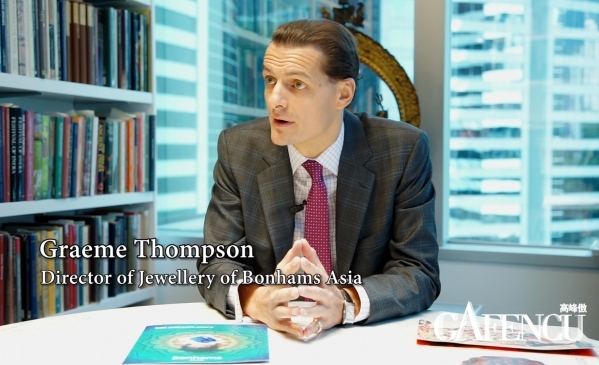
Graeme Thompson, Director of Jewellery for Bonhams Asia, spoke to Gafencu about his role at the auction house, the jewellery market in Asia and the upcoming auction, among many other things.

All of the items in the auction can be viewed from 26 November at Bonhams.

Venue: Bonhams Hong Kong Gallery, Suite 2001, One Pacific Place

Date: Wednesday 30 November, 2016

Time: 3:00pm

Bonhams to auction off antique jewellery

Bonhams is holding a second-hand jewellery sale next month, but it isn’t your typical sale of pre-owned goods. And it definitely isn’t one for bargain hunters.

The auction house is bringing a set of rare pieces into Hong Kong for collectors and connoisseurs to bid on this autumn alongside their biannual Rare Jewels and Jadeite auction.

Antique jewellery is slowly gaining popularity in Hong Kong as collectors start to see the value of owning a collectible that is over a 100 years old.

The auction will feature 17 pieces, which include brooches, rings, bracelets, necklaces and a hairpiece, along with other items that date from 1880 to 1925, a period known as La Belle Époque.

Collectors can bid for a rare Edwardian emerald and diamond ring, circa 1910, which will set you back HK$1,300,000-1,800,000.

If that price tag is a bit rich for your wallet, then there is a late 19th century ruby, natural pearl and diamond necklace, circa 1895, for HK$70,000-100,000.

All of the items in the auction can be viewed from 26 November.

Venue: Bonhams Hong Kong Gallery, Suite 2001, One Pacific Place

Date: Wednesday 30 November, 2016

Time: 3:00pm

Le Man’s Kind

jaguar_eff

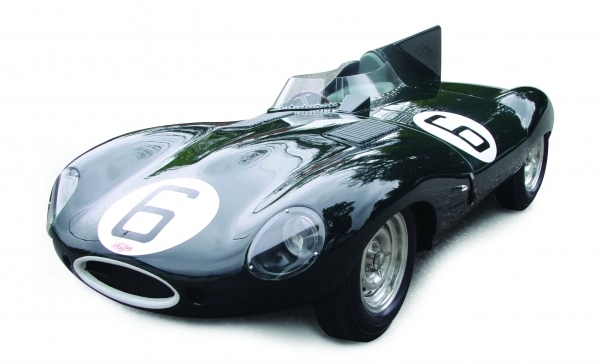
Long one of the most coveted of luxury car brands, Jaguar has been a perennial favourite among vintage vehicle aficionados and petrolheads alike. Of the many marvellous creations to bear the illustrious feline badge, the D-Type is particularly revered – not only for its enviable contours, but also on account of its remarkable racing pedigree.

It will therefore not surprise those in the know that a 1955-built Jaguar D-Type recently sold for a cool US$21.78 million, smashing the previous record for a British-built car sold at auction by almost US$7.5 million. At the Sotheby’s sale in Monterey, four bidders battled it out for a tense 15 minutes in a race to take possession of the automotive ace. With a chassis number of XKD 501, it was the very car that won the prestigious 24 hour Le Mans race in 1956. Still bearing its original blue and white racing finish, the XKD 501 is first past the post as far as collectible classics are concerned. In addition to its race-winning provenance, this particular mechanical marvel has also been meticulously restored and maintained, serviced by four keen caretakers.

While the D-Type set a new auction record, making it officially the seventh most expensive car ever sold, the Monterey auction saw another record – the most expensive American car sold at auction. This particular title was taken by a Shelby Cobra, sold for US$13.75 million. Together with the takings for the Jaguar, that totals some US$35.5 million. Not one of Sotheby’s worst days then.

Qianlong Emperor’s musket to be auctioned by Sotheby’s

Sotheby’s in London will present a musket produced in the imperial workshops for the Qianlong Emperor of the Manchu Qing dynasty for auction in November.

The musket, which bears the imperial reign mark and the exceptional grading, “Supreme Grade, Number One”, is up for auction with an estimated price of HK$15.41 million.

While it is unlikely the Qianlong Emperor, who reigned from 1711-1799, used the musket in battle, he did hunt with a musket similar to the one Sotheby’s is auctioning off.

Imperial muskets were created in very small numbers by the Manufacture Department of the Imperial Household for the Qianlong Emperor.

For a Manchu emperor, a musket would have been an object of the utmost importance and pride, and the Emperor would have given meticulous instructions on how they should be created, repaired or modified.

The musket being offered for sale can be linked with a variety of imperial objects from the reign of the Qianlong Emperor, through its reign mark, decorative techniques and motifs.

The auction is being held on 9 November.

For more information, visit Sotheby’s website.

Blinding Date

The_Jane_Seymour_III_eff

Cé La Vi, set on the rooftop of the Marina Bay Sands Hotel in Singapore has teamed up with Russia’s World of Diamonds to create the ultimate air, land and sea dating experience for two. It will, however, set you back some US$2 million.

The multimillion-dollar meal begins on a high as the fortunate pair are treated to a 45-minute helicopter ride. Following a quick pit stop on a luxury cruise liner, it’s on to an 18-course modern Asian cuisine dinner via a chauffeured Rolls-Royce, with a surprise awaiting at the final destination – Cé La Vi.

The one-off sumptuous meal has to be eaten, of course, using only diamond chopsticks, complete with engraving of the lucky couple’s names. The meal itself comprises a delightful selection of fresh Belon oysters, Almas caviar and vintage wine.

To fit the occasion, diners will be showered with 10,000 fresh roses to welcome them, while they have the opportunity to enjoy the performance of an accompanying live band, to jazz up the vibe. And, of course, XIII de Rémy Martin cognac will be served immediately prior to the simply obligatory crescendo that is a personal fireworks display.

Then to mark the perfect end to the evening, the lucky lady will be presented with a Jane Seymour 2.08-carat vivid blue diamond ring at the strike of midnight. It is no wonder then that, Karan Tilani, Director of World of Diamonds Group, bills this as the most lavish dining experience ever.

007 O’clock

Pre-Daytona-Rolex-Chronograph-worn-in-James-Bond-Movie

Best known for his suave attire and explosive gadgets in the seemingly unstoppable 007 movies series, James Bond never does less than impress. Whether played by Daniel Craig, Roger Moore, Sean Connery or one of the other three actors that are solely remembered by pub quiz teams, one thing has remained constant in nearly all of his cinematic incarnations since 1962 – his wristwatch.

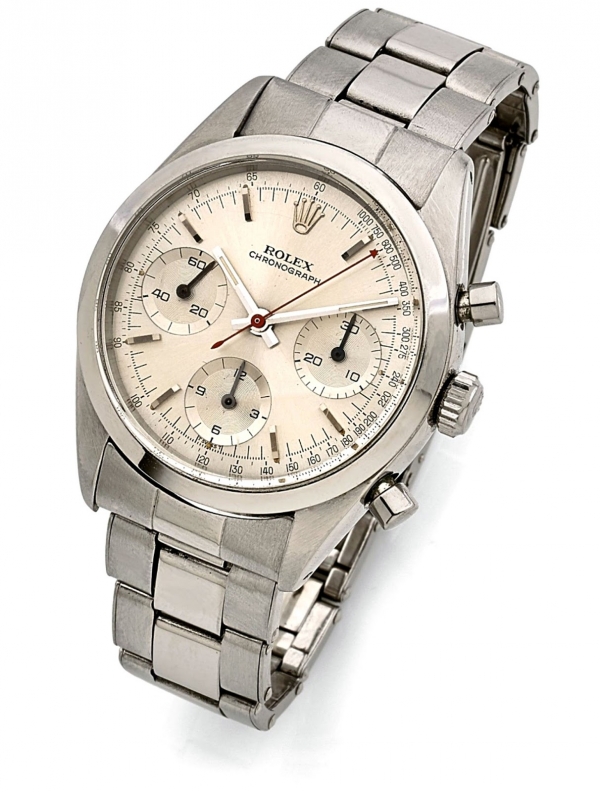
The Rolex is almost synonymous with Her Majesty’s most special agent and played a crucial role in many of his most celebrated adventures. In 1969’s On Her Majesty’s Secret Service it was a Rolex Pré-Daytona watch that was Bond’s timepiece of choice.

Back in 1962’s Dr No, it was a Rolex Explorer that adorned the wrist of Sean Connery. In subsequent escapades the agent sported both a Rolex Submariner and a Rolex Chronograph. It is, however, the 1969 Rolex Pré-Daytona that has been exciting collectors. The watch is up for sale at the leading French auction house, Artcurial at Hôtel Hermitage, Monte-Carlo and is estimated to go for upwards of €200,000 (HK$1.75 million). It comes with a copy of the original invoice from Bucherer Interlaken, the Swiss Rolex retailer, dated 23 October 1968, with the handwritten words: “This is the watch for James Bond.”

After filming wrapped On Her Majesty’s Secret Service, EON Productions, the company then behind the 007 franchise, decided to sell Bond’s personal wardrobe and accessories including the Rolex. It was acquired by a member of the production team.

CanAsian

waddington auction

As luxury living becomes ever more de rigueur, the demand for fine art continues to grow. It should be no surprise then that Waddington’s, Canada’s largest and most diversified auction house, has posted ground-breaking results – including five new records being set within three hours – during its recent sale of fine Asian art.

This is the second offering of Chinese artworks from the highly distinguished collection of Doctor David Lin. The sale attracted buyers from Asia and New York, underlining the growing significance of the Canadian auction scene.

The sale came following an exhaustive three-month selection process, with representatives of the auction house extensively assessing and evaluating the works of art to be included in the auction. Among the many star lots uncovered were a series of Japanese woodblock prints, as well as a fine selection of jade and porcelain snuff bottles, all created by the country’s foremost masters.

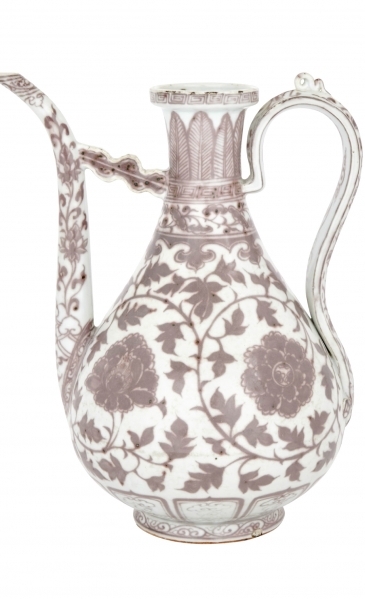
Other highlights included such rare and previously little-known gems as the Copper Red Lotus Ewer from the Hongwu period (AD1328 – 1398), which eventually sold for a truly mammoth $2,992,500.

With the level of pre-auction interest unusually high, the bidding was exceptionally tense throughout the entire evening. Overall, the success of the event exceeded all estimation. Speaking after the sale, Duncan McLean, Waddington’s president, said the price paid for the Ewer represented the highest amount bid for any item of fine art auctioned in Canada this year.

Qianlonglost

Vase_eff

You never know just where you might find a hidden gem. A case in point would be a Chinese vase, long relegated to being a doorstep and imminently destined for a car boot sale. Sold at auction, it went for £650,000.

A weighty 26-inch tall piece of porcelain, its survived 36 years of doorstop duty for a family in the UK, frequently second away from destruction as football games were improvised around it. Fortunately, its value was spotted by a visiting auctioneer.

The couple, who have opted to remain anonymous, inherited the 300-year-old vase from their Great Aunt Flo, a Cornish antiques dealer. The vase, which dates back to the 18th century, bears the mark of the Emperor Qianlong and is actually a remarkably well-preserved specimen of classic Chinese porcelain work. Once an ornament at the Imperial Palace, it was only spared the ignominy of the car boot sale by the eagle eyes of Adrian Rathbone, an employee of the nearby Hanson’s Auction house.

Recalling its discovery, Rathbone says: “I found it on the hallway floor and the owner said they had always wondered if it was of any value. I spotted the seal mark and took it away for a closer look.”

There is no information as to how the vase came to be in Britain but, according to the couple, their Auntie Flo had bought it at a house sale in the 1930s. Valued at £300,000 to £500,000, the vase, sold for £650,000 to a Chinese buyer. There is no record of its car boot valuation.

Matchless

icon101

Although the stock of smoking has fallen notably over the last 20 years – even in China, one of the tobacco industry’s last, best hopes of turning a profit – the humble (and not so humble) lighter has retained a sort of éclat. As with the wristwatch – an accessory rendered all but redundant by smartphone timekeeping – the lighter has found a second life as an embodiment of couture and elegance. It is, however, a function that would have baffled our forebears.

Whenever our ancestors were in desperate need of their tobacco fix, it is thought that they had to resort to crudely converted flintlock pistols in order to ignite their fag of choice. While, no doubt, such contrivances accounted for a fair number of casualties over the years, the earliest dedicated lighters were almost as dangerous.

One of the very first examples of just such a contraption was Döbereiner’s Lamp. Invented in 1823 by Johann Wolfgang Döbereiner, a German chemist, the mechanism of this particular lighter passed a frightening blast of highly flammable hydrogen gas over a platinum metal catalyst, causing it to ignite in a sudden blaze of heat and light.  In the absence of health and safety measures at the time, it’s fair to say that this device was highly dangerous. By the end of the 19th century, it was no longer in production. Possibly because of the unconscionably high level of fatalities among its user base.

It was the introduction of inexpensive, man-made Ferrocerium as a relatively cheap flight that sparked the growth of the lighter industry. The substance was patented by Carl Auer von Welsbach, an Austrian scientists and inventor, in 1903. A small scratch of his metallic material produced a large spark, an innovation that was to light the fuel of billions of lighters in the years to come.
icon102

It was thanks to his discovery that a number of companies – most notably Ronson – were able to develop practical and easy-to-use lighters. The fuel for all of these was Naptha, a liquid similar to gasoline. Typically, this was absorbed into fibre packing to prevent leakage and then fed up to the flint via a saturated cloth wick.

Most famously, this basic mechanism was adopted by Zippo, the American company now pretty much synonymous with lighters. For its part, Zippo added a chunky lid and wind-proof ‘chimney’, creating one of the most iconic items of Americana of all time.

Zippo’s standard issue, robust brass casing made it almost part of the standard kit for GI’s during World War II.  Its famous, compact design has changed little over the years, though the real stroke of genius came courtesy of each unit’s wide flat surfaces. These provided the perfect blank canvas for owners to express their own personality.

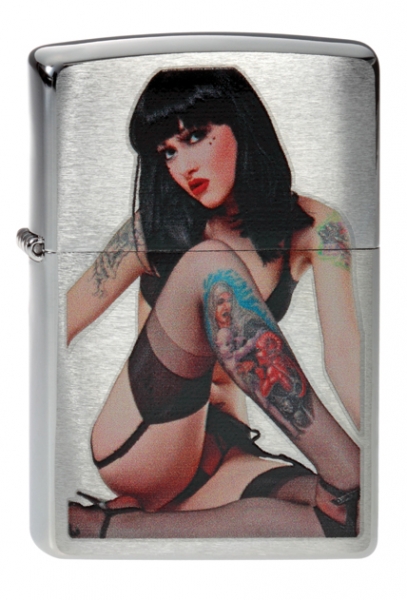
Since Zippo was launched in 1932, thousands of different styles have been produced and hundreds of millions of units have been sold. One custom-engraved version – Sexy Tattoo Girl – is a fine example of how a Zippo lighter can perfectly balance the old and the new. This particular rendering came courtesy of Blittz, a Dutch specialist Zippo-engraving business. Its simple brushed chrome outer casing frames a full colour image of the kind of girl you might not take home to mother, but who would certainly guarantee you a memorable night in.   A wonderfully risqué and highly affordable example of modern pop art at its best.

The next step in the lighter’s evolution came in 1924 when Alfred Dunhill introduced the first lighter that could be struck with just one hand. This allowed every wannabe – and bona fide – celebrity add their own individual flair to lighting up.  Elvis Presley, Coco Chanel, Frank Sinatra and Noel Coward are just a few of those who managed to create their own signature style of smoking, sparking new trends amongst their fans with just a flick of the wrist.
icon103

The Dunhill brand went on to become a design icon, not least because of its long association with the screen incarnation of 007, arguably the world’s most stylish smoker. High-end luxury lighters, courtesy of a number of famous design houses, have since become essential accessory for the rich and famous, flaunted just as ostensibly as a pearl necklace or a diamond ring.

Arguably the most iconic lighter of them all is Dunhill’s Rollagas.  Developed in the mid-1950s, it was one of the first generation of butane gas lighters. This new technology replaced the fuss and heavy petroleum smell associated with Naptha with a clear, controllable and windproof, bright flame.

Within the industry, the Rollagas is still regarded as the absolute standard for quality and the best lighter made by any manufacturer ever. Its design has since been borrowed by almost every lighter manufacturer, none of which managed to hold a flame to the original Dunhill concept.

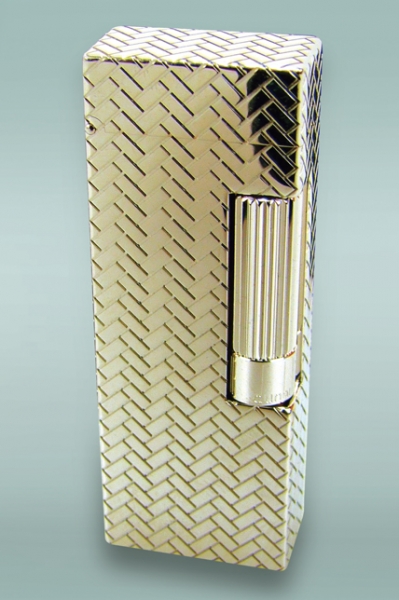
Gold-plated Rollagas lighters have become an almost ubiquitous statement of style in the luxury goods market, to the point of seeming, perhaps, a little passé. So why not opt for something a little less ostentatious?  A vintage silver-plated Rollagas for instances.

This is distinguished by a delicate chevron pattern and, not only will it take good care of your finest cigar, it will probably also exceed your lungs in terms of durability. Many such lighters are now up for sale at auction houses and on eBay, typically going for around US$600.

Of course, that may seem a lot when you can pick up a lighter for less than a dollar at any corner shop. Cheap, disposable, plastic lighters, however, are not only bad for the environment, they also have no place in the hand of a true gentleman. When leaning forward to offer a lady a light, the just the right lighter is essential when it comes to adding that finishing flash of style.

icon104

Whether platinum, gold, silver, encrusted with diamonds or other rare stones, a statement lighter is the perfect accessory for the successful man, with many of the rarer examples having gone on to become collector’s items.  Their value is determined by their material, age, rarity and social/celebrity standing of their prior owner.

Among the most valued example are those that come courtesy of the House of Fabergé. Founded in St Petersburg by Gustav Fabergé in 1842, it is still best-known for producing mouth-wateringly expensive, jewel-encrusted eggs for the Russian nobility.  It was no surprise then when its later foray into the world of lighters resulted in some of the world’s most coveted and expensive examples.

The marque’s Yellow Enamel Lighter is seen by many as the ultimate icon of opulence and power, a veritable Molotov Cocktail of class.  Handcrafted at some point between 1908 and 1917 and stamped with the mark of Workmaster Vladimir Soloviev, its wavy hairline design shimmers in the light, largely thanks to a myriad of tiny reflective yellow sparkles.

Despite all of this decadence, this extremely rare vintage Russian lighter also embodies perfect simplicity. Rectangular-shaped with rounded corners, the design is topped by a spring-hinged lid that shuts with a cosseting click.  Sold by Sotheby’s in 2011 for US$65,650, this little lighter is bold enough to transform any owner into a true Tobacco Tsar.
icon105

Producing just one such luxury lighter requires an average of 70 components, 600 operations, 300 tests and more than 100 hours of labour. The huge level of investment requirement has seen many once-famous manufacturers sadly fade into history. This, though, makes examples of their work even more rare and collectable.

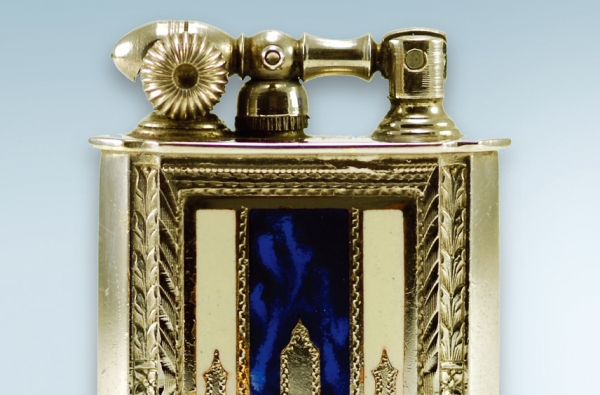
One such vanished manufacturer is the Evans Case Company of America. The business specialised in cigarette lighters and lady’s accessories and produced many beautiful lighters from 1928 until the company closed its doors in 1960.  While its Glass Enamel Lighter range was not made from the most precious raw materials, they remain amongst the most intricate and beautiful lighters ever produced. Today, early examples in good condition are very hard to come by.

The company’s characteristic Liftarm design was used to fuel their very first range of lighters, with the blue and white version being particularly exquisite. While its silver case, complete with delicate glass enameling, might have been designed for ladies, its ornate decoration has transcended time and gender. Today, it’s the perfect accessory for any modern gentleman who favours the art of sophisticated smoking.

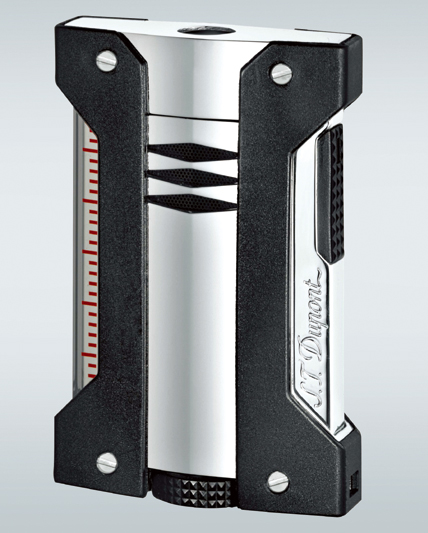
More recently, the luxury lighter market has come to be dominated by S.T. Dupont, with the company now offering a wide variety of models. For those of who simply have to spark up, even in a lightning storm, for example, there’s the company’s simply thunderous Defi Extreme series.
icon106

The lighter’s innovative and unique construction comprises a body with a high-precision, injected-metal, semi-rigid matt black jacket for all-round protection in the harshest of conditions.  Although built like a tank, the Defi Extreme is extremely light. It has been ergonomically-designed to sit comfortably in the palm, ensuring you won’t lose your grip.

The lighter will operate in temperatures from -10°C to +45°C. Even at 3500m, where oxygen becomes scarce, it powerful blue flame can resist the most violent winds. That’s more than can be said of any rain-soaked Zhonghua, but you might just manage a couple of drags before the storm snatches away your ciggie.

Nowadays, though, lighters are not just about facilitating smoking.

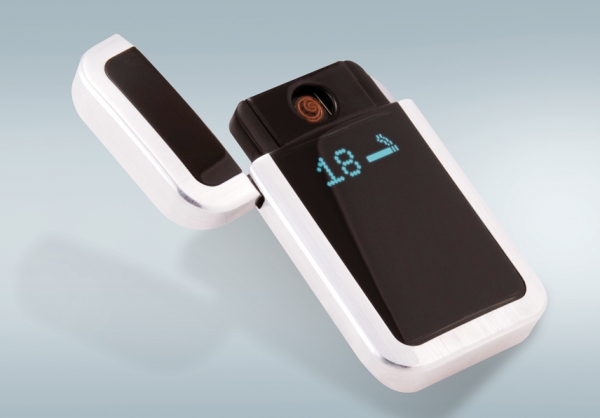
The Quitbit, for instance, is a smart lighter designed to help you give up your nicotine kick for good and all.

Its powerful heating coil provides the light, whilst a visual display records your smoking frequency. When paired wirelessly with an Android or iOS app, it allows smokers to monitor and, ultimately, gradually reduce their cigarette usage by setting custom goals and measuring progress. The app allows users to clearly visualize their smoking patterns and even shows them just how much cash they’ve saved each month as a result of smoking less.

In order to ensure accuracy, the app doesn’t log multiple lights within a few minutes of each other and users can manually edit the logged data in case they let someone else use their lighter.  A nice touch is the app’s ‘find my iPhone’ style tracking device that helps you track down any mislaid lighter.

The Quitbit’s battery lasts approximately one week – or around 100 lights -and requires two hours to recharge. The Quitbit is available directly from the company’s website for $129 and has been approved by the Transportation Security Administration, meaning it can be carried onto a plane and making it the first genuinely go-everywhere lighter.

Blue Eyed

Cullinan dream 1_eff_a

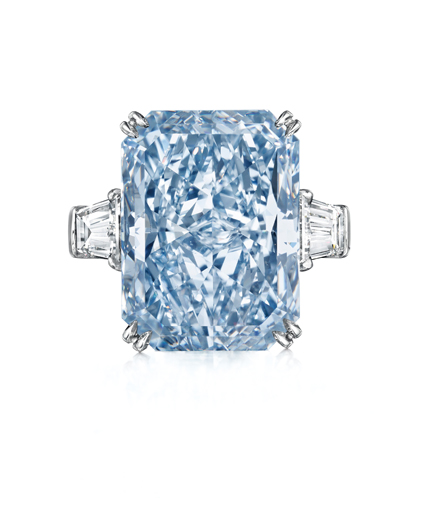
The record-breaking run of Christie’s Magnificent Jewels auctions has continued with The Cullinan Dream being one of the most recent items on offer. An exceptional jewel, the Dream is the largest and most expensive fancy intense blue diamond ever to be sold at auction. Taking it name from the Cullinan mine in South Africa – the site where it was first uncovered in 2014 – this 24.18 carat piece was originally part of a larger 122.52 carat blue diamond.

Following its discovery, this massive jewel was meticulously examined by a master cutter in order to determine the best yield. It was the cut into four substantial polished blue diamonds .These comprised a cushion-cut seven-carat diamond, a radiant-cut 10.3 carat diamond, a pear-shaped 11.3 carat diamond and the record breaking rectangular mixed-cut diamond.

According to the Gemological Institute of America, The Cullinan Dream is a fancy intense blue diamond, classified as Type IIB, These are exceedingly rare and account for less than half of one percent of all of the diamonds found in nature.

The Cullinan Dream sold for US$42.2 million. Mark Cullinan, an international jewellery dealer and great grandson of Sir Thomas Cullinan, the discoverer of the Petra’s Cullinan Diamond Mine in 1898, was there to witness the sale.

He commented: “It was a great pleasure to be in New York for this exciting auction and to see the fantastic price achieved by a diamond that has come to represent a new generation of discoveries from the Petra’s Cullinan Diamond Mine.”